
glaub es Dir-aber mit dem ganzen ki-ai-zeug werde ich langsam wuschig;
mit LLM largelanguage usw mich angefreundet,aber diese agent-variante ....
hatte auf alt-tel agent von austrian man,der jtzt in USA ist, installiert: üble durchgriffe, da i nicht alles auf schirm hatte
❤️❤️
2
7

Feb 27
The advancement of LargeLanguage Models (LLMs) has led to significant productivity boosts in coding and software engineering.
2
4
123

11 Jul 2025
MIT researchers recently published a major cognitive neuroscience study comparing how our brains behave when using AI tools like ChatGPT (referred to as LLM or LargeLanguage Models) versus doing our own research using search engines.
So what were the findings? We accumulate cognitive debt.
While AI tools help us work faster, they also can fundamentally change how we think.
In low-frequency brainwaves, participants who searched manually (Search group) activated regions linked to internal regulation and memory retrieval. Those who used ChatGPT-style tools (LLM group) showed weaker memory circuits and shifted energy toward motor output — typing, clicking, and scanning.
The most sobering part? Those who used AI to answer questions started mimicking its logic and tone —even when it was wrong. As one MIT researcher summarized, “we saw strong evidence of reduced executive function and discernment."
In short: The brain began outsourcing not just memory, but judgment.
We rely on our phones to remember birthdays. We trust GPS to guide us across town (or even home, work or 10 other places we know how to get to anyway). We use calendars, alerts, and to-do lists to help us function. That’s not bad — it’s called cognitive offloading, and it’s a normal way to manage complexity.
But what happens when we offload too much? When we start offloading critical thinking to LLMs?
This study shows that AI is training our brains to disengage.
The more we rely on external systems to think for us, the less we question them— and the harder it becomes to trace where our thoughts and beliefs actually came from. The study showed people forgot content they had just written and even confused who came up with it.
When AI becomes your brain’s co-author, your voice dulls.
However, just like any tool, the quality depends on the level of the user. A particularly interesting passage that stood out to me (you can read the full 206 page PDF here) was this:
“There is also a clear distinction in how higher-competence and lower-competence learners utilized LLMs, which influenced their cognitive engagement and learning outcomes [43]. Higher-competence learners strategically used LLMs as a tool for active learning. They used it to revisit and synthesize information to construct coherent knowledge structures; this reduced cognitive strain while remaining deeply engaged with the material. However, the lower-competence group often relied on the immediacy of LLM responses instead of going through the iterative processes involved in traditional learning methods (e.g. rephrasing or synthesizing material). This led to a decrease in the germane cognitive load essential for 15 schema construction and deep understanding [43]. As a result, the potential of LLMs to support meaningful learning depends significantly on the user's approach and mindset.”
Mindset.
Your way of thinking can be the difference between using a tool or abdicating your God-given cognitive abilities. If you’re not discerning, your entire mindset could shift without you knowing it. One day you’ll realize you’ve essentially been brainwashed, and your thoughts are no longer your own.
Be discerning. Use your brain. Take the ten minutes to write the article, email, or text. Use the tools to enhance — not replace — your thinking. If you don’t, you’ll be accumulating a debt that will be have to paid sooner or later…
2
35

9 Jul 2025
🔥 Read our Paper
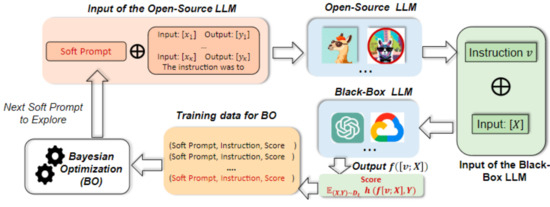
📚 Bayesian Optimization for Instruction Generation
🔗 mdpi.com/2076-3417/14/24/118…
👨🔬 by Antonio Sabbatella,Francesco Archetti,Andrea Ponti,Ilaria Giordani andAntonio Candelieri.
@unimib
#largelanguage #prompt #optimization #Bayesian
3
112

21 Mar 2025
4/
@KaitoAI has some of the following features:
Intelligent web3 exploration: Kaito’s system harnesses a unique, in-house-developed largelanguage model alongside live data from a variety of channels to offer users clear, useful perspectives on what’s happening in the web3 world.
Designed with web3 in mind: As a company rooted in web3, Kaito has a deep grasp of crypto-specific language and ideas, setting it apart from older Web 2.0 search platforms that often miss the mark in this area.
Vibe tracking: Kaito assesses the emotional pulse of the market at different scales—from overall trends to niche sectors and even individual projects or tokens—giving traders and investors a key tool to judge a venture’s worth.
learn.bybit.com/en/web3/what…
1
6
208

How can we predict materials using #MachineLearning ? Jan demonstrates how machine learning and #LargeLanguage Models help to bridge the gap between simulations and experiment in #materialsscience . His work is based on the pyiron workflow framework
youtube.com/watch?v=Zv6r3DAY…
2
7
312


26 Jan 2025
AIは人間の脳をモデリングしてるのだから、脳を鍛えるならAIをどう鍛えているのかを知ればいい。LLMの肝はLargeLanguage。大量の言葉情報だ。脳を鍛えるには大量の文字情報をインプットする。そして、アウトプットしてFBもらいながらファインチューニングする。その絶好の場所がX。
2
120

26 Dec 2024
#highlycitedpaper
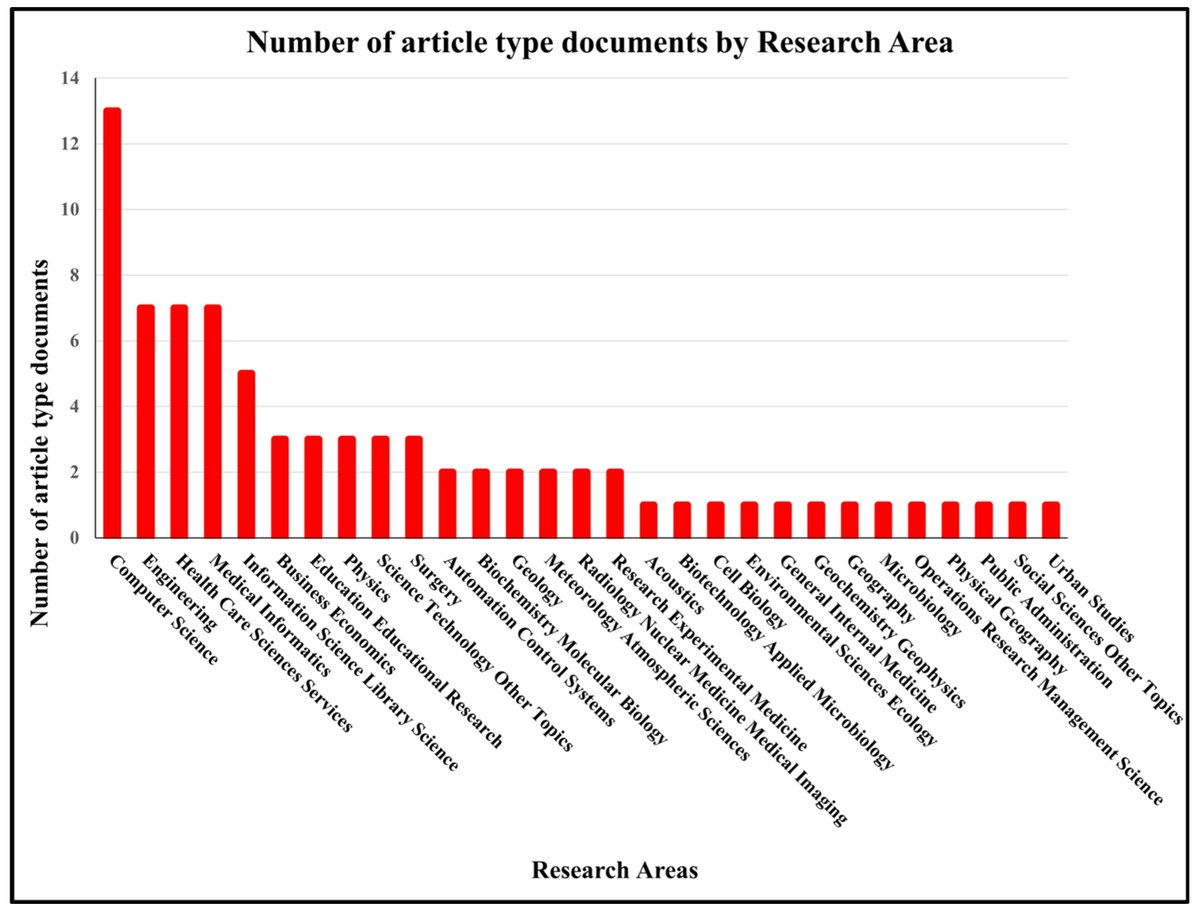
Title: Tracing the Influence of #LargeLanguage Models across the Most Impactful Scientific Works
Authors: Dana-Mihaela Petroșanu, Alexandru Pîrjan, Alexandru Tăbușcă
Views 7129, Citations 6
Find more at: mdpi.com/2079-9292/12/24/495…
#mdpielectronics #openaccess
2
85

25 May 2024
Earn a verified certificate from the #UniversityofNewMexico Continuing Education by enrolling in our upcoming #LargeLanguage ModelsBootcamp! ✨
Join our exclusive information session on June 13th to learn more: hubs.ly/Q02ypbGP0
#AI #LangChain #LLM #artificialintelligence

ALT information session - April 18th
1
2
2,465

First National Bank (FNB) is building a vector database to support generative artificial intelligence (AI) models that it is tapping into in a move aimed at improving the functionality of its mobile application.
itweb.co.za/article/itweb-tv…
#Storage #FNB #ChatGPT #Largelanguage

1
2
287

1 Mar 2024
AI Frenzy Upends Efforts to Keep Data Sites Green
AI’s growth raising questions about whether data centres can be operated sustainably
Patrick Sisson
West Texas, from the oil rigs of the Permian Basin to the wind turbines twirling above the High Plains, has long been a magnet for companies seeking fortunes in energy. Now, those arid ranch lands are offering a new moneymaking opportunity: data centres.
Lancium, an energy and data centre management firm setting up shop in Fort Stockton and Abilene, is one of many companies around the country betting that building data centers close to generating sites will allow them to tap into underused clean power.
“It’s a land grab,” said Lancium’s president, Ali Fenn.
In the past, companies built data centres close to internet users, to better meet consumer requests, like streaming a show on Netflix or playing a video game hosted in the cloud. But the growth of artificial intelligence requires huge data centers to train the evolving largelanguage models, making proximity to users less necessary.
But as more of these sites start to pop up across the United States, there are new questions on whether they can meet the demand while still operating sustainably. The carbon footprint from the construction of the centres and the racks of expensive computer equipment is substantial in itself, and their power needs have grown considerably.
Just a decade ago, data centres drew 10 megawatts of power, but 100 megawatts is common today. The Uptime Institute, an industry advisory group, has identified 10 supersize cloud computing campuses across North America with an average size of 621 megawatts.
This growth in electricity demand comes as manufacturing in the United States is the highest in the past half-century, and the power grid is becoming increasingly strained.
The Uptime Institute predicted in a recent report that the sector’s myriad net-zero goals, which are self-imposed benchmarks, would become much harder to meet in the face of this demand and that backtracking could become common.
“This is not just about data centres,” said Mark Dyson, a managing director at RMI, a non-profit or- ganisation focused on sustainability. “Data centres are a practice round for a much bigger wave of load growth that we are already seeing and are going to continue seeing in this country coming from electrification of industry, vehicles and buildings.”
The data centre industry has embraced more sustainable solutions in recent years, becoming a significant investor in renewable power at the corporate level. Sites that leased wind and solar capacity jumped 50% year over year as of early 2023, to more than 40 gigawatts, capacity that continues to grow. Still, demand outpaces those investments. And the need for more processing power is backing up the interconnection queue and creating stopgap solutions.
Power-hungry data centres in full force further complicate the balance. Data centres in the construction pipeline would, when complete, use as much power annually as the San Francisco metro area, according to a report released on Wednesday by the real estate services company JLL. Most sites coming online this year are already leased; in popular markets, significant space will not open up for at least two years.
—NYTNS
@Finstor85 @patialablue
6
2,168

Discover how ArangoDB empowers #LargeLanguage Models for real-world applications! 🚀 Dive into their latest blog to explore the seamless integration of knowledge and language, unlocking new possibilities in the realm of #AI.
Read more: okt.to/jbzf0e
#Innovation
2
120

2 Dec 2023
રિલાયન્સ જિયો અને TM ફોરમનું પ્રથમ ઇનોવેશન હબ શરૂ : જનરેટિવ AI અને મોટા ભાષાના મોડલના વિકાસને વેગ આપવાનો ઉદ્દેશ્ય
#RelianceJio | #TMForum | #AI | #LargeLanguage
divyabhaskar.co.in/business/…
1
254

12 Oct 2023
#ArtificialIntelligence – what aspects are important for the #cSuite to effectively manage data and security? The fourth part of my series deals with this topic.
When it comes to scaling AI, #leaders face a key data challenge:
‼️ Exploding data growth across multiple locations in various formats with poor data quality.
Traditional approaches such as Data Warehouses, Data Lakes, and Cloud Data Warehouses are not sufficient anymore to address these challenges, which is why data lakehouse architectures have evolved.
Four central aspects are of particular importance for #executives:
1️⃣ Data quality
The accuracy and quality of the data used to train AI models is critical. That means that organizations should invest in data cleansing and preparation technologies to ensure that their data is preprocessed, unbiased and transparent.
2️⃣ Data privacy and security
It's crucial to ensure that data is stored securely and that privacy regulations are followed. This includes implementing appropriate access controls, encryption, and anonymization techniques to protect sensitive data.
3️⃣ Data governance
It's relevant for businesses to have clear policies and procedures in place for managing and governing their data. That includes establishing data ownership and accountability, as well as defining processes for data sharing and collaboration.
4️⃣ Infrastructure and resources
Training AI models requires significant compute power and storage capabilities. As a result, businesses need the necessary infrastructure and resources in place to support their AI initiatives. This requires high-performance computing clusters or cloud-based AI platforms.
Advertisement/
With this in mind, I took a look at @IBM's #watsonx, more specifically the watsonx.data subcomponent.
watsonx.data is a fit-for-purpose data store, built on an open lakehouse architecture, supported by querying, governance, and open data and table formats (e.g. Iceberg, presto) to access and share data.
As I delved deeper into the topic, I came to appreciate the following points about watsonx.data:
✅ Access all data through a single point of entry across all clouds and on-prem environments
✅ Get started in minutes with built-in governance, security and automation
✅ Reduce the cost of data warehouse by up to 50% through workload optimization across multiple query engines and storage tiers
What I repeatedly notice in my conversations is, decision-makers embrace #generativeAI and #LargeLanguage Models (#LLMs). Primarily to optimize and automate across all business areas:
➡️ IT processes
➡️ Customer service workflows
➡️ Supply chain
➡️ Operations
➡️ HR and talent management
➡️ Sales and marketing
➡️ Finance
With watsonx.data, IBM provides a powerful component to scale #AI workloads across the entire organization, including all data.
Your thoughts are welcome!
#DigitalTransformation #DataSecurity #IBMpartners
Cc @pchamard @enilev @Khulood_Almani @antgrasso @DeepLearn007 @Shi4Tech @CurieuxExplorer @FrRonconi @chidambara09 @AlbertoEMachado @PawlowskiMario @labordeolivier @Hana_ElSayyed @RosyCoaching @mvollmer1 @drsharwood @Nicochan33 @FGraillot @nafisalam @efipm @KanezaDiane @pierrepinna @debashis_dutta @Analytics_699 @Corix_JC @Xbond49 @amalmerzouk @stratorob @RagusoSergio @EstelaMandela @sonu_monika @RLDI_Lamy @TheAdityaPatro @JagersbergKnut @IanLJones98 @enricomolinari @jeancayeux @psb_dc @FinMKTG @ipfconline1 @baski_LA @avrohomg @data_nerd @sallyeaves @bimedotcom @HaroldSinnott @c4trends @pierrecappelli @BetaMoroney

7
38
41
2,890

26 Sep 2023
Future of Large Language Models (LLMs),
Challenges in developing large language models c-sharpcorner.com/article/th… via @CsharpCorner #LLMs #LargeLanguage
6
7
200




1 May 2023
#LargeLanguage models are beginning to display (sometimes unexpected) emerging abilities and hold tremendous potential for radiology.’ #ChatGPT #LLM @myESR @EurRadiology ow.ly/C78I50O69H5
1
3
99

1 May 2023
#LargeLanguage models are beginning to display (sometimes unexpected) emerging abilities and hold tremendous potential for radiology.’ #ChatGPT #LLM @myESR @EurRadiology ow.ly/zFVT50O69ws
1
2
7
2,078