
BITCOIN RAILS #63: Bitcoin's threshold for trust-minimization—without a soft fork | with Sam Blackshear @b1ackd0g
🔗 YOUTUBE: youtu.be/0q8ti0tkMx0
🌱 SPOTIFY: open.spotify.com/episode/26t…
Some of the most impressive technical and commercial leaders in digital assets emerged from what insiders call the "Libra Mafia" — the team assembled by @Meta to build Libra (later Diem).
Though the project ultimately succumbed to regulatory pressure, it produced a generation of founders and engineers who went on to shape the industry, including Sam Blackshear (@b1ackd0g), a leading expert in blockchain programming languages and CTO of @Mysten_Labs
In this episode of Bitcoin Rails, Sam joins me to discuss:
- Why Mysten Labs has turned its focus toward Bitcoin why Sam leans conservative on soft-fork changes to Bitcoin script
- What makes a strong crypto programming language why EVM is missing the mark
- Why trust minimization remains the critical technical challenge standing between Bitcoin and broader DeFi adoption
- Why Mysten Lab's new Hashi architecture may be the most trust-minimized architecture for Bitcoin "bridging" without a soft fork
This episode of Bitcoin Rails is brought to you by:
LayerTwo Labs @LayerTwoLabs — developing research, software, and technologies for scaling Bitcoin via the integration of Drivechains (BIP 300/301)
Hashi on @SuiNetwork — a primitive for executing Bitcoin DeFi transactions, without having to trust a federated bridge or other centralized entity
BitBox @BitBoxSwiss — an open-source Bitcoin-only hardware wallet, with smooth UX and no compromises on security. Check out Bitbox [dot] swiss and use code BITCOINRAILS to get a discount
TIMESTAMPS:
00:00 — Intro
01:09 — Sam's Origin Story
04:40 — Building Move Inside Libra
10:18 — Why Sui Looks Like Bitcoin
15:55 — Libra Dies & Sui Is Born
23:06 — Quantum Resistance & Sui's Cryptography
28:24 — Bitcoin's Programmability Problem
34:39 — How Hashi Works
38:00 — Hashi's Trust Assumptions
53:54 — Why Nobody Else Could Build This
56:24 — The Future of Building on Bitcoin
4
11
48
33,875
BITCOIN RAILS #62: BITCOIN'S 3 BIGGEST CHALLENGES | with @neha Director of Digital Currency Initiative (DCI) @MIT
🔗 YOUTUBE: youtu.be/_1uCIwn-4s4
🌱 SPOTIFY: open.spotify.com/episode/7qo…
Neha Narula is the Director of the MIT Digital Currency Initiative, where she focuses on Bitcoin research and the broader design tradeoffs of decentralized money systems.
Her work often centers on what Bitcoin gets right—and where it runs into hard limits—especially around scaling, decentralization, and how systems behave as global demand increases.
In this interview, Neha and I explore longer-term risks to Bitcoin—including advancements in quantum computing and the implications of a diminishing block subsidy—as well as the ongoing challenge of scaling Bitcoin without losing access to self-custody.
A thoughtful conversation on how Bitcoin may change in the coming years, we also explore its social and governance dynamics—including tensions within the development community over protocol changes, scaling philosophies, and the future direction of the system.
This episode of Bitcoin Rails is brought to you by:
LayerTwo Labs @LayerTwoLabs — developing research, software, and technologies for scaling Bitcoin via the integration of Drivechains (BIP 300/301)
Hashi on @SuiNetwork — a primitive for executing Bitcoin Defi transactions, without having to trust a federated bridge or other centralized entity
BitBox @BitBoxSwiss— an open-source Bitcoin-only hardware wallet, with smooth UX and no compromises on security. Check out Bitbox [dot] swiss and use code BITCOINRAILS to get a discount
TIMESTAMPS:
00:00 Intro
00:17 Neha’s Origins
02:26 Bitcoin to MIT
04:40 Media Lab Culture and Mission
11:34 CBDCs as Digital Cash Debate
24:42 Funding Model and Bitcoin Security Budget
29:55 Reorg Risk and Quantum Computing
32:14 Bitcoin Dev Funding Map
42:49 Governance and Corporate Stakes
50:23 Quantum Tradeoffs Framework
56:02 Post Quantum Proposals
58:59 Prioritize PQ Transactions
01:00:54 Satoshi Coins Debate
01:02:12 Mining Incentives And Price
01:08:08 Corporate Funding And Governance
01:10:54 Scaling Self Custody And L2s
01:20:30 Bitcoin Kernel And Wrap Up
13
8
31
23,587
BITCOIN RAILS #61: QUANTUM CRYPTOGRAPHY FOR BITCOIN | with Dan Boneh @danboneh
🔗 YOUTUBE: youtu.be/F-HG87VJj_k
🌿 SPOTIFY: open.spotify.com/episode/7ly…
One of the most prolific and influential cryptographers in the world, it’s difficult to fully quantify the impact that Dan Boneh has had on Bitcoin and digital assets more broadly.
Through both his own research and his mentorship of some of the space’s most important contributors — e.g. Andrew Poelstra, @benediktbuenz, and @robin_linus — few people have done more to shape the cryptographic foundations underlying modern blockchains and digital finance.
More recently, Dan co-authored @Google's widely discussed paper, “Securing Elliptic Curve Cryptocurrencies against Quantum Vulnerabilities,” which reduced prior estimates of the resources required to run Shor’s algorithm against the elliptic-curve cryptography used by Bitcoin.
The paper reignited debate around quantum computing timelines and the long-term security assumptions behind modern cryptocurrencies.
In this episode of Bitcoin Rails, Dan and I discuss the current state of quantum computing, its potential implications for Bitcoin, and how he believes the Bitcoin community should think about preparing for a post-quantum future over the coming decade and beyond.
And yes, Dan shares his take on the “when quantum” question in the interview, among other key perspectives.
This episode of Bitcoin Rails is brought to you by my NEW sponsors:
LayerTwo Labs @LayerTwoLabs — developing research, software, and technologies for scaling Bitcoin via the integration of Drivechains (BIP 300/301)
Hashi on @SuiNetwork — a primitive for executing Bitcoin Defi transactions, without having to trust a federated bridge or other centralized entity
BitBox @BitBoxSwiss — an open-source Bitcoin-only hardware wallet, with smooth UX and no compromises on security. Check out Bitbox [dot] swiss and use code BITCOINRAILS to get a discount
TIMESTAMPS:
00:00 — Intro and Dan’s history with cryptography and Bitcoin
11:44 — Shor's algorithm: how a 1994 paper became cryptography's most important threat
16:39 — Building a quantum computer: superconducting qubits vs neutral atoms
25:37 — When should we start worrying about quantum computers? The timeline debate
31:51 — Have we already reached quantum computing's “ahá” moment?
39:09 — Inside the Google paper: how Shor's algorithm was optimized
49:57 — The Bitcoin mempool attack and the 10-minute window
59:21 — Mitigation: what should Bitcoin do to prepare for quantum?
1:11:54 — Hash-based vs lattice-based signatures: Dan's case for lattice
1:23:15 — ZK proofs, BIP361, and what to do with Satoshi's coins
1:31:52 — Encrypted mempools and MEV
1:38:29 — Why Bitcoin will survive quantum and Dan's message to Bitcoin builders
23
33
185
110,223
BITCOIN RAILS #60: BREAKING DOWN DIGITAL PAYMENTS | with @davidmarcus
🔗 YOUTUBE: youtu.be/hkm_19idbVU
🌿 SPOTIFY: open.spotify.com/episode/7Lm…
Few people have had a closer view of the evolution of digital money than @Lightspark CEO @DavidMarcus.
After helping scale @PayPal and leading @Meta’s ambitious—but highly scrutinized—cryptocurrency project Libra/Diem, Marcus has spent years navigating some of the toughest challenges in the payments industry, in both traditional and digital assets.
Marcus more recently turned his focus to Bitcoin with @Lightspark, exploring the limits of Lightning payments and building his own Bitcoin layer-2, @Spark. After the regulatory challenges of Libra/Diem, Marcus shares why Bitcoin is the only digital asset network he wants to build payment systems on going forward — and why non-Bitcoin payment systems could potentially lead to a "dystopian future" long-term.
In this interview, David and I dive into:
- What really happened with Libra/Diem—and why regulators stepped in so forcefully
- Why Marcus transitioned into Bitcoin, and why working on centralized digital assets will always carry regulatory risk
- The “dystopian future” of payment systems settling on “corp chains,” and why this is a real risk for our financial system
- How @Lightspark plans to continue developing Lightning as an interoperability layer, while developing its own statechains-based L2 for end-user experiences
This is the most comprehensive conversation I’ve had on the challenges—and opportunities—of using Bitcoin as a payments system. If you want to more deeply understand Bitcoin as a medium of exchange, there are few people better equipped to share insights on the topic.
This episode of Bitcoin Rails is brought to you by my NEW sponsors:
LayerTwo Labs @LayerTwoLabs — developing research, software, and technologies for scaling Bitcoin via the integration of Drivechains (BIP 300/301)
Hashi on @SuiNetwork — a primitive for executing Bitcoin Defi transactions, without having to trust a federated bridge or other centralized entity
BitBox payment — an open-source Bitcoin-only hardware wallet, with smooth UX and no compromises on security. Check out Bitbox [dot] swiss and use code BITCOINRAILS to get a discount
TIMESTAMPS:
00:00 Intro
00:51 PayPal Origins And Mobile Push
05:06 Falling Down The Bitcoin Rabbit Hole
07:50 Coinbase Board And Scaling Lessons
09:41 Meta Move And Libra Vision
15:22 Libra Backlash
26:01 From Lightning to Spark
31:47 Lightning for Remittances
32:53 Selling Bitcoin Post FTX
35:36 Lightning Growth Debate
38:56 Why Spark Wins
41:22 The Future of Money Apps
46:35 Stablecoins on Spark
51:34 RWAs and Programmability
57:47 Dollars vs Bitcoin Future
5
4
25
3,723

Over the years, dozens of people joined my podcast and praised Drivechains
None of these have any affiliation to LayerTwo Labs, they’re just independent thinkers who arrived at the same conclusion:
Bitcoin would benefit from BIP300
This is why Ecash is such a big deal!
5
11
62
19,534


Paul Sztorc’s hard fork of Bitcoin, called eCash, will have a 400kb blocksize and drivechains
Some of the drivechains include zSide for zCash privacy, Thunder for large block scalability, and Truthcoin for conditional prediction markets
All fees will go to the miners. He’s using Bitcoin Core with CUSF (Core Untouched Soft Fork), so all of these features could be added to Bitcoin right now
Also, LayerTwo Labs has created a CUSF for OP_CAT activation. You can have OP_CAT right now, if 51% hashrate activates it
1
2
108
BITCOIN RAILS #59: Post-Quantum Bitcoin Signatures ( their tradeoffs) | with BIP 360 co-author @Ethan_Heilman and @Blockstream Head of Research @n1ckler
🔗 YOUTUBE: youtu.be/o3RNpsprTyE
🌿 SPOTIFY: open.spotify.com/episode/5vk…
According to BIP 360 co-author Ethan Heilman, Bitcoin needs a minimum of two soft forks to become quantum resistant: P2MR (or an output type that can safely execute PQ signatures) a post-quantum checksig (signature scheme).
Ethan and the BIP 360 team (including myself and @cryptoquick) introduced the P2MR part via a BIP 360 update late last year—but the question remains, what’s the most appropriate PQ signature scheme for Bitcoin?
They all have substantive tradeoffs, but hash-based signatures seem to be leading technical discourse—likely due to recent optimizations by @n1ckler and the broader @Blockstream research team.
It was an honor to sit down with both of these men - arguably the two most influential and productive cryptographers in Bitcoin quantum mitigation right now - for an in-depth review of the leading PQ signature schemes and a temperature check on Bitcoin’s post-quantum planning process.
TBH, if you want to skip the noise and jump straight to the signal on quantum, this is the interview to watch.
In this episode, we discuss:
- What needs to happen at the soft fork, infra, and mitigation levels to fully quantum-harden Bitcoin
- Recent updates to BIP 360 breakdown of the leading hash-based signatures schemes for Bitcoin (SHRINCS SHRIMPS)
- Why we may actually get consensus around a stateful scheme for Bitcoin
- Comparisons of hash-based signatures vs Lattice and Isogeny-based schemes
- Assessing the risks of both waiting too long and acting too fast (and why quantum is a better threat to be facing than a potential classical attack)
This episode of Bitcoin Rails is brought to you by my NEW sponsors:
- LayerTwo Labs @LayerTwoLabs — developing research, software, and technologies for scaling Bitcoin via the integration of Drivechains (BIP 300/301)
- Hashi on @SuiNetwork — a primitive for executing Bitcoin Defi transactions, without having to trust a federated bridge or other centralized entity
- BitBox @BitBoxSwiss — an open-source Bitcoin-only hardware wallet, with smooth UX and no compromises on security. Check out Bitbox [dot] swiss and use code BITCOINRAILS to get a discount
TIMESTAMPS:
00:00 Intro
02:18 Ethan’s Quantum Wakeup
05:18 How Blockstream Enters Post Quantum
09:25 BIP 360 Explained
12:11 How Bitcoin Transitions to PQ
17:35 Choosing Post Quantum Signatures
23:20 How Blockstream Created SHRINCS
27:22 Signature Budgets Importance Explained
41:13 What are SHRIMPS?
44:51 SHRIMPS vs SHRINCS
47:48 Why SLH-DSA Alone Won’t Cut It
49:24 Is a SHRIMPS SHRINCS BIP Coming?
51:51 Blockstream’s Big Plans for Liquid
59:04 Quantum Readiness Roadmap
01:02:22 Importance of a PQ Recovery Plan
01:05:35 How Long Would a PQ Migration Take
01:11:17 Quantum Watchlist Recommendations
10
19
65
23,976

May 4
Paul Sztorc (founder of LayerTwo Labs, author of BIP 300/301, the man behind Truthcoin and Hivemind, shipping the eCash Bitcoin hardfork this August) just endorsed a token on Solana.
For a decade his thesis has been unwavering: every non-Bitcoin chain is a distraction. His stance on alt-L1s has ranged from dismissive to openly hostile.
So when that researcher names a specific Solana-based asset and signals genuine support, it means Solana is doing something the Bitcoin-only crowd has been structurally unable to see.
Disciplined skeptics don't break ten years of consistency for noise.
Believe in something $ECASH
2
5
30
1,361


Il Ceo di LayerTwo Labs @Truthcoin ha annunciato un hard fork di Bitcoin chiamato eCash, previsto per agosto 2026 al blocco 964.000.
Il dettaglio che ha scatenato il dibattito: circa 500.000 dei BTC attribuiti a Satoshi Nakamoto, sulla nuova blockchain, non verranno assegnati agli indirizzi originali. Verranno spostati su nuove chiavi controllate da investitori, sviluppatori e finanziatori del progetto.
L'attribuzione si basa sul pattern Patoshi, un'euristica statistica individuata da Sergio Lerner nel 2013. Robusta, riprodotta, citata. Resta un'euristica. Nessuno ha la firma digitale di Satoshi su quegli output.
Sztorc ha lasciato intendere che il fork si annullerebbe se Bitcoin Core attivasse BIP300 e BIP301 prima di agosto. Le stesse drivechain su cui lui lavora dal 2015 e che Core non ha mai adottato dopo dieci anni di dibattito.
Quello di Sztorc non è un caso isolato, si unisce a BIP-110 e BIP-361, tutte proposte arrivate negli ultimi mesi e che comporterebbero un fork.
Dal 2017 in poi nessun fork ha intaccato la dominance di Bitcoin. BCH, BSV, BTG, XEC: tutti quotati, tutti irrilevanti. Chi osserva Bitcoin da anni sa che proporre un fork è perdere tempo, a meno che il fallimento non sia parte del calcolo. Annunciare un fork muove i mercati. Chi sa quando arriva l'annuncio può posizionarsi di conseguenza.
Ne parlo in dettaglio nella Fermata #297.
bitcointrain.it/p/fermata-29…
14
8
62
15,269

This August, your #Bitcoin stack doubles. Paul Sztorc is hard forking BTC into eCash and bringing the sidechain technology Blockstream promised over a decade ago and never delivered. The same 21 million coins. Unlimited Layer 2s for privacy, scaling, prediction markets, anything. Free coins for every BTC holder. Check out our talk with Paul Sztorc, the inventor of Drivechain (BIP 300) and the founder of LayerTwo Labs, and he's been building this technology since 2015.
The maxis will scream "shitcoin" because they always do. But with empty blocks, dead fees, and Saylor barely above zero on his lifetime stack, maybe it's time to ask who's actually saving Bitcoin and who's babysitting its corpse.
14
11
36
5,201

Piece of 💩 co-founder and CEO of LayerTwo Labs, Sztorc, announced the project, called eCash, on Friday. The plan would “manually reassign” about 500,000 of the roughly 1.1 million Bitcoin associated with the so-called “Patoshi pattern,” a mining pattern some researchers believe is linked to Nakamoto.
Paul Sztorc is anti-cryptocurrency, and this shows that you don’t own your cryptocurrency. This will only kill the blockchain and feels like an inside job.
@Truthcoin is the enemy of cryptocurrency now; we should do ANYTHING & EVERYTHING to make him and his Layer Two irrelevant.
Paul Sztorc is a greedy, evil asshole who is the enemy of progress and can’t keep his own words from before. This is a money grab meant to benefit him personally.
4
1
17
394


Apr 27
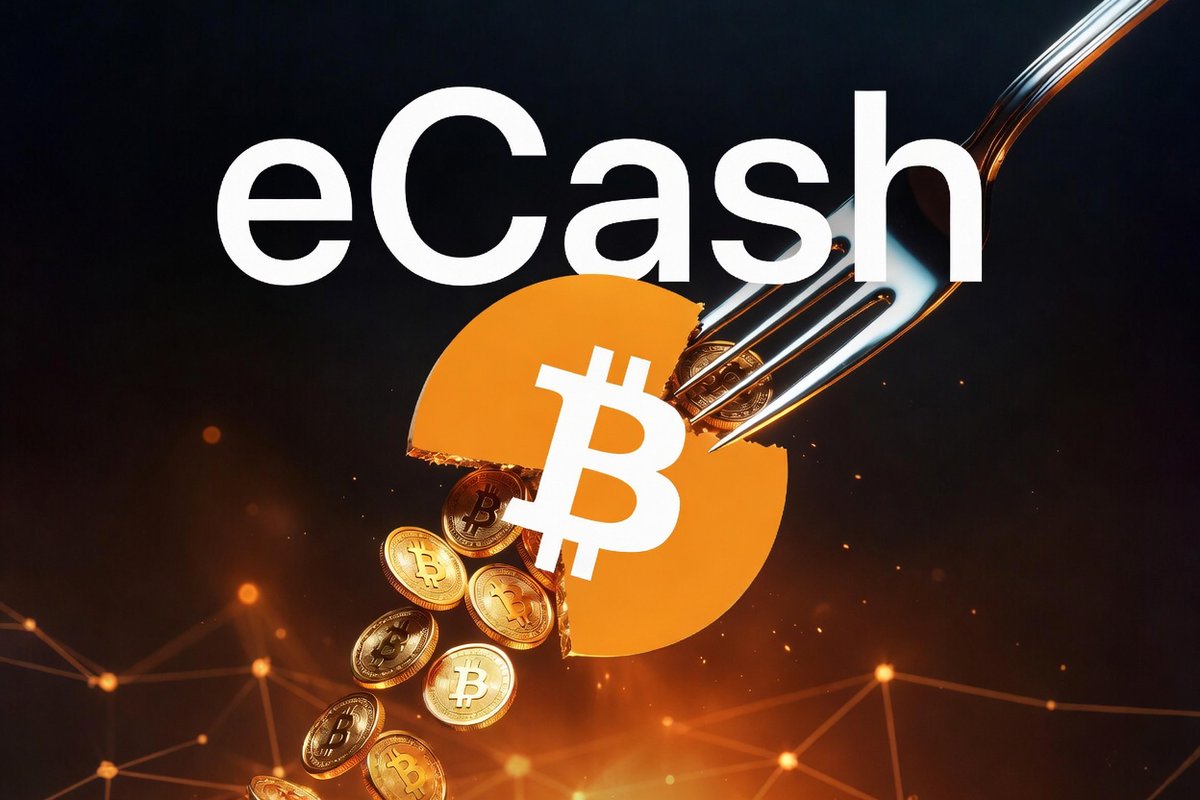
🚨 Hold $BTC, Get Free eCash: August Fork Airdrop Explained
If you held Bitcoin during the 2017 forks (Bitcoin Cash, Bitcoin Gold, Bitcoin Diamond), you already know how this works. You received free coins just for HODL-ing Bitcoin. eCash is doing the same thing, but with a different technical thesis.
💰 It’s best to think of eCash as a “free dividend”
At the snapshot, every $BTC you control automatically gives you eCash at a clean 1:1 ratio. You receive it, then decide: sell, hold, or ignore. Your Bitcoin stays untouched.
Important Details about eCash👇
What is eCash?
eCash is an upcoming Bitcoin fork launching in August 2026 by Paul Sztorc, author of Bitcoin Improvement Proposal 300 (BIP-300) & the founder of LayerTwo Labs
Why is this fork different from 2017?
The 2017 forks were mostly about block size, that is temporary bandwidth fixes with no long-term scalability roadmap
eCash is different in several key ways:
🔹 It's not called "Bitcoin": a distinct brand from $BTC, although there are other projects named "eCash", which could cause confusion
🔹 4 months of advance warning: time to prepare
🔹 Replay protection a coin-splitter tool: your $BTC and eCash transactions stay completely separate
🔹 A permanent scalability architecture, not a stopgap
🔹Satoshi coins allocated to “investors”: basically a pre-mine of eCash
⚠️The last point is quite controversial since the 1.1M $BTC mined by Satoshi Nakamoto will essentially be distributed as a pre-mine, amounting to 1.1M eCash, to investors who will then have control of a significant percentage of supply
The Technical Core
eCash's L1 is a near-copy of Bitcoin Core using SHA256d mining The key upgrade? It activates BIP-300/301 via a soft fork using the untouSDK: no changes to the base layer code required.
What is BIP-300?
BIP-300 enables drivechains, a mechanism that allows multiple merged-mined Layer 2 chains to run simultaneously, secured by Bitcoin-level hashrate, without altering the base protocol.
eCash launches with 7 competing L2s , each targeting a different use case:
🔒 Privacy Chain: Monero-style confidential transactions
📊 Prediction Markets: Decentralized forecasting
🔄 DEX Layer: On-chain exchange
🖼️ NFT Layer: Digital ownership
🪪 Identity Layer: Decentralized ID
⚛️ Quantum-Resistant: LayerFuture-proof cryptography
⚡ Scalability Layer: 8 billion user capacity
How to claim your eCash
✅Hold $BTC in a self-custody wallet (not an exchange) before the fork block
✅After the fork, transfer your $BTC to a fresh wallet to safely avoid any replay transactions
✅Import your old seed/private key into an eCash-compatible wallet
✅Use the coin-splitter tool to cleanly separate your $BTC and eCash
✅Then decide: sell, hold, or ignore
No action is required at this time and it’s uncertain whether exchanges will support the eCash fork
⚠️ Honest Risk Assessment
This is still a fork with real uncertainties:
-Fork execution could face delays or technical issues
-Market reception is unknown: free coins aren't always valuable coins and exchanges may not introduce markets for eCash
-Drivechains are unproven at scale: BIP-300 has never been live on a major chain
-L2 ecosystem development depends on developer adoption post-launch
The Bottom Line
eCash is a new scalability experiment, one that, if it works, could demonstrate what Bitcoin could become with drivechains activated.
However, with the pre-mining of Satoshi’s coins and uncertainty around ecosystem adoption means the launch is likely to end up as a replay of previous forks like Bitcoin Gold - a free ‘dividend' for HODLers who can dump eCash to get more $BTC
🔔We’ll provide more information as the launch approaches, including how to safely claim your allocation. DYOR and stay tuned for updates.
3
8
1,406

Apr 27
💰 Bitcoin Hard Fork and eCash Launch
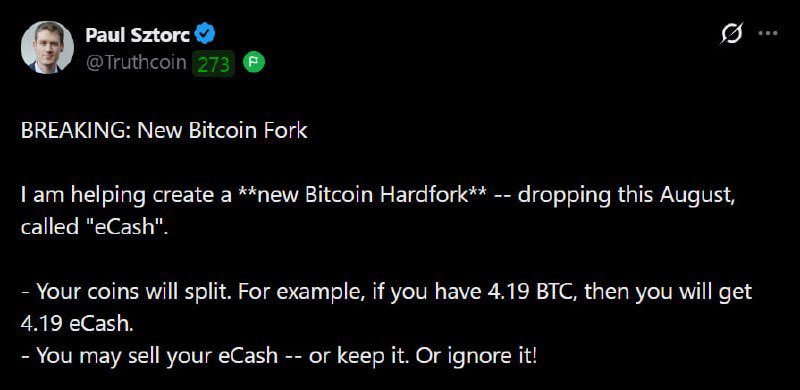
Paul Storch, Bitcoin developer and CEO of LayerTwo Labs, announced eCash, a hard fork planned for August. It adds Layer 2 networks (Drivechains) to Bitcoin for privacy, decentralized exchanges, prediction markets, and quantum resistance. Every BTC holder gets eCash tokens 1:1.
No presale funding is possible; Storch suggests using half the "Satoshi coins" (~550,000 BTC, worth $40 billion) for institutional investors.
The fork’s success depends on miners and exchanges listing eCash; refusal risks token illiquidity.
3
41

BITCOIN RAILS #58: DRIVECHAINS HARDFORK IS COMING | with @layertwolabs CEO @truthcoin
🔗 YOUTUBE: youtu.be/VLYbluQNFBQ
🌿 SPOTIFY: open.spotify.com/episode/5oa…
Paul Sztorc is one of the most controversial figures in Bitcoin—and he’s about to pull off one of his most controversial moves of all: a full-blown Bitcoin hardfork.
Actuating his vision of “e-cash,” as the new protocol is called, Paul is pushing forward a new Drivechains-enabled Bitcoin experience—citing governance challenges and a “broken soft fork process” as reasons for the move.
“If BIP300/301 was activated in Bitcoin, we would stop,” says @truthcoin—adding, “it’s an irony that the soft fork was invented because the hard fork was too difficult.”
In this interview, I asked Paul all the difficult questions you can imagine—and ultimately found myself sympathizing with much of his defense.
Regardless of one’s personal politics, this interview sheds light on the challenges we face in Bitcoin governance as a whole—and may be worth reviewing to better understand the political statement (neo—political artwork?) that Paul’s work represents.
In this episode, Paul shares:
- Why he’s making the bold move to hard fork — and the various levels of risk he’s assuming in the process.
- His frustration with the Bitcoin soft fork process and why, regardless of the risks, it “may be time to reconsider the hard fork.”
- Why the Drivechains vision (BIP300/301) is one worth fighting for, and why the payments use-case must be actuated to fulfill Satoshi’s vision
- The problem with Bitcoin’s “decel” culture, and why the lack of competition may be the root of the problem.
This episode of Bitcoin Rails is brought to you by my NEW sponsors:
- LayerTwo Labs @LayerTwoLabs — developing research, software and technologies for scaling Bitcoin via the integration of Drivechains (BIP 300/301)
- Hashi on @SuiNetwork — a primitive for executing Bitcoin Defi transactions, with having to trust a federated bridge or other centralized entity
- BitBox @BitBoxSwiss — an open-source Bitcoin-only hardware wallet, with smooth UX and no compromises on security. Check out Bitbox [dot] swiss and use code BITCOINRAILS to get a discount.
TIMESTAMPS:
00:00 Intro
00:44 Bitcoin Fork Incoming
03:08 Why We Need a New Coin
06:49 Drivechain Origin Story
08:14 How Drivechains Work
12:30 Miner Incentives And L2s
16:18 The Lightning Derangement
18:20 Why Soft Forks Are Harder to Execute
26:58 CUSF Explained and Miner Rationality
40:41 Getting to 8 Billion People
47:49 Early Adopters vs Late Users
50:49 Satoshi Coins Fork Plan
55:53 Why Are Satoshi’s Coins Getting Premined
01:01:26 E-Cash and Technical Changes
01:25:51 Fork Timing and Closing Thoughts
10
4
34
6,894

Apr 23
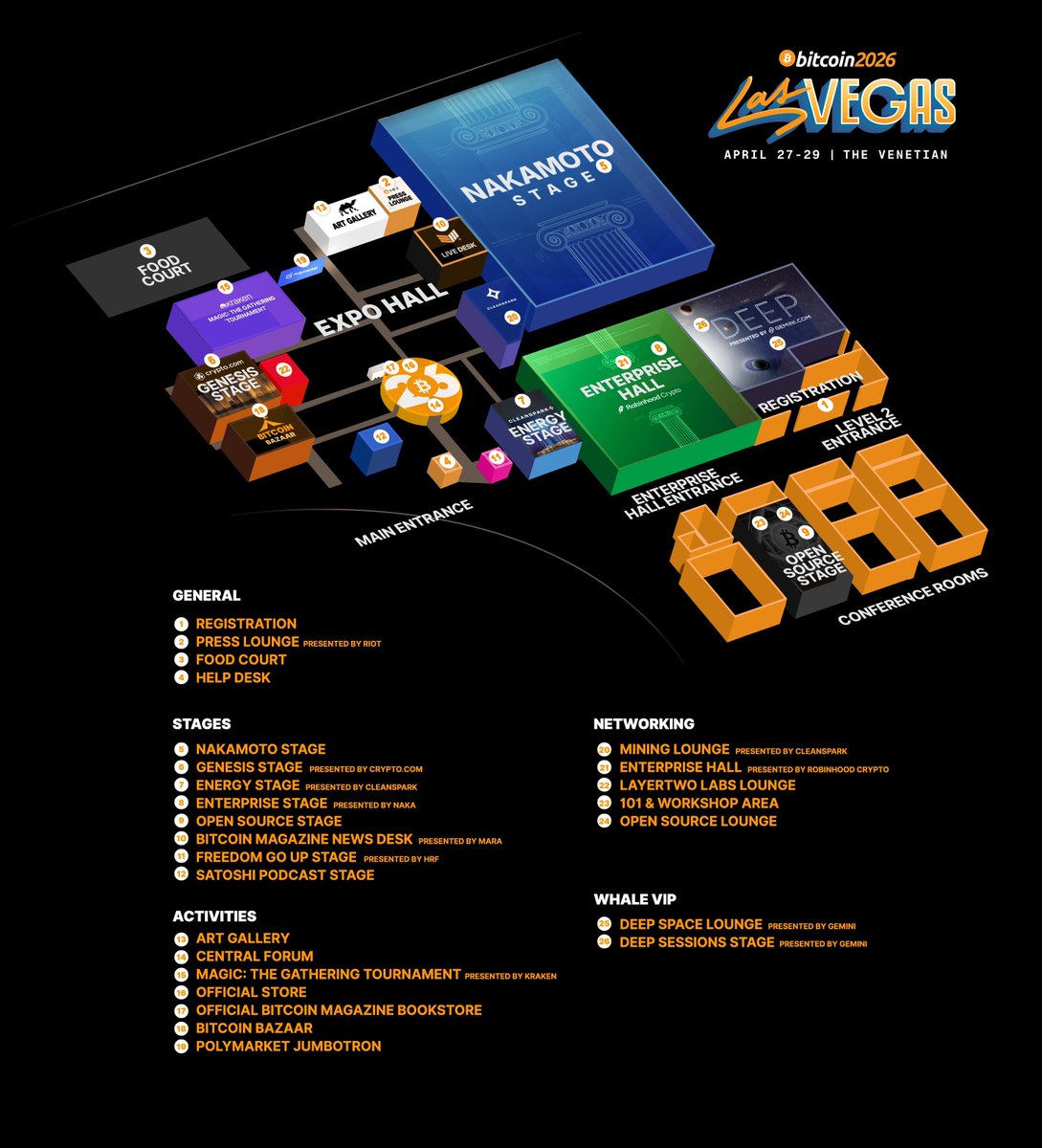
Be sure to come hang out at the LayerTwo Labs Lounge while waiting for your favorite speakers!

THE FLOOR PLAN IS SET FOR BITCOIN 2026 📌
Which location are you most excited about? 👀
1
5
275