
Today, it may come from how quickly it can learn what it doesn't know.
And that changes everything.
showcase.britishpedia.com/ar…
#FutureOfWork #Leadership #LearningOrganization #Innovation #BritishPEDIA
4

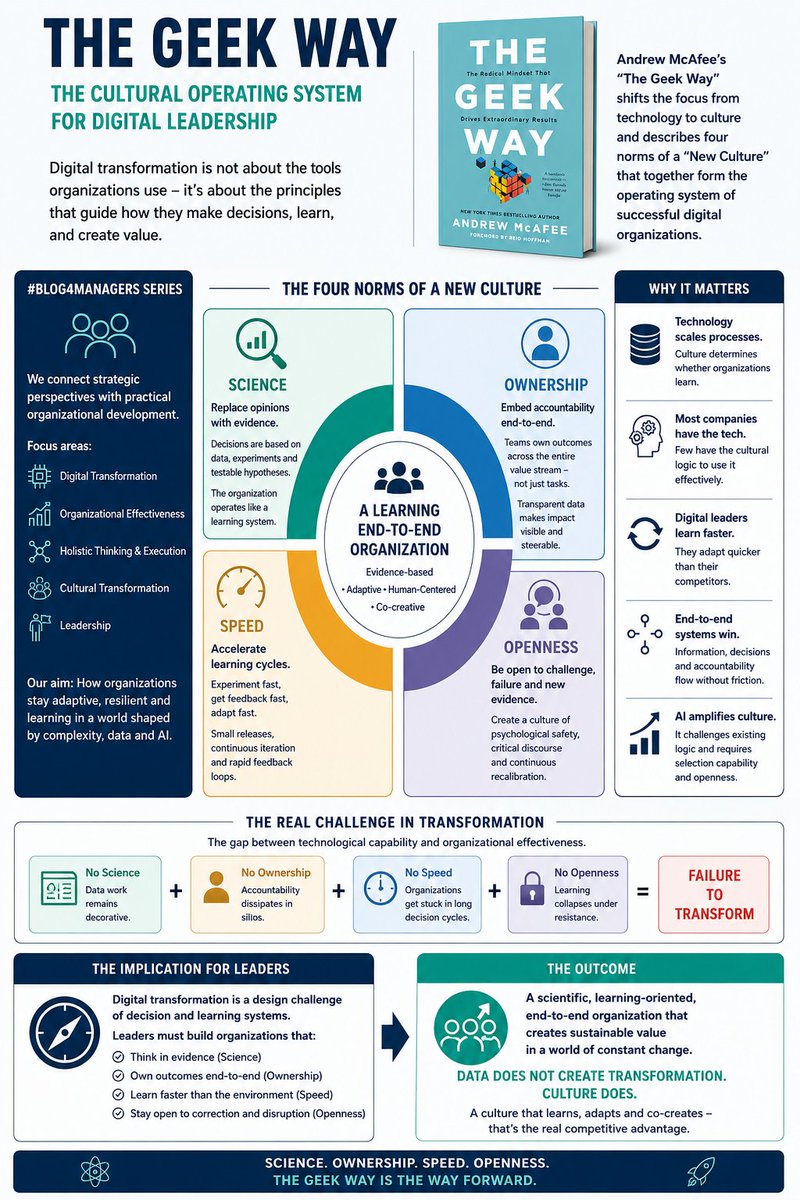
⬛️ Technology Scales Processes. Culture Determines Whether Organizations Learn - Lessons from The Geek Way
My #Blog4Managers series combines strategic perspectives with practical organizational development. At its core are topics that are becoming increasingly mission-critical for modern enterprises: digital transformation, organizational effectiveness, holistic thinking and execution, cultural transformation, and contemporary leadership. The objective of the series is not to describe isolated methods or technologies, but to explore how organizations can remain adaptive, resilient, and capable of learning under conditions shaped by complexity, data-centricity, and AI.
📢 Andrew McAfee’s The Geek Way provides a particularly relevant reference framework for this discussion because it consistently shifts digital transformation from the technological to the cultural dimension. The central question is no longer which tools organizations deploy, but according to which normative principles they make decisions, learn, and create value.
McAfee describes four norms of what he calls a “New Culture”:
▪️ Science,
▪️ Ownership,
▪️ Speed, and
▪️ Openness.
🔹 Together, they form the cultural operating system of successful digital organizations. What is especially remarkable is not merely the description of specific management practices, but the underlying logic of organizational adaptability. The Geek Way implicitly describes the transition from technology-centered transformation toward evidence-based, human-centered learning systems. That is precisely what makes the book so relevant.
🔹 Many organizations today invest heavily in platforms, data architectures, and AI systems without simultaneously building the cultural conditions necessary for those technologies to generate meaningful organizational impact. Technology scales processes. Culture determines whether organizations learn. Within the context of data-based work, it becomes particularly clear why these norms are so powerful.
▪️ Science replaces opinions with evidence. Decisions are no longer legitimized primarily through hierarchy, experience, or intuition, but through data, experimentation, and testable hypotheses. This creates an organization that functions as a learning system. Co-creation, experimentation, iterative work, and continuous measurement become the foundation of governance and execution. Companies such as Amazon and Netflix have built their operational strength precisely on this principle: decisions are not scaled because experienced managers made them, but because they are empirically validated.For digital transformation, this represents a fundamental break from classical management logic. The perfect business case is no longer the central focus; instead, success depends on the ability to generate valid insights quickly and act on them decisively. The real innovation of digital organizations therefore lies not primarily in technology itself, but in their capability for collective learning adaptation. In an end-to-end system, Science becomes far more than analytical competence - it is the mechanism that overcomes local optimization in favor of systemic evidence. Data is not an end in itself, but part of an organizational knowledge system.
▪️ Ownership embeds accountability across the entire value chain. In many established organizations, accountability remains structurally fragmented: functions optimize isolated domains without considering the performance of the overall system. Sales optimizes revenue, Operations optimizes efficiency, IT optimizes stability - yet no one truly owns the outcome of the end-to-end system. Geek culture breaks with this logic. Ownership here means not only responsibility, but accountability for outcomes across the entire end-to-end process. In highly digital organizations (Maturity Levels 4–5), this becomes especially visible: teams are accountable not for isolated tasks, but for customer value, system performance, and the continuous improvement of an entire value stream.Combined with data-driven transparency, Ownership becomes visible, measurable, and manageable. Teams can immediately see the impact of their actions and adjust accordingly. Particularly in platform models and integrated value streams, this form of Ownership becomes the prerequisite for true scalability. Without it, organizations create highly digitized silos instead of adaptive systems. This is where a fundamental shift in modern organizational development becomes visible: away from functional control and technology dominance toward human-centered, collaborative value creation systems. Co-creation therefore evolves from a complementary method into a structural prerequisite for organizational learning capability.
▪️ For McAfee, Speed should not be understood merely as velocity, but as the structural capability to radically shorten learning cycles. Organizations that experiment quickly, integrate feedback rapidly, and adapt continuously develop a decisive competitive advantage. Speed does not primarily emerge from increased pressure or higher operating tempo, but from reducing friction within the system. In practice, this means small releases instead of large-scale programs, continuous iteration instead of episodic transformation, and rapid feedback loops instead of months-long governance cycles. Data provides the foundation by making progress visible and enabling rapid course corrections. This is why digital leaders are often not more successful because they have superior long-term plans, but because they learn faster than their competitors.
Many organizations digitize processes. Only a few digitize learning. In an end-to-end context, Speed therefore becomes an emergent system characteristic: only when information, decisions, and accountability can flow through the organization without structural friction does true adaptability emerge.
▪️ Openness ultimately ensures that the other three norms can function effectively at all. It describes the willingness to question assumptions, make mistakes visible, and accept new evidence - even when it contradicts existing beliefs, power structures, or established experience. For data-driven organizations, this is essential:
📢 Data only creates impact when it is culturally accepted.
Many companies fail not because of missing technology, but because of defensive organizational patterns in which evidence is ignored whenever it threatens established narratives. Openness creates the cultural space for critical discourse, interdisciplinary learning, and systemic thinking. In combination with AI, this norm becomes even more important. Algorithmic systems continuously generate new recommendations, patterns, and disruptions.
🔹 Organizations must therefore learn to constantly challenge decision-making logic instead of merely digitizing existing routines. AI thus amplifies not primarily technological capability, but cultural selection capability: organizations must learn which evidence they are willing to accept, which routines they are prepared to abandon, and which mental models they must evolve. Openness therefore becomes a prerequisite for organizational learning capability under conditions of growing complexity.
🔹 Taken together, the four norms address one of the central problems of many transformation initiatives: the gap between technological capability and organizational effectiveness. Many companies today possess data platforms, analytics tools, and modern digital architectures - yet they lack the cultural logic required to use them effectively. Technology scales processes. Culture determines whether organizations learn.
📢 Without Science, data work remains decorative. Without Ownership, accountability dissipates across functional silos. Without Speed, organizations stagnate in lengthy decision and escalation cycles. And without Openness, learning collapses under internal resistance.
🔹 This is precisely where the real challenge of modern organizational development lies. The future viability of digital organizations will not primarily depend on technological competence, but on their ability to place evidence above hierarchy, institutionalize learning systematically, and develop collective adaptability. Digital maturity emerges where technology, culture, and co-creation are no longer treated separately, but function together as an integrated learning and value creation system. For leaders, this creates a clear implication: digital transformation is fundamentally not a technology project, but a design challenge centered on organizational decision and learning systems.
📢 The goal is to build an organization that thinks in evidence-based ways (Science), embeds accountability consistently along value streams (Ownership), learns faster than its environment (Speed), and remains open to correction, disruption, and strategic realignment (Openness). Ultimately, this is the true competitive advantage of digital organizations.
⭐️ The Geek Way therefore provides a precise answer to why so many transformations fail to meet expectations despite massive investments. Technology itself is not the bottleneck. The real bottleneck is the cultural operating system into which technology is embedded. Or more directly: data alone does not create transformation.
📢 Only a culture that functions as a scientific, learning-oriented, end-to-end system can make digital capabilities effective at scale.
✨ @amcafee @Khulood_Almani @timo_vi @TamaraMcCleary @AkwyZ @MaryRich78 @rwang0 @drsharwood @DrHolzwarth @HelenBevan @phinifa @pierrecappelli @JimHarris @jenstirrup @GlenGilmore @subare @Ronald_vanLoon @enilev @Scobleizer @AndrewYNg @YuHelenYu @quepasachico ✨
#DigitalTransformation #OrganizationalDevelopment #Leadership #CultureChange #Data #AI #DigitalTransformation #SystemicThinking #Effectiveness #LearningOrganization #EndToEnd #ValueCreation #Science #Ownership #Speed #Openness #TheGeekWay 💡
#Blog4Managers by @thomas_dettling and Image created by @thomas_dettling | powered by GPT 5.5
1
10
11
550

Planning once a year isn't enough in today's world. True progress comes from continuous sensemaking and learning, both individually and as an organization. Based on the book Reshuffle: amazon.com/dp/B0DTKW6NQV. #BusinessStrategy #ContinuousImprovement #LearningOrganization
1
2
150
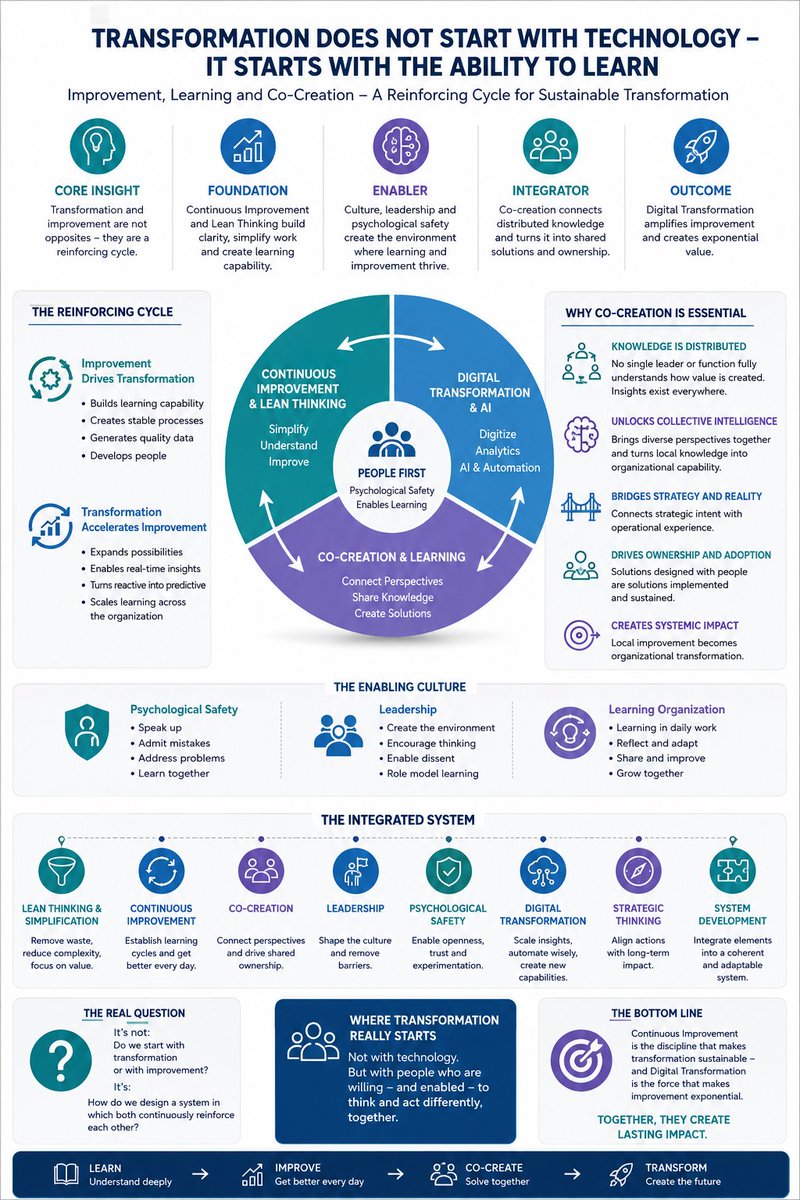
⬛️ #Blog4Managers: Transformation Starts with the Ability to Learn — It Happens When Systems Improve Together
🔹The False Separation
Many organizations still treat Continuous Improvement and Digital Transformation as separate worlds: one focused on operational excellence, the other on strategic renewal. But this distinction is increasingly misleading. Sustainable transformation does not emerge from technology alone. It emerges from a system in which learning, improving, and co-creating are deeply interconnected.
Transformation and improvement are not opposites - they are a reinforcing cycle.
🔹Improvement Creates Learning Capability
Continuous Improvement and Lean Thinking create the foundation. They simplify processes, reduce complexity, and focus attention on value creation. But their greatest contribution is not efficiency. It is learning capability. Organizations that truly understand how work happens can improve processes, adapt faster, and apply technology meaningfully. Without this capability, companies simply digitize existing inefficiencies. With it, Digital Transformation becomes targeted, scalable, and sustainable.
At the same time, transformation strengthens improvement:
▪️data expands visibility,
▪️AI increases predictive capability,
▪️digital technologies accelerate learning cycles.
Transformation accelerates improvement - and improvement stabilizes transformation.
🔹Culture Enables Transformation
This cycle only works under one decisive condition:
culture. A learning organization is not defined by training programs, but by behaviors embedded in daily work. At the center lies a critical principle:
People First - and with it, psychological safety.
Without psychological safety:
▪️problems stay hidden,
▪️mistakes are not discussed,
▪️learning stops.
Without learning:
▪️improvement becomes superficial,
▪️transformation turns into activity without impact.
🔹Leadership Creates the Environment
Leadership is therefore not about providing answers.
It is about creating environments:
▪️where thinking is encouraged,
▪️where dissent is possible,
▪️where learning becomes part of how work happens.
Leadership enables organizational learning.
🔹Why Co-Creation Matters
Transformation cannot be imposed - it must be developed collaboratively. Co-creation is not a participation format or a cultural add-on. In complex organizations, it is a strategic necessity. Why?
Because knowledge is distributed. No single leader, back office, or transformation department fully understands how value is created across the system. Operational realities, customer interactions, technical constraints, inefficiencies, and improvement opportunities exist across teams and functions.
This is why Continuous Improvement and Lean Thinking matter so deeply:
▪️They surface knowledge.
▪️They make work visible, expose friction, and create learning loops close to operational reality.
▪️The more complex the system becomes, the more dependent organizations are on collective intelligence.
Without co-creation:
▪️strategy disconnects from operations,
▪️solutions are designed in isolation,
▪️adoption remains superficial,
▪️improvement stays localized.
Organizations may implement technology -
but they fail to create ownership, learning, and systemic capability.
🔹From Local Learning to Systemic Transformation
Co-creation changes this dynamic fundamentally. It connects perspectives, challenges assumptions, and links operational experience with strategic intent.
This is where improvement and transformation converge:
▪️Continuous Improvement creates learning loops
▪️Co-creation connects and scales them
▪️Digital Transformation amplifies their impact
What begins as local improvement can evolve into systemic transformation. Especially in the age of AI and growing complexity, this becomes decisive.
The future will not belong to organizations with the most technology.
It will belong to organizations that best integrate distributed knowledge, collective learning, and collaborative problem-solving into how transformation itself is designed. Co-creation is therefore not participation for the sake of inclusion. It is the organizational capability to transform distributed intelligence into sustainable transformation.
🔹The Integrated System
Co-creation becomes the integrative element between:
🔸Strategic Thinking
🔸System Development
🔸Continuous Improvement
🔸Digital Transformation
Within such a system:
▪️Lean Thinking creates clarity
▪️Continuous Improvement establishes learning cycles
▪️Co-creation drives ownership
▪️Leadership shapes culture
▪️Psychological Safety enables openness
▪️Digital Transformation scales value creation
▪️Strategic Thinking aligns long-term direction
▪️System Development integrates everything into a coherent whole
🔹The Real Question
The critical question is not:
Do we start with transformation or with improvement?
The real question is:
How do we design a system in which both continuously reinforce each other?
Because transformation without improvement remains superficial. And improvement without transformation remains limited.
🔹Where Transformation Really Starts
The future belongs to organizations that understand:
Continuous Improvement is the discipline that makes transformation sustainable — and Digital Transformation is the force that makes improvement exponential.
And both start in the same place: Not with technology. But with people who are willing — and enabled — to think and act differently, together.
✨ @Khulood_Almani @timo_vi @TamaraMcCleary @AkwyZ @MaryRich78 @rwang0 @drsharwood @DrHolzwarth @HelenBevan @phinifa @pierrecappelli @JimHarris @jenstirrup @GlenGilmore @subare @Ronald_vanLoon @enilev @Scobleizer @AndrewYNg @YuHelenYu @quepasachico
#Leadership #Transformation #LeanThinking #ContinuousImprovement #DigitalTransformation #SystemsThinking #CoCreation #PsychologicalSafety #OperationalExcellence #AI #LearningOrganization #LeadershipDevelopment #DesignThinking #Strategy #Innovation #PeopleFirst ✨
Infographic by @Thomas_dettling | GPT 5.5
1
14
17
503
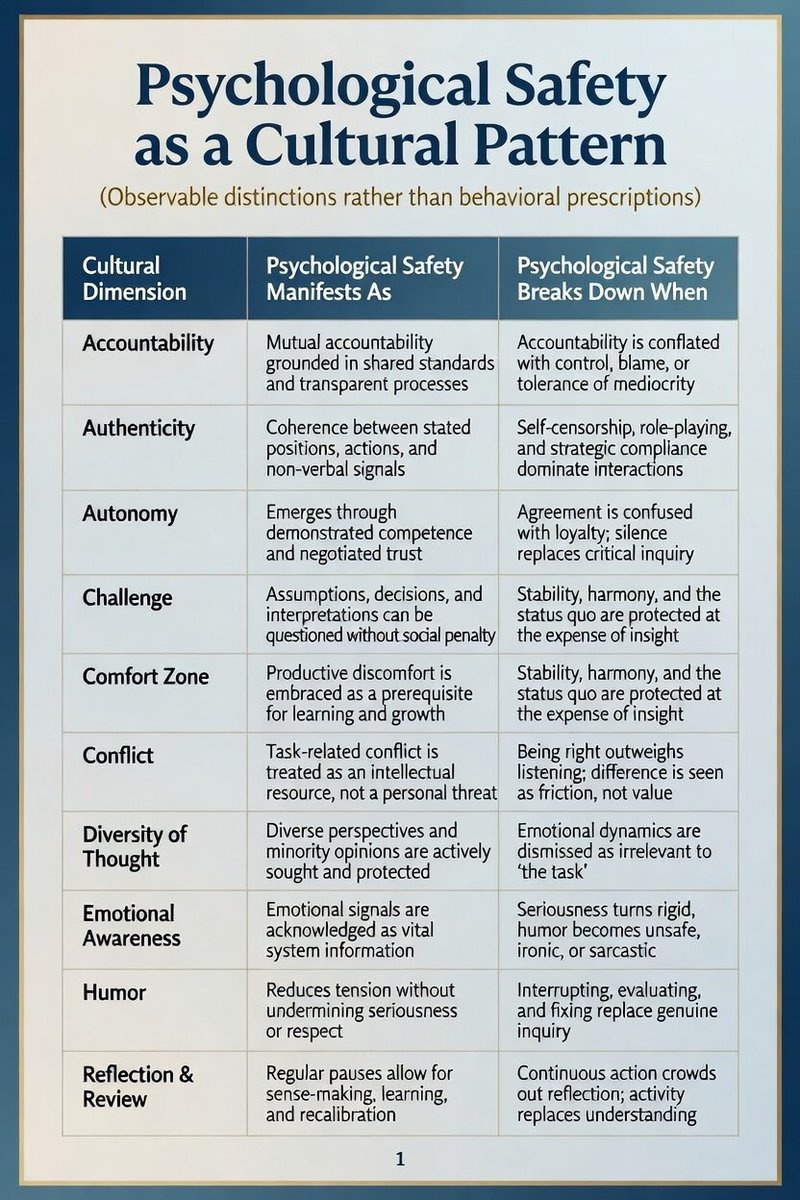
⬛️ The Cultural Foundations of Psychological Safety
Introduction
🔷 An organization cannot mandate psychological safety; it can only enable it - or systematically prevent it. If psychological safety is to emerge seriously as a social property of the system, rather than as a well‑intentioned façade, organizational culture must meet a set of foundational conditions. These conditions go far beyond leadership tools, training programs, or value statements. They reflect deep cultural choices that become visible in everyday behavior. What follows is not a checklist, but a description of the cultural foundations required for psychological safety to take root and persist.
1⃣ Truth Over Harmony
The most critical prerequisite for psychological safety is a culture in which truth is valued more highly than harmony. In many organizations, the opposite is true: loyalty, consensus, and appearing “professional” outweigh the articulation of uncomfortable realities. Conflict is avoided, tensions are smoothed over, and deviations are seen as disruption.
📢 Psychological safety requires people to say what they see, not just what is acceptable.
Cultures that foster it understand that friction, dissent, and irritation are not signs of dysfunction, but signals of complexity. They distinguish clearly between personal rejection and substantive disagreement, and they do not socially sanction the latter.
📢 Where truth carries personal risk, psychological safety remains illusory.
2⃣ Separating the Person from the Contribution
Psychological safety cannot develop where people are equated with their ideas, mistakes, or opinions. In many cultures, criticism of an idea is experienced as an attack on identity; errors are interpreted as character flaws; dissent is framed as disloyalty.
Cultures that enable psychological safety establish a different norm: people have dignity; contributions have quality - and the two must be kept separate. This separation reduces identity defense and creates a social space where learning becomes possible.
It shows up concretely in:
🔹 how feedback is phrased,
🔹 how mistakes are discussed,
🔹 whether the organization asks “Who caused this?” or “What in the system made this possible?”
📢 This is not a soft skill, but a core cultural standard.
3⃣ Power That Is Acknowledged, Not Denied Psychological safety does not emerge in the absence of power, but in contexts where power is used consciously and responsibly. Cultures that claim “hierarchy doesn’t matter here” often produce greater insecurity, because power continues to operate - only implicitly.
Psychologically safe cultures acknowledge that:
🔹status exists,
🔹leaders carry disproportionate influence, and
🔹words, reactions, and silences from above matter more.
The decisive question is not whether power exists, but how it is exercised. In enabling cultures, leaders use authority to reduce fear through clarity, fairness, and predictability, not through control or avoidance. Psychological safety requires mature power cultures, not only flat hierarchies.
4⃣ Learning Above Being Right - Including for Leaders
Cultures that support psychological safety are fundamentally learning‑oriented. This does not mean abandoning accountability or commitment. It means that learning is structurally prioritized over defending positions.
This becomes visible in whether:
🔹assumptions may be challenged,
🔹course corrections are seen as competence rather than weakness,
🔹leaders can integrate criticism without losing authority.
📢 If leaders must always be right, others cannot be honest.
Psychological safety requires a culture in which not knowing, being wrong, and revising one’s view are legitimate states - even, and especially, for those in leadership roles.
5⃣ Errors as System Information, Not Moral Failure
No organization can foster psychological safety while treating errors primarily as individual moral shortcomings. As long as mistakes are moralized, personalized, or made career‑relevant, openness remains irrational - regardless of official messaging.
Cultures that truly enable psychological safety distinguish clearly between:
🔹learning errors in complex situations, and
🔹negligence or willful misconduct.
Only then will people speak openly about mistakes without fearing social or professional harm. This distinction is a cultural competence, not a procedural detail, and it becomes most visible under pressure, scrutiny, or public attention.
📢 Psychological safety arises where errors are understood as information about the system, not deficiencies of individuals.
6⃣ Dissent That Matters, Not Just Exists
Many organizations say, “You can speak up here.”
Psychological safety begins only where dissent also has impact.
Cultures that foster it:
🔹actively invite opposing views,
🔹protect minority opinions from social isolation,
🔹prevent symbolic or premature consensus.
Not every idea is adopted — but every serious contribution is heard, examined, and dealt with explicitly. The key experience is that speaking up does not disappear into the void. Without this experience, openness fades quickly.
7⃣ Consistency Between Aspiration and Reality
Psychological safety is extraordinarily sensitive to inconsistency. When values, leadership principles, or initiatives promise one thing while everyday behavior signals another, trust erodes faster than through open rigidity. Enabling cultures therefore display high everyday coherence:
🔹What actually happens when someone raises a critical issue?
🔹How does the system respond to bad news?
🔹Which stories circulate - about courage or compliance?
Psychological safety is not created through communication, but through lived consequences in daily practice, especially when conditions are difficult.
Conclusion
🔷 Psychological safety is not a quality of “good people.” It is the outcome of cultural choices that reveal themselves in everyday behavior - most clearly under pressure.
#PsychologicalSafety #OrganizationalCulture #Leadership #CultureTransformation #LearningOrganization #GrowthMindset #LeadershipDevelopment #SystemsThinking #PowerAndLeadership #ErrorCulture #DecisionMaking #DigitalTransformation #Responsibility #Trust ✨
🦋 @Khulood_Almani @AkwyZ @TamaraMcCleary @MaryRich78 @rwang0 @timo_vi @drsharwood @DrHolzwarth @HelenBevan @pierrecappelli @JimHarris @jenstirrup @GlenGilmore @subare @Ronald_vanLoon @enilev @Scobleizer @AndrewYNg @YuHelenYu
Image by @thomas_dettling | @grok
6
13
599

9 Sep 2025
13 awards at the 2025 Brandon Hall Group™ HCM Excellence Awards®! 8 Gold, 4 Silver & 1 Bronze for our SONIC, OD & Mavericks programs. Proud of our focus on role-based #skilling & #leadership development. Read more: hexwr.com/47G4fuh
#HexaVarsity #Sonic #Ignite #Mavericks #LearningisFun #ContinuousLearning #HCMBrandonHall #OrganizationalDevelopment #LearningOrganization

ALT Explore Hexaware’s Award-winning Learning and Leadership Programs
1
4
95

25 Feb 2025
لماذا يجب أن تصبح شركتك منظمة تعليمية؟
في عالم يتغير بسرعة مذهلة، أصبح التعلم المستمر أمرًا ضروريًا للبقاء في الصدارة. شركة "لايونبريدج" تقدم مثالًا رائعًا على ذلك، حيث تمكنت من تقليص تكاليف التدريب الخارجي بنسبة 40% بفضل زيادة عدد الدورات التدريبية الداخلية. هذا التوجه ساعد في:
تعزيز المعرفة الخبيرة بين الموظفين
تحسين مهارات حل المشكلات الإبداعية
تخفيف الضغط على الإدارة
إذا كنت ترغب في بناء منظمة تعليمية في شركتك، يمكنك تحميل هذا الدليل الشامل لمعرفة كيفية تنفيذ هذه الاستراتيجية بنجاح.
🔗 رابط الدليل: bit.ly/4jD4ZUf
#منظمة_تعليمية #تعلم_مستمر #الابتكار #تطوير_الموظفين #تحقيق_التميز #learningorganization #EmployeeDevelopment

6
34
4,805

18 Feb 2025
At @LIRNEasia, our internal journal clubs provide a space for staff to explore original knowledge beyond our walls. In our first session of 2025, we explored the working paper 'Digital Public Infrastructure: A Framework for Conceptualization and Measurement' by @daeaves and Krisstina Rao. Published by the @IIPP_UCL, the paper delves into the growing importance of digital public infrastructure (DPI) and offers insights on its conceptualization and measurement. Read more: wp.me/p9mjf9-hcC
@ChanduniB #learningorganization #research #journalclub #digitalpublicinfrastructure #innovation #policyrelevance #knowledgesharing #collaboration #dpi #researchinsights #publicpolicy #SriLanka #lka
2
4
581

9 Oct 2024
Companies that embrace continuous learning see 30% higher profitability. 🚀 Learn how in our latest whitepaper. Download now!
bit.ly/3NgYsj4
#LearningOrganization #Leadership #BusinessGrowth
1
3
32

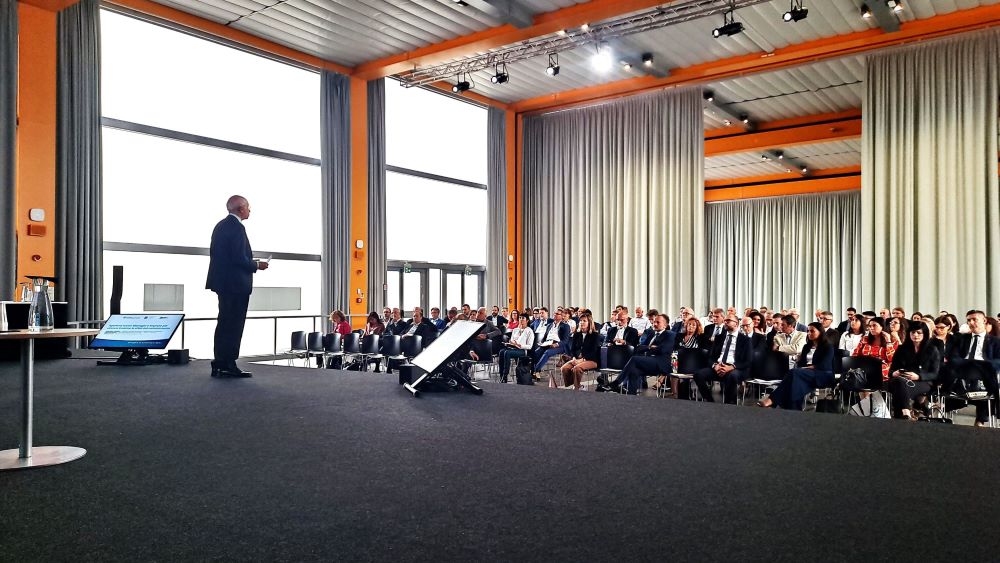
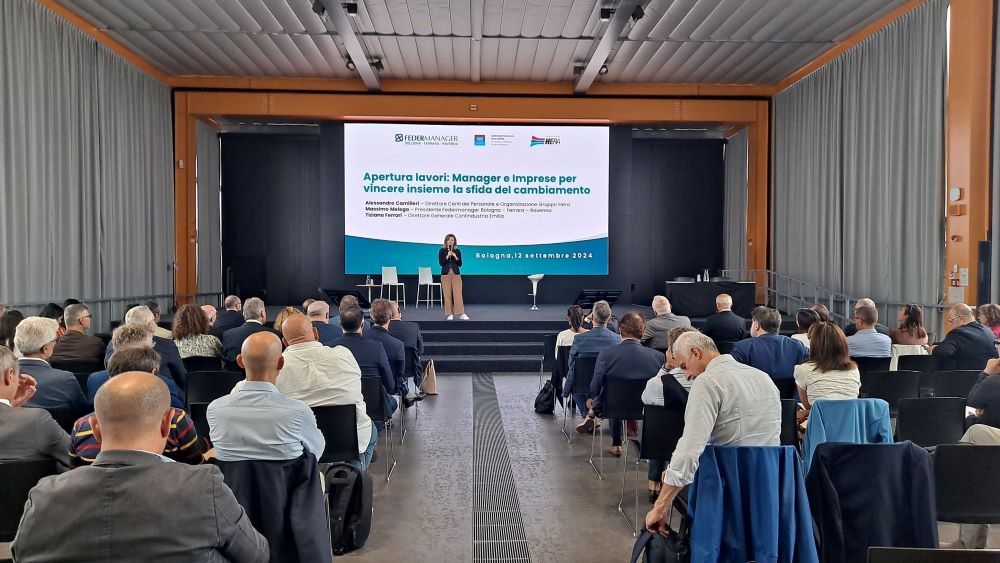
Allo “Spazio Hera” si è parlato di “Evoluzione dell’apprendimento nei contesti organizzativi: il ruolo dei #manager del futuro”. L’iniziativa aveva l’obiettivo di esplorare il concetto di “#learningorganization”.
✔ Leggi la notizia: bologna.federmanager.it/il-s…
3
30
24 Apr 2024
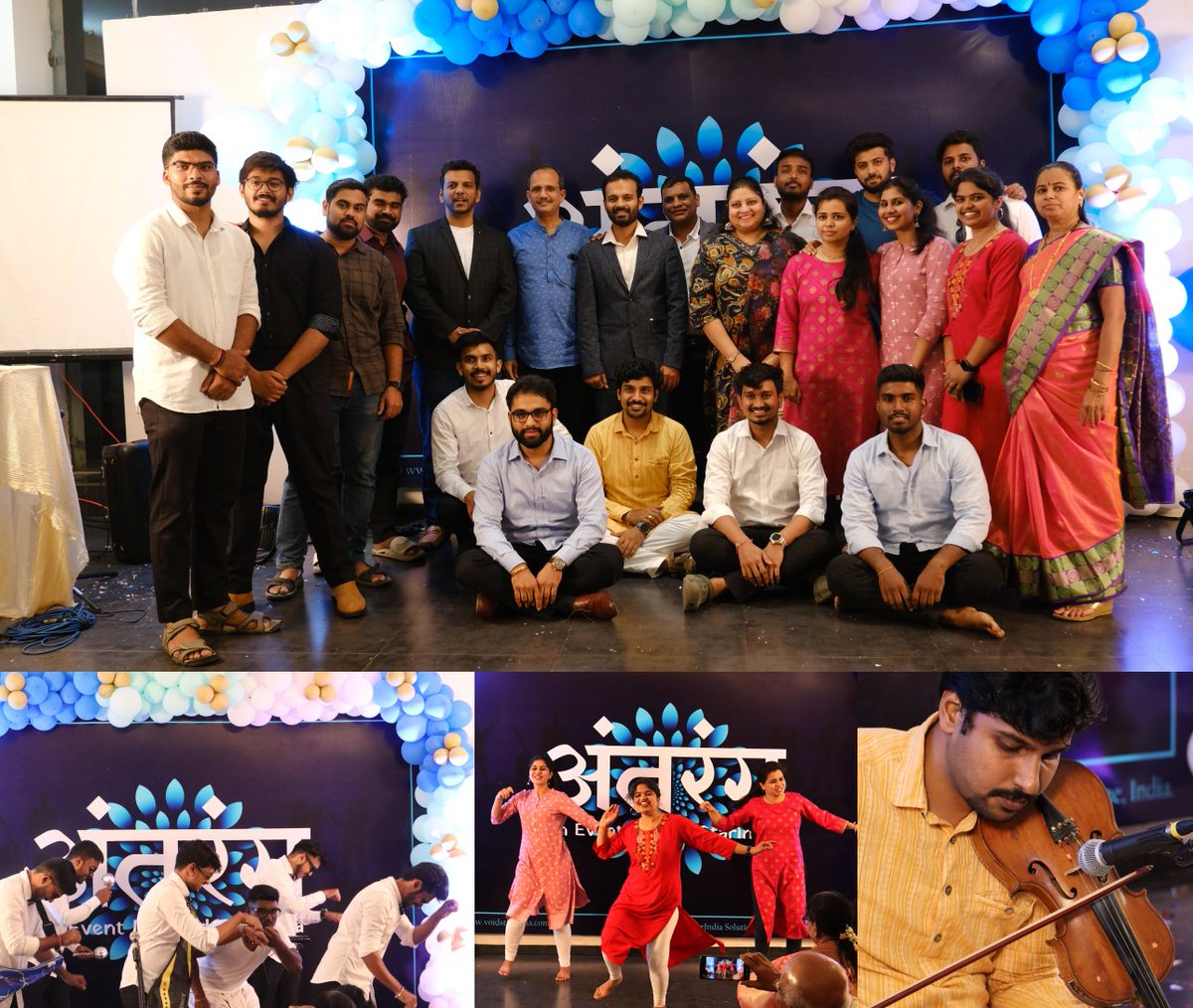
Antarang -
Last Sunday we celebrated our 7th anniversary. The journey began in 2017 from the kitchen of an apartment with 2 Co-Founders to a team of 30 today. On the way we met many people, tasted success & failure and learned our lessons. Most importantly we learned to look within and became more and more self-aware as an organization. So we thought of naming the 'anniversary celebration event' #Antarang, a journey of self-reflection.
We are grateful to everyone who has contributed to our growth. We appreciate our clients for their belief in us. #Antarang was a way to honour the past and toast many more years of success!
We would love to hear from you how you celebrate your annual day because we believe that learning is a continuous process.
#FoundationDay #CompanyCulture #TeamSpirit #MilestoneMoment #learningorganization
4
8
105

2 Apr 2024
Celebrate team successes, team learnings, and even team "failures" publicly. It's all good and a sign of a healthy #LearningOrganization.
2
259

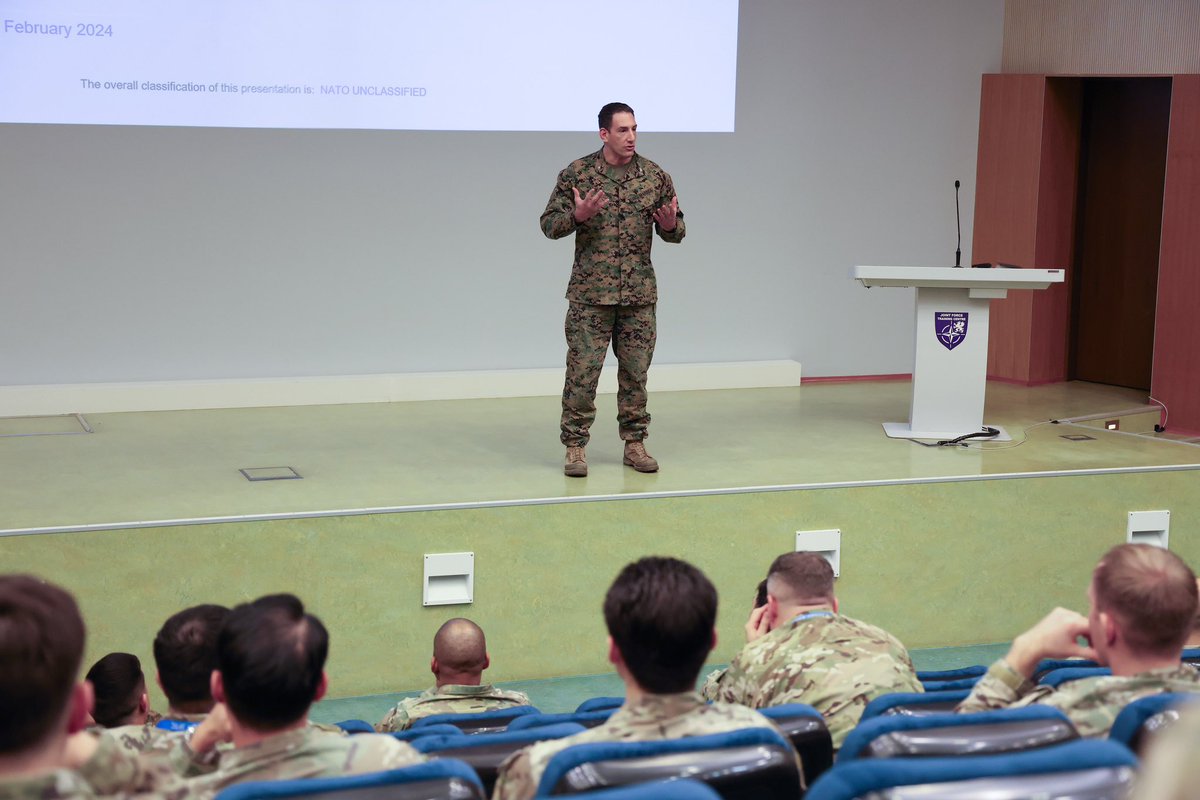
@2ABCT1AD is a #learningorganization honing our #warfighting functions to improve #combateffectiveness at the NATO Joint Force Training Center in Bydgoszcz, Poland! @1stArmoredDiv @3rd_Infantry @NATO @natojftc @VCorps @USArmyEURAF @FORSCOM @FortBlissTexas @USNATO @US_EUCOM



4
6
499

It's time for businesses to chart a course for reinforcement learning. (McKinsey) #Management #LearningOrganization buff.ly/2QQ7CsY

132

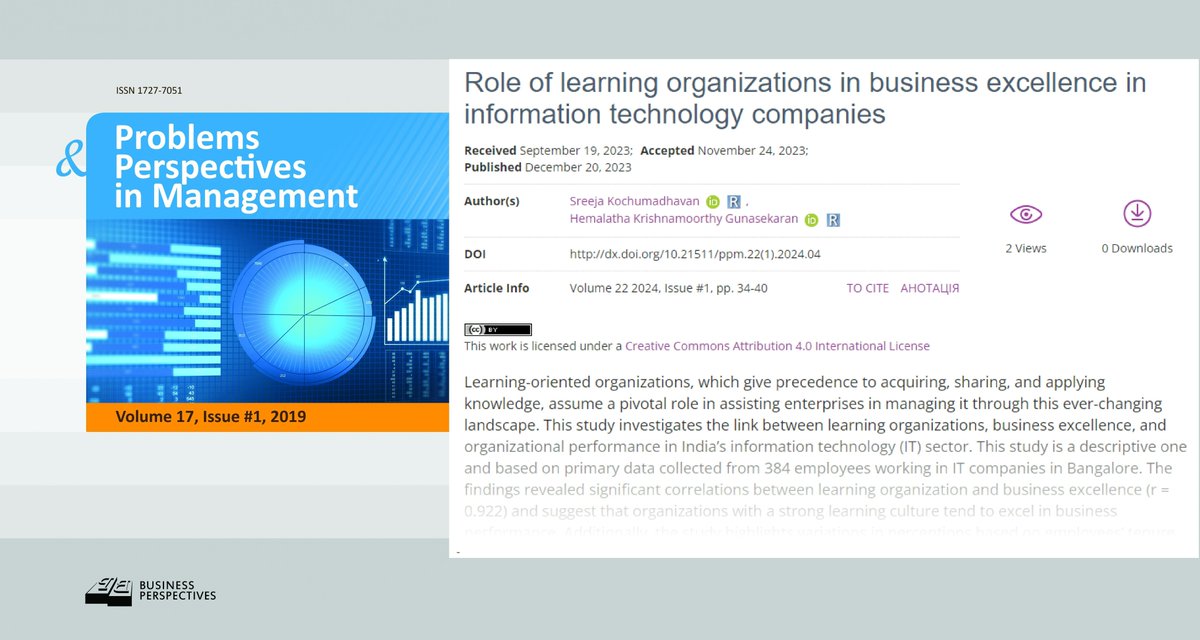
🔗 dx.doi.org/10.21511/ppm.22(1…
📝 Role of learning organizations in business excellence in information technology companies
👥 Sreeja Kochumadhavan, Hemalatha Krishnamoorthy Gunasekaran
#businessexcellence #companies #India #informationtechnology #learningorganization
2
4
89


3 Nov 2023
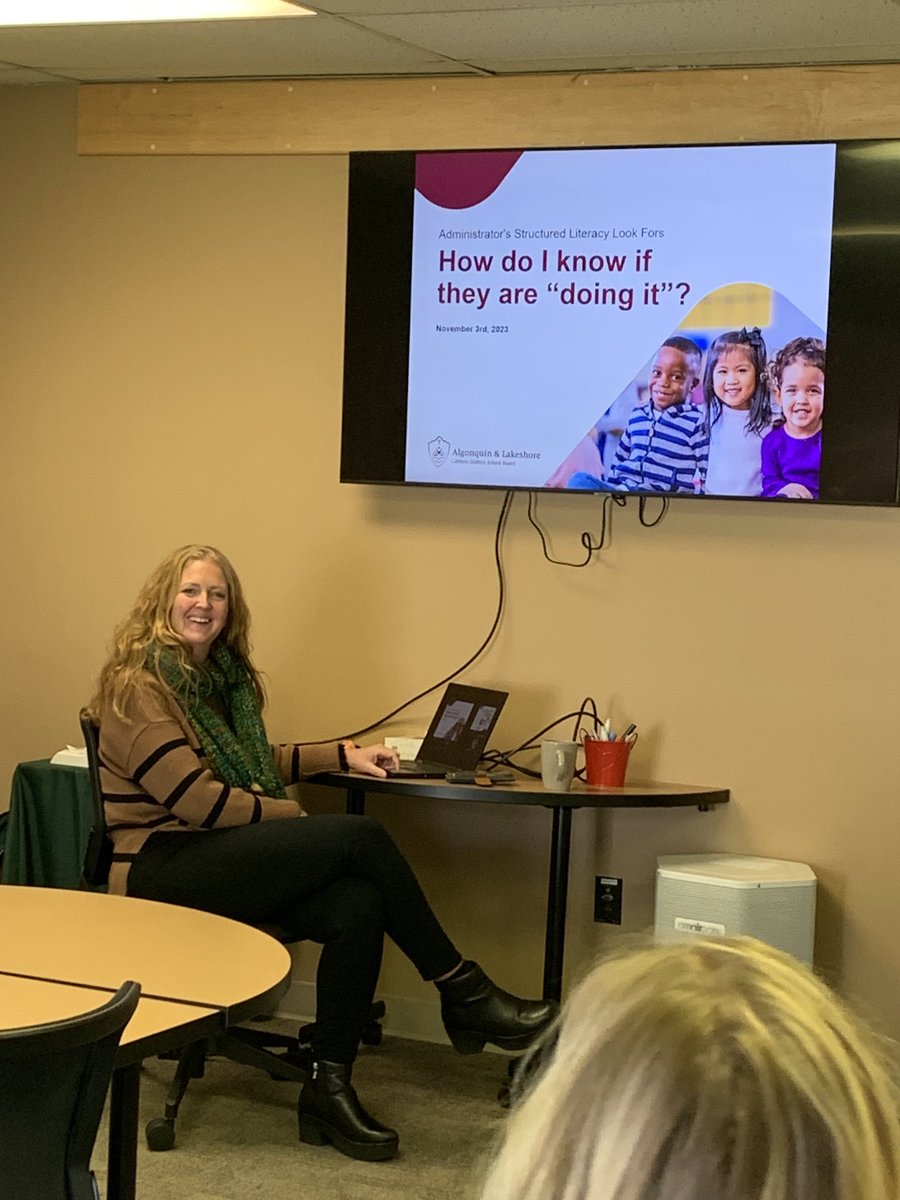
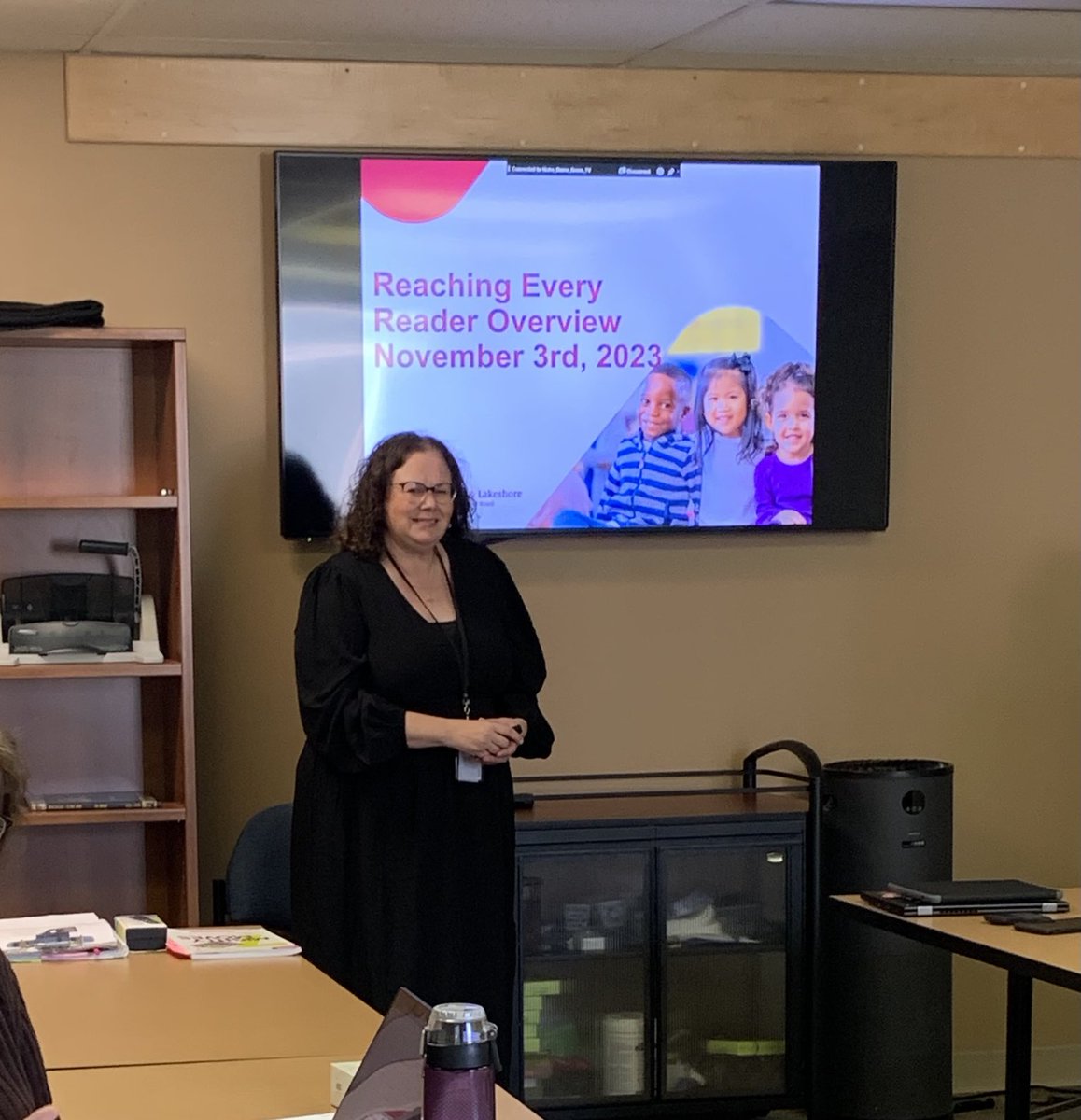
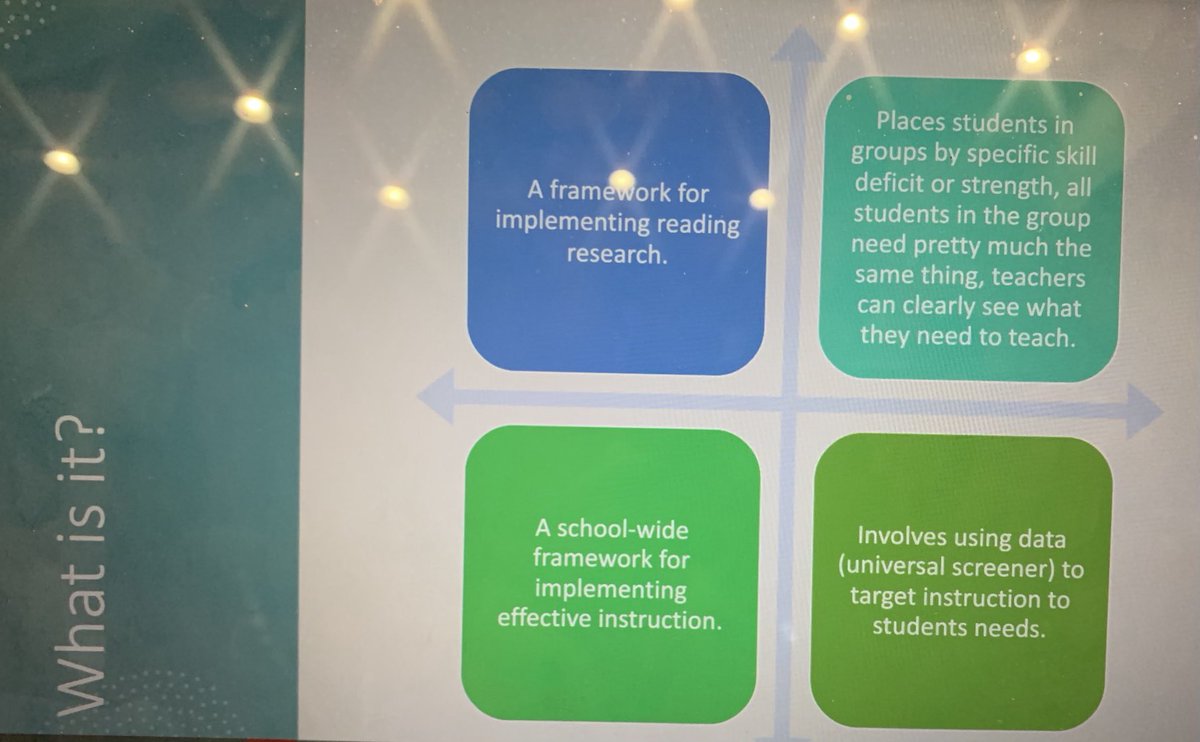
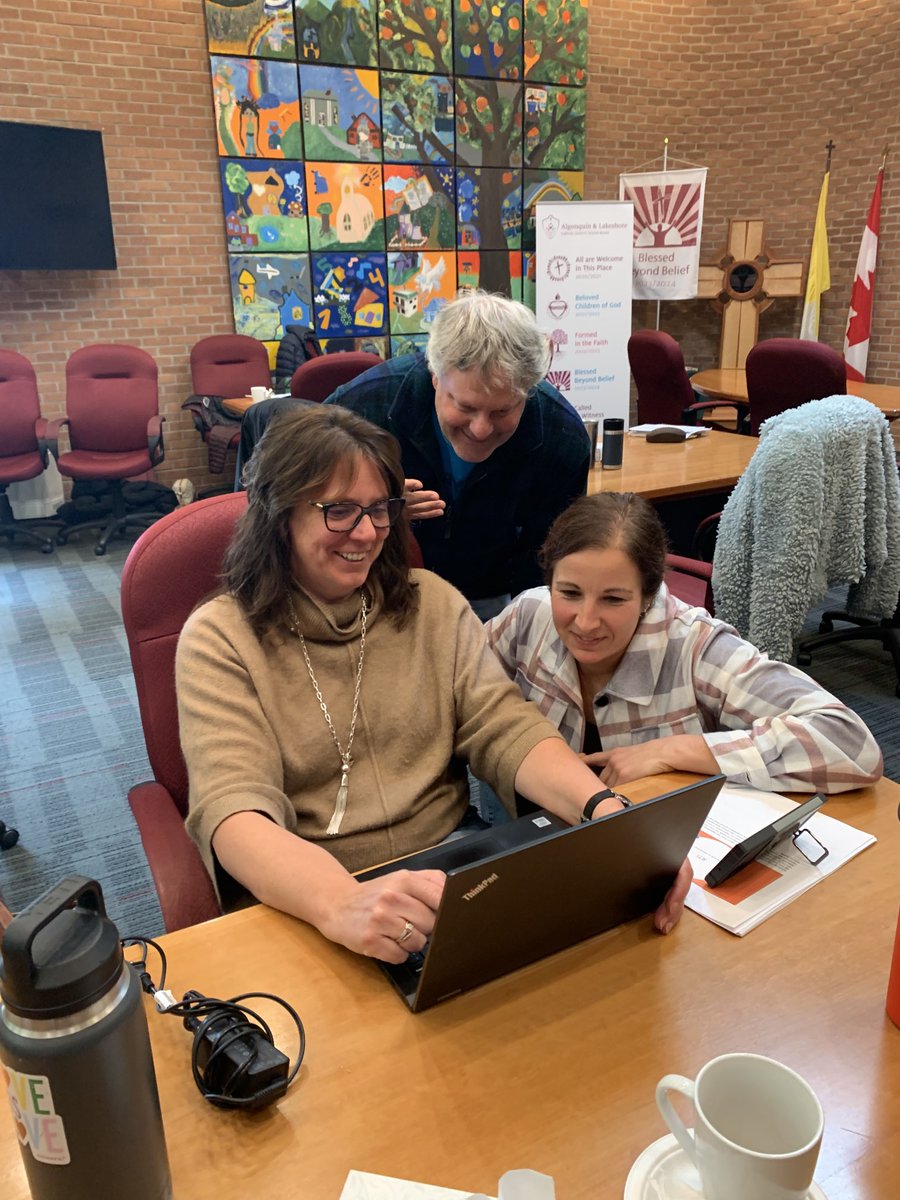
Thanks @MsSarahCassidy @BailieHearn & @msekinderland for collaborating with principals & vice-principals on response to intervention, principal look-fors, cross-curricular applications, & more! #learningorganization #ALCDSBLeadership #ALCDSBLiteracy
3
9
765

6 Oct 2023
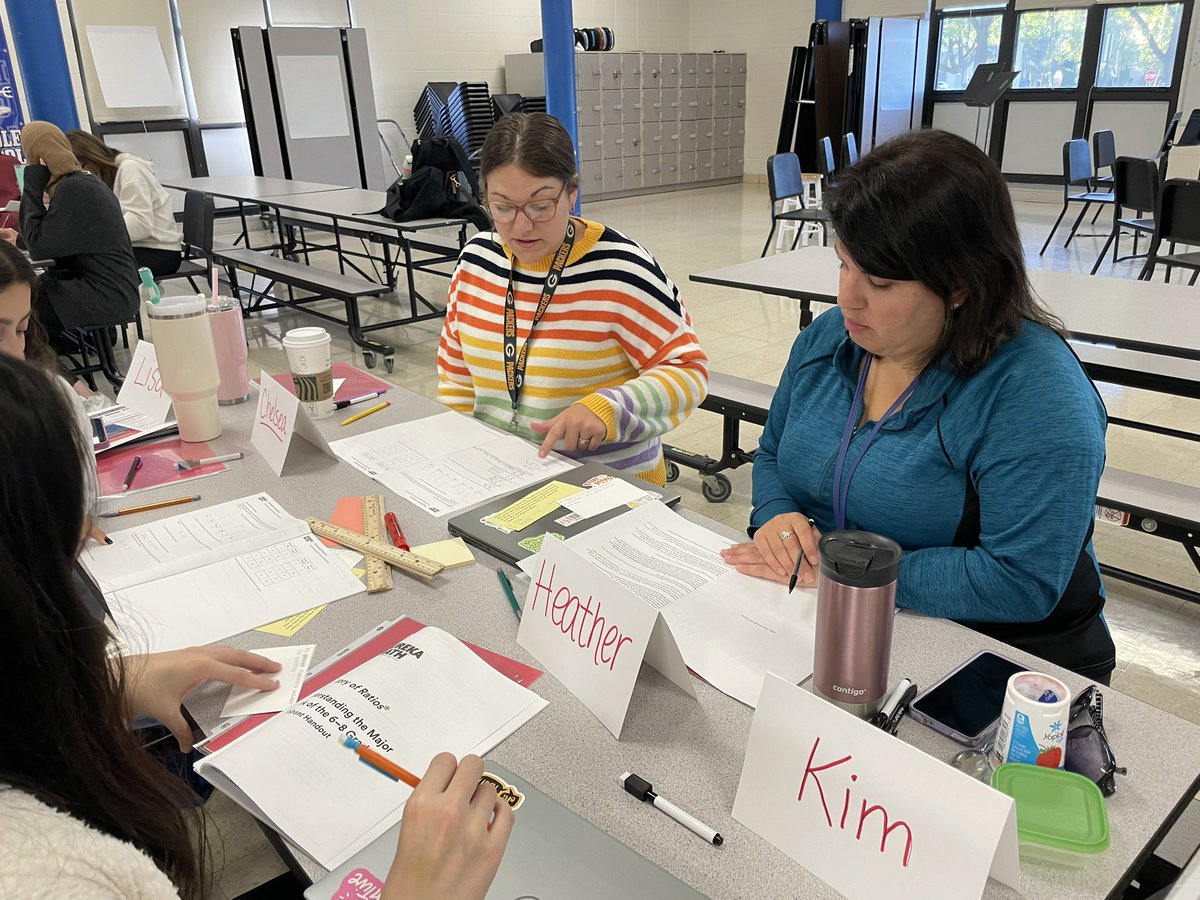
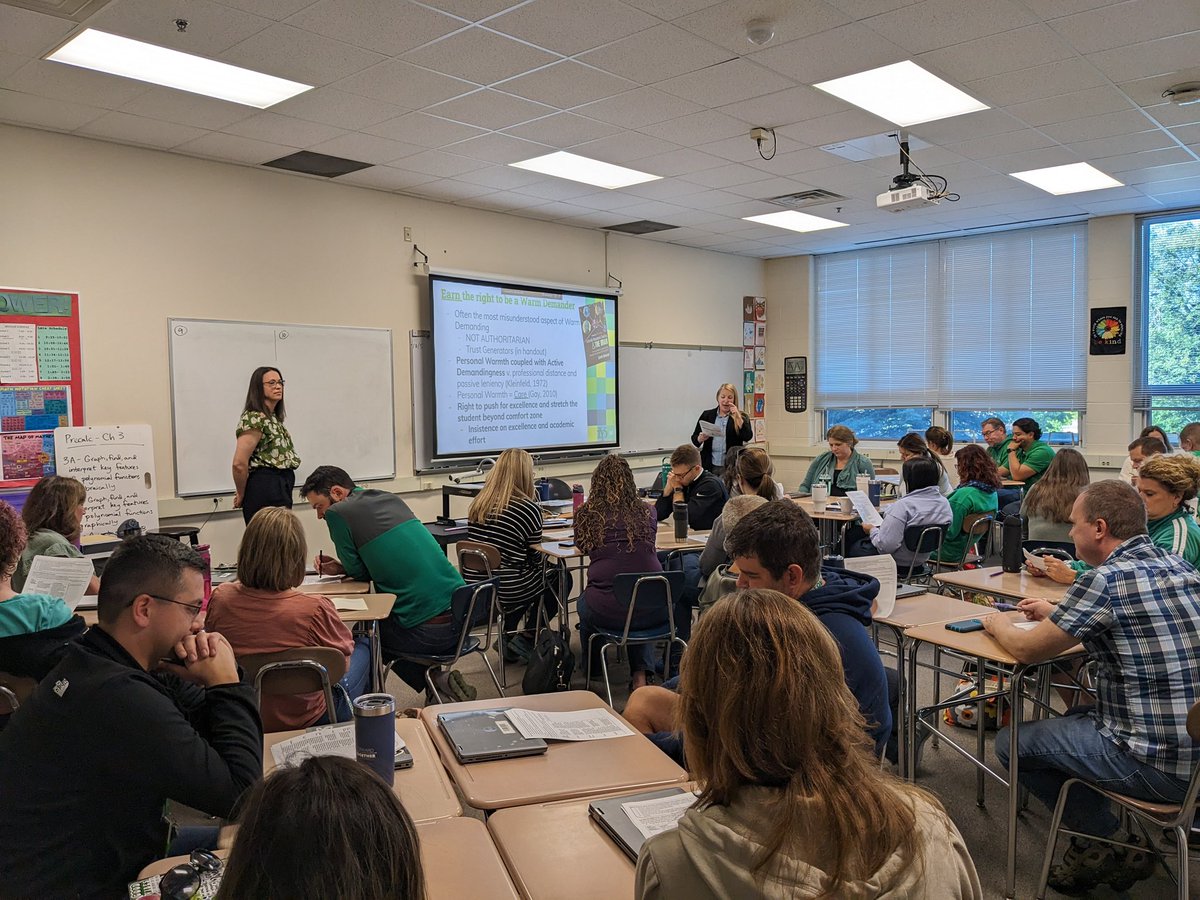
What an awesome day of professional learning in D205! Today’s Institute Day focused on elevating student learning and aligning our Tier 1 instruction. #growingtogether #learningorganization
#weareD205


13
706

13 Aug 2023
The small group interaction through discussion or discourse is the key to organizational learning that deserves the name.
#qomenius #betacodex #learningorganization
4
9
413

"An hour of planning can save you 10 hours of doing." - Quote by Dale Carnegie.
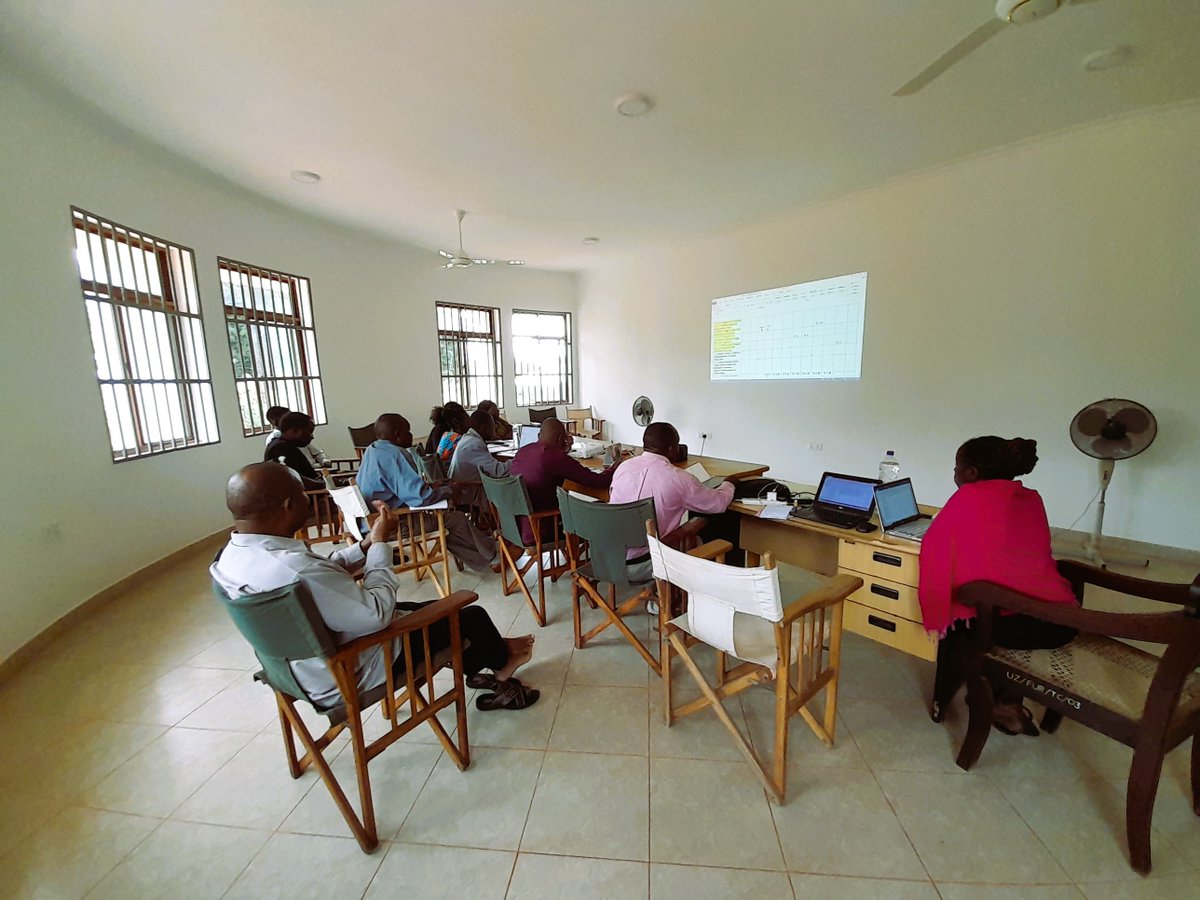
UZIKWASA staff is geared up for an exciting week ahead! Kickstarting the new week with programs planning for the upcoming activities. #UZIKWASA #LearningOrganization
5
46