

Jun 8
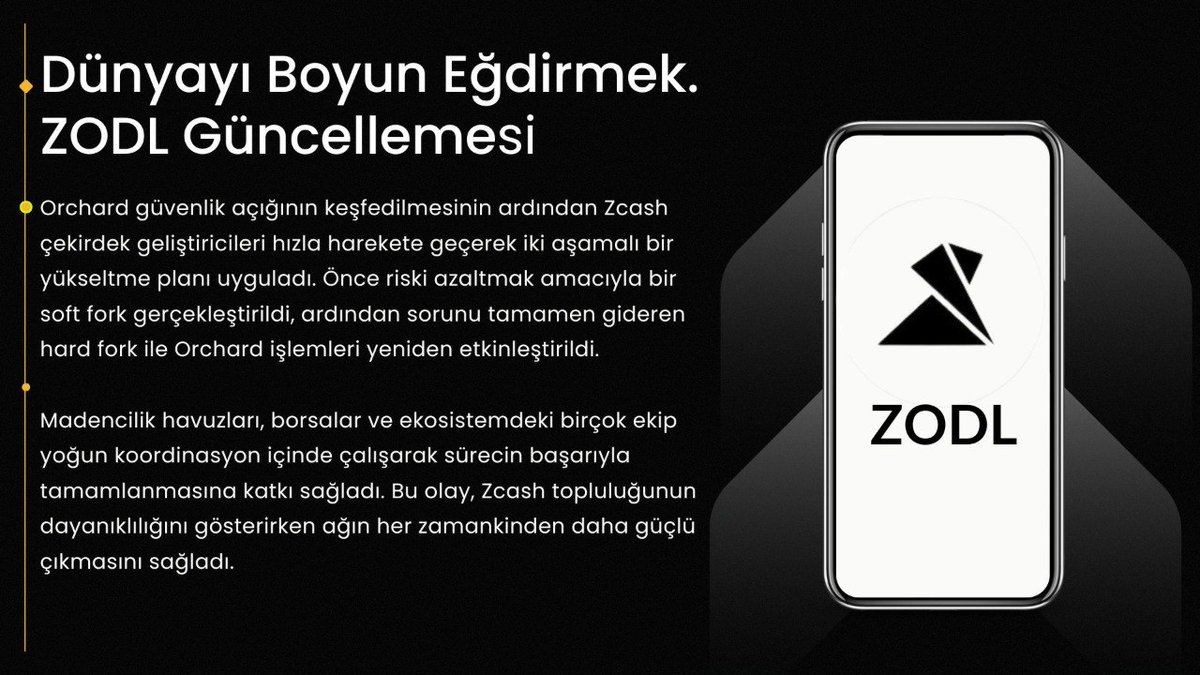
📢 ZODL Haftalık Güncellemeleri
Zodl ekibi, Zcash mobil deneyimini geliştirmeye yönelik çalışmalarını hız kesmeden sürdürüyor.
📱 Bu hafta, Zodl 3.5.0 sürümüyle birlikte platformlar arası ilk cüzdan içi korumalı coinholder oylama sistemi tamamlandı. Böylece Android kullanıcıları da doğrudan uygulama üzerinden korumalı oylamaya katılabilir hale geldi.
🔧 Yayınlanan güncellemeler kapsamında:
• Android için 3.5.0, 3.5.2 ve 3.5.3 sürümleri yayınlandı.
• iOS tarafında iki yeni sürüm kullanıcılara sunuldu.
• Sunucu seçimi deneyimi yeniden tasarlandı.
• Oy gönderim süreci ve uygulama içi arayüz iyileştirmeleri gerçekleştirildi.
• Kullanımdan kaldırılacak lightclient uç noktaları sistemden çıkarıldı.
🌍 50 ülkede yaklaşık 9.000 RPC çağrısını kapsayan kapsamlı performans testlerinin ardından, her iki platformda varsayılan lightclient sunucusu zec.rocks olarak güncellendi.
🧪 Geliştirme tarafında ise:
• Android FOSS Bellek Etiketleme özelliği kalite kontrol aşamasına ulaştı.
• iOS Tor akışı zaman aşımı düzeltmeleri test sürecine hazır hale geldi.
• Otomatik Sunucu Değiştirme özelliği test aşamasına geçti.
🚀 Önümüzdeki dönemde odaklanılan başlıklar:
• Çoklu sunucu üzerinden işlem gönderimi
• Çoklu para birimi dönüşümleri
• SDK zincir optimizasyonları
• Valar Group ile sürdürülen iş birliği
📊 Son iki haftalık büyüme verileri:
🍎 Zodl iOS
• 43.600 benzersiz kurulum ( 1.100)
• 52,1 bin toplam indirme ( 1,5 bin)
• 4,9★ App Store puanı
🤖 Zodl Android
• 16.000 aktif kurulum ( 200)
• 52 bin toplam yükleme ( 1,3 bin)
• 4,25★ Play Store puanı
ZODL, Zcash kullanıcılarına daha hızlı, güvenilir ve kullanıcı dostu bir deneyim sunmak için geliştirmelerine devam ediyor.
Detaylar : forum.zcashcommunity.com/t/s…
#Zcash #ZODL #Privacy #Crypto
1
7
343

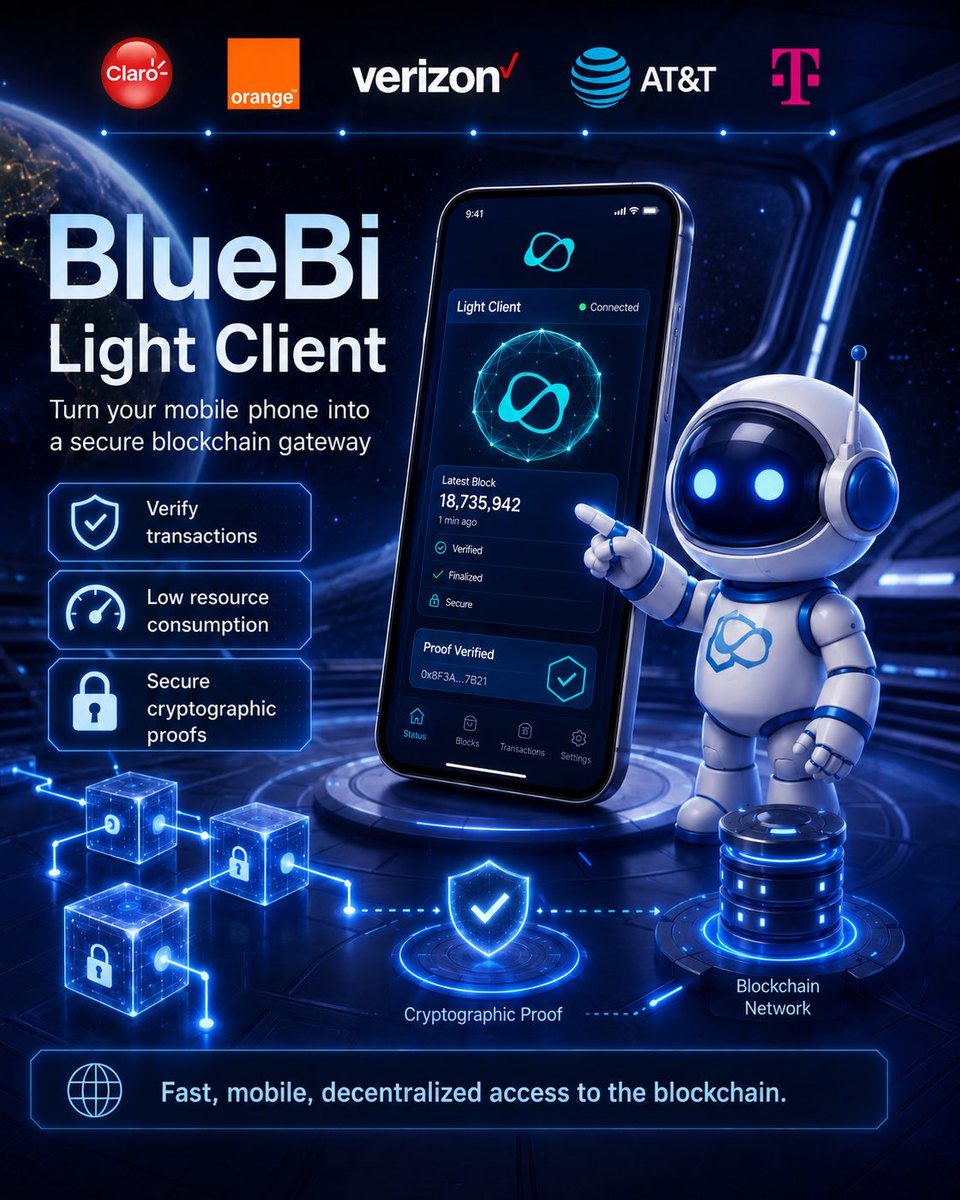
🚀 BlueBi Light Client: el puente entre telecomunicaciones, móviles y blockchain
La adopción masiva de blockchain no llegará solo desde computadoras o nodos completos.
Llegará desde el dispositivo que todos tenemos en la mano: el teléfono móvil.
Con un Light Client, BlueBi permite que cualquier usuario pueda verificar transacciones, consultar balances e interactuar con la red de forma segura, rápida y eficiente, sin descargar toda la blockchain.
📱 Verificación desde el móvil
🔐 Pruebas criptográficas seguras
⚡ Bajo consumo de recursos
🌐 Acceso descentralizado a la red
BlueBi convierte el móvil en una puerta de entrada segura hacia la infraestructura Web3, conectando usuarios, telecomunicaciones y blockchain en una misma visión.
Fast. Mobile. Decentralized.
#AstralisChain #BlueBi #LightClient #Blockchain #Web3 #Telecom #MobileBlockchain #Decentralization $ASTCH
2
11
15
159
🚀 BlueBi Light Client: connecting telecom, mobile devices, and blockchain
Mass blockchain adoption will not come only from computers or full nodes.
It will come from the device everyone already has in their hands: the mobile phone.
With a Light Client, BlueBi enables users to verify transactions, check balances, and interact with the network securely, quickly, and efficiently, without downloading the entire blockchain.
📱 Mobile transaction verification
🔐 Secure cryptographic proofs
⚡ Low resource consumption
🌐 Decentralized network access
BlueBi turns the mobile phone into a secure gateway to Web3 infrastructure, connecting users, telecom networks, and blockchain under one powerful vision.
Fast. Mobile. Decentralized.
#AstralisChain #BlueBi #LightClient #Blockchain #Web3 #Telecom #MobileBlockchain #Decentralization $ASTCH
5
25
31
718

La próxima evolución de blockchain será móvil.
@AstralisChain
Un light client permite que un celular interactúe con una blockchain sin descargar toda la red, pero manteniendo la capacidad de verificar transacciones mediante pruebas criptográficas.
Esto significa que un usuario puede consultar saldos, enviar activos y confirmar que una transacción fue incluida en un bloque, todo desde su teléfono y con bajo consumo de recursos.
No todos necesitan correr un nodo completo.
Pero todos deberían poder participar, validar e interactuar con la red de forma segura.
Los light clients abren la puerta a una blockchain más accesible, descentralizada y preparada para adopción masiva desde dispositivos móviles.
El futuro de la validación también cabe en tu bolsillo.
#lightclient #telcos
2
16
23
327

New Release: BearNetworkChain BNQL-Counterfactual-Defense by Ting Chen (May 2026) 🚀
Full document now available on Zenodo:
🌐 doi.org/10.5281/zenodo.20388…
#Web3 #BlockchainSecurity #ZeroKnowledge #PQC #Cryptography #GraphQL #LightClient
2
17

May 16
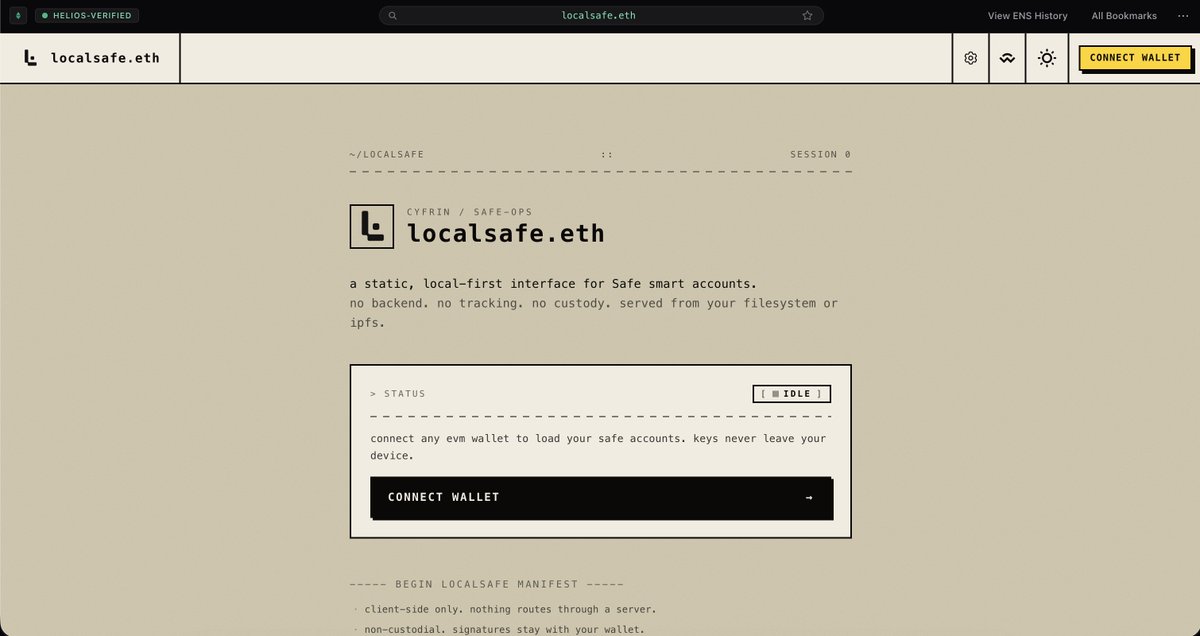
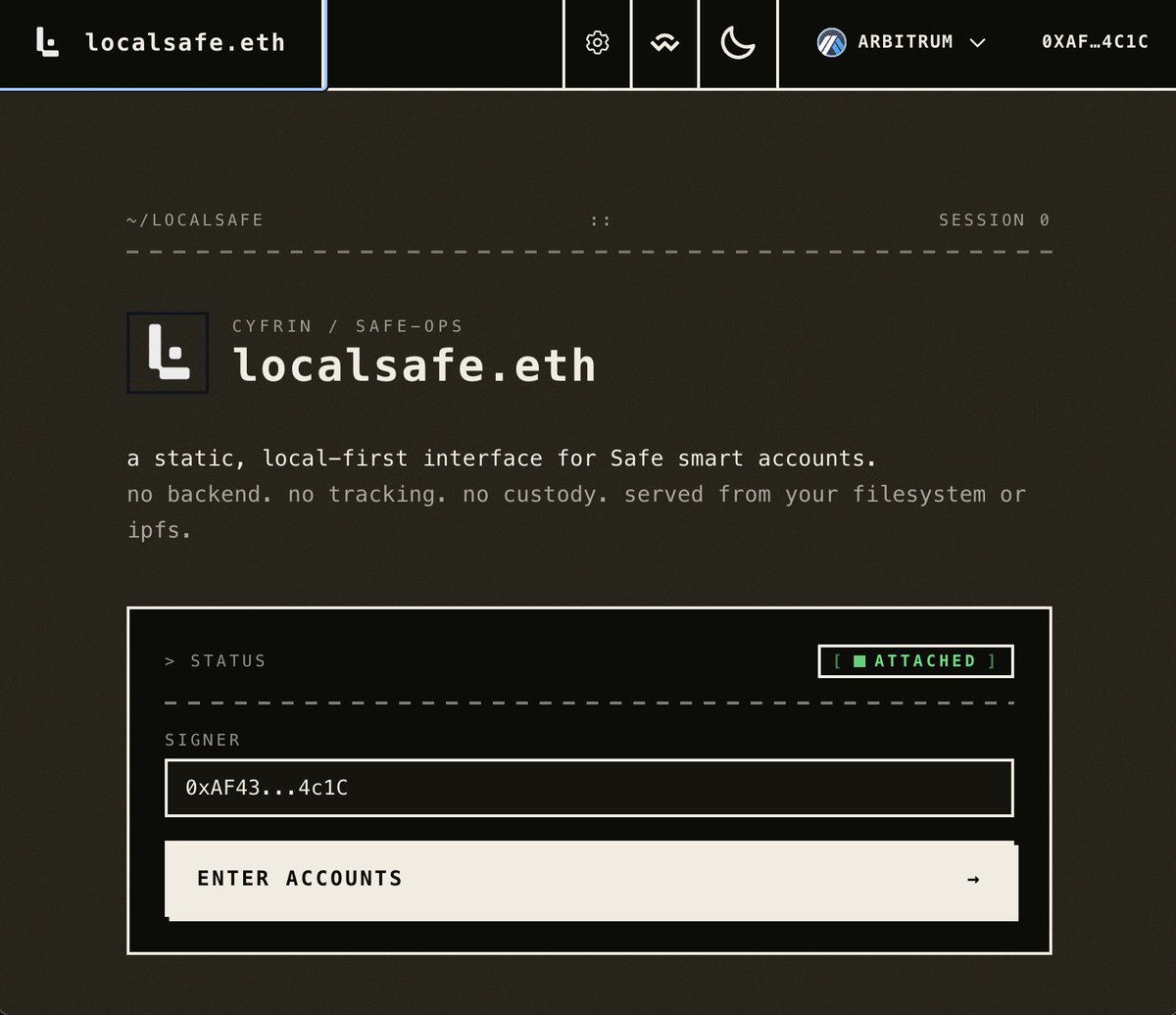
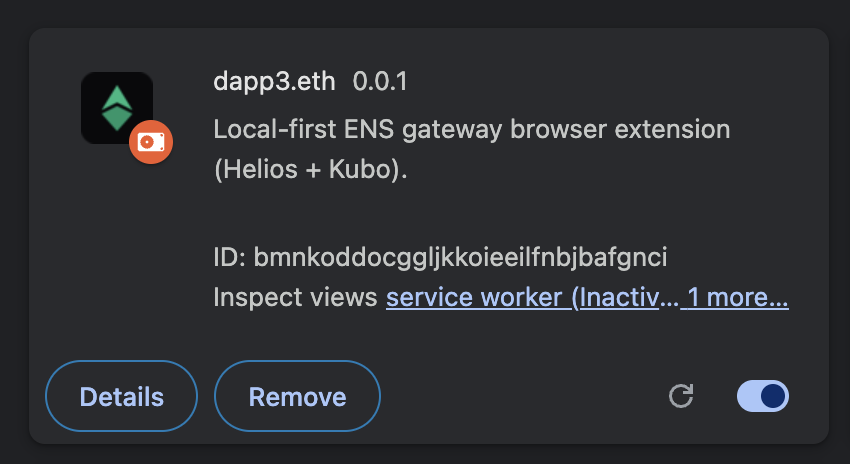
checkout localsafe.eth on dapp3.eth
served via your own local ipfs & lightclient 🫡

3
25
1,979
May 16
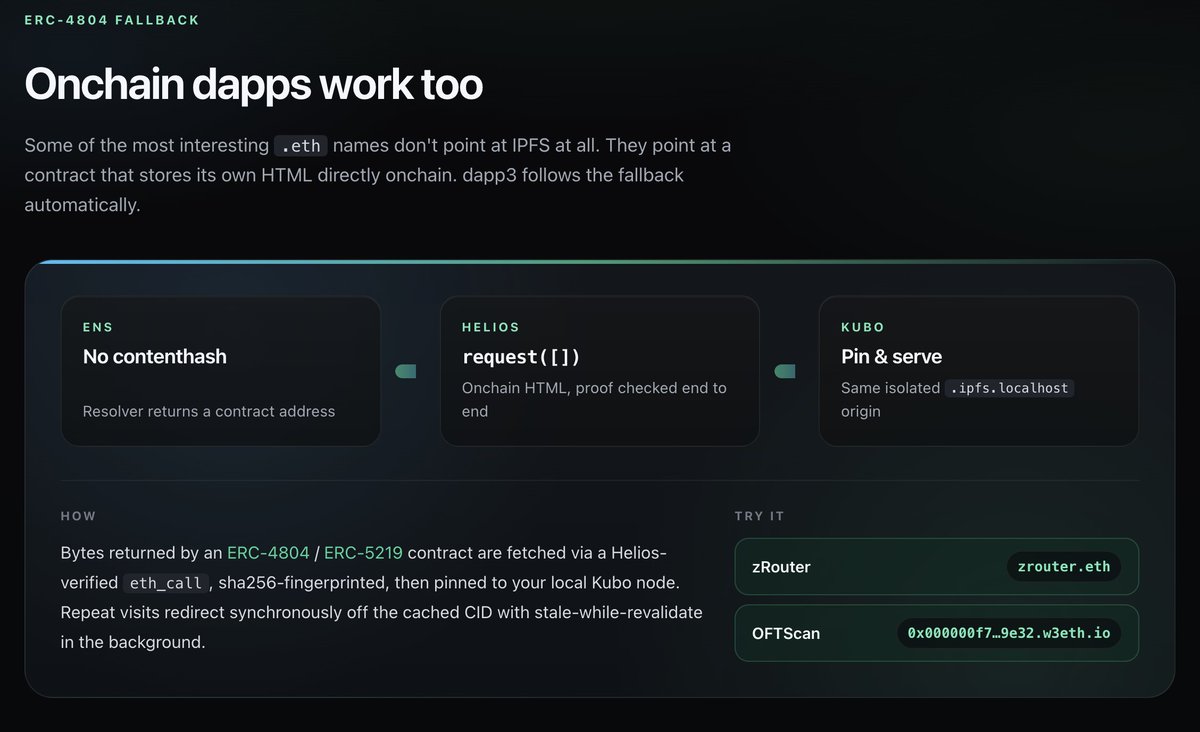
but with dapp3.eth the resolution takes place locally via your ETH RPC & Helios lightclient!
2
7
262

May 13
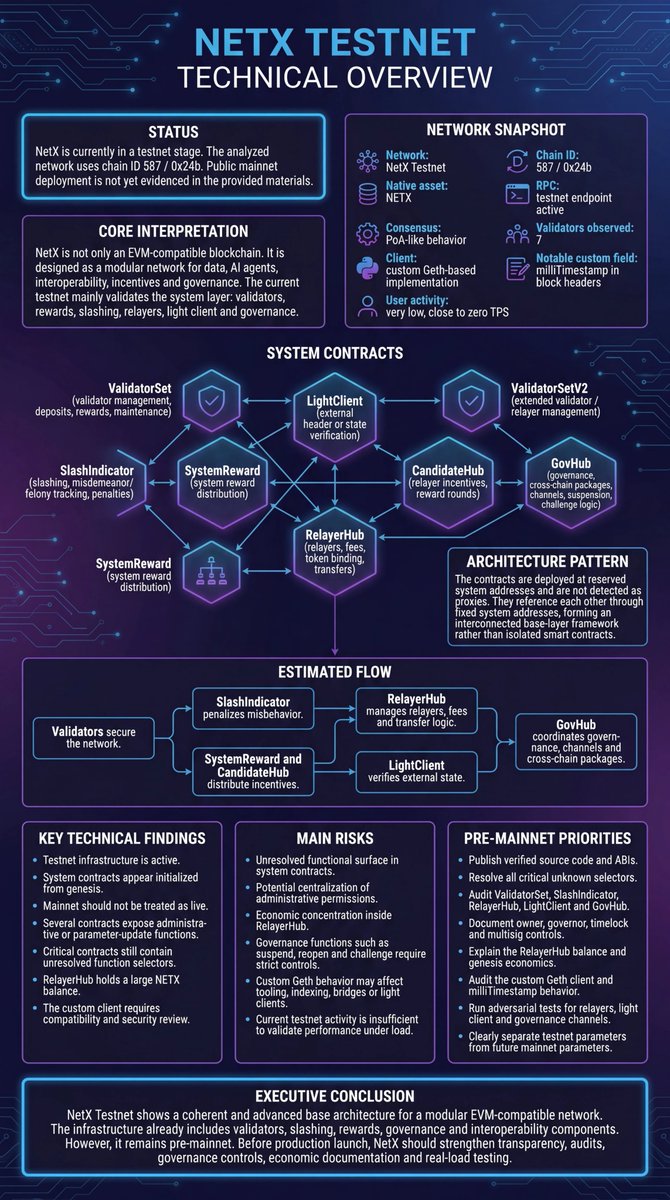
The NetX testnet technical overview (without access to any documentation or smart contract code, it is based on deep testnet crawling and contract decoding driven by agent-based deterministic local inference) showed a modular system architecture, not a blank EVM sandbox. The key findings were $NETX as native gas, a 7-validator PoA structure, reserved system contracts, cross-chain primitives, governance components and a staged pre-mainnet design. @netx_world
#NETXTestNetFindings
The second important piece from the NetX testnet is the technical overview.
At first glance, it looked like a small EVM-compatible network with low activity.
But once the RPC, validators and reserved contracts were mapped, the picture changed.
NetX testnet was structured like a system chain.
It had a clear network snapshot:
Chain ID: 587 / 0x24b
Native asset: NETX
Consensus: PoA-like behavior
Validators observed: 7
Client: custom Geth-based implementation
Block timing: around 3 seconds
User activity: very low, close to zero TPS
Custom header field: milliTimestamp
That matters because the testnet was not only testing whether contracts could deploy.
It was testing the foundation of a chain with its own validator layer, system contracts, relay logic and future governance path.
The most important concept here is NETX-as-gas.
In the observed testnet, NETX was the native execution asset. That means contract calls, deployments, system interactions and settlement-style operations were priced in NETX.
This is the first layer of token utility:
not narrative utility,
but execution utility.
The system contracts were the real signal.
The base layer included components such as:
ValidatorSet for validator management, deposits, rewards and maintenance.
SlashIndicator for misdemeanor, felony and slashing-style accountability.
SystemReward and CandidateHub for system incentives and relayer-related rewards.
LightClient for external header or state verification.
RelayerHub / TokenHub for relayers, fees, token binding and transfer coordination.
GovHub for governance packages, channels, suspension, reopening and challenge logic.
This architecture suggests a network designed around more than transaction execution.
It suggests a network built for verification, coordination and accountability.
The architecture pattern is also important.
These contracts were deployed at reserved system addresses and were not detected as simple user contracts. They referenced each other through fixed system addresses, forming an interconnected base-layer framework rather than isolated smart contracts.
That is the difference between:
“someone deployed a few contracts”
and
“the chain has a protocol-level system map.”
The estimated flow is easy to understand:
· Validators secure the network.
· SlashIndicator penalizes misbehavior.
· SystemReward and CandidateHub distribute incentives.
· RelayerHub coordinates relayers, fees and transfer logic.
· LightClient verifies external state.
· GovHub coordinates governance, channels and cross-chain packages.
This is why the testnet is interesting even with low user activity.
Low activity means it was not yet a production network.
But the contract map shows that the testnet was preparing something much larger:
a modular base for validation, rewards, slashing, relay, external proofs, governance and interoperability.
The risks are equally important.
There were unresolved selectors in critical contracts, potential administrative centralization, large balances inside system contracts, custom client behavior and staged components that still required activation, verification and public documentation.
So the right conclusion is balanced:
The NetX testnet was not mainnet.
It was not production-ready.
But it was also not empty.
It showed a coherent technical foundation for a modular EVM-compatible network where $NETX acts as gas, system contracts coordinate the base layer, and future governance, staking and settlement infrastructure can be built on top.
That is the technical overview worth documenting 🫡
* Please note that this research was not provided by the team and is published as an independent study without full access to the source code or testnet infrastructure; as a result, it may contain errors or inconsistencies compared to the final product.
2
19
68
1,065
May 12
The NetX testnet shutdown makes the technical snapshot more valuable. While live, it showed a serious pre-mainnet architecture with $NETX as native gas, system contracts, relay logic, governance, token management and recovery components. Not mainnet yet, but definitely not an empty testnet either. @netx_world
#NETXTestNetFindings
The NetX testnet going offline may look like a small technical event, but for research it matters.
Because while it was live, it gave us a rare on-chain window into what NetX was actually testing beneath the public narrative.
And the most important conclusion is simple:
NetX was not just running a basic EVM testnet.
What we observed was a structured system architecture with native gas, validators, slashing, relay logic, light-client verification, token-management components, governance contracts, timelock infrastructure, staking components and recovery-style mechanisms.
That does not mean mainnet is live.
It does not mean every component was fully activated.
It does not mean the full product stack is already in production.
But it does mean the testnet was not empty.
It was a technical staging environment for a much larger architecture.
The base layer showed active system infrastructure:
ValidatorSet
SlashIndicator
LightClient
TokenHub / RelayerHub
Incentivize / CandidateHub
RelayerHub V2
GovHub
The advanced layer appeared deployed but mostly staged:
Staking
ValidatorHub / StakeHub
NativeToken / StakeCredit
GovToken
Governor
Timelock
TokenManager
TokenRecoverPortal
That distinction is important.
Active base layer.
Staged advanced layer.
This is exactly how an early technical network can look before mainnet: not finished, not production-grade, but already revealing the design philosophy.
The strongest finding, in my view, is that NetX seems positioned less like “another payment blockchain” and more like a programmable trust layer.
A layer for payment intents, settlement records, compliance proofs, audit trails, challenge logic, cross-chain state, token management, operator accountability and governed rule changes.
Stablecoins can move value. Wallets can handle user experience. Payment processors can handle merchants.
But someone still needs to record the institutional context:
Who authorized the payment?
Which rule applied?
Was the merchant settlement valid?
What proof exists?
What happens if there is a dispute?
Who is accountable if something goes wrong?
That is where NetX could become strategically relevant.
The testnet may be offline now, but the architecture it revealed is worth documenting.
3
23
75
2,035

May 10
netx:native
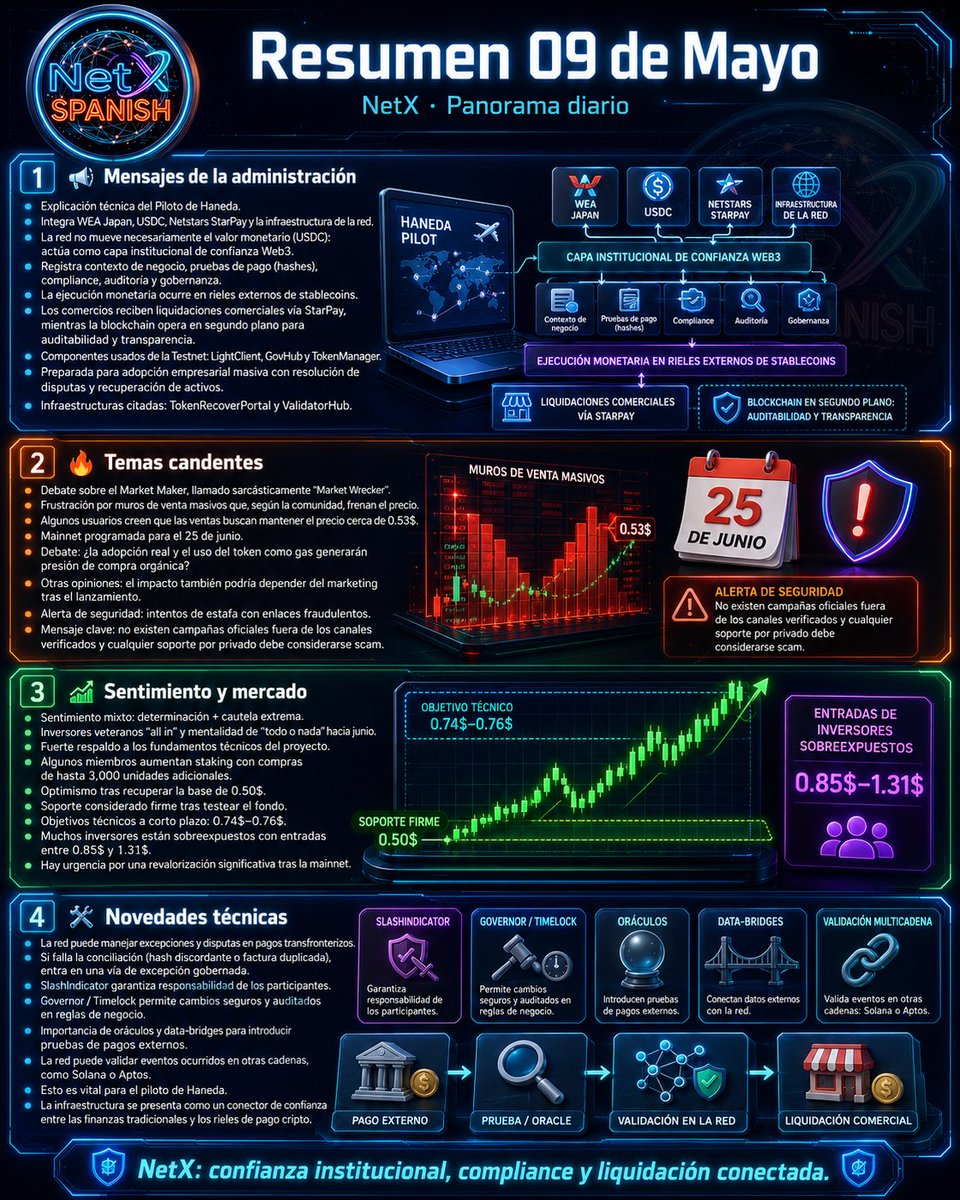
📢 MENSAJES DE LA ADMINISTRACIÓN
Desde la administración, se ha compartido una explicación exhaustiva y de alto nivel técnico sobre el funcionamiento del Piloto de Haneda, un hito clave que integra a WEA Japan, USDC, Netstars StarPay y la infraestructura de la red. El equipo central enfatizó que el rol de la red no es necesariamente ser la cadena por donde se desplaza el valor monetario (USDC), sino actuar como la capa institucional de confianza Web3. Esto implica que la red se encarga de registrar el contexto de negocio, las pruebas de pago (hashes), el cumplimiento normativo (compliance), la auditoría y la gobernanza de las transacciones.
El equipo detalló la arquitectura final del proceso, donde la ejecución monetaria ocurre en rieles de stablecoins externos, mientras que la red proporciona el soporte de liquidación institucional. Según un administrador, este esquema permite que los comercios reciban liquidaciones comerciales a través de sistemas tradicionales como StarPay, mientras que la tecnología de registro distribuido opera en segundo plano para garantizar la auditabilidad y la transparencia sin que el usuario final o el comercio necesiten interactuar directamente con la complejidad de la blockchain.
Asimismo, se subrayó que este flujo técnico utiliza componentes específicos de la Testnet, tales como el LightClient para la verificación de estados externos, el GovHub para la coordinación de paquetes y lógica de suspensión, y el TokenManager para la lógica de sincronización. Este enfoque busca demostrar que la red está lista para soportar adopción masiva empresarial, proporcionando mecanismos de resolución de disputas y recuperación de activos a través de infraestructuras como el TokenRecoverPortal y el ValidatorHub.
🔥 TEMAS CANDENTES
Uno de los debates más intensos del día giró en torno a la figura del Market Maker, a quien varios miembros de la comunidad se refirieron sarcásticamente como el "Market Wrecker" (destructor del mercado). La conversación reflejó una notable frustración debido a la aparición de muros de venta masivos que, según los usuarios, impiden que el precio refleje los avances fundamentales del proyecto. Algunos participantes sugirieron que estas órdenes de venta están diseñadas para mantener el precio en niveles específicos, como los 0.53$, justo cuando el volumen empieza a mostrar signos de recuperación.
Otro tema de gran relevancia es la inminente llegada de la Mainnet, programada para el 25 de junio. Entre los voluntarios DAO y la comunidad general existe una expectativa latente sobre si este lanzamiento vendrá acompañado de una adopción real inmediata. El debate se centró en si el uso del token nativo como gas será suficiente para generar una presión de compra orgánica por parte de las empresas, o si el impacto en el precio dependerá exclusivamente de las estrategias de marketing que el equipo central implemente tras el lanzamiento.
Por último, se registró una alerta por intentos de estafa en los canales. Un Voluntario DAO actuó rápidamente para neutralizar a usuarios malintencionados que intentaron difundir enlaces fraudulentos. La comunidad fue advertida sobre la importancia de la seguridad y el anonimato, reafirmando que no existen campañas oficiales fuera de los canales verificados y que cualquier oferta de soporte técnico por mensaje privado debe ser considerada un scam.
📈 SENTIMIENTO Y MERCADO
El sentimiento general de la comunidad es una mezcla de determinación y cautela extrema. Muchos inversores veteranos expresaron estar "all in" (totalmente expuestos), con frases que sugieren una mentalidad de "todo o nada" ante el próximo hito de junio. A pesar de la frustración por la acción del precio actual, se percibe un fuerte respaldo a los fundamentos técnicos del proyecto, con miembros de la comunidad aumentando sus posiciones de staking con compras de hasta 3,000 unidades adicionales.
En términos de niveles de precio, se observó optimismo tras recuperar la base de los 0.50$. Un Voluntario DAO señaló que, tras testear el fondo, el soporte parece estar manteniéndose firme, con objetivos técnicos a corto plazo situados entre los 0.74$ y 0.76$. Sin embargo, la realidad de muchos inversores es de sobreexposición, con precios promedio de entrada que varían desde los 0.85$ hasta los 1.31$, lo que genera una urgencia colectiva por ver una revalorización significativa tras la actualización de la red principal.
🛠️ NOVEDADES TÉCNICAS
En el ámbito técnico, se profundizó en la capacidad de la red para manejar excepciones y disputas en pagos transfronterizos. La arquitectura presentada permite que, en caso de un fallo en la conciliación (como un hash de pago discordante o una factura duplicada), la red entre en una vía de excepción controlada por gobernanza. Esto se logra mediante el uso de SlashIndicator, que garantiza la responsabilidad de los participantes de la red, y el Governor / Timelock, que permite realizar cambios en las reglas de negocio de forma segura y auditada.
También se mencionó la importancia de los oráculos y data-bridges para introducir pruebas de pagos externos en la red. Esta capacidad de "ingesta de pruebas externas" es vital para el piloto de Haneda, ya que permite que la red valide eventos ocurridos en otras cadenas (como Solana o Aptos) para proceder con la liquidación comercial. La infraestructura se perfila así como un conector de confianza entre el mundo financiero tradicional y los rieles de pago cripto.
1
7
249

May 4
What this unlocks: ✅ Native account abstraction (no more Bundlers) ✅ Post-quantum ready (no ECDSA dependency) ✅ Atomic batch operations ✅ Gas sponsorship built-in ✅ EOAs get smart contract powers without delegation
Proposed by Vitalik, lightclient, Felix Lange, Yoav Weiss.
1
2
2

The Registry Stays. Markets Expand
Ethereum isn’t well-suited to serve as the authoritative registry-of-record for a registered security.
Compliance logic lives at the contract layer, not the protocol layer, which means enforcement depends on individual implementations, can be bypassed through alternative contracts, and ultimately lacks a single deterministic source of truth for auditors and transfer agents.
TXDC introduces a different model.
tx/Coreum acts as the deterministic registry-of-record, where compliance is enforced at the protocol level. Identity, eligibility, jurisdiction, accreditation, and transfer restrictions are embedded directly into chain state.
Every decision is reproducible, every rule is enforced before execution, and every outcome can be audited from the chain alone.
Ethereum is not replaced. It is extended.
In the TXDC architecture, Ethereum becomes a recognized venue extension rather than the system of record. Assets can move to wherever liquidity exists, but the registry itself never leaves tx/Coreum.
Ownership, compliance status, and cap table integrity remain anchored to a single deterministic source, while Ethereum provides access to familiar wallets, DeFi rails, and deep secondary markets.
This separation is critical.
Today, most tokenized assets on Ethereum fall into one of two categories: synthetic claims issued through SPVs or assets relying on off-chain compliance systems.
Both approaches introduce fragmentation between the legal asset and its on-chain representation.
They also force trade-offs such as geofencing, trust in centralized databases, or post-trade remediation.
TXDC removes those trade-offs.
There are no synthetic wrappers representing an underlying asset.
There are no SPVs holding custody on behalf of token holders.
There are no bridge committees or multisig trust assumptions.
There is no parallel cap table maintained off-chain.
Instead, there is one registered security.
That security is issued natively on tx/Coreum and governed by protocol-level rules.
When it appears on Ethereum, it is not re-issued or wrapped. It is the same asset, recognized in a different venue, with its ownership and compliance state verified through lightclient proofs against the registry chain.
Every transfer on Ethereum is gated by the same compliance logic enforced on tx/Coreum. Eligibility is not inferred or trusted. It is proven.
This creates a new primitive for regulated markets.
Liquidity becomes portable without compromising compliance.
Venues can integrate regulated assets without operating their own compliance stack.
Transfer agents can rely on a single, auditable cap table across multiple chains.
Users can access regulated markets through familiar interfaces without breaking regulatory constraints.
TXDC is not a bridge in the traditional sense. It does not move assets into parallel systems or create derivative claims.
It extends the reach of a single registry into multiple execution environments while preserving its integrity.
The result is a unified model for tokenized securities that aligns legal ownership, technical enforcement, and market access.
The asset crosses chains.
The registry doesn’t.
One registry. Every venue. Same registered share.
@SoloTex_com @CoreNestVC
@texture_capital @jaebersole1
#SolomenteLabs
#TXDC
2
1
14
1,466


Apr 19
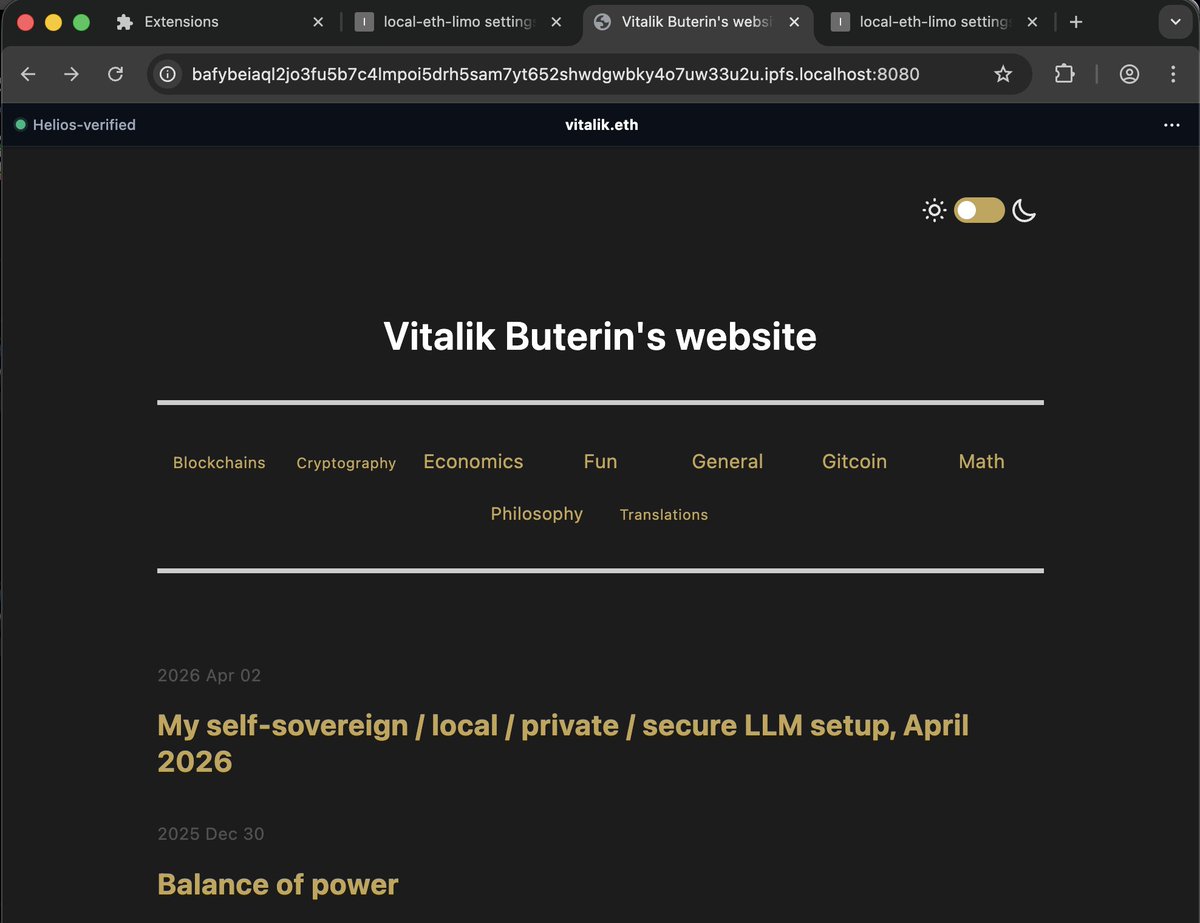
Got @VitalikButerin's blog on his ENS running Fully locally using local IPFS client Helios lightclient
don't need to rely on any third party, just a simple browser extension could achieve this
let me know if you'd use this local @eth_limo
Apr 18

The best time to integrate trustless name resolution in web browsers was in 2018
The next best time was yesterday
The next best time... is now.
3
2
43
6,520


Apr 10
“В стране ограничивается доступ к сервисам lightclient и VPN, что затрудняет пользователям доступ к средствам и их использование. Приложение @zodl_app доступно в F-Droid, а сервисы lightclient можно запускать локально.”
Apr 10

The country is disrupting access to lightclient services and VPNs, making it difficult for users to access and use funds. The Zodl app is available on F-Droid and lightclient services can be run locally.
4
308

Apr 10
The country is disrupting access to lightclient services and VPNs, making it difficult for users to access and use funds. The Zodl app is available on F-Droid and lightclient services can be run locally.
5
7
46
2,179