
Apr 1
After the alpha, beta, and developmental edit stages, but before the final proofread, are the line edit and copy edit stages. Let’s look now at the line edit. Continue reading here: mfalfrey.com/2026/04/01/line…
#editing #indieauthor #lineedit #writingcommunity

2
44

Jan 14
Attention all Line Editors.
You are awesome! I know you only have your writer's best interest at heart, are trying to elevate their writing, and aren't attempting to knock their ego down a notch.
Okay, now back to line edits.
#amediting #WritingCommunity #lineedit
3
35

15 Aug 2025
Almost made it half way through Chapter 27 of my #LineEdit but my laptop died. 😅 Keen to complete fully #edit it today, as it’s a pivotal moment in my story. #AmEditing #AmWriting #AuthorsOfTwitter #SelfPublishing #WIP #Writers #WritingCommunity
1
3
69
14 Aug 2025
Seven more chapter to #LineEdit. I’m so close to completing #MyNovel! YAY! 😁 #AmEditing #AmWriting #AuthorsOfTwitter #SelfPublishing #WIP #Writers #WritingCommunity
1
1
3
50

Developmental editing complete. Now over to the line editor ✍️ You authors know the feeling. Off to fish…
#writing #edits #writingcommunity #writerscommunity #writer #writersofinstagram #writing #writers #lineedit #develomentalediting #poontown #bottledlightning #fishing #tarpon #silverking #sabalo #authorscommunity #AuthorsLife @authors
8
214

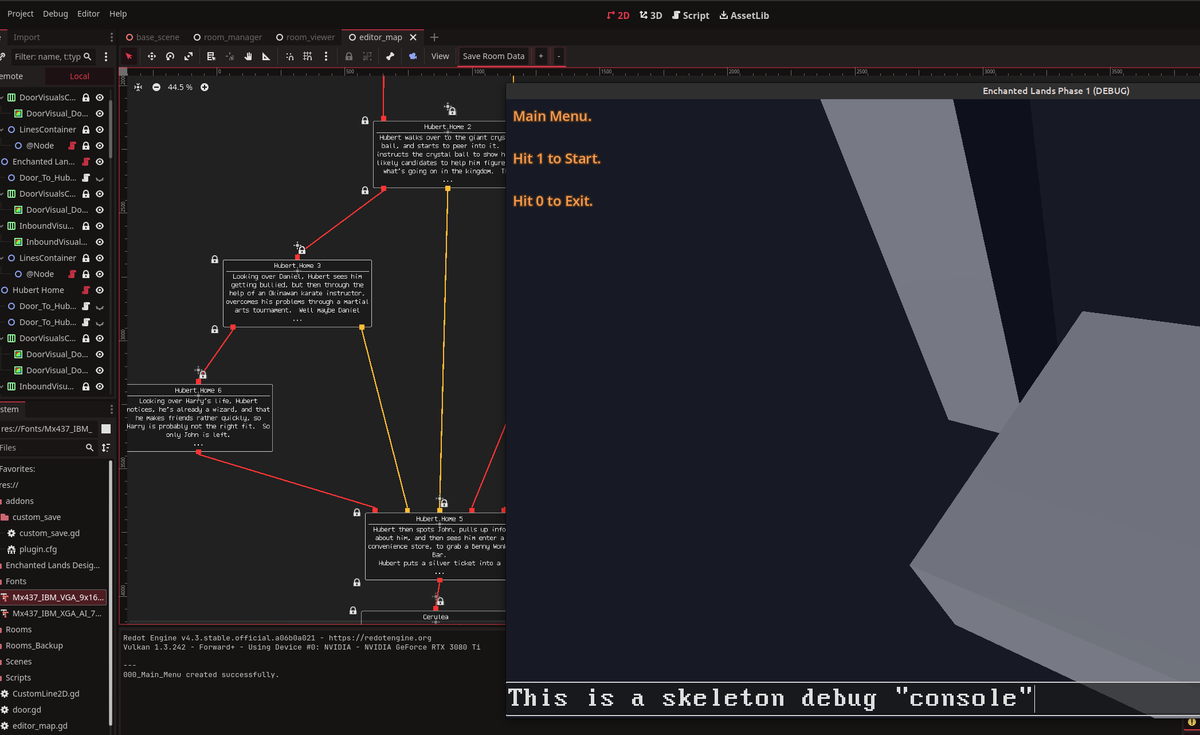
progress! added some "rooms" and then had this lineedit popup! Consider it an early #screenshotsaturday entry.
#redot #redotengine #gamedev #indiedev
2
1
13
2,467

18 Dec 2024
The problem is that a "C" is often introduced when it is unnecessary, and it can cause unnecessary new codepaths, due to how codepaths are sliced up per the abstraction. In the case of A -> B, it is possible that instead of requiring A|C -> B, A can be expanded, and 99% of the function (the ->) can remain the same, but you've done O(1) work for adding the new requirement, which otherwise would've been done by writing an entirely new codepath, C -> B.
This can occur when, for example, types are defined to be categorically coupled with sets of behaviors/effects. Introducing a new behavior/effect, perhaps a slight mutation of an existing example, requires fitting these new effects into the existing abstraction, which now means introducing a new type, which also means introducing new codepaths in all cases where other type variants had separate codepaths.
A simple example is a traditional OOP-style widget class hierarchy, or the discriminated union equivalent. You have class Widget, and class Button, Slider, LineEdit, Checkbox, RadioButton, all extend Widget, etc. - Widget has virtual functons for responding to events. For example, OnClick: Button|Slider|LineEdit|Checkbox|RadioButton -> Result. Now if I want a slightly different kind of button, which requires some features like a Slider, other features like a Checkbox, other features like a LineEdit, and so on, I must either fit that into the hierarchy somehow, or I must introduce a new subtype. In practice, what I find is that the hierarchy is entirely unnecessary to begin with - it is much simpler to assume each widget can cross-cut across the set of features in arbitrary ways, rather than enforcing a hierarchical shape. Thus, you have one homogeneous type at the bottom, which at the limit can have *all features* turned on, and in practice you just select a subset.
1
5
581

when I wrote Juxta, Magi
I thought was it
Publisher would pick it up
I'd buy an island
the publisher would do all the world
now after 25 years, I learned a thousand tricks of the trade, I have dev editor, copyedit lineedit, proofread, revision, and fought for marketing hats
2
10

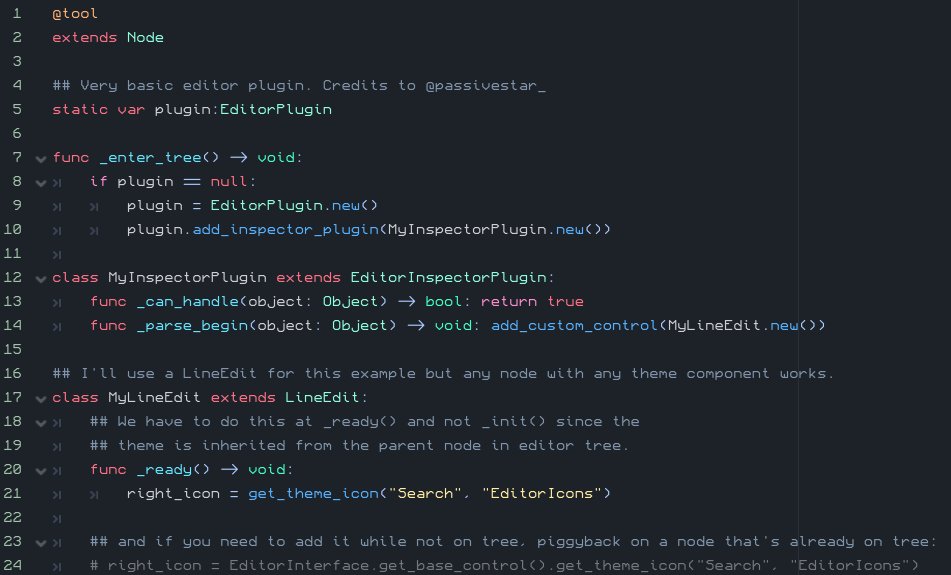
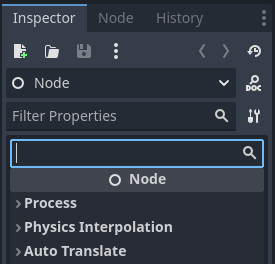
Godot tip #4:
You can reuse all the theme components within the editor interface in your plugins. Here's a simple example that reuses the search icon in a LineEdit for an inspector plugin:
#GodotEngine #godot #gamedev
1
2
198

30 May 2024
UnityのInputFieldに相当するノード。
以前は見つけられなかったけど、GameEngineなんだから絶対あるだろ!と、色々な言葉で検索して、、、やっぱりありました🤣
その名はLineEditノード。
色々と実験して、ざっくりとだけど使い方が判ったので、名前入力はこれでいこう。
#GodotEngine #Godot4
4
258

19 Apr 2024
Looks neat!
One thing to keep in mind is that when the input fields get focus they will use a monochrome dark color. This is a limitation of Godot theming. You can easily change LineEdit color to your own by editing the theme in Godot though
1
3
139
10 Mar 2024
Finally finished editing the #Opening of my #Screenplay. Feels so good to have it done! (I'll definitely need to #LineEdit it later but for now, the #StructuralEdit is completed). #AmEditing #AmWriting #Horror #WIP #WritingCommunity
3
20

13 Jan 2024
It's "just" a plugin that adds a LineEdit to the editor which generates some basic boilerplate to run an expression. You don't need any changes to the engine for this.
1
6
452

15 Dec 2023
And at #lineedit stage of #bookthree, it turns out the thing my character does most is chew her lip. It's EVERYWHERE! Cutting it out now.
Book one was looking to the sky, book two was deep breaths. There's always something!
#Writers, what is your character's overused thing?!
2
4
406

🚀 Slint 1.3.2 is now live! This release fixes some embarrassing regressions in LineEdit, ComboBox, and PopupWindow, and adds KeyEvent.repeat for repeated key event support. Changelog: github.com/slint-ui/slint/bl… #Slint
1
2
3
409

Extreme #godotengine hack: you can press ctrl z in a Godot game's LineEdit to see the quirky placeholders the devs put in their scenes before code initialization 😁
3
89

14 Oct 2023
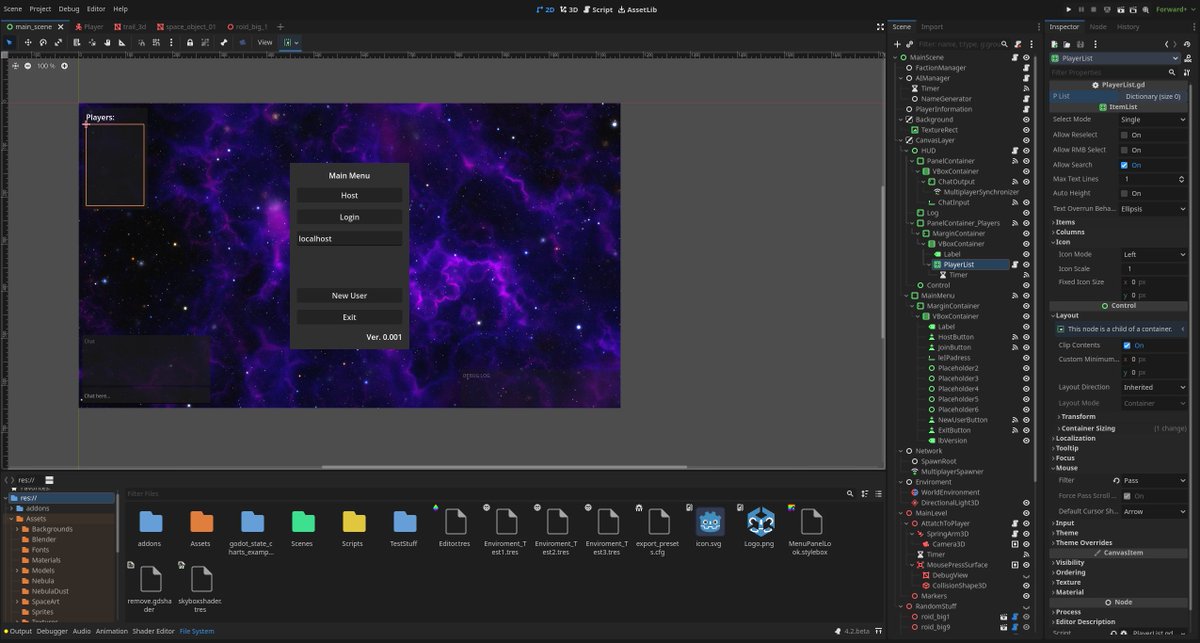
Thanks @passivestar_ for the theme and @Der_Kevin for the folder addon :D
Ps. i made the lineEdit boxes a little smaller #GodotEngine
1
291

19 Jun 2023
Approved by @JerichoWriters! I specialise in literary fiction, women's fiction, psychological thrillers, and some fantasy. I can provide an #EditorialReport, a #DevelopmentalEdit, a #LineEdit or a #ProofRead.
jerichowriters.com/our-servi…

4
10
736

28 Mar 2023
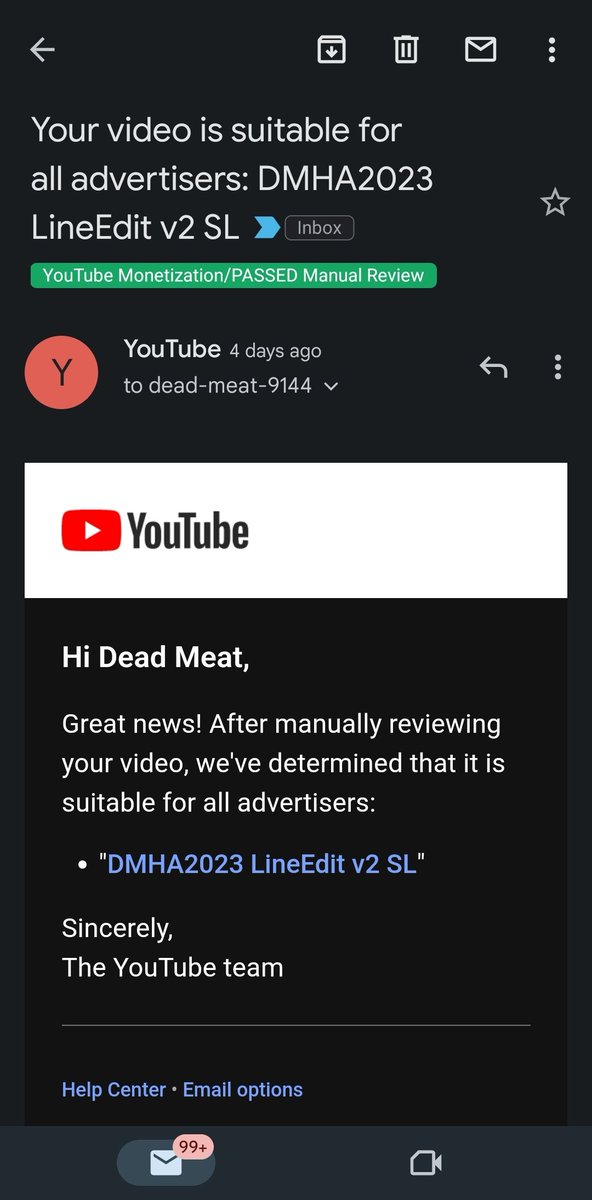
Proof! This LineEdit had all the exact same content, it just wasn't finalized with color and sound. We did this early upload to have it checked for content restrictions and copyright claims. We were trying our best to play by your rules but how can we with these inconsistencies?
2
1
59
2,380

10 Dec 2022
9 Dec 2022

Writers!
If you think you might benefit from support in 2023, please get in touch! I’m almost booked up for Jan, Feb and March.
Details are below - take a look, then message me, and we’ll arrange a call to discuss what you need:
Www.stephaniebutlandauthor.c…
4
5