Filter
Exclude
Time range
-
Near
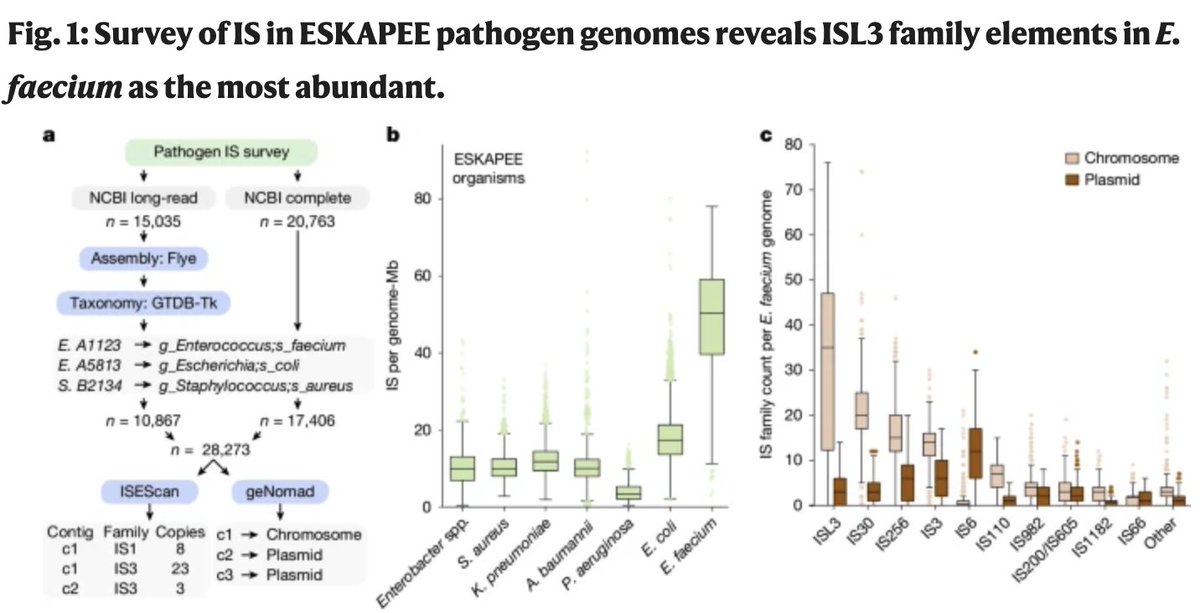
SCI member Ami Bhatt & others uncover a recent expansion of mobile DNA (ISL3) driving rapid genome changes in E. faecium, even within patients. In cancer transplant patients, this may help fuel adaptable, hard-to-treat infections. #MicrobialEvolution brnw.ch/21x1Ufi
4
225
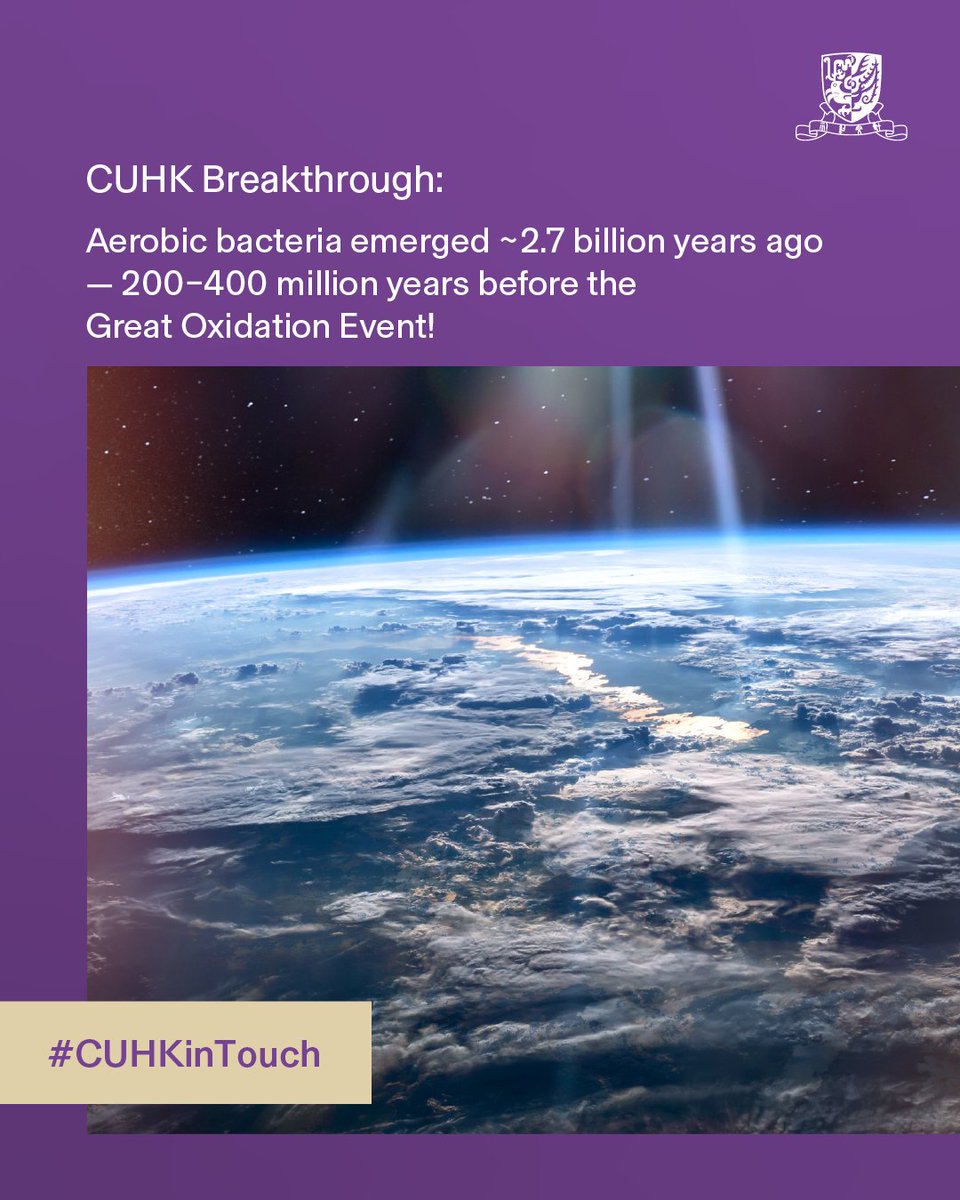
Many scientists assumed that oxygen-respiring bacteria evolved during or after the Great Oxidation Event (~2.4 Ga), when atmospheric oxygen began to accumulate to about 0.1-1% of modern levels. Led by Professor Luo Haiwei (School of Life Sciences & Simon F.S. Li Marine Science Laboratory), CUHK researchers applied machine learning to over 80,000 bacterial genomes from the Genome Taxonomy Database. The AI selected 40 “housekeeping” genes tied to fundamental cellular processes (energy production, stress response, biosynthesis), predicting oxygen respiration originated around 2.7 Ga — well before the GOE. These early aerobes thrived in localized “oxygen oases” produced by ancestral cyanobacteria: protected micro-environments in bacterial mats and shallow sediments, where oxygen persisted despite rapid scavenging by reduced chemical compounds. This shows life adapted to use oxygen locally long before planetary-scale oxygenation drove major metabolic breakthroughs. ✅ AI prediction relies on integrated cellular systems for robustness, even with partial gene data ✅ Phylogenetic timelines confirm pre-GOE aerobic lineages, with expansion during GOE and Neoproterozoic Oxygenation Event (NOE) ✅ Profound implications for modern climate change: insights into life’s adaptation to oxygen stress inform predictions for coastal dead zones, coral reef fluctuations, and ecosystem resilience Published in PNAS. The team is refining the model to include partially oxygen-breathing microbes (facultative aerobes). 👉 Learn more about this discovery: go.cuhk.digital/earths_first… #CUHK #AerobicBacteria #GreatOxidationEvent #OxygenOases #Cyanobacteria #AIinScience #ClimateChange #PNAS #EarlyEarth #MicrobialEvolution
1
2
503
What if the key to becoming a multi-planetary species isn’t rockets, but microbes? In the latest episode of Galaxy Balance, I sat down with Devon Stork, founder of the nonprofit Pioneer Labs, to explore a bold and necessary frontier: engineering microbes to support human life beyond Earth. Devon’s work focuses ono microbial evolution as infrastructure, developing robust biological systems that can survive extreme environments and transform Martian regolith into usable soil. Rather than shipping everything from Earth, Pioneer labs is asking a deeper question: How do we let biology do the heavy lifting? We discuss: · Why microbes may be the first true settlers on Mars · Designing evolutionary “chassis” for extreme environments · Converting regolith into fertile soil using biology · The role of open science in accelerating planetary-scale challenges · What is really means to think about life support as a living system. This conversation is about aligning evolution, engineering, and long-term human survival. If you are interested in synthetic biology, space exploration, or how life adapts at planetary scales, this episode is for you. #SyntheticBiology #SpaceBiology #Mars #MicrobialEvolution #OpenScience #LongTermFutures
1
1
3
235
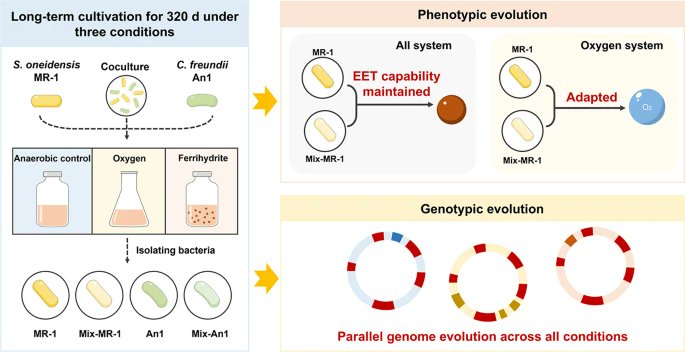
New research shows that 320 days of substrate competition preserves robust extracellular #electrontransfer while pushing the #bacteria through parallel genomic evolution. #Bioelectrochemistry #EET #Genomics #MicrobialEvolution #Shewanella Read more: link.springer.com/article/10…
1
2
61
We all know antimicrobial resistance (AMR) is a growing crisis, but what if the drug dosing strategies are unintentionally helping bacteria evolve resistance? Traditionally, combination therapies have been designed assuming equal doses of two drugs would be most effective. But new research suggests we’ve been missing a crucial factor - the mutation rate of resistance. Bacteria don’t all acquire resistance at the same rate. Some drugs face resistance mutations far more frequently than others and with far-stretched magnitude. Using mathematical models and simulations, researchers in this study (tinyurl.com/5t2r8u9t) found that the optimal ratio of two drugs in combination therapy is directly influenced by the ratio of their mutation rates. If one drug is four times more prone to resistance mutations than the other, the dosing should shift to favor the more stable drug, about twice as much. This relationship is said to hold true across bacteriostatic and bactericidal antimicrobials. Why does this matter? If confirmed in clinical settings, this simple but powerful insight could reshape how we dose antibiotics, antifungals, and even antiviral drugs. Oscar Delaney, Andrew D Letten, Jan Engelstaedter @microvioma @gardp_amr Bangalore Bioinnovation Centre IBioM - Foundation of Indian Biotech MSME, @swissnexindia @Precisi0nHealth, Centre for Cellular and Molecular Platforms (C-CAMP) Centre for Cellular and Molecular Biology, the echo network Molecular Solutions Care Health, AMR Insights, Ministry of Health and Family Welfare, Government of India, Dinesh Gundu Rao, Jayanta Haldar ABLE - Association of Biotechnology Led Enterprises Varsha Shridhar, PhD Sweta Raghavan #antimicrobialresistance #amr #antibioticresistance #drugresistance #combinationtherapy #mutationrates #precisionmedicine #bacteriostatic #bactericidal #infectiousdiseases #pharmacology #microbialevolution #antibioticdosing #healthcareinnovation #publichealth #antimicrobialstewardship #drugoptimization #resistancemitigation #scientificresearch #clinicalimpact #mathematicalmodeling tinyurl.com/5t2r8u9t

1
22
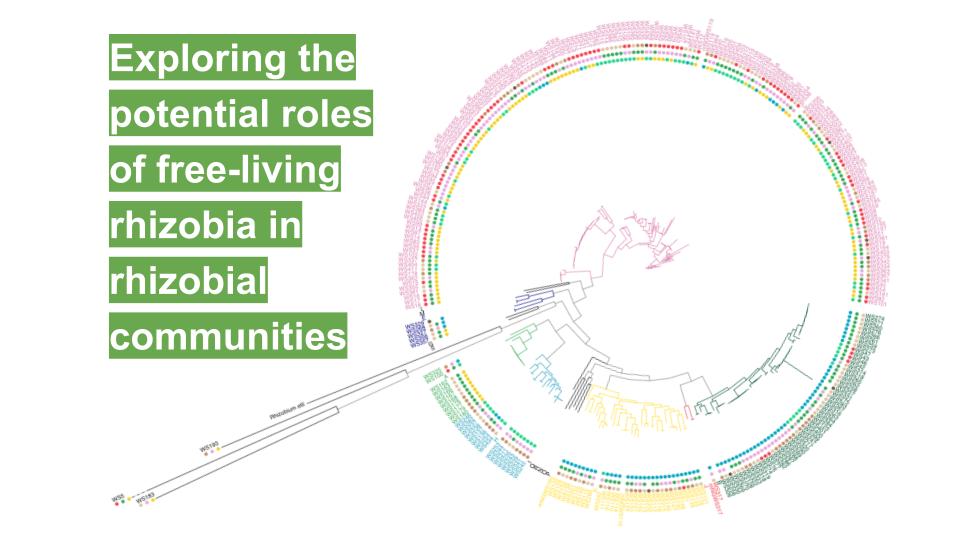
PhDs avaliable in the lab! No1....what are rhizobia up to OUTSIDE the symbiosis? tinyurl.com/8mybvaha with Prof Tim Daniell. Come along to our project info session Tues 10th at 2pm. register here tinyurl.com/y76au57n #microbialevolution #symbiosis #PhDposition
1
3
5
1,195
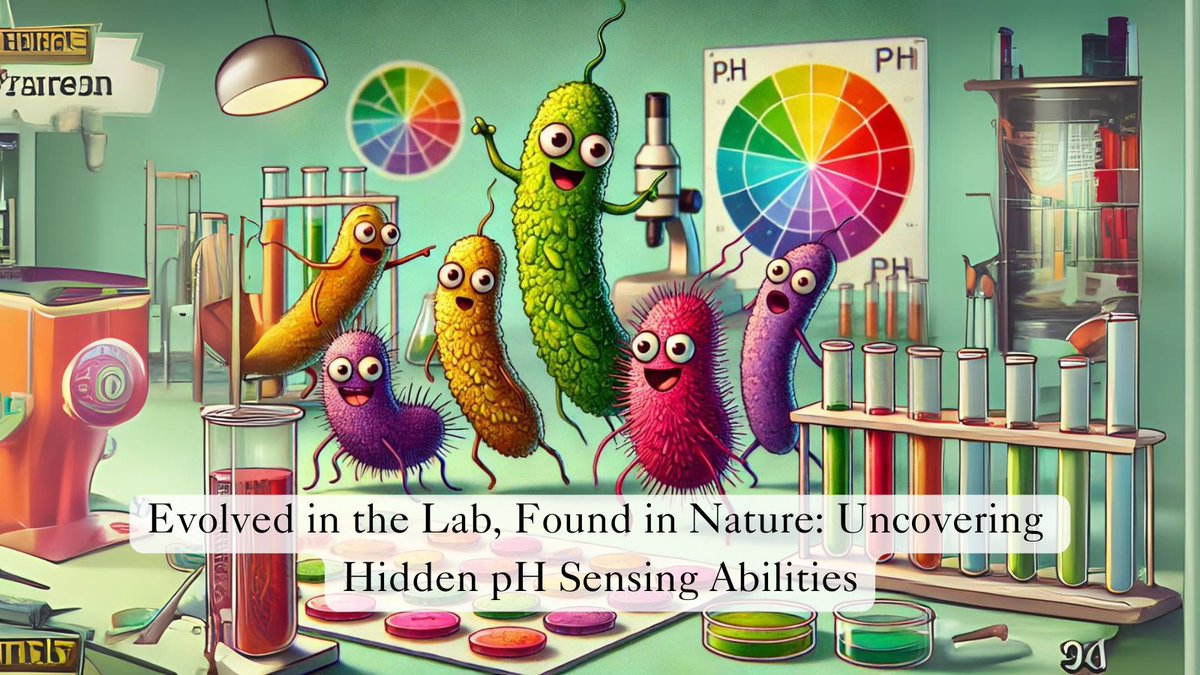
Lab-evolved microbes sense pH like those near sponges, helping us understand rapid adaptation in tough environments. 🌊🧬 #MicrobialEvolution #ScienceNews New from @sb_worthan & @megbehri (@vuartsci), @bpbratton Labs
1
2
163
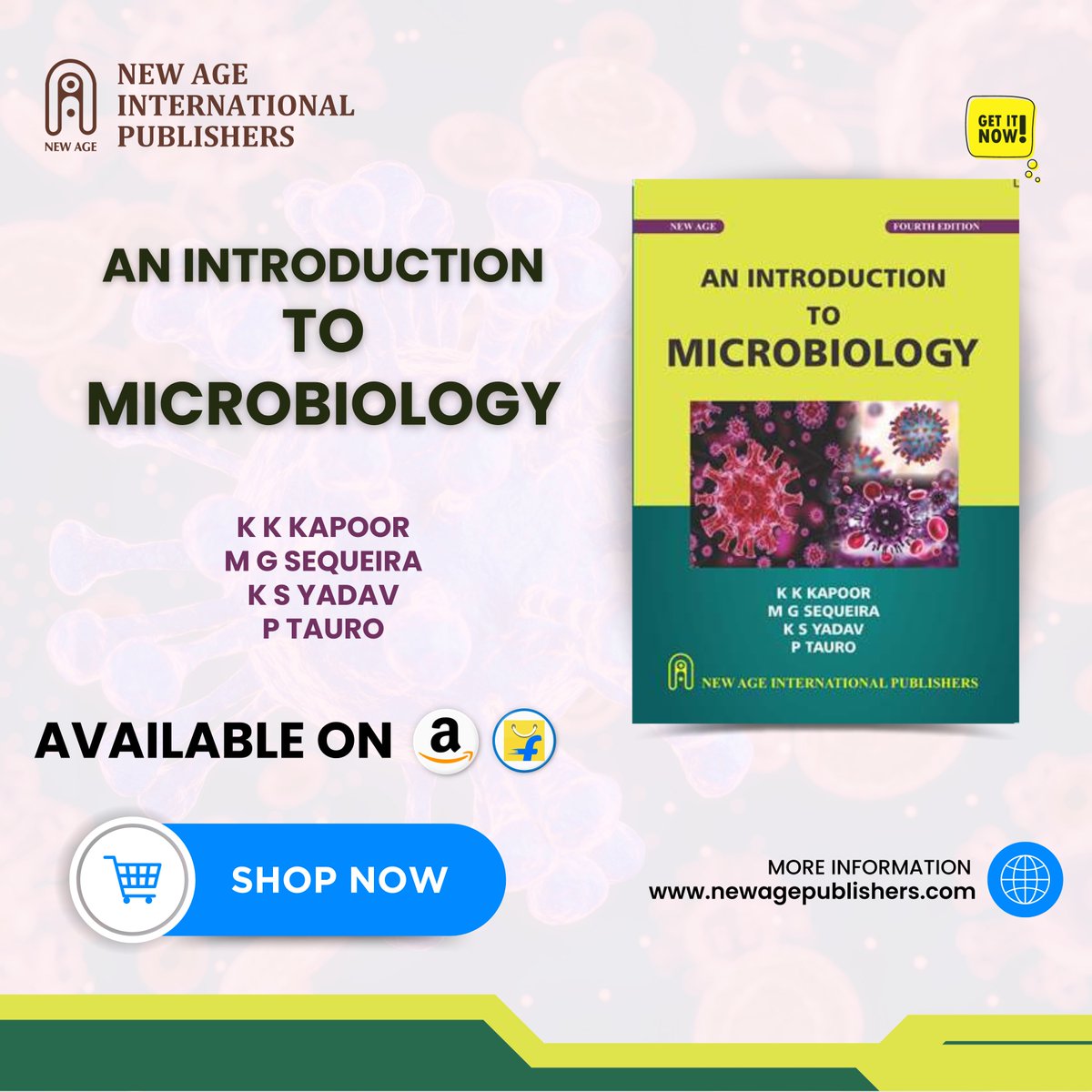
🔬 An Introduction to Microbiology About the Book: The fourth edition of "An Introduction to Microbiology" provides a strong foundation in both basic and applied microbiology, making it ideal for undergraduate and postgraduate students. This updated edition covers current concepts, real-world applications, and includes multiple choice questions to aid competitive exam preparation. The text is student-friendly, with clear explanations, illustrations, and tables that simplify complex ideas. ✨ Key Features: 📚 Comprehensive coverage of microbiology concepts. 🔄 Updated content reflecting advancements in the field. 🌍 Real-world applications of microbiology. 📝 Includes multiple choice questions for exam preparation. ✏️ Clear and concise text with supportive illustrations and tables. Unlock your potential in microbiology — Get your copy today and master the essential concepts with clarity and confidence! 𝗔𝗺𝗮𝘇𝗼𝗻- amz.run/9UsD 𝗙𝗹𝗶𝗽𝗸𝗮𝗿𝘁- bityl.co/RkKY 𝗪𝗲𝗯𝘀𝗶𝘁𝗲- newagepublishers.com/servlet… #Microbiology #Biotechnology #EnvironmentalScience #Agriculture #Biotechnology #MedicalSciences #Genetics #MicrobialEvolution #NewAgePublishers
4
34
#MetagenomicsMonday 🧬From microscopy to NGS: insights into permafrost, halite, amber, and ancient rocks. 🌍🔬 #MicrobialEvolution #AncientDNA sciencedirect.com/science/ar…

2
9
393
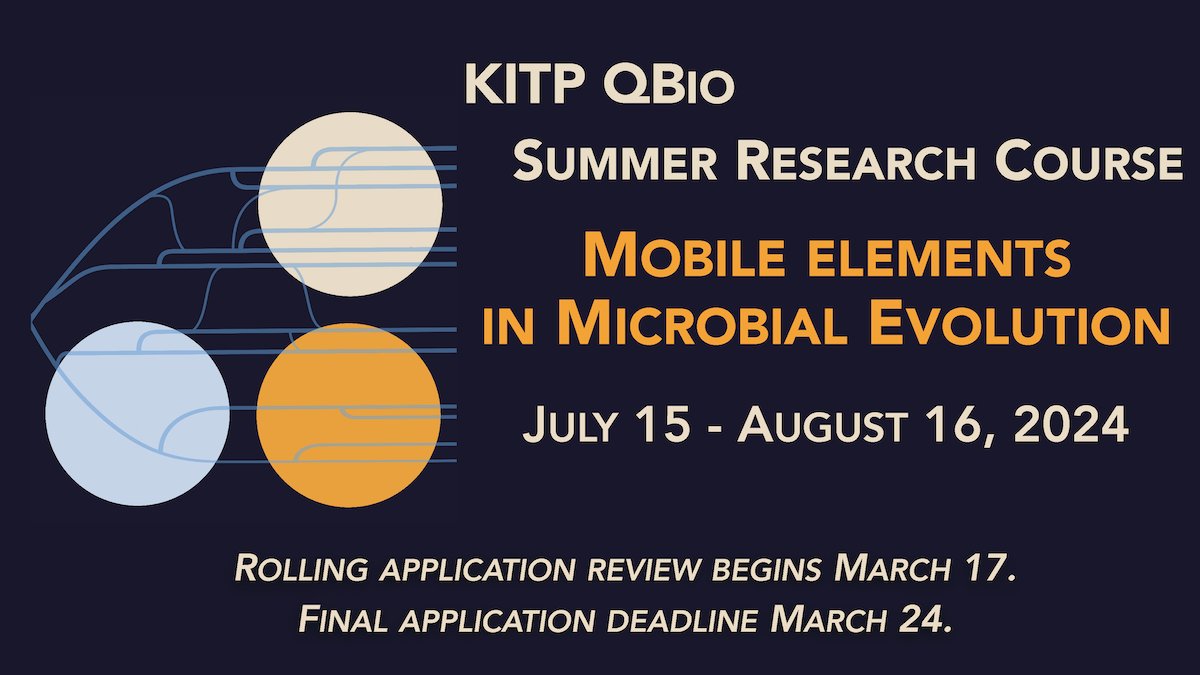
PhD students postdocs: apply to 2024 #kitpqbio summer course, Mobile Elements in #MicrobialEvolution, at kitp.ucsb.edu/qbio. Deadline ext. to March 24. Course directors @benjaminhgood @HonourMcCann @PaulTurnerLab @jemersonmicro @richardneher #microbialecology
2
5
11
7,080
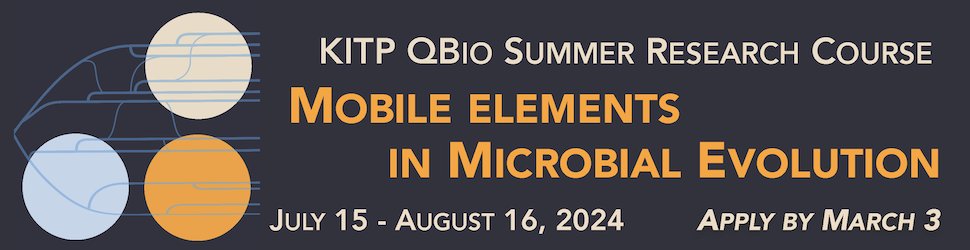
PhD students and postdocs: apply to the 2024 #kitpqbio summer course, Mobile Elements in #MicrobialEvolution, at kitp.ucsb.edu/qbio. Application deadline March 3. Course directors @benjaminhgood and @HonourMcCann. #microbialecology #horizontalgenetransfer
16
28
9,304
Many thanks to everyone who attended this year’s WSS-#Paleobiotechnology colloquium. Our guests gave us some truly inspiring insights into their exciting research topics!🙌🧡 #aDNA #ancientDNA #NaturalProducts #MicrobialEvolution #Evolutions @jfy133 @PStallforth @twarinner
2
10
823
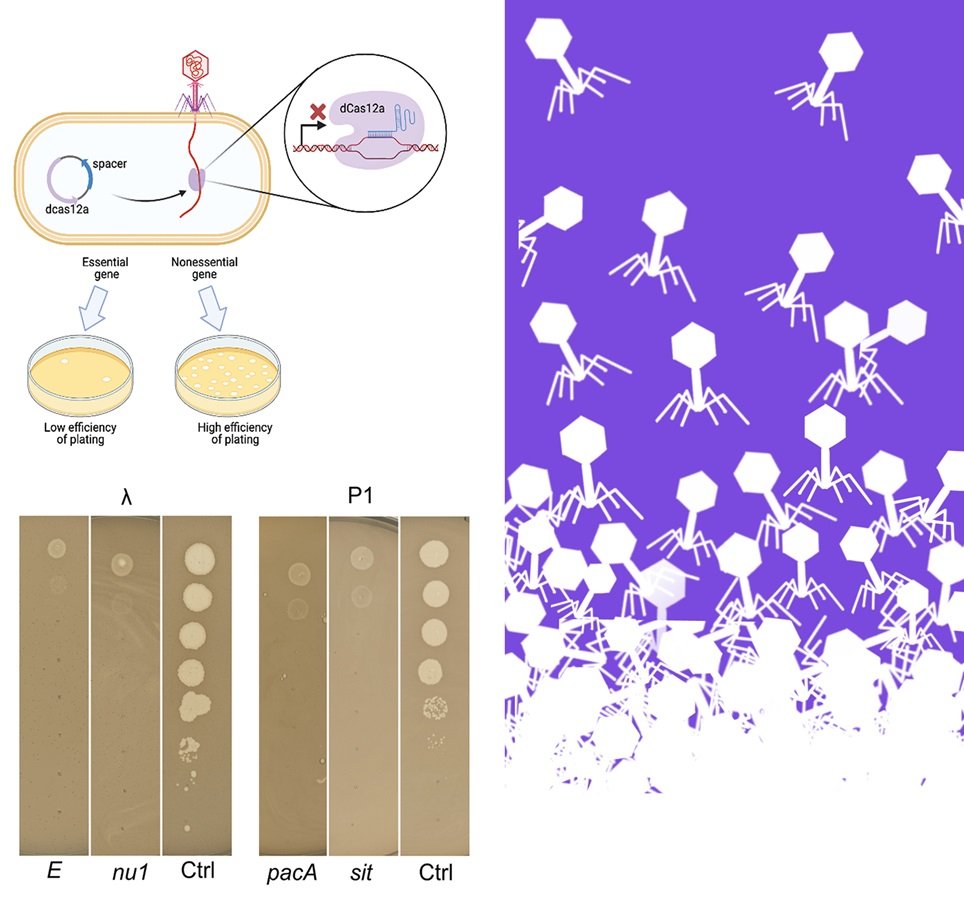
#Phages are key drivers of #MicrobialEvolution, but many #phage genes are poorly understood. @denish_piya @AdamArkinLab @vivek_mutalik &co use arrayed genome-wide #CRISPRi to map gene the essentiality landscape in the iconic coliphages λ & P1. #PLOSBiology plos.io/3uLtzgU
2
3
1,426
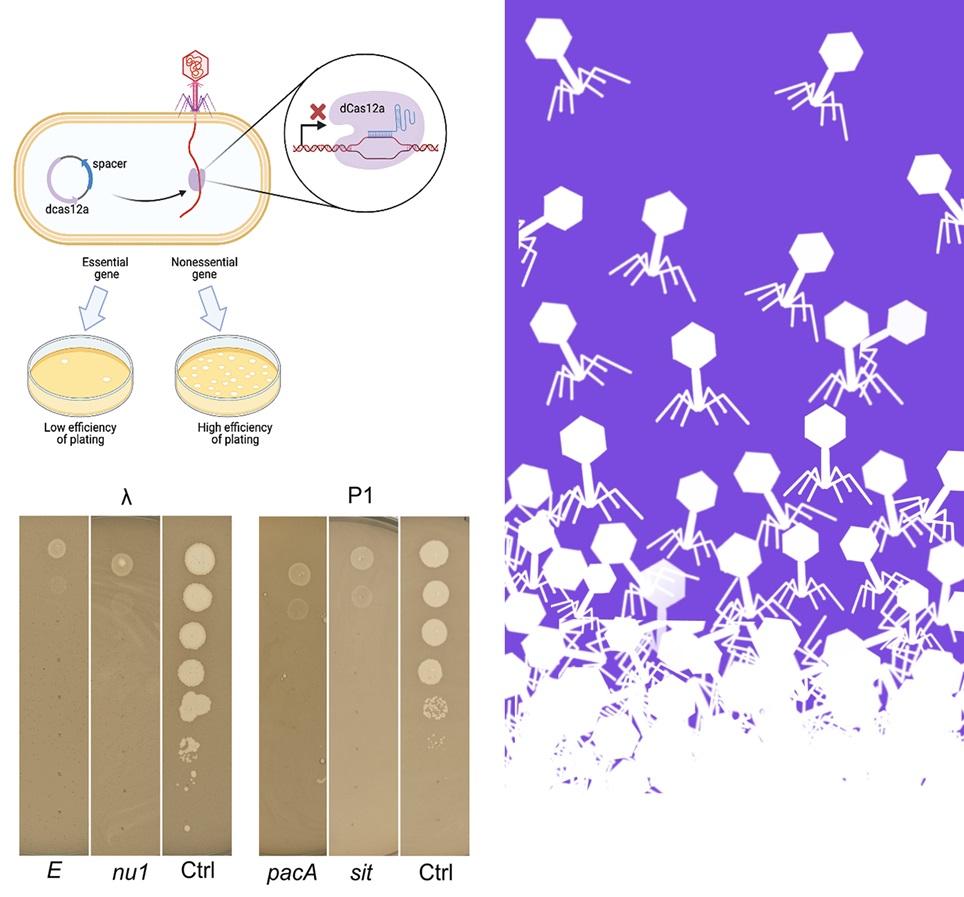
#Phages are key drivers of #MicrobialEvolution, but many #phage genes are poorly understood. @denish_piya @AdamArkinLab @vivek_mutalik &co use arrayed genome-wide #CRISPRi to map gene the essentiality landscape in the iconic coliphages λ & P1. #PLOSBiology plos.io/3uLtzgU
2
17
40
5,550
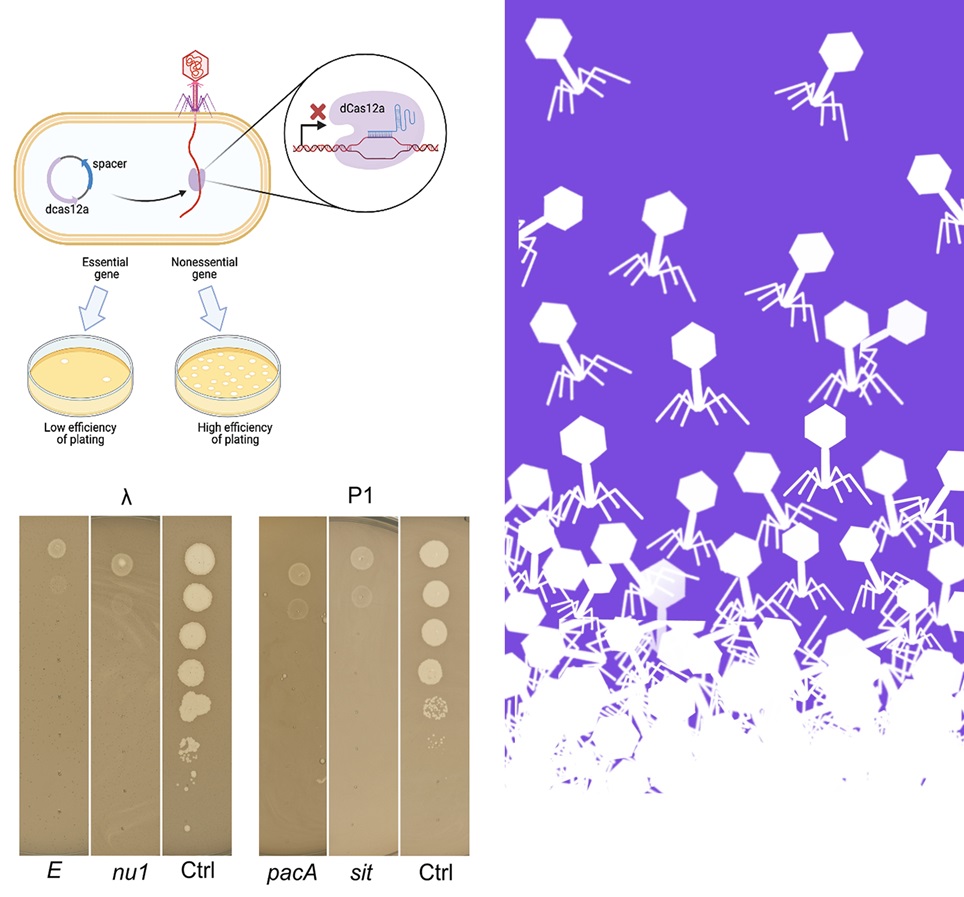
#Phages are key drivers of #MicrobialEvolution, but many #phage genes are poorly understood. @denish_piya @AdamArkinLab @vivek_mutalik &co use arrayed genome-wide #CRISPRi to map gene the essentiality landscape in the iconic coliphages λ & P1. #PLOSBiology plos.io/3uLtzgU
2
13
44
4,326
18 Aug 2023
Here is @RosieClover4 giving a quick summary of her talk from #MNGPopUP; ‘Decoding Phenotype-Genotype Connections in Clinical E. coli’ 🦠🧬 Full talk available Monday 📹🗓️youtube.com/@microbesNG @MERManchester #MicrobialSequencing #ECR #MicrobialEvolution
3
3
2,069