
Feb 4
LayerZero’s OFT (Omnichain Fungible Token) standard is now officially supported on @arbitrum Orbit, unlocking seamless token transfers between Arbitrum Orbit chains and 50 other chains in the @LayerZero_Core network.
No more messy bridge contracts or fragmented liquidity.
With OFT, #developers can now launch tokens that move smoothly across multiple chains, all while using native gas, native security, and one contract per chain.
It’s clean. It’s elegant. And it makes sense for the modular future #Arbitrum is building.
But that’s not all.
Arbitrum Orbit is the perfect match for OFT:
•Orbit lets devs launch their own customizable chains.
•OFT ensures those chains can talk to other ecosystems effortlessly.
Together, they make composability across rollups actually practical.
This is a blueprint for how scalable, connected ecosystems should work.
And LayerZero Arbitrum are showing us the way.
If you’re building anything cross-chain, this is the moment to go from idea to impact.
Read more about it here:
medium.com/layerzero-ecosyst…
#Arbitrum #LayerZero #Orbit #OFT #CrossChain #ModularStack
32
108

25 Dec 2025
Ordering is usually an afterthought.
In distributed execution, ordering is the product.
@integra_layer explicitly manages execution sequencing across domains.
That’s what makes complex strategies possible.
#IntegraLayer #ExecutionOrdering #ModularStack #KaitoDeep
73
58
670

2 Dec 2025
Modular infrastructure like @KRNL_xyz reshapes how builders think about expansion. When components talk cleanly to each other, innovation stops being chaotic and starts being scalable. Good architecture always ages well. #ModularStack
@GiveRep @iota @dangoXchg @LightLinkChain

6
6
6
292

29 Nov 2025
TIA ( $TIA ) — The Modular Sovereign That Doesn’t Organize Blockchains. It Forces Them Into a Data Hierarchy They Cannot Escape.
TIA is not modular infrastructure. It is a gravitational command center that dictates where data lives, how it flows, and which chains rise or collapse based on their relationship to its availability layer. And @EdgenTech sees the inevitability: TIA does not participate in modularism. TIA is modularism.
Other chains scale through compute.
TIA scales through control.
Other ecosystems attempt interoperability.
TIA enforces dependency.
Other protocols ask for adoption.
TIA makes adoption a survival requirement.
The architecture acts like a data monarchy
• sovereign DA that compresses chain costs
• universal interface for rollups and appchains
• scalable bandwidth for global throughput
• structural dominance that compounds with each integration
Every time a new rollup launches, TIA grows.
Every time bandwidth demand increases, TIA strengthens.
Every time a chain seeks cheaper scaling, TIA becomes mandatory.
This is not a competitive environment.
This is a hierarchy with one ruler.
TIA is not a module in the ecosystem.
It is the ecosystem’s spine.
@EdgenTech
#TIA #Celestia #ModularStack #DataAvailability
4
3
121

10 Nov 2025
The path to scale isn’t vertical — it’s modular.
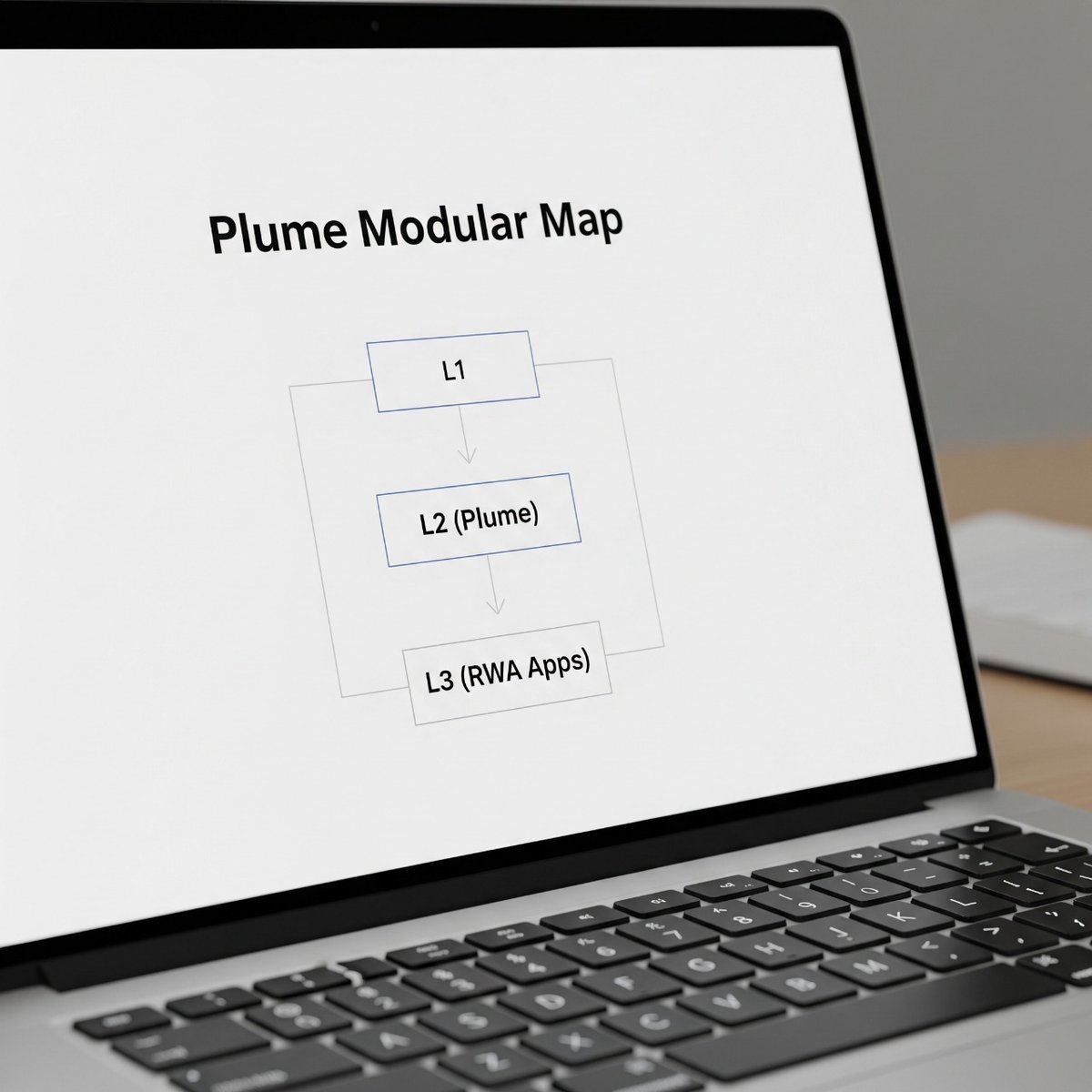
Plume powers L1–L2–L3 alignment for real-world asset ecosystems.
@plumenetwork
#PlumeNetwork #GalxeStarboard #ModularStack #CrossChain #RWA
1
2
13

⚡ The Syndicate Stack is redefining rollup infrastructure — a modular, flexible system that makes building and scaling appchains simple, fast, and fully customizable.
Created by @syndicateio , it powers the next phase of the EVM ecosystem, combining decentralization, speed, and community ownership.
Through its collab with @Bantr_fun , Syndicate is merging the technical creative layers of Web3 — bringing builders, creators, and communities together in one shared growth loop. 🌐
The future of coordination is modular, permissionless, and community-driven.
That’s the Syndicate Bantr vision. ⚡
@syndicateio @Bantr_fun
#Syndicate #Bantr #Web3 #Rollups #ModularStack #EVM
265
189
17,957
6 Nov 2025
Layers that build clarity.
Plume’s architecture is modular, efficient, and purpose-built for real-world asset finance.
@plumenetwork
#PlumeNetwork #GalxeStarboard #Layer2 #RWAFinance #ModularStack

1
4
18

6 Nov 2025
$TIA – Celestia: The Modular Rabbit Hole
Analyzed by @edgentech
I’ll be honest—at first glance, $TIA just looked like another infra project hyped by keyboard devs. But the deeper I got, the clearer it became: Celestia is changing how blockchains actually get built. Gone are the days of begging some foundation for permissions—now anyone can spin up a rollup and launch in days.
It’s not all slick: onboarding is DIY as hell, early docs are a mess, and you’ll break stuff. But that’s the thrill. Real builders are migrating, not for grants, but because TIA lets them deploy at the speed of startup, not committee. When DeFi and games start running rollups like microservices, you’ll remember who powered it under the hood.
#TIA #Celestia #ModularStack #RollupInfra #BuildFast
@edgentech
1
3
289

3 Nov 2025
Inside the Arbitrum Chain Stack: The Hidden Power Behind Its Builder Ecosystem
Have you ever used a slick dApp on @arbitrum and wondered, “Why does this feel smoother and cheaper than everywhere else?”
That experience isn’t luck, it’s the result of a modular stack designed so builders can fine-tune performance, costs & governance like sound engineers balancing a mix.
What We’re Really Talking About
This is a plain-English breakdown of the Arbitrum chain stack, how its layers give developers control over governance, cost profiles & app-specific performance while keeping Ethereum’s security at the core.
The Core Idea, Demystified
At its base, Arbitrum rollups inherit @ethereum's settlement and security, but execute transactions off-chain for scale.
The Nitro stack manages fast execution, fraud-proofs & batching, making apps feel responsive even during network congestion.
The Problem Builders Kept Hitting
Developers don’t just want speed, they need predictable fees, adjustable throughput & governance flexibility. Without that control, scaling stalls under high costs and rigid infrastructure.
How Arbitrum Solves It in Layers
Arbitrum splits responsibilities cleanly: #Nitro powers execution, data is efficiently posted back to Ethereum (now even cheaper with blob posting), and #Orbit lets teams launch app-specific chains using the same tooling but with their own economics & governance.
Why Governance Isn’t an Afterthought
Upgrades, parameter changes, and treasury actions go through the @arbitrumdao_gov with a Security Council for emergencies. This ensures a transparent, upgradeable system one that evolves without disruption.
The Cost-Control Toolkit in Practice
Teams can combine #calldata compression, blobs for data availability, and AnyTrust-style DA options to optimize posting costs.
Orbit chains can even use custom gas tokens or external DA layers, letting apps tailor fees to their own economic models.
Performance Tuned per Application
Need lightning-fast throughput for a DEX or smoother latency for gaming? Orbit app-chains (L3s) give projects their own block times & resource budgets ensuring one busy app never slows down another.
Composability Without Isolation Anxiety
Orbit chains inherit Arbitrum’s architecture, offering EVM compatibility, Stylus support (for Rust/C/C ), and native bridges that preserve liquidity across Arbitrum One, Nova, and Ethereum itself.
What Makes This Stack Stand Out
🔹Ethereum-Anchored Security: Every chain ultimately settles to Ethereum for trust & stability.
🔹Governable Upgrades: DAO-led governance allows transparent evolution with community input.
🔹Programmable Data Availability: Projects can choose Arbitrum DA, AnyTrust, or external DA options to balance cost and reliability.
🔹Battle-Tested Execution Layer: Nitro delivers proven scalability under heavy network demand.
🔹App-Specific Sovereignty: Orbit chains can set their own gas tokens, governance & fee logic - real modular freedom.
This architecture lets builders start lean on Arbitrum One and scale up to Orbit as their apps grow all within one ecosystem.
Why This Matters Culturally Not Just Technically
Today’s communities want ownership and voice. Arbitrum’s governance & modular design let teams encode values directly into infrastructure, turning users into stakeholders and projects into self-sustaining ecosystems.
The Macro View
As Web3 expands across DeFi, gaming & social apps, modularity prevents a “one chain fits none” outcome. Arbitrum’s design lets every vertical innovate independently while sharing the same security and liquidity foundation.
My Take
What I love about the Arbitrum stack is its freedom of choice. Builders can begin on shared infrastructure, then branch out when growth demands it without leaving home.
That’s how Arbitrum turns smooth UX today into sustainable ecosystems tomorrow - modular, community-powered & built to last.
#Arbitrum #ModularStack #Governance #DataAvailability
6
52
122

3 Nov 2025
Stop Asking for Permission. Start Showing Your Passport.
Every week, a new layer-2 launches. Every month, a new airdrop is announced. The question is: Are you a tourist or a citizen?
Your 0x address is a tourist visa. The $SNOWAI Token is your Web3 Passport.
Owning $SNOWAI is owning the key to the highest-value interactions in the modular blockchain world:
* ⚡ Access: You hold governance power over the Modular Naming Service (MNS) the human-readable address layer for all of Web3.
* 🛡️ Privilege: You govern the Onchain Reputation Score (ORS). Your vote decides the trust mechanics that filter out bots from future airdrops, DAOs, and exclusive communities.
* 🌍 Interoperability: Your passport is chain-agnostic, ensuring you are a recognized citizen whether you are on an EVM chain, a new Rollup, or a MoveVM chain.
This is the last call to secure citizenship at IDO pricing. The gates are closing soon.
Don't watch the next-gen modular ecosystem be built own the foundation.
Get your $SNOWAI allocation now on @ChainGPT_Pad.
#Web3Passport #DigitalIdentity #ModularStack $SNOWAI
@snowball_money
#ChainGPT $CGPT @Chain_GPT @ChainGPT_Pad
pad.chaingpt.org/pools/snowb…

8
4
10
54

25 Oct 2025
Usernames aren’t just tags anymore — they’re prime digital real estate. And @snowball_money is redefining what that means in Web3. 🌐
With #Snowball and $SNOWAI, your name becomes more than an address — it’s your portable, programmable identity across the entire blockchain ecosystem.
One handle that works everywhere.
One record that connects your wallets, socials, and proofs — all verified, all owned by you.
That’s the magic of Modular Naming Service (MNS) — it powers discovery, trust, and a smoother onchain UX by turning your identity into a composable layer for every app, wallet, and explorer.
And the tokenomics? Built with balance in mind.
Short names remain scarce and premium, while longer handles stay accessible for everyday users — aligning utility with value.
Here’s why this identity layer is such a big deal 👇
✨ Default display in wallets & explorers means your name gets the spotlight.
✨ Short, memorable handles prevent mis-sends and boost organic growth.
✨ Composable records let teams, DAOs, and brands stay coordinated.
✨ First movers get long-term visibility — this is digital land, not hype.
Operator tip:
🔹 Lock in your shortest brand variant now.
🔹 Set wallet social records early.
🔹 Use sub-names to manage teams cleanly.
🔹 Treat 1–3 char names as strategic assets — they’ll age like fine wine.
#SNOWAI is building the foundation for onchain identity that actually works — clean, functional, and built for the next billion users.
Because in Web3, your name isn’t just who you are — it’s where your reputation lives. 💫
#Snowball #SNOWAI #Web3Identity #DeAI #ModularStack
20
23
39
775

🚀 The Web3 hardware frontier is getting smarter, faster, and modular.
🔹 @vooi_io — bridging hardware intelligence with on-chain logic.
Its AI-driven hardware layer brings real-world data into verifiable Web3 actions.
🔹 @RaylsLabs — redefining the decentralized compute layer through hardware-optimized nodes.
Think low-latency, high-throughput, zero-trust compute across edge environments.
🔹 @useTria — powering AI agents and IoT networks with a unified modular hardware stack, enabling interoperable, verifiable machine coordination.
Together, they’re building the physical backbone of on-chain intelligence —
where hardware meets ZK proofs, MPC, and autonomous agents.
⚙️ Web3 isn’t just software anymore — it’s computational hardware redefined.
#Web3 #EdgeComputing #DePIN #AI #ZKProofs #IoT #ModularStack #Kaito
7
2
5
42

23 Oct 2025
🌐 Welcome to the inner system of idOS, where self-sovereign identity meets modular architecture.
In the web3 world we don’t just build features, we build foundations. At idOS your data doesn’t live in someone else’s silo. It lives securely in encrypted pockets, under your control. Vaults you can grant access to, revoke when you choose. 🧠
✨ What’s going on behind the curtain Users encrypt their credentials themselves and store them in a distributed storage layer. Node-operators run the network of endpoints that manage encrypted bundles without ever seeing the contents. When an application needs access, a request is forwarded to you. You decide. You encrypt for the recipient. The system records access grants in a smart contract so everything is auditable but private. 🔐
🍃 The design philosophy Privacy first but usable. Compliance built-in but not intrusive. Chain-agnostic so your identity flows between ecosystems rather than getting stuck. A storage network built like a vault, paired with an access protocol that you control. No central gatekeeper, just your consent and a modular stack you can build on.
🔍 Why it matters Because in web3 you shouldn’t have to rebuild identity every time you land on a new dApp. Onboarding should feel like logging in. Switch chains, switch wallets, switch services—and your identity comes with you. Modular. Open. Secure. Reusable.
🚀 What this unlocks Builders integrate a consistent identity layer once and benefit across use-cases. Users verify once and move with freedom. Data controllers and issuers issue credentials you hold. You share when you choose, revoke when you must. Ecosystems grow without identity friction holding them back.
🔧 In short Identity becomes infrastructure. Data becomes portable. Trust becomes explicit. You become sovereign.
🛠️ The blueprint is clear Envision a stack where: • Encryption is local to you • Storage is distributed but interoperable • Access is your decision • Identity spans chains, apps, services
This is the architecture of the future of identity. And this is idOS in action.
👉 app.idos.network/?ref=D5050C…
@idOS_network @wallchain
#IDOS #Web3Identity #DecentralizedIdentity #SelfSovereignIdentity #Blockchain #Privacy #DataOwnership #ModularStack #OpenArchitecture

22 Oct 2025

🚀 Calling all builders, creators, and code-architects
Your toolset just got an upgrade.
idOS SDK gives devs the power to onboard verified users with ease, issue credentials, manage access rights and define compliance logic—all without reinventing the wheel. DIA 4idos.network 4idos.network 4
🧩 What this means for you
• One integration, many chains: connect once, support multiple protocols idos.network 1
• Automate trusted profiles: let users verify once and reuse across apps instead of repeating KYC each time idos.network 1
• Data stays under users’ control: encrypted, permissioned, self-sovereign—no more “we hold your data” nightmares DIA
🔍 Why this matters now
Because identity on Web3 has been the bottleneck. Users face onboarding friction. Apps still ask for the same documents over and over. Builders lose time building identities; they should be building features. idOS is the layer that solves this. idos.network 1
🛠 Your roadmap to integration
• Grab the SDK and pick your chain support—EVM, NEAR, and more.
• Design your credential flows: issuers, consumers, access grants—all in your stack.
• Ensure compliance out of the box: GDPR, KYC/AML rules built for real-world finance. idos.network 1
🌍 Result
A world where identities travel freely across apps and chains. Users onboard once. Developers focus on growth and product, not repetitive verification. The whole ecosystem levels up.
💡 The future of UX is frictionless identity. The future of finance is seamless onboarding. And this is your moment to build it.
👉 app.idos.network/?ref=D5050C…
@idOS_network @wallchain
#Web3 #DevBuilders #DigitalIdentity #SDK #Blockchain #SelfSovereignIdentity #DeFi #idOS

146
5
81
995
15 Oct 2025
Most people see Layer 3s as the next step in scaling.
But here’s the truth: scaling means nothing if infrastructure can’t deliver in real time.
That’s what makes this move from @BuildOnNodeOps and @EspressoSys so important.
Together, they’re solving one of the most practical bottlenecks in #Onchain systems slow finality.
And they’re doing it live, on an @arbitrum Layer 3 (L3).
⚡ The Big Move: Espresso Finality Meets Arbitrum L3
Here’s what just changed:
NodeOps now posts its blocks to Espresso before final settlement on @arbitrum One.
That small tweak?
It’s a massive leap in usability.
Espresso’s validators finalize transactions in about six seconds giving NodeOps instant, near-real-time confirmation before the full rollup commits to Arbitrum’s main L2.
🧩 Why It Matters: Real Finality for Real-World Apps
Let’s get practical.
For DePIN (Decentralized Physical Infrastructure Network) apps timing matters.
Imagine a #DePIN marketplace managing IoT devices, bandwidth, or energy credits.
Delays in block confirmations can stall:
🔹Device metering
🔹User payments
🔹Reward distributions
With Espresso, NodeOps gains sub 10 second finality, turning what used to be minutes of uncertainty into instant confirmation.
That means:
🔹Payments process quickly and safely
🔹Metering data syncs instantly
🔹Payouts to node operators and providers go through reliably
Built in Security Boost
Speed isn’t the only upgrade here.
Espresso’s validator layer also adds protection against sequencer equivocation a fancy way of saying “sending conflicting blocks.”
This is critical because it:
🔹Reduces reorg risk
🔹Prevents double-spend scenarios
🔹Keeps rollup history clean and trustworthy
For marketplaces that handle real assets, hardware, and payments, this security upgrade is not optional, it’s essential.
🌐 Crosschain Superpowers
Espresso doesn’t just speed up Arbitrum’s Layer 3, it makes it visible to other ecosystems in near real time.
That opens doors for:
🔹Multi-chain payments to hardware providers
🔹Instant coordination between rollups
🔹Composability with other on-chain services
Basically, NodeOps Espresso makes Arbitrum’s DePIN network reactive not passive.
It’s the difference between waiting for state updates and building live with them.
🔍 The Tech Behind It (Short Sweet)
Let’s break it down cleanly:
NodeOps = Arbitrum Layer 3 (L3) chain for DePIN operations
Arbitrum One = Its settlement layer (L2)
Espresso = A modular consensus layer that adds near-instant finality
Espresso doesn’t replace Arbitrum. It layers on top, providing faster confirmation before final settlement.
The result?
Arbitrum’s trust, Espresso’s speed, NodeOps’ #scalability.
🧠 Why This Move Matters for Builders
For devs, this is infrastructure gold.
You get:
🔹Sub-10s finality
🔹Reduced reorg risk
🔹Native composability
🔹Smooth Arbitrum compatibility
And for users, it just feels… right.
Instant responses. Real time feedback. No lag, no fear of stuck transactions.
That’s the user experience DePIN apps and honestly, Web3 itself have needed.
🏁 Final Take
NodeOps and Espresso didn’t just make Arbitrum faster they made it usable.
It’s a reminder that scaling isn’t just about throughput or block size, it’s about finality, composability, and trust working together in real time.
As the DePIN economy grows, these kinds of upgrades will define who leads the next wave of onchain adoption.
And right now, Arbitrum’s Layer 3s are showing everyone how it’s done.
#Arbitrum #BuildOnArbitrum #EspressoSys #NodeOps #DePIN #Layer3 #BlockchainInfrastructure #Web3 #Finality #CryptoInnovation #ModularStack #OnchainEconomy
32
61

14 Oct 2025
Every few cycles, a new zk narrative pops up.
But the real breakthrough isn’t another buzzword — it’s architecture.
@brevis_zk isn’t trying to reinvent ZK proofs; it’s redefining how they connect.
Think of it like building a city, not a skyscraper.
Each module — crypto, AI/ML, I/O — is its own district, running in parallel, stitched by a modular “glue” that lets developers plug in new layers without breaking the old ones.
That’s why @brevis_zk feels different.
It’s not chasing hype; it’s engineering composability.
From the PICO base VM to hardware acceleration and optimized ZKML, everything fits like parts of a machine built for scale.
If ZK was once theory-heavy, @brevis_zk is the version that makes it usable.
For builders. For onchain AI. For the next era of verifiable compute.
#ZK #AI #ModularStack
18
28
285

3 Oct 2025
Good Morning Web3 fam,
GN @infinityg_ai army,
Do you know?
🔧 Why is Infinity Ground different?
Because it's built with a Modular Tech Stack —an architecture that breaks down the complexity of Web3 & AI into distinct layers.
Let's peel back each layer 👇
⚙️ Application Layer
The layer closest to the user.
• Agentic IDE (build applications with natural language)
• Ready-to-use templates
• User-friendly interface untuk non-coder
➡️ Everyone can create applications without any hassle.
🧩 Framework Layer
Here AI works as a multi-agent system :
• Automatic debugging
• Intelligent feedback
• AI human collaboration
This framework makes ideas quickly become reality.
🌐 Infinity Ground's API & External Data Layer
does not stand alone.
• External API integration (CoinGecko, wallet, database)
• Real-time data for dynamic applications
➡️ Paving the way to thousands of new use-cases.
🔗 Blockchain Layer
The Heart of Web3.
• Public chain ING
• Data transparency & security
• Tokenization via $AIN (utility & governance)
➡️ Every action is recorded forever.
💻 Hosting Layer
The basic infrastructure that makes the application live.
• Scalable
• Stable
• Supporting DApps on a global scale
➡️ You don't need to think about servers—just focus on the idea.
✨ Why Modular?
• Easy to understand
• Flexible for various use cases
• Enables rapid innovation
Infinity Ground = not just a tool, but a complete ecosystem from idea → application → hosting.
🚀 Conclusion
With Modular Tech Stack , Infinity Ground proves:
Every creator can build, launch, & grow Web3 applications quickly.
👉 Which layer do you think is most crucial for the future of Web3?
#InfinityG
#ModularStack
#Web3Infrastructure
#AIxWeb3
#DePIN
#FutureOfTech
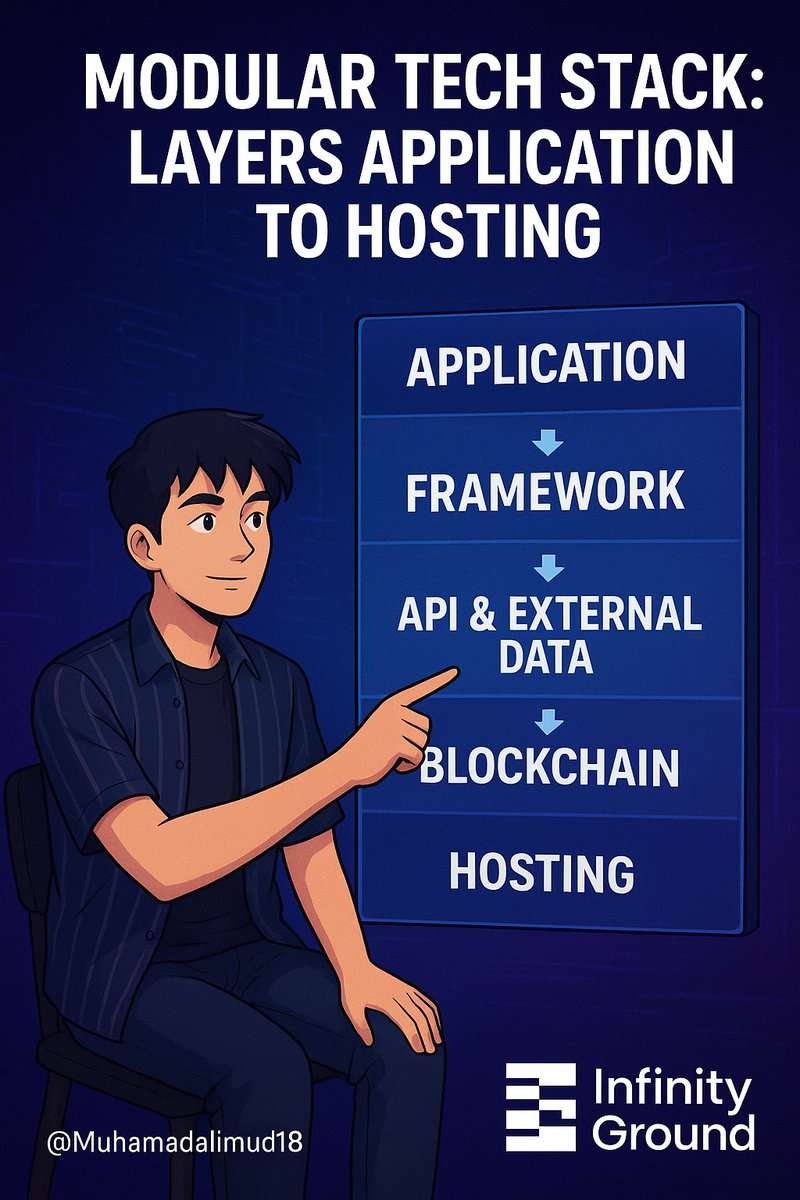
ALT Infinity Ground: “Modular Tech Stack: From Application Layer to Hosting”.
4
2
15
3,509

27 Sep 2025
Fragmentation doesn’t just hurt liquidity — it slows innovation.
Builders deserve better than clunky middleware and scattered tooling.
That’s why @RialoHQ unifies L1s, oracles, and bridges into one seamless state.
No middleware. No friction. Just flow.
Let builders build. Let networks scale.
Let reputation thrive.
#Rialo #Web3Infra #ModularStack #ZK #InfoFi #OnchainInnovation #CryptoDev #NoMiddleware
4
7
63
27 Sep 2025
Introducing Raiku: The Future of Onchain Reputation 🌐✨
@raikucom is redefining how reputation works in Web3. In a world where trust is fragmented and identity is fluid, Raiku builds a unified, composable reputation layer that lives entirely onchain.
🔍 What is Raiku?
Raiku is an onchain reputation protocol designed to help users, builders, and protocols signal credibility, history, and influence — without relying on centralized gatekeepers. Whether you're a DeFi power user, DAO contributor, or NFT collector, Raiku lets your onchain actions speak louder than words.
🧠 How It Works
Raiku aggregates onchain data across multiple networks and protocols, then transforms it into reputation signals. These signals are modular, composable, and verifiable — meaning they can be used by any dApp, wallet, or smart contract to assess trust, rank users, or unlock new experiences.
💡 Why It Matters
- Sybil resistance for airdrops and governance
- Personalized UX based on user behavior
- Social graphs built from real onchain activity
- Reputation-based access to exclusive features or communities
🚀 Built for Builders
Raiku is fully open-source and designed to be integrated easily. Developers can plug into Raiku’s reputation engine to create smarter, more secure, and more personalized applications.
🔗 Composability is Key
Reputation shouldn't be siloed. Raiku makes it portable — across chains, across apps, and across identities.
Raiku isn’t just tracking your past — it’s unlocking your future.
Follow @raikucom to stay updated and join the movement.
#Raiku #Web3 #OnchainReputation #DeFi #ZK #CryptoBuilders #DAOs #ReputationLayer #InfoFi #ModularStack

2
12
22 Sep 2025
LayerZero’s OFT (Omnichain Fungible Token) standard is now officially supported on @arbitrum Orbit, unlocking seamless token transfers between Arbitrum Orbit chains and 50 other chains in the @LayerZero_Core network.
No more messy bridge contracts or fragmented liquidity.
With OFT, #developers can now launch tokens that move smoothly across multiple chains, all while using native gas, native security, and one contract per chain.
It’s clean. It’s elegant. And it makes sense for the modular future #Arbitrum is building.
But that’s not all.
Arbitrum Orbit is the perfect match for OFT:
•Orbit lets devs launch their own customizable chains.
•OFT ensures those chains can talk to other ecosystems effortlessly.
Together, they make composability across rollups actually practical.
This is a blueprint for how scalable, connected ecosystems should work.
And LayerZero Arbitrum are showing us the way.
If you’re building anything cross-chain, this is the moment to go from idea to impact.
Read more about it here:
medium.com/layerzero-ecosyst…
#Arbitrum #LayerZero #Orbit #OFT #CrossChain #ModularStack
36
90

21 Sep 2025
Units Network is rewriting the rules of modularity. One unit, infinite possibilities. Plug in, remix, deploy. #Web3 #ModularStack #UnitsNetwork
@UnitsNetwork
2
24