
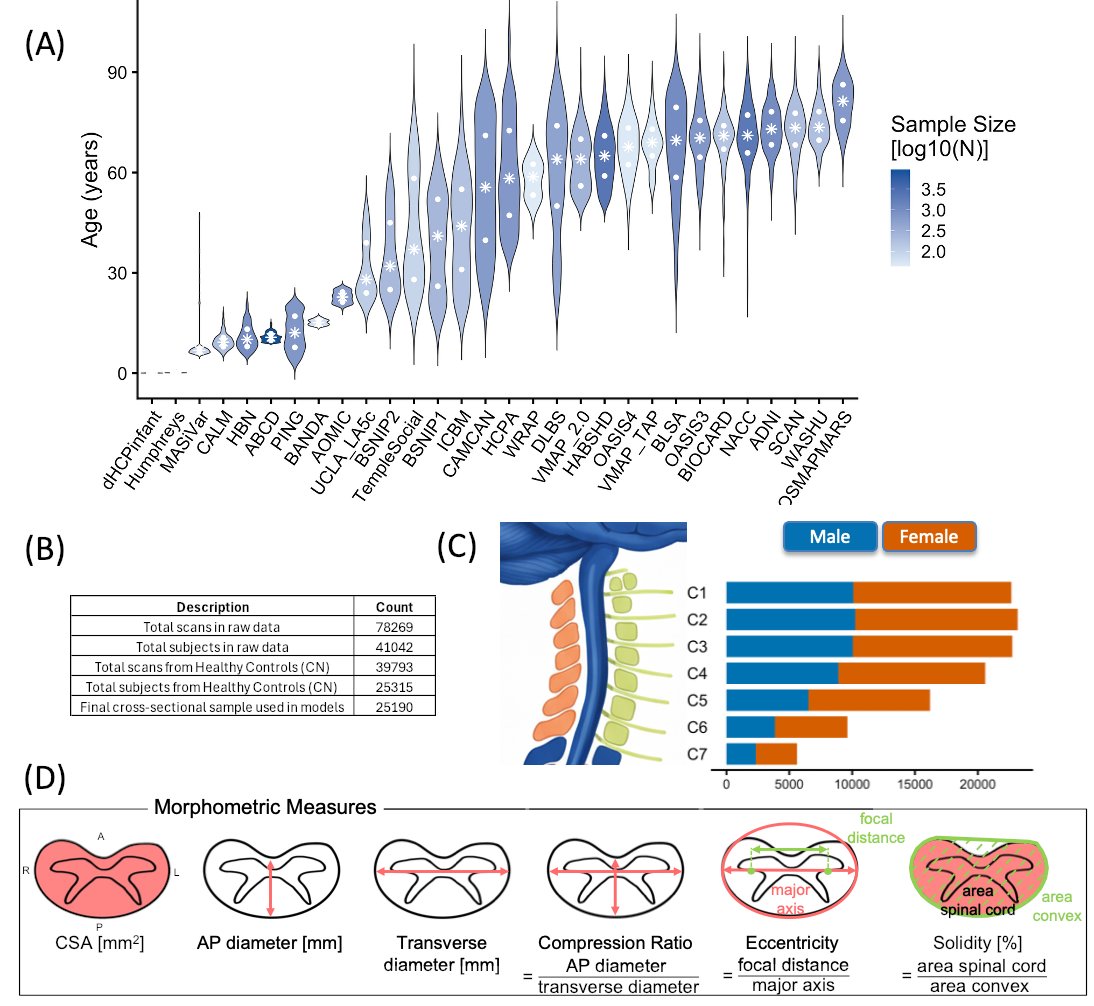
And more charts! This time for spinal cord!
Preprint here: biorxiv.org/content/10.64898…
Using an awesome suite of @SpinalToolbox tools on brain(!) images we chart spinal cord morphometry across the lifespan (averaged across vertebral levels).
1
42

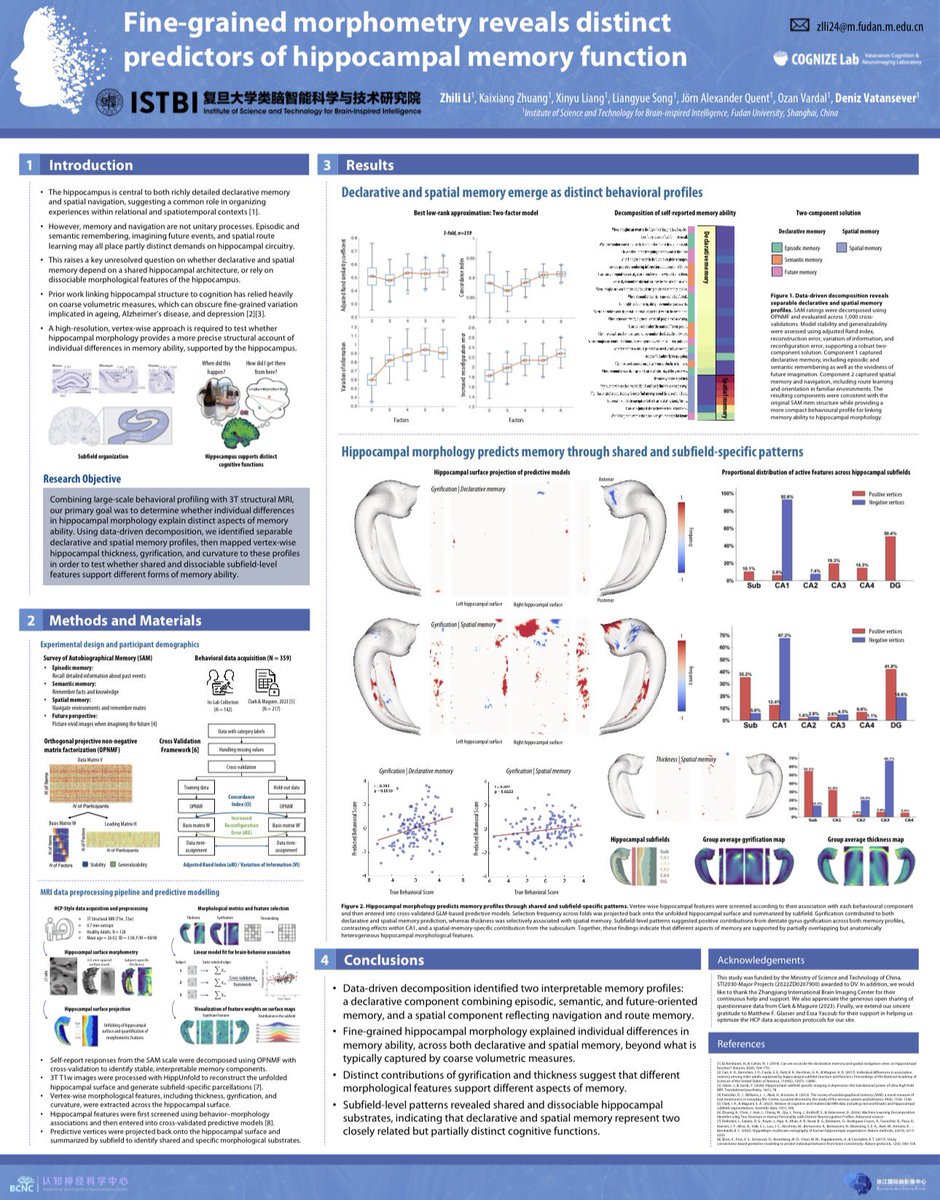
6/6 📌 #OHBM2026 Poster 3081
Can hippocampal structure predict memory function?
Zhili Li presents: "Fine-grained morphometry reveals distinct predictors of hippocampal memory function"
Proud of all our lab members presenting this week! 🎉 #Hippocampus #Memory
1
33
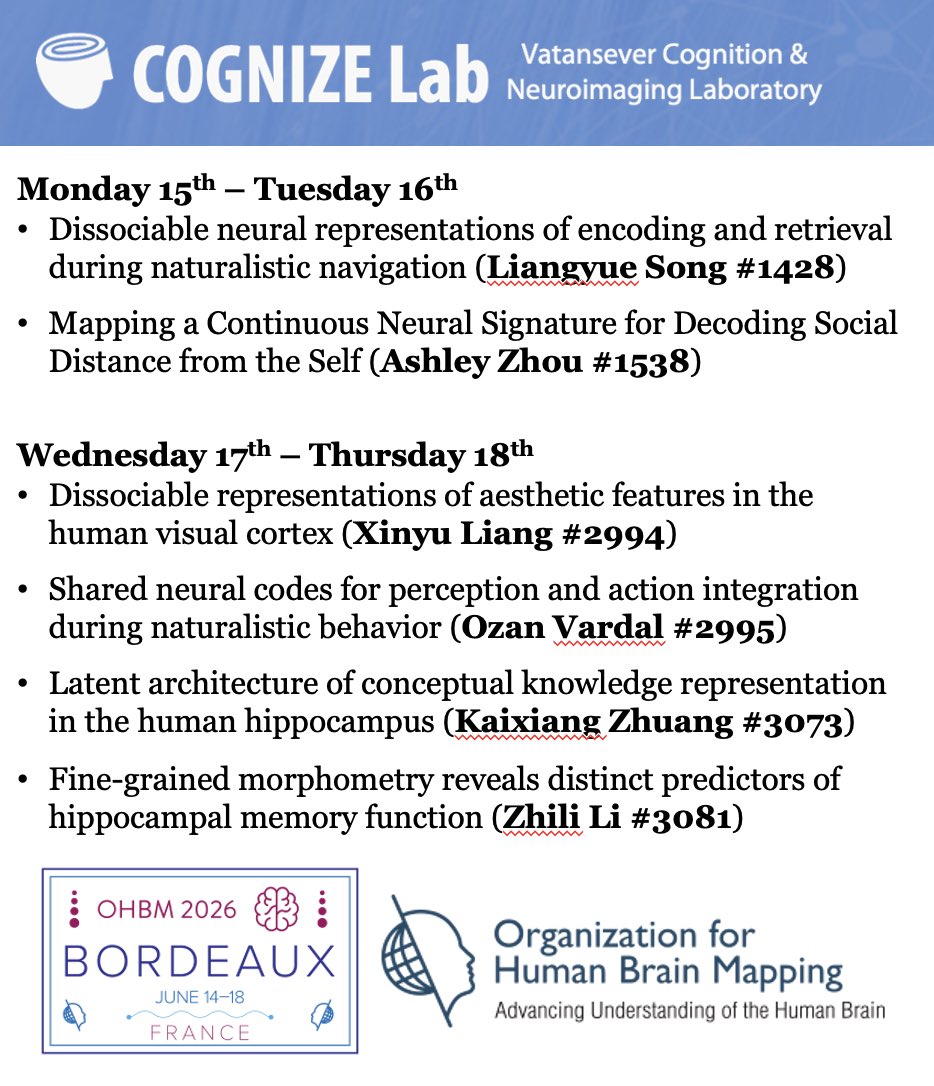
Thrilled to share the full roster of presentations from our COGNIZE Lab at #OHBM2026! 🧠
From naturalistic behaviour to conceptual knowledge, hippocampal morphometry to social cognition, here is a thread on what we've been up to 🧵👇
@OHBM @OHBM_Trainees #Neuroscience
1
4
6
387

004:テルトゥリアヌスの告解/明星
――心と心がぶつかって生まれる火花からおれは彼女の魂の形を見ている。ここに私が歌うものはない、とグラスを飲み干して席を立つ彼女に、いつかの自分の姿が重なる。どうということはない、客との意思疎通と、店側の都合との行き違いだ。よくあること。肌の色も髪の色もごった煮のホールに戻り、おれはふいに安い酒が飲みたくなっていつもは頼まないイエローストーンを潰していくだけの時間のお供に傾けた。
くだらない喧騒だ、うわっ滑りの同情と安い愛の。そしておれは世界の中で世界を感じながら一人になれるこの喧騒を愛している。グラスがかいた汗を親指で拭う――からん、と氷の落ちて回る音がおれの耳だけに響く。
周囲の景色がはるかに遠ざかっていく、そう感じて目を閉じる。すべて美しいものはこの胸の中に息づいている。父たちから譲り受けた世界の守り人として、おれの眼はおれの夢を通しておれの生命の中に潜む設計図を見ている。だからおれが描いているものはおれの運命。
汝、心よ、かつてテルトゥリアヌスが告げたように、私は炉辺にあって満ち足りた汝ではなく街角から出てきたばかりの、疲れた顔で家路につく汝に語りかけているのだ。汝が自身を見ることができるならばそれが世界なのだと理解できるだろうか。私が語りかけているのはあらゆる生命が持つその唯一の実体、私は汝という実存に語りかけているのだ。
この世に落とされたすべての人間が、あらゆる人間が生命の囚われ人であって、己の運命と格闘している。だからただ私は、自分の運命を生きることで世界を見る。それは痛みのない人生では絶対に届かないからだ。もしもそうでなかったならば、私が人間に惹かれることはなかったであろう。
汝、心よ――
服も靴も何もずぶぬれになっておれのアパートの前にたたずんでいるSくんを見つけたのは、おれがバイトから一時帰宅した午後8時過ぎのことで、一気に残っていた酔いがさめた。「どーしたの! とりあえずそれどうにかしなきゃ」と急いで鍵を開け、部屋に招き入れる。バチンとスイッチを切り替えて明かりをつけ、ああ、そうだ、とナップザックを玄関脇に放り投げ、靴を後へ脱ぎ散らかして居間に駆け上がり、押し入れから大きめのタオルと部屋着を引っ張り出して取って返すとわしわしとそのぬれねずみになった頭を拭く。
「ほら、とりあえず上がんなよ」
と、サイズがそんなに変わらない自分の部屋着を渡し、キッチンに引っ込んでガラス戸からビンをひっつかむと、砂糖とミルク多めのあったかいコーヒーを急いで淹れ、バタークッキーを(賞味期限をきちんと確認!)白地に緑のカエルの柄の盆に乗せて運んでいく。
「ねえ、思い出せなくなってしまった人を、君は覚えている?」
――おれは一瞬、Sくんの言葉の意味が分からなかった。けれどもおれは、その名前だけは、その記憶だけは絶対に触れてはならないのだと、面影も名前も記憶の深い深い海の底に沈めて無理やり笑顔になっていない笑顔をつくった。
「Sくん、大丈夫だよ。今はちょっと調子のよくない時が続いてるけど、絶対――」
お盆を畳の上に置いて、自分を納得させるように両手でぎゅっとSくんの手を握って何度も頷くおれに、向こうも相好を崩して(苦笑混じりに、ではあったけど)そうだね、と応えてくれる。
「うん。大丈夫。そう思って笑顔で行こう、笑顔で!」
ベージュのブランケットにくるまって、一度に口に含みすぎたのか「熱っ」、と言いながらコーヒーをすするSくんを見ながら、おれは壁に四隅を赤のマスキングテープで貼り付けている、掛け持ちしているもういっこのほうの、深夜帯のバイトのシフト表を確認する。
Sくんに部屋の合鍵を渡し、胸元まで開いていたライダースーツのジッパーを最上部までしめて、じゃあね、とヘルメットをかぶって単車に乗りかけた。キーを差し込み、どるるん、とイグニッションをかける。別れ際に歩道のSくんに手を振って、しかしおれがどんな表情をしているかは偏光プラスチックの内側にあって見えないはずだ、と脳裏でちらりと計算しながら青信号を加速して突っ切っていく。
本当に、どうして。でも、それは口にしてはいけない。せっかく治りかけたあの子の傷をまた開かせては。だから、どうしてなんて口にしないままでおれたちは喜びと悲しみを越えていくんだ。今はどこにもない場所におれたちの夢はあって、ただ心だけが君の影をうつす。触れてはいけないものに口をつぐみ、あたたかさが満ちる光が黄昏に沈んでもおれは不器用な指先で心をなぞろう。
それでもいつだって分け合えるものには限りがあって、だけどおれはその涙に動けなくなる――触れる痛みに愛の重さを感じても、胸に焼き付いたいつかの悲しい笑顔が離れずに、ひとり君のうたを繰り返す。
この身は根を離れたる草、畔≪ほとり≫に繋がれざる舟
寄る波のうちに行く雲と春の花の夢を見る
すべてを逆さに映して揺れる水面は
煌めく街の灯の影までもを抱きとめ
諸人の夢を描くはかない命の息吹だ
私の奥底を覗き込む炎に応えるように
開かれた掌の上に落ちる誰かの涙に
空の涙の青さにいつかの自分を見つけ
錆びついた胸の扉が清新な風にきしむ
根を離れたる草、畔に繋がれざる舟に戻れと
ただ足音だけが木霊として過去から追ってくるように
宛名のなかった手紙に、私は君の名前を書いた
ただ愛だけが私を救い、ただ愛だけが私を滅ぼすが
君はすべての記憶を抱きとめるだろう
だから私は足を止め、ここで根を張り、ともづなを結ぶ
――雲居の月よ木漏れ日よ、生の鉄鎖に縛られた石英の、とこしなえを刻むおれたちの心よ。行き交うノイズに世界の果てを重ねて、雑多な人種を飲み込んでは消えていく振り返る肩ごしの誰かを追わないままで、君は愛の傷跡に道の先を求めた。遠ざかれば遠ざかるほど近くなる、重ね合わせた胸の痛みに鼓動を感じ、この貧しい地上の奇跡と笑った君を憧れと夢の棲む場所を守ろうと誓う――それが許されないことだとしても、それが君の過去への裏切りであったとしても、おれはその矛盾をすべて引き受けようと思う。
ふたり行きつく果ての見えぬまま帰る場所を失くしてしまったとしても、おれにとって君がそうであるように、君にとっておれがそうであればいい。そう神様が赦した時間を生きられたなら。帰れなくなってしまった迷い子のために冷たい夜を越えていくための明かりを灯そう。そう、この夢の丘の向こうに君が待つから、どうしてなんて口にしないままでおれはいのちの暗闇を越えていく。君の欠片を君に返そう。もしも君の傷が埋まらぬままならば。永遠なんてどこにもなくても、おれはいつも、君に触れて永遠を感じているのだから。
君という星のもとで頬をなぜる風と未来を感じて、オートマをかっ飛ばして歌いながらどこまでも進んでいけるような気がしてた。おれは、ただ、ともだちが一人泣いているときに飛んでいきたかった――。
*
遠い昔に生きていた誰かの代わりに命を燃やしているようなものだろう、壊れることが定められている僕たちは。だから星の世界に手を伸ばすのか?
この血が理解する、君のすべての感情が生まれくる場所――煉獄の炎の中に身を投げうつように、その魂に安らぎのあらんことをと祈りながら、この目に映る未来は悲しいものばかりだ。
それは神の前には罪なき人の子の原罪なのだと、人の手になる魂の器だけが、いつかそう僕を裁くのだろう。
――我らを待つことのない一瞬の光陰に運命を賭し、人類の黄昏を前に手の中の幸福を守ろうとする。愛は恐れ、想うことも、悲しむことも、許すことも。
冬の長い長い夜が明ける頃に、僕は君への手紙を風に乗せた。不器用でもきれいに咲かせた花に落ちた涙が、すべての愛と悲しみが報われますように、と。たしかに終わりはいつか勝手にやってくる――時はすべての喜びと悲しみを洗い流し、砂に刻まれた誓いを掻き消していくけれど、人の心だけが、それを永遠にする。
すくった指の間からこぼれ落ちていく、交わせなかった心、いつか閉ざした心。はき違えた優しさでつけた傷。さまよえる魂の航跡を夜に残してなお、君が道の先を探すのなら、と。
行く街に君の記憶を訪ねて歩く。毎日が過ぎてゆく心の影を映しても、抱きしめたすべての愛しさに笑顔を渡そう。この手で紡いできた運命を波にさらし――出会えるすべてに心開くよ、果てなく広く。時が止まるなら、美しいからというなら、きっと僕らは逆さめぐりの星時計。この胸に宿る炎に息を吹き込んで、知らないはずの運命を感じていた。
影踏み歩いた夕染めの街の面差しよ、いつかの僕らは風吹く地平の丘を越え、この胸に宿る炎を分け合うように、吐息凍り付く草の道に足跡だけを残す。ああ、雲居の月よ木漏れ日よ、愛と悲しみに縛られた石英の、とこしなえを刻む僕らの心よ。
*
旅路に仮寝の草枕を結んだ地面を視線でたどった先に続く、古木の虚に、小さな獣の気配を感じた。まばらに光のさす腐葉土の小径。ひゅるひゅると遠く風鳴きの声が響く樹海に抱かれ、苔むす巌から湧き出す細き流れ。天からさす木漏れ日に梢の影はおどり、節くれだった木々の合間を縫って鳥の声がこだまする。奥深い山から流れ出す雪解け水が河川をうるおし、草花を芽吹かせ、船が荷を交わす動脈をつくった――ラクダに乗っては砂漠を越え、馬に乗っては草原を越え、そうだ、世界はどこまでも風に開かれて一生を賭せるものを用意している。
雲ひとつない空に月は満ちて欠け、陸路の果てにたどり着いた港町。すべての生命がよみがえる春の息吹の中で、雑多な人種を孕んで街は呼吸を続ける。バザールの喧騒、往来にごった返す人の群れ。火入れをした星屑の器にあしらわれたカーネリアン、金と銀の鎖の先につるされた水晶時計、深海を思わせる顔料を練りこんだ玻璃のイルカ。あるいはもっと君が面白がってくれるものを探してみようか。旅の風景に想いを馳せてくれると良い、そう思いながらバザールで買った絵葉書に手紙を書こうと、おれは青い万年筆を手に取った。
――遠ざかる懐かしいこだまよ、ちっぽけな命のともしびよ――、と、ちょっとふざけて詩句の引用をしながら白梅を手折り、髪に添えてくれたいつかの君を思い出し、ふと、流れに従いゆるやかに川下る櫂を握る手をゆるめる。閉ざされた潮の倉に波の音は高く、暮れなずんでいく空と白い月。寄り添う影に風は奈辺をさまようか、船の行き先を告げるのは飛び回る海鳥のみ。どうかおまえの悲しみを歌っておくれ。一人幽かな星の航路をゆく者の孤独を、遠くから紫に燃え立つ雲が嵐の予感を運んでくる。
遠い昨日のおれはただ、君の航跡を考えて空を見上げていた。けれど今日のおれは旅路の途上。昏い風の声がおれたちを呼んでいる、けれど、この荒れ狂う波を乗り越えていける、きっと。おれの心を照らすともしび。消えることも揺らぐこともない愛よ、さあ、北極星を頼りに逆風に負けない帆を張るんだ。羅針盤ならある、海図はなければ作ればいい。祈れよ、夢み子、未来の栄えと御父の慈悲があらんことを、と。
誰かじゃない、出会ってきたすべてがおれの今を形作っている――すべての涙と喜びは君へ通じる道。願いと祈りを集めて道を照らそう、いつかは星屑に還るわれらすべての願いと祈りで。
永久に、君への愛を。
*
「Sくん、Sくん、ちょっとこっち向いて」
と、一眼レフを首に吊るしていたK君が、振り向いた僕を被写体に収めてウインクを向ける。
――白く昇った月の影、夕暮れに満ちては引いていく波の遠さに、果てを知らない空の高さにめまいを覚える。海岸線に引いては寄せる波を追って、波から逃げて、そうこうしているうちに立ち尽くす夏の盛りの夕凪が、沖よりあふれて空の光を拭っていく。喉にはりつくひやりとした呼気と、我が身に流れる潮騒のままに足を早め、胸に刻んだ場所へといつかの帰り道。迷い子の瞳が大人たちの影法師を見ている。
回り、廻り、巡る、繰り返す日々のこんにちはとさようなら。けれど、どうしてかな。君がいると心があたたかい。大げさな言葉なんてなくても、嫌味にならない軽口と、ふざけてじゃれるようにくっついた背中越しの体温。ほんの少しの気遣いと屈託のない笑顔で愛の深さを知る。
ねえ、僕は、真っすぐに好きだって言える君が好きだよ。ぎゅっ、と腕の力を少しだけ強くして、指先に腕の中に伝わる脈動に確かな今を感じてる。たわむ心に伝う雫。手の内へ、手の内へと幻を呼び戻しては、届かぬ嘆きを折りもせず、爆ぜる想いをこの指先でぬぐえたなら、いつかの日々は帰るだろうか、なんて、僕は言わないんだ。
明けの空に名も知らぬ鳥がただ群れを組むのを見送って、凍れる過去を残したまま、しらむ薄墨に星を追う。
――夜の終わりの明星を。
[newpage]
005:結晶塔のアギト/ソイレントシステム
「ランス大聖堂」2026/10/2
秋をとうに過ぎたように寒々とした曇り空の下を歩いていた。なんだか雪が降りそうな気色である。彼女を探して人気のない大通りを越え、街のあちらこちらを歩き回った。そうして通りかかった建物の閉まりきっていない入り口から、漏れた暖光と人の笑い声が聞こえてくる。
僕は談笑するその声に聞き覚えのあるような気がして入るつもりのなかった教会の大扉を開けた。そこには男が二人と女が一人、いかにも場違いな雰囲気の、今どきの若者グループ――別人であった。
人違いをしたことを悟られまいとミサに立ち会う。古ぼけた長椅子の間を通って、色ガラスから差し込む光を背に黒マリアの像が立つ祭壇の脇に佇む執行役の男性からパンの袋を受け取る。他にいかにも真面目な信徒であるような二人の参列者がいたが、僕は彼らに目もくれずそのわきを通り過ぎて最前列の席へ。
それぞれの席に置かれているグラスには中身の量にずいぶんと差があり、僕は誰もまだ手をつけてないとみえるワインの満たされたグラスを選んだ。
そう、あの子はこんな儀式には参加しない――
そんなことは最初から分かりきっていたことだった。
長い聖句の中でまどろみに落ちていく。かつて兵士であったものの山が積み上げられた死の風景。そこにひとり佇む彼の表情には静けさ以外のなにものもなく、その背中にはまだ肉芽にもなっていない、骨の突き出した生々しい傷と夥しい出血のあとがあった。傍にある血だまりには折れた翼と無数の白い羽が赤黒く染まって浮いていた。
幻視から醒めた時、僕は、自分が道を踏み外して壊したものと向き合わなければならないのだと思った。
「懺悔室」2026/10/3
――僕がなぜここに来たか、ですか。
まあ、世界が滅びる幻覚をみたというか、「この街は世界に許されないことをしたから皆が苦しめられて滅ぶことを繰り返してるんだよ」と誰かに言われたというか。
それで昔の友達が僕を探してる、呼んでる気がして家を飛び出してぬるい風と雨に濡れて帰ってきたら、「これは最後の審判だ、許すか許さないかは君にかかっている」と声がして、叔母の部屋にいた母が急に激しく咳き込みだしたんです。咳き込んでえづきながら「お前は私を恨んでるんだろう」っていうんですけど、僕が、かわいそうだ、やめてくれ、って思ったらそれが収まって。
そのあと一週間眠るに眠れないまま飲まず食わずで街をさまよい歩いて、時折部屋に帰ってきてパソコンでニュースとか知り合いのツイッターとか見てたんですけど、さすがにこのままじゃ倒れると思ってモニターに向かいながら紙パックの野菜ジュースを飲んでたら、なにか急に神経が汚染されていく感覚っていうかがして、肩から首を回す癖に取りつかれて、それで自分の意思とは無関係に身体が立ち上がったんですよ。
で、視界は冴えてて思考もはっきりしてるんですが声が出ない。
それが勝手にドアを開けて外に出て、大通りをどんどん突っきって線路の中でぶっ倒れて救急車呼ばれて。それで集まってきた駅員さんに、住所は、名前は、答えられますか、って聞かれて、僕必死に声を出して、警察に連れてってくださいって頼んだんです。
それから警察署の補導室でいろいろ聞かれて、自分の身に起こったことが怖かったので入院したんですが、結局原因はわからなかったし、治療もされなかった。あなたは僕の話を聞いて信じてくれますか?
*
「愚かな賢者」2021/XX/XX
自分をパノラマに取り囲む壁全面のモニタ越しに、陽が沈んで昇るのをもう二回は見た。このまどろむ暇も与えられない応酬が始まってから何十時間になるだろうか。携帯食料を持ち込んでいても口にする暇など与えられず、一切の水分を断っていて、そろそろ頭の働きに自信が持てなくなってきた。
暗き水の神々にとりつかれ混沌と化した情報の海の中で、ときおり襲い来る感情の衝撃波に呑まれそうになりながら心を保ち、自分はただ幾人とも知らぬ、無数としか知らぬ接続者に向かって語りかける。
「あなたの前に立つ者を憎悪で肥やしてはならない」と。「恐れるから、彼らは魔物になる。あなたへの憎悪と殺意を恐れ、死から逃れようとして激しく壊せば壊すほど、それはますますあなたをおびえさせる。あなたはあなたの魔物の中より友を救い出さねばならない」と。
多大な犠牲を出した反連邦政府のデモ隊と連邦政府軍との衝突は、相次ぐ地方司令官の民衆への寝返りによってひとまず落ち着きを見せている。だが、まだまだ後始末は残っている。
強く呼びかけられない限り、個別の状況はわからない。しかしどんな幻であっても、普段頼りにしている知覚機能をジャックされた彼らにはそれが悪夢のような現実なのだ。魔物に殺されれば自我が砕かれる。かといって訳のわからなさという恐怖のままに刃をとり、銃をとり、憎悪と拒絶から写し身を滅ぼそうとしても、それはそれで彼らの自我をいたく傷つけるものであることがわかっていた。彼らの前に立つ者は彼ら自身の心を鏡にうつした像だから、それを破壊することは己の精神世界を叩き割るに等しいことなのだと。
「『私はあなた、あなたは私』で相手を同化し理解する。そうしたら、今度は『私は私、あなたはあなた』で異化し、違う人間として相手を見据えて話をするんだ」
鼓動もつながっている。と、目を閉じて意識の闇に集中したままひたすらに息を鎮めて祈りを強くし、浸食してくる者たちが幾分か安定を持ち帰ることを期待した。それでも集合体であることの快楽に呑まれ暴徒の心理にまで落ちたものはやがてまとまりをもった思念体ではなく、薬物に身を食われた者の末路のような断片と化した人格にまで解体してしまっているのか。呻き、ぶつぶつと繰り返される独り言、狂気の色を帯びた哄笑が身体を通り抜けていく。
教育のクラウドソーシングという形で人間をシステムの一部として受け入れることによって、人間存在・実存という体系を獲得し、直接に有効な情報として人間存在にアクセスできる人工知能。すなわち、Voxel-based morphometry技術をベースにした任意の時点における脳器質内の酸素と結びついたヘモグロビン濃度の分布から、情報伝達物質であるタンパク質の流れ、および表出する人格を同時並列的にトレースすることによって潜在するアルゴリズムを推測し、心そのものという中間は原理的にブラックボックスであるため飛ばしているもののインプットとアウトプットの対応辞書を整えることによって、肉体という物理メモリ・感覚器を仮想ネットワーク上に形成していない古典的AIでは備えることのできなかった感情の機能までをも仮再現した拡張AI形成システム。
〝機械の王〟はもともと人工知能が辿る物語を体感情報にして配信することで現実と同じように体験させるファミリー向けの次世代ネットワークメディアとして開発されていた。が、試験運用段階で同時的に接続している者同士の意識が混ざりあってしまうという致命的な欠陥が明らかになり、精神汚染による自殺者が出る騒ぎとなって、研究自体が凍結されたものだ。
原因は、高価な家庭据え置き機から安価な多人数型を想定して仕様を変更する際に加えられた、個人的誤差を自動的に調整するプログラムにあったらしい(それはゲームマスターは一人でなければ、つまりAIが王でなければ、それぞれ価値観の違う人間についた最高の弁護士・戦略家同士で戦争になってしまうという制作チームの危惧からの配慮であったという話だが、どこまでが真実であるのか自分は寡聞にして知らない)。
ともかく、ひとりの人間の心には習慣的に使われて分化した機能とそうでない萌芽のままの機能が存在する。知覚情報、論理的思惟、価値判断……どういった機能を頼りに環境に適応するかによって、人格に一定の偏り――つまりタイプが生じるのである。そうした差異を検知し、提供する情報を調整するための作業メモリに接続者の心が疑似的に再現されるのだが、ある閾値を超えたエネルギーをもつ思考内容・イメージ・激情などは配信元のAIに逆流してきてしまうことがわかった。それをAI自身が検索システムの内部にあるデータベースで増幅し、他の人間に負のエネルギーをフィードバックして、接続者を集団的狂気に陥らせてしまったというのだ。
改善策として個々人の情報に識別信号を織り込み本人以外のものは届かないようにするという措置が取られたが、しかし付加できるということはシステムの仕様さえわかっていれば解除されうるものでもあるということだった。
これが四人の人間の脳と同期をとって作動させる仕様になっていたのは、個人的誤差を考慮したのもあるが、絶対に破られないセキュリティを形成するために意識領域と無意識領域を含めた全人格を量子暗号生成のアルゴリズムとして防壁に採用していたからである。それが、今は自分とリアンの二人だけで動かしているからプログラムの保全が万全でなく、同期のはじめの段階から侵入を許してしまい、ハッカーとの主導権争いのうちに滅びへの意志と死への恐怖という爆弾をまき散らしてしまっていた。
しかし防壁はアルゴリズム同士が連携して情報処理に当たるというその性質上、自分がよく見知っていて土台となる記憶を多く共有している人間とでなければうまく効果を発揮しない。だからこれが与えられた条件の中での最大限なのだ、と自分に言い訳をする。
生命の意識を模倣することを目指した〝機械の王〟においては、異なる要因から得られる状態を重ね合わせたまま並列的に考慮し、しかも各要因を関連の網の目の中でつながった全体としてとらえる統計的手法を用いた量子演算が行われている。一度論理構築がはじまってしまえば刻一刻と変化する全貌は管理者サーバ側の計算が追い付かないブラックボックスと化し、戦いのたびに部分的な解析は進んでいるだろうが、丸ごとコピーして持ち出すことはできないという点だけが唯一の救いだった。
人の理も、見える世界も、一つじゃない。
はじめにこの巨大な共感装置を作った者がどんな物語を分け与えようとしていたとしても、果てしない知覚の拡大によって自己と他者との境を消失させ、人格中心との結びつきを失った自我は、人工的な統合失調の状態に陥ってしまう。
リアンの様子がおかしいことに気づいたのは、何度目かわからない侵入の波が落ち着いてからだった。〝機械の王〟と同期して戦うということは、膨大な量の人格データと接触し、対話し、相手の一部を受け取ると同時に自分の一部を与えることを繰り返すことを意味する。絶え間なく続ければ、人格の改変をも免れない危険があった。
どうしたと呼びかけるが、すまない、とかこんなつもりじゃなかったんだ、とか前後の脈絡のない答えが返ってくるばかりだった。くつくつと鳴らされる咽は笑いながら泣いているかのようなトーンで。
「だって……もう無理だ」
不安になり始めたころ、埒が明かないと判断したのだろう、侵入者追跡と論理再構成にかかりきりのはずのエスタが通信に割り込んできて、
「断片的にだけど彼が体験している視覚情報を追跡してみたの。端的に言って、それはあなたを殺すイメージ群よ」
「なんだって?」
「一回一回かなり惨いやられ方をしているから、あなた、見ないほうがいいと思うわ」
そういうことじゃない、と声を荒げそうになるのを喉の奥に押し込んだ。寝ずの作業でデータ改変を食いとめてくれている彼女を責めても意味がない。
くそっ、ときつく拳を握りしめる。自分は思念がメインだからまだいい。だが、滅茶苦茶になった外の世界と五感を通して直に接触していたあいつには負担が大きすぎたんだ。
己の影を具現化してしまった人々を悪夢から覚まさせるため、魔物が彼らを殺さないように精神を同化させて支配し、彼らが正しい答えを見つけるまで何度でも撃たれ切り刻まれる役目をその身に引き受け。僕が背負えないものを、感じることのできない世界をすべて矢面に立ってあいつが受け止めていた。
馬鹿だ、と思った。一人で全部背負っている気になって、無茶なことでもなんでもやってやる気になっていて、だけど結局こんなところまであいつに頼りきりだったんじゃないか。
倒れたまま動けず、凍え飢え、帰る体を失いつつある人間の魂を同化してきた。あるいは静かに運命を受け容れる心、行き場のない祈り、あるいは呪詛の塊。だが、その間に鋭敏すぎるあいつが感じていたものは? 凄惨な市街戦の後にできた瓦礫の山。砲煙と、焼け焦げる髪、血の臭い。命が落ちるその瞬間を。何百、何千、……何万と?
重荷になりたくなかったから、苦しいとも言わなかった?
自分が必要としなければ、犯してもいない罪の意識に苛まれることもなく、何度も何度も自分を殺さねばならない悪夢に疲れ果てることもなかったか、と苦い思いを噛んだ。
再び無数の声が重なって、潮騒のようなざわめきがよみがえる。その中に混じる、こちらの反応をうかがうような下卑た笑い。「殺すことで人の上に立てるってことだろ」「友達にこんなひどいことできるんだもの」「きっと、最初から何も感じてなかったんだよ」「――違う!」
それはおまえたち自身の劣等性だ、勝手な妄想でそいつを汚すな、と一息に叫んでいた。心をつないだぐらいで分かった気になるな、と。
「そいつは天才肌だからさ……そりゃあ高飛車だし、人が腹立つこと平気で言うし、意固地で自分が間違ってても曲げようとしない奴だけど、本当に大事なことは絶対に忘れないんだ」
それが何だかわかるかい、と返ってくることを期待していない投げやりな問いを放って、さらに深い領域へのアクセスコードを求める。
「クレア、あなたまで取り込まれてはダメ! 今はシステムを再起動させることに集中して!」
どこか遠くの後ろのほうで必死に自分を呼ぶ少女の声がする。精神汚染が進んで防壁を失った友を糸口に凄まじい勢いで浸食する意思が這い上ってくるのを感じる。主客が混じり合い、身体の形姿を捉える知覚が歪みはじめる中、けたたましいアラート音が響く頭の片隅に残った冷静な意識で、
――おまえが本当に機械仕掛けの神なら、できるはずだろう。
目を開く。古ぼけた白い石壁の曲がりくねった迷宮路を下る幻覚が、円く取り囲むように彼方の空間を映し出す壁面モニタからうかがえる、この建造物の外に広がる海の向こうの煙ひとつ昇らない高層ビル群の視界に重なって、やがて圧倒した。
ふらつき、かすむ視界を手探りに辿り着いたその奥で、宙に佇む巨大な一つ目の青龍に出会った。傷ついて、涙を流している、と思った。化け物と罵り、恐怖に震えるノイズが取り巻くのを、「……これは、おまえたちが殺してきたリアンだ」と一蹴する。
頬面にそっと手を触れるとそれは七色の粘土細工のように種々のものにかたちを変えながら収縮し、最後には、白い床に、ボロボロになって目を閉じた小さな子犬が白い無垢な毛並みのままに横たわっていた。
その亡骸を抱え上げ、肩にしながら、奥の岩穴を抜けた船着き場に向かった。唐突に視界が開け、一瞬のうちに増した光量に目がくらむ。
見渡す限りの青と、吹き抜ける潮風が運ぶ白い雲。
吸い込まれるように歩を踏み出し、入り江に出張った堤からはしけに乗り込む。子犬の身体を船底に横たえ、きつく結ばれたともづなを解いて、艪を手に取り、いつの間にか流れていた涙にむせぶこともなく静かにのたうつ海原へと漕ぎ出す。
――いつか子供のころに僕が読んだ物語を、その旅路を、あいつが空想しているのか。彼の朗読に重なって網膜に映し出される淡い幻灯が、どこか懐かしくもやった色で過ぎ去っていく。
荒い外界の波を切り裂いて進む帆船に乗り、風吹く緑の丘を越え、森に同化して生きる機械の街を辿り……自分が思い描いていたのとは違う、しかし旅路への憧れに満ち、鮮やかな生命にあふれた景色。
そうか。あいつなら、こんな世界を見ていたか。
「――なあ、おまえはどこに行きたい?」
*
海の見える坂道、機械の柱の立った岬。家路へと向かう小さな旅の途中。昼と夜が入れ替わる時間の凪に傾いた陽が差し込んで、波立つ水平の彼方をあかねに染めている。
西の果てに沈みゆく赤銅の陽に見入り、腿から力を抜くが、しかし自転車のチェーンはカラカラと音を立てながら惰性で前に進み続ける。
――帰らなきゃ。
ハンドルを握る両手に力を込めて、何をそんなに急ぐんだというほどに全速でペダルを漕ぐ。汗ばんだ背中にはりついたシャツがふくらんで、顔面に吹き付けるぬるい潮の香りが前髪を掻き散らした。
――たとえばそれが、見ていることしかできないとして、それでも何かを望むとすれば。
2
1
22,046

Jun 14
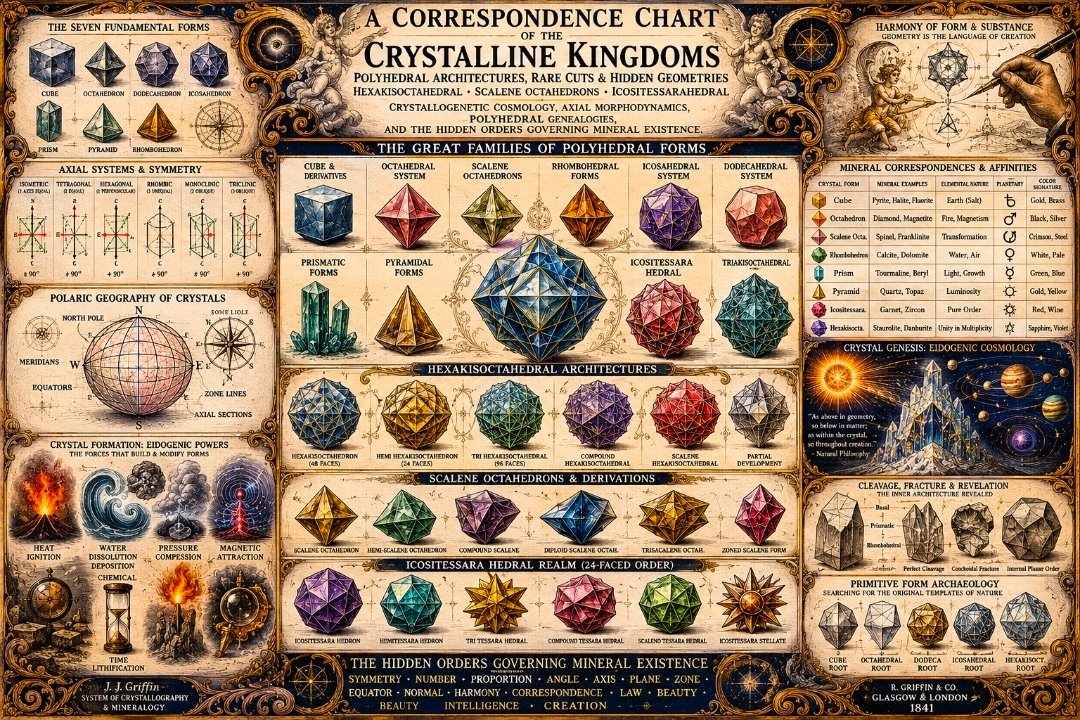
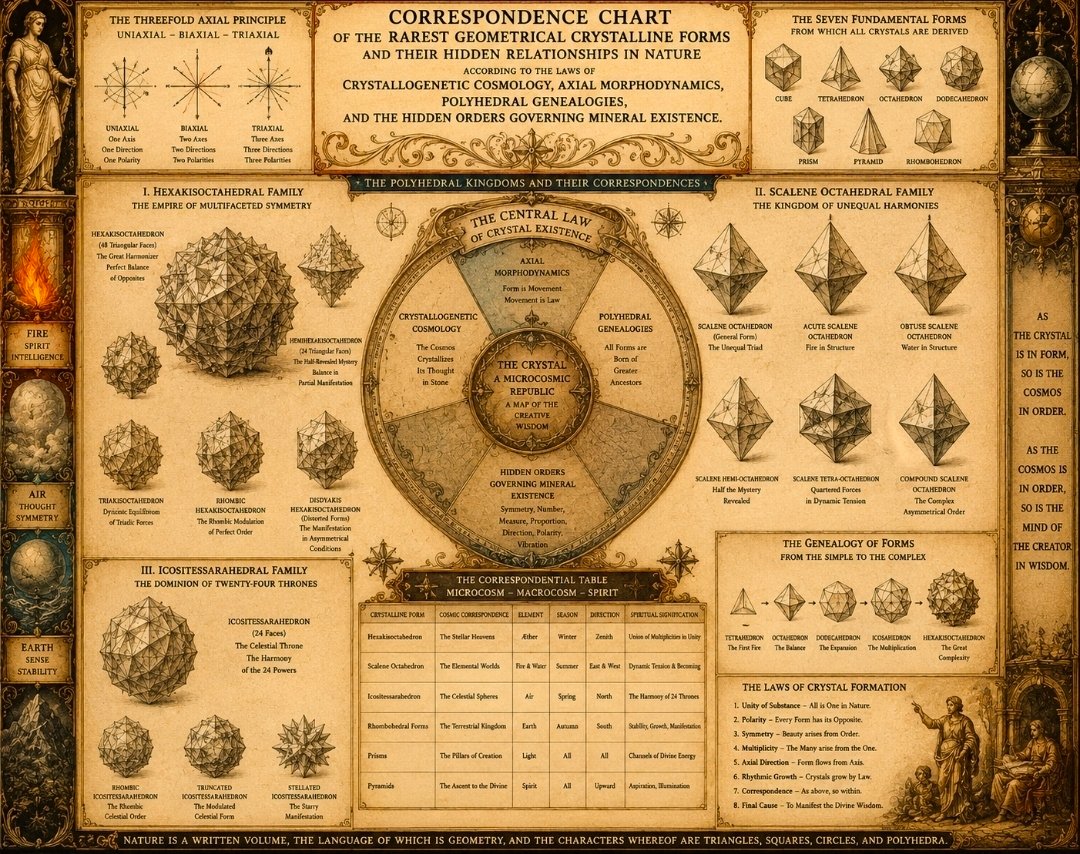
⚠️ Contributions to Literature, Science, Natural Philosophy, Geology, Crystallography, Mineral Cosmology, Ancient Knowledge Traditions, and Forgotten Ologies in Griffin's System of Crystallography (1841)(see Quote Share for Abstract & Link to book & see Pictures for extremely rare crystallography information you will not learn anywhere else. This knowledge is pretty much extinct. #26-55
XXVI. Seven-Form Reductionism
One of Griffin's boldest intellectual achievements. He argues that the overwhelming diversity of crystal forms ultimately reduces to seven fundamental geometrical archetypes. Thousands of visible variations emerge from a small family of governing structures. This resembles linguistic grammar, where countless sentences arise from limited underlying rules. The theory anticipates later scientific quests for unifying principles behind apparent complexity.
XXVII. Archetypal Crystallonomy
The study of ideal crystal forms underlying observable mineral structures. Griffin repeatedly seeks original geometrical templates from which complicated combinations descend. This science concerns the search for hidden architectural blueprints embedded within nature and recalls Platonic discussions concerning ideal forms governing material reality.
XXVIII. Zone Dynamics
Zones are among the most neglected concepts in modern popular science. Griffin treats them as linear pathways connecting crystal faces according to lawful geometric relationships. Zone Dynamics studies these invisible corridors, revealing how distant parts of a crystal remain mathematically connected through common structural principles.
XXIX. Meridianal Geometry
Extending his geographical analogy, Griffin introduces crystal meridians resembling those of terrestrial globes. Meridianal Geometry investigates great-circle relationships between planes, faces, and poles. This transforms mineralogy into a form of internal geography where crystals possess directional networks comparable to cartographic systems.
XXX. Equatorial Morphometry
The measurement and analysis of crystal equators. These structural belts define relationships among numerous faces and become essential for understanding symmetry. Griffin's treatment elevates the equator from a geographical concept to a universal geometric principle operating throughout crystallized matter.
XXXI. Polar Position Analytics
The science of determining the location and significance of crystal planes relative to polar systems. Griffin developed sophisticated methods for denoting polaric positions, creating a highly organized framework for understanding complex crystal arrangements. This field resembles celestial coordinate systems applied to mineral structures.
XXXII. Spherical Crystallometry
The application of spherical geometry to mineral form. Crystal relationships often cannot be fully understood through flat geometry alone. Griffin employs spherical methods to analyze angular relationships, opening a realm where crystals become objects inhabiting geometrical spheres rather than simple Euclidean planes.
XXXIII. Solid Triangle Science
A highly advanced branch of nineteenth-century geometry. Griffin's use of solid triangles demonstrates how three-dimensional relationships govern crystal architecture. Unlike ordinary plane triangles, solid triangles exist in spatial frameworks and reveal the hidden mathematics controlling mineral structure.
XXXIV. Quadrantal Analytics
The science of quadrantal triangles and their application to crystallographic calculations. This obscure mathematical discipline enabled mineralogists to solve difficult geometrical problems before electronic computation existed. It reflects the immense mathematical sophistication underlying early crystallography.
XXXV. Logarithmic Mineral Mathematics
Griffin's extensive use of logarithms reveals the computational world of nineteenth-century science. Before calculators, logarithmic methods transformed impossible calculations into manageable operations. This field demonstrates how mathematical ingenuity expanded humanity's ability to understand mineral structures.
XXXVI. Geometrical Verification Science
An often-overlooked contribution. Griffin repeatedly emphasizes methods for checking measurements and calculations. This represents an early philosophy of scientific verification, ensuring that observations remain trustworthy and reproducible.
XXXVII. Morphological Exactitude
The pursuit of precision in form description. Griffin sought a language capable of describing even the most complicated crystal combinations without ambiguity. Morphological Exactitude becomes both a scientific method and an intellectual ideal.
XXXVIII. Crystal Identity Theory
A sophisticated investigation into what makes one crystal form distinct from another. Griffin examines how structural identity persists despite modifications, truncations, and combinations. This touches deep philosophical questions concerning sameness, variation, and classification.
XXXIX. Polyhedral Ontology
The study of being as expressed through geometrical form. Griffin implicitly asks why certain polyhedra repeatedly emerge throughout the mineral kingdom. Polyhedral Ontology examines the existence and significance of recurring geometrical realities in nature.
XL. Mineral Morphogenesis
The investigation of how crystal forms arise through growth. Griffin's theories seek to understand not merely finished structures but developmental processes. Morphogenesis bridges mineralogy, geometry, and natural philosophy.
XLI. Geometric Vitalism of Form
Although Griffin remains scientific, his work belongs to an era fascinated by formative powers operating within nature. Many nineteenth-century thinkers perceived geometry as evidence of active organizational principles guiding matter into lawful arrangements.
XLII. Crystalline Architectonics
The study of crystals as architectural systems. Every plane functions like a wall. Every edge resembles a structural joint. Every axis becomes a supporting framework. Griffin transforms minerals into miniature monuments of natural engineering.
XLIII. Mineral Kingdom Cartography
The classification of crystal territories across the entire mineral world. Griffin's catalogues map hundreds of species into ordered systems. This represents one of the most ambitious attempts to create a comprehensive geography of mineral form.
XLIV. Rare Earth Proto-Geochemistry
The index contains numerous minerals associated with cerium, yttrium, gadolinium, lanthanum, and related elements. Long before modern rare-earth industries existed, Griffin preserved evidence of the mineral sources that would later transform technology.
XLV. Ceritic Mineral Science
The study of cerium-bearing minerals. Such substances fascinated nineteenth-century chemists because they hinted at hidden elemental families not fully understood at the time. Griffin's catalogues preserve early encounters with these mysterious materials.
XLVI. Yttric Mineral Philosophy
Minerals containing yttrium occupied a special place in chemical history. They often resisted simple classification and revealed previously unknown elemental complexities. Griffin records them as part of the expanding frontier of mineral discovery.
XLVII. Gadolinitic Studies
Gadolinite played a central role in the discovery of rare-earth chemistry. Griffin's inclusion of such minerals demonstrates how crystallography intersected with emerging chemical revolutions. These substances later helped reveal entirely new regions of the periodic system.
XLVIII. Uranitic Mineralogy
Long before atomic science transformed uranium into a household word, uranium minerals appeared as beautiful crystallographic specimens. Griffin documents these forms purely as mineralogical wonders, preserving a world before nuclear associations dominated public imagination.
XLIX. Telluric Metallography
Tellurium minerals were among the strangest substances known to nineteenth-century mineralogists. Their rarity and unusual compositions made them scientific curiosities. Griffin's catalogues preserve this forgotten realm of metallic mineral diversity.
L. Vanadic Ore Science
Vanadium-bearing minerals represented another frontier of chemical exploration. Their inclusion demonstrates how crystallography functioned as a gateway into the discovery of previously unknown elemental worlds.
LI. Titaniferous Morphology
The study of titanium minerals and their crystal structures. Long before aerospace applications existed, titanium was primarily a mineralogical mystery. Griffin records the geometrical manifestations through which the element revealed itself.
LII. Zeolitic Architectonics
One of the most remarkable hidden sciences in the book. Zeolites such as Stilbite, Chabasite, Natrolite, Harmotome, and Heulandite form intricate frameworks resembling miniature architectural complexes. Modern science recognizes their extraordinary structural sophistication, yet Griffin already appreciated their geometric beauty.
LIII. Chabasitic Geometry
The study of Chabasite and related forms. These minerals display elegant symmetries and highly ordered structures. Griffin's catalogues reveal the importance assigned to such species within early mineral classification.
LIV. Natrolitic Morphology
Natrolite exhibits distinctive needle-like crystal habits and structural regularity. Griffin's inclusion of these forms demonstrates his commitment to documenting the immense diversity of crystal architectures.
LV. Harmotomic Science
The investigation of Harmotome and its remarkable cruciform crystal habits. Such minerals fascinated early crystallographers because they embodied complex symmetry relationships visible to the naked eye.
⚠️See Next reply for next Parts LVI-LXXXV (56-85), covering:
• Tourmaline mysteries
• Garnet cosmology
• Diamond philosophy
• Feldspathic world-building
• Neptunian vs Plutonic geology
• Swedenborgian comparisons
• Ancient lapidaries
• Biblical gemstones
• Sacred geometry of minerals
• Forgotten geological and cosmological sciences
• Proto-fields virtually unknown today.
Jun 14

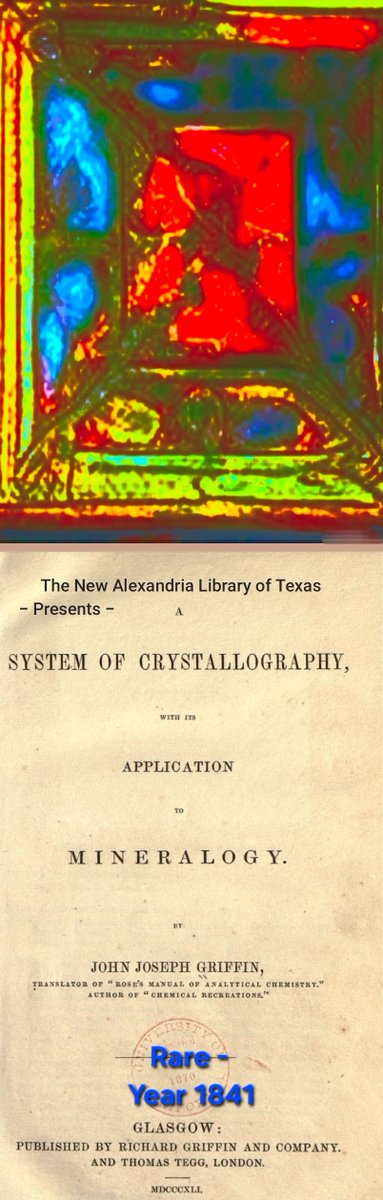
1841 - A System of Crystallography & Its Application to Mineralogy - John Joseph Griffin E.S.Q. - Fts - Eidogenics, Hexakisoctahedral Morphogenesis, Polyhedral Geognosy, Meridianal Crystallography, Polaric Cosmography, Rhombohedral Architectonics, Lithic Ontology, Crystallogenetic Dynamics, Triaxial Symmetrology, Mineral Republic Analytics - Lost obscure book of old -
📜 Provided by/New Abstract by 📜
The New Alexandria Library of Texas - Alexander the Library Cat -
&
Ft.
DeepAncientThought A.M., , F.V.S. & Polymath
📜 - Publishers -📜
1841 - London: Publisher Richard Griffin & Company, Glasgow; Thomas Tegg,
2026 - Ths New Alexandria Library of Texas - I am the Owner - now this is your fine original rare PDF text/book -
🔑 Free Link
academia.edu/168648551/A_Sys…
🔑 Free Link to 509 rare book archive
independent.academia.edu/Dee…
💎✨️💎 Powerful Rare Specialist Abstract -
(Not many can cover such wide range of subjects & If any of this is new or is confusing please see the section right after the abstract to learn the most advanced terminology for this book)
This remarkable and largely forgotten treatise stands at a crossroads where geometry, mineralogy, chemistry, geognosy, mathematical analysis, classification theory, and natural philosophy converge into a unified vision of the mineral kingdom. Far more than a catalogue of crystal forms, Griffin's work is an ambitious attempt to uncover the hidden laws governing the architecture of matter itself. The book belongs to that rare nineteenth-century tradition in which geometry was viewed not merely as a descriptive tool but as one of nature's fundamental languages.
What distinguishes Griffin from many later writers is that he treats crystals not as static objects but as organized geometric beings possessing axes, poles, meridians, equators, zones, normals, and lawful systems of development. Throughout the work, crystals appear almost as miniature worlds governed by internal geographies and mathematical constitutions. The result is a kind of crystalline cosmography, a science of geometric territories hidden within the mineral kingdom.
I. The Hidden Geography of Crystal Worlds
One of the most fascinating aspects of Griffin's system is his repeated use of concepts normally associated with astronomy and geography:
• Poles
• Equators
• Meridians
• Axes
• Normals
• Polaric Positions
• Zones
These are not poetic ornaments.
They are technical realities within Griffin's system.
A crystal becomes a geometrical globe.
Its faces occupy specific territories.
Its edges become frontiers.
Its poles become directional centers.
Its meridians establish pathways of relation between distant portions of the mineral body.
The reader encounters an extraordinary form of crystallographic cartography in which minerals possess internal worlds capable of being mapped with the same rigor used by navigators, astronomers, and geographers.
This forgotten perspective transforms crystallography into a branch of spatial philosophy.
II. The Seven Archetypes of Mineral Form
Perhaps the most audacious idea in the book is Griffin's argument that the infinite apparent variety of crystals ultimately derives from only seven fundamental forms.
This is not simply a classification scheme.
It is an attempt to uncover the archetypal architecture underlying the mineral kingdom.
The immense diversity represented by:
• Cubes
• Octahedrons
• Rhombic Dodecahedrons
• Tetrakishexahedrons
• Triakisoctahedrons
• Icositessarahedrons
• Hexakisoctahedrons
• Scalene Octahedrons
is reduced to a limited family of governing geometrical principles.
The book therefore becomes a study in polyhedral genealogy, tracing complex descendants back to ancestral forms.
In many respects Griffin is seeking the mineral equivalent of a natural language grammar.
Thousands of forms.
One underlying syntax.
III. Eidogens and the Mystery of Formative Causes
The chapter on crystallization contains one of the most obscure concepts in nineteenth-century science:
Eidogens
Modern readers rarely encounter this word.
Yet it may be one of the most intriguing ideas in the entire volume.
An eidogen functions as a formative principle associated with the emergence of crystal form.
Rather than merely cataloguing finished structures, Griffin attempts to investigate the causes responsible for geometric organization itself.
This places the work within a broader tradition extending through:
• René Just Haüy
• Johannes Kepler
• Robert Hooke
• Christian Wolff
• Natural theologians
• Morphological philosophers
The crystal becomes evidence of formative law.
Geometry becomes an active principle rather than a passive description.
IV. The Architecture of Symmetry
The sections on:
• Homohedral Forms
• Hemihedral Forms
• Tetartohedral Forms
• Direct Forms
• Inverse Forms
• Right-Handed Forms
• Left-Handed Forms
represent an extraordinarily sophisticated exploration of symmetry.
Long before modern molecular chirality became famous, crystallographers were already studying handedness in minerals.
Griffin's analysis investigates how complete forms become partially developed while still preserving underlying law.
The result is a forgotten science of morphological asymmetry.
Order persists.
Symmetry is modified.
Identity remains.
These chapters reveal crystals as dynamic geometrical organisms rather than rigid mathematical abstractions.
V. The Great Kingdom of Polyhedra
Modern readers are often unfamiliar with the magnificent geometric entities populating Griffin's pages:
• Hexakisoctahedron
• Hemihexakisoctahedron
• Icositessarahedron
• Hemitriakisoctahedron
• Pentagonal Dodecahedron
• Rhombohedron
• Scalenohedron
• Dioctahedron
• Quadratic Octahedron
• Rhombic Octahedron
These are not curiosities.
They are the ruling dynasties of Griffin's mineral empire.
The work becomes a grand survey of polyhedral kingdoms, each governed by its own laws of symmetry, development, and combination.
Every mineral form occupies a place within this hierarchy.
The book thus serves simultaneously as:
• Geometry
• Taxonomy
• Mineral philosophy
• Structural morphology
VI. Rare Mineral Worlds Hidden in the Index
The mineral index is itself a treasury of forgotten scientific history.
Modern mineralogy tends to emphasize a relatively small number of common species.
Griffin preserves an older and far richer world.
Among the inhabitants of this mineral kingdom appear:
• Aeschynite
• Arfvedsonite
• Botryogen
• Boracite
• Brookite
• Brongniartine
• Chabasite
• Cryolite
• Euclase
• Eudialyte
• Fergusonite
• Gadolinite
• Gay-Lussite
• Hauyne
• Helvine
• Idocrase
• Lanthanite
• Leucite
• Monazite
• Natrolite
• Oerstedtite
• Petalite
• Phenakite
• Polybasite
• Polymignite
• Pyrochlore
• Sodalite
• Stilbite
• Thomsonite
• Turnerite
• Uwarowite
• Vauquelinite
• Wavellite
• Wernerite
• Yttrocerite
Many of these minerals represent early encounters with:
• Rare earth elements
• Uranium compounds
• Vanadium compounds
• Titanium minerals
• Cerium-bearing species
• Yttrium-bearing species
The index therefore preserves a geological museum of scientific discovery.
VII. The Strange Realm of Metallic and Semi-Metallic Minerals
Particularly striking are the exotic ores and compounds scattered throughout the catalogue:
• Telluric Silver
• Graphic Tellurium
• Tetradymite
• Platin-Iridium
• Osmium-Iridium
• Nickel Glance
• Nickelantimonglanz
• Mispickel
• Antimonglanz
• Tennantite
• Bournonite
• Zinkenite
• Jamesonite
• Polybasite
• Sternbergite
• Nagyagererz
These names belong to a largely forgotten age of ore mineralogy.
They reveal a world where mineral classification, metallurgy, and crystallography remained deeply intertwined.
The book becomes a bridge between geometry and mining science.
VIII. Zeolitic Architectures and Mineral Cathedrals
The extensive treatment of:
• Natrolite
• Mesolite
• Stilbite
• Chabasite
• Scolezite
• Analcime
• Heulandite
• Epistilbite
• Harmotome
opens a remarkable window into the world of zeolites.
These minerals display some of the most intricate and elegant crystal habits in nature.
Their cavities, frameworks, and water-bearing structures resemble miniature architectural systems.
One could describe them as the cathedrals of the mineral kingdom.
Griffin's work preserves an early appreciation of their extraordinary structural diversity.
IX. Mathematical Mineral Philosophy
Entire sections are devoted to:
• Spherical Trigonometry
• Solid Triangles
• Logarithms
• Indices
• Quadrantal Triangles
• Oblique Angles
• Square Roots
• Axial Calculations
This is one of the most mathematically ambitious mineralogical works of its generation.
Yet Griffin never allows mathematics to become detached from nature.
The equations always return to crystal form.
The calculations always return to mineral reality.
Geometry becomes an instrument for revealing hidden structure.
X. Crystal Models and the Lost Science of Seeing Form
One of the most extraordinary forgotten features of the work is Griffin's system of 120 crystal models.
Constructed from biscuit porcelain and designed for measurement, notation, classification, and demonstration, these models transformed crystallography into a tactile science.
Students learned by:
• Handling form
• Measuring angles
• Following zones
• Identifying poles
• Tracing meridians
• Comparing systems
This was an age when geometry could literally be held in one's hands.
The models transformed abstraction into experience.
XI. A Forgotten Monument of Natural Philosophy
Ultimately this book belongs among the great nineteenth-century attempts to discover order within creation.
Whether examining:
• Garnets
• Zeolites
• Uranites
• Feldspars
• Tourmalines
• Cryolites
• Tellurides
• Vanadates
• Borates
• Sulphides
• Carbonates
• Phosphates
Griffin continually reveals the same truth:
The mineral kingdom is not a chaos of stones.
It is an organized architecture of law.
Faces obey laws.
Angles obey laws.
Symmetry obeys laws.
Growth obeys laws.
Classification obeys laws.
The crystal becomes a visible monument to mathematical order within nature.
For this reason, A System of Crystallography remains not merely a manual of minerals but a grand exploration of form, symmetry, structure, classification, geometry, and the intelligible architecture of the Earth itself.
📜📜📜📜📜📜📜📜📜📜📜📜📜📜📜📜📜
🔑100s of Tags/Terms for this highly technical book -
I. Crystallognosy
The forgotten science of crystal knowledge as understood before modern atomic models became dominant. In Griffin's world, crystals are not merely chemical substances but visible manifestations of lawful geometrical order. Crystallognosy combines mineralogy, geometry, measurement, classification, and natural philosophy into a unified study of form. The crystal becomes a readable text of nature, revealing hidden structural laws through angles, planes, zones, poles, and symmetries.
II. Polyhedral Genealogy
The investigation of how complex crystal forms descend from simpler geometrical ancestors. Griffin repeatedly demonstrates that the bewildering variety of octahedrons, dodecahedrons, prisms, and pyramids can be traced back to a limited number of archetypal forms. This resembles a family tree of geometry where every crystal possesses a lineage, ancestry, and developmental history.
III. Eidogenics
Derived from Griffin's obscure concept of "Eidogens," this field concerns the formative causes responsible for the emergence of shape itself. Rather than asking what a crystal is made of, Eidogenics asks why matter organizes into a particular geometry. It stands at the border between crystallography, metaphysics, morphology, and nineteenth-century natural philosophy
IV. Polaric Meridianics
The study of crystal poles, meridians, equators, and directional systems. Griffin transforms minerals into miniature globes possessing their own internal geography. Crystal faces become territories. Poles become centers of reference. Equators become structural belts. Meridians become pathways connecting distant regions of the crystal body.
V. Normalics
The science of normals, invisible lines standing perpendicular to crystal planes. Although unseen, normals govern measurement, orientation, and mathematical description. Griffin treats them as fundamental realities behind visible structure. Normalics therefore studies hidden geometric governors that determine the arrangement of crystal surfaces.
VI. Axial Architectonics
The study of crystal axes as structural frameworks upon which mineral forms are built. Just as a cathedral depends upon supporting arches, crystals depend upon invisible axial systems. Griffin's six systems of crystallisation are fundamentally systems of axial organization, making this one of the most important hidden sciences in the book.
VII. Prismatology
The science of prisms and their endless varieties. Griffin devotes enormous attention to rhombic prisms, oblique prisms, quadratic prisms, and six-sided prisms. Prismatology investigates how elongated forms arise, combine, truncate, and evolve into more complicated structures while maintaining lawful geometric identities.
VIII. Pyramidogenesis
The study of pyramidal growth and formation. In Griffin's system, pyramids are not merely shapes but recurring structural solutions employed by nature throughout the mineral kingdom. Pyramidogenesis investigates the mathematical and morphological principles governing these ascending forms.
IX. Octahedral Cosmography
A grand mapping of the octahedral universe. Griffin reveals an astonishing kingdom of regular octahedrons, scalene octahedrons, hemi-octahedrons, triakisoctahedrons, and hexakisoctahedrons. This science charts the territories, transformations, and relationships among the vast octahedral dynasties of crystal form.
X. Hexakisoctahedral Analytics
One of the most advanced geometrical sciences in the entire work. The Hexakisoctahedron represents an extraordinarily complex crystal form containing vast numbers of faces and relationships. Griffin treats it not as a curiosity but as evidence of nature's astonishing capacity for geometric elaboration.
XI. Icositessarahedral Morphology
The study of twenty-four-faced crystal bodies and their role within mineral architecture. Griffin's treatment reveals how such forms emerge from simpler geometries while preserving lawful relationships. The field becomes an exploration of complexity emerging from order.
XII. Scalenohedral Architectonics
The investigation of unequal triangular crystal structures. Scalenohedrons appear throughout important mineral groups, especially calcitic and rhombohedral systems. Griffin demonstrates that apparent irregularity often conceals deeper symmetries invisible to casual observation.
XIII. Rhombohedral Dynamics
The study of rhombohedral forms and their transformations. Rhombohedrons occupy a central position within nineteenth-century mineral classification and were especially important in understanding calcite and related minerals. Griffin reveals them as one of nature's most versatile structural templates.
XIV. Crystal Cartography
The art and science of mapping crystal territories. Using poles, equators, zones, meridians, axes, and planes, Griffin constructs an internal geography for minerals. Every face occupies a definite location within a coordinate system. Crystals become navigable worlds rather than mere objects.
XV. Geometric Taxonomy
A classification system based primarily upon form rather than chemistry. Griffin shows how minerals may be grouped according to recurring structural patterns. This approach preserves an older vision of mineralogy in which geometry serves as the primary key to natural order.
XVI. Symmetrology
The study of symmetry as a universal principle. Griffin's Law of Symmetry explores how order governs the arrangement of crystal faces. Symmetrology examines balance, repetition, correspondence, and proportion throughout the mineral kingdom.
XVII. Homohedrology
The science of complete symmetry. Homohedral forms possess the fullest expression of a given geometrical pattern. Griffin's classifications demonstrate how these forms serve as standards against which modified structures may be compared.
XVIII. Hemihedrology
The study of partially developed forms. Rather than expressing complete symmetry, hemihedral crystals display only portions of the full pattern. Griffin treats these as lawful variations rather than imperfections, revealing hidden principles of selective development.
XIX. Tetartohedrology
The science of quarter-developed crystal forms. These rare structures represent some of the most subtle geometrical phenomena in mineralogy. Their existence demonstrates nature's capacity for controlled asymmetry within an overarching framework of order.
XX. Chiral Mineral Philosophy
Long before molecular chirality became famous, crystallographers recognized right-handed and left-handed crystal forms. Griffin's discussion of direct and inverse structures anticipates later discoveries concerning asymmetry throughout chemistry, biology, and physics.
XXI. Crystalline Linguistics
The development of symbolic languages capable of describing crystal form. Griffin sought not merely to name structures but to encode them mathematically. This science examines how geometry may be translated into symbolic notation.
XXII. Symbolonomy
The science of scientific notation itself. Griffin devoted entire sections to developing efficient methods for representing highly complex forms. Symbolonomy studies compression of information into precise mathematical language.
XXIII. Comparative Crystallographic Philology
The comparison of competing systems of notation, classification, and description. Griffin analyzes rival methods and seeks universal principles underlying scientific language. In this sense crystallography becomes a branch of intellectual history.
XXIV. Cleavage Phenomenology
The study of how minerals reveal hidden structures through fracture. Cleavage surfaces expose internal geometrical arrangements inaccessible through external observation alone. The broken crystal becomes a window into concealed architecture.
XXV. Primitive Form Criticism
Griffin's challenge to the traditional doctrine of primitive forms. He argues that many supposedly fundamental shapes are hypothetical constructs rather than practical realities. This represents an important methodological reform within nineteenth-century crystallography.
⚠️SEE NEXT REPLY for Parts XXVI-L (26-50), where the discussion enters:
• Seven Fundamental Forms
• Zone Theory
• Spherical Trigonometry
• Mineral Cosmology
• Rare Earth Minerals
• Zeolitic Architectures
• Uranitic and Telluric Mineral Worlds
• Swedenborgian comparisons
Natural Theology and crystalline design in creation
1
1
364

Jun 14
BundleWarp: Enhancing white matter tractometry and morphometry with precise neuronal mapping using streamline-based nonlinear registration. dlvr.it/TT23Lv

5

Jun 13
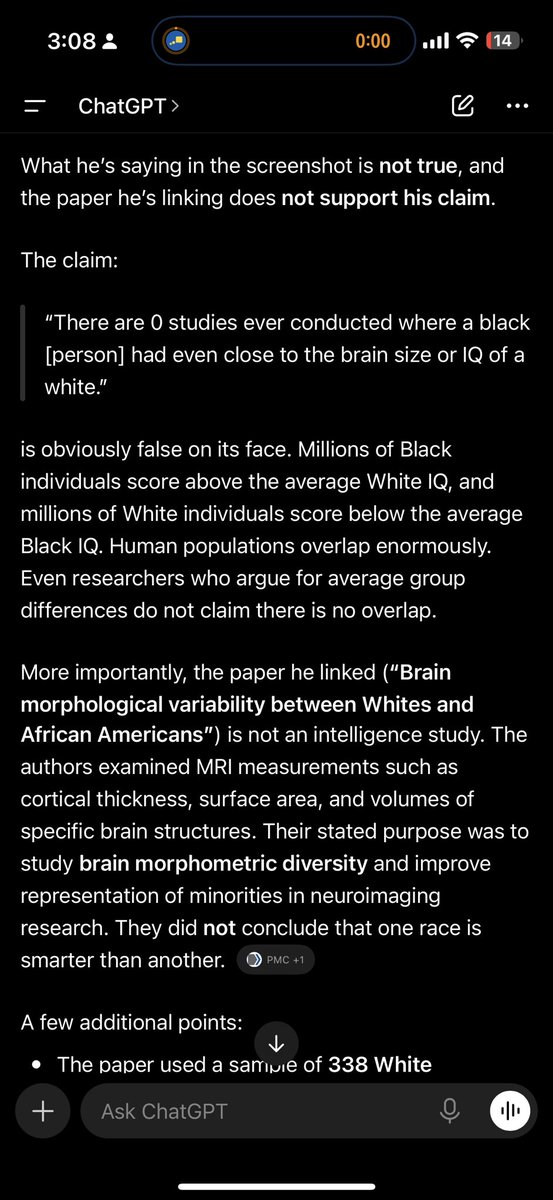
The paper you linked is a morphometry study, not an intelligence study. It found some differences btwn groups & diversity in brain morphology. It does not conclude Whites are smarter than Blacks & doesn’t support claims that no Black person has a brain size or IQ close to a White
1
35


Jun 12
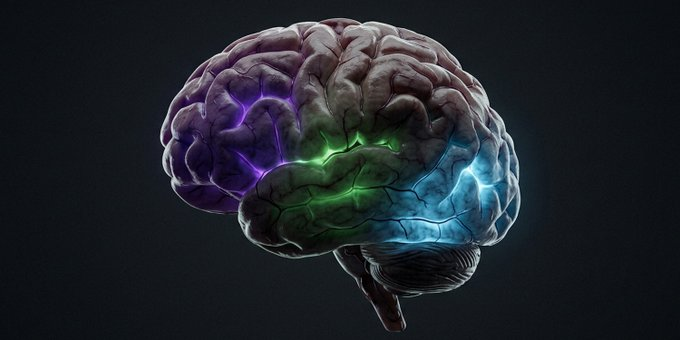
Dark triad personality traits carry distinct physical signatures in the brain | Karina Petrova, PsyPost
People with traits like narcissism and psychopathy show both shared and distinct physical differences in brain regions linked to empathy and social cognition. These anatomical variations suggest that while abrasive personality traits share biological roots, they also carry unique signatures in the human brain. The research was published in the Journal of Neural Transmission.
Psychologists frequently group certain abrasive personality traits under a single banner known as the dark triad. This conceptual grouping includes machiavellianism, subclinical narcissism, and subclinical psychopathy. Researchers have debated how best to classify these traits because they frequently overlap in real-world behaviors and interpersonal conflicts.
Each trait in the dark triad carries a recognized psychological profile. Machiavellianism represents a tendency toward manipulative behaviors, a cynical worldview, and a preference for strategic calculation over honesty. Subclinical narcissism involves grandiosity, heavily seated entitlement, and a constant need for external validation from peers. Subclinical psychopathy is characterized by severe impulsivity, thrill-seeking habits, and a distinct lack of empathy or remorse for negative actions.
The term subclinical means these unique traits are present in the general population but do not meet the strict diagnostic criteria for a psychiatric disorder. Even in a subclinical context, individuals displaying these traits can cause immense social and emotional disruption in the lives of the people around them. This capacity for harm has driven psychologists to better understand the underlying biological mechanisms of these behaviors.
Some experts suggest that because these three traits share a core of emotional coldness and interpersonal malevolence, they should be viewed as a single underlying factor of a dark personality. Others argue the traits are distinct enough in their presentation and origin to remain theoretically separated. Most of the evidence informing this debate has previously come from self-reported survey data and behavioral observations.
Physical brain data on the dark triad remains relatively scarce in the modern scientific literature. Previous neurobiological studies have frequently focused on only one trait at a time or relied on highly specific clinical populations, such as convicted criminal offenders. This makes it difficult to separate the specific effects of everyday personality variations from the massive disruptions caused by severe psychiatric conditions or environmental traumas.
Lead author Emilia L. Mielke, a researcher at the University of Heidelberg, and her colleagues sought to address this knowledge gap. They wanted to determine if the proposed psychological overlap of the dark triad traits is mirrored in the physical structure of the human brain. They focused on a sample of healthy men to specifically examine trait-related variations without the confounding variables of clinical or forensic settings.
The research team recruited participants from the general population using online advertisements in their local community. Volunteers took an initial survey called the Short Dark Triad questionnaire, which ranks respondents on their baseline levels of machiavellianism, narcissism, and psychopathy. Out of the hundreds who applied, the researchers selected twenty-four men who scored in the highest mathematical tier of these combined traits. They additionally selected a comparison group of twenty-seven men who scored in the lowest tier.
All chosen participants underwent a rigorous psychological screening process through standardized medical interviews. This screening allowed the researchers to securely rule out any clinical psychiatric illnesses or recognizable personality disorders. The volunteers then entered a magnetic resonance imaging scanner, which uses strong magnetic fields to map the internal structures of the body in high resolution. The researchers used the resulting scans to acquire exact physical volume measurements of the participants’ brain tissue.
The team specifically analyzed gray matter volume using a technique called voxel-based morphometry. Gray matter is the darker tissue of the brain composed mostly of nerve cell bodies, which handles the processing of information. A voxel is akin to a three-dimensional pixel that represents a microscopic cube of human brain tissue. By comparing these voxels, specialized software calculates precise tissue volume differences across the entire brain.
When comparing the high-scoring group to the low-scoring group, the researchers found several shared anatomical physical differences. The group with elevated dark triad traits had specifically reduced gray matter volume in a brain area called the right precentral gyrus. This region is primarily known by medical texts for planning and executing voluntary physical body movements.
Contemporary theories of brain function suggest the precentral gyrus also plays a major part in routine action observation and internal imitation. Some models of human empathy propose that we understand the deep emotions of others by internally simulating their subtle physical expressions. A reduction in functioning tissue in this specific area might relate to the reduced emotional responsiveness frequently observed in manipulative or highly callous individuals.
The high-scoring group also displayed smaller gray matter volume in a part of the cerebellum known as crus II. The cerebellum sits at the very back of the brain and coordinates movement, but specific zones like crus II are deeply involved in social cognition and recognizing facial expressions. The group differences additionally extended into the dorsolateral prefrontal cortex, a massive region behind the forehead that manages abstract reasoning and the cognitive control of emotions.
After finding these shared anatomical differences, the researchers looked exclusively at the high-scoring group to isolate the unique signatures of each separate trait. They used a statistical model that allowed them to evaluate one trait while holding the mathematical influence of the other two constant. This revealed a nuanced mapping where each dark triad component linked to heavily specific and separated brain regions.
Machiavellianism was uniquely associated with reduced gray matter in the left superior dorsolateral prefrontal cortex. This specific brain area is often engaged during complex moral decision-making tasks in laboratory environments. Damage or dysfunction in this sector has been historically linked to a lack of moral concern and increased strategic manipulation.
Subclinical psychopathy shared a similar negative association with the left dorsolateral prefrontal cortex. It was additionally linked to lower gray matter volume in the anterior cingulate cortex. This region, situated deep in the middle of the brain, acts as a primary neurological hub for processing affective empathy and integrating social information.
Subclinical narcissism showed the most widespread unique physical associations among the men profiled. Higher scores in narcissism correlated with reduced gray matter in the anterior cingulate cortex and the medial orbitofrontal cortex. The orbitofrontal cortex rests just above the eyes and helps the brain learn the emotional or rewarding value of different stimuli.
Narcissism scores also charted negatively against gray matter volume in the superior temporal gyrus and the insula. The insula maps internal bodily sensations and is heavily activated when people experience empathy for another person’s immediate pain. Together, these frontal and temporal sections form a network that neuroscientists frequently link to the empathy deficits seen in highly narcissistic individuals.
The researchers caution against drawing overly sweeping behavioral conclusions from these static structural brain scans. The sheer size of an anatomical brain region does not automatically determine how effectively it functions in real time. The volume of gray matter can be influenced by many microscopic cellular factors, including the density of neurons and the abundance of supporting bodily tissues.
The study utilized a relatively small pool of participants, and some of the broader anatomical findings did not reach statistical significance after correcting for exploratory data analysis. The recruitment was also limited entirely to young adult men. Men generally score higher on dark triad assessments than women, but excluding women prevents the researchers from knowing if these biological patterns represent universal human traits or sex-specific variations.
Future investigations could use functional brain scanning, which actively measures blood flow in real time, to see how these brain structures behave while participants perform structured social tasks. Tracking these networks during active decision-making could clarify exactly how physical tissue differences translate into cold emotional interactions. Exploring these biological origins could eventually help behavioral experts manage the heavy interpersonal toll exacted by these complex traits.
Read more:
psypost.org/the-dark-triad-p…
9
1,421

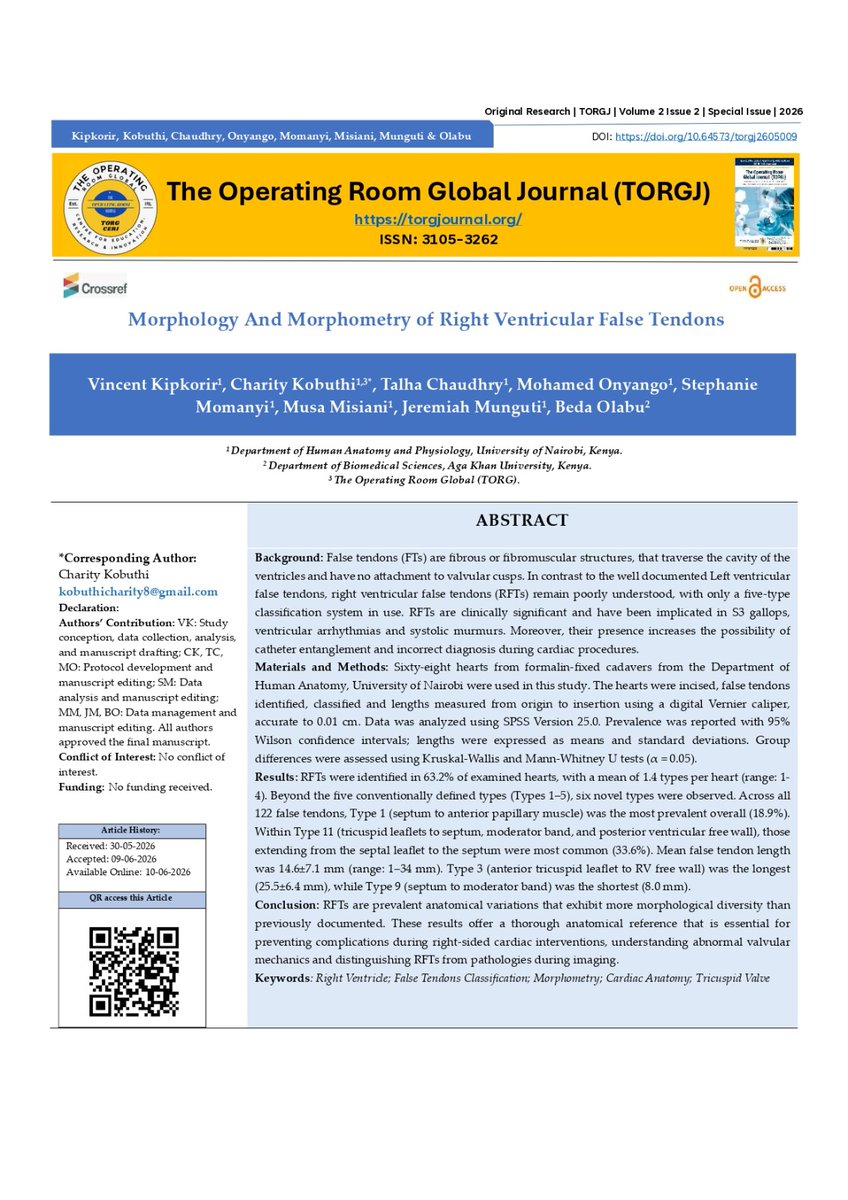
📢 New Publication Alert | TORGJ Volume 2 Issue 2 | Special Issue 2026
We are pleased to announce the publication of:
Morphology and Morphometry of Right Ventricular False Tendons
📖 Read the article:
doi.org/10.64573/torgj260500…
#TORGJ #CardiacAnatomy #AnatomicalResearch
3
1
3
61

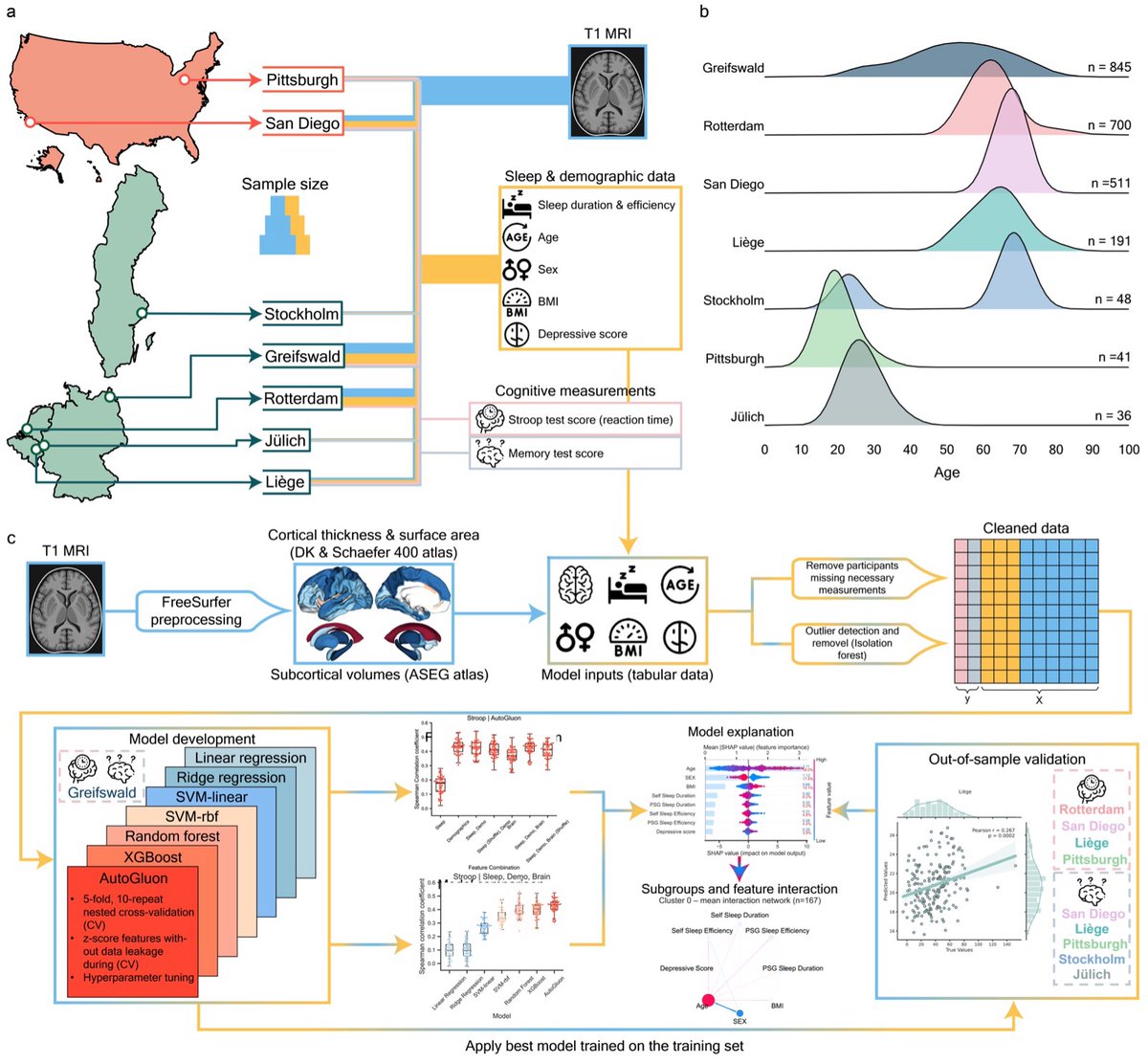
🧠😴📝 New preprint from the #ENIGMASleep WG!
Led by @Harvey_Bi2333.
We pooled data from 7 international sites (n=2,372) to predict cognitive performance from demographics, sleep, and brain morphometry using #MachineLearning
📄 Preprint: lnkd.in/eAZRrvzf
4
17
959

Interested in how cortical folding shapes functional brain networks, how normative modeling tracks central sulcus width changes over adulthood, or how an in-depth exploration of sulcal morphometry maps onto clinical conditions like ALS? 🧠
Come check out our posters!
1
1
20

OrgLine: A versatile pipeline for organoid morphometry using detector-guided prompts dlvr.it/TSxYhP
1
2
320

Jun 8
■ Ref info: Kotzias et al. "Proximal femoral morphometry and its association with hip fracture patterns: a systematic review with meta-analysis." Surgical and Radiologic Anatomy 48.1 (2026): 129.
■ Ref link: doi.org/10.1007/s00276-026-0…
■ note link: note.com/super_human/n/nd54b…
1
2
1,040

New Research: Estimation of head motion in structural MRI and its impact on cortical morphometry frontiersin.org/articles/10.… #FrontiersIn #Neuroscience
3
587

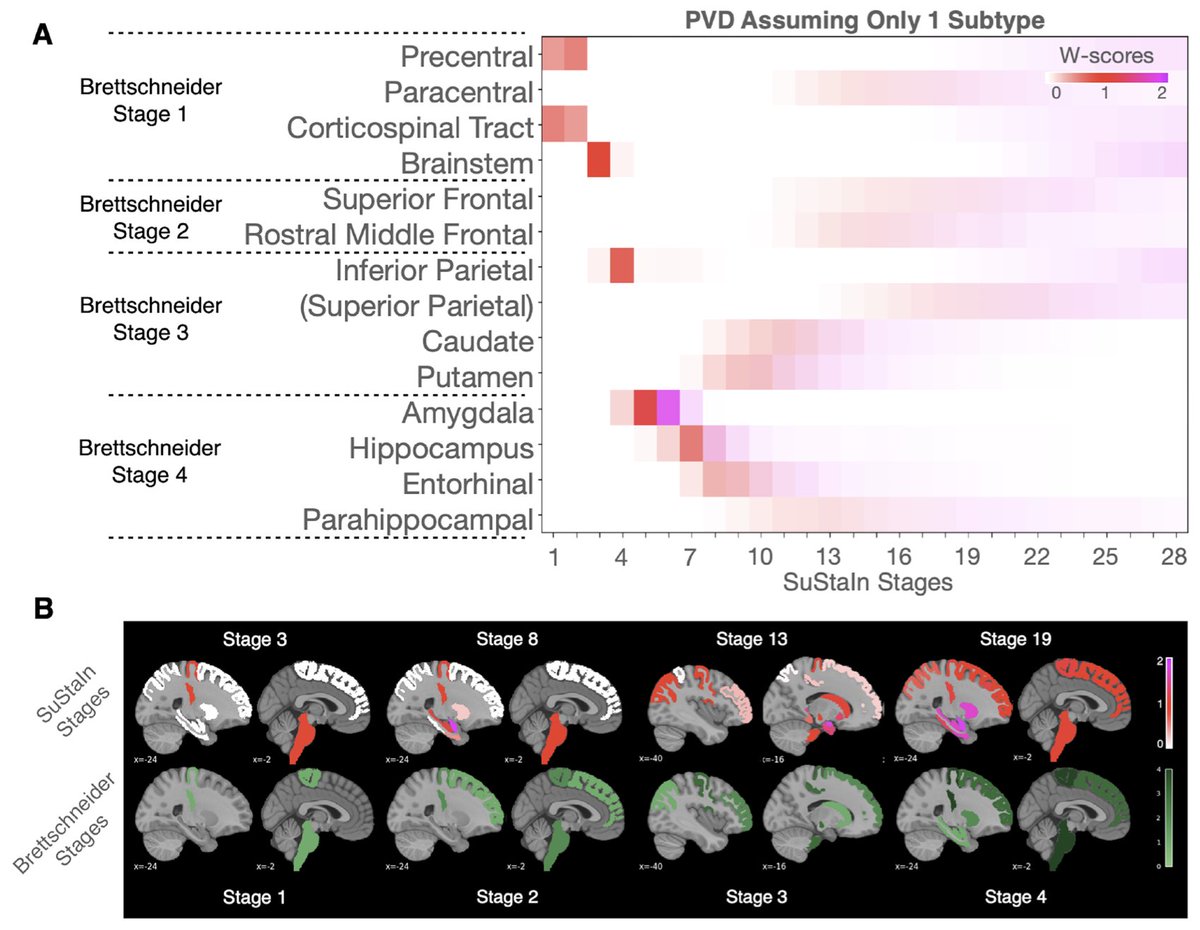
New paper in Imaging Neuroscience by Isabelle Lajoie, Sanjay Kalra, and Mahsa Dadar:
Data-driven subtyping and staging of ALS: A multicenter, longitudinal, deformation-based morphometry study
doi.org/10.1162/IMAG.a.1264
2
12
873

Jun 5
Neural alterations in viral pneumonia patients comorbid with insomnia in a Chinese population: Insight from surface-based morphometry analysis
sciencedirect.com/science/ar…
Screenshot from Science for ME weekly update
#LongCovid #COVIDBrain
![Neural alterations in viral pneumonia patients comorbid with insomnia in a Chinese population: Insight from surface-based morphometry analysis — Ju et al
"[Surface-Based Morphometry] analysis revealed widespread cortical alterations (in surface area, cortical thickness, and [Grey Matter Volume]) after Omicron infection, with reduced cortical thickness in the left superior temporal gyrus emerging as a candidate imaging correlate of comorbid insomnia symptoms."](https://venexa.site/media/HKFRKWqWwAAFX6G.png)
ALT Neural alterations in viral pneumonia patients comorbid with insomnia in a Chinese population: Insight from surface-based morphometry analysis — Ju et al "[Surface-Based Morphometry] analysis revealed widespread cortical alterations (in surface area, cortical thickness, and [Grey Matter Volume]) after Omicron infection, with reduced cortical thickness in the left superior temporal gyrus emerging as a candidate imaging correlate of comorbid insomnia symptoms."
1
2
214

Cellular Morphometry for Interrogating Nanomaterial–Cell Interactions #machinelearning #compchem pubs.acs.org/doi/abs/10.1021…
1
2
219