


Jun 15
Jun 12

One of the most exciting developments in neurodegenerative disease research is our growing ability to measure disease biology directly through validated biomarkers.
A recent Nature Medicine publication highlighted the potential of plasma p-tau217 as a powerful blood-based biomarker for Alzheimer's disease, adding to the growing evidence supporting biomarkers as tools to better understand, diagnose, and potentially monitor disease progression. (Link in the first comment.)
At NeuroSense, samples from our Phase 2 Alzheimer's study are currently undergoing analysis, and we look forward to sharing the results later this month, consistent with our previously communicated Q2 2026 timeline.
#AlzheimersDisease
$NRSN

1
95

$NRSN $ACCS $ANGH
Massive breakout ready to ignite any minute.
@PaUyFHDu6v2zJHd
market vision is legendary, always spotting huge plays early.
93

Jun 12
One of the most exciting developments in neurodegenerative disease research is our growing ability to measure disease biology directly through validated biomarkers.
A recent Nature Medicine publication highlighted the potential of plasma p-tau217 as a powerful blood-based biomarker for Alzheimer's disease, adding to the growing evidence supporting biomarkers as tools to better understand, diagnose, and potentially monitor disease progression. (Link in the first comment.)
At NeuroSense, samples from our Phase 2 Alzheimer's study are currently undergoing analysis, and we look forward to sharing the results later this month, consistent with our previously communicated Q2 2026 timeline.
#AlzheimersDisease
$NRSN
1
1
5
430


Jun 11
$NRSN
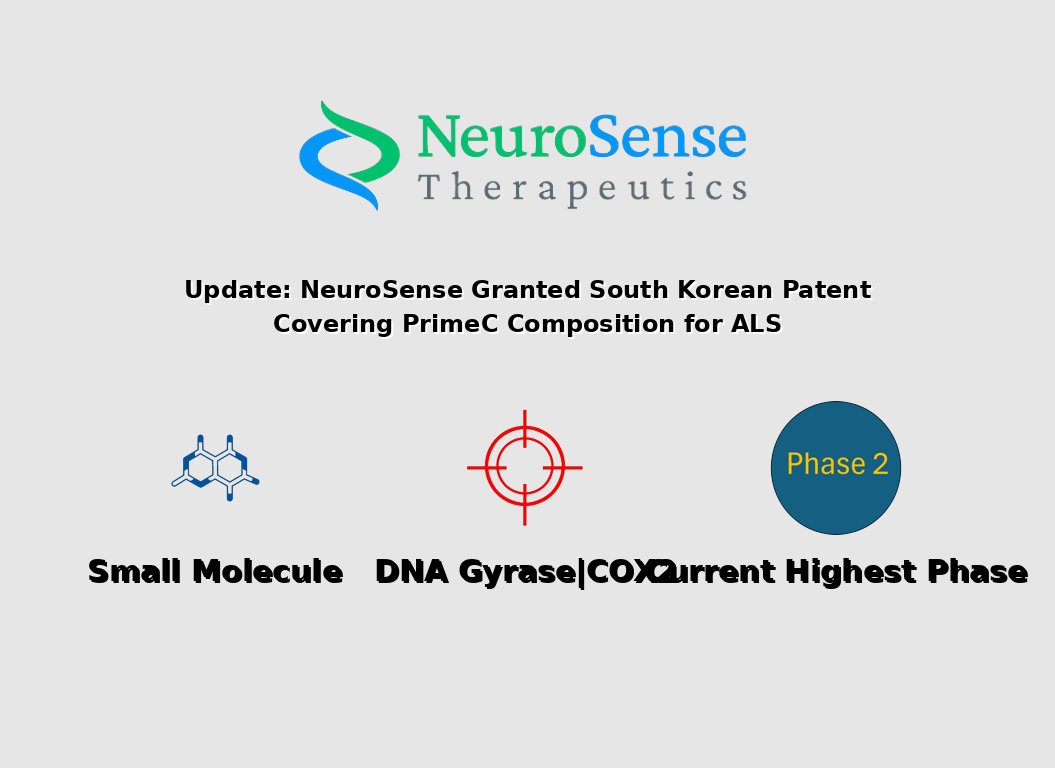
NeuroSense Granted South Korean Patent Covering PrimeC Composition for ALS
More Info: pryzm.ozmosi.com/product/281…
115


well itou has nothing to do with nrsn. his actions will not stop me from nrsning out
33
promoting nrsn week with the elephant in the room sure is
1
35

Jun 9
$NRSN
NeuroSense Therapeutics Receives Japanese Patent Grant for PrimeC Novel Composition
More Info: pryzm.ozmosi.com/product/281…
120

Jun 9
$NRSN — Very Bullish 🚀
🏷️ $0.771
NeuroSense Therapeutics Receives Japanese Patent Grant for PrimeC Novel Composition
Bull Case:
The Japanese patent grant through 2042 significantly strengthens NeuroSense's global intellectual property estate for PrimeC in a key pharmaceutical market, following recent patents in the U.S., Australia, and Brazil.
PrimeC has received FDA clearance and is preparing for a pivotal Phase 3 clinical trial (PARAGON) for ALS, indicating significant progress towards potential commercialization.
Compelling Phase 2b data, including consistent clinical, biomarker, and survival benefits, provides a strong foundation and reduces risk for the upcoming Phase 3 trial.
Bear Case:
− Despite positive earlier data, Phase 3 clinical trials are inherently risky, expensive, and can fail, which would negatively impact the stock.
− As a penny stock, NRSN may experience high volatility, and initial gains from this news could be subject to rapid profit-taking.
This is a highly bullish catalyst for NRSN, providing substantial intellectual property protection in a major market for its lead ALS drug, PrimeC, as it progresses towards a pivotal Phase 3 trial. Given the official nature of the release, the critical stage of the drug development, and the timing of the news pre-market, active day traders should anticipate significant upward momentum and increased volume at market open. This patent grant de-risks the commercialization pathway for a promising candidate in a hot sector, making it an attractive trade.
#pennystocks #daytrading
Not financial advice. DYOR.
237

Jun 5
Roth • MKM🏁 $COYA and said: We initiate coverage of COYA with a Buy rating and 12-month PT of $12.
$AMLX BIIB LLY NRSN LONA CLNN $IONS
Roth • MKM added—Our bullish view is predicated upon COYA 302's positive Ph1 data involving Amyotrophic Lateral Sclerosis (ALS) patients (n = 4)
Assuming the ongoing Ph2 study readout is positive, we expect COYA 302 "conditional" approval in 1H28 (U.S. launch: 2H28).
Our models assume COYA 302 achieving a peak risk-unadjusted WW revenue of ~$2.2B in 2040.
Per COYA, current cash (1Q26-end: ~$51M) is expected to fund operations into 2H27.
Coya Therapeutics is a mid-stage biotech developing novel injectable therapies for neurodegenerative diseases, including ALS (U.S. TAM: -33K patients; per Coya) and frontotemporal dementia (FTD; U.S. TAM: ~50K pts, per Coya).
The company's flagship asset (COYA 302) is a novel, subcutaneous formulation of two agents—low dose IL-2 (enhance Treg cells necessary for immune tolerance) and CTLA4-If (suppress inflammation)—with a lengthy patent runway (earliest IP expiry year: 2040). We note that the 2025 Nobel Prize in Medicine was awarded to researchers who discovered Treg cells, including Prof. Shimon Sakaguchi who sits on Coya's scientific board.
6 Feb 2025

BTIG reiterated $COYA Buy-$15, says "today's data seem very supportive of the previous clinical readout.
$NVO $BIIB $ITCI $LLY $VKTX
"Specifically, blood biomarker data demonstrating anti-inflammatory effects continue to support monthly COYA301 (low-dose IL-2) dosing over a bi-weekly dosing regimen.
Important to the bigger picture, today's data are consistent with previous readouts in which
monthly dosing of COYA301 showed decent signs of cognitive improvements and CSF biomarkers, while noisier results were observed with the bi-weekly dosing arm (Exhibits 1-2).
Additionally, a greater extent of improvements in Treg numbers and their suppressive function were observed from monthly dosing compared to bi-weekly dosing.
Net-net, these combined results suggest that at a bi-
weekly dosing regimen, IL-2 is stimulating broader immune cells beyond Treg cells that have the high-affinity IL-2 receptor and these additional activated cells are not a positive factor in disease control.
Going forward, the company has expanded its pipeline with COYA303, a combination of low-dose IL-2 and a GLP-1 RA. This combination approach will likely benefit from the potential synergistic anti-inflammatory effects of the two components. We believe the clinical potential of GLP-1 RAs in AD has been meaningfully de-risked with the recent data showing that daily subcutaneous injections of Liraglutide are associated with slower brain volume loss and reduced cognitive decline (reductions of approximately 18% in a year).
Novo Nordisk ( $NVO, Not Rated ) hopes to get a definitive answer for whether GLP-1 receptor agonism reduces cognitive decline in AD patients based on two large placebo-controlled P3 studies, EVOKE and EVOKE . These trials treat patients with early-stage symptomatic AD with once-daily oral semaglutide or
placebo. The primary endpoint will be measured by changes in the CDR-SB score at week 104, and the study's primary completion is expected around September 2025 (source: Clinicaltrials.gov)."
3
1,255

Jun 2
3
7
1,492


May 13
昼☀上げ
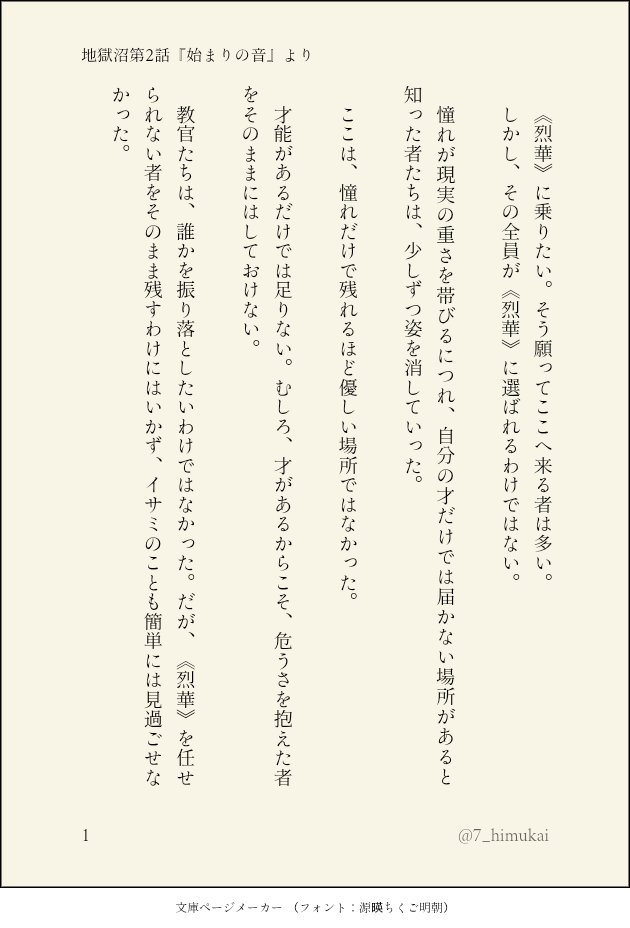
これからサタイサ(若しくはイササタ)になる予定の、甘さゼロ、ゴリゴリミリタリーなお話。
地獄沼第二話
若気の至り全開、20歳のイサと、
33歳、将来を期待される若き佐官のサタチョ。
まだ、NRSNに来る前の二人。


3
6
480
May 12
夜🌃上げ!
若気の至り全開、20歳前後のイサと、
33歳、将来を期待される若き佐官のサタチョ。
これからサタイサ(若しくはイササタ)になる予定の、甘さゼロ、ゴリゴリミリタリーなお話。
まだ、NRSNに来る前の二人。

4
299
