
22 Nov 2025
🚀 22 Nov 2025 – Class Update
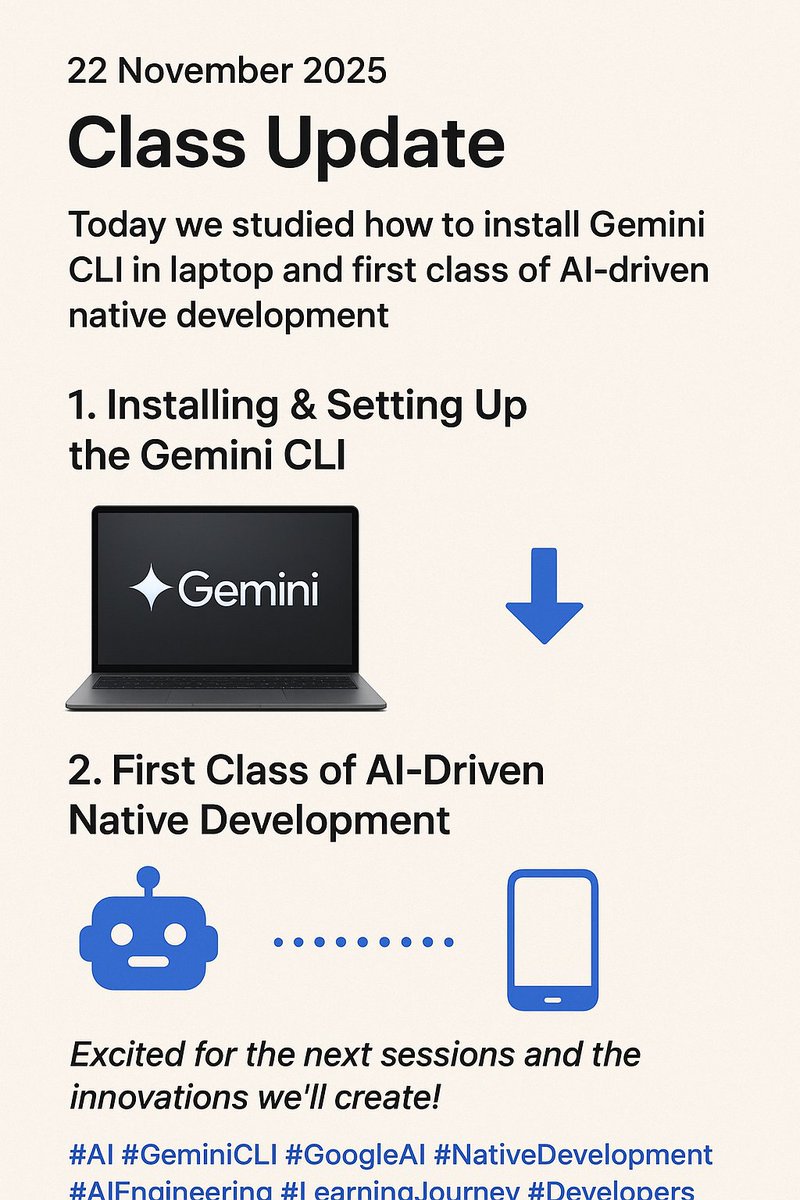
Today we learned how to install the Gemini CLI on our laptops and had our first session on AI-Driven Native Development.
Excited for what’s next! 🔥🤖
#AI #GeminiCLI #GoogleAI #NativeDevelopment #AIAgents
3
41

7 Nov 2025
🔒 𝐀𝐍𝐃𝐑𝐎𝐈𝐃 𝐒𝐄𝐂𝐔𝐑𝐈𝐓𝐘 𝐂𝐇𝐄𝐂𝐊𝐋𝐈𝐒𝐓: 𝐌𝐈𝐒𝐓𝐀𝐊𝐄𝐒 𝐓𝐎 𝐀𝐕𝐎𝐈𝐃.
When building an Android app, security isn't a feature—it's the foundation of user trust. Ignoring common security pitfalls exposes your app, your business, and your users' sensitive data to severe risks.
Here are the 𝙩𝙤𝙥 𝙢𝙞𝙨𝙩𝙖𝙠𝙚𝙨 𝙙𝙚𝙫𝙚𝙡𝙤𝙥𝙚𝙧𝙨 make and the 𝗽𝗿𝗼𝗳𝗲𝘀𝘀𝗶𝗼𝗻𝗮𝗹 𝘀𝗼𝗹𝘂𝘁𝗶𝗼𝗻𝘀 required to fix them:
⚠️ 𝐀𝐍𝐃𝐑𝐎𝐈𝐃 𝐒𝐄𝐂𝐔𝐑𝐈𝐓𝐘 𝐌𝐈𝐒𝐓𝐀𝐊𝐄𝐒 & 𝐏𝐑𝐎𝐕𝐄𝐍 𝐒𝐎𝐋𝐔𝐓𝐈𝐎𝐍𝐒
🔓 𝗠𝗶𝘀𝘁𝗮𝗸𝗲: Storing unencrypted sensitive data
𝗦𝗼𝗹𝘂𝘁𝗶𝗼𝗻: Use encrypted storage methods (e.g., Keystore).
🔑 𝗠𝗶𝘀𝘁𝗮𝗸𝗲: Weak authentication methods
𝗦𝗼𝗹𝘂𝘁𝗶𝗼𝗻: Implement strong multi-factor authentication (MFA).
📡 𝗠𝗶𝘀𝘁𝗮𝗸𝗲: Insecure communication (HTTP)
𝗦𝗼𝗹𝘂𝘁𝗶𝗼𝗻: Always use HTTPS (SSL/TLS) for all data transmission.
🚨 𝗠𝗶𝘀𝘁𝗮𝗸𝗲: Unsecured backend server vulnerabilities
𝗦𝗼𝗹𝘂𝘁𝗶𝗼𝗻: Secure APIs and backend systems with rigorous testing.
🚪 𝗠𝗶𝘀𝘁𝗮𝗸𝗲: Exposing unnecessary intents or services
𝗦𝗼𝗹𝘂𝘁𝗶𝗼𝗻: Restrict or remove unnecessary services to reduce the attack surface.
🗑️ 𝗠𝗶𝘀𝘁𝗮𝗸𝗲: Insecure data backup
𝗦𝗼𝗹𝘂𝘁𝗶𝗼𝗻: Encrypt backups and sensitive data before transmission or storage.
🤝 𝐁𝐮𝐢𝐥𝐝 𝐒𝐞𝐜𝐮𝐫𝐞, 𝐓𝐫𝐮𝐬𝐭𝐰𝐨𝐫𝐭𝐡𝐲 𝐌𝐨𝐛𝐢𝐥𝐞 𝐀𝐩𝐩𝐬
Security must be integrated from the first line of code. If you are developing a new app or need a professional security audit on an existing one, 𝐏𝐂 𝐃𝐨𝐜𝐭𝐨𝐫𝐬 𝐍𝐄𝐓 specializes in 𝐫𝐨𝐛𝐮𝐬𝐭 𝐌𝐨𝐛𝐢𝐥𝐞 𝐀𝐩𝐩𝐥𝐢𝐜𝐚𝐭𝐢𝐨𝐧 𝐃𝐞𝐯𝐞𝐥𝐨𝐩𝐦𝐞𝐧𝐭 (in 𝗶𝗢𝗦 𝗮𝗻𝗱 𝗔𝗻𝗱𝗿𝗼𝗶𝗱 for 𝗡𝗮𝘁𝗶𝘃𝗲 as well as 𝗛𝘆𝗯𝗿𝗶𝗱 𝗮𝗽𝗽𝘀), with security built into every stage of the process.
🌐 pcdoctorsnet.com | 📞 1 (346) 355-6002
#Texas #DigitalFuture #TechTips #Canada #UnitedStates #usa #india #pcdoctorsnet #AndroidDev #MobileAppDevelopment #AppSecurity #Cybersecurity #NativeApps #HybridApps #SSL #APIsecurity #AppDevelopment #SecureCoding #MobileSecurity #NativeDevelopment #AppAudit
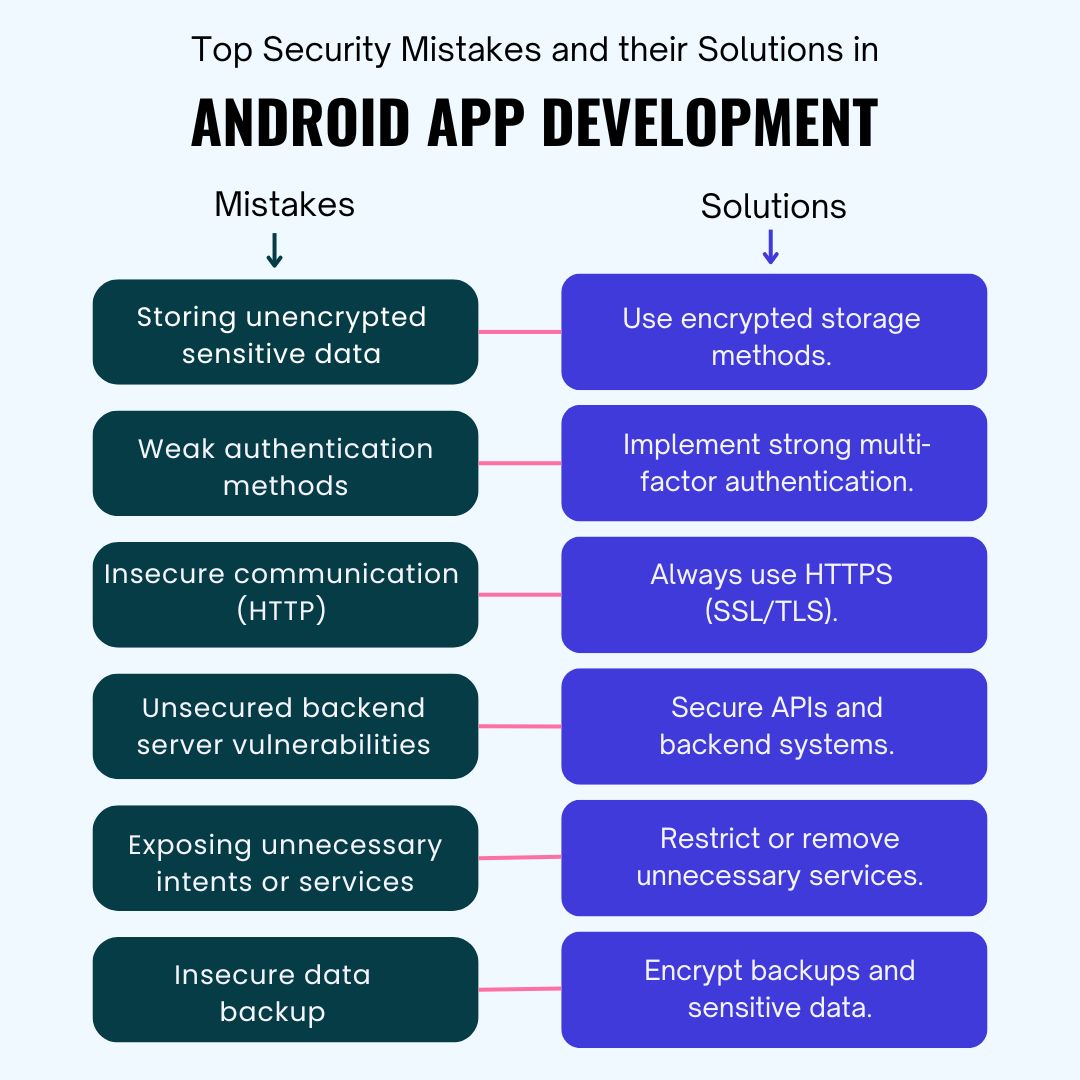
ALT Understand the Top Security Mistakes and their Solutions in ANDROID APP DEVELOPMENT. Learn to avoid Storing unencrypted sensitive data by using encrypted storage methods and prevent Insecure communication by using HTTPS (SSL/TLS). PC Doctors NET specializes in secure Mobile Application Development for both native and hybrid apps (iOS and Android), ensuring strong multi-factor authentication and secure backend systems.
1
2
17

2 Sep 2025
🧵 THREAD: From iOS-Only to Dual Native Development in 2025
The question I get asked most: "How did you transition from iOS-only to developing for both platforms?" Here's my complete roadmap for mastering dual native development 👇
🎯 Why I Chose Dual Native Over Cross-Platform
• Maximum platform optimization: Each app feels 100% native
• Latest platform features: Day-1 access to new iOS/Android features
• Best performance: No abstraction layers or bridges
• Platform-specific UX: Honor each platform's design principles
🛣️ My Transition Roadmap (Dual Native)
Phase 1: Foundation (Month 1-2)
1. Master Kotlin thoroughly:
• Coming from Swift, Kotlin syntax feels familiar
• Deep dive into coroutines vs async/await
• Understand null safety differences
• Learn Kotlin idioms and best practices
2. Android Studio mastery:
• Get comfortable with the IDE (different from Xcode)
• Learn Gradle build system vs Xcode build system
• Understand Android project structure
Phase 2: Jetpack Compose Deep Dive (Month 2-4)
1. Compose fundamentals
• @Composable functions = SwiftUI Views
• State management: remember/mutableStateOf vs @State/@StateObject
• Composition vs inheritance
• Recomposition optimization
2. Navigation & Architecture
• Navigation Compose vs NavigationView/UINavigationController
• MVVM with Compose ViewModel
• StateFlow/SharedFlow vs Combine publishers
• Hilt DI vs manual DI patterns
Phase 3: Platform-Specific Mastery (Month 4-6)
1. Android-specific concepts
• Activity/Fragment lifecycle vs iOS app lifecycle
• Content providers, broadcast receivers
• Services vs Background App Refresh
• Permissions model (runtime vs compile-time)
2. Material Design 3 vs Human Interface Guidelines
• Understand when to follow/break conventions
• Dynamic theming (Material You) vs iOS appearance
• Navigation patterns: Bottom nav, Navigation drawer
• Platform-specific animations and transitions
Phase 4: Advanced Native Features (Month 6 )
1. Platform integrations
• Android Intents vs iOS URL schemes/Universal Links
• Share extensions, widgets, shortcuts
• Hardware access patterns (camera, sensors, etc.)
• Push notifications differences
2. Performance optimization
• Android profiling tools vs Instruments
• Memory management differences
• Battery optimization strategies
• APK/AAB optimization vs iOS App Store optimization
📱 My Dual Native Strategy
Shared Concepts, Separate Implementations
Business Logic:
• Similar architecture patterns (MVVM)
• Separate but parallel implementations
• Platform-specific data persistence strategies
UI/UX Approach:
• iOS: SwiftUI UIKit where needed
• Android: 100% Jetpack Compose
• Design language follows platform conventions
• No attempts to make them look identical
Benefits:
✅ Maximum platform optimization
✅ Fastest performance possible
✅ Access to all platform APIs immediately
✅ Perfect platform UX compliance
✅ No abstraction layer bugs
✅ Platform-specific features shine
Challenges:
❌ Double the maintenance effort
❌ Feature parity coordination
❌ Two separate learning curves
❌ Different testing strategies
❌ Longer initial development time
Development Process:
1. Design phase: Create platform-adapted designs
2. iOS first: Prototype in SwiftUI (faster iteration)
3. Android adaptation: Implement with Compose best practices
4. Platform-specific polish: Optimize for each platform
5. Parallel maintenance: Update both simultaneously
🧰 Essential Tools for Dual Native
iOS Development:
• Xcode (latest version)
• SwiftUI Previews
• Instruments for profiling
• SF Symbols for icons
Android Development:
• Android Studio Ladybug
• Jetpack Compose Preview
• Layout Inspector for Compose
• Material Design 3 toolkit
Cross-Platform Tools:
• Figma (platform-adapted designs)
• Firebase (analytics, crashlytics)
• Fastlane (deployment automation)
📈 Results After 2 Years
Technical Growth:
• Deep expertise in both modern UI frameworks
• Understanding of platform-specific performance patterns
• Ability to make informed architecture decisions
• Better mobile developer overall
Development Efficiency:
• Initial: 80% longer development time
• Now: ~30% longer (shared knowledge transfers)
• Both apps are highly optimized
💡 Key Lessons Learned
• Don't fight the platforms: Embrace platform differences
• SwiftUI → Compose transition is smooth: Similar declarative concepts
• State management mindset transfers: @State ↔ remember patterns
• Platform conventions matter: Don't try to make them identical
🚨 Common Pitfalls I Avoided
• Trying to make UIs look identical across platforms
• Porting iOS navigation patterns directly to Android
• Ignoring Material Design guidelines
• Not optimizing for different hardware capabilities
• Underestimating Android fragmentation testing needs
• Forgetting about Android's back button behavior
🔄 Maintenance Strategy
Feature Development:
• Design for both platforms simultaneously
• Implement core logic in parallel
• Platform-specific optimizations
• Test on both platforms before release
Bug Fixes:
• Platform-specific bugs get platform-specific fixes
• Shared logic bugs get parallel fixes
• Regular cross-platform code reviews
Updates:
• Coordinate release schedules
• Platform-specific features when appropriate
• A/B testing on both platforms
🎯 When Dual Native Makes Sense
Choose dual native if:
✅ Performance is critical
✅ Platform-specific features are important
✅ You have resources for dual maintenance
✅ User experience quality is paramount
✅ You want to master both platforms deeply
Consider cross-platform if:
✅ Faster time-to-market is priority
✅ Limited development resources
✅ Simple UI requirements
🔮 Future Considerations
• SwiftUI improvements continue each year
• Compose Multiplatform might change the game
• AI-assisted development for dual maintenance
• Platform-specific AR/AI features becoming more important
Bottom line:
Dual native development in 2025 is challenging but incredibly rewarding. You'll become a better mobile developer by deeply understanding both platforms, and your users get the best possible experience.
The investment in learning both SwiftUI and Jetpack Compose pays off massively in terms of code quality and user satisfaction.
What's your approach to cross-platform development? Native, cross-platform, or hybrid? 👇
#iOSDeveloper #AndroidDeveloper #SwiftUI #indiedev #iOS #Android #Swift #Kotlin #JetpackCompose #NativeDevelopment #MobileDevelopment #DualPlatform
4
2
14
3,872

Building a macOS app with Xojo? Make it shine by using native APIs! Learn how to call Cocoa methods directly from your Xojo code using the Declare command > documentation.xojo.com/topic….
It's easier than you think! 😉
#Xojo #macOSApps #Cocoa #NativeDevelopment
1
5
204
Building a macOS app with Xojo? Make it shine by using native APIs! Learn how to call Cocoa methods directly from your Xojo code using the Declare command > documentation.xojo.com/topic….
It's easier than you think! 😉
#Xojo #macOSApps #Cocoa #NativeDevelopment
6
185

17 Jan 2025
Why Choose Flutter? Proven Benefits That Save Time and Money
Read more... birajtech.com/blogs/Why-Choo…
#birajtech #crossplatformdevelopment #flutter #timesaving #flutterdevelopment #AppDevelopment #uiux #mobiledevelopment #costeffective #NativeDevelopment

1
4

We took a strategic approach by forming two dedicated teams, each harnessing the power of native development tools to bring our vision to life. 🚀
Discover our work with Autura: wawand.co/case-studies/autur…
#Wawandco #NativeDevelopment #TechInnovation
1
3
49

Hungry for more on #NativeDevelopment in #ElixirLang? Don’t miss Brooklin Myers diving into LiveView Native development for iOS, Android, and beyond during #ElixirConf on Sept. 7!
#MyElixirStatus #ElixirConf2023

2
18
1,162

14 Jun 2023
#OpenSSL is one of the most well-known open-source cryptographic libraries. In this blog, we discuss how the Linaro Windows on Arm Group have enabled OpenSSL for #WindowsonArm: ow.ly/uBUf50OOgAs #nativedevelopment #opensource

1
2
4
471
12 Jun 2023
#WindowsPerf is a tool which allows you to do deep performance analysis on #WindowsonArm. In this blog we talk about the latest release 2.4.0 and how it introduces the first stable version of sampling model support : ow.ly/VYag50OLMMF #nativedevelopment #opensource

2
5
518

12 Jun 2023
React #Nativedevelopment is very popular because it supports cross-platform functionality, delivers excellent performance, offers a skillful UI interface, & many more. Checkout the blog: bit.ly/43xsHZz Here we aim to present the latest trends in #reactnative development.
ALT the latest trends in React Native development and highlight some newly developed applications.
3
27

9 Feb 2023
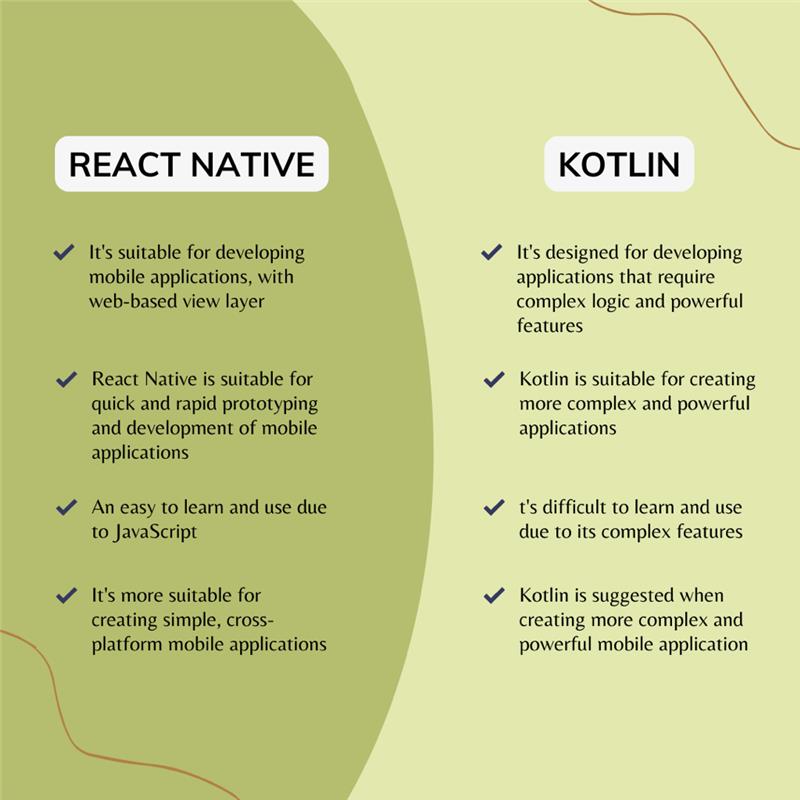
React Native and Kotlin which one will you choose?
Connect with our technology expert - marketing@aimdek.com
#marketing #technology #react #reactnative #framework #kotlin
#MobileDevelopment #CrossPlatform #NativeDevelopment #AndroidDevelopment #iOSDevelopment #framework

1
2
205

8 Dec 2022
After trying 10000000 #lowcode platforms, I can recommend #adalo as the best option for #nativedevelopment, followed by #bravostudio
1
1
2

5 Dec 2022
Just migrated a legacy app to native development using #Swift and I'm blown away by the improved performance and user experience. Hybrid solutions can't compete! #NativeDevelopment #iOS
1
2

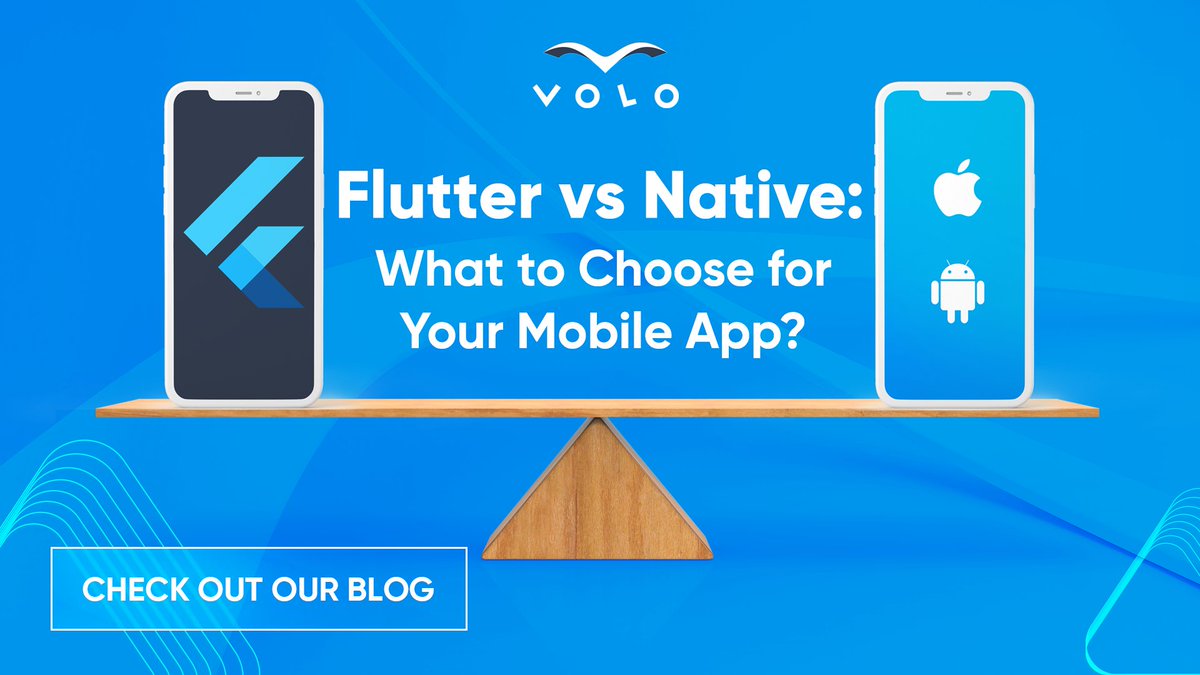
Choosing the right technology for your future app can become an overwhelming process.
➡️ To help you with this, our expert mobile developers focused on the differences between #Flutter vs #Nativedevelopment from different perspectives: volo.global/.../flutter-vs-n…
1
1
3

3 Jul 2022
One of the buch of choices you have to make before building a #mobileapplication is the choice of development approach. #crossplatform or #nativedevelopment?
1
2

12 May 2022
Have only gotten a handful of React native recruiters. Gladly said no to them. #nativedevelopment
1

2 Feb 2022
Native Vs React Native Development: Key Differences
#nativedevelopment #reactnativedevelopment #nativevsreactnative #appdevelopment #mobileappdevelopment #hybridappdevelopment #appdevelopers #appdevelopmentcompanies #hyperlinkinfosystem
hyperlinkinfosystem.com/blog…
1
4

8 Jun 2021
From start-up MVP apps to complex multi-tier apps, we offer tailored concepts and bespoke development to support your business and enhance its capabilities.
net-buddies.com/en-gb/soluti…
#webapps #mobileapps #businessdevelopment #techstack #techsupport #android #ios #nativedevelopment
1

Is #reactnative the final solution? Is it better than #nativedevelopment?
Here are some points you have to consider before finalizing on React Native or native.
bit.ly/3cyEtei
#javascript #reactjs #programming #developer #react #coding #android #html #java

3