Jan 23
Of all professions, electrical engineers are the ones that impress me the most.
It’s not that they know more math. It’s how naturally they use it. A lot of ideas that sit in the pure-math neighborhood end up powering things like cryptography, coding theory, and information theory. I’d always known that in theory.
What shocked me was seeing the same ideas running real systems: probability steering decisions in digital comms, optimisation shaping hardware, and information theory acting like a hard constraint on what’s even possible.
Working with them on research was humbling. It made me feel like I knew nothing, in the best way. It also made me rethink what being good at math means.
In my optimisation course, Space Mapping was one of the concepts that really stuck with me: you keep a computationally cheap coarse model f_c(x) that runs fast but lies, a brutally expensive fine model f_f(x) that tells the truth, and you iteratively adjust a mapping T so that f_c(T(x)) shadows f_f(x) where it matters. You do almost all the optimisation on the cheap side and call the fine model only sparingly. It’s a very engineer move: admit the model is wrong, then make it useful anyway.
John Bandler, a Canadian engineer and professor, formalised this in the early 1990s and showed you could make full-wave electromagnetic optimisation practical rather than masochistic. He founded Optimization Systems Associates in 1983 to commercialise the idea, and in 1997 Hewlett-Packard bought the company and folded its tools into what became HP EEsof, then Agilent, now Keysight’s RF design stack.
#SpaceMapping
#ComputationalElectromagnetics
#RFDesign
#NonLinearOptimization
#AntennaDesign
23
112
1,099
59,086

23 Sep 2024
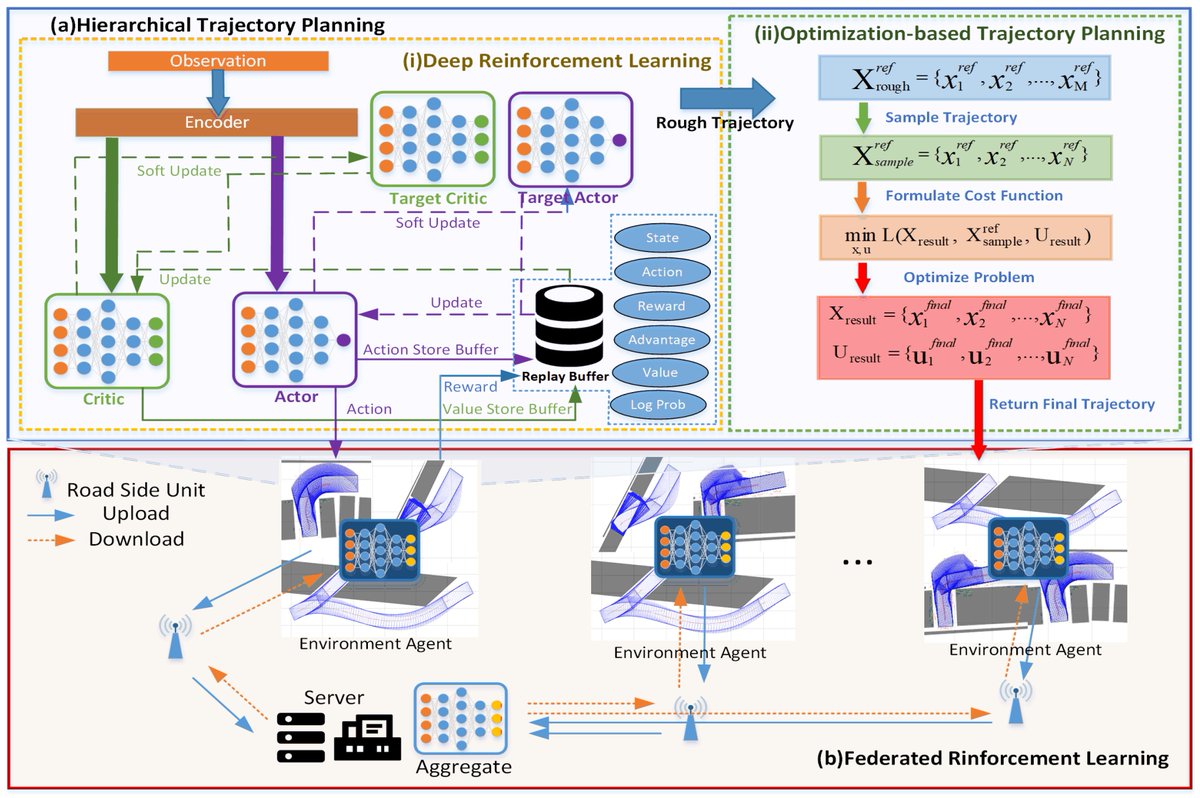
Hierarchical Trajectory Planning for Narrow-Space Automated Parking with Deep Reinforcement Learning: A Federated Learning Scheme
mdpi.com/1424-8220/23/8/4087
#automatedparking @trajectoryplanning #federateddeepreinforcementlearning #nonlinearoptimization
2
87

23 Apr 2024
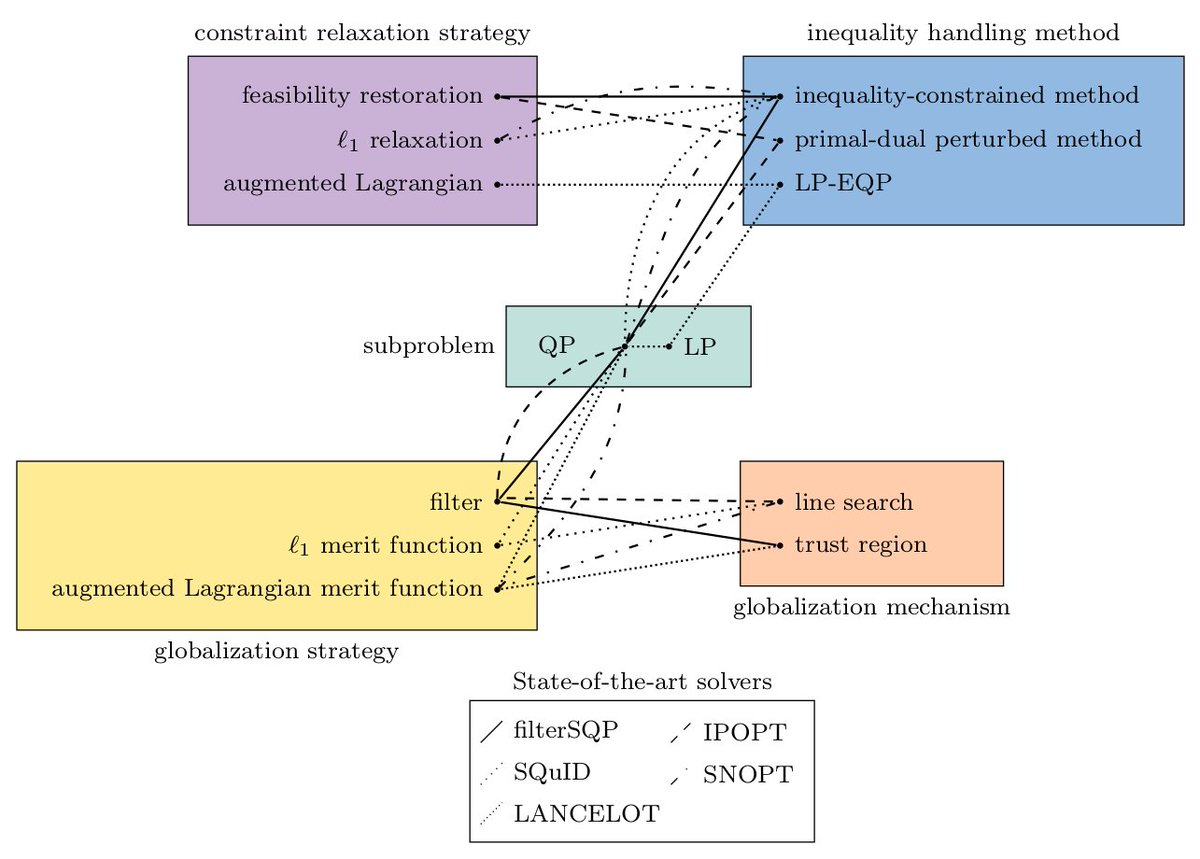
I'll be giving the talk "Uno, a next-gen solver for unifying nonlinearly constrained nonconvex optimization" at OR 2024 in September.
Early-bird registration until May 30.
@UnoSolver #optimization #nonlinearoptimization #nonlinearprogramming #nonconvex #optimizationsolver #cpp
2
47

11 Sep 2023
#NonlinearOptimization community: I believe #pricing problems can be used as test instances for global and local solvers. Recently I got to know them by @vlurkin, and we developed a solver to solve them globally
sciencedirect.com/science/ar…
5
360

4 Sep 2023
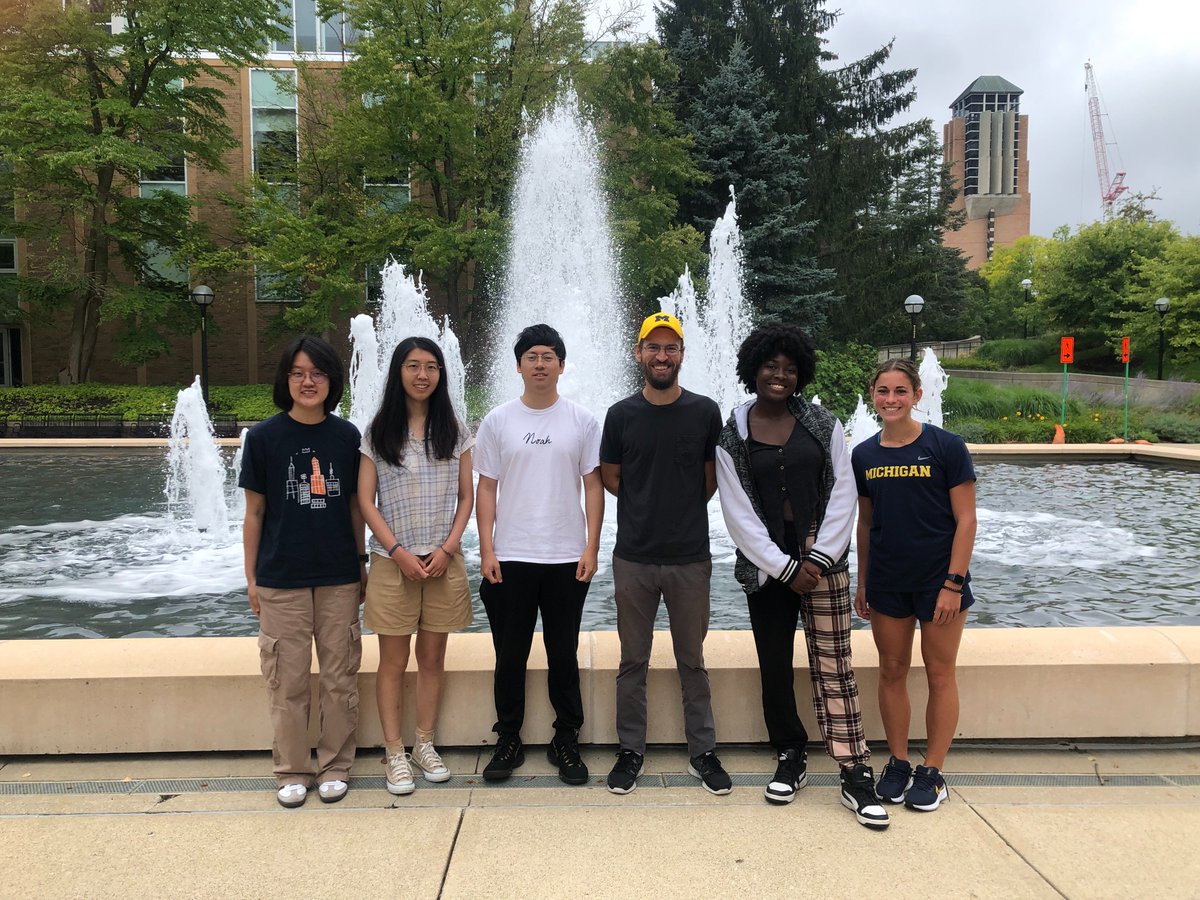
The team, The team, The team... @ChengyueZhang_, @WanpingD, @JiahaoShi5, Oluwakemi Johnson, Lauren Brideau...
Fall 2023 Team Meeting... #NonlinearOptimization
@umichioe @UMengineering @UMich
1
41
3,478
10 May 2023
Unifying Nonlinear Optimization
👉 today 12pm at @zuseinstitute (lecture hall)
zib.de/mathematics-calendar/…
#optimization #nonlinearoptimization #berlin #mathematics
1
4
165
5 May 2023
I'll be giving the talk "Unifying Nonlinear Optimization" at @ZuseInstitute on May 10, 12:00 in the lecture hall
Joint work with @SvenLeyffer
👉 @UnoSolver - github.com/cvanaret/Uno
#nonlinearoptimization #optimization #optimisation #nonlinearprogramming #unosolver #cplusplus
1
2
113
30 Mar 2023
I'll be giving the talk "Unifying Nonlinear Optimization" at @ZuseInstitute on April 12, 11:30
Drop by to learn more about the @UnoSolver 😉 Soon in SCIP!
Joint work with @SvenLeyffer
👉github.com/cvanaret/Uno
#nonlinearoptimization #optimization #nonlinearprogramming #unosolver
1
4
12
791
14 Oct 2022
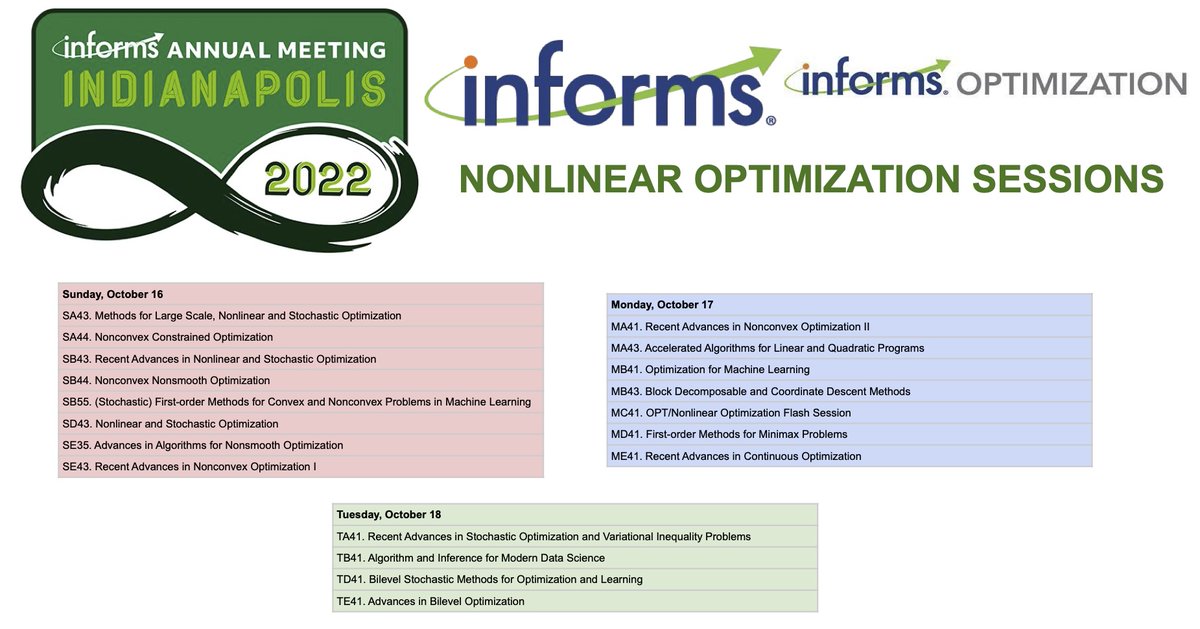
Check out the fantastic #NonlinearOptimization sessions @INFORMS2022!!
@INFORMS @InformsOS
abstractsonline.com/pp8/#!/1…
1
16
27 Aug 2022
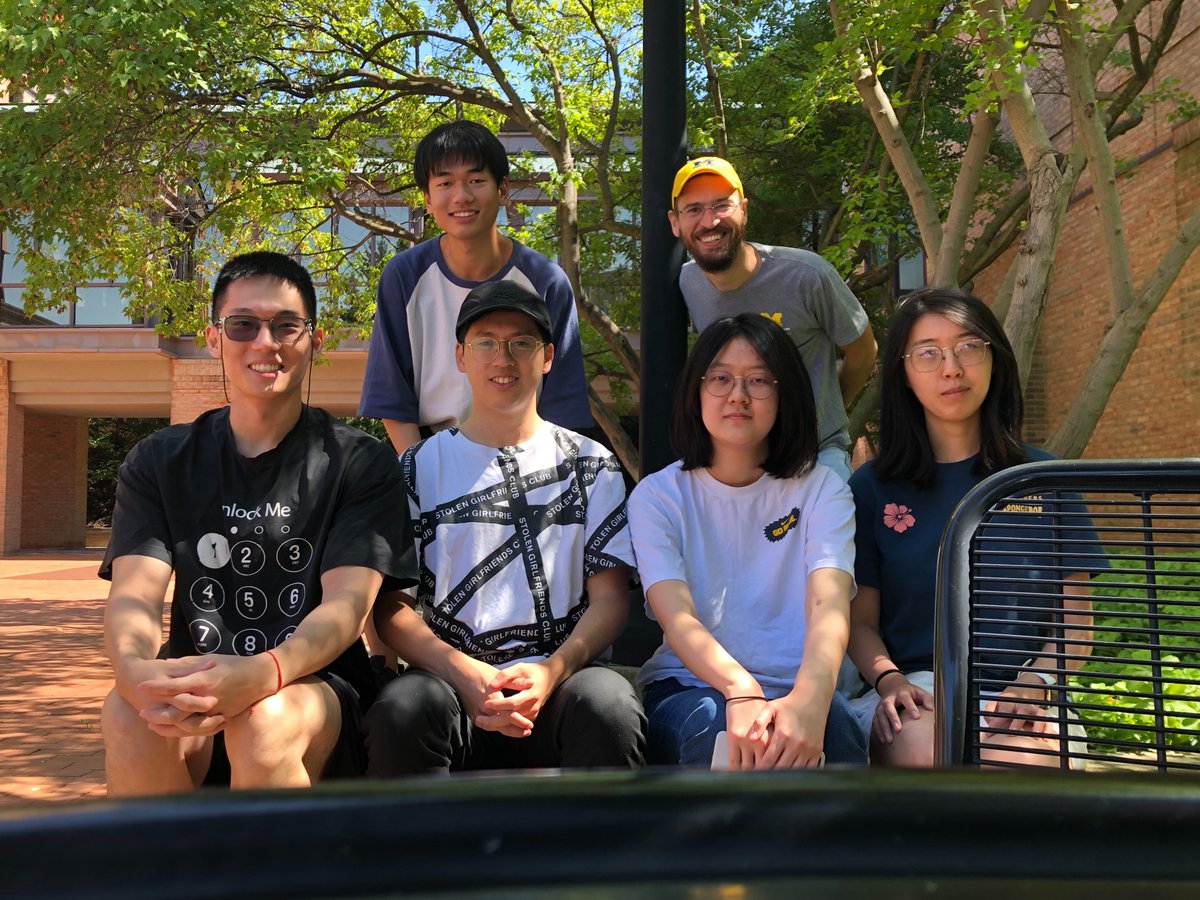
The team, The team, The team... Tunan Wang, @JiahaoShi5, @ChengyueZhang_, @WanpingD, Zihong Yi...
Fall 2022 Team Meeting... #NonlinearOptimization
@umichioe @UMengineering @UMich
2
38

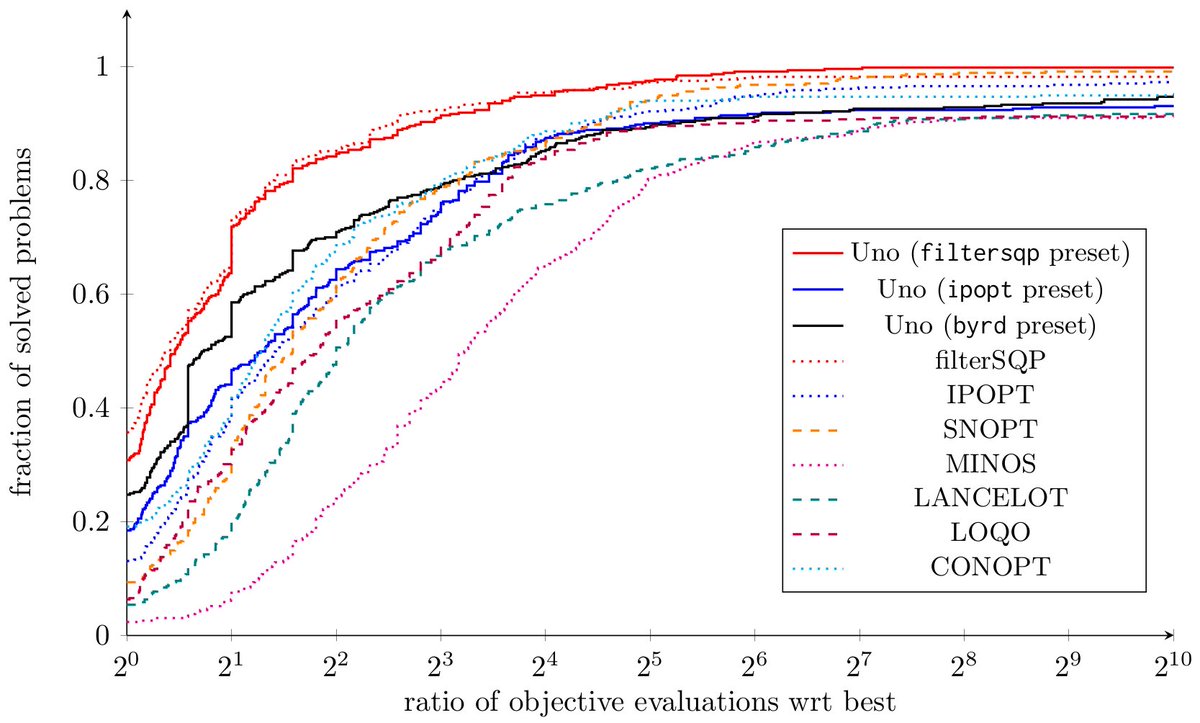
Our latest performance profile shows that Uno is competitive against state-of-the-art NLP solvers filterSQP and IPOPT.
All that in 6,000 lines of code. Try it out!
#nonlinearprogramming #nlp #unosolver #optimization #nonlinearoptimization #research #performanceprofile
1
2
Uno (Unifying Nonlinear Optimization) is available as open-source software under the MIT license. Check it out!
#nonlinearprogramming #nlp #unosolver #optimization #nonlinearoptimization #research
github.com/cvanaret/Uno
1
10 Aug 2022
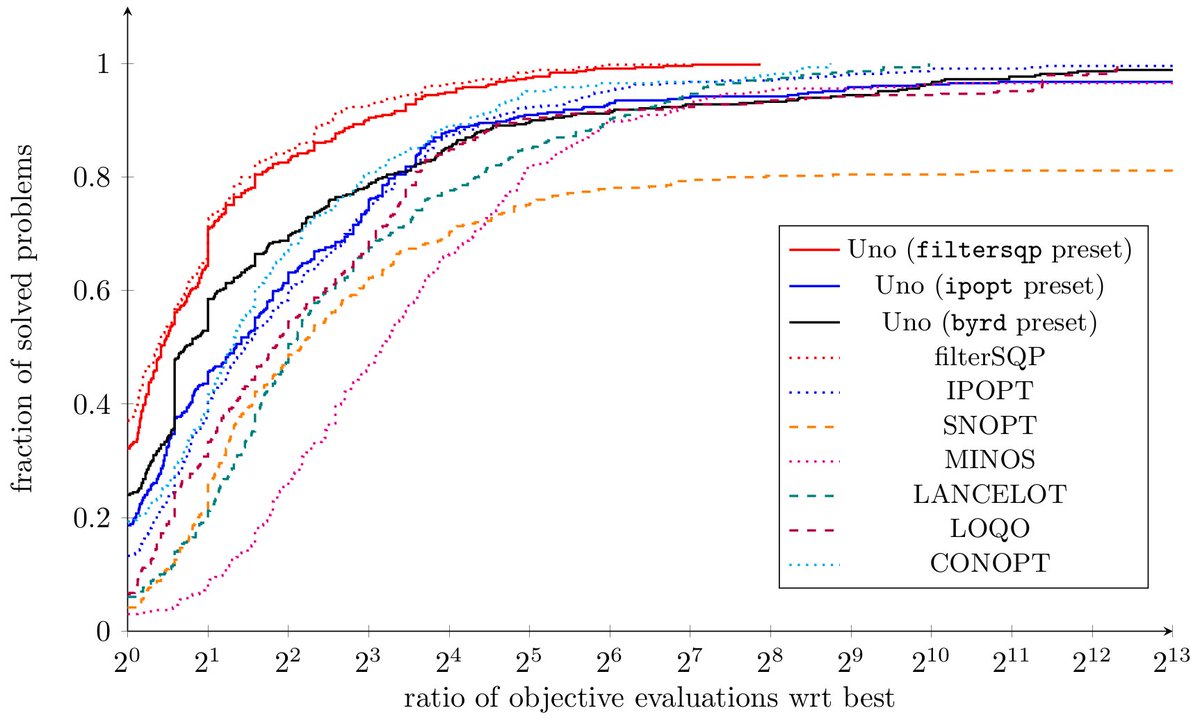
The latest performance profile of my modular solver Uno (Unifying Nonlinear Optimization) looks really promising!
Check out the code here: github.com/cvanaret/Uno
@SvenLeyffer @iccopt2022
#nonlinearprogramming #nlp #unosolver #optimization #nonlinearoptimization #research
2
11
18 Mar 2022
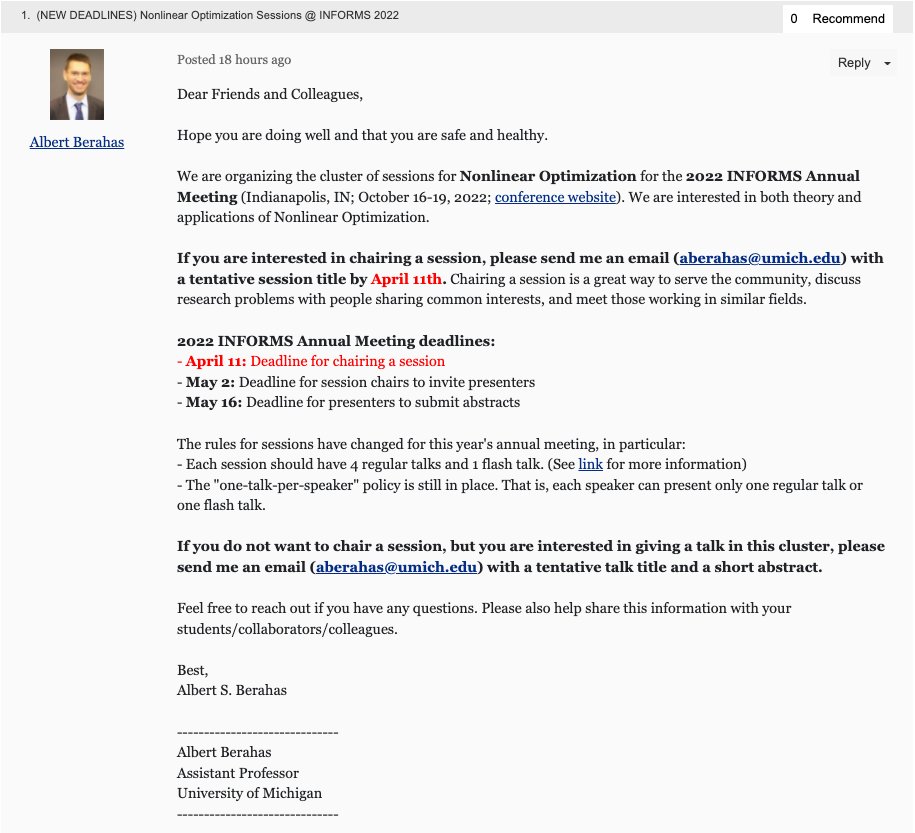
Attending #INFORMS2022 (Indianapolis, IN | October 16-19, 2022)?
Want to give a talk and/or organize a session in the #NonlinearOptimization cluster?
Send me an email! 😀
4
19
29 Oct 2021
Huge thank you to all speakers and session organizers in the #NonlinearOptimization cluster @INFORMS2021!! 43 sessions, more than 150 fantastic talks!!
Thank you to @INFORMS and @InformsOS for the help and support!!
Looking forward to seeing you all at #IOS2022!!
2
35
24 Oct 2021
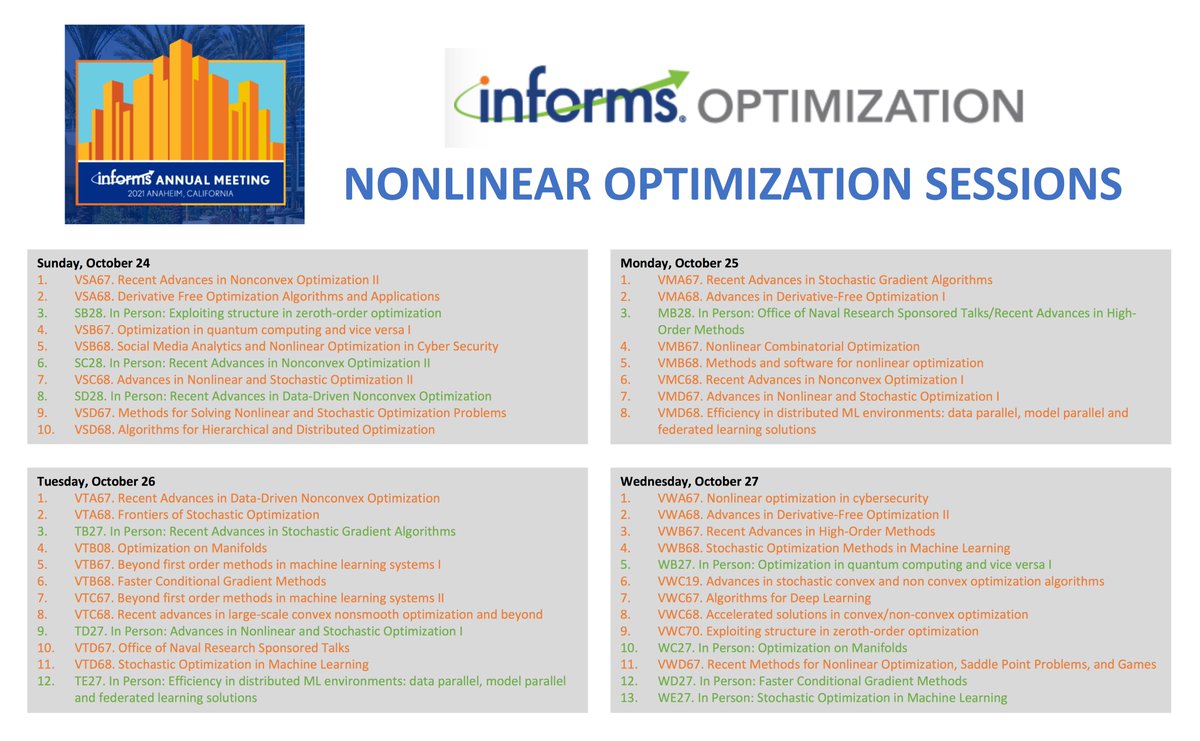
Check out the fantastic #NonlinearOptimization sessions @INFORMS2021!!
@INFORMS @InformsOS
meetings2.informs.org/wordpr…
2
4
29
12 Sep 2021
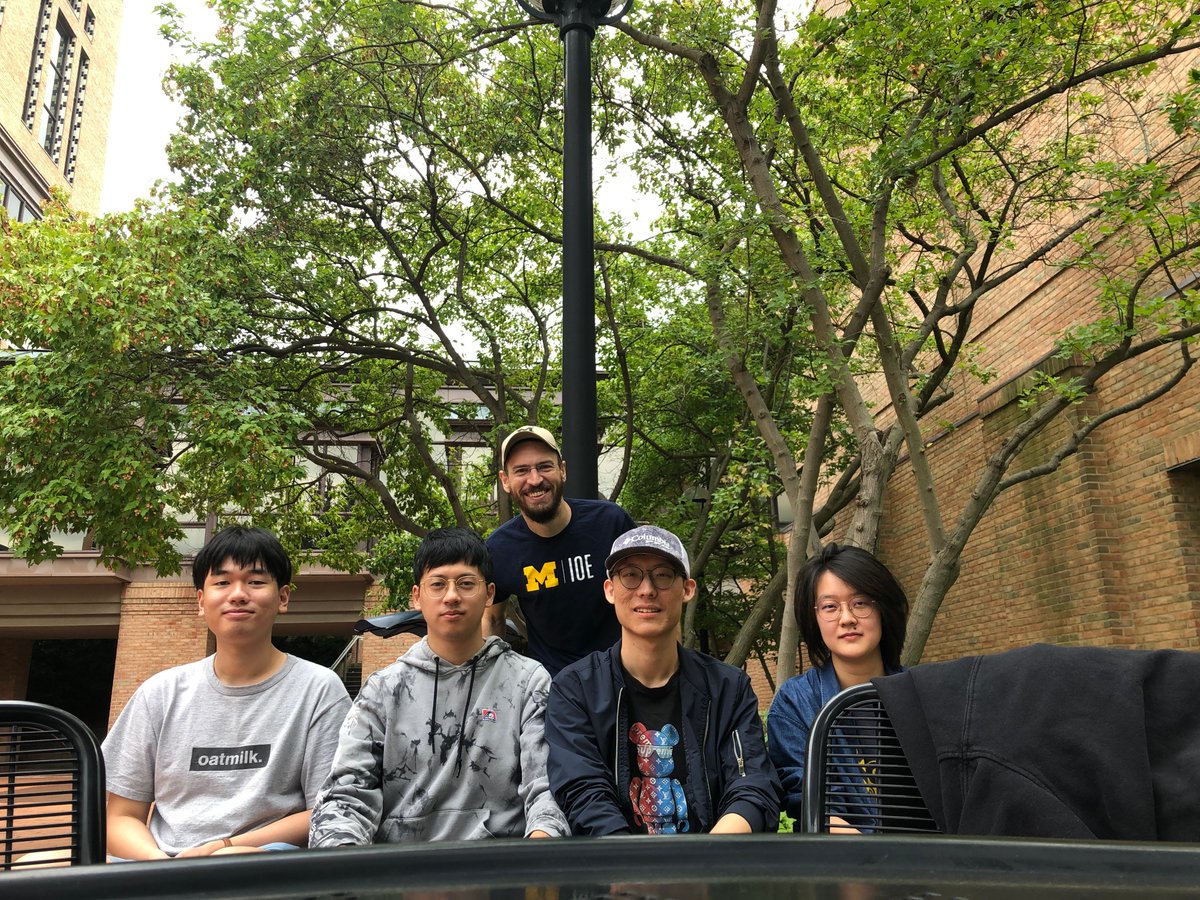
First ever in-person meeting with the research team! Zihong Yi, @JiahaoShi5, Xiaoyi Qu & @ChengyueZhang_ | #NonlinearOptimization @UMIOE @UMengineering @UMich (#Fall2021)
3
43

Don't wait too long: apply now for this #PhD position in the research group #NonlinearOptimization and #InverseProblems at @WeierstrassInst 👉ow.ly/FfgT50FN5xV #PhDGermany #Mathematics
14
21
Did you see? The @WeierstrassInst invites applications for a #PhD position in the research group #NonlinearOptimization and #InverseProblems 👉ow.ly/TZnC50FN5i6 #PhDGermany #Mathematics
2
5

20 Jun 2021
What is the proper way to use factorial and range functions when doing optimization with Gekko? stackoverflow.com/questions/… #gekko #optimization #mixedintegerprogramming #python #nonlinearoptimization