
Urgent Action Alert! All Hands on Deck!
Recommendations for the National Organic Standards Board Spring 2026 Meeting
The public comment period closes at 11:59 PM Eastern Time on Monday, May 4, 2026. Submit your comment today. The pre-written comment text is flexible. We encourage you to edit it to make it your own.
mstr.app/22890dc5-db91-4ed7-…
What is the National Organic Standards Board?
The National Organic Standards Board (NOSB) is a Federal Advisory Board made up of 15 dedicated public volunteers from across the organic community. Established by the Organic Foods Production Act (OFPA) and governed by the Federal Advisory Committee Act (FACA), the NOSB considers and makes recommendations on a wide range of issues involving the production, handling, and processing of organic products. The NOSB also has special responsibilities related to the National List of Allowed and Prohibited Substances.
The NOSB generally meets twice per year at a public meeting to discuss the items on its work agenda, vote on proposals, and make recommendations to the U.S. Department of Agriculture (USDA) Secretary. The public is invited to participate.
The NOSB spring 2026 meeting will be held May 5 and 7 (virtual) and May 12 - 14 (in person). The deadline to submit written comments is 11:59PM ET, May 4, 2026.
National Organic Standards Board Meeting Agenda for Spring 2026
GMO/Toxin Free USA is weighing in on three petitions submitted to the NOSB for consideration.
1. PETITION: Enartis USA Inc. submitted a petition “to request the inclusion of Poly-D-Glucosamine derived from Aspergillus niger and more commonly known as chitosan, on the National List under Section 205.605 (b) as a nonagricultural (nonorganic) substance permitted in or on processed products labeled as ‘organic’ or ‘made with organic.’”
OUR POSITION: Chitosan is a chemically processed material. Its intended use as a processing agent or additive in winemaking is not necessary. We recommend the NOSB reject the Enartis chitosan petition.
2. PETITION: Trécé, Inc. submitted a petition “to have 2,4-decadienoic acid, ethyl ester, (E,Z) added to §205.601 of the National List, a synthetic substance for use in monitoring, mating disruption products and control products. Pear ester is currently not on the National List because it is considered a kairomone and does not meet the qualifications of a pheromone. Kairomones are semiochemicals from organisms and plants that give insects key indications that assist in the decision of determining whether or not there is a suitable host plant… The intention and current use is to use pear ester as a pesticide to disrupt the mating behavior of Lepidoptera species… Application methods include full coverage spray and aerosolized release from an impregnated dispenser.”
OUR POSITION: Pear ester is a synthetic version of a primary aroma compound produced naturally in ripening Bartlet/Williams pears. It has been previously approved for organic growers for use as a pheromone, a type of pesticide. If it is approved again for use under the classification of kairomone, a prohibition must be in place for any applications involving encapsulation in plastics. Organic agriculture and food already have massive microplastics and plastic chemicals contamination problems. Using a pesticide that is encapsulated in plastic would only add more microplastics and toxic plastic chemicals into the environment and organic food.
3. PETITION: OrganicEye submitted a petition to “initiate a rulemaking process to amend the current organic labeling regulations to include a requirement that packaged organic agricultural products sold through online channels such as Amazon, Walmart, etc., and/or third-party resellers and merchants provide a visible image of the information identifying the organic certifier of the finished product.”
OUR POSITION: As stated in the petition, today over 160 million Americans will buy their groceries online and 58.6% have purchased groceries online. We agree that organic labeling regulations should mandate “that online retailers and resellers should have the obligation to make available to online shoppers the same label information currently required on all organic products to which traditional grocery shoppers have access, including the name of the accredited organic certifier of the finished product. If a 360° view of the product is not accessible and in a size in which the “fine print” on the label is easily read, then the currently required disclaimer identifying the certifier should be displayed prominently elsewhere on the primary webpage where the product is offered.” NOSB should approve Organic Eye’s petition.
Thank you for taking the time to submit your comment.
Cheers for organic,
The GMO/Toxin Free USA Team
Side note according to OrganicEye: "After gutting the already understaffed National Organic Program responsible for the oversight of a $70 billion US industry that depends on global supply chains — by a reported 30%, USDA Secretary Brooke Rollins has now failed to appoint, in a timely manner, five members to fill vacancies on the 15 member National Organic Standards Board (NOSB), the expert panel Congress created as a buffer against industry corruption."
6
9
489

Mar 25
Organic food products in the US are regulated under the
Organic Foods Production Act of 1990 (OFPA), which is enforced by the USDA National Organic Program (NOP). The specific, legally binding regulations are located in the Code of Federal Regulations (CFR) at 7 CFR Part 205
4
54
Mar 25
15 seconds to search for this: Organic food products in the US are regulated under the
Organic Foods Production Act of 1990 (OFPA), which is enforced by the USDA National Organic Program (NOP). The specific, legally binding regulations are located in the Code of Federal Regulations (CFR) at 7 CFR Part 205
1
2
21

25 Aug 2025
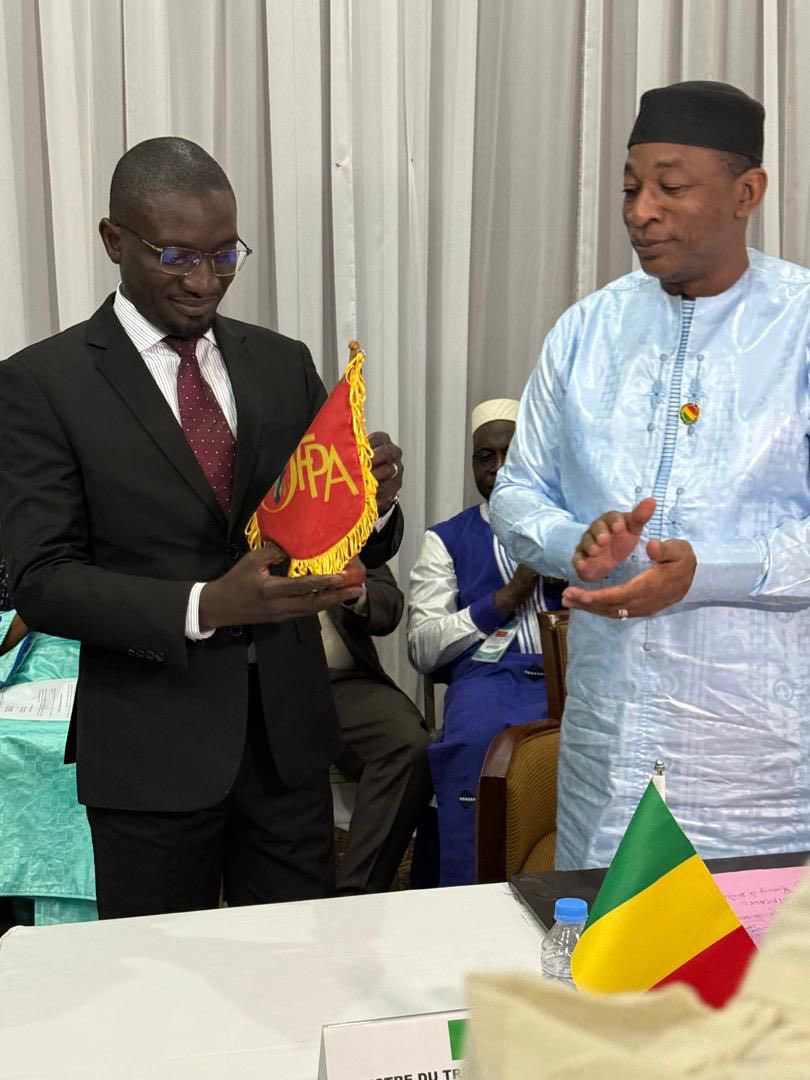
J’ai eu l’insigne honneur d’être désigné, ce samedi 23 août 2025 à Bamako (République du Mali), Président de la Conférence des Ministres en charge de la Fonction publique des États membres de l’Observatoire des Fonctions publiques africaines (OFPA).


9
43
476
6,917

25 Aug 2025
Observatoire des Fonctions publiques africaines (OFPA): le ministre @BoucalOfficiel désigné Président de la Conférence des Ministres

2
13
291

23 Aug 2025
#AES État du Mali 🇲🇱
#AES_3D🇧🇫🇳🇪🇲🇱
Défense- Diplomatie- Développement
🛑 12e conférence de l’Observatoire des fonctions publiques africaines : Le Ministre Mathias Traoré aux côtés de ses pairs pour une nouvelle dynamique de l’organisation
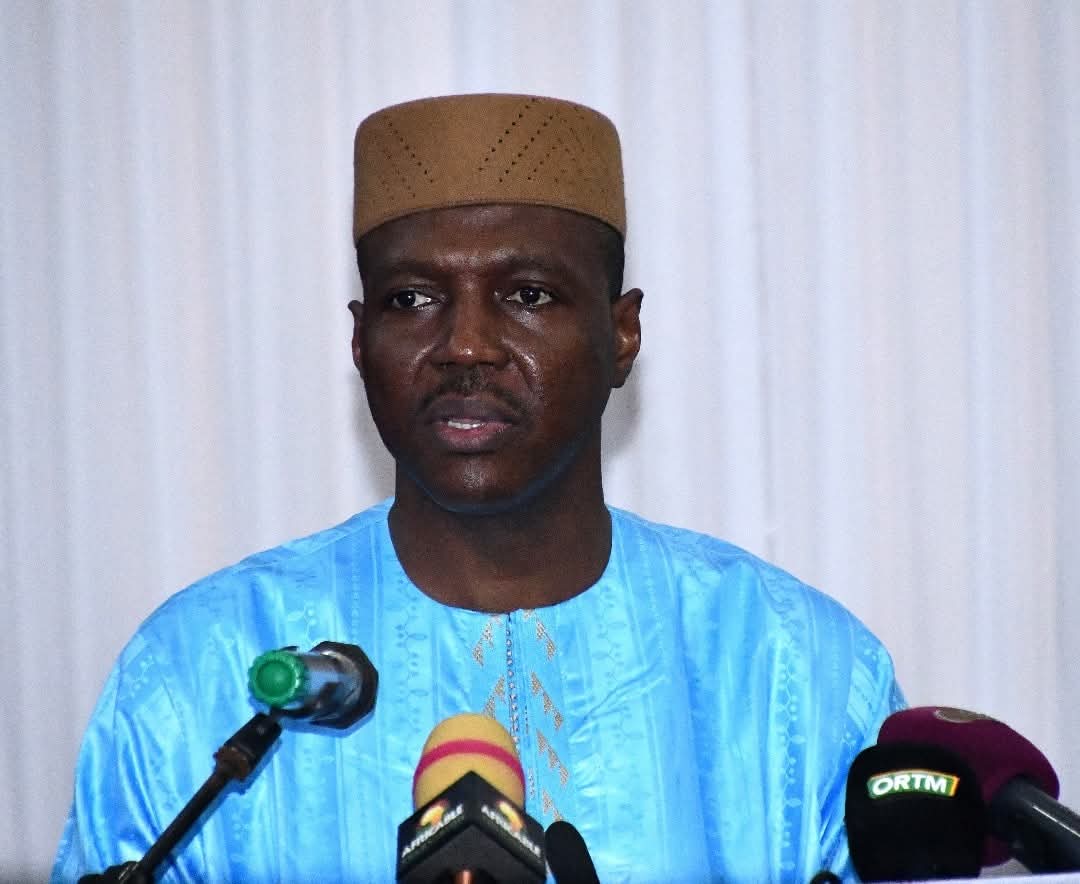
Le Premier ministre malien, le Général de division Abdoulaye Maïga, a présidé la cérémonie d’ouverture de la 12e conférence des ministres de l’Observatoire des fonctions publiques africaines (OFPA), ce samedi 23 août 2025, à Bamako, au Mali.
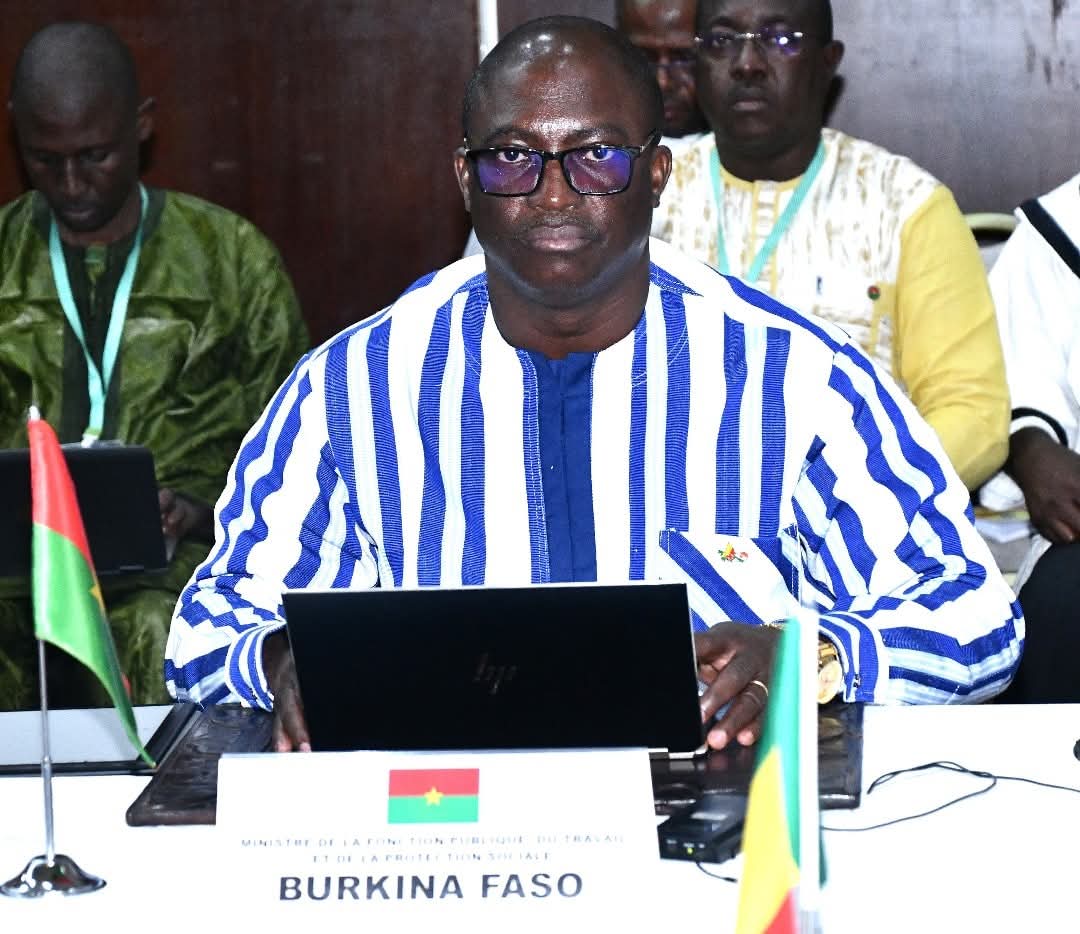
Le Ministre de la Fonction publique, du Travail et de la Protection sociale, Mathias Traoré, chef de la délégation burkinabè, participe à cette conférence qui se tient après celle de 2018, à Cotonou, au Bénin.
Selon le ministre malien du Travail, de la Fonction publique et du Dialogue social, Dr Fassoun Coulibaly, cette 12e conférence doit être l’occasion pour donner une nouvelle dynamique à l’organisation afin qu’elle puisse relever les nombreux défis auxquels les fonctions publiques africaines sont confrontées.
« Cette 12e conférence devrait être l’occasion de faire des propositions qui permettront de changer le regard du citoyen ou de l’usager sur les fonctions publiques africaines caractérisées de « bureaucratie » par certains, donc, « un monde de papiers et lenteurs, et renvoie à une administration tentaculaire et tatillonne » », a-t-il soutenu.
Pour le Premier ministre, Abdoulaye Maïga, l’Observatoire des fonctions publiques africaines constitue un levier majeur à l’échelle régionale pour la coordination stratégique de toutes les actions d’amélioration de la gouvernance publique dans chacun des pays membres.
Pour lui, avec ses 26 Etats membres, l’Observatoire est appelé à être un véritable outil de transformation de nos fonctions publiques.
Cette 12e conférence, a-t-il relevé, qui s’ouvre aujourd’hui représente une occasion pour les experts et les administrateurs de partager leurs expériences, les bonnes pratiques de leurs réflexions sur les défis et les perspectives de la Fonction publique en Afrique.
« Nous devons réfléchir collectivement à des solutions innovantes pour renforcer les capacités des agents publics, améliorer la qualité des services publics et promouvoir une culture de performance, de responsabilité, de redevabilité dans nos administrations publiques », a dit le Général de division Abdoulaye Maïga.
Au regard des points inscrits à l’ordre du jour de cette 12e conférence des ministres, il a dit espérer que les travaux permettront d’évaluer les résultats obtenus, d’identifier les axes d’amélioration et fixer les grandes orientations qui guideront l’organisation dans les années à venir.
A l’issue de la cérémonie d’ouverture, les ministres vont examiner, entre autres, les points inscrits à l’ordre du jour de cette conférence et le rapport des travaux des experts.
DCRP/MFPTPS


1
6
204

31 Jul 2025
PA Education K12: 69% ofPA students are not proficient in math or reading. Superintendents should be held accountable.
24 Jul 2025

Gov. Shapiro promised a lifeline for kids trapped in failing schools. But instead of supporting Lifeline Scholarships, he vetoed them from his first budget.
This year, he MUST make it right, and lawmakers must hold him to his promise. 🛟🏫
@MeganMartin815
2
1
82

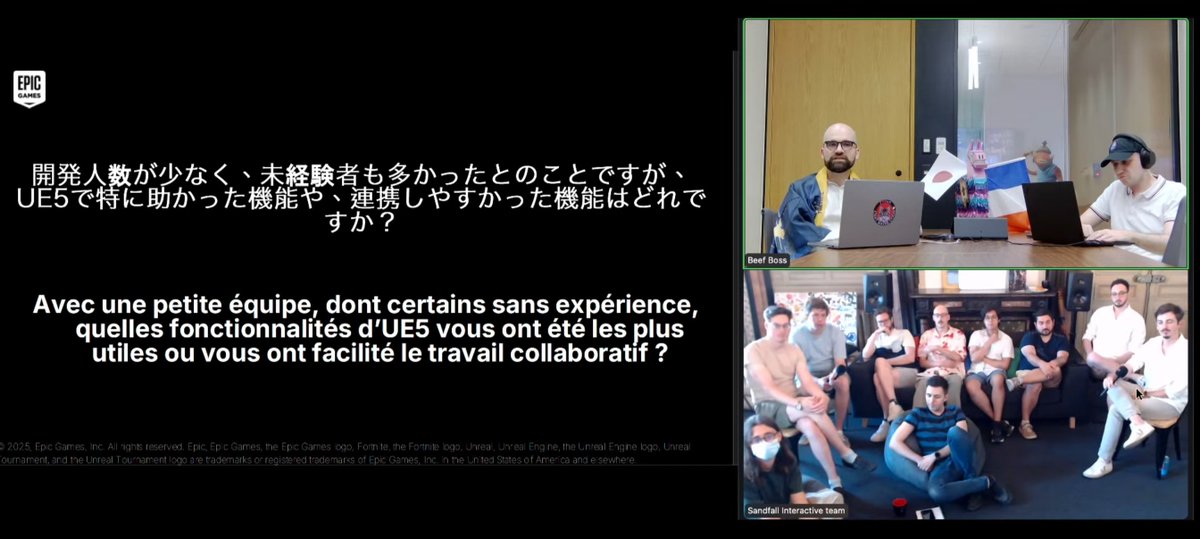
「第一にはブループリント。次いでLumen。UE4で開発していたころはライトを都度ベイクしていたが、UE5でベイクがゼロに。チェックアウト衝突が起きづらい、One File Per Actor (OFPA) にも助けられた」
youtube.com/watch?v=lZERZUjw…
13
44
6,159


16 Feb 2025
Kosher label- forcing function is a parallel governance
Organic label- consumer demand but
forcing function was OFPA
Halal- parallel gov again
Never said anything about what people wanted. You teased that out, errantly. Square your priors with the simple words above first.
3
170

5 Feb 2025
To bring this too life, I then enlisted the help of @c15n32 as "Master Smith" to produce the root units for the OOA (object oriented architecture) and called upon @TimSweeneyEpic for license to use his brilliant OFPA-OOD (one file per actor - object oriented design) framework with nanitic capabilities for limitless economic scale. Fortunately, he gives these away to everyone, for free, so you know: "Yay! OpenSource!" . . .
OFPA:
The idea of using the OFPA framework as a design concept for a tokenomic infrastructure with an OOD root, was not easily understood by my team. However, production proceeded anyways, as my crew tend to be an agreeable lot. . .

5
1
9
3,880

16 Jan 2025
caralho mano tá todo mundo dr luto aqui no refeitório do ofpa campus belem não ironicamente


1
2
51


13 Nov 2024
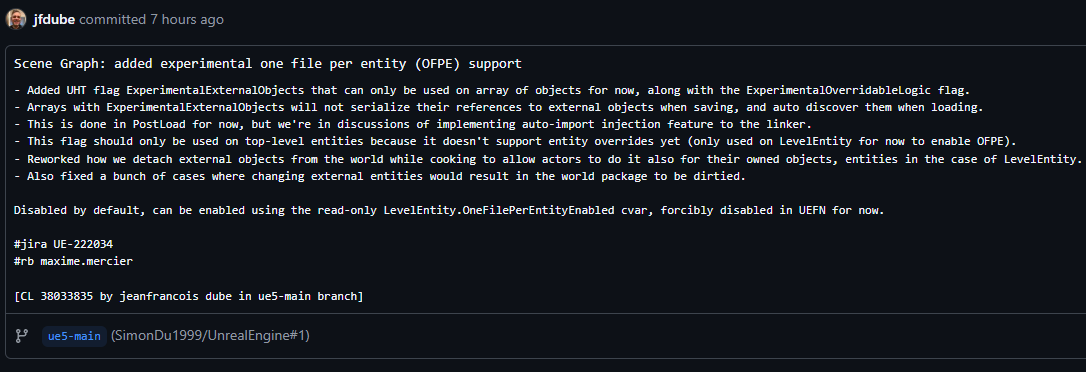
One File Per Actor (OFPA) will be supported also by the new SceneGraph. Or should we say One File Per Entity (OFPE) ?
I hope it will use some cleaner filenames. E.g. original class name at the beginning. Errors are really painful when it is just GUID.
github.com/EpicGames/UnrealE…
18
1,418

We are probably at 5-10m with instances.
The issue isn't on material, or whatever, the issue is if it's working fine in packaged, when you play the game in editor, it flush the whole level, then re-load it with the new world partition editor.
The whole operation is very costly. Epic said they didn't meet the issue on their internal project, but us and some japanese studio have the same.
So, yeah OFPA is cool, but you can totally work without it. And considering sub level loading streaming is nearly the same setup with or without world partition if you want a fine tuning... there is no big advantage using OFPA, outside co-checkout items.
1
2
29

4 Jul 2024
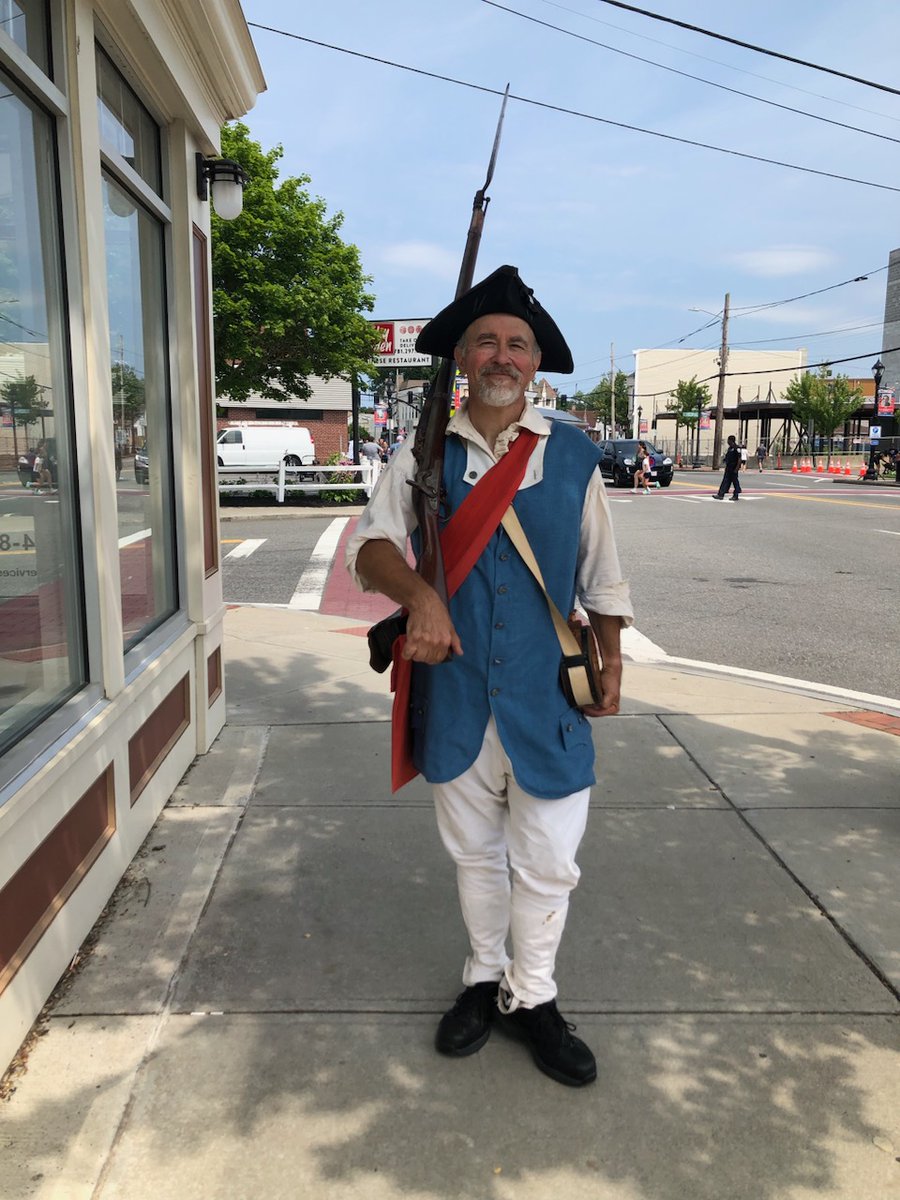
Happy #FourthOfJuly from the State Historian of the Massachusetts SAR, Mass. SR and Mass. OFPA. And today the sole member representing the Stoughton Grenadiers for #fourthofjuly2024 - Happy 248th Birthday America!
4
12
114
1,568

28 May 2024
I'm also a member of OFPA and the line does depend on line. Has to be father or mother's surname line or any male/female direct ancestor male line. ofpa.org/membership/
2
2
21

4 Apr 2024
7. Ensure that so-called “inert” ingredients in the products used in organic production meet the criteria in OFPA and the NOS
If you have other issues in mind, please add to the suggested comment text.
1
4
420

18 Mar 2024
COMMENT PERIOD NOW OPEN! ✅The National Organic Standards Board is accepting written public #comments on key issues for continuous improvement to #organic through April 3 @ 11:59 PM ET! (New click-and-submit form!) #ofpa #nosb #takeaction @USDA Blog: ow.ly/66KN50QVLMZ
5
8
242