
They didn’t spoil nothing. It’s so the deep state can push a fisa warrant to spy on Americans. When we need to actually spy on our government for insider trading pandemics waste fraud and abuse. Protect us in our children from pedophiles America needs to wake up and fight evil
5

The Next 250 Years: Chasing the Voice of God to the Stars
Many people believe Manifest Destiny ended when the American frontier closed.
It didn’t.
The frontier never disappeared. It simply moved.
First it was the wilderness.
Then the continent.
Then the skies.
Now it is space.
The distances are greater, the challenges are harder, but the human spirit is exactly the same. We are explorers, builders, inventors, and pioneers. We are not meant to stand still.
For 250 years America has led humanity into new frontiers. From settling a continent to reaching the Moon, free people have repeatedly shown what liberty, ingenuity, and determination can achieve.
There is no reason the next frontier should be any different.
But this frontier comes with a reality few are willing to admit: space is expensive.
The rockets, habitats, energy systems, life-support infrastructure, and transportation networks needed to settle other worlds will require unimaginable amounts of capital.
That capital can only come from wealth creation.
Governments can help open the door, but only capitalism can generate the resources necessary to keep it open. Only free markets, investment, entrepreneurship, innovation, and profit can sustain humanity’s expansion beyond Earth.
This is why freedom matters.
This is why capitalism matters.
The prize is larger than land, gold, or trade routes.
This time the stakes are civilizational.
Earth is beautiful.
Earth is home.
But Earth is not forever.
History teaches that every species and every civilization lives on borrowed time. Asteroids, pandemics, wars, and dangers we cannot yet imagine remind us of a simple truth:
A civilization that exists on only one planet remains vulnerable.
A civilization that reaches beyond its home world gains a future.
This is why space is not a luxury.
It is not a hobby.
It is not a vanity project.
It is an insurance policy for civilization itself.
But perhaps it is something more.
For thousands of years mankind has looked into the heavens and asked:
Who are we?
Why are we here?
What comes next?
Perhaps the drive to explore is more than curiosity.
Perhaps it was placed within us.
Perhaps the same God who gave mankind the desire to cross oceans, climb mountains, and discover new worlds also gave us the longing to reach the stars—not to escape Earth or replace God, but to better understand His creation and our place within it.
For our grandparents, the challenge was building America.
For us, the challenge may be preserving humanity.
And perhaps, in reaching for the stars, we are doing what mankind has always done:
Following the frontier.
Seeking the unknown.
And chasing the voice of God wherever it leads.
The frontier never disappeared.
It simply moved.
The frontier is no longer west.
The frontier is up.
And this time, it may truly be for all the marbles.
5
Why didn’t you say this when voter fraud was exposed in California to push the save act? This is a plot designed by the deep state to push the fisa warrant when we don’t need to spy on us, the people we need to spy on the government for insider trading and pandemics 👌🖕🏻🖕🏾🖕
4

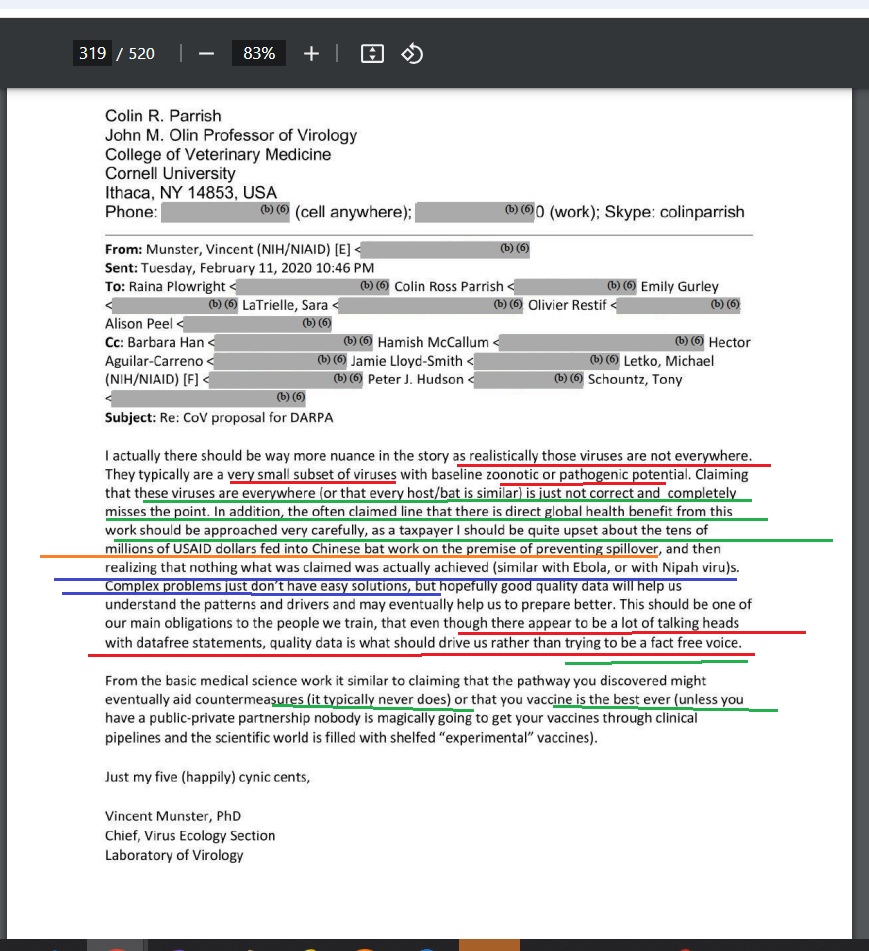

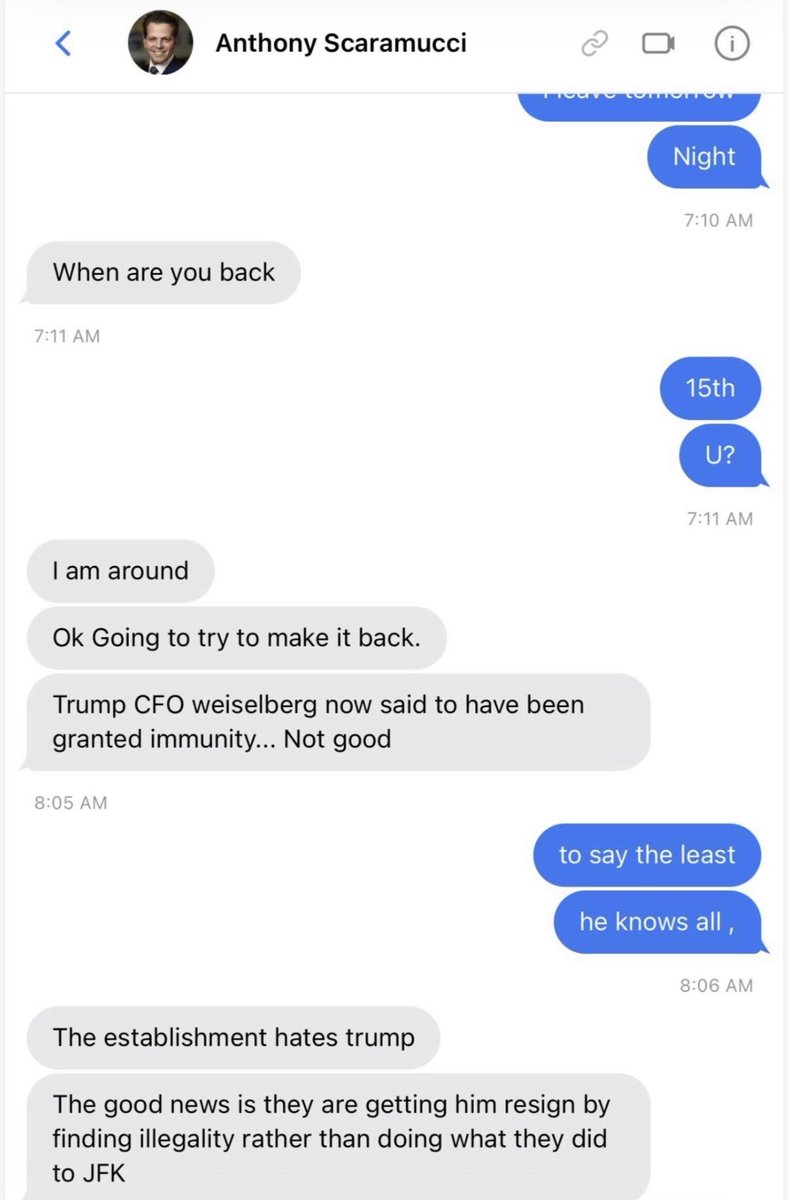
Democrats never read the 3 mil files. 175 democrats planning wars, pandemics, overthrowing governments, drug & child trafficking, abuse,murder, etc.
They even say in their private messages Trump wasn’t in their Establishment.
Democrats never cared about any of it.
14

>90% of our "economy" exists to compete over money. Or to maintain the corresponding infrastructure, traffic and computational nonsense. Not to create anything of economic nor social value.
>90% of contemporary jobs only exist to fight over money.
>90% of contemporary jobs are #bullshitjobs. Wasting most of our resources, energy, fossil fuels and computational power. Impoverishing and baking the whole world.
Billions of #bullshitjobs are causing global warming, pandemics to spread and inflation.
You fail to understand the most obvious and severe issue in all of human history.
You fail to understand your own reality.
You are the one who fails to understand stuff.
4
The issue is much worse.
Billions of economically unnecessary #bullshitjobs are wasting most of our resources, energy and fossil fuels. Causing global warming, pandemics to spread and inflation.
The #bullshitjobs "economy" is killing us.
2 Nov 2024

Every year, we perform 9.6 trillion hours of labour for the world economy. But the vast majority of this is controlled by capital and deployed to produce whatever is most profitable to capital. As a result we languish in conditions of mass deprivation and ecological breakdown.
Under conditions of economic democracy, by contrast, we could deploy our massive productive capacities instead toward improving human well-being, social progress, green transition, and ecological regeneration. We could address our social and ecological crises in very short order.
We live in a mere shadow of the world we could have.
14
Allowing capital to employ people to do what's financially "profitable" brought us billions of economically and socially entirely unnecessary #bullshitjobs, exploding prices, pandemics and a completely overheating planet.
But we simply continue to ignore the issue.

Implement universal basic income to eliminate bullshit jobs and empower meaningful work.
2
2
73


No wonder new diseases and pandemics take birth in that country!!
10h

Hygiene Shock : A restaurant in China 🇨🇳 is using dirty water to wash dishes.
8
Billions of economically entirely unnecessary #bullshitjobs are wasting most of our time, resources, energy and fossil fuels.
Causing global warming, pandemics to spread and inflation.
The #bullshitjobs "economy" is impoverishing and baking the world.
2 Nov 2024
Every year, we perform 9.6 trillion hours of labour for the world economy. But the vast majority of this is controlled by capital and deployed to produce whatever is most profitable to capital. As a result we languish in conditions of mass deprivation and ecological breakdown.
Under conditions of economic democracy, by contrast, we could deploy our massive productive capacities instead toward improving human well-being, social progress, green transition, and ecological regeneration. We could address our social and ecological crises in very short order.
We live in a mere shadow of the world we could have.
3

Prevented the second depression, lowered the national debt, signed a major Healthcare Bill, contained an ebola & a zika outbreak & stopped 2 global pandemics, established DACA for those caught in the Gray areas of immigration.... has Mexico paid for Trump's wall yet?
1
3
46
The issue is much worse.
Billions of economically unnecessary #bullshitjobs are wasting most of our resources, energy and fossil fuels. Causing global warming, pandemics to spread and inflation.
#bullshitjobs are killing us and our planet.
2 Nov 2024
Every year, we perform 9.6 trillion hours of labour for the world economy. But the vast majority of this is controlled by capital and deployed to produce whatever is most profitable to capital. As a result we languish in conditions of mass deprivation and ecological breakdown.
Under conditions of economic democracy, by contrast, we could deploy our massive productive capacities instead toward improving human well-being, social progress, green transition, and ecological regeneration. We could address our social and ecological crises in very short order.
We live in a mere shadow of the world we could have.
2
Marketing, tax accounting, insurances, finance, 25-fold redundant mobile carriers, companies with the same product ...
Construction workers, technicians, electricians, plumbers, developers, etc., etc., who provide those sectors and companies with infrastructure, tools and software.
There are billions of economically and socially entirely unnecessary #bullshitjobs. Wasting our lives, resources and energy. Causing global warming, pandemics to spread and inflation.
You simply continue to ignore the most obvious and severe issue in all of human history.
You lack intelligence.
3
sapio🌱 retweeted

watch your plate instead, animal agriculture is what causes pandemics
2
21
313
Billions of economically unnecessary #bullshitjobs are wasting most of our resources, energy and fossil fuels. Causing global warming, pandemics to spread and inflation.
2 Nov 2024
Every year, we perform 9.6 trillion hours of labour for the world economy. But the vast majority of this is controlled by capital and deployed to produce whatever is most profitable to capital. As a result we languish in conditions of mass deprivation and ecological breakdown.
Under conditions of economic democracy, by contrast, we could deploy our massive productive capacities instead toward improving human well-being, social progress, green transition, and ecological regeneration. We could address our social and ecological crises in very short order.
We live in a mere shadow of the world we could have.
4
Soul of Escórpi 🦂 retweeted

Why are you comparing the conduct of NEET examinations to pandemics and natural disasters?
Annamalai is not questioning the Indian Army's service in any way. His criticism is directed at the HRD Ministry and the minister who failed to ensure a fair and credible examination process. It is this failure that has resulted in the need for such extraordinary arrangements.
@annamalai_k #Annamalai
@WTLFoundation

Army helps in Corona management .
Army helps in natural disasters .
Army helps in law & order situation .
Army helps in NEET Exam .
Indian Army helps Indian Govt for the good of Indian people .
Why so much of fuss ..!!!
2
19
77
2,637
Chidambara .ML. retweeted

Molecular interplay between Integrative Mobile Elements exploiting Xer drives the evolution of cholera pandemics 🦠biorxiv.org/content/10.64898…
1
2
61
Marlene Masteghin retweeted

An email from the Epstein files.
Subject line, Prepare for Pandemics.
March 19, 2015.
‘Let's discuss next steps. For example, how to involve the World Health Organization. I hope we can pull this off.’
Then in 2019 came Event 201, a simulation of a global pandemic to see how each organization should react. Like how to counter the anti-vaxxers. And the spread of misinformation. That was sponsored by Bill Gates, by the way.
And in early 2020, the XI-Jiping-19 pandemic happened, one of the biggest scams in modern history.”
2
4
4
77