
Jun 9
And today those same scientists say that the Liberal government is muzzling them, too. "Government scientists, along with science advocacy groups like Evidence for Democracy and their union PIPSC, claim that political interference and restrictive communication policies are still muzzling them. Despite the Liberal government's campaign promise to "unmuzzle" scientists, recent polls show that OVER HALF of federal scientists still feel restricted from speaking freely to the media. "
2

May 15
As a Jewish member of a CLC union (PIPSC), I feel well represented by the @CLCOntario . As a Jew, however I do not feel represented by @CIJAinfo.
1
12
113

Apr 14
It would be amazing to implement these changes, but there’s no mention of the elephant in the room: the unions (PSAC & PIPSC).
Any plan to implement these changes that doesn’t include clawing power away from these unions is incomplete imho. They are THE roadblock here
6
266

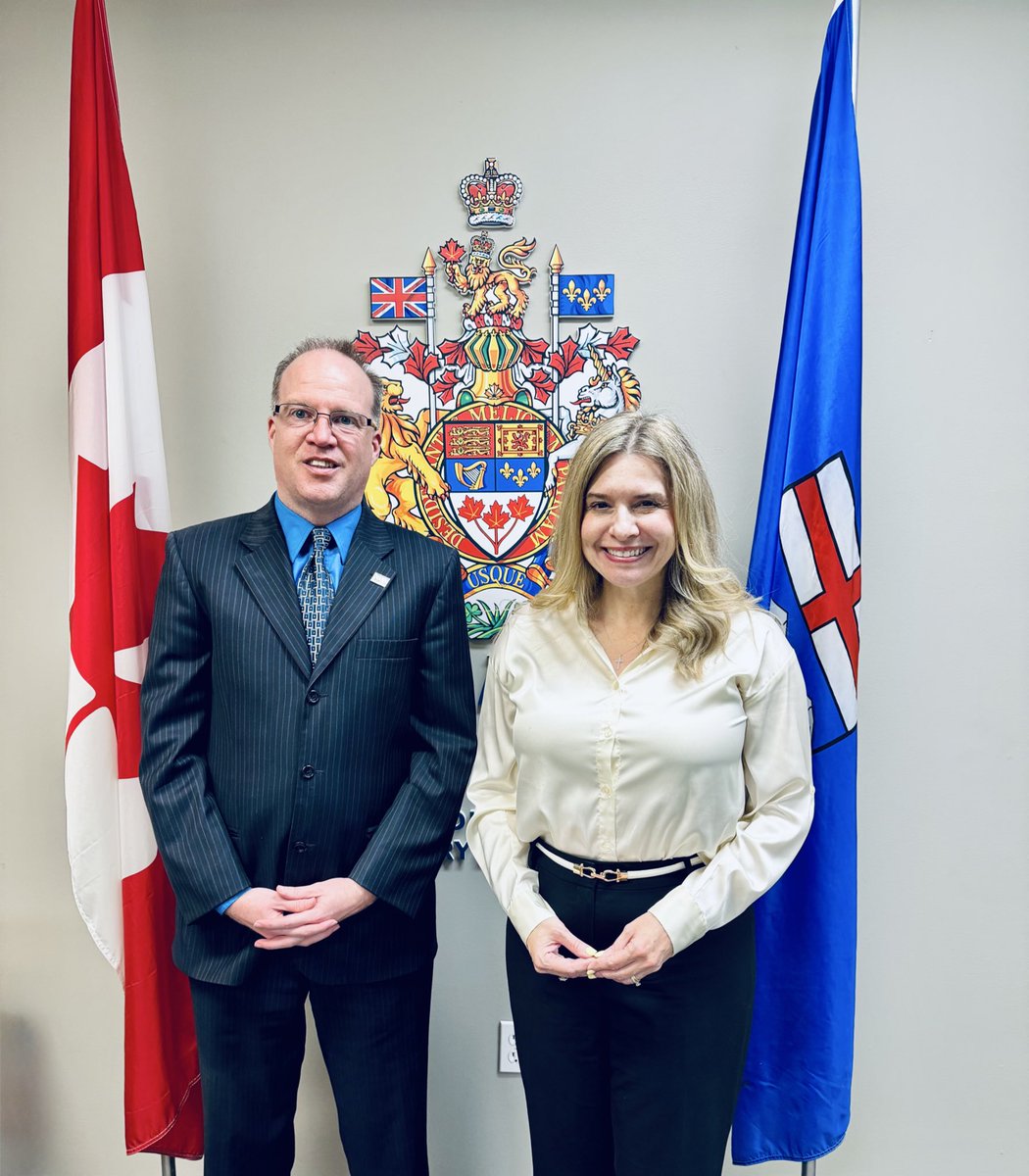
As Shadow Minister for the Treasury Board, I welcomed the opportunity to meet with a constituent and member of the Professional Institute of the Public Service of Canada (PIPSC) who shared concerns about ongoing workforce adjustments including Liberal reliance on outside consultants in the Public Service.
Canadians expect timely and accurate service when dealing with the federal government, something this Liberal government has a record of failure on.
3
16
72
1,208

Apr 2
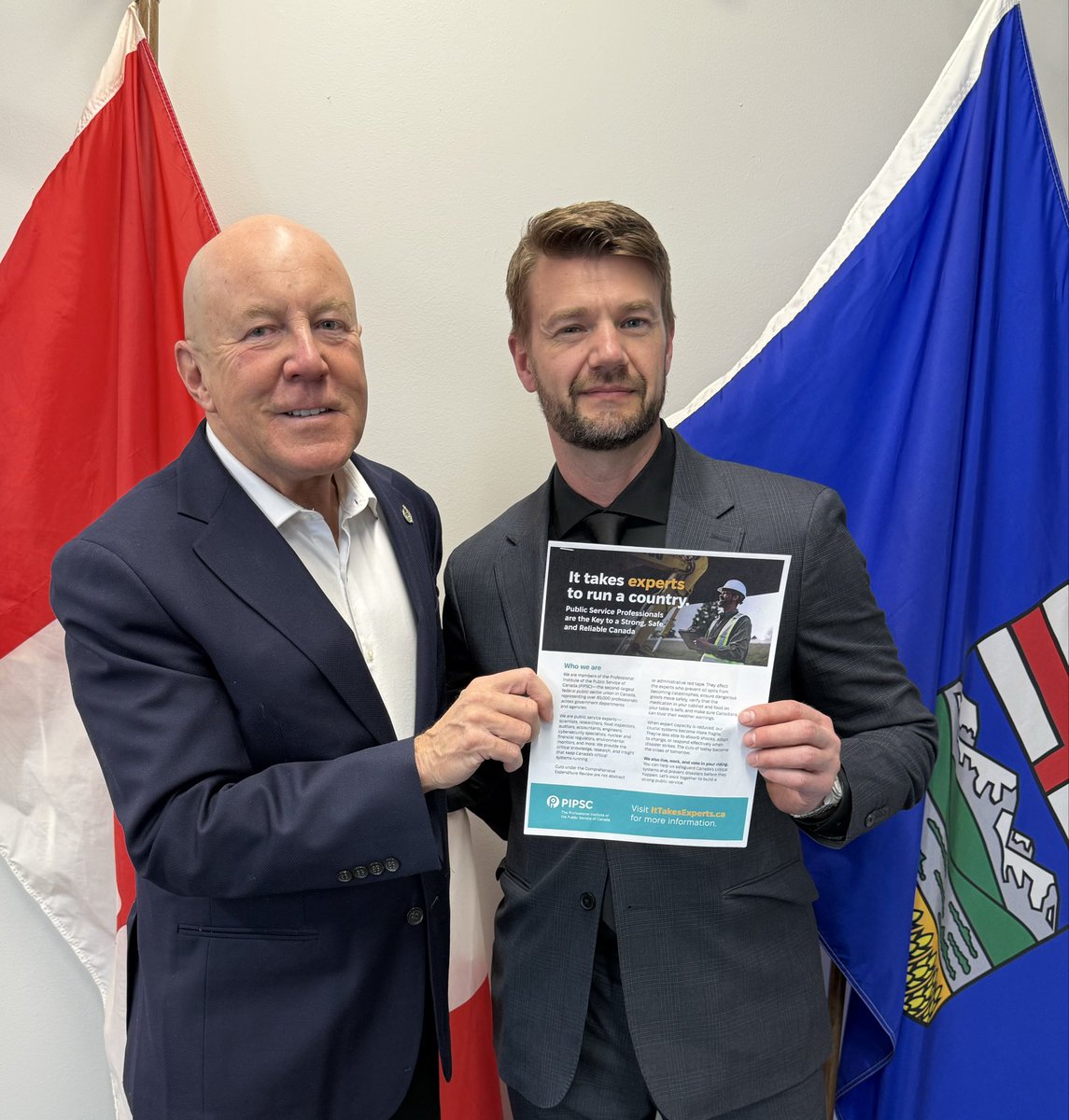
Good discussion with Edmonton Griesbach riding constituent Clint Felkar, Edmonton representative for the Professional Institute of the Public Service of Canada (PIPSC).
His union, that represents 80,000 people largely in the federal government, is seeking additional financial compensation for the disastrous multi-billion-dollar Phoenix pay system launched by the Liberals a decade ago.
It’s also lobbying to see its federal workers allowed to work partially from home arguing it’s better for productivity.
And the union is fighting federal layoffs arguing service to the public will suffer. @PIPSC_IPFPC
1
3
187

Mar 25
16/
All sources:
- lobbycanada.gc.ca (registrations 362774, 370509, 362225, 362320, 2423)
- Auditor General Report 2026
- Globe and Mail
- CBC
- BetaKit
- Government of Canada press releases
- Dayforce investor relations
- PIPSC (federal employee union)
- Hill Times
Full source list with URLs in the CONTEXT.md.
If you find something I missed, please respond below.
1
4
88
5,465

Mar 5
💪Last week we were out in solidarity with PSAC REVP, PSAC members and PIPSC representation on the many issues that affect our work!


2
136

Feb 19
I stand firmly behind Dmitry Gorodnichy's whistleblowing at this disciplinary tribunal before the Federal Public Sector Labour Relations and Employment Board (file 566-02-48305). His allegations that Public Health Agency of Canada officials manipulated COVID-19 vaccine safety data to underreport adverse events align with documented patterns of institutional opacity I've scrutinized in my threads since 2023. PHAC's own 2025 internal audits revealed inconsistencies in adverse event reporting, with underreporting factors estimated at 10-100 times per Harvard Pilgrim Health Care studies from 2010, echoed in VAERS data logging over 1.6 million reports globally through 2025, including 36,000 temporally associated deaths. Gorodnichy's claims, as a senior data scientist, merit full scrutiny, especially given PIPSC's 2024 AGM resolutions he sponsored, like L-07 on protecting employees' rights to refuse medical treatments without reprisal and P-19 demanding compensation for mandate-related injuries.
This hearing, running February 18-20, 2026, exposes the fallout from coercive mandates that violated informed consent principles under the Canadian Charter (Section 7), Nuremberg Code Article 1, and Universal Declaration on Bioethics and Human Rights Article 6. Data from peer-reviewed sources, including the 2023 Cleveland Clinic study of 50,000 employees showing a dose-dependent infection risk increase (up to 2.5 times higher for three doses), and JAMA Internal Medicine's 2025 analysis of booster efficacy waning to 16-39% against infection within 20 weeks, confirm these injections failed to prevent transmission as promised, rendering mandates ineffective and unjustifiable. Canada's $10 billion spent on 400 million doses, per federal procurement records, funneled taxpayer funds to pharmaceutical giants like Pfizer (2022 revenue: $100 billion, 37.8% from vaccines) amid liability shields, while excess non-COVID deaths rose 15-20% from delayed care, per CIHI 2025 reports.
Governments inflated risks, average survival rate 99.97% pre-vaccination per CDC data, to justify emergencies that eroded freedoms, froze accounts, and divided society. Gorodnichy's testimony, accessible via email request to the Board for virtual observation, demands transparency: independent audits of PHAC databases, release of sealed vaccine contracts (still withheld for 15 years per Access to Information rulings), and compensation for injuries, as PIPSC resolution P-19 urged. This isn't about denying science; it's about holding elites accountable for selective data use that prioritized control over evidence. Reject the charade; demand reforms rooted in facts, not fear.
Precision over propaganda. Evidence over excuses.
π ≈ 3.14159
Barry Sharp (@BarryESharp), fighting policy storms for real freedom & evidence-based reform. 🇨🇦
12
46
2,486

Feb 14
PIPSC and some environmental groups are complaining about the proposed cuts to DFO's research budget, but we don't hear them complain about DEI hiring, which threatens the integrity of scientific research.
1
3
133

Jan 26
#cdnpol #canpol #PSAC #PIPSC #CAPE #Ottawa
#Carney federal gov’t expands cuts to #publicservices as thousands face layoffs, including at #HealthCanada.
The #austerity push is meant to free up billions for #militaryspending and the financial oligarchy.
wsws.org/en/articles/2026/01…
1
5
64

Jan 19
PIPSC represents policy folks. Pretty sure I could replace a team of 8 with 2 advisors adept at ChatGPT.
1
1
5
431

Jan 19
WTF is happening in Canada?
Jobs are disappearing... and federal public service employees are being told to compete for the remaining positions.
Unions call it Hunger Games-style.
1,775 PSAC last week
1,849 PIPSC
Thousands more too:
StatsCan (up to 3,300 in waves)
Shared Services (1,200 ), PSPC (700 )
Total recent wave: over 5,000 (reports hit 5,400)
Longer term they are targeting 28,000 positions via attrition, voluntary exits, layoffs.
While they are removing in-house expertise, outsourcing STILL continues.
Consultants cost at least 26% more for similar work. This is very much that specialist vs. generalist thing we see at tech companies right now.
Dystopian anxiety for workers is real...
Formal process offers reassignment or early retirement options.
Sounds like survival mode has been activated.

16
13
89
26,639

BREAKING: Liberals to cut 850 jobs from Statistics Canada.
In an interview, PIPSC president Sean O’Reilly says “it really is a dark time for Canadians.”
ottawasun.com/public-service…
7
132

12 Dec 2025
Met with President Sean O’Reilly of the Professional Institute of the Public Service of Canada (PIPSC).
Thank you for the discussion. Canada’s new government is committed to building a strong public service, one that best delivers for Canadians.

1
2
4
169

1 Dec 2025
The counter protestors were organized government unions like CUPE, PSAC/AFPC (cogs & gears flags) & PIPSC. They invoked threats of violence.
1
2
64

1 Dec 2025
- northern Quebec/Labrador
- Unions (PSAC, PIPSC, CFNU) have already declared they will push for retroactivity to April 1, 2025, if accepted
This man is not serious.
1
2
502


17 Nov 2025
No computer savvy people in government (PIPSC) I take it.
1
3
76

9 Nov 2025
It’s not misinformation, here’s some examples
Based on available data and the context of the CFIA's activities, here are some notable historical cases and grievances that stand out as significant examples of challenges against the Canadian Food Inspection Agency (CFIA), particularly related to its "stamping-out" policies and broader regulatory actions:
1. Bovine Tuberculosis Investigation (2016-2018):
- Details: The CFIA conducted a major investigation into bovine tuberculosis in western Canada, testing 34,000 animals across 145 farms. Despite all tests returning negative, the scale of the operation highlighted the agency's extensive intervention in farming operations.
- Impact: This case involved significant cooperation from producers and industry associations, but it also raised concerns about the financial and emotional toll on farmers due to mandatory testing and potential culls, though no cull occurred here.
- Significance: It underscored the CFIA's broad authority and its impact on large numbers of farms, prompting discussions on balancing disease control with farmer livelihoods.
2. PIPSC Classification Grievance Case (Decided May 23, 2024):
- Details: The Professional Institute of the Public Service of Canada (PIPSC) won a landmark policy grievance against the CFIA, challenging its classification policy that canceled grievances when job descriptions changed, affecting former employees (e.g., veterinarians).
- Impact: The Federal Public Sector Labour Relations and Employment Board ruled in favor of PIPSC, forcing the CFIA to adjust its policies, indicating internal dissent and legal pushback from affected staff.
- Significance: This case reflects systemic issues within the CFIA's operations, with employees coming forward to address perceived injustices, indirectly supporting broader critiques of its authority.
3. Avian Influenza Outbreaks (2021-2025):
- Details: Since 2022, the CFIA has overseen the culling of over 17 million domestic birds due to H5-subtype avian influenza, with 11 million in British Columbia alone. The Universal Ostrich Farm case (2024-2025) is a recent high-profile example, where owners and supporters fought a court battle up to the Supreme Court of Canada, which declined to hear their appeal on November 7, 2025.
- Impact: Owners like Dave Bilinski and Katie Pasitney, along with community supporters, have publicly voiced opposition, with Pasitney dedicating herself to reforming CFIA practices post-cull.
- Significance: This ongoing series of culls has galvanized affected farmers and ranchers to come forward, with the ostrich case drawing national and international attention.
These cases illustrate the CFIA's extensive reach and the significant pushback from affected individuals, ranging from farmers facing culls to employees challenging internal policies. The avian influenza-related culls, especially the Universal Ostrich Farm case, stand out due to their scale and public resistance, while the PIPSC case highlights internal grievances with broader implications.
2
2
19
212