
Muy raro porque Abelardo va ganando en todas las encuestas por 7 y 8 puntos! Hay que impugnar las mesas de los m/pios dominados por la Narcoguerrilla porq es imposible que en todas las mesas de votación de esa población Cepeda saque el 100% eso es manipulación y corrupción!!!
1
11


Yeah, yesterday Morocco fielded a playing XI where all players were born outside Morocco. India is also trying to get PIOs to play for India
10

Poutanes metrate na doume pios ine o kaliteros 🤣🤣🤣 Doste Sano ston trilo 🤣🤣🤣🖕🖕🖕
26

There should be a balance imo. Even if we bring PIOs and we start dominating SA, and make it to the Asian Cup regularly, this should not stop the clubs to invest in the youth. Then only real results will come. Otherwise there won't be a much difference bt us and Sri Lanka
1
2
167

It's actually a win win . I know PIO is temporary revival . But to fully revive the system we need PIOs as well
5

Only way we can do well is out of nowhere some generational talent comes in or we allow PIOs. Grassroot pe toh 15-20 saal chale jayege.
1
96

PIOs on the women's side exist too and don't stealth away their heritage
telegraphindia.com/my-kolkat…
1
7
2,303






No, not all money deposited by Indians (or linked to India) in Swiss banks is tainted. This is a common myth fueled by political rhetoric and sensational media reports about “black money,” but official data, government statements, and structural realities show a more nuanced picture. 
Current Data (as of 2024/2025 reports):
According to the Swiss National Bank (SNB):
• Total Indian-linked funds/liabilities in Swiss banks rose sharply to ~CHF 3.55 billion (around ₹37,600 crore or ~$4.2 billion) in 2024 — more than tripling from the previous year.
• However, direct customer deposits by Indians were only ~CHF 346 million (₹3,675 crore), about 10% of the total. This saw a modest 11% rise.
• The bulk (~CHF 3.02 billion) was held through other banks, financial institutions, fiduciaries, trusts, bonds, and securities — often institutional or inter-bank flows, not hidden personal stashes. 
Over the longer term, direct Indian customer deposits have declined ~18% over the past decade (from ~CHF 425 million in 2015). 
Legitimate Reasons for Funds in Swiss Banks:
Swiss banks attract money for non-nefarious reasons, especially from a large, growing economy like India’s:
• NRIs and PIOs: Non-Resident Indians and Persons of Indian Origin often hold legitimate savings, pensions, or investments abroad.
• Business and Trade: Indian companies use Swiss banks for international trade, treasury operations, or as a stable financial hub.
• Diversification and Stability: Switzerland offers political neutrality, strong rule of law, privacy (though reduced), and a safe haven during economic volatility, currency risks, or political uncertainty in India.
• Investments: Holdings in securities, wealth management, or as part of global portfolios by high-net-worth individuals and corporations.
• Liberalised Remittance Scheme (LRS): Legitimate outward remittances for investment, education, travel, etc.
Indian government statements (across regimes) have repeatedly clarified that not all deposits can be termed black money. This includes funds by foreign passport holders of Indian origin, NRIs, and compliant resident investments. 
Illicit Money Does Exist — But It’s Not the Whole Story
• Historical Context: Pre-2010s, banking secrecy made Switzerland a popular destination for tax evasion and corruption proceeds. Wild estimates (e.g., $500 billion–$1.4 trillion) circulated but were debunked as exaggerated; actual SNB figures were orders of magnitude lower. 
• Improvements:
• Automatic Exchange of Information (AEOI) via Common Reporting Standard (CRS) since 2018–2019: Switzerland shares account details with India automatically. This makes new evasion much harder. 
• India’s Black Money Act (2015), tax treaties, FATCA, and enforcement actions (e.g., Panama Papers probes) have increased scrutiny and recoveries.
• Undisclosed or illicit funds still exist and get probed when flagged, but assuming the entirety is tainted ignores compliant users and institutional flows.
Why the Perception Persists:
• Political campaigns often amplify “Swiss bank black money” for electoral appeal.
• Media headlines focus on total liabilities surges without context (e.g., inter-bank flows).
• Switzerland’s reputation for discretion lingers, even as transparency has improved significantly.
Bottom line: While some portion is likely illicit (tax evasion, corruption), the majority of the reported figures reflect legitimate financial activity in a globalized world. Blanket claims that “all” Indian money in Swiss banks is tainted are overstated and misleading. India’s tax authorities now have better tools to investigate specific cases through data exchange rather than relying on outdated secrecy myths.
1
1
70

Many of the NWS challenges with trust and messaging and warning in 2026 revolve around a lack of proactive public affairs strategy.
WCM mstdorologists aren't trained as PIOs or public affairs experts. Instead of forcing folks to be experts at everything, let's hire experts.
2
1
74

@SecyChief @cmo Complete mockery of the RTI Act! Commissioners closed 8,000 2nd appeals without rhyme or reason. Cases dismissed in a single hearing without ensuring citizens got their data. No penalties for non-compliant PIOs & FAAs. Who is protecting public accountability?
13

Whenever a new government comes at the center, the least India could do to is to ask foreign governments to send these PIOs back to India.

#WATCH | France: At the invitation of President of France, Emmanuel Macron, Prime Minister Narendra Modi is undertaking an official visit to France from 13 - 14 June 2026 (Nice), and 16 – 18 June, 2026 (Evian and Paris).
Ahead of his arrival in Nice, Vivek - a member of the Indian diaspora says, "I am from Ayodhya. Ram Mandir was long awaited there. A good decision came after a really long time. So, we are really grateful to PM Modi and we are all excited."
25

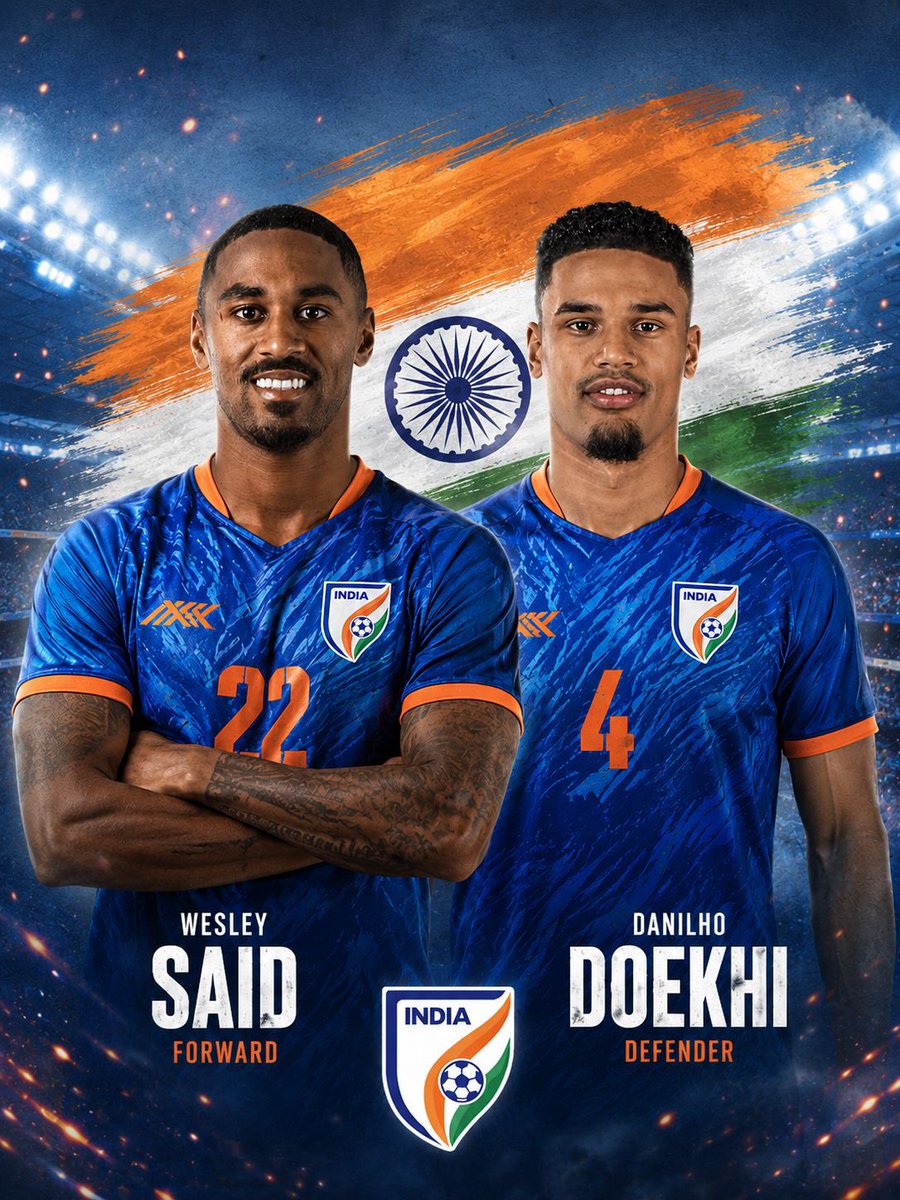
Meet two more high quality PIOs like Samuel Moutoussamy
Wesley Said playing in Ligue 1 and Daniel Doekhi in Bundesliga
I hope ministry considers allowing 3rd generation Indians from countries like Suriname, Mauritius , Guadeloupe etc
#indianfootball #oci @IndiaSports
Jun 12

🚨 EXCL: Sports Ministry has sent a Sports Passport proposal to the PMO that could allow eligible PIO/OCI athletes to represent India. khelnow.com/football/sports-…
The move could impact football, basketball & tennis as India eyes improved performances on the global stage and prepares its bid for the 2036 Olympics. 🇮🇳
A major development for #Indianfootball. Details via @KhelNow👇
23
29
402
30,179

El día de hoy, el arzobispo de Lima @arzolima El Cardenal Comunista Carlos Castillo Matasoglio, ha manifestado que la celebración de la Solemnidad (misa y procesión) por el Corpus Christi se realizará con normalidad mañana domingo 14 de junio, aún cuando, ya varios párrocos, cancelaron las organizaciones parroquiales para no asistir y avisaron a su feligresía que no asistirían por las restricciones en el acceso y por el RIESGO para la seguridad de los asistentes.
Ahora bien, ese afán de celebrar "A LA PREPO" la Fiesta del Corpus Christi, no es por una actitud militante del INFANE CARDENAL DE LIMA, pues NO HA TENIDO EL MÍNIMO REPARO en denigrar todo lo que sea Militancia..., NI TAMPOCO ES MOVIDO por ningún sentimiento religioso ni devoción especial por el Santísimo Sacramento.
Y para comprobar esto digo, basta recordar sus palabras del 2018 en el Día 2 de la Asamblea Sinodal Arquidiocesana, en donde NO SOLO SE BURLÓ DE LA MILITANCIA CATÓLICA, SINO QUE ADEMÁS, LLAMÓ MENTIROSO AL #PapaFrancisco (en un tema que había hablando con verdad) y enmendándole la plana, dijo:
“por que nadie se convierte delante del Sagrario”.
(VER VIDEO ADJUNTO, La BURLA que hace de la Militancia Católica y El Ninguneo que hace del Sagrario, NO ES FE CATÓLICA 🤮🤮🤮)
Después de ver el Vídeo, queda claro que el Cardenal Comunista, no es movido ni por motivos sacros, ni pios...,
NO SEÑORES,
La finalidad de insistir con la celebración "A LA PREPO" del día de mañana, más allá de toda falta de prudencia y provocación a las disposiciones de la legítima autoridad de la @MuniLima y el Alcalde @Renzo_Reggiardo, que ha cerrado el perímetro del centro de la ciudad por las amenazas de la toma de Lima...,
más allá de todo ello, LA FINALIDAD QUE SUBYACE en esa "Cerrazón" del Cardenal Comunista, no es otra que dar una ventana a los COMUNISTAS como él para que, mezclados con los fieles, puedan incendiar las calles de Lima.
Así que ya lo saben,
si mañana hay muertes (DIOS NO LO PERMITA), como es costumbre en las protestas comunistas, ya sabemos quién es en parte responsable.
NOTA:
Atención SS Papa #LeónXIV @Pontifex_es USTED, ESTÁ JUGANDO CON FUEGO, al hacerla larga, y seguir CASTIGANDO a #Lima y al #Perú manteniendo en el Cargo y no aceptando la renuncia, de ese Prelado IDEÓLOGO DE LA TEOLOGÍA DE LA LIBERACIÓN, que cada día que pasa, DENIGRA más el Cardenalato.
SS #PapaLeonXIV, usted está manteniendo hace un año como Cardenal de Lima, a un Prelado, que solo en lo citado:
• Ninguneó el Sagrario
• Llamó Mentiroso al Papa Francisco NEGANDO que fuera posible, la experiencia que contó
•Se burló de la Militancia Católica
Y eso, sin contar todas las herejías que ha venido soltando, inclusive, cuando usted estaba en Perú como Arzobispo de Chiclayo.
Por ello, lo suyo #PapaLeónXIV @Pontifex, manteniendo de Cardenal a ese Hereje y Comunista del cual ya tiene la renuncia y no la acepta, ES CULPOSO.
@rlopezaliaga1 @NormaYarrowL @InfoCatolica @aciprensa @EWTN @EWTNespanol @EWTNNoticias @EWTNVaticano @Infovaticana
@KeikoFujimori @MininterPeru @PolloFarsantePe @justicierope @PulmonDeSusan7
Jun 13

🚨 ¡Alerta máxima!
Reforzamos la vigilancia y el monitoreo permanente para proteger el centro histórico, Patrimonio Cultural de la Humanidad, y zona intangible para el desarrollo de marchas, concentraciones y actividades políticas, establecido en el Acuerdo de Concejo N.° 026.

5
15
23
6,430


Jun 13
it is the leaders of our country who are responsible for making India a better place. everyday a bit better. that is all that matters. why should NRIs or PIOs be asked to come back and fix things? and why shouldn’t they whine?

Sabeer- Stop ranting from USA, if your heart is filled with the exuberance of nationalism, pls come to India and fix things. Stop your rant on twitter. We all know there are many things which are not going right , but we are here in India working hard to make India great again.
1