
మెగా డీఎస్సీపై వైఎన్నార్ దుష్ప్రచారం | కమ్మ కులాన్ని మళ్ళీ టార్గెట్ చేసిన జగన్!
#ysjagan #ynr #yanikanarasimharao #vijaykumar #MegaDSC #AndhraPradesh #APPolitics #Chandrababu #NaraLokesh #YSRCP #PoliticalFactCheck #GovernmentJobs #TeacherRecruitment #DSCRecruitment
1
3
73

Jun 10
"Self-Explanation: John Britto & Leema Rose Brother CORRECTION"
Last day, I made a mistake in my YouTube video about John Britto and Leema Rose's brother. I confused P. John Britto with I. John Britto.
❌ WRONG: Leema Rose's brother = P. John Britto (drug syndicate)
✅ CORRECT: I. John Britto (real drug syndicate)
This self-explanation video clears up the confusion. Thank you for your patience and support!
👍 Like this Short if you appreciate the correction
💬 Comment if you have more questions
▶️ Watch my full video for details
#JohnBritto #LeemaRose #Correction #SelfExplanation #TamilNaduPolitics #IndianPolitics #DrugSyndicate #TruthMatters #YouTubeCorrection #TamilNews #PoliticalFactCheck #FactsOverRumors #TamilNadu #IndianCrime #ContentCreator #ApologyVideo #FactCheck #TamilPolitics #NewsCorrection #RealTruth #TamilPolitics
#TamilNaduPolitics
#PoliticalAnalysis
#TamilNews
#DMK
#ADMK
#TVK
#BJP
#NTK
#CurrentAffairs
30

MEGA DSC గురించి ఫేక్ మాటలు మాట్లాడి
బెంగళూరు వెళ్ళిపోయాడు సైకో...!
#MegaDSC
#TeacherJobs
#AndhraPradesh #DSC2026
#APDevelopment
#PoliticalFactCheck #MegaDSCSuccess #naralokesh #megadsc #tdp #PsychoFekuJagan #AndhraPradesh #ycpfakenews #ycptrolls #politics #apmegadsc
2
29

'तुम मुझे खून दो…’
बच्चा बच्चा जाने ये नेताजी ने कही थी पर ये तो इतिहास भी बदल देंगे!
#SubhasChandraBose #SwamiVivekananda #HistoryMatters #PoliticalFactCheck #SujataSpeaks
1
8
16
103

Jan 1
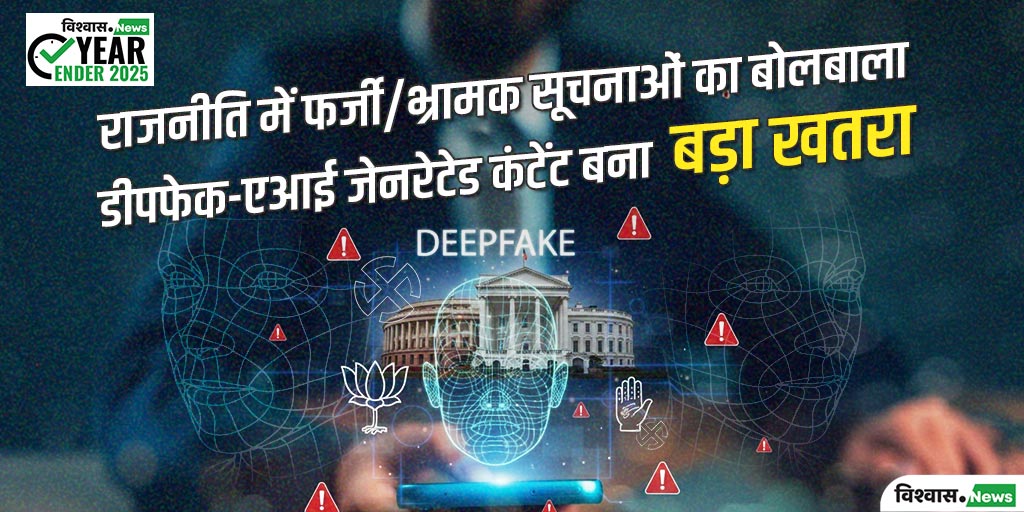
दुनिया में जहां भी चुनाव हुए हैं, वहां हर जगह एआई तकनीक का इस्तेमाल झूठ फैलाने के लिए हुआ। साल 2025 में हर बड़े नेताओं को डीपफेक वीडियो के जरिए निशाना बनाया गया।
पढ़ें रिपोर्ट: tinyurl.com/yc8dvr4b
#YearEnder2025 #PoliticalFactCheck #AI #Deepfake #VishvasNewsAnalysis
1
3
73
31 Dec 2025
बीते बरस डिजिटल परिदृश्य में मिस-इन्फॉर्मेशन और डिस-इन्फॉर्मेशन का बोलबाला रहा। जानें 2025 का डिजिटल लेखा-जोखा और 2026 की कैसी होगी राह!
पढ़ें रिपोर्ट: tinyurl.com/arkwcm5z
देखें वीडियो: tinyurl.com/27tumhch
साइबर ठगी के नए पैंतरे और उनसे बचाव के तरीकों पर पढ़िए हमारा विशेष कॉलम #CyberSafe: tinyurl.com/yk4nxxvj
#YearEnder2025 #PoliticalFactCheck #AI #Deepfake #VishvasNewsAnalysis

1
5
6
187
27 Dec 2025
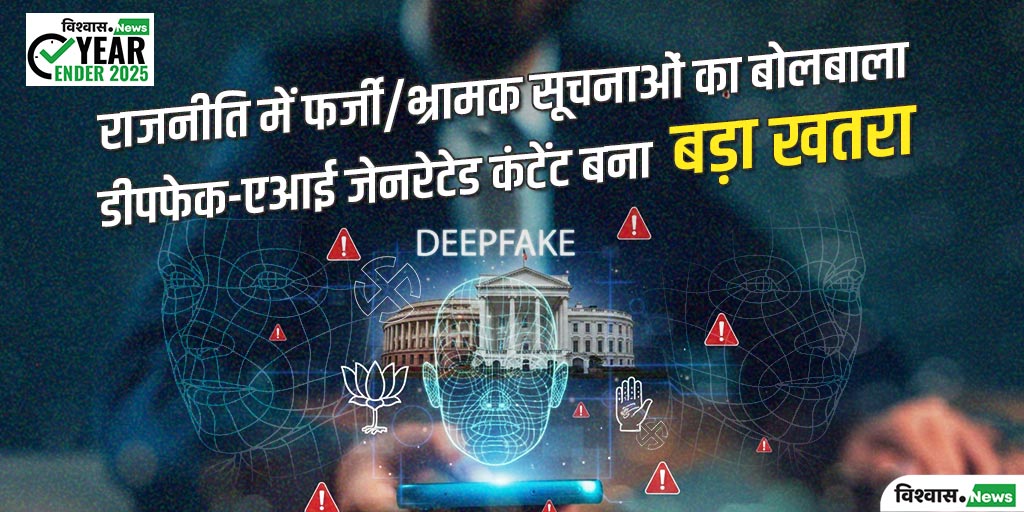
दुनिया में जहां भी चुनाव हुए हैं, वहां हर जगह एआई तकनीक का इस्तेमाल झूठ फैलाने के लिए हुआ। साल 2025 में हर बड़े नेताओं को डीपफेक वीडियो के जरिए निशाना बनाया गया।
पढ़ें रिपोर्ट: tinyurl.com/yc8dvr4b
#YearEnder2025 #PoliticalFactCheck #AI #Deepfake #VishvasNewsAnalysis
2
4
539

3 Nov 2025
Don't let political rhetoric confuse the facts on federal layoffs.
You hear: "President Trump terminated 50% of the Education Dept."
The Legal Reality: The actual legal action of issuing a Reduction in Force (RIF) and termination notices was carried out by the Secretary of Education, Linda McMahon.
The Political Play: Attributing the layoffs directly to the President is a common strategy to simplify a complex, multi-step executive action into a single political narrative. The President sets the agenda; the Cabinet Secretary executes the legal process.
It matters because personnel laws and due process must be followed, regardless of the political goal. The Cabinet Secretary, not the President, is the legally responsible authority for the RIF execution.
But then Senator Warren has been confused on many issues in the past, including her identity.
Please comment, like, and repost.
#FederalGovernment #SeparationOfPower #PoliticalFactCheck
2
39

5 Feb 2025
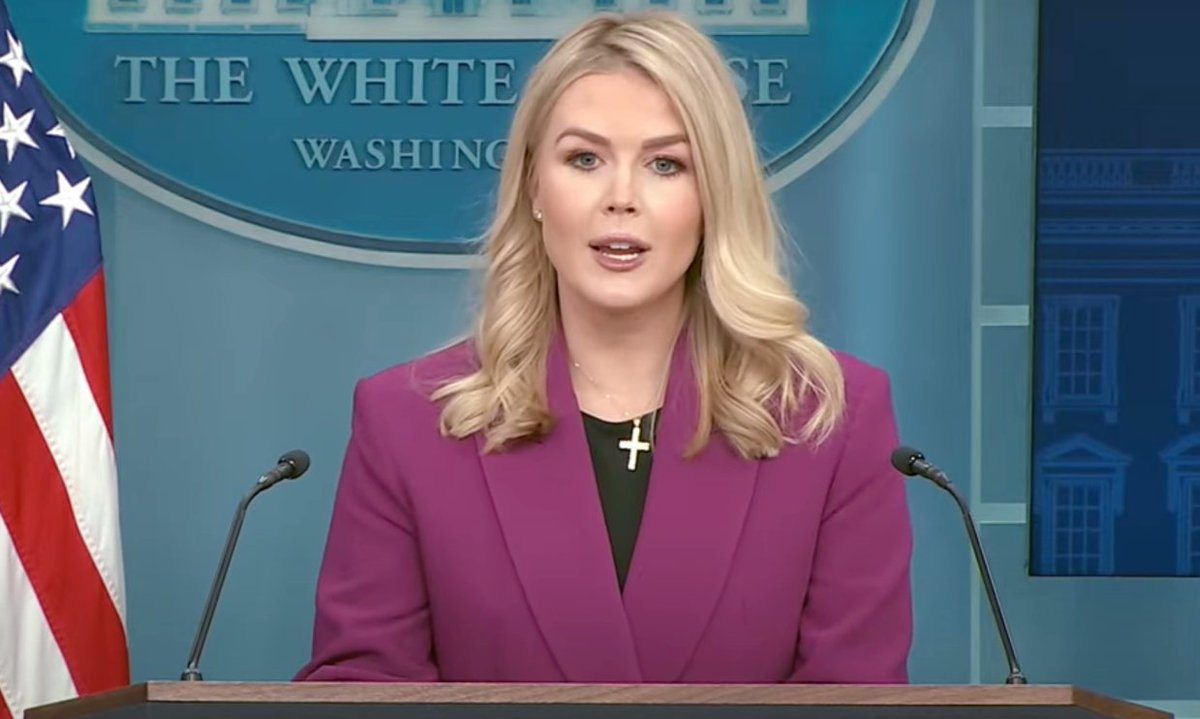
Did Trump really campaign on DOGE? The facts say NO. While efficiency was a theme, DOGE wasn't even a concept until after the election. Discover the truth behind Leavitt's misleading claim. #DOGE #Trump #PoliticalFactCheck
5 Feb 2025

Debunking Leavitt's Claim: Trump Did Not Campaign on DOGE
Karoline Leavitt's claim that Donald Trump campaigned on the Department of Government Efficiency (DOGE) is demonstrably inaccurate based on the timeline of events. While Trump emphasized government efficiency as a campaign theme, the specific concept of DOGE as a named agency did not emerge until after the 2024 election. Here's a detailed commentary:
The Timeline of DOGE
1. During the Campaign:
- Trump campaigned on promises to reduce government inefficiency, cut wasteful spending, and overhaul bureaucracy. These ideas were central to his platform and resonated with his supporters [1][9].
- However, there is no evidence that the name "Department of Government Efficiency" (DOGE) or its structure was part of his campaign messaging. The idea of creating a formalized entity like DOGE was not explicitly mentioned during campaign events.
2. Post-Election Development:
- The concept of DOGE as a named agency was first announced by President-elect Trump in November 2024, after his victory [1][4][9].
- The name "DOGE" and its branding were introduced at this time, with Elon Musk and Vivek Ramaswamy tapped to lead the initiative. This announcement marked the first public mention of DOGE as an agency [4][5].
3. Formal Establishment:
- DOGE was officially established through an executive order signed by Trump on January 20, 2025, following his inauguration [2][8].
The Inaccuracy of Leavitt's Claim
Leavitt’s assertion that Trump "campaigned on DOGE" is inconsistent with these facts:
- While Trump did campaign on the idea of government efficiency, DOGE as a named entity did not exist during the campaign.
- The name "DOGE" and its structure were developed only after the election, making it impossible for Trump to have campaigned on this specific initiative.
Possible Reasons for the Misstatement
1. Retroactive Framing:
- Leavitt may be attempting to retroactively tie voter support for Trump's broader efficiency promises to DOGE, framing it as a mandate for the agency. However, this conflates general campaign themes with post-election developments.
2. Political Messaging:
- By claiming that voters supported Trump to implement DOGE, Leavitt might be trying to bolster the legitimacy of the initiative by suggesting it had explicit electoral backing.
Implications
Leavitt’s statement risks undermining credibility by presenting an inaccurate narrative. While voters may have supported Trump’s broader promise of government efficiency, they could not have explicitly endorsed DOGE since it was neither mentioned nor conceptualized during the campaign. This discrepancy highlights a gap between campaign rhetoric and post-election developments, raising questions about transparency in political communication.
In conclusion, while Trump campaigned on themes that aligned with what would later become DOGE, it is factually incorrect to claim that he campaigned on DOGE itself. This distinction is important for maintaining accuracy and accountability in public discourse.
Citations:
[1] aljazeera.com/news/2024/11/1…
[2] whitehouse.gov/presidential-…
[3] npr.org/2024/11/13/nx-s1-518…
[4] kpbs.org/news/politics/2024/…
[5] cbsnews.com/news/trump-elon-…
[6] time.com/7178134/taft-musk-r…
[7] cbsnews.com/news/trump-depar…
[8] crsreports.congress.gov/prod…
[9] cnn.com/2024/11/12/politics/…
2
22
31
809

11 Jan 2025
Apparently, when you're the president, even Facebook needs a little "fact-checking" intervention. Next, we’ll probably see Biden launching a "Truth-O-Meter" for TikTok! 😆 #PoliticalFactCheck #CommunityNotes
1
882

🚨 **DNC Fact Check: Did Kamala Harris Really Cap Insulin Prices?** 🚨
Just caught Kamala Harris at the DNC, proudly taking credit for capping insulin prices at $35 a month. But let's dive into the facts, shall we?
- **Trump's Move:** Back in 2020, Trump signed an executive order aiming to cap insulin costs for Medicare recipients at $35 per month. This was part of a broader initiative to lower drug costs, which, although voluntary for plans, set the stage for what was to come.
- **Biden's Law:** Fast forward to 2022, Biden's Inflation Reduction Act made this cap mandatory across all Medicare plans, not just for those who opted in. This move did indeed expand the coverage, making it more comprehensive than Trump's initial step.
- **The Credit Debate:** While Harris and Biden are touting this as their achievement, it's worth noting that Trump's administration laid the groundwork. The Biden administration's law was an expansion, not an initiation, of the policy.
- **Public Sentiment:** Over on X, the Trump War Room and supporters are quick to remind us of Trump's role, highlighting the irony in Harris's claim. They're not alone; even some fact-checks acknowledge Trump's initial action, though they also credit Biden for making it universal.
So, while Harris might be celebrating, let's remember, this isn't a new story but rather an expansion of a policy started under Trump. The insulin cap saga? It's bipartisan, with both sides contributing to what's now a significant relief for millions.
**What do you think? Should credit be shared, or is this a case of political one-upmanship?**
#DNC2024 #InsulinCap #PoliticalFactCheck

2
125

29 Aug 2023
🔊🤥 T#ories: #Khan profits from #ULEZ. 🔊🤥 #Braverman: ECtHR treads on sovereignty. 🔍🤓 Research: Their claims unravel. #PoliticalFactCheck #QuestionEverything 🕵️♀️📢 #BrexitBrokeBritain
2
167

3 Sep 2022
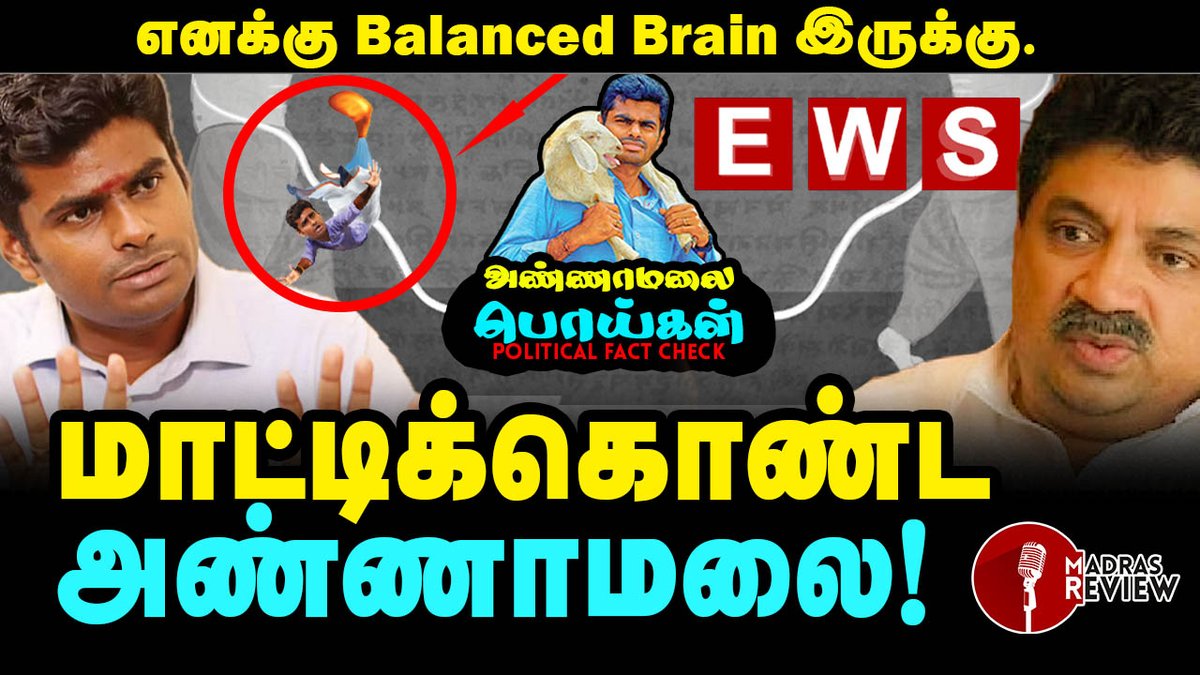
EWS விவகாரம் | மாட்டிக்கொண்ட அண்ணாமலை? | Annamalai பொய்கள் | Part 3
youtube.com/watch?v=TNvuFb6p…
#annamalai #PoliticalFactCheck #Ews #madrasreview
1
2

21 Jun 2017
Hahaha! Free Beacon is a shady right wing rag that trades in fake news. Google is free. PoliticalFactCheck is free. Ignorance is costly.
4
1