
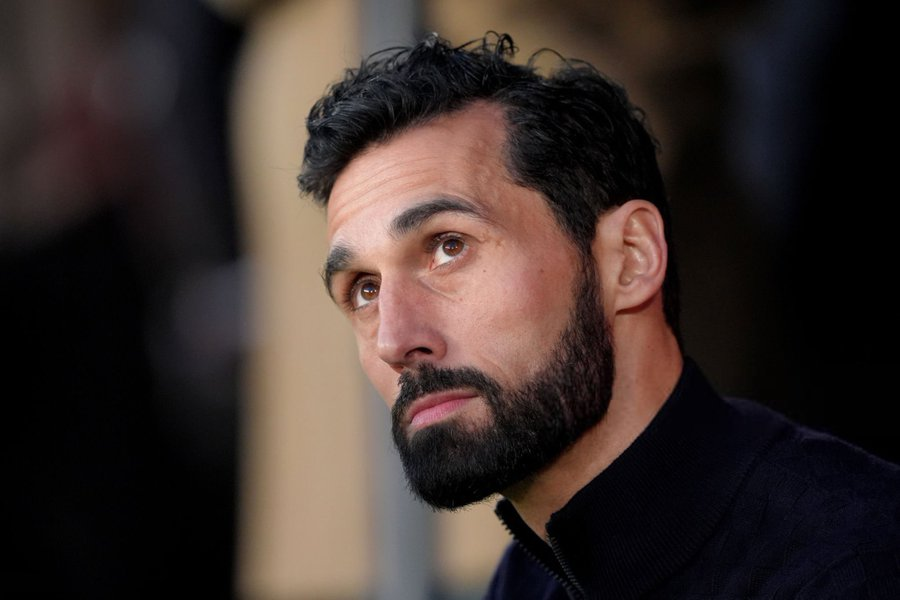
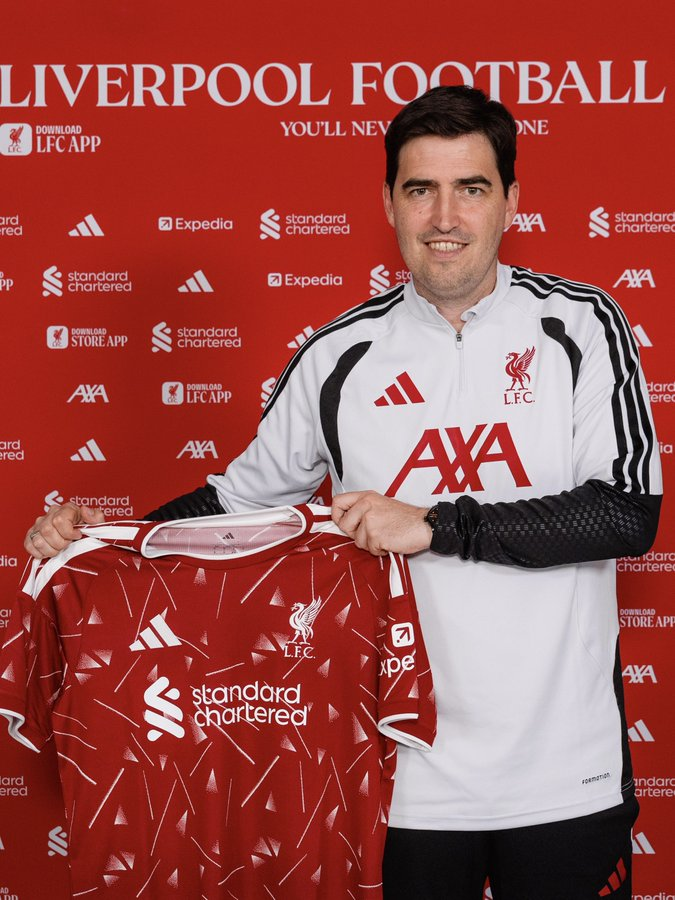
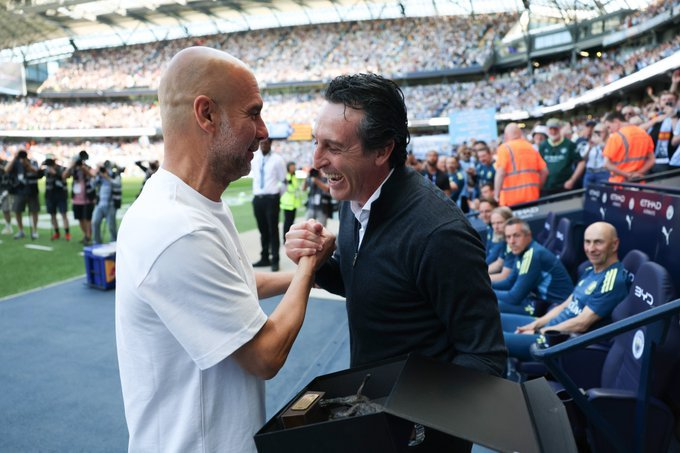
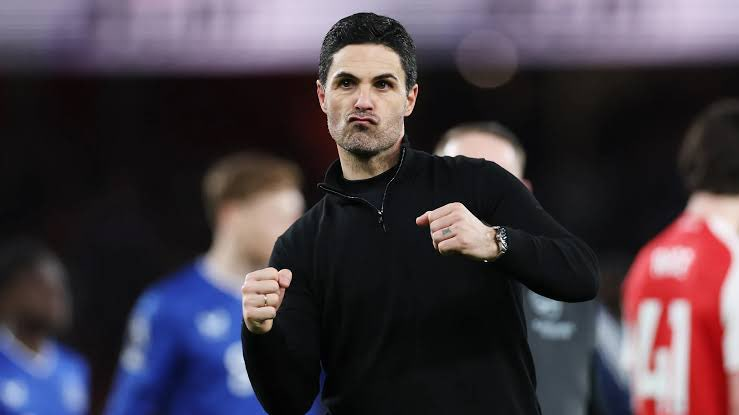
🇪🇸 Why Premier League clubs are hiring Spanish coaches
1. Tactical literacy has become the new premium
Spanish coaching education (RFEF Barcelona/La Liga influence) produces managers who are trained in:
-Positional play (structured occupation of space)
-Pressing traps and rest defence
-Build-up patterns under pressure
-Game-state manipulation (when to slow, when to accelerate)
In short, they don’t just manage games but design them.
2. The Premier League is now a “space league”, not a “duel league”
Modern EPL football is defined by:
-High pressing systems
-Transition-heavy chaos
-Inverted full-backs and hybrid midfield structures
Spanish coaches are already fluent in this language because La Liga evolution forced it earlier. They understand:
-How to create overloads
-How to escape pressure in tight zones
-How to control transitions without killing tempo
3. Clubs want control without losing intensity
Earlier EPL models were:
-British: intensity, directness
-Continental: control, patience
Spanish coaches (Guardiola lineage, Arteta, Emery, Iraola-type profiles) merge both controlled aggression structured pressing. That hybrid is now the market edge.
4. Better squad development and tactical teaching
Spanish managers are increasingly trusted because they:
-Improve young players tactically (not just physically)
-Create role clarity (every player has a function)
-Reduce randomness in team structure
This is why clubs with “projects” prefer them over purely motivational coaches.
5. Guardiola effect still dominates the ecosystem
Pep didn’t just win trophies, he changed hiring logic. Now clubs believe:
“If we want elite football identity, we need Spanish methodology.”
That ripple effect has shaped recruitment across the league for a decade.
⚠️ The hidden truth (important nuance)
This trend is also happening because:
-Traditional British managerial pipelines are thinning at elite level
-Clubs want immediate tactical structure, not long rebuilds
-Data positional models favour Spanish coaching frameworks
But risk remains:
-Some Spanish systems struggle with EPL physical variance
-Over-structuring can fail in chaotic match states
🧾 Bottom line
Premier League clubs are not just hiring Spanish coaches. They are importing:
A complete football operating system built on structure, spacing, and control and that system is currently outperforming most domestic tactical models.
#PremierLeague #SpanishCoaches #FootballTactics #PositionalPlay #PepGuardiola #MikelArteta #UnaiEmery #AndoniIraola #FootballTwitter #XFootball #CoachingAnalysis #TacticalEvolution #EPL #ModernFootball
2
27
90
10,249
Elliot Anderson to Manchester City under Enzo Maresca
If this move happens, it is not a “replacement for Rodri” story. It is a system reinforcement in the left/right half-space interior roles within Maresca’s 3-2-5 possession structure.
Maresca’s City (as projected) is built on:
-A 3-2 base in buildup
-A 5-man final line (width depth occupation)
-Constant central overloads (box midfield control)
-Aggressive rest defence positioning
Anderson fits because he is a multi-phase connector, not a specialist.
WHERE ANDERSON FITS TACTICALLY
1) Left-sided interior (8/10 hybridIn Maresca’s structure, one midfielder often:
-Drops to help first phase circulation
-Then arrives in half-spaces in second phase
Anderson’s profile:
-Comfortable receiving under pressure
-Progressive carrying through midfield lines
-Can operate in tight central corridors
This is ideal for breaking mid-blocks without over-relying on pure tempo dominance.
2) Rotational partner in the “box midfield”
Maresca’s system frequently becomes a:
-2 pivot 2 advanced interiors
-Anderson gives rotation flexibility:
-Can drop next to Rodri-like pivot profile
-Can also step higher as a connector behind front 5
This reduces predictability when teams man-mark City’s pivots.
3) Pressing and rest defence intelligence
This is where the fit becomes underrated. Maresca prioritises:
-Immediate counterpress after loss
-Compact rest defence (3 2 structure)
Anderson brings:
-High work-rate in counterpress
-Good scanning habits
-Ability to occupy “cover shadow” positions effectively
That matters more under Maresca than pure flair.
KEY TACTICAL IMPLICATION
The bigger idea here is structural evolution. Under Pep, City often relied on:
-Rodri as single control axis
-Highly fixed positional discipline
-Elite automatisms in buildup
Under Maresca, you get:
-Slightly more functional rotation
-More “plug-and-play interiors”
-Slightly more vertical progression risk
Anderson becomes a safety valve for transition complexity, especially if Rodri is managed physically or rotated.
TACTICAL RISK (important)
Let’s be clear, Anderson is not a finished elite controller yet. The risks in this move:
-Not a pure tempo dictator like Rodri or peak Bernardo in deep zones
-Could struggle if asked to be sole progression hub
-Decision-making under high Champions League pressure still developing
So he is not “starter every week” in a title-winning City, but more like:
“system stabiliser rotation interior tactical adapter”
SUMMARY
Manchester City under Maresca is shifting from Pep’s positional perfectionism to structured fluidity inside a 3-2-5 shell. Elliot Anderson is a headline signing. He is a connective tissue midfielder built for:
-press resistance support
-half-space occupation
-rotational midfield geometry
If Maresca takes over, this is exactly the type of player that quietly becomes indispensable.
#ManCity #ElliotAnderson #EnzoMaresca #PremierLeague #TacticalAnalysis #FootballTactics #PositionalPlay #MCFC #FootballX #CittyFootball
x.com/sajadTranslator/status…
@PremLeaguePanel @premierleague @ManCity
@NFFC @ChampionsLeague @SkySportsPL @ESPNFC
@BBCSport @FOXSports @Marcotti @segunn_
@JamesHorncastle @minakimes @Edwyeen
@ZachLow @SkySportsNews @Okkeeeyy
@akanbijamesoluz @olaolubanky292 @TheBoluSport
@dayveedtalks @kanyewest @JamesOlley
@MarkOgden_ @LaurensJulien @ochocinco @OlisaOsega @SirLeoBDasilva @Coach_Temisan
@Coachayere @sidlowe @Adikastakes

3
6
427

May 30
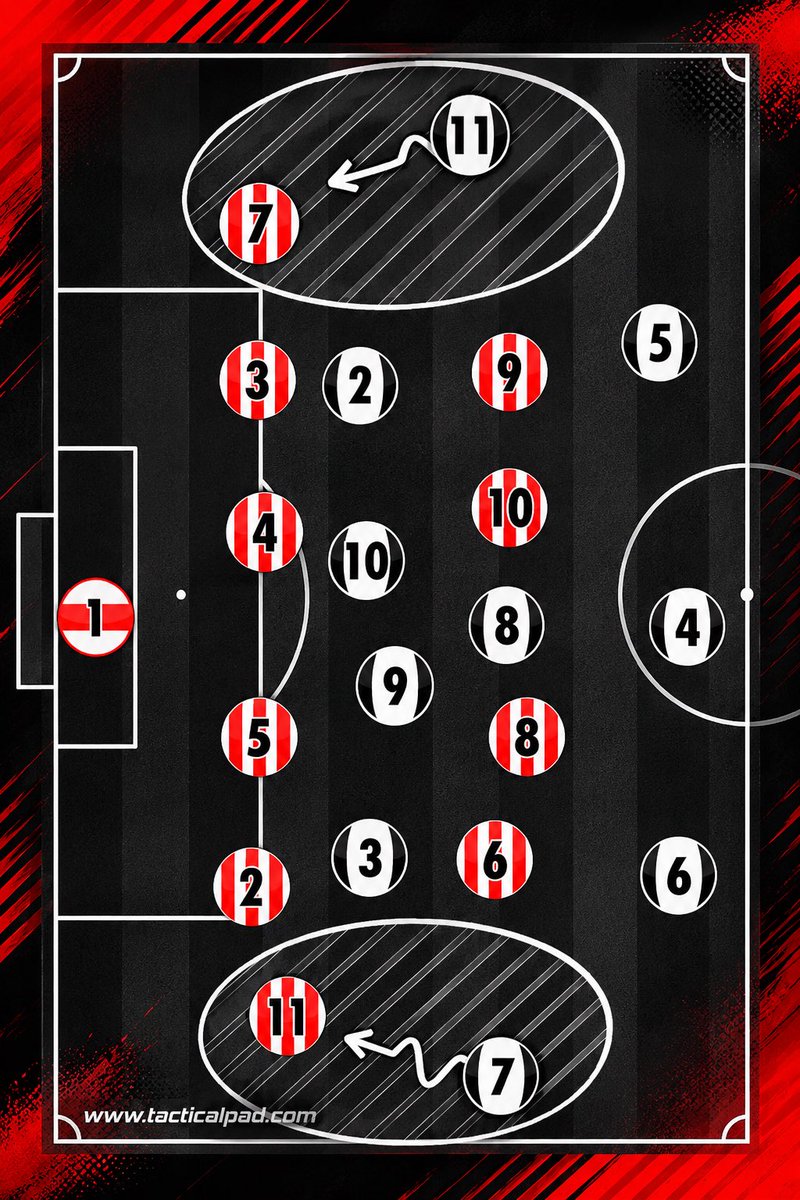
After watching the first half of the 2025/26 UEFA Champions League Final between PSG and Arsenal, I believe Luis Enrique could have benefited from switching to a 3-1-6 structure by introducing Barcola in place of Fabián Ruiz. This adjustment would have provided PSG with greater attacking presence in the final third, with Barcola and Doué operating in the half-spaces to create central superiority.
By increasing both width and depth while maintaining constant off-ball movement, PSG could have generated dynamic and numerical overloads between the lines, making it more difficult for Arsenal to maintain their defensive organization.
That said, Arsenal also delivered an excellent first half from a tactical perspective. Mikel Arteta’s side defended in a compact 4-2-4 mid-block that frequently transformed into a 6-4 low block when required. This structure allowed Arsenal to effectively close both the width and the depth of the pitch, limiting PSG’s access to central zones and forcing play into less dangerous areas. Their aggression in duels, compactness between the lines, spatial control, tactical discipline, and collective defensive organization made them extremely difficult to break down.
🔍 Questions for the audience:
• Would you have switched PSG to a 3-1-6 structure earlier in the game?
• Was Arsenal’s defensive organization the key factor in the first half?
• Would Barcola’s profile have created more problems for Arsenal’s block?
• Which coach won the tactical battle in the opening 45 minutes: Luis Enrique or Mikel Arteta?
#UCLFinal #ChampionsLeagueFinal #PSG #Arsenal #PSGvArsenal #LuisEnrique #MikelArteta #TacticalAnalysis #FootballTactics #PositionalPlay #EliteScout #GameModel #TacticalPeriodization #FootballAnalysis
3
4
1,068
🔴 PSG vs Arsenal — Tactical Preview (PSG Perspective)
PSG enter this tie with a clear competitive truth:
Arsenal are more structured. PSG are more explosive.
So the match plan is not to out-structure Arsenal, but to overload, disorganise, and destabilise their reference points in midfield and fullback zones.
⚙️ 1. PSG Build-Up Strategy: “Invite Pressure, Then Break It”
Arsenal’s press is most dangerous when it is allowed to settle into rhythm. PSG’s solution is to deny rhythm entirely.
Key principles:
-Short build-up phases to bait Arsenal’s mid-block forward
-Immediate vertical release into wide channels once pressure is triggered
-Constant positional swapping between midfield and wide forwards
The goal is not possession dominance, but manipulated access to space behind Arsenal’s first press line.
Vitinha-type profiles become crucial as “escape valves” rather than pure controllers.
🧠 2. Midfield Design: Disrupt Rice, Not Compete with Him
Arsenal’s defensive stability is anchored by Declan Rice. PSG’s tactical priority:
-Pull Rice out of central protection zones
-Force him into lateral decisions rather than vertical interceptions
-Overload his zone with rotating runners, not static midfielders
When Rice is forced to move horizontally instead of shielding centrally:
👉 Arsenal’s back line becomes exposed to direct half-space attacks.
PSG do not want midfield dominance, they want midfield displacement.
⚡ 3. The Main Weapon: Wide Isolation & 1v1 Engineering
This is where PSG believe they can decide the tie. Arsenal’s fullbacks defend best when supported. PSG’s attacking plan is to remove support through spacing manipulation.
Key mechanisms:
-Stretch Arsenal’s back four horizontally
-Create repeated 1v1 scenarios for PSG wingers (Dembélé/Kvaratskhelia profiles)
-Attack immediately after Arsenal lose pressing shape
The PSG mantra here is simple:
“No second defender arrives in time.”
Once isolation is achieved, PSG’s advantage becomes exponential.
🔁 4. Transition Football: The Real Match Script
This is not a possession game for PSG, but a transition contest. PSG’s ideal phases:
-Win ball → immediate vertical pass
-First touch forward, not sideways
-Exploit Arsenal before rest defence is set
Arsenal’s weakness in elite matches is not structure, but it is the moment after structure breaks. PSG will repeatedly target that 3–5 second window.
🎯 5. Arsenal’s Set-Piece Threat vs PSG’s Discipline Test
PSG’s known vulnerability remains:
-Defensive concentration in set-piece phases
-Second-ball tracking in congested box situations
So PSG’s counter-objective:
-Minimise corners conceded
-Avoid unnecessary deep defensive cycles
-Control fouls in wide zones
Because Arsenal do not need many chances to score, they need repeatable entries into set-piece territory.
🧭 6. Game State Logic (PSG Lens)
PSG’s entire tactical identity changes based on the scoreline:
-PSG score first: Arsenal are forced into higher lines → PSG transition game becomes lethal
-0–0 at HT: PSG still comfortable; Arsenal’s patience becomes tested
-Arsenal score first: PSG must increase tempo, game becomes chaotic (ideal PSG environment)
The danger zone for PSG is not Arsenal dominance but Arsenal control without scoring. That is when PSG’s transitions lose frequency.
🔴 Final Tactical Reading (PSG Perspective)
PSG’s path to victory is not subtle:
-They must turn Arsenal’s structured system into a reactive system.
This is achieved through:
-Wide isolation of fullbacks
-Midfield displacement of Rice
-Rapid vertical transitions
-Emotional acceleration of tempo
Arsenal win if the match becomes geometric and predictable.
PSG win if the match becomes fragmented and explosive.
#UCL #ChampionsLeague #PSG #ParisSaintGermain #Arsenal #ARSPSG #UCLFinal #UCLTactics #TacticalAnalysis #FootballTactics #EuropeanFootball #LuisEnrique #MikelArteta #FootballTwitter #SoccerAnalysis #BigMatchAnalysis #UCLNight #TransitionPlay #PositionalPlay #EliteFootball
@premierleague @Arsenal @ChampionsLeague
@Ligue1 @PSG_English @SkySportsPL @ESPNFC
@BBCSport @FOXSports @Marcotti @segunn_
@JamesHorncastle @minakimes @Edwyeen
@Okkeeeyy @akanbijamesoluz @olaolubanky292
@TheBoluSport @dayveedtalks @kanyewest
@JamesOlley @MarkOgden_ @LaurensJulien @ochocinco @OlisaOsega @SirLeoBDasilva

4
13
31
2,820
🧠 Arsenal vs PSG — Tactical Preview (Arsenal Perspective)
Arsenal arrive with the most coherent defensive identity in Europe: a compact 4-3-3/4-4-2 mid-block hybrid that compresses central spaces and forces wide circulation. PSG arrive with the most dangerous rotational attack in the competition, led by asymmetric wide threats and midfield “gravity” that pulls opponents out of shape.
The match will be decided in 3 phases:
⚙️ 1. Arsenal’s Defensive Game Plan: “Protect the Half-Spaces, Not the Flanks”
PSG do not win finals by crossing teams. They win by creating overloads in the half-spaces between fullback and centre-back.
Arsenal’s response:
-Saliba Gabriel must defend forward, not backwards
-Rice drops into defensive lanes to block central progression into Vitinha
-Fullbacks (likely White/Calafiori profile roles depending on selection) must delay rather than engage
The key instruction:
👉 Do not over-commit to wide pressing traps, because PSG’s wingers (especially Kvaratskhelia/Dembélé profiles) are strongest when isolated 1v1 after a failed press.
Arsenal’s success condition:
Force PSG into sterile wide possession, not central penetration.
🔁 2. Midfield War: Ødegaard vs PSG’s Control Network
This is where the match is actually won or lost. PSG’s midfield triangle typically functions as:
-One controller (Vitinha-type profile)
-One progressive carrier (Neves-type profile)
-One connector (Ruiz-type profile)
Their objective is simple: drag Arsenal’s midfield line apart horizontally.
Arsenal’s counter-structure:
-Ødegaard must press trigger points, not chase possession
-Rice becomes a “defensive pivot screen” in front of the back four
-The second midfielder (Havertz or advanced 8 profile) must block PSG’s build-up access into the right half-space
If Arsenal lose midfield structure:
👉 PSG will isolate fullbacks repeatedly = match breaks open.
If Arsenal control midfield rhythm:
👉 PSG are forced into predictable wing progression.
⚡ 3. Arsenal’s Attack Plan: Transition Economy Set-Piece Pressure
Arsenal will not out-possess PSG. That is structurally unlikely. Their route to winning is:
“Minimal possession, maximal punishment”
Key attacking mechanisms:
-Saka isolation moments against PSG left-side defensive transitions
-Direct progression into space behind PSG fullbacks
-Early vertical passes into striker channels before PSG settle
But the most decisive Arsenal weapon remains set pieces:
-Corners
-Second-ball chaos
-Near-post routines
PSG, despite their quality, remain vulnerable when:
-defending repeated dead-ball pressure
-reacting to second-phase balls in the box
This is where Arsenal can “manufacture” goals in a game of fine margins.
🧩 4. The Hidden Tactical Decider: Arsenal’s Right Side
This is PSG’s main attacking target zone. PSG will repeatedly try to:
-Isolate Arsenal right-back in 1v1 situations
-Overload that side with winger overlapping fullback movements
-Force early defensive collapse before Arsenal’s midfield support arrives
Arsenal’s survival depends on:
-Winger tracking discipline
-Right-sided midfield cover from Rice/Ødegaard rotation
-Delayed engagement (not early pressing traps)
If Arsenal’s right side holds:
👉 PSG lose their fastest route to goal.
🧭 5. Game State Logic (Most Important Layer)
This match is less about tactics in isolation and more about scoreline psychology:
-0–0 at HT: Advantage Arsenal (PSG frustration grows, space tightens)
-PSG score first: Arsenal must abandon pure structure → game opens
-Arsenal score first: PSG overcommit → Arsenal’s transition game becomes lethal
Arsenal’s ideal script is:
0–0 → controlled second half → set-piece or transition goal → defensive closure
🔴 Final Perspective (Arsenal Lens)
Arsenal’s advantage is not superiority in talent or possession. It is this:
They are the most structurally stable team PSG will face all season.
But PSG remain:
-More individually explosive
-More tactically fluid in attack
-More capable of breaking structure in 5–10 second bursts
So this becomes the core truth:
👉 Arsenal win if they turn the game into a patterned, low-chaos final
👉 PSG win if they turn it into a fluid, high-chaos transition game
#UCL #ChampionsLeague #PSG #ParisSaintGermain
#Arsenal #ARSPSG #UCLFinal #UCLTactics
#TacticalAnalysis #FootballTactics #EuropeanFootball
#LuisEnrique #MikelArteta #FootballTwitter #SoccerAnalysis #BigMatchAnalysis #UCLNight
#TransitionPlay #PositionalPlay #EliteFootball
@premierleague @Arsenal @ChampionsLeague
@Ligue1 @PSG_English @SkySportsPL @ESPNFC
@BBCSport @FOXSports @Marcotti @segunn_
@JamesHorncastle @minakimes @Edwyeen @Okkeeeyy @akanbijamesoluz @olaolubanky292
@TheBoluSport @dayveedtalks @kanyewest @JamesOlley @MarkOgden_ @LaurensJulien
@ochocinco @OlisaOsega @SirLeoBDasilva

2
12
32
3,488

May 29
Sometimes giving up a rook for a bishop or knight is correct – not for a direct mate, but for permanent control.
Example: Rook for bishop on an open file = you own that file forever.
This is from Course 1 (Exchange of Pieces) and Course 3 (Open File).
#ChessSacrifice #PositionalPlay


2
2
55

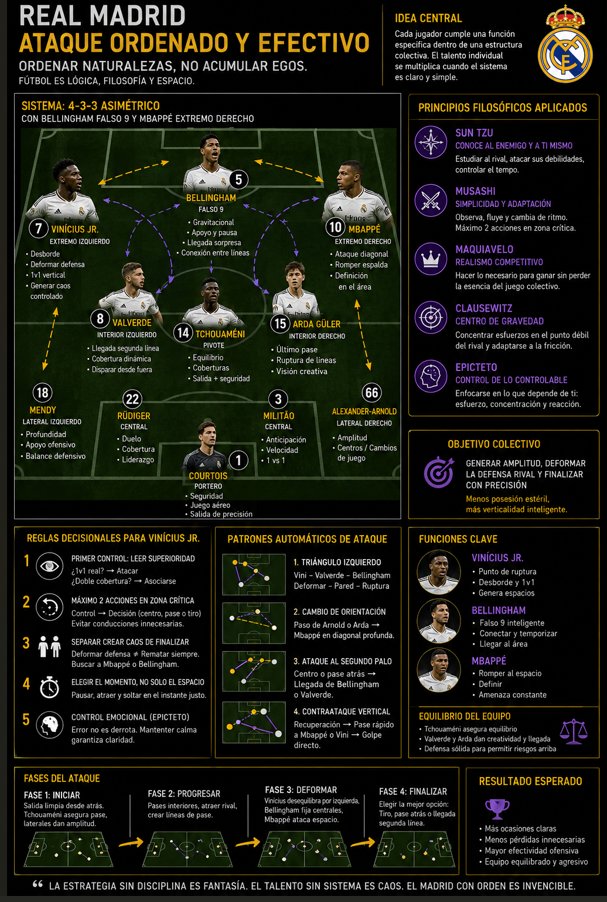
EL VINICIUS DEFINITIVO
sería:
menos impulsivo
más quirúrgico
más económico
más temporal
más asociativo
igual de agresivo
Y si logra eso,
entonces sí podría entrar en territorio:
Neymar 2015 Cristiano evolutivo extremo sistémico moderno.
#RealMadrid #HalaMadrid #FootballTactics #TacticalAnalysis #PositionalPlay #FootballPhilosophy
2
182
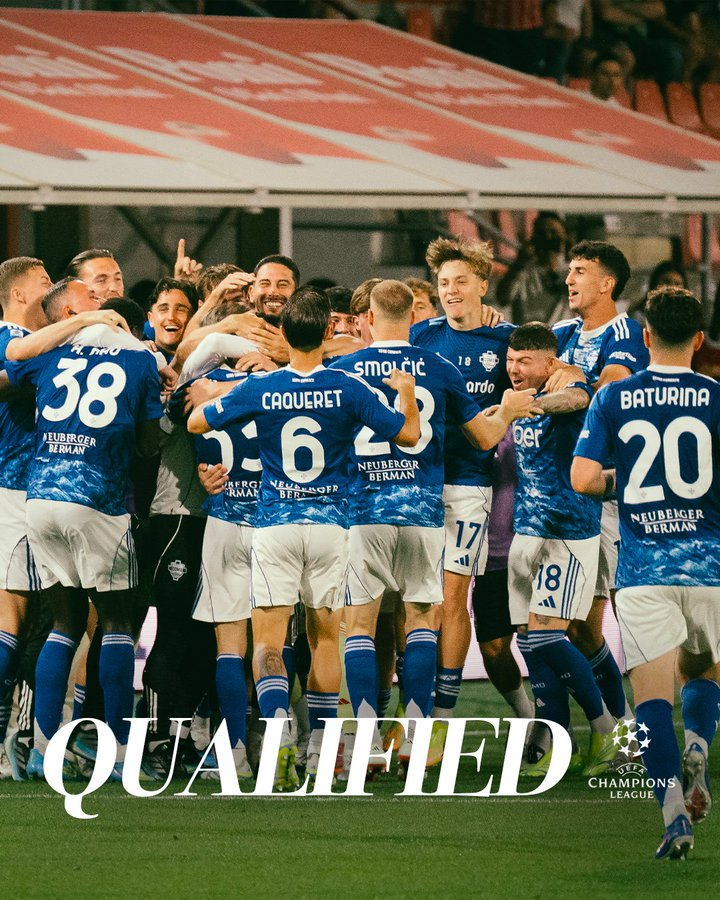
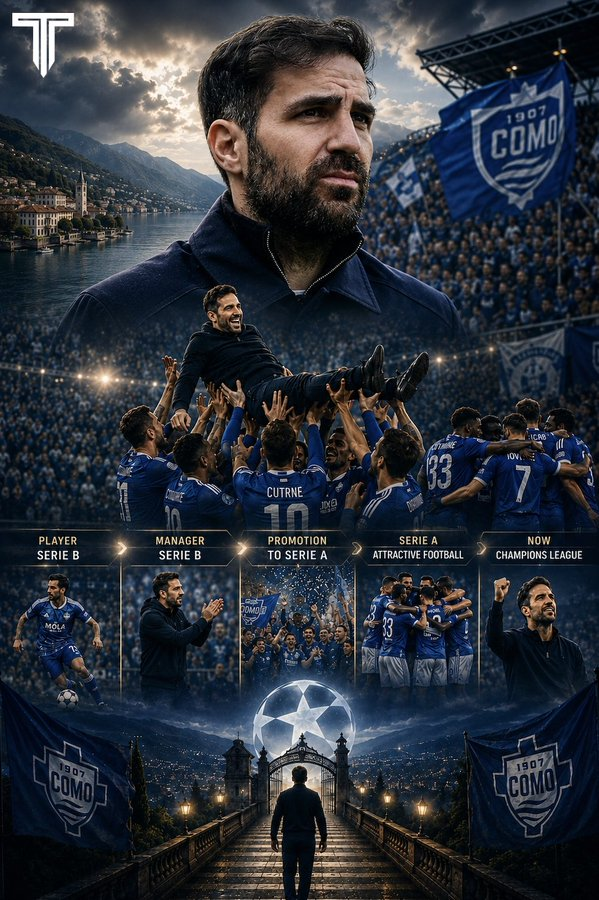
Como qualifying for the Champions League is one of the most intelligent football projects Europe has seen in years.
And at the centre of it is Cesc Fàbregas.
What makes this story special is that Como did not fluke their way into the top four. They built a tactical identity strong enough to compete with bigger budgets and bigger names.
Fabregas has essentially created a hybrid positional-play system with modern transition principles layered into it.
In possession, Como often built in a 3-2 structure:
one fullback inverted into midfield while the opposite side stretched the pitch high and wide.
The objective was simple:
create central superiority, bait pressure, then attack the space behind the press.
You could see clear influences from Guardiola-era spacing concepts, but Fabregas added far more vertical aggression than people expected.
-This was not sterile possession.
-Como played with purpose.
-Their midfield rotations were elite.
-The interiors constantly occupied half-spaces, dragging markers out and opening passing lanes into the striker or weak-side winger.
What stood out most tactically was their courage without the ball.
-Como defended high.
-They trusted man-oriented pressing triggers.
-The front line pressed centre-backs aggressively while midfielders jumped passing lanes early instead of retreating into passive blocks.
-That aggressive structure compressed the pitch and allowed them to sustain attacks.
And when teams bypassed the press?
Their rest defence was outstanding.
Fabregas made sure Como always had numerical security behind the ball, usually with a back-three shape in transition moments. That balance between attacking freedom and defensive structure is why they remained consistent over the season instead of fading away.
Emotionally, this qualification feels bigger than football.
Como were supposed to be a romantic underdog story.
A beautiful club by the lake.
A nice project.
Instead, they became one of the smartest teams in Italy.
Fabregas the player always saw football two passes ahead. Now Fabregas the coach is building teams that think the same way.
And the scary part?
This still feels like the beginning.
#Como #Como1907 #SerieA #ChampionsLeague #CescFabregas #FootballTwitter #TacticalAnalysis #Football #Soccer #SerieATIM #UCL #Calcio #ArtOfCoaching #PositionalPlay #FootballAnalysis #EuropeanFootball #Fabregas #Tactics
@SerieA @Inter @SkySports @ESPNFC @BBCSport
@FOXSports @Marcotti @JamesHorncastle @minakimes @Edwyeen @Okkeeeyy @akanbijamesoluz
@olaolubanky292 @TheBoluSport @dayveedtalks
@kanyewest @JamesOlley @ochocinco @genakhena
2
13
26
738

May 24
🔵🔴 PSG continue to prepare for Arsenal on Saturday night, and we spotted this positional setup at their training this week
The practice is designed to encourage and develop good supporting angles when in possession in central areas of the pitch. Very likely we'll see full backs advancing to high areas vs Arsenal as PSG build.
🔹 3 players inside the area
🔹 4 players positioned around the outside
🔹 Maintain shape and spacing at all times
Out of possession:
🔴 Press freely
🔴 Counter press immediately on transition🧠
✅ Join our website to access thousands more like this.
#SoccerTraining #PositionalPlay #LuisEnrique #PSG #FootballDrills #SoccerCoach #TacticalTraining #CoachingFootball #FootballDevelopment #KeepItOnTheDeck ⚽
1
26
138
22,351
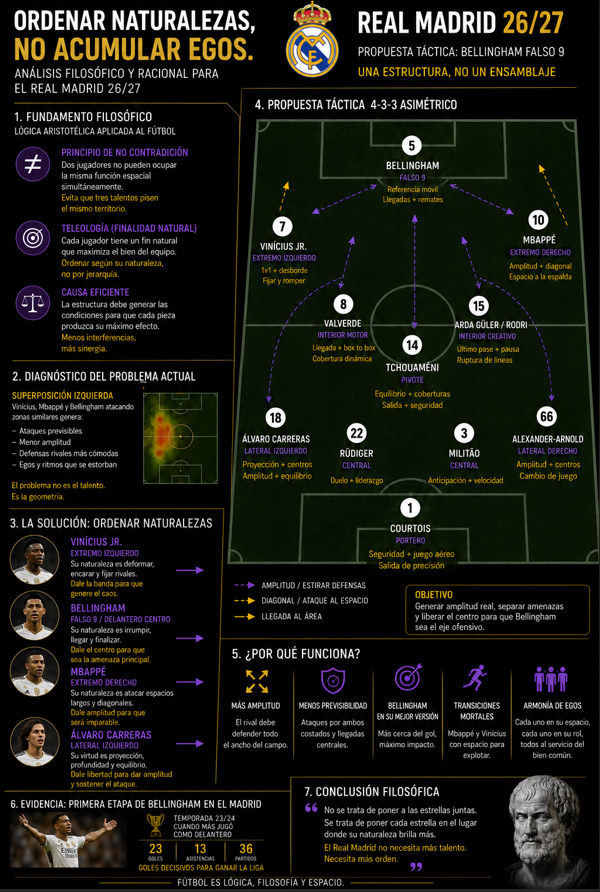
EL PROBLEMA DEL MADRID NO ES FALTA DE TALENTO. ES SUPERPOSICIÓN FUNCIONAL
#RealMadrid #HalaMadrid #FootballTactics #TacticalAnalysis #PositionalPlay #FootballPhilosophy
1
3
1,327
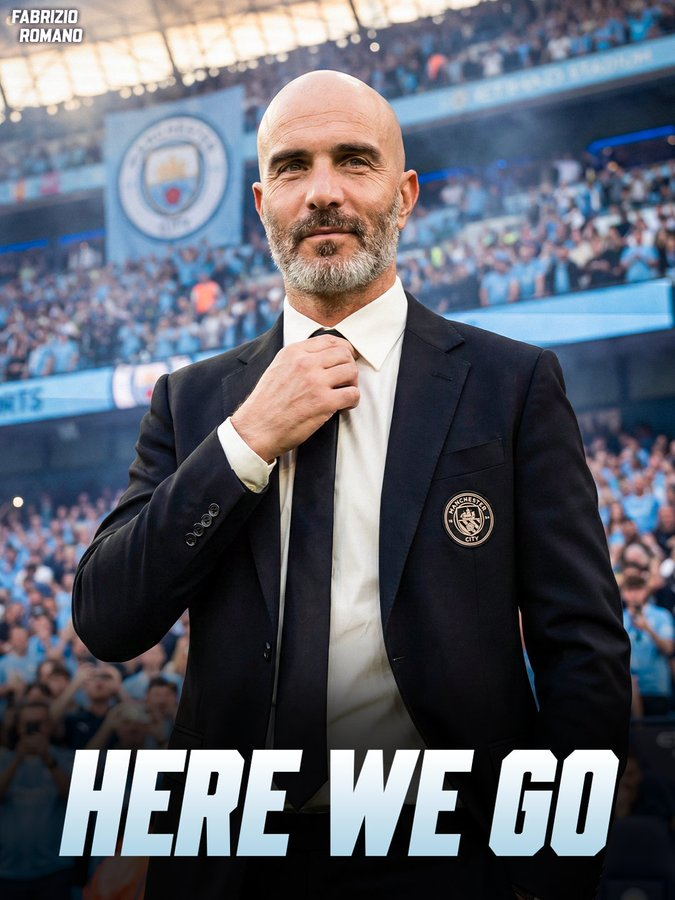
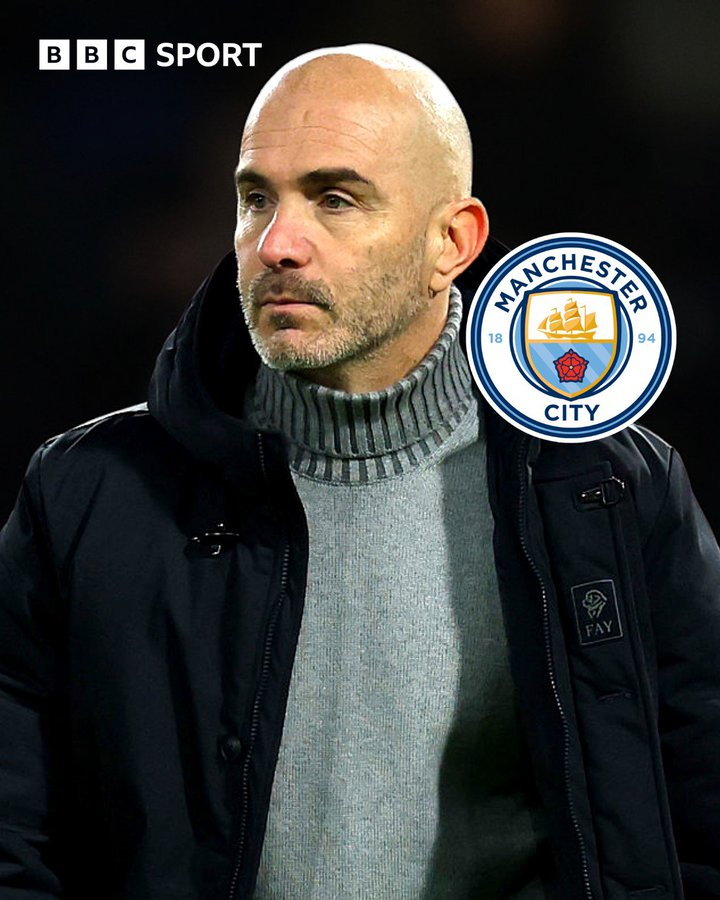
Enzo Maresca to Manchester City is not a sentimental appointment. It would be a structural bet on continuity of ideology, with a calculated acceptance of tactical evolution risk.
Maresca’s footballing identity is explicitly Pep-derived, but not a copy-paste version. It is a refinement of positional play with heavier emphasis on controlled progression, third-man combinations, and structured rest defence rather than pure territorial dominance.
At Leicester City, his work in the Championship was defined by control in a transitional chaos league. He imposed a possession-first structure in a division that often punishes slow build-up. The outcome was success through dominance rather than volatility reduction. The key tactical feature was the use of inverted full-backs and a midfield box that consistently created superiority in central lanes.
At Chelsea, the context shifts. You are dealing with higher variance players, less tactical continuity, and a squad still in identity formation. His implementation there has been about stabilising possession phases, reducing vertical chaos, and building repeatable chance creation patterns rather than relying on individual brilliance or transition-heavy football.
Where he succeeds, Chelsea begin to resemble a “positional control team in progress” rather than a reactive side.
Now, the Manchester City question introduces a different layer entirely.
City under Pep are already the most structurally complete possession team in Europe. So Maresca’s appointment would not be about revolution. It would be about continuity with subtle recalibration.
Tactically, the expectation would be:
-Preservation of inverted full-back structures
-Greater emphasis on midfield rotation timing rather than static occupation
-Slight increase in positional risk-taking in final third combinations
-More explicit “automation-based” build-up sequences, reducing dependence on improvisational genius moments
The reward side is clear.
City would retain their identity beyond Pep, ensuring system survival after a generational manager. Maresca is one of the few coaches who understands positional play at a granular enough level to avoid structural regression. He would likely maintain elite possession metrics, chance quality control, and defensive rest structure efficiency.
The risk, however, is equally real.
First, managerial inheritance pressure. You are replacing not just a coach, but a footballing era-defining figure. Any dip in intensity or efficiency will be amplified.
Second, adaptability ceiling. Maresca’s system is structured. Against elite tactical disruptors in knockout football, rigidity can become a constraint if in-game deviation is limited.
Third, dressing room dynamics. City’s squad is built around elite autonomy within structure. Over-systemisation risks reducing expressive edge in key moments.
The most important truth is this: Maresca at City would not be about improvement in dominance. It would be about preservation of dominance with lower volatility in transition between managerial cycles.
In other words, Guardiola builds the empire. Maresca would be tasked with preventing its architectural decline.
My view is straightforward. It is a smart footballing appointment on paper, but it only succeeds if City accept that continuity of control will replace evolution of control. If they expect innovation on Pep’s level, the project becomes misaligned from day one.
That is the real tension: inheritance versus reinvention.
#EnzoMaresca #ManCity #PepGuardiola #ChelseaFC #LeicesterCity #TacticalAnalysis #PremierLeague #FootballTactics #PositionalPlay #FootballTwitter
@premierleague @ManCity @Edwyeen @PremLeaguePanel @ESPNFC @SkySportsPL @The_Khalifaa @tobyasky @McFlybowy @devoyceofgod @genakhena
11
13
76
8,847

imo the best football chelsea played with him was when he set away his real “ideas” (#positionalplay & #structure, wide wingers, fullbacks in attacking positions, etc) which isn’t the best of looks
personality wise, not the most agreeable or warm character (being nice here)
3
12
459

May 12
One of our key in-possession principles is encouraging the opposition to press in numbers so we can deliberately create artificial transition moments — turning controlled build-up into dynamic 4v4s and 5v5s higher up the pitch.
In this sequence, the opposition presses in a 4-3-3 against our 3-4-3 diamond structure. Their striker locks onto our CDM, wingers stay close to our outside centre-backs, and our midfield three are tightly man-marked.
The objective was to manipulate pressure, not avoid it.
Our centre-back carries forward to provoke the first line. An attacking midfielder drops toward the ball to attract attention, but the opposition initially refuse to jump. The CB remains patient, holding possession until the striker finally commits to the press. That trigger allows us to recycle through the goalkeeper and immediately access the free CDM.
Once facing forward, the CDM drives into space, forcing an opposition midfielder to step out. That movement opens the passing lane to our attacking midfielder between the lines — followed by a through ball and an immediate acceleration to attack the final line.
#Football #FootballTactics #Coaching #BuildUpPlay #PositionalPlay
2
108

#Investors #investmentopportunity #investmentproperty #investment #InvestmentStrategy #InvestmentTips #investmentplan #positionaltrading #PositionalPlay #Positional
#IRFC Future May
Buy 8 Lots At 104
Now Cmp: 104
Lot Size: 4,250
Total Quantity: 34,000
#patience #PatiencePays #PatienceIsPower #PatienceWins
1
1
3
1,546

Apr 23
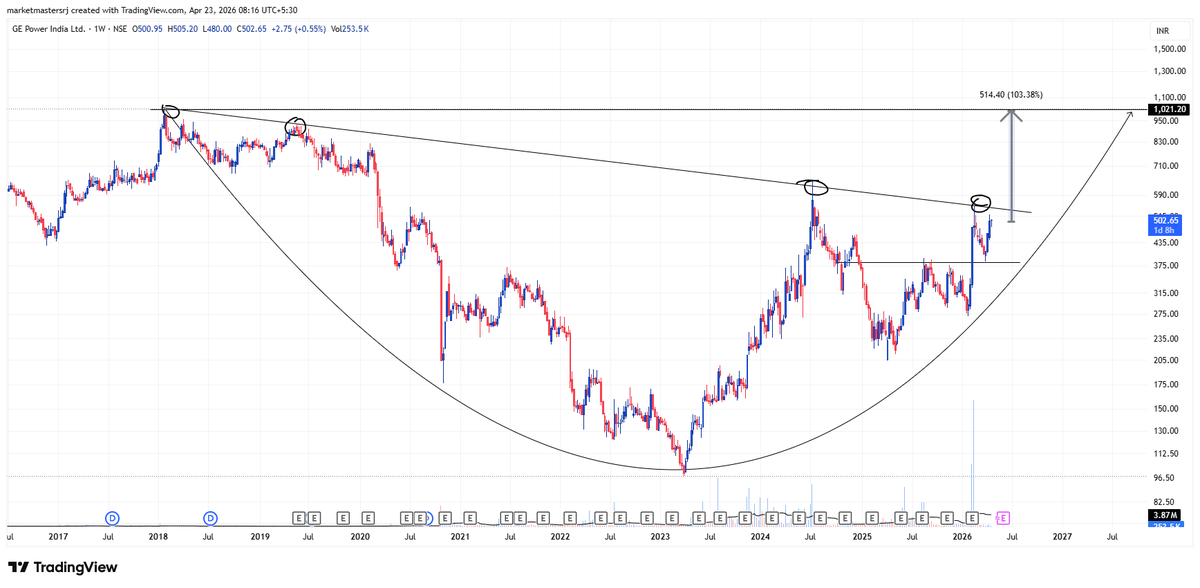
GVPIL
Already in a strong Stage 2 uptrend. 📈
Now approaching a major multi-year trendline resistance.
If this breaks → potential expansion towards ₹1000 & more.
👉 Trend intact (HH-HL structure)
👉 The base is already formed
👉 Now → continuation setup
Stage 2 leaders reward patience.
Invalid below 370-380.
#positionalplay
#Stage2 #Uptrend #MomentumStocks #TrendFollowing #Breakout #StockToWatch #ChartOfTheDay #Bullish #MarketTrends #GrowthStocks
3
1
19
1,484
Apr 17
🔘Tottenham Hotspur positional game setup under Roberto De Zerbi yesterday morning 🔥
18x18 area.
Locked in positions in possession
⚽ In possession: stay in your box, use the neutrals, find a way through the pressure.
🔥 Out of possession: press as a two in each half
Simple Objective:
Move it from one end zone to the other = score.
If the pressing team win it?
Roles reverse instantly.
High tempo.
Sharp decisions.
Non stop transitions.
Sign up to our website to get access to 1000's of training ideas
#Coaching #FootballTraining #PositionalPlay #SoccerDrills #PlayerDevelopment
3
39
449
48,592

Apr 14
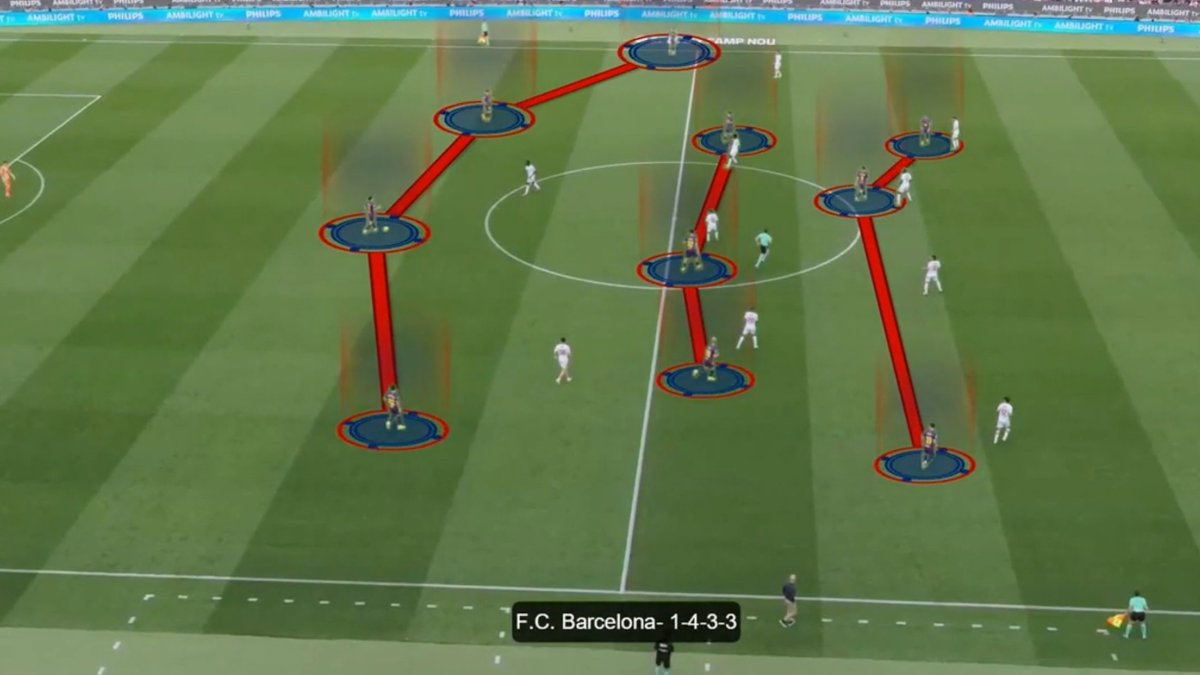
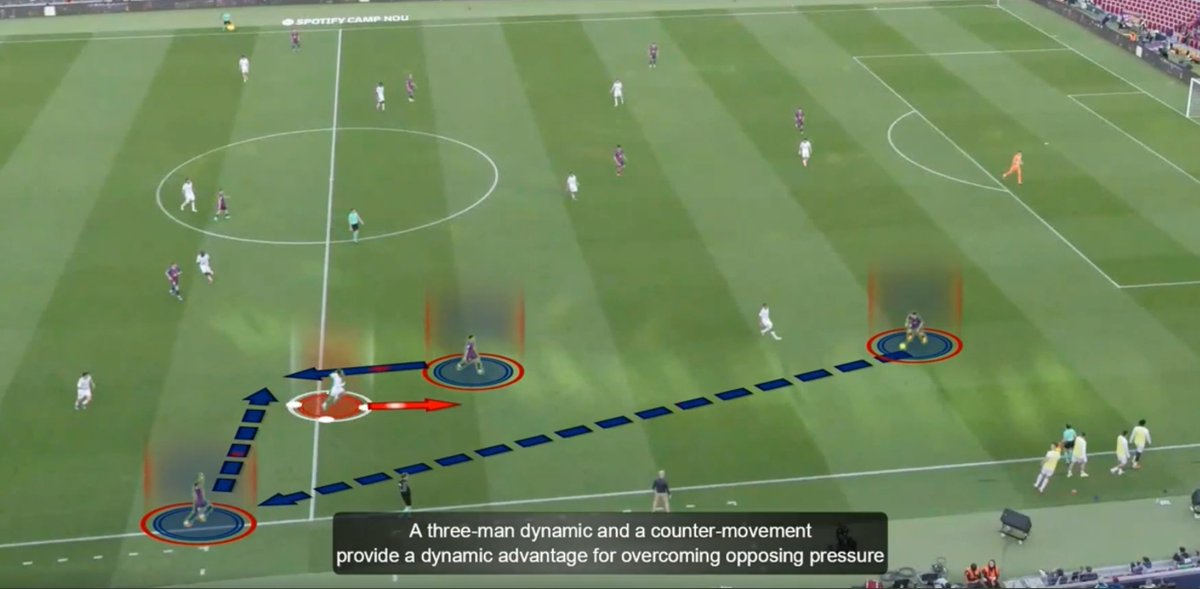
FC Barcelona: Disrupting the Opponent’s Structure 🧠⚽
One of FC Barcelona's biggest strengths is not just keeping the ball. It’s knowing how to manipulate the opponent without forcing the play. Control doesn’t mean rushing. Sometimes, the biggest advantage is patience.
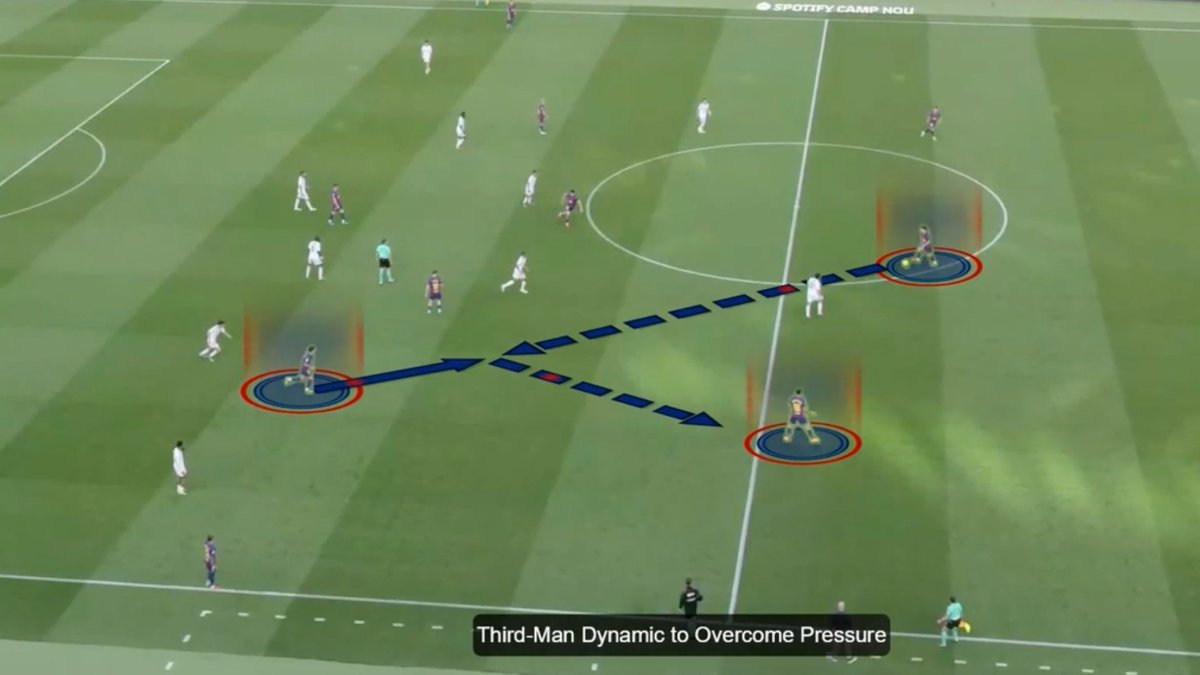
Barcelona consistently looks to lure opponents out of their structure. Through intelligent circulation and positioning, they invite pressure in specific zones, encouraging defenders to step out. The moment that happens, space appears elsewhere, and that’s where the real advantage is created. ⚡
This is where third-man dynamics become essential. Instead of playing directly into pressure, Barcelona use a third player to connect actions and break lines. Pass, set, and release! A simple concept that becomes incredibly powerful when executed with timing and awareness. It’s not just about moving the ball, it’s about moving the opponent.
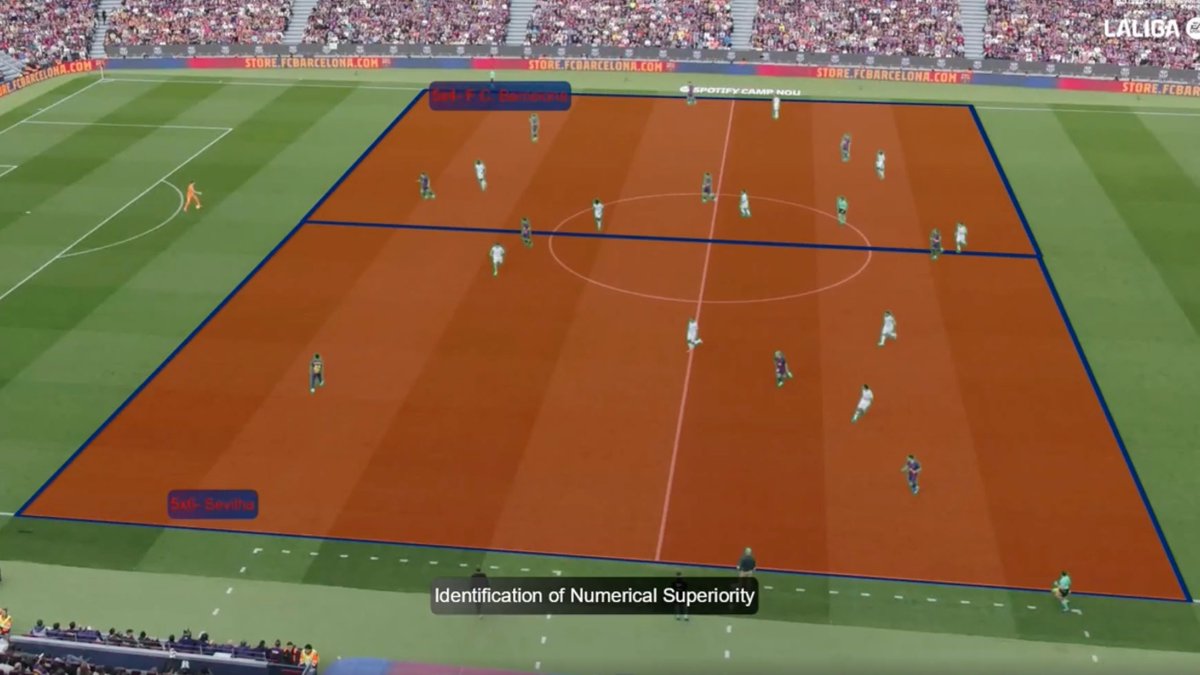
Another key principle is the constant search for numerical superiority. Whether in the first phase or between the lines, Barcelona aims to create overloads that provide the ball carrier with more options and better angles. This allows them to control tempo and decide when to accelerate or slow the game down. 🎯
And perhaps the most underrated detail: not forcing the play. When the space isn’t there, Barcelona resets. They recycle possession, shift the block, and wait for the right moment. This patience stretches the opponent and increases the probability of finding the exact gap they are looking for.
Breaking a defensive structure isn’t always about speed, it’s about timing, manipulation, and understanding when the moment is right. 💥
Analysis by @Rmm10Machado, Head Coach - Benfica Residental Academy, made with Once Sport Analyser.
linkedin.com/posts/rodolfo-m…
#OnceSport #OnceSportAnalyser #FCBarcelona #FootballTactics #PositionalPlay
1
8
94
6,207
Apr 13
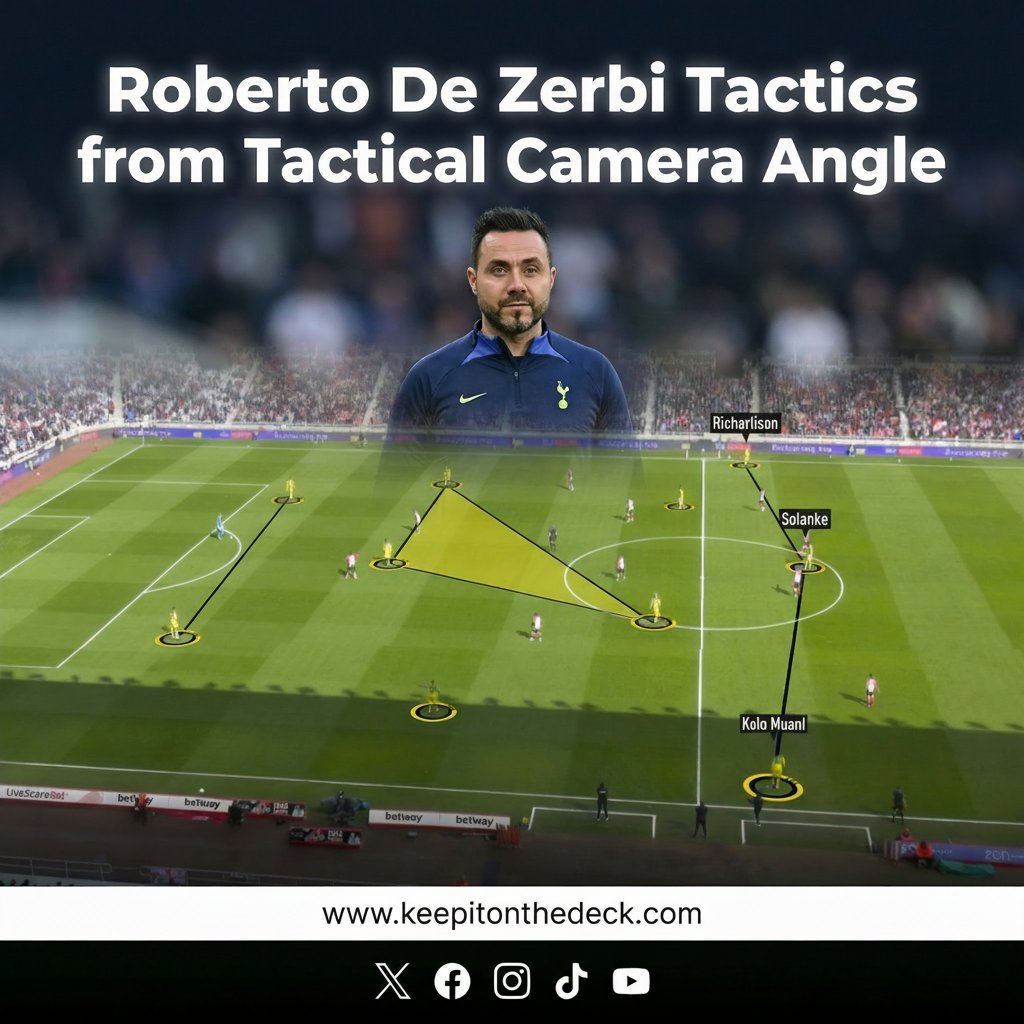
Roberto De Zerbi’s build up against Sunderland.
The front line stretched the pitch with three players positioned high and wide, forming an aggressive attacking line that pinned the opposition and created depth.
In the first phase of buildup, the centre backs split either side of the goalkeeper.
Centrally, the structure evolved into a staggered box midfield. Gray and Gallagher operated at the base as dual pivots.
Ahead of them, Udogie stepped out of the full back area to occupy a higher position between the lines, with Bergvall mirroring this on the opposite side.
There were positive early signs and some promising moments in possession for Tottenham. However, beyond that initial phase, the performance lacked the intensity required at the level. The fight, aggression, and competitive edge was simply not there. Call it hunger, call it mentality, it's lacking!.
Structure gives you a platform. Mentality determines the outcome.
We will have a full Tactical Camera view available on our website member area shortly for coaches who want to study the details of what De Zerbi is trying to build.
#RobertoDeZerbi #SoccerCoaches #FootballCoaching #TacticalAnalysis #BuildUpPlay #PositionalPlay #CoachingEducation #FootballTactics #GameModel #CoachDevelopment
2
7
71
12,677
Apr 12
Huge day for Spurs as Roberto De Zerbi takes charge for the first time 🔥
Here’s a possession based practice from Friday’s session, designed to introduce his core principles ahead of a challenging clash with Sunderland.
🔹 Setup
Three zones, with a 5v2 in the active end zone, separated by a central zone.
🔹 Out of Possession
The two central pressers can jump to wide areas to apply pressure or anticipate and intercept passes played through the middle.
🔹 In Possession Focus
Patience is key. Circulate the ball, draw the press, then recognize the right moment to turn and progress either through centrally or out wide.
👉 Visit our website for more top class coaching content.
#SoccerCoaching #FootballTraining #DeZerbi #PositionalPlay #CoachingSession
5
6
85
9,506
Apr 10
Tottenham Hotspur training this morning. Lots of people asking about the practice from Roberto De Zerbi today, so here it is. The first place you'll find this animated to explain, before other pages see it then make it also.
Three zones. Five v two running in the active end zones. Split by a central zone. Out of possession, the pressers in the central zone can press wide players or look to intercept direct transfers.
Focus on patience in possession. Move it, wait, then find the right moment to turn and progress, either wide or straight through.
Visit our website for more top class content.
#SoccerCoaching #FootballTraining #DeZerbi #PositionalPlay #CoachingSession
3
38
453
58,844