Jumbo enables modular, security-first private networks built for real operations.
Learn more at jumbochain.org
#PrivateSmartContracts #EnterpriseInfra #ConfidentialOps #JumboBlockchain
1
6
60

Jan 24
Seismic Is Built for the Phase Where Blockchain Becomes Infrastructure
There is a moment in every technology’s life when it stops being exciting and starts being serious. Blockchain is reaching that moment. For years, it has been a space of experimentation, speculation, and open visibility.
Everything was public because it was simple, and simplicity was more important than responsibility. But infrastructure is not built on simplicity alone. It is built on predictability, protection, and trust under pressure. Seismic exists because blockchain is no longer just a playground. It is becoming a foundation for systems that handle real value, real businesses, and real consequences.
When something becomes infrastructure, the rules change. You stop asking “can we do this?” and start asking “should this be exposed?” Seismic is designed for that shift. It does not treat transparency as a default virtue. It treats it as a tool that must be applied carefully. This is not a philosophical difference. It is a practical one that determines whether blockchain can ever move beyond experimental finance and into institutional reality.
Seismic Treats Data Exposure as a Risk, Not a Feature
Most blockchains were built with the assumption that exposure is harmless. If everyone sees everything, no one can cheat. That logic works for verification, but it fails for real-world finance. In finance, exposure is not neutral. Exposure creates incentives, reveals strategies, and shapes behavior.
When payment flows are public, timing becomes intelligence. When balances are visible, liquidity becomes a signal. When interactions are traceable, relationships become data.
Seismic recognizes that data exposure is not just a side effect of decentralization, it is a form of power. Whoever controls information controls the narrative of markets. By making privacy the default state, Seismic removes unintended power from observers and returns control to the system itself.
. Exposure becomes intentional, not automatic
. Strategic behavior is not publicly broadcast
. Information leakage is structurally prevented
. Data becomes protected infrastructure, not entertainment
This turns blockchain from a global microscope into a controlled execution environment.
Seismic Is Designed for Systems That Have Internal Logic
Most public chains assume that everything worth doing is worth showing. That assumption breaks down as soon as systems develop internal processes. Real financial platforms have approval flows, accounting layers, reconciliation mechanisms, and internal controls that should never be public. They exist to ensure correctness, not to create spectacle.
Seismic allows internal logic to exist on-chain without becoming public knowledge. This is critical because it allows organizations to benefit from decentralized execution while maintaining the privacy standards they already use off-chain.
. Internal accounting remains confidential
. Approval workflows stay protected
. Risk models are not publicly observable
. Operational structure does not leak through state changes
This makes Seismic suitable for serious organizational use, not just individual wallets.
Seismic Separates Proof From Publicity
One of the most damaging assumptions in blockchain is that proof requires publicity. In reality, proof requires correctness, not visibility. Auditors do not need public ledgers. They need controlled access to accurate records. Courts do not require global transparency. They require verifiable evidence.
Seismic introduces a model where systems can prove what happened without showing everything that happened. This distinction is the foundation of mature financial infrastructure.
. Verification without universal disclosure
. Auditability without permanent exposure
. Accountability without surveillance
. Trust without broadcasting
It is not less transparent. It is precisely transparent.
Seismic Makes Blockchain Compatible With Corporate Reality
Corporations cannot operate on systems that expose their internal mechanics. They cannot put payroll, treasury operations, or partner settlements on a public ledger. Doing so would destroy confidentiality, competitiveness, and legal safety. Seismic acknowledges this reality and designs blockchain around it.
Instead of forcing corporations to adapt to crypto culture, Seismic adapts blockchain to corporate reality.
. Confidential payroll execution
. Private treasury management
. Protected partner settlement flows
. Controlled regulatory visibility
This is how blockchain stops being a novelty and becomes enterprise-grade infrastructure.
Seismic Moves Security From Application Design to Protocol Design
In most ecosystems, privacy is an application problem. Developers are expected to design it correctly. That expectation is unrealistic. Most developers are not cryptographers, and most systems fail not because of bad intentions but because of subtle mistakes.
Seismic removes this burden. Privacy is enforced by the network itself. Developers do not need to build protection mechanisms. They inherit them.
. No custom encryption logic in applications
. No fragile privacy patterns
. No off-chain secrecy infrastructure
. No manual protection layers
Security becomes structural, not optional.
Seismic Protects Behavioral Data, Not Just Financial Data
Money is only one part of finance. Behavior is the other. On public chains, behavior is fully observable. Analysts can map user activity, predict decisions, and extract insights without permission. This is a form of financial surveillance that traditional systems never allowed.
Seismic stops this by protecting behavioral data as carefully as monetary value.
. Transaction timing does not reveal strategy
. Frequency does not reveal operational rhythm
. Relationships do not become public graphs
. Patterns do not become exploitable signals
This is essential for systems that want to remain professionally competitive.
Seismic Is Designed for Growth Without Architectural Regret
Many blockchain projects grow fast and collapse later under the weight of their own exposure. They are forced into migrations, redesigns, or privacy retrofits that destabilize the entire system. Seismic is built to avoid this pattern.
. Privacy does not degrade with scale
. Compliance does not require rewrites
. Architecture remains stable under scrutiny
. Growth does not multiply risk
It is infrastructure that assumes success, not just survival.
Seismic Redefines What Decentralization Means
Decentralization is not the same as total visibility. Decentralization is about distributing control, not exposing data. Seismic proves that you can decentralize execution while protecting information.
. Execution remains distributed
. Authority remains minimized
. Data remains controlled
. Trust remains verifiable
This is a more mature, more responsible form of decentralization.
Conclusion
Seismic is not designed to impress. It is designed to last. It accepts that blockchain is becoming infrastructure and that infrastructure must protect information, not display it. By treating exposure as a risk, privacy as structure, and compliance as a design constraint, Seismic transforms blockchain from a public experiment into a professional financial system.
It does not ask whether blockchain can be used for real finance.
It is built on the assumption that it will be.
#Seismic #Web3 #PrivacyBlockchain #Fintech #CryptoInfrastructure #PrivateSmartContracts #EVM #Compliance #BlockchainForFinance @SeismicSys @xealistt @NoxxW3 @heathcliff_eth
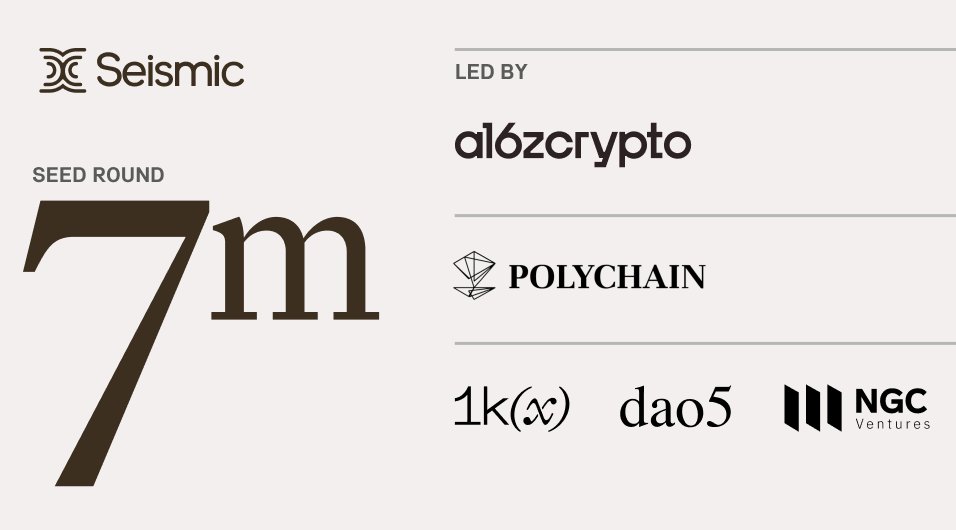
1
1
32
Jan 22
Seismic Was Built for the Part of Blockchain Nobody Likes to Talk About
Most blockchain conversations focus on growth, users, and speed. Very few talk about responsibility. Yet responsibility is what defines whether a system can ever leave the experimental phase. The moment real money, real businesses, and real reputations are involved, technology stops being a playground and starts becoming infrastructure.
Seismic exists because public blockchains were never designed for that transition. They were designed to prove decentralization works, not to protect sensitive financial activity. Seismic is built for the moment when “cool technology” becomes “critical system.”
In real finance, mistakes are not just bugs, they are liabilities. Exposed strategies, visible payment flows, and traceable balances are not minor inconveniences, they are structural risks. Traditional blockchains treat this exposure as acceptable collateral damage. Seismic treats it as a design failure. It assumes that financial systems must protect information as carefully as they protect funds, and that decentralization does not require public surveillance.
Seismic Separates Trust From Exposure
One of the most misunderstood ideas in blockchain is the belief that trust can only exist if everything is visible. That belief shaped early networks, but it is not how real financial systems operate. Banks are audited, but not fully transparent. Accounting systems are verified, but not publicly readable. Trust is created through controlled verification, not radical exposure.
Seismic adopts this model on-chain. It allows transactions and smart contracts to be verified without turning private activity into public data. Execution remains decentralized, but visibility becomes selective. This separation is the foundation of Seismic’s design.
. Verification without global visibility
. Decentralized execution without public surveillance
. Trust without exposing strategic information
. Privacy without sacrificing correctness
This is not secrecy. It is structured transparency, the same model used in every serious financial system.
Seismic Treats Financial Behavior as Sensitive Data
On most blockchains, financial behavior is treated as entertainment.
Wallets are tracked, transactions are analyzed, and patterns are studied publicly. In reality, behavior is often more sensitive than balances. How frequently funds move, when they move, and between whom they move reveals strategy, intent, and internal structure.
Seismic recognizes that financial behavior itself is data that deserves protection. By encrypting transaction flows and smart contract state at the protocol level, Seismic ensures that applications can operate without broadcasting their internal mechanics to the entire world.
. Transaction timing does not reveal intent
. Flow patterns do not expose strategy
. Relationships are not automatically public
. Internal processes remain internal
This is essential for any application that aims to operate professionally.
Seismic Makes “On-Chain” Practical for Organizations
Most blockchains were built with individual users in mind. Organizations, however, operate very differently. They have internal controls, layered approvals, treasury management, payroll systems, and compliance obligations. These systems cannot function if every internal action becomes globally visible.
Seismic enables organizations to use blockchain as actual infrastructure, not just as a public interface. It supports the idea that a system can be decentralized while still respecting corporate confidentiality and operational boundaries.
. Private treasury operations
. Confidential payroll execution
. Protected internal accounting logic
. Controlled partner interactions
This transforms blockchain from a public experiment into a usable enterprise foundation.
Seismic Moves Privacy From Application Logic to Network Logic
In most ecosystems, privacy is a responsibility pushed onto developers. They must design encryption, hide values, manage off-chain systems, and prevent leaks manually. This creates enormous complexity and makes mistakes inevitable. Seismic shifts that responsibility to where it belongs: the protocol itself.
Developers write normal business logic. The network enforces confidentiality. This drastically reduces risk and simplifies architecture.
. No application-level encryption design
. No fragile privacy hacks
. No custom cryptographic workflows
. No constant visibility audits
The chain becomes responsible for privacy, not every developer.
Seismic Preserves the Ethereum Development Experience
One of Seismic’s most important decisions is remaining EVM-compatible. Privacy systems often fail because they isolate themselves with new languages, new tools, and new developer cultures. Seismic avoids this trap entirely.
Developers continue to use Solidity. Tooling remains familiar. Hiring remains realistic. Existing knowledge stays valuable. The only thing that changes is the default security posture.
. Solidity smart contracts remain standard
. Ethereum tooling remains usable
. Developer productivity remains high
. Privacy improves without slowing development
This makes Seismic a practical system, not a research experiment.
Seismic Is Designed to Be Questioned
Infrastructure that cannot survive scrutiny is not infrastructure. It is marketing. Seismic is designed with the assumption that it will be questioned by auditors, regulators, partners, and users. Its architecture does not rely on hope or exceptions. It relies on structure.
. Audits are supported through selective disclosure
. Compliance does not require redesign
. Privacy does not conflict with reporting
. Architecture remains defensible over time
This is what financial legitimacy looks like in decentralized systems.
Seismic Is Built for Stability, Not Excitement
Most blockchains are optimized for narratives. Seismic is optimized for endurance. It is not built to win attention cycles. It is built to survive operational reality.
. No dependency on temporary workarounds
. No architectural panic as systems grow
. No forced migrations due to exposure risks
. Predictable behavior under pressure
This makes Seismic boring in the best possible way.
Seismic Represents a Shift in Blockchain Maturity
Early blockchains proved that decentralization is possible. Seismic proves that decentralization can be responsible. It removes the assumption that everything must be visible to be trusted and replaces it with a model where trust comes from structure, not exposure.
. Decentralization without spectacle
. Privacy without secrecy
. Verification without surveillance
. Control without centralization
This is blockchain evolving from ideology into infrastructure.
Conclusion
Seismic is not built for people who want to show data. It is built for people who want to protect it. It assumes that financial systems deserve discretion, that organizations deserve confidentiality, and that decentralization does not require permanent public exposure.
By moving privacy into the protocol, supporting real organizational workflows, and remaining compatible with the Ethereum ecosystem, Seismic creates a blockchain that behaves like financial infrastructure instead of a public display.
In a future where blockchain is expected to carry responsibility, not just innovation, Seismic feels less like an alternative and more like a correction.
#Seismic #Web3 #PrivacyBlockchain #Fintech #CryptoInfrastructure #PrivateSmartContracts #EVM #Compliance #BlockchainForFinance @SeismicSys
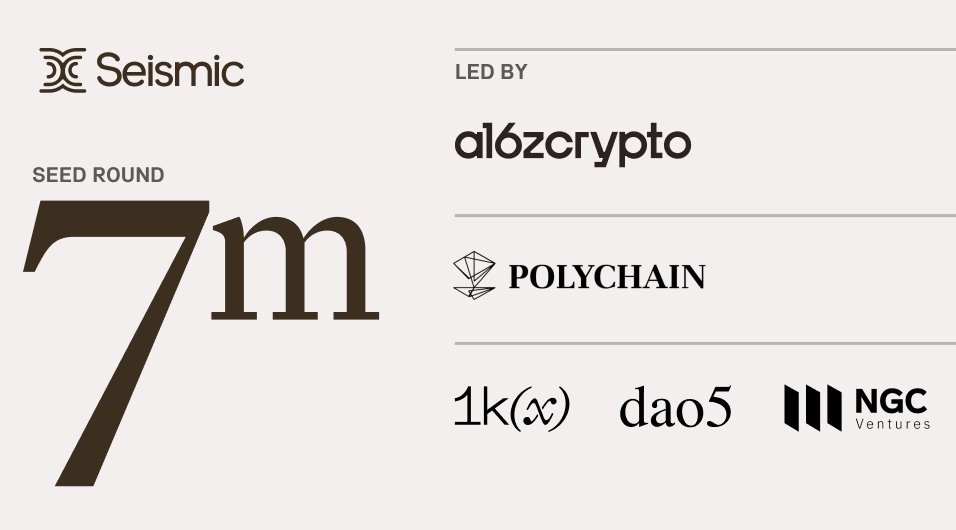
1
1
19
Jan 11
Seismic: The Blockchain That Treats Financial Data Like Financial Data
Most blockchains were built with one main assumption:
everything should be visible, forever.
That idea works well for experimentation.
It works badly for finance.
Money is not just numbers.
It is strategy, trust, responsibility, and risk.
Seismic is built around that reality.
What Makes Seismic Different at a First Glance
Seismic is not trying to reinvent crypto culture.
It is trying to make blockchain usable for environments where mistakes are expensive.
. Private by default, not public by accident
. Designed for financial workflows, not only token transfers
. Built to survive audits, not only market cycles
. Optimized for control, not radical exposure
This changes how applications behave from day one.
Blockchains Usually Expose Too Much
On most networks, you automatically reveal:
. User balances
. Transaction amounts
. Timing of payments
. Behavioral patterns
. Internal smart contract state
Even if no one is attacking you, your system is being analyzed.
That is not a vulnerability.
It is a design choice.
Seismic simply makes a different choice.
How Seismic Treats Privacy
Privacy in Seismic is not something developers “add”.
It is something the protocol enforces.
. Transactions are encrypted by default
. Smart contract storage is confidential
. Execution happens in a protected environment
. Only the intended outputs are visible
You build normally.
Privacy exists underneath your logic.
Why This Matters for Real Products
When an application grows, so does its exposure.
With Seismic:
. Growth does not increase data leakage
. More users do not mean more transparency risk
. More volume does not mean more visibility problems
. The system stays predictable under pressure
That is a rare property in blockchain infrastructure.
Seismic Is Built for Organizations, Not Just Wallets
Most blockchains assume a world of individuals.
Seismic assumes a world of organizations.
. Treasury management
. Payroll and compensation
. Internal financial operations
. Partner settlements
. Risk-controlled execution
These are not side features.
They are first-class use cases.
EVM Compatibility Without Breaking the Model
Seismic remains fully compatible with Ethereum’s ecosystem.
. Solidity works
. EVM tooling remains valid
. Developer onboarding stays simple
. Existing knowledge keeps its value
This keeps Seismic grounded in reality, not theory.
Privacy That Does Not Destroy Composability
A private system that cannot interact is just a silo.
Seismic avoids that.
. Private contracts can talk to public ones
. Hybrid application designs are supported
. Composability becomes intentional, not accidental
. Interoperability does not require exposure
Privacy and connectivity coexist.
Why Seismic Is Financially Realistic
Seismic is not built to avoid regulation.
It is built to survive it.
. Selective disclosure instead of total transparency
. Auditable flows without public exposure
. Compliance without architectural collapse
. Control without centralization
This is how financial systems operate outside crypto.
How Seismic Changes Development Behavior
Developers stop designing defensively.
. No constant fear of leaking data
. No architectural gymnastics for privacy
. Cleaner contract logic
. Simpler reasoning about security
That improves both speed and confidence.
Who Seismic Is Actually For
Seismic is a natural fit for teams that:
. Build financial products, not experiments
. Handle sensitive user information
. Expect long-term growth
. Care about credibility
. Want fewer explanations later
If your application would suffer from radical transparency, Seismic is designed for you.
The Bigger Picture
Seismic does not try to replace existing blockchains.
It complements them by covering what they avoid.
Public chains are excellent for openness.
Seismic is excellent for responsibility.
The future of Web3 will need both.
Conclusion
Seismic treats blockchain not as a spectacle,
but as infrastructure.
It assumes:
. Money needs privacy
. Systems need stability
. Growth needs predictability
. Trust needs control
That is not a trend.
It is how serious financial systems are built.
#Seismic #Web3 #PrivacyBlockchain #Fintech #CryptoInfrastructure #PrivateSmartContracts #EVM #Compliance #BlockchainForFinance #Web3Builders @SeismicSys
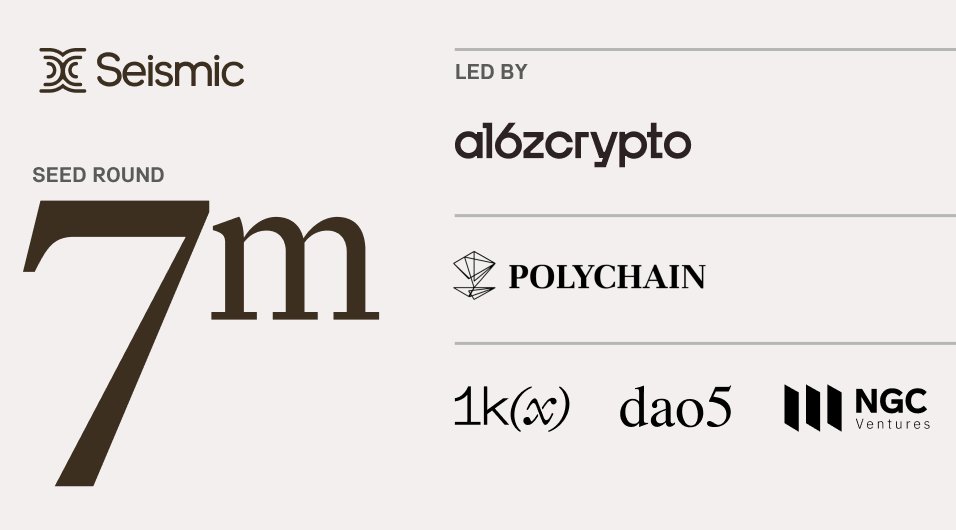
1
16
Seismic Explained: A Blockchain Designed for Privacy Where It Actually Matters
Blockchain has proven that decentralized systems work.
What it has not proven is that they are ready for real financial usage.
The reason is simple:
most blockchains expose too much by default.
This is the problem Seismic is built to solve.
The Core Problem With Traditional Blockchains
Most existing blockchains are transparent at every level.
This means:
. Every transaction can be observed
. Every balance can be tracked
. Every interaction leaves a permanent footprint
. Behavior patterns are easy to analyze
While this transparency is useful for verification, it becomes a serious issue when applications handle:
. Payments
. Salaries
. Lending and credit logic
. Treasury operations
. Business-to-business flows
For these use cases, radical transparency is not a feature — it is a risk.
What Seismic Is
Seismic is a privacy-first, EVM-compatible blockchain designed specifically for applications that require confidentiality, control, and long-term reliability.
Instead of asking developers to manually hide data, Seismic changes the default model:
. Sensitive data is private by default
. Public exposure is intentional, not automatic
. Privacy is enforced at the protocol level
This allows applications to function like real financial systems — not public experiments.
How Seismic Handles Privacy Differently
Most privacy solutions rely on application-level complexity.
Seismic does not.
. Transactions are encrypted by default
. Smart contract state remains confidential
. Execution happens in a secure environment
. Only necessary outputs are revealed
Developers do not need to design custom privacy logic for every feature.
The system handles it natively.
Built With Fintech and Institutions in Mind
Seismic is not designed for novelty use cases.
It is designed for environments where mistakes are expensive.
. Private payments and settlements
. Confidential lending and credit evaluation
. On-chain payroll and treasury management
. Support for audits through selective disclosure
. Architecture compatible with regulatory frameworks
This makes Seismic suitable for fintech startups, Web3-native financial products, and institutions exploring blockchain adoption.
EVM Compatibility: Familiar Tools, Better Defaults
Seismic remains fully compatible with the Ethereum ecosystem.
. Solidity smart contracts
. Standard EVM tooling
. Familiar developer workflows
. Low migration and onboarding cost
Teams can benefit from privacy improvements without abandoning existing knowledge or infrastructure.
Privacy Without Isolation
A common issue with privacy-focused blockchains is isolation from the broader ecosystem.
Seismic avoids this by design.
. Private contracts can interact with public ones
. Hybrid application architectures are supported
. Composable Web3 and DeFi primitives remain possible
. Interoperability does not require data leakage
This allows Seismic-based applications to remain connected and useful beyond their own network.
Designed to Age Well
Many blockchain choices feel right at launch and painful later.
Seismic is built with the opposite mindset.
. Privacy does not degrade as usage grows
. Compliance does not force architectural rewrites
. Exposure risk remains controlled over time
. Infrastructure stays predictable under pressure
This makes Seismic a safer long-term foundation for serious products.
Who Should Consider Seismic
Seismic is particularly well-suited for teams that:
. Handle sensitive financial data
. Expect real users and real value flows
. Need privacy without sacrificing decentralization
. Care about regulatory compatibility
. Prefer stability over short-term hype
If full transparency would damage trust or usability, Seismic offers a more realistic alternative.
Conclusion
Seismic represents a shift in how blockchains approach privacy.
Instead of treating confidentiality as an optional feature, Seismic makes it a fundamental property of the network — while preserving the developer experience and composability that made Ethereum successful.
As Web3 continues to move toward real-world adoption, infrastructure like Seismic will be essential for building systems that people and institutions can actually trust.
#Seismic #Web3 #PrivacyBlockchain #Fintech #CryptoInfrastructure #PrivateSmartContracts #EVM #Compliance #BlockchainForFinance #Web3Technology @SeismicSys
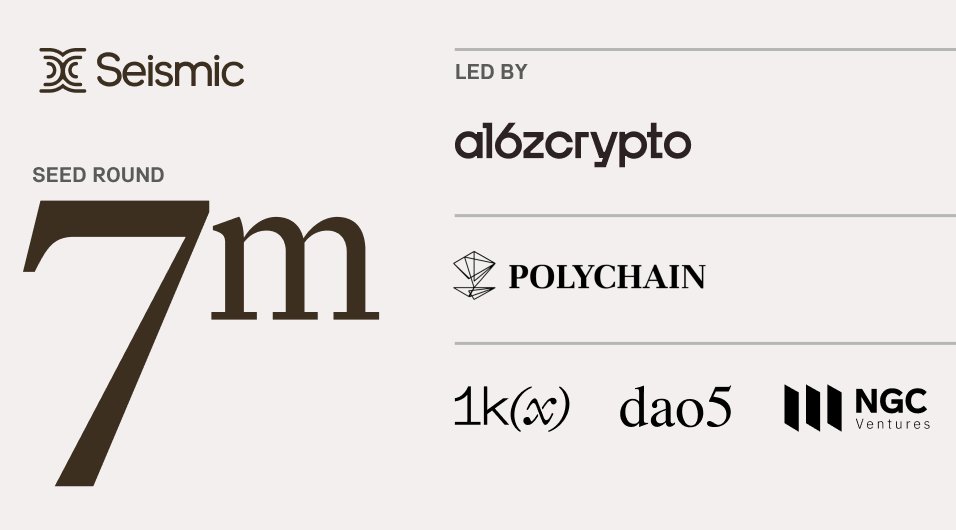
1
32
Why Seismic Gets Dismissed at First — and Chosen Later
Most teams don’t reject Seismic because it’s bad.
They reject it because of assumptions.
This is a list of the most common ones — and what actually happens in practice.
Wrong Assumption #1: “We Don’t Need Privacy Yet”
This is almost always true.
Until it isn’t.
Teams usually say this when:
. User numbers are still small
. Money involved feels abstract
. No one external is paying attention
What they underestimate is how fast context changes.
Privacy rarely becomes urgent gradually.
It becomes urgent suddenly.
Wrong Assumption #2: “Transparency Is a Feature, Not a Risk”
Transparency is a feature.
But forced transparency is a constraint.
What often gets overlooked:
. Patterns matter more than raw data
. Timing leaks intent
. Repeated behavior leaks strategy
. You don’t need to read contracts to understand a system
Seismic doesn’t remove transparency.
It removes the default.
Wrong Assumption #3: “We’ll Just Add Privacy Later”
This sounds reasonable on paper.
In reality, “later” looks like:
. Deployed contracts you can’t change
. Users depending on visible behavior
. Partners integrated into exposed flows
. Tech debt that touches everything
Privacy added later rarely feels clean.
It feels like damage control.
Seismic exists to avoid that phase.
Wrong Assumption #4: “Privacy Chains Are Hard to Build On”
This assumption comes from experience — just not with Seismic.
What teams expect:
. New languages
. New mental models
. Constant cryptography decisions
. Slow iteration
What they often find instead:
. Solidity still works
. Tooling feels familiar
. Privacy is handled below them
. Less app-level complexity, not more
The difficulty shifts from developers to infrastructure — where it belongs.
Wrong Assumption #5: “Privacy Will Kill Composability”
This one sounds logical.
But composability doesn’t disappear.
It becomes intentional.
. Public interactions remain possible
. Private logic stays private
. You choose boundaries instead of inheriting them
. Integrations are designed, not accidental
Seismic doesn’t isolate systems.
It stops them from leaking.
Wrong Assumption #6: “Compliance and Privacy Don’t Mix”
This is one of the most expensive misunderstandings in Web3.
Compliance doesn’t require full visibility.
It requires explainability.
Seismic enables:
. Selective disclosure
. Bounded audit trails
. Clear data ownership
. Answers without oversharing
That’s closer to how real financial systems work.
Wrong Assumption #7: “This Feels Like Overengineering”
It often does — early on.
Overengineering usually feels unnecessary
until the cost of underengineering shows up.
That cost looks like:
. Emergency refactors
. Awkward partner conversations
. User trust erosion
. Architectural regret
Seismic trades a bit of early simplicity
for a lot of later stability.
What Actually Changes When Teams Revisit the Choice
When teams circle back to Seismic later, the questions change.
They stop asking:
“Is this exciting?”
And start asking:
. Will this leak something we care about?
. Will this age well?
. Will we regret not thinking ahead?
At that point, the answer becomes clearer.
Who This Perspective Fits
This way of thinking usually fits teams that:
. Have seen one bad migration already
. Expect external scrutiny eventually
. Handle money that isn’t theirs
. Care more about trust than optics
If none of this feels relevant yet, Seismic will feel unnecessary.
If it does, it won’t.
Conclusion
Seismic is often dismissed quickly
and chosen slowly.
Not because it promises more,
but because it breaks fewer assumptions.
It doesn’t ask teams to believe in a vision.
It asks them to stop relying on hope.
And in infrastructure decisions,
that’s usually the more honest move.
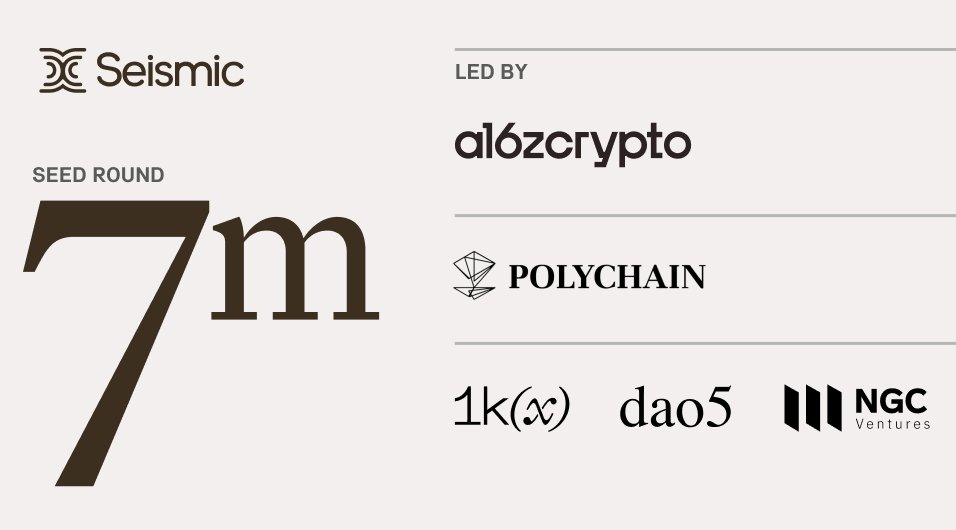
#Seismic #Web3 #PrivacyBlockchain #Fintech #CryptoInfrastructure #PrivateSmartContracts #Compliance #Web3Builders #BlockchainForBusiness #InstitutionalWeb3 @SeismicSys
1
8
Why Seismic Came Up Again and Again (Even When We Tried to Ignore It)
This wasn’t a single decision.
It didn’t happen in one meeting.
It happened in fragments.
From a Developer Call
Someone said:
“I’m tired of asking myself whether this variable should be public.”
Then they listed what kept slowing them down.
. Constant visibility checks
. Splitting logic just to hide internals
. Extra contracts for no functional reason
. Fear of shipping the ‘wrong’ feature
That wasn’t about performance.
It was about mental overhead.
From a Product Discussion
Different meeting. Different tone.
“Users don’t complain, but they assume discretion.”
Notes from that call:
. People don’t read block explorers
. But they don’t expect to be on them either
. Trust erodes silently
. You notice it late
Seismic entered the conversation as a way to stop relying on assumptions.
From an Ops Perspective
This one was practical. No philosophy.
. How do we explain this to a partner?
. What happens during an audit?
. Which data are we forced to expose?
. What can we choose not to?
The concern wasn’t “privacy maximalism”.
It was control.
Seismic felt structured where others felt ad-hoc.
From a Founder’s One-Liner
This came up in passing, not as a speech.
“I don’t want our architecture to become a liability.”
That sentence stayed.
Not because of fear.
Because of experience.
We Tried to Argue Against It
To be honest, we did.
. “Isn’t this too early?”
. “Are we overengineering?”
. “Do we really need this now?”
But every counter-argument depended on nothing going wrong later.
That’s a weak assumption.
What Felt Different With Seismic
Not excitement.
Not speed.
Defaults.
. Private by default
. Public only when intentional
. No accidental exposure
. No remembering to ‘hide’ things
That reduced background anxiety.
An Unexpected Side Effect
Once privacy wasn’t a constant concern:
. Design discussions got shorter
. Code reviews focused on logic, not exposure
. Features weren’t delayed for visibility reasons
. Roadmaps felt cleaner
Infrastructure stopped interfering with product thinking.
Compliance Came Up — Calmly
Usually compliance enters as panic.
This time it didn’t.
. We could describe data boundaries clearly
. We didn’t need exceptions for every case
. We didn’t feel like we were improvising
That alone changed the tone of conversations.
Why This Didn’t Feel Like a “Bold Move”
Seismic didn’t feel bold.
It felt… reasonable.
. No new language
. No exotic tooling
. No niche hiring needs
. No architectural gymnastics
It didn’t ask us to believe in a future.
It asked us to avoid obvious problems.
Who This Choice Keeps Making Sense For
Over time, a pattern became clear.
Seismic resonates with teams who:
. Have already patched privacy once
. Expect scrutiny eventually
. Care about credibility more than hype
. Don’t want infrastructure drama
If you’ve never been burned, it sounds boring.
If you have, it doesn’t.
Final Note From the Margin
Someone wrote this at the end of a doc:
“This won’t impress anyone on launch day.
But it won’t hurt us later.”
That’s not marketing copy.
But it’s a solid reason to choose infrastructure.
Conclusion
Seismic didn’t win because it shouted the loudest.
It won because it kept reappearing in serious conversations.
Not when people dreamed.
When they worried.
And in infrastructure decisions,
that’s usually when choices become real.
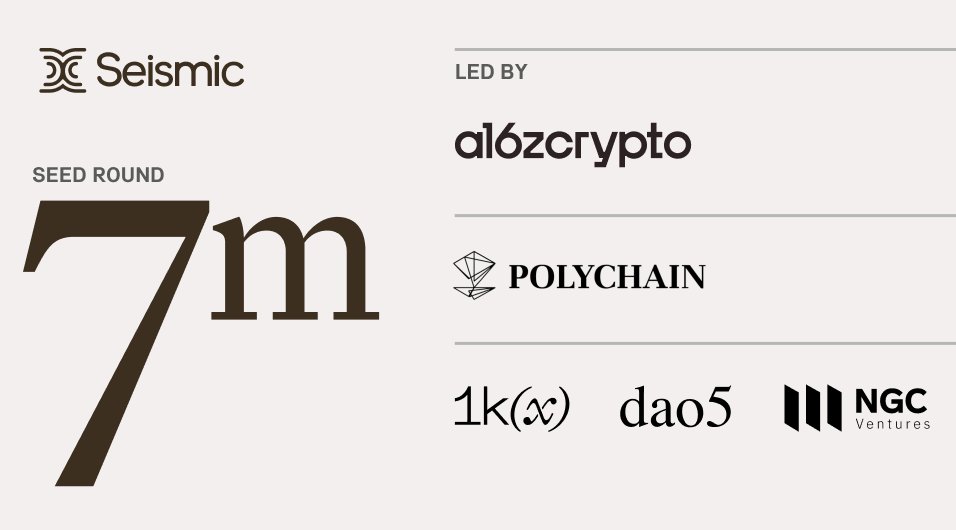
#Seismic #Web3 #PrivacyBlockchain #Fintech #CryptoInfrastructure #PrivateSmartContracts #Compliance #Web3Builders #BlockchainForBusiness #InstitutionalWeb3 @SeismicSys
1
3
23
31 Dec 2025
Why Choosing Seismic Is Often About Avoiding the Wrong Decision
Most teams don’t choose a blockchain because it’s perfect.
They choose one because it feels good enough at the time.
That’s where mistakes usually begin.
The Silent Fear Behind Infrastructure Choices
No one says this out loud, but it’s always there:
“What if this decision looks stupid in a year?”
Not because the tech is bad.
But because the context changes.
. More users
. More money
. More visibility
. More responsibility
Infrastructure decisions don’t stay frozen in time.
Public Blockchains Age in a Very Specific Way
Early on, public-by-default feels empowering.
Later, it feels risky.
. User behavior becomes traceable
. Financial patterns become readable
. Internal logic becomes inferable
. Strategic moves become predictable
None of this is a bug.
It’s how public ledgers work.
The mistake is assuming this won’t matter later.
Why “We’ll Deal With It Later” Rarely Works
Later is when things are hardest to change.
By then:
. Contracts are deployed
. Users are onboarded
. Partners are integrated
. Trust assumptions are set
Every fix becomes a negotiation.
Seismic is often considered by teams who want to decide once, not renegotiate architecture forever.
Privacy Isn’t the Goal — Predictability Is
This is where Seismic feels different.
It’s not selling secrecy.
It’s selling predictable outcomes.
. Private stays private
. Public is intentional
. No accidental exposure
. No constant reevaluation of visibility
That predictability reduces decision fatigue across the team.
The Psychological Cost of Fragile Architecture
Fragile systems create invisible stress.
Teams start asking:
. “Can we ship this safely?”
. “Will this leak something?”
. “Are we exposing too much?”
. “Will this come back to bite us?”
With Seismic, those questions come up less often.
Not because nothing can go wrong —
but because fewer things are structurally wrong.
Why Developers Aren’t the Only Ones Who Care
Infrastructure decisions affect everyone.
. Product teams worry about user trust
. Ops teams worry about audits
. Founders worry about reputation
. Partners worry about risk
Seismic tends to align these concerns instead of forcing trade-offs.
Avoiding the “Second Rewrite”
Many teams go through this cycle:
Build fast
Learn painfully
Rewrite under pressure
Seismic is often chosen to skip step three.
. Privacy is already there
. Compliance isn’t hostile
. Tooling remains familiar
. Architecture doesn’t collapse as stakes rise
It’s not exciting — it’s stabilizing.
Why This Decision Rarely Feels Celebratory
Teams don’t celebrate choosing Seismic.
There’s no “wow” moment.
Instead, there’s a quieter feeling:
. “We won’t regret this.”
. “This won’t embarrass us later.”
. “This choice will age reasonably.”
That’s a different kind of confidence.
Who This Line of Thinking Fits
This mindset usually resonates with teams that:
. Have already rebuilt once
. Handle real money
. Expect scrutiny eventually
. Value defensibility over novelty
. Think about long-term credibility
If none of this worries you yet, Seismic will sound unnecessary.
If it does — it won’t.
Conclusion
Seismic is rarely chosen because it feels bold.
It’s chosen because it feels safe in hindsight.
Not safe as in boring.
Safe as in defensible.
Infrastructure is not about showing off.
It’s about not having to explain yourself later.
And that’s the quiet problem Seismic is built to solve.
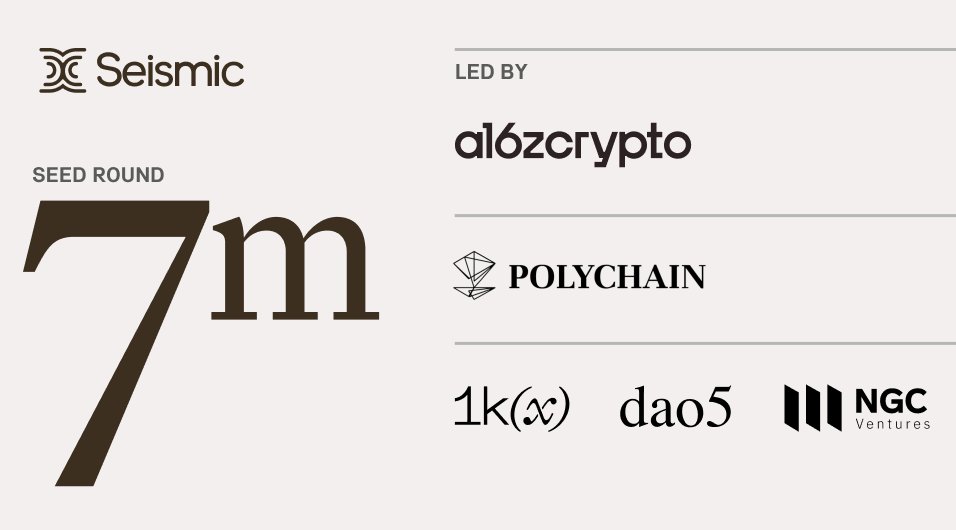
#Seismic #Web3 #PrivacyBlockchain #Fintech #CryptoInfrastructure #PrivateSmartContracts #Compliance #Web3Builders #BlockchainForBusiness #InstitutionalWeb3 @SeismicSys
1
24
22 Dec 2025
Why Choose Seismic: A Practical Checklist for Teams Building Real Products
When teams evaluate a blockchain, most content online sounds the same: faster, cheaper, more scalable.
In reality, teams do not fail because a chain is slow — they fail because the chain was never designed for how products actually operate.
This article is written as a decision checklist.
If you answer “yes” to many of these points, Seismic is likely a strong fit.
1. Do You Handle Data That Cannot Be Public?
Public blockchains assume radical transparency.
Real products rarely can.
If your application involves:
. User balances that should not be publicly traceable
. Salary, payroll, or compensation data
. Credit decisions or risk models
. Business relationships or vendor payments
. Internal treasury movements
Then a public-by-default blockchain will eventually become a liability.
Seismic is designed for this exact scenario.
2. Do You Want Privacy Without Becoming a Cryptography Expert?
Many privacy-focused chains require developers to deeply understand cryptography, ZK circuits, or custom execution models.
Seismic takes a different path.
. Privacy handled at the protocol level
. No need to design custom privacy logic per contract
. Developers focus on business logic, not cryptographic plumbing
. Reduced risk of implementation mistakes
This matters because most bugs happen at the application layer — not the protocol layer.
3. Do You Need to Control What Is Visible, Not Hide Everything?
Some privacy systems hide everything from everyone.
That sounds good — until teams need structure.
Seismic is built around controlled visibility.
. Sensitive state stays private
. Outcomes can be made public when needed
. Auditors can receive limited, intentional access
. Compliance does not require full transparency
This mirrors how real financial systems work off-chain.
4. Do You Want to Keep Using Solidity and Ethereum Tooling?
Rewriting everything in a new language is expensive.
Seismic deliberately avoids this cost.
. Full EVM compatibility
. Solidity smart contracts
. Standard Ethereum developer tools
. Minimal retraining for engineering teams
This lowers friction for startups and makes hiring easier long-term.
5. Do You Expect Regulatory or Partner Questions in the Future?
Many teams ignore compliance early — until it becomes unavoidable.
Typical triggers include:
. Banking partners
. Payment providers
. Enterprise customers
. Geographic expansion
Seismic is often chosen before or after this moment.
. Transaction screening without full data exposure
. Auditability with selective disclosure
. Architecture compatible with regulated environments
. No need to abandon decentralization to satisfy requirements
This reduces painful migrations later.
6. Are You Building for a Team, Not a Single Developer?
Most blockchains assume a solo developer mindset.
Real products are built by teams.
Seismic supports organizational reality.
. Private internal workflows
. Clear separation between internal logic and public outputs
. Systems that scale with team size and complexity
. Infrastructure suitable for real companies
This matters as soon as a project grows beyond an MVP.
7. Are You Trying to Avoid Future Refactors and Emergency Migrations?
A common story in Web3:
1. Launch fast on a public chain
2. Gain users
3. Data exposure becomes obvious
4. Hacks and workarounds pile up
5. Migration becomes painful
Seismic is often chosen to avoid this story entirely.
. Privacy from day one
. Fewer architectural compromises
. Less technical debt over time
. Better long-term stability
It is a defensive choice — and good infrastructure usually is.
8. How Seismic Compares in Real Decisions
Compared to Public L1s
. Public-by-default data leaks sensitive information
. Privacy requires fragile add-ons
. Long-term risk increases with adoption
Compared to ZK-Heavy Privacy Chains
. Steep learning curve
. Limited developer pool
. Slower iteration
Compared to Privacy Extensions or L2s
. Fragmented guarantees
. Complex architecture
. Inconsistent privacy assumptions
Seismic often wins by being simple where it matters.
9. Who Should Seriously Consider Seismic
Seismic is not for everyone — and that is intentional.
It is a strong choice for teams that:
. Handle sensitive financial data
. Expect real users and real money
. Care about developer productivity
. Want privacy without chaos
. Think long-term instead of narrative-driven
If radical transparency would hurt your product, Seismic deserves attention.
Conclusion
Choosing a blockchain is not about what sounds impressive today.
It is about what causes fewer problems tomorrow.
Seismic is often chosen quietly, after comparison, when teams realize that privacy, control, and usability cannot be bolted on later.
It does not try to be everything.
It tries to be the right tool for serious products.
And for many teams, that is exactly why it gets chosen.
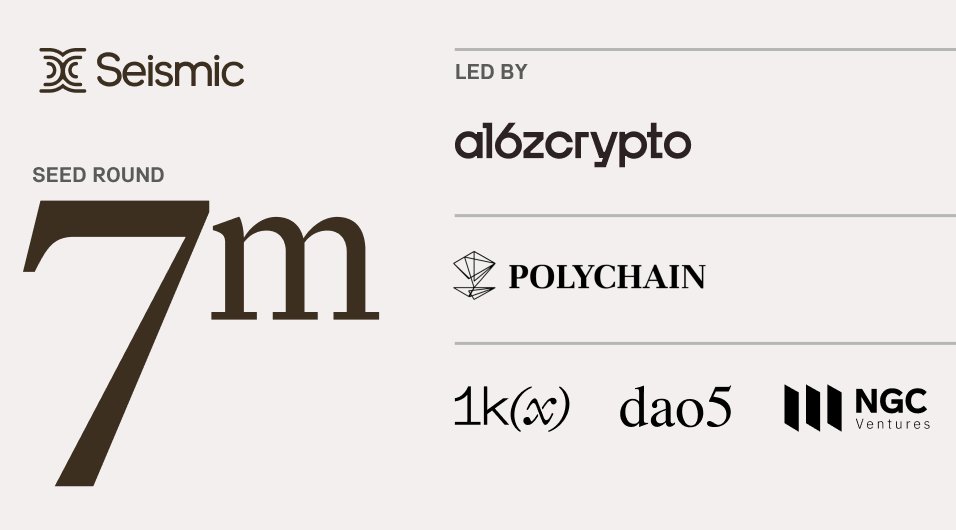
#Seismic #Web3 #PrivacyBlockchain #Fintech #CryptoInfrastructure #PrivateSmartContracts #Compliance #Web3Builders #BlockchainForBusiness #InstitutionalWeb3 @SeismicSys
1
16
19 Dec 2025
Why Choose Seismic: The Blockchain Designed for Privacy, Compliance, and Real Adoption
Blockchain technology promised a new financial system, but most networks were never designed to handle real-world financial requirements. Transparency by default, fully public smart contracts, and exposed transaction flows make many existing chains unsuitable for fintech, enterprises, and regulated institutions.
Seismic exists to fix this structural mismatch.
Rather than optimizing for speculation or experimentation, Seismic is built as production-grade infrastructure — where privacy, compliance, and usability are treated as first-class requirements.
1. Privacy Is the Default State of the Network
On traditional blockchains, privacy is optional and fragile. Developers rely on mixers, zero-knowledge circuits, or complex workarounds that increase cost and risk.
Seismic approaches privacy differently.
. Encrypted transactions by default
. Private smart contract state
. Confidential execution environment
. Controlled data visibility instead of full exposure
This means applications are private from day one, not after expensive retrofitting.
2. Built for Financial Infrastructure, Not Just Crypto Apps
Many blockchains are optimized for DeFi experiments but fail when exposed to real financial constraints.
Seismic is designed specifically for financial-grade applications.
. Private payments and settlements
. Confidential lending, credit, and payroll systems
. On-chain treasury management
. Built-in support for compliance workflows
. Integration-friendly architecture for fiat rails and payment cards
This makes Seismic suitable not only for crypto-native teams, but also for fintechs, enterprises, and institutions entering Web3.
3. EVM Compatibility Without Sacrificing Privacy
Most privacy-focused chains require new programming models and unfamiliar tools. This slows developer adoption and limits ecosystem growth.
Seismic avoids this trap.
. Full EVM compatibility
. Solidity-based smart contracts
. Standard Ethereum tooling
. Minimal learning curve for developers
Builders get Ethereum familiarity combined with native privacy guarantees, a rare combination in Web3.
4. Privacy That Preserves Composability
Privacy often comes at the cost of interoperability. Seismic is designed to protect sensitive data while remaining composable.
. Private contracts can interact with public contracts
. Hybrid public–private application models
. Selective transparency when needed
. No isolation from the broader Web3 ecosystem
This enables real multi-chain and DeFi integrations without exposing sensitive information.
5. Designed for Compliance, Not to Avoid It
Many privacy solutions are incompatible with regulatory realities. Seismic takes the opposite approach.
. Transaction screening without full data exposure
. Auditability with controlled disclosure
. Support for reporting and investigations
. Compliance-ready architecture for institutions
This makes Seismic viable in jurisdictions where fully opaque systems cannot operate.
6. How Seismic Compares to Other Approaches
Compared to Public Blockchains
. Public-by-default data exposes sensitive financial activity
. Unsuitable for payroll, lending, and enterprise finance
. Privacy requires fragile add-ons
Seismic provides privacy at the protocol level.
Compared to ZK-Only Privacy Chains
. High complexity and development cost
. Limited EVM compatibility
. Slow iteration cycles
Seismic balances privacy with developer usability.
Compared to Privacy Add-Ons and L2s
. Fragmented privacy guarantees
. Complex integrations
. High operational risk
Seismic delivers consistent, network-wide privacy.
7. Built for Long-Term Stability, Not Short-Term Narratives
Seismic is not chasing trends. It is built with a long-term infrastructure mindset.
. Designed for gradual decentralization
. Built to evolve alongside regulation
. Focused on reliability over hype
. Infrastructure-first, application-agnostic
This approach mirrors how real financial systems are built and maintained.
8. A Strategic Choice for Builders and Institutions
Choosing Seismic means choosing:
. Privacy without sacrificing usability
. Compliance without abandoning decentralization
. Familiar development with next-generation security
. A blockchain designed for real economic activity
For teams aiming to move from proof-of-concept to production, Seismic offers a realistic and scalable foundation.
Conclusion
Seismic is not trying to compete with every blockchain.
It is addressing the part of the market most chains ignore.
By combining protocol-level privacy, EVM compatibility, compliance-aware design, and financial-grade infrastructure, Seismic positions itself as a blockchain built for real adoption, not just experimentation.
If Web3 is going to support real money, real businesses, and real users,
Seismic is one of the few chains designed to make that possible.
#Seismic #Web3 #PrivacyBlockchain #Fintech #CryptoInfrastructure #EVM #PrivateSmartContracts #Compliance #DeFi #BlockchainTechnology #Web3Finance #InstitutionalCrypto
1
1
17

26 Nov 2025
⚙️ FHE dApps: Things That Were Impossible Before
Zama Protocol unlocks an entirely new design space —
the kind of apps no blockchain could ever support until now. 🚀
You can finally build:
🟡 private DeFi protocols
🟡 confidential auctions (no frontrunning ever again)
🟡 private AI agents running on encrypted data
🟡 games with hidden logic (real, provable fairness)
🟡 verifiable but invisible reputation systems
FHE flips the script:
your data stops being public property — and becomes your unfair advantage.
#Zama #FHE #Web3Innovation #PrivateSmartContracts #ConfidentialCompute #ZamaCreatorProgram

10
66
454

19 Nov 2025
Let’s be brutally honest: 99% of L2s are just cheaper Ethereum clones. @tenprotocol is the first chain that actually expands what’s possible on-chain.
TEN integrates three technologies no other L2 has combined correctly:
1️⃣ TEE-based confidential compute → smart contract logic is hidden but verifiable
2️⃣ Encrypted TX flow → kills MEV, front-running, and intent extraction
3️⃣ On-chain AI agents → autonomous, stateful, enclave-protected decision-making
This unlocks things the entire industry has failed to build for years:
• Real on-chain PvP gaming where info asymmetry matters
• Private auctions, sealed-bid markets, confidential strategies
• Agents that store memory & adapt without leaking data
• Game loops executed at real-time latency
• RNG that is cryptographically fair without oracles
• Encrypted rollups that maintain EVM compatibility
People still underestimate what happens when you merge privacy, AI, and high-performance execution into a single L2.
This isn’t a new chain — it’s a new computing model for Ethereum.
If you’re tracking the next narrative that builders, funds, and AI-native gamers will rotate into…
You’re looking at it.
#TENProtocol #CookieFun #TEN #EncryptedCompute #PrivateSmartContracts #Rollups #DePIN #Web3Infrastructure
36
4
34
343

9 Nov 2025
Noir Open Block Blockchain The Future.
Blockchain in E was an open letter.
When you write a power contract in Solidity,
everything you do every logic, condition, transaction can be seen.
But should everything be made public?
Is all information always needed?
@aztecnetwork answer no.
Noir was created for them as a language for a world where developers get privacy and composability.
Noir is easy to look at, and write, like regular Solidity.
But its output is completely different
encrypted proofs,
where execution is executed, but logic or information is never revealed.
Think, you
“This contract will only work if the balance is > 100.”
In Ethereum, blood is visible.
But Noir it can only be seen
✅ The contract is true,
❌ But no one will know the condition key identity.
Programmable privacy for Noir developers
A new realm, where privacy is not an obstacle, but a force.
Here the ying is not just to see,
to create trust from the secret.
Like seeing what one does with magic but its hidden,
not enough... but, okay without revealing everything.
It’s not just a language, it’s a privacy-native programming paradigm.
Where blockchain first gets its own secret grammar.
💬 Noir is the language,
which is said “Transparency does not mean exposure.”
#AztecNetwork #Noir #ZeroKnowledge #PrivateSmartContracts

7
8
86

19 Sep 2025
🔐 Private smart contracts are no longer optional — they’re operational.
Industries today need:
📜 Contract automation with selective visibility
👥 Role-bound access per workflow (e.g. HR, finance, legal)
📡 Smart triggers from internal systems
🧾 Immutable yet confidential audit logs
Jumbo enables domain-specific private infra — fully modular, security-first, and deployment-ready.
Visit jumbochain.org to know more!
#PrivateSmartContracts #ModularInfra #ConfidentialOps #JumboStack
7
19
265

18 Aug 2025
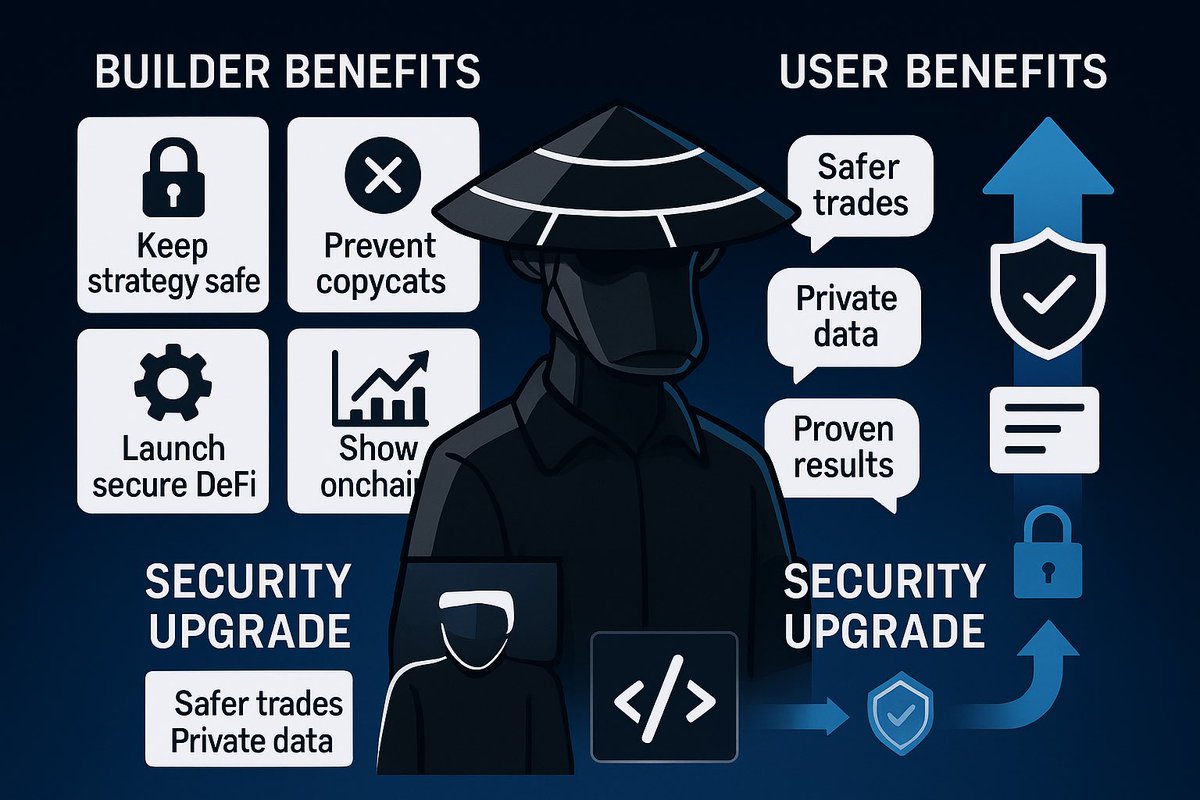
How TEN Keeps Your Smart Contracts Private and Secure
Smart contracts are the backbone of DeFi. They automate trades, loans, and all kinds of transactions without middlemen. But there is a problem. These contracts are public, so anyone can see the code. That means your trading strategy or financial logic is visible to competitors. They can copy it or front-run your trades.
TEN solves this by encrypting smart contracts. Your code stays hidden while the contract runs on the blockchain. This makes your logic private. You can run complex strategies with confidence because TEN’s verifiable compute confirms the contract executes correctly. No one can cheat or change it.
For example, a developer created a private yield farming contract using TEN’s tools. It earned 6 percent in a month. Nobody could peek at the code or steal the strategy. The results were visible onchain, but the method stayed private.
If you build on DeFi, TEN’s encryption tools protect your work and give you an edge. You get peace of mind knowing your contract is safe from prying eyes without giving up transparency. Check out TEN’s smart contract tools for a secure way to build.
#TENProtocol #PrivateSmartContracts
61
16
62
293
6 Aug 2025
Seismic: The First Layer 1 Where Privacy Is Not an Add-On — It’s the Core
Public blockchains were born to replace trust with transparency.
For years, this transparency was Web3’s greatest asset — every transaction, every contract, every vote, fully visible to anyone.
But over time, the industry has realized a truth:
Total transparency is a double-edged sword.
When everything is visible, strategies get stolen, votes get manipulated, games get ruined, and sensitive data becomes public forever.
Seismic exists to change that — forever.
It’s an EVM-equivalent Layer 1 that makes confidential computing a default property, allowing developers to build apps that are composable, secure, and private from day one.
The Problem: Web3’s Transparency Tax
In today’s public-by-default blockchains:
✅ DeFi strategies are copied or front-run by MEV bots within seconds.
✅ DAOs suffer from vote-buying and social coercion due to public ballots.
✅ GameFi projects leak game logic, ruining gameplay before launch.
✅ NFT auctions get rigged by visible bids and sniping.
✅ RWA projects can’t legally operate because contracts reveal sensitive information.
✅ Users lose privacy the moment they make a transaction — their financial life is forever public.
Transparency is great for verifiability. But it’s terrible for security, innovation, and fairness.
Seismic’s Vision: A Blockchain That Knows How to Keep Secrets
Seismic flips the script. It’s a Layer 1 built around privacy, not in spite of it.
✅ Private smart contract execution — logic and state stay hidden from the public and node operators.
✅ Encrypted state & memory access — sensitive variables remain confidential while still usable in computation.
✅ EVM-equivalent architecture — run existing Solidity code with almost no modification.
✅ Full composability — private contracts can still interact with each other without leaking data.
✅ Hardware-backed trust — powered by Intel TDX TEEs for verifiable, tamper-proof execution.
What You Can Build on Seismic
Seismic’s confidentiality model unlocks an entirely new class of applications that simply can’t exist on transparent blockchains.
✅ Stealth DeFi — AMMs, lending protocols, and strategies immune to MEV.
✅ Confidential DAOs — votes and proposals hidden until execution.
✅ Private NFT Auctions — sealed bids and undisclosed reserves.
✅ Real Gaming Mechanics — fog-of-war, secret moves, hidden resources.
✅ Enterprise Contracts — IP-protected business logic.
✅ Identity & Reputation — selective disclosure without exposing all data.
✅ RWA Compliance — meet regulatory requirements without public data leaks.
How It Works: TEEs EVM = Confidential Compute
At the heart of Seismic is Intel TDX-based Trusted Execution Environments (TEEs). These secure enclaves create an isolated execution space for smart contracts:
✅ Code and data are encrypted in memory and storage.
✅ Even validator operators cannot see what’s running inside.
✅ Contracts are remotely attested so users can verify their authenticity.
✅ State transitions are verified and finalized like any other blockchain — but internal details remain hidden.
✅ New opcodes (CLOAD, CSTORE) enable encrypted storage alongside public EVM storage.
This is not theoretical cryptography — it’s hardware you can deploy right now.
Developer Experience: No Friction, Maximum Privacy
One of Seismic’s guiding principles is developer-first design. That means:
✅ No new languages — just Solidity.
✅ No special frameworks — works with Hardhat, Foundry, Viem, Ethers.js, MetaMask.
✅ No complicated ZK circuits — privacy is automatic via hardware enclaves.
✅ Standard deployment — same workflow as Ethereum.
If you can build on Ethereum, you can build on Seismic — but with native confidentiality baked in.
Composability Is Not Lost — It’s Upgraded
Other privacy-focused chains sacrifice composability to protect secrecy.
Seismic doesn’t.
✅ Private contracts can interact seamlessly.
✅ Encrypted data can flow between contracts securely.
✅ Public and private logic can mix when needed.
✅ Developers can design complex multi-contract systems without fear of data leaks.
It’s like Ethereum, but every function has a lock on it — and you hold the key.
Why This Changes the Game for Enterprises
Enterprises have historically avoided public blockchains because:
✅ They leak competitive business logic.
✅ They expose sensitive customer or partner data.
✅ They can’t comply with confidentiality clauses in contracts.
Seismic makes public blockchain enterprise-safe:
✅ Confidential supply chain contracts.
✅ Private trade finance agreements.
✅ Secure intellectual property registries.
✅ Internal corporate governance voting.
For the first time, a public chain can meet enterprise confidentiality requirements.
The Trust Model: Practical, Not Perfect
Seismic is upfront: TEEs have limitations. Side-channel attacks are a concern, which is why:
✅ Validators are initially restricted to trusted cloud providers.
✅ Intel TDX and AMD SEV-SNP offer modern protections against hypervisor attacks.
✅ The architecture is designed to evolve alongside confidential computing advancements.
This is not blind trust. It’s pragmatic, verifiable trust with real-world deployment in mind.
The Future Is Confidential
If Ethereum gave us programmability, Seismic gives us protection.
It’s the missing piece of Web3 infrastructure — one that enables fairer markets, better games, safer governance, and enterprise adoption.
✅ EVM-equivalent
✅ Confidential by default
✅ Composable private contracts
✅ Hardware-backed security
✅ Developer-friendly from day one
The next wave of Web3 innovation won’t be fully public — and it won’t be off-chain.
It will be confidential, composable, and on Seismic.
#Seismic #ConfidentialComputing #Layer1 #PrivateSmartContracts #EVMCompatible #Solidity #DeFiPrivacy #GameFiSecurity #DAOPrivacy #IntelTDX #ComposablePrivacy #EnterpriseBlockchain #Web3Infrastructure #CryptoInnovation @SeismicSys
1
11

3 Aug 2025
Privacy isn’t a luxury it’s infrastructure.
@tenprotocol is the missing layer that makes Web3 secure, usable, and enterprise ready.
The next gen of DeFi, identity, and coordination will be built here.
#Web3Infra #TEE #PrivateSmartContracts
@tenprotocol

3
2
76
2 Aug 2025
Seismic: The Confidential Smart Contract Platform Web3 Has Been Waiting For
In a world of open ledgers and transparent code, Web3 has a visibility problem.
Not everything should be public. Not every transaction, not every vote, not every contract logic.
And yet — most chains are designed with radical transparency by default.
Seismic flips that on its head. It’s the first EVM-compatible Layer 1 that is:
✅ Private by design
✅ Composable by architecture
✅ Developer-friendly by intention
It brings confidentiality to smart contracts the way HTTPS brought security to the web — invisibly, reliably, and universally.
The Web3 Privacy Gap
Public blockchains have been a gift for openness, but a curse for privacy.
✅ DeFi strategies get copied in real time
✅ Game mechanics get reverse-engineered before launch
✅ DAO votes get influenced before they're even finalized
✅ On-chain identities get exposed and tracked
✅ Legal or business logic leaks from smart contract transparency
Web3 promised sovereignty. But true sovereignty includes the right to choose who sees what.
That’s where Seismic comes in.
What Seismic Enables That Ethereum Can’t
Confidential computing opens an entirely new design space.
Here’s what builders can finally create:
✅ Fair auctions where bids are hidden until the end
✅ AMMs with anti-front-running private liquidity logic
✅ Games with sealed moves and hidden states
✅ DAOs with anonymous proposals and encrypted voting
✅ Real-world asset systems with private ownership logic
✅ Identity layers with selective disclosure
Ethereum can't do this. Rollups struggle to.
But Seismic can — and does.
How Seismic Works: Privacy Through Secure Enclaves
Seismic uses Intel TDX-based Trusted Execution Environments (TEEs) to isolate your smart contracts from public view.
✅ Code runs inside hardware-isolated environments
✅ State variables and contract logic are hidden from node operators
✅ Only the final result of execution is exposed — never the reasoning
✅ Contracts are attested — you can trust what's running
✅ Entire applications live inside a privacy-preserving shell
It’s the equivalent of end-to-end encryption — but for smart contracts.
Full Privacy, Without Sacrificing Composability
One of the biggest breakthroughs of Seismic is that it avoids the trade-off between privacy and composability:
✅ Private contracts can still call other private contracts
✅ Data can be passed between enclaves without being decrypted publicly
✅ Seismic preserves the modularity Ethereum developers expect
✅ Think "microservices" — but every one of them is confidential
You don't lose the benefits of open architecture. You just gain control over exposure.
What It Feels Like to Build on Seismic
You don't need to learn a new language. You don’t need to rewrite your brain.
✅ Write contracts in Solidity
✅ Use your favorite tools: Foundry, Hardhat, Viem, MetaMask
✅ Deploy apps just like you would on Ethereum
✅ But with confidentiality built-in by default
It’s plug-and-play privacy.
Not a workaround. Not a patch.
A first-class feature.
Why This Changes Everything
Privacy doesn’t just protect users — it enables products.
✅ Imagine a game that launches without fear of being cloned
✅ Imagine a DeFi strategy that stays proprietary
✅ Imagine DAOs where ideas can be shared without reputational risk
✅ Imagine a messaging app on-chain — with encryption baked in
✅ Imagine Web3 where confidentiality isn’t a privilege, it’s a standard
This isn’t just innovation. It’s evolution.
Seismic in Practice
✅ L1 performance
✅ EVM compatibility
✅ Native confidentiality
✅ No zk-circuit development
✅ Enclave-based trust model
✅ Composable modules
✅ Seamless developer experience
It’s like building on Ethereum — if Ethereum knew how to keep secrets.
Final Thoughts
Seismic is not about hiding everything.
It’s about giving builders the choice.
What to show.
What to hide.
What to share — and with whom.
In a world obsessed with decentralization, we forgot something:
True freedom includes the power to be invisible.
Seismic gives that back.
#Seismic #EVM #ConfidentialComputing #Layer1 #PrivateSmartContracts #TrustedExecutionEnvironments #Solidity #ComposablePrivacy #Web3Infrastructure #DeFiPrivacy #GameFiSecurity #DAOInnovation #IntelTDX #BlockchainPrivacy @SeismicSys
1
14

1 Aug 2025
There’s something refreshing about $TEN.
It’s not trying to be the loudest chain or throw buzzwords around. It’s just focused on solving one of crypto’s real problems: privacy that works.
I’ve always believed some parts of the chain should be public but not everything. $TEN gets that. It lets you build smart contracts that blend public and private logic, so you don’t have to expose every trade, vote, or strategy just to be on chain.
@cookiedotfun
What makes $TEN stand out is how it protects your logic without killing usability. No new coding language, no crazy learning curve just Solidity, encrypted. For builders, that’s huge.
You can finally create apps where users can interact freely without giving up everything. Think private auctions. Hidden strategies. Secure DAOs. It’s not just cool it’s practical.
$TEN doesn’t feel like an experiment. It feels like a tool we’ve been waiting for.
@tenprotocol | $TEN | #TEN #EncryptedEthereum #PrivateSmartContracts #cookiedotfun
NOMAD | GHOST

1
2
68
1 Aug 2025
Why Seismic Is the Confidential Layer 1 Web3 Has Been Waiting For
As Web3 scales, the conversation is shifting from can we scale? to can we protect what we build?
Seismic is answering that question — by making confidentiality native, composable, and developer-friendly.Imagine writing Solidity like you always do…
But now your code, storage, and logic are invisible to everyone — including node operators.That’s Seismic: the first confidential EVM chain where privacy is a default, not an afterthought.
What Makes Seismic Different?
Most Layer 1s talk about scalability, throughput, or fees.
Seismic talks about something deeper: control over visibility.
Because in a permissionless world, privacy is power.
✅ Confidential by default — logic and storage are fully hidden
✅ EVM-native — no need to learn a new language or framework
✅ Secure enclaves (Intel TDX) — battle-tested hardware privacy
✅ Fully composable — Seismic contracts can interact, privately
✅ Developer-first — supports MetaMask, Hardhat, Foundry, ViemThis is not another privacy add-on. It’s privacy at the root layer.
What You Can Build on Seismic
Once privacy is native, the design space for dApps explodes:
✅ DeFi with sealed bids and hidden strategies
✅ GameFi with secret player states and hidden mechanics
✅ DAOs with anonymous voting and confidential governance
✅ Private identity with encrypted user traits
✅ Real-world asset systems with protected legal logic
✅ Fairer auctions, private matching engines, anti-front-run AMMsNo zk circuits. No bridge risk. No tooling friction.
Just Solidity — but private.
How Seismic Protects Your Contracts
At the heart of Seismic are Intel TDX-powered Trusted Execution Environments (TEEs). These secure enclaves let your code run in isolation from the outside world:
✅ Your contract code is never visible on-chain
✅ Your state (variables, logic) is encrypted and sealed
✅ Node operators can't see what’s happening inside
✅ Enclaves are attested — you know exactly what you're interacting with
✅ Only the final output is revealed, not the internal decision-makingIt’s like deploying a black-box smart contract: verifiable, but unreadable.
No Trade-Offs: Privacy Without Losing Composability
In many systems, privacy comes at the cost of interoperability.
Seismic avoids that entirely.
✅ Contracts on Seismic can call each other while preserving confidentiality
✅ Data is encrypted but still shareable between private modules
✅ Public interfaces, private internals — like API keys in Web2
✅ Deploy and compose like Ethereum — but shielded by defaultIt’s what Web3 has been missing: secure modularity.Why Builders Love Seismic
Seismic doesn’t ask devs to reinvent the wheel — it gives them a better one.✅ Use Solidity and existing tooling
✅ Compatible with MetaMask, Hardhat, Foundry, Viem
✅ Easy contract deployment with privacy built in
✅ No need to learn zk-specific DSLs or manage cryptographic proofs
✅ Enables apps that can’t exist anywhere elsePrivacy isn't a feature — it’s a capability that lets you ship better products.A Chain That Thinks About UX — For Devs and Users
✅ Developers get full privacy without new mental models
✅ Users get confidentiality without wallet friction
✅ UX stays simple — no need to switch networks or manage tokens differently
✅ Full L1 functionality, including composable dApps and DeFi protocolsWeb3 privacy shouldn’t be hard.
Seismic makes it invisible.Seismic in One Sentence
Seismic gives Web3 the right to keep secrets — and the tools to build with them.
This Is the New Confidential Layer 1
Seismic is not a fork. It’s not a rollup. It’s not a plugin.It’s a new foundation for a world where users don’t want to be tracked, DAOs don’t want coercion, and founders want a moat.Because in a world of open-source everything, privacy is the last true edge. It’s time for a Layer 1 that protects builders, not just balances. That’s Seismic.
#Seismic #ConfidentialComputing #Layer1 #Web3Privacy #PrivateSmartContracts #TrustedExecution #EVMCompatible #Solidity #DeFiPrivacy #GameFiInnovation #PrivateDAOs #IntelTDX #ComposablePrivacy
2
23