
Blinking an LED is a great start, but what happens when your project actually needs to talk to the real world?
If you want to move beyond basic electronics and build hardware that solves actual industry problems, learning the ESP32 is one of the highest-ROI skills you can pick up.
Here are 3 reasons why the ESP32 is an absolute powerhouse for real-world applications:
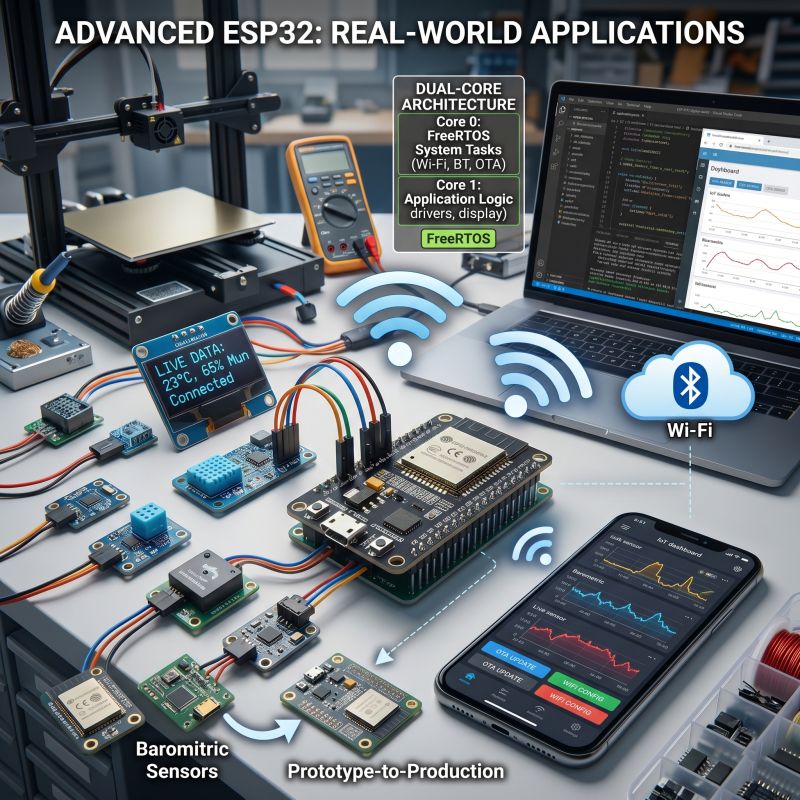
1️⃣ Out-of-the-Box Connectivity - In 2026, standalone devices are practically obsolete; everything is connected. The ESP32’s native Wi-Fi and Bluetooth/BLE capabilities mean you can instantly push sensor data to an AWS dashboard, build remote monitoring systems, or create smart home integrations without wiring up clunky, expensive add-on modules.
2️⃣ Multitasking Like a Pro - (RTOS) Real-world commercial applications don't wait in a simple delay() loop. With its dual-core architecture, the ESP32 allows you to dive into FreeRTOS. You can dedicate one core to flawlessly reading critical sensor pipelines while the second core handles heavy web server requests. This is exactly how modern embedded software is written.
3️⃣ The Prototype-to-Production Pipeline - It costs less than a decent cup of coffee, but it packs enough punch for industrial use. The massive community ecosystem and support for both MicroPython and C/C (ESP-IDF) mean you can rapidly validate an idea on a dev board this week, and design a custom PCB for mass commercial production next month using the exact same silicon.
Whether it's deploying soil monitors for smart agriculture or building industrial IoT gateways, the ESP32 is the ultimate bridge between a "lab project" and a deployable product.
📘 Full Project Guide:
ebokify.com/esp32
What was your first ESP32 build? Let’s hear about it in the comments! 👇
#EmbeddedSystems #ESP32 #IoT #Engineering #Hardware #RealWorldTech
7
173

Feb 26
Real-world impact: 🏠 @konnex_world is exploring how cross-chain tech can help in supply chain management and tokenized real estate. The possibilities are endless! 🚜💎 @konnex_world #RWA #RealWorldTech #Konnex
1
1
18

We’re building a chain
that works the way businesses already operate.
No disruption of workflows.
No unnecessary complexity.
Just infrastructure that fits reality.
That’s the difference.
#Blockchain
#Web2
#Builders
#RealWorldTech
1
4
364
After building in Web3
and seeing its limits,
we chose to build differently.
Designed for real workflows.
Built for actual use.
More soon.
#Blockchain
#Builders
#RealWorldTech
3
285

20 Nov 2025
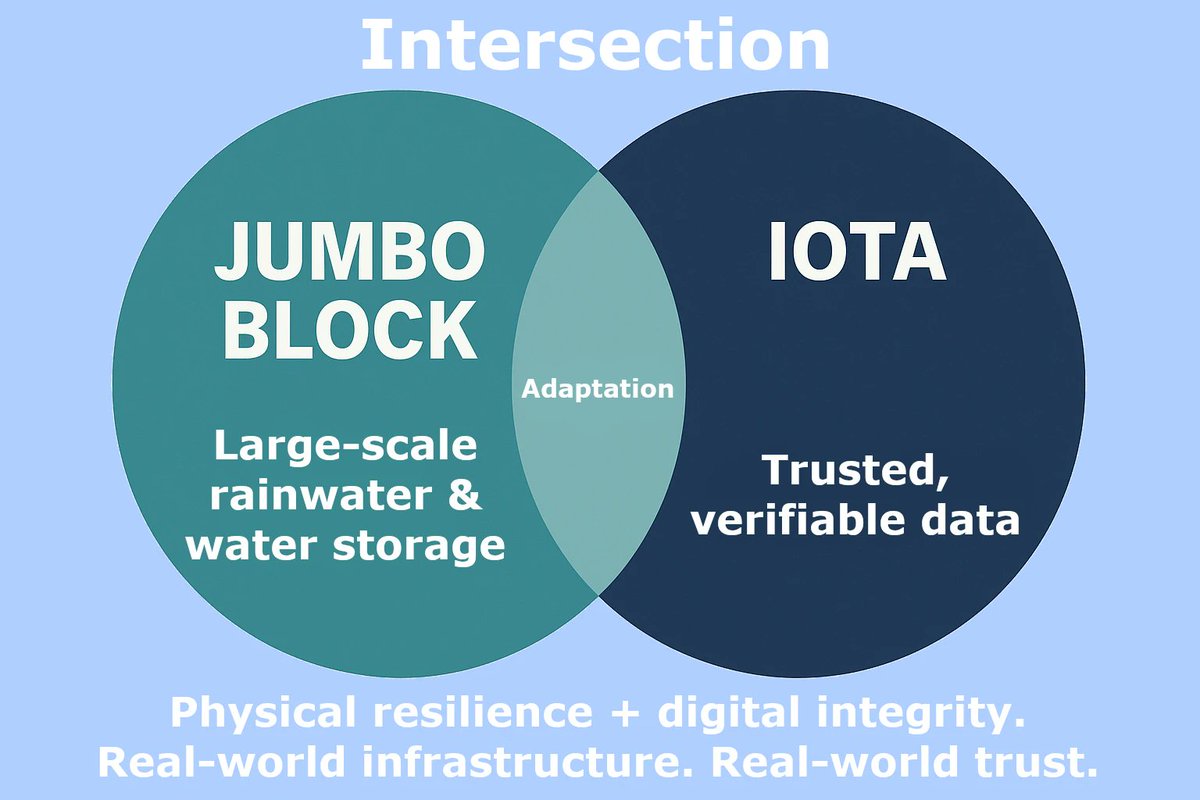
New blog post: Where Physical Resilience Meets Digital Integrity
Read the full breakdown here 👇
jumboblock.app/blog/f/where-… via @jumboblock_de
#Adaptation #Resilience #Infrastructure #JUMBOBLOCK #IOTA #TrustedData #RealWorldTech
11
33
2,797

16 Sep 2025
Imagine a blockchain that listens to the world while reacting to emails, tracking shipments, or syncing with live data, all without middlemen. A new era of smart tech is here with @RialoHQ , blending Web2 ease with Web3 power. #BlockchainEvolution #TechFuture
Built by visionaries, this platform empowers devs to create dynamic, real-time apps. No more silos but just seamless connections. Could this be the bridge we’ve been waiting for? Dive in! #Web3Innovation #RealWorldTech
2
2
54

1 Aug 2025
Future-Forward Finance
@XteriumWallet’s vision will bring your wallet to life.
#WalletEvolution #RealWorldTech #SmartSpending

3
8
42

Theory alone won’t make you industry-ready
With Aivagam’s hands-on labs, tackle real-world challenges, sharpen your problem-solving skills, & gain practical experience that sets you apart
Sign now: aivagam.topgrep.com🌐
#ProblemSolving #RealWorldTech #CodingSkills #AIlearning

1
2
35

19 Dec 2024
1/3
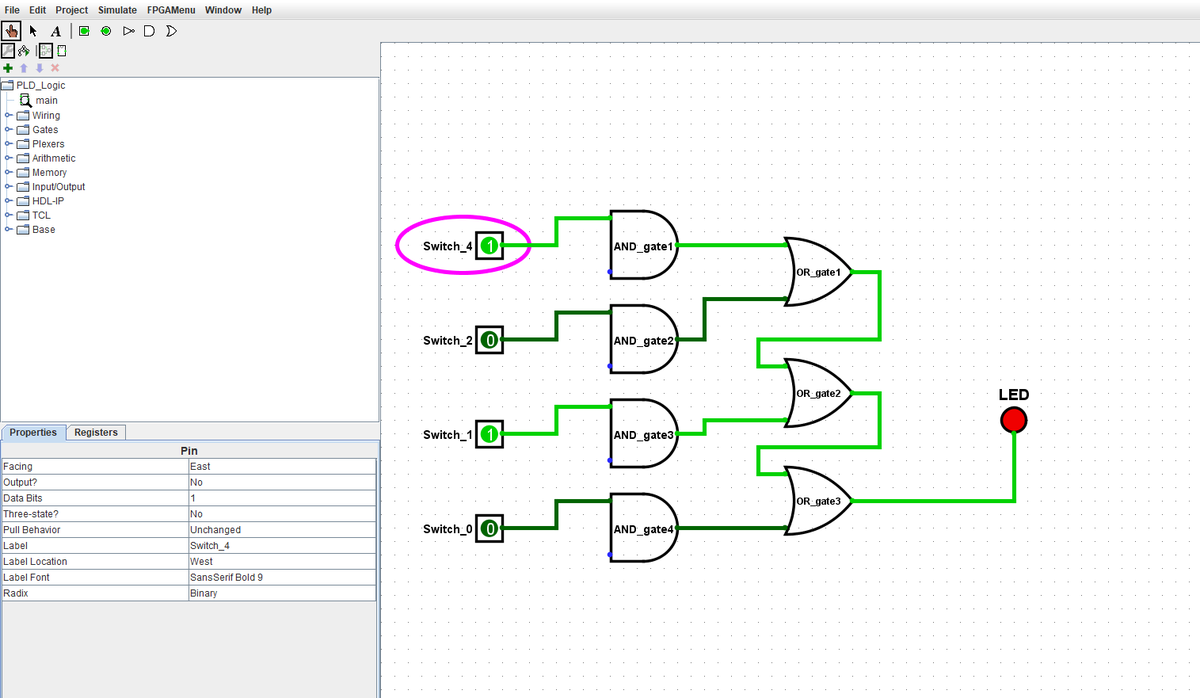
🚀Advancing my skills in digital circuit design with PLDs. This project isn't just about lighting up LEDs with switches and gates; it's about unlocking the potential of programmable logic in real-world applications.
#CircuitDesign #PLD #RealWorldTech #Technology
1
1
124

27 Aug 2024
We don’t teach tech skills; we show how children’s passions can be combined with technology and a future role in tech. #PassionToCareer #RealWorldTech #TechSheCan #TechWeCan

2
9
939


1 Apr 2024
Hands-on experience is invaluable. Tackle real-world projects with Azure AI to build your skill set. Who’s ready to turn theory into practice? #AzureAIProjects #RealWorldTech
2
23

Realized over time: It’s better to have something imperfect but actually used by real people, rather than a technically excellent product that no one uses. #UserExperience #RealWorldTech
3
112

4 Jan 2024
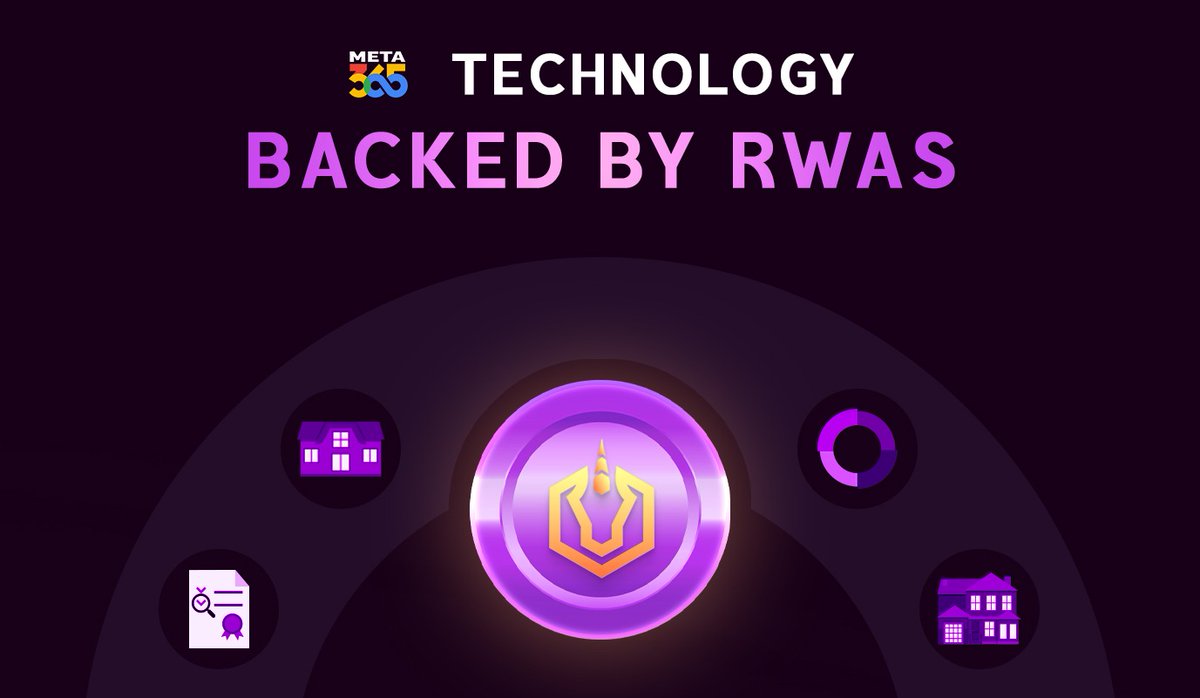
Bridge the gap between the virtual & real META365 builds its tech on tangible assets, not empty promises. ✨
🔸Own a piece of luxury real estate through NFTs.
🔸Earn passive income & experience asset appreciation.
🔸Connect with a vibrant community of like-minded individuals.
Say goodbye to speculative hype & embrace an investment backed by real value.
#META365 #RealWorldTech #NFTRealEstate #InvestFuture
1
3
2,433
4 Jan 2024
META365: Where innovation meets solid ground.
Our 4 pillars stand strong🔥🚀
1️⃣ Real World Assets: Own a piece of the future with NFTs backed by real estate.
️2️⃣ Privacy: Your data, your rules. We prioritize your security and control, because trust matters.
3️⃣ Security: Built on a bedrock of blockchain technology, your investments are safe and sound. Sleep easy, invest confidently.
4️⃣ User-Friendly: Experience the future, today. Our platform is intuitive and accessible, open to everyone.
META365 - investing evolved.
#RealWorldTech #NFTCommunity #FutureTech #JoinTheJourney

1
3
2,098

19 Dec 2023
📱 @origin_trail is making complex supply chains accessible and understandable. Tech for the real world! #RealWorldTech $TRAC
2
25
531

13 Nov 2023
🚀 Diving deep into the world of web3 with Vivin! Our journey in blockchain and crypto tech is geared towards creating real-world solutions. 🌐 #TechTrends #BlockchainSolutions #Web3 #CryptoWallets #RealWorldTech
1
1
239

4 Oct 2023
As Deborah Raji points out, it isn't just about advanced tech systems that might someday save or doom the world.
🎯 It's about TODAY’s misfires, like false facial recognition accusations and algorithmic mishaps, affecting real people.
The very term "AI" is malleable, easily reshaped by those hit hardest by its imperfections.
#AIChat #RealWorldTech #TechTalk
👍 Recommended Read: theatlantic.com/technology/a…

1
5
85

18 Jun 2023
I would guess that C people mostly use async for servers with little need for data dependence / continuations, and use threads for servers that do.
At least there was a post by Linus some years ago on RealWorldTech that presented that as the best solution.
2
91

18 Mar 2023
A question for my architecture friends: what online resources do you find best for describing GPU architectures in detail? Preferably not vendor specific. I'm a fan of Jon Peddie's online books, but looking for something more at the WikiChip or RealWorldTech level
5
7
28
6,610