
you've never heard of `git` rebasing or squashing
Jun 12

No one can rewrite history
1

Boris Cherny from Anthropic said something that really stuck with me:
“I find myself using Loop more and more, I already have dozens of loops running. One is babysitting my PRs, fixing CI, doing auto-rebasing. Another one pulls feedback from Twitter and clusters it every thirty minutes.”
Most people are still writing one prompt at a time and manually checking the output
In just 53 seconds, Boris breaks down how /loop actually works and they’ve just launched Routines (a server-side version that keeps running even when your laptop is closed)
Loop Routines = Claude agents that actually work for you on a schedule, without you constantly watching over them
This also fits perfectly with building a personal Agentic OS, which I talk about later in my article
Save it, read it, and start working with AI in a completely different way

5
2
12
420

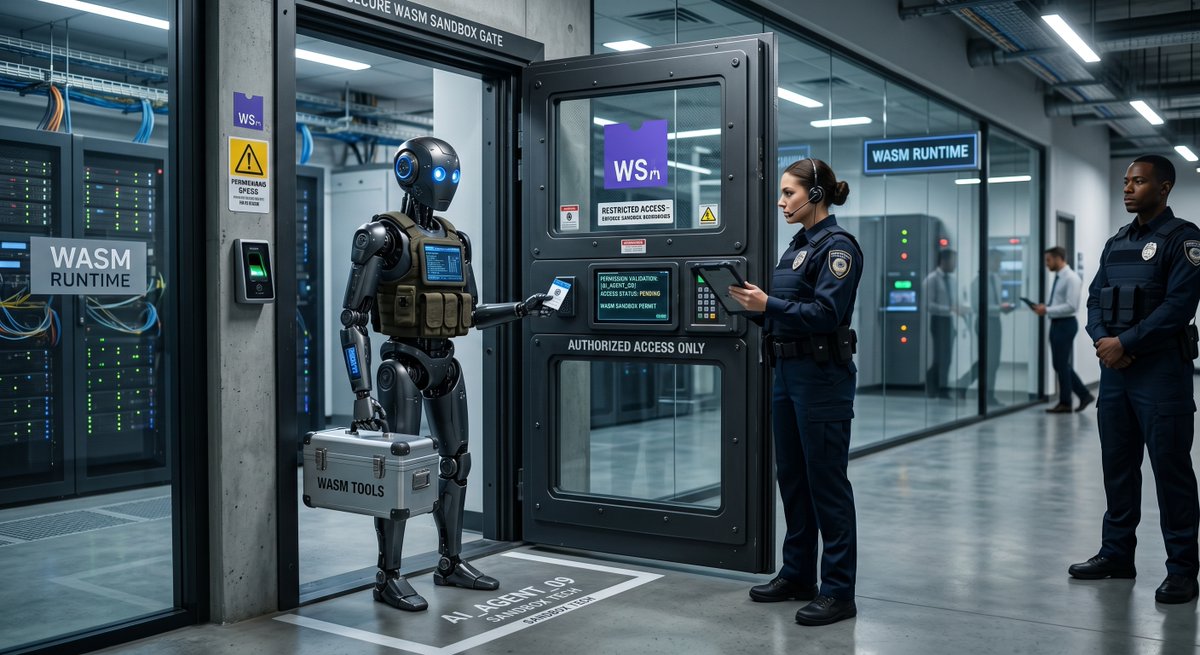
WASI 0.3 sounds boring but important. That is exactly why AI infrastructure teams should pay attention.
The Bytecode Alliance announced that WASI 0.3 is official. The WASI Subgroup ratified WASI 0.3.0, rebasing WASI onto the WebAssembly Component Model’s async primitives. In plain English: async is now native to WebAssembly Components, and runtime and toolchain support is starting to land.
This is not a model launch. There is no dramatic demo. Nobody is pretending a runtime spec has achieved AGI, which is refreshing.
But the AI-agent stack has a runtime problem.
Agents need to call tools, run code, touch files, query systems, and coordinate workflows. That sounds powerful until you ask the Day 2 questions.
1) Where does untrusted agent-generated code run?
2) What permissions does it get?
3) How do we isolate tools?
4) How do we make execution portable across clouds, edge locations, and enterprise environments?
5) How do we observe and revoke what the agent is doing?
WebAssembly is not the whole answer. But capability-scoped, portable components are a very plausible part of the answer.
WASI 0.3 matters because agent infrastructure needs more than orchestration frameworks and clever prompts. It needs secure execution boundaries, composable interfaces, and runtime standards that do not assume every workload lives in one vendor’s happy path.
This is especially relevant for healthcare, financial services, and regulated industries. The agent cannot just “take action” because a demo looked good. It needs a governed place to act.
The next phase of AI agents will be less about chat and more about controlled execution.
That means the boring plumbing may decide which agent platforms actually survive production.
#AIInfrastructure #AIAgents #WebAssembly #WASI #PlatformEngineering #CloudNative #EnterpriseAI
32


One of the most interesting design choices in @overlayerfi is its non-rebasing architecture.
No balance changes in your wallet. No hidden yield accrual.
S remains a predictable ERC-20 settlement asset, while staking rewards are reflected through the exchange rate of sS .
7

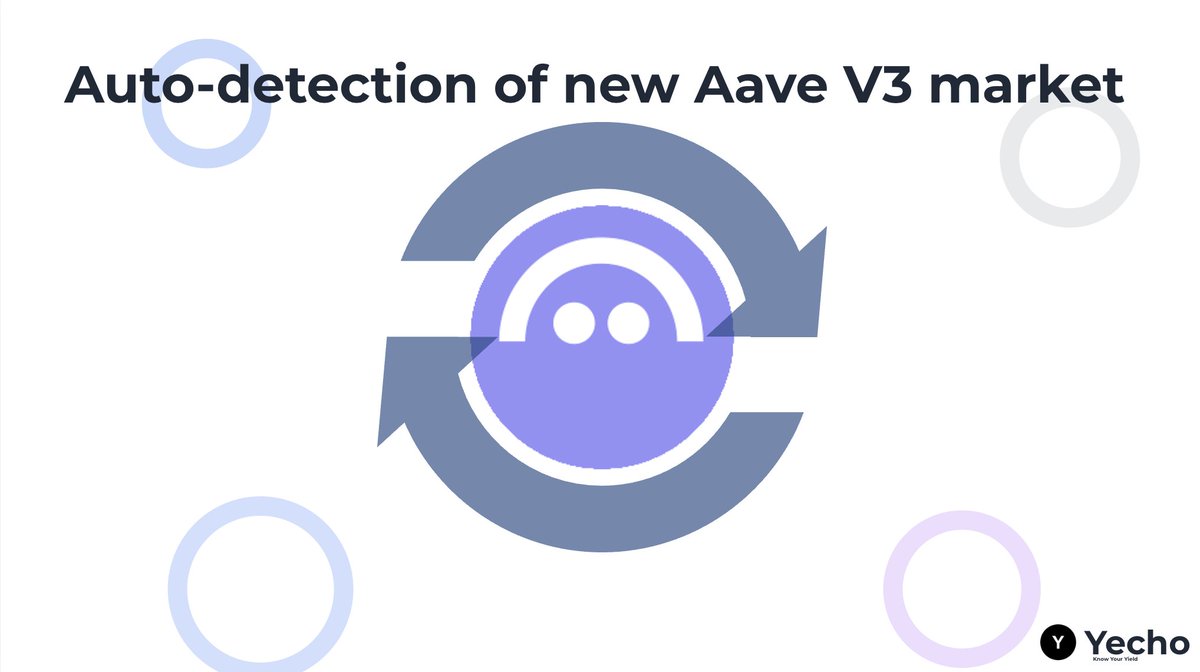
🔄 Yecho now auto-detects every Aave V3 market (@aave)
New token listed on Aave? Yecho picks it up automatically. No manual setup, no delay.
But that's not all, we've completely reworked how yield is tracked for wrapped assets 🧵👇
If you deposit sUSDe, weETH, wstETH, LBTC, eBTC, rETH, osETH or sAVAX on Aave and more, most trackers only show you the Aave supply APY.
Yecho now captures the FULL yield Aave rebasing the underlying token appreciation.
Same goes for Pendle PTs on Aave.
Your aToken balance stays flat but the PT converges toward its underlying value at maturity. Yecho tracks the real underlying value, not just the aToken number.
More protocols coming soon with the same auto-discovery approach.
Know your yield 👉 yecho.app
1
1
54

How RWA Yield Actually Works in 2026 🧪
Most people see “RWA” and think “just tokenized treasuries.”
Here’s the complete scientific breakdown of how real yield is generated, distributed, and why institutions are pouring in despite market dips. 👇
1/12
What are RWAs?
Real World Assets are traditional assets like US Treasuries, bonds, real estate, and invoices turned into blockchain tokens. This brings real cash-flow yield into crypto wallets, not just speculative price action.
2/12
Step 1: Tokenization
The real asset is held in legal custody through an SPV or Trust.
The issuer creates an on-chain token like OUSG or BUIDL.
Each token represents ownership and the rights to the yield.
3/12
Step 2: Yield Generation Off-Chain
Yield comes from the real asset, not DeFi farming:
US Treasuries give around 4.5–5.2% APY from government interest.
Corporate credit gives 7–12%.
Real estate gives rental income plus appreciation.
Invoices give early payment discounts.
4/12
Step 3: On-Chain Distribution
Smart contracts handle everything.
Interest is collected off-chain and converted to USDC.
It’s automatically distributed to token holders daily or weekly.
There are two main models: rebasing where your balance increases, and claiming where you manually claim.
5/12
Real Example – US Treasury Token like Ondo OUSG
Buy 1,000 tokens at about $1 each.
Underlying T-bills pay interest.
You earn around 4.8% APY in USDC.
You can redeem or trade 24/7 on the secondary market.
6/12
Why This Matters in 2026
Institutions get compliant yield inside crypto.
Composability lets you use RWA tokens as collateral in DeFi.
TVL proof: the sector crossed $30.8B even during the recent BTC correction.
7/12
Key Risks
Custody and counterparty risk.
Regulatory changes.
Liquidity risk on secondary markets.
Smart contract vulnerabilities.
8/12
God-first angle: RWA yield rewards stewardship of real value and patience, not pure speculation.
9/12
My Simple Framework for Evaluating RWAs:
Is the yield backed by real cash flows?
Who holds custody? Regulated institutions are better.
What’s the liquidity like?
Is the smart contract audited?
10/12
Educational takeaway: RWA isn’t hype. It’s the bridge bringing traditional finance yield on-chain with transparency.
11/12
Which RWA yield type interests you most? Treasuries, Private Credit, or Real Estate?
12/12
Drop a question below and I’ll answer with data. Follow @dillonwyna for more educational Web3 breakdowns.
#RWA #Web3 #OnChain #CryptoEducationPosting
2
1
3
56
baxondaxonbax retweeted

these people are rebasing basic blog posts from 2002
Jun 13

Ben Affleck says you're supposed to live in a village and see about 100 people in your entire lifetime
"we weren't made evolutionarily as human beings like we're supposed to be living in a village and see about 100 people in our lifetime"
"that's the vast majority of human history...that's how we did it and I still feel like in a way that's how we're socialized...it's why if you feel left out of a group it's very painful"
"even social media for example you looking at stuff you know damn why is everybody life is so good...that's also is a basic primal thing"
4
23
1,445

Where sNUSD's APY actually comes from:
- Stability fees: 3% APR on every CDP debt outstanding
- USDC yield: ~5% APR on PSM reserves deposited at @kamino
- Dividend rebasing: ~0.5% blended on the equity collateral basket
and Liquidation penalties
Yield comes from real protocol revenue
1
9
961

Why are we still pretending that rebasing a monorepo doesn't require a blood sacrifice to the Git gods? It’s not just version control; it’s a high-stakes psychological operation designed to make you delete your entire local history.
2
Stablecoin on Solana, backed by tokenized US stocks (SPY, AAPL, NVDA... via @xStocksFi) instead of U.S Treasuries
Hold nUSD like any other stable. Stake into sNUSD to earn ~6% APY from real protocol revenue: stability fees, Kamino USDC yield, dividend rebasing on the collateral.
NEST is the gov token. 0% VC. Surplus yield auto-buys and burns it
Or, you can post your stocks as collateral and borrow nUSD at 3% APR. No selling, no tax event.
The fourth era of stablecoins
nestusd.com
1
134
A reminder, before everyone forgets:
You don't have to stake to use Nest
Deposit your AAPL, NVDA or any @xStocksFi, borrow stable dollars at 3% APR, keep your equity exposure. Pay off whenever you want, withdraw the same shares plus their accumulated dividend rebasing
Robinhood margin: 12% APR
Schwab: 8-10%
Credit card: 22%
With NUSD, just 3%
Stop selling your stocks
5
1
8
1,274


Things that you need to do and understand, even if you vibe code everything:
- automated source formatting, otherwise you LLM will randomly introduce whitespace changes
- git. Really understand the model, e.g. rebasing
- unit tests
- specification docs, e.g. ARCHITECTURE.md
Jun 13

i forgor to setup git
14

(2/3) The part most people are glossing over: mUSD is non-rebasing. Reserve yield gets captured upstream by MetaMask, not passed to holders. That's a business model, not a savings product. They use that yield to subsidize onramps, fund cashback, seed Linea liquidity. Closer to how a neobank works than how a public stablecoin works.
That's both the strength and the ceiling. Huge installed base means they can manufacture demand inside their own funnel fast. But stablecoin markets are brutally path-dependent — USDT and USDC sit where liquidity is deepest, and only 6% of stablecoin volume goes toward actual goods and services.
1
1
61