
📢 This is what “infinite context” actually looks like in practice.
Not more tokens, more structure.
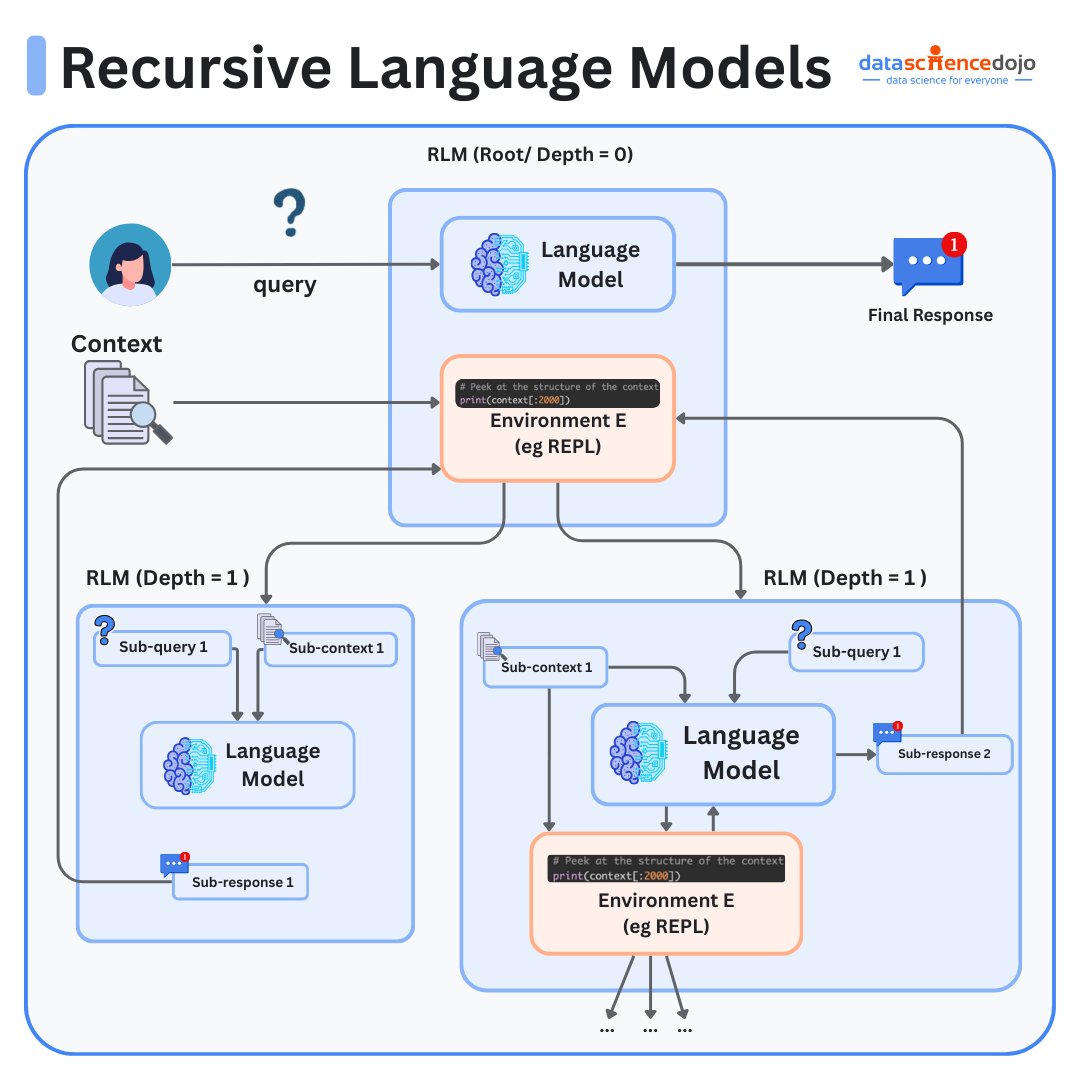
The infographic breaks down recursive language models, an idea introduced by Alex Zhang, and it highlights a subtle but important shift in how we think about long context.
Instead of stuffing everything into a single prompt:
- A root language model handles the main query
- The full context lives outside the prompt, in an environment (like a Python REPL)
- The model peeks, filters, and computes over context as needed
- Recursive model calls handle smaller sub-contexts and return focused results
The key idea is that the model doesn’t read all the context at once.
It queries context on demand, keeping attention sharp and reasoning stable even as context grows.
This design directly addresses what many teams are seeing with agentic systems today: longer runs, more state, and gradual reasoning decay over time.
This kind of system-level thinking, how agents manage memory, context, and control flow, is something we go deep into in our Agentic AI Bootcamp.
If you’re interested, the registration link is in the comments.
#AgenticAI #LLMArchitecture #RecursiveLanguageModels
2
4
5
1,257
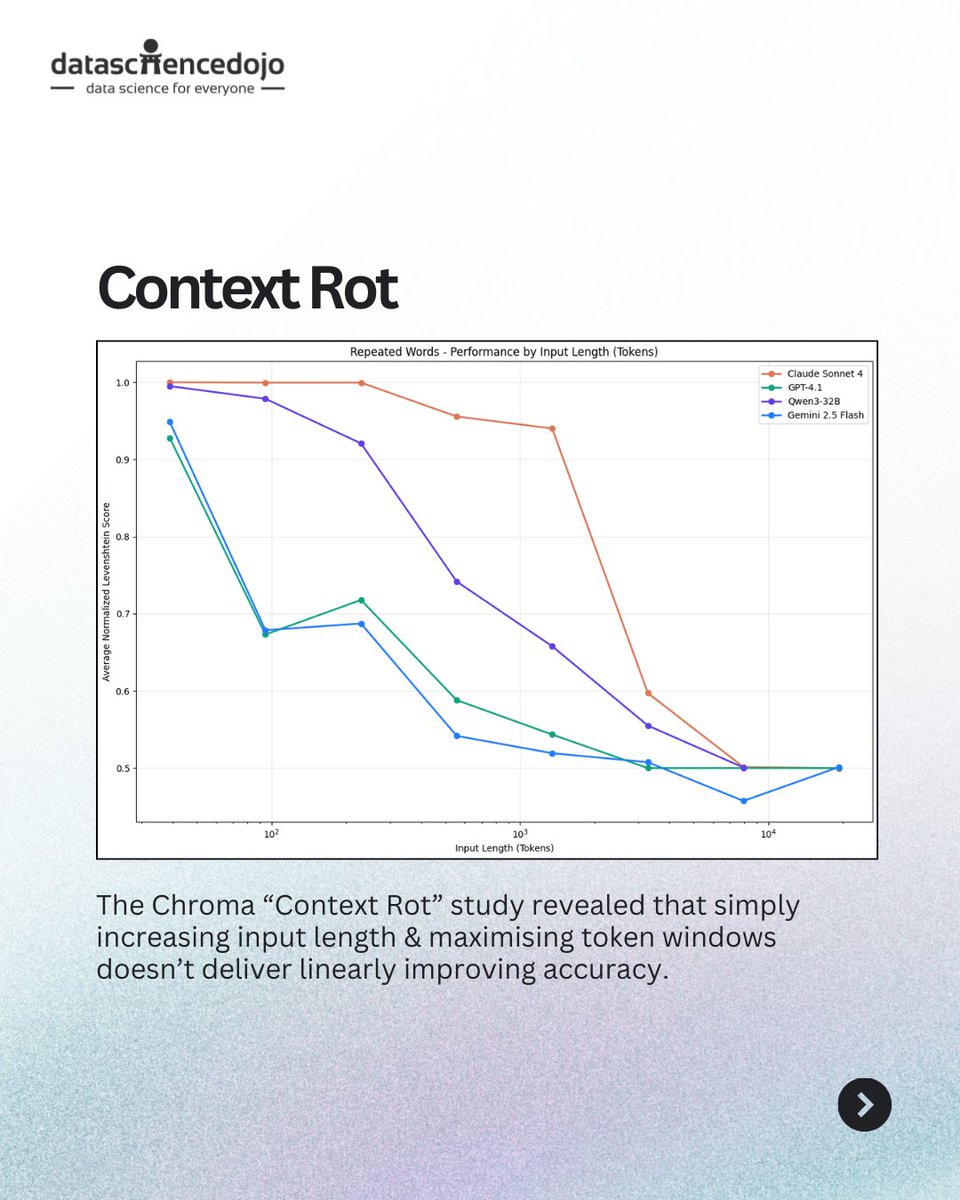
📢 Longer context isn’t making our models smarter.
In many cases, it’s quietly making them worse.
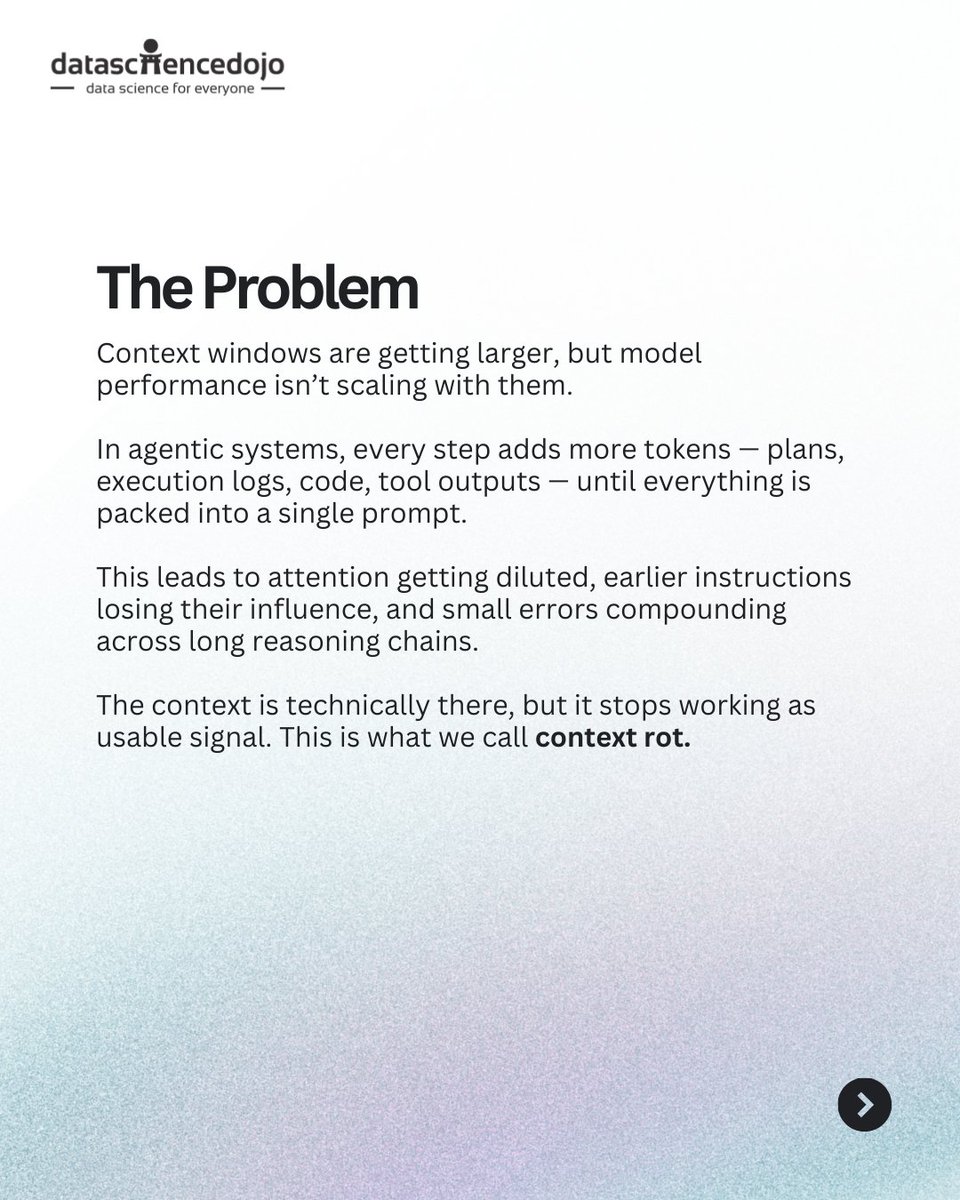
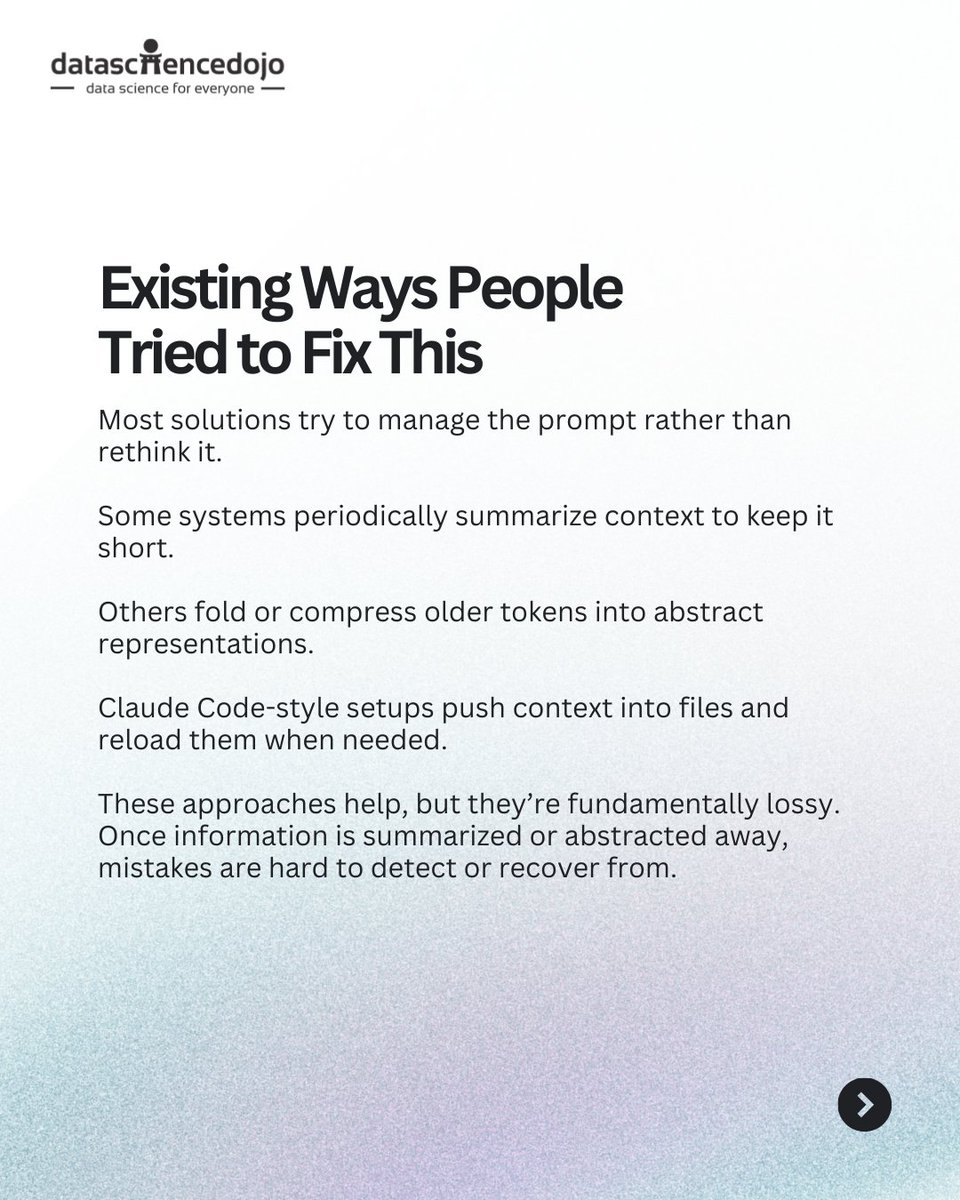
As agentic systems grow, they accumulate plans, logs, code, and tool outputs, all packed into a single prompt. The result is something many teams are now running into: context rot. The tokens are there, but reasoning quality degrades over time.
One idea that’s been getting attention recently comes from Alex Zhang’s work on recursive language models. Instead of forcing a model to read everything, this approach lets a root model query context on demand, using recursion and an external environment to stay reliable over long horizons.
What’s interesting here isn’t a bigger context window — it’s a different abstraction:
- Context lives outside the prompt
- The model peeks, filters, and computes instead of attending to everything
- Long-horizon reasoning becomes more structured and debuggable
- This feels especially relevant if you’re building agents that run for hours, not turns.
This is the kind of systems-level thinking we go deep into in our Agentic AI Bootcamp, especially when designing agents that need to run reliably over time. Check the replies for more details.
#AgenticAI #LLMResearch #RecursiveLanguageModels
1
4
3
1,146
📢 Context limits are one of the biggest practical bottlenecks in today’s AI — but Recursive Language Models (RLMs) are changing the game.
Instead of forcing massive documents into a single prompt and hoping the model remembers everything, RLMs let the model programmatically explore, break down, and recursively reason over context as data.
In this blog, we explore:
• What Recursive Language Models (RLMs) are — an inference-time strategy that treats large context as an external environment and lets the model recursively query itself over manageable chunks rather than a single long prompt.
• How they work under the hood — using a REPL-style environment where the model generates code to slice, navigate, and reason over input, only bringing back the essential results into its limited context window.
• Why they matter — RLMs can handle far larger input sizes than native attention windows allow, dramatically improving performance on long-horizon and information-dense tasks like large document analysis, multi-step reasoning, and codebase understanding.
• The shift in perspective — this isn’t just another trick for bigger context windows; it reframes how AI systems interact with data, as programmatically accessible memory rather than text to be consumed all at once.
Whether you’re building advanced research tools, long-form knowledge assistants, or agentic systems needing persistent state and deep reasoning, understanding RLMs gives you a new lens on how AI can think with structure, not just generate text.
Blog link: hubs.la/Q03-ZvX80
#RecursiveLanguageModels #AIResearch #AI2026 #AIDevelopment
1
1
3
618

Jan 13
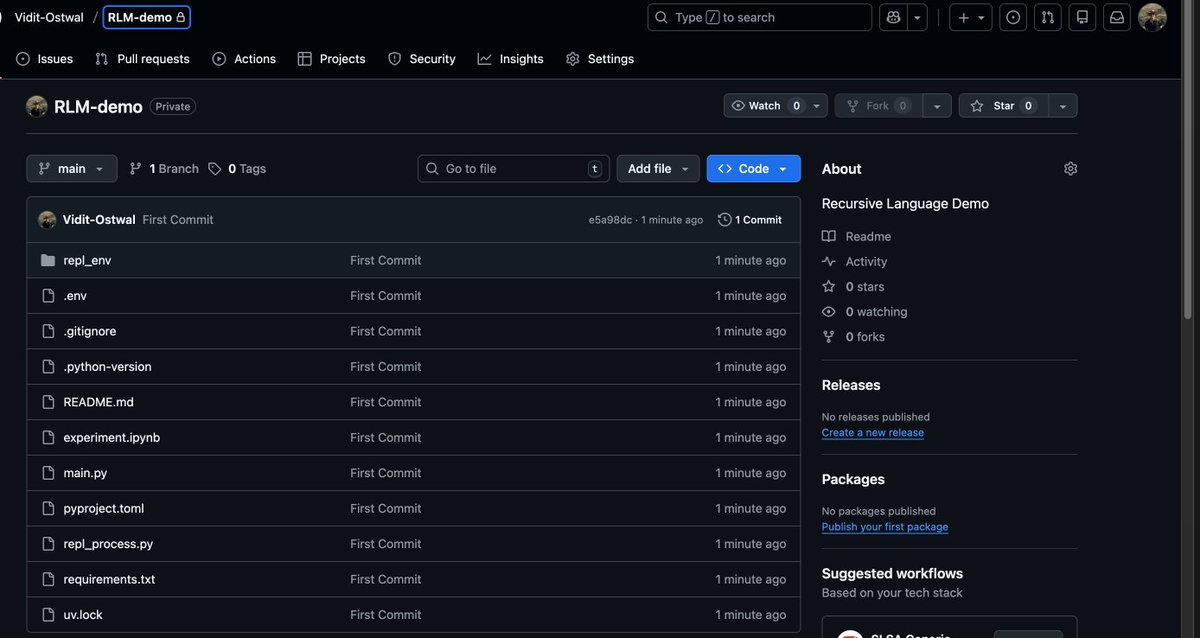
Dropping something cool soon.
#RecursiveLanguageModels, #MachineLearning, #PrimeIntellect, #ContextRot ,#DataScience, #AI
2
77

Context is king! Keep an eye on this...
#ai #artificialintelligence #machinelearning #deeplearning #aiagents #tech #innovation #datascience #recursivelanguagemodels #contextfolding #llm #rlma
primeintellect.ai/blog/rlm
2
12