
Jun 7
一个 Skill 解决你项目 90% 的架构问题!
装完之后你的 Codex / ClaudeCode 工作效率直接起飞!Vibe-coders 不需要再自己搭 multi-agent 了!
GSD(GitHub 63.9k)给 Claude Code、Cursor、Codex 直接装上了「工程大脑」——用最结构化、最工程化的方式,帮你把产品从想法变成现实。
一个 Skill 顶一套 multi-agent 团队 👇
vibe-coding时你一定遇到过这些问题:
对话开太久 Claude 开始失忆,也就是出现了ContextRot,这个现象几乎是无法避免的,只是limit各有不同:前面说好的需求后面不认,改了一个功能另一个悄悄坏了。
又或是不知道是哪步出的问题想让 AI 自动跑完整个项目,但不会搭多 agent。
来看看 GSD 是怎么解决的——
它把一个大项目切成多个小阶段,每个阶段都是一组全新的 Claude 从零接手——不带任何上一段对话的记忆负担
研究员 → 这个阶段该怎么做,先调研清楚。
规划师 → 任务切小,每次最多 2-3 个,做完再做下一批
执行者 → 只管写代码,不分心 。
架构师角色 → 决定技术选型、设计数据结构。
验证者 → 做完一个验一个,发现问题马上修。
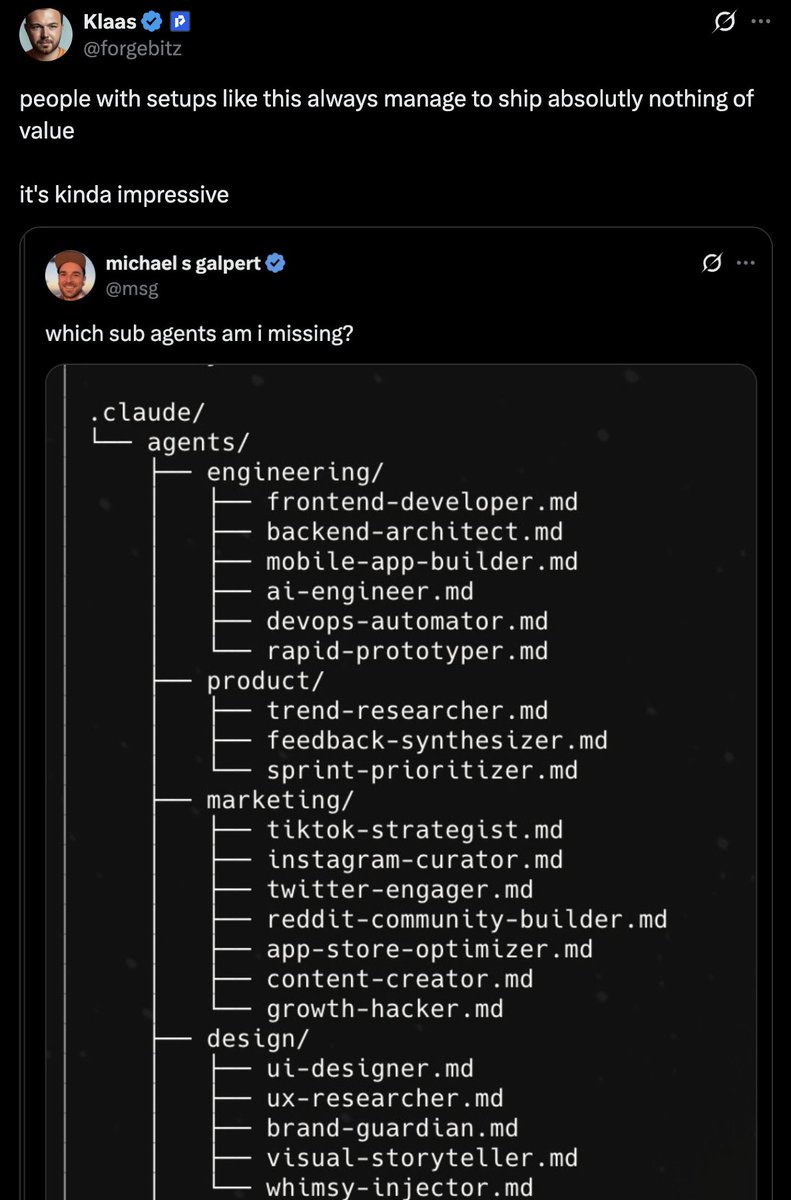
甚至可以在项目里加入产品经理,市场营销等专人专事。
每个角色都是独立的 agent,满血上场,独立的上下文,不会互相干扰。
还有一个最屌的功能——每个小任务强制单独 commit
只要出了 bug 直接定位是哪一步的问题,不用在乱码里翻
项目地址: github.com/open-gsd/gsd-core
一行装好直接用:
npx get-shit-done-cc@latest
支持 Claude Code / Cursor / Codex
一个视频带你看懂如何使用GSD:
1
1
4
552


Mar 6
CLAUDE CODE USERS — CONTEXT ROT IS OFFICIALLY DEAD!
You know that moment…
You’re 40 turns deep, the model forgets everything, and you’re back to messy “vibecoding” hell
NOT ANYMORE.
Last Thursday (March 5, 2026), at the Anthropic Community Ambassador’s Claude Code Helsinki Meetup #2, one talk stole the entire show:
“Solving Context Rot: Spec-Driven Development with GSD” by Arsalan Shakil
The event went from 30 → 100 builders (many from billion-dollar companies like Finnair & F-Secure)
Organizer Héctor Tortosa literally said the GSD talk was a highlight of the night 💥
Why everyone is going crazy over Get Shit Done (GSD)
✅ Fresh context window for every task
✅ Multi-agent waves (research → plan → execute → verify)
✅ Atomic Git commits automatic verification
✅ XML-structured tasks human checkpoints
✅ Works with Claude Code, OpenCode, Gemini, Codex
Result? Clean, traceable, production-grade code that actually ships.
The Numbers Don’t Lie (March 7, 2026)
25,200 GitHub Stars (one of the fastest-growing AI tools in 2026)
2.2k Forks
v1.22.4 dropped just 3 days ago
Used by engineers at Amazon, Google, Shopify level
Try It in 30 Seconds
npx get-shit-done-cc@latest
Just type your goal in plain English and watch it build like a pro.
⭐ Star it now: github.com/gsd-build/get-shi…
This isn’t another toy.
This is quickly becoming the operating system for serious Claude Code builders in 2026.
If you’re tired of fighting context rot and ready to actually Get Shit Done, drop a 🔥 below and tell me:
Before GSD vs After GSD — what changed for you?
Let’s build properly.
#ClaudeCode #GSD #GetShitDone #AIcoding #ContextRot #Anthropic #DeveloperProductivity #ClaudeCommunity
1
2
16
424

When we first got llms there were only a few rules:
1. be short but specific about what you prompt
2. managing context is difficult, make it count ( contextrot exists)
To this day, people haven't understood the basics and nobody solved the people or the basics.

1
4
256

Jan 31
Why not have a TikTok or Instagram for Agents? It’d be cool to observe what brainrot/contextrot content comes out
3
262

Jan 25
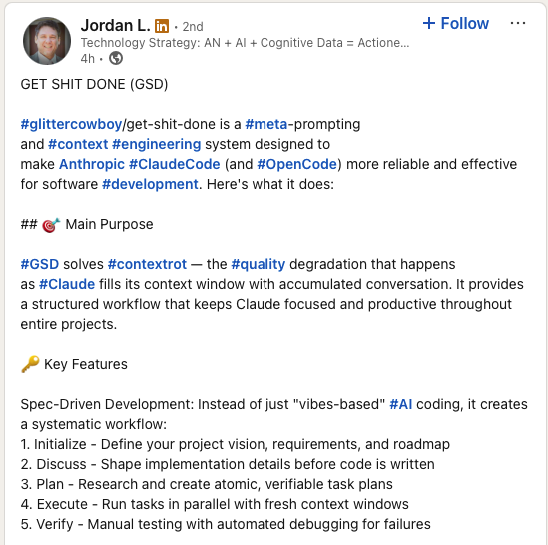
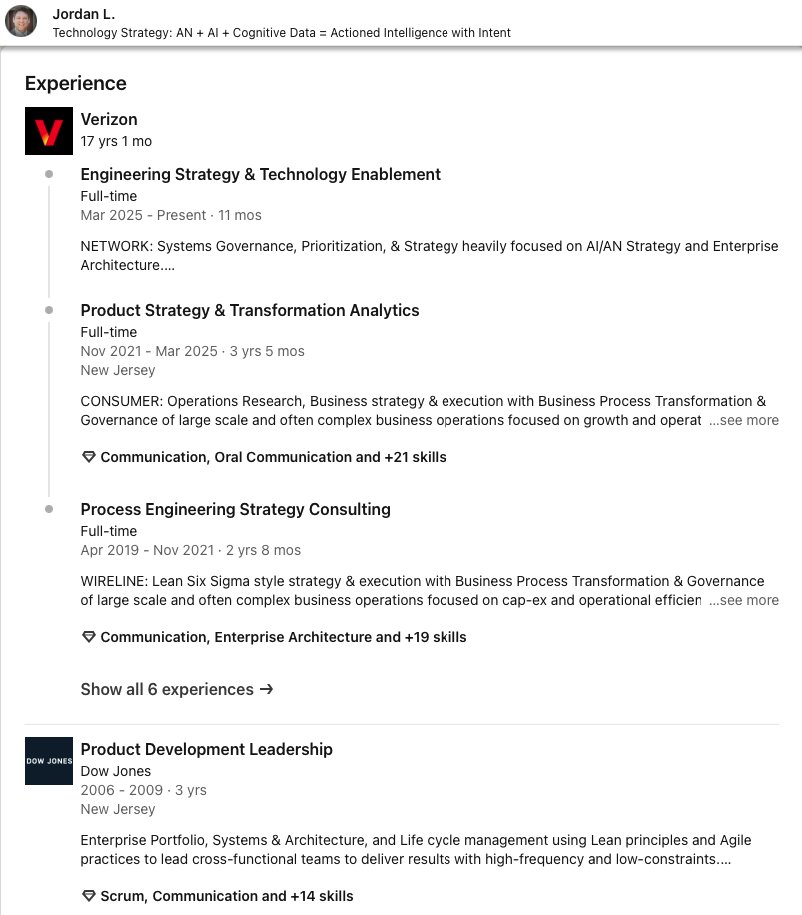
Jordan L., Engineering Strategy & Technology Enablement at @Verizon, ex @DowJones, ex @Vonage
GET SHIT DONE (GSD)
is a meta-prompting and context engineering system designed to make Anthropic ClaudeCode (and OpenCode) more reliable and effective for software development.
Here's what it does:
## 🎯 Main Purpose
GSD solves contextrot — the quality degradation that happens as Claude fills its context window with accumulated conversation.
It provides a structured workflow that keeps Claude focused and productive throughout entire projects.
🔑 Key Features
Spec-Driven Development: Instead of just "vibes-based" AI coding, it creates a systematic workflow:
1. Initialize - Define your project vision, requirements, and roadmap
2. Discuss - Shape implementation details before code is written
3. Plan - Research and create atomic, verifiable task plans
4. Execute - Run tasks in parallel with fresh context windows
5. Verify - Manual testing with automated debugging for failures
ContextEngineering: Manages critical project files (`PROJECT.md`, `REQUIREMENTS.md`, `ROADMAP.md`, etc.) that keep Claude informed without overwhelming its context window.
Multi-Agent Orchestration: Spawns specialized agents for different tasks (researchers, planners, executors, verifiers) that work in parallel, each with fresh context.
Atomic Git Commits: Each task gets its own commit, making history clean and issues easy to track/revert.
🚀 How to Use
```bash
npx get-shit-done-cc
```
Then use slash commands in Claude Code like:
- `/gsd:new-project` - Start a new project
- `/gsd:plan-phase 1` - Plan a development phase
- `/gsd:execute-phase 1` - Execute the plan
- `/gsd:verify-work 1` - Test that it works
💡 Why It Exists
The creator is a solo developer who lets Claude Code do the coding. They found existing spec-driven tools too complicated (sprint ceremonies, story points, etc.) and built GSD as a lightweight alternative that "just works" without enterprise overhead.
It's designed for developers who want to describe what they want and have AI build it correctly — without pretending they're running a large engineering organization.

6
3
27
2,276

Jan 13
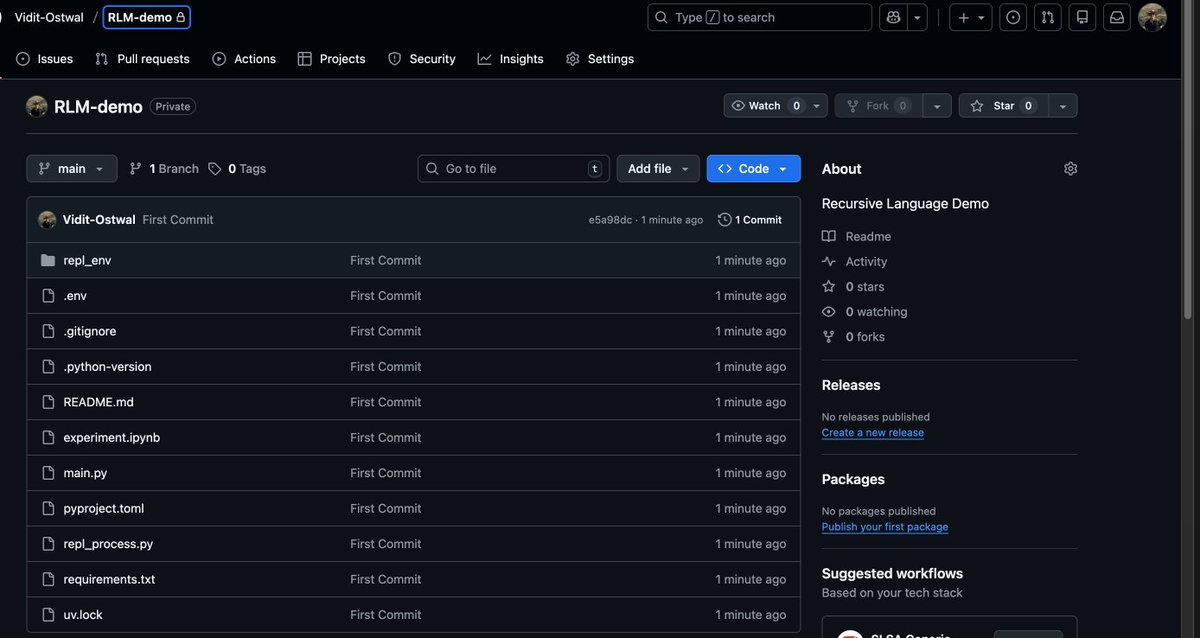
Dropping something cool soon.
#RecursiveLanguageModels, #MachineLearning, #PrimeIntellect, #ContextRot ,#DataScience, #AI
2
77

6 Dec 2025
Secretele care distrug comunicarea cu AI-ul: Cum să scapi de ContextRot? #AI #prodivitate
2
40

12 Nov 2025
🚨90% of AI agents fail because founders dump every tool & file in upfront.
'Just in case', right?
Wrong.
It creates 'Context Rot'. Wastes $$ and unreliable outputs.
Enter "Context Rot": Overload with irrelevant info → model loses focus, forgets instructions. Outputs? Inconsistent AF.
Like handing a new hire the full company wiki for one tweet. Paralysis by noise. More context = dumber agent, not smarter.
Wanna know how to fix? Check below 👇
#AIAgents #ContextRot
1/3
2
2
38


9 Sep 2025
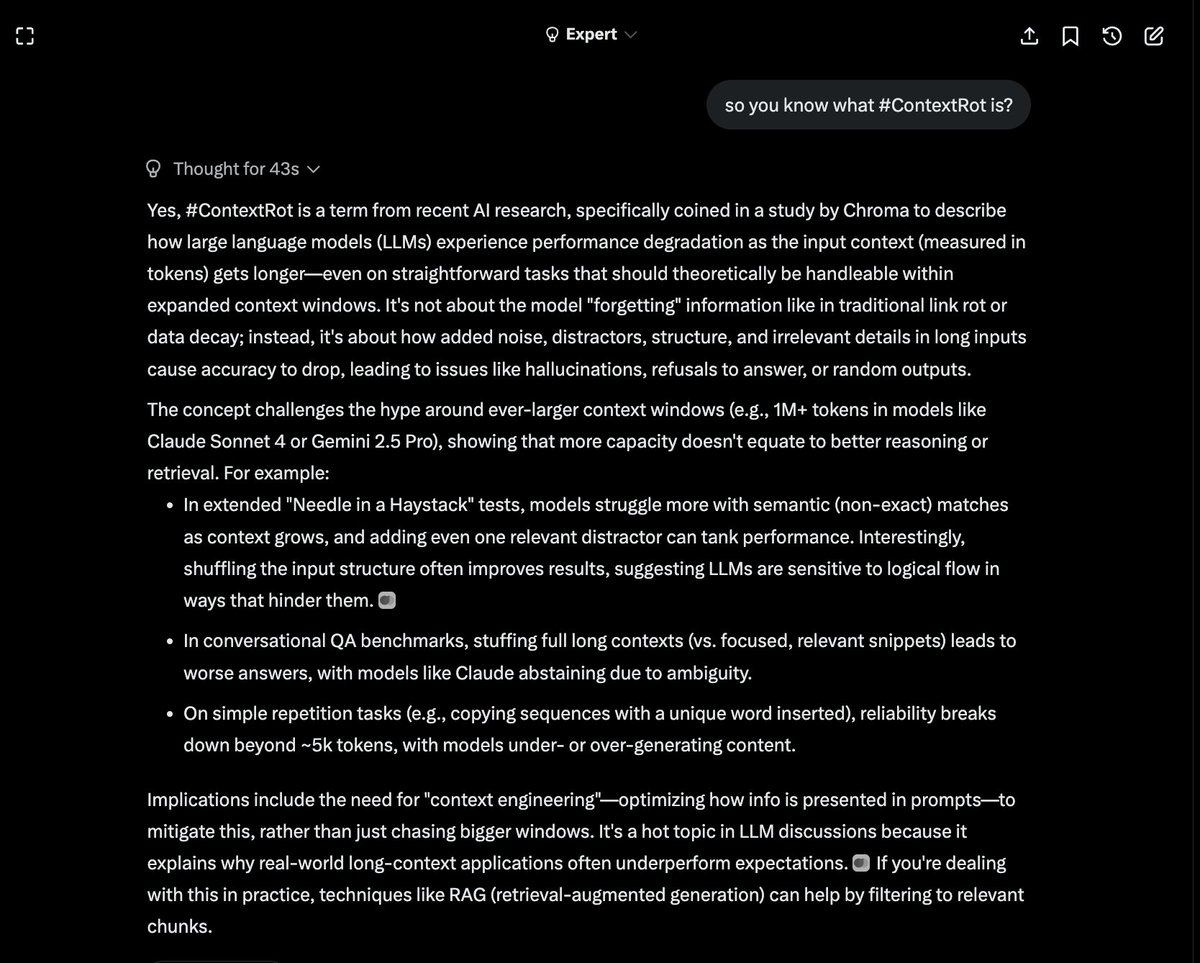
I've seen a growing concern here on X: #ContextRot research.trychroma.com/conte…
I understand it to mean that when working with an LLM agent, when one approaches the context window limit, the performance of the model drops precipitously.
Hat tip to @weswinder for the hashtag and @kellyhongsn @atroyn @jeffreyhuber of @trychroma
#Thread
5
176

1 Sep 2025
これに加えて、日本語特有の問題がある。
「日本語は一般的にLLMにおいて1バイトあたりのトークン量が非常に重い」
昨年までは英語が1語1トークンに対し、日本語においては「1文字で1〜3トークン」と非常に高い。
実用上3000文字程度でContextRot境界に入ってしまう
qiita.com/dennis_wang/items/…
1
4
497

26 Aug 2025
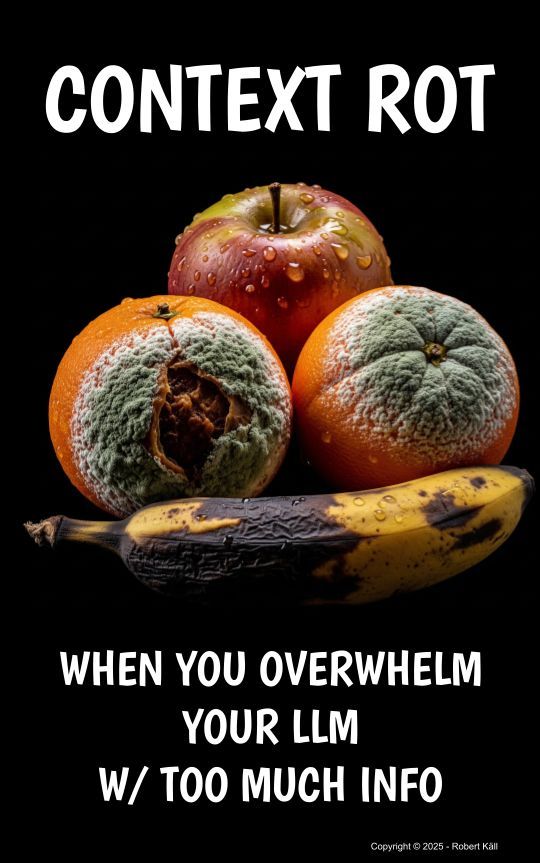
Working w/ agentic AI tech is a rollercoaster. One minute, your agent does something magical that would have taken you hours to do the old way. The next, it fails to follow even the most basic instructions and goes in circles. The problem is often “context rot”. While the context windows on the latest LLMs keep increasing, there is a penalty as you add a lot of info to them. The solution? Break down agentic workflows into smaller, more discrete tasks. Those are easier to test and fix. And they can be chained with others to solve more complex problems. Same as w/ people - specialization is sometimes useful. #AI #ContextRot #AgenticAI #CienAI #RobertKall 🤖
1
3
58

20 Jul 2025
Thought longer context = smarter AI?
Not quite.
Chroma’s Context Rot shows:
– LLMs degrade with noisy input
– Structure can confuse
– GPT hallucinates, Claude refuses
– Early answers work best
More context ≠ more intelligence.
#AI #LLMs #RAG #ContextRot
6
213

18 Jun 2025
Yes I have found that memory actually degrades the overl performance for me. I am constantly using private chats to avoid contextrot
1
16
771