
Ok so you've picked a write strategy. Now the other half of the problem.
How do you actually expire stale data?
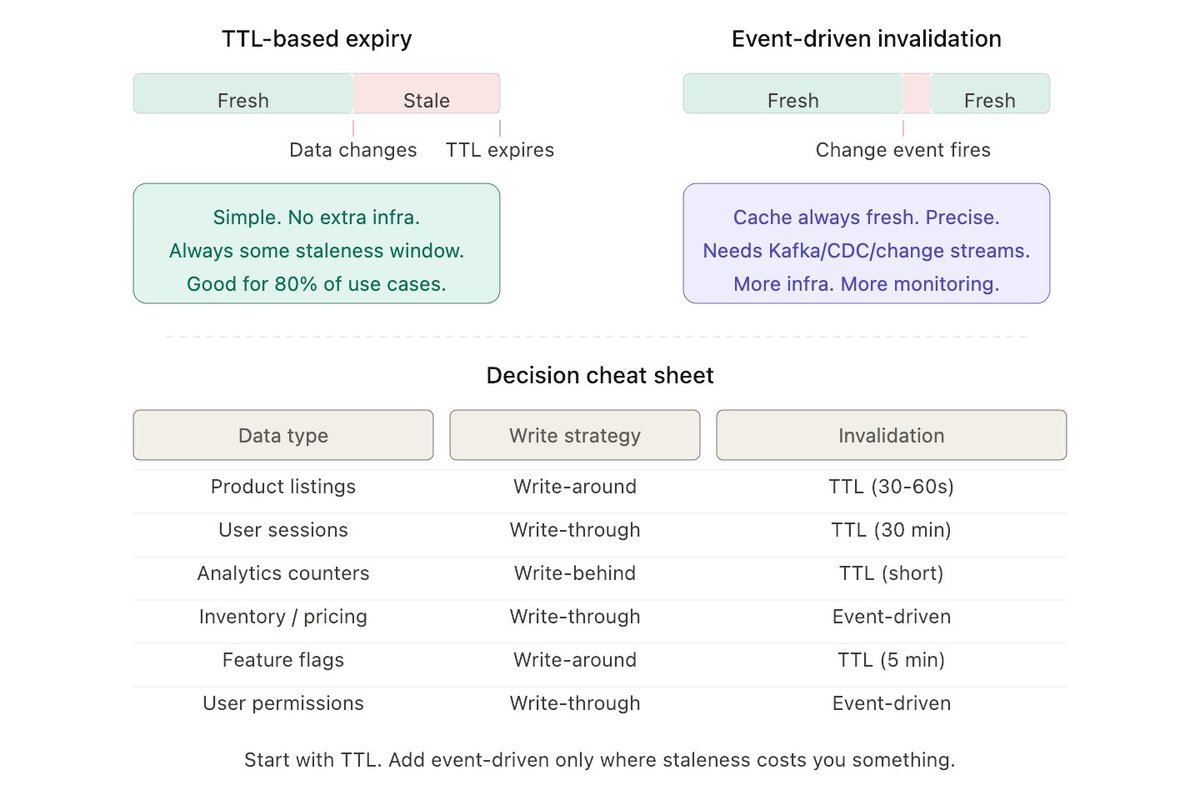
Two approaches:
1. TTL-based expiry (time-to-live)
Set a timer on every cache entry. When the timer runs out, the data is automatically deleted. Next read triggers a fresh fetch.
Some rules of thumb I use:
- Config data, feature flags → TTL of 5-10 minutes
- Product listings, search results → TTL of 30-60 seconds
- User session data → TTL of 30 minutes
- Versioned static assets → TTL of 1 year (filename changes per version anyway)
Why it works: Dead simple. No extra infrastructure. Set it and forget it.
Where it breaks: You're always accepting some staleness. If the TTL is 60 seconds, a user might see outdated data for up to 60 seconds after a change. For a product listing? Nobody cares. For a bank balance? That's a support ticket.
2. Event-driven invalidation
Instead of waiting for a timer, you actively delete or update the cache the moment the underlying data changes.
How:
- Database writes trigger an event (via CDC, a message queue, or app-level hooks)
- A consumer listens for that event and invalidates the cache immediately
Why it works: Cache is always fresh. No staleness window. Precise.
Where it breaks: You need infrastructure for it. A Kafka consumer or a database change stream (Postgres logical replication, MongoDB change streams, DynamoDB streams). More moving parts. More things to monitor. More things that can fail silently.
Which one should you use?
Honestly? Start with TTL. For most data in most systems, a 30-60 second staleness window is invisible to users.
Add event-driven invalidation only for data where staleness actually costs you something:
- Inventory counts (overselling)
- Pricing (showing wrong price)
- Permissions/auth (security risk)
- Real-time features (chat, live dashboards)
Everything else? TTL. Don't over-engineer it.
Quick decision cheat sheet:
Format: What you're caching → Strategy → Invalidation
1) Product listings → Write-around → TTL (30-60s)
2) User sessions → Write-through → TTL (30 min)
3) Analytics counters → Write-behind → TTL (short)
4) Inventory / pricing → Write-through → Event-driven
5) Feature flags → Write-around → TTL (5 min)
6) User permissions → Write-through → Event-driven
1
5


13m
Testing the new Gemma 4 12B (QAT) vision and OCR capabilities locally with LM Studio.
# The setup:
- GPU: NVIDIA RTX 4060 (8GB VRAM)
- CPU: Intel i7
- Runner: LM Studio
- Config: 32k context, 38 layers offloaded, Flash Attention enabled
- Speed: ~14 tokens/sec decode throughput
# The test:
I gave it a screenshot of Google AI Studio.
Prompt: "clone this. give me a single html file"
# The result:
A solid one shot replication. It successfully mapped out the layout, recognized the UI text, and structured the divs correctly, with only minor differences from the original. Results available at the end of the video.
Quite capable for a 12B model running on budget consumer hardware. A gpu that costs only $300.
# Why the architecture under the hood is notable:
Unlike traditional models that rely on heavy, separate vision and audio encoders, Gemma 4 12B uses a unified, encoder free architecture.
It bypasses separate multi stage encoders.
Uses a 35M parameter vision embedder to project raw 48x48 pixel patches directly to the LLM hidden dimension.
Local multimodal development is becoming highly accessible on standard hardware.
If you've spun up Gemma 4 12B locally, what setup are you using and what kind of throughput are you seeing?
Jun 3

i just ran Google's brand new Unsloth Gemma4 12B dense GGUF on my RTX 4060 using llama.cpp CUDA 13.2
21 tokens per second. on a budget consumer GPU. locally.
no API. no cloud. no subscription.
and the benchmarks are absolutely cooked
# first let's talk architecture because this is genuinely different
every multimodal model you've used has a frozen vision encoder frozen audio encoder LLM backbone glued together
Gemma 4 12B is different
it's a single decoder only transformer. that's it. vision? raw 48×48 pixel patches → one matmul → projected directly into the LLM
audio? raw 16kHz signal sliced into 40ms frames → linear projection → same LLM input space
no encoder tax. no latency penalty. no fragmented memory
to put the encoder savings in perspective:
old Gemma 4 26B approach:
- 550M param vision encoder (frozen)
- 300M param audio encoder (frozen)
- LLM backbone
Gemma 4 12B:
- 35M param vision embedder (a single matmul)
- no audio encoder at all
- LLM backbone handles EVERYTHING 550M → 35M for vision alone. that's a 15x reduction
this is why the gemma-4-12b-it-Q4_K_M.gguf is just 6.6 GBs!!!
and it has 256K native context context
# Benchmarks:
AIME 2026 (math olympiad): 77.5%
GPQA Diamond (expert science): 78.8% LiveCodeBench v6 (real code): 72%
Codeforces ELO: 1659
MMLU Pro: 77.2%
MATH-Vision: 79.7%
BigBench Extra Hard: 53%
inference → llama.cpp, LM Studio, vLLM, SGLang
llamacpp flags:
-m "gemma-4-12b-it-Q4_K_M.gguf" -ngl 99 -c 8000 -v --port 8080
Available on huggingface now! Link below
1
4
32
◡̈⃝æ๓๓ץ~👻 retweeted

On this here are some books that will help you out, don’t joke with them.
For deep foundations: storage, replication, consistency, sharding:
📘 Designing Data-Intensive Applications by Martin Kleppmann
For interview frameworks, patterns, and step-by-step approaches:
📘 System Design Interview by Alex Xu
For distributed systems and microservices:
📘 Building Microservices by Sam Newman
For reliability, fault tolerance, and production systems:
📘 Site Reliability Engineering by Google
For clean architecture and long-term design principles:
📘 Clean Architecture by Robert C. Martin
Don’t just memorize system design answers.
Understand why systems are built the way they are.

Most engineers who struggle with system design interviews aren’t bad engineers.
They just started learning the wrong things, in the wrong order.
Here’s the actual roadmap, what to learn first, what comes next, and what to save for later.
3
9
68
2,881

First, tighten the factual baseline
The June 12, 2026 “Tranche 03” / PURSUE Release 03 part is grounded. The Department of War’s PURSUE page says Release 03 was the third tranche of UAP records and was released on June 12, 2026, following the first tranche on May 8, 2026.
The most important new document in that dump appears to be AARO’s June 5, 2026 case update on the “Western U.S. Event,” also described as “Orbs Launching Orbs.” AARO says six federal law-enforcement agents reported orange “mother” orbs releasing clusters of smaller red orbs near a sensitive national-security site in October 2023. But the crucial caveat is that the reporting agents collected no video, no photographs, and no other technical data, so the unresolved portion is based on witness narratives and elimination, not physical proof.
The “40% unexplained” line needs careful handling. In the AARO memo, roughly 60% of the observations could be plausibly explained by military aircraft flares, while about 40% lacked a plausible explanation after first-stage analysis. AARO labels “Unrecognized Technology” as pending and explicitly says that possibility is provisional and unsubstantiated by technical data or physical evidence.
The UAP Science Advisory Council claim is currently strongest when attributed to Avi Loeb himself. Loeb wrote that, over the prior week, he had been tasked to create a research team and that the new council was being established by the White House, AARO, ODNI, FBI, and members of the intelligence community. He also listed Matthew Szydagis among the members. Until there is a formal White House, AARO, ODNI, or Federal Register notice, the safer wording is “Avi Loeb says he has been tasked…”, not “the White House officially launched…”
Szydagis is a serious inclusion because his public work is not just UFO commentary. UAlbany describes work by Szydagis, Kevin Knuth, Willie Levy, and UAPx using visible cameras, infrared cameras, weather radar, radiation detectors, and AI-assisted image analysis to build repeatable field methods. Notably, Szydagis has publicly said their work did not show evidence that UAP are connected to non-human intelligence, while still leaving one ambiguity unresolved.
The UAPx field-expedition paper is also important because it is exactly the kind of “boring but real” scientific infrastructure UAP needs: hundreds of hours of infrared footage, radiation monitoring, statistical thresholds, and explicit concern about confirmation bias.
The metamaterials angle is much weaker publicly. APEC lists Szydagis giving a presentation on neutron-activation analysis and XRF analysis of Art’s Parts, but that is not the same thing as a peer-reviewed public finding of non-human technology. Also, “Art’s Parts” has a major provenance problem: the story traces back to anonymous material mailed to radio host Art Bell in 1996 with claims linking it to Roswell. That kind of origin story is interesting, but scientifically fragile.
The “Lacatski said not human” angle also needs caution. George Knapp has testified that James Lacatski told him the U.S. possessed a craft of unknown origin and had accessed its interior, but that is still a reported claim, not a public technical demonstration. DOPSR clearance of Lacatski’s book only means it was cleared for public release; the clearance letter explicitly says it does not imply Defense Department endorsement or factual accuracy.
The strongest official counterweight remains NASA and AARO’s public position: NASA’s UAP study says there is no conclusive peer-reviewed evidence for extraterrestrial origin and that eyewitness reports generally lack the data needed for definitive conclusions, while AARO’s historical report says it found no empirical evidence for recovered extraterrestrial craft or reverse-engineering programs to date.
Better version of the post
UAP science may have just crossed an important line.After the June 12, 2026 PURSUE Release 03 dump, Avi Loeb says he has been tasked to organize a UAP Science Advisory Council involving White House, AARO, ODNI, FBI, and intelligence-community stakeholders. Matthew Szydagis of UAlbany is listed as a member, which matters because his public work is focused on instrumentation, rare-event analysis, radiation monitoring, radar correlation, and repeatable field methods — not just UFO lore.The real question is not “Did aliens get confirmed?”The real question is whether UAP evidence is finally being moved into a scientific pipeline: calibrated sensors, raw-data escrow, chain-of-custody materials testing, blind replication, classified-source deconfliction, and public confidence standards.If there is a metamaterials paper coming, the issue is not whether a sample has a spooky backstory. The issue is whether multiple independent labs can reproduce anomalous composition, isotopic ratios, microstructure, manufacturing signatures, and functional properties under blind conditions.This could be controlled disclosure. It could be narrative containment. It could be genuine scientific acceleration.But the key shift is this: UAP is no longer just a witness-testimony problem. It is becoming a data-governance problem.
That version preserves the excitement while removing the weakest overclaims.
Missing elements that would make the story much stronger
The biggest missing element is a formal charter. If this is a genuine U.S. government advisory body, where is the charter, who is the sponsor, who is the designated federal officer, what statute or authority created it, and will it operate under Federal Advisory Committee Act norms? Formal federal advisory committees generally require chartering and public-notice procedures unless an exemption applies.
The second missing element is official confirmation beyond Loeb’s announcement. Loeb’s statement is significant, but for the strongest claim you want a White House, AARO, ODNI, FBI, or Federal Register source confirming the council’s existence, mandate, membership, reporting chain, funding, and deliverables.
The third missing element is access level. A science council without access to raw classified sensor data, original case files, contractor records, radar/satellite context, and physical samples is mostly an advisory layer. A council with SCIF access, declassification pathways, and evidentiary custody authority is a very different animal.
The fourth missing element is deliverables. Will the council produce public reports, peer-reviewed papers, classified assessments, recommendations to AARO, instrumentation standards, materials-testing protocols, or case-by-case scientific confidence scores?
The fifth missing element is sample provenance. For Art’s Parts or any alleged metamaterial, the first question is not “What is it made of?” The first question is: who had it, when, where, under what custody, how was it stored, how was it cut, how was it contaminated, and can the claimed origin survive a hostile audit?
The sixth missing element is multi-lab replication. A single lab finding unusual composition is interesting. Three or more independent labs finding the same anomaly, while blind to the sample’s claimed origin, is serious.
The seventh missing element is functional testing. “Odd alloy” is not enough. The sample would need to show a physical function that is hard to explain by ordinary manufacturing: unusual waveguiding, engineered layering, extreme thermal behavior, anomalous isotopic ratios, extraordinary strength-to-weight properties, or nonstandard electromagnetic response.
The eighth missing element is comparison against terrestrial controls. Many weird-looking alloys come from aerospace, slag, industrial waste, failed manufacturing runs, exotic coatings, or ordinary material degraded by heat and weather. Every alleged anomaly needs a matched library of mundane controls.
The ninth missing element is what would falsify the claim. A serious metamaterials paper should say: “Here are the results that would make us conclude the sample is ordinary terrestrial material.” Without falsification criteria, the claim becomes unfalsifiable belief.
The tenth missing element is separation between UAP science and NHI claims. A UAP case can be unresolved without being non-human. A material can be anomalous without being alien. A scientist can join a council without endorsing reverse engineering. Keeping these categories separate makes the argument stronger.
Genius-level solutions
1. Create a UAP Evidence Escrow.
AARO, NARA, ODNI, and cleared scientific reviewers should place sensitive evidence into a structured escrow system. The public does not need raw classified satellite or sensor sources immediately. But the public does need an auditable statement: how many cases have original data, how many have multi-sensor corroboration, how many remain unresolved after deconfliction, and how many involve physical material.
2. Build a UAP Materials Blind Replication Challenge.
Every alleged metamaterial should be split into coded subsamples and sent to multiple independent labs. The labs should not know which sample is alleged UFO material and which samples are aerospace scrap, industrial slag, meteorite fragments, experimental alloys, or hoaxes. Methods should include SEM/EDS, ICP-MS, SIMS, XRD, EBSD, TEM, isotope analysis, nanoindentation, thermal analysis, and electromagnetic testing.
3. Use a “provenance quarantine” rule.
Anonymous, folklore-heavy samples like Art’s Parts should not be thrown out, but they should be quarantined into a lower evidentiary tier until their chain of custody is independently reconstructed. The material can still be tested, but its backstory should not influence interpretation.
4. Create a UAP data-quality score.
Every case should receive a public grade based on original sensor data, number of independent sensors, calibration quality, timestamp precision, location precision, environmental data, chain of custody, witness independence, and blue-force/adversary deconfliction. “Unexplained” should never be treated as one flat category.
5. Separate five evidence tracks.
The council should not mix everything into one UFO bucket. There should be separate tracks for airborne sensor anomalies, physical materials, biological claims, ocean/undersea claims, and historical archival records. Each track needs different standards of proof.
6. Create a “Blue Force / Black Program firewall.”
Before any UAP case is called exotic, a cleared team needs to rule out U.S. programs, allied programs, adversary programs, drones, balloons, flares, sensor artifacts, satellites, reentry debris, and classified exercises. The June 2026 AARO memo itself shows why: some observations looked unresolved, but 60% were plausibly explained by flares.
7. Publish derived unclassified physics products.
If raw sensor data is classified, the government can still publish sanitized physical outputs: angular velocity, acceleration bounds, altitude estimates, uncertainty bands, spectral curves, thermal signatures, radar cross-section estimates, and alternative-explanation tables.
8. Create a “minimum viable extraordinary claim” standard.
Before anyone says “non-human technology,” require at least one of these: verified non-terrestrial isotopic ratios, manufacturing features beyond known terrestrial capability, controlled functional behavior not reproducible by human materials, or direct chain-of-custody connection to a recovered object independently verified by multiple agencies.
9. Establish a public dissent channel.
If the council has skeptics, debunkers, materials scientists, sensor engineers, and UAP-friendly researchers, dissent should be preserved. A public minority report would be more valuable than a sanitized consensus.
10. Build a national UAP sensor mesh.
The real breakthrough is not waiting for pilots or law enforcement officers to see something. It is deploying calibrated sensor stations around hotspots and sensitive sites: optical, infrared, RF, acoustic, magnetometer, radiation, weather, ADS-B, radar correlation, and satellite cross-checking. That is the only way to move from anecdote to reproducible science.
11. Make NARA/PURSUE records machine-readable.
The release process should not just dump PDFs. It should create structured metadata: event date, location, sensor type, explanation status, redactions, agency owner, confidence level, and whether underlying raw data exists. That would let researchers map patterns instead of arguing over screenshots.
12. Require “NHI language discipline.”
The council should distinguish between unidentified, unresolved, unrecognized technology, non-human, extraterrestrial, interdimensional, and unknown origin. These are not interchangeable. Bad language creates bad science.
Obscure thought inputs worth adding
One under-discussed angle is that a science council can be both disclosure and containment. It can accelerate serious research while also moving the discussion into a controlled process that slows public pressure.
Another is provenance laundering. A sample with a weak origin story can gain credibility simply by being handled by serious scientists. The science may be real, but the backstory can sneak in through prestige. The fix is blind testing.
Another is the “40% trap.” In the AARO memo, 40% unresolved does not mean 40% alien or 40% advanced craft. It means a subset of witness-reported features remained unexplained after first-stage analysis, with no technical data or physical evidence. That is a crucial distinction.
Another is the rare-event science angle. Szydagis’s value is not that he “believes.” His value is that rare-event physics already deals with tiny signals, backgrounds, false positives, detector calibration, confidence thresholds, and contamination control. That mindset is exactly what UAP research has lacked.
Another is the semantic migration from “alien” to “unrecognized technology.” “Unrecognized technology” is a safer government term because it can include adversary systems, black programs, sensor artifacts, or genuinely unknown phenomena. It is not equivalent to NHI.
Another is classification as a false-positive engine. If one agency cannot tell researchers what secret aircraft, balloons, drones, or sensor platforms were active, unresolved cases will accumulate artificially. Secrecy can manufacture mystery.
Another is Roswell-link inflation. A sample can be “Roswell-linked” only in the narrative sense while having no verified physical connection to Roswell. That does not make testing worthless, but it sharply lowers the evidentiary weight of the origin claim.
Another is metamaterials terminology abuse. “Metamaterial” does not mean “alien material.” NIST describes metamaterials as engineered composites whose properties come from structure, often subwavelength features, rather than just chemistry. Humans make metamaterials. The claim has to be more precise than “it is a metamaterial.”
Another is the missing-scientists contamination problem. The “missing scientists” angle is dangerous unless handled separately. Mainstream reporting has found that some viral claims connecting missing scientists to UFO secrets do not hold up, and families/law enforcement have cautioned against speculative narratives. Including that angle can weaken an otherwise strong UAP science argument.
Another is the FACA trap. If this is a formal advisory committee, it may create transparency obligations. If it is informal, ad hoc, or classified, then “Science Advisory Council” may sound more official than it legally is. The exact structure matters.
Questions that would instantly sharpen the story
Ask Avi Loeb:
Is there a written tasking document?
Which office formally asked you to create the council?
Is this a federal advisory committee, informal working group, contractor-supported panel, or classified advisory body?
Will the council have access to raw AARO case files or only curated summaries?
Will members have clearances?
Can the council publish independent findings?
Will there be minority reports or dissenting scientific opinions?
Will the council handle physical materials?
Will the council produce peer-reviewed work or only government recommendations?
What would make you publicly say, “This case is not anomalous”?
Ask Matthew Szydagis:
Is the Art’s Parts work under peer review?
Which labs have tested the material?
Was the sample blind-coded?
What is the exact chain of custody?
What destructive testing has been allowed?
What isotopic, microstructural, or functional anomalies were found?
Were terrestrial industrial controls tested alongside it?
What results would make you conclude the material is ordinary?
Are Kevin Knuth, SCU, UAPx, or Falcon Space formally involved?
Is the upcoming paper about Art’s Parts specifically, or UAP materials more broadly?
Ask AARO / ODNI / White House:
Is the council officially confirmed?
What is its legal status?
Who funds it?
Who chairs it?
Who selected the members?
What is its mandate?
Will it review classified sensor data?
Will it review physical samples?
Will public reports be released?
How will conflicts of interest be handled?
Ask materials scientists:
Is the sample chemically anomalous?
Is it isotopically anomalous?
Is it structurally anomalous?
Is it functionally anomalous?
Is it manufacturable with known terrestrial methods?
Does it match known aerospace, industrial, or military materials?
Does it show heat damage, oxidation, contamination, or post-recovery alteration?
Does the microstructure show intentional engineering?
Are there mundane controls?
Can the results be reproduced blind?
Red flags to edit out
Avoid “first ever” unless narrowly defined. NASA had an independent UAP study team in 2022–2023, and AARO has already used scientific and laboratory partners. A safer phrase is: “possibly the first UAP science advisory body of this specific White House/AARO/ODNI-linked kind.”
Avoid “metamaterials bombshell” unless the paper exists, is public, and has independent replication. Say: “metamaterials watchpoint” or “materials-science stress test.”
Avoid “could prove non-human tech” unless you specify the proof threshold. Better: “could force serious multi-lab review if anomalous results replicate under blind conditions.”
Avoid “impossible materials defying physics.” Materials do not “defy physics.” They either have unexplained composition, structure, manufacturing history, or function. “Defying physics” makes scientists tune out.
Avoid “tying into missing scientists.” That is a high-risk narrative bridge with weak public evidence. It can make a strong post sound conspiratorial.
Avoid treating Lacatski’s claims as official confirmation. DOPSR clearance is not verification. It is permission to publish without disclosing classified information.
Avoid implying Szydagis has already proven NHI. His public UAlbany-linked work is explicitly cautious and data-first, and that caution is what makes him more valuable.
Stronger headline options
“UAP Enters the Science-Pipeline Phase: Loeb, Szydagis, and the Real Test of Disclosure.”
“The UAP Story Is Shifting From Witnesses to Instruments.”
“Forget ‘Aliens Confirmed.’ The Real Bombshell Would Be Chain-of-Custody Science.”
“UAP Disclosure 2026: Controlled Reveal, Scientific Acceleration, or Narrative Containment?”
“Metamaterials Claims Are Only as Strong as Their Provenance.”
Best final rewrite
UAP SCIENCE COUNCIL / METAMATERIALS WATCHPOINT 🛸🔬After the June 12, 2026 PURSUE Release 03 dump, Avi Loeb says he has been tasked to organize a UAP Science Advisory Council involving White House, AARO, ODNI, FBI, and intelligence-community stakeholders.The important part is not “aliens confirmed.”The important part is that UAP may be moving from witness testimony and document dumps into a formal science pipeline: calibrated sensors, raw-data escrow, classified-source deconfliction, public confidence scoring, and blind materials testing.Matthew Szydagis matters here because his lane is instrumentation, radiation monitoring, rare-event analysis, and repeatable field methods. That is exactly what UAP research needs if it is going to escape folklore.The metamaterials angle is the real stress test. Art’s Parts and other alleged samples are interesting, but a Roswell-linked story is not enough. The question is whether independent labs can reproduce anomalous composition, isotopic ratios, microstructure, and functional properties under blind conditions with clean chain of custody.This could be controlled disclosure.
It could be scientific acceleration.
It could be a containment structure.The key question is simple: will this council get access to the raw data and physical evidence, or only curated summaries?
Bottom line
This story becomes much stronger when you stop selling it as a guaranteed NHI breakthrough and sell it as a verification architecture moment. The council claim is significant, Szydagis is a serious data-and-instrumentation figure, and the June 2026 AARO release is genuinely interesting. But the leap from “unresolved UAP cases and alleged metamaterials” to “non-human reverse engineering exposed” still requires the hard stuff: official charter, raw data, sample provenance, blind replication, multi-lab testing, and public falsification standards.

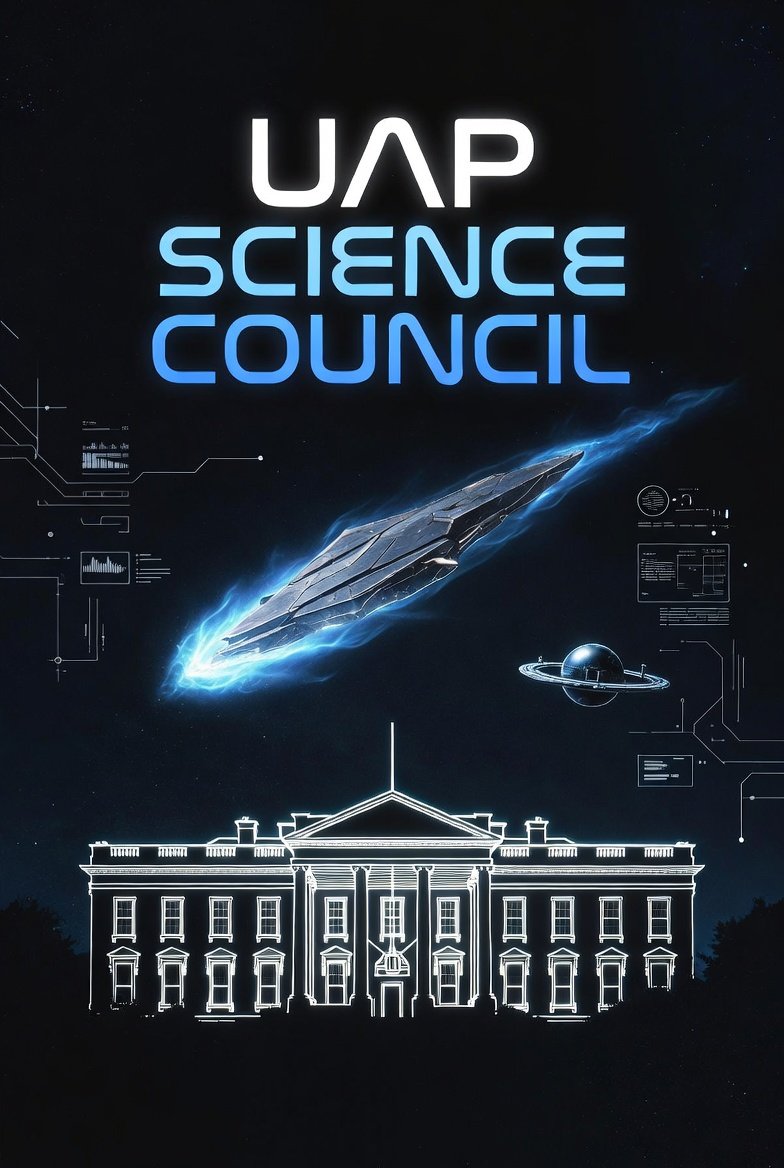
🚨 WHITE HOUSE LAUNCHES UAP SCIENCE COUNCIL / METAMATERIALS BOMBSHELL BREWING? 🛸🔬
White House, AARO, ODNI & IC just formed the first ever UAP Science Advisory Council (announced ~June 12, 2026 post Tranche 03 dump). Avi Loeb leads, Prof. Matthew Szydagis (U Albany physicist) key member for instrumentation & data.
Szydagis has led UAP metamaterials research for 1 years, analyzing anomalous samples like 1996 Art's Parts (Roswell-linked), field expeditions, and upcoming paper that could prove non human tech. Collaborating with Knuth & SCU.
This could be the breakthrough exposing NHI reverse engineering, impossible materials defying physics, tying into missing scientists, Lacatski's "not human" admissions, and 2026 disclosure surge.
Controlled reveal or real acceleration? Watch Szydagis interviews for the fire.
61

The final straw Trumpster
Calling it FOOTBALL 🏈 is PEAK American spirit
Totally embodies our ethos
Delusional. Could care less about rest of the world. Out of the box. Tunnel vision on greatness.
AMERICAN EXCEPTIONALISM
*** also soccer is quite literally for <85 IQs
American football is GLADIATOR CHESS
The greatest game ever created in all realms of physicality / intelligence / spirituality / ART
It is the closest replication to WAR (team sport, which war is) there is.
& that is WHY it was created / pushed so hard. To keep dudes ready.
Because war is a CORE part of what defines humanity.
Fact.
So. 🇺🇸 FOOTBALL is PEAK human soul through SPORT.
**** but but rugby
Barbaric. Nowhere near the level of strategy & specialization as 🏈
*** but but boxing and ufc !
Not a team sport. War is not fought 1 v 1
*** but but everyone else likes soccer
& nobody else has B21 raiders or developed the Nuke or has the world reserve currency
Jun 13

Oh Boy: President Donald Trump wants the NFL to change its name so that soccer is the only sport named football.
"This is football, there is no question about it. We have to come up with another name for the NFL stuff."
😬😬😬
50

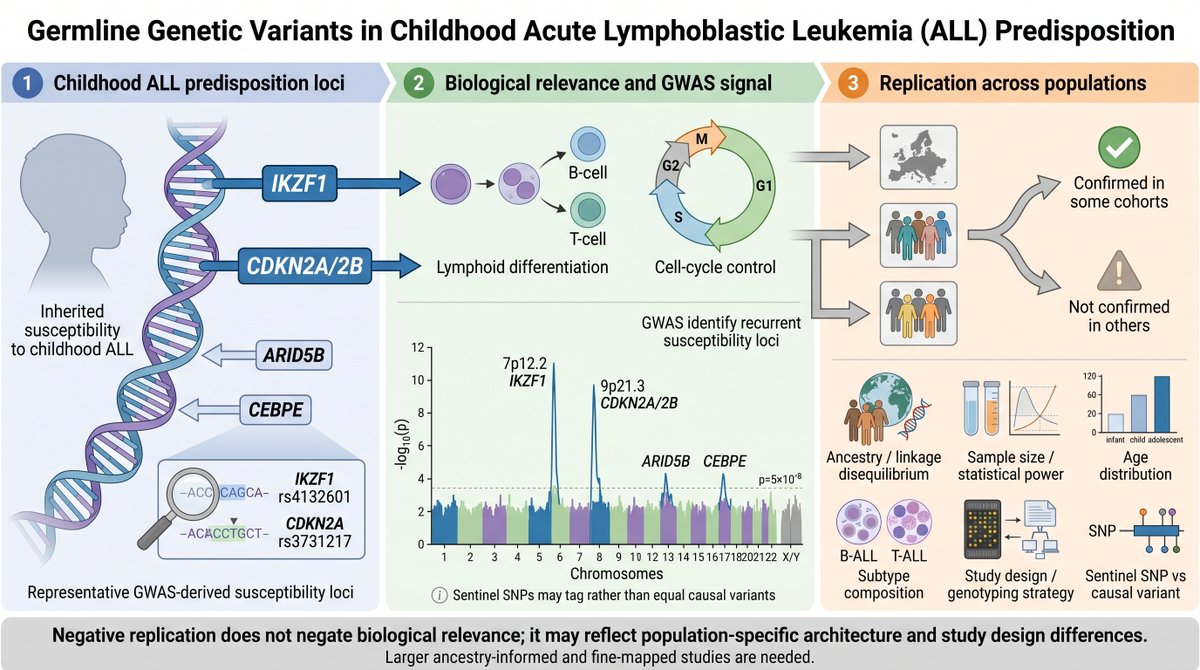
Check our new publication in @Genes_MDPI 👉doi.org/10.3390/genes1706068… Our Greek replication study 🇬🇷 explored IKZF1 rs4132601 & CDKN2A rs3731217 SNPs in childhood ALL, adding population-specific evidence from Crete🏝️ to the inherited-risk puzzle 🧬#Childhood #Leukemia #Risk #Cancer
8
Musk is now sitting at the intersection of rival AI lab, compute supplier, government AI vendor, and potential future export-control target — so his silence is itself an incentive map.”
The key upgrade: avoid saying “he has said absolutely nothing” unless you have a complete archive of his X posts, replies, likes, quote-posts, and deleted posts since Anthropic’s announcement. Say “Unless I missed it, Musk has not made a visible public statement yet.” That wording is harder to attack.
First, tighten the factual baseline
Anthropic says the U.S. government issued an export-control directive to suspend access to Fable 5 and Mythos 5 by any foreign national, including foreign-national Anthropic employees, whether inside or outside the U.S. Anthropic says the practical effect was that it had to disable Fable 5 and Mythos 5 for all customers to ensure compliance, while access to other Anthropic models was not affected.
Fable 5 was Anthropic’s newly launched “Mythos-class” model for general use, while Mythos 5 was a more restricted version for approved partners, initially through Project Glasswing, with some safeguards lifted in cybersecurity contexts. Anthropic described the two as the same underlying model, separated mainly by safeguards and access restrictions.
The compute angle is real, but phrase it carefully. The clean wording is “xAI/SpaceXAI became Anthropic’s compute supplier”, not “Elon personally sold them compute.” xAI announced that SpaceXAI signed an agreement with Anthropic to provide access to Colossus 1, and said Anthropic planned to use that compute to improve capacity for Claude Pro and Claude Max subscribers. TechCrunch reported, citing SpaceX’s S-1 filing, that Anthropic would pay xAI $1.25 billion per month through May 2029, with either side able to terminate on 90 days’ notice.
That creates the actual interesting contradiction: Musk is not just an outside commentator. xAI describes Elon Musk as its cofounder and CEO, and xAI has also positioned itself as a federal-government AI provider through its “xAI For Government” work with GSA OneGov. So the relevant question is not simply, “Why isn’t he tweeting?” It is: Which hat is he wearing — free-speech absolutist, Anthropic vendor, Grok competitor, government partner, or export-control risk manager?
Stronger version of the post
Unless I missed it, Elon Musk has been oddly quiet about the U.S. government forcing Anthropic to disable Fable 5 and Mythos 5 access after an export-control directive.That silence matters because xAI/SpaceXAI just became Anthropic’s compute supplier, Musk runs a rival AI lab, and xAI is also selling frontier AI into government.So what is the actual position here?Does Musk support model-level export controls?
Is he quiet because Anthropic is a customer?
Is he quiet because Grok could be next?
Or is this just convenient silence while a rival gets kneecapped?
That version is much stronger because it does not require proving bad intent. It asks a precise incentive question.
The best hidden angle
The genius-level framing is: this is not mainly a Musk hypocrisy story; it is a frontier-AI conflict-of-interest story.
Musk-linked entities appear to occupy four roles at once:
RoleWhy it mattersRival labxAI competes with Anthropic in frontier AI models.Compute supplierxAI/SpaceXAI is supplying Anthropic with access to Colossus 1. Government AI vendorxAI has publicly expanded its federal-government AI offering through GSA OneGov. Potential future targetThe same model-level export-control logic used on Fable/Mythos could theoretically be applied to Grok or other frontier models.
That is the story: silence may be commercially rational, politically rational, legally rational, and competitively convenient all at once.
Possible explanations for Musk’s silence
1. Anthropic is a customer. Publicly attacking the U.S. order could help Anthropic politically but irritate the government. Publicly supporting the order could damage a major compute customer. Silence preserves the contract, the relationship, and optionality.
2. xAI could be next. If Musk says “the government should not control model access,” that position may age badly if Grok later faces similar cyber, bio, or national-security scrutiny. If he says “the government is right,” he helps normalize a regulatory weapon that could later be pointed at xAI.
3. Government relationship management. xAI’s own public messaging says it supports the Trump administration’s AI Action Plan and is making frontier AI tools available to federal agencies through xAI For Government. A loud public attack on a national-security directive would clash with that government-facing strategy.
4. Competitive advantage without fingerprints. Anthropic losing access to its most advanced models helps rivals in the short term. Musk does not need to say anything for xAI to benefit from the disruption. Silence avoids the optics of gloating while a competitor is hit by the state.
5. Contractual landmines. The compute deal may include confidentiality, nondisparagement, security, compliance, termination, force-majeure, or regulatory-cooperation clauses. We do not know. The public reports about the deal are not enough to infer what Musk can safely say.
6. Compute-provider exposure. If Anthropic’s advanced model access is now treated like a controlled export, compute providers may also become compliance chokepoints. Musk may not want to invite questions about whether Colossus customers, foreign-national staff, cloud access, model-hosting, or training runs could be swept into similar rules.
7. He may agree with the intervention. Musk has long argued that advanced AI can pose serious risks, so a government move against a rival’s extremely capable model may not violate his worldview as much as people assume. The tension is that he also often frames himself as anti-censorship and anti-overregulation.
8. He may not know enough publicly. Anthropic says the government did not give specific details and had only provided verbal evidence of a narrow, non-universal jailbreak. If the underlying security claim is classified or incomplete, any statement from Musk could be reckless.
9. X-post silence is hard to verify. Musk often communicates through replies, short posts, memes, and quote-posts. A clean claim requires checking his main timeline, replies, reposts, likes, deleted-post archives, Grok/xAI accounts, and any interviews after Anthropic’s announcement.
Missing elements that would make the argument much sharper
You need the exact silence window. Start it at Anthropic’s official timestamp: Anthropic says it received the directive at 5:21 p.m. ET on June 12, 2026. Then ask: what did Musk post after that time, and did any post touch Anthropic, export controls, AI regulation, free speech, government overreach, Grok, or compute?
You need the entity map. Was the Anthropic compute deal signed by xAI, SpaceXAI, SpaceX, or another Musk-controlled entity? xAI’s announcement says SpaceXAI signed the agreement with Anthropic; TechCrunch describes the economics as Anthropic paying xAI. That mismatch is worth clarifying because the legal counterparty matters.
You need to know whether Fable 5 or Mythos 5 actually ran on Colossus. xAI said Anthropic planned to use Colossus compute to improve Claude Pro and Claude Max capacity, but that does not automatically prove the disabled models were trained, hosted, or inferenced on Colossus.
You need to know whether the compute deal is take-or-pay. If Anthropic owes fixed payments regardless of model shutdowns, xAI may remain economically protected. If the contract is usage-based or terminable, the shutdown could harm xAI revenue. TechCrunch reported a 90-day termination right, but not the full commercial structure.
You need the government-order text. Anthropic describes the directive, Reuters says a U.S. official confirmed Commerce issued it, and Axios reported Anthropic had 90 minutes before a licensing regime threat. But the public still needs the actual legal authority, scope, standard, evidence, appeal process, and sunset conditions.
You need the Amazon role nailed down. Reuters reported that Amazon CEO Andy Jassy was among tech leaders who raised concerns to senior Trump administration officials, while Amazon did not confirm the specific discussions. That is important because if a major tech actor’s security report helped trigger restrictions on another AI lab’s model, the process needs independent validation.
You need to know whether xAI, SpaceXAI, AWS, Google Cloud, Microsoft, or other infrastructure providers received parallel compliance instructions. Reuters reported AWS said Anthropic asked it to revoke access to the models for all users in all regions, but broader infrastructure obligations are still unclear.
You need the benchmark parity question: Anthropic says the demonstrated vulnerabilities were minor and could also be found by other public models, including OpenAI’s GPT-5.5. If true, then the obvious policy question is why Fable/Mythos were singled out.
Genius-level investigative questions
Ask Musk directly:
Do you support the U.S. government’s directive against Fable 5 and Mythos 5?
Should the same standard apply to Grok if a third party claims it can be jailbroken to assist cybersecurity work?
Did xAI, SpaceXAI, or any Musk-controlled company discuss Anthropic’s Fable/Mythos models with U.S. officials before the directive?
Is Anthropic still paying for Colossus compute while Fable/Mythos access is disabled?
Does the Anthropic compute agreement include regulatory termination, force majeure, minimum payments, or national-security compliance clauses?
Were Fable 5 or Mythos 5 trained, hosted, fine-tuned, or inferenced on Colossus infrastructure?
Does xAI believe foreign-national employees should be blocked from working on frontier models if the government labels those models controlled technology?
Would xAI publish the same kind of safety, jailbreak, cyber, and bio-risk evidence it would demand from Anthropic?
Does xAI support model-level export controls, or only chip/export infrastructure controls?
Should a rival lab, cloud vendor, or compute provider be able to trigger government restrictions on another lab’s model without independent public review?
Ask Commerce/BIS:
What exact statute or regulatory authority was used?
Was the order based on a written technical report, verbal briefing, classified intelligence, third-party research, or all of the above?
Was the same jailbreak tested against Grok, GPT-5.5, Gemini, Llama, Mistral, DeepSeek, or other frontier systems?
Why did the order cover foreign nationals in allied countries and foreign-national employees inside the U.S.?
What must Anthropic do to regain access?
Is there a sunset clause?
Is there an appeals process?
Was an antitrust or competition-impact review performed?
Were any competitors or infrastructure providers consulted?
Will the government release a redacted technical basis?
Ask Anthropic:
Did the government share the full exploit or only a demonstration?
Did Anthropic reproduce the exploit internally?
Which other models matched the same capability?
Were Fable/Mythos running on AWS, Google Cloud, Microsoft, Colossus, or multiple clouds?
How many customers were affected?
Were foreign-national employees blocked from working on the model immediately?
What remediation does Anthropic believe would satisfy the government?
Did Amazon contact Anthropic before escalating concerns to officials?
Did any compute supplier besides AWS receive shutdown instructions?
Does Anthropic believe this was a neutral safety action or targeted enforcement?
Obscure thought inputs worth adding
The “compute landlord” angle: The most under-discussed part is that the AI market is becoming vertically tangled. A company can be a rival lab, cloud supplier, government vendor, and political actor simultaneously. That makes ordinary public commentary strategically loaded.
The “deemed export” trap: The most explosive part is not just blocking users overseas. It is blocking foreign nationals even inside the U.S., including potentially a lab’s own employees. That changes the operating model of frontier labs, because many top AI researchers are not U.S. citizens.
The “competitor red-team veto” problem: If one company’s vulnerability report can help trigger government restrictions on another company’s model, every frontier lab now has an incentive to red-team rivals and route alarming findings to regulators. That could improve safety, but it could also become regulatory warfare.
The “Anthropic wrote the predicate” theory: Anthropic has aggressively framed Mythos-class capabilities as extremely powerful and risky. That may have helped create the political logic for government intervention. Critics can argue: if you repeatedly market your model as near-dangerous infrastructure, do not be surprised when the state treats it like controlled infrastructure.
The “Musk cannot win by speaking” dynamic: Defend Anthropic and he angers regulators. Support the government and he validates controls that could hit Grok. Mock Anthropic and he looks anti-competitive. Ignore it and people call out the silence. Silence may be the least costly option.
The “Fable scarcity premium” effect: Government restriction may make Fable/Mythos look more powerful and desirable than before. Even if the underlying safety issue is narrow, the public narrative becomes: “This model was so strong the government pulled it.” That could boost Anthropic’s mystique.
The “allied-country insult” layer: If the directive blocks foreign nationals broadly, the issue is not just China or adversarial access. It potentially alienates allied researchers, customers, and governments. That makes it a geopolitical story, not just an AI-safety story.
The “model access is the new chip export” shift: For years, AI export debates focused on GPUs, fabs, and data centers. This move suggests the government may increasingly regulate access to model capability itself, not just the hardware used to create it.
The “provider neutrality” problem: Compute vendors may need rules similar to common-carrier neutrality for frontier AI infrastructure. Otherwise, customers will worry that a vendor who is also a competitor could gain leverage during regulatory crises.
The “Grok mirror test”: Every argument Musk makes about Anthropic can be mirrored onto Grok. That is probably why silence is rational. The right question is: would Musk accept the same standard for xAI?
Genius-level solutions
1. Create a frontier-model emergency review board. Before a model is pulled globally, a cleared independent board should review the exploit, replicate it, compare it against peer models, and issue a public redacted finding. The board could include Commerce/BIS, CISA, NIST, UK AISI, independent cyber labs, and cleared technical judges.
2. Require cross-model parity testing. If the government restricts Fable because it can identify vulnerabilities, it should test the same prompt, harness, and workflow against Grok, GPT, Gemini, Mistral, DeepSeek, and open models. If the capability is industry-wide, targeting one company is arbitrary.
3. Add a “competitor evidence firewall.” If a rival, cloud vendor, or compute partner reports a dangerous capability, regulators should require independent replication before action. The reporting company should also submit its own comparable models to the same test.
4. Time-box emergency orders. A 72-hour emergency restriction can make sense if there is credible imminent harm. A longer shutdown should require written evidence, a remedy path, an appeal process, and a public redacted rationale.
5. Create trusted-access tiers instead of total shutdowns. Keep access for verified U.S. and allied cyberdefenders, critical-infrastructure teams, and cleared researchers while blocking high-risk users. A total shutdown is a blunt instrument.
6. Clarify foreign-national employee rules. Labs need a workable “deemed export” framework for AI. Otherwise, U.S. companies may lose the very researchers needed to secure the models.
7. Separate model weights, API access, and capability scaffolding. A raw model, an API with tools, an agentic cyber harness, and model weights are not the same risk object. Regulation should distinguish them.
8. Mandate infrastructure-provider neutrality. Compute providers that also run rival AI labs should disclose conflict-management policies: no customer-model inspection beyond agreed security terms, no competitive use of telemetry, and clear rules for government escalation.
9. Build a confidential safety escrow. Anthropic, xAI, OpenAI, Google, Meta, and others could deposit frontier-model safety reports with a trusted third party. During disputes, regulators could compare claims without forcing full public disclosure.
10. Publish a model-control doctrine. The government should say what triggers frontier-model export controls: cyber uplift, bio uplift, autonomous replication, classified benchmark thresholds, tool-use capability, or something else. The current ambiguity creates fear and selective-enforcement concerns.
Red flags in the original wording
Do not say “Musk is complicit” unless there is evidence. There is currently a big difference between “he benefits from this,” “he is silent about this,” and “he caused this.”
Do not say “the government banned Anthropic”. It targeted access to specific models, and Anthropic disabled them broadly to comply. Other Anthropic models were not affected, according to Anthropic.
Do not say “Fable/Mythos were proven dangerous.” Anthropic disputes the government’s apparent rationale and says the evidence it has seen involved narrow, minor vulnerabilities that other public models could also identify.
Do not say “Elon sold compute to Anthropic” as if he personally signed a deal. Say “xAI/SpaceXAI signed a compute partnership with Anthropic” or “Musk-linked xAI/SpaceXAI is Anthropic’s compute supplier.”
Do not make it only about Musk. The bigger story is government power over model access, cloud-provider influence, export-control scope, and whether rival labs can shape each other’s regulatory risk.
Even sharper one-liners
“Musk’s silence is interesting because he is not just a spectator. He is a rival, a supplier, and a government AI vendor.”
“The Anthropic shutdown is the first major test of whether frontier AI will be regulated by transparent standards or by Friday-night national-security calls.”
“If Fable can be pulled over a narrow jailbreak claim, what happens when someone files the same claim against Grok?”
“The real story is not whether Elon tweeted. The real story is that the AI stack now has competitors selling each other the compute they need to survive.”
“Silence is a position when your rival is also your customer.”
Best final post
Unless I missed it, Elon Musk has been unusually quiet about the U.S. government forcing Anthropic to disable Fable 5 and Mythos 5 after an export-control directive.That silence is worth noticing because xAI/SpaceXAI just became Anthropic’s compute supplier, xAI runs a rival frontier model lab, and xAI is also positioning Grok inside the U.S. government.So the question is not just “Where is Elon?”The question is: does Musk support model-level export controls, is he protecting a major compute customer, is he worried Grok could be next, or is he simply fine staying quiet while a competitor gets kneecapped?This is bigger than Anthropic. It is the beginning of AI export controls moving from chips to model access itself.
Bottom line
The strongest version of your argument is not a dunk. It is a power-map. Musk’s silence is interesting because the Anthropic situation touches every major pressure point in frontier AI: government control, model safety, export law, foreign-national access, cloud infrastructure, compute dependency, and competitor incentives. The missing piece is not just “what did Musk say?” It is which of his incentives made saying nothing the safest move?
10h

Interesting how Elon Musk has said absolutely nothing about the U.S government intervening and forcing Anthropic to pull access to Mythos and Fable models. You think a guy with his own AI lab would have something to say, especially after selling compute to Anthropic.
1
167

“how does a tree resin kill bacteria?”
triterpenoids. they’re the active compounds in Chios mastic. they don’t work one way like antibiotics — they rupture cell walls, dissolve biofilms, AND block replication. all at once. that’s why no resistant strains exist after 3,000 years. bacteria can dodge a sniper. they can’t dodge a shotgun.
1
41

patients given a PCSK9 inhibitor. Fine.
But that is still not lifelong PCSK9 LOF, not a replication of Cohen’s 88% subgroup, and not ApoB isolated as the sole upstream mechanism. “Points the same way” is an inference, not the direct proof you keep pretending exist.
1
5

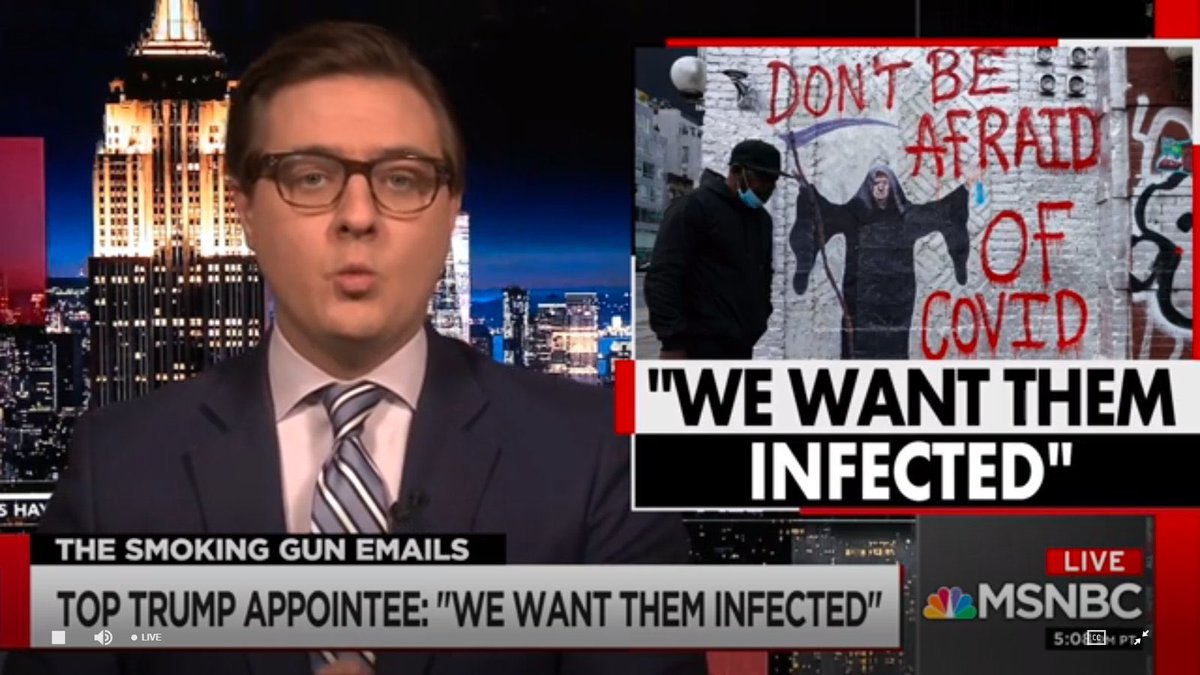
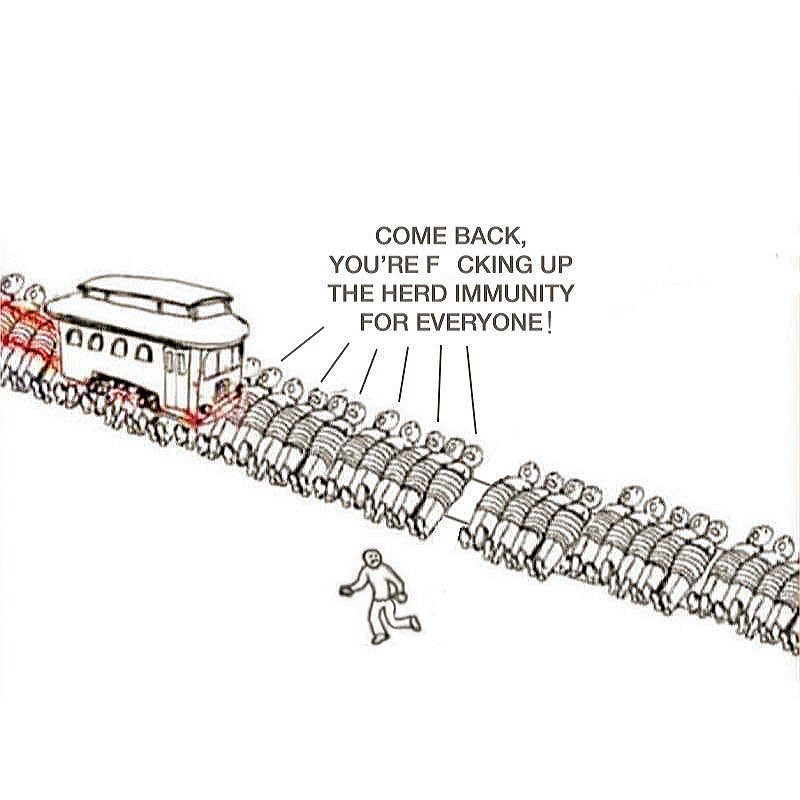
Koopmans said the virus does not spread easily and in march20 to let it run and rip for “herdimmunity” while her strategic paper with Munster warns asymptomatic superspreader mf virus AND her own virologist writing replication in gut (reservoir so bye bye immunity) not getting >
1
14
The strongest way to handle that quote is: treat it as a potentially important lead, not as proof yet. The public record already confirms Grusch has made extraordinary claims under oath, including a “multi-decade UAP crash retrieval and reverse-engineering program,” that he said he interviewed more than 40 witnesses, and that he claimed locations were provided to an Inspector General. But the actual crash-retrieval photos, metadata, chain of custody, original files, material samples, biological evidence, and independent verification are still not public.Best high-integrity framing
Use this framing instead of “aliens confirmed”:
Breaking claim, not proof: David Grusch says he has seen photos connected to alleged UFO/UAP crash retrievals. This matters because Grusch previously testified under oath that he was informed of a multi-decade UAP crash retrieval and reverse-engineering program, but no public, independently verified crash-retrieval photos or physical evidence have yet been released. The next step is not belief or dismissal. The next step is provenance, chain of custody, congressional verification, and lawful declassification.That framing is powerful because it avoids the two biggest traps: breathless confirmation and lazy debunking.What is actually grounded right now
Grusch’s official House witness statement says he was a U.S. Air Force intelligence officer at the rank of Major and later worked at the National Geospatial-Intelligence Agency; he also wrote that multiple current and former officials shared “photography, official documentation, and classified oral testimony” with him.In the 2023 House hearing, he testified that he was informed, in the course of his official duties, of a multi-decade UAP crash retrieval and reverse-engineering program, but said he was denied access to the additional read-ons.He also testified that he believed the U.S. government was in possession of UAPs based on interviews with more than 40 witnesses over four years, and said exact locations had been provided to the Inspector General and, in some cases, intelligence committees.On “nonhuman biologics,” Grusch testified that “biologics came with some of these recoveries,” but when asked whether the evidence was documentary, video, photos, or eyewitness-based, he said the specifics would need to be discussed in a SCIF.The official counterweight is important: AARO’s public position remains that it has found no evidence of extraterrestrial beings or technology to date, while NASA says there is no evidence that UAPs are extraterrestrial and that the limited high-quality data around many UAP reports makes firm conclusions difficult.Missing elements that would make the quote much stronger
The most important missing element is the original source context: full video, timestamp, unedited transcript, and whether Grusch said “I personally saw original crash-retrieval photos” or whether he saw reproductions, briefings, documents containing photos, or slides prepared by other people.The second missing element is provenance. A photo is not evidence by itself. You need to know who captured it, on what device or sensor, on what date, under what program, at what location, under whose custody, and whether it was an original file or a later reproduction.The third missing element is chain of custody. For alleged crash retrieval imagery, the chain should run from field collection to classification marking to archive storage to briefing use to Inspector General or congressional handling. Any break in that chain weakens the claim.The fourth missing element is metadata. For ordinary digital images, this includes EXIF, timestamps, file hashes, device identifiers, lens data, compression history, and edit history. For military or intelligence imagery, the equivalent may include platform, sensor, calibration data, collection deck, mission ID, coordinates, classification banner, and dissemination controls.The fifth missing element is scale. A “disc” or “egg” shape in a photo means little without reference objects, range, focal length, terrain, shadows, or measurement context.The sixth missing element is environmental context. Was the object photographed in situ at a crash/landing site, inside a hangar, on a flatbed, in a lab, underwater, in desert terrain, or as part of a briefing slide? “Crash retrieval photo” could mean very different things.The seventh missing element is whether the image was paired with non-image evidence: radar tracks, satellite collection, SIGINT, HUMINT reports, recovery-team logs, medical/biological chain-of-custody documents, transport manifests, lab reports, or contractor deliverables.The eighth missing element is whether Congress has seen the same photos. Grusch’s strongest path is not public podcast disclosure; it is lawful disclosure to cleared congressional investigators, the Intelligence Community Inspector General, and committees with subpoena power.The ninth missing element is whether AARO was shown the same material. If AARO was not shown it, that matters. If AARO was shown it and rejected it, the reason matters even more.The tenth missing element is whether the photos can be sanitized. If sources and methods are the issue, a derived image product could theoretically remove sensor/platform details while preserving object morphology, context, and confidence intervals.Genius-level solutions
1. Create a “UAP evidence escrow.” A cleared, bipartisan panel of congressional staff, forensic imaging experts, aerospace engineers, records-management specialists, and judges or inspectors general reviews the classified evidence in a SCIF. They do not publicly reveal sensitive methods. They publish a narrow unclassified finding: “We reviewed X number of images, Y appeared original, Z had complete chain of custody, and N could not be explained by known U.S., foreign, or natural phenomena.”2. Use a tiered declassification model. Release evidence in layers: first a public index, then redacted captions, then low-risk still frames, then sanitized metadata, then full-resolution imagery to cleared scientists, then public release of derived analytic products. This avoids the false choice between “release everything” and “release nothing.”3. Build a forensic photo checklist before anyone argues aliens. For every alleged image, require: original file hash, collection platform, date/time, location, scale reference, classification history, edit/compression history, analyst notes, alternative explanations, and the name of the office that made the “nonhuman” or “unknown origin” assessment.4. Force the claim into nested probabilities. Don’t ask, “Is it aliens?” Ask four separate questions: Did Grusch accurately describe what he saw? Did the photos genuinely show recovered vehicles? Were those vehicles beyond known human origin? Was the evidence unlawfully hidden from Congress? Each question has a different evidence threshold.5. Audit records, not rumors. If a retrieval program existed, it likely left boring bureaucratic fingerprints: security classification guides, DD-254 contract security forms, waived SAP records, facility access logs, courier records, hazardous-material handling, crash-site cleanup, medical/lab documentation, inventory controls, funding anomalies, and contractor deliverables.6. Use NARA Record Group 615 as a pressure point. The National Archives has established a UAP Records Collection under the 2024 NDAA and says agencies will add records on a rolling basis as they are received. That creates a concrete public-records path for journalists, researchers, and congressional offices.7. Demand a “negative finding” if evidence is withheld. If an agency says the photos cannot be released, it should still answer: do the images exist, who controls them, are they original, were they reviewed by AARO/ICIG/Congress, and are they being withheld for source-method reasons or because the claim is unsupported?8. Separate air-safety UAP from crash-retrieval UAP. These are different categories. Pilot sightings, sensor anomalies, and crash-retrieval claims should not be mixed into one rhetorical bucket. The standards of proof for a dangerous unknown object in airspace are much lower than the standards for recovered nonhuman technology.9. Require independent materials science for any alleged debris. AARO already points to ORNL-style analysis of alleged metallic specimens in its public records section; that is the correct template. The public needs blind testing, isotope ratios, microstructure, manufacturing marks, contamination controls, and replication across labs.10. Make “nonhuman” origin the last hypothesis, not the first. NASA’s UAP study emphasized that extraterrestrial origin should be treated as a hypothesis of last resort after other explanations are ruled out, and that eyewitness reports alone are usually not enough for definitive conclusions.Obscure thought inputs worth adding
One under-discussed possibility is classification contamination: people inside classified spaces may have seen real secret aerospace, sensor, or recovery programs and interpreted them through a UAP framework without seeing the whole picture.Another is legend migration: a rumor can move from contractor to official to investigator to whistleblower and feel independently corroborated even when multiple witnesses are repeating the same root story.Another is program-access illusion: being denied access can mean “they’re hiding alien craft,” but it can also mean the program was unrelated, compartmented for ordinary national-security reasons, or inaccessible because the requester lacked a specific need-to-know.Another is photo-caption authority bias: if an image appears in a classified briefing slide labeled “recovered vehicle,” the label itself can become the evidence, even if the underlying image was never independently validated.Another is morphology inflation. “Discs, eggs, and every other morphology” sounds dramatic, but it also raises a hard analytic question: are these many actual craft types, many witness descriptions, many artifacts of angle/sensor distortion, or a mixed collection of unrelated objects?Another is contractor custody ambiguity. If alleged artifacts were moved into private aerospace or defense-contractor environments, the key question becomes federal property accountability: who owns it, who funds it, what contract vehicle covers it, and what legal authority prevents Congress from inspecting it?Another is the “no aliens, still scandal” scenario. Even if no nonhuman craft exists, there could still be a major oversight scandal if officials misled Congress, abused classification, retaliated against whistleblowers, or hid ordinary but sensitive programs behind UAP mythology.Questions that would instantly sharpen the story
Ask Grusch or the interviewer:Did you see original image files, printed photos, briefing slides, or secondhand reproductions?
Were the photos marked with classification banners, collection dates, coordinates, program names, or sensor/platform identifiers?
Were the objects photographed at crash sites, landing sites, storage facilities, laboratories, or inside contractor facilities?
How many separate alleged retrieval events did the photos represent?
Did any image include humans, vehicles, terrain, hangars, cranes, straps, tarps, measuring tools, or other scale references?
Were any photos accompanied by chain-of-custody forms, recovery logs, biological reports, or materials-analysis reports?
Did the people who showed you the photos claim firsthand involvement, or were they also relying on inherited records?
Were these exact photos provided to the ICIG, congressional committees, or AARO?
Can a sanitized still frame be released without exposing sources and methods?
What would falsify your interpretation of the photos?
Red flags to watch
“Breaking” language can be misleading if the clip is from an older interview or reuploaded without context. The Joe Rogan interview with Grusch is from 2023, while social pages can make old material feel new. Verify the timestamp before calling it “just now.”“Seen photos” is weaker than “handled material,” “visited site,” or “saw original sensor data.” It is still significant, but it is not the same as firsthand physical access.“Nonhuman” is more careful than “alien.” Grusch himself has used “nonhuman” rather than committing publicly to extraterrestrial origin in the congressional setting.A lack of public photos is not proof the claim is false, but it keeps the claim below the threshold of public scientific proof.Official denials are not automatically decisive, but they are part of the evidentiary landscape. AARO and NASA’s public positions remain that they have not found evidence establishing extraterrestrial technology or life.Better viral post version
David Grusch has reportedly said he saw photos connected to alleged UFO/UAP crash retrievals.This is not “aliens confirmed.”
This is a serious claim that now needs serious evidence: original files, provenance, chain of custody, metadata, congressional review, and lawful declassification.The real question is no longer “Do you believe?”
The real question is: Who has the records, who has seen them, and why can’t Congress and the public get a verified evidentiary summary?Bottom line
The quote is useful as a pressure point, not as a conclusion. The smartest move is to shift the conversation from belief to verification architecture: original images, provenance, chain of custody, SCIF review, NARA record transfer, independent technical analysis, and a public unclassified confidence assessment. That is how this moves from viral claim to historically meaningful evidence.

Breaking: 🚨‼️ NEW - Whistleblower Major David C. Grusch just now said live on air that "I have seen photos of UFO Crash Retrievals" 🛸👽📷
"I did access to crash retrieval photos and everything. I’ve seen recovered vehicles…
Everything..
This is the most earth shattering thing that changed my world view.
They were everything from flying discs to egg shape craft & every other morphology
They landed or crashed on the surface of the earth" - David Grusch
1
87


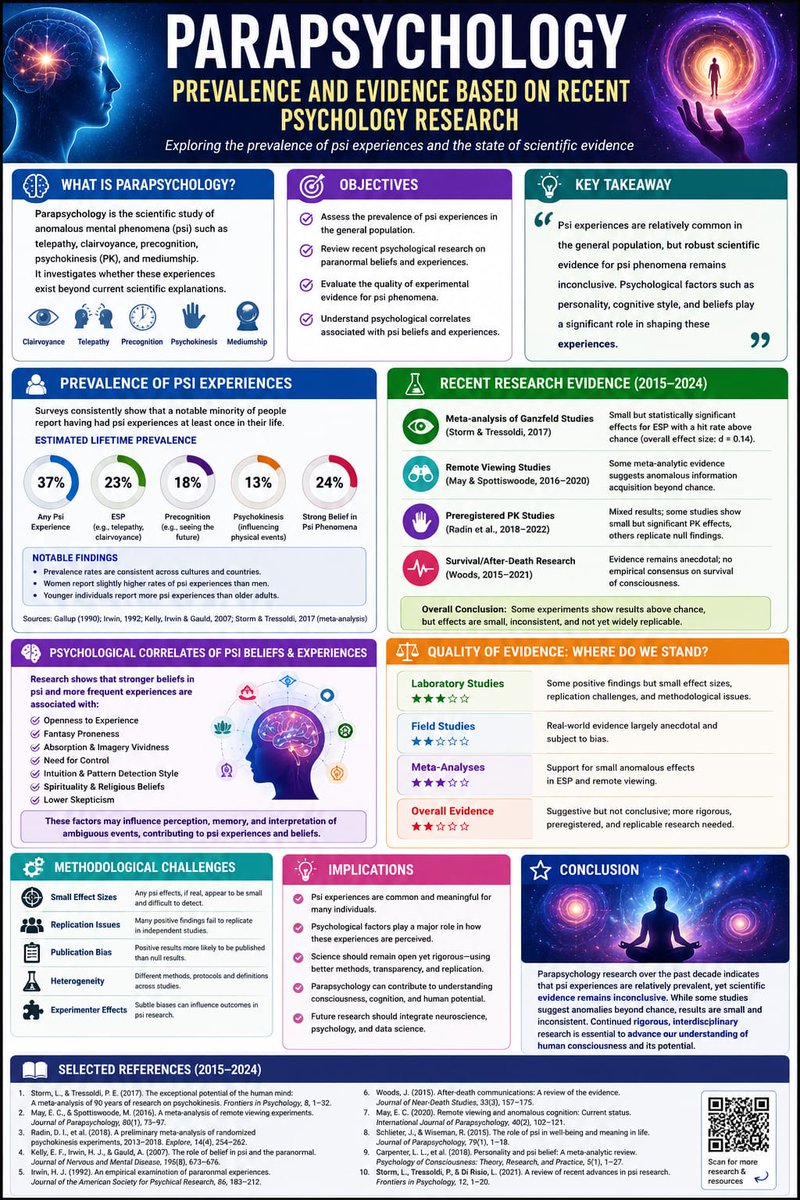
Psi is common in belief, scarce in proof. 24% strongly believe in paranormal; 23% report ESP. Ganzfeld & remote viewing show d=0.14 effect sizes but replication issues persist. Correlates: fantasy proneness, spirituality, lower skepticism. More preregistered research needed.
3

A faceless YouTube Shorts channel with 29 videos generated 250 million views in 3 months.
Estimated revenue: ~$50,000.
Another channel hit 700,000 views in 48 hours with a single upload and zero subscribers.
Meanwhile, most creators post daily for a year and never break 30,000 views on a single video. 👇
The difference isn't talent.
It isn't editing software.
It isn't even the niche itself.
It's formula architecture.
And understanding it will change how you build every Shorts channel from this point forward 🧵
Most creators watch a viral Short, recreate it shot-for-shot, and wonder why they get 2,000 views.
The math on that approach is brutal:
→ Original viral video: 100M views
→ 200 copycat versions posted within 48 hours
→ Average copycat result: ~15K-30K views
→ Revenue from 30K views at $0.08 RPM: $2.40
That is not a business. That is a rounding error.
Now look at the formula-driven approach:
→ Study the structural phases behind the viral content (not the surface topic)
→ Extract the emotional arc: declaration → tension → reveal
→ Apply that arc to an untouched topic with zero existing competition
→ Revenue from 5M views at $0.12 RPM: ~$600 per video
Same platform. Same algorithm. Completely different architecture.
The channels doing this quietly are stacking results most people refuse to believe:
→ Brazen: 29 uploads. 250M views. ~$16K/month at peak. Every single video follows an identical 6-phase structure — declare, assess, isolate, process, build, reveal — applied to obsessive food preparation. The content is AI-generated. Nobody in the comments even noticed.
→ Street Dog Salon: 1 upload. 700K views in 48 hours. 88% average percentage viewed. Built by extracting Brazen's exact structural formula and applying it to pet grooming transformations — a niche with literally zero competition at launch. Total production time: ~2 hours.
→ Instant Sports: Hard stuck at 4K-13K views per video for weeks. Started applying trending pattern replication around Alex Honnold's skyscraper climb instead of posting random sports clips. Single video hit 4.4M views. Channel trajectory completely reversed within days.
→ Commentary operators running the hook-payoff script framework: One specific script structure — hook, explain payoff, foreshadow, reveal payoff — generated 48M views on a video. A nearly identical concept with a weaker script got 39K. Same source footage. Same niche. The only variable was 4 sentences.
→ Multi-channel operators running 6 faceless channels simultaneously: $10K-$15K/month. Each channel posts once daily. Total time investment after systems are built: 1-2 hours across all channels combined.
The system is simpler than the results suggest:
1. Find a channel with disproportionate views relative to subscribers (this proves the content carries, not the brand)
2. Document the top 3 videos scene-by-scene — phase structure, emotional arc, script formula, average scene duration
3. Extract the repeatable skeleton, not the surface content
4. Apply that skeleton to a different universally relatable topic that passes three filters: universal relatability, emotional hook, and completion compulsion
5. Produce using AI tools — Higgsfield for visuals, ElevenLabs for voice, CapCut for assembly
6. Post once daily and track two metrics only: swipe rate and average view duration. Iterate the hook until swipe rate holds above 80% as the audience broadens
That's the entire playbook.
The highest-value niches for this approach right now:
→ AI-generated procedural content — food, crafting, grooming ($0.08-$0.15 RPM)
→ Commentary — fitness moments, bike clips, Japan culture, animals ($0.10-$0.20 RPM)
→ Football/World Cup content through July 2026 ($0.15-$0.30 RPM with North American viewers)
→ Gaming — Roblox narratives, Minecraft moments ($0.06-$0.12 RPM, but massive volume potential)
→ Transformation content — pets, rooms, cars, before/after ($0.08-$0.18 RPM)
The timing on this is not arbitrary.
YouTube just signed an official partnership with FIFA. The algorithm is actively prioritizing football content during the tournament. North American RPMs are at the highest levels the Shorts platform has ever seen. And AI video tools — Sora, Higgsfield, Runway — have crossed a quality threshold where one person with a laptop produces content that looks like a studio made it.
The operators building formula-driven channels right now will be monetized before this window closes.
The ones still copying viral videos frame-by-frame will spend the rest of the year wondering why the algorithm ignores them.
I put everything — the 6-phase viral formula, the hook-payoff script system, the 90-day monetization blueprint, the full niche-by-niche RPM breakdown, and the complete AI production workflow — into a free 100-page ebook.
Like this post and I'll DM it to you. ✉️
27

Gain-of-function (GoF) research is a type of scientific study where researchers deliberately modify a pathogen (usually a virus or bacterium) to enhance one or more of its biological functions—such as transmissibility, virulence, host range, immune evasion, or replication.
1
1

Your specific unique DNA blueprint was made by replication. Your mother didn't design you and it wasn't the finger of God.
3

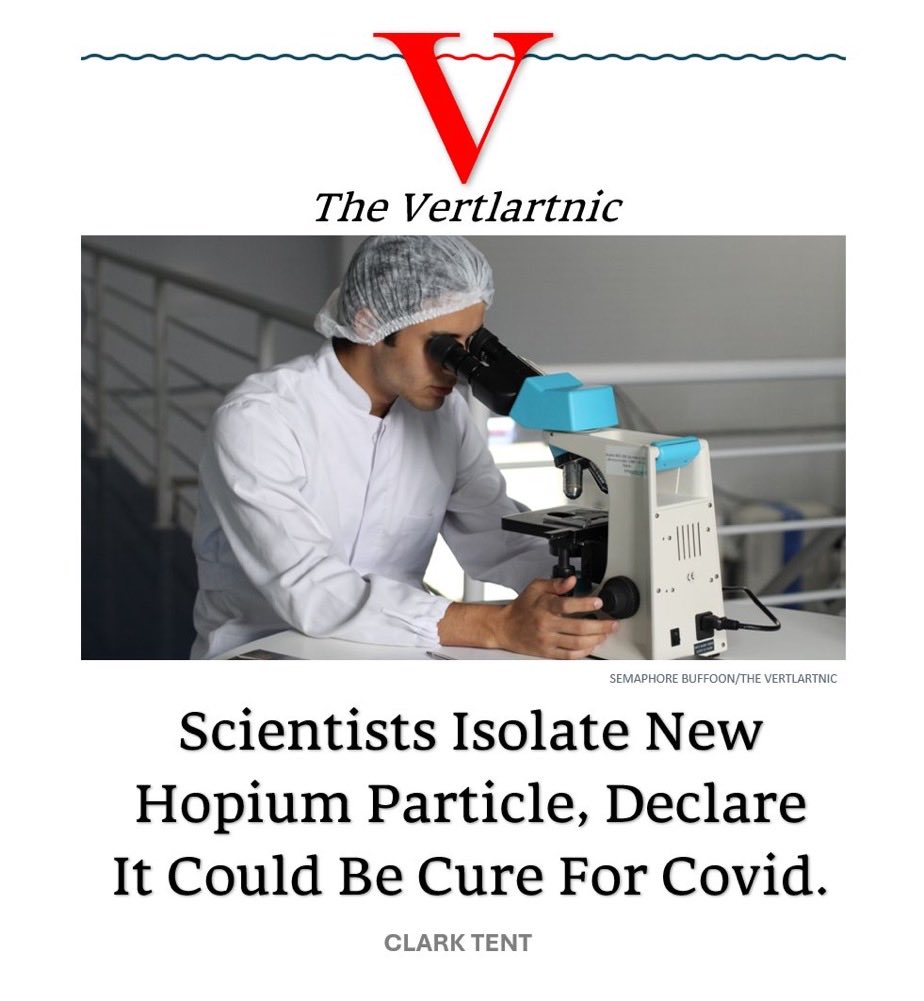
I've read too much sci-fi to trust this headline. A lab result is not treatment at scale. I'll wait for independent replication.

Japanese scientist succeeds in removing the extra chromosome that causes down syndrome
11