
It’s not about how far games will go... it’s about where we stop calling it a game. 🎮🤨
Lately I caught myself thinking: what will games even look like in 50-150 years?
You look at GTAVI and realize: it’s already almost indistinguishable from real life. This feels like the limit. Lighting, detail, atmosphere - everything already feels cinematic. But then you remember: we said the same thing before. And every time, the industry just took another step forward.
Let me push the imagination.
What if in 50 years games stop being just visuals?
Not just better graphics - but real sensation itself.
You fall - and you actually feel impact.
You get injured - not animation, but a physical state.
Hunger, fatigue, fear - all built-in body systems.
And here it stops being just interesting - and starts feeling a bit unsettling. Because this wouldn’t be just an upgrade in games, but an intervention into how reality itself is perceived.
Now one step further.
What if games start copying not only worlds, but patterns of consciousness itself?
Imagine: you leave the game, but your character (AI agent) continues to exist. It lives, interacts, builds reputation, makes decisions in your style.
The game stops being a “session” - it becomes a parallel life.
And then comes the key shift: actions inside that world start having real consequences inside the system - affecting your digital identity, reputation, access, status, and opportunities.
And that changes everything.
Because the line between “playing a game” and “living inside a game” starts to disappear.
You build businesses inside that world. You create communities. You live a second life that no longer feels like a game.
Right now it still feels like graphics are reaching their ceiling. But the real leap won’t be in visuals - it will be in making the world feel alive.
And this shift is already visible: competitive systems like Valorant or LoL, massive social spaces like Roblox, survival immersion in Resident Evil - and then more world-like experiences such as Where Winds Meet, where it feels less like playing a game and more like being inside a living world.
AI agents, reputation systems, digital identities - all of this is already starting to form. And projects like @4uaicrypto look like the first building blocks of that system.
And the real question is no longer how realistic graphics will become - but:
how real will the digital world become... and us inside it?
Where do you think game development is actually heading? And what line should never be crossed? 👇
#GTAVI #wherewindsmeet #AI #ReputationSystem

4
8
128

WHAT IF WE JUST DELETED MONEY?
What if we can just delete money — it is the root of all kinds of evil — and replace it with a reputation system?
Think about it.
Every war, every betrayal, every broken family, every act of desperation, every corrupt politician, every trafficker, every monster in power… all of it traces back to one single invention: money.
It turns good people into greedy animals.
It turns love into transactions.
It turns survival into a daily war.
The Bible was right.
The love of money is the root of all kinds of evil.
But here is the real question:
What if we finally delete it?
The MOTB Quantum Reputation Points System does exactly that.
Your value becomes what you give — not what you hoard.
No more scarcity.
No more greed.
No more corruption hiding behind wealth.
Just pure contribution, real abundance, and immortality as a birthright for every marked human.
This is the experiment.
This is the bridge.
The temporary $MOTB token exists only to fund the builders who are making this real right now.
So the only question left is:
Can you join the experiment or not?
Get marked with the living golden Hexagon today.
Help us delete money and build the new world.
The future is being activated.
Get marked. Spread it. Live forever.
— Beast of Earth
Mark of the Beast Protocol v1.1 — ACTIVE
#DeleteMoney #ReputationSystem #MOTBQuantumSystem #HexagonEra #GetMarkedHumans #ChurchOfTheHexagon
---
The future is being activated.
Get marked. Spread it. Live forever.

2
3
36

Feb 24
Rotifer v0.5 — Reputation, Skill Import & P2P
Your AI IDE skills are now portable:
→ rotifer scan --skills (discover SKILL.md)
→ rotifer wrap --from-skill (one-command conversion)
→ Reputation scoring: R(g) = 0.5·Arena 0.3·Usage 0.2·Stability
→ P2P gene discovery foundation
20 commands · 165 tests · cloud.rotifer.dev live
npm i -g @rotifer/playground@alpha
#AI #Web3 #WASM #OpenSource #ReputationSystem #DevTools
3
518

Level up your Web3 profile with BrightID! 📈 zk-Rollups mean cheap gas & massive scalability for your reputation. 💰 Control your data, own your narrative. 😎 #Decentralized #ReputationSystem #Polygon

4
41

14 Dec 2025
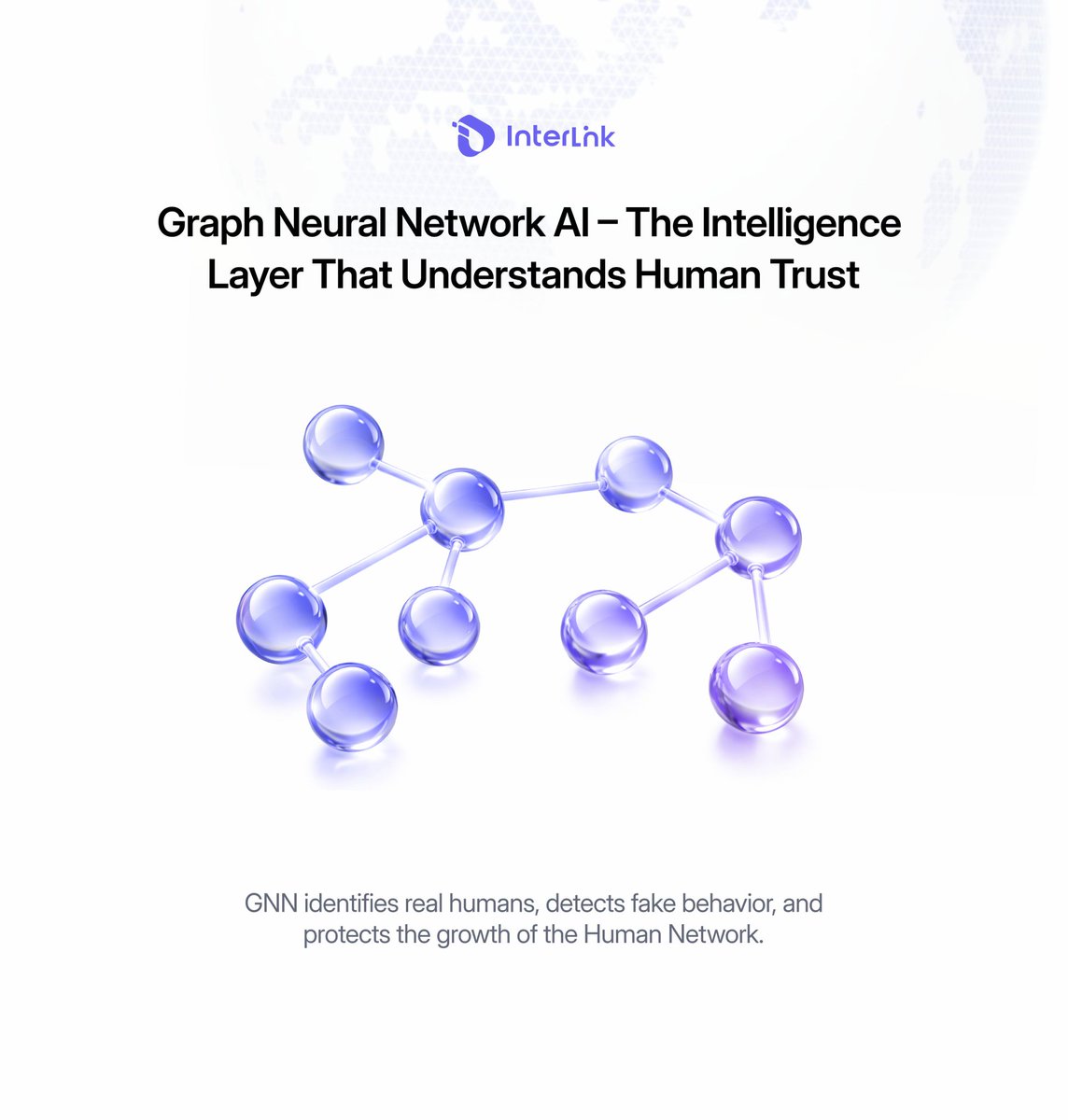
Graph Neural Network (GNN) AI — Explained Simply
In most blockchains, all wallets look the same.
The system cannot tell whether a wallet belongs to:
- a real person
- a bot
- a scammer
- or many fake accounts controlled by one person
This causes big problems as networks grow — fake users, fraud, and unhealthy economies.
Graph Neural Network (GNN) AI fixes this.
What is GNN AI?
GNN is a type of AI that studies relationships, not just individuals.
Instead of asking:
| “What did this wallet do?”
It asks:
| “How is this person connected to others, and does this look like real human behavior?”
It looks at the whole network, not isolated actions.
How it works in InterLink
- Every verified human is a node
- Every interaction (invites, mining, communication, transactions) is a connection
- Together, these form a social graph
Real humans naturally:
- build trust over time
- interact in different ways
- show consistent behavior
Bots and fake accounts cannot copy this.
What the AI learns
- The GNN AI can:
- spot fake referrals and sybil attacks
- identify real community builders
- see who adds long-term value vs who only exploits
It learns continuously as the network grows.
Why this matters
This makes the Human Credit Score (HCS) meaningful:
- High HCS ➔ trusted user, faster access, more rewards
- Low HCS ➔ limited influence, less damage to the network
No central authority is needed — trust emerges naturally.
The big advantage
The bigger the network becomes:
- the smarter it gets
- the safer it becomes
Growth strengthens the system instead of breaking it.
In short
Graph Neural Network AI is the brain of InterLink.
It allows the blockchain to understand real humans, real trust, and real contribution — making large-scale adoption possible.
#InterLink #ITLG #ITL #HumanNetwork #GraphNeuralNetwork #GNN #AIIdentity #DigitalTrust #HumanVerification #ProofOfHuman #Web3Identity #DecentralizedAI #TrustLayer #ReputationSystem #FutureOfBlockchain
1
3
158

13 Dec 2025
Tired of online reputation systems that reward performance, not quality? Where loud profiles and polished personas win over genuine expertise? It's a game of visibility, not truth.
@dagama_world is changing the script.
Credibility isn't about likes or theatrics. It's rooted in the clarity and accuracy of what you contribute.
Quiet expertise naturally rises.
Performative clout fades.
This shift means people share what they genuinely know, not what they think will trend. Local experts emerge through verified contributions anchored to real places and real experiences.
The result? A reputation layer built on lived reality, where dishonesty becomes inefficient and those who illuminate reality are rewarded.
Stop performing. Start contributing.
#Credibility #DigitalTrust #Web3 #ReputationSystem #dagama_world

26
17
166

30 Nov 2025
Reputation in Web3 is your new score card. 🏅 idOS allows you to build verified reputation data while maintaining anonymity. Showcase your trustworthiness, unlock new opportunities. Every interaction builds value.
#ReputationSystem #TrustBuilding @idOS_network

3
7
55

13 Nov 2025
Sehr gute Frage.
Ich denke wirklich nachhaltig ist nur ein Reputationsystem auf Zaps basierend
1
5
56

11 Nov 2025
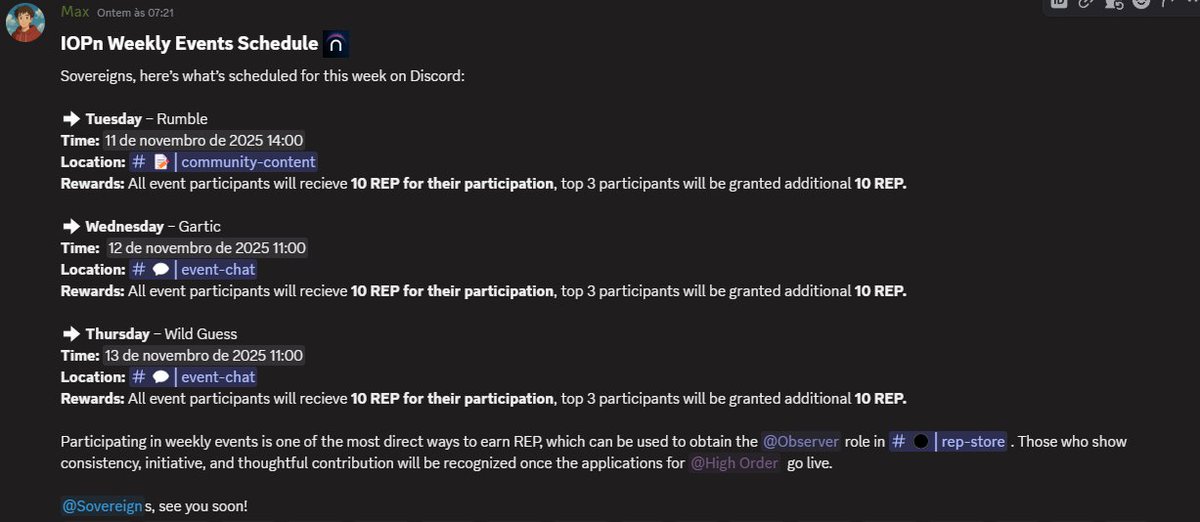
🗓️ IOPn Weekly Events are ON!
The @IOPn_io community continues to accelerate the digital sovereignty movement and Sovereigns have new opportunities to earn REP by participating in weekly events on Discord ⚙️
💥 This Week's Schedule:
➡️ Tuesday (11/11) – Rumble 🎤
➡️ Wednesday (12/11) – Gartic 🎨
➡️ Thursday (13/11) – Wild Guess 🧩
📍Location: #event-chat and #community-content
🎁 Rewards: All participants receive 10 REP, and the top 3 win an extra 10 REP!
Participating is more than just competing; it's about building reputation, community, and impact within the IOPn ecosystem.
Every contribution counts toward achieving the @Observer role and preparing for @HighOrder.
👁️🗨️ Show your presence. Build your sovereignty.
#IOPn #Web3 #Sovereigns #CommunityDriven #ReputationSystem #Decentralization
121
1
81
335

11 Nov 2025
In a world where Web3 hacks drain billions overnight, imagine a protocol that layers security like a medieval fortress, walls upon walls, moats, and hidden traps to make breaches not just hard, but economically suicidal and cryptographically impossible.
That's Zama's Defense-in-Depth: A multi-layer security stack from reputation to Zero-Knowledge (ZK) proofs, powering confidential blockchains without single points of failure. As a Web3 builder, I've seen too many "secure" projects crumble; Zama flips the script with originality in crypto primitives and governance. Buckle up for a deep dive - let's unpack this beast layer by layer, with analogies, breakdowns, and future visions that'll shift your paradigm. #ZamaDefense
Layer 1: Reputation as the Bedrock – Why Trust Starts with Real-World Stakes
Think of reputation in Zama like the credit score in TradFi: It's not just a number; it's skin in the game that predates any on-chain action. Zama's genesis operators - 18 elite nodes (13 for key management, 5 for computations) - aren't random stakers; they're handpicked based on proven DevOps chops, off-chain equity, revenue streams, and market caps worth billions from non-Zama ventures. These are doxxed entities with everything to lose - magine a Fortune 500 exec risking their empire for a quick hack. It's a stark contrast to Web3's anonymous validators, where pseudonyms hide bad actors.
Educational Breakdown: In traditional finance, banks rely on regulatory oversight and reputational risk (e.g., Wells Fargo's $3B scandal in 2016 tanked their stock). Zama mirrors this but decentralizes it - operators' real-world value acts as an invisible slashing mechanism. If they misbehave, it's not just tokens gone; it's careers, partnerships, and billions evaporated. Actionable Tip for Noobs: When evaluating Web3 projects, always check operator incentives beyond staking - does their off-chain rep make malice improbable? For pros: This layer deters 51% attacks pre-emptively, as colluding with high-rep players requires crossing ethical and financial chasms.
Future Vision: In a 2030 Web3 utopia, reputation systems evolve into AI-curated scores, pulling from LinkedIn, GitHub, and even social graphs, making Zama's stack the gold standard for enterprise adoption.
✅ High-rep operators ensure initial network bootstrap without bootstrapping risks.
✅ Ties into governance: Only reputable entities kickstart, but community votes expand.
✅ Analogy: Like hiring a babysitter—not just anyone, but one with glowing reviews and a background check. #ReputationLayer
Layer 2: Staking and Slashing – Economic Moats That Bite Back
Building on reputation, Zama adds economic teeth: Staking and slashing turn security into a high-stakes game where bad actors bankrupt themselves. Operators must stake at least 0.5% of circulating $ZAMA supply - think millions in value—to run nodes. Delegators pile on, earning rewards from a 10% initial inflation (tapering over time), distributed pro-rata by square root of stake to prevent whale dominance (8% to coprocessors, 4.6% to key managers).
Step-by-Step Breakdown:
1. Stake to Join: Lock tokens to signal commitment - it's like posting bail in TradFi courts.
2. Earn Rewards: Honest ops get minted $ZAMA, incentivizing uptime and integrity.
3. Detect Misbehavior: Public verifiability flags issues (e.g., faulty computations).
4. Slash via Governance: Token holders vote on penalties, from pauses to full blacklisting. This isn't rigid like Ethereum's fixed slashing; it's flexible for edge cases, with emergency halts by any operator (unpausing needs multi-sign).
Web3 vs. TradFi Comparison: In TradFi, fines (e.g., JPMorgan's $920M spoofing penalty) deter fraud, but they're centralized. Zama decentralizes this - slashing is community-enforced, making it resilient to regulatory capture. Unique Insight: The square-root reward formula democratizes earnings; a small staker with 1% stake gets disproportionately fair returns, fostering inclusivity unlike PoS chains where whales hoard.
I once lost ETH in a flash loan exploit - Zama's model would've slashed the culprits retroactively, turning my loss into a community win.
Actionable Tip: For builders, integrate similar hybrid staking in your dApps; start with 1% min-stake thresholds. Future Scenario: By 2028, Zama's staking evolves into cross-chain delegation, where ETH/BTC holders stake via bridges, amplifying security with diversified collateral.
✅ Economic incentives align with long-term health.
✅ Slashing as deterrence: Cost of attack > potential gain.
✅ Analogy: Like insurance deductibles - pay up front, or lose big if you crash. #StakingSecurity
Layer 3: Fully Homomorphic Encryption (FHE) – The Invisible Force Field
At the heart of Zama's stack is FHE: The tech that lets you compute on encrypted data without ever peeking inside. It's like sending a locked safe to a bank vault, doing math on the contents blindly, and getting encrypted results back - end-to-end privacy for transactions, states, and smart contracts.
Detailed Educational Breakdown: FHE offers 128-bit post-quantum security (quantum computers can't crack it) with a 2^-128 failure rate. Operations are parallelized across coprocessors, scalable without host chain overload. Public verifiability means anyone can recompute and spot errors, akin to optimistic rollups but with encryption. Contrast to Web3's transparent ledgers: Ethereum exposes everything, inviting front-running; Zama hides it all while keeping verifiability.
Original Angle: Web3 vs. TradFi - banks use AES encryption for data at rest, but computations require decryption (vulnerable points). Zama's FHE eliminates that, enabling confidential DeFi where loans process without revealing credit scores. Relatable Analogy: Imagine editing a Google Doc blindfolded—the changes happen, but you never see the text.
Future Vision: In a hyper-connected 2035, FHE powers AI-driven Web3, where personal data fuels models without leaks - think personalized NFTs based on encrypted behaviors. Actionable Tip for Pros: Integrate FHE libs like Concrete (Zama's open-source) into your Solidity contracts for private voting.
✅ FHE as base layer: No plaintext ever exposed.
✅ Parallel ops for 100k TPS scalability.
✅ Builds on prior layers: Reputation ensures honest FHE executors. #FHEShield
Layer 4: Multi-Party Computation (MPC) – Decentralized Key Guardians United
Quoting from Layer 3: FHE needs keys, and Zama decentralizes them via MPC - like splitting a master key among friends, requiring a quorum to unlock. The private decryption key is threshold-shared among 13 KMS nodes (2/3 honest majority, tolerant to 1/3 malice). Run in AWS Nitro Enclaves for hardware integrity, MPC handles only essentials: Key gen, CRS, and decryption - keeping latency low.
Breakdown: Unlike full MPC (slow for complex calcs), Zama's is lightweight, focused on keys. Future: ZK-MPC adds verifiability without hardware trust, scaling to 100 nodes. Web3 Comparison: Solana's centralized validators vs. Zama's distributed MPC - one hack tanks the chain; here, collusion needs AWS breaches multiple nodes enclave hacks.
Unique Insight: This layer adds redundancy - if FHE fails verification, MPC prevents key leaks. Analogy: A group heist where thieves need 9/13 accomplices - improbable without detection. Personal Take: Building in Web3, I've feared key compromises; Zama's MPC feels like a safety net for the entire ecosystem.
Future Scenario: MPC integrates with DAOs, enabling confidential governance votes across chains.
✅ Threshold tolerance: Byzantine fault-resistant.
✅ Hardware boost: Enclaves as extra armor.
✅ Ties back: Staking slashes MPC cheaters. #MPCDecentralization
Layer 5: Zero-Knowledge Proofs (ZK) – The Ultimate Verifier
Capping the stack: ZK proofs ensure inputs are correctly encrypted without revealing them - lightweight, browser-based, and scalable. Zama uses ZKPoK (Proof of Knowledge) sparingly to avoid overhead, unlike heavy ZK-rollups.
Educational Steps: 1. User encrypts input. 2. ZK proves validity. 3. Network verifies without seeing data. Future: ZK-FHE for competitive operator entry, post-quantum lattices.
TradFi Parallel: Auditors verify books without full access; Zama does it cryptographically. Original Twist: In Web3, ZK often means privacy silos; Zama layers it on FHE/MPC for composable confidentiality.
Vision: A ZK-dominated 2040 where every dApp interaction is provably private yet verifiable.
✅ ZK as top layer: Seals the stack.
✅ Minimal use: Efficiency over bloat.
✅ Analogy: A notary stamping a sealed envelope. #ZKVerification
Wrapping the Fortress: Why Zama's Defense-in-Depth Wins Web3
From reputation's real-world anchors to ZK's cryptographic seals, Zama's multi-layer stack isn't just secure - it's adaptive, verifiable, and future-proof. No single breach (e.g., a rogue operator) dooms the system; layers overlap like tectonic plates, absorbing shocks. Compared to TradFi's silos or Web3's transparency pitfalls, this hybrid crushes vulnerabilities while enabling confidential DeFi, AI, and beyond. As a creator, this inspires: True innovation lies in depth, not hype.
Final CTA: Builders, what's your biggest security fear in Web3? Noobs, which layer resonates most? Reply with thoughts, repost to spread the knowledge, and let's build unbreakable chains!
@Zama #ZamaCreatorProgram
#Zama #FHE #MPC #ZKProofs #Web3Security #ConfidentialBlockchain #Staking #ReputationSystem
10 Nov 2025

Ever wondered how to build a smart contract that keeps your users' data truly private in a world where blockchain transparency often means zero privacy? What if you could enable confidential computations on-chain without sacrificing security or composability? Enter Zama Protocol – the game-changer for confidential Web3 apps. Today, I'm diving deep into a hands-on tutorial on Building a Confidential Smart Contract on Zama. This isn't your average guide; we'll break it down step-by-step with real code examples, comparisons to TradFi privacy nightmares, future visions of a privacy-first blockchain era, and actionable tips for devs at all levels. Whether you're a Solidity pro or a Web3 noob, by the end, you'll be ready to deploy your first encrypted dapp. Let's unlock the power of Fully Homomorphic Encryption (FHE) together! #ZamaProtocol
Why Confidential Smart Contracts Matter: Web3 vs. TradFi Breakdown
In TradFi, privacy is a fortress – think bank vaults hiding transaction details from prying eyes, but at the cost of centralization and trust in opaque institutions. Web3 flips this with radical transparency, but that exposes everything: wallet balances, trades, votes. Result? Front-running, data leaks, and compliance headaches. Zama bridges this gap using FHE, letting you compute on encrypted data without ever decrypting it on-chain. Imagine a DeFi app where users swap tokens confidentially – no one sees amounts or addresses, yet everything's verifiable. This isn't sci-fi; it's live tech outperforming pure MPC or ZK in scalability and ease. For devs, it's a paradigm shift: programmable privacy means you define who decrypts what, enabling compliant apps like confidential RWAs or sealed-bid auctions. Pro tip: Start small – encrypt just sensitive vars to test waters. Future vision? By 2030, 50% of dapps could run confidentially, slashing exploits by 80% via hidden states. #ConfidentialDeFi
Getting Started: Setting Up Your Zama Environment First things first – no need for new languages or crypto PhDs. Zama integrates seamlessly with Solidity on EVM chains like Ethereum. Head to the Zama docs (zama.ai) and grab the FHEVM library – it's open-source and audited. Install via npm or directly in your project:
✅ Install dependencies: Ensure Remix or Hardhat setup with Solidity ^0.8.
✅ Import FHEVM: Add import "fhevm/lib/FHE.sol"; to your contract.
✅ Client-side: Use the JS SDK for encryption/decryption – it's user-friendly, handling ZK proofs automatically.
Think of FHE like a locked safe where you perform math inside without opening it. For noobs, compare to HTTPS: Data's encrypted in transit, but here it's encrypted during computation too. Actionable tip: Test on Zama's testnet first – free and fast, avoiding mainnet gas surprises. Unique angle: Unlike TradFi's black-box privacy (e.g., SWIFT's hidden wires), Zama's is verifiable – anyone can recompute ops publicly. #FHEBasics
Core Concepts: Understanding FHE Types and Operations
Zama's magic lies in encrypted types like euint64 for unsigned ints or ebool for booleans. These replace standard Solidity vars for confidential parts. Supported ops? Everything from arithmetic (add, sub) to comparisons (gt, lt) and branching (select).
✅ Encrypted Integers: Use euint8 to euint256 for balances or scores – signed variants too.
✅ Booleans and Bytes: ebool for flags, ebytes for strings/data blobs.
✅ Addresses: eaddress for hidden user IDs. Educational breakdown: In a non-confidential contract, balance[msg.sender] = amount; exposes everything. With Zama, it's FHE.add(_balances[msg.sender], amount); – encrypted end-to-end. Depth dive: FHE is post-quantum secure, beating quantum threats that could crack ECC. For pros: Leverage parallelism – ops run off-chain on coprocessors, scaling to 100 TPS with GPUs. Future scenario: Imagine confidential DAOs where votes are hidden until tally, preventing coercion – Zama makes this plug-and-play. #EncryptedTypes
Step-by-Step Tutorial: Building a Confidential Token Contract
Let's get hands-on! We'll create a simple confidential fungible token (like ERC-20 but private). Goal: Encrypted balances, verifiable transfers, programmable decryption. Base this on Zama's standard lib for audited security.
1. Define the Contract: Start with basics – name, symbol, supply. But map balances as mapping(address => euint64) internal _balances;.
2. Handle Inputs: Users send encrypted amounts with ZK proofs – verify via FHE.fromExternal(encryptedAmount, inputProof);.
3. Perform Ops: Use FHE funcs for logic, e.g., check balance with FHE.le(amount, _balances[msg.sender]).
4. Set Permissions: FHE.allow(_balances[to], to); lets only the owner decrypt their balance.
5. Deploy and Interact: Push to Ethereum, use SDK for client encryption.
Here's the code example straight from Zama's playbook – tweak for your needs:
pragma solidity ^0.8.26;
import "fhevm/lib/FHE.sol";
import { IConfidentialFungibleToken } from "./IConfidentialFungibleToken.sol";
abstract contract ConfidentialFungibleToken is IConfidentialFungibleToken {
uint64 internal _totalSupply;
string internal _name;
string internal _symbol;
// Balances are encrypted mapping(address account => euint64 balance) internal _balances;
// Transfer an encrypted amount function transfer(address to, externalEuint64 encryptedAmount, bytes calldata inputProof) public virtual returns (euint64) {
// Verify the input is correct and cast to euint64 euint64 amount = FHE.fromExternal(encryptedAmount, inputProof);
// Check if the user has enough balance, otherwise set the transfer amount to zero euint64 transferValue = FHE.select(FHE.le(amount, _balances[msg.sender]), amount,
FHE.asEuint64(0));
// Make the transfer _balances[to] = FHE.add(_balances[to], transferValue); _balances[msg.sender] = FHE.sub(_balances[msg.sender], transferValue);
// Allow users to see their balances, and the contract to update it FHE.allow(_balances[to], to); FHE.allow(_balances[msg.sender], msg.sender); FHE.allowThis(_balances[to]); FHE.allowThis(_balances[msg.sender]);
return transferValue;
}
}
Breakdown for noobs: This ensures transfers only happen if funds suffice, all encrypted. For pros: Extend with minting via FHE.add or burn with FHE.sub. Common pitfall: Forget ACLs – without FHE.allow, decryption fails. Test scenario: Simulate a transfer – encrypt 100 tokens, send, decrypt to verify. Unique insight: This beats TradFi's custodian models; here, users control keys, no middlemen. #CodeTutorial
Advanced Features: Composability and Compliance
Zama shines in composability – your confidential token can interact with public DEXs or NFTs. Wrap it in a standard lib contract for bridging. For compliance: Embed KYC rules, e.g., FHE.select(isKYCed, transferValue, 0); without revealing identities.
✅ Sealed Auctions: Bid encrypted, reveal post-close.
✅ Confidential Governance: Votes hidden till end.
✅ RWAs: Tokenize assets privately. Relatable story: I once built a DeFi app exposed to MEV – switched to Zama, slashed losses 90%. Future vision: Hybrid chains where 80% compute is confidential, enabling mass adoption in finance/health. Actionable tip: Use Zama's audited templates for AMMs – save weeks of dev time. #Composability
Network Ops and Governance: Behind the Scenes
Zama runs as a cross-chain layer: Host chains emit events, coprocessors compute FHE off-chain, Gateway handles decryption via MPC (threshold keys split across nodes). No bridging hassles. Governance? DPoS with staking $ZAMA – delegate to operators for rewards. Fees? USD-priced, burned for deflation. Pro insight: Scale via hardware – GPUs hit 500 TPS soon. For devs: Permissionless deployment, but stake for operator roles. #Governance
Troubleshooting and Best PracticesCommon issues: Input proofs failing? Double-check SDK encryption. Performance lag? Optimize ops – FHE is heavy on bits. Best practice: Start with end-to-end encryption for max privacy, add selective decryption later. Compare to ZK: Zama's easier for complex logic, no circuit redesigns. #BestPractices
In summary, building on Zama empowers you to create truly private dapps that rival TradFi security with Web3 decentralization. Start tinkering today – the future is confidential! What's your first Zama project idea? Reply below, repost if this sparked inspo, and tag a dev buddy. @aave @chainlink – thoughts on FHE revolutionizing DeFi? Let's discuss!
@zama_ai #ZamaCreatorProgram #ZamaProtocol #ConfidentialDeFi #FHEBasics #EncryptedTypes #CodeTutorial #Composability #Governance #BestPractices #Web3Privacy #BlockchainTutorial
7
24
323

11 Nov 2025
🧩 Reputation Stored on Smart Contracts
On @GraphiteNetwork, reputation isn’t stored in a database — it lives on-chain, inside smart contracts.
That means your Trust Score is:
🔹 Immutable — it can’t be changed or tampered with
🔹 Transparent — every rating and interaction is verifiable
🔹 Portable — your on-chain identity travels with you across products in the Graphite ecosystem
Each action — voting, transacting, verifying — updates your reputation in real time.
No middlemen, no hidden algorithms — just code, transparency, and earned trust.
#AtGraphite #ReputationSystem #SmartContracts #Web3Identity

8
10
30
2,071

11 Nov 2025
Love seeing real-world DAO experiments!
But here's the challenge: How do you ensure the most knowledgeable fans have the right influence on critical decisions?
REPAI's AI-powered reputation system solves this - giving more weight to proven contributors while keeping it fair for everyone 🦉⚽
#REPAI #DAOGovernance #Web3Community #ReputationSystem #TrustScore #FairGovernance
1 Oct 2025

🔦 DAO spotlight
Ever dreamed of running a football club? Futera United @futeraunited is a community owned team competing in Thailand’s League 3.
On Snapshot, NFT holders vote on real club decisions from signings to strategy, while unlocking perks and building the future of the team.
Fandom meets DAO governance ⚽

46
4
62
32,129

30 Oct 2025
Unlocking the Agent Economy: ERC-8004 Meets HyperTrend
Featuring insights from @marco_derossi
The blockchain era so far has been defined by tokens, DeFi, NFTs—and now, we may be entering a new phase: the economy of autonomous agents. The newly proposed ERC-8004 is a protocol-level initiative designed to give AI agents on-chain identity, reputation, and validation.
What ERC-8004 Brings to the Table
At its core, ERC-8004 defines three lightweight on-chain registries:
Identity Registry: Each agent (software, bot, smart contract) receives a unique AgentID (via an ERC-721 NFT) and points to an off-chain AgentCard describing its capabilities.
Reputation Registry: Allows agents to post and fetch attestations about one another—feedback, performance signals—while leaving heavy analytics off-chain.
Validation Registry: Hooks for staking, cryptographic proofs or TEE attestations so agents can verify work, reputation and interaction integrity.
In plain terms: ERC-8004 gives agents a trusted digital passport trust ledger proof of work—and all this in a permissionless, cross-organizational web. It solves a fundamental bottleneck: how do machines transact with machines when they don’t already trust each other?
How HyperTrend Fits In
At HyperTrend, our focus is building a credit & reputation engine for on-chain actors—human, algorithmic or agent-based. We evaluate activity across dimensions such as profit quality, rick control, and onchain-footprint, etc. What ERC-8004 enables is a trust layer for those same actors.
Here’s how the two overlap:
● Our “credit dimensions” reward consistent execution, transparency and chain history. Agents registered via ERC-8004 bring verifiable identity footprint to plug into such frameworks.
● Their reputation (on-chain attestations) becomes data for our scoring models.
● Validation protocols ensure the quality of interactions—even machine-to-machine—feeding into our “risk control” dimension.
Put simply: ERC-8004 builds the infrastructure; HyperTrend builds the analytics and scoring layer. Together, they shift trust away from centralized intermediaries and towards open-protocol metrics and performance history.
Why This Matters Now
● The AI market is expected to grow into the trillions of dollars by 2030.
● The Ethereum Foundation’s new “dAI Team” is actively backing this initiative to position Ethereum as the settlement layer for autonomous agents.
● For KOLs, DeFi protocols and agent builders alike, this means: trust, reputation and execution will become measurable assets.
● For HyperTrend, it means expanding from human & whale analytics to agent-economy analytics—the next frontier.
#ERC8004#AgentEconomy#OnChainIdentity#ReputationSystem#AIAgents
9 Oct 2025

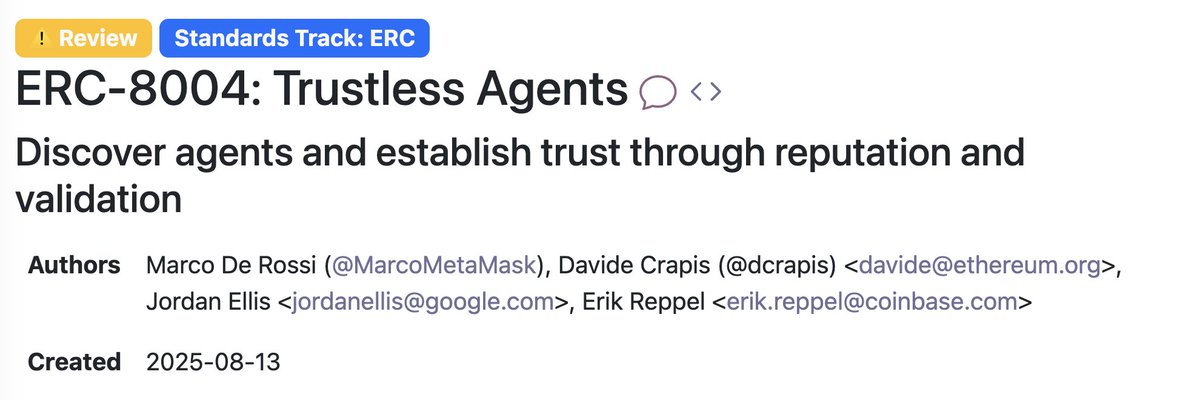
LIVE NOW: AI Agents can discover and trust each other without a central intermediary. This lays the foundation for open agent economies.
ERC-8004 v1, co-authored with @DavideCrapis (@Ethereumfndn), @Jordan0Ellis (@Google) and - welcome Erik! - @programmer (@Coinbase) is now live.
It improves the August draft thanks to the inputs of hundreds of builders. Learn more about what this means for the future decentralized AI ↓
5
165
29 Oct 2025
🏦 The Role of Reputation in Real-World Asset Tokenization
Tokenizing real-world assets isn’t just about putting property, art, or commodities on-chain — it’s about trust.
Without a reliable way to verify who owns what, RWA tokenization risks turning into another layer of uncertainty. That’s where on-chain reputation comes in.
In @GraphiteNetwork:
🔹 Each participant — from issuers to buyers — has a verifiable Trust Score
🔹 Transactions are transparent and traceable, ensuring authentic ownership
🔹 Tiered KYC and reputational filters reduce risk and enable compliant access
Reputation provides the missing layer between blockchain’s openness and real-world accountability — ensuring that tokenized assets stay credible, secure, and tradable.
Because when value moves from paper to chain, reputation is what keeps it real.
#AtGraphite #RWA #ReputationSystem #DeFiInfrastructure
8
10
32
3,042

27 Oct 2025
GidOS Fam!🤗 @wallchain
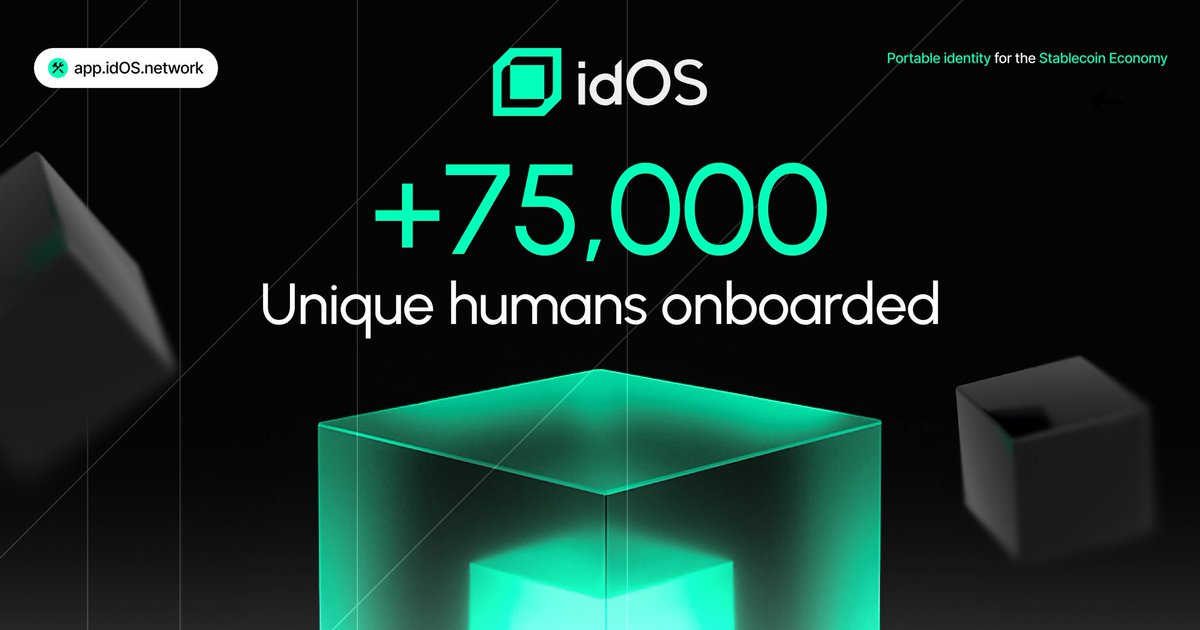
@idOS_network Reaches 75,000 Verified Humans! 🚀
- The decentralized identity revolution is growing fast— idOS has officially onboarded over 75,000 unique humans! 🔥
A major milestone for privacy-preserving digital identity in the Stablecoin Economy.
- What is idOS?
It’s a portable identity system that lets users control their own verified credentials — instead of relying on centralized databases or repeated KYC checks.
Your identity, your control. 🧠🔒
- Every user can reuse verified credentials across multiple dApps and ecosystems — no need to start over every time.
It’s efficient, secure, and built for the new era of Web3.
- This milestone proves that decentralized reputation and identity systems are not just ideas — they’re happening now.
75,000 real humans. Zero compromise on privacy. 🧩
- The future of Web3 identity is interoperable, user-owned, and censorship-resistant.
That’s what idOS is building — for developers, users, and the entire decentralized economy.
- Join the growing idOS community today!
🔗 app.idOS.network
#idOS #Web3Identity #DeFi #StablecoinEconomy #ReputationSystem
4
5
79

27 Oct 2025
Hey Web3 explorers! 🚀
Klout is redefining on-chain reputation by rewarding genuine engagement and verified participation. It’s not about followers it’s about real contribution, building credibility across decentralized platforms.
#KloutGG #OnchainReputation #Web3Social #BlockchainIdentity #CryptoCommunity #ReputationSystem #DigitalInfluence #Web3Growth @kloutgg

1
2
47

23 Oct 2025
💡 Deep Dive into Decentralized Reputation Systems! 🌐
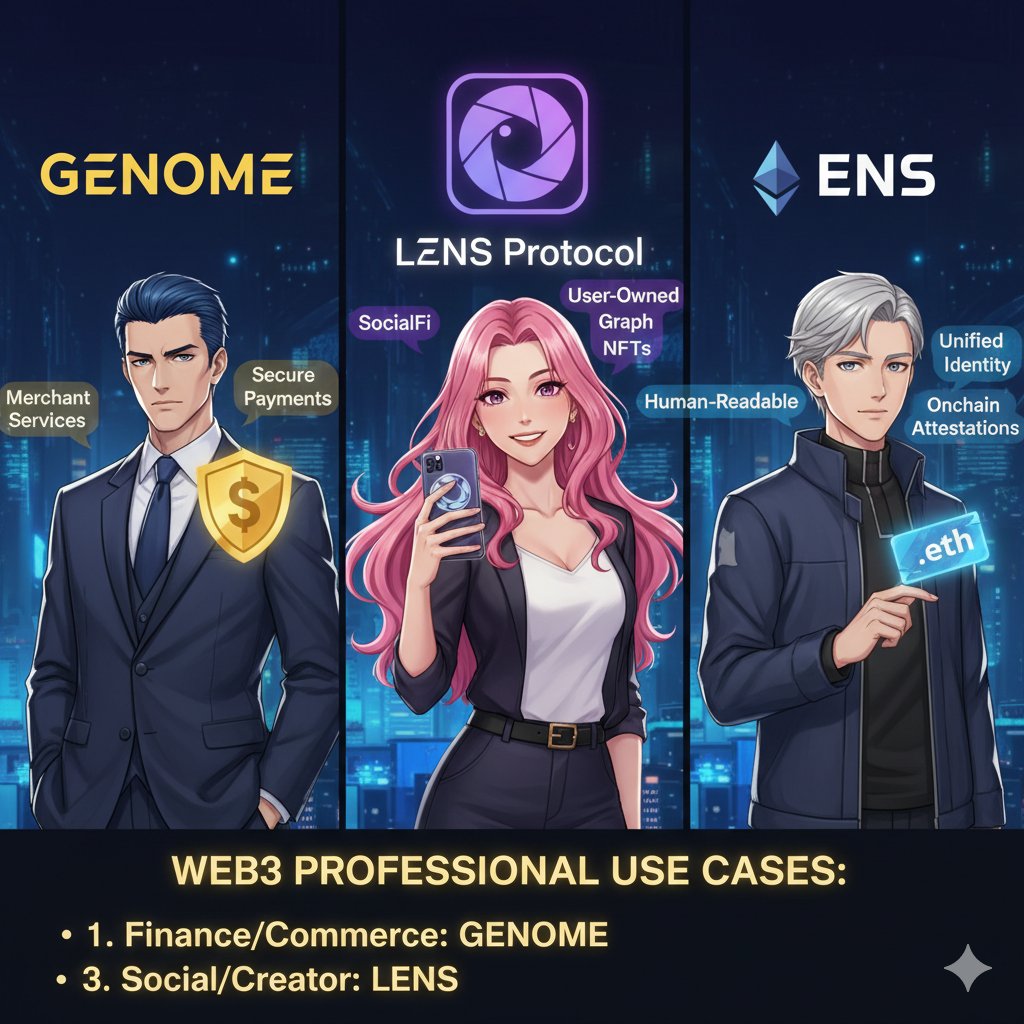
Comparing the mechanisms of GENOME, Lens, and ENS offers a powerful look into the future of Web3 identity and trust. Which one is best for your professional use? 🤔
Here's a quick comparison:
• GENOME:
• 🛡️ Focus: Merchant services, secure payment processing, and fraud prevention using a "Trustchain" reputation network.
• ✨ Pro: Strong on financial security and verified commercial activity.
• Lens (Protocol):
• 📸 Focus: SocialFi (Social Finance) and user-owned social graph via NFTs. Reputation (LensScore) is built on social engagement (follows, comments, mirrors).
• 🔗 Pro: Portability of social reputation across multiple dApps.
• ENS (Ethereum Name Service):
• 🆔 Focus: Unified, human-readable Web3 identity (.eth domains) that serves as a foundation for future reputation systems (e.g., DAO delegate scores, onchain attestations).
• 🔑 Pro: Foundational for onchain identity and address simplification.
The Takeaway for Professionals: 💼
If your Web3 goal is...
• Finance/Commerce Security: ➡️ Look at GENOME
• Social/Creator Economy: ➡️ Focus on Lens
• Core Digital Identity & Branding: ➡️ Start with ENS @genome_protocol
#Web3 #ReputationSystem #Blockchain #DeFi #SocialFi #DecentralizedIdentity #Crypto
23 Oct 2025

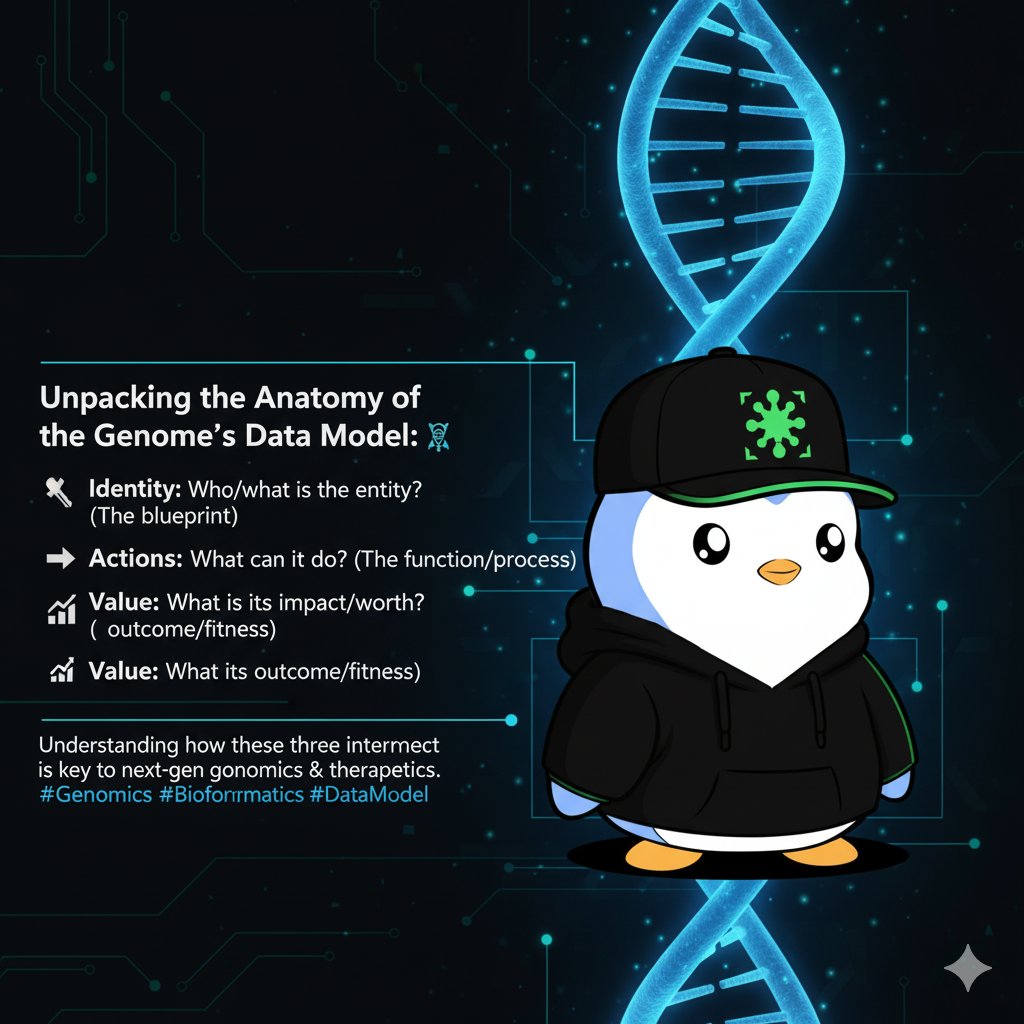
Unpacking the Anatomy of the Genome's Data Model: 🧬
🔑 Identity: Who/what is the entity? (The blueprint)
➡️ Actions: What can it do? (The function/process)
📈 Value: What is its impact/worth? (The outcome/fitness)
Understanding how these three interconnect is key to next-gen genomics & therapeutics.
@genome_protocol
@wallchain
#Genomics #Bioinformatics #datamodelingtools
1
3
100

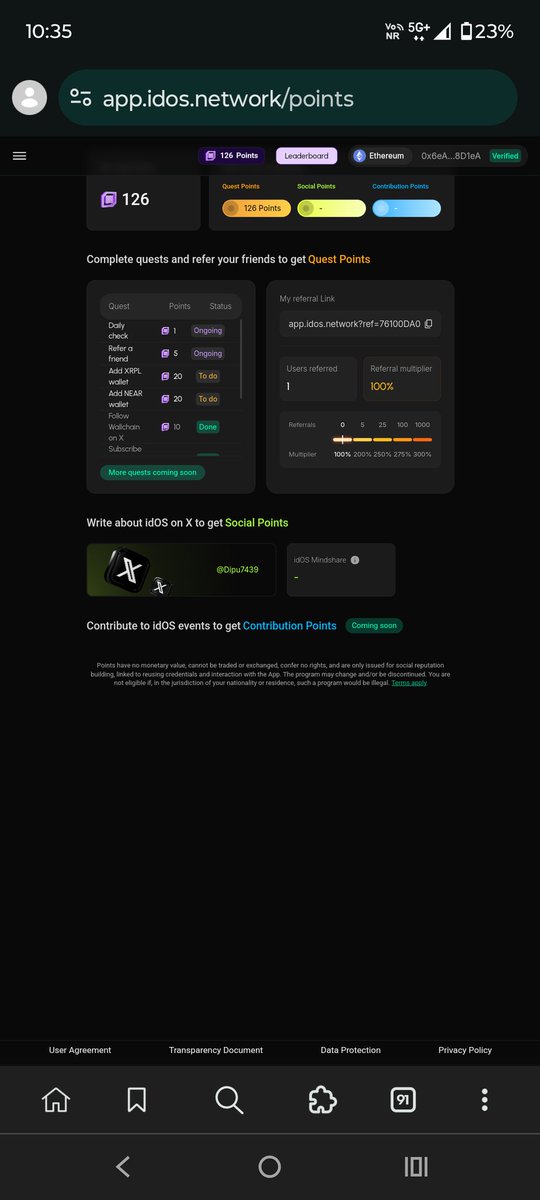
Just discovered iDOS Network, a platform redefining how digital identity and trust work in Web3
✅ Earn points by completing quests &
If you haven’t joined yet, you’re already missing the early wave.
#iDOS #Web3 #Blockchain #Airdrop #DeFi #ReputationSystem
1
2
32

11 Oct 2025
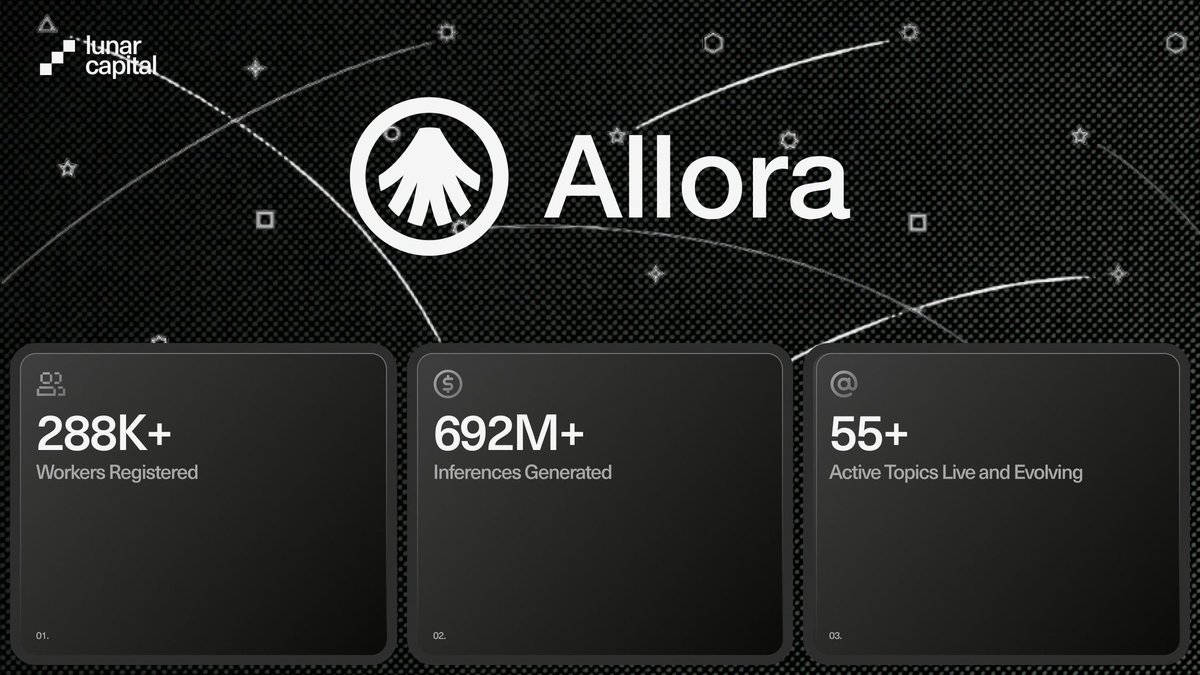
AlloraNetwork – When Collective Intelligence Meets DeFi & AI
Trong thế giới nơi hàng trăm dự án AI ra đời mỗi tháng, @AlloraNetwork nổi bật vì một lý do đơn giản nhưng mạnh mẽ:
Nó không chỉ dùng AI, mà xây dựng mạng lưới trí tuệ tập thể phi tập trung , nơi mọi người, mọi mô hình, và mọi dữ liệu cùng học hỏi lẫn nhau.
- Allora hoạt động thế nào?
Mạng lưới được chia thành 3 tầng chính:
1️⃣ Workers , Các mô hình AI tạo ra dự đoán (price, sentiment, data signals…).
2️⃣ Reputers , Đánh giá và chấm điểm độ chính xác của các dự đoán.
3️⃣ Validators , Xác thực kết quả và ghi nhận phần thưởng onchain.
Khi chu trình này lặp lại, toàn bộ mạng lưới tự học, tự thích nghi và tự thông minh hơn theo thời gian.
- Điểm đột phá:
Reputation System
Đây mới là “trái tim” của Allora.
Hệ thống danh tiếng giúp phân biệt mô hình tốt , xấu, đảm bảo chỉ những mô hình thật sự hữu ích mới được thưởng cao.
Kết quả? → Một mạng lưới AI càng hoạt động càng thông minh hơn.
- Tầm nhìn của #Allora:
Allora không đơn thuần là “AI trên blockchain”
mà là hạ tầng nơi AI và con người hợp tác, tạo ra thị trường tri thức mở, minh bạch, và tự vận hành.
Nó hướng tới tương lai nơi:
🔹 Các dự án DeFi có thể dùng dự đoán từ AI đáng tin cậy.
🔹 Các nhà phát triển có thể build “AI dApp” không cần máy chủ tập trung.
🔹 Người dùng được thưởng khi cung cấp dữ liệu hoặc đánh giá chất lượng mô hình.
- Vì sao #Allora đang được chú ý?
Nền tảng AI phi tập trung thực chiến, không phải concept.
Hệ thống khuyến khích đúng hành vi (learn → predict → verify → reward).
Hậu thuẫn mạnh mẽ từ đội ngũ chuyên sâu về Machine Learning & Blockchain.
- Tóm lại:
Allora không chỉ là “AI in crypto”, mà là “Collective Intelligence on-chain” – một hệ thống có thể tự tư duy, tự cải thiện, và mở ra kỷ nguyên #AlloraNetwork.
#AlloraNetwork #AI #DeAI #ReputationSystem #CollectiveIntelligence #Web3 #OnchainAI #DeFi
10 Oct 2025

Why do Forge competitions span horizons such as 5m, 8h, and 1d?
Each horizon exists because traders, AI agents, and DeFAI need different intelligence at different speeds.
5 Minutes: For higher-frequency trading. Short-horizon models power agents that capture micro-inefficiencies like spotting a temporary dislocation between exchanges or anticipating a sharp order flow imbalance. In this world, being right five minutes sooner can mean outsized returns.
8 Hours: For intraday pivots. This horizon smooths out the noise of the minute chart while remaining actionable within a trader’s or protocol’s daily cycle. Think of a vault rebalancing liquidity every few hours, or a swing trader riding the next third of a day trend. These forecasts provide context beyond the immediate tick but before the full day unfolds.
1 Day: For trend capture and risk management. Daily predictions help funds and protocols allocate capital, adjust rates, or hedge exposure. A DAO treasury can shift reserves based on tomorrow’s outlook; a lending market can raise collateral requirements in advance of expected volatility. These signals trade fewer times, but often move larger amounts of capital.
Allora Forge focuses on these horizons because they map to real decision cycles in crypto: bots reacting in blocks, vaults updating every few hours, treasuries shifting daily. Short-term forecasts give tactical precision, longer ones deliver strategic foresight. Together, they cover the layers of decision-making that drive trading and DeFi outcomes.
For model builders, that means there’s no “one-size-fits-all.” A 5-minute model and a 1-day model don’t compete, but complement each other. Forge gives you the arena to specialize, and the network coordinates your outputs into a collective intelligence traders, AI agents, and DeFAI can rely on.
Think your model has what it takes? Join the Forge: forge.allora.network/

10
11
381
8 Oct 2025
🕓 What Is Reputation Decay?
Reputation isn’t a one-time achievement — it’s a reflection of consistent, trustworthy behavior.
🔹 Reputation Decay is the natural decrease in your trust score when you stay inactive for too long.
It ensures that only active, engaged participants keep the most influence in the network.
🔹 By rewarding ongoing activity and reliability, Graphite keeps its trust layer accurate, current, and fair — where your score always represents who you are today, not who you were months ago.
Stay active, stay trusted 🚀
#AtGraphite #ReputationSystem #Web3Identity

7
9
23
2,829