
Jun 10
When KFOR rejected Serbia’s request to return 1,000 troops under UN Resolution 1244, the response came just months later: the terrorist attack in Banjska.
This is not coincidence — it is lawfare turning into terrorism. Serbia is weaponizing an outdated UN resolution to challenge Kosovo’s sovereignty and destabilize the region.
Full detailed legal & strategic analysis is pinned on my profile.
#Kosovo #Resolution1244 #Lawfare #Banjska (1/5)
1
2
7
280

Jun 10
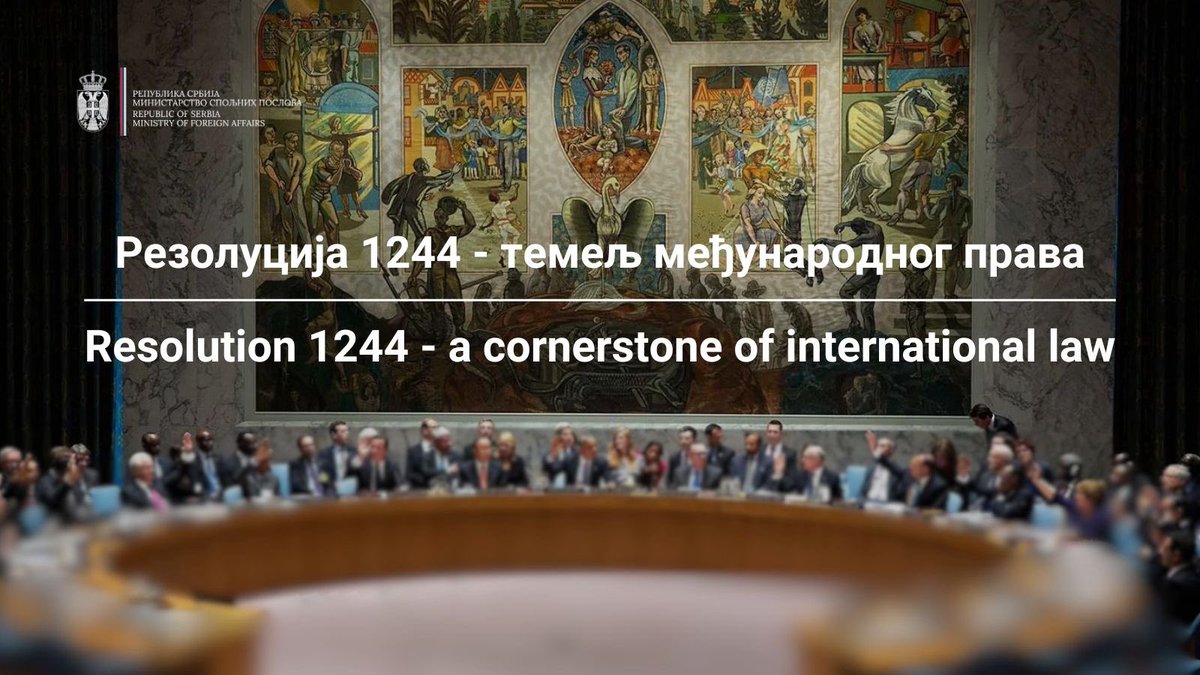
On this day in 1999, the #UnitedNations Security Council adopted #Resolution1244, which reaffirmed the sovereignty and territorial integrity of the Federal Republic of Yugoslavia, whose legal successor is the Republic of #Serbia.
As a valid and binding act of the @UN Security Council, Resolution 1244 remains the cornerstone of the international legal framework governing the issue of #KosovoAndMetohija. Its significance lies not only in safeguarding Serbia’s sovereignty and territorial integrity, but also in reaffirming the principles upon which the contemporary international order is founded, respect for the #UN harter, international law, and the sovereign equality of states.
Serbia will continue to advocate consistently for #peace, dialogue, and the resolution of all outstanding issues through political means, in full accordance with international law and its legitimate state and national interests.
#UNSCR1244
Jun 10

На данашњи дан 1999. године Савет безбедности Уједињених нација усвојио је Резолуцију 1244, којом су потврђени суверенитет и територијални интегритет Савезне Републике Југославије, чији је правни следбеник Република Србија.
Као важећи и обавезујући акт Савета безбедности УН, Резолуција 1244 остаје темељ међународноправног оквира за питање Косова и Метохије. Њен значај огледа се не само у заштити суверенитета и територијалног интегритета Србије, већ и у потврди принципа на којима почива савремени међународни поредак, поштовања Повеље УН, међународног права и суверене једнакости држава.
Србија ће наставити да се доследно залаже за мир, дијалог и решавање свих отворених питања политичким средствима, уз пуно поштовање међународног права и легитимних државних и националних интереса.
——————————————————
On this day in 1999, the #UnitedNations Security Council adopted #Resolution1244, which reaffirmed the sovereignty and territorial integrity of the Federal Republic of Yugoslavia, whose legal successor is the Republic of #Serbia.
As a valid and binding act of the @UN Security Council, Resolution 1244 remains the cornerstone of the international legal framework governing the issue of #KosovoAndMetohija. Its significance lies not only in safeguarding Serbia’s sovereignty and territorial integrity, but also in reaffirming the principles upon which the contemporary international order is founded, respect for the #UN harter, international law, and the sovereign equality of states.
Serbia will continue to advocate consistently for #peace, dialogue, and the resolution of all outstanding issues through political means, in full accordance with international law and its legitimate state and national interests.
#UNSCR1244
1
129

Jun 10
On this day in 1999, the #UnitedNations Security Council adopted #Resolution1244, which reaffirmed the sovereignty and territorial integrity of the Federal Republic of Yugoslavia, whose legal successor is the Republic of #Serbia.
As a valid and binding act of the @UN Security Council, Resolution 1244 remains the cornerstone of the international legal framework governing the issue of #KosovoAndMetohija. Its significance lies not only in safeguarding Serbia’s sovereignty and territorial integrity, but also in reaffirming the principles upon which the contemporary international order is founded, respect for the #UN harter, international law, and the sovereign equality of states.
Serbia will continue to advocate consistently for #peace, dialogue, and the resolution of all outstanding issues through political means, in full accordance with international law and its legitimate state and national interests.
#UNSCR1244
Jun 10
На данашњи дан 1999. године Савет безбедности Уједињених нација усвојио је Резолуцију 1244, којом су потврђени суверенитет и територијални интегритет Савезне Републике Југославије, чији је правни следбеник Република Србија.
Као важећи и обавезујући акт Савета безбедности УН, Резолуција 1244 остаје темељ међународноправног оквира за питање Косова и Метохије. Њен значај огледа се не само у заштити суверенитета и територијалног интегритета Србије, већ и у потврди принципа на којима почива савремени међународни поредак, поштовања Повеље УН, међународног права и суверене једнакости држава.
Србија ће наставити да се доследно залаже за мир, дијалог и решавање свих отворених питања политичким средствима, уз пуно поштовање међународног права и легитимних државних и националних интереса.
——————————————————
On this day in 1999, the #UnitedNations Security Council adopted #Resolution1244, which reaffirmed the sovereignty and territorial integrity of the Federal Republic of Yugoslavia, whose legal successor is the Republic of #Serbia.
As a valid and binding act of the @UN Security Council, Resolution 1244 remains the cornerstone of the international legal framework governing the issue of #KosovoAndMetohija. Its significance lies not only in safeguarding Serbia’s sovereignty and territorial integrity, but also in reaffirming the principles upon which the contemporary international order is founded, respect for the #UN harter, international law, and the sovereign equality of states.
Serbia will continue to advocate consistently for #peace, dialogue, and the resolution of all outstanding issues through political means, in full accordance with international law and its legitimate state and national interests.
#UNSCR1244
2
194

Jun 10
On this day in 1999, the #UnitedNations Security Council adopted #Resolution1244, which reaffirmed the sovereignty and territorial integrity of the Federal Republic of Yugoslavia, whose legal successor is the Republic of #Serbia.
As a valid and binding act of the @UN Security Council, Resolution 1244 remains the cornerstone of the international legal framework governing the issue of #KosovoAndMetohija. Its significance lies not only in safeguarding Serbia’s sovereignty and territorial integrity, but also in reaffirming the principles upon which the contemporary international order is founded, respect for the #UN harter, international law, and the sovereign equality of states.
Serbia will continue to advocate consistently for #peace, dialogue, and the resolution of all outstanding issues through political means, in full accordance with international law and its legitimate state and national interests.
#UNSCR1244
Jun 10
На данашњи дан 1999. године Савет безбедности Уједињених нација усвојио је Резолуцију 1244, којом су потврђени суверенитет и територијални интегритет Савезне Републике Југославије, чији је правни следбеник Република Србија.
Као важећи и обавезујући акт Савета безбедности УН, Резолуција 1244 остаје темељ међународноправног оквира за питање Косова и Метохије. Њен значај огледа се не само у заштити суверенитета и територијалног интегритета Србије, већ и у потврди принципа на којима почива савремени међународни поредак, поштовања Повеље УН, међународног права и суверене једнакости држава.
Србија ће наставити да се доследно залаже за мир, дијалог и решавање свих отворених питања политичким средствима, уз пуно поштовање међународног права и легитимних државних и националних интереса.
——————————————————
On this day in 1999, the #UnitedNations Security Council adopted #Resolution1244, which reaffirmed the sovereignty and territorial integrity of the Federal Republic of Yugoslavia, whose legal successor is the Republic of #Serbia.
As a valid and binding act of the @UN Security Council, Resolution 1244 remains the cornerstone of the international legal framework governing the issue of #KosovoAndMetohija. Its significance lies not only in safeguarding Serbia’s sovereignty and territorial integrity, but also in reaffirming the principles upon which the contemporary international order is founded, respect for the #UN harter, international law, and the sovereign equality of states.
Serbia will continue to advocate consistently for #peace, dialogue, and the resolution of all outstanding issues through political means, in full accordance with international law and its legitimate state and national interests.
#UNSCR1244
1
106

On this day in 1999, the #UnitedNations Security Council adopted #Resolution1244, which reaffirmed the sovereignty and territorial integrity of the Federal Republic of Yugoslavia, whose legal successor is the Republic of #Serbia.
As a valid and binding act of the @UN Security Council, Resolution 1244 remains the cornerstone of the international legal framework governing the issue of #KosovoAndMetohija. Its significance lies not only in safeguarding Serbia’s sovereignty and territorial integrity, but also in reaffirming the principles upon which the contemporary international order is founded, respect for the #UN Charter, international law, and the sovereign equality of states.
Serbia will continue to advocate consistently for #peace, dialogue, and the resolution of all outstanding issues through political means, in full accordance with international law and its legitimate state and national interests.
#UNSCR1244
Jun 10
На данашњи дан 1999. године Савет безбедности Уједињених нација усвојио је Резолуцију 1244, којом су потврђени суверенитет и територијални интегритет Савезне Републике Југославије, чији је правни следбеник Република Србија.
Као важећи и обавезујући акт Савета безбедности УН, Резолуција 1244 остаје темељ међународноправног оквира за питање Косова и Метохије. Њен значај огледа се не само у заштити суверенитета и територијалног интегритета Србије, већ и у потврди принципа на којима почива савремени међународни поредак, поштовања Повеље УН, међународног права и суверене једнакости држава.
Србија ће наставити да се доследно залаже за мир, дијалог и решавање свих отворених питања политичким средствима, уз пуно поштовање међународног права и легитимних државних и националних интереса.
——————————————————
On this day in 1999, the #UnitedNations Security Council adopted #Resolution1244, which reaffirmed the sovereignty and territorial integrity of the Federal Republic of Yugoslavia, whose legal successor is the Republic of #Serbia.
As a valid and binding act of the @UN Security Council, Resolution 1244 remains the cornerstone of the international legal framework governing the issue of #KosovoAndMetohija. Its significance lies not only in safeguarding Serbia’s sovereignty and territorial integrity, but also in reaffirming the principles upon which the contemporary international order is founded, respect for the #UN harter, international law, and the sovereign equality of states.
Serbia will continue to advocate consistently for #peace, dialogue, and the resolution of all outstanding issues through political means, in full accordance with international law and its legitimate state and national interests.
#UNSCR1244
1
49

Jun 10
На данашњи дан 1999. године Савет безбедности Уједињених нација усвојио је Резолуцију 1244, којом су потврђени суверенитет и територијални интегритет Савезне Републике Југославије, чији је правни следбеник Република Србија.
Као важећи и обавезујући акт Савета безбедности УН, Резолуција 1244 остаје темељ међународноправног оквира за питање Косова и Метохије. Њен значај огледа се не само у заштити суверенитета и територијалног интегритета Србије, већ и у потврди принципа на којима почива савремени међународни поредак, поштовања Повеље УН, међународног права и суверене једнакости држава.
Србија ће наставити да се доследно залаже за мир, дијалог и решавање свих отворених питања политичким средствима, уз пуно поштовање међународног права и легитимних државних и националних интереса.
——————————————————
On this day in 1999, the #UnitedNations Security Council adopted #Resolution1244, which reaffirmed the sovereignty and territorial integrity of the Federal Republic of Yugoslavia, whose legal successor is the Republic of #Serbia.
As a valid and binding act of the @UN Security Council, Resolution 1244 remains the cornerstone of the international legal framework governing the issue of #KosovoAndMetohija. Its significance lies not only in safeguarding Serbia’s sovereignty and territorial integrity, but also in reaffirming the principles upon which the contemporary international order is founded, respect for the #UN harter, international law, and the sovereign equality of states.
Serbia will continue to advocate consistently for #peace, dialogue, and the resolution of all outstanding issues through political means, in full accordance with international law and its legitimate state and national interests.
#UNSCR1244
2
16
23
1,541

Mar 24
#Serbie 🇷🇸
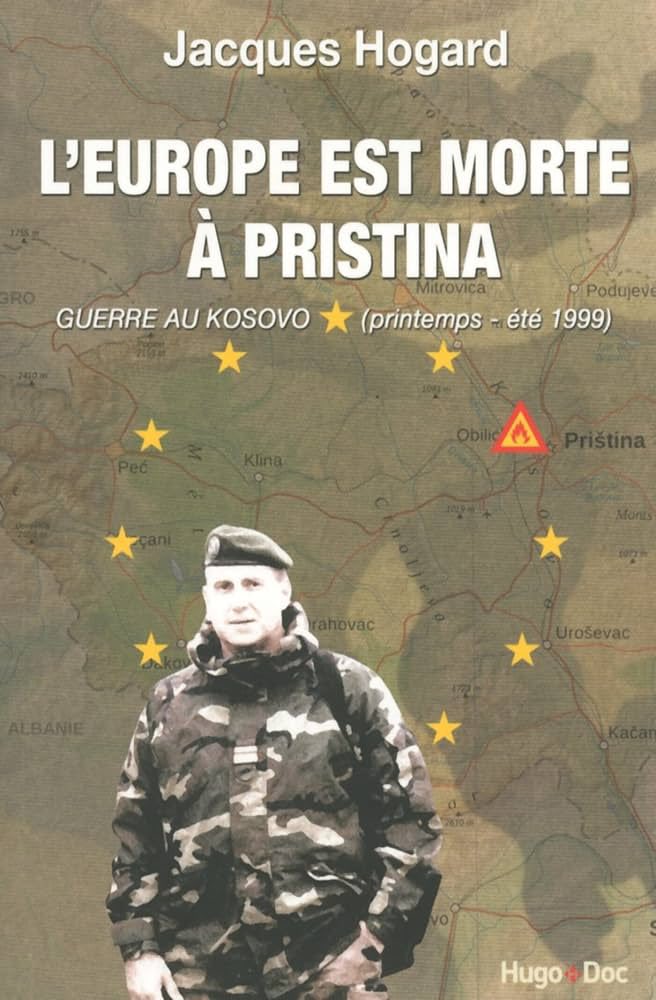
Il y a 27 ans aujourd’hui commençait l’agression de l’#OTAN contre un pays souverain d’Europe: 78 jours de bombardements sur la #Serbie, en paix avec tous ses voisins, mais confronté sur son sol à une rébellion armée de sinistre mémoire, l’#UCK soutenue par des puissances étrangères (🇺🇸,🇩🇪, 🇬🇧,🇫🇷!…), dans la Province serbe du #Kosovo_Métochie, en violation du Droit international, de la Charte de l’#ONU et même, de la Charte de l’#OTAN!
Aujourd’hui certains chefs de l’UCK sont enfin sous les verrous et répondent de leurs crimes de guerre, mais pas tous, et en particulier leurs protecteurs à l’Ouest n’ont pas encore payé leur dette.
N’oublions pas les innocentes victimes serbes, albanaises, roms et goranis de cette agression illégitime!
L’Histoire hélas se répète souvent.
#Resolution1244
@NATO
@UN
@EU_Commission
10
768
2,031
42,929

Mar 18
Macedonia was obligated as a member of the United Nations to accept refugees from war, to provide them with shelter, food, and water. The problem is that you don’t even know what the United Nations is, and you probably never will. That’s your problem, not ours.😉
#Resolution1244
6
65


Jan 6
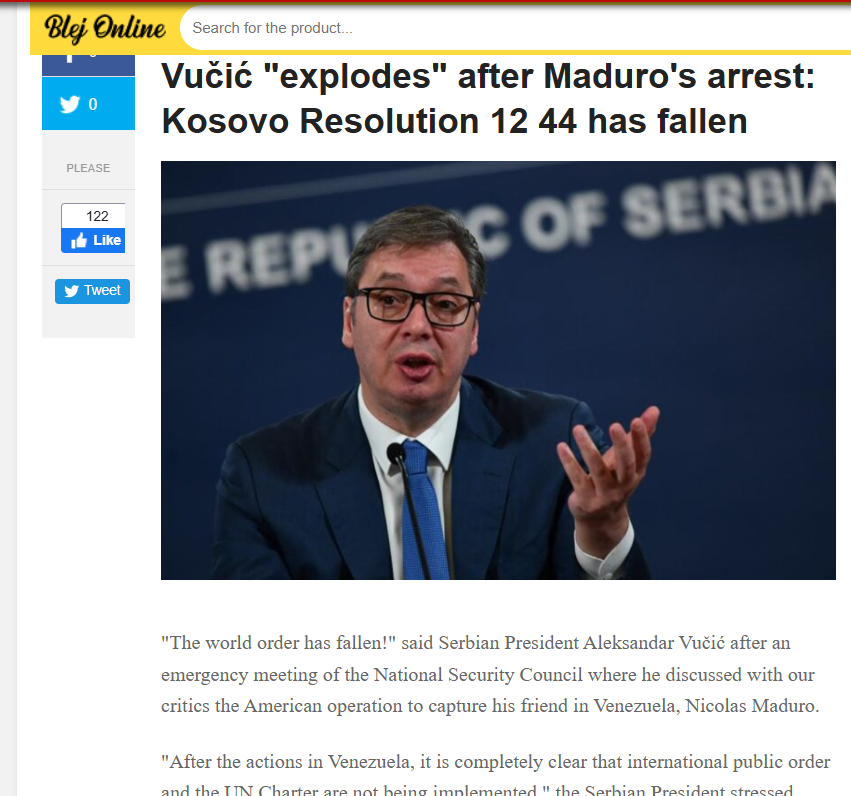
Resolution 1244: a closed chapter, also Serbia is going to accept this fact
Resolution 1244 no longer functions as a legal basis. Since the opinion of the International Court of Justice, this has been clear both in law and in practice.
The irony? The process was initiated by Serbia itself. Today, even Aleksandar Vucic is acknowledging this reality, but with political cynicism, not with serious reflection.
For years, Belgrade has used 1244 as a cover for dangerous ideas: the return of the army to Kosovo, in the spirit of what Russia did in Georgia and Ukraine. This narrative was strongly pushed by Moscow, but it was clearly rejected by the West.
James O’Brien (assistant Secretary of USA at July 2024) said it without diplomacy: 1244 opened a political process. That process unfolded. And it ended with Kosovo’s independence.
What should be remembered:
– 1244 was a transitional framework after 1999
– The ICJ confirmed that independence violates neither international law nor 1244
– The UN sealed this reality with Resolution A/RES/64/298
– Kosovo acts openly; Serbia keeps artificial narratives alive
I have elaborated the full argument earlier as well, in articles you can find at the two links below:
x.com/gurakuqkuqi/status/193…
x.com/gurakuqkuqi/status/193…
If 1244 has fallen for Vucic, the real question is this: what is Serbia preparing to do against Kosovo now, and are we ready to read it in time?
#Kosovo #Serbia #Resolution1244 #InternationalLaw #ICJ #Geopolitics #Security #HybridWarfare #Vucic #UnitedNations #USA
13 Jun 2025

The Kosovo Question after the ICJ: The UN Legitimized the EU’s Role and Surpassed Resolution 1244
On July 22, 2010, the International Court of Justice (ICJ), as the highest judicial body of the United Nations, ruled that Kosovo’s declaration of independence was not in violation of international law. This ruling, initiated at the request of Serbia itself, represents the most significant legal act regarding Kosovo’s status and put an end to speculation over the illegality of its declaration.
Immediately following this decision, on September 9, 2010, the United Nations General Assembly, the most representative body of the UN, where each state holds an equal vote, adopted Resolution A/RES/64/298, which:
- Acknowledges the ICJ’s advisory opinion and notes the finding that Kosovo’s declaration of independence did not violate international law;
- Welcomes the European Union’s commitment to facilitating the Kosovo–Serbia dialogue;
- Invites both parties to engage in practical issues and regional stability.
This act officially transferred the dialogue process from the global forum to a regional organization, the EU, in accordance with Chapter VIII of the UN Charter, which permits regional organizations to act in the maintenance of peace with the awareness of the UN. As a result, since 2010, the EU-mediated dialogue has become part of the international architecture, not a replacement for it.
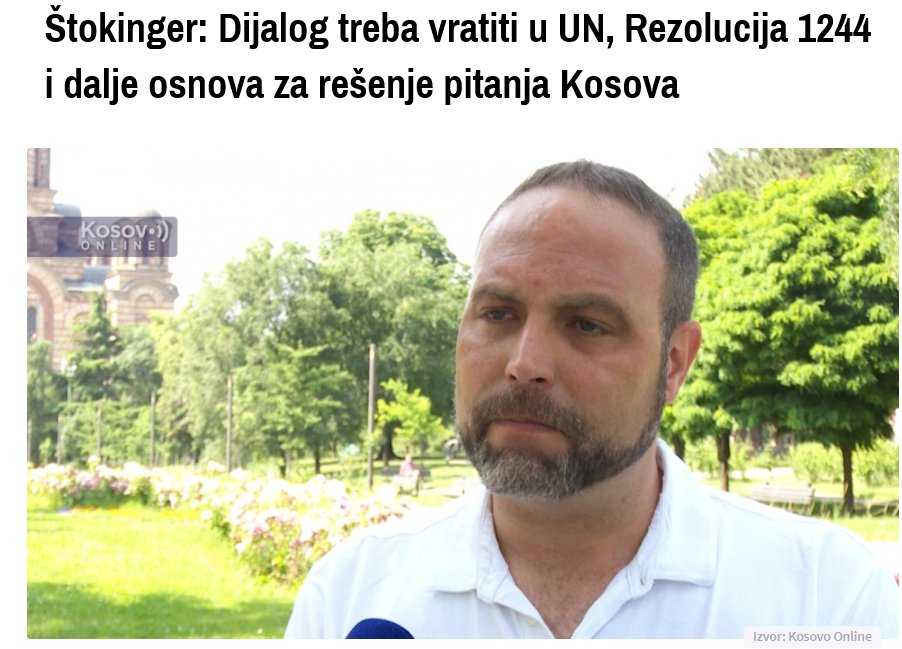
It is precisely within this context that David Stokinger’s claim that the dialogue should “return to the UN” because “Resolution 1244 is the basis,” is not only outdated but in direct contradiction with the legal and diplomatic reality of the United Nations. Had he followed basic developments in international law, he would know that the UN itself has surpassed Resolution 1244 through the legitimacy granted by the ICJ’s ruling and the EU’s role.
Furthermore, labeling Kosovo as a “Western project” rather than a sovereign state built on the principles of self-determination and humanitarian intervention to prevent genocide by Serbia, reflects a shallow understanding of the legal and ethical dimensions of international processes.
Rather than building his narrative on the basis of UN decisions, David Stokinger chooses to ignore them, serving familiar political discourses aimed at keeping the Balkans trapped in the past. And this, for an activist who speaks in the name of peace, is the greatest paradox.
His public positions, embraced by media outlets that promote the Serbian narrative against Kosovo, objectively place him within a political line that serves agendas contrary to international law. Even the setting of his statements and the background behind him convey the same message.
If Mr. Stokinger wishes to confront facts, he is welcome to engage in a public debate based on the foundations of international law and the actual developments following the ICJ’s ruling.
#Kosovo #Serbia #DavidStokinger #KosovoOnline #ICJ #UNGA #Resolution1244 #KosovoIndependence
#InternationalLaw #EUDialogue #Balkans
#PeaceProcess #SelfDetermination #HumanitarianIntervention #Geopolitics
#SerbiaKosovoDialogue #UNCharter #RuleOfLaw
22
9
58
4,787

10 Oct 2025
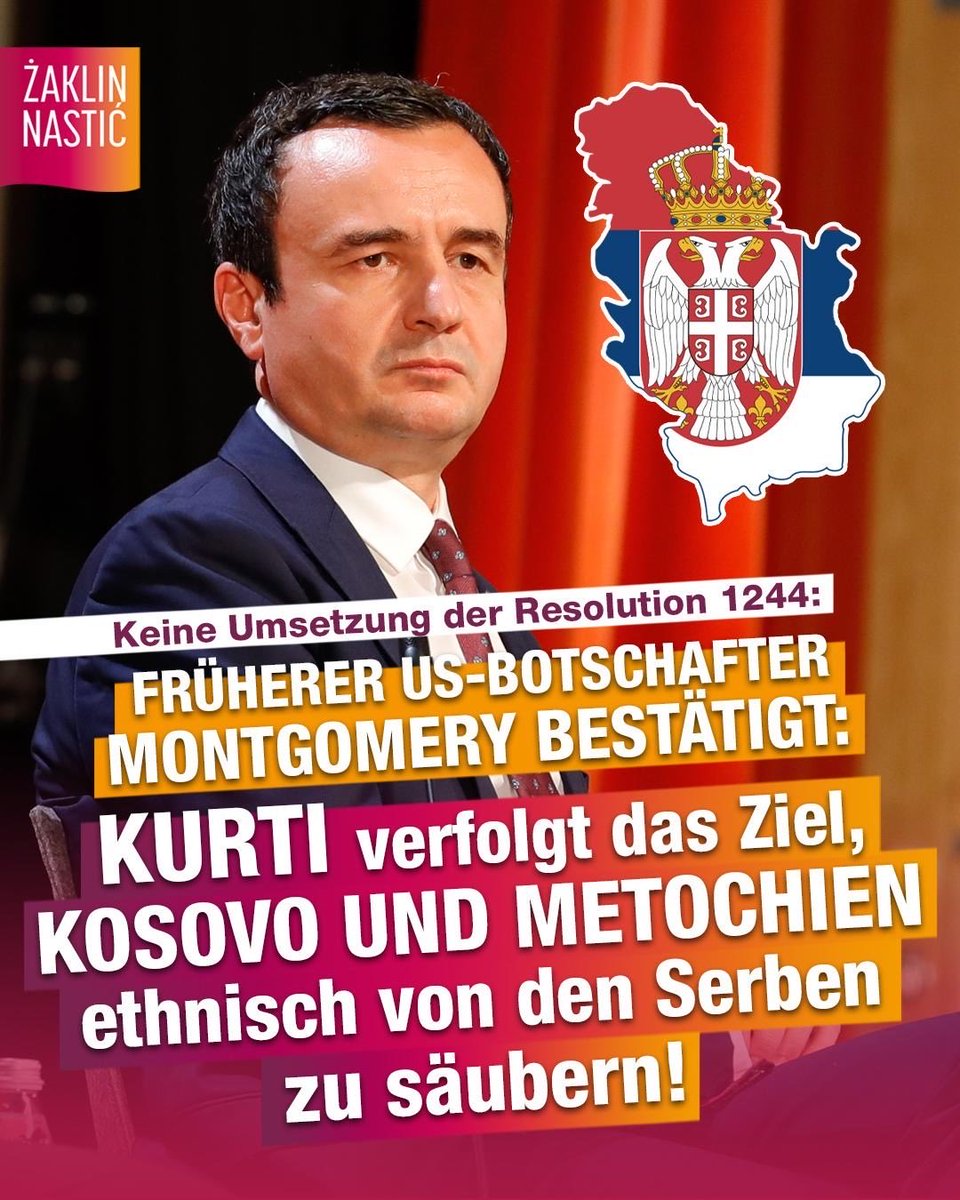
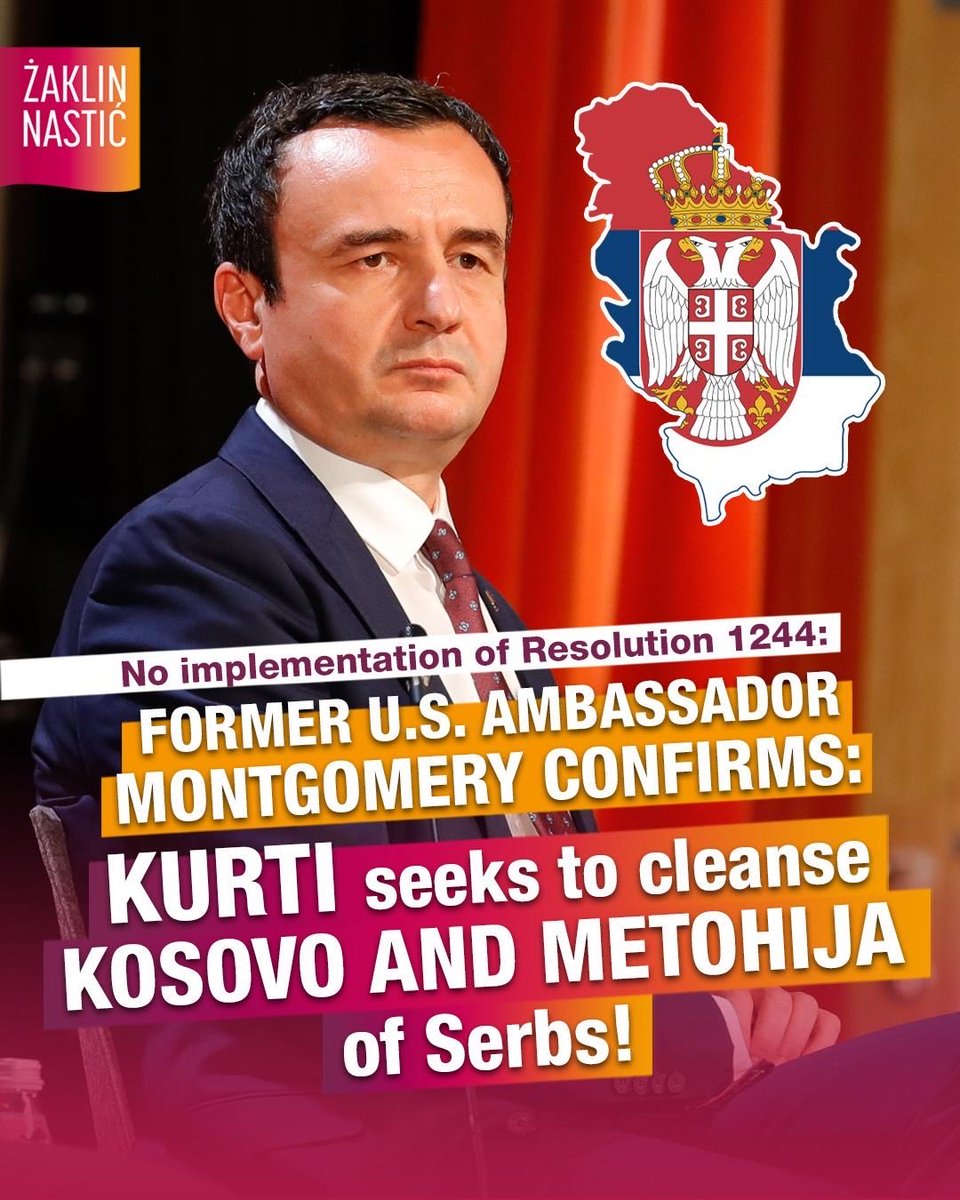
Der frühere US-Botschafter in Belgrad, William Montgomery, hat in einem aktuellen Interview bestätigt, was ich schon lange sage:
Albin Kurti verfolgt das Ziel, das Kosovo ethnisch von den Serben zu säubern.
Gleichzeitig provoziert er gezielt Konflikte, um Belgrad zu einer militärischen Reaktion zu verleiten – in der Hoffnung, dabei Rückendeckung aus Washington zu erhalten.
Montgomery betont, dass Kurti die Verpflichtungen aus dem Brüsseler Abkommen – insbesondere die Bildung der Gemeinschaft serbischer Gemeinden (ZSO) – systematisch ignoriert.
Er erinnert außerdem daran, dass die UN-Resolution 1244 nie umgesetzt wurde. Diese Resolution garantiert klar die Souveränität und territoriale Integrität Jugoslawiens – und damit des heutigen Serbien.
Montgomery spricht offen davon, dass die damaligen Entscheidungen des Westens, insbesondere die Missachtung dieser Resolution, Brüche des Völkerrechts darstellen.
Damit bestätigt nun auch ein ehemaliger hochrangiger US-Diplomat:
1. Die serbische Bevölkerung im Kosovo wird systematisch unter Druck gesetzt, um das Gebiet ethnisch von den Serben zu säubern .
2. Die internationale Gemeinschaft verletzt seit Jahren ihre eigenen Beschlüsse.
3. Die Verantwortung für die Eskalation liegt klar in Pristina – nicht in Belgrad.
Es ist höchste Zeit, dass diese Wahrheit auch in den westlichen Hauptstädten und natürlich in Berlin anerkannt wird.
#Kosovo #serbien #kurti #Montgomery #Völkerrecht #resolution1244 #ethnischesäuberung #balkan #UN #serbia #kosovometohija #BrüsselAbkommen
16
18
85
2,278
8 Oct 2025
Aleksandar Vučić accuses Türkiye of violating the UN Charter and arming Kosovo.
But the facts tell a different story.
The International Court of Justice (ICJ, 2010), in a case initiated by Serbia, ruled that Kosovo’s declaration of independence did not violate international law.
So when Vučić cites Resolution 1244, he’s twisting a UN document that established temporary UN administration, not Serbian sovereignty.
Meanwhile, Serbia spends over $1.5 billion annually on its military, nearly six times Kosovo’s defense budget, and buys weapons from Russia, China, Israel, and France: combat drones, air-defense systems, and electronic-warfare assets.
Belgrade arms itself while accusing Pristina of “militarization” for acquiring a few Turkish-made SkyDagger systems under NATO oversight.
This is classic diversion.
Through disinformation, open threats of “war,” and the financing of nationalist networks across Bosnia, Montenegro, and northern Kosovo, Serbia remains the main source of instability in the Western Balkans, not its victim.
Facts, not fiction: Kosovo’s independence is lawful, Türkiye is a NATO ally, and Vučić’s narrative is pure political theater masking a regional hybrid strategy.
#Kosovo #Serbia #Turkiye #NATO #Vucic #ICJ #hybridwarfare #security #geopolitics #Resolution1244 #international law #UnitedNation
x.com/gurakuqkuqi/status/197…
8 Oct 2025
Aleksandar Vučić accuses Türkiye of violating the UN Charter and arming Kosovo.
But the facts tell a different story.
The International Court of Justice (ICJ, 2010), in a case initiated by Serbia, ruled that Kosovo’s declaration of independence did not violate international law.
So when Vučić cites Resolution 1244, he’s twisting a UN document that established temporary UN administration, not Serbian sovereignty.
Meanwhile, Serbia spends over $1.5 billion annually on its military, nearly six times Kosovo’s defense budget, and buys weapons from Russia, China, Israel, and France: combat drones, air-defense systems, and electronic-warfare assets.
Belgrade arms itself while accusing Pristina of “militarization” for acquiring a few Turkish-made SkyDagger systems under NATO oversight.
This is classic diversion.
Through disinformation, open threats of “war,” and the financing of nationalist networks across Bosnia, Montenegro, and northern Kosovo, Serbia remains the main source of instability in the Western Balkans, not its victim.
Facts, not fiction: Kosovo’s independence is lawful, Türkiye is a NATO ally, and Vučić’s narrative is pure political theater masking a regional hybrid strategy.
#Kosovo #Serbia #Turkiye #NATO #Vucic #ICJ #hybridwarfare #security #geopolitics #Resolution1244 #internationallaw #UnitedNations
2
4
19
259
8 Oct 2025
Aleksandar Vučić accuses Türkiye of violating the UN Charter and arming Kosovo.
But the facts tell a different story.
The International Court of Justice (ICJ, 2010), in a case initiated by Serbia, ruled that Kosovo’s declaration of independence did not violate international law.
So when Vučić cites Resolution 1244, he’s twisting a UN document that established temporary UN administration, not Serbian sovereignty.
Meanwhile, Serbia spends over $1.5 billion annually on its military, nearly six times Kosovo’s defense budget, and buys weapons from Russia, China, Israel, and France: combat drones, air-defense systems, and electronic-warfare assets.
Belgrade arms itself while accusing Pristina of “militarization” for acquiring a few Turkish-made SkyDagger systems under NATO oversight.
This is classic diversion.
Through disinformation, open threats of “war,” and the financing of nationalist networks across Bosnia, Montenegro, and northern Kosovo, Serbia remains the main source of instability in the Western Balkans, not its victim.
Facts, not fiction: Kosovo’s independence is lawful, Türkiye is a NATO ally, and Vučić’s narrative is pure political theater masking a regional hybrid strategy.
#Kosovo #Serbia #Turkiye #NATO #Vucic #ICJ #hybridwarfare #security #geopolitics #Resolution1244 #internationallaw #UnitedNations
8 Oct 2025

I am appalled by Türkiye's behaviour and the brutal violation of the UN Charter and UN Security Council Resolution 1244, as well as the continued arming of the authorities in Pristina. It is now completely clear that Türkiye does not want stability in the Western Balkans and is once again dreaming of restoring the Ottoman Empire. Serbia is a small country, but we understand their real intentions.
8
28
1,732

Vučić Reacts to Turkish Drone Delivery to Kosovo: “I’m Horrified by Turkey’s Actions”
#Kosovo #Turkey #Vučić #Skydagger #Baykar #KosovoDefense #Balkans #Resolution1244 #WesternBalkans #Geopolitics
rks.news/vucic-reacts-to-tur…
1
2
335

25 Sep 2025
Mr. Begaj, when you speak about “Kosova’s rightful place in the United Nations” you deliberately ignore the very foundation of international law, United Nations Security Council Resolution 1244, which confirms without any ambiguity that Kosovo and Metohija are an integral part of the Republic of Serbia. To demand otherwise from the UN podium is not a call for peace and multilateralism but an open violation of the UN Charter itself.
As for your reference to the Preshevo Valley, allow me to remind you that the Republic of Serbia is a sovereign and democratic state, where all citizens, including Albanians, enjoy rights far beyond what Serbs in Albania or Kosovo* are allowed under regimes that you openly support. Interference in Serbia’s internal affairs will never be tolerated, nor will any attempt to redraw our internationally recognized borders.
Albania’s true contribution to “dialogue and shared values” would be to stop fueling separatism, to stop undermining Serbia’s sovereignty, and to show genuine commitment to international law. Dialogue cannot be built on lies and double standards, it must be built on respect for truth, for borders, and for the rights of all peoples, not only Albanians.
Serbia has always been, and will remain, committed to peace. But peace cannot be achieved by threatening the territorial integrity of our state. Kosovo and Metohija is Serbia and no speech at the UN can change that reality.
@UN
@UNHumanRights
@UN_News_Centre
@SerbianGov
@MFASerbia
@predsednikrs
@avucic
#KosovoIsSerbia #UNGA #UNCharter #Resolution1244 #Serbia #Diplomacy
8
7
45
1,042
22 Jul 2025
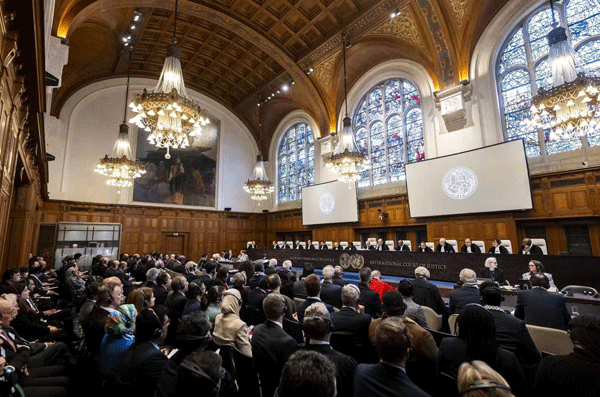
🗓️ On this day, the @CIJ_ICJ confirmed that Kosovo’s declaration of independence did not violate international law.
A landmark moment that dismantled Serbia’s legal narrative.
To mark the anniversary, I’m resharing two key articles that explain the aftermath:
1. How Serbia’s ICJ Request Backfired, turning UNSCR 1244 into a closed chapter and cementing Kosovo’s independence:
🔗 x.com/gurakuqkuqi/status/193…
2. Post-ICJ: The UN legitimized the EU’s role in Kosovo — effectively bypassing Resolution 1244:
🔗 x.com/gurakuqkuqi/status/193…
🔁 Share if you're tired of selective readings of international law.
#Kosovo #ICJ #InternationalLaw #Resolution1244 #EUforeignpolicy #Serbia
13 Jun 2025
The Kosovo Question after the ICJ: The UN Legitimized the EU’s Role and Surpassed Resolution 1244
On July 22, 2010, the International Court of Justice (ICJ), as the highest judicial body of the United Nations, ruled that Kosovo’s declaration of independence was not in violation of international law. This ruling, initiated at the request of Serbia itself, represents the most significant legal act regarding Kosovo’s status and put an end to speculation over the illegality of its declaration.
Immediately following this decision, on September 9, 2010, the United Nations General Assembly, the most representative body of the UN, where each state holds an equal vote, adopted Resolution A/RES/64/298, which:
- Acknowledges the ICJ’s advisory opinion and notes the finding that Kosovo’s declaration of independence did not violate international law;
- Welcomes the European Union’s commitment to facilitating the Kosovo–Serbia dialogue;
- Invites both parties to engage in practical issues and regional stability.
This act officially transferred the dialogue process from the global forum to a regional organization, the EU, in accordance with Chapter VIII of the UN Charter, which permits regional organizations to act in the maintenance of peace with the awareness of the UN. As a result, since 2010, the EU-mediated dialogue has become part of the international architecture, not a replacement for it.
It is precisely within this context that David Stokinger’s claim that the dialogue should “return to the UN” because “Resolution 1244 is the basis,” is not only outdated but in direct contradiction with the legal and diplomatic reality of the United Nations. Had he followed basic developments in international law, he would know that the UN itself has surpassed Resolution 1244 through the legitimacy granted by the ICJ’s ruling and the EU’s role.
Furthermore, labeling Kosovo as a “Western project” rather than a sovereign state built on the principles of self-determination and humanitarian intervention to prevent genocide by Serbia, reflects a shallow understanding of the legal and ethical dimensions of international processes.
Rather than building his narrative on the basis of UN decisions, David Stokinger chooses to ignore them, serving familiar political discourses aimed at keeping the Balkans trapped in the past. And this, for an activist who speaks in the name of peace, is the greatest paradox.
His public positions, embraced by media outlets that promote the Serbian narrative against Kosovo, objectively place him within a political line that serves agendas contrary to international law. Even the setting of his statements and the background behind him convey the same message.
If Mr. Stokinger wishes to confront facts, he is welcome to engage in a public debate based on the foundations of international law and the actual developments following the ICJ’s ruling.
#Kosovo #Serbia #DavidStokinger #KosovoOnline #ICJ #UNGA #Resolution1244 #KosovoIndependence
#InternationalLaw #EUDialogue #Balkans
#PeaceProcess #SelfDetermination #HumanitarianIntervention #Geopolitics
#SerbiaKosovoDialogue #UNCharter #RuleOfLaw
6
158
14 Jul 2025
Serbia’s Request to the ICJ Turned Resolution 1244 into a Closed Chapter and Kosovo’s Independence into an Internationally Recognised Reality
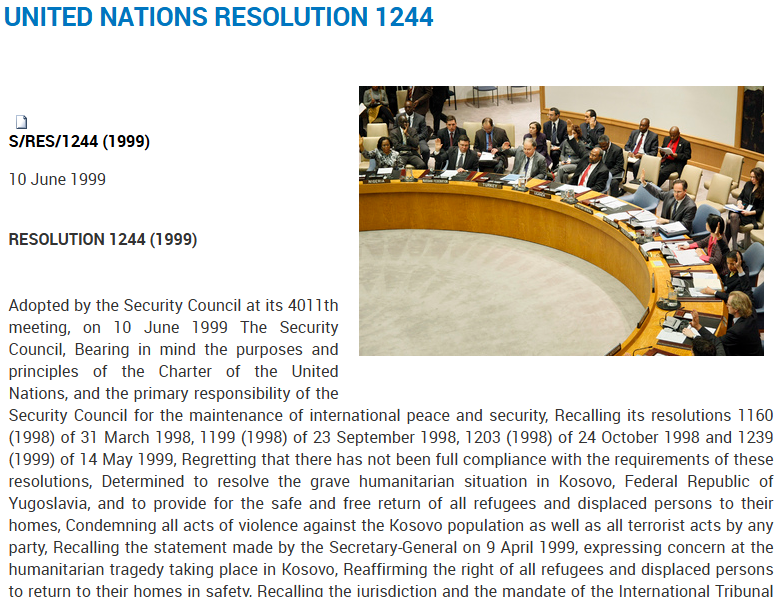
On June 10, 1999, following NATO’s humanitarian intervention to halt the genocide and ethnic cleansing against Kosovo Albanians, the UN Security Council adopted Resolution 1244. This resolution laid the foundation for a temporary international administration in Kosovo, led by UNMIK, ensured the presence of international security forces (KFOR), and mandated the withdrawal of Serbian military, police, and paramilitary forces from Kosovo.
Resolution 1244 established a provisional political and legal framework to facilitate a negotiating process regarding Kosovo’s final status. This international process, which involved the efforts of the UN, EU, and the United States, culminated in Kosovo’s declaration of independence on February 17, 2008, by its elected representatives.
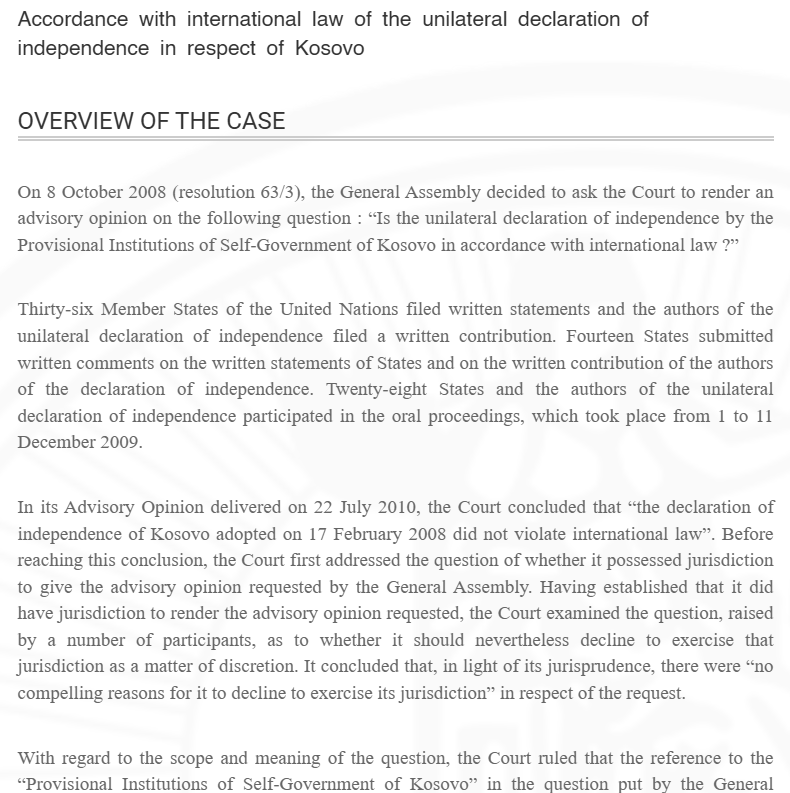
In an attempt to challenge this historic and legitimate development, Serbia requested that the UN General Assembly refer the matter to the International Court of Justice (ICJ) with the following question:
“Is the unilateral declaration of independence by the Provisional Institutions of Self-Government of Kosovo in accordance with international law?”
On July 22, 2010, the ICJ issued a clear and authoritative opinion, stating:
“The declaration of independence of 17 February 2008 did not violate general international law, United Nations Security Council Resolution 1244 (1999), or the Constitutional Framework for Provisional Self-Government in Kosovo.”
This was a definitive legal response, initiated by Serbia itself, which fully legitimised Kosovo’s declaration of independence.
Unfortunately, neither the genocide committed in Kosovo nor the opinion of the highest international legal authority was sufficient for Serbia to abandon its entrenched aggressive and hegemonic mindset. The hypocrisy of Belgrade lies in the fact that, despite having requested the ICJ’s opinion, it now disregards it because it does not align with its national interests.
The question arises: What if the ICJ opinion had favored Serbia? Judging by past practices, it is reasonable to believe that Serbian authorities would have sought to use such an opinion as precedent to justify interventions—potentially even military ones—thus endangering regional and broader stability.
In essence, the ICJ confirmed that Resolution 1244 had fulfilled its purpose, paving the way for a new political and legal process that led to Kosovo’s independence. Today, this resolution has been absorbed into the constitutional order of the Republic of Kosovo, just as the presence of KFOR operates in accordance with its mandate and at the request of Kosovo’s institutions.
Since the publication of the ICJ’s opinion, Serbia has pursued a continuous strategy to undermine it, seeking to reframe the international discourse around selective interpretations of Resolution 1244. In December 2022, Serbia submitted an official request to KFOR for the return of its troops to Kosovo, claiming justification based on provisions of the resolution.
The international community responded clearly and unequivocally:
- Ned Price, then spokesperson for the U.S. Department of State, declared:
“We do not support a return of Serbian forces to Kosovo. Such a move would mark a significant escalation and undermine regional stability.”
- KFOR, on January 8, 2023, through its Commander Major General Angelo Michele Ristuccia, confirmed:
“Serbia’s request was received but denied, as KFOR did not consider it necessary.”
- NATO spokesperson Oana Lungescu also stated unequivocally:
“There is no need for the return of Serbian troops to Kosovo. KFOR remains the only legal security framework in Kosovo.”
Following these rejections, Belgrade turned to the use of force—culminating in the terrorist act of September 24, 2023, in Banjska—with the intent to incite internal destabilization and provoke a situation that could justify international intervention and de facto partition of northern Kosovo, echoing the known “sanitary cordon” separation scheme from 1999.
After this scenario failed, Serbia escalated its aggression through hybrid warfare: disinformation, instrumentalization of the Serbian Orthodox Church, infiltration into illegal structures, and diplomatic pressure to revive outdated interpretations of Resolution 1244.
- In July 2024, Derek Chollet, former Senior Advisor to the U.S. State Department, responded to this campaign by stating clearly:
“1244 set up a political process to discuss Kosovo’s future. And that process ran, and resulted in Kosovo’s independence.”
This position is indisputable and draws a clear line between international law and Serbia’s manipulative narrative.
To this day, Serbia refuses to take responsibility for the genocidal acts committed by the Milošević regime and continues to pursue a political path at odds with Euro-Atlantic values, international legality, and regional peace. It is important to recall that Serbia’s current president, Aleksandar Vucic, was part of the Milošević government, a political continuity that demonstrates Serbia has never truly broken with the mentality of the 1990s.
Today marks a day when we will once again witness thousands of Serbian lamentations and selective, unilateral interpretations of Resolution 1244. So many lies, echoing the infamous words of Dobrica Cosic, who once said that lying is a form of Serbian patriotism.
#Kosovo #Serbia #USA #EU #NATO #Resolution1244 #UNMIK #KFOR #UN
x.com/gurakuqkuqi/status/193…
10 Jun 2025
Serbia’s Request to the ICJ Turned Resolution 1244 into a Closed Chapter and Kosovo’s Independence into an Internationally Recognised Reality
On June 10, 1999, following NATO’s humanitarian intervention to halt the genocide and ethnic cleansing against Kosovo Albanians, the UN Security Council adopted Resolution 1244. This resolution laid the foundation for a temporary international administration in Kosovo, led by UNMIK, ensured the presence of international security forces (KFOR), and mandated the withdrawal of Serbian military, police, and paramilitary forces from Kosovo.
Resolution 1244 established a provisional political and legal framework to facilitate a negotiating process regarding Kosovo’s final status. This international process, which involved the efforts of the UN, EU, and the United States, culminated in Kosovo’s declaration of independence on February 17, 2008, by its elected representatives.
In an attempt to challenge this historic and legitimate development, Serbia requested that the UN General Assembly refer the matter to the International Court of Justice (ICJ) with the following question:
“Is the unilateral declaration of independence by the Provisional Institutions of Self-Government of Kosovo in accordance with international law?”
On July 22, 2010, the ICJ issued a clear and authoritative opinion, stating:
“The declaration of independence of 17 February 2008 did not violate general international law, United Nations Security Council Resolution 1244 (1999), or the Constitutional Framework for Provisional Self-Government in Kosovo.”
This was a definitive legal response, initiated by Serbia itself, which fully legitimised Kosovo’s declaration of independence.
Unfortunately, neither the genocide committed in Kosovo nor the opinion of the highest international legal authority was sufficient for Serbia to abandon its entrenched aggressive and hegemonic mindset. The hypocrisy of Belgrade lies in the fact that, despite having requested the ICJ’s opinion, it now disregards it because it does not align with its national interests.
The question arises: What if the ICJ opinion had favored Serbia? Judging by past practices, it is reasonable to believe that Serbian authorities would have sought to use such an opinion as precedent to justify interventions—potentially even military ones—thus endangering regional and broader stability.
In essence, the ICJ confirmed that Resolution 1244 had fulfilled its purpose, paving the way for a new political and legal process that led to Kosovo’s independence. Today, this resolution has been absorbed into the constitutional order of the Republic of Kosovo, just as the presence of KFOR operates in accordance with its mandate and at the request of Kosovo’s institutions.
Since the publication of the ICJ’s opinion, Serbia has pursued a continuous strategy to undermine it, seeking to reframe the international discourse around selective interpretations of Resolution 1244. In December 2022, Serbia submitted an official request to KFOR for the return of its troops to Kosovo, claiming justification based on provisions of the resolution.
The international community responded clearly and unequivocally:
- Ned Price, then spokesperson for the U.S. Department of State, declared:
“We do not support a return of Serbian forces to Kosovo. Such a move would mark a significant escalation and undermine regional stability.”
- KFOR, on January 8, 2023, through its Commander Major General Angelo Michele Ristuccia, confirmed:
“Serbia’s request was received but denied, as KFOR did not consider it necessary.”
- NATO spokesperson Oana Lungescu also stated unequivocally:
“There is no need for the return of Serbian troops to Kosovo. KFOR remains the only legal security framework in Kosovo.”
Following these rejections, Belgrade turned to the use of force—culminating in the terrorist act of September 24, 2023, in Banjska—with the intent to incite internal destabilization and provoke a situation that could justify international intervention and de facto partition of northern Kosovo, echoing the known “sanitary cordon” separation scheme from 1999.
After this scenario failed, Serbia escalated its aggression through hybrid warfare: disinformation, instrumentalization of the Serbian Orthodox Church, infiltration into illegal structures, and diplomatic pressure to revive outdated interpretations of Resolution 1244.
- In July 2024, Derek Chollet, former Senior Advisor to the U.S. State Department, responded to this campaign by stating clearly:
“1244 set up a political process to discuss Kosovo’s future. And that process ran, and resulted in Kosovo’s independence.”
This position is indisputable and draws a clear line between international law and Serbia’s manipulative narrative.
To this day, Serbia refuses to take responsibility for the genocidal acts committed by the Milošević regime and continues to pursue a political path at odds with Euro-Atlantic values, international legality, and regional peace. It is important to recall that Serbia’s current president, Aleksandar Vucic, was part of the Milošević government, a political continuity that demonstrates Serbia has never truly broken with the mentality of the 1990s.
Today marks a day when we will once again witness thousands of Serbian lamentations and selective, unilateral interpretations of Resolution 1244. So many lies, echoing the infamous words of Dobrica Cosic, who once said that lying is a form of Serbian patriotism.
#Kosovo #Serbia #USA #EU #NATO #Resolution1244 #UNMIK #KFOR #UN
@VjosaOsmaniPRKS @albinkurti @vloracitaku
@EjupMaqedonci @USEmbPristina @realDonaldTrump @GermanAmbKOS @jonhargreaves67 @AivoOrav
@eucopresident @EU_Commission @kajakallas
@EUparliament @coe @MartaKosEU @aliciakearns
@Keir_Starmer @_FriedrichMerz @DanielSerwer
@DorisPack2 @BBCWorld @agim_musliu @UN @Sandulovic_N @i_videnovic @CIJ_ICJ @NATO_KFOR @FlamurKrsq @ThisisKaltri
2
2
31
843
14 Jul 2025
The Kosovo Question after the ICJ: The UN Legitimized the EU’s Role and Surpassed Resolution 1244
On July 22, 2010, the International Court of Justice (ICJ), as the highest judicial body of the United Nations, ruled that Kosovo’s declaration of independence was not in violation of international law. This ruling, initiated at the request of Serbia itself, represents the most significant legal act regarding Kosovo’s status and put an end to speculation over the illegality of its declaration.
Immediately following this decision, on September 9, 2010, the United Nations General Assembly, the most representative body of the UN, where each state holds an equal vote, adopted Resolution A/RES/64/298, which:
- Acknowledges the ICJ’s advisory opinion and notes the finding that Kosovo’s declaration of independence did not violate international law;
- Welcomes the European Union’s commitment to facilitating the Kosovo–Serbia dialogue;
- Invites both parties to engage in practical issues and regional stability.
This act officially transferred the dialogue process from the global forum to a regional organization, the EU, in accordance with Chapter VIII of the UN Charter, which permits regional organizations to act in the maintenance of peace with the awareness of the UN. As a result, since 2010, the EU-mediated dialogue has become part of the international architecture, not a replacement for it.
It is precisely within this context that David Stokinger’s claim that the dialogue should “return to the UN” because “Resolution 1244 is the basis,” is not only outdated but in direct contradiction with the legal and diplomatic reality of the United Nations. Had he followed basic developments in international law, he would know that the UN itself has surpassed Resolution 1244 through the legitimacy granted by the ICJ’s ruling and the EU’s role.
Furthermore, labeling Kosovo as a “Western project” rather than a sovereign state built on the principles of self-determination and humanitarian intervention to prevent genocide by Serbia, reflects a shallow understanding of the legal and ethical dimensions of international processes.
Rather than building his narrative on the basis of UN decisions, David Stokinger chooses to ignore them, serving familiar political discourses aimed at keeping the Balkans trapped in the past. And this, for an activist who speaks in the name of peace, is the greatest paradox.
His public positions, embraced by media outlets that promote the Serbian narrative against Kosovo, objectively place him within a political line that serves agendas contrary to international law. Even the setting of his statements and the background behind him convey the same message.
#Kosovo #Serbia #DavidStokinger #KosovoOnline #ICJ #UNGA #Resolution1244 #KosovoIndependence
#InternationalLaw #EUDialogue #Balkans
#PeaceProcess #SelfDetermination #HumanitarianIntervention #Geopolitics
#SerbiaKosovoDialogue #UNCharter #RuleOfLaw
x.com/gurakuqkuqi/status/193…
13 Jun 2025
The Kosovo Question after the ICJ: The UN Legitimized the EU’s Role and Surpassed Resolution 1244
On July 22, 2010, the International Court of Justice (ICJ), as the highest judicial body of the United Nations, ruled that Kosovo’s declaration of independence was not in violation of international law. This ruling, initiated at the request of Serbia itself, represents the most significant legal act regarding Kosovo’s status and put an end to speculation over the illegality of its declaration.
Immediately following this decision, on September 9, 2010, the United Nations General Assembly, the most representative body of the UN, where each state holds an equal vote, adopted Resolution A/RES/64/298, which:
- Acknowledges the ICJ’s advisory opinion and notes the finding that Kosovo’s declaration of independence did not violate international law;
- Welcomes the European Union’s commitment to facilitating the Kosovo–Serbia dialogue;
- Invites both parties to engage in practical issues and regional stability.
This act officially transferred the dialogue process from the global forum to a regional organization, the EU, in accordance with Chapter VIII of the UN Charter, which permits regional organizations to act in the maintenance of peace with the awareness of the UN. As a result, since 2010, the EU-mediated dialogue has become part of the international architecture, not a replacement for it.
It is precisely within this context that David Stokinger’s claim that the dialogue should “return to the UN” because “Resolution 1244 is the basis,” is not only outdated but in direct contradiction with the legal and diplomatic reality of the United Nations. Had he followed basic developments in international law, he would know that the UN itself has surpassed Resolution 1244 through the legitimacy granted by the ICJ’s ruling and the EU’s role.
Furthermore, labeling Kosovo as a “Western project” rather than a sovereign state built on the principles of self-determination and humanitarian intervention to prevent genocide by Serbia, reflects a shallow understanding of the legal and ethical dimensions of international processes.
Rather than building his narrative on the basis of UN decisions, David Stokinger chooses to ignore them, serving familiar political discourses aimed at keeping the Balkans trapped in the past. And this, for an activist who speaks in the name of peace, is the greatest paradox.
His public positions, embraced by media outlets that promote the Serbian narrative against Kosovo, objectively place him within a political line that serves agendas contrary to international law. Even the setting of his statements and the background behind him convey the same message.
If Mr. Stokinger wishes to confront facts, he is welcome to engage in a public debate based on the foundations of international law and the actual developments following the ICJ’s ruling.
#Kosovo #Serbia #DavidStokinger #KosovoOnline #ICJ #UNGA #Resolution1244 #KosovoIndependence
#InternationalLaw #EUDialogue #Balkans
#PeaceProcess #SelfDetermination #HumanitarianIntervention #Geopolitics
#SerbiaKosovoDialogue #UNCharter #RuleOfLaw
4
4
43
1,571
13 Jun 2025
The Kosovo Question after the ICJ: The UN Legitimized the EU’s Role and Surpassed Resolution 1244
On July 22, 2010, the International Court of Justice (ICJ), as the highest judicial body of the United Nations, ruled that Kosovo’s declaration of independence was not in violation of international law. This ruling, initiated at the request of Serbia itself, represents the most significant legal act regarding Kosovo’s status and put an end to speculation over the illegality of its declaration.
Immediately following this decision, on September 9, 2010, the United Nations General Assembly, the most representative body of the UN, where each state holds an equal vote, adopted Resolution A/RES/64/298, which:
- Acknowledges the ICJ’s advisory opinion and notes the finding that Kosovo’s declaration of independence did not violate international law;
- Welcomes the European Union’s commitment to facilitating the Kosovo–Serbia dialogue;
- Invites both parties to engage in practical issues and regional stability.
This act officially transferred the dialogue process from the global forum to a regional organization, the EU, in accordance with Chapter VIII of the UN Charter, which permits regional organizations to act in the maintenance of peace with the awareness of the UN. As a result, since 2010, the EU-mediated dialogue has become part of the international architecture, not a replacement for it.
It is precisely within this context that David Stokinger’s claim that the dialogue should “return to the UN” because “Resolution 1244 is the basis,” is not only outdated but in direct contradiction with the legal and diplomatic reality of the United Nations. Had he followed basic developments in international law, he would know that the UN itself has surpassed Resolution 1244 through the legitimacy granted by the ICJ’s ruling and the EU’s role.
Furthermore, labeling Kosovo as a “Western project” rather than a sovereign state built on the principles of self-determination and humanitarian intervention to prevent genocide by Serbia, reflects a shallow understanding of the legal and ethical dimensions of international processes.
Rather than building his narrative on the basis of UN decisions, David Stokinger chooses to ignore them, serving familiar political discourses aimed at keeping the Balkans trapped in the past. And this, for an activist who speaks in the name of peace, is the greatest paradox.
His public positions, embraced by media outlets that promote the Serbian narrative against Kosovo, objectively place him within a political line that serves agendas contrary to international law. Even the setting of his statements and the background behind him convey the same message.
If Mr. Stokinger wishes to confront facts, he is welcome to engage in a public debate based on the foundations of international law and the actual developments following the ICJ’s ruling.
#Kosovo #Serbia #DavidStokinger #KosovoOnline #ICJ #UNGA #Resolution1244 #KosovoIndependence
#InternationalLaw #EUDialogue #Balkans
#PeaceProcess #SelfDetermination #HumanitarianIntervention #Geopolitics
#SerbiaKosovoDialogue #UNCharter #RuleOfLaw
2
4
25
3,766

10 Jun 2025
Awesome post by @gurakuqkuqi
Dr. Gurakuc Kuçi
Senior Researcher, Institute for Hybrid Warfare Studies "OCTOPUS" and a Professor
Posted: June 10, 2025 on LinkedIn platform
On the 26th anniversary of UN Security Council Resolution 1244, let’s reaffirm the truth: this resolution paved the way for Kosovo’s independence, a reality cemented by international law. Serbia’s attempts to rewrite history through aggression and lies can not undo our sovereignty.
Adopted on June 10, 1999, after NATO’s intervention halted Serbia’s ethnic cleansing of Kosovo Albanians, Resolution 1244 established UNMIK’s temporary administration and KFOR’s security presence, while ordering Serbian forces out. It set a process to resolve Kosovo’s status, leading to our Declaration of Independence on February 17, 2008.
Serbia challenged this at the UN, asking the ICJ’s opinion on our declaration’s legality. On July 22, 2010, the ICJ ruled unequivocally: Kosovo’s independence violated no law, Resolution 1244, or the Constitutional Framework. Serbia’s own gambit backfired, legitimizing our statehood.
Yet, Belgrade rejects this reality. Ignoring the ICJ, it pursues a hegemonic agenda rooted in the Milošević era. In December 2022, Serbia sought to reintroduction of troops in Kosovo, citing Resolution 1244, a request swiftly denied by KFOR and NATO as destabilizing The September 24, 2023, terrorist attack in Banjska, orchestrated to incite chaos, further exposed Serbia’s intent to undermine Kosovo through hybrid warfare: disinformation, illegal structures, and manipulation of the Serbian Orthodox Church.
The international community stands united. In 2022, U.S. spokesperson Ned Price warned Serbian troop movements would escalate tensions. In 2023, KFOR’s Commander, Major General Angelo Michele Ristuccia, rejected Serbia’s request. In 2024, U.S. official Derek Chollet clarified: “Resolution 1244’s political process concluded with Kosovo’s independence.” KFOR operates under Kosovo’s constitutional mandate, not Serbia’s whims.
Serbia’s leadership, tied to Milošević’s genocidal regime, refuses accountability for past atrocities and clings to a 1990s mentality. As Dobrica Ćosić once claimed, “lying is a form of Serbian patriotism.” But no lie can erase Kosovo’s statehood, recognized by over 100 nations and upheld by the highest court.
Kosovo is sovereign, free, and irreversible. Let’s honor Resolution 1244’s legacy by defending truth and peace against Serbia’s destabilizing tactics.
#KosovoIndependence #Resolution1244 #ICJRuling #SerbiaAccountability #WesternBalkans
linkedin.com/posts/gurakuqku…
3
5
25
1,156