
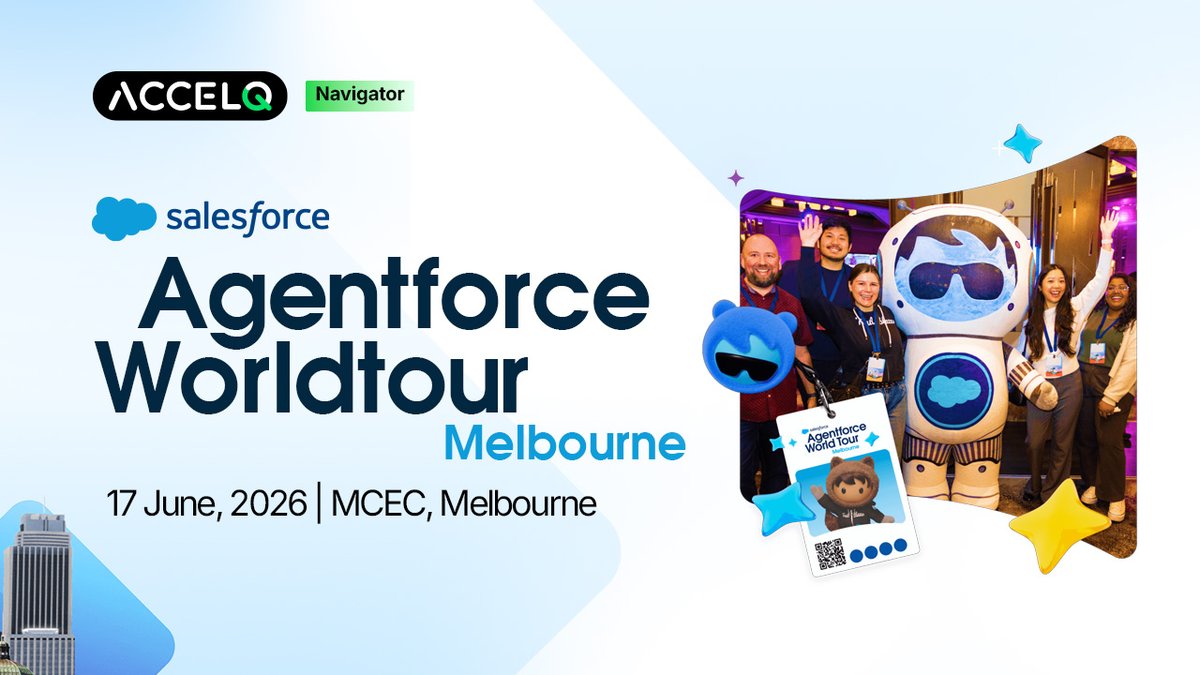
ACCELQ is excited to partner with Agentforce World Tour Melbourne 2026.
📅 June 17, 2026
📍 Melbourne Convention and Exhibition Centre
accelq.com/events/agentforce…
#AgentforceTour #Salesforce #SalesforceTesting #ACCELQ
49

Jun 11
A record in Salesforce is just one row of data.
But every field in that row has a "type" and that type decides what data is allowed in.
Following are different field types everyone working with Salesforce should recognise:
- Text / Long Text Area : names, descriptions
- Number / Currency / Percent : amounts, discounts
- Date / Date-Time : DOB, appointment time, event time.
- Checkbox : yes/no, true/false flags
- Picklist / Multi-select : dropdown choices
- Lookup / Master-Detail : links to other records
- Formula : auto-calculated values based on conditions
- Rollup Summary : calculations from child records
- Email / Phone / URL : format-validated fields
- Rich Text Area : formatted text, images
- Auto Number : auto-generated unique IDs
Each type enforces its own rules.
Wrong field type = wrong data gets in. That's where your testing gets started.
#Salesforce #SalesforceTesting #LearnSalesforce
1
1
53

No locators. No Selenium scripts. No "let me just disable MFA for the test environment."
Just one instruction in plain English, and KaneAI takes it from there:
✅ Logs into your real Salesforce org
✅ Handles MFA verification on its own using your TOTP code
✅ Opens the Leads section, fills in every field, and hits Save
✅ Auto-heals mid-run if the UI shifts
✅ Documents every single step automatically
The best part? You can recreate this entire demo yourself. The exact prompt we used is in the video, and it works with nothing else configured.
🔗 Try KaneAI for free: bit.ly/4e2kEfm
#KaneAI #SalesforceTesting #TestAutomation #AIinTesting #QA
4
4
141
Jun 10
Salesforce Object Relationships - The Data Architecture
In Salesforce, data doesn't exist in a vacuum. Just like a real business, different pieces of information must talk to each other. If you break the connection between them, your automation, security, and reports will immediately fall apart.
As a tester, understanding Object Relationships is your secret weapon for designing end-to-end integration test cases. Let's break down the 5 relationship types every QA specialist must master.
The 5 Core Relationship Types-
1️⃣ Lookup Relationship -
A loose connection between two records. Independent of each other.
Example - A Case has a "Related Contact" field. Rahul raises a complaint, it's linked to his Contact record. Now delete Rahul's Contact. The Case still exists. The lookup field just goes blank. Loosely connected. Independent lifecycles.
2️⃣ Master-Detail Relationship
A tight, parent-child bond. The child cannot exist without the parent.
Example - An Account ("Tata Motors") and its Opportunities ("500 unit deal"). Delete the Tata Motors Account. Every Opportunity linked to it gets deleted too. Automatically. No warning. Strict parent-child. One dies, the other follows.
3️⃣ Many-to-Many (Junction Object)
When many records on one side need to connect to many records on the other side.
Example - Students and Courses. One student takes many courses. One course has many students. Salesforce handles this with a junction object in the middle say, "Enrollment" - which links one Student to one Course at a time.
Many Students -> Enrollment -> Many Courses
4️⃣ Self-Relationship
An object relating to itself.
Example - A Contact has a "Reports To" field, pointing to another Contact. Rahul (Sales Executive) reports to Raju (Sales Manager), both are Contact records, one linked to the other. Same object, looping back to itself.
5️⃣ External Lookup
Connects a Salesforce record to data sitting OUTSIDE Salesforce, in another system entirely.
Example - A Case linked to an Order ID stored in an external SAP system, accessed live without importing all that data into Salesforce. Useful when two systems need to "talk" without duplicating data.
For development and testing relationships define what breaks, what cascades, and what gets orphaned when records change.
Before building and testing any object, map out its relationships first.
#Salesforce #SalesforceTesting #LearnSalesforce
1
83
Jun 4
3/3
So what does this mean for a tester?
In traditional software, a developer writes code, checks it in, deploys it.
In Salesforce, an admin, developer can change metadata in minutes. A new field. A tweaked validation. A modified flow. Without code its done.
Which means changes can happen fast.
Your job is to:
→ Know what metadata was changed
→ Understand what it could impact
→ Test it before it hits production
In Salesforce, metadata IS the product. When metadata changes, you test. Every single time.
#Salesforce #SalesforceTesting #LearnSalesforce #Metadata
45

Trust our testing services to enhance your development process, delivering reliable, high-quality software that stands out in a competitive market.
#testingservices #testing #manualtesting #automationtesting #seleniumtesting #salesforcetesting #software #softwaretesting #QA

ALT Zitin Technologies | Best Staffing Services in USA | As your business grows and changes, your need for qualified workers increases. You may be hesitant to invest in staffing, but it is the best way to preserve and improve the quality.
6


🚨 New Job Alert
Salesforce Testing – Sopra Steria
Apply now ➜ jobwharf.ai/job/salesforce-t…
📍 Chennai, Tamil Nadu, , India
💰 Salary negotiable
#salesforcetesting #soprasteriajobs #fulltime #hiring #jobsearch #jobopening
11

Title: Copado Robotic Testing (CRT) Automation Engineer
Company: Mogi I/O : OTT/Podcast/Short Video Apps for you
Country: India
City:
Employment Type: full-time
Location: hybrid
Remote/Onsite: hybrid
Visa Support:
Link: qatestingjobs.com/jobs/39281…
#agile #automationframeworkoptimization #automationmigration #copadorobotictesting #defecttracking #mentoring #playwright #qaprocessoptimization #salesforcetesting #scrum #selenium #testexecution #testpassrates #teststability #softwaretesting #jobs #qualityassurance #software #testing #tester #testlead #automation #test #engineer #ai #selenium #playwright
11
🚨 New Job Alert
Salesforce Testing – Sopra Steria
Apply now ➜ jobwharf.ai/job/salesforce-t…
📍 Chennai, Tamil Nadu, , India
💰 Salary negotiable
#salesforcetesting #soprasteriajobs #fulltime #hiring #jobsearch #jobopening
68

Apr 23
What Salesforce Consultants Can Learn From Enterprise AI Simulation Testing tech-wonders.com/?p=46459
#SalesforceConsulting #AISimulation #EnterpriseAI #SalesforceTesting #Agentforce
23
Partner with our testing services to refine your product, ensuring it’s resilient, responsive, and ready to outperform the competition.
#testingservices #testing #manualtesting #automationtesting #seleniumtesting #salesforcetesting #software #softwaretesting #QA #WebTesting

ALT Zitin Technologies | Best Staffing Services in USA | As your business grows and changes, your need for qualified workers increases. You may be hesitant to invest in staffing, but it is the best way to preserve and improve the quality.
8
After Washington DC and Sydney, we’re heading to @agentforce World Tour New York 2026 this spring.
📅 April 29–30, 2026
📌New York City & Salesforce (free virtual)
🎪Booth #327
Know more: accelq.com/events/agentforce…
#ACCELQ #SalesforceTesting #TestAutomation #AgentforceTour

1
49

Still using Selenium for #Salesforce testing? 🤔
With dynamic UI, Shadow DOM & frequent updates—
modern apps need modern tools.
Here’s why #Playwright is changing the game 👇
testrig.medium.com/why-use-p…
#SalesforceTesting #Automation #Playwright #SoftwareTesting
1
1
44

Mar 31
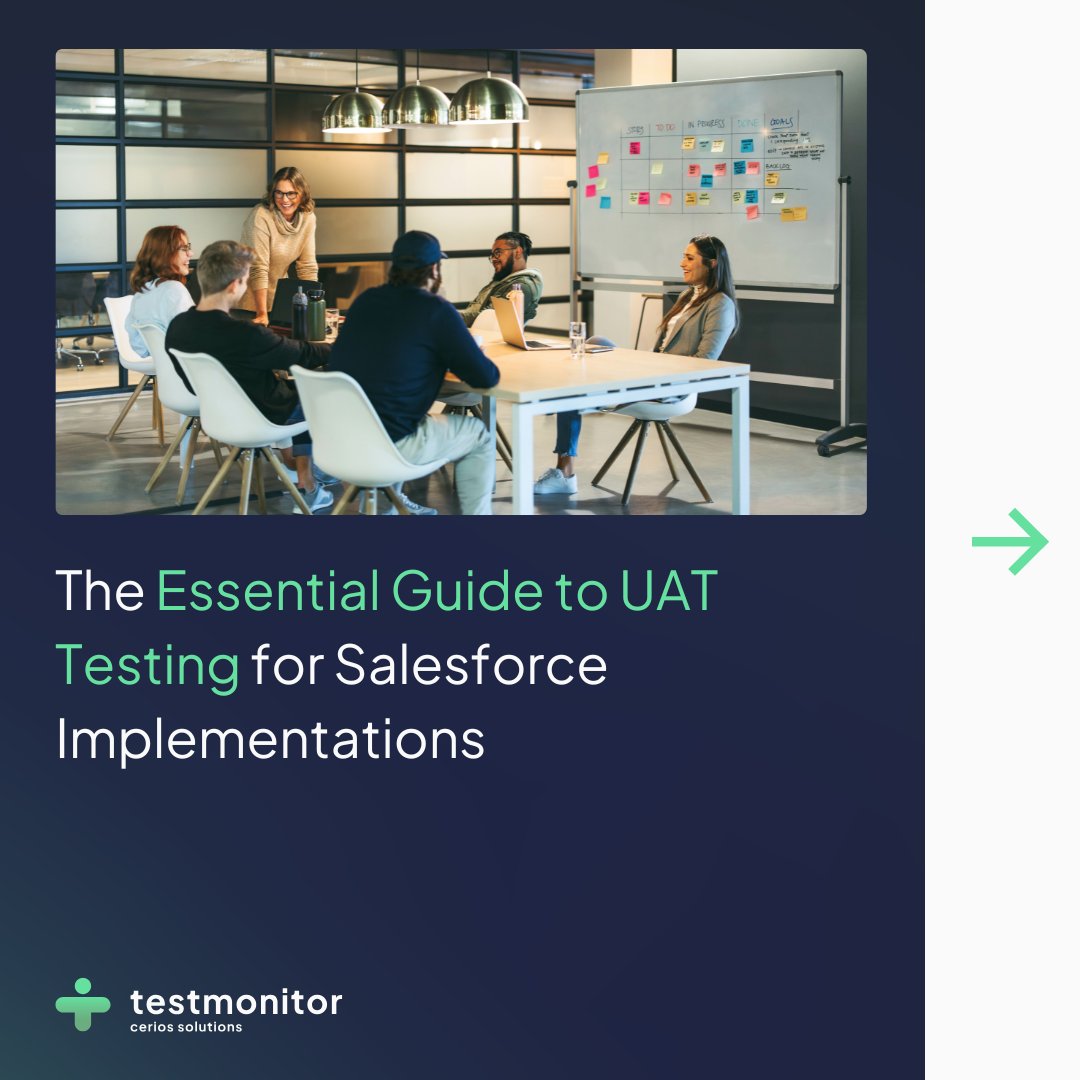
Your Salesforce implementation can still check all the technical boxes, but fail users. UAT is where user input is validated. Here’s how to do it right: bit.ly/4dkWLzn
#SalesforceTesting #QATesting
1
10
Partner with our testing services to refine your product, ensuring it’s resilient, responsive, and ready to outperform the competition.
#testingservices #testing #manualtesting #automationtesting #seleniumtesting #salesforcetesting #software #softwaretesting #QA #WebTesting

ALT Zitin Technologies | Best Staffing Services in USA | As your business grows and changes, your need for qualified workers increases. You may be hesitant to invest in staffing, but it is the best way to preserve and improve the quality.
3
Title: Senior Test Engineer - Brisbane
Company: iSelect
Country: Australia
City: Brisbane
Employment Type: full-time
Location: onsite
Remote/Onsite: onsite
Visa Support: true
Link: qatestingjobs.com/jobs/22074…
#apitesting #aws #azuredevops #cicd #crossbrowsertesting #defectmanagement #defectresolution #multilocation #performancetesting #playwright #riskanalysis #salesforcetesting #testautomation #testdesign #testmanagementtools #teststrategy #wordpresstesting #softwaretesting #jobs #qualityassurance #software #testing #tester #testlead #automation #test #engineer #ai #selenium #playwright
1
24
Title: Software Consultant - Testing Chapter - CRM Customer Tribe
Company: ASB Bank
Country: New Zealand
City: Auckland
Employment Type: full-time
Location: onsite
Remote/Onsite: onsite
Visa Support:
Link: qatestingjobs.com/jobs/21543…
#agile #apiautomationtesting #appium #automatedtesting #c #cselenium #endtoendtesting #functionaltesting #java #manualtesting #mentoring #multilocation #playwright #salesforcetesting #specflow #testautomationframeworks #visualstudio #softwaretesting #jobs #qualityassurance #software #testing #tester #testlead #automation #test #engineer #ai #selenium #playwright
1
56

🔵 Enterprise Salesforce apps don’t fail because of features they fail because of weak testing.
Explore here: buff.ly/djBIMJ0
Modern Salesforce testing goes beyond minimum Apex coverage and manual checks.
#Salesforce #SalesforceTesting #EnterpriseApps #Nimblechapps

28

Jan 30
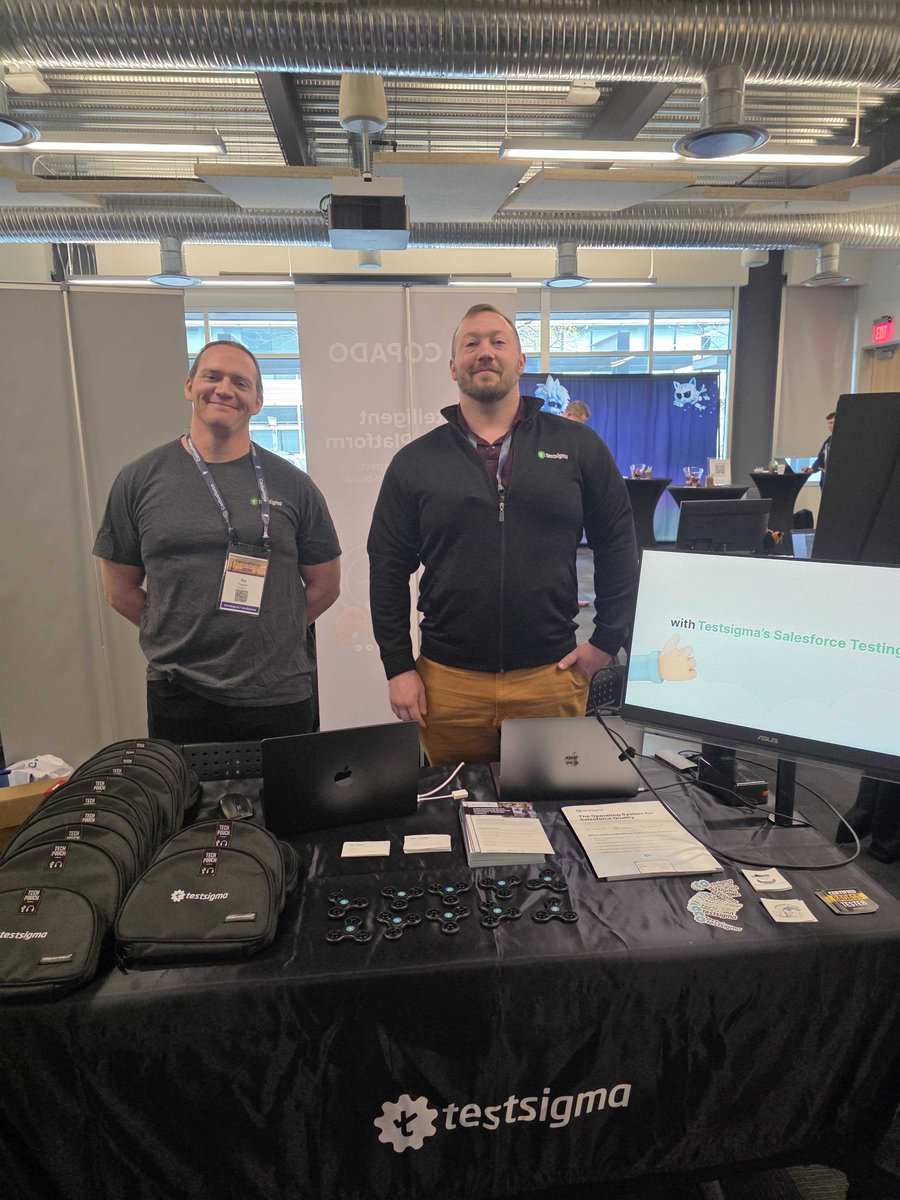
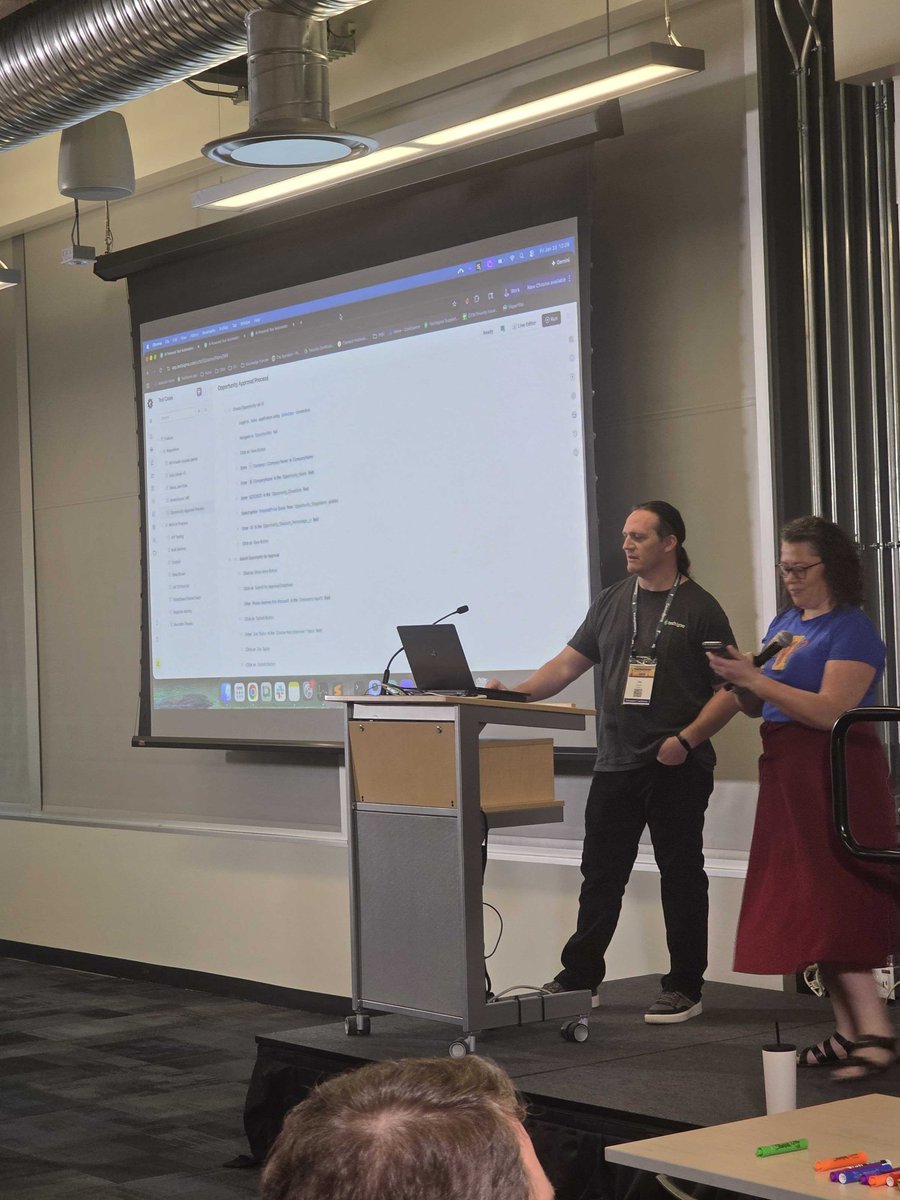
Snapshots from an amazing time at CactusForce 🌵From insightful sessions to great conversations, it was all about learning, connecting, and building better quality together. Thanks to everyone who stopped by to chat with us! ✨
#cactusforce #salesforcetesting #futureoftesting
1
66