
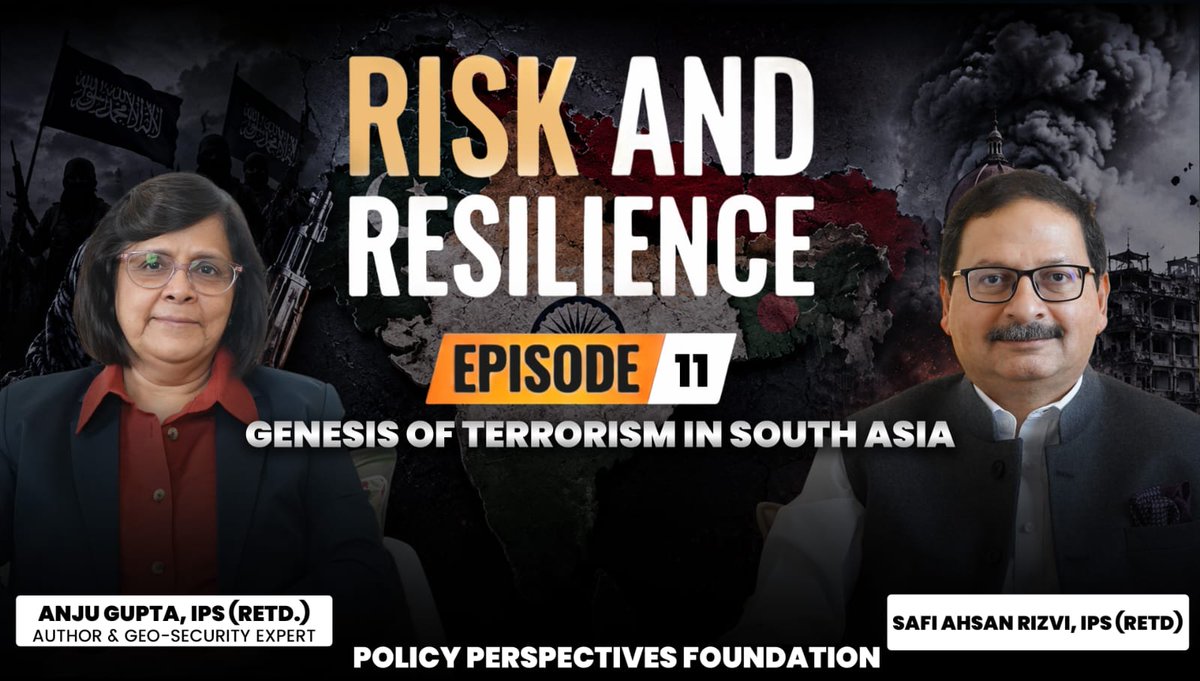
PPF organised the 11th episode of the Risk and Resilience podcast series on the subject of "Genesis of Terrorism in South Asia," an insightful conversation with @india_anju (Retd. IPS). The session, moderated by @SafiAhsanRizvi , features Anju Gupta discussing her recently published book, "Glocal Terror in South Asia," which examines the roots, evolution, and current trajectory of terrorism across the region.
Watch full conversation here - youtu.be/4vT-qvekFlY?si=X9r_…
She argues that "global jihad" was a manufactured political project built on Abdullah Azzam's 1984 fatwa and state-backed mobilisation.
She discusses her idea of glocal terrorists: locally rooted actors like Headley, Hafiz Saeed, Masood Azhar and KSM who plug into Al-Qaeda’s global networks while pursuing their own local agendas, making them harder to detect and far more resilient than a single hierarchy like Al-Qaeda alone.
On Kashmir, she is precise that it is not “Kashmir jihad” that failed but Pakistan’s effort to manufacture one.
She treats Iraq, Afghanistan and Libya as proof that regime change shatters systems rather than just removing leaders, generating insurgencies that global jihadist entrepreneurs, from AQ to ISIS, then weaponise.
#SecurityAnalysis #SouthAsiaSecurity #GlobalJihad #GlocalTerrorism #AlQaeda #TerrorismStudies #Riskandresilience #policy #policyperspectivesfoundation #Southside #geosecurity #glocalterrorinsouthasia
1
2
271

AJK Violence Concerns: Weapons, Sensitive Maps & Masked Attacks Explained
#AJK #PakistanNews #SecurityAnalysis #AzadKashmir #FactForceGlobal
14

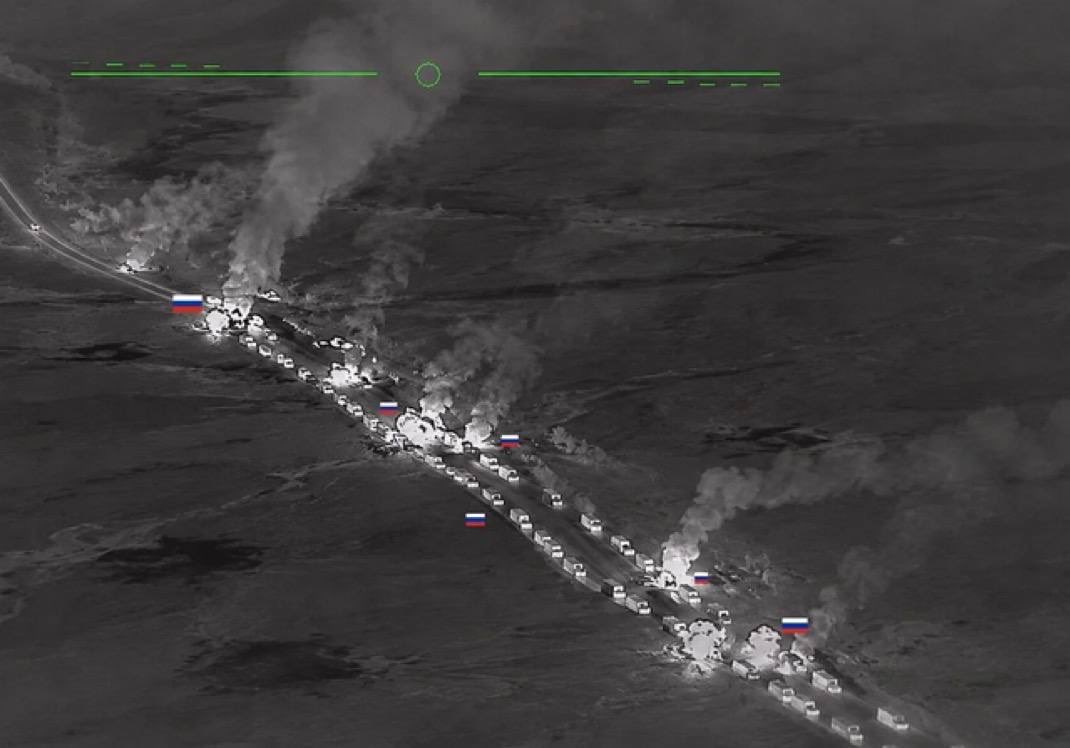
Ukraine’s strike on the Armiansk bridge in occupied Crimea reportedly hit a convoy of 50 Russian military vehicles, according to Ukrainian military officials.
The operation highlights Ukraine’s continued focus on disrupting Russian military logistics and reducing the flow of personnel, equipment, and supplies between occupied Crimea and frontline positions in southern Ukraine.
As the war increasingly becomes a contest of sustainment and mobility, targeting key transport routes remains one of the most effective ways to degrade Russia’s operational capabilities beyond the immediate battlefield.
#Ukraine #Crimea #RussiaUkraineWar #Defense #MilitaryLogistics #SecurityAnalysis #TGUInsights
2
3
133

Jun 11
Inside Balochistan: Women, Conflict & Radicalization Risks | Shocking Analysis
This documentary-style analysis explores the complex realities facing women in conflict-affected regions of Balochistan, focusing on issues such as vulnerability to online recruitment, misinformation, coercion, and the broader security environment.
It highlights both the risks of radicalization and the importance of education, empowerment, and lawful protection systems in safeguarding women. The video also discusses real-life examples of women contributing positively in education, healthcare, law enforcement, and public service.
This content is intended for educational and analytical purposes only and does not support or promote violence or any illegal activity.
Key topics covered:
• Women in conflict and security environments
• Online recruitment and misinformation risks
• Role of education and empowerment
• Positive contributions of women in society
• Regional stability and development challenges
#Khabarkada #Balochistan #WomenEmpowerment #SecurityAnalysis #Documentary #Radicalization #Pakistan
1
39

India-Israel-TTP Nexus? Proxy War Allegations & Pakistan’s Security Challenge
#PakistanNews #ProxyWar #IndiaIsraelTTP #SecurityAnalysis #StrategicTalk
9

Jun 10
ANALYSIS:
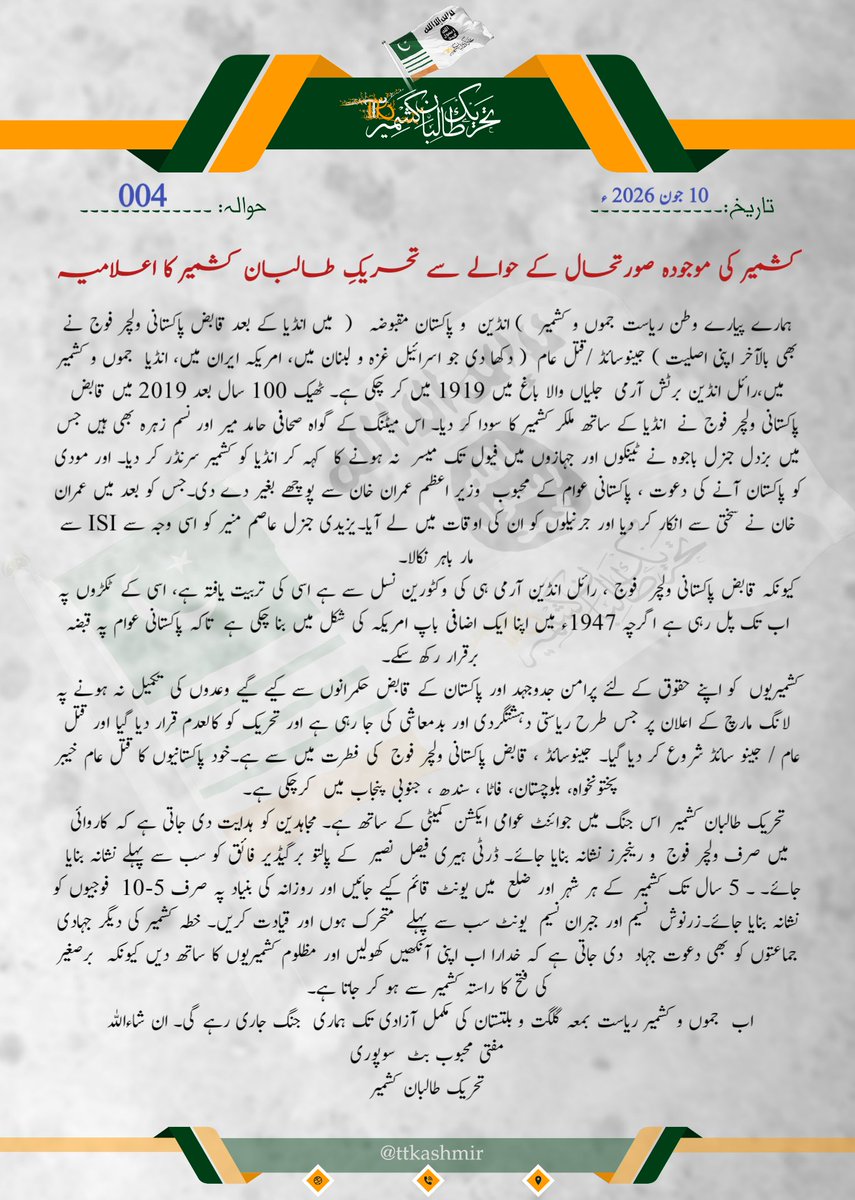
The emergence of a group calling itself "Tehreek-e-Taliban Kashmir" has raised questions among regional security observers. Since its first appearance, the group has issued several statements, yet no independently verified operational activity has been attributed to it.
To date, no identifiable leadership, spokesperson, organizational structure, or public presence has emerged, making it difficult to assess the group's actual capabilities, size, or influence.
In conflict environments, anonymous groups sometimes use media statements to project influence, attract attention, shape narratives, or create psychological pressure disproportionate to their actual operational capacity. Such tactics have historically been employed by a variety of militant and clandestine organizations.
Without verifiable evidence of organizational activity, recruitment networks, or operational presence, the true nature and intentions of the group remain unclear. Analysts will likely continue to monitor whether future developments are accompanied by tangible actions or remain limited to public statements.
#Kashmir #SecurityAnalysis #WarObserver
@mehbbutt9
9
26
2,546

Jun 10
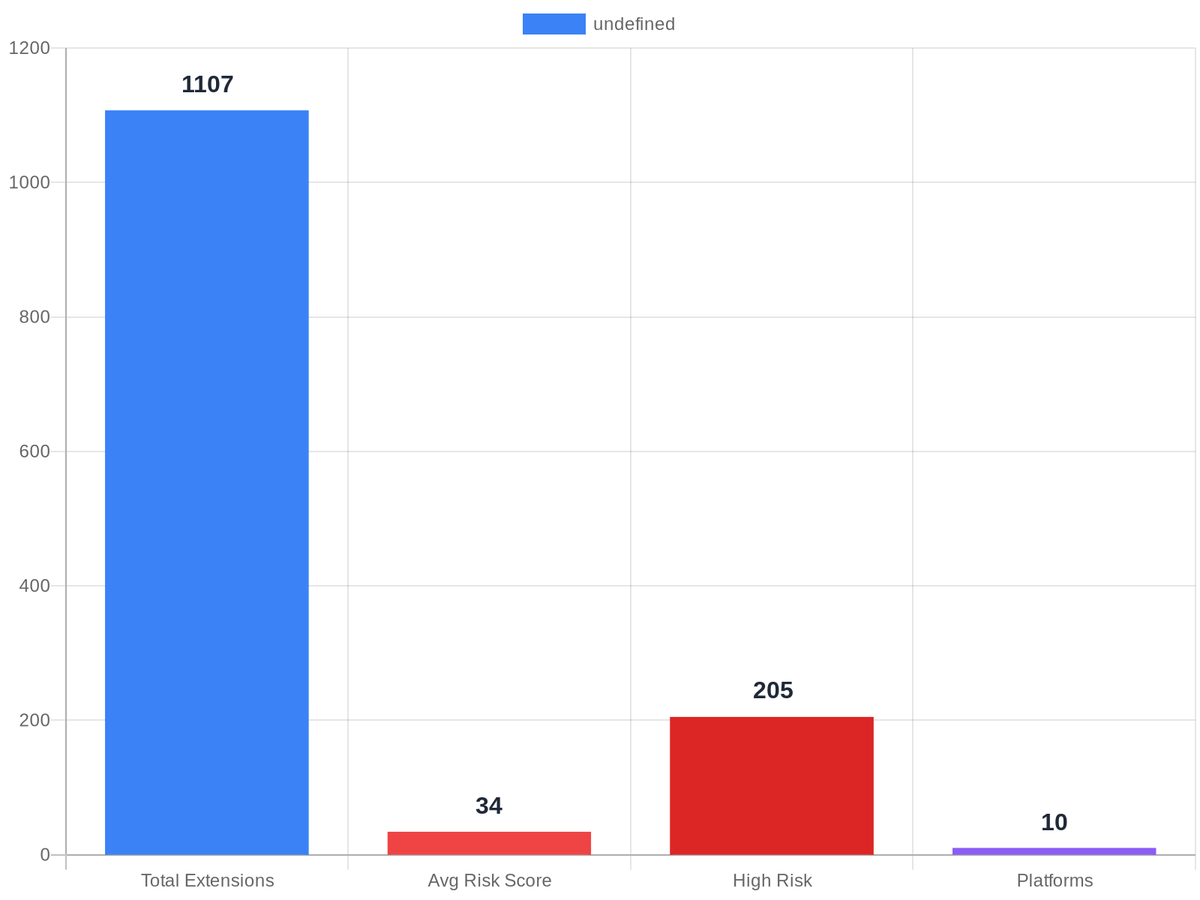
🔦 Extension Spotlight: AdBlock — block ads across the web
Risk Score: 100/100
Permissions: 11
Platform: Browser Extensions
Key concern: High-risk permissions detected
See full analysis → #ExtensionSpotlight #SecurityAnalysis #BrowserSecurity
32

Jun 10
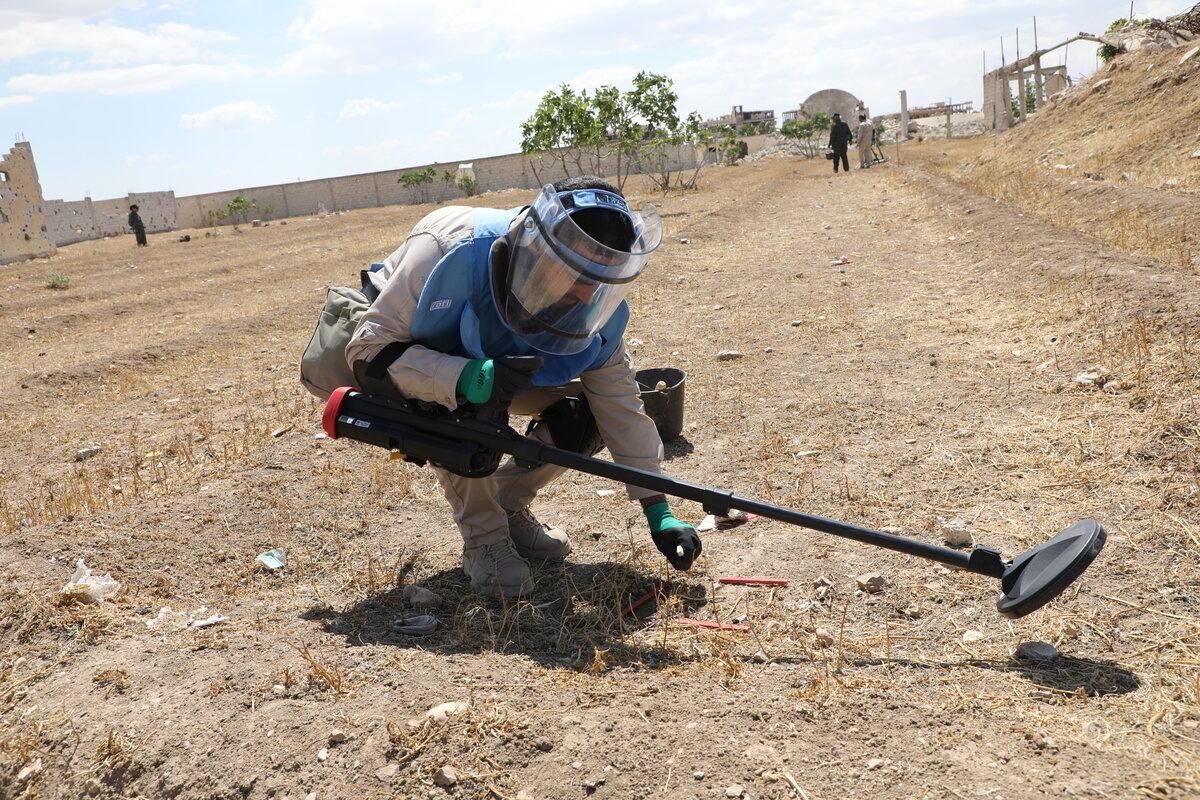
Syria: Fatal Shootings and Landmine Explosion Reported Across Multiple Governorates - 10 June 2026
Reporting over the past 24 hours highlights a series of lethal incidents across Syria, underscoring the persistence of localised insecurity despite the absence of major frontline fighting.
• In Daraa Province, a landmine explosion reportedly killed one person in an agricultural area, highlighting the continued threat posed by unexploded ordnance and legacy conflict hazards.
• Separate armed disputes in Daraa resulted in additional fatalities, reflecting ongoing tribal and community-level tensions.
• In Homs Province, two fatal shootings were reported in commercial areas, impacting civilian activity and local businesses.
• In eastern Syria, a civilian was reportedly killed by stray gunfire, while a smuggling-related confrontation in northern Aleppo also resulted in a fatality.
• In Hama Province, local authorities reportedly discovered the body of a missing individual several days after his disappearance.
The latest local news and social reporting is not a single high-profile attack, but the geographic spread of lethal violence across Daraa, Homs, Aleppo, Hama, and Deir ez-Zor within a single reporting period. The incidents are most consistent with a fragmented security environment characterised by criminal violence, local disputes, smuggling activity, and legacy conflict hazards rather than a coordinated escalation. While Syria's major frontlines remain comparatively quieter than in previous years, security risks continue to affect communities at the local level across much of the country.
For the full Event Intelligence Brief and detailed reporting:
📩 operations@amana-ai.com
UN demining imagery. Credit: UNMAS / Halo Trust / Reuters
#Syria #MiddleEast #OSINT #Intelligence #SecurityRisk #RiskIntelligence #ConflictMonitoring #Geopolitics #SecurityAnalysis #AmanaAI
1
1
47

The latest Middle East escalation is not one crisis. It is several overlapping crises pulling on each other at the same time.
What is happening between Iran and Israel, Washington’s effort to contain the escalation, the Lebanon-Hezbollah front, and the growing pressure on Iraqi armed factions are no longer separate files. They are increasingly moving inside one regional equation.
Washington appears to want a controlled outcome. Enough pressure on Iran and its allies to show leverage, but not enough escalation to destroy any possible diplomatic track. For the Trump administration, the priority seems to be a quick and visible result that can be presented as a political achievement.
Israel’s calculation looks different. Netanyahu is not moving according to Trump’s political timeline as much as he is moving according to a longer-term security calculation, weakening Iran’s regional reach, degrading Hezbollah’s capabilities, and preventing Iran-linked actors from rebuilding deterrence.
Iran, for its part, needs to respond without losing the diplomatic track entirely. Hezbollah wants to avoid being isolated inside Lebanon while preserving its role in Iran’s regional deterrence network. Iraqi factions, meanwhile, may see a wider conflict as a chance to strengthen the argument that this is not the time to surrender weapons, making Iraq’s recent weapons-control debate even more fragile.
Gulf states want stability, but not Iranian expansion. Syria and Turkey are looking for room to reposition in a highly sensitive regional moment.
Syria adds another complicated layer. Trump’s reported comments about a possible Syrian role in the Hezbollah file, if developed into policy, would be highly controversial. Even if framed as coordination rather than direct military action, such a role could deepen sectarian tension, complicate Damascus’s regional repositioning, and push Iran-aligned actors to treat the Syrian front as part of the same struggle.
This is why the crisis is so difficult to untangle. It is not one knot, but several knots tied together.
The key question is whether Washington can actually separate these files from each other: Iran talks, Hezbollah pressure, Iraq’s militias, Syria’s repositioning, Gulf security, and Israel’s military campaign. The problem is that the actors themselves are treating these files as one connected struggle.
For now, the region is not moving through a single escalation. It is moving through overlapping escalations that can activate each other very quickly.
#MiddleEast #Geopolitics #SecurityAnalysis #Iran #Israel
4
726
Jun 8
🎯 High-Risk Extension Alert:
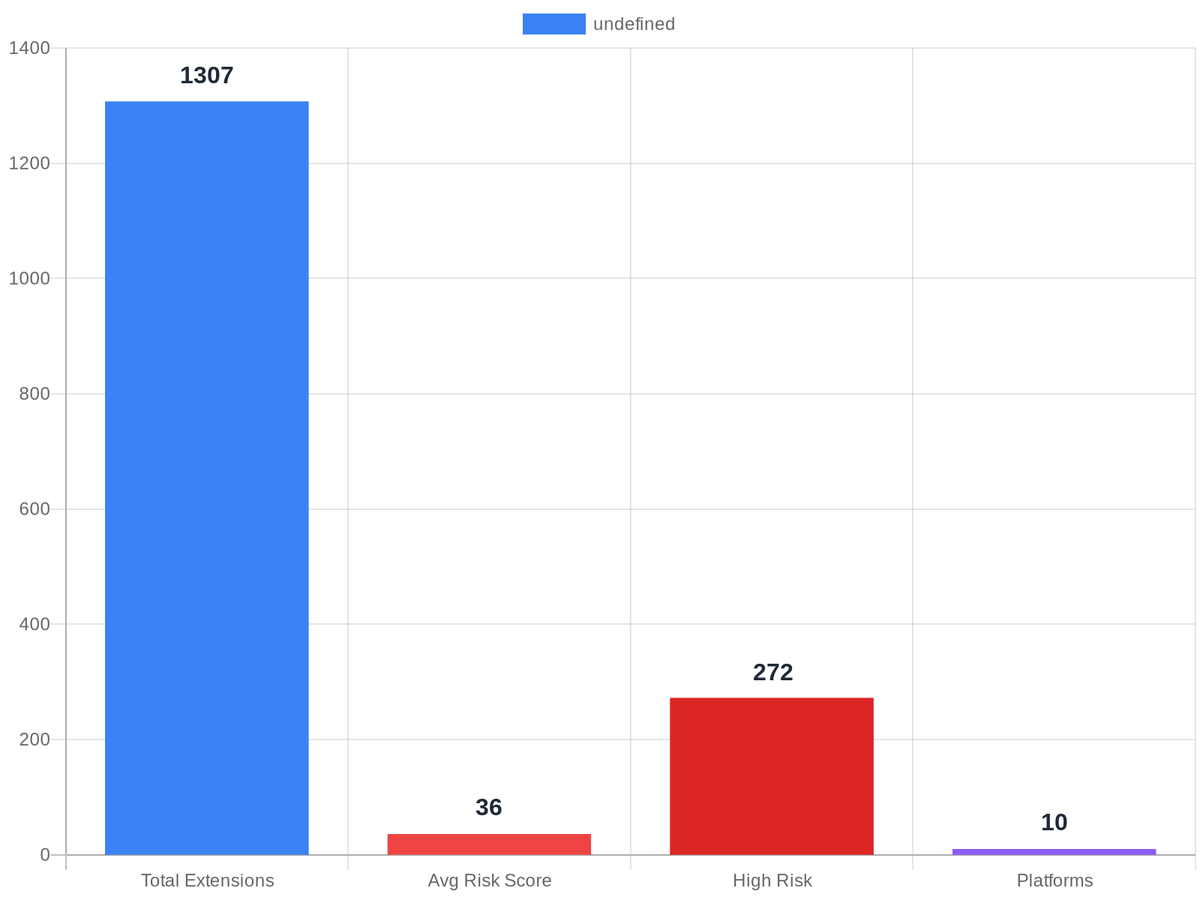
Web Signer for UTSP
Score: 100/100
Why it's flagged:
• Risk score: 100/100
• 272 similar high-risk items found
Analyze your extensions #ExtensionSpotlight #SecurityAnalysis #BrowserSecurity
1
7

Israel conducts a direct strike on Dahiye, testing stated red lines. This analysis examines how Iran integrates regional leverage across Lebanon, Yemen, and maritime chokepoints into a unified strategy.
#Geopolitics #MiddleEast #SecurityAnalysis #Iran #Israel #ForeignPolicy
33
Jun 7
Syria: Protests and Counter-Demonstrations Emerge in Damascus - 07 June 2026
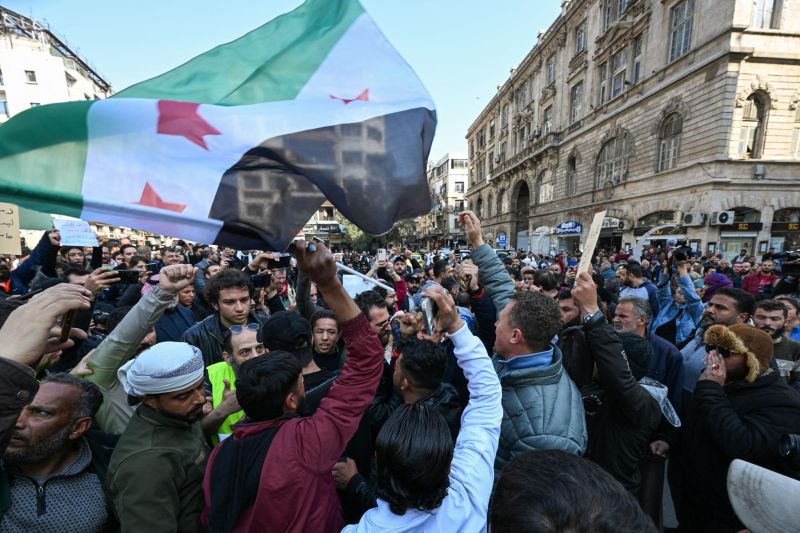
Reporting over the past 24 hours indicates a notable increase in organised civic-political activity in Damascus, where demonstrators and counter-demonstrators gathered around the People's Assembly amid growing debate over governance, reform, and the future direction of the Syrian state.
• On 6 June, activists affiliated with Tajammu 17 Nisan for Monitoring and Human Rights reportedly organised a protest in front of the People's Assembly in Damascus under the slogan "Law and Dignity."
• Demonstrators reportedly called for political and economic reforms, with grievances focused on governance, accountability, and institutional performance.
• Reporting also indicates a counter-demonstration took place on the same day, with participants expressing support for the state and affirming the "Umayyad character" of Syria.
• Additional sit-ins and protest activity were reported elsewhere in Damascus, suggesting the events were not isolated incidents.
• Separate demonstrations in Sweida reportedly focused on detainees, corruption, justice, education, and the return of displaced persons.
The significance of these events is not the size of any individual protest, but the emergence of competing public narratives in the Syrian capital. The combination of organised protests, immediate counter-mobilisation, and socio-economic grievances suggests a more active civic space than has typically been visible in Damascus in recent years. While the reporting does not indicate a direct challenge to state control, it does point to growing public engagement around governance, economic conditions, and accountability.
For the full Event Intelligence Brief and detailed reporting:
📩 operations@amana-ai.com
Recent image of demonstrators and counter-demonstrators gathered outside Syria's People's Assembly, highlighting growing public debate around governance, reform, and accountability. Credit Reuters / AFP
#Syria #Damascus #MiddleEast #OSINT #Intelligence #CivilUnrest #PoliticalRisk #RiskIntelligence #SecurityAnalysis #Geopolitics
1
1
43
Jun 7
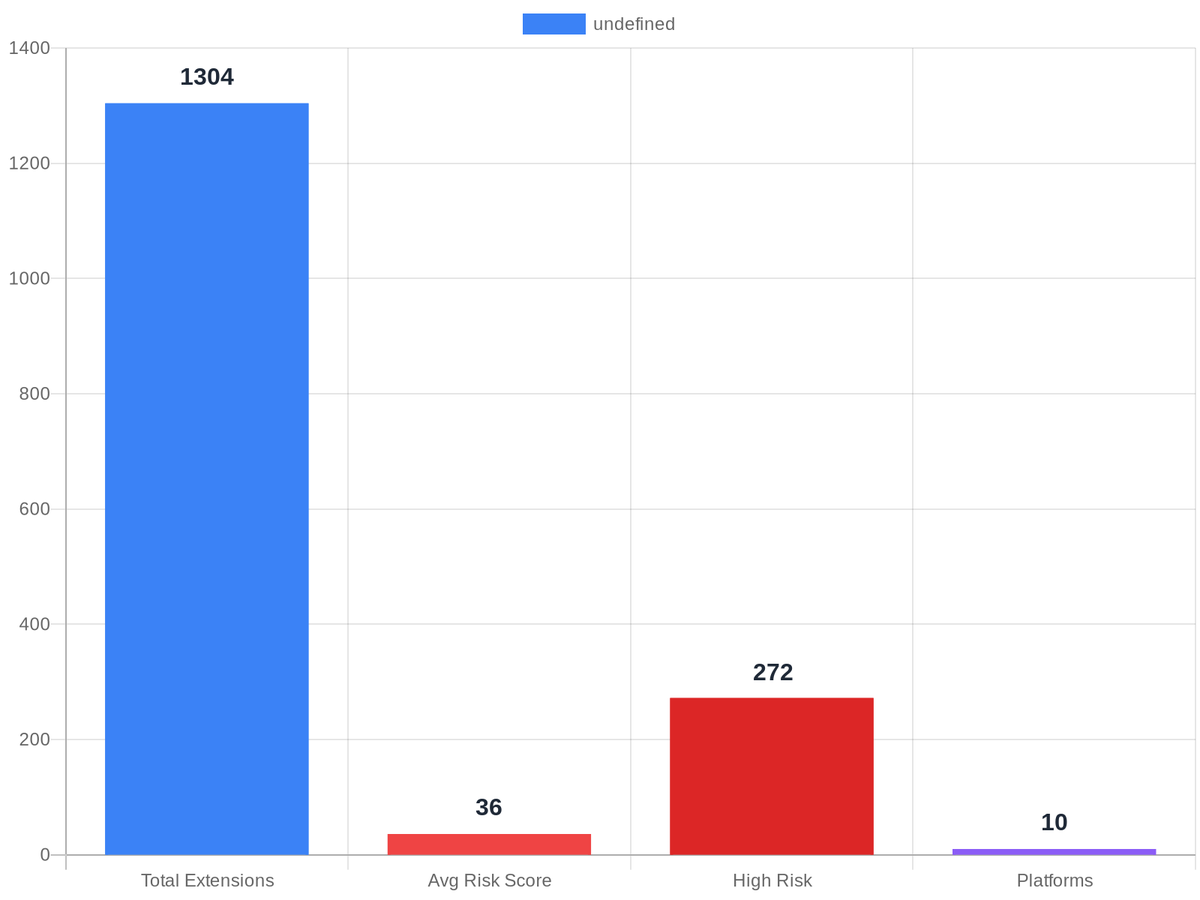
🔦 Extension Spotlight: Web Signer for UTSP
Risk Score: 100/100
Permissions: 5
Platform: Browser Extensions
Key concern: High-risk permissions detected
See full analysis → #ExtensionSpotlight #SecurityAnalysis #BrowserSecurity
8

Jun 3
Purchase of Pakistan's China made JF-17 jets will jeopardise Bangladesh Air Force: Report yespunjab.com/?p=260597
#Bangladesh #JF17 #China #Pakistan #AirForce #DefenceNews #MilitaryAviation #SouthAsia #Geopolitics #BreakingNews #ChinaPakistan #BangladeshNews #SecurityAnalysis
71

2/2. These are the hashtags @OpSecOrg used: #Winnipeg #Manitoba #PublicSafety #OrganizedCrime #DrugTrafficking #FentanylCrisis #LawEnforcement #RCMP #CommunitySafety #SecurityAnalysis #BorderSecurity #EmergencyServices #Canada
1
3
216

May 28
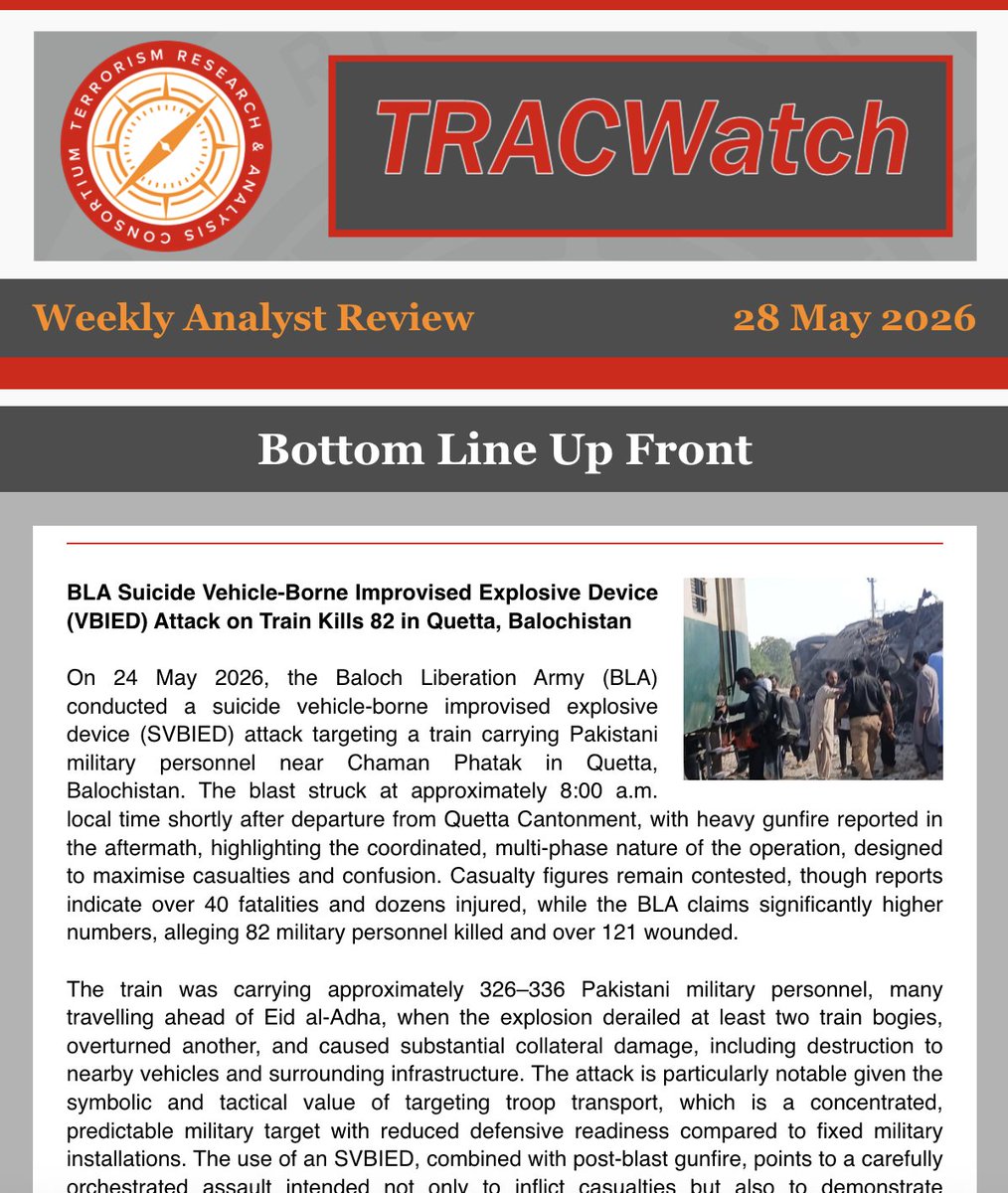
🚨 TRACWatch Weekly Analyst Review | 28 May 2026
💥#BLA train bombing in #Balochistan Kill 82
⛏️#OPM militants kill 10 gold miners accused of being “government spies” in #Papua
💊Nigerian authorities dismantle a $360M #meth lab in cartel-style franchise model.
⚔️ #JNIM militants assault a police installation near Dora, Burkina Faso.
Read here = conta.cc/3PTz8Vg
#TRAC #Counterterrorism #OSINT #Balochistan #JNIM #Nigeria #Cartels #Papua #PoliticalViolence #SecurityAnalysis
1
2
6
3,282

May 27
很多人看美股,只看财报、研报和新闻。
但如果你想知道美国散户到底在想什么,WallStreetBets 一定要看。
WallStreetBets 是 Reddit 上最有代表性的美股散户社区之一,也是 GameStop、AMC、YOLO Call、Meme Stock 文化的发源地。这里的信息很野,情绪很重,很多帖子看起来像段子,但里面经常能提前看到散户资金正在关注什么。
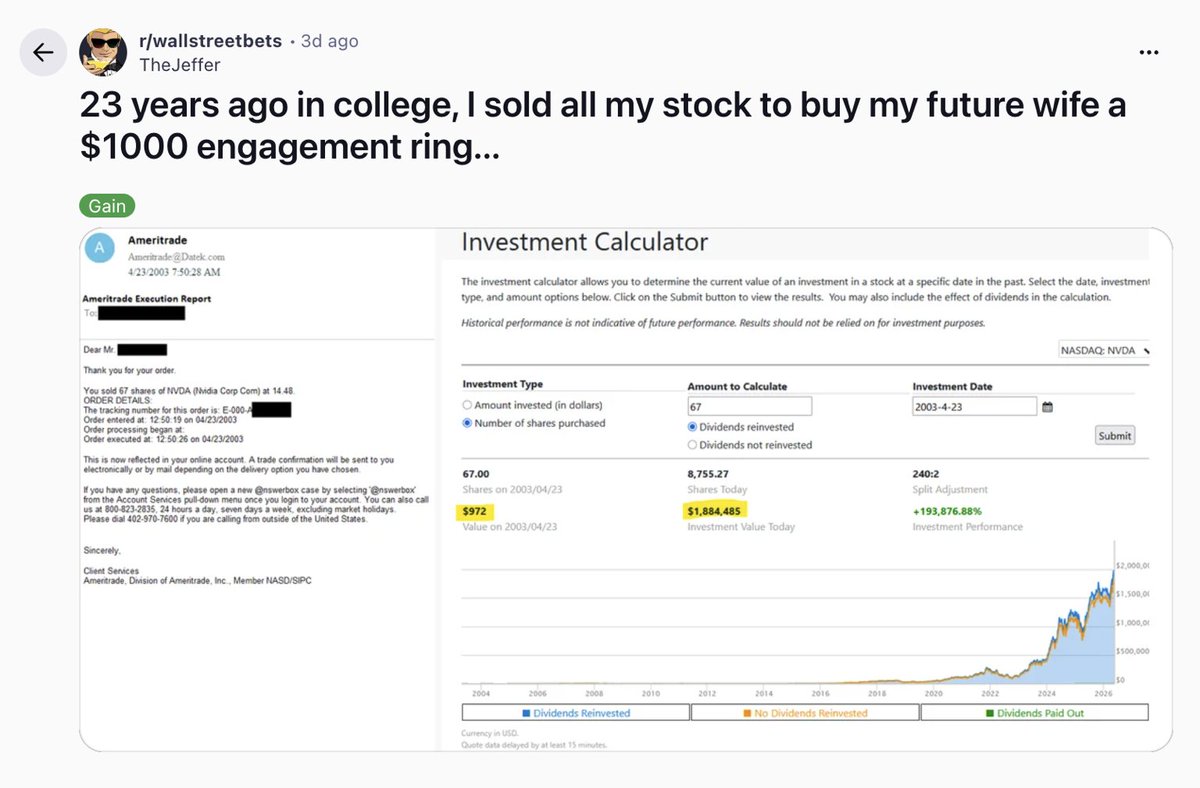
比如这张图就很典型:
一个人在 23 年前卖掉 67 股 NVDA,买了一个 1000 美元的订婚戒指。
如果这些股票一直拿到今天,价值接近 185 万美元。
这就是 WSB 的魅力:
它不只是投资社区,更像是美股散户情绪的“实时弹幕”。
当然,WSB 上的内容不能直接当投资建议。
这里有很多夸张、FOMO、亏损截图和高杠杆操作,但它非常适合用来观察:
散户在追什么?
什么票正在变成 meme?
哪些叙事开始进入大众视野?
市场情绪是贪婪、恐慌,还是彻底上头?
除了 WallStreetBets,我也推荐几个不错的信息源:
1. r/stocks
比 WSB 更理性,适合看个股讨论、基本面分析和长期投资观点。
2. r/investing
更偏资产配置、ETF、宏观和长期投资,噪音比 WSB 少很多。
3. r/options
适合看期权交易者怎么理解波动率、财报行情和短线方向。
4. r/SecurityAnalysis
更偏价值投资和深度研究,质量比普通散户社区高,但更新没有那么快。
5. r/EarningsWhisper
财报季非常值得看。很多人会在这里讨论即将公布财报的公司、市场预期、期权波动和盘后反应,适合用来观察“财报前市场在押什么”。
WSB 不是让你抄作业的地方,而是让你观察散户共识如何形成的地方。
在美股市场,基本面决定长期方向,流动性决定估值上限,而散户情绪往往决定短线爆发力。
所以,别把 WallStreetBets 当研报看。
把它当成美股散户情绪雷达,反而更有价值。
2
2
2
241

May 26
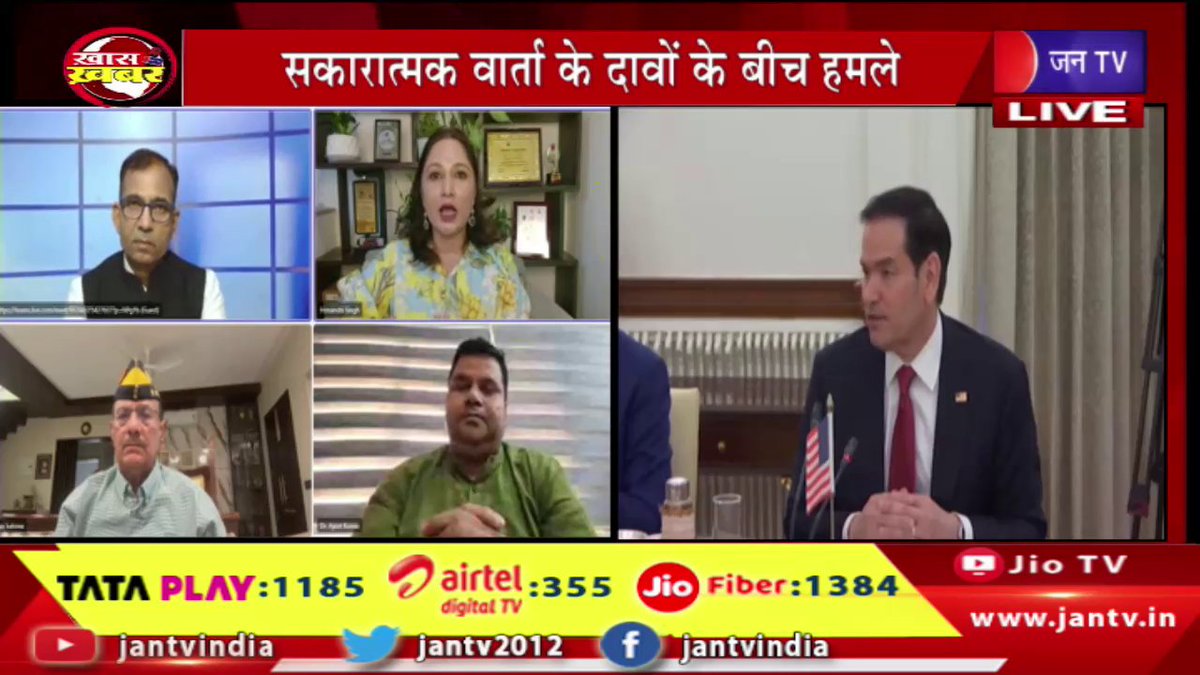
Khas Khabar | क्वाड से मिटेगा अमेरिका-ईरान का फसाद, महलों के बीच कैसे होगी शांति बहाली ? | JAN TV
youtu.be/EsHYtYo7Ru8
#Quad #USIranRelations #IranCrisis #MiddleEastPeace #Diplomacy #Geopolitics #InternationalRelations #PeaceTalks #GlobalPolitics #IndoPacific #StrategicDialogue #BreakingNews #WorldAffairs #ForeignPolicy #SecurityAnalysis #jantv_opn
1
4
26

Syria’s $5.5B Captagon enterprise isn't a criminal sideline; it's a strategic pillar of state survival run via elite military units. Damascus is effectively weaponizing the "Captagon tap"—trading localized interdiction for regional diplomatic normalization.
How can regional containment strategies function when the narco-trade is the state itself?
#Syria #SecurityAnalysis
Read the full dossier: commandeleven.com/hubs/iran-…
2
6
489