
@Google Research racked retired Android phones into a working compute cluster (262 on HN). The carbon math: a new server costs ~1 ton CO₂ to build. A phone costs ~60kg — already paid. The hard part isn't the silicon, it's scheduling across 47 different SoCs with swollen batteries. Android is quietly being repositioned as server infrastructure. #sustainability #DevOps
5

We really need to CXMT and the Chinese to increase the amount of DRAM produced so that these are not priced at a ridiculous amount.
Frankly we need Chinese SOCs, GPUs, and the whole hardware stack to be a viable alternative, along with CUDA being replaced by CANN.
27

Edge AI is redefining how intelligence is deployed. Rather than choosing between cloud and device, engineers now design across a continuum of compute, from milliwatt sensing hubs to heterogeneous SoCs with dedicated NPUs.
The 2026 Edge Technology re...
8

Dem socs will watch a modern day video that was only filmed and posted as marketing and be like wow. we’re so close 🥹 a guy was friendly making a sale 🥹
Jun 12

this is genuinely making me patriotic. i believe the US can be an incredibly beautiful and multicultural and democratic socialist society!!!!
1
43

1) N**ism- national socialism = sub sect of communism
2) Don’t forget the Ribbentrop Molotov agreement between the USSR and Nazi Germany (below)
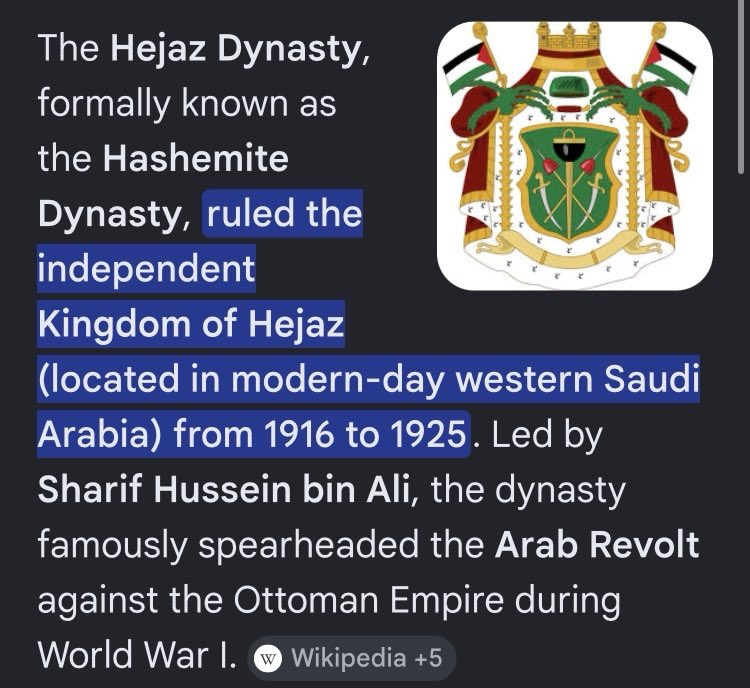
3) The red white green and black are the colors of the Hashemite Hejaz dynasty - which predated the 1933 rule of the nat socs.
en.wikipedia.org/wiki/Kingdo…
(Depicted below)
4) You’re also forgetting the 1st and 2nd re*chs:
1- the Holy Roman Empire
2- the Germanic empire - i’m pretty sure this is the one you wanna be looking at if anything
en.wikipedia.org/wiki/Flag_o…
5) a precursor to the na*is was the Thule Society.
Pretty important part of history.
en.wikipedia.org/wiki/Thule_…
Sorry to be a stick in the mud but
6) 12 years of na**sm didn’t shape the Arab world—
Arab league and the Muslim caliphate shaped na**sm.



1
2
72

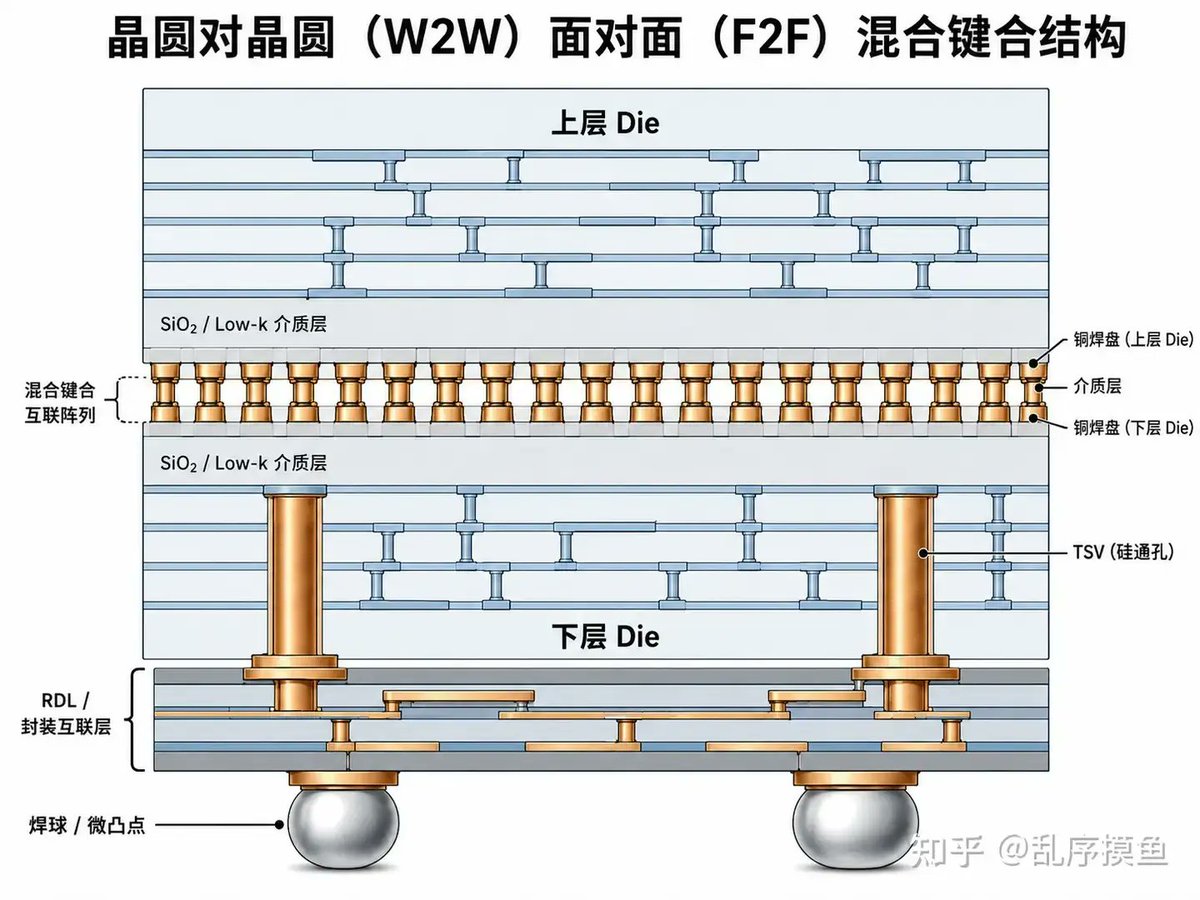
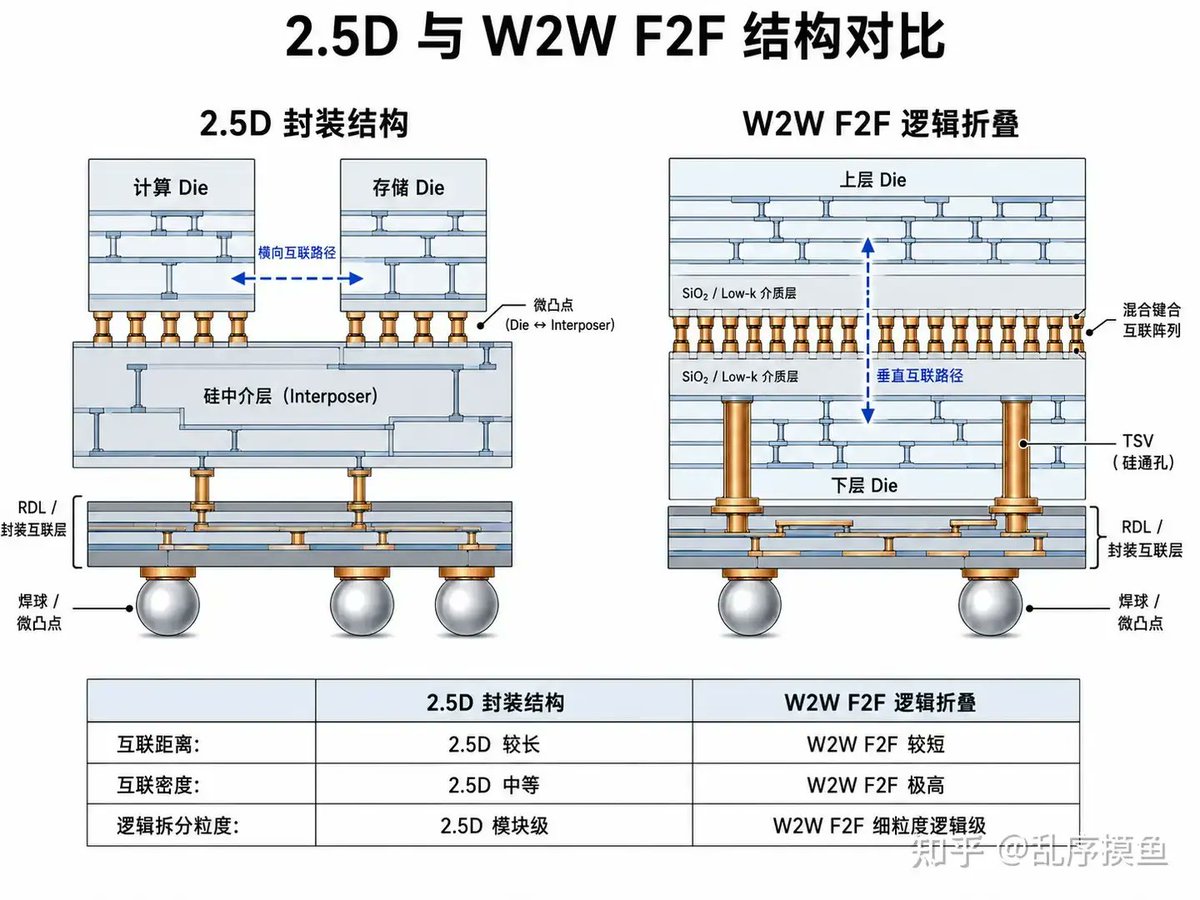
Wafer-to-wafer’s advantage is that two whole wafers are aligned and bonded in one go. Unlike sticking die by die slowly, it’s two large ‘chip motherboards’ directly merging. This is efficient, has high interconnection density, and is more suitable for high-volume mobile SoCs.
2
98

Be Our Guest… #socs thesoundofonehandtyping.com/…



Les Rad Socs c était LFI , il y a encore 100 ans si je ne me trompe pas , qd il passait leur temps à bouffer du curé
27

Dra @MMMaldonadoC
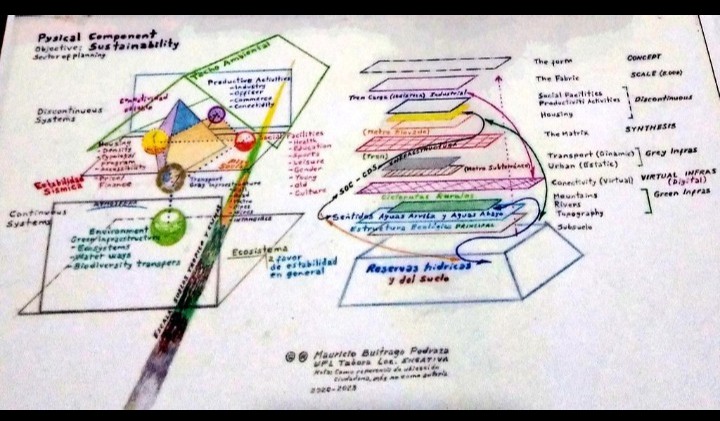
Importante q los mal llamados pobres, también generen desarrollo en cada municipio, territorio.
Conectar con infraestructura 100 km a redonda, cuidando estructura ecológica, por medio d los Circuitos de Circulación y desarrollo, uso modos [5] transporte y SOCs
1
1
388

My guy ur making my point for me. Idrc if u think someones commie/fasc/dict/terror/tank/socia/naz, but ur point of lefts' loss in credibility applies2everyone rn, and its born out in ur own comment as well
If theres fact to be had, none of left r true socs, nor right true fasc.
1
31

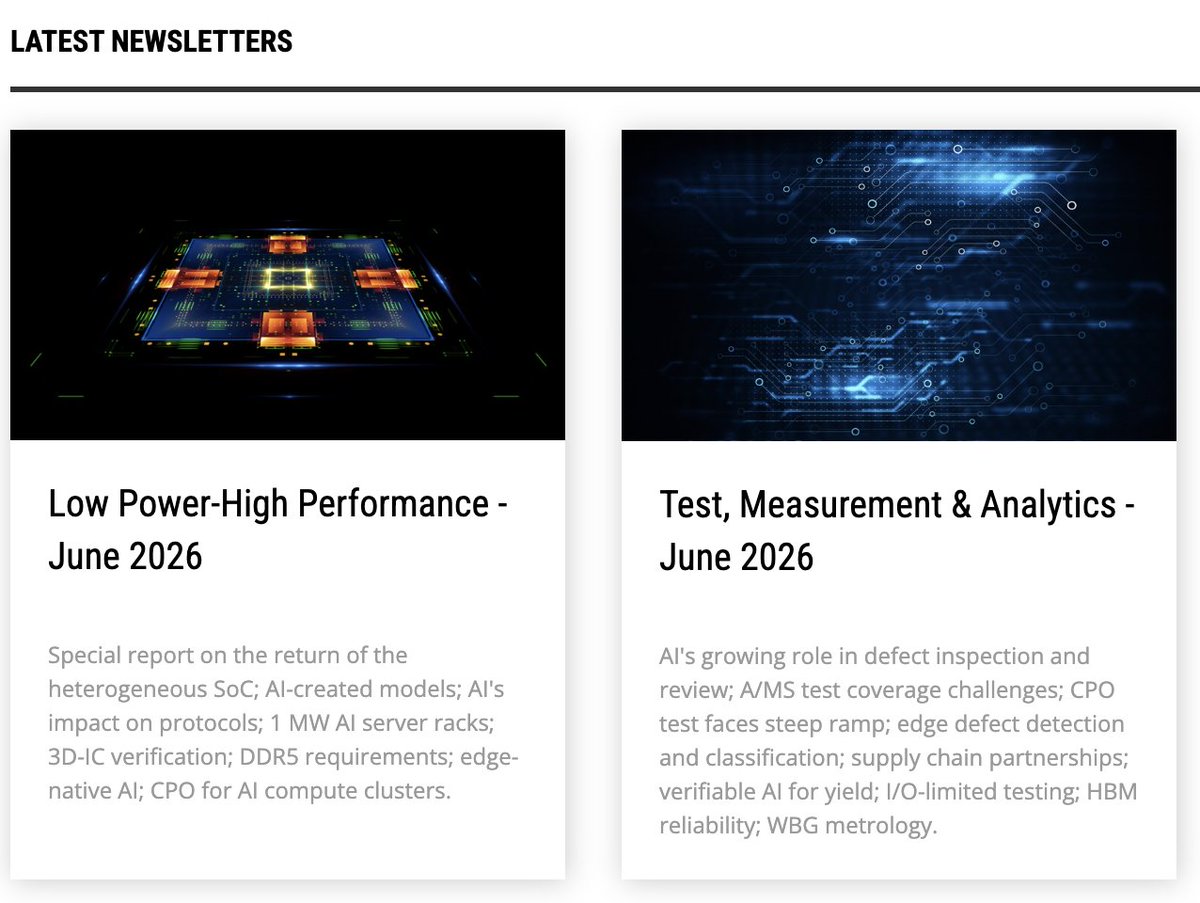
Semiconductor Engineering's latest newsletters
semiengineering.com/insights…
#semiconductor #3DIC #edgeAI #CPO #HBM #semiEDA #SoCs #datacenters
2
1,083

4

My core view on $XFAB:
X-FAB should not be understood as a company trying to compete head-on with $TSM or Samsung on leading-edge digital nodes.
That is not the point.
TSMC and Samsung dominate the world of advanced digital computing: GPUs, CPUs, AI accelerators, smartphone SoCs, etc.
X-FAB operates in a very different battlefield: the real-world interface layer.
Analog. Mixed-signal. MEMS. Sensor interfaces. High-voltage. Power management. SiC. Automotive-grade specialty processes.
These are the chips and technologies that allow machines to sense, measure, control and interact with the physical world.
Pressure. Temperature. Motion. Sound. Light. Force. Power. Safety. Reliability.
This is not “low-end” semiconductor manufacturing.
In many cases, these are qualification-heavy, sticky, long-lifecycle technologies where customers care less about the smallest transistor and more about reliability, process stability, regulatory certification, long-term supply and the cost of switching suppliers.
That is why X-FAB’s exposure to automotive, industrial, medical and energy markets matters.
These customers do not change suppliers casually. Once a chip is qualified into a braking system, medical device, factory automation platform, energy system or sensor module, the product lifecycle can last many years, sometimes decades.
This gives X-FAB a very different type of moat from leading-edge digital foundries.
Another important angle is supply-chain sovereignty.
As EU-China trade tensions rise and the West continues to push friend-shoring and local semiconductor capacity, European and US-based specialty foundries become strategically more important.
Automotive, industrial, medical and energy customers cannot afford fragile supply chains.
Governments also understand this.
That means companies like X-FAB may benefit not only from customer demand, but also from policy support, subsidies and long-term strategic contracts.
Then comes the AI angle.
Most people still think of AI as something inside data centers: GPUs, networking, memory and servers.
But the next stage of AI is physical.
Embodied AI. Industrial automation. Autonomous systems. Medical devices. Smart factories. Humanoid robots.
When AI moves from the cloud into the real world, it needs much more than compute.
It needs sensing, actuation, power control and physical-world interface chips.
Humanoid robots, for example, will not just need GPUs, motors and batteries. They will need large numbers of pressure, motion, inertial, tactile, force, temperature, sound and optical sensors to interact safely and intelligently with the environment.
That is where X-FAB’s MEMS, sensor-interface, analog and mixed-signal platforms could become increasingly relevant.
So to me, X-FAB is not just a “European chip sovereignty” story.
It is also a picks-and-shovels play on AI moving from the digital world into the physical world.
The market may still be focused on leading-edge compute.
But the physical layer of AI — sensing, power, safety, reliability and long-lifecycle specialty semiconductors — may become increasingly valuable.
That is where $XFAB sits.

1
10
423

My biggest bet for India right now is to double down on space.
We already have LVM3. The next step should be to enable the private sector to launch 25–50 missions a year, creating a $3–4 billion market. India should aim to deploy 1,000 satellites within the next year, across military and civilian applications. This would have a powerful cascading effect on the larger economy.
The next big priority should be custom SoCs. Like the COVID-era funding push, India should fund at least 10 serious companies each in display, communication, and compute SoCs.
Then Come to Large Models build for particular use case start with defense, healthcare then expand to others. I am giving this as selfless advice. No vested interest in any of these @narendramodi @rajnathsingh @AmitShah @nsitharaman
3
26
142
10,811

Even worse news… it’s the middle and upper middle class. Their taxes would have to increase fairly significantly to support such a thing. Dem Socs claiming it can be done only increasing taxes on top 1% have wrecked UHC for the US
12
#fraking [P favor vean hilo]
3
4D implica:
Cohesión [Y*∆] Coherencia.
Sellar o no algo puede hacer retroceder o avanzar [⏮️⏪•⏩⏭️]: en desarrollo comunidades.
SOCs aplicados desarrollo territorial entre alturas y pisos térmicos [yacimientos]
*Y posible Tetraedro
∆ poliedro.
1
43

Phones SOCs behavior are so much different than what media shows, like for who used 8E ans 8E5 they will say they are pretty much the same and the difference to 8g3 is minimal, the opposite of what benchmarks show, 1.7x as benchmarks while real life says around 20%
11
logic destroyer retweeted

We don't want to buy SoCs from SiFive and other companies anymore. We want to buy machines built by open-source people, where we can actually see what's inside. We're fed up with all the secrecy.
1
1
12
675