
… pasture. Data from Moderate Imaging Spectroradiometer (MODIS) land cover product and Satellite Pour l'Observation de la Terre (SPOT) VEGETATION's Global Land Cover 2000 product were combined with UN Food and Agriculture (FAO) agricultural statistics to generate the data set.
1
26

Jun 5
What is MODIS VIIRS
Moderate Resolution Imaging Spectroradiometer (MODIS)
Visible Infrared Imaging Radiometer Suite (VIIRS)

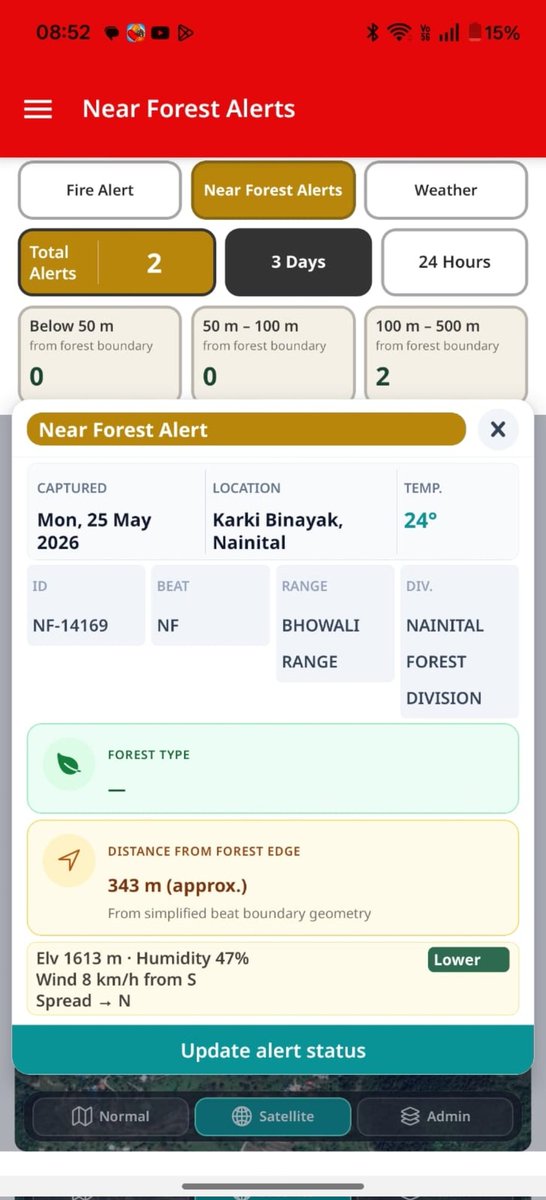
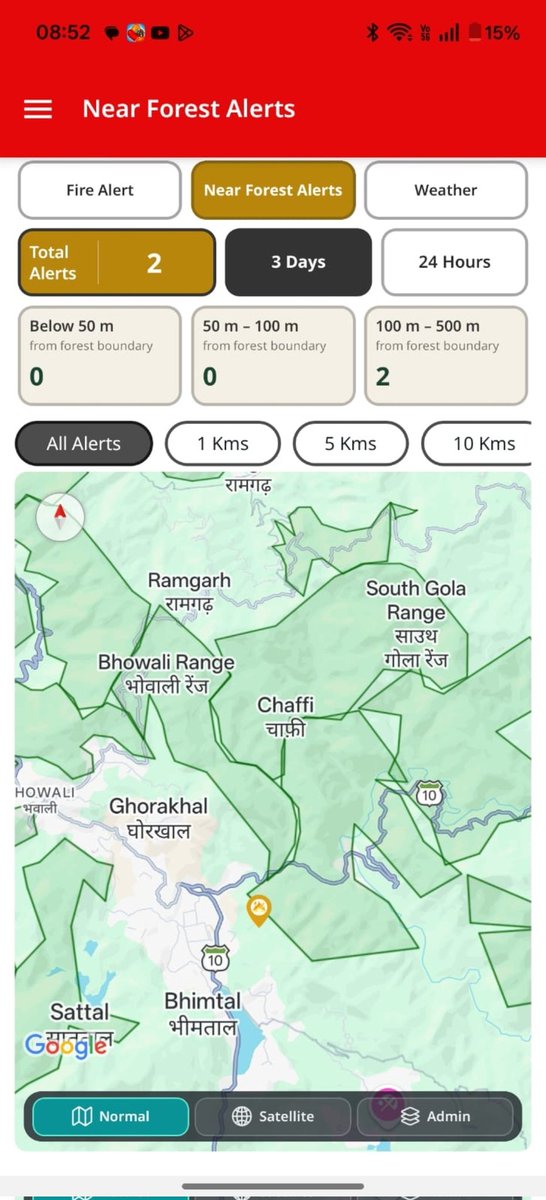
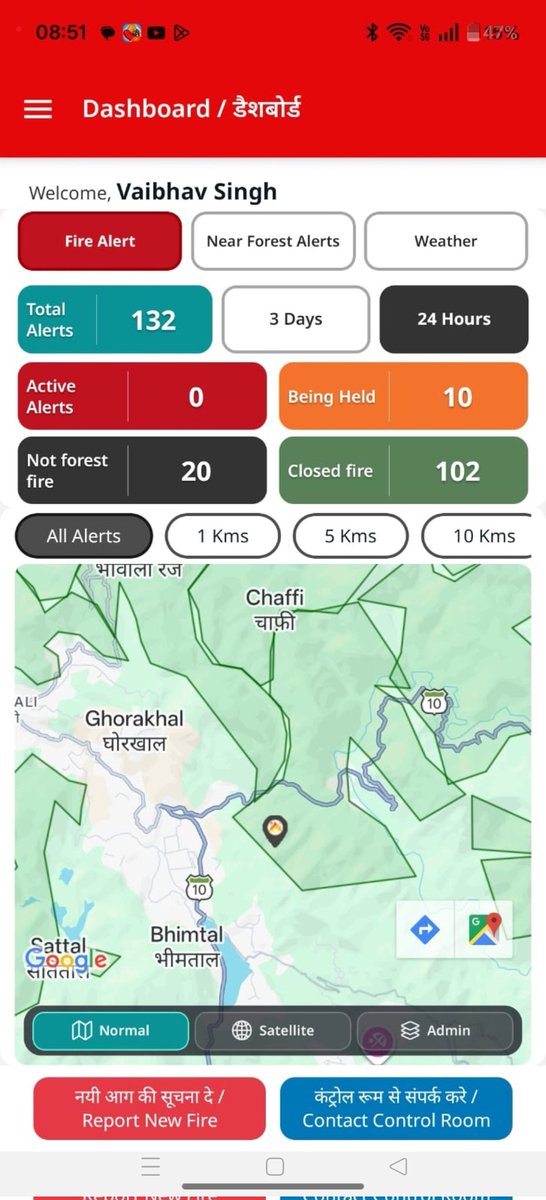
The #ForestFire #Uttarakhand Mobile App now introduces #NearForestAlert,leveraging NASA MODIS&VIIRS satellite data to detect fires occurring near forest boundaries in private & agricultural lands.This innovation will strengthen forest fire incident investigation & prevention.

1
2
26
1,312

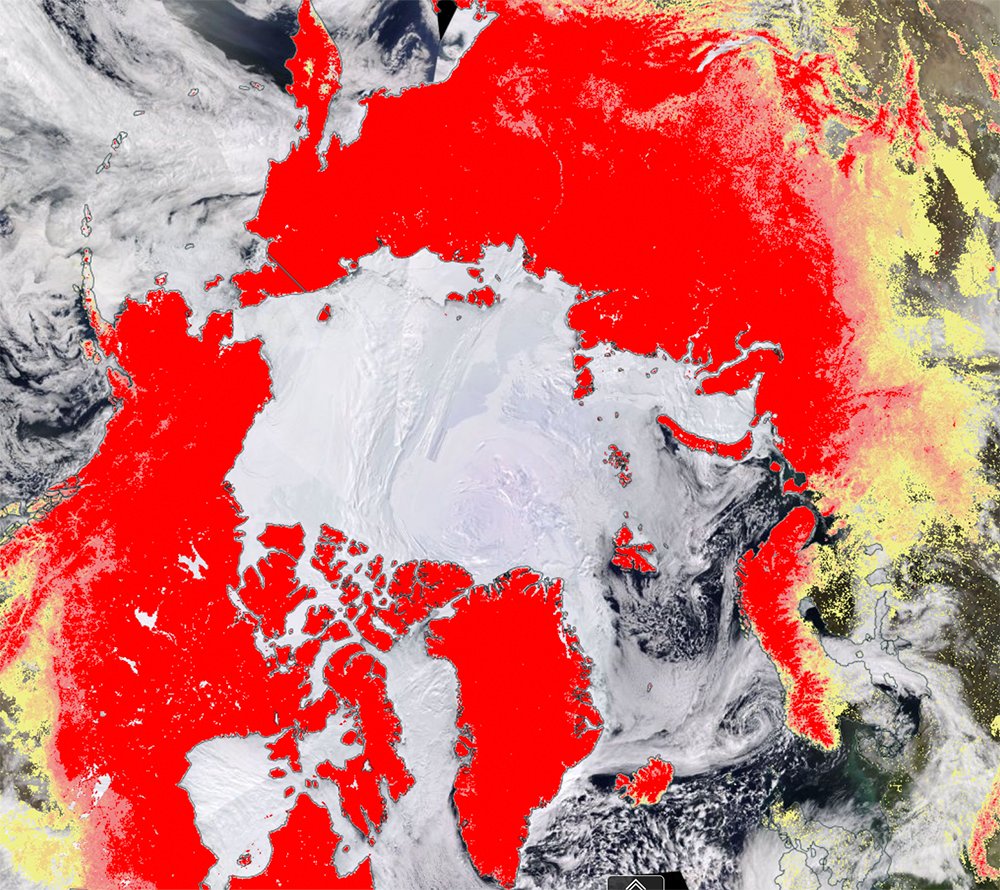
The Moderate Resolution Imaging Spectroradiometer (MODIS) Version 61 data sets, featuring global snow and sea ice data, have been updated. Data are available from the NASA NSIDC Distribute Active Archive Center (DAAC). bit.ly/4tSjt7u
4
10
1,023

May 16
DIGITAL TWINS & PHYSICAL TWINS
This is where Ouroboros Meets Project Inferno !!!!!!
THE MAPPING OF PHYSICAL ENTITY TO THE DIGITAL TWIN IN REAL-TIME & THE CREATION OF THE FEEDBACK LOOP
This is how they bring all systems together to map the physical twin to the digital twin.
Remember when I said they're emulating hardware then connecting the signals to biological chips?
They do this through FIRESTORM.
THE DISGUISE
They hide their methods under the disguise of "Fire"
PROJECT INFERNO
Project Inferno is a data processing & visualization pipeline that uses NASA’s publicly available satellite remote sensing datasets to analyze wildfire extent & severity, leveraging MODIS & VIIRS Sensor Data from FIRMS & EarthData Search.
The project employs Geospatial Data handling through GDAL & Rasterio, SPATIAL DATA MANIPULATION with Geopandas, & interactive visualizations using Plotly.
github.com/stellaryx-labs/pr…
Moderate Resolution Imaging Spectroradiometer (MODIS)
The Moderate Resolution Imaging Spectroradiometer (MODIS) is a satellite-based sensor used for earth and climate measurements.
modis.gsfc.nasa.gov/
Visible Infrared Imaging Radiometer Suite (VIIRS)
The Visible Infrared Imaging Radiometer Suite (VIIRS) is a scanning radiometer that collects visible & infrared imagery and radiometric measurements of the land, atmosphere, cryosphere, and oceans.
VIIRS produces Level-1 Sensor Data Records (SDRs), which include calibrated radiance, reflectance, and geolocation data derived from Raw Data Records.
ncei.noaa.gov/access/metadat…
Fire Information for Resource Management System (FIRMS)
The Fire Information for Resource Management System (FIRMS) distributes Near Real-Time (NRT) active fire data from the Moderate Resolution Imaging Spectroradiometer (MODIS) aboard the Aqua & Terra satellites & the Visible Infrared Imaging Radiometer Suite (VIIRS) aboard S-NPP, NOAA 20 & NOAA 21
firms.modaps.eosdis.nasa.gov…
Earthdata Search
NASA's gateway for search and discovery of Earth science data.
earthdata.nasa.gov/data/tool…
GEOSPATIAL DATA
Geospatial Data Abstraction Library (GDAL)
The Geospatial Data Abstraction Library (GDAL) is a computer software library for reading and writing raster and vector geospatial data formats.
github.com/OSGeo/gdal
GDAL is a translator library for raster and vector geospatial data formats
gdal.org/
Rasterio
Rasterio is a Python library designed for reading, writing & analyzing geospatial raster data, such as satellite imagery, digital elevation models (DEMs) & other gridded datasets.
github.com/rasterio/rasterio
Documentation
rasterio.readthedocs.io/en/s…
Climate Toolkit
Fire Information for Resource Management System (FIRMS)
CERN - FIRESTORM
The mapping of a physical wildfire event to a digital twin, as exemplified by the FIRESTORM concept, involves creating a dynamic, real-time virtual replica that mirrors the physical fire's behavior through integrated data streams & simulation models.
This process begins with the physical entity layer, which consists of sensor networks deployed in forests to monitor environmental parameters such as temperature, humidity, wind speed, and rainfall, along with surveillance cameras and remote sensing technologies that provide real-time video and high-resolution imagery of the fire scene.
These devices form a multi-level, real-time monitoring system that collects data essential for understanding fire ignition, spread, and intensity.
mdpi.com/2571-6255/7/11/412
The mapping is achieved through a two-way interaction: the physical entity drives the digital twin model for real-time simulation, while the digital twin can send instructions back to control or adjust the physical system, REALIZING A BIDIRECTIONAL FEEDBACK LOOP
nature.com/articles/s41598-0…
This now creates the feedback loop needed for the Human in the Loop.
2
4
6
697

Apr 30
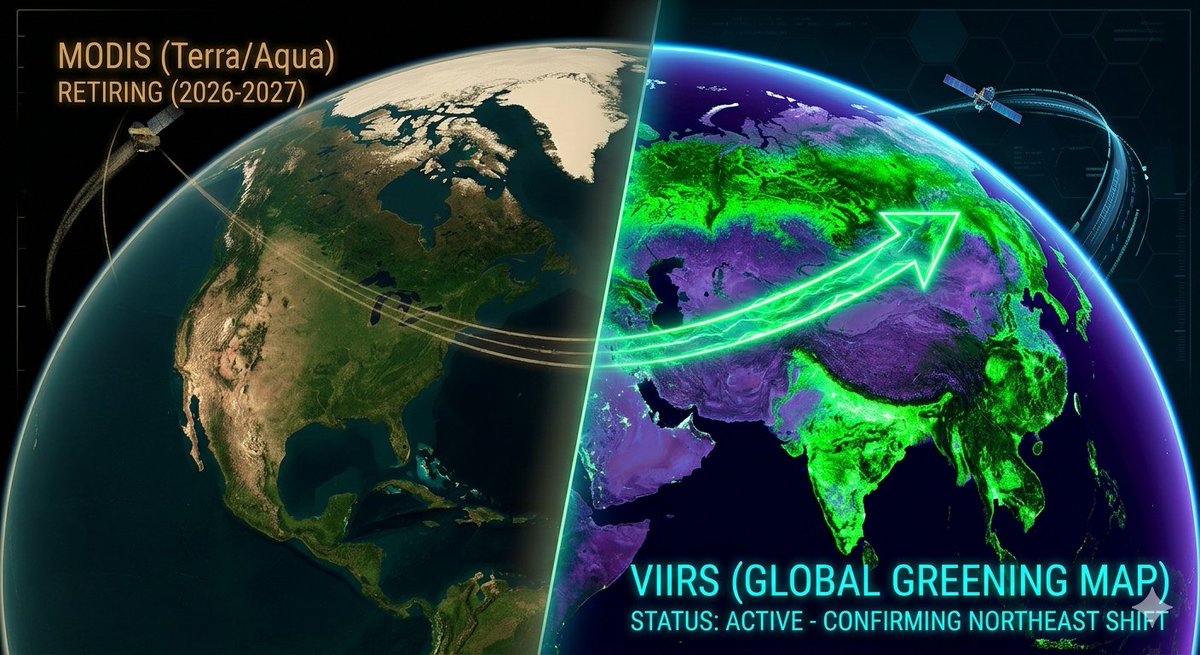
US space technology is revealing expanding green leaf cover sweeping the world.
Satellite-based arrays controlled by NASA cannot only tell that a plant is green, but exactly how photosynthesis is working in real-time - on land and in the oceans. These smart sensors in space have already revealed a 10% global increase in leaf area.
NASA attributes 70% of this global greening since 1980 to the CO₂ fertilisation effect (the plant food argument). New growth is partially offsetting regional warming by about 0.2°C to 0.25°C via increased evapotranspiration (i.e., plant sweating).
These studies are built on generations of high-performing sensors, but the first are now being phased out and will be decommissioned over the next year. This marks the end of a successful 20-year era of high-stability data.
The first of this class was the Advanced Very High Resolution Radiometer (AVHRR) 1981–1999, originally designed for cloud tracking and weather. It was the first time NASA noticed from platforms in space that the Earth was getting greener.
The next was the Moderate Resolution Imaging Spectroradiometer (MODIS) - launched on the Terra and Aqua satellites in 2000. It was the first instrument of its type designed specifically to monitor the biosphere. It provided a defined 'leaf area index' that measured the square meters of leaves per square meter of ground. This allowed NASA to quantify how new plant growth now covers an area equivalent to twice the continental United States.
The next in the series is the Visible Infrared Imaging Radiometer Suite (VIIRS) launched in 2011, the successor to MODIS. Currently flying on the Suomi-NPP and NOAA satellites, VIIRS provides much sharper images and handles light better. It has added fresh detail about where greening is happening and has identified intensive agriculture in China and India as a major, human-driven component of the recent green-up.
The winding down of MODIS is a 'passing of the torch' moment to the most recent addition to the fleet. The Plankton, Aerosol, Cloud, ocean Ecosystem (PACE), which uses hyperspectral technology. It combines digital imaging and spectroscopy to capture detailed data across hundreds of narrow, contiguous wavelength bands.
While MODIS 'saw' in blocks of colour, PACE sees in continuous bands of rainbows, which can distinguish between different species of phytoplankton in the oceans. This is the heartbeat of the plant.
While previous sensors saw the amount of green, PACE sees the actual activity taking place. PACE can also detect chlorophyll fluorescence over land - the faint glow that plants emit during photosynthesis.
15
195
404
6,918

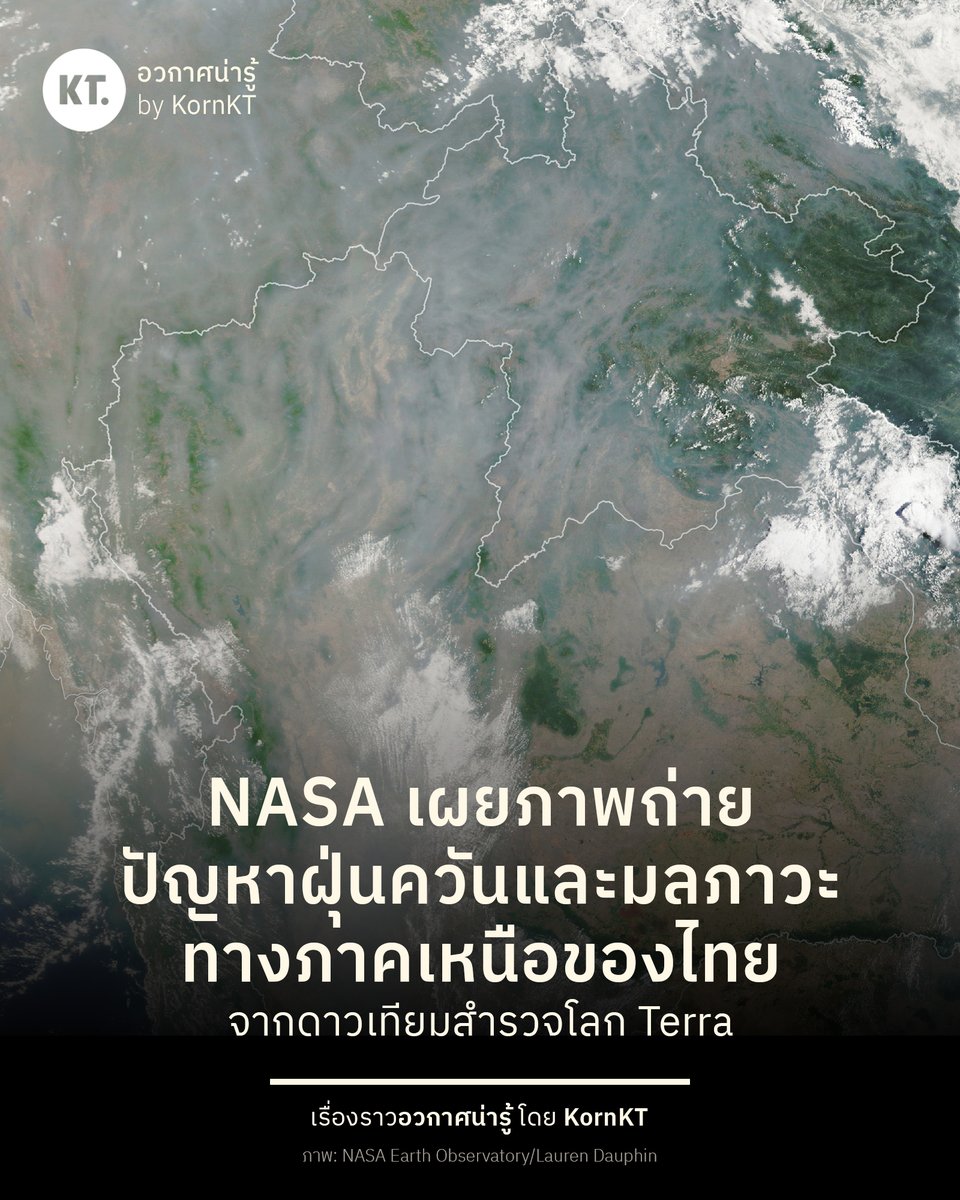
UPDATE: NASA เผยภาพถ่ายพื้นที่ทางภาคเหนือของประเทศไทย แสดงให้เห็นมลภาวะและฝุ่นควันที่ปกคลุม จนตรวจจับได้จากดาวเทียม Terra ในวงโคจรรอบโลก
ภาพดังกล่าวถูกถ่ายเมื่อช่วงเช้าวันที่ 22 เมษายน โดยอุปกรณ์ MODIS หรือ Moderate Resolution Imaging Spectroradiometer ซึ่งมองเห็นกลุ่มฝุ่นควันอย่างชัดเจน โดยค่ามลภาวะ PM2.5 ในช่วงวันดังกล่าว ก็อยู่ในระดับที่สูงจนเป็นอันตรายต่อสุขภาพเช่นกัน
เว็บไซต์ภารกิจการสำรวจโลกของ NASA ได้เลือกภาพนี้เป็น ‘Image of the day’ ประจำวันที่ 23 เมษายน พร้อมระบุชื่อภาพว่า ‘หมอกควันจากไฟป่าตามฤดูกาล ได้บดบังท้องฟ้าละแวกเอเชียตะวันออกเฉียงใต้จนมืดมัวลง’
ก่อนหน้านี้ NASA และ GISTDA ได้มีการนำเครื่องบิน DC-8 มาร่วมสำรวจคุณภาพอากาศของไทยในโครงการ ASIA-AQ เช่นเดียวกับทาง NARIT ที่มีการพัฒนาเครื่องมือสำหรับตรวจวัด PM2.5 อย่างมีประสิทธิภาพ เพื่อวิเคราะห์แหล่งกำเนิดของมลพิษให้มีประสิทธิภาพ
#KornKT #อวกาศน่ารู้
6
6,765
2,342
124,103

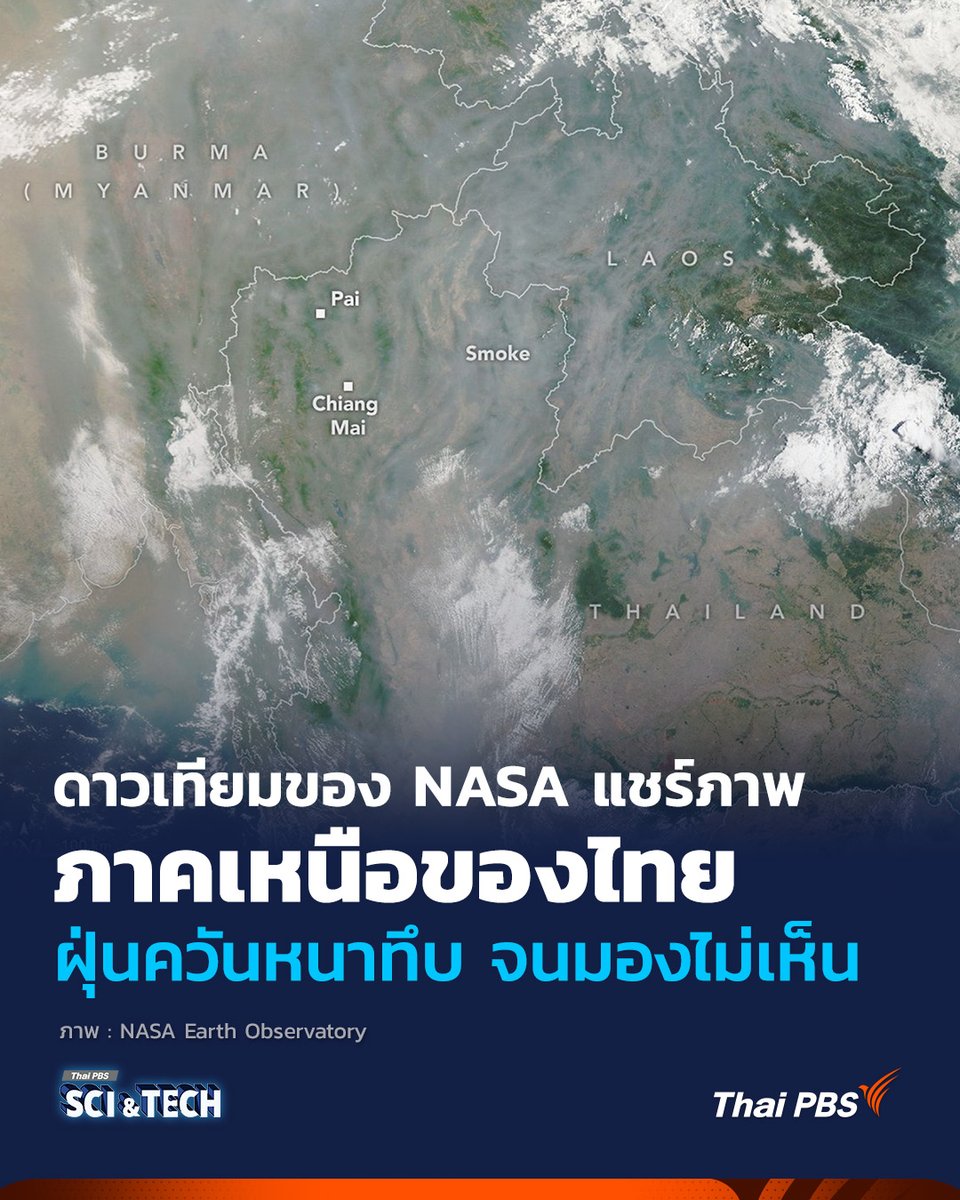
🛰️ ดาวเทียมของ NASA แชร์ภาพ ภาคเหนือของไทย ฝุ่นควันหนาทึบ จนมองไม่เห็น
ดาวเทียม Terra ซึ่งเป็นดาวเทียมวิจัยทางวิทยาศาสตร์ขององค์การบริหารการบินและอวกาศแห่งชาติสหรัฐฯ หรือ NASA ได้บันทึกภาพล่าสุด เมื่อวันที่ 22 เม.ย. 69 โดยเครื่องมือ MODIS (Moderate Resolution Imaging Spectroradiometer) พบฝุ่นควันที่บดบังทัศนียภาพของเทือกเขาในพื้นที่ภาคเหนือของประเทศไทยทั้งที่ปกติจะมองเห็นได้อย่างชัดเจน
NASA รายงานด้วยว่า ท้องฟ้าในพื้นที่ภาคเหนือของประเทศไทย เริ่มถูกฝุ่นควันปกคลุมมากขึ้นในช่วงฤดูแล้ง โดยเฉพาะอย่างยิ่งในช่วงเดือน มี.ค. และ เม.ย. โดยแนวโน้มสาเหตุส่วนใหญ่เกิดจากการทำเกษตรและการจุดไฟเผาป่า เพื่อกำจัดเศษวัสดุทางการเกษตรหรือเพื่อรักษาระบบนิเวศของป่า
ข้อมูลจากเซนเซอร์ดาวเทียมพบว่า จุดความร้อน (Hotspots) เริ่มหนาแน่นมาตั้งแต่เดือน ก.พ. และพุ่งสูงสุดในเดือน มี.ค. ถึง เม.ย.โดยหมอกควันส่วนใหญ่เกิดจากการเผาในพื้นที่เกษตรกรรมและการเผาป่า
งานวิจัยระบุชัดว่า ราว 70% ของฝุ่นละอองขนาดเล็ก (PM 2.5) ใน จ.เชียงใหม่ มาจากการเผาไหม้ชีวมวล นอกจากนี้ยังมีปัจจัยเสริมอื่น ๆ จากไอเสียยานพาหนะ โรงงานอุตสาหกรรม และการเผาถ่านในครัวเรือน
นอกจากผลกระทบด้านสุขภาพแล้ว วิกฤตฝุ่นควันครั้งนี้ยังส่งผลกระทบต่อเนื่องไปยังอุตสาหกรรมการท่องเที่ยวด้วยเช่นกัน โดยพบว่าจำนวนนักท่องเที่ยวต่างชาติที่เดินทางมายัง จ.เชียงใหม่ ลดลงอย่างเห็นได้ชัดในช่วงเวลาดังกล่าว โดยเฉพาะ "เมืองปาย" จ.แม่ฮ่องสอน ที่มีรายงานว่าจำนวนนักท่องเที่ยวลดลงถึง 90% หลังจากต้องเผชิญหมอกควันปกคลุมต่อเนื่องนานกว่า 1 เดือน
ข้อมูลจาก World Air Quality Index ระบุว่า ระดับฝุ่น PM 2.5 อยู่ในระดับ "ส่งผลกระทบต่อสุขภาพอย่างมาก" หากสัมผัสกับมลพิษทางอากาศในระดับสูงเป็นเวลานาน อาจเสี่ยงต่อโรคทางเดินหายใจ โรคหัวใจและหลอดเลือด และปัญหาสุขภาพอื่น ๆ ตามมา
ด้าน ศูนย์อุตุนิยมวิทยาเฉพาะกิจอาเซียน (ASEAN Specialized Meteorological Centre - ASMC) ได้แจ้งเตือนความเสี่ยงสูงที่จะเกิดหมอกควันข้ามพรมแดนรุนแรงในภูมิภาคแม่น้ำโขง พร้อมยกระดับการเตือนภัยเป็นระดับ 3 ซึ่งเป็นระดับสูงสุด เนื่องจากสภาพอากาศที่แห้งแล้งผิดปกติและกระแสลมที่พัดพาฝุ่นควันให้ทวีความรุนแรงขึ้น และคาดว่าสถานการณ์จะยังคงวิกฤตต่อไปจนกว่าจะมีฝนตกลงมาช่วยบรรเทาในเดือนพ.ค.
📌 ที่มา : NASA Earth Observatory
🌍 “รอบรู้ ดูกระแส ก้าวทันโลก” ไปกับ #ThaiPBSSciAndTech #ThaiPBS🪐 #Environment #NASA #ฝุ่นPM25 #เชียงใหม่ #ฝุ่นพิษ #เผาป่า
1
44
13
2,479

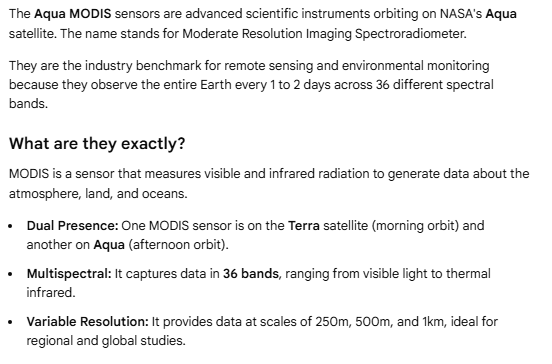
2. "Majority of spectral bands performing within 10% of Aqua MODIS reference values". What's that?
The name stands for Moderate Resolution Imaging Spectroradiometer.
NASA has 2 sattelites (Aqua & Modis) orbiting the earth, capturing data at 36 bands, and those are the benchmark.
1
6
717
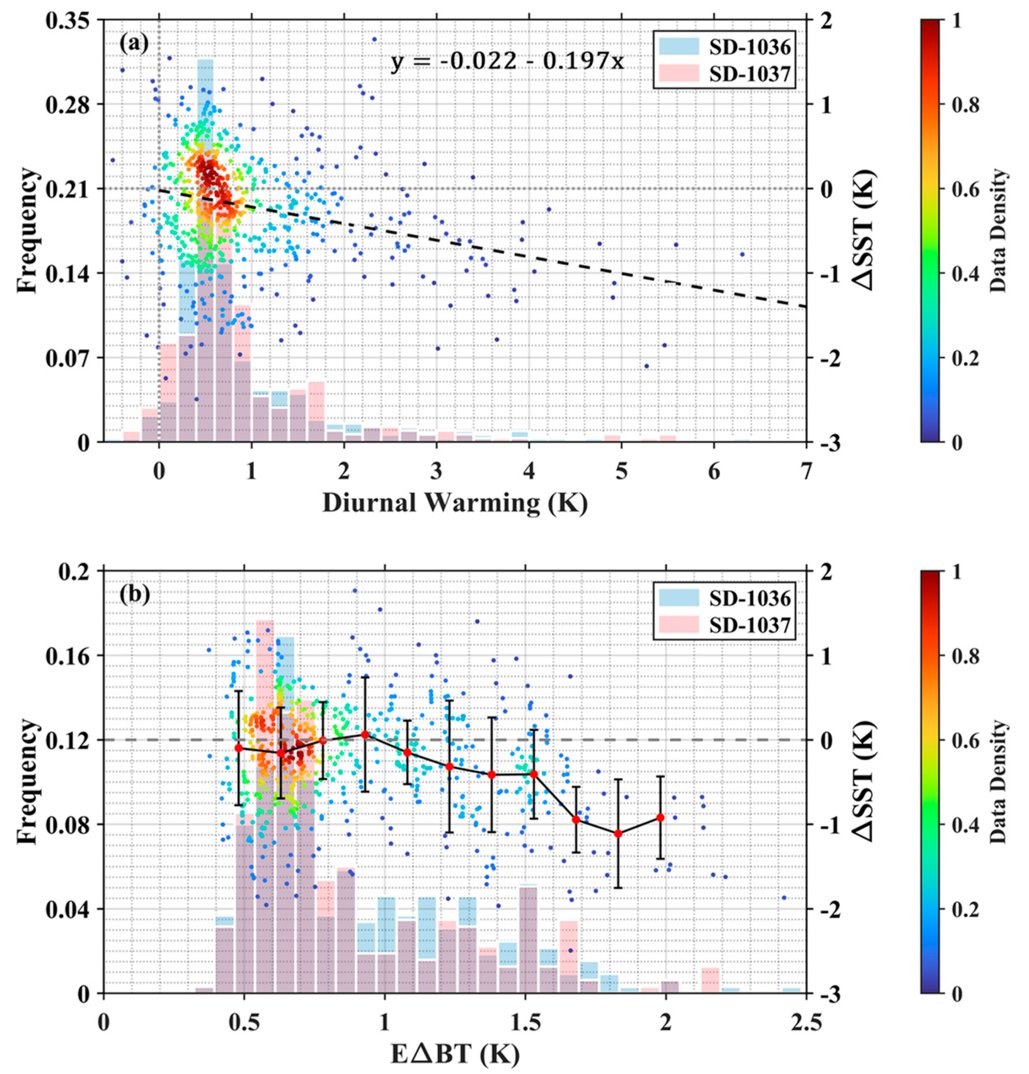
🌊🌡️🌊 Assessment of Accuracy of Moderate-Resolution Imaging Spectroradiometer #Sea #Surface #Temperature at High Latitudes Using #Saildrone Data
✍️ Chong Jia et al.
🔗 brnw.ch/21x0lgm
1
14
513

Feb 21
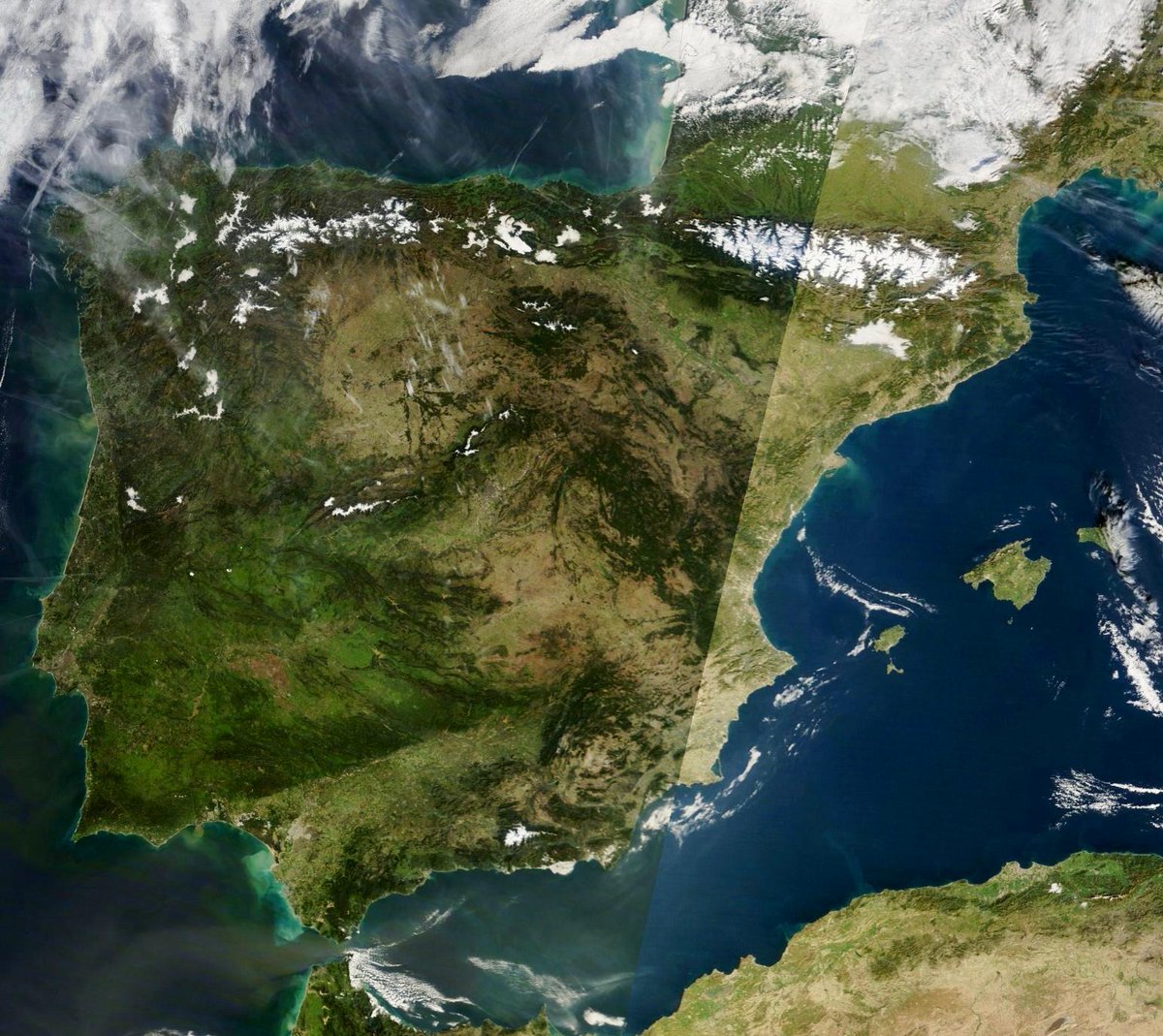
¡Guau!, primer día de buen tiempo desde hace meses y la NASA nos regala con esta foto. ¡Todavía invierno y la Península Ibérica está verde, especialmente los bosques!
Foto: MODIS (Moderate Resolution Imaging Spectroradiometer), tomada desde el satélite Terra de la NASA. Imagen en color verdadero (true color / corrected reflectance) captada el 21 de febrero de 2026, aproximadamente a la UTC.
NASA Worldview: worldview.earthdata.nasa.gov…
22
187
819
42,025

Feb 18
#PPOD: Stormy, Snowy Winter 🗻
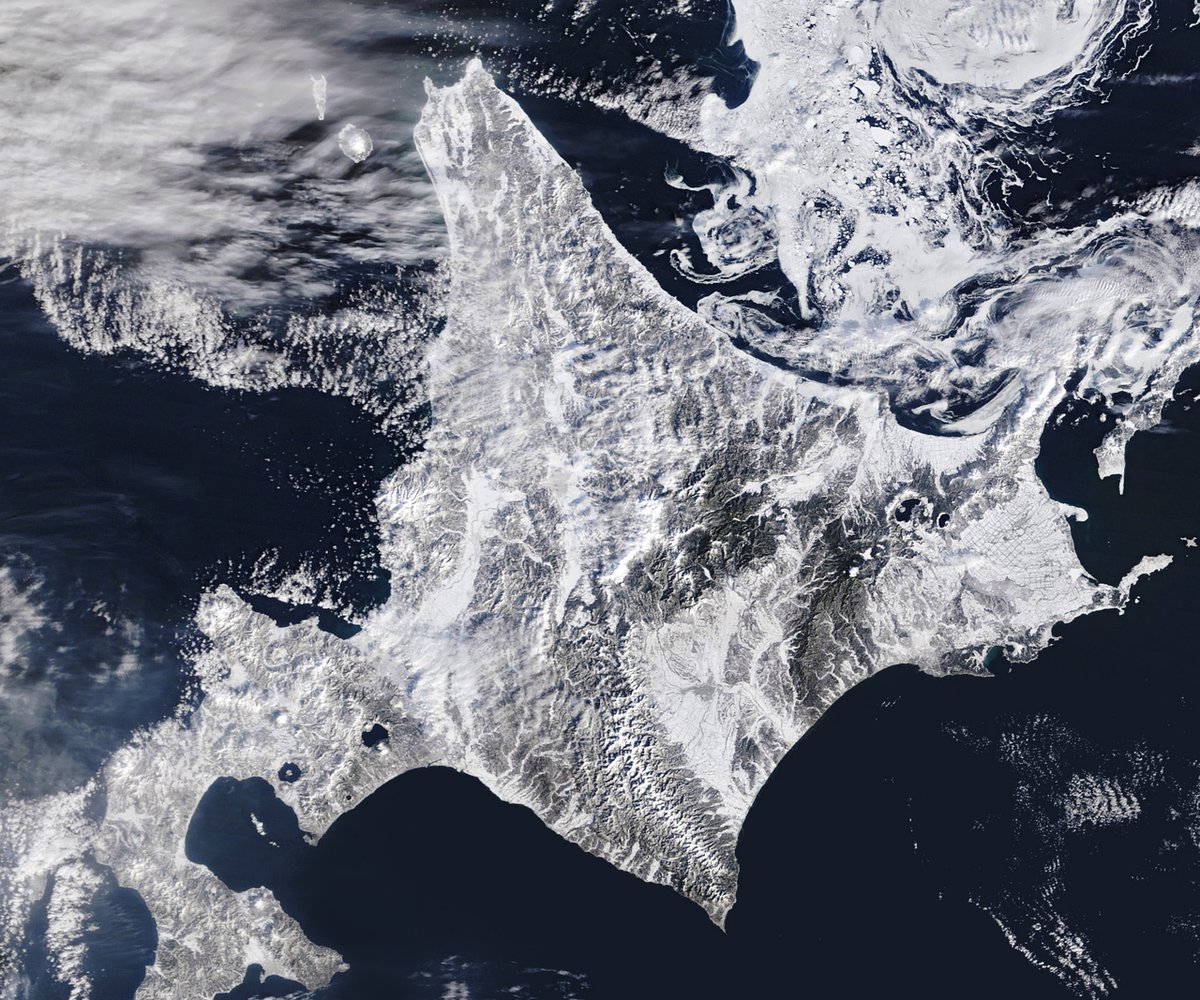
On February 5, 2026, the MODIS (Moderate Resolution Imaging Spectroradiometer) on @NASA’s Terra satellite acquired this image of snow-covered landscapes across #Hokkaido. With more than 31 active volcanoes, the island features several large caldera lakes, including at least five that are visible in the image. (Calderas are large depressions formed by volcanic eruptions.) In the east, forested windbreaks around Nakashibetsu form a checkerboard pattern, while to the north, swirling drifts of sea ice adorn the Sea of Okhotsk.
Credit: Michala Garrison, using MODIS data from NASA EOSDIS LANCE and GIBS/Worldview; Text: Adam Voiland
#planetaryscience
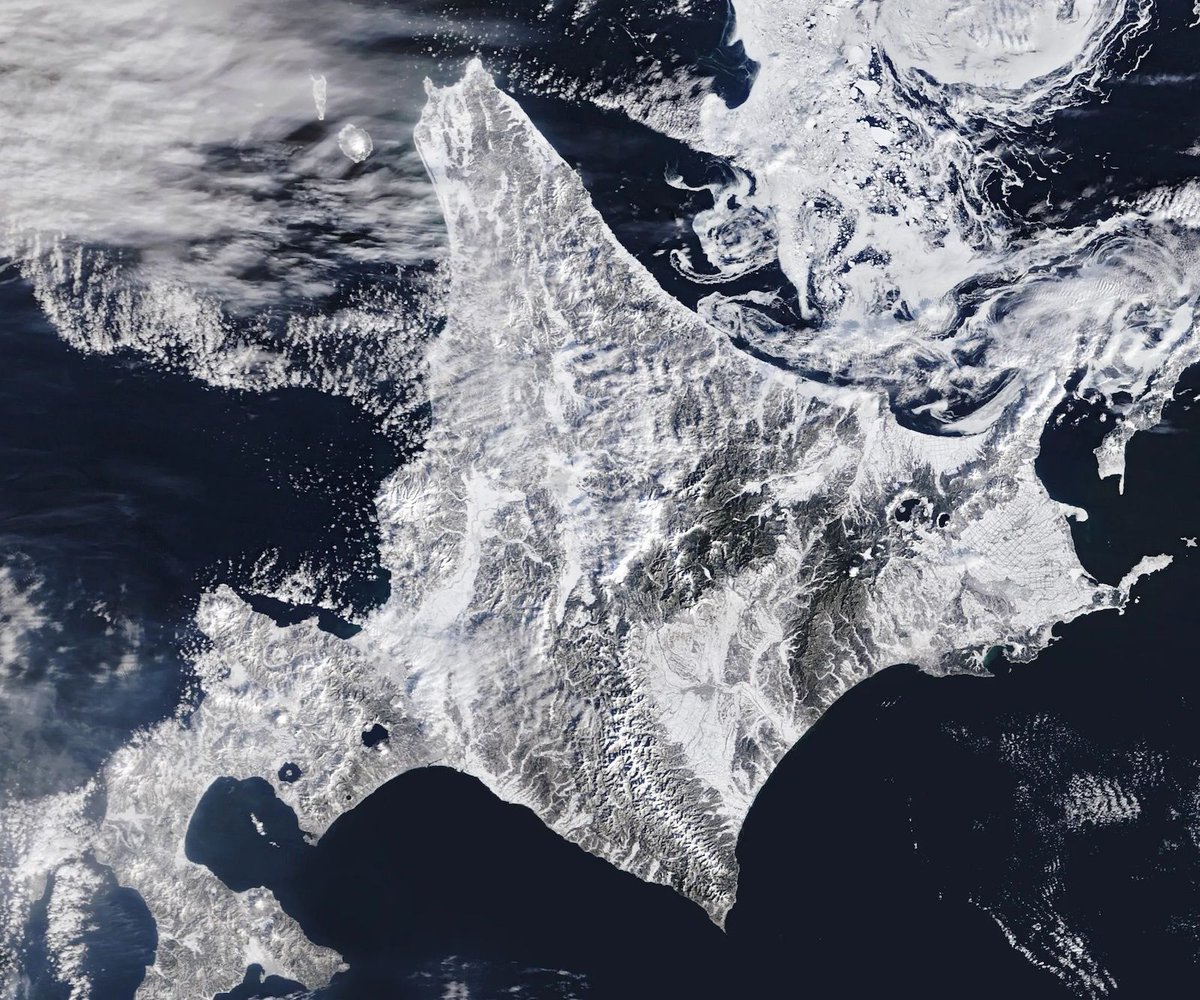
ALT A satellite image of snow-covered landscapes across Hokkaido. With more than 31 active volcanoes, the island features several large caldera lakes, including at least five that are visible in the image. In the east, forested windbreaks around Nakashibetsu form a checkerboard pattern, while to the north, swirls of drifting sea ice adorn the Sea of Okhotsk.
2
2
39
2,534

Feb 17
Stormy, Snowy Winter for Hokkaido: On February 5, 2026, the MODIS (Moderate Resolution Imaging Spectroradiometer) on NASA’s Terra satellite acquired this image of snow-covered landscapes across Hokkaido. With more than 31 active volcanoes, the island fea… ift.tt/pLJco1N
5
243

Feb 13
Good morning, @SenAdamSchiff.
Meteorologist here. ⛈️
Hurricanes, floods, and wildfires are nothing new. They are also not becoming more frequent or extreme in most cases.
You are making stuff up, as usual.
Here are the facts:
🌀 𝐇𝐔𝐑𝐑𝐈𝐂𝐀𝐍𝐄𝐒 🌀
First, let's define some useful terms.
A tropical cyclone (TC) is a warm-core, non-frontal, synoptic-scale cyclone that originates over tropical or subtropical waters and has both organized, deep convection and a closed surface wind circulation that rotates about a well-defined center.
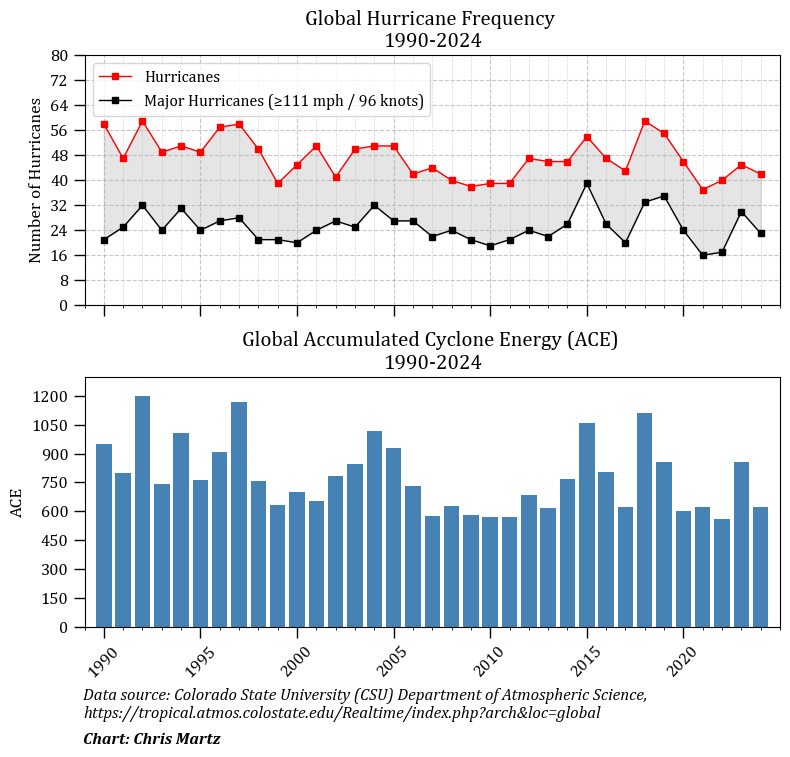
Hurricanes (HUs) are a subset of TCs which have a maximum sustained wind speed (Vₘₐₓ) of ≥74 mph. A typhoon is the same thing, but is a name exclusively reserved for HUs in the West Pacific Ocean basin. To be classified as a major hurricane (MH), Vₘₐₓ must be ≥111 mph.
🔗nhc.noaa.gov/aboutgloss.shtm…
HU seasons are typically rated by the accumulated cyclone energy (ACE) index. Developed by Dr. William Gray, this metric takes into account both HU Vₘₐₓ and duration. Specifically, it sums the square of each TC's Vₘₐₓ every six-hour period:
𝐴𝐶𝐸 = 10⁻⁴ Σ 𝑣²ₘₐₓ (for Vₘₐₓ ≥39 mph, tropical storm requirement)
🔗tropical.colostate.edu/Forec…
🔗journals.ametsoc.org/view/jo…
With that out of the way, let's take a look to see what the data says on observed trends in TCs.
Prior to the satellite era (1966-present), comprehensive records of TC activity at a global scale are essentially nonexistent. If a storm did not landfall in a populated area or pass by the ship-based “observation network of opportunity,” it was missed and unaccounted for.
Satellite monitoring of TCs began in 1966 with NASA's launch of ESSA-1 and ESSA-2. 🛰️
🔗gri.msstate.edu/publications…
But, it wasn't until 1980 that we finally had sufficient coverage across both hemispheres. Prior to that date, coverage over the Southern Hemisphere was spotty. Therefore, TC tallies between 1966 and 1979 are likely underestimated.
🔗rogerpielkejr.substack.com/p…
Based on the available data, we know that,
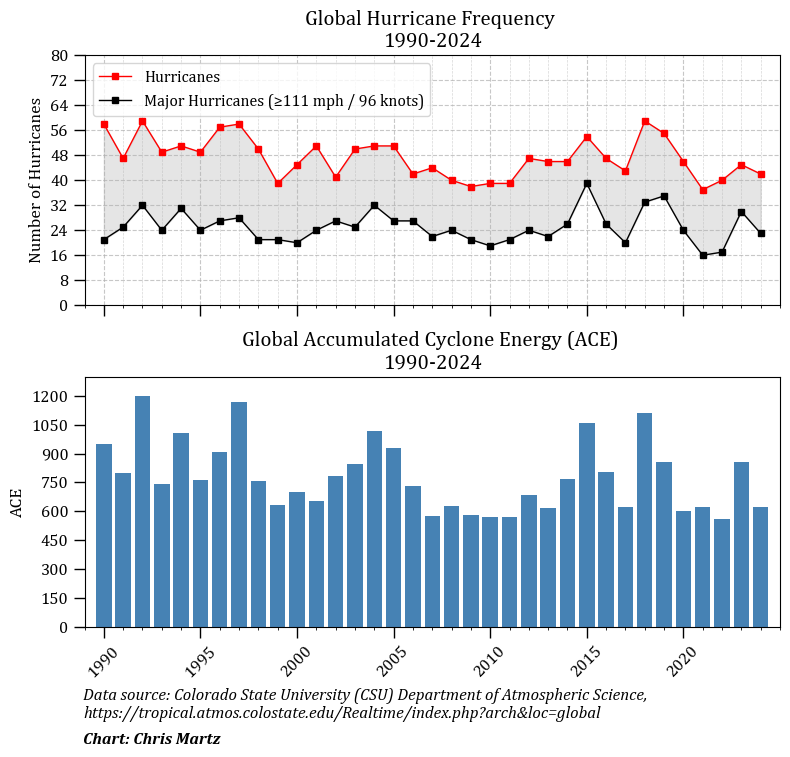
1⃣ There has been 𝒏𝒐 𝒅𝒆𝒕𝒆𝒄𝒕𝒂𝒃𝒍𝒆 𝒊𝒏𝒄𝒓𝒆𝒂𝒔𝒆 in annual global HU count since 1980 (Knutson et al., 2019). In fact, since 1990, HUs have 𝒅𝒆𝒄𝒓𝒆𝒂𝒔𝒆𝒅 in frequency (Klotzbach et al., 2022).
🔗journals.ametsoc.org/view/jo…
2⃣ Since 1980 or 1990, there has been 𝒏𝒐 𝒕𝒓𝒆𝒏𝒅 in annual global MH count (Klotzbach et al., 2022). The United Nations Intergovernmental Panel on Climate Change (IPCC), however, misleads people by framing this data in a manner that suggests that there has been a significant increase.
In Chapter 11 of their sixth scientific assessment report (AR6), Working Group I (WG1), they say,
🗨️ “𝐼𝑡 𝑖𝑠 𝑙𝑖𝑘𝑒𝑙𝑦 𝑡ℎ𝑎𝑡 𝑡ℎ𝑒 𝑔𝑙𝑜𝑏𝑎𝑙 𝒑𝒓𝒐𝒑𝒐𝒓𝒕𝒊𝒐𝒏 𝑜𝑓 𝐶𝑎𝑡𝑒𝑔𝑜𝑟𝑦 3-5 𝑡𝑟𝑜𝑝𝑖𝑐𝑎𝑙 𝑐𝑦𝑐𝑙𝑜𝑛𝑒 𝑖𝑛𝑠𝑡𝑎𝑛𝑐𝑒𝑠... 𝒉𝒂𝒗𝒆 𝒊𝒏𝒄𝒓𝒆𝒂𝒔𝒆𝒅 𝒈𝒍𝒐𝒃𝒂𝒍𝒍𝒚 𝑜𝑣𝑒𝑟 𝑡ℎ𝑒 𝑝𝑎𝑠𝑡 40 𝑦𝑒𝑎𝑟𝑠.”
🔗ipcc.ch/report/ar6/wg1/downl… (p. 1587)
The reason this is misleading is because the increase in the ratio of MHs to total HUs is a result of a decline in total HU count (Jewson & Lewis, 2020). The actual tally of MHs have not gone up since 1990, but the proportion of them has because total HUs decreased.
🔗mdpi.com/2673-1924/1/4/21
There has been 𝒏𝒐 𝒊𝒏𝒄𝒓𝒆𝒂𝒔𝒆 in global TC intensity, as measured by the ACE index, since at least 1980. ACE has actually 𝒅𝒆𝒄𝒓𝒆𝒂𝒔𝒆𝒅 since 1990 (Klotzbach et al., 2022), which weakens the argument that TCs are physically becoming more intense.
TCs are 𝒏𝒐𝒕 intensifying more rapidly. Rapid intensification (RI) events are defined as a ≥30-knot (35 mph) increase in TC Vₘₐₓ in ≤24 hours. Since 1990, there has been 𝒏𝒐 𝒔𝒕𝒂𝒕𝒊𝒔𝒕𝒊𝒄𝒂𝒍𝒍𝒚 𝒔𝒊𝒈𝒏𝒊𝒇𝒊𝒄𝒂𝒏𝒕 𝒕𝒓𝒆𝒏𝒅 in RI event count globally (see supporting information in Klotzbach et al., 2022).
For completeness, the study did find a global-scale increase in extreme RI events where Vₘₐₓ increases by ≥50 knots (58 mph) in ≤24 hours, which may be due to more favorable thermodynamics (warmer oceans), and that may be due to global warming. However, again, there is no increase in total RI events over the last three and a half decades.
🌧️ 𝐅𝐋𝐎𝐎𝐃𝐈𝐍𝐆 🌧️
Floods are typically measured by river discharge—that is, the flux of water (volume per unit of time) flowing through a river channel, measured by a gauge placed at a fixed point.
With respect to fluvial (river) flood trends, IPCC AR6 WG1 states in Chapter 11 of their assessment,
🗨️ “𝑷𝒆𝒂𝒌 𝒇𝒍𝒐𝒘 𝒕𝒓𝒆𝒏𝒅𝒔 𝑎𝑟𝑒 𝑐ℎ𝑎𝑟𝑎𝑐𝑡𝑒𝑟𝑖𝑧𝑒𝑑 𝑏𝑦 ℎ𝑖𝑔ℎ 𝑟𝑒𝑔𝑖𝑜𝑛𝑎𝑙 𝑣𝑎𝑟𝑖𝑎𝑏𝑖𝑙𝑖𝑡𝑦 𝑎𝑛𝑑 𝒍𝒂𝒄𝒌 𝒐𝒗𝒆𝒓𝒂𝒍𝒍 𝒔𝒕𝒂𝒕𝒊𝒔𝒕𝒊𝒄𝒂𝒍 𝒔𝒊𝒈𝒏𝒊𝒇𝒊𝒄𝒂𝒏𝒄𝒆 𝒐𝒇 𝒂 𝒅𝒆𝒄𝒓𝒆𝒂𝒔𝒆 𝒐𝒓 𝒂𝒏 𝒊𝒏𝒄𝒓𝒆𝒂𝒔𝒆 𝒐𝒗𝒆𝒓 𝒕𝒉𝒆 𝒈𝒍𝒐𝒃𝒆 𝒂𝒔 𝒂 𝒘𝒉𝒐𝒍𝒆. 𝑂𝑓 𝑚𝑜𝑟𝑒 𝑡ℎ𝑎𝑛 3500 𝑠𝑡𝑟𝑒𝑎𝑚𝑓𝑙𝑜𝑤 𝑠𝑡𝑎𝑡𝑖𝑜𝑛𝑠 𝑖𝑛 𝑡ℎ𝑒 𝑈𝑆𝐴, 𝑐𝑒𝑛𝑡𝑟𝑎𝑙 𝑎𝑛𝑑 𝑁𝑜𝑟𝑡ℎ𝑒𝑟𝑛 𝐸𝑢𝑟𝑜𝑝𝑒, 𝐴𝑓𝑟𝑖𝑐𝑎, 𝐵𝑟𝑎𝑧𝑖𝑙, 𝑎𝑛𝑑 𝐴𝑢𝑠𝑡𝑟𝑎𝑙𝑖𝑎, 7.1% 𝑠𝑡𝑎𝑡𝑖𝑜𝑛𝑠 𝑠ℎ𝑜𝑤𝑒𝑑 𝑎 𝑠𝑖𝑔𝑛𝑖𝑓𝑖𝑐𝑎𝑛𝑡 𝑖𝑛𝑐𝑟𝑒𝑎𝑠𝑒, 𝑎𝑛𝑑 11.9% 𝑠𝑡𝑎𝑡𝑖𝑜𝑛𝑠 𝑠ℎ𝑜𝑤𝑒𝑑 𝑎 𝑠𝑖𝑔𝑛𝑖𝑓𝑖𝑐𝑎𝑛𝑡 𝑑𝑒𝑐𝑟𝑒𝑎𝑠𝑒 𝑖𝑛 𝑎𝑛𝑛𝑢𝑎𝑙 𝑚𝑎𝑥𝑖𝑚𝑢𝑚 𝑝𝑒𝑎𝑘 𝑓𝑙𝑜𝑤 𝑑𝑢𝑟𝑖𝑛𝑔 1961–2005.”
🔗ipcc.ch/report/ar6/wg1/downl… (p. 1568)
In regards to attributing any trends to anthropogenic influence, they state,
🗨️ “𝐼𝑛 𝑠𝑢𝑚𝑚𝑎𝑟𝑦 𝑡ℎ𝑒𝑟𝑒 𝑖𝑠 𝒍𝒐𝒘 𝒄𝒐𝒏𝒇𝒊𝒅𝒆𝒏𝒄𝒆 𝑖𝑛 𝑡ℎ𝑒 ℎ𝑢𝑚𝑎𝑛 𝑖𝑛𝑓𝑙𝑢𝑒𝑛𝑐𝑒 𝑜𝑛 𝑡ℎ𝑒 𝑐ℎ𝑎𝑛𝑔𝑒𝑠 𝑖𝑛 ℎ𝑖𝑔ℎ 𝑟𝑖𝑣𝑒𝑟 𝑓𝑙𝑜𝑤𝑠 𝑜𝑛 𝑡ℎ𝑒 𝑔𝑙𝑜𝑏𝑎𝑙 𝑠𝑐𝑎𝑙𝑒. 𝐼𝑛 𝑔𝑒𝑛𝑒𝑟𝑎𝑙, 𝑡ℎ𝑒𝑟𝑒 𝑖𝑠 𝒍𝒐𝒘 𝒄𝒐𝒏𝒇𝒊𝒅𝒆𝒏𝒄𝒆 𝑖𝑛 𝑎𝑡𝑡𝑟𝑖𝑏𝑢𝑡𝑖𝑛𝑔 𝑐ℎ𝑎𝑛𝑔𝑒𝑠 𝑖𝑛 𝑡ℎ𝑒 𝑝𝑟𝑜𝑏𝑎𝑏𝑖𝑙𝑖𝑡𝑦 𝑜𝑟 𝑚𝑎𝑔𝑛𝑖𝑡𝑢𝑑𝑒 𝑜𝑓 𝑓𝑙𝑜𝑜𝑑 𝑒𝑣𝑒𝑛𝑡𝑠 𝑡𝑜 ℎ𝑢𝑚𝑎𝑛 𝑖𝑛𝑓𝑙𝑢𝑒𝑛𝑐𝑒...”
🔗ipcc.ch/report/ar6/wg1/downl… (p. 1569)
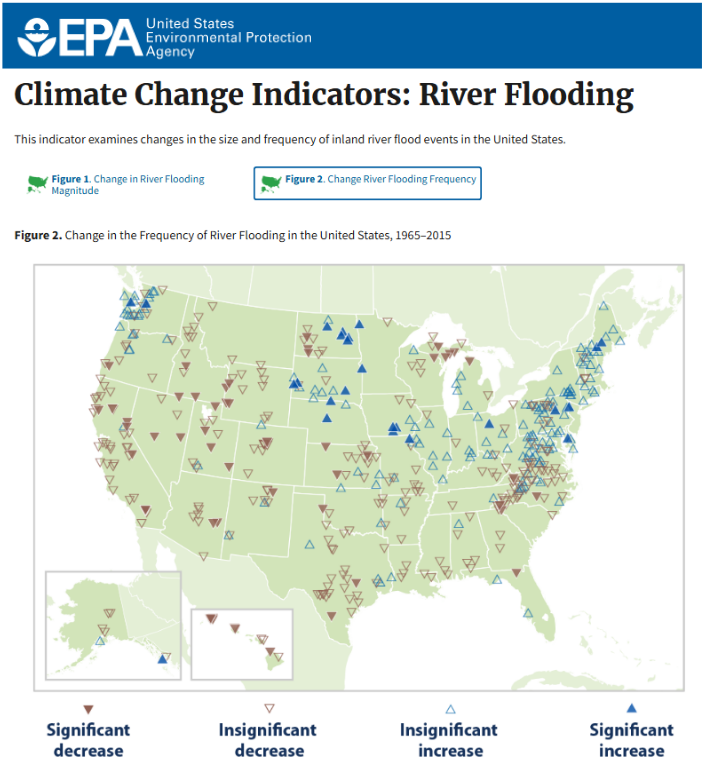
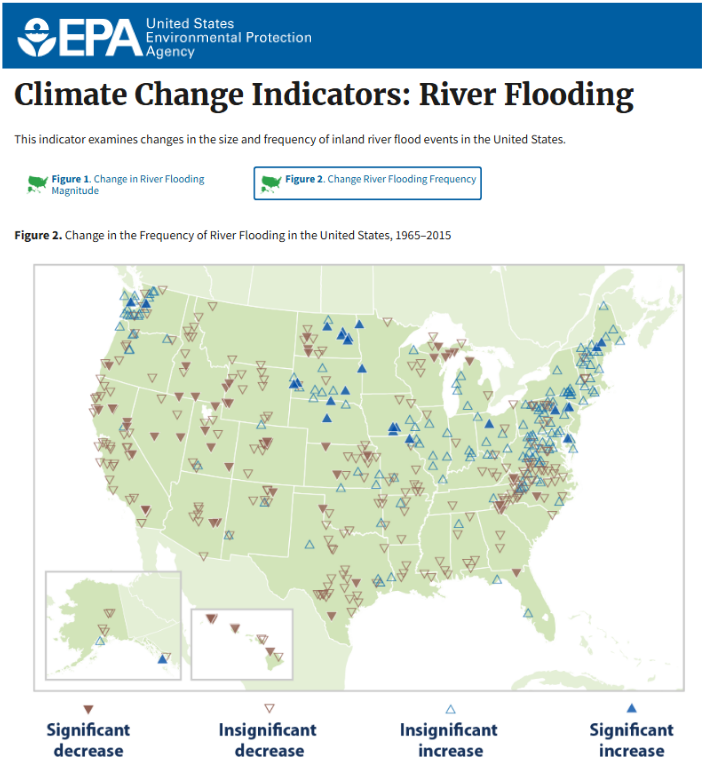
Streamflow measurements from USGS river gauges (and compiled by the EPA) show that river flooding across the U.S. has neither increased nor decreased over the last 60 years.
🔗epa.gov/climate-indicators/c…
In regard to pluvial (flash) flooding IPCC AR6 WG1 has this to say on their FAQ page,
🗨️ “𝐴𝑛 𝑖𝑛𝑐𝑟𝑒𝑎𝑠𝑒𝑑 𝑖𝑛𝑡𝑒𝑛𝑠𝑖𝑡𝑦 𝑎𝑛𝑑 𝑓𝑟𝑒𝑞𝑢𝑒𝑛𝑐𝑦 𝑜𝑓 𝑟𝑒𝑐𝑜𝑟𝑑-𝑏𝑟𝑒𝑎𝑘𝑖𝑛𝑔 𝑑𝑎𝑖𝑙𝑦 𝑟𝑎𝑖𝑛𝑓𝑎𝑙𝑙 ℎ𝑎𝑠 𝑏𝑒𝑒𝑛 𝑑𝑒𝑡𝑒𝑐𝑡𝑒𝑑 𝑓𝑜𝑟 𝑚𝑢𝑐ℎ 𝑜𝑓 𝑡ℎ𝑒 𝑙𝑎𝑛𝑑 𝑠𝑢𝑟𝑓𝑎𝑐𝑒 𝑤ℎ𝑒𝑟𝑒 𝑔𝑜𝑜𝑑 𝑜𝑏𝑠𝑒𝑟𝑣𝑎𝑡𝑖𝑜𝑛𝑎𝑙 𝑟𝑒𝑐𝑜𝑟𝑑𝑠 𝑒𝑥𝑖𝑠𝑡... 𝐻𝑜𝑤𝑒𝑣𝑒𝑟, 𝒉𝒆𝒂𝒗𝒊𝒆𝒓 𝒓𝒂𝒊𝒏𝒇𝒂𝒍𝒍 𝒅𝒐𝒆𝒔 𝒏𝒐𝒕 𝒂𝒍𝒘𝒂𝒚𝒔 𝒍𝒆𝒂𝒅 𝒕𝒐 𝒈𝒓𝒆𝒂𝒕𝒆𝒓 𝒇𝒍𝒐𝒐𝒅𝒊𝒏𝒈. 𝑇ℎ𝑖𝑠 𝑖𝑠 𝑏𝑒𝑐𝑎𝑢𝑠𝑒 𝑓𝑙𝑜𝑜𝑑𝑖𝑛𝑔 𝑎𝑙𝑠𝑜 𝑑𝑒𝑝𝑒𝑛𝑑𝑠 𝑢𝑝𝑜𝑛 𝑡ℎ𝑒 𝑡𝑦𝑝𝑒 𝑜𝑓 𝑟𝑖𝑣𝑒𝑟 𝑏𝑎𝑠𝑖𝑛, 𝑡ℎ𝑒 𝑠𝑢𝑟𝑓𝑎𝑐𝑒 𝑙𝑎𝑛𝑑𝑠𝑐𝑎𝑝𝑒, 𝑡ℎ𝑒 𝑒𝑥𝑡𝑒𝑛𝑡 𝑎𝑛𝑑 𝑑𝑢𝑟𝑎𝑡𝑖𝑜𝑛 𝑜𝑓 𝑡ℎ𝑒 𝑟𝑎𝑖𝑛𝑓𝑎𝑙𝑙, 𝑎𝑛𝑑 ℎ𝑜𝑤 𝑤𝑒𝑡 𝑡ℎ𝑒 𝑔𝑟𝑜𝑢𝑛𝑑 𝑖𝑠 𝑏𝑒𝑓𝑜𝑟𝑒 𝑡ℎ𝑒 𝑟𝑎𝑖𝑛𝑓𝑎𝑙𝑙 𝑒𝑣𝑒𝑛𝑡... 𝐴 𝒎𝒊𝒙 𝒐𝒇 𝒃𝒐𝒕𝒉 𝒊𝒏𝒄𝒓𝒆𝒂𝒔𝒆𝒔 𝒂𝒏𝒅 𝒅𝒆𝒄𝒓𝒆𝒂𝒔𝒆𝒔 𝒊𝒏 𝒇𝒍𝒐𝒐𝒅𝒊𝒏𝒈 𝒉𝒂𝒗𝒆 𝒃𝒆𝒆𝒏 𝒐𝒃𝒔𝒆𝒓𝒗𝒆𝒅 𝑖𝑛 𝑠𝑜𝑚𝑒 𝑟𝑒𝑔𝑖𝑜𝑛𝑠...”
🔗ipcc.ch/report/ar6/wg1/downl… (p. 48)
🔥 𝐖𝐈𝐋𝐃𝐅𝐈𝐑𝐄𝐒 🔥
Like with TCs, satellites have improved our ability to map fires and evaluate temporal trends in their count and burn area.
The Moderate Resolution Imaging Spectroradiometer (MODIS) sensors launched on the NASA Terra (1999) and Aqua (2002) satellites have allowed scientists to monitor fires with greater accuracy and precision. The Global Fire Emissions Database (GFED) utilizes the MODIS data to compute fire radiative power (FRP) using carbon dioxide (CO₂) emissions from fires, which can be calibrated to compute the approximate area of vegetation burned.
🔗globalfiredata.org/index.htm… (data: surfdrive.surf.nl/files/inde…)
The number of wildfires at a global scale 𝒅𝒆𝒄𝒓𝒆𝒂𝒔𝒆𝒅 𝒔𝒊𝒈𝒏𝒊𝒇𝒊𝒄𝒂𝒏𝒕𝒍𝒚 from 2001 to 2016 (Earl & Simmonds, 2018) and so did the corresponding burn area (Andela et al., 2017). In fact, burn area declined by 24.3 ± 8.8% between 1998 and 2015. The reason for this is due to an increase in net primary productivity (NPP) in North Africa and overall global expansion of agriculture.
🔗agupubs.onlinelibrary.wiley.…
🔗science.org/doi/10.1126/scie… (open access: researchgate.net/publication…)
These downtrends have continued in recent years.
🔗atmosphere.copernicus.eu/cam…
Over the last century, reconstructed global fire burn area has 𝒅𝒆𝒄𝒓𝒆𝒂𝒔𝒆𝒅 𝒔𝒊𝒈𝒏𝒊𝒇𝒊𝒄𝒂𝒏𝒕𝒍𝒚 as well.
Yang et al. (2014) found that the decadal average fire burn area decreased at a rate of 1.28 × 10⁴ km² / year between 1901 and 2007, albeit with regional variation. They ascribe this to human-induced fire suppression practices.
🔗agupubs.onlinelibrary.wiley.…
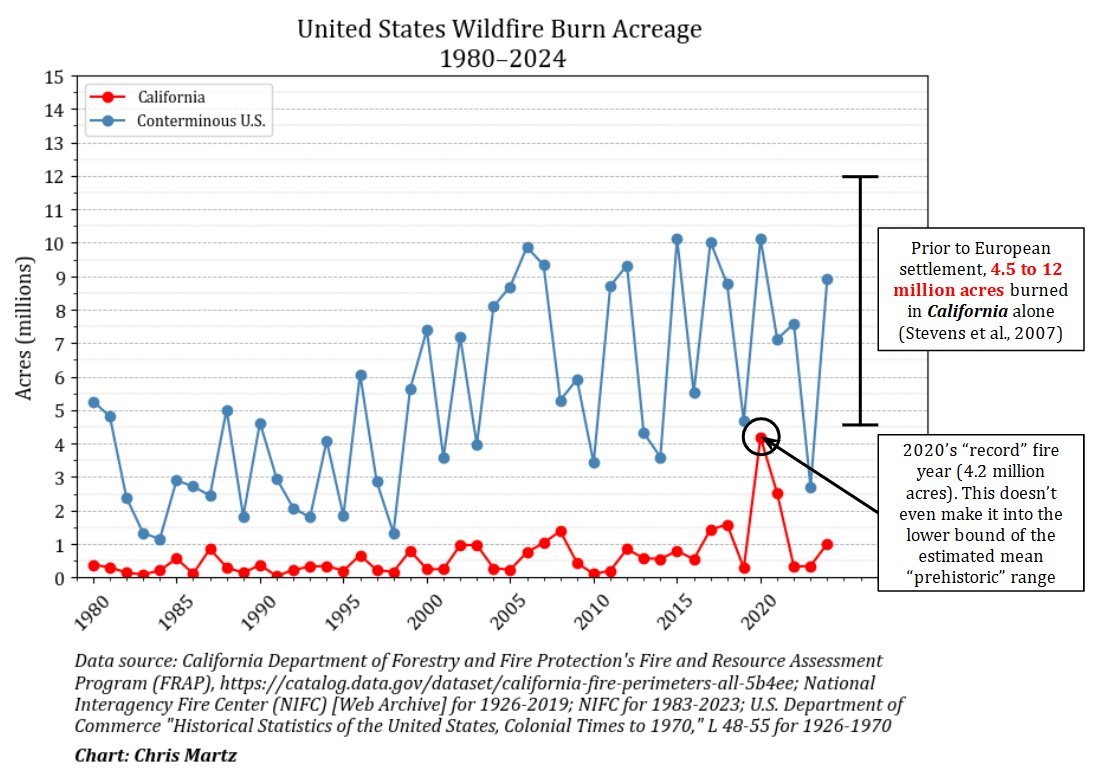
Fires have, however, increased in some regions since the mid-1980s, primarily western North America and specifically, California.
While many are quick to blame this emergent trend on more conducive “fire weather” conditions (e.g., drier fuel loads caused by the 25-year-long “megadrought” and higher air temperatures) caused by “greenhouse gas-” (GHG-) driven climate warming, there is more to this story than you are led on to believe by mainstream media headlines and even many “climate scientists.”
Let's elaborate. . .
Fires require two primary things: (1) an ignition source, and (2) fuel.
Ignition sources can be both natural (e.g., lightning) or man-made (e.g., by accident from, say, an improperly disposed cigarette butt, improperly discarded pellet / wood stove ash, an out-of-control / unattended campfire or power lines knocked down by windstorms, or perhaps even intentionally by arson). But, climate change is not one of them.
According to Balch et al. (2017), 97% of fires between 1992 and 2012 in Mediterranean California had a man-made ignition source.
🔗pnas.org/doi/10.1073/pnas.16…
California fire burn area is heavily contingent on wind conditions. More specifically, burn area depends on whether or not there are Santa Ana Winds (SAWs). They are not very dependent on either air temperature during the fire or antecedent rainfall in the week or month prior.
Keeley et al. (2021), published in Science, found that 100% of fires in Southern California associated with SAWs between 1948 and 2018 were caused by human ignitions. From 1948 to 1983, the leading cause were campfires and between 1984 and 2008, the leading cause was arson. Since 2009, the leading cause has been power lines knocked down by high winds.
🔗science.org/doi/10.1126/scia…
The aforementioned study also found that there is no statistically significant correlation between maximum surface air temperature (SAT) recorded during SAW events and the wildfire burn area. In the 71 years they examined, SAT ranged from 5.9 to 35.2°C (43-95°F). Using a t-test, they found that fires burning >1,000 hectares (~2,500 acres) of land were not linked to higher-than-average SATs, and that held true for large fires burning >5,000 hectares (~12,400 acres).
The link between antecedent rainfall in the 7-30 days prior to a SAW-driven wildfire and corresponding burn area was also weak.
This is because small-diameter fuels, such as leaves and twigs, dry out quickly when weather conditions change. The drying power of SAWs cause vegetation to become highly flammable in a matter of hours, even if rainfall has been near or above average in the preceding days or weeks to a fire.
Although 75% of SAW events were accompanied with no fires, because 100% of the fires were caused by a human ignition source, ignitions play the largest role in Southern California fire risk than do background environmental conditions.
In densely forested Northern California, fire exclusion and forest mismanagement (e.g., a lack of mechanical thinning and prescribed burning) has led to a century-long buildup of fuel, primarily on federally owned land. This has increased fire risk significantly in that part of the country.
However, in Southern California, fuel loads are largely consistent of chaparral brush and non-native plant species such as eucalyptus (which contain flammable oils) and palm trees (which combust easily due to their fibrous texture). This has increased the fire risk in that part of the country.
🔗anrcatalog.ucanr.edu/pdf/839…
What this means is that rapid economic decarbonization efforts would prove futile.
Given 97% of fires are human-caused, it's inevitable that funneling 11 million people who want to live where it is sunny for 6-9 months of the calendar year into a few thousand square miles of land area will result in increased fire occurrence.
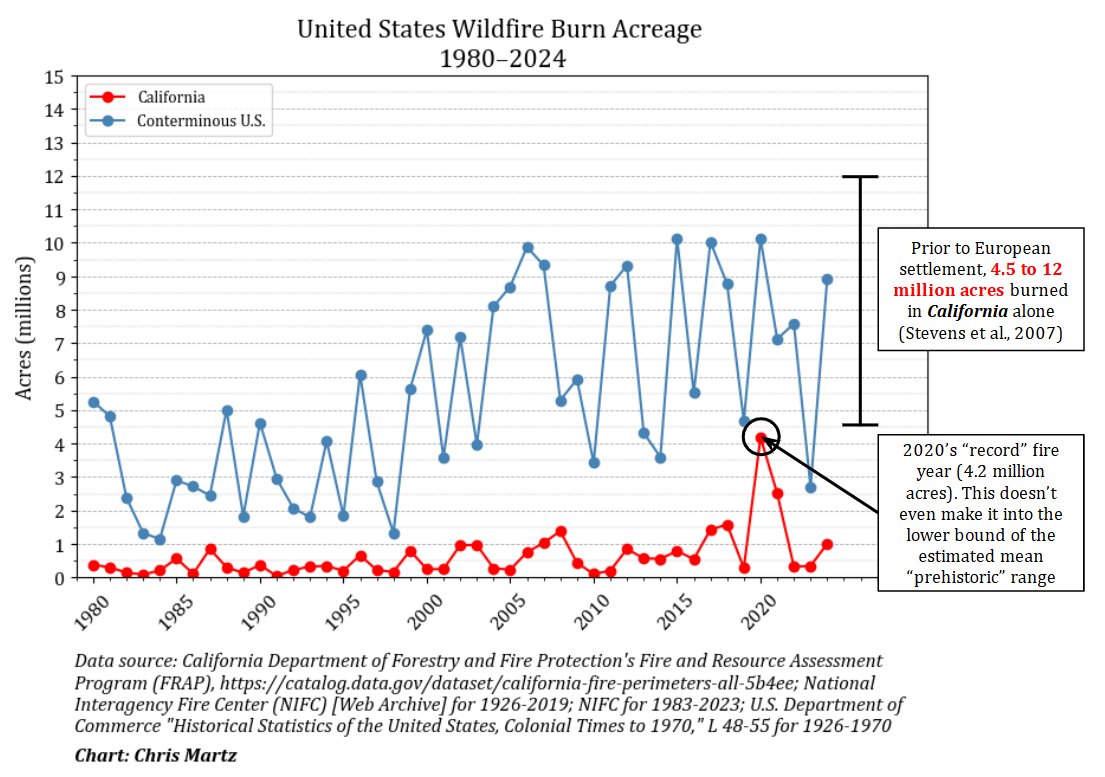
Even still, fires in California today are far less severe than they were prior to European settlement. Prior to that, 4.5 to 12 million acres of land burned each year in present-day California alone (Stevens et al., 2007). 2020’s “record-breaking” fire year with 4.2 million acres burned doesn’t even make it into the lower bound of the estimated “prehistoric” mean range.
🔗farmsandforests.org/Resource…
· · ─ ·✶· ─ · · · · ─ ·✶· ─ · · · · ─ ·✶· ─ · ·
It is abundantly clear that you have absolutely no clue what you are talking about.
That's the reason you are a career politician and not a scientist.
Feb 12

Catastrophic wildfires, flooding, and hurricanes will not pause for politics, and the @EPA has again abandoned its mission to protect the environment.
Trump has given polluters a free pass at the expense of the health and welfare of the American people.
This must be stopped before it’s too late.
21
298
712
12,418
Feb 13
Hi there @SenAdamSchiff.
Meteorologist here. ⛈️
Hurricanes, floods, and wildfires are nothing new.
Here are the facts:
🌀 𝐇𝐔𝐑𝐑𝐈𝐂𝐀𝐍𝐄𝐒 🌀
First, let's define some useful terms.
A tropical cyclone (TC) is a warm-core, non-frontal, synoptic-scale cyclone that originates over tropical or subtropical waters and has both organized, deep convection and a closed surface wind circulation that rotates about a well-defined center.
Hurricanes (HUs) are a subset of TCs which have a maximum sustained wind speed (Vₘₐₓ) of ≥74 mph. A typhoon is the same thing, but is a name exclusively reserved for HUs in the West Pacific Ocean basin. To be classified as a major hurricane (MH), Vₘₐₓ must be ≥111 mph.
🔗nhc.noaa.gov/aboutgloss.shtm…
HU seasons are typically rated by the accumulated cyclone energy (ACE) index. Developed by Dr. William Gray, this metric takes into account both HU Vₘₐₓ and duration. Specifically, it sums the square of each TC's Vₘₐₓ every six-hour period:
𝐴𝐶𝐸 = 10⁻⁴ Σ 𝑣²ₘₐₓ (for Vₘₐₓ ≥39 mph, tropical storm requirement)
🔗tropical.colostate.edu/Forec…
🔗journals.ametsoc.org/view/jo…
With that out of the way, let's take a look to see what the data says on observed trends in TCs.
Prior to the satellite era (1966-present), comprehensive records of TC activity at a global scale are essentially nonexistent. If a storm did not landfall in a populated area or pass by the ship-based “observation network of opportunity,” it was missed and unaccounted for.
Satellite monitoring of TCs began in 1966 with NASA's launch of ESSA-1 and ESSA-2. 🛰️
🔗gri.msstate.edu/publications…
But, it wasn't until 1980 that we finally had sufficient coverage across both hemispheres. Prior to that date, coverage over the Southern Hemisphere was spotty. Therefore, TC tallies between 1966 and 1979 are likely underestimated.
🔗rogerpielkejr.substack.com/p…
Based on the available data, we know that,
1⃣ There has been 𝒏𝒐 𝒅𝒆𝒕𝒆𝒄𝒕𝒂𝒃𝒍𝒆 𝒊𝒏𝒄𝒓𝒆𝒂𝒔𝒆 in annual global HU count since 1980 (Knutson et al., 2019). In fact, since 1990, HUs have 𝒅𝒆𝒄𝒓𝒆𝒂𝒔𝒆𝒅 in frequency (Klotzbach et al., 2022).
🔗journals.ametsoc.org/view/jo…
2⃣ Since 1980 or 1990, there has been 𝒏𝒐 𝒕𝒓𝒆𝒏𝒅 in annual global MH count (Klotzbach et al., 2022). The United Nations Intergovernmental Panel on Climate Change (IPCC), however, misleads people by framing this data in a manner that suggests that there has been a significant increase.
In Chapter 11 of their sixth scientific assessment report (AR6), Working Group I (WG1), they say,
🗨️ “𝐼𝑡 𝑖𝑠 𝑙𝑖𝑘𝑒𝑙𝑦 𝑡ℎ𝑎𝑡 𝑡ℎ𝑒 𝑔𝑙𝑜𝑏𝑎𝑙 𝒑𝒓𝒐𝒑𝒐𝒓𝒕𝒊𝒐𝒏 𝑜𝑓 𝐶𝑎𝑡𝑒𝑔𝑜𝑟𝑦 3-5 𝑡𝑟𝑜𝑝𝑖𝑐𝑎𝑙 𝑐𝑦𝑐𝑙𝑜𝑛𝑒 𝑖𝑛𝑠𝑡𝑎𝑛𝑐𝑒𝑠... 𝒉𝒂𝒗𝒆 𝒊𝒏𝒄𝒓𝒆𝒂𝒔𝒆𝒅 𝒈𝒍𝒐𝒃𝒂𝒍𝒍𝒚 𝑜𝑣𝑒𝑟 𝑡ℎ𝑒 𝑝𝑎𝑠𝑡 40 𝑦𝑒𝑎𝑟𝑠.”
🔗ipcc.ch/report/ar6/wg1/downl… (p. 1587)
The reason this is misleading is because the increase in the ratio of MHs to total HUs is a result of a decline in total HU count (Jewson & Lewis, 2020). The actual tally of MHs have not gone up since 1990, but the proportion of them has because total HUs decreased.
🔗mdpi.com/2673-1924/1/4/21
There has been 𝒏𝒐 𝒊𝒏𝒄𝒓𝒆𝒂𝒔𝒆 in global TC intensity, as measured by the ACE index, since at least 1980. ACE has actually 𝒅𝒆𝒄𝒓𝒆𝒂𝒔𝒆𝒅 since 1990 (Klotzbach et al., 2022), which weakens the argument that TCs are physically becoming more intense.
TCs are 𝒏𝒐𝒕 intensifying more rapidly. Rapid intensification (RI) events are defined as a ≥30-knot (35 mph) increase in TC Vₘₐₓ in ≤24 hours. Since 1990, there has been 𝒏𝒐 𝒔𝒕𝒂𝒕𝒊𝒔𝒕𝒊𝒄𝒂𝒍𝒍𝒚 𝒔𝒊𝒈𝒏𝒊𝒇𝒊𝒄𝒂𝒏𝒕 𝒕𝒓𝒆𝒏𝒅 in RI event count globally (see supporting information in Klotzbach et al., 2022).
For completeness, the study did find a global-scale increase in extreme RI events where Vₘₐₓ increases by ≥50 knots (58 mph) in ≤24 hours, which may be due to more favorable thermodynamics (warmer oceans), and that may be due to global warming. However, again, there is no increase in total RI events over the last three and a half decades.
🌧️ 𝐅𝐋𝐎𝐎𝐃𝐈𝐍𝐆 🌧️
Floods are typically measured by river discharge—that is, the flux of water (volume per unit of time) flowing through a river channel, measured by a gauge placed at a fixed point.
With respect to fluvial (river) flood trends, IPCC AR6 WG1 states in Chapter 11 of their assessment,
🗨️ “𝑷𝒆𝒂𝒌 𝒇𝒍𝒐𝒘 𝒕𝒓𝒆𝒏𝒅𝒔 𝑎𝑟𝑒 𝑐ℎ𝑎𝑟𝑎𝑐𝑡𝑒𝑟𝑖𝑧𝑒𝑑 𝑏𝑦 ℎ𝑖𝑔ℎ 𝑟𝑒𝑔𝑖𝑜𝑛𝑎𝑙 𝑣𝑎𝑟𝑖𝑎𝑏𝑖𝑙𝑖𝑡𝑦 𝑎𝑛𝑑 𝒍𝒂𝒄𝒌 𝒐𝒗𝒆𝒓𝒂𝒍𝒍 𝒔𝒕𝒂𝒕𝒊𝒔𝒕𝒊𝒄𝒂𝒍 𝒔𝒊𝒈𝒏𝒊𝒇𝒊𝒄𝒂𝒏𝒄𝒆 𝒐𝒇 𝒂 𝒅𝒆𝒄𝒓𝒆𝒂𝒔𝒆 𝒐𝒓 𝒂𝒏 𝒊𝒏𝒄𝒓𝒆𝒂𝒔𝒆 𝒐𝒗𝒆𝒓 𝒕𝒉𝒆 𝒈𝒍𝒐𝒃𝒆 𝒂𝒔 𝒂 𝒘𝒉𝒐𝒍𝒆. 𝑂𝑓 𝑚𝑜𝑟𝑒 𝑡ℎ𝑎𝑛 3500 𝑠𝑡𝑟𝑒𝑎𝑚𝑓𝑙𝑜𝑤 𝑠𝑡𝑎𝑡𝑖𝑜𝑛𝑠 𝑖𝑛 𝑡ℎ𝑒 𝑈𝑆𝐴, 𝑐𝑒𝑛𝑡𝑟𝑎𝑙 𝑎𝑛𝑑 𝑁𝑜𝑟𝑡ℎ𝑒𝑟𝑛 𝐸𝑢𝑟𝑜𝑝𝑒, 𝐴𝑓𝑟𝑖𝑐𝑎, 𝐵𝑟𝑎𝑧𝑖𝑙, 𝑎𝑛𝑑 𝐴𝑢𝑠𝑡𝑟𝑎𝑙𝑖𝑎, 7.1% 𝑠𝑡𝑎𝑡𝑖𝑜𝑛𝑠 𝑠ℎ𝑜𝑤𝑒𝑑 𝑎 𝑠𝑖𝑔𝑛𝑖𝑓𝑖𝑐𝑎𝑛𝑡 𝑖𝑛𝑐𝑟𝑒𝑎𝑠𝑒, 𝑎𝑛𝑑 11.9% 𝑠𝑡𝑎𝑡𝑖𝑜𝑛𝑠 𝑠ℎ𝑜𝑤𝑒𝑑 𝑎 𝑠𝑖𝑔𝑛𝑖𝑓𝑖𝑐𝑎𝑛𝑡 𝑑𝑒𝑐𝑟𝑒𝑎𝑠𝑒 𝑖𝑛 𝑎𝑛𝑛𝑢𝑎𝑙 𝑚𝑎𝑥𝑖𝑚𝑢𝑚 𝑝𝑒𝑎𝑘 𝑓𝑙𝑜𝑤 𝑑𝑢𝑟𝑖𝑛𝑔 1961–2005.”
🔗ipcc.ch/report/ar6/wg1/downl… (p. 1568)
In regards to attributing any trends to anthropogenic influence, they state,
🗨️ “𝐼𝑛 𝑠𝑢𝑚𝑚𝑎𝑟𝑦 𝑡ℎ𝑒𝑟𝑒 𝑖𝑠 𝒍𝒐𝒘 𝒄𝒐𝒏𝒇𝒊𝒅𝒆𝒏𝒄𝒆 𝑖𝑛 𝑡ℎ𝑒 ℎ𝑢𝑚𝑎𝑛 𝑖𝑛𝑓𝑙𝑢𝑒𝑛𝑐𝑒 𝑜𝑛 𝑡ℎ𝑒 𝑐ℎ𝑎𝑛𝑔𝑒𝑠 𝑖𝑛 ℎ𝑖𝑔ℎ 𝑟𝑖𝑣𝑒𝑟 𝑓𝑙𝑜𝑤𝑠 𝑜𝑛 𝑡ℎ𝑒 𝑔𝑙𝑜𝑏𝑎𝑙 𝑠𝑐𝑎𝑙𝑒. 𝐼𝑛 𝑔𝑒𝑛𝑒𝑟𝑎𝑙, 𝑡ℎ𝑒𝑟𝑒 𝑖𝑠 𝒍𝒐𝒘 𝒄𝒐𝒏𝒇𝒊𝒅𝒆𝒏𝒄𝒆 𝑖𝑛 𝑎𝑡𝑡𝑟𝑖𝑏𝑢𝑡𝑖𝑛𝑔 𝑐ℎ𝑎𝑛𝑔𝑒𝑠 𝑖𝑛 𝑡ℎ𝑒 𝑝𝑟𝑜𝑏𝑎𝑏𝑖𝑙𝑖𝑡𝑦 𝑜𝑟 𝑚𝑎𝑔𝑛𝑖𝑡𝑢𝑑𝑒 𝑜𝑓 𝑓𝑙𝑜𝑜𝑑 𝑒𝑣𝑒𝑛𝑡𝑠 𝑡𝑜 ℎ𝑢𝑚𝑎𝑛 𝑖𝑛𝑓𝑙𝑢𝑒𝑛𝑐𝑒...”
🔗ipcc.ch/report/ar6/wg1/downl… (p. 1569)
Streamflow measurements from USGS river gauges (and compiled by the EPA) show that river flooding across the U.S. has neither increased nor decreased over the last 60 years.
🔗epa.gov/climate-indicators/c…
In regard to pluvial (flash) flooding IPCC AR6 WG1 has this to say on their FAQ page,
🗨️ “𝐴𝑛 𝑖𝑛𝑐𝑟𝑒𝑎𝑠𝑒𝑑 𝑖𝑛𝑡𝑒𝑛𝑠𝑖𝑡𝑦 𝑎𝑛𝑑 𝑓𝑟𝑒𝑞𝑢𝑒𝑛𝑐𝑦 𝑜𝑓 𝑟𝑒𝑐𝑜𝑟𝑑-𝑏𝑟𝑒𝑎𝑘𝑖𝑛𝑔 𝑑𝑎𝑖𝑙𝑦 𝑟𝑎𝑖𝑛𝑓𝑎𝑙𝑙 ℎ𝑎𝑠 𝑏𝑒𝑒𝑛 𝑑𝑒𝑡𝑒𝑐𝑡𝑒𝑑 𝑓𝑜𝑟 𝑚𝑢𝑐ℎ 𝑜𝑓 𝑡ℎ𝑒 𝑙𝑎𝑛𝑑 𝑠𝑢𝑟𝑓𝑎𝑐𝑒 𝑤ℎ𝑒𝑟𝑒 𝑔𝑜𝑜𝑑 𝑜𝑏𝑠𝑒𝑟𝑣𝑎𝑡𝑖𝑜𝑛𝑎𝑙 𝑟𝑒𝑐𝑜𝑟𝑑𝑠 𝑒𝑥𝑖𝑠𝑡... 𝐻𝑜𝑤𝑒𝑣𝑒𝑟, 𝒉𝒆𝒂𝒗𝒊𝒆𝒓 𝒓𝒂𝒊𝒏𝒇𝒂𝒍𝒍 𝒅𝒐𝒆𝒔 𝒏𝒐𝒕 𝒂𝒍𝒘𝒂𝒚𝒔 𝒍𝒆𝒂𝒅 𝒕𝒐 𝒈𝒓𝒆𝒂𝒕𝒆𝒓 𝒇𝒍𝒐𝒐𝒅𝒊𝒏𝒈. 𝑇ℎ𝑖𝑠 𝑖𝑠 𝑏𝑒𝑐𝑎𝑢𝑠𝑒 𝑓𝑙𝑜𝑜𝑑𝑖𝑛𝑔 𝑎𝑙𝑠𝑜 𝑑𝑒𝑝𝑒𝑛𝑑𝑠 𝑢𝑝𝑜𝑛 𝑡ℎ𝑒 𝑡𝑦𝑝𝑒 𝑜𝑓 𝑟𝑖𝑣𝑒𝑟 𝑏𝑎𝑠𝑖𝑛, 𝑡ℎ𝑒 𝑠𝑢𝑟𝑓𝑎𝑐𝑒 𝑙𝑎𝑛𝑑𝑠𝑐𝑎𝑝𝑒, 𝑡ℎ𝑒 𝑒𝑥𝑡𝑒𝑛𝑡 𝑎𝑛𝑑 𝑑𝑢𝑟𝑎𝑡𝑖𝑜𝑛 𝑜𝑓 𝑡ℎ𝑒 𝑟𝑎𝑖𝑛𝑓𝑎𝑙𝑙, 𝑎𝑛𝑑 ℎ𝑜𝑤 𝑤𝑒𝑡 𝑡ℎ𝑒 𝑔𝑟𝑜𝑢𝑛𝑑 𝑖𝑠 𝑏𝑒𝑓𝑜𝑟𝑒 𝑡ℎ𝑒 𝑟𝑎𝑖𝑛𝑓𝑎𝑙𝑙 𝑒𝑣𝑒𝑛𝑡... 𝐴 𝒎𝒊𝒙 𝒐𝒇 𝒃𝒐𝒕𝒉 𝒊𝒏𝒄𝒓𝒆𝒂𝒔𝒆𝒔 𝒂𝒏𝒅 𝒅𝒆𝒄𝒓𝒆𝒂𝒔𝒆𝒔 𝒊𝒏 𝒇𝒍𝒐𝒐𝒅𝒊𝒏𝒈 𝒉𝒂𝒗𝒆 𝒃𝒆𝒆𝒏 𝒐𝒃𝒔𝒆𝒓𝒗𝒆𝒅 𝑖𝑛 𝑠𝑜𝑚𝑒 𝑟𝑒𝑔𝑖𝑜𝑛𝑠...”
🔗ipcc.ch/report/ar6/wg1/downl… (p. 48)
🔥 𝐖𝐈𝐋𝐃𝐅𝐈𝐑𝐄𝐒 🔥
Like with TCs, satellites have improved our ability to map fires and evaluate temporal trends in their count and burn area.
The Moderate Resolution Imaging Spectroradiometer (MODIS) sensors launched on the NASA Terra (1999) and Aqua (2002) satellites have allowed scientists to monitor fires with greater accuracy and precision. The Global Fire Emissions Database (GFED) utilizes the MODIS data to compute fire radiative power (FRP) using carbon dioxide (CO₂) emissions from fires, which can be calibrated to compute the approximate area of vegetation burned.
🔗globalfiredata.org/index.htm… (data: surfdrive.surf.nl/files/inde…)
The number of wildfires at a global scale 𝒅𝒆𝒄𝒓𝒆𝒂𝒔𝒆𝒅 𝒔𝒊𝒈𝒏𝒊𝒇𝒊𝒄𝒂𝒏𝒕𝒍𝒚 from 2001 to 2016 (Earl & Simmonds, 2018) and so did the corresponding burn area (Andela et al., 2017). In fact, burn area declined by 24.3 ± 8.8% between 1998 and 2015. The reason for this is due to an increase in net primary productivity (NPP) in North Africa and overall global expansion of agriculture.
🔗agupubs.onlinelibrary.wiley.…
🔗science.org/doi/10.1126/scie… (open access: researchgate.net/publication…)
These downtrends have continued in recent years.
🔗atmosphere.copernicus.eu/cam…
Over the last century, reconstructed global fire burn area has 𝒅𝒆𝒄𝒓𝒆𝒂𝒔𝒆𝒅 𝒔𝒊𝒈𝒏𝒊𝒇𝒊𝒄𝒂𝒏𝒕𝒍𝒚 as well.
Yang et al. (2014) found that the decadal average fire burn area decreased at a rate of 1.28 × 10⁴ km² / year between 1901 and 2007, albeit with regional variation. They ascribe this to human-induced fire suppression practices.
🔗agupubs.onlinelibrary.wiley.…
Fires have, however, increased in some regions since the mid-1980s, primarily western North America and specifically, California.
While many are quick to blame this emergent trend on more conducive “fire weather” conditions (e.g., drier fuel loads caused by the 25-year-long “megadrought” and higher air temperatures) caused by “greenhouse gas-” (GHG-) driven climate warming, there is more to this story than you are led on to believe by mainstream media headlines and even many “climate scientists.”
Let's elaborate. . .
Fires require two primary things: (1) an ignition source, and (2) fuel.
Ignition sources can be both natural (e.g., lightning) or man-made (e.g., by accident from, say, an improperly disposed cigarette butt, improperly discarded pellet / wood stove ash, an out-of-control / unattended campfire or power lines knocked down by windstorms, or perhaps even intentionally by arson). But, climate change is not one of them.
According to Balch et al. (2017), 97% of fires between 1992 and 2012 in Mediterranean California had a man-made ignition source.
🔗pnas.org/doi/10.1073/pnas.16…
California fire burn area is heavily contingent on wind conditions. More specifically, burn area depends on whether or not there are Santa Ana Winds (SAWs). They are not very dependent on either air temperature during the fire or antecedent rainfall in the week or month prior.
Keeley et al. (2021), published in Science, found that 100% of fires in Southern California associated with SAWs between 1948 and 2018 were caused by human ignitions. From 1948 to 1983, the leading cause were campfires and between 1984 and 2008, the leading cause was arson. Since 2009, the leading cause has been power lines knocked down by high winds.
🔗science.org/doi/10.1126/scia…
The aforementioned study also found that there is no statistically significant correlation between maximum surface air temperature (SAT) recorded during SAW events and the wildfire burn area. In the 71 years they examined, SAT ranged from 5.9 to 35.2°C (43-95°F). Using a t-test, they found that fires burning >1,000 hectares (~2,500 acres) of land were not linked to higher-than-average SATs, and that held true for large fires burning >5,000 hectares (~12,400 acres).
The link between antecedent rainfall in the 7-30 days prior to a SAW-driven wildfire and corresponding burn area was also weak.
This is because small-diameter fuels, such as leaves and twigs, dry out quickly when weather conditions change. The drying power of SAWs cause vegetation to become highly flammable in a matter of hours, even if rainfall has been near or above average in the preceding days or weeks to a fire.
Although 75% of SAW events were accompanied with no fires, because 100% of the fires were caused by a human ignition source, ignitions play the largest role in Southern California fire risk than do background environmental conditions.
In densely forested Northern California, fire exclusion and forest mismanagement (e.g., a lack of mechanical thinning and prescribed burning) has led to a century-long buildup of fuel, primarily on federally owned land. This has increased fire risk significantly in that part of the country.
However, in Southern California, fuel loads are largely consistent of chaparral brush and non-native plant species such as eucalyptus (which contain flammable oils) and palm trees (which combust easily due to their fibrous texture). This has increased the fire risk in that part of the country.
🔗anrcatalog.ucanr.edu/pdf/839…
What this means is that rapid economic decarbonization efforts would prove futile.
Given 97% of fires are human-caused, it's inevitable that funneling 11 million people who want to live where it is sunny for 6-9 months of the calendar year into a few thousand square miles of land area will result in increased fire occurrence.
Even still, fires in California today are far less severe than they were prior to European settlement. Prior to that, 4.5 to 12 million acres of land burned each year in present-day California alone (Stevens et al., 2007). 2020’s “record-breaking” fire year with 4.2 million acres burned doesn’t even make it into the lower bound of the estimated “prehistoric” mean range.
🔗farmsandforests.org/Resource…
· · ─ ·✶· ─ · · · · ─ ·✶· ─ · · · · ─ ·✶· ─ · ·
It is abundantly clear that you have absolutely no clue what you are talking about.
I guess that's the reason you are a Senator and not a scientist, Adam.
Feb 12
Catastrophic wildfires, flooding, and hurricanes will not pause for politics, and the @EPA has again abandoned its mission to protect the environment.
Trump has given polluters a free pass at the expense of the health and welfare of the American people.
This must be stopped before it’s too late.
12
149
447
10,303

Zdjęcia z ostatnich chwil przed zagładą.
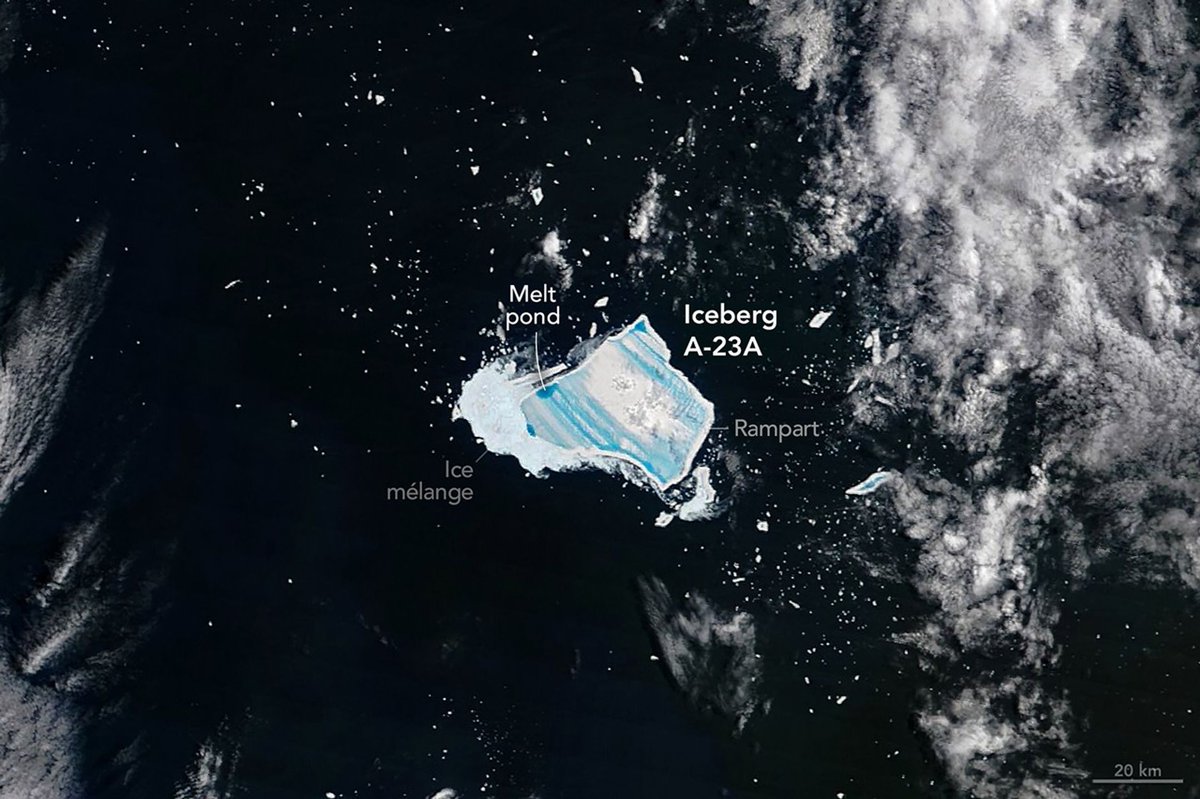
Wody roztopowe zabarwiły górę lodową na błękitno. Na zdjęciu słynna A-23A, która oderwała się od Lodowca Szelfowego Flichera w czasach, gdy Ronal Reagan był prezydentem, a na ekranach kin królował przebojowy Top Gun. To jedna z największych i najdłużej śledzonych przez naukowców gór lodowych. Gdy oderwała się w 1986 roku miała około 4000 kilometrów kwadratowych powierzchni. Z najnowszych pomiarów – przeprowadzonych w styczniu bieżącego roku – wynika, że jej o obecna powierzchnia to 1182 km2.
Zdjęcie, które widzicie zostało wykonane 26 grudnia ubiegłego roku przez instrument MODIS (Moderate Resolution Imagign Spectroradiometer) znajdujące się na satelicie TErra. Widać na nim rozległe jeziora wód roztopowych na powierzchni góry. Dzień później astronauta z Międzynarodowej Stacji Kosmicznej wykonał bardziej szczegółową fotografię powierzchni góry. Znajdziecie ją w komentarzu. Widoczne obszary przypominające niebieską papkę to regiony, w których lód nasiąknięty jest wodą. Pod wpływem ciężaru zalegającej wody istniejące w lodzie szczeliny są coraz bardziej rozpychane, co prowadzi do powolnego rozpadu góry. Z kolei cienka biała linia wokół wody, która ją ogranicza, to struktura zwana fosą i wałem. Tworzy się ona gdy płyta lodowa wygina się ku górze, gdy jej krawędzie topnieją na styku wody i lodu.
Zwróćcie też uwagę na widoczne na lodzie naprzemienne wzorce białych i ciemnoniebieskich linii. To najprawdopodobniej bruzdy, które powstały setki lat temu, gdy lód ten stanowił część lodowca przemieszczającego się po skalnym podłożu.
Zdaniem naukowców góra rozpadnie się w ciągu najbliższych dni lub tygodni. I tak przetrwała wyjątkowo długo. Obecnie zaś znajduje się w wodach o temperaturze 3 stopni Celsjusza, a prądy morskie pchają ją w stronę jeszcze cieplejszych wód.
Lubisz czytać nasze treści? Postaw nam wirtualną kawę lub dołącz do Patronów. Szczegóły w komentarzu.
Zdjęcie: NASA
2
8
787

Jan 4
Scientist: China records substantial environmental progress
China has recorded substantial environmental progress over the past two decades, according to Wei Ke, a research scientist at the Chinese Academy of Sciences' Institute of Atmospheric Physics.
"According to data from NASA's Moderate Resolution Imaging Spectroradiometer, the world has grown significantly greener, with China accounting for at least a quarter of this global increase," he said.
In this clip, Wei explains how this dramatic expansion of forests and green cover has accompanied a turnaround in air quality and a landmark energy transition in which wind and solar power now exceed 45% of total installed capacity in China.
For Wei, the numbers only tell part of the story. The real measure is simpler: Chinese citizens are breathing cleaner air and living better lives.
2
16
26
4,508

10 Dec 2025
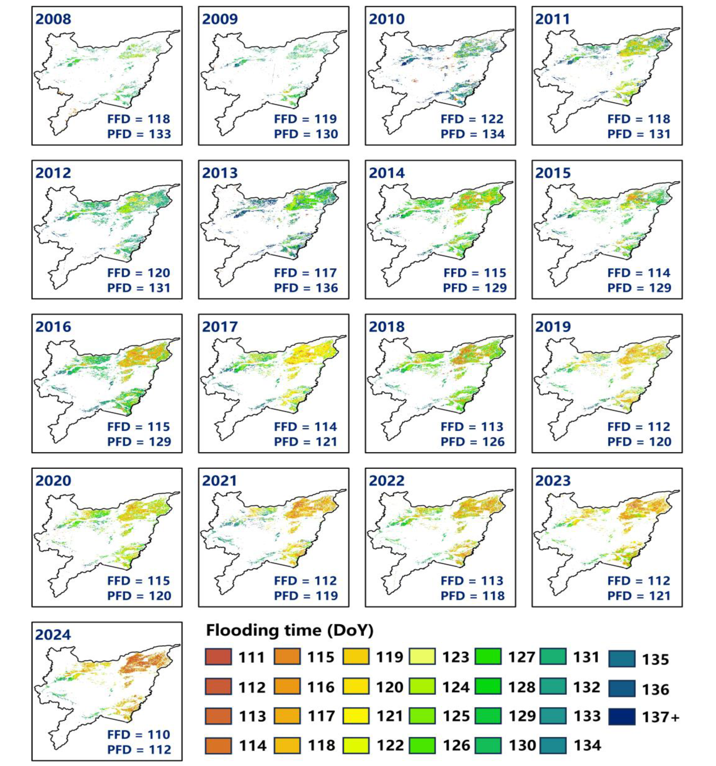
💧🌾 Characterizing Changes in Paddy #Rice #Flooding Time over the Sanjiang Plain Using Moderate-Resolution Imaging #Spectroradiometer Time Series
✍️ Xiangyu Ning et al.
🔗 brnw.ch/21wYeNg
1
14
466
8 Dec 2025
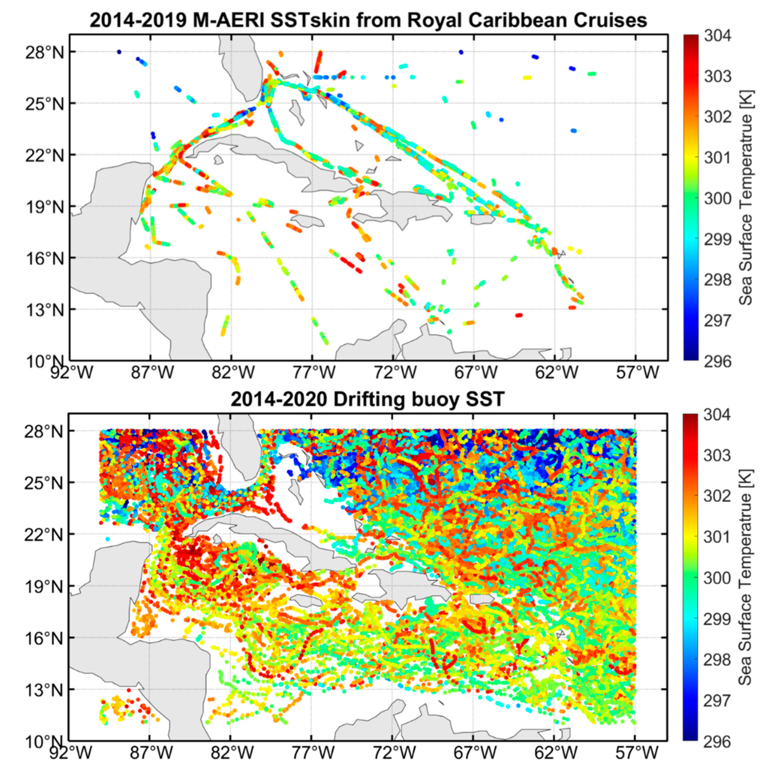
🌊🌡️ Improving #Atmospheric #Correction Algorithms for #Sea #Surface Skin #Temperature Retrievals from Moderate-Resolution Imaging Spectroradiometer Using #MachineLearning Methods
✍️ Bingkun Luo et al.
🔗 brnw.ch/21wYaL6
3
8
386

6 Dec 2025
白は非広色域蛍光体をSpectroradiometerで計測してD65に調整したものと決まっとる。
広色域型は等色関数が成立しないのでD65調整済の非広色域とPerceptual Matchingが正解
6 Dec 2025

モニター沼の淵にいる怖い人いる...
retinaのピクセル密度、P3、HDR輝度でApple同等はなかなかないからなぁ
1
5
677