
Do you live near Armonk, NY?
Want to be a Senior Implementation Consultant?
Do you possess these qualifications?
Senior Implementation Consultant, IBM Corporation, Armonk, NY and various unanticipated client sites throughout the US:
Prepare new customers to utilize the StreamSets Platform.
Implement new use cases in existing customers.
Provide implementation 'blue print' for customers.
Drive asset development across the team and/or organization as it relates to product adoptions and customer implementation.
Drive and manage all technical aspects of the post-sales process, work in conjunction with the product, support and pre-sales team as the key technical advisor and product advocate for the products.
Promote and advocate StreamSets products across the account through meetings around new products, features and best practices.
Lead other PS team members in implementations. Provide guidance on implementation best practices and architecture assets.
Engage other teams within StreamSets to ensure customer satisfaction and platform adoption in customers. Utilize: Big Data ecosystem, Big Data Processing, AWS Tools, Docker, Kubernetes, Programming Languages, Messaging Services, Data Integration, Cloud Data Integration, Warehouse, DevOps.
Required: Master's degree or equivalent in Computer Engineering or related (employer will accept a Bachelor's degree plus five (5) years of progressive experience in lieu of a Master's degree) and one (1) year of experience as Consultant or related. One (1) year of experience must include utilizing Big Data ecosystem, Big Data Processing, AWS Tools, Docker, Kubernetes, Programming Languages, Messaging Services, Data Integration, Cloud Data Integration, Warehouse, DevOps.
Required skills Pre-Sales Best Practices Big Data Data Processing DevOps.
$261,248 per year.
Apply now, screenshot your application. Keep it for your records and so you can submit to DOJ or DOL if discriminated against.
Thank you to @ChiefEngineerCE and @JobsNowPR
for showing us how to find these jobs those in power never wanted us to see.
Senior Implementation Consultant [REF SN148] jobs.now/jobs/492650405-seni…
10
13
124

Jun 3
Hello PMs👋
I'm hiring Senior Product Managers from the below companies. Anyone working here who is looking for a switch, do reach out to me - manali@clanx.ai
Hevo Data
Atlan
ThoughtSpot
Dataiku
Alteryx
KNIME
Informatica
Qlik
Talend
Matillion
Fivetran
Airbyte
dbt Labs
Collibra
Alation
Monte Carlo
DataRobot
H2O.ai
Confluent
Astronomer
Starburst
Denodo
Sigma Computing
Domo
SAS
TIBCO
Databricks
Snowflake
RudderStack
Segment
Census
Hightouch
StreamSets
Rivery
Stitch Data
Meltano
Zoho Analytics
CleverTap
MoEngage
Whatfix
Gainsight
Freshworks
Postman
Chargebee
Druva
BrowserStack
Yellow.ai
Sisense
Looker
Tableau
MicroStrategy
Pyramid Analytics
GoodData
Incorta
Hex
Omni Analytics
Preset
Apache Superset (commercial ecosystem)
Dremio
SingleStore
Imply
Cribl
Observe Inc.
Nexla
Prophecy
Ascend.io
Reltio
Precisely
Ataccama
DataGalaxy
Immuta
BigID
OneTrust Data Governance
Informatica Cloud Data Integration
Qlik Talend Cloud
Boomi
SnapLogic
Workato
Tray.io
Celigo
Keboola
DataOps.live
Anomalo
Datafold
Soda Data
Unravel Data
Tredence
Tiger Analytics
Fractal Analytics
LatentView Analytics
Mu Sigma
Gramener
Quantiphi
Sigmoid
TigerGraph
Neo4j
Elastic
Redis Labs
Cloudera
Altair Engineering (RapidMiner)
Domino Data Lab
C3 AI
Palantir Foundry
Datameer
Actian
Precisely Data Integrity
Striim
Upsolver
Qubole (former)
Reltio
Informatica MDM
Collate (OpenMetadata)
Select Star
Secoda
CastorDoc
Metaphor Data
Acryl Data (DataHub)
Application link: jobs.clanx.ai/o/senior-produ…
1
5
855

May 27
We’re incredibly proud to see two of our general partners on the 2026 @Forbes Midas List today: Dharmesh Thakker and Michael Brown.
Over the years, Dharmesh and Michael have invested through multiple market cycles and platform shifts. What's stayed constant throughout is how they show up for founders: with deep conviction and a belief that the real work starts after the initial investment.
Dharmesh, who today is focused on infrastructure companies across the emerging AI stack, was recognized for his investments in @databricks, @Gong_io, @baseten, @reflection_ai and @SambaNovaAI, as well as exited investments @jfrog, @confluentinc, @SumoLogic, @streamsets and @bridgecrewio.
Michael was highlighted for his investment in @ServiceTitan — which went public in late 2024 — as well as @MewsSystems, Miter, @mX, @Onebrief, @ShippeoFRA and @vidyard, plus past exits @ExactTarget, Neolane, @RiskIQ, VNDLY and @Mendix. Michael also backed @OptroHQ, formerly AuditBoard, which was acquired by Hg two years ago.
Congratulations to both on the recognition.

1
7
1,134

8 Dec 2025
Look at the tech stack IBM now controls:
🐧 Compute: Red Hat (Linux/OpenShift)
☁️ IaC: HashiCorp (Terraform)
💰 FinOps: Kubecost
🌊 Streaming: Confluent (Kafka)
🧠 Vector/AI: DataStax (Cassandra)
⚡ Query Engine: Ahana (Presto)
🔄 Ingest: StreamSets
3
10
1,021

22 Oct 2025
$IBM IBM’s 3Q25 print showed broad-based acceleration with clean beats on revenue and operating EPS, plus a guidance raise that tightens the full‑year narrative around durable growth, expanding margins, and cash flow power. Revenue was $16.331B ( 9% reported, 7% cc), operating gross margin was 58.7% ( 120 bps y/y), operating pre‑tax margin was 18.6% ( 200 bps), and operating EPS was $2.65 ( 15%). GAAP EPS of $1.84 included a one‑time, non‑cash tax charge tied to H.R. 1 enacted in July. Year‑to‑date, IBM generated $9.2B of operating cash flow and $7.2B of free cash flow. Management raised FY25 guidance to “>5%” cc revenue growth (with an estimated ~150 bps FX tailwind at current rates) and lifted FCF guidance to “about $14B.” These results beat LSEG consensus on both revenue ($16.33B vs $16.09B) and adjusted EPS ($2.65 vs $2.45).
The quality of growth improved materially. Software grew 10% to $7.209B, Consulting grew 3% to $5.324B, and Infrastructure grew 17% to $3.559B. A decomposition of the revenue delta versus 3Q24 shows Software contributing ~4.6 pts to the 9.1% headline growth, Infrastructure ~3.5 pts, and Consulting ~1.1 pts, with minor offsets from Financing/Other. In other words, even excluding the cyclical Infrastructure surge, reported growth would still have been roughly mid‑single digits, and roughly 2 pts lower at cc after netting the FX tailwind. That mix matters for durability: the quarter’s upside was not solely a mainframe story, but the mainframe cycle did provide a meaningful lift.
Software execution was the highlight. Within Software, Hybrid Cloud (Red Hat) grew 14% reported ( 12% cc), Automation grew 24% ( 22% cc) with explicit help from HashiCorp, Data grew 8% ( 7% cc), and Transaction Processing declined 1% (‑3% cc). Segment profit rose to $2.374B, with margin up to 32.9% ( 270 bps y/y). Notably, management called out “Red Hat bookings growth of about 20%,” a forward indicator that supports sustained momentum into 2026. Annual recurring revenue for Software reached $23.2B ( 9% cc), underscoring the expanding base of contractual cash flows that should dampen volatility across cycles. The HashiCorp acquisition (closed 2/27/25) is already visible in Automation and should continue to create cross‑sell opportunities with OpenShift and the broader stack, while also embedding IBM into IaC and multi‑cloud workflows that are upstream of application modernization and AI deployments.
Consulting returned to growth with $5.324B revenue ( 3% reported, 2% cc) and stronger profitability: segment profit was $686M with margin of 12.9% ( 200 bps y/y). Signings were $5.2B (‑5% y/y) but the TTM book‑to‑bill was 1.12, signaling backlog expansion despite selective pursuit of higher‑quality work. Mix improved: Strategy & Technology was flat cc while Intelligent Operations rose 4% cc, consistent with client focus on modernization and AI‑enabled productivity programs. The margin trajectory suggests pricing/mix, delivery productivity, and pyramid discipline are offsetting wage inflation and deal scrutiny. The modest signings decline bears watching, but the book‑to‑bill above 1.0 provides near‑term revenue visibility.
Infrastructure outperformed on the z17 cycle. Segment revenue rose 17% ( 15% cc) to $3.559B, with IBM Z up 61% ( 59% cc), Distributed Infrastructure up 10% ( 8% cc), and Infrastructure Support up 1% (flat cc). Segment profit increased to $644M, with margin expanding to 18.1% ( 420 bps). The mainframe refresh is doing its job—driving mix up and margin up—but, as always, is cyclical; investors should model normalization as the cycle matures across the next 4–6 quarters. The key difference versus prior cycles is that AI‑adjacent workloads, data sovereignty, and security requirements are now direct demand drivers for Z, which may flatten the post‑peak decay relative to history.
Margins and opex discipline were better than the headlines imply. GAAP gross margin rose to 57.3% ( 110 bps) and operating gross margin to 58.7% ( 120 bps). SG&A declined y/y to $4.748B despite larger scale and M&A integration, while R&D grew to $2.082B, reflecting continued investment in AI platforms and software innovation; combined with lower “other (income) & expense” versus a prior‑year pension settlement comp, this yielded a 200 bps lift in operating pre‑tax margin to 18.6% and a 22% increase in adjusted EBITDA to $4.6B. Year‑to‑date adjusted EBITDA is $12.7B, up $1.8B, with margin expansion near 300 bps. The upshot is operating leverage from mix and productivity, not just cycle.
Cash generation and balance sheet capacity remain central to the equity case. 3Q25 free cash flow was $2.373B and YTD is $7.181B, on the way to the updated ~$14B full‑year target. Cash and marketable securities were $14.9B at quarter‑end; total debt was $63.1B, including $11.3B of IBM Financing debt and ~$51.8B of core debt after a heavy M&A year (YTD acquisitions net of cash acquired of $7.9B, largely HashiCorp). The quarterly dividend was raised/declared at $1.68 per share. FCF coverage of the dividend remains comfortable, and the balance sheet can accommodate continued organic investment plus selective tuck‑ins while gradually de‑levering the core stack.
AI is increasingly quantifiable but must be interpreted correctly. Management’s “AI book of business” now exceeds $9.5B; per IBM’s definition, this is an inception‑to‑date management metric that combines software transactional revenue, new SaaS ACV, and consulting AI signings—i.e., a mix of already‑recognized revenue and forward commitments, not a pure backlog or ARR metric. CFO commentary clarified that mainframe sales are not included in this AI figure; consulting accounted for roughly $7.5B of the book, with over $1.5B of genAI bookings in the quarter. The measure’s construction means investors should focus on conversion rate to revenue and margin rather than the absolute figure; directionally, it supports the thesis that IBM’s AI motion is scaling across Software and Consulting.
Guidance and near‑term setup are favorable. Raising FY25 revenue growth to “>5%” cc, increasing the FCF outlook to “about $14B,” and pointing to operating pre‑tax margin expansion of “over a point” set a higher floor for 4Q. Currency is now a modest tailwind (~150 bps for the year), and management reiterated double‑digit growth in adjusted EBITDA for FY25. With Americas and EMEA both growing strongly and APAC lagging, the regional skew matters less than the mix shift toward higher‑margin Software and z‑cycle Infrastructure.
Investment implications: First, estimates should move higher across revenue, operating income, and FCF for FY25, with the magnitude driven by how much of the z17 upside and Software momentum analysts were already carrying. The quarter’s mix—Software 10% with ARR at $23.2B and margin 270 bps, combined with Infrastructure 17% on a high‑margin z cycle—supports further operating leverage in 4Q. Our decomposition indicates Infrastructure contributed ~3.5 pts to 3Q’s 9.1% reported growth; even if that contribution moderates into 2026, Software’s bookings and ARR trajectory can backfill some of the gap. Investors should underwrite a 2026 deceleration from the z‑cycle peak while allowing for Red Hat/Automation and AI‑driven services to sustain mid‑single‑digit cc topline ex‑Infrastructure, with further scope for margin accretion from mix and delivery productivity. In that context, the updated ~$14B FCF guide implies FCF per share near the mid‑teens and a mid‑single‑digit implied FCF yield at prevailing prices, leaving room for buy‑and‑build returns plus deleveraging to accrete to equity value.
Second, the AI commercialization path is becoming clearer but should be modeled conservatively. The $9.5B “AI book of business” is encouraging as a demand proxy, yet it mixes realized revenue with bookings; the key is conversion velocity and margin profile. A prudent approach is to model consulting AI projects with a typical services gross margin, then model incremental software attach (Red Hat, automation, data, security) driving higher blended margins over time. Watch for quarterly disclosure cadence on AI bookings and for Red Hat bookings growth (about 20% this quarter) to persist, since that is a leading indicator for subsequent revenue and cross‑sell of HashiCorp assets.
Third, capital deployment remains a positive support. With ~$14.9B of liquidity and FCF compounding, IBM can continue funding R&D, absorb integration costs from 2024–2025 acquisitions (HashiCorp, StreamSets/webMethods), maintain the dividend, and still delever core debt. Rising interest expense ($492M this quarter vs $429M a year ago) bears watching given the $63.1B debt load, but net leverage on core debt against run‑rate adjusted EBITDA remains manageable, and the financing arm’s debt is self‑funding. The absence of buybacks leaves share count roughly stable; the bias should be toward balance‑sheet resilience post‑M&A while the operating flywheel strengthens.
Key risks and what to watch: 1) Cycle normalization in Infrastructure could pressure reported growth in 2H26; track quarterly Z shipments, support renewals, and Infrastructure margin retention. 2) Consulting signings were down 5%; sustained book‑to‑bill >1.0 must continue to protect 2026 revenue visibility. 3) FX tailwind could reverse; sensitivity on both revenue translation and margin mix is non‑trivial. 4) Integration of HashiCorp needs to deliver on roadmap and go‑to‑market synergies without elongating sales cycles or elevating churn in Terraform/Consul estates. 5) The “AI book of business” is not a standardized KPI; impose discipline by tracking realized revenue and gross margin contribution per quarter. 6) Tax and one‑time items complicate GAAP comparability (pension settlement in 3Q24, H.R. 1 charge in 3Q25); use operating metrics for trend analysis while monitoring any changes in the normalized tax rate.
Bottom line: IBM delivered a high‑quality beat with synchronized strength across Software, Consulting profitability, and a powerful z17 cycle, backed by raised revenue and FCF guidance. The near‑term setup argues for upward estimate revisions and continued multiple support as AI commercialization broadens and operating leverage persists. The prudent positioning is constructive into 4Q on fundamentals, with a clear plan to fade Infrastructure’s contribution over the next 4–6 quarters while leaning on sustained Software growth, rising ARR, and AI‑linked services to carry the baton.
2
498

6 Sep 2025
Tame unruly #bigdata flows with StreamSets;Internet of things (#IoT) #data promises to unlock unique and unprecedented #business insights, but only if enterprises can successfully manage the data flowing
7wdata.be/big-data/tame-unru…
1
104

27 Jan 2025
StreamSets の画面にてデータパイプラインの内容を確認します。Kafkaより受領したダミーのストリーミング金融データにリスク値を付与し、その値をフォーマットします。データ全量をObject Storageにバックアップし、リスク値がしきい値より高いものを分析対象としてPostgreSQLに入れ込み、それ以外を捨てる、というデータパイプラインです。
video.ibm.com/channel/37QdFp…
4
192

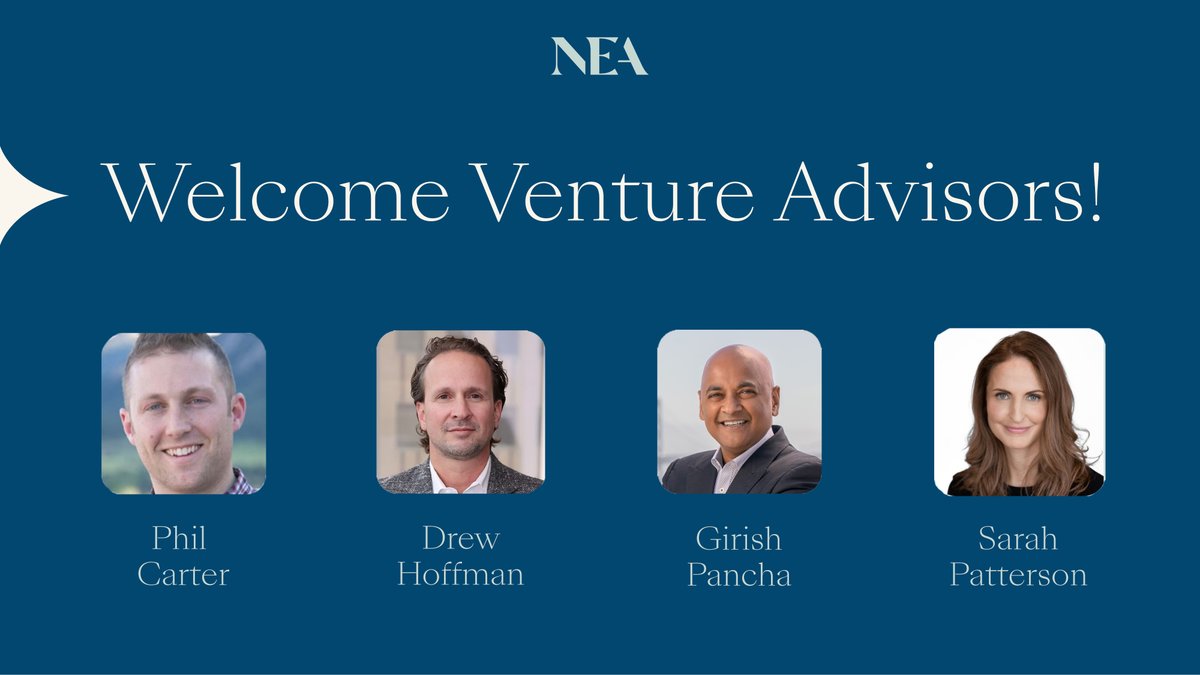
We begin our journey into 2025 with a deep appreciation for the community of talented company-builders that surround us each day. Our relationships with world-class founders, operators, experts, and enthusiasts have always been a cornerstone of NEA, and we are grateful for the opportunity to continue expanding our network to help better ourselves and our portfolio companies.
In recent months, we have been fortunate to formalize our relationships with several seasoned technology leaders—@philgcarter, Drew Hoffman, Girish Pancha, and @patterson_sarah —who we are honored to officially welcome as Venture Advisors!
👉🏽Phil is a skilled operator and investor who has spent the past decade as a VC and product leader helping companies like Faire, Quizlet, and Ibotta build world-class products and accelerate growth.
👉🏽Drew is an accomplished organizational leader who previously scaled an e-commerce company as its President, COO, and CLO, as well as a seasoned venture operator focused on strategic operations and sustainable growth.
👉🏽Girish has more than 25 years of enterprise software experience both as an executive and entrepreneur—including his role as CEO of Streamsets, a former NEA portfolio company acquired by IBM.
👉🏽Sarah is a seasoned tech executive who has held several key leadership roles at Salesforce including leading marketing of their successful Sales and Service Cloud businesses, and most recently served as CMO of Samsara through their IPO.
We’re thrilled to be working with this all-star group! 🤩
1
1,014
6 Dec 2024
1
2
487

30 Oct 2024
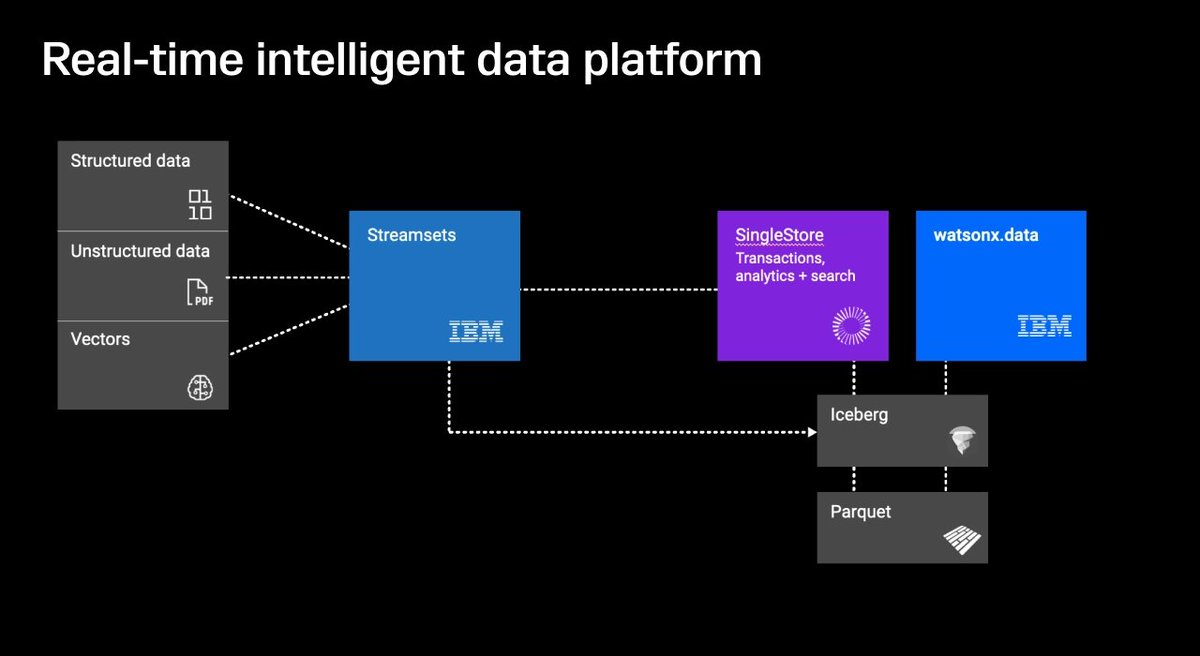
Did you miss our session at @IBM TechXchange? 👀
Check out our recent blog post by @jeffcotrupe and learn the important features and benefits of our partnership with IBM and some of the things we shared with the market at our joint SingleStore-IBM presentation at the #IBMTechXchange 🔗 bit.ly/3YBEqpX
@IBMwatsonx @streamsets
1
3
343

30 Oct 2024
TechXchange: Making Real-Time #Analytics and Decisioning a Reality with SingleStore, watsonxdata and IBM StreamSets
via @SingleStoreDB, by @jeffcotrupe
singlestore.com/blog/making-…
1
2
528

26 Sep 2024
You can use a streaming data pipeline to process large amounts of data without worrying about memory. StreamSets is a good starting option if you don’t want to build your own. I can probably help if you want to delegate.
2
1,728

25 Aug 2024
Here is a list of 100 companies that hire Software Engineers and offer competitive salaries:
1. TravelPerk
2. Plain
3. Flexport
4. Yelp
5. Skyscanner
6. Airtable
7. Temporal Technologies
8. NVIDIA
9. Figma
10. GitLab
11. Wix
12. Adyen
13. Cyberhaven
14. Nansen
15. Timescale
16. Datadog
17. Cleo
18. eBay
19. Protocol Labs
20. N26
21. Canonical
22. Trengo
23. Cerebras Systems
24. reddit
25. VEED
26. Spotify
27. Zalando
28. RapidAPI
29. EPAM Systems
30. Volvo Cars
31. Databricks
32. Codewise
33. OLX
34. Samsara
35. Bumble Inc.
36. Splunk
37. ING
38. Criteo
39. Preply
40. JetBrains
41. HubSpot
42. Doctolib
43. Visma
44. ClickHouse
45. Studocu | Studeersnel.nl
46. BMW Group
47. Hotjar
48. Sumup
49. Zolar
50. Prodrive Technologies
51. Entain
52. Deliveroo
53. Mambu
54. Funding Circle UK
55. DeepL
56. Pure Storage
57. Ocado Technology
58. Boxed
59. Mercari Japan
60. Severalnines
61. Binance
62. TheoremOne
63. 1Password
64. Camunda
65. HackerRank
66. Flow Traders
67. StreamSets Inc.
68. Ceridian
69. New Relic
70. Flyscan Systems Inc.
71. Lightspeed Commerce
72. Medusa
73. Cytiva
74. Milestone Systems
75. Open Government Products
76. Docplanner Tech
77. EAB
78. MetaMap
79. Clarity Technologies
80. ClearBlue Markets
81. Qonto
82. Concentric by Ginkgo
83. Couchbase
84. SpotHero
85. Exos
86. ELEMENT Insurance AG
87. Jack Henry
88. Aetion
89. Trueblue
90. SHOP APOTHEKE EUROPE
91. GetYourGuide
92. EMIS
93. Go City®
94. Secureframe
95. Anaconda, Inc.
96. wefox
97. ZOE
98. HousingAnywhere
99. Knowde
100. CARDO AI
Thanks for taking the time to read this! 🙏📚
1
4
215

15 Aug 2024
Thông báo về ngân hàng tích hợp dữ liệu thời gian thực và IBM:
Việc tích hợp dữ liệu thời gian thực của IBM đang giúp trí tuệ nhân tạo đưa ra quyết định tốt hơn cho các giao dịch ngân hàng. Đây là phiên bản cập nhật có khả năng chạy trên đám mây.
Tích hợp dữ liệu theo thời gian thực của IBM là một phương pháp truyền dữ liệu nhằm thu thập và xử lý dữ liệu khi có sẵn, sau đó tích hợp ngay vào hệ thống đích. Phương pháp này thường được sử dụng trong các trường hợp cần thông tin chi tiết cập nhật từng phút, chẳng hạn như phát hiện gian lận, giám sát và phân tích thời gian thực.
TARGET là một hệ thống thời gian thực xử lý từng khoản thanh toán và gửi xác nhận theo thời gian thực (Mạng liên hệ thông minh tức là Ethereum) rằng mỗi lệnh thanh toán đã được hoàn thành.
Các khoản thanh toán thường đến đích trong vòng vài giây hoặc vài phút sau khi được ghi nợ từ tài khoản của người gửi.
Số tiền nhận được là tiền của Ngân hàng Trung ương (đây là nơi CBDC phát huy tác dụng) và việc thanh toán là quyết định cuối cùng đối với người tham gia nhận sau khi số tiền đã được ghi có.
Tích hợp dữ liệu thời gian thực cung cấp cho người dùng thông tin tích hợp mới nhất. Điều này giúp người dùng đưa ra quyết định nhanh hơn, sáng suốt hơn. Một ví dụ về tích hợp dữ liệu thời gian thực là thu thập dữ liệu thay đổi (CDC). Điều này áp dụng các cập nhật được thực hiện cho các lựa chọn dữ liệu quan tâm đến kho dữ liệu và các nơi gửi tiền khác.
IBM cũng cung cấp IBM StreamSets, có sẵn để đưa ra quyết định theo thời gian thực.
"IBM đã mua lại StreamSets, một công ty tích hợp dữ liệu thời gian thực chuyên truyền dữ liệu có cấu trúc, phi cấu trúc và bán cấu trúc trên các môi trường đa đám mây lai."
Cơ sở dữ liệu được sử dụng như thế nào trong ngân hàng?
"Cơ sở dữ liệu được sử dụng trong các ứng dụng ngân hàng để lưu trữ và xử lý các giao dịch tài chính, theo dõi tài khoản khách hàng, số dư, tiền gửi, quản lý tài sản, khoản vay và thẻ tín dụng."
© Goldilocks
rtinsights.com/ibm-streamset…
ibm.com/topics/data-integrat…
ibm.com/blog/announcement/ib…
redis.io/industries/financia….
newsroom.ibm.com/2024-07-01-…
2
26
789

#GOLDILOCKS
AI BANKING
We have not talked a great deal about artificial intelligence, but it is a very big part of the new Digital Banking System.
IBM is creating artificial intelligence.
IBM Research is creating AI systems, foundation models with transparency, and building trust with future investors.
IBM is also working to make AI development more accessible by using an open-source approach to produce AI.
As we move into an open source Banking System going forward, new developments along the way originating from IBM will bring forth new technologies inside the new QFS.
IBM's adaptive Artificial Intelligence Solutions help to solve real world problems in the new Digital Banking System and the Markets.
"By creating detailed simulations of financial scenarios, generative AI tools provide deeper insights into credit risks.
This helps the financial institutions improve the accuracy of their credit scoring models, leading to smarter lending decisions."
© Goldilocks
appinventiv.com/blog/ai-in-b….
IBM and Real-Time Data Integration Banking Announcement:
IBM's real time data integration is helping artificial intelligence make better decisions for banking transactions.
It is an updated version capable of running on the cloud.
IBM's real-time data integration is a streaming data method that captures and processes data as it becomes available, and then immediately integrates it into a target system.
It's often used in situations where up-to-the-minute insights are needed, such as fraud detection, monitoring, and real-time analytics.
TARGET is a real-time system that handles each payment and sends real-time acknowledgment (Smart Contact Networks ie Ethereum) that each payment order has been completed.
Payments usually reach their destination within a few seconds or minutes of being debited from the sender's account.
The money received is Central Bank money (here is where CBDC's come into play) and settlement is final for the receiving participant once the funds have been credited.
Real-time data integration provides users with the most recent integrated information.
This helps users make faster, better-informed decisions.
One example of real-time data integration is change data capture (CDC).
This applies updates made to data selections of interest to data warehouses and other places of deposits.
IBM also offers IBM StreamSets, which is available for real-time decision making.
"IBM has acquired StreamSets, a real-time data integration company specializing in streaming structured, unstructured and semistructured data across hybrid multicloud environments."
How are databases used in banking⁉️⁉️⁉️
"Databases are used in banking applications to store and process financial transactions, keep track of customer accounts, balances, deposits, asset management, loans, and credit cards."
© Goldilocks
youtu.be/gP46gZKZvEQ?si=Gt9m…
youtu.be/Q7vbTolb68I?si=5S5m…
rtinsights.com/ibm-streamset…
ibm.com/topics/data-integrat…
ibm.com/blog/announcement/ib…
redis.io/industries/financia….
newsroom.ibm.com/2024-07-01-…
8
576

5 Aug 2024
#IBMi shops are among the customers that could benefit from IBM’s completion of its acquisition of webMethods and StreamSets.
itjungle.com/2024/07/10/ibm-…
2
142

25 Jul 2024
$IBM International Business Machines Corporation Q2 2024 Earnings Call Key Highlights:
Financial Performance:Revenue reached $15.8 billion, with a 4% growth at constant currency.
Operating pretax income was $2.8 billion, showing a 17% year-over-year growth.
Operating diluted earnings per share increased by 11% to $2.43.
Free cash flow was strong at $4.5 billion for the first half, up $1.1 billion year-over-year.
IBM raised its full-year free cash flow expectation to greater than $12 billion.
Segment Performance:Software: Grew by 8%, driven by Hybrid Platform & Solutions and Transaction Processing. Red Hat showed strong performance with over 20% growth in annual bookings.
Infrastructure: Revenue grew by 3%, led by IBM Z up 8% and Distributed Infrastructure up 5%. IBM Z continues to address client needs for security, scalability, and resilience.
Consulting: Grew by 2%, with $5.7 billion in signings and a 5% year-over-year backlog growth. Continued pressure on discretionary spending impacted small engagement performance.
AI and Hybrid Cloud Strategy:AI Investments: IBM introduced its Granite models, focusing on smaller, cost-effective AI models. These models are trained on 116 programming languages and offer significant cost savings.
Hybrid Cloud: Remains a top priority with products like RHEL AI and OpenShift AI. IBM’s Granite models are now open-sourced, available under Apache 2.0 licenses on Hugging Face and GitHub.
AI Book of Business: Greater than $2 billion in inception-to-date, with a mix of roughly 1/4 software and 3/4 consulting signings.
Key Acquisitions and Partnerships:IBM completed the acquisition of StreamSets and webMethods from Software AG and expects the HashiCorp acquisition to close by year-end.
Announced partnerships with industry leaders like Adobe, AWS, Microsoft, Meta, Mistral, Salesforce, and SAP.
Partnership with Palo Alto Networks to deliver AI-powered security solutions using watsonx.
Product and Innovation:Launch of IBM Concert, a gen AI-powered tool for end-to-end visibility across business applications.
Expansion of Qiskit for quantum computing, enhancing its stability, efficiency, and usability.
Client Adoption and Ecosystem:Strong client adoption across various industries and geographies, with notable names like Virgin Money, Credit Mutual, and Panasonic leveraging IBM solutions.
IBM is training over 1,000 security consultants on Palo Alto Network products to enhance the book of business.
Strategic Outlook:IBM remains confident in the positive macro outlook for technology spending despite macroeconomic pressures such as interest rates and inflation.
Emphasis on continuing innovation and investment in AI and hybrid cloud to drive organic growth.
IBM expects continued revenue growth, margin expansion, and strong cash generation for the year.
2
327

15 Jul 2024
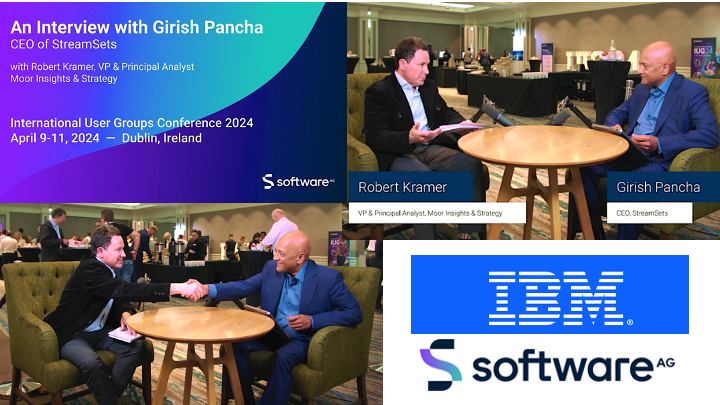
Join me for my recent interview with @streamsets CEO Girish Pancha. We sat down in Dublin, Ireland, at @SoftwareAG's International User Group Conference 2024 to discuss the future of AI, data integration, and SuperiPaaS.
ERP systems have modernized to include AI, improve data quality, and provide better access to information. As organizations expand their technology stacks, creating data silos, the need for advanced integration tools is increasing.
@IBM has recently acquired StreamSets Inc. and #webMethods from Software AG to improve real-time integration, API management, and data ingestion with its Super iPaaS.
softwareag.com/en_corporate/…
@MoorInsStrat
@IBMData
@IBMcloud
@IBMDeveloper
@IBMwatsonx
@IBMNews
2
3
294
5 Jul 2024
Don't miss the latest Enterprise Apps Hot Desk Podcast with @MelodyBrue and @RobKramer_Data – we continue with our insights on @intel's CHIPS Act Funding, @IBM's @streamsets and #webMethods acquisition, @Qualcomm's @Snapdragon's @ManUtd partnership, CX at @RingCentral and @Verint.
Happy July 4th Everyone!!
@MoorInsStrat
3 Jul 2024

We're LIVE! The Hot Desk Pod Ep 28: @Intel's CHIPS Act $, @IBM's @streamsets & #webMethods acquisition, Snapdragon’s @ManUtd deal, CX at @RingCentral and @Verint, and what’s up next week. 🎾☁️ Join me and @RobKramer_Data for these quick takes! 🇺🇸 x.com/i/broadcasts/1rmxPMvde…
1
2
148

3 Jul 2024
We're LIVE! The Hot Desk Pod Ep 28: @Intel's CHIPS Act $, @IBM's @streamsets & #webMethods acquisition, Snapdragon’s @ManUtd deal, CX at @RingCentral and @Verint, and what’s up next week. 🎾☁️ Join me and @RobKramer_Data for these quick takes! 🇺🇸 x.com/i/broadcasts/1rmxPMvde…
2
260