
Who Really Controls AI?
The race to build advanced AI is moving so fast that even its creators do not fully know where it will lead. Questions around bias, job displacement, surveillance, misinformation, and concentrated power are no longer theoretical. As AI spreads into daily life, the bigger issue is not just what it can do, but who controls how it is built and used.
#AIControl #TechPower #FutureOfAI #AIRegulation #AIJobs #Misinformation #TechEthics #PowerAndAI #InfraNewsTube
4
3
11
28

Jun 8
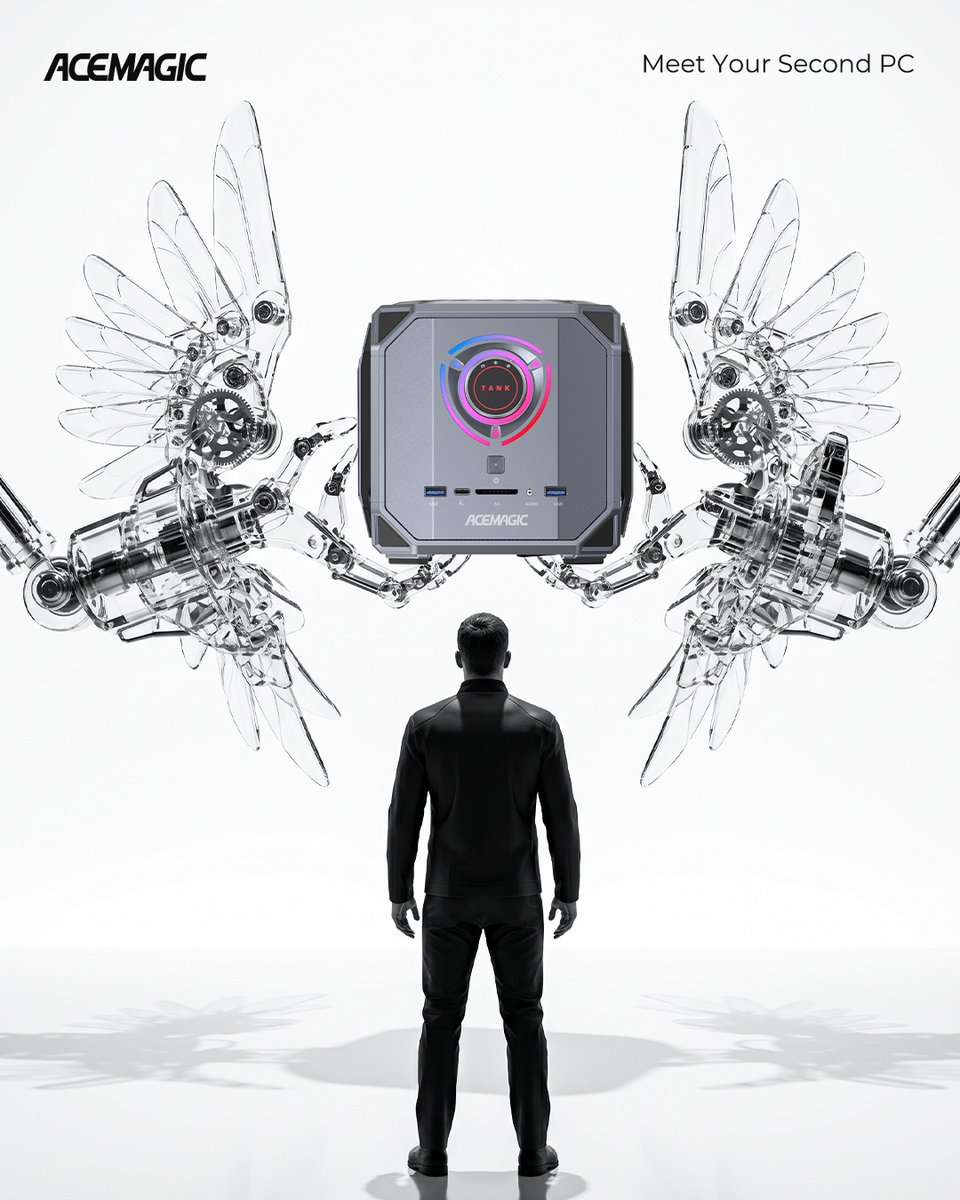
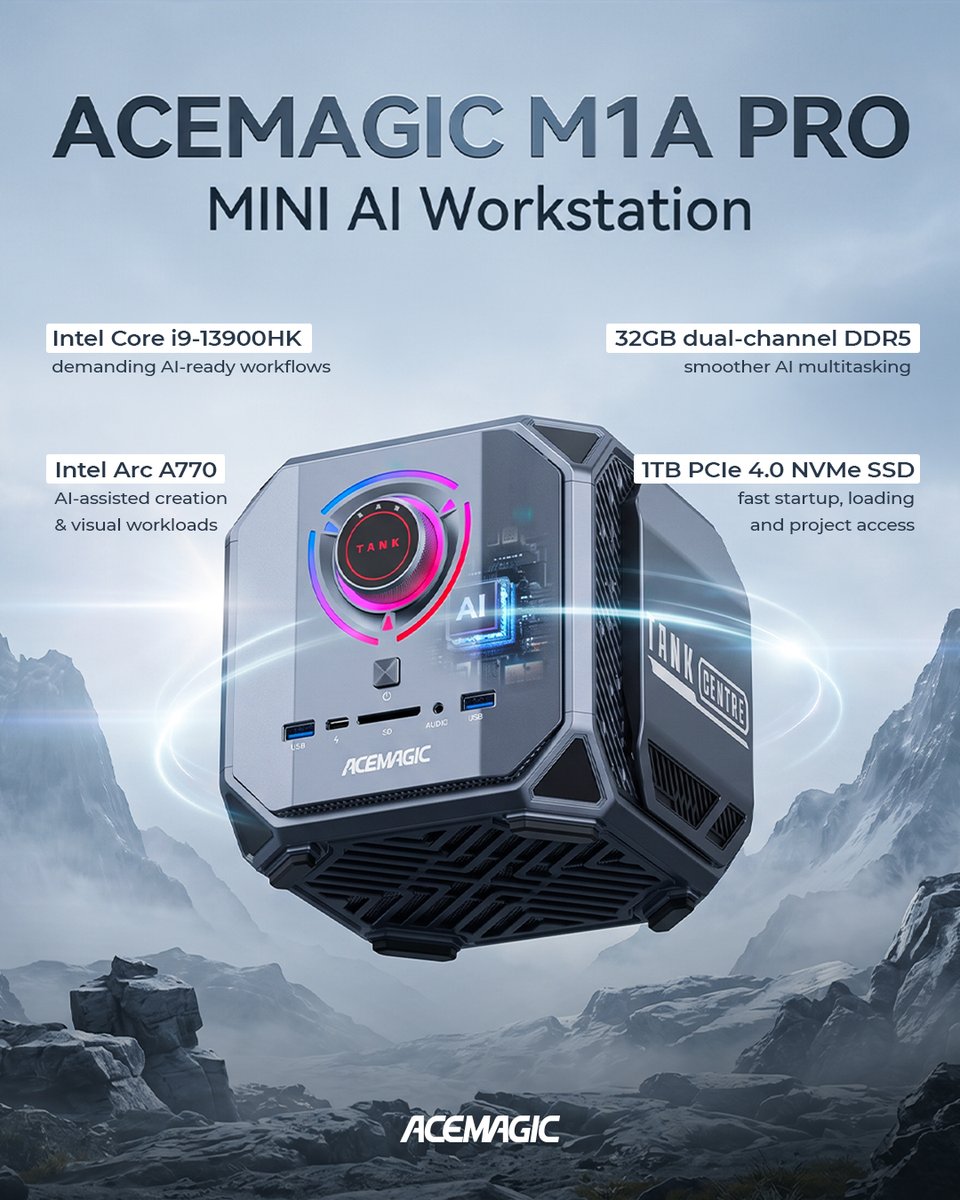
Take flight this Monday with your new power wing 🚀 ACEMAGIC M1A Pro — built to lift your workweek to new heights.
#MondayMotivation #TechPower #minipc #acemagic
3
73

So this is Elon Musk’s “free speech”: boost whatever fits his narrative with algorithmic steroids and mega-accounts, while everything else quietly disappears. Not freedom—just curated amplification dressed up as principle. Bravo. #FreeSpeech #Musk #X #TechPower #Algorithms
2
21

The TRUE Power Of Elon Musk's STARLINK...
The Super Bowl ad showed Starlink as the future.
But that “future” now includes military power, satellite control, and one person deciding who gets access.
🎥 Full Video: youtu.be/1H6RF-fZKe8
#Starlink #ElonMusk #SuperBowlAd #GlobalPower #Geopolitics #TechPower
1
3
44

May 26
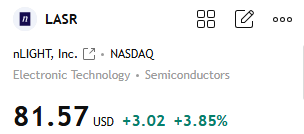
$LASR Today’s 3.85% gain proves once again that betting on cutting-edge defense technology is the right choice! From OUST’s color LiDAR and VIAV’s optical communications to LASR’s high-energy lasers, the stocks we recommend are shaping the future. If you enjoy witnessing technology change the world, stay tuned—see you there!”
#LASR #OUST #VIAV #FutureTech #DefenseInnovation #TechPower
May 26

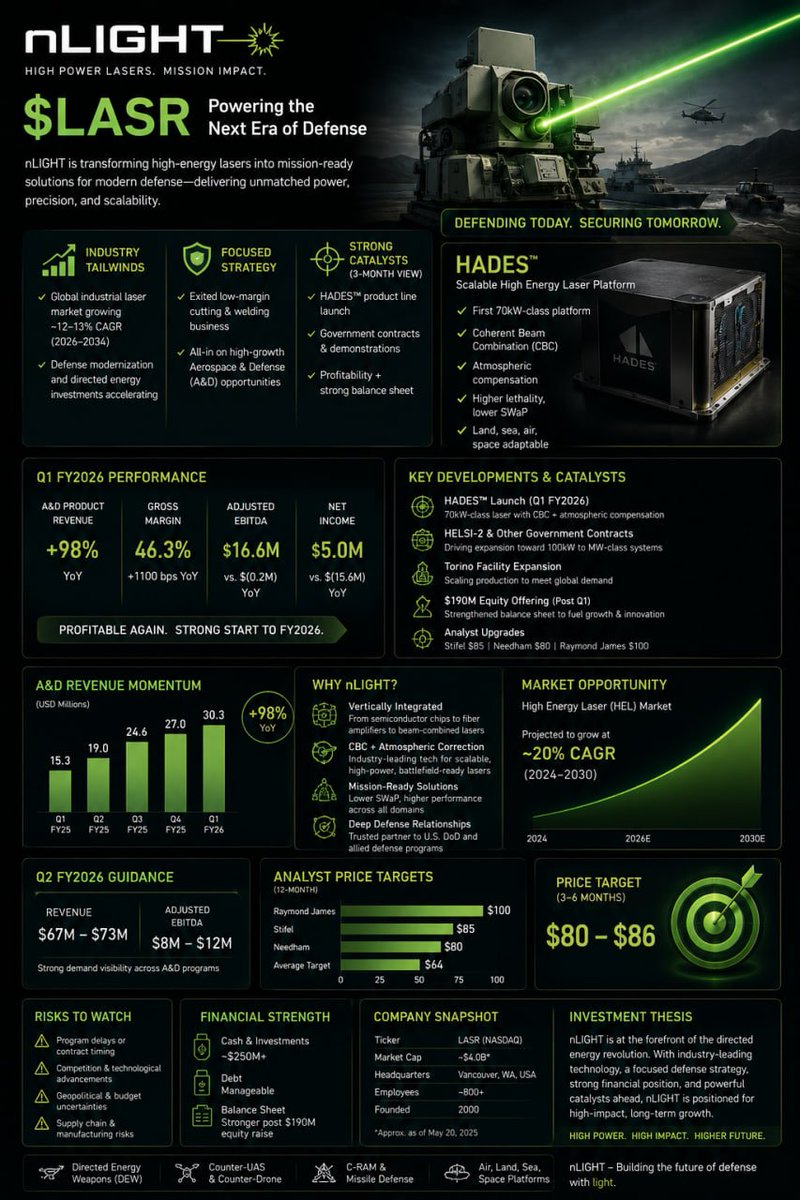
$LASR: Macroeconomic Context and Catalysts (3-Month Outlook)
The global industrial laser market is experiencing strong growth (projected CAGR of approximately 12–13% from 2026 to 2034), driven by automation, EV/semiconductor manufacturing, and additive manufacturing. However, nLIGHT has strategically exited its low-margin cutting/welding business to focus on the high-growth Aerospace & Defense (A&D) sector.
3-Month Highlights:
Acceleration in defense budgets and directed-energy weapons (DEW): The U.S. and its allies are increasing investment in high-energy lasers (HEL) for counter-UAS (C-UAS), counter-RAM (C-RAM), and anti-missile applications. nLIGHT’s Q1 A&D product revenue rose 98% YoY, with defense remaining the primary growth engine.
Launch of the HADES™ product line (Q1 2026): A scalable high-energy laser platform (first 70kW-class), integrating Coherent Beam Combination (CBC) and atmospheric correction technology to deliver greater lethality and lower SWaP (size, weight, and power), suitable for land, sea, air, and space platforms. This directly catalyzes orders and demonstrations.
Government contracts such as HELSI-2: Driving expansion toward 100kW to MW-class lasers; the Torino plant expansion supports international demand.
Return to profitability strengthened cash position: $190 million in equity financing following Q1; ample cash reserves support R&D and capacity expansion. Strong Q2 guidance; analysts have raised price targets (Stifel $85, Needham $80, Raymond James $100, etc.).
Core Competitive Advantage: Vertically Integrated Model: Full-chain vertical integration—from semiconductor chips to fiber amplifiers to beam-combined lasers—accelerates innovation, reduces costs, and protects IP.
CBC Atmospheric Correction Technology: Industry-leading, enabling high-power, scalable, battlefield-ready lasers (superior to traditional systems), supporting power ranges from 10 kW to MW-class.
Target Price: $80–$86
nLIGHT is transitioning from an industrial laser supplier to a leader in defense directed energy. The launch of HADES, coupled with strong demand from the A&D sector, is driving rapid growth in the near to medium term. Key catalysts over the next three months include defense contracts, product deployments, and improved profitability, while the company stands to benefit long-term from the global wave of laser weapon modernization.
#NVDA #MU #AMD #MSFT #AVGO #TSLA #ARM #LASR
2
375

Fuck it, progpower/techpower time
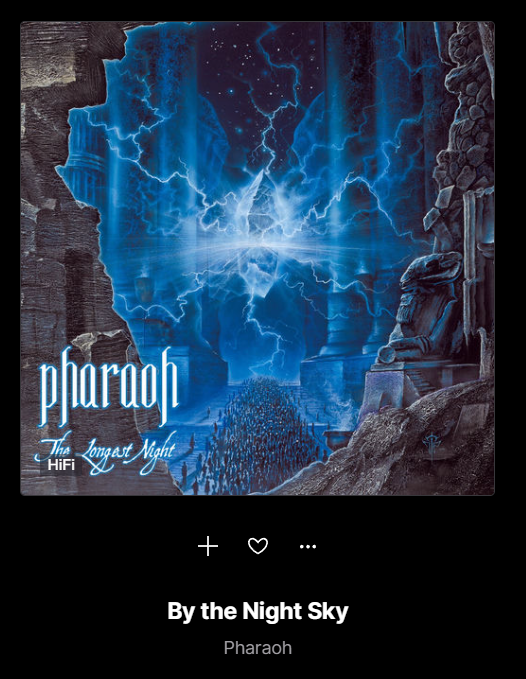
Now listening to Pharaoh - The Longest Night aka the best USPM album YOU didn't listen to 🫵
1
7
187

May 25
Happy Africa Day! 🇫🇴
From TechPower Services, uniting for a stronger, smarter Africa. 🌍
⚡We build the tech that powers Africa's future.
#AfricaDay #HappyAfricaDay #TechPowerDRC
4
8
85

Example 1: Palantir. It’s not "just software." It is vendor lock-in designed to make clients paying hostages for life. Bezos and tech giants accept it because the cost of leaving is higher than the cost of staying. The market no longer forgives. #TechPower
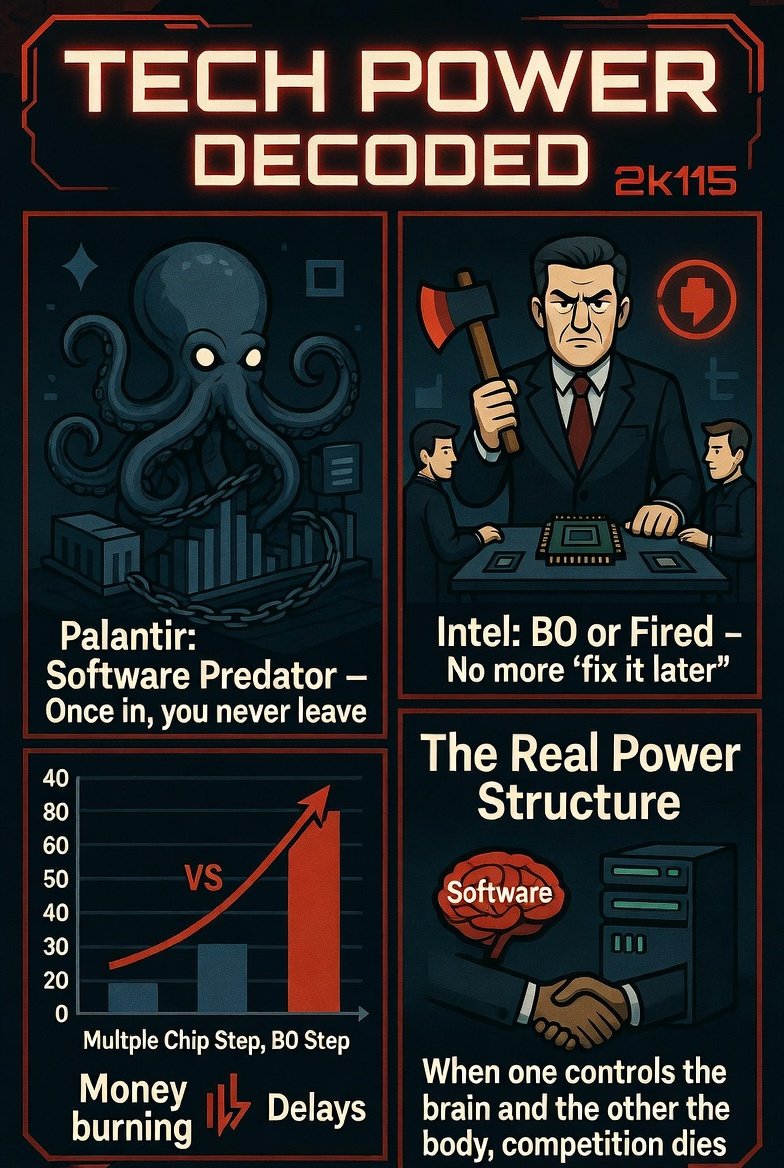
ALT A four-panel infographic titled "TECH POWER DECODED" by 2k115. It uses cartoons and a line graph to illustrate the ruthless mechanics of tech monopolies and execution: Palantir's inescapable vendor lock-in, Intel's brutal production pressure ("B0 or Fired"), and the cold financial math behind corporate power.
1
1
2
9
May 18
7
120
May 14
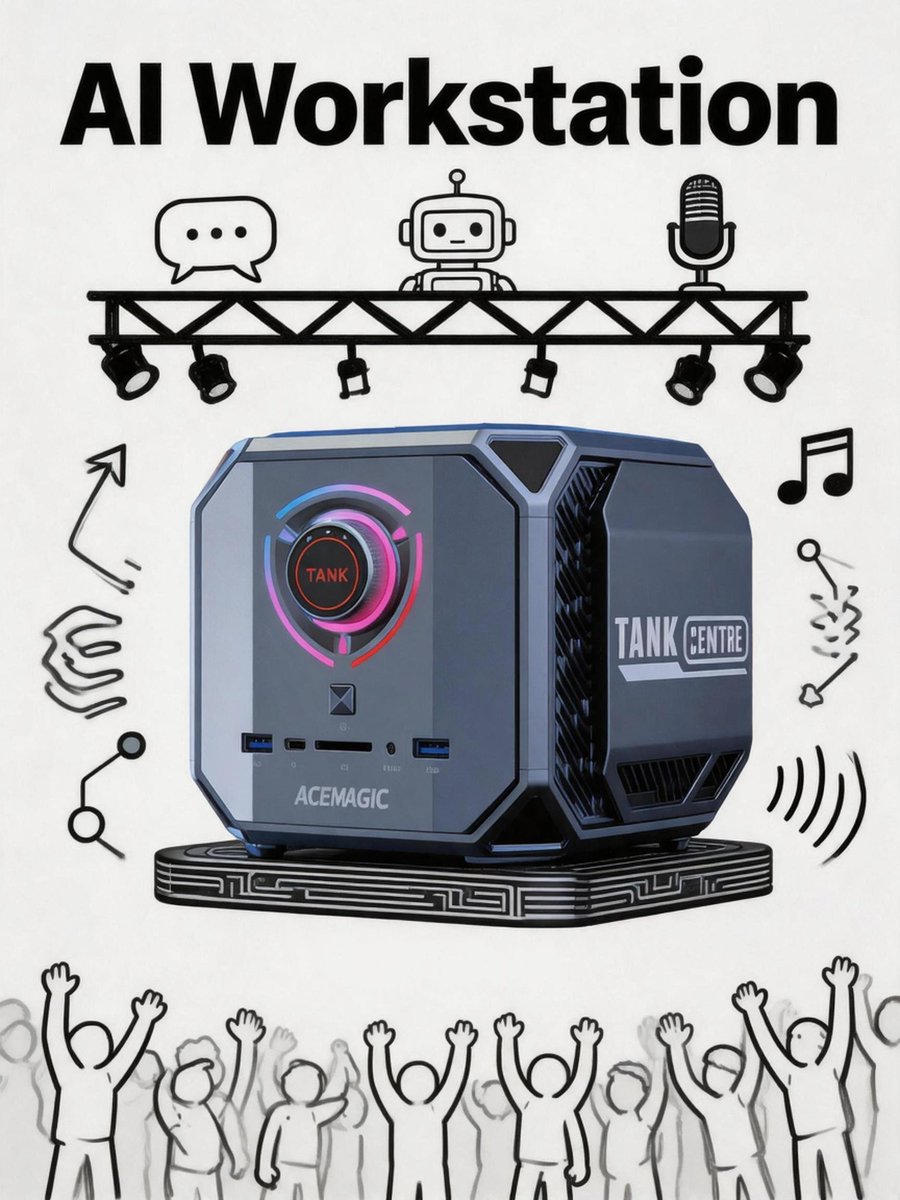
The AI workstation that steals the show 🎤
ACEMAGIC M1A Pro
13900HK A770 power
Crush every midweek workflow
#AIWorkstation #TechPower
1
6
93

The rise of semiconductors and geopolitical power
Semiconductors drive electronics, economies, and global power dynamics. Control over chips is now a strategic priority worldwide.
technopran.com/semiconductor…
#Semiconductors #Geopolitics #TechPower
1
2
51
Elon Musk Made Moves As A PRIVATE GEOPOLITICAL ACTOR
This is what modern power looks like.
One system. One decision. And a battlefield shifts because of it.
The line between technology and warfare is disappearing — and something new is replacing it.
🎥 Full Video: youtu.be/bqzA0SZWMac
#ElonMusk #Starlink #UkraineWar #Geopolitics #TechPower #GlobalInfrastructure
1
1
1
19
May 2
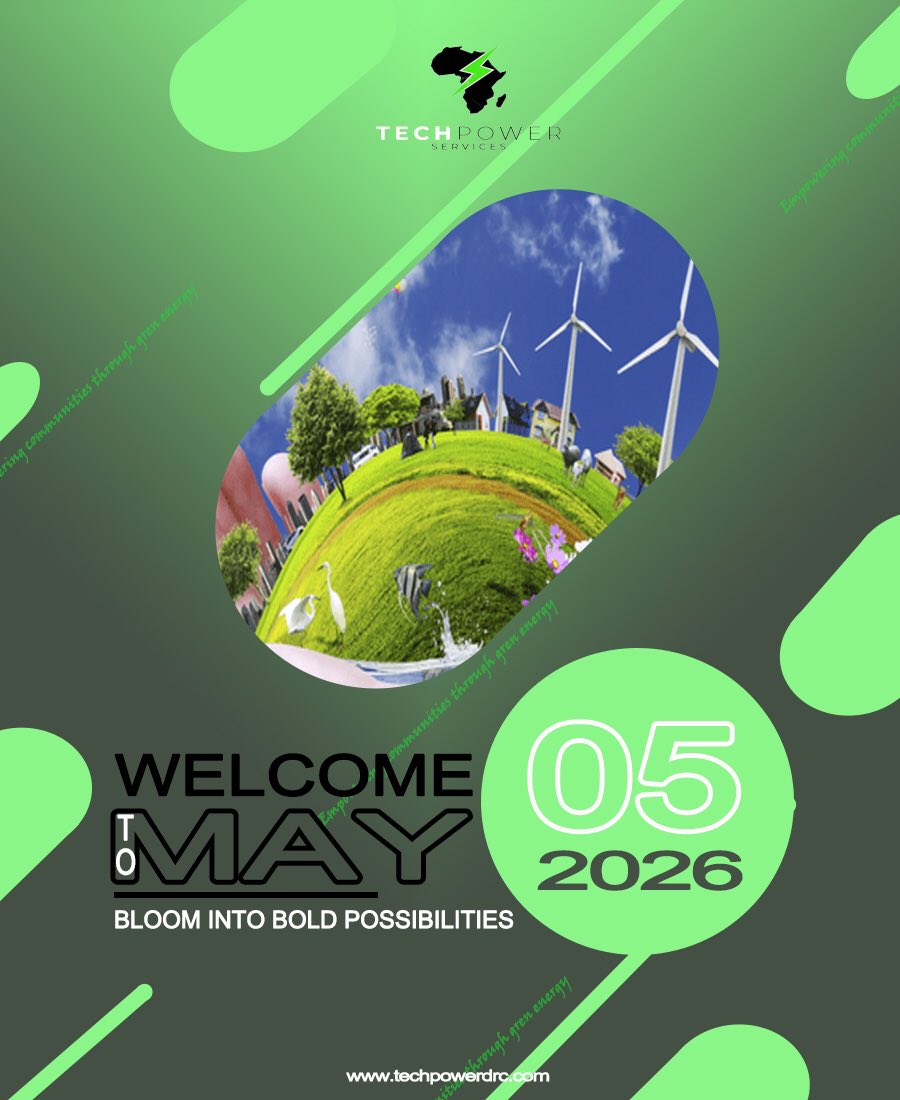
🌱 BLOOM INTO BOLD POSSIBILITIES
Welcome to TECHPOWER SERVICES where #renewableenergy grows the future.
☀️ A good start of the month. #MAY
🔗 techpowerdrc.com
#TechPowerDRC #RenewableEnergy #StartMayRight #solar
2
6
54
May 1
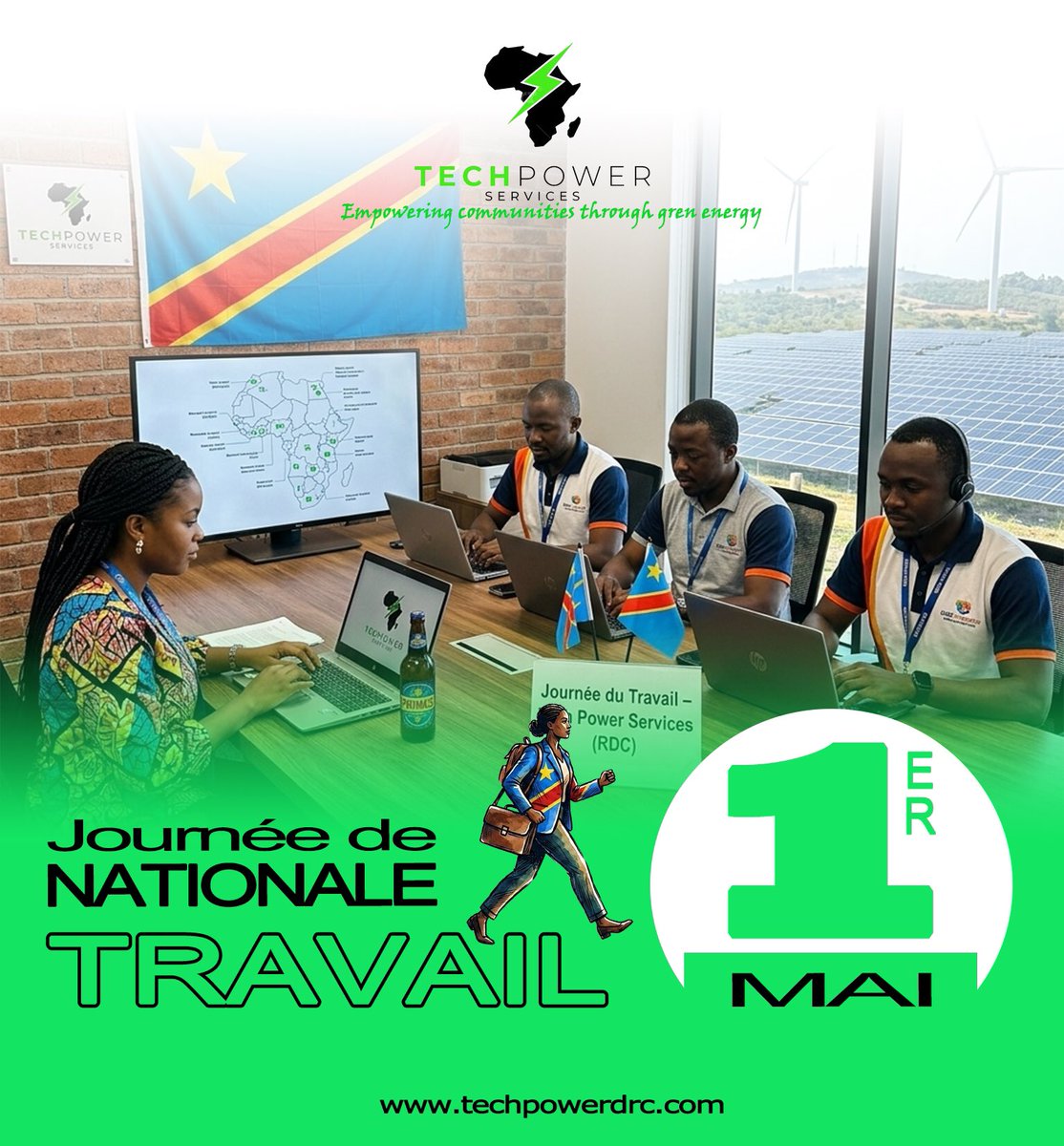
🇨🇩 Joyeuse Fête du Travail👩🏾💻🧑🏼💻 !
🌎✨At TechPower Services, we empower communities through green energy because decent work deserves a sustainable future🌱🛣
#LabourDay #DRC #RenewableEnergy #NewMonthNewGoals
#NEWSな美意識 #WorkHard #TPS #viralpost2026 #viralシ #fypシ゚ #.
4
8
100
Apr 30
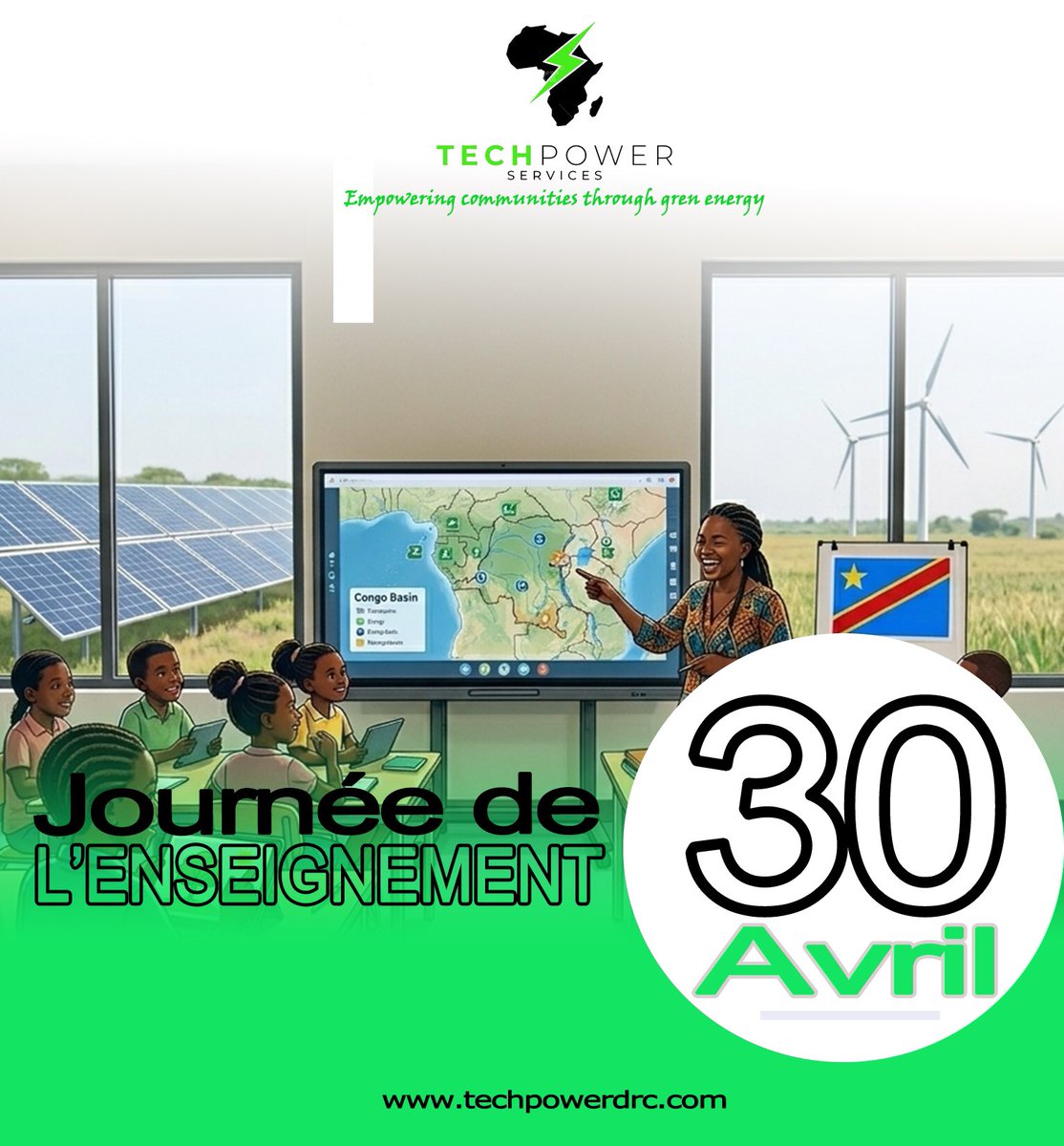
📚Joyeuse Journée de l'enseignement !
Chez TechPower Services, former les esprits d'aujourd'hui = préparer la transition énergétique de demain.
🔋🌍 Énergie propre & éducation pour tous.
📅 30 avril
#JournéeDeLEnseignement #GreenEnergy #TechPowerServices #fypシ゚viralシfypシ゚
3
7
73


Apr 27
“जब सड़क की रफ्तार, आसमान से वार बन जाए…
तो दुश्मन का बचना नामुमकिन हो जाता है।
बाइक से फाइटर जेट तक का ये ट्रांसफॉर्मेशन,
तकनीक और साहस की नई मिसाल है।
जय जवान, जय हिंद! 🇮🇳💥🔥”**
#IndianArmy #IndianAirForce #DefenseIndia #MakeInIndia #TechPower #JaiHind #ProudMoment #DeshBhakti #IndianForces
1
2
233

Apr 26
THE BILLIONS I SAW BEFORE THEY EXISTED: SPECTRUM, POWER, AND THE MEN WHO GOT THERE FIRST
By Kio Amachree | Stockholm, Sweden
#Starlink #Spectrum #TechPower #ElonMusk #SpaceX #Tesla #SiliconValley #GlobalInfluence #WhoGetsBacked
I want to say something that I have never said publicly before.
Not because I was ashamed of it.
But because the world was not ready to hear it — and frankly, neither was I ready to frame it in terms that the world might finally understand.
In the 1990s, I held a communications license obtained through an American company called Speedus, run by my friend Shant Hovnanian.
This was not a side project. This was not a small business ambition.
This was licensed radio frequency spectrum — the foundational asset behind every serious communications architecture on earth. Governments do not give this away. The FCC regulates it with the ferocity of a military command. Nations auction spectrum for billions of dollars precisely because it is the invisible infrastructure beneath every mobile network, every satellite system, every broadband backbone, every defense grid on the planet.
What we had was an unusual and powerful spectrum configuration with the capacity to support wide-area communications at genuine scale.
I had seen what this could become. I had seen it as clearly as I have ever seen anything in my life.
If I had had the right financial structure around that asset — the right legal protection, the right capital partners, the right political alignment — that license alone could have seeded multi-billion-dollar communications infrastructure across Nigeria and West Africa.
Bill Gates saw what Speedus had. There was real interest. The company ended up in litigation. And like too many early-stage technology ventures built by people without generational capital behind them, it collapsed.
That is not a failure of vision.
That is a failure of who the system is designed to protect.
Now let us talk about Elon Musk and Starlink.
Not with mythology. Not with reverence. With facts.
Starlink is a low-Earth orbit satellite constellation operating at roughly 550 kilometres altitude, deploying over 6,000 satellites across Ku-band and Ka-band spectrum, delivering broadband latency between 20 and 40 milliseconds to users in over 100 countries. It is, by any technical measure, a spectacular piece of infrastructure engineering.
It is also — and I say this with complete precision — the industrialised version of exactly what I was holding in my hands thirty years ago.
The idea was not new.
The execution was funded.
And there is a vast, canyon-wide difference between those two things.
Around the same period, I had a stake in an electric vehicle company based in Santa Rosa, California.
Let me be absolutely clear about the timing.
This was before cost curves on battery technology had dropped to commercial viability. Before the Gigafactory existed. Before Tesla, Inc. became a market force that rewrote the valuation of the entire automobile sector. Before any of that — the concept, the investment, the commitment — was already in motion.
The company collapsed.
The managing director disappeared to Brazil with investor funds.
I want you to sit with that for a moment, because I know what it cost.
Not just financially. It cost the particular kind of confidence that comes from being ahead of your time and having nothing to show for it — because the people around you were not equal to the vision, and the system offered you no recourse.
Again: not a failure of intelligence.
Not a failure of foresight.
A failure of structure. A failure of protection. A failure of who gets backed and who gets left holding wreckage.
So I want to be honest about how I look at Elon Musk.
I do not see a genius who materialised from the void.
I see a man who arrived — with real talent, I will grant him that — at the precise intersection of U.S. capital markets, government contract pipelines, and the legal and political infrastructure that protects assets and punishes challengers.
Analysis by The Washington Post estimates that Musk and his businesses have received at least $38 billion in government contracts, loans, subsidies and tax credits since 2003 — and that figure excludes classified defence work. 
SpaceX alone holds $22 billion in government contracts as of 2024. 
In 2024 alone, federal and local governments committed at least $6.3 billion to Musk’s companies — the highest total to date. 
And yet the public narrative presents Musk as a lone disruptor. A self-made revolutionary. A man who bent the future through sheer will.
What he actually bent was the procurement system of the United States government — while simultaneously shaping the administration that controls it.
That is not disruption.
That is capture.
Musk was born in apartheid South Africa.
I say that not as an insult but as a fact that requires examination — because context is everything.
He came out of a system whose entire architecture was built on racial hierarchy, structural exclusion, and the violent suppression of Black economic and political life. He benefited from that system. He left it when it became inconvenient. He arrived in America and was absorbed — rapidly, lavishly — into its own hierarchy of privilege and capital access.
I arrived in America too.
I went to Wharton. I worked on Wall Street. I sat in rooms where decisions were made. I held ideas and licenses and investments that were legitimate, serious, and early.
The difference between my story and his is not intelligence.
It is not work ethic.
It is not even vision.
It is the difference between having an apartheid pedigree that makes you legible to American capital — and being an African man from a distinguished family whose credentials are real but whose access to the machinery of protection is always, structurally, conditional.
In recent years, Musk’s public conduct has moved beyond controversy into something that deserves to be named directly.
His amplification of racially charged narratives on X — the platform he purchased and then systematically stripped of the moderation structures that existed to protect vulnerable communities — is documented. His alignment with political forces whose agenda targets minorities, immigrants, and democratic norms is on the public record. His engagement with and amplification of white nationalist-adjacent content is not a matter of interpretation — it has been catalogued by researchers, journalists, and civil society organisations across multiple continents.
While DOGE has targeted $800 million in Pentagon contracts and grants broadly, Musk’s SpaceX has been left untouched — even as it inks new multibillion-dollar deals. 
That is not a coincidence.
That is the system working exactly as designed — for exactly who it was designed to protect.
I am not writing this from bitterness.
I write it from a particular kind of clarity that only comes from having lived both sides of this equation — from having seen the ideas before they were empires, and from having watched, over decades, how the machinery of capital and power determines whose vision survives.
I have seen billion-dollar systems before they existed.
I have held the spectrum licenses. I have sat at the table with the electric vehicle investors. I have watched, from Stockholm, as the world celebrated men for arriving, well-funded and well-connected, at destinations I had already mapped.
What I did not have was $38 billion in government contracts standing behind me.
What I did not have was a political administration that considered my interests synonymous with national interests.
What I did not have was the particular kind of protection that flows — invisibly, reliably, historically — to men who look like Elon Musk and not like me.
So when the world marvels at these tech empires, I want it to understand something with absolute clarity:
The difference is not always intelligence.
It is not always innovation.
It is not always who got there first.
It is who gets backed.
Who gets protected.
Who survives the legal wars, the collapsed partners, the stolen investor funds, the systemic indifference — and who does not.
And in the end, that is not a story about technology.
That is a story about power.
And who, in this world, has always been allowed to keep it.
Kio Amachree is a Stockholm-based diaspora activist, political commentator, and President of Worldview International.
2
178

Apr 24
Reclaim absolute authority. 🛡️
Your system. Your rules. Experience optimized performance and uncompromising privacy without complexity or compromise.
Take control. Stay in command.
#CyberSecurity #DigitalControl #PrivacyFirst #SystemOptimization #TechPower #InfoSec #SecureYourSystem #Fvtal #Stealth
7
12
116

Apr 23
🤖TECH/AI FINANCE SCARE
AI MYTHOS SPARKS FEAR AMONG GLOBAL FINANCE ELITE
Anthropic’s unreleased Mythos model causing dread at IMF/World Bank meetings amid energy shocks & war risks. Elite confusion over next-gen AI stability.
Data-backed: Potential systemic threats to financial systems. Positive twist: Could accelerate safer AI governance & innovation.
Full story: news.bloomberglaw.com/artifi… #AIMythos #TechPower
4
4
40