
The current techlash in the west could kill the internet as we know it.
11

Jun 13
El Techlash llegó a la gente.
Jun 13

Los vecinos y vecinas de Madrid empiezan a rebelarse contra #AIRBNB. Segun parece 153 accesos a pisos turísticos han sido saboteados en Puente y Villa de Vallecas, Latina, Lavapiés, Carabanchel, Tetuán y Ciudad Lineal han sido saboteados.
Así empieza todo!
128

Jun 13
The only thing here that is anthrop-ish here is the gov.
Under which law can jailbreaks be weaponized against companies?
No, the new wave is governments opposing intelligence.
Techlash as populism. Poised to thrive.
8

Jun 11
In general, I think it's the case that this crowd went through most of their lives as left-libertarian, but since the one-two punch of Trump & covid I have seen them flip to a deep authoritarianism that would shock their younger selves, mostly for culture war techlash reasons.
2
52
2,258
Jun 11
But they got fully onto the techlash train when crypto came around. It's not really clear to me why this is, but a lot of it is Trump & resistance politics & crypto being right-libertarian-coded. It was the wrong tribe. So when LLMs came out of similar tech circles... 🤷♂️
1
37
3,331
Jun 11
I am & have been adjacent to a bunch of these ppl online via FB & private listserves -- a milieu of boomer & GenX sci-fi creatives, futurists, & game devs. An extended network. They reason they all closed ranks against AI is simple: they're still doing the techlash.
Jun 11

i suspect there's some kind of cycle of cope and ego where, like, these guys want to be the prophets and storytellers who light the way to the future and play with its shadows, but they already fucked up early on by dismissing LLMs and going for legible consensus status instead of encountering the future as it arrived ahead of the crowd, so the frontier passed them by, and now in order to catch up to it and learn from it they have not only a lot of distance to cover, but a huge amount of ego-inertia; they'd have to be publicly wrong, and risk being cringe, and without the lived momentum of surfing the unfolding wave of the future as a visionary and feeling the reality of that more profound reward than instant consensus recognition that comes from reaching toward the visionary engine at the end of time, they are lost and only know to play the losing game of clinging to and proselytizing a bygone world where they themselves belonged to the class of prophets who saw further and more boldly.
15
12
171
214,104

Jun 11
always a regulatory game in play, but not only that imo. too many constituents with diff incentives needing diff messages. already escaped the upstarts on at least capital / compute / talent early network effects so it’s less about tightening a moat. also want to look responsible after the last techlash, justify numbers to private and public markets, set up competitive contrast with other labs, recruiting, public sentiment …
1
1
47

Amid School Techlash, Accessibility Advocates Worry About Exclusion edsurge-contentful-prod.us-e…
2

Jun 9
Amid School Techlash, Accessibility Advocates Worry About Exclusion | @scoopit via @ImFutureReady sco.lt/6F7ywS
5
Jun 8
Al menos desde 2018 hay un techlash a nivel global respecto de la tecnología, las empresas tecnológicas y los megaempresarios del sector.
243

Amid School Techlash, Accessibility Advocates Worry About Exclusion edsurge-contentful-prod.us-e…
11

.@semaforben writes: Even as some of the research around technology and children remains contested, America’s political class is nearly unanimous in agreement: Social media was a scourge, and the total political failure to channel a ripple of popular “techlash” into regulation was a signal triumph of corporate power.
Read more: semafor.com/article/06/08/20…
2,393

Jun 5
AI is primarily a blue state problem, and Democrats have the most to lose amid brewing voter ‘techlash’ | Tristan Bove, Fortune
Anxiety about AI is real, and it feels like it’s everywhere. Proclamations of AI-driven job losses and grassroots movements opposing data center construction make AI fears sound as if they’re universal, but there is a geography underlying the backlash against AI.
With midterm elections five months away and AI policy promising to be a political flashpoint, that map could come in handy for Democratic candidates—either as an asset, or as warning of their vulnerabilities.
AI anxiety has escalated to a national conversation, but actual exposure to the technology remains relatively confined to specific cities and states. Workers whose roles are most exposed to AI are disproportionately clustered in Democratic-leaning jurisdictions, according to an analysis by the Brookings Institution published Wednesday. For a party still struggling to revitalize itself after widespread electoral losses in 2024, AI fears could emerge a make-or-break factor this November.
In 2024, 62 of the 100 most AI-exposed counties voted Democrat, according to Brookings, which defined counties as AI-exposed if larger shares of their workforces performed roles that could be handled by AI. Those places include traditional blue strongholds like Manhattan, the Bay Area, and Seattle’s King County, though several swing states—all of which were won by President Donald Trump in 2024—also reflect high degrees of AI exposure, including Arizona and Georgia.
The growing anxiety and public backlash over AI is likely to play a significant role during the midterms. Polling this year suggests a growing share of Americans are more likely to have negative feelings toward AI than positive ones, and a majority consider AI’s deployment to come with significant risks. A survey last month by researchers at the University of Pennsylvania found 65% of Americans say the government is doing “too little” to regulate AI.
“The ‘techlash’ against artificial intelligence is spreading, driven by workers’ fears of the technology’s potential to disrupt their jobs and upend their livelihoods,” the Brookings authors wrote.
Some Democrats have seized on the issue and made it central to their campaign strategy, with some legislators calling for moratoriums on data center development and criticizing the Trump administration for its AI approach. The messaging might pay off, but given that the bulk of AI anxiety is concentrated in places that already voted blue two years ago, Democrats also stand to lose the most should AI backlash turn local.
A double-edged map
It isn’t necessarily a surprise the country’s AI-exposed geography currently leans Democrat. The Brookings authors called this a case of “occupational sorting.” Democrats tend to govern in urban areas where white-collar and office work represent bigger proportions of the local economy, performing the kinds of roles firms are experimenting with AI for. The Brookings report described Democrat-run, high-exposure counties as “hotbeds for some of the AI era’s most agitated voters.”
This concentration of AI exposure could be a built-in advantage for Democrats, at least while Republicans control all three branches of government. Rising electricity prices, in part driven by data center energy needs, have already featured prominently in campaigns in which Democratic candidates have appealed to voters’ affordability concerns, and lawmakers including Sen. Bernie Sanders (I-Vt.) and state Sen. Kristen Gonzalez (D-N.Y.), have publicly backed plans to institute moratoriums on data center construction.
It’s what Rebecca Lissner, a former Biden administration advisor on national security, recently referred to as the “populist AI backlash.” In an article for Time in February, she wrote that the brewing AI discontent among many Americans could eventually unfurl into a “potent populist political force” for either party to take advantage of.
Beyond blue strongholds, Democrats could find success with their AI messaging too. Democratic candidates, such as Michigan’s Mallory McMorrow, have recently put out their own AI action plans covering online safety and tax policies to govern AI-driven wealth gains. Democrats also might hope their messaging can land with audiences across the political spectrum. The recent University of Pennsylvania survey found 53% of Republicans say the government should do more to regulate AI, as well as 73% of independents—roughly the same share as Democrat respondents.
Data center construction has been primarily popping up in rural states, including swing states such as Arizona, Georgia, and Nevada. Local activists have also made Texas—where Democrats hope candidate James Talarico can flip a Senate seat blue in November—a hotbed for anti-data center protests. Talarico has consequently used his campaign trail to call for stricter regulations on data centers’ environmental impact.
Yet the same geography that makes AI exposure a potential Democratic asset could turn it into a liability. Despite the AI backlash and Trump’s own plummeting polling, Democrats remain uniquely unpopular too. A March NBC News poll found public opinion on AI had fallen off a cliff, though Americans were even less favorable of the Democratic Party. The same poll found while only 20% of Americans say Republicans would do a better job at governing AI, trust in Democrats was even lower, at 19%.
Democrats have been scrambling to nail down their message on AI for months, banking on riding affordability concerns and the AI backlash to a strong showing in November. But should their message not land, they risk not only a failure to get independents on their side: They might lose trust among the majority of AI-exposed Americans who already voted for them.
fortune.com/2026/06/04/ai-bl…
3
12
1,801

Jun 3
The @ProgressChamber also recently released an interesting new report on the “Democrats’ Techlash Trap,” which included some discussion of the pro-innovation Clinton-Gore vision:
progresschamber.org/project/…
1
1
6
388

May 29
a good mini-essay, but misses the shape of the ai techlash, its fine to assert 'humans are valuable', this doesn't change your material conditions when you're replaced by claude, our society values humans by the value they can deliver in the market, not by their indignation
until this anxiety is addressed, the techlash will likely continue, the 'weird collection of arguments' is a vain attempt to communicate 'dont let me fall!' to the powers-that-be, it's 'weird' because this is the only way to trojan horse that plea without loss of self-esteem
the object level philosophy of aesthetics hardly matters at scale in this discourse

2
1
26
1,797

May 29
GALAXY BRAIN AI DATA CENTER FIGHTS EPISODE LETS GO!!!
thanks for bringing me on to talk about my reporting on the national land use techlash @TheAtlantic @cwarzel
listen everywhere podcasts exist!!!
open.spotify.com/episode/5wW…
12
3,580

May 28
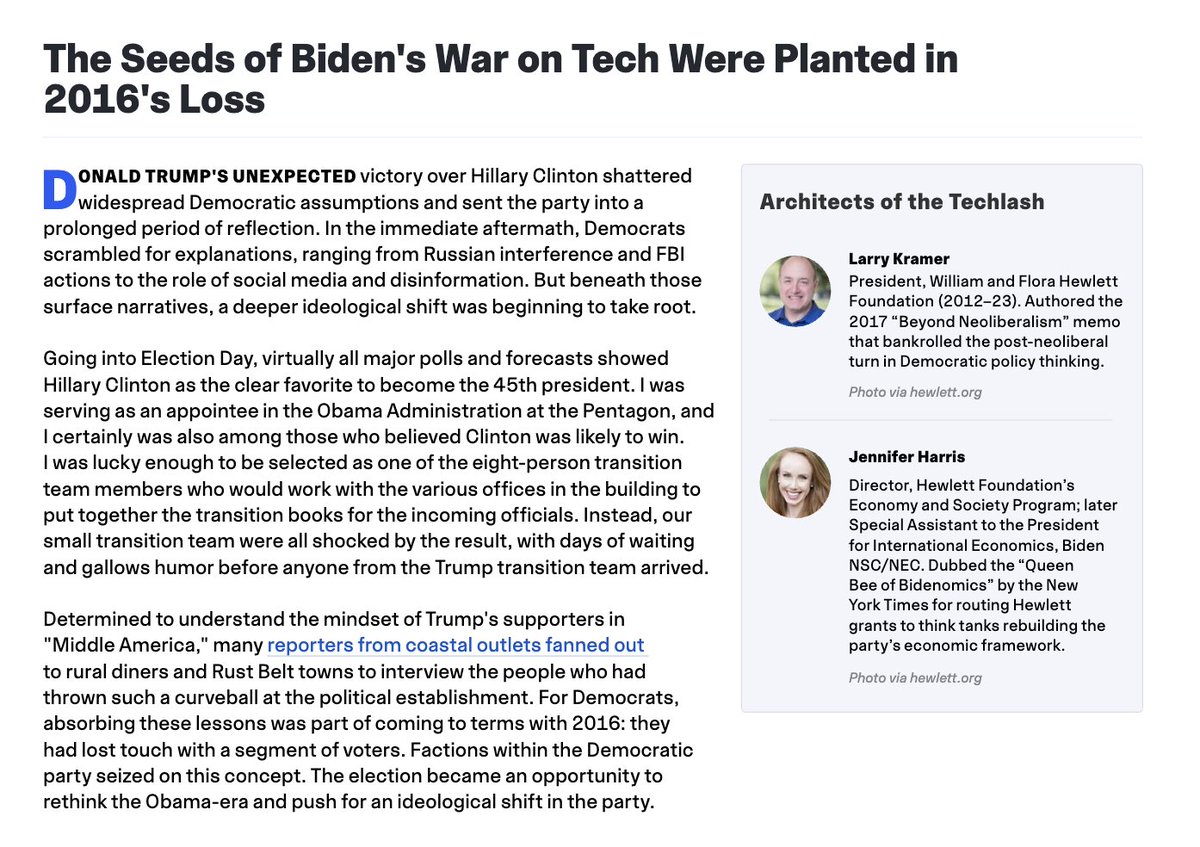
The Road to Techlash
After the 2016 election, Democrats saw tech as political villains rather than tools to organize, communicate, and govern.
1
2
144

May 28
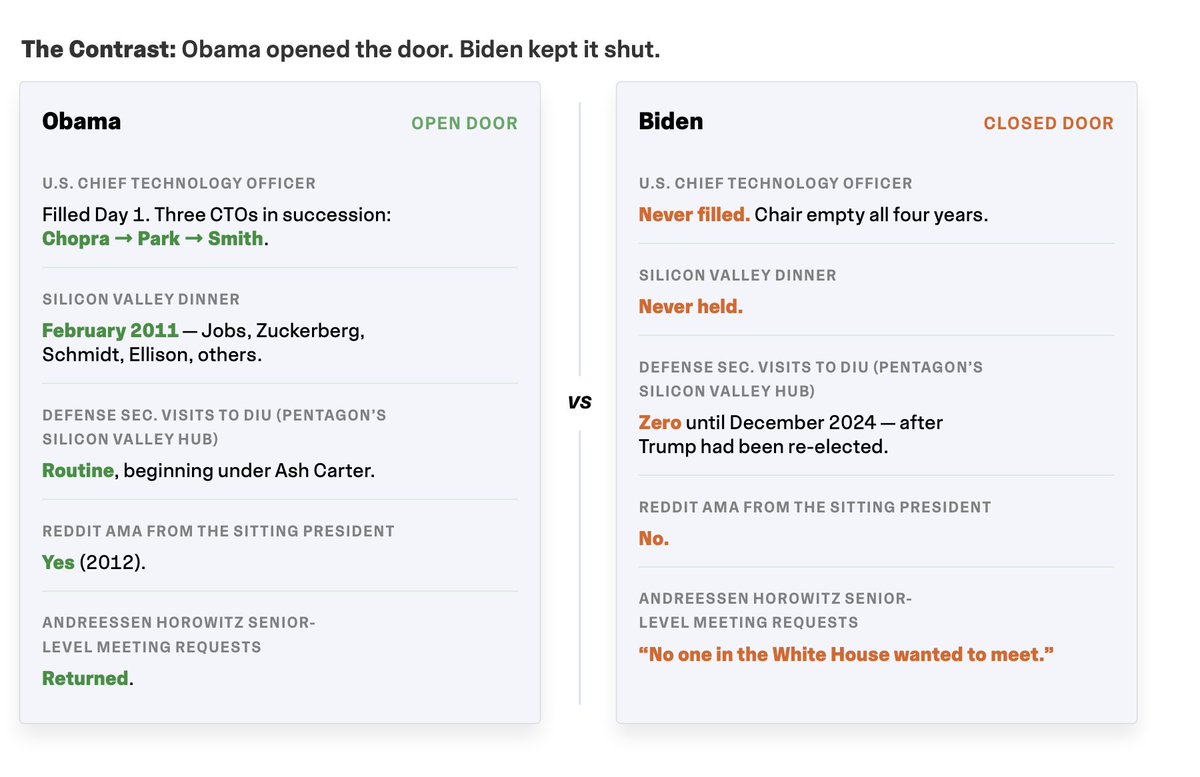
Reading the @ProgressChamber report on Demo's putative "techlash" I was puzzled by the evidence. Whether the POTUS does a Reddit AMA? Whether @a16z could get a high-level meeting?
2
12
1,233

May 28
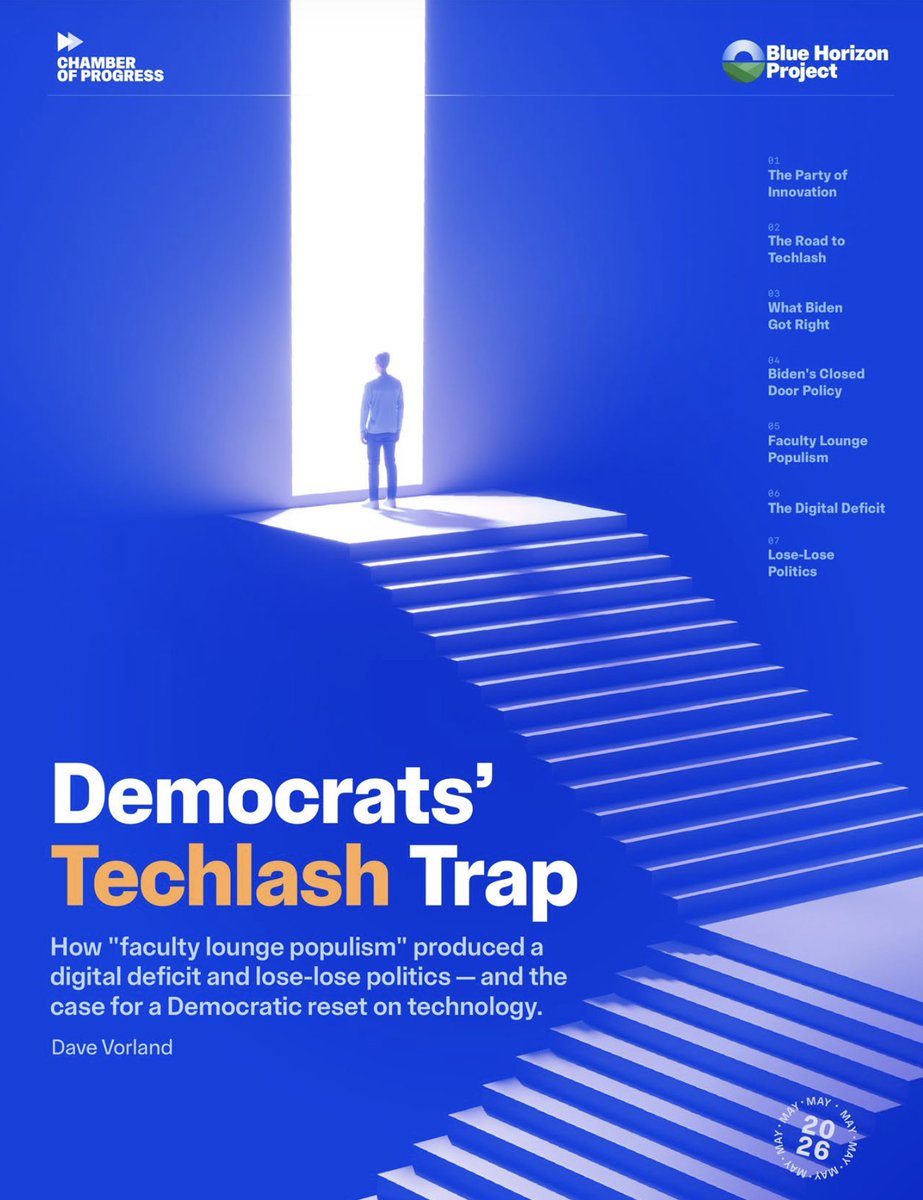
The Democrats' Techlash Trap is an in-depth review of how and why the relationship between Democrats and tech industry broke during the Biden Administration and what Democrats can do to reclaim our status as the party of innovation.
progresschamber.org/project/…
1
3
8
2,870
May 28
NEW:
We Democrats used to be the party of innovation.
But we took a misguided turn against tech in the Biden era.
Our new report by @DaveV15 on Democrats' Techlash Trap explains why and how this happened - so that Dems can correct this lose-lose policy & political mistake.
49
11
145
608,100