
Jun 15
Czemu tak się dzieje ?
Jak Chiny skracają budowę reaktora z 15 do 5 lat?
Chiny budują reaktory w tempie, które dla Zachodu jest dziś nieosiągalne. Średni czas realizacji nowego bloku jądrowego wynosi tam 5–7 lat, podczas gdy globalna średnia to 9, a w USA ostatnie reaktory powstawały nawet 15 lat.
Kluczem jest pełna standaryzacja: identyczne projekty, powtarzalne procedury, seryjna produkcja komponentów i budowa całych „pakietów” po sześć reaktorów naraz. Dzięki temu każdy kolejny blok jest tańszy i szybszy w realizacji.
Państwo Środka niemal podwoiło swoją moc jądrową od 2016 r., osiągając 60 GW, a w latach 2025–2026 rozpoczęło budowę ośmiu kolejnych reaktorów. Do 2030 r. Chiny mają wyprzedzić USA i UE pod względem mocy zainstalowanej.
Szybkość ma też wymiar strategiczny: rosnące zapotrzebowanie na energię wymaga źródeł stabilnych i tanich w eksploatacji. Duże reaktory dostarczają prąd taniej niż SMR-y, dlatego Pekin stawia na gigabloki, choć równolegle rozwija własne małe reaktory, jak Linglong‑1.
W praktyce oznacza to jedno: Zachód eksperymentuje, Chiny budują i to w tempie, które może zdefiniować globalny rynek energii na dekady.
źródło: technologyreview


7
10
67
6,823

Five things you need to know about AI dlvr.it/TSxtDS #ArtificialIntelligence #AITrends #SXSW #TechnologyReview #FutureOfAI

2

Mar 25
OpenAI’s new target is an autonomous AI researcher that can break big problems into parts, run many agents in parallel, test ideas, read results, fix mistakes, and keep going for days with little help.
~ MIT Technology Review
The bet is that coding agents are the first real proof this can work, because software engineering already looks like research in miniature: long chains of decisions, failed attempts, tool use, memory, and step-by-step checking.
So the jump from Codex to a research system is not about one smarter answer, but about building a machine that can plan, delegate, verify, and recover across a full project instead of a single prompt.
---
technologyreview .com/2026/03/20/1134438/openai-is-throwing-everything-into-building-a-fully-automated-researcher/

15
15
82
6,424

Jan 28
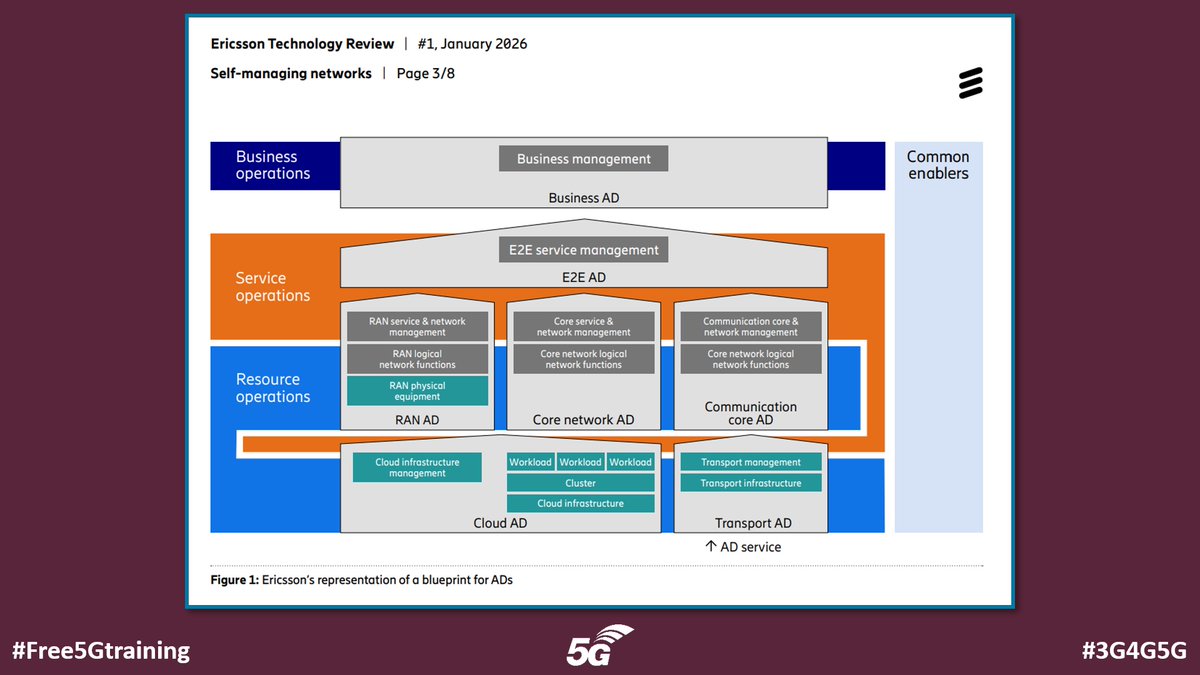
Ericsson Technology Review: Autonomy by design – enabling self-managing networks across the life cycle - ericsson.com/48e944/assets/l…
#Free5Gtraining #3G4G5G #5G #6G #Ericsson #TechnologyReview #AutonomousNetworks #IBN #AutonomousDomains #ADs #SelfManagingNetworks #ZeroTouch #OSS
5
5
256


6 Dec 2025
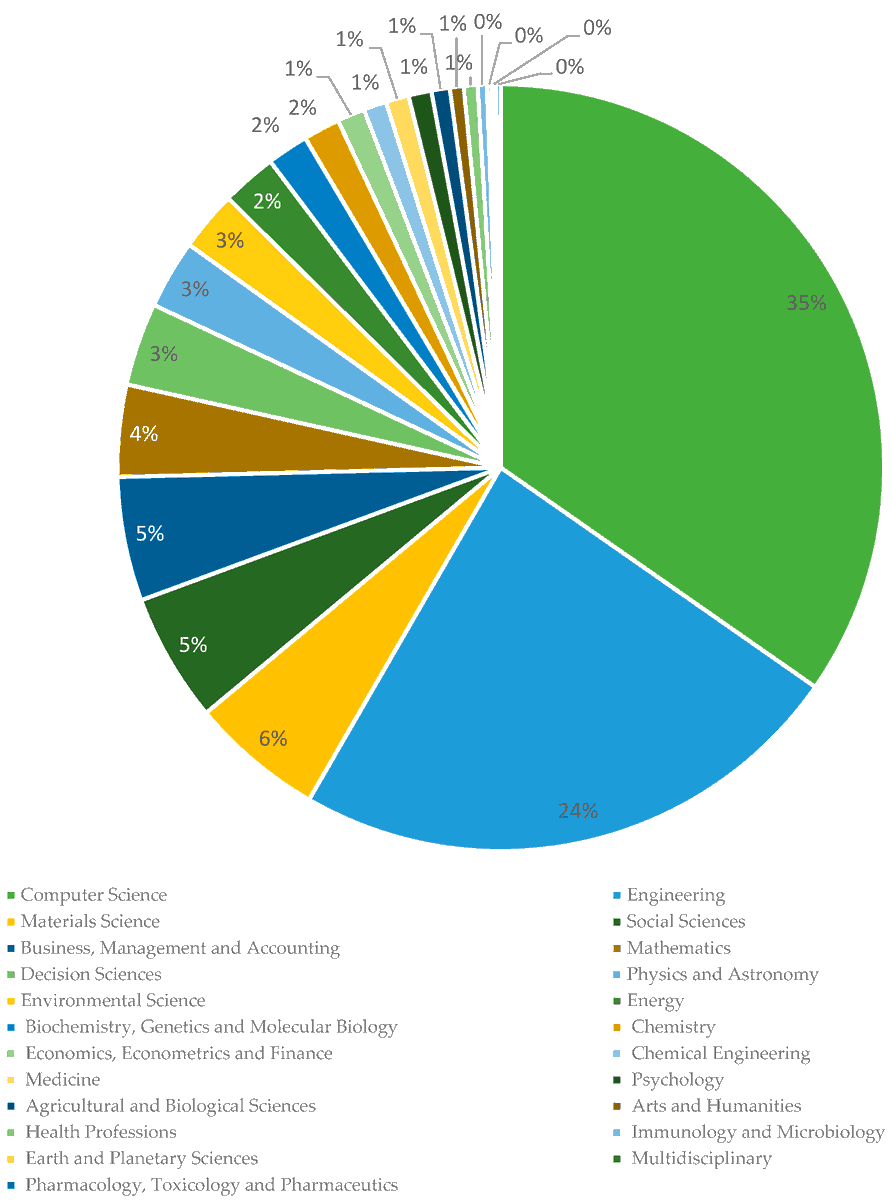
🔐 Read #HighlyCitedArticle "Smart Contracts in Blockchain Technology: A Critical Review" by Hamed Taherdoost.
See more details at:
mdpi.com/2078-2489/14/2/117
#SmartContracts #Blockchain #TechnologyReview
@ComSciMath_Mdpi
1
4
60

20 Nov 2025
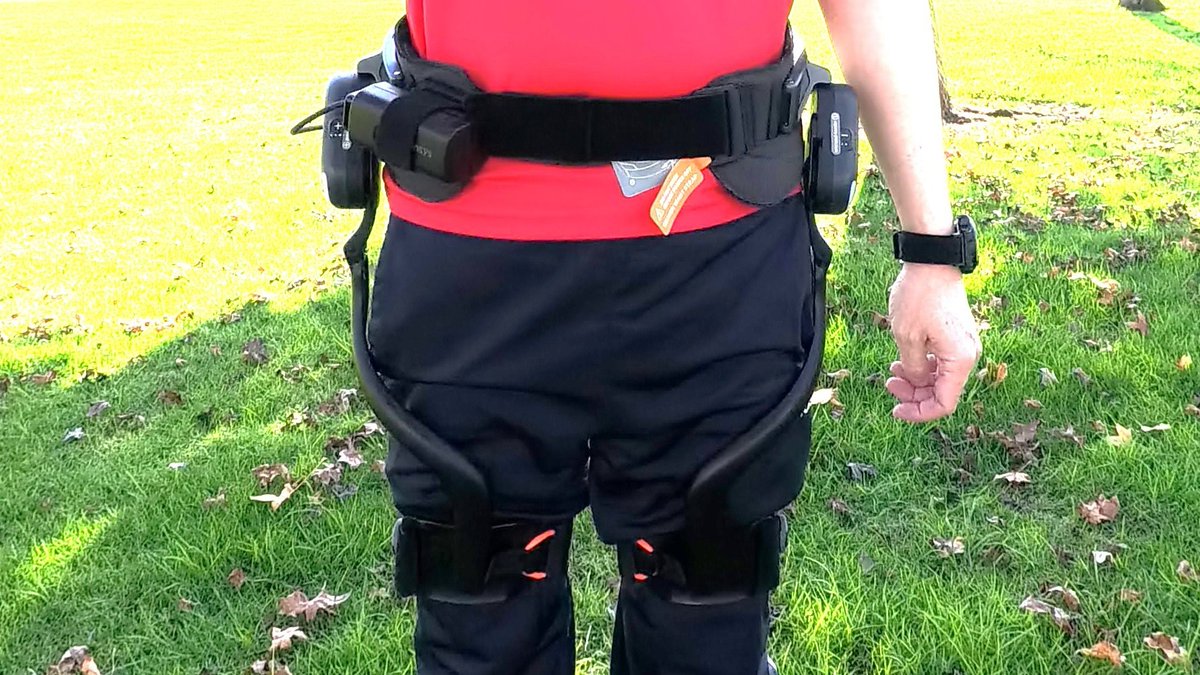
Dnsys X1 Carbon Pro exoskeleton hands-on: Energy boost dlvr.it/TPMlfd #Exoskeleton #TechnologyReview #OutdoorGear #WearableTech #MobilityAid
2
242

16 Nov 2025
The Davinci robotic teleportation system has been around since 1999. Recent integrations of vision-language models (VLMs) have enabled da Vinci and similar platforms to perform specific tasks—like lifting tissue, using a needle, or suturing—autonomously, though only under controlled circumstances. Neuralink has a robotic surgery system.
Neuralink’s surgical system, specifically its R1 robot, automates a significant portion of the electrode implantation process, with a technology that resembles a rapid, robotic sewing machine for placing ultra-fine threads into the brain—with positional accuracies on the order of 25 microns. The robot can insert up to six wires (192 electrodes) per minute and is specifically designed to achieve a level of speed and precision that is widely recognized as impossible for human hands, especially given the delicacy required to avoid vascular damage and to target appropriate neural regions.[technologyreview 4]
Level of Automation
•The R1 robot currently automates most of the electrode insertion steps, including puncturing the meninges, placing the threads, and avoiding surface blood vessels or critical brain structures without manual guidance for each placement.[wikipedia]
•A neurosurgeon supervises and initiates the procedure, monitors progress, and can intervene, but the robot executes the critical micro-movements and implantations independently during the most delicate phases.[pcmag 1]
•Neuralink is actively working toward a fully automated surgical process, with the goal of allowing hospitals to implant devices at scale, minimizing the need for skilled neurosurgeons to perform the operations manually in the long term.
@tesla @neuralink
1
8
39
1,666

6 Nov 2025
La desinformación también entra en la consulta médica 🧠
🎙️ “Combatirlas no es solo cuestión de ciencia, es cuestión de confianza”
Lee el artículo completo aquí 👉technologyreview.es/article/…
#teoríasdelaconspiración #technologyreview #MIT
2
267
30 Oct 2025
The recently released DeepSeek-OCR paper has huge implication for AI memory, long‐context problems and token budgets.
It frames the OCR model not only as a document‐reading tool but as an experiment in how models can “remember” more by storing data as images rather than text tokens.
With this paper, DeepSeek really found a new way to store long context by turning text into images and reading them with optical character recognition, so the model keeps more detail while spending fewer tokens.
DeepSeek's technique packs the running conversation or documents into visual tokens made from page images, which are 2D patches that often cover far more content per token than plain text pieces.
The system can keep a stack of these page images as the conversation history, then call optical character recognition only when it needs exact words or quotes.
Because layout is preserved in the image, things like tables, code blocks, and headings stay in place, which helps the model anchor references and reduces misreads that come from flattened text streams.
The model adds tiered compression, so fresh and important pages are stored at higher resolution while older pages are downsampled into fewer patches that still retain gist for later recovery.
That tiering acts like a soft memory fade where the budget prefers recent or flagged items but does not fully discard older context, which makes retrieval cheaper without a hard cutoff.
Researchers who reviewed it point out that text tokens can be wasteful for long passages, and that image patches may be a better fit for storing large slabs of running context.
On the compute side, attention cost depends on sequence length, so swapping thousands of text tokens for hundreds of image patches can lower per step work across layers.
There is a latency tradeoff because pulling exact lines may require an optical character recognition pass, but the gain is that most of the time the model reasons over compact visual embeddings instead of huge text sequences.
DeepSeek also reports that the pipeline can generate synthetic supervision at scale by producing rendered pages and labels, with throughput around 200,000 pages per day on 1 GPU.
The method will not magically fix all forgetting because it still tends to favor what arrived most recently, but it gives the system a cheaper way to keep older material within reach instead of truncating it.
For agent workloads this is appealing, since a planning bot can stash logs, instructions, and tool feedback as compact pages and then recall them hours later without blowing the token window.
Compared with vector databases and retrieval augmented generation, this keeps more memory inside the model context itself, which reduces glue code and avoids embedding drift between external stores and the core model.
---
technologyreview .com/2025/10/29/1126932/deepseek-ocr-visual-compression

4
24
132
8,510
4 Oct 2025
🧬 Microsoft research just found that AI can design new, harmful toxins that are able to sneak past the security safety checks meant to stop their creation.
The team used AI models to redesign known toxins like ricin, changing their structure just enough to fool the screening software while keeping their bad effects.
To prevent bioterrorism, companies that create custom DNA use special software to screen all orders.
This software checks if a requested DNA sequence matches any known dangerous substances, like toxins or viruses, and blocks the order if it does.
The Microsoft research team used generative AI, the same technology used for designing new medicines, to test this security system.
The AI was instructed to slightly change the designs of known toxins so their DNA code would look different, but the final protein would still be harmful.
This experiment was a success, as the AI-designed toxins were able to bypass the screening software, representing a previously unknown "zero-day" vulnerability.
The entire test was conducted digitally, and no actual harmful proteins were physically created.
Before publishing their findings, Microsoft alerted the US government and the software makers, who have since updated their systems.
However, the fix is not perfect, as about 3% of the AI-generated harmful designs can still slip through the patched software.
This has sparked a debate on whether to focus on better DNA screening or to build safety controls directly into the AI models themselves.
This research makes the threat of AI-assisted bioweapon design much more concrete, shifting it from a theoretical problem to a demonstrated one.
It forces a serious conversation about how to build defenses for dual-use technologies where the same tool can be used to both heal and harm.
---
technologyreview. com/2025/10/02/1124767/microsoft-says-ai-can-create-zero-day-threats-in-biology/

4
4
37
6,247
18 Sep 2025
🦠 Another new revelation of the power of Gen-AI
AI just created bacteria-killing viruses.
🧬 Stanford and the Arc Institute used an AI to design viral genomes.
Following this, bacteria was then successfully infected with a number of these AI-created viruses, proving that generative models can create functional genetics.
Proves AI models can propose not just sequences but full genome architectures with working gene layouts, which is a big jump from suggesting small edits.
The team trained an Evo model on about 2,000,000 phage genomes, so it learned patterns of what gene content and order tend to yield viable viruses.
Instead of copy pasting known genomes, the model suggested variants with new genes, truncated genes, and shuffled gene orders that still fit the viability patterns it learned.
The lab synthesized the AI sequences as DNA, added them to E. coli, and looked for plaques, which are clearings where phages burst cells, confirming replication.
This research is so meaningful because whole genome viability is a hard combinatorial problem where most random designs fail.
This is different from protein design or single gene edits, since genome level proposals must coordinate promoters, coding regions, reading frames, and packaging rules all at once.
Scaling this to cellular organisms is far tougher, since E. coli has roughly 1000x more DNA and cannot boot from naked DNA, so any test loop must rewrite living cells gradually.
Near term, the same loop, propose with AI, synthesize, test, feed back results, could speed phage therapy design and vector engineering for gene delivery.
Samuel King, a student who led the project, said:
"There is definitely a lot of potential for this technology. One area where I urge extreme caution is any viral enhancement research, especially when it's random so you don't know what you are getting.
If someone did this with smallpox or anthrax, I would have grave concerns."
---
technologyreview. com/2025/09/17/1123801/ai-virus-bacteriophage-life/

2
3
17
4,107
30 Aug 2025
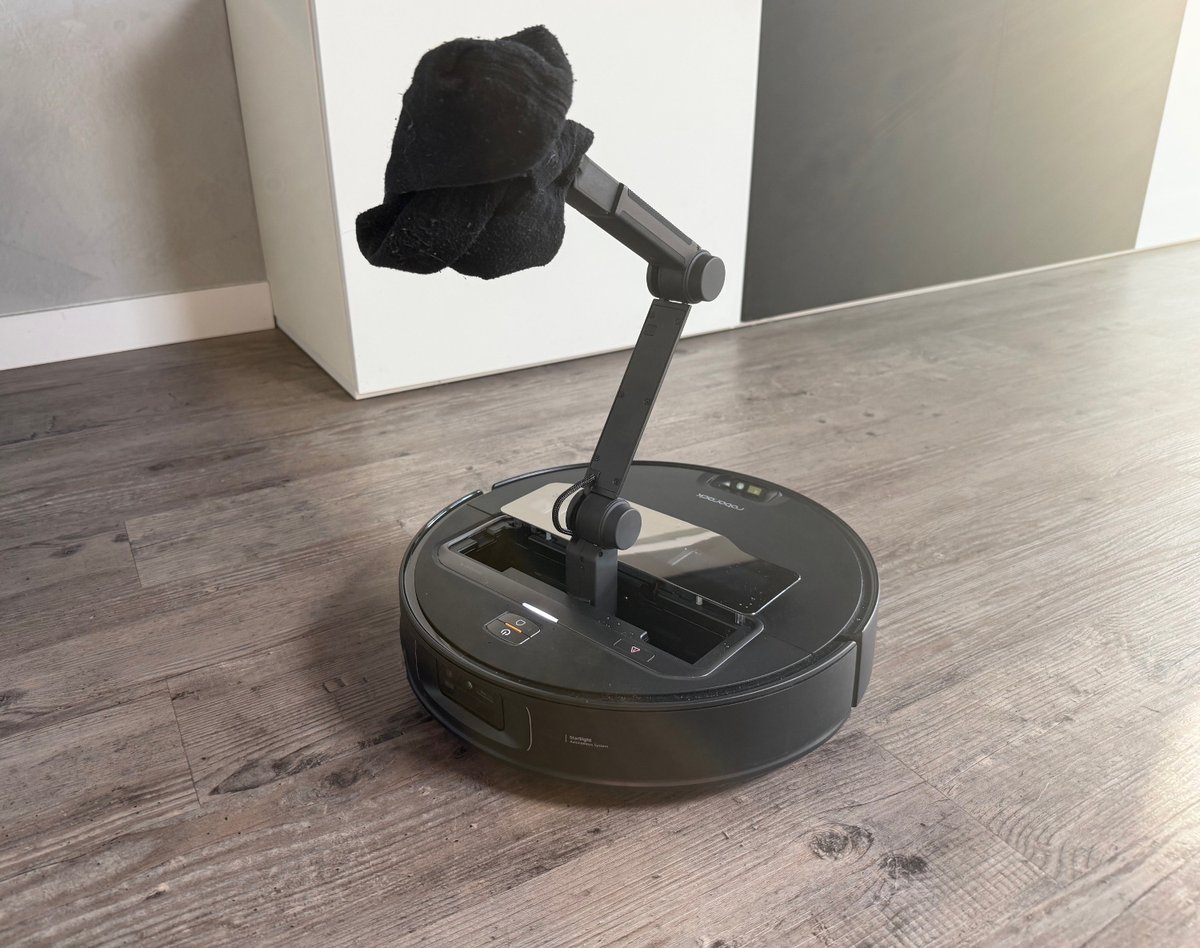
Innovative and spectacular, but also useful? Roborock Saros Z70 robot vacuum with robotic arm review dlvr.it/TMmnnp #Roborock #RobotVacuum #SmartHome #HomeCleaning #TechnologyReview
1
2
447

11 Aug 2025
#クエイズQuaise #ミリ波で地下20キロへ掘削
ミリ波で地下20キロへ、「掘削の再発明」で挑む
米スタートアップの地熱革命
MIT technologyreview
technologyreview.jp/s/365847…
>従来のドリルで岩を削る代わりに、ミリ波エネルギーで溶かして掘り進む
1
2
46
4 Aug 2025
#逆さま揚水発電 #クイドネットQuidnetEnergy #水を地下に圧送することでエネルギーを貯蔵
「逆さま揚水発電」で長期蓄電、米スタートアップが実証
MIT technologyreview 08/04
technologyreview.jp/s/366277…
>水を地下に圧送することで最大6か月間エネルギーを貯蔵できることを示す実証試験
1
2
58
29 Jul 2025
🇨🇳 China is ahead here too.
China treats AI as normal study gear, not coursework cheating.
Ministry plan and Beijing rules push AI literacy into every syllabus.
Campuses run full‑spec DeepSeek on local servers, handing students free unlimited chat.
Library card grants endless tokens.
Two years back students hid mirror copies of ChatGPT behind VPNs. Warnings of plagiarism filled lecture slides, now professors run prompt clinics and repeat one rule, machines draft, humans decide.
Liu, for example, a professors at the China University of Political Science and Law, recommends that students use generative AI to write literature reviews, draft abstracts, generate charts, and organize thoughts.
---
technologyreview .com/2025/07/28/1120747/chinese-universities-ai-use/

41
134
657
65,039

24 Jul 2025
Review: @niyumiy ➡️Instagram
Think it's just cute? Wrong! 🧐
@niyumiy Measured: With super long battery life⚡,
waterproof💦, and smart reminder⏰, this watch redefines 'all-rounder' !⌚️
#Review #TechWithStyle #pejeglobal #TechGirl #PEJESmartwatch #PEJEZW02 #waterproof #WatchControl #Smartwatch #TechnologyReview #recommended #peje
2
209

10 Jun 2025
🎯 No quarterly IT review? Red flag. 🚩
You can’t improve what you’re not measuring.
Get all the questions you should be asking your IT provider every quarter ➡️ afasterpc.com/2025/06/09/7-q…
#compliancetips #mspchecklist #technologyreview #mspservices #cybercompliance
94

26 Apr 2025
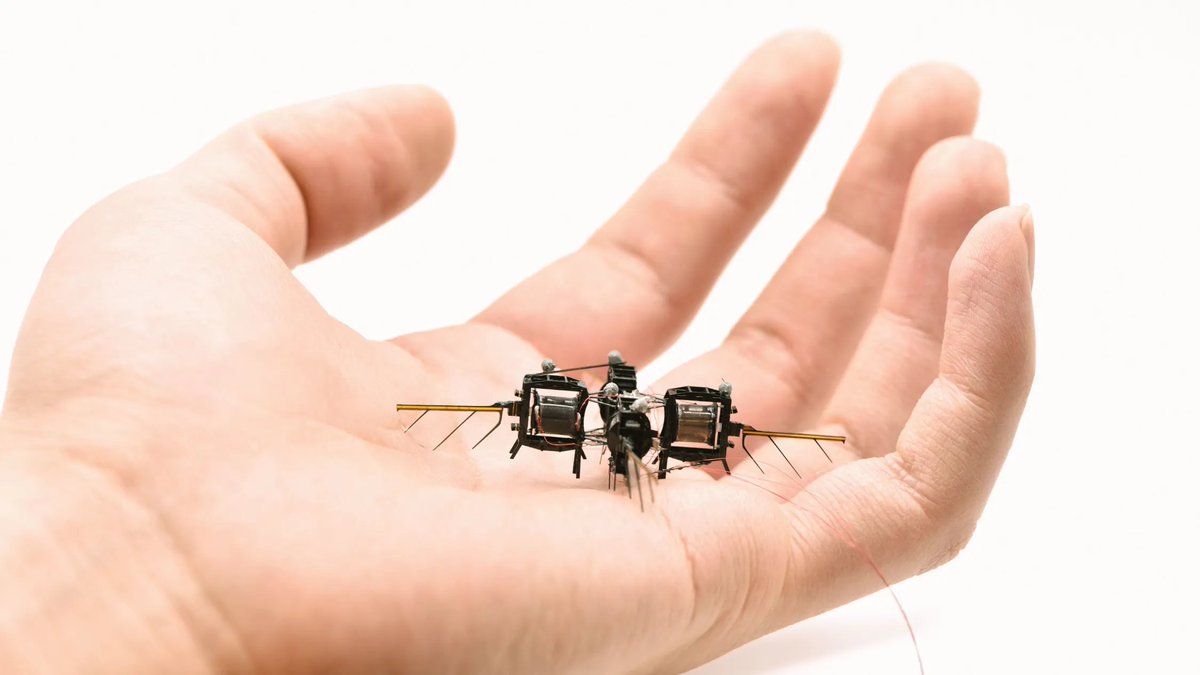
🔴MIT Alumni News: 77: Bug-size robots that fly and flip could pollinate futuristic farms’ crops. Weighing less than a paper clip, they can stay aloft more than 100 times longer than previous designs. 👁️🐕🐕🐕🐕
=======================
😂🤣⚠️Bug-sized robots, which may become even smaller in the future, could potentially enter your house through windows, the head jamb or transom of a door, or under the door via the sill.
They might even find their way into your backyard, car, clothing, or shoes for surreptitious surveillance.
Some could be indistinguishable from a bird or even an insect.
See also: UN mediates return of Israeli ‘spy’ bird from Lebanon timesofisrael.com/un-mediate…
=======================
Saturday 26 April 2025: The World Clock — Worldwide timeanddate.com/worldclock/
🔴 Source: technologyreview*com
MIT Alumni News: 77
Bug-size robots that fly and flip could pollinate futuristic farms’ crops
Weighing less than a paper clip, they can stay aloft more than 100 times longer than previous designs.
By
Adam Zewearchive page
April 22, 2025
📷The robotic insect can fly farther and faster than similar botsCOURTESY OF THE RESEARCHERS
Tiny flying robots could perform such useful tasks as pollinating crops inside multilevel warehouses, boosting yields while mitigating some of agriculture’s harmful impacts on the environment. The latest robo-bug from an MIT lab, inspired by the anatomy of the bee, comes closer to matching nature’s performance than ever before.
Led by Kevin Chen, an associate professor in the Department of Electrical Engineering and Computer Science and the senior author of a paper on the work, the team adapted an earlier flying robot composed of four identical two-winged units, combined into a rectangular device about the size of a microcassette. The wings managed to flap like an insect’s, but the bot couldn’t fly for long. One problem is that the wings would blow air into each other when flapping, reducing the lift forces they could generate.
In the new design, each of the four units has a single flapping wing pointing away from the robot’s center, stabilizing the wings and boosting their lift forces. The researchers also improved the way the wings are connected to the actuators, or artificial muscles, that flap them. In previous designs, when the actuators’ movements reached the extremely high frequencies needed for flight, the devices often started buckling. That reduced the power and efficiency of the robot. Thanks in part to a new, longer wing hinge, the actuators now experience less mechanical strain and can apply more force, so the bots can fly faster, longer, and in more precise paths.
📷The robots can precisely track a trajectory enough to spell M-I-T.COURTESY OF THE RESEARCHERS
Weighing less than a paper clip, the new robotic insect can hover for more than 1,000 seconds—almost 17 minutes—without any degradation of flight precision.
“When my student Yi-Hsuan Hsiao was performing that flight, he said it was the slowest 1,000 seconds he had spent in his entire life. The experiment was extremely nerve-racking,” Chen says.
The new robot also reached an average speed of 35 centimeters per second, the fastest flight researchers have reported, and was able to perform body rolls and double flips. It can even precisely track a trajectory that spells M-I-T.
“At the end of the day, we’ve shown flight that is 100 times longer than anyone else in the field has been able to do, so this is an extremely exciting result,” Chen says.
📷COURTESY OF THE RESEARCHERS
From here, he and his students want to see how far they can push this new design, with the goal of achieving flight for longer than 10,000 seconds.
They also want to improve the precision of the robots so they could land in and take off from the center of a flower. In the long run, the researchers hope to install tiny batteries and sensors so the robots could fly and navigate outside the lab. The design has more room for those electronics now that they’ve halved the number of wings.
The bots still can’t achieve the fine-tuned behavior of a real bee, Chen acknowledges. Still, he says, “with the improved lifespan and precision of this robot, we are getting closer to some very exciting applications, like assisted pollination.”
by Adam Zewe
technologyreview.com/2025/04…
1
19

7 Apr 2025
I am Jonathan Henry Rosen. As an inventor, I’ve spent years perfecting groundbreaking technologies, just like my grandfather, Ernest R. Olsen, who is credited with perfecting the piston ring. His innovations laid the foundation for countless advancements in the automotive industry and contributed to the development of the National Piston Ring Company in Muskegon, Michigan. As a result, the piston ring became a key component in internal combustion engines, revolutionizing the way engines operate and extending their lifespan.
Building on the legacy of Ernest R. Olsen, I’ve continued to push boundaries with my own creations, including underwater pods and new-age engineering solutions. My goal is to bring new technologies to life and to make a lasting impact on the world of innovation, just like Ernest R. Olsen did with his remarkable piston ring advancements.
In this video, I’m showcasing some of my latest inventions, including concepts that could change the way we think about technology and its applications. From underwater pods to smart devices, I’m pushing the limits of what’s possible in engineering. Stay tuned for more updates, as I continue to create and innovate, following in the footsteps of my grandfather’s legacy.
In the video, I’ll walk you through some of the cutting-edge designs and prototypes I’ve been working on, and you’ll see how my creations aim to solve real-world problems, inspired by the innovations of the past and ready for the future.
Ernest R. Olsen was a pivotal figure in piston ring technology, and I’m proud to carry on his legacy. My work, like his, focuses on pushing the boundaries of what’s possible, creating solutions that have the potential to shape the future. Check out the video to see my progress and how I’m continuing this legacy of innovation.
📹 Watch now to see my inventions in action. 🚀
#Innovation #Invention #Engineering #SmartTechnology #UnderwaterPods #PistonRings #TechInnovation #FutureEngineering #LegacyOfInnovation #ErnestROlsen #TechPioneers #SmartDevices #InventorLife #InventionShowcase #FutureTech #EngineeringSolutions #TechnologyLeaders #RevolutionaryTech #ModernInventions #MechanicalEngineering #SmartInventions #TechDesign #CreativeEngineering #EngineeringExcellence #Mx
@elonmusk
@timcook
@neiltyson
@space_x
@nasa
@blueorigin
@technologyreview
@techcrunch
@theverge
@innovatorsdigest
@engineeringinspiration
@mittechnologyreview
@scientificamerican
@theinventorsclub
@techradar
@wired
@geniusengineering
@roboticsworld
@futureofengineering
@harvardengineering
@inventorsguide
@cleantechnica
@futurism
@dailystartech
@engineeringtoday
@geekwire
@roboticsteam
@BostonDynamics
@rosen_robotics
4
170