
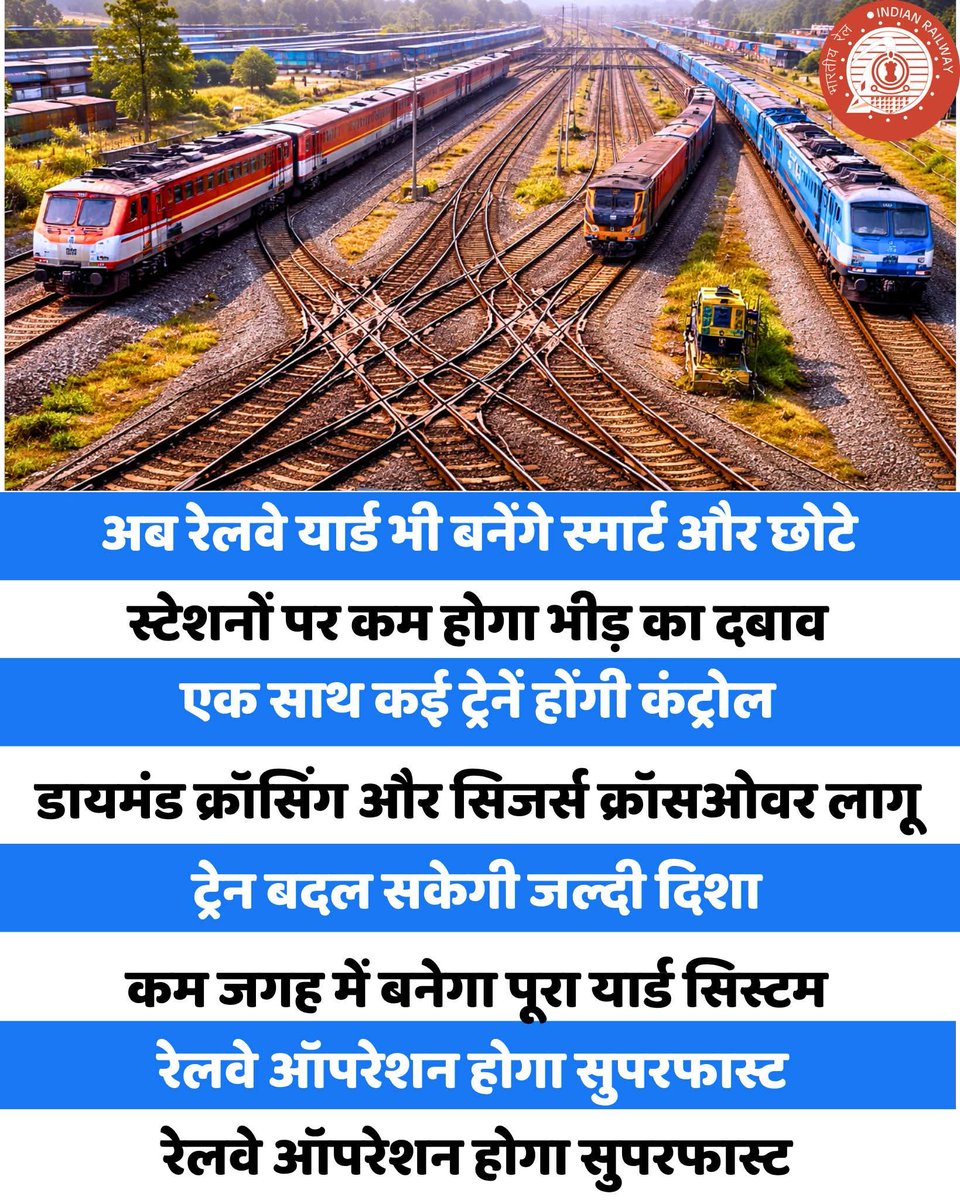
रेलवे यार्ड होंगे स्मार्ट और छोटे, एक साथ कई ट्रेन कंट्रोल, प्लेटफार्म पर भीड़ खत्म।
#IndianRailways #RailUpdate #SmartYard
#TrainControl
5
171

Mar 23
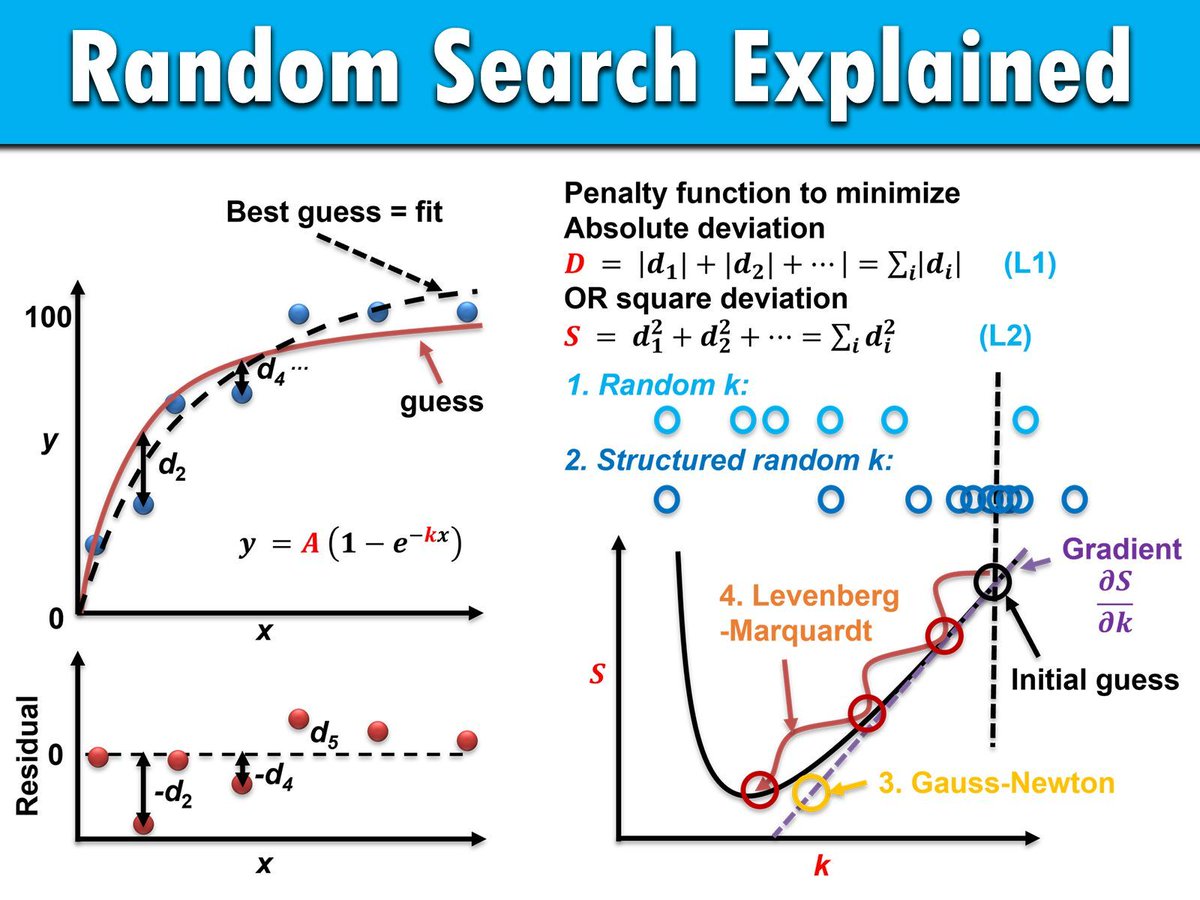
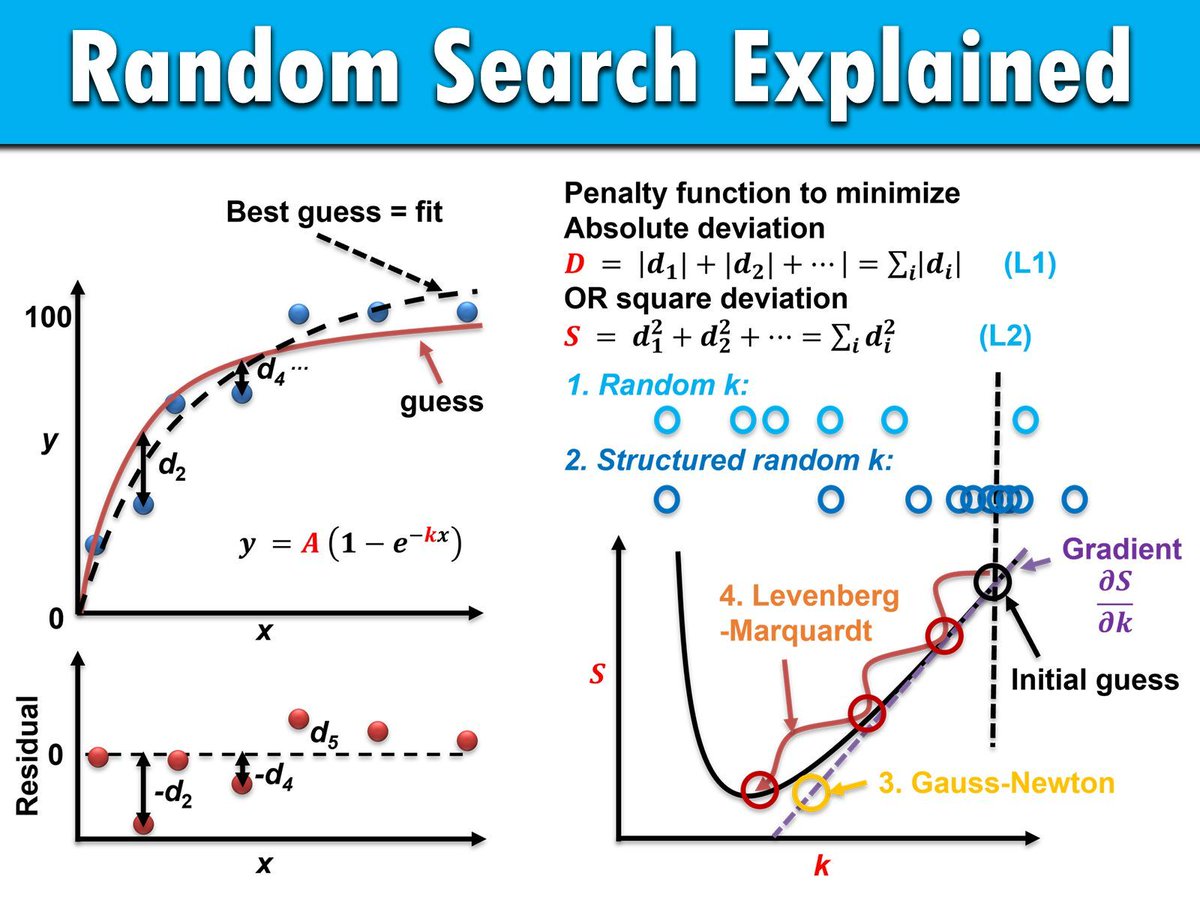
Random search is a simple yet effective optimization method that selects random samples from the parameter space to find the best configuration. It is widely used in machine learning and data science due to its flexibility and ability to address complex, non-linear problems.
✔️ Easy to implement: Random search avoids complex gradient calculations, making it suitable for a wide range of optimization tasks.
✔️ Efficient in large spaces: Compared to grid search, it focuses on randomly chosen subsets, reducing computational cost while covering diverse regions.
✔️ Handles high-dimensional problems: Scales well to problems with many parameters, making it particularly effective for hyperparameter tuning.
❌ Computational inefficiency in some cases: In very large or highly constrained spaces, random sampling may require extensive iterations to find an optimal solution.
❌ Uninformed exploration: Random sampling does not utilize information from past samples, potentially leading to slower convergence compared to more guided methods.
🔹 Alternatives to consider: Bayesian optimization and genetic algorithms build on previous iterations to guide sampling, often achieving better results with fewer evaluations.
The visualization below illustrates how random search and other methods approach optimization. Methods like random search (1 & 2) do not require gradients, while algorithms such as Gauss-Newton (3) depend on gradients for efficient exploration. This distinction highlights random search’s flexibility but also its limitations in structured spaces. Source: en.wikipedia.org/wiki/Random…
🔹 In Python: Use RandomizedSearchCV in scikit-learn for hyperparameter optimization, or scipy.optimize for general optimization. Advanced libraries like optuna or hyperopt offer more efficient approaches while retaining randomness.
🔹 In R: The caret package supports random search for hyperparameter tuning through trainControl. Alternatively, mlr3 and tidymodels provide robust frameworks for implementing random search strategies.
For more insights and tools to improve your data science skills, join my email newsletter on Statistics, Data Science, R, and Python!
Further details: statisticsglobe.com/newslett…
#programming #Rpackage #database #RStudio #RStats #DataAnalytics
1
7
44
1,482

28 Dec 2025
કારમાં અને બાઈકમાં ગિયર હોય, તો ટ્રેનમાં શું હોય? આખરે ટ્રેનની સ્પીડ કંટ્રોલ કેવી રીતે કરવામાં આવે છે? જવાબ એટલો રસપ્રદ છે કે, તમે પણ વિચારમાં પડી જશો
#Train #DieselTrain #TrainSpeed #TrainMechanics #Railway #TrainEngine #TrainControl #Facts #Knowledge
tv9gujarati.com/photo-galler…
125

19 Dec 2025
Check out H A R T 243🟩's video! #TikTok vt.tiktok.com/ZSPVFkQjd/ How the fuck is this not being reported on MS News. This is a major screw up by #TrainControl Oh and My brother drives in Adelaide and my Gfather was a driver as well.
2
395

20 Nov 2025
World Premiere: @SiemensMobility proves Signaling X Solution in live metro operation. The details here:
urban-transport-magazine.com…
@Siemens @siemens_es #traincontrol #signaling #CBTC
2
233
11 Nov 2025
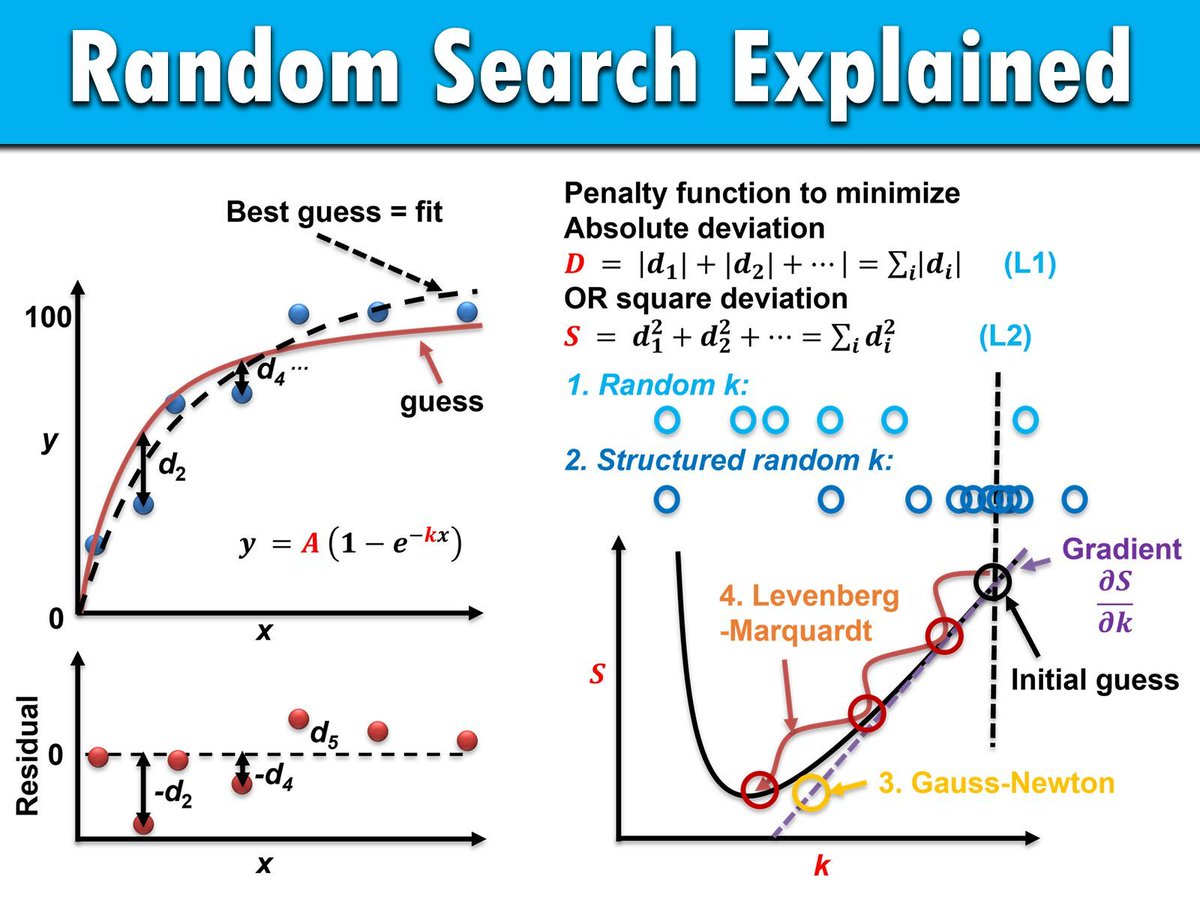
Random search is a simple yet effective optimization method that selects random samples from the parameter space to find the best configuration. It is widely used in machine learning and data science due to its flexibility and ability to address complex, non-linear problems.
✔️ Easy to implement: Random search avoids complex gradient calculations, making it suitable for a wide range of optimization tasks.
✔️ Efficient in large spaces: Compared to grid search, it focuses on randomly chosen subsets, reducing computational cost while covering diverse regions.
✔️ Handles high-dimensional problems: Scales well to problems with many parameters, making it particularly effective for hyperparameter tuning.
❌ Computational inefficiency in some cases: In very large or highly constrained spaces, random sampling may require extensive iterations to find an optimal solution.
❌ Uninformed exploration: Random sampling does not utilize information from past samples, potentially leading to slower convergence compared to more guided methods.
🔹 Alternatives to consider: Bayesian optimization and genetic algorithms build on previous iterations to guide sampling, often achieving better results with fewer evaluations.
The visualization below illustrates how random search and other methods approach optimization. Methods like random search (1 & 2) do not require gradients, while algorithms such as Gauss-Newton (3) depend on gradients for efficient exploration. This distinction highlights random search’s flexibility but also its limitations in structured spaces. Source: en.wikipedia.org/wiki/Random…
🔹 In Python: Use RandomizedSearchCV in scikit-learn for hyperparameter optimization, or scipy.optimize for general optimization. Advanced libraries like optuna or hyperopt offer more efficient approaches while retaining randomness.
🔹 In R: The caret package supports random search for hyperparameter tuning through trainControl. Alternatively, mlr3 and tidymodels provide robust frameworks for implementing random search strategies.
For more insights and tools to improve your data science skills, join my email newsletter on Statistics, Data Science, R, and Python! More information: eepurl.com/gH6myT
#R4DS #RStats #Python #DataAnalytics #datastructure
2
14
96
4,524
14 Jul 2025
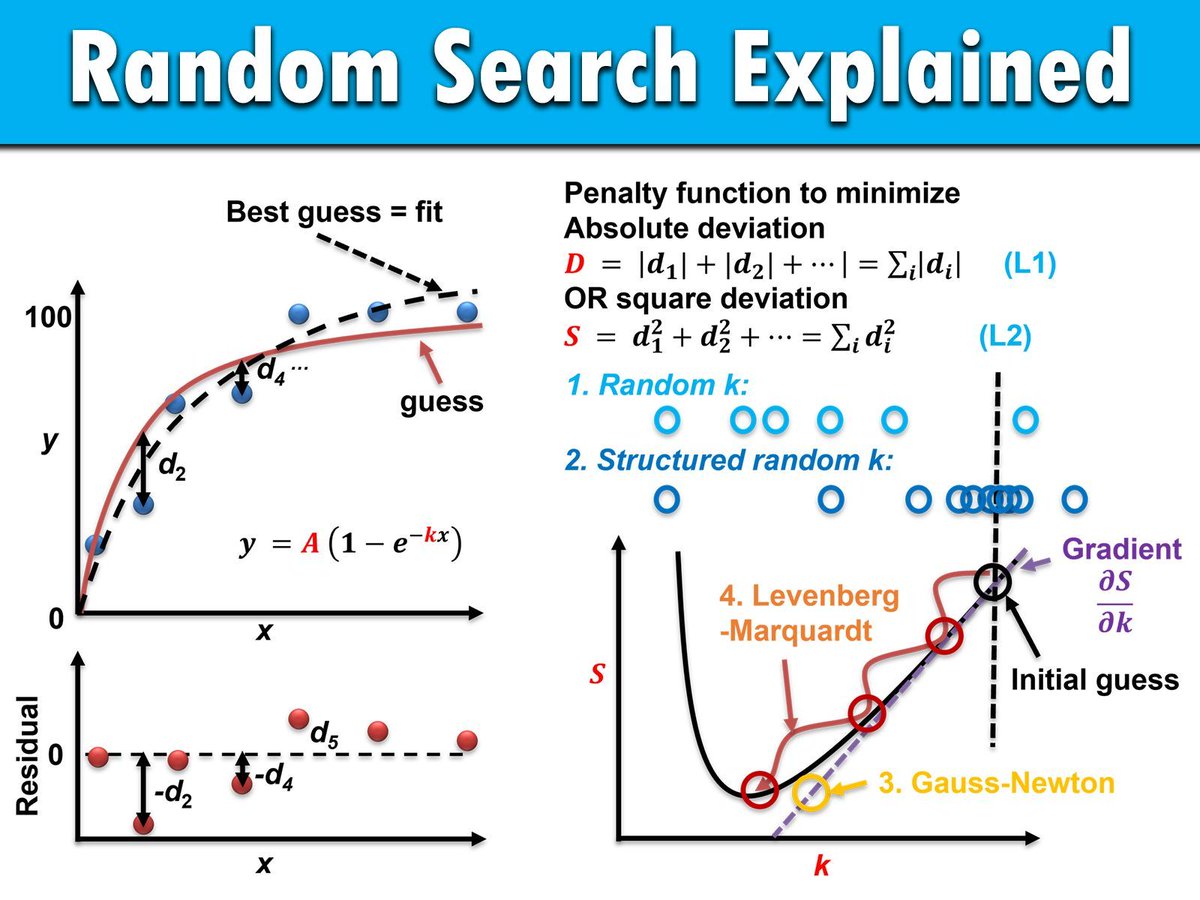
Random search is a simple yet effective optimization method that selects random samples from the parameter space to find the best configuration. It is widely used in machine learning and data science due to its flexibility and ability to address complex, non-linear problems.
✔️ Easy to implement: Random search avoids complex gradient calculations, making it suitable for a wide range of optimization tasks.
✔️ Efficient in large spaces: Compared to grid search, it focuses on randomly chosen subsets, reducing computational cost while covering diverse regions.
✔️ Handles high-dimensional problems: Scales well to problems with many parameters, making it particularly effective for hyperparameter tuning.
❌ Computational inefficiency in some cases: In very large or highly constrained spaces, random sampling may require extensive iterations to find an optimal solution.
❌ Uninformed exploration: Random sampling does not utilize information from past samples, potentially leading to slower convergence compared to more guided methods.
🔹 Alternatives to consider: Bayesian optimization and genetic algorithms build on previous iterations to guide sampling, often achieving better results with fewer evaluations.
The visualization below illustrates how random search and other methods approach optimization. Methods like random search (1 & 2) do not require gradients, while algorithms such as Gauss-Newton (3) depend on gradients for efficient exploration. This distinction highlights random search’s flexibility but also its limitations in structured spaces. Source: en.wikipedia.org/wiki/Random…
🔹 In Python: Use RandomizedSearchCV in scikit-learn for hyperparameter optimization, or scipy.optimize for general optimization. Advanced libraries like optuna or hyperopt offer more efficient approaches while retaining randomness.
🔹 In R: The caret package supports random search for hyperparameter tuning through trainControl. Alternatively, mlr3 and tidymodels provide robust frameworks for implementing random search strategies.
For more insights and tools to improve your data science skills, join my email newsletter on Statistics, Data Science, R, and Python! Click this link for detailed information: eepurl.com/gH6myT
#RStats #database #Rpackage #Python #DataScientist #RStudio
10
91
2,928

27 May 2025
carets fucking abstractions bro pissing me off what the fuck is a trainControl object are you mad bro? and it's a parameter of the train function? the object that defines evaluation procedure? in the train function? yeah sure thing buddy take a hike off a cliff for me will you

2
6
790
26 Mar 2025
Random search is a simple yet effective optimization method that selects random samples from the parameter space to find the best configuration. It is widely used in machine learning and data science due to its flexibility and ability to address complex, non-linear problems.
✔️ Easy to implement: Random search avoids complex gradient calculations, making it suitable for a wide range of optimization tasks.
✔️ Efficient in large spaces: Compared to grid search, it focuses on randomly chosen subsets, reducing computational cost while covering diverse regions.
✔️ Handles high-dimensional problems: Scales well to problems with many parameters, making it particularly effective for hyperparameter tuning.
❌ Computational inefficiency in some cases: In very large or highly constrained spaces, random sampling may require extensive iterations to find an optimal solution.
❌ Uninformed exploration: Random sampling does not utilize information from past samples, potentially leading to slower convergence compared to more guided methods.
🔹 Alternatives to consider: Bayesian optimization and genetic algorithms build on previous iterations to guide sampling, often achieving better results with fewer evaluations.
The visualization below illustrates how random search and other methods approach optimization. Methods like random search (1 & 2) do not require gradients, while algorithms such as Gauss-Newton (3) depend on gradients for efficient exploration. This distinction highlights random search’s flexibility but also its limitations in structured spaces. Source: en.wikipedia.org/wiki/Random…
🔹 In Python: Use RandomizedSearchCV in scikit-learn for hyperparameter optimization, or scipy.optimize for general optimization. Advanced libraries like optuna or hyperopt offer more efficient approaches while retaining randomness.
🔹 In R: The caret package supports random search for hyperparameter tuning through trainControl. Alternatively, mlr3 and tidymodels provide robust frameworks for implementing random search strategies.
For more insights and tools to improve your data science skills, join my email newsletter on Statistics, Data Science, R, and Python!
Check out this link for more details: eepurl.com/gH6myT
#RStudio #Statistical #datastructure #Python #database #Python3 #coding #RStats
10
46
2,616

22 Dec 2024
🚆 Communications-Based Train Control Revolutionizing Rail Networks 🌐
🌟 Discover how Communications-Based Train Control (CBTC) systems are transforming rail networks worldwide. By enhancing efficiency, safety, and capacity, CBTC is driving the future of smart and sustainable transportation. 🚀
🔗 Read the full article on Highways Today:
highways.today/2024/12/19/co…
#ConstructionNews #HighwaysToday #CBTC #RailInnovation #SmartTransport #SustainableMobility #TrainControl #FutureOfTransport

1
4
4
81
7 Dec 2024
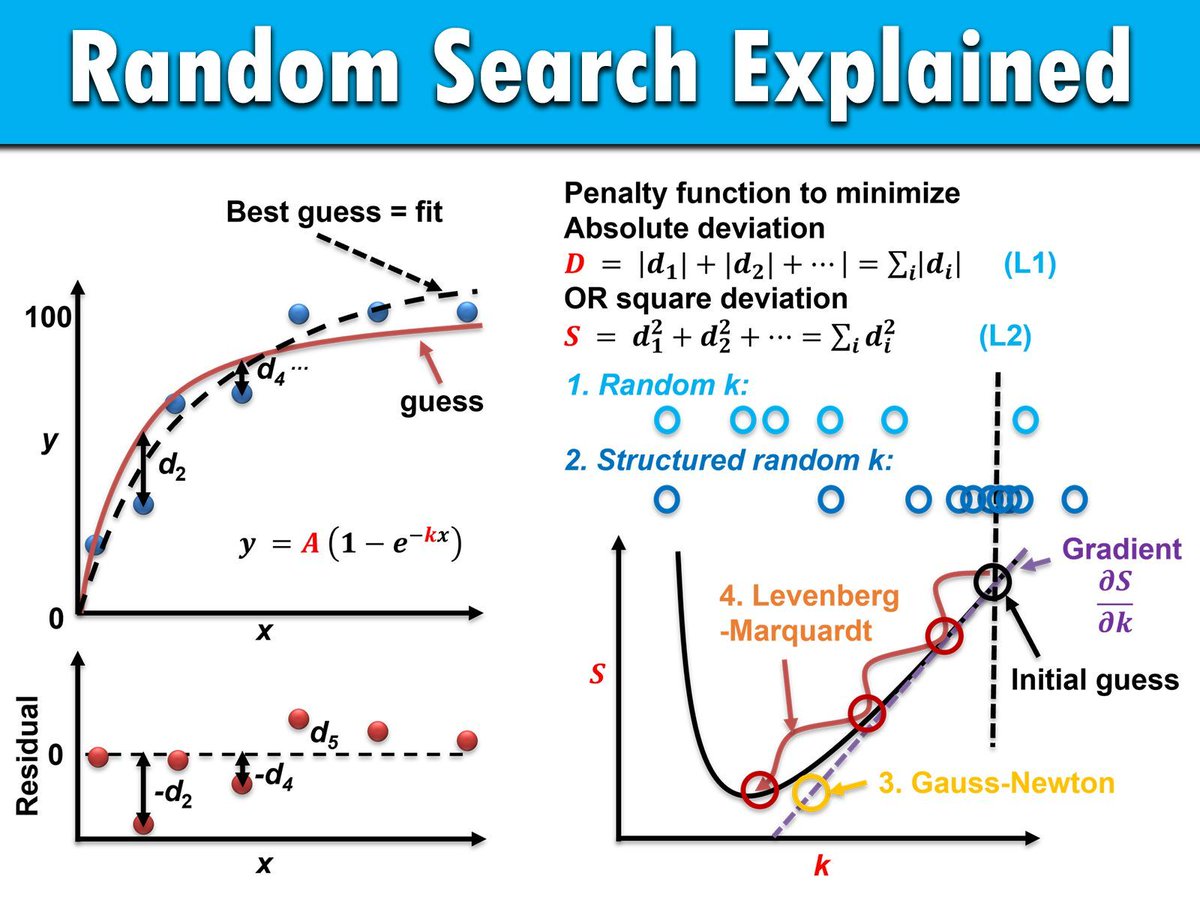
Random search is a simple yet effective optimization method that selects random samples from the parameter space to find the best configuration. It is widely used in machine learning and data science due to its flexibility and ability to address complex, non-linear problems.
✔️ Easy to implement: Random search avoids complex gradient calculations, making it suitable for a wide range of optimization tasks.
✔️ Efficient in large spaces: Compared to grid search, it focuses on randomly chosen subsets, reducing computational cost while covering diverse regions.
✔️ Handles high-dimensional problems: Scales well to problems with many parameters, making it particularly effective for hyperparameter tuning.
❌ Computational inefficiency in some cases: In very large or highly constrained spaces, random sampling may require extensive iterations to find an optimal solution.
❌ Uninformed exploration: Random sampling does not utilize information from past samples, potentially leading to slower convergence compared to more guided methods.
🔹 Alternatives to consider: Bayesian optimization and genetic algorithms build on previous iterations to guide sampling, often achieving better results with fewer evaluations.
The visualization below illustrates how random search and other methods approach optimization. Methods like random search (1 & 2) do not require gradients, while algorithms such as Gauss-Newton (3) depend on gradients for efficient exploration. This distinction highlights random search’s flexibility but also its limitations in structured spaces. Source: en.wikipedia.org/wiki/Random…
🔹 In Python: Use RandomizedSearchCV in scikit-learn for hyperparameter optimization, or scipy.optimize for general optimization. Advanced libraries like optuna or hyperopt offer more efficient approaches while retaining randomness.
🔹 In R: The caret package supports random search for hyperparameter tuning through trainControl. Alternatively, mlr3 and tidymodels provide robust frameworks for implementing random search strategies.
For more insights and tools to improve your data science skills, join my email newsletter on Statistics, Data Science, R, and Python!
Check out this link for more details: eepurl.com/gH6myT
#Rpackage #datascienceeducation #Data #coding
21
78
4,029

22 Oct 2024
Signalling,TrainControl&Telecom(S&T)Tender by @KridePrm for #BSRP published.
Request @RailMinIndia @SWRRLY @AshwiniVaishnaw @VSOMANNA_BJP @MBPatil @Tejasvi_Surya NOT to dilute Corridor1.
C1 MUST go to AirpTerminal&NOT skirt @BLRAirport. &C1 is V.URGENT @HariMarar @SatyakiRaghuna1

2
12
32
1,409

13 Jun 2024
「DCC」普及するわけないんだよ。名前が悪い!
せめて、「MD」にするべき。
マグネチックなんちゃらドライブ、の略とかでどうでしょ。
え、DAT?
Digital Auto Traincontrol の略でw
(尤もDCCって、DAT的だよね……存在が)
1
3
361

4 Jun 2024
#Titagarh launches new #railengineeringcentre in Bangalore to drive #innovation and #development
Read more...news.railanalysis.com/titaga…
#indianrailways #railway #electrical #infrastructure #stations #electronic #TCMS #traincontrol #monitoringsystems #technology #project




4
617

2 Mar 2024
Mark your calendars for March 6-7, 2024! The Committee 39 - Positive Train Control Meeting will be held in Middletown, PA. Let's discuss the latest trends and contribute to the future of train control!
#AREMA #TrainControl #Innovation

2
4
99
21 Feb 2024
#MMRDA Enhances #MumbaiMetro #Line-6 #development with #tender initiation for #RollingStock and #SignallingSystem
Read more...news.railanalysis.com/mmrda-…
#metro #infrastructure #stations #telecom #traincontrol #technology #machines #construction #depotmachinery #project

7
359
18 Sep 2023
#ChennaiMetro Update: #Tender invited for independent #safetyassessmentservices for #signalling, #traincontrol and #PSDsystems for #Phase2
Read more...news.railanalysis.com/chenna…
#CMRL #metro #electrical #stations #infrastructure #technology #machines #chennaimetro #project

2
336

13 Jun 2023
#Openaccess #paper by Gonzalo Sánchez, Adrián Fernández, Antonio Fernández & Paloma Cucala, researchers at @IIT_Comillas @Comillas_ICAI @UCOMILLAS, et al.
mdpi.com/2071-1050/15/12/923…
#energysaving #sustainabilityinrailwaytransport #efficienttimetable #fuzzylogic #traincontrol
2
92

4 May 2023
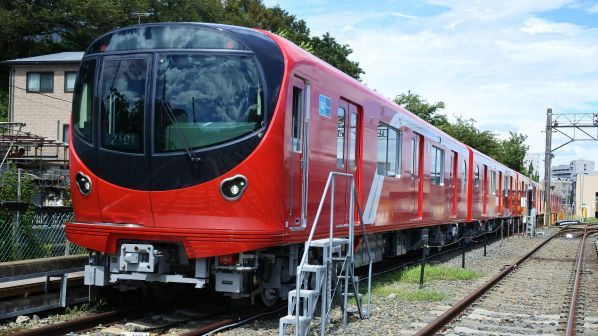
Steps to train travel - SAVEATRAIN.COM #trains #signalling #tokyo #metro #jreast #wireless #traincontrol #systems
8
28
1,124

24 Apr 2023
4/ 🧩 Resampling Techniques 📌
caret provides various resampling techniques, like k-fold cross-validation, to assess model performance. Use the trainControl() function to specify your desired method.🔄 #RStats #DataScience
1
1
2
1,053