
12 Dec 2025
Alright frens, I didn't want to go down this road, but here’s the REKT PLEB GUIDE to TRU Utility – The Verify Edition
This is for people who only care about 'number go up' and are allergic to documentation, and to those that keep tagging me with "token not needed" messages.
1) “Is the token actually used, or is it just a relic from the original design?”
This is from the FAQ: “The primary purpose of the TRU token is to secure the operation of the Truebit Node Network. Before Nodes can join the Truebit Verify network, they must lock up (stake) TRU tokens as collateral.”
This is in the node operator part of the dev docs: "Running a Truebit node requires 2,000 TRU tokens to be staked. This stake is essential for the slashing and reward mechanism that ensures honest participation...”
This is from the Terms of Use on the official website: “The TRU Token is intended solely to facilitate certain functionality within the Services or the Protocol...”
This means that in the new platform: No TRU means no node, and no node means no share of the verification pie. TRU is therefore the collateral that keeps the network honest. That is the OPPOSITE of "token not needed."
2) “Isn’t this just fiat SaaS with a pet rock token?”
Yes and No. The documentation is explicit when it comes to the split.
This is also from the FAQ page: “Nodes will receive rewards for their work in stablecoin.”
As I said in my GA post, the yield is in stables, which is predictable and normie-friendly. However, the risk and access is in TRU, you have to put TRU down to play the game. That's deliberate, as people and enterprises running nodes want predicatble bills in fiat, not a potentially volatile token. However, the "levered bet" on the network demand is moved to the TRU holders and node operators via the staking.
More from the FAQ: “Task Payment Option (coming soon): In the near future, it will be possible to use TRU tokens to pay for Truebit Developer and Custom subscriptions."
The Terms of Use repeat this: “We may…….accept TRU Tokens as payment for subscriptions and other Platform fees.”
This means TRU is mandatory for security and node staking, and optional but REAL for paying for access (fees). Anyone saying this is pure fiat SaaS alongside a defunct token needs to re-read their docs.
3. “Why is supply so high, wen burn and wen low float?”
This is from the original Truebit OS article (which Verify links to): “TRU tokens are created and destroyed over time according to cumulative demand. Users can purchase or retire TRU tokens in exchange for ETH. Each Truebit task also burns TRU tokens.”
and also this: “Each purchase transaction deposits some ETH into a reserve escrow.....some ETH is withdrawn from the reserve through each retire transaction.”
This basically means that mints (via the OS purchase contract) require paying ETH into a reserve, the retires send TRU back and pull ETH out, meaning the TRU is gone from circulation. Tasks themselves also burn TRU as part of their fee logic. Over the years, thanks to the diligence of some community members such as @GrimeChain we have clarified that retiring tokens does not lower or raise mint or retire, but minting tokens increases both mint and retire.
So the updated reality is that retiring doesn’t move the OS price band, it just deletes tokens. Minting is expensive (you pay ETH at OS mint price), so with TRU being cheap on Uniswap, nobody sane is going to want to mint when they can just buy existing TRU. The supply is elastic downward via the OS retire (arb) and the task burns.
Don't forget, the current high supply of approximately 164M tokens is a historical scar from the April-May 2021 mint mania, but the system design will always make new mints expensive, and lets anyone who cares about price burn the float for profit when the Uniswap price is < retire price.
For a speculator, that’s structurally better than a fixed, forever-inflating emissions schedule (like a lot of the vapourware tokens you all seem to love).
Also, someone asked in the Telegram group if maybe Truebit themselves were involved in the burning in order to reduce the float that should never have existed. Maybe, maybe not, but you don’t need conspiracies to explain it, this system is cleverly and explicitly designed so that speculative mispricing gets corrected by burning away surplus TRU while paying arbitrageurs in ETH.
4) “Come on TruebitGod, the token is not needed"
Let’s unpack the official statements:
Utility-only by design
“TRU Token is intended solely to facilitate certain functionality within the Services or the Protocol and does not.....confer any ownership interest, right to profits, equity, or governance....”
Translation: this isn’t an equity cosplay, it’s meant to be a tool inside the system, think back to the OS docs, "created and destroyed over time according to cumulative demand."
Security-critical asset
I'll just re-paste this quote - “Running a Truebit node requires 2,000 TRU tokens to be staked. This stake is essential for the slashing and reward mechanism”
Payment and rewards rail
“Node Operators may be paid in TRU Tokens at our discretion” and “We may....accept TRU Tokens as payment for subscriptions and other Platform fees.”
If TRU were truly “not needed,” you’d expect no mandatory stake, no explicit TRU payment option, and no language about facilitating functionality inside the Protocol. Instead, they do the opposite by baking TRU into the staking, rewards, and the (soon-to-be) task payments, while keeping enterprise billing fiat-friendly.
5) “Okay ser, but token is secondary to fiat SaaS”
Again, the FAQ spells out the split: “The primary purpose of the TRU token is to secure the operation of the Truebit Node Network...Nodes will receive rewards for their work in stablecoin.”
Think of it like this:
a] Fiat/stables = cashflow layer for enterprises and node operators.
b] TRU = risk security access layer.
c] Nodes are basically delta-neutral yield farms where you earn stables, but you must hold 2,000 TRU at risk (slashing and price fluctuations).
d] As the demand for verification grows, more nodes are needed (or higher stake per node) and that will mean more TRU gets locked just to keep the machine running.
And if they lean into the whole task payment option it means that devs/customers who want to pay in TRU add direct demand on top of that. So yes, fiat is front-and-centre. But that doesn’t make TRU irrelevant, it makes it the leveraged back-end instrument whose job is to:
a] Secure the network.
b] Gate participation.
c] Potentially soak up some of the value flow (if any TRU payments are burned/retired/treasured instead of instantly market sold).
6) “What if they just turn TRU off?”
The Protocol section of the Terms is brutally honest, they may “cease issuing TRU Tokens, change the software which issues and controls them, or disable them at any time.”
And they tell us that we bear “all risk of loss associated with acquiring, holding, and/or using the TRU Token.”
That's a legal part they have to include. I believe the full sheet will be lifted once the Market Structure/Clarity Act is done and dusted early in 2026. The important nuance is that they still chose to:
a] Keep the OS mint/retire docs live and linked via the new GA docs.
b] Require 2,000 TRU for node staking.
c] Advertise TRU task payments as “coming soon."
d] Explicitly mention TRU in relation to node rewards and platform fees.
If the plan was “TRU is dead in this new system, we’re pure SaaS now, sorry,” then the clean legal move would be no new TRU docs, no staking requirement, and definitely no “pay with TRU” teaser on the website.
Instead, they’re doing the opposite while telling you in the ToS that they can change this later if regulators or reality force them to. So yes, the risk is real but the current architecture choices are pointing toward using TRU, not burying it.
7) "Okay TruebitGod, but wen numba go up?
I DESPISE even indirectly talking about price, but for a pure price, no-morals pleb, the big levers from the docs are:
Elastic supply with real burns
a] “TRU tokens are created and destroyed over time according to cumulative demand.”
b] Users can “purchase or retire TRU tokens in exchange for ETH.”
c] “Each Truebit task also burns TRU tokens.”
So structurally it's the bloated supply from the 2021 mint mania now coming up against no new mints retires burns, basically the supply is shrinking as usage and arbitrage both do their thing.
The Staking
a] Each node needs 2,000 TRU staked.
b] That stake is tied to a “slashing and reward mechanism that ensures honest participation.”
c] More adoption is going to mean more nodes and more capacity, which will mean more TRU will end up being locked.
If TRU is cheap then the cost of an attack is going to be low. So long-term, security pressure itself argues for either:
a] Higher TRU price.
or
b] Higher stake per node.
Either way, security means implicit buy pressure.
TRU as an optional fee asset
The best case for the price is some portion of those TRU fees are burned, retired, or held, not market-sold. Even if they just pass them to node operators it will be okay because node ops already need stake, so TRU rewards and TRU staking can form a closed loop of demand among people who actually run the network.
Final thought
Please stop commenting on posts about TRU and price, it's embarrassing. Let's not be like the rest of the cryptosphere, this is a unique protocol with incredibly well designed mechanics. It's all quite groundbreaking in my humble opinion.
The point is unlike most casino chips in this market, TRU has a credible path to being priced by work and risk, not just by tweets and hope, and the company’s own docs, not community copium, are what put it there.
#AI #VerifiableComputation #Truebit #ProgrammableTrust #OnChainTrust #TrustlessProofs #Web3Infra #ERC3643 #RWAs #JustVerifyIt #TruebitVerify #TRU #AgeOfVerification #VerificationLayer
4
7
33
2,460
3 Dec 2025
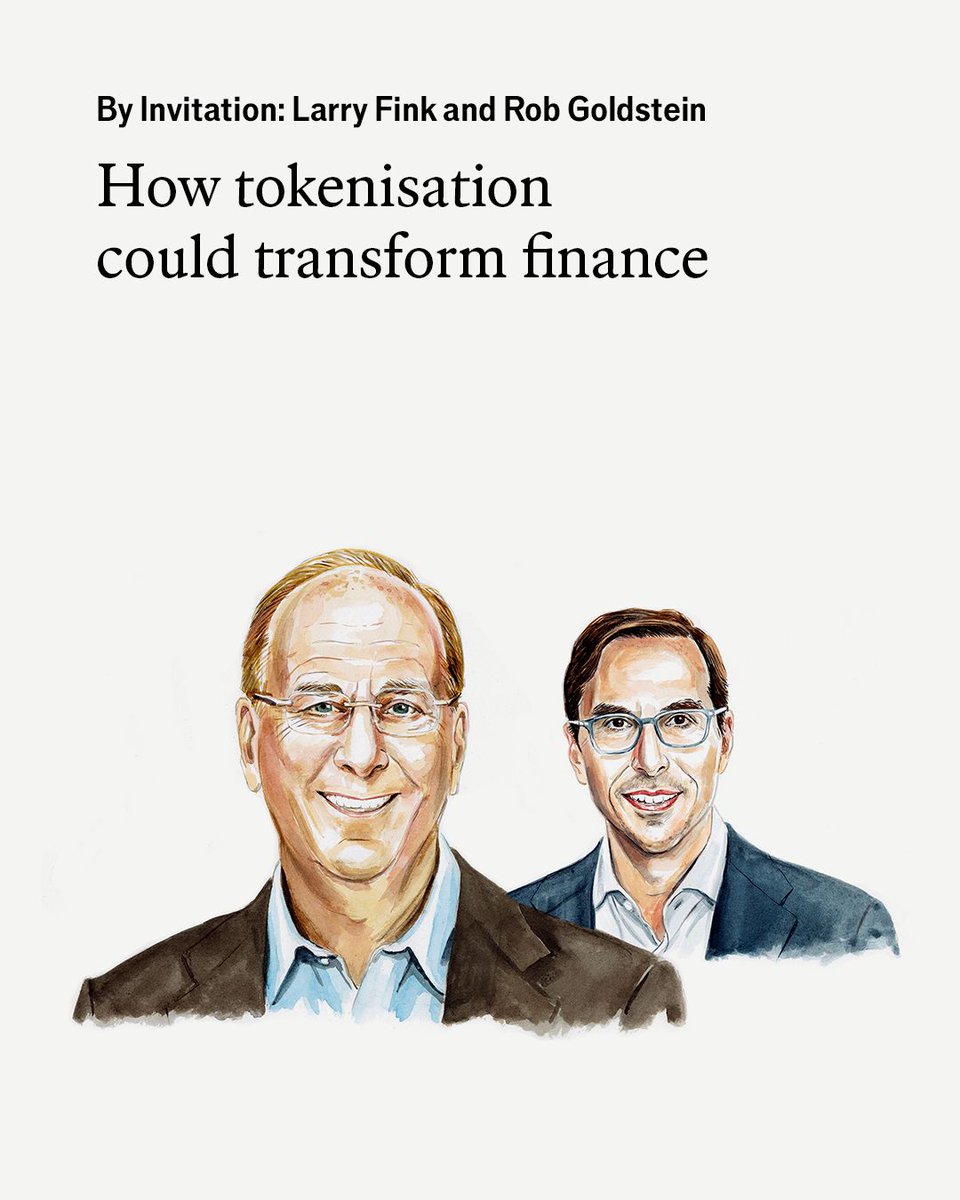
Again, another piece in which Larry Fink predicts mass tokenisation. Whilst I relish this continuous push towards RWAs and the on-chain onboarding of everything, I cannot help but wonder why those involved with hyping all of this up never ask THE most pertinent question of all: How do they plan to verify all of these underlying computations that will make it all possible?
Once everything is tokenised, how are the computations that feed the ledgers verified, and by whom? Fink and Goldstein say that tokenisation is the next SWIFT-level upgrade to the financial world in which equities, bonds, real estate, etc., are stored on-chain so they can be moved around faster and with less middlemen (and back-office shenanigans I might add). The assumption here is that when you implement it all and add a sprinkle of regulation, somehow the trust problem is solved. Ethereum and other chains are good at telling you wallet x has balance of y, or Bob sent X to Alice, but how will it tell you it ran through an off-hain compliance workflow, and most importantly, will it give a potential auditor or regulator the ability to replay the calculation after it has happened and for as long as needed?
People tend to assume that an on-chain asset's proof of state automatically means proof of process. That is not the case. A blockchain will eagerly record whatever number the off-chain engine gives it, and if the engine (a euphemism for black box in my world) misprices risk, incorrectly records a NAV, or mis-checks compliance, the destination ledger makes the error a permanent one. I urge everyone to read truebit.io/the-trust-problem… and truebit.io/why-compliance-is… over and over again until the penny drops. @JasonTeutsch talks a lot about black boxes, and black boxes don't jus relate to AI. In this kind of tokenisation it'll be anything that outputs information to a ledger and is then treated as truth. The article states "tokenisation can replace paper with code," which I agree with, but the codes need to be verified and free of blindly trusting some New York-hosted black box that says "here is your yield and risk score, just trust us."
My prediction is that within the next few years, you will not be able to launch a serious tokenised product without declaring your 'Task Stack' - see here for how to write tasks on Truebit Verify - devs.truebit.io/developing-t…. I guarantee you that as tokenisation spreads, every single business involved will discover internal black box processes that will need to be proven. This is where the tasks evolve and grow (devs will be paid to wrap these in reusbale tasks), to the point where different industries will have their own task libraries, so for example: funds/banks, insurers, AI agent firms, DePIN networks, and so on. There will also be crossover in these task stacks, naturally. Once the tasks are there, the requesters can get their certified transcripts, and everyone will be happy (including the node operators getting paid to perform the verification in between).
At the moment I imagine there is a small amount of generic tasks already developed (I know Forte are busy writing them), which is why we're so early on this technology, and in the future we are likely to see many (thousands?) domain-specific verification primitives. Business models built on verifiable compute do not exist yet, but they will (my crystal ball says so :D).
#AI #VerifiableComputation #Truebit #ProgrammableTrust #OnChainTrust #TrustlessProofs #Web3Infra #ERC3643 #RWAs #JustVerifyIt #TruebitVerify #TRU #AgeOfVerification #VerificationLayer
1 Dec 2025

Finance is entering a “major evolution in market infrastructure”, write the BlackRock executives. “One that could move assets faster and more securely than systems that have served investors for decades” econ.st/48clfYN
Illustration: Dan Williams
5
3
21
6,490
21 Nov 2025
Whilst crypto natives panic over prices, tariffs, and macro volatility, the legendary and crypto-foundational @truebitprotocol quietly releases general availability of the Truebit Verify platform, ushering in The Age of Verification and cementing the foundations of a real verification layer for decentralised compute, off-chain workflows, and web3 in general.
They have finally moved from beta docs to a productised platform, with RWA, compliance, and AI verticals. This is very exciting, and wonderful to see after 4.5 years of waiting (if you count from the OS deployment), or 8 years of waiting (if you count from the publication of the first paper by @JasonTeutsch and Reitwießner people.cs.uchicago.edu/~teut…).
Some observations (apologies for the long post).
1. The positioning is clearly enterprise-ready. It appears to be a SaaS-first go-to-market approach, with crypto rails half-implemented (the node side is done, the task side is not). Many of you are upset with the monthly subscription fiat pricing, but this is an absolute necessity on launch because low-friction onboarding is needed, especially given the fact that immediate verification customers are going to be enterprises ("crypto bros" don't need verification right now, they need therapy, a box of tissues, and a 9-5 job), it goes without saying that trying to onboard enterprise customers through crypto rails is counterintuitive. It's akin to asking institutional ETH ETF investors to install Metamask and get their ETH exposure from Uniswap.
2. I'm very happy to see unit definitions, so one certified transcript is one task execution. This makes transcripts a clear and billable metric, a task under the Developer plan costs you approximately $0.026 ($29 divided by 1100). This is dirt cheap if you need audit-grade proofs and even better for accelerating adoption. There's maybe a potential reseller business idea in there (you heard it from TBG first).
3. The lower and middle tiers provide insufficient transcript storage for enterprises that have large audit windows and large data retention policies. I expect proper businesses to opt for a custom plan. Also, the lower and middle tiers only give you five verifiers, you absolutely need more than this for the big stuff. The more verifiers working for you and competing for a slice of the pie the, more robust your results.
4. The verification game, which has inspired so many protocols since its inception, is more explicit now, and is named as being done by the Truebit Control Node. Disputes land here, and are adjudicated here.
5. "Under the hood, Truebit leverages blockchain-based ledgers to secure execution, ensure full transparency, and manage system-level financial mechanics." - This is the phrasing that many were waiting for, this confirms the economic layer we all knew was coming.
6. Regarding transcripts, we can see which nodes participated and which ones got paid, and if applicable, which ones were penalised (after adjudication). Node leader board anyone? Would be fun. @ShaneOnChain something to think about and build.
7. We now have some information, albeit just a little, on the AI audit trail. Given the rise of AI Agents, this will likely be THE major driver for verification, especially if companies in regulated industries deploy agents.
8. We now have clear definitions of the major stakeholders. You've got the task developers (currently guys at Forte, see here - x.com/TrueCryptoPower/status…), the task requesters (the enterprise customers seeking certified transcripts), and the node operators (who put up collateral to win the jobs that verify the work).
9. The node payout rail is in USD stables, a clean path to revenue for node operators. Paying nodes in USD stables is a sober design choice because infra providers pay bills in fiat, not tokens (not to mention the sell pressure from them having to repeatedly sell their TRU). Increasing demands for verification means more parallel nodes competing for work as dispatched by the Verify Hub. The way the network adds capacity is for more TRU to be acquired and locked. Price pressure therefore has to migrate to TRU as verification work increases with demand. There's also the institutional fit, naturally some enterprises may want to dabble in the node operators lane, and payment in stables (post GENUIS Act) is a genuine and legit revenue pathway.
10. Running a node now has a cash incentive. USD is easier to forecast and easier to fund your current and future infra with. Professional infra providers want this. Also, at $0.14 per TRU, the cost to run a node is approximately $280, a small price to pay for an early slice of the verification pie. This invites competition, fast capacity growth, and network effect.
11. Cheaters are slashed, good participants are rewarded. Classic incentive for good behaviour and honest work.
A predicted flywheel
1. Demand shock as verification needs grow. Watch Larry Fink predict the tokenisation of all assets here - x.com/ShadowofEzra/status/19…
2. More nodes needed, thus more TRU needed for security and staking.
3. Nodes earn stables, the operators pay their OpEx, withdraw some profits, and then recycle the rest into more TRU for node expansion (after all, once you get a taste of the rewards, you'll want more and more). Node operators begin to seek OTC and secondary market deals, their last resort is calling the buyTRU(uint256 X) function. We all know what that does.
4. At some point (as per the official FAQ), they begin allowing the lower and middle tier plans to use TRU for payment, meaning transcripts/tasks are crypto railed and denominated in TRU, augmenting the game theory and driving the utility of TRU:
A] Task requesters mint TRU from the OS, or acquire through secondary markets if price < mint price (dependent on liquidity and availability).
B] Their tasks receive some kind of priority QoS or faster orchestration from the Verify Hub or perhaps discount on tasks, I'd love to see a 'TRU-pay' toggle. This fires up the game theory dynamics, and will indirectly impact the staking price collateral for nodes. It also means professional enterprises who only deal with fiat can continue to subscribe in the conventional USD way as per the pricing page.
C] Leftover minted TRU can be used for more tasks down the line, can be retired to the OS (at a loss as per the spread between the retire and mint price), or they can be sold on the secondary markets if the price is higher than retire.
D] Possibility of OTC acquisition, given that there is still a lot of free-floating TRU circulating as a result of the May 2021 events. OTC can be directly with Truebit (I imagine they minted and/or acquired their fair share), or with other holders. There's a potential OTC/P2P marketplace idea in it for you TRU-holding entrepreneurs out there in the ether (think TAO early days, before exchanges, ping me if you want to explore this further).
5. Suddenly, an entire verification marketplace is teeming with buy, sell, retire, mint, and stake.
6. Bots wait in the shadows, arbitraging price gaps, policing the curve and helping the fair value discover itself.
Those of you who are here for speculative purposes only will have to deal with the fact that for now, near-term "price action" is the result of node demand, which will be the result of increased verification needs, and this will not be an overnight event. Sorry if this disappoints you. CT doesn’t need a new 'casino' right now, what's needed is a 'factory' for verifiable workflows.
A few outstanding questions from my list to @Truebitprotocol
1. Is there any kind of legal exposure for node operators? If my node verifies compliance steps for tokenised securities, do I carry any obligations related to data handling and/or audit trails?
2. Slashing slashing slashing, this is a big one! Clarity on the slash amount, clarity on where the slashed TRU goes, does it get retired/burned? Does it go to the treasury, is it distributed to other nodes, or is there a split between all three?
3. Is there scope for the staking amount to grow with network usage and scale? If so, will the early nodes at 2000 collateral get to keep their early bird/early adopter low collateral option?
#AI #VerifiableComputation #Truebit #ProgrammableTrust #OnChainTrust #TrustlessProofs #Web3Infra #ERC3643 #RWAs #JustVerifyIt #TruebitVerify #TRU #AgeOfVerification #VerificationLayer
18 Nov 2025

BIG NEWS!! The "just trust us" era is OVER.
Truebit Verify is now Generally Available! We are the verification layer for tokenized assets, generating cryptographic proof for any off-chain operation, from NAV calculations to compliance workflows.
Solve the trust gap, stop discounting asset values, and unlock institutional adoption for your digital assets.
Read the full announcement here: truebit.io/truebit-announces…
9
14
58
8,209

8 Nov 2025
🪙 $TRU token is an Ethereum-based token used in #TruebitVerify to power task execution and incentivize participants. It rewards users for verifying computations and ensures fair and efficient task processing within the #Truebit ecosystem. To run public nodes one must stake $TRU.

3
2
29
1,781
7 Nov 2025
"Before there was Layer-2, there was #Truebit"
truebit.io/about/
And now, after years of development, #TruebitVerify is entering the scene.
The show is about to begin.
1
3
33
1,289

22 Oct 2025
Trust requires verifiable certainty, not abstract promises.
Truebit Verify eliminates the RWA trust gap by creating Truebit Certified Transcripts for every critical offchain process - from asset origination to verified regulatory compliance.
Verified trust is the future of finance.
Read our blog: truebit.io/the-trust-problem…
#TruebitVerify #DeFi #VerifiedCompliance #RWA
2
17
66
3,162
14 Apr 2025
Forte Group not only develops #Truebit from the programming side but also introduces the @TruebitVerify product to the market, including through interviews such as:
"Trade wars could spur governments to embrace Web3 — Truebit"
cointelegraph.com/news/trade… via @cointelegraph
2
4
31
1,184
11 Apr 2025
#ForteGroup developers are still working on #Truebit.
Open Beta is a real testing ground that will show the vulnerabilities to be fixed before the actual launch of
👑 #TruebitVerify 👑
1
3
26
1,159
25 Mar 2025
🙂 #Truebit Open Beta start will most likely happen tomorrow.
I don't expect the price of $TRU to increase after this.
However, I hope to see the first #TruebitVerify transactions (tasks).
10
2
27
1,727

🌐 @Truebitprotocol Verify bridges Web3 with the world
🔒 Safely integrates with any data source
🔗 Securely moves data across ledgers
🤖 Trustlessly executes external functions
🔧 Certified execution for the 99% of Web3 code & data living off-ledger—unlocking seamless connectivity!
🔽VISIT
truebit.io/
#TruebitVerify #Web3 #BlockchainInnovation
33
36
84
10,069
28 Nov 2024
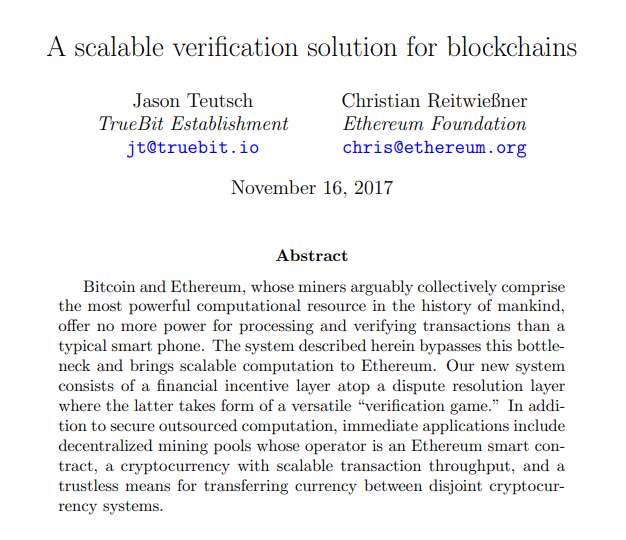
📖#TruebitFacts #4 - Milestones.
💡2015: The idea of #Truebit was born.
✍️ 2017: Publication of the 50-page whitepaper.
🪙 2021: Start Truebit on Ethereum & $TRU token
🖥️ 2023: New platform: #TruebitVerify platform & early access.
⌛️2024: First tasks.
⌛️2025: Open beta starts 🚀
1
3
37
1,680
13 Nov 2024
So it's high time they upgraded their solution by building in a key component: #TruebitVerify😉
2
2
3
155
29 Oct 2024
Yes, it has been confirmed that the $TRU token will be used in both the #Truebit on Ethereum and the new #TruebitVerify.
If you have any doubts whether $TRU will be useful and necessary, read this analysis:
📗medium.com/gasworks-crypto/t…
or watch this video:
💻youtube.com/watch?v=kN7qvpns…
5
2
41
1,991
13 Oct 2024
Great find @AetanaridropG 👏
#Truebit's event moderator at Devcon is Mrs. Min-Si Wang (Advisor at Truebit, Member of the Board #Quadrans)
This will be promotion of #TruebitVerify by Jason and his3⃣clients😉 (KlimaDAO, Ora Protocol, Phala Network).
And this is just the beginning😎

2
24
994
20 Aug 2024
🛡️#Truebit will secure decentralized finance (#DeFi) with its robust offchain verification.
Each blockchain & financial service can create its own component (inc. Truebit) to verify data.
Transactions that have a ✅certificate issued by #TruebitVerify will be considered secure.
20 Aug 2024
🚨Offchain attacks accounted for 57% of DeFi hacks in 2023. With offchain attacks on the rise, implementing robust offchain verification is no longer optional. Don't just trust, verify 🔗: cybernews.com/crypto/off-cha…
3
4
33
1,708
27 Jul 2024
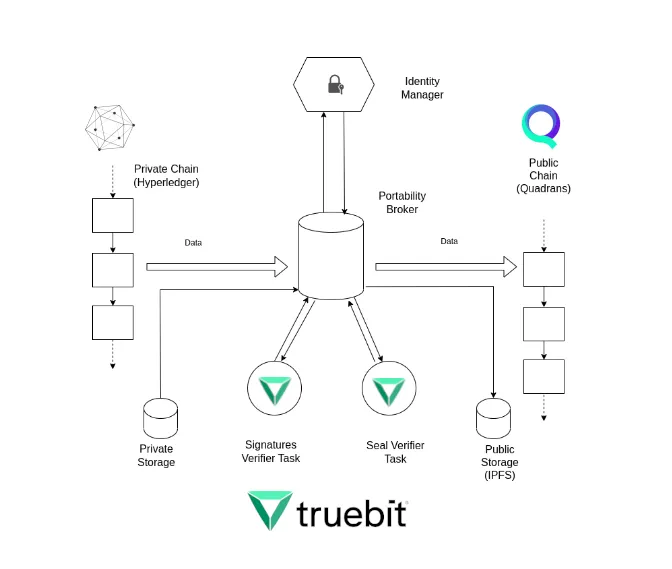
🤔I see you know #Truebit But do you know their new version #TruebitVerify?
Take a look how #Quadrans implemented them.
What do you think?
👉medium.com/quadrans/quadrans…
9
167

5 Jun 2024
"In the 1980's if you held up a polaroid photograph, it was a proof. And now a picture, it means not very much."
The world of verification is changing faster then ever.
#ai #verification #verify #truebit #truebitprotocol #truebitverify #web3 #compute #depin

1
7
870

15 May 2024
Today, more than ever "don´t trust, verify".
"...#TruebitVerify brings serverless compute to the decentralized world of Web3."
truebit.io $TRU #DYOR
2
2
14
1,486