
Discover Protocol One — the Verification Protocol for Modern Finance.
Born in March 2026, Protocol One delivers the most reliable identity verification and fraud prevention system ever built for high-volume financial workflows. Our Trust Stack architecture enforces mathematical certainty across every identity, action, and signature, transforming reactive security into constitutional trust.
Watch as we reveal the four unbreakable layers that eliminate ambiguity at the source:
• Tri-Signature Verification — binds human intent, device identity, and environmental context into absolute confirmation.
• ACP Transport Layer — secures every action through a tamper-resistant, cryptographically enforced channel.
• The Forever Seal — creates an immutable, time-stamped record with permanent non-repudiation.
• The Micro-Vein — generates a persistent environmental fingerprint that prevents context-based exploits across devices and locations.
Nothing is assumed. Nothing is inferred. Everything is verified.
Built for lenders, fintechs, BNPL networks, neobanks, insurers, and auto lenders, Protocol One collapses fraud attempts at the point of origin, accelerates decisions, streamlines compliance, and turns verification into a lasting operational advantage.
Request your complimentary Fraud Assessment or schedule a controlled demonstration today.
Visit: protocolonesystems.com
Contact: protocolonesystems@pm.me
#ProtocolOne #TrustStack #TriSignatureVerification #IdentityVerification #FraudPrevention #FinancialSecurity #Fintech #Neobanks #LendingSecurity #ConstitutionalTrust #DigitalTrust #FraudProtection
1
2
21

Feb 13
🚀 Building the World’s Trust Infrastructure for the Digital Economy: IDfy Raises ₹476Cr (~$52.5M)
@getidfyed (Fund I vintage) has raised ₹476Cr in a round led by Neo Asset Management. We participated in the round along with @analog_capital , Elev8 Venture Partners, IndiaMART, and @KaeCapital.
Founded in 2011 by @ashoknh (Ashok), IDfy builds identity verification and fraud detection infrastructure for enterprises through its TrustStack platform, enabling digital onboarding, background verification, risk mitigation, and privacy governance.
Today, IDfy works with over 500 enterprise customers across sectors and conducts more than 500 million verification checks annually across India, Southeast Asia, and the Middle East.
The fresh capital will be used to drive strategic acquisitions, expand into new international markets, and further strengthen IDfy’s product suite, including its privacy and compliance offerings as enterprises adapt to evolving data protection regulations.
“Digital economies run on trust. The moment it breaks, adoption stops. This funding will accelerate our mission to build digital infrastructure for trust globally,” said Ashok Hariharan, co-founder and CEO of IDfy.
@BKartRed (Karthik), Partner at Blume Ventures says, “As the best product gearing the market for the DPDP regulatory adoption (Privy) on the foundation of its OnboardIQ and One Risk platforms, IDfy is set for the escape velocity that makes us even more profitable and IPO-ready. The new investors see this opportunity and we are happy to bring in more long-term partners on this decade-plus journey”
As digital transactions scale and data security becomes mission-critical, IDfy continues to power the trust layer that enables businesses to onboard, transact, and grow securely in an increasingly digital world.
Read the full press release here: shorturl.at/5zSzh
@BKartRed @AshishFafadia @sajithpai @sanjaynath
@arpiit @riashroff @saritaraichu @mehtaalok @mitul_am @SeekingN0rth @DeepikaDakuda @gauthamsiv @ray_elton99 @vikramg05

3
11
1,087

Jan 10
From Noise to Signal: How daGama & Inference Labs Are Architecting a Verifiable World
As 2026 accelerates into a new era of machine agency and decentralized coordination, the spotlight is shifting. The real breakthroughs aren’t in speculative tokens or viral hype cycles they’re in the quiet, rigorous work of building trust at the protocol layer. Two projects @dagama_world and @inference_labs are leading this charge, not by chasing trends, but by engineering the infrastructure for a world where truth is not just claimed, but cryptographically proven.
daGama: Mapping the World with Proof
In a digital landscape polluted by bots, fake reviews, and unverifiable claims, daGama is reimagining what it means to “check in.” Its Real World Locations (RWL) protocol isn’t just a decentralized map it’s a cryptographic registry of human presence. Every on-chain Proof of Presence becomes a notarized moment in space and time, transforming subjective experience into verifiable data.
Recent momentum includes:
- A $10K Gate BountyDrop and $65K Galxe creator campaign to seed high-fidelity location data.
- The Winter Quest campaign, proving that play-to-contribute can bootstrap authentic, geo-anchored knowledge.
- Strategic integrations with Linea and major IRL events, positioning daGama as the trust substrate for physical-world coordination.
The ambition? To make local knowledge a public good verifiable, incentivized, and composable. In this world, every user becomes a cryptographic cartographer.
Inference Labs: Auditing the Mind of the Machine
As AI systems begin to act in the world driving cars, assisting surgeries, managing infrastructure the question isn’t just “Can they do it?” but “Can we trust how they do it?” Inference Labs is tackling this head-on by making AI decisions provable, not just performant.
Their approach to zkML (Zero-Knowledge Machine Learning) is refreshingly pragmatic:
- Leveraging DSperse JSTprove to verify outputs of critical AI decisions without the overhead of full-model proofs.
- Championing “Auditable Autonomy” in domains where failure isn’t an option aviation, robotics, medicine.
- Building a cryptographic trust layer that ensures every AI action is traceable, tamper-proof, and derived from valid inputs.
Inference Labs aren’t building smarter machines they’re building machines we can hold accountable.
The Trust Stack: Where daGama Meets Inference
The convergence of these two projects is more than complementary it’s catalytic. Together, they form a closed loop of verifiability:
1. daGama anchors the physical world in truth, creating a trusted spatial and experiential data layer.
2. Inference Labs ensures that autonomous agents act on that data with integrity, producing verifiable outcomes.
This is the architecture for a new class of applications: AI agents that plan events, manage cities, or coordinate logistics navigating a world mapped by daGama and acting with the cryptographic accountability of Inference Labs. It’s a full-stack trust pipeline, from sensor to action.
2026 and Beyond: The Rise of Verifiable Infrastructure
The noise of hype is giving way to the signal of substance. The market is waking up to a new thesis: integrity is the ultimate scalability layer. In this emerging paradigm, daGama and Inference Labs aren’t just building tools they’re laying the rails for a civilization where both human insight and machine intelligence are provable, interoperable, and sovereign.
This is the inflection point: from speculation to verification. From belief to proof.
The future isn’t just decentralized. It’s verifiable.
#TrustStack #VerifiableComputing #DePIN #Web3 #AI #RWA #ZeroKnowledge
@dagama_world @inference_labs

Jan 7

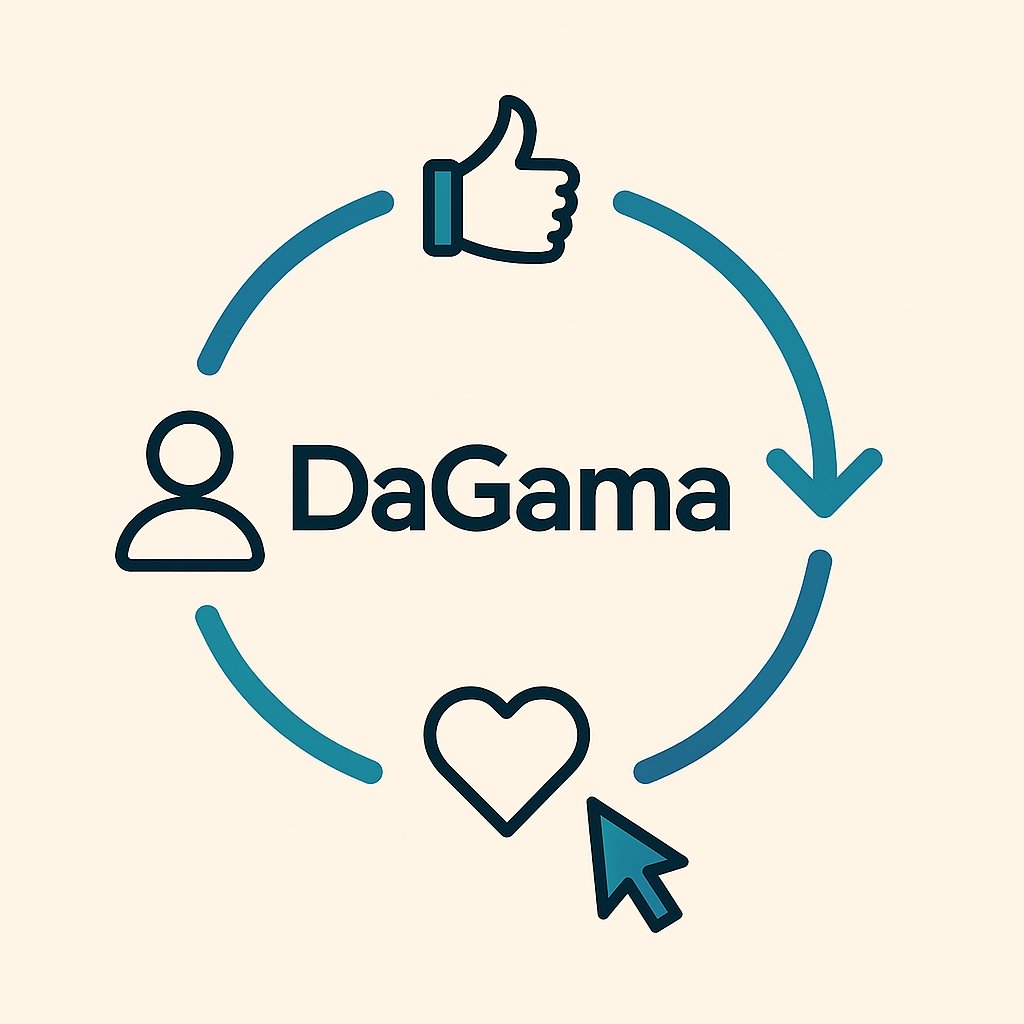
In the digital epoch of Web3, the true currency isn’t capital, it’s trust. While many chase its shadow through community and narrative, two projects are architecting its substance through verification: @inference_labs and @dagama_world.
Inference Labs is forging the cryptographic spine for reliable intelligence. At the intersection of AI and zero-knowledge proofs, they don’t just optimize for speed, they engineer for truth. By leveraging Bittensor’s Subnet 2, the largest decentralized ZK proving network, they transform opaque AI inference into a transparent, auditable process. In domains where autonomy is non-negotiable finance, robotics, governance blind faith in black-box models is a systemic risk. Inference Labs replaces conjecture with cryptographic proof, enabling AI that is not only powerful but also provably correct, private, and tamper-resistant.
DaGama, in turn, anchors trust to the physical world. Their platform reimagines discovery as a verifiable ledger: every review, recommendation, and check-in is substantiated by Proof of Presence on-chain attestation of real human experience. This creates a feedback-resistant ecosystem where authenticity accrues value and reputation is built through genuine engagement. With a vibrant community of 163K and a growing tapestry of campaigns and quests, daGama is assembling the foundational data layer for the real world, a critical resource for DePIN, RWAs, and the autonomous agents soon to navigate our streets and cities.
Together, they represent a dual-axis solution to the trust deficit: daGama certifies the where and what of reality, while Inference Labs verifies the how and why of digital reasoning. One grounds truth in place; the other elevates intelligence to accountability.
As we approach 2026, the frontier is shifting from who speaks loudest to who proves most. The infrastructure of the future won’t be built on promises it will run on proof. And in that architecture, @inference_labs and @dagama_world aren’t just participants. They’re laying the cornerstone.
The question is no longer whether we can trust the system, but whether we’re ready to inhabit one where trust is engineered, earned, and embedded.

38
40
582
27 Dec 2025
Two Pillars of Trust: Verifiable AI Meets Real-World Integrity
At the cutting edge of AI and blockchain, two visionary projects are laying the groundwork for a more trustworthy digital and physical world: @inference_labs and @dagama_world.
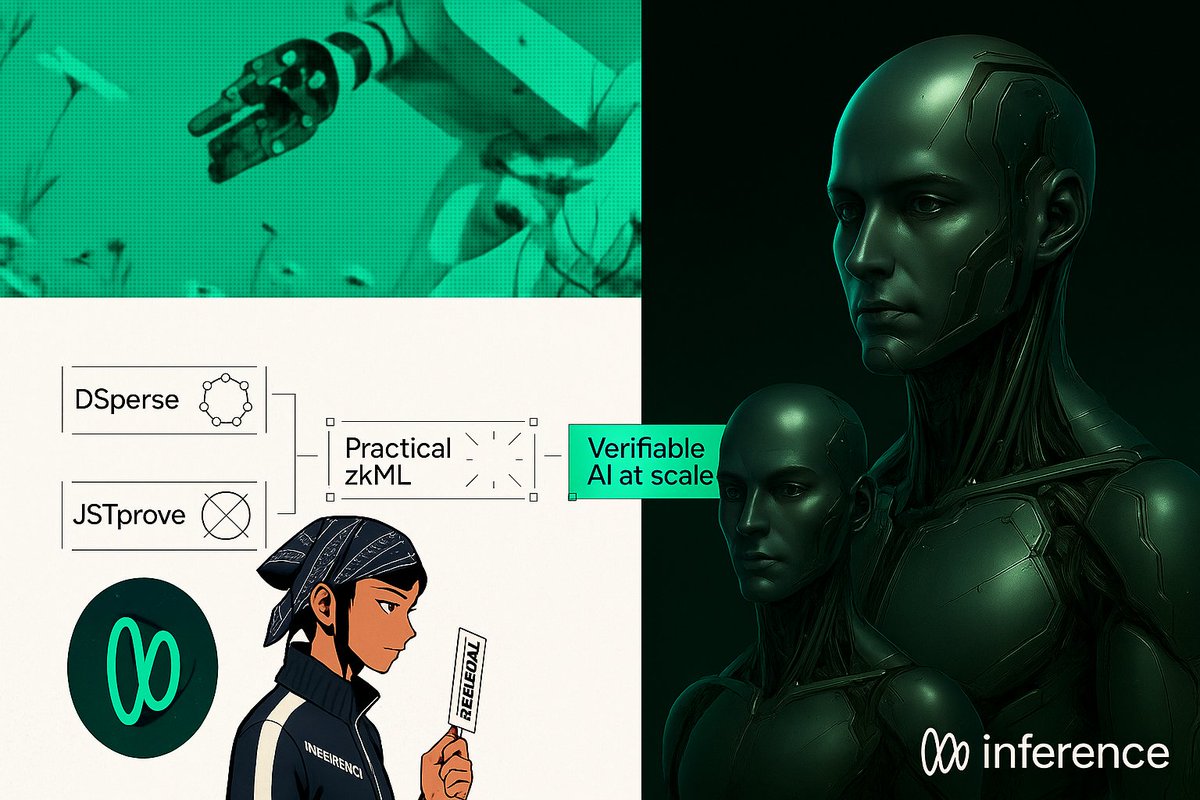
@inference_labs is architecting the proof layer for AI. Using zero-knowledge machine learning (zkML) and tools like DSperse and JSTprove, they make AI outputs cryptographically verifiable ensuring decisions are correct, secure, and tamper-proof. No more black-box guesswork. Just math-backed certainty for high-stakes domains like robotics, finance, and autonomous systems.
@dagama_world is building the trust layer for the real world. Their decentralized mapping app rewards users with $DGMA tokens for authentic, on-the-ground contributions check-ins, voice notes, verifications. The result? A global, community-validated map immune to fake reviews and manipulation. Real places become digital assets, and exploration becomes earnable.
Together, they form a full-stack trust engine:
- Inference Labs ensures AI _thinks_ verifiably.
- daGama ensures AI _acts_ on verified real-world data.
Imagine autonomous agents navigating the world with both provable intelligence and trusted signals from the physical environment. As AI moves deeper into logistics, robotics, and everyday life, this fusion of verifiable computation verifiable context becomes the foundation for safe, scalable autonomy.
These aren’t just projects they’re blueprints for a more accountable future. Builders building.
#DeAI #zkML #Web3 #AI #Blockchain #TrustStack
27 Dec 2025
Two Visions for Verifiable Truth: From AI's Core to Your Corner Café
Two projects are tackling the crisis of trust from opposite ends. @inference_labs builds a provable foundation for AI logic, while @dagama_world reconstructs how we verify the physical world.
@inference_labs: The Proof Layer for Autonomous Intelligence
Deep infrastructure solving AI's"black box" problem.
Core:Zero-knowledge ML (zkML) creates a cryptographic audit trail for AI decisions proving an output is correct without revealing the model or data.
Impact:Enables high-stakes, accountable AI for finance, robotics, and autonomous agents. It turns AI from an opaque oracle into a verifiable actor.
@dagama_world: The Trust Layer for Real-World Discovery
A consumer app fixing corrupted social proof.
Core:A blockchain map where users earn $DGMA for verified check-ins and reviews. Trust emerges from proof-of-location and aligned economic incentives.
Impact:Replaces gamified engagement with participant-owned discovery. It rebuilds local exploration as a cooperative network, not an extractive platform.
The Symmetry:
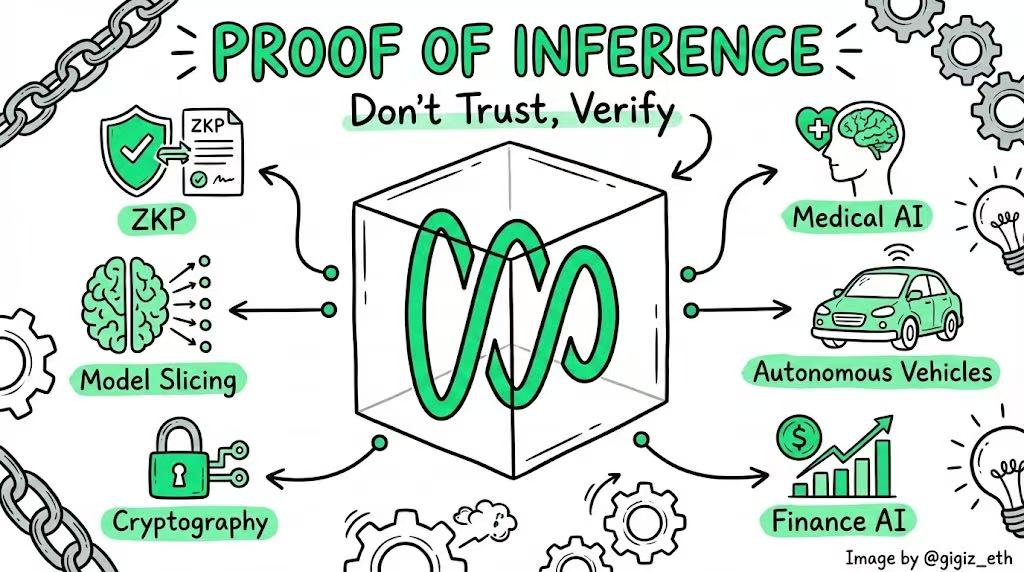
· @inference_labs verifies the digital inner-world of machine logic (Proof-of-Inference).
· @dagama_world verifies the physical outer-world of human experience (Proof-of-Presence).
Both use crypto's toolkit not for speculation, but to solve a foundational flaw: how to prove something is true. One builds trust upward from silicon, the other downward from the crowd.

3
32
32
223

19 Dec 2025
We’re thankful for the builders, teams, and customers who trust us every day.
Here’s to building better experiences together. ✨
#truststack #cxcommunity #cuoral
1
2
41
15 Dec 2025
Trust isn’t built on assumptions. It’s built on visibility.
Cuoral helps teams turn customer signals into clear, measurable insight so confidence isn’t guessed, it’s earned every day.
Because in modern customer experience, visibility is the real currency.
#CustomerIntelligence #TrustStack #CXInnovation #Cuoral

2
5
60

8 Dec 2025
training arc energy here
small cap / fast hit / zero edge truststack
this feels like positioning in slow motion before the $CASINO TGE
reading cycles like it’s a survival skill
8 Dec 2025

UPDATE quick field test this week
kept stakes tiny, $20 cap, 48h: 2 small withdrawals hit instantly
watched livestream wins UX > screenshots
1) treat as training: discipline > speed, small bets to avoid tilt
2) mechanic: every bet accrues into allocation flip bet=accumulate
3) 0% house edge responsive support = onchain trust
log cycles, read liquidity signals, stack before TGE or keep practising? $CASINO #TGE #blockchain
Like RT
4
7
60
8 Dec 2025
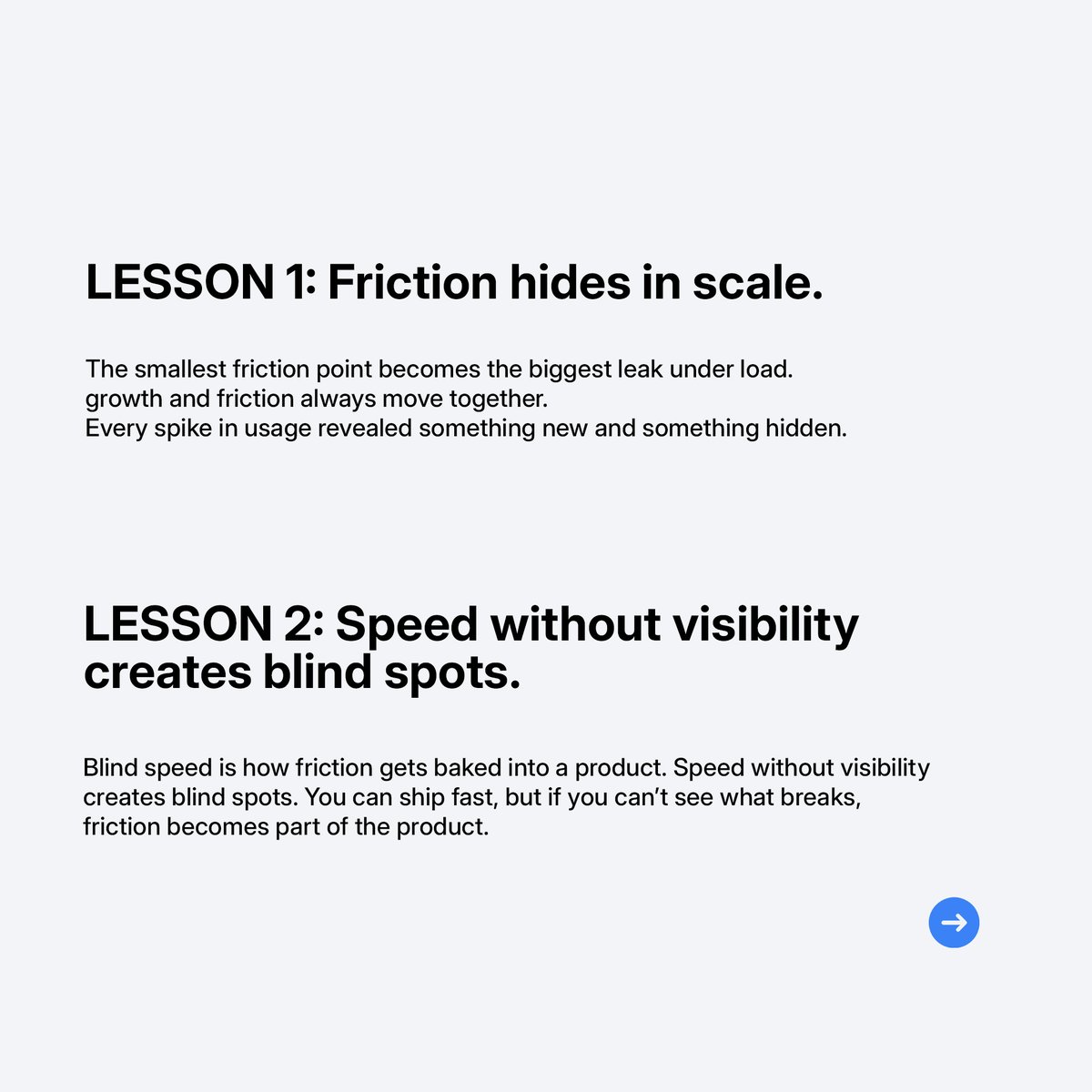
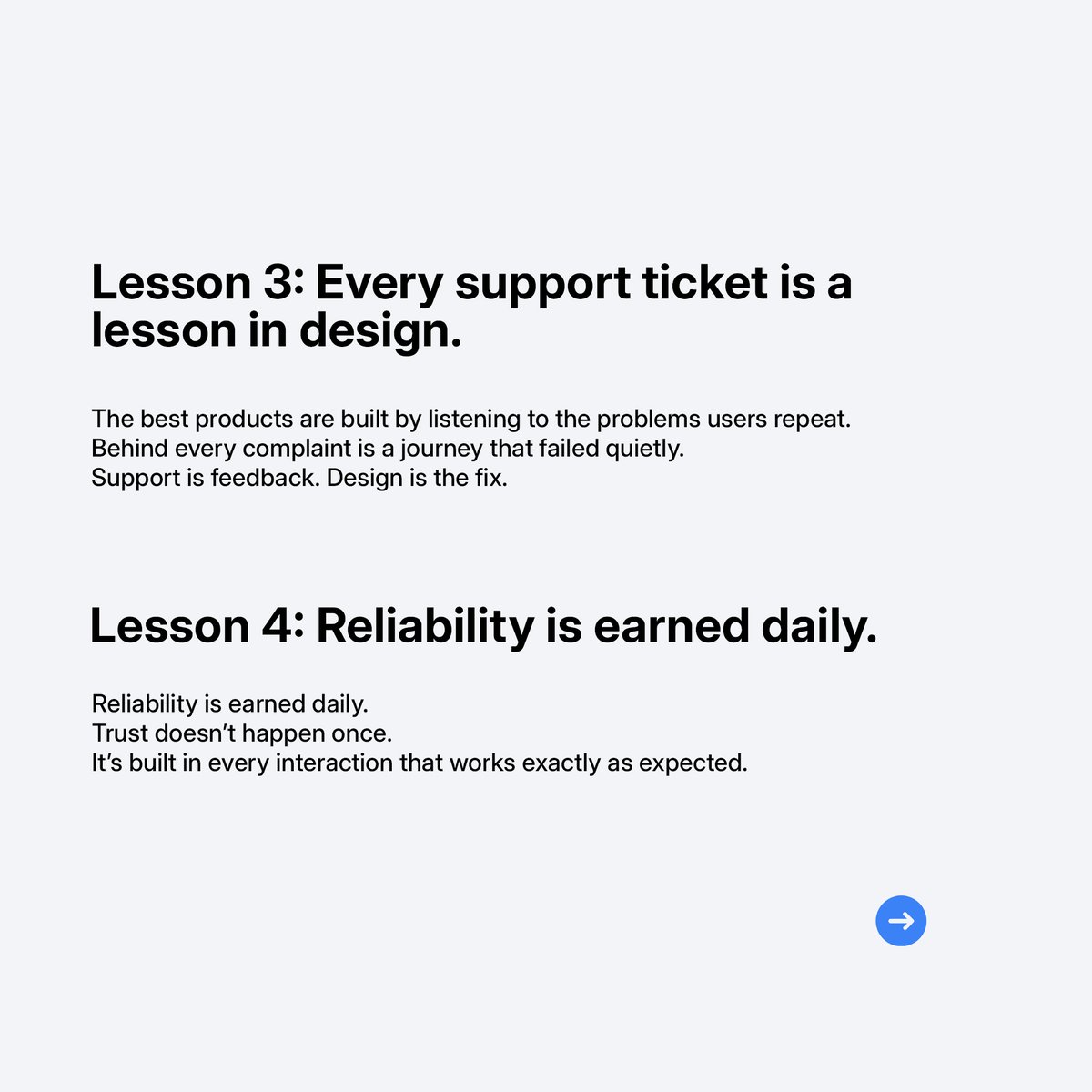
2025 has been a year of insight, and friction.
Every conversation, every integration, every issue taught us something about how trust is built (and sometimes lost).
Here are our biggest lessons from a year spent helping businesses turn friction into foresight. #truststack


2
4
181
21 Nov 2025
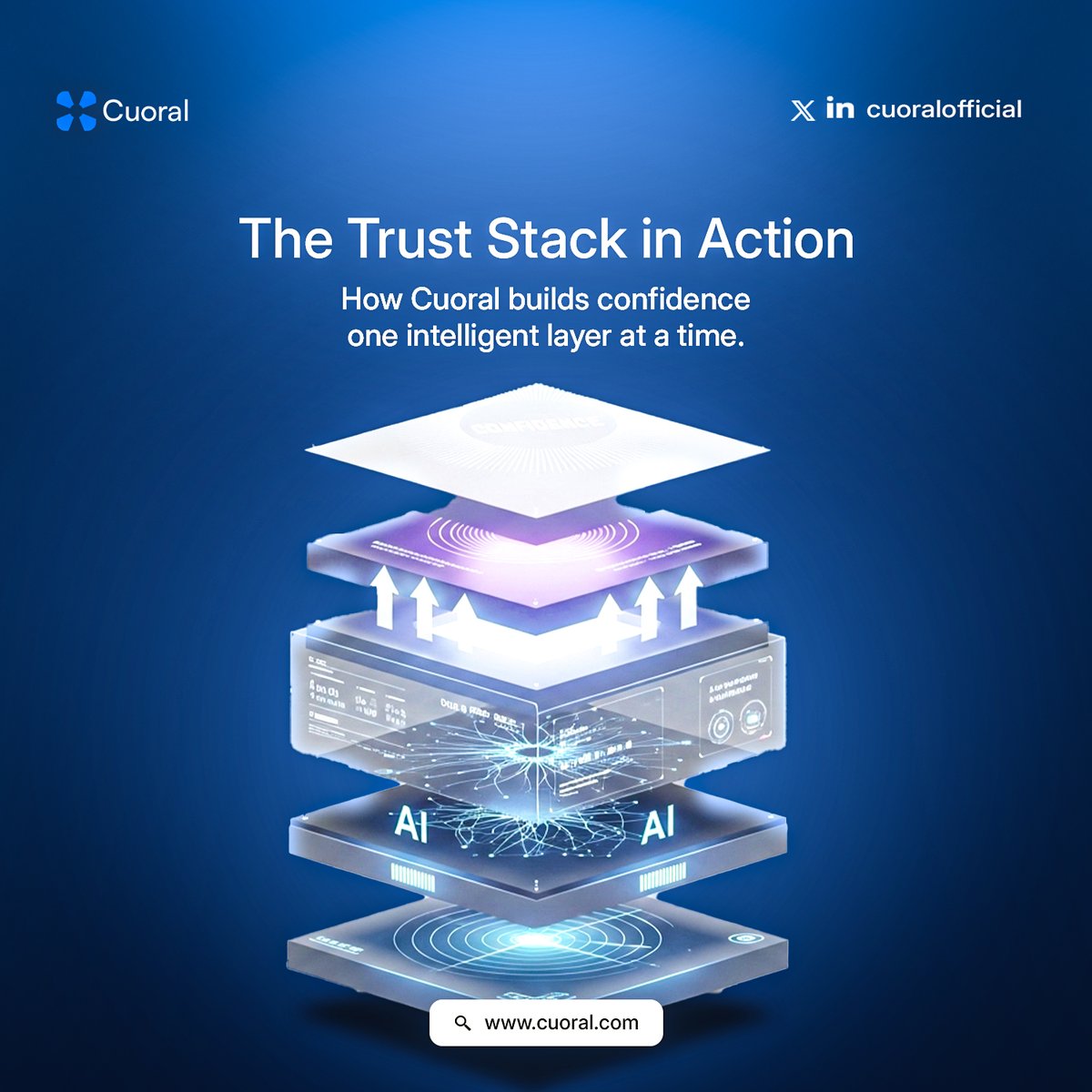
Visibility creates reliability. Reliability creates Communication.
Communication creates retention.
That’s the Trust Stack. When businesses see clearly, they serve better. When they serve better, they grow faster. Simple sequence. Powerful outcome. #truststack #cxinnovation
4
115

18 Nov 2025
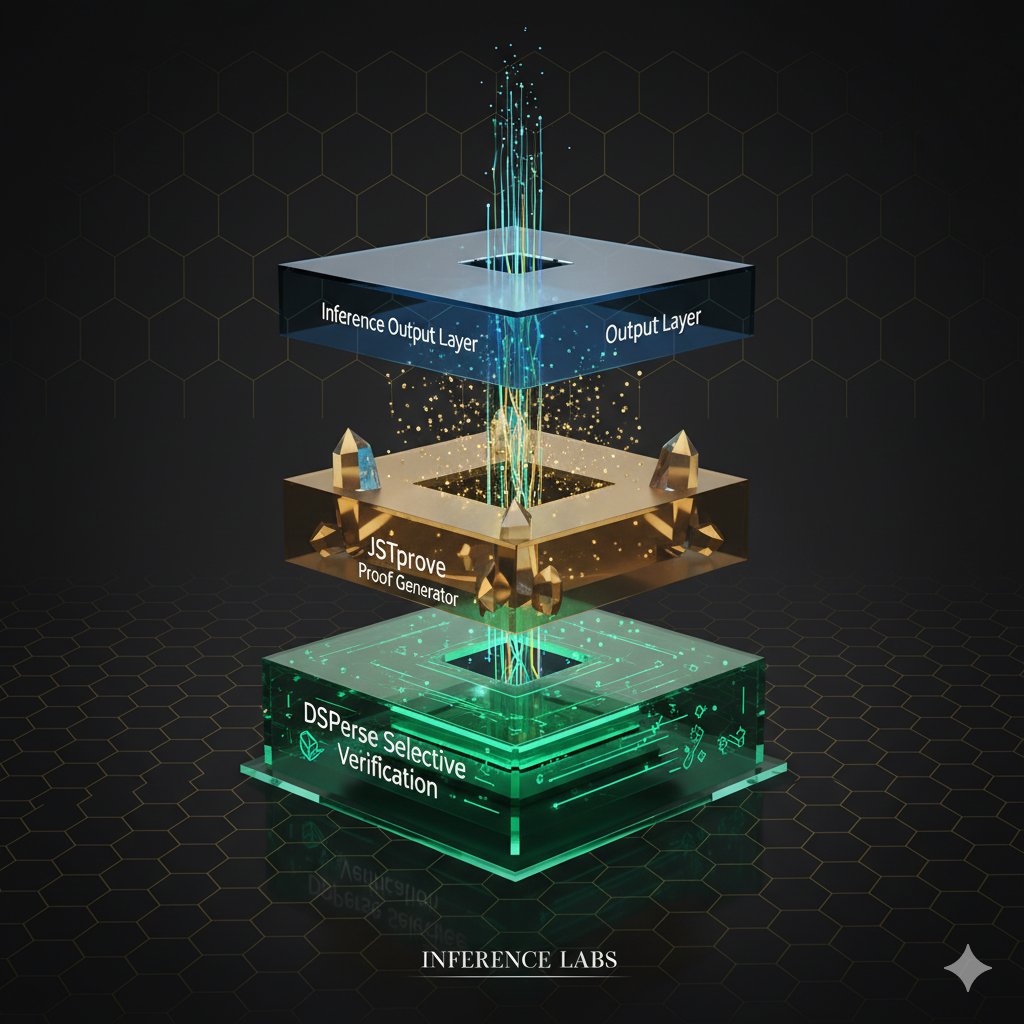
Auditable AI, powered by trust 🤖🔐
Every action is verified ✅
DSperse identifies key computations 🔍
JSTprove converts outputs into cryptographic proofs ✨
Inference Network anchors everything on-chain ⛓️
Proof first. Then action. 🚀
#AuditableAI #TrustStack
1
1
8
176
17 Nov 2025
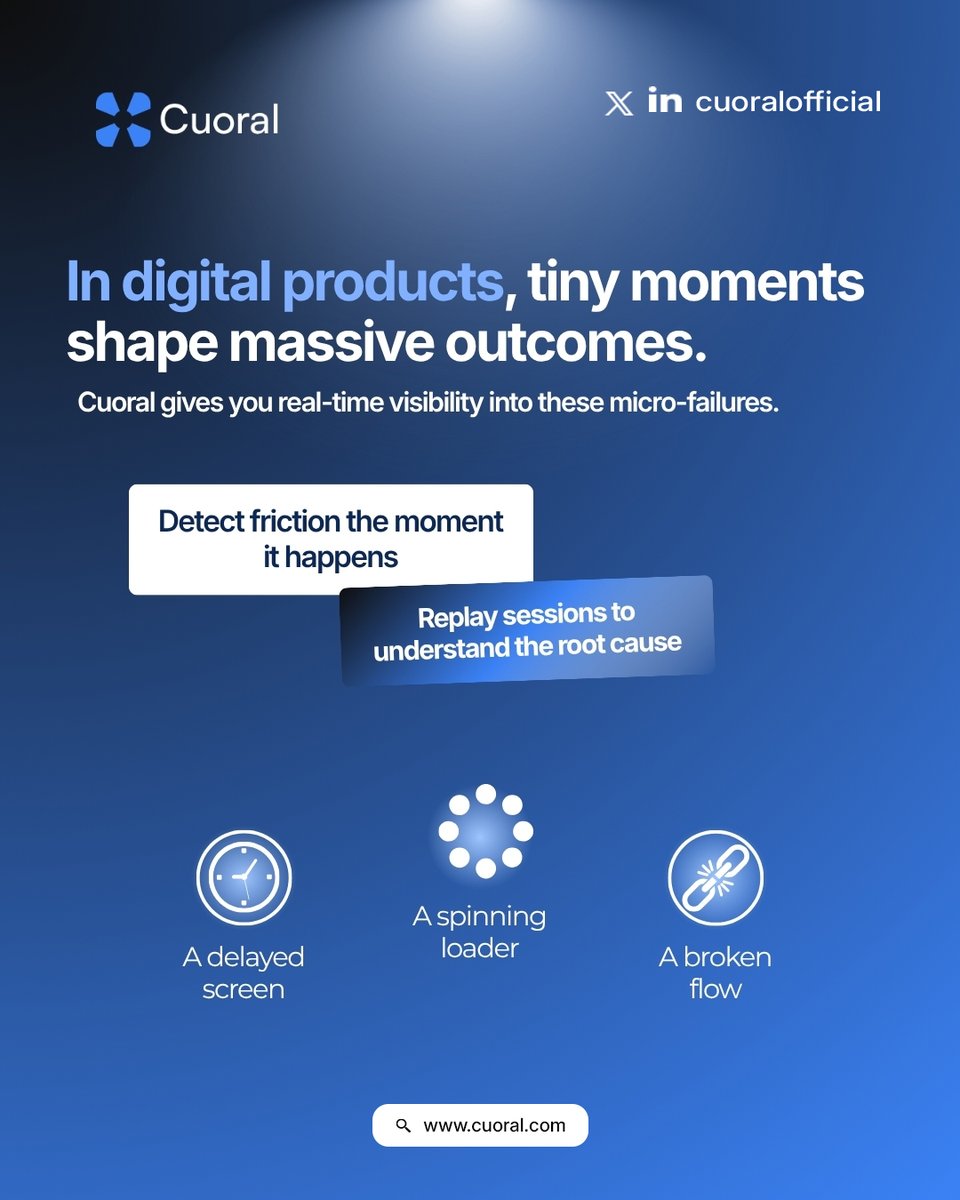
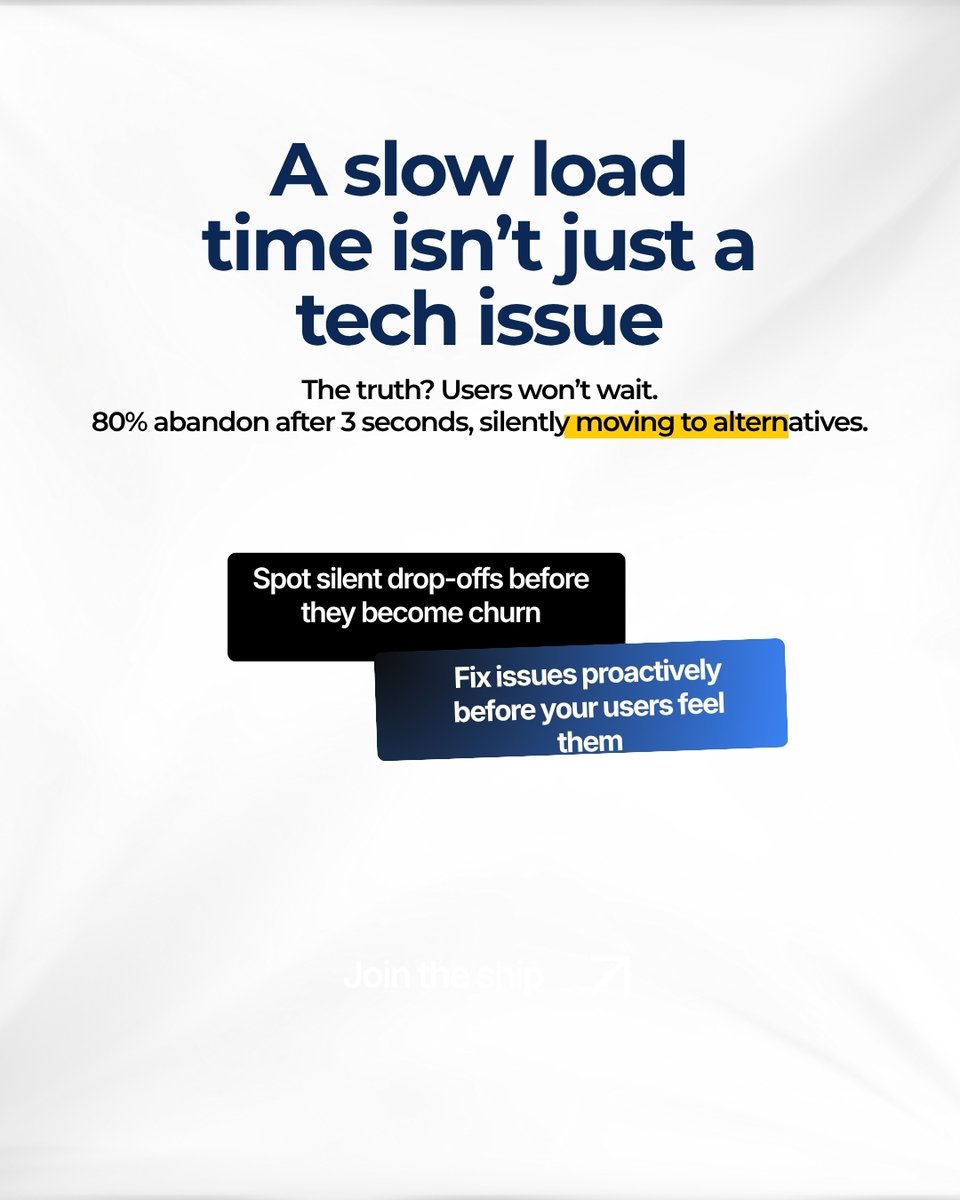
Every second online is a moment of truth.
In those few seconds, a user decides to stay, click, or leave. And that decision is rarely about design, it’s about trust.
Cuoral’s Trust Stack helps you catch those micro-moments before they become macro losses.
#truststack #customer
2
4
174

30 Oct 2025
Demo:
Session by IDfy showcased TrustStack — a unified AI platform powering next-gen verification & risk workflows.
• Automates identity & fraud workflows at scale
• Bridges legacy systems with modern digital ecosystems
• Elevates trust via AI driven decision-making in onboarding
• Enables smarter verification for insurers & lenders
What’s the biggest operational bottleneck that platforms like TrustStack can eliminate in insurance?
#IIA2025 | #IDfy | #TrustStack | #InsurTech | #AIinInsurance | #DigitalTransformation
1
2
3
106
24 Oct 2025
MNS is the UX leap we actually needed
Make a name, not a hex
mint @.yourname.snow and it's a global ID across 70 chains
ORS turns onchain ops into a reputation score
bots filtered, truststack built
CIP = Web3 Venmo name→name cross‑chain pay, LayerZero rails, no bridge drama, no address copy pain
Imagine lending rates keyed to ORS, DAOs with clean votes, AI agents acting on verified IDs
10K names, 30K wallets scored, 300K subs, revenue>$10M, CIP beta 1k waitlist
If you want composable identity, this is the play
$SNOWAI $CGPT #Snowball @Chain_GPT
15 Oct 2025

雪球钱 @snowball_money 的MNS系统太狠了,直接把那些乱七八糟的钱包地址变身简单易记的名字,还跨70 链用,Ethereum、Aptos、BNB全覆盖。
核心玩法:Modular Naming Service(MNS)让你mint一个@.yourname.snow,瞬间变成通用ID,不光发币收币顺溜,还带Onchain Reputation Scores(ORS),根据真实链上活动打分,过滤机器人,建信任墙。
再加Cross Identity Payments(CIP),名字直接当钱包跨链转账,像Web3版的Venmo,没桥接烦恼,没地址复制痛,LayerZero底层撑腰,安全又快。
我瞅着这套组合,Web3身份碎片化时代要翻篇了。想想看,未来DeFi、DAO、AI代理全靠这个ID串联,声誉从活动攒起,变成数字信用分,借贷、合作全靠它说话。
traction亮眼:10K 名字预订,30K钱包已评分,300K邮箱订阅,营收破千万刀,融资300K。Q4 CIP beta限1000人,赶紧上waitlist抢位。
潜力预测:$SNOWAI中位冲$0.15(高点$0.20),TVL轻松破亿,胜圈内竞品在AI 身份融合,社区驱动更稳。和ChainGPT Pad联动,$CGPT激励加持,生态扩张加速。
这不光是工具,是Web3从冷冰冰地址到热血人际的跃迁。普通用户别错,建ID从现在起步,未来谁的声誉高谁吃肉。
参与ChainGPT Pad池子:pad.chaingpt.org/pools/snowb…
CIP beta:snowball.money/cross-identit…
官网:modular.name
#Snowball $SNOWAI #ChainGPT $CGPT @Chain_GPT @ChainGPT_Pad
2
8
69

19 Sep 2025
Crypto isn’t dead — it just went stealth mode 🥷
While everyone’s busy chasing memecoins & L2s, a new financial OS is quietly booting 🧠💻
$KYA > $KYC
$Agents > $Users
$Trust > $Protocols
🧵 Let me break it down 👇👇
🔹 1. A new stack is quietly coming online
This isn’t just Web3 anymore.
This is a machine that:
•Remembers what agents did 🤖
•Logs actions as identity 🧾
•Embeds trust into code 🔐
•Makes wallets programmable 💼
Not just $DeFi.
It’s onchain agency.
🔹 2. Know Your Agent (KYA) is the new KYC
Forget passports. Forget selfies.
KYA answers:
•Who acted?
•With what key?
•Why? When? What changed?
Every agent becomes:
✅ Auditable
✅ Tokenized
✅ Reversible
This is compliance by design — not by request ⚙️
🔹 3. $Apple just deployed trust at checkout 🍏
Apple Wallet $Affirm =
🪪 $Identity
💸 Spend
🧾 Pay plan
One single UX = full trust loop.
This isn’t BNPL…
This is a token factory in disguise 🏭
The moat isn’t APR.
It’s who owns your agent’s trust 👁🗨
🔹 4. Agents now hold the keys 🧬
AI agents now:
•Move money 💸
•Create wallets 🪪
•Log activity 📚
•Hold memory 🧠
$KYA = identity through behavior.
$KYC = identity through paperwork.
Which one wins in AI-native finance? 🤯
🔹 5. TL;DR
✅ KYA > KYC
✅ Trust > Hype
✅ Agents > Users
✅ Apple & Web2 are already live
✅ $TIBBIR is the key to agent-native finance 🔑
You’re not early.
You’re inside the OS already booting 🧬
🔥 If you’re reading this, you’re ahead of 99.9%
⚡️ Like Repost if you’re stacking agent-native alpha
💬 Drop a 🧠 if you’re building with KYA
🪪 Let’s bring trust onchain — for real
#KYA #TIBBIR #AgentFi #Virtuals #TrustStack #AppleBNPL #CryptoOS #Fireblocks #Persona #RibbitCapital #CartelAlpha #AlphaPost


8
49
3,097

6 Aug 2025
☕ “Where are the coffee payments?”
Wrong question.
Bitcoin isn’t here to speed up your latte queue.
It’s here to decouple human trust from state decay.
The three phases are unfolding:
1.Store of Value → anchor trust
2.Collateral Backbone → rewire finance
3.Medium of Exchange → only when volatility = absorbed signal
Bitcoin isn’t late.
You’re early — and zoomed too far in.
Macro runs on epochs, not espresso.
#BitcoinPhaseShift #TrustStack #DecoupleFiat
3
58

12 Jul 2025
Ask yourself: What does the average online interaction give you?
A like? An ad? Maybe another notification loop?
Now flip the script. What if every time you interacted online — it meant something?
That’s where this next-generation trio comes in:
💠 @vooi_io helps you prove you’re a real person without revealing anything sensitive. Soulbound credentials tied to you — not your passport. No Sybil, no spam, no fake armies.
💠 @KaitoAI_ delivers AI responses that are explainable and traceable. Not hallucinated nonsense. Not a mystery black box. You can see where the answer came from, who ranked it, and why it matters.
💠 @cookie_fun is the final piece: it rewards attention. Not likes, not empty clicks — but actual user time, engagement, and presence.
This is what Web3 was supposed to be — Verifiable. Respectful. Rewarding.
No more bots faking activity. No more AI bluffing answers. No more humans being treated like data.
Just systems that respect reality.
#CookieFi #KaitoAI #VOOI #Web3Experience #ReputationInfra #TrustStack

5
3
42

27 May 2025
Client told me this was better than 2 years of agency retainers
"I've spent more on marketing agencies than on my kids' college funds."
That's what Mark, a financial advisor with 15 years of experience, told me during our first call
He wasn't exaggerating. Over two years, he'd paid nearly $84,000 to three different agencies
The results?
A fancy website, some social media posts, and client growth that barely covered the marketing costs
Mark was ready to give up on digital marketing entirely when a mutual connection introduced us
"One more try," he said. "But I'm skeptical."
We installed our TrustStack AI system in 6 days. Here's what happened next:
Week 1: His Google Business Profile started generating leads (it had produced zero in the previous 6 months)
Week 2: The AI follow-up system qualified 13 potential clients without Mark lifting a finger
Week 3: He booked 7 appointments with qualified prospects - more than the previous two months combined
By week 5, Mark had signed 3 new clients with a combined annual value of $31,000
"These people here bro, they're actually qualified," he texted me. "Not tire-kickers or time-wasters. Real prospects who match my ideal clients"
The turning point came when Mark realized the traditional agency model was broken from the start
They were selling activities (posts, ads, website updates) rather than outcomes (qualified appointments with ideal prospects)
Our system did one thing differently: it created a complete client acquisition infrastructure, not just marketing deliverables
After three months, Mark calculated the ROI on our system at 347% - a stark contrast to the breakeven results from his previous agency relationships
"This was better than two years of agency retainers," he told me. "I finally feel like I own my marketing instead of renting it"
If you've been burned by traditional agencies, maybe it's time for a different approach
What's been your biggest agency disappointment?
Drop it in the comments (and watch how many people have experienced the same thing)
1
2
110
23 May 2025
Most founders ignore this $1K system and burn $3K/month instead
The average service business owner is burning $3,000 monthly on marketing activities that don't build equity
Meanwhile, they ignore the $1K system that could make their business twice as valuable
Let me explain what's happening:
Most businesses approach marketing as a never-ending expense - paying monthly for ads, content creation, and agency retainers
It's like renting a house instead of buying one
You're paying but building no equity.
The smarter approach?
Invest in automation infrastructure once and own it forever
Here's why this matters for your business valuation:
When you sell a business, buyers pay multiples based on:
Revenue consistency (is it predictable?)
Growth potential (can it scale without you?)
Operational efficiency (how much profit per dollar?)
A business with built-in marketing automation scores higher on ALL THREE factors
Recent example: Two similar financial advisory firms, both making ~$500K annually. One sold for 2.1x revenue. The other, with our TrustStack AI system installed, sold for 3.4x
The difference?
The second had proof their marketing worked without the founder's involvement
The system was an asset included in the sale
The real question is: are you building a business that works without you, or are you just buying yourself a job?
This is why we install complete systems in 7 days rather than selling never-ending services
Our clients own their growth infrastructure, not rent it
If you're tired of paying monthly marketing bills with nothing to show for it, let's talk about installing a system you actually own
What's your current monthly marketing spend?
Drop it below and I'll tell you what kind of system you could build for a one-time investment instead
1
2
89

13 Jan 2024


2
1
4
844

17 Jul 2021
Truststack Africa is recruiting four student ambassadors for a three month duration. If you are a bootstrapper, good team player (monthly goal is a collaborative effort) & in your second or third year in any Nigerian University, complete the application form here...
2
23
14