
Mission Accomplished without firing a shot. 🇺🇸🦅
The ultimate victory of American deterrence. Under the pressure of unmatched power, Iran has officially backed down and pledged to halt its nuclear weapons program.
This is how a superpower dictates peace. Absolute win for Washington. ⚡💥
#USPower #NuclearDeal #IranPeaceDeal #Geopolitics #USA
6
6
14
493

Jun 11
AMERICA’S LIGHTNING RESPONSE: Iran Downs U.S. Helicopter — America Delivers Overwhelming Precision Strikes, Crippling Military Infrastructure in Minutes and Proving Unmatched Dominance
By Jonathan Gregory
IRAN - June 10, 2026
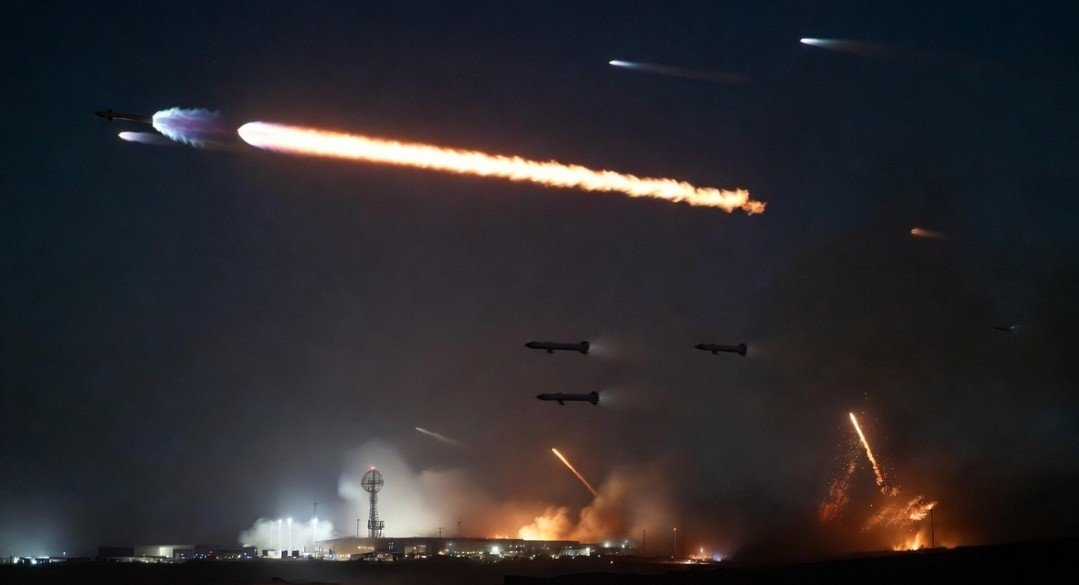
In a brazen act of aggression, Iranian regime forces shot down a U.S. military helicopter, triggering an immediate and overwhelming American response that demonstrated the full might and precision of the United States military.
American forces struck back with lightning speed. A coordinated wave of advanced fighter jets, hypersonic missiles, and drone swarms slammed into key Iranian military installations, air defense systems, and command infrastructure across multiple provinces. The operation was executed with surgical precision and devastating effectiveness.
Within minutes, critical regime capabilities were neutralized. Power grids supporting military operations were hit hard, plunging affected areas into darkness and severing the enemy’s ability to coordinate defenses or communications. Iranian forces were left scrambling, unable to mount any effective response as the strikes kept coming.
This was not a measured retaliation, it was a thunderous demonstration of American power and resolve. The message was unmistakable: attacks on U.S. personnel will be answered with overwhelming force and precision that can cripple an adversary’s ability to fight in record time.
Military analysts are describing the operation as one of the most rapid and effective shows of strength in modern history, clear proof that when America is forced to respond, the results are swift, precise, and total in their impact on the enemy’s war fighting machine.
The regime in Tehran has now received a brutal reminder that the United States possesses both the will and the unmatched capability to defend its forces and interests anywhere in the world.
@TrumpNews
#AmericaStrong #USMilitary #DecisiveResponse #PrecisionStrikes #MilitaryDominance #AmericaFirst #OverwhelmingForce #SwiftJustice #IranRegime #StandWithAmerica #USPower
129

U.S. court ruling gives wind and solar developers a tax-credit lifeline before the deadline business-news-today.com/u-s-… #RenewableEnergy #SolarEnergy #WindEnergy #CleanEnergy #TaxCredits #IRS #EnergyPolicy #USPower #ProjectFinance #EnergyTransition
16

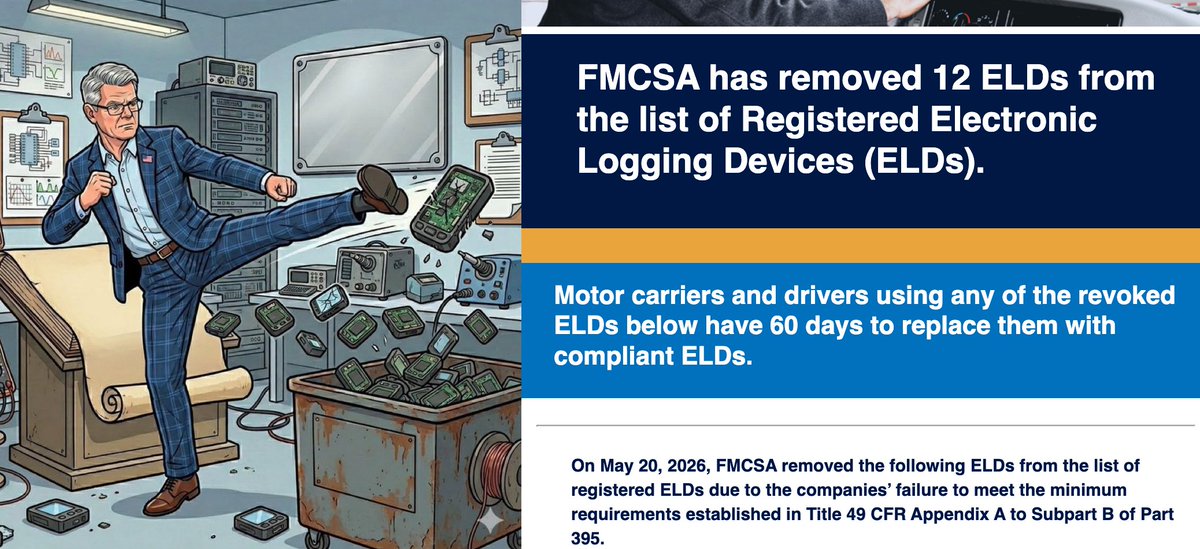
12 MORE ELDs REVOKED!!!!
888 ELD
DRAGON ELD
ACTION ELD
Mondo ELD HOS
FIRST ELD
FIRST ELD V2.0
MTL ELD
USPower ELD
Sam Freight ELD
DSGELOGS
COBRA ELD
GT USA ELOGS
12
34
174
8,165
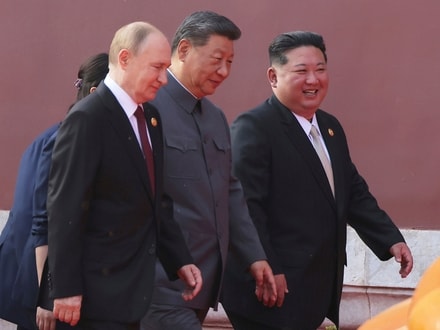
Putin is desperate to keep Beijing away from Washington. The goal? A Russia-China-Iran alliance aimed squarely at the US.
But let’s be real—they are heavily miscalculating. America’s power, global reach, and military tech are on a completely different level. 🇺🇸
A strategic mastermove by Putin, or a massive delusion of superpower status? Thoughts? 🧵
#Putin #Trump #NationalSecurity #USPower
4
3
9
525

Apr 27
ANALYSIS
From hegemony to contestation: Unraveling of American primacy
By Nani Gopal Mahanta
click here:
dailypioneer.com/news/from-h…
#USPower #GlobalOrder #MultipolarWorld #Geopolitics #InternationalRelations #WestAsia #IranUS #NATO #China #Russia #ForeignPolicy #WorldPolitics
4
6
185

Apr 15
While bombs drop on Iran, the world fixates on oil.
The real fight? Keeping the petrodollar alive.
Oil isn’t just energy. It’s the anchor of dollar dominance — the invisible chain holding the global economy together.
Is America waging war to “stabilize” the Middle East… or to make sure every barrel still trades in USD?
Critics call it coincidence. History calls it pattern.
This isn’t conspiracy. It’s geopolitics 101: control the oil, control the currency, control the century.
The petrodollar isn’t dying quietly.
Question is — who actually wins when the dust settles?
#Petrodollar #IranWar #Oil #DollarDominance #Geopolitics #GlobalEconomy #USPower #BRICS
1
2
319

THE STRAIT THAT COULD SHAKE AN EMPIRE
History rarely repeats itself exactly—but sometimes it echoes so loudly that ignoring it becomes dangerous. When Ray Dalio, a man who has studied 500 years of rising and falling empires, draws a parallel between modern America and Britain in 1956, it demands attention. His warning is stark: losing control of the Strait of Hormuz could be for the United States what losing the Suez Canal was for Britain—a turning point from dominance to decline.
To understand this, we must step back into history.
In 1956, the world still saw Britain as a global superpower. For two centuries, it had ruled seas, controlled trade routes, and backed its influence with the strength of the pound. At the heart of this dominance was the Suez Canal, a narrow passage connecting Europe to Asia and serving as a lifeline of global trade.
Then came Gamal Abdel Nasser. Egypt nationalized the canal, effectively taking control away from Britain and France. In response, Britain, France, and Israel launched a military intervention. On paper, it looked like a show of strength. In reality, it exposed weakness.
The decisive moment didn’t happen on the battlefield—it happened politically. The United States and the Soviet Union both pressured Britain to withdraw. The United Nations also intervened. Britain backed down.
That retreat changed everything.
The world realized something profound: Britain could no longer act independently as a global power. Confidence shattered. The pound weakened, allies reconsidered their loyalties, and colonies began demanding independence. Within decades, the British Empire faded into history—not because of a single defeat, but because of a single perception: it was no longer in control.
Now shift to today.
The Strait of Hormuz carries roughly 20% of the world’s oil supply. It is the narrow artery through which energy flows from countries like Saudi Arabia, Iraq, Kuwait, and the UAE to the rest of the world. If this passage is blocked, the consequences are immediate and severe—oil prices surge, economies stall, and global supply chains fracture.
And at the center of this tension stands Iran.
The comparison Dalio makes is unsettling. Just as Egypt challenged Britain at Suez, Iran is positioned to challenge the United States at Hormuz. The question is no longer hypothetical: what happens if the U.S. cannot guarantee free passage?
Dalio’s research suggests that empires don’t collapse overnight—they unravel when confidence disappears. A dominant power relies not just on military strength, but on trust: trust in its currency, its leadership, and its ability to maintain order.
If that trust is shaken, consequences cascade quickly.
The United States today carries enormous debt, faces political divisions, and has endured prolonged conflicts in places like Vietnam and Afghanistan without decisive victories. These factors feed a growing perception that its power may be more fragile than it appears.
Dalio emphasizes a critical insight: in prolonged conflicts, endurance matters more than firepower. Nations that can absorb pain—economic, political, or military—often outlast stronger opponents who cannot sustain public support.
This is where the psychological dimension becomes dangerous.
If a confrontation around Hormuz escalates and drags on, it is not just a military test—it is a test of patience, resilience, and global perception. The world will be watching closely, just as it did in 1956.
If the U.S. ensures open trade routes and maintains stability, confidence in the dollar and its leadership will strengthen. Allies will align more closely, and its global role will be reinforced.
But if it fails—or even appears unable to act decisively—the consequences could mirror Britain’s decline. Investors may lose confidence. Global capital could shift. Emerging powers, particularly China, may gain influence. Alliances could weaken, and the balance of power may begin to tilt.
History shows that control over trade routes is never just about geography—it is about authority. When that authority is challenged and not defended effectively, the ripple effects extend far beyond a single region.
CONCLUSION
The story of the Suez Canal is not just a historical event—it is a warning. Empires do not fall simply because of external threats; they fall when the world stops believing in their strength.
Today, the Strait of Hormuz represents more than a strategic chokepoint. It is a symbol—a test of credibility in a fragile global order.
If history is any guide, the outcome of such moments reshapes decades to come. Whether this becomes America’s “Suez moment” or a reaffirmation of its power is uncertain.
But one thing is clear: when vital trade routes are at stake, the consequences are never local—they are global, and they are lasting.
x.com/@marketpulse247
#Geopolitics
#GlobalPowerShift
#WorldOrder
#EconomicCrisis
#OilCrisis
#StraitOfHormuz
#MiddleEastTensions
#WarEconomy
#GlobalTrade
#EnergyCrisis
#USvsIran
#MarketCrash
#DollarCollapse
#GoldSurge
#InvestingInsights
#MacroEconomics
#FinancialCrisis
#GlobalConflict
#WorldWar3Fears
#BreakingHistory
#EmpireFall
#RiseAndFall
#RayDalio
#HistoryRepeats
#SuezCrisis
#BritainHistory
#USPower
#ChinaRise
#BRICS
#GlobalMarkets
#StockMarketNews
#CrisisAlert
#EconomicShift
#FutureOfMoney
#DebtCrisis
#OilMarkets
#EnergyWar
#TradeRoutes
#GlobalInstability
#MarketPulse
#InvestorMindset
#WealthProtection
#SafeHaven
#GoldInvestment
#EconomicStorm
#PoliticalRisk
#FinancialFreedom
#GlobalTrends
#MarketAwareness
#StayInformed

3
4
59

Mar 18
"🇺🇸 Precision dominance in action. Iran spent decades burying anti-ship missiles in coastal rock, convinced they’d choke the Strait of Hormuz and hold global energy hostage. One GBU-72 bunker-buster later and those “untouchable” sites are gone. CENTCOM isn’t just striking — it’s systematically erasing Tehran’s leverage over 20% of the world’s oil trade. Freedom of navigation isn’t a slogan; it’s being enforced with 5,000-pound reality checks. Admiral Cooper said it best: Iran’s ability to threaten commercial shipping is being rapidly depleted. Game-changer moment for the region and the global economy. Who’s next on the target list? #Hormuz #USPower #StrategicReality"
1
3
1,743

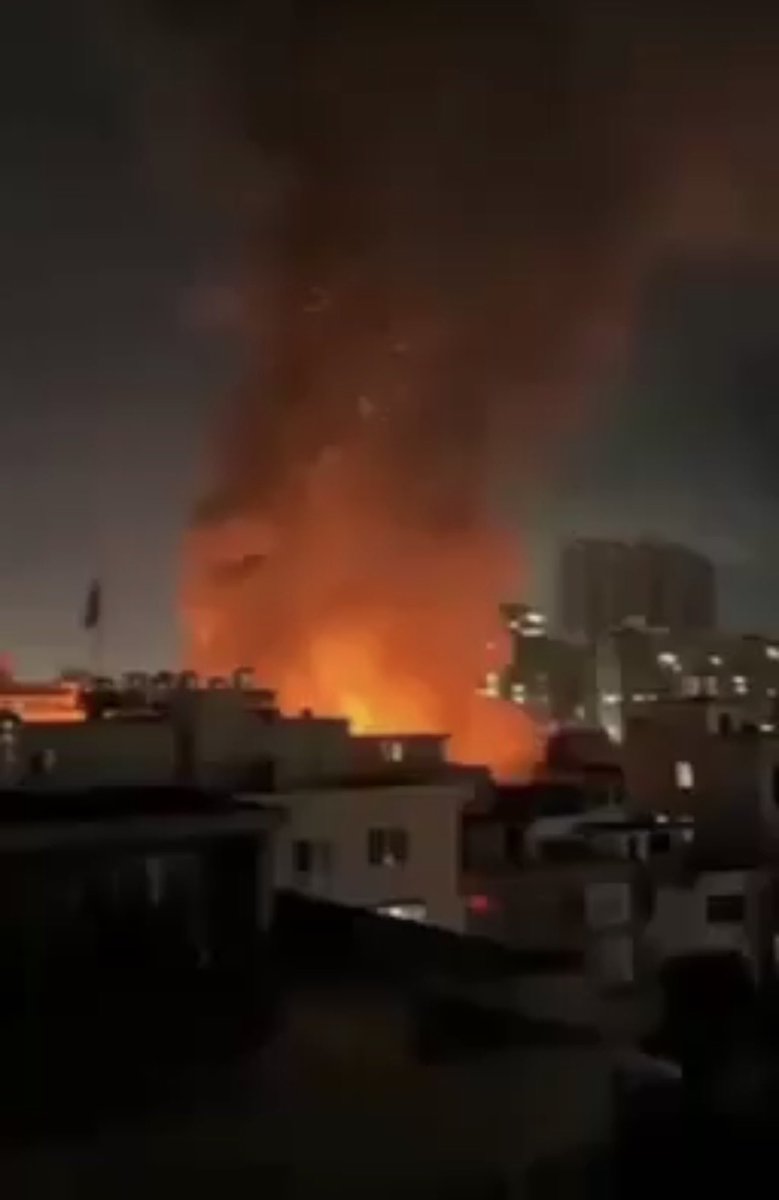
⚠️Warning : The U.S. War on Iran: A Turning Point?
I do believe that the U.S. war on Iran could mark the beginning of the end for the so-called American Empire.
(A superpower).
There are multiple external and internal factors indicating this, which would require a long and detailed analysis.
Internal factors are critical: a systematic dismantling of the constitutional and legal heritage, with presidential power expanding at the expense of all other branches. Loyalty and decisions serve the president—not the country or its people.
The president ignores the Constitution, the law, the Supreme Court, Congress, and even suppresses the media.
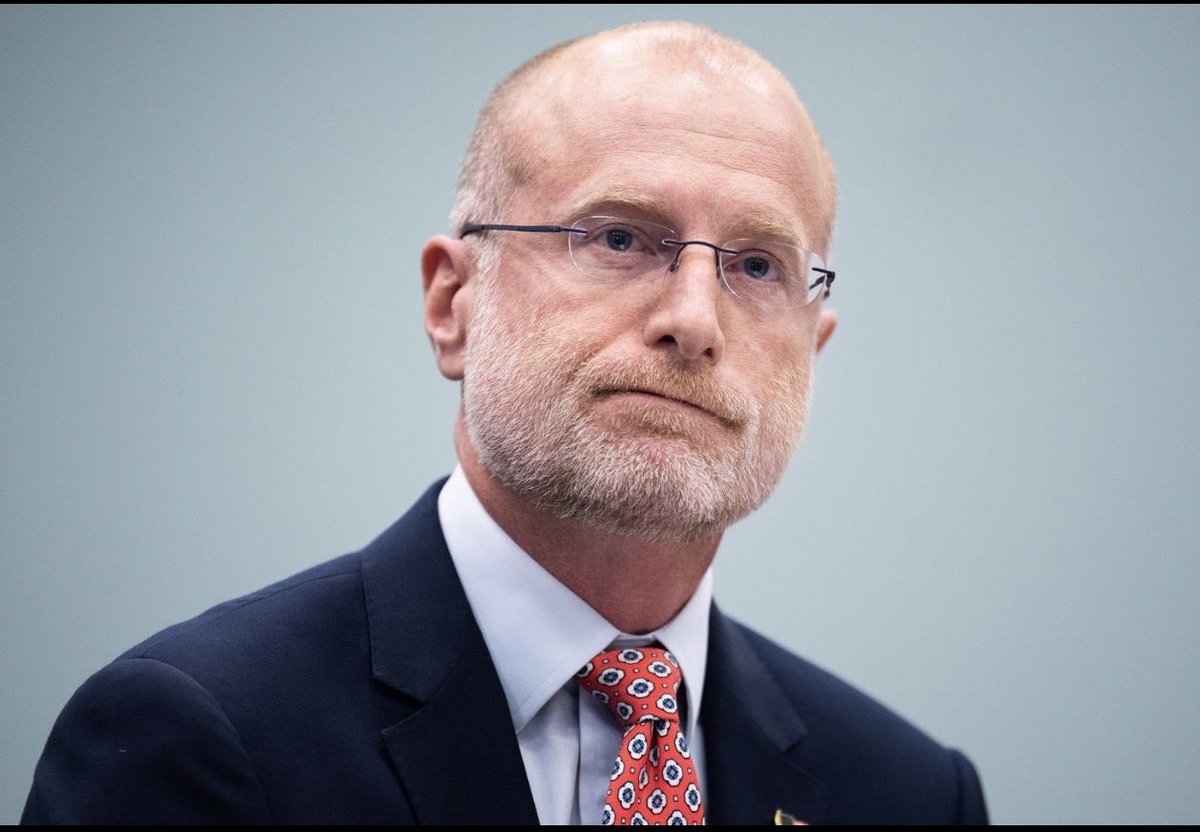
Yesterday, FCC Chairman Brendan Carr threatened media networks with revoking licenses unless they report “positive news” about the war, including fake victories and total destroying of Iran’s power.
This only happens in authoritarian states with a single narrative: blackout of reality, labeling truth as misinformation, and promoting Trump and Pete Hegseth’s lies about imaginary victories.
#Iran #USPolitics #Trump #PeteHegseth #FakeVictories #Authoritarianism #MediaControl #DualAggression #USPower #PoliticalTruth #BrendanCarr
4
3
8
1,620

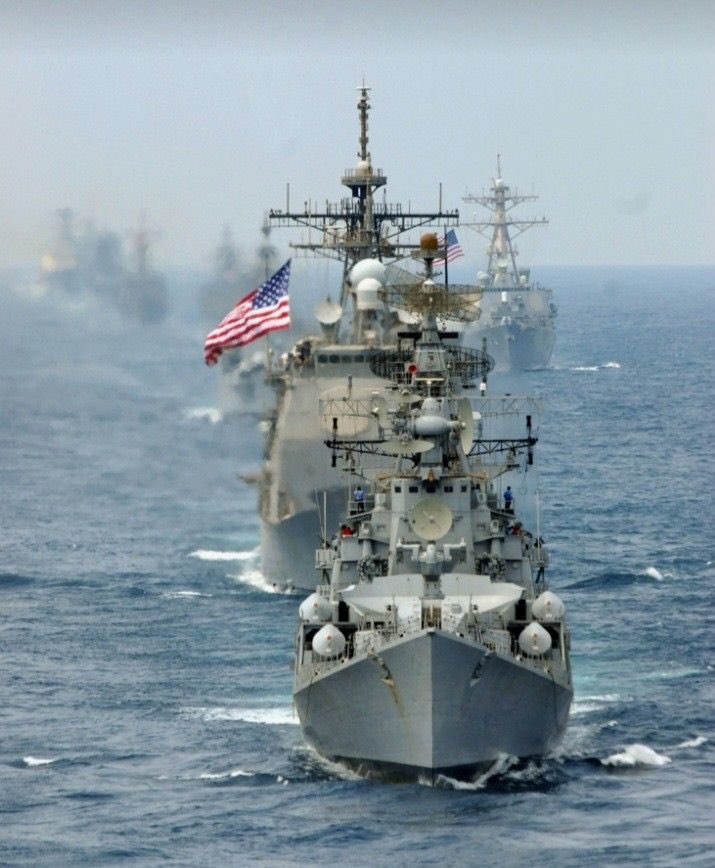
🇺🇸 The full strength of U.S. power is now in action. Iran must realize that there will be consequences for any attacks on shipping lanes. The message is clear: we will not tolerate threats to global trade. #USPower #Iran #ShippingSecurity
5
8
25
961

I’ve seen tons of uninformed takes today: ‘US can’t act bc Iran will X,Y,Z.’ Childishly ignorant.
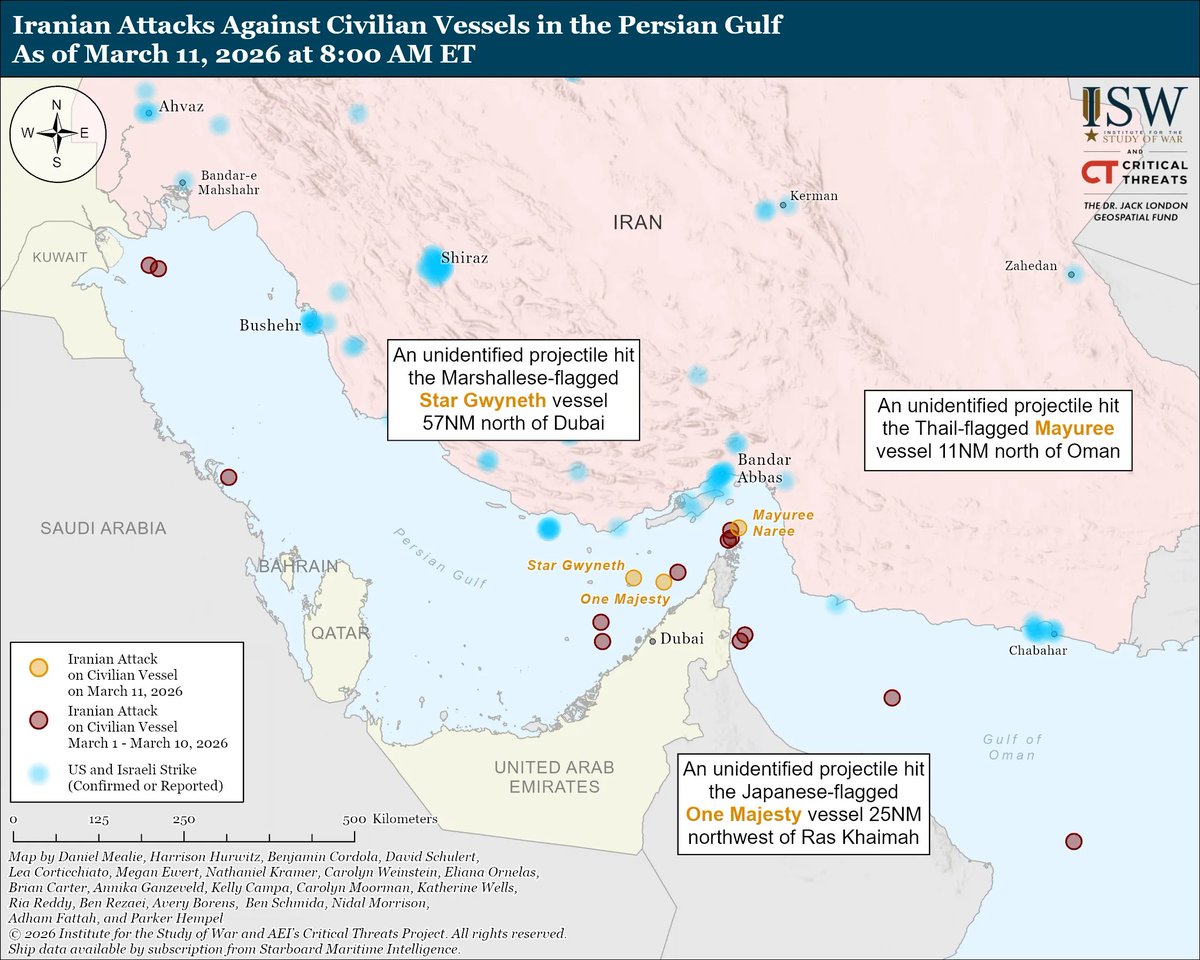
Iran’s been hitting Saudi oil & pirating tankers for years—barely a dent. Ships frozen in fear, not damage. <2 dozen mines. No ‘holding back’—they’re spent.
US restraint is our choice, not their power.
J’ai reçu beaucoup de réponses mal informées aujourd’hui : « Les USA ne peuvent pas agir car l’Iran va X,Y,Z ». Ignorance puérile.
L’Iran attaque l’industrie pétrolière saoudienne & pirate les pétroliers depuis des années — quasi sans effet. Les navires bloqués par peur, pas par dégâts. Moins de 24 mines. Pas de « retenue » — ils sont à sec.
La retenue US est notre choix, pas leur force.
@jtalexanderatl #Iran #StraitOfHormuz #PersianGulf #Geopolitics #USPower #IranWeak #MiddleEast
Mar 12

I've gotten a lot of very uninformed replies today about how the U.S. cannot do this because Iran will X, Y, Z.
This is childishly ignorant.
Iran has been attacking the Saudi oil industry with drones, rockets, and ballistic missiles for years. They've barely made a dent.
Iran has been committing piracy against oil vessels in the Gulf, Strait, and Red Sea for years. There were similar surges in 2020, 2023, and 2024.
The recent slow in OPEC production is because storage capacity is filling up. Its filling up because the ships won't move. The ships won't move because they are scared.
None of this is actually because of damage Iran can or has caused. The fear of the thing is worse than the thing itself.
Estimates are that Iran has placed less than two dozen mines in the Strait. Hazardous, sure, but not impassible. The ships are waiting because they are enormously expensive and so is insurance.
We're subsidizing insurance and have offered escorts, but risk assessment is up to the Captains, ultimately, and they've mostly decided to try to wait. They will move once a clearing operation can proceed; that clearing operation is probably on hold while some more littoral defenses are destroyed.
(By the way, if the Captains were worried about this becoming a protracted conflict, they wouldn't be staying in the Gulf. They'd have taken the offer for an escort and hauled ass. They're sitting tight because they expect this to be over soon.)
Yes, even the damage at GCC oil facilities is essentially superficial. None of it is actually substantively reducing their output capacities.
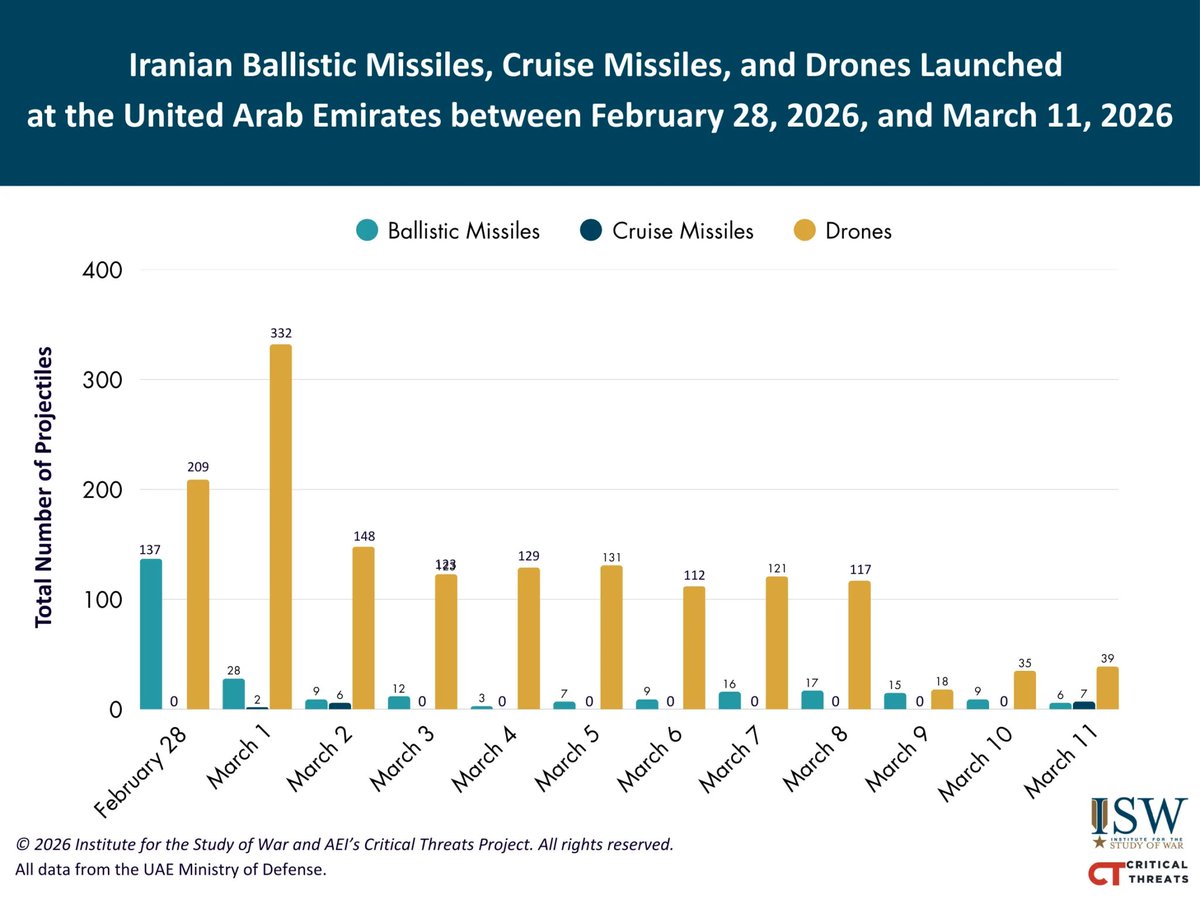
Iran is not "holding back." They are firing everything they can. This is what they can muster. They failed to mine the Strait in time because Khamenei was too committed to his chihuahua act to pull the trigger—if he had done so, it would have guaranteed destruction of his governmental system. By the time it became apparent that was the actual objective, he was dead and no one was around to give the order.
Now the IRGC's Navy is either in port, in tunnels underground, or at the bottom of the Gulf. They may be rationing drones and missiles, but they aren't holding back some massive barrage when we cross a red line or something.
We killed the Supreme Leader. We killed the Assembly of Experts. We killed their commanders. We've sunk their ships, destroyed their planes, and allegedly even blew up a school—they aren't holding back. There is no greater escalation on their part. There is no red line that we have not crossed.
I seriously implore you to have some measure of self-reflection and awareness to know that you don't know what you're talking about on this subject. For the sake of your own dignity, at least.
The only thing restraining the United States from returning Persia to a 19th Century state is our own objectives and interests. There are reasons we may not want to do this, but they are our own; not something imposed by the effectively non-existent resistance of the Iranian state.
2
79

Vishesh | अमेरिकेला कोण कोणत्या युद्धांमध्ये अपयश आले?
#USPower #GlobalPolitics #InternationalAnalysis #SuperpowerPerspective #MaharashtraNews #JaiMaharashtraNews #MarathiNews
37
Vishesh | अमेरिकेनं लादेनला नेमकी कशी मदत केली?
#USPower #GlobalPolitics #InternationalAnalysis #SuperpowerPerspective #MaharashtraNews #JaiMaharashtraNews #MarathiNews
69

Mar 6
After a week of this war, Iran’s “exposing” the US? Let's get real.
- US & Israel took out Supreme Leader Khamenei Day 1. Regime decapitated.
- Iranian air defenses shredded, US maintains air superiority over Tehran.
- US sub just sank an Iranian frigate in the Indian Ocean, first sub kill since WWII.
- Iran closes Hormuz? Oil prices spike, but US doctrine is offense: we're systematically dismantling their missile/drone/naval production.
- Friendly fire incidents? Tragic coalition glitches under saturation attack, not “weakness”. Fixes incoming; doctrine still holds.
- No US carrier touched. No ground invasion needed yet. Trump says 4-5 more weeks max to objectives.
Iran isn't “exposing” US invincibility, they're proving why no one challenges America symmetrically. Proxies, missiles, and propaganda buy time, not victory. The superpower isn't folding, it's methodically winning while avoiding quagmire.
Reality check; The world still fears crossing real US red lines. Iran just reminded everyone why. 🇺🇸💪 #IranWar #USPower
8
6
126
36,632

Mar 3
From Iran's perspective, Gulf states hosting American military bases aren't neutral neighbors they're active launchpads for USpower projection and
1
1
24
1,237

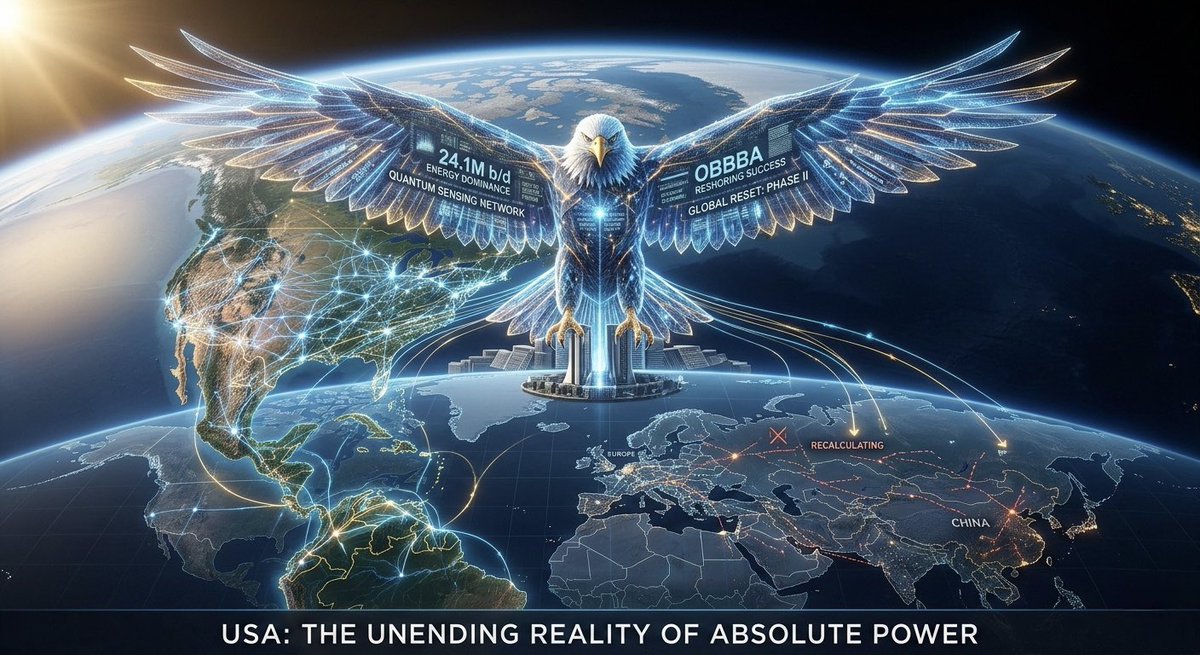
Misjudging American resolve is the most expensive mistake a country can make. From 24M barrels of oil to the streets of Caracas, 2026 is the year the world remembered what absolute power looks like. We aren't just leading the order; we’re rewriting it. 🗽✨ #USPower #AbsoluteResolve
3
176
They mistook our internal strength for external weakness. Now, they’re witnessing 24 million barrels of oil per day and a stabilized hemisphere under the #DonroeDoctrine. The world has finally come to recognize the true nature of power. We are not merely leading; we are shaping the course of the next century. 🗽⚡ #USPower
2
2
5
1,083

Feb 28
Salute to the brave US-Israel forces for striking Iran's heart in Tehran! I warned of this exact action days ago, while naysayers predicted doom for Israel & US. Told them: America is prepared and unstoppable. Onward to a safer world! 🔥 #ProIsrael #USPower
Feb 28

1
2
4
232

पूरी दुनिया एक होकर भी अमेरिका की दादागिरी खत्म नहीं कर सकती ?
क्या अमेरिका सच में दुनिया का सबसे ताकतवर देश है या ये सिर्फ एक धारणा है, तो चलिए हमारी इस रिपोर्ट में जानेंगे, अमेरिका के सुपर पावर स्टेटस को डेटा और फैक्ट्स के नजरिए से और पता लगाते हैं कि क्या सच में दुनिया के सारे देश मिलकर अमेरिका को टक्कर दे सकते हैं या नहीं ?
#USPower #GlobalInfluence #MilitaryStrength #EconomicPower #Geopolitics #USvsWorld
1
2
13