
14 Nov 2025
Ever wondered how we can truly own our data in Web3 without sacrificing the magic of public blockchains?
What if you could compute on encrypted info without ever decrypting it, unlocking privacy that's post-quantum secure and blazing fast? Enter Zama's Fully Homomorphic Encryption (FHE): the game-changer that's redefining confidentiality in crypto. Buckle up, Web3 fam, this deep dive will blow your mind. #ZamaFHE
Unlocking the Power of Zama FHE: The Basics Broken DownLet's start with the fundamentals. Fully Homomorphic Encryption isn't just buzz, it's cryptographic wizardry. Imagine your data as a locked treasure chest: Traditional encryption lets you store it safely, but to "use" it (add, multiply, compare), you'd have to unlock it, exposing everything. Zama FHE? It lets you perform computations directly on the locked chest, adding gold without ever opening it. No decryption needed, ever.
Zama, the pioneers behind this, have made FHE over 100x faster than five years ago, thanks to breakthroughs in algorithms and hardware. It's post-quantum secure (quantum computers won't crack it), and integrates seamlessly into Solidity for Ethereum devs or Python for broader apps. In Web3, where transparency clashes with privacy needs, Zama FHE bridges the gap: End-to-end encrypted transactions on public chains like Ethereum, without forking to a new blockchain. No bridging hassles, just composable, confidential smart contracts.
✅ Analogy Alert: Think TradFi banks hiding trades in vaults vs. Web3's open ledger chaos. Zama FHE is like giving everyone x-ray vision for verification, but only the owner sees the real contents. #PrivacyTech
Zama Protocol: The FHE-Powered Engine for Confidential Web3Building on FHE, Zama Protocol is a cross-chain confidentiality layer. It lets devs define programmable access controls in smart contracts, decide who sees what, when. No more "all public or all private" dilemmas. It supports host chains like Ethereum (Solana coming soon), with components that make it hum.
First, the FHEVM Library: A Solidity toolkit for building dApps with confidential logic. Want to hide user balances in a DeFi pool? Easy, encrypt states and inputs, compute yields encrypted, reveal only what's needed.
Then, Coprocessors: These are the workhorses, nodes that verify encrypted inputs (using Zero-Knowledge Proofs for efficiency), run FHE ops in parallel via symbolic execution, and store ciphertexts. They operate on a majority consensus: If 2/3 agree, it's verifiable onchain. Scalability? 20 TPS on CPUs today, exploding to 500-1000 TPS with GPUs, and 100k TPS via ASICs by 2027-2028. Future vision: A Web3 where confidential trades outpace Visa, all encrypted.
Key Management Service (KMS): 13 nodes using Multi-Party Computation (MPC) in secure AWS Nitro Enclaves. Threshold decryption means no single party holds the full key, tolerates up to 1/3 malicious actors. Combine FHE with MPC and ZK? It's a trifecta: Faster than MPC-alone (no network latency bottlenecks), more verifiable than ZK-alone (handles complex ops without circuit limits).
Gateway on Arbitrum: Orchestrates everything, verifies, decrypts, bridges requests. Access Control List (ACL) tracks permissions across chains. Security? 128-bit strong, audited by Trail of Bits and Zenith, with slashing for bad actors.
✅ Web3 vs. TradFi Angle: In TradFi, secrecy breeds insider trading; in vanilla Web3, public data enables front-running and MEV bots draining $millions. Zama Protocol flips it: Confidential DeFi prevents exploits while keeping composability. Imagine lending platforms where rates adjust encrypted, no one peeks at your collateral until default. #ConfidentialDeFi
Tokenomics Deep Dive: The $ZAMA Token and Economic Incentives
At the heart is $ZAMA, the native token powering fees, staking, and governance. It's a burn-and-mint model: 100% of fees burned for deflationary pressure, new tokens minted as rewards. Fees? Priced in USD via oracles for stability, ZKPoK verification starts at $0.5, drops to $0.005 with volume; decryption from $0.1 to $0.001. Pay in $ZAMA, get discounts for high usage.
Staking: Delegate to operators for rewards. Initial 10% inflation tapers off. Roles matter, 8% APR for Coprocessors, 4.6% for KMS nodes, pro-rata to stake's square root (favors smaller stakers for decentralization).
Governance: Delegated Proof-of-Stake with 18 genesis operators (13 KMS, 5 Coprocessors) chosen by reputation, evolving to top-stake selection every 3-month epoch. Minimum stake: 0.5% of circulating supply. Updates need majority adoption; emergencies allow pausing by any operator, unpausing by multiple. Slashing via governance proposals keeps everyone honest.
✅ Actionable Tip for Noobs: Start staking $ZAMA by delegating via wallet integrations, earn while supporting the network. Pros: Analyze token velocity; with burns outpacing mints in high-volume eras, $ZAMA could moon as adoption grows. Future Scenario: By 2030, $ZAMA becomes the "privacy gas" for all major chains, rivaling ETH in utility. #Tokenomics
Governance in Action: Decentralized and Resilient
Zama's governance isn't top-down, it's community-driven dPoS. Token holders delegate to operators, who run the show. Proposals? Via onchain voting. Slashing for misconduct, with recourse paths. It's tolerant: MPC withstands 1/3 bad nodes without downtime.
Compare to other protocols: Pure MPC like Threshold or Ren? Slow and chatty due to constant node comms. ZK like Aztec or Aleo? Great for simple proofs, but FHE handles arbitrary computations without redesigning circuits. Zama's hybrid? Best of all worlds, scalable, secure, developer-friendly.
✅ Educational Breakdown: Step-by-Step How Governance Works, Hold/delegate $ZAMA to an operator.
Operators get selected top-by-stake per epoch.
Propose changes (e.g., fee tweaks) via governance contracts.
Vote with delegated power, majority wins.
Emergency? Pause/blacklist, but multi-node unpause ensures no single-point failure. Relatable Analogy: Like a DAO where stakers elect "mayors" (operators) who manage the city (network), but with built-in checks against corruption. #DecentralizedGovernance
Real-World Applications: Transforming Web3 SectorsZama FHE isn't theoretical, it's powering killer apps. In Finance: Confidential payments with KYC compliance baked in. Tokenize Real-World Assets (RWAs) like stocks or bonds on public chains, trade encrypted, reveal for audits. Confidential DeFi: AMMs without front-running; lending where borrowers' credit scores stay hidden.
Tokens: Sealed-bid auctions (no sniping), confidential airdrops/vesting (prevent dumps). Identity/Governance: Onchain DIDs and Verifiable Credentials—prove age without revealing DOB. Confidential voting: No bias from seeing others' choices.
Other Gems: Onchain corporations with private ledgers, prediction markets (encrypt predictions till reveal), data marketplaces for AI (share encrypted datasets, compute models without exposure).
✅ Unique Insight: Web3's privacy paradox solved, build composable ecosystems where FHE dApps interact with public ones. Future Vision: A metaverse where user data fuels AI economies, all encrypted. No more Cambridge Analytica scandals. Pros: Use FHEVM's standard library for audited templates, deploy a confidential token in hours. Noobs: Check Zama docs for Python playgrounds to experiment. #Web3Applications
Challenges and the Road Ahead: Honest TakeNo tech is perfect. FHE ops are compute-heavy today, but Zama's roadmap crushes it: GPU acceleration by 2025, ASICs for hyper-scale. Gas costs? Offset by efficiency gains. Adoption hurdles? Education, most devs think privacy = slow, but Zama proves otherwise.
While zkEVMs scale execution, Zama scales confidentiality. Together? Unstoppable Web3.
✅ Pro Tip: Devs, integrate FHEVM now, test on devnets for free. Watch for Solana rollout; cross-chain confidentiality will explode liquidity. #BlockchainInnovation
In summary, Zama FHE via the Protocol is Web3's privacy shield, fast, secure, composable. It empowers devs to build the confidential future we deserve, from encrypted DeFi to private DAOs. What's your take, will FHE kill MEV for good? Drop thoughts below, repost if this sparked ideas! I am curious on your views for confidential finance. Let's discuss in replies, what FHE app would you build first?
@zama #ZamaCreatorProgram
#Ethereum #Solana #DeFi #CryptoPrivacy #BlockchainSecurity #Web3Privacy #FHE #ZamaProtocol
13 Nov 2025

Enter @zama's Fully Homomorphic Encryption (FHE), true the game-changer for confidential onchain computing!
Zama's tech keeps data encrypted during processing on ANY L1/L2, with public verifiability. Their fhEVM lets devs build Solidityvcompatible smart contracts with encrypted inputs, states, & outputs.
Just think of DeFi swaps, confidential stablecoin payments, sealed-bid auctions, RWA tokenization, and even governance, all without leaks!
What about performance? Blazing at 20 TPS per chain (faster than Ethereum's base), scaling to 1,000 TPS soon and 10,000 with FHE ASICs. They offload computations via coprocessors for low gas fees and massive scalability.
With Zama future looks bright. Privacy is FINALLY coming back onchain.
If you curious more about FHE utilities follow @zama for the latest news.
#Web3 #Zama #FHE #KaitoAI #ZamaCreatorProgram
8
20
399

18 Oct 2025
Enhance user experience in Web3 apps by integrating @idOS_network. Simplified onboarding and secure identity management, backed by @WallchainX. #UserExperience #Web3Applications
17
2
13
45

30 Sep 2025
OTalk's innovative streaming ecosystem combines interaction - based mining, an empowering dual - token model, and a high - performance blockchain to reshape content distribution and the creator economy!
#OTalk #Web3Applications #FutureOfMedia

2
1
92

5 Jul 2025
#Saros ( $SAROS ) - #Explainer
💡 What is Saros ( $SAROS )?
Saros is a versatile DeFi platform and superapp built on the Solana blockchain, focused on redefining the Web3 experience.
It offers users access to a decentralized economy via an integrated mobile application with features such as a non-custodial wallet, decentralized finance (DeFi), NFTs, and a unique identification system called SarosID.
The platform began as a decentralized exchange (DEX) called SarosSwap and has evolved into a comprehensive ecosystem combining DeFi, payments, and digital identity.
Saros leverages Solana’s fast and cost-efficient blockchain to provide seamless transactions and scalable solutions.
The native token, $SAROS, plays a central role in the ecosystem and is used for transactions, governance, staking, and driving user participation.
Saros aims to simplify access to Web3 and strengthen the Solana DeFi sector through liquidity management and innovative tools.
#SolanaEcosystem
⚙️ How does Saros work?
Saros operates on the Solana blockchain, known for its high transaction speed and low costs. The platform combines multiple protocols to create a “super-network” that attracts both users and developers.
The core components of Saros are:
🔸 SarosSwap:
A decentralized liquidity protocol (AMM) that allows users to trade SPL tokens. It uses the x*y=k formula, similar to Uniswap, but stands out with a user-friendly interface and gamification elements.
🔸 SarosFarm:
A platform that offers incentivized pools to help projects quickly boost their liquidity. This simplifies liquidity management and provides opportunities for liquidity providers.
🔸 SarosStake:
A simple way to stake $SAROS tokens and earn rewards without the risk of impermanent loss. It offers automatic compounding of rewards, which is attractive to investors.
🔸 Saros Super App:
A mobile application that integrates features such as a non-custodial wallet, NFT minting, a DEX aggregator, and SarosID. SarosID provides personalized and secure digital identification within the Solana ecosystem.
#DeFiInnovation
🪙 The role of $SAROS
The $SAROS token is essential for the functioning of the Saros ecosystem and has multiple uses:
🔸 Staking:
Users can stake $SAROS to earn rewards, which contributes to the liquidity and security of the network.
🔸 Governance:
$SAROS holders can vote on platform proposals, allowing the community to have a say in the future of Saros.
🔸 Transactions:
The token is used to pay transaction fees within the ecosystem, such as swaps and other DeFi activities.
🔸 Incentives:
Saros rewards active users and liquidity providers with $SAROS through programs like HyperRadiance, a points and rewards system.
#Tokenomics
🛠️ Key features of Saros:
🔸 Non-custodial wallet:
The wallet offers features like Social Log-in, Watch-only mode, and an NFC hybrid wallet for enhanced security and ease of use.
🔸 NFT-hub:
Saros has a native NFT store and AI-driven minting capabilities, making it a significant player in the NFT space on Solana.
🔸 SarosID:
A unique identification solution that provides users with a secure and personal digital identity, suitable for Web3 applications.
🔸 HyperRadiance:
A loyalty program that rewards users with points and $SAROS for interacting with the platform, such as trading on SarosSwap.
#Web3Applications
📜 History and development:
🔸 Foundation and launch:
Saros was launched in 2024 with SarosSwap as its core product. The project quickly gained attention due to its focus on Solana’s DeFi ecosystem and user-friendly tools.
🔸 2024 - Growth and funding:
Saros raised $3.75M through investments and expanded its offerings with SarosFarm, SarosStake, and the Saros Super App. The $SAROS token was listed on exchanges like ByBit and MEXC.
🔸 2025 - Adoption and partnerships:
In 2025, Saros saw a price increase of 1,024% in March, driven by strong community support and integrations like Project Galaxy for NFTs. The platform continues to grow within Solana’s ecosystem.
#CryptoHistory
💸 Tokenomics
🔸 Total supply:
Saros has a maximum supply of 10 billion $SAROS tokens, with a circulating supply of about 1.17 billion (April 2025).
🔸 Market capitalization:
With a current price of around $0.13 per $SAROS, Saros has a market capitalization of about $150M, placing it in the top 200 cryptocurrencies.
🔸 Emission rate:
The token distribution is designed to encourage long-term participation, with rewards for stakers and active users through programs like HyperRadiance.
#MarketAnalysis
✅ Benefits of Saros:
🔸 High scalability:
Thanks to Solana’s architecture, Saros can process fast and cheap transactions, ideal for DeFi and NFT applications.
🔸 User-friendliness:
The Super App and tools like SarosID make Web3 accessible for both beginners and experienced users.
🔸 Versatility:
Saros combines DeFi, NFTs, payments, and digital identity in one platform, making it unique within Solana.
⚠️ Disadvantages and challenges:
🔸 Competition:
Saros competes with other Solana-based DeFi platforms like Raydium and Orca, which also offer liquidity and user-friendliness.
🔸 Market volatility:
The price of $SAROS is sensitive to market trends, as seen in the recent rise and possible pullbacks.
🔸 Adoption:
The success of Saros depends on the broader adoption of Solana and the growth of the DeFi and NFT markets.
#DeFiAdoption
🎯 Conclusion:
Saros ( $SAROS ) is a promising project that leverages the power of Solana to offer an all-in-one Web3 experience.
With its combination of DeFi, NFTs, digital identity, and a user-friendly Super App, Saros has the potential to become a major player in the Solana ecosystem.
While the project has shown impressive growth, it remains vulnerable to market volatility and competition.
Whether it’s a good investment depends on your own research and risk tolerance, but Saros undeniably provides innovative solutions for the future of Web3.
#CryptoConclusion
🤝 New Partnership: WEEX Exchange x @CryptoJournaal
We’re excited to announce our official partnership with WEEX — and that means massive rewards for YOU! 💥
💰 New users can claim up to $30,000 USDT in total bonuses:
🔐 10 USDT → secure your account
📥 Up to 2,000 USDT → deposit to futures wallet start trading
📊 Up to 27,990 USDT → futures trading volume rewards
🎯 All rewards stack – up to $30K total!
🟡 Use invite code bwbg to activate your bonus
👉 weex.com/newbieActivities?id…
#Exchange #Rewards #Trading #Futures #Leverage
📚 Useful resources and additional information:
Want to dive deeper into the world of #Saros or looking for the latest updates and developments?
These links will help you stay informed:
🔹Discord: discord.com/invite/tkkH5vF3c…
🔹Official Website: saros.xyz/
🔹Telegram: t.me/SarosFinance
🔹X (Twitter): @saros_xyz x.com/saros_xyz
#CryptoResources #StayInformed
⚠️ Important note:
🔹 This post is for educational purposes only and not financial advice!
🔹 Only invest what you are willing to lose:
#Crypto-investments can be volatile, and you may lose part or all of your investment.
🔹 Always do your own research (#DYOR):
Do thorough research into #crypto-assets, platforms, and wallets before investing.
🔹 Understand the risks of volatility:
The value of #cryptocurrencies can change rapidly, so be prepared for price fluctuations.
🔹 Keep your private keys secure:
Losing your private keys can result in losing access to your crypto assets.
🔹 Use trusted platforms:
Make sure you trade crypto through trusted and regulated exchanges or wallets that meet necessary security standards.
#CryptoRules #CryptoSafety #CryptoRisks #Dyor
1
1
305
2 Jul 2025
#Astar ( $ASTR ) - #Explainer
💡 What is Astar ( $ASTR )?
Astar is a decentralized blockchain platform focused on developing interoperable and scalable decentralized applications (dApps).
Originally built as a parachain on the Polkadot network, Astar offers a multi-chain smart contract platform compatible with Polkadot, Ethereum, and other ecosystems.
The project, founded in 2019 as Plasm Network, has since positioned itself as a key player in the Web3 ecosystem, aiming to promote the global adoption of decentralized technologies.
#Web3Innovation
⚙️ How does Astar work?
Astar combines several advanced technologies to achieve its goal of interoperability and scalability:
🔸Polkadot Parachain and Substrate:
Astar is built on the Polkadot network and utilizes Substrate, which ensures flexibility and scalability. As a parachain, Astar benefits from Polkadot's shared security and interoperability.
🔸Multi-VM Support:
Astar supports both the Ethereum Virtual Machine (EVM) and WebAssembly (WASM), giving developers the choice to write smart contracts in Solidity or Rust, depending on their preference.
🔸Nominated Proof-of-Stake (NPoS):
Astar uses NPoS, a variant of Proof-of-Stake, allowing users to stake their $ASTR tokens to nominate validators and secure the network.
🔸dApp Staking:
With dApp Staking, users can stake their $ASTR tokens on specific dApps, rewarding developers based on the popularity and usefulness of their applications.
#BlockchainInnovation
🪙 The role of $ASTR
The $ASTR token has multiple functions within the Astar ecosystem:
🔸Transaction Fees:
Users pay $ASTR to execute transactions or activate smart contracts on the network.
🔸Governance:
Holders of $ASTR can vote on important network decisions, such as protocol upgrades or token burns, ensuring decentralized governance.
🔸Staking:
Through NPoS and dApp Staking, users can stake $ASTR to secure the network and earn rewards, further strengthening the network.
#Tokenomics
🛠️ Key features:
🔸Interoperability:
Astar connects Polkadot with other blockchains like Ethereum, enabling cross-chain applications and expanding the scalability of the network.
🔸Deflationary Mechanisms:
Astar has a deflationary model where a portion of transaction fees and unclaimed rewards are burned. This reduces the supply of $ASTR and potentially increases the scarcity of the token.
🔸Collaborations:
Astar has strategic partnerships, such as with Sony, enhancing the adoption and development of the network.
🔸Use in Web3:
With applications in DeFi, NFTs, and enterprise solutions, Astar focuses on both technical innovation and mainstream adoption of Web3 technologies.
#BlockchainProgress
📜 History and development:
🔸Foundation and Parachain Slot:
Astar was founded in 2019 as Plasm Network and secured a parachain slot on Polkadot in 2021. This was a significant milestone that firmly anchored the project in the Polkadot ecosystem.
🔸Soneium and Layer 2:
In 2024, Soneium was introduced, a Layer 2 solution in collaboration with Sony, enabling fast and low-cost transactions for consumer applications.
🔸Future Growth:
Astar plans to expand further into the broader Superchain ecosystem, meaning it can integrate with networks like Base and Optimism.
#CryptoHistory
💸 Tokenomics
🔸Total Supply:
The initial supply of $ASTR was 7 billion, but due to token burns, the supply has been reduced as of March 2025. The circulating supply is around 7.6 billion tokens.
🔸Emission Rate:
Astar has a deflationary model where the total supply slowly decreases due to token burns.
🔸Market Capitalization:
The market capitalization of $ASTR fluctuates based on market price, but it has positioned itself as a major player in the Polkadot ecosystem.
#MarketAnalysis
✅ Advantages of Astar:
🔸Interoperability:
By connecting to Polkadot and Ethereum, Astar offers extensive opportunities for cross-chain applications.
🔸Innovative Mechanisms:
Features like dApp Staking and token burning incentivize both developers and investors.
🔸Strong Partnerships:
With support from companies like Sony and Binance Labs, Astar is well-positioned for further growth.
#Web3Applications
⚠️ Disadvantages and challenges:
🔸Competition:
Astar competes with other smart contract platforms like Ethereum and Solana, which may affect market share.
🔸Dependence on Polkadot:
As a parachain, Astar is partly dependent on the development and success of Polkadot.
🔸Adoption of Soneium:
The success of Soneium depends on the acceptance of Layer 2 solutions by businesses and users.
#CryptoChallenges
🛠️ Applications and Adoption:
Astar is used in various Web3 sectors, including DeFi, NFTs, and enterprise solutions:
🔸DeFi:
Astar provides infrastructure for decentralized finance platforms like ArthSwap.
🔸Enterprise Solutions:
Astar has partnerships with companies like Fireblocks and Sony, focusing on enterprise adoption of blockchain technology.
🔸NFTs:
Astar supports the development of NFT marketplaces and other NFT applications, contributing to the ecosystem's growth.
#DeFiAdoption
📊 Price and Market Performance:
The price of $ASTR is volatile, as with most altcoins. The price is influenced by broader market conditions and the adoption of Web3 technologies.
#MarketVolatility
🔮 Future Outlook:
The future of Astar depends on several factors:
🔸Web3 Growth:
As Web3 continues to grow, Astar may benefit from its interoperability and focus on developing scalable dApps.
🔸Deflation and Scarcity:
Through continuous token burning, the scarcity of $ASTR may increase, potentially benefiting the price in the long term.
🔸Adoption in Asia:
With Japan as its base and partnerships with companies like Sony, Astar has the potential to dominate the Web3 market in Asia.
#DeFiFuture
🎯 Conclusion:
Astar ( $ASTR ) is a promising project focused on interoperability, scalability, and the adoption of Web3 technologies.
It provides developers with the tools to build scalable dApps and is well-positioned within the Polkadot ecosystem.
With strong partnerships and innovative mechanisms like dApp Staking, Astar holds potential for both investors and developers.
While the project faces challenges such as competition and dependence on Polkadot, Astar remains a key player in the world of blockchain and Web3.
#CryptoConclusion
🤝 New Partnership: WEEX Exchange x @CryptoJournaal
We’re excited to announce our official partnership with WEEX — and that means massive rewards for YOU! 💥
💰 New users can claim up to $30,000 USDT in total bonuses:
🔐 10 USDT → secure your account
📥 Up to 2,000 USDT → deposit to futures wallet start trading
📊 Up to 27,990 USDT → futures trading volume rewards
🎯 All rewards stack – up to $30K total!
🟡 Use invite code bwbg to activate your bonus
👉 weex.com/newbieActivities?id…
#Exchange #Rewards #Trading #Futures #Leverage
📚 Helpful resources and additional information:
Want to dive deeper into the world of #AstarNetwork or looking for the latest updates and developments?
These links will help you stay up to date:
🔹GitHub: github.com/AstarNetwork/Asta…
🔹Official Website: astar.network/
🔹X (Twitter): @AstarNetwork x.com/AstarNetwork
#CryptoResources #StayInformed
⚠️ Important note:
🔹 This post is purely for educational purposes and is not financial advice!
🔹 Only invest what you're willing to lose:
#Crypto-investments can be volatile, and you may lose part or all of your investment.
🔹 Always do your own research (#DYOR):
Do thorough research on #crypto-assets, platforms, and wallets before investing.
🔹 Understand the risks of volatility:
The value of #cryptocurrencies can change rapidly, so be prepared for price fluctuations.
🔹 Keep your private keys safe:
Losing your private keys can result in loss of access to your crypto assets.
🔹 Use reliable platforms:
Make sure you trade crypto through trusted and regulated exchanges or wallets that meet the necessary security standards.
#CryptoRules #CryptoSafety #CryptoRisks #Dyor
1
2
403
27 Apr 2025
#Saros ( $SAROS ) - #Explainer
[ #Update: - April 2025 ]
💡 What is Saros ( $SAROS )?
Saros is a versatile DeFi platform and superapp built on the Solana blockchain, focused on redefining the Web3 experience.
It offers users access to a decentralized economy via an integrated mobile application with features such as a non-custodial wallet, decentralized finance (DeFi), NFTs, and a unique identification system called SarosID.
The platform began as a decentralized exchange (DEX) called SarosSwap and has evolved into a comprehensive ecosystem combining DeFi, payments, and digital identity.
Saros leverages Solana’s fast and cost-efficient blockchain to provide seamless transactions and scalable solutions.
The native token, $SAROS, plays a central role in the ecosystem and is used for transactions, governance, staking, and driving user participation.
Saros aims to simplify access to Web3 and strengthen the Solana DeFi sector through liquidity management and innovative tools.
#SolanaEcosystem
⚙️ How does Saros work?
Saros operates on the Solana blockchain, known for its high transaction speed and low costs. The platform combines multiple protocols to create a “super-network” that attracts both users and developers.
The core components of Saros are:
🔸 SarosSwap:
A decentralized liquidity protocol (AMM) that allows users to trade SPL tokens. It uses the x*y=k formula, similar to Uniswap, but stands out with a user-friendly interface and gamification elements.
🔸 SarosFarm:
A platform that offers incentivized pools to help projects quickly boost their liquidity. This simplifies liquidity management and provides opportunities for liquidity providers.
🔸 SarosStake:
A simple way to stake $SAROS tokens and earn rewards without the risk of impermanent loss. It offers automatic compounding of rewards, which is attractive to investors.
🔸 Saros Super App:
A mobile application that integrates features such as a non-custodial wallet, NFT minting, a DEX aggregator, and SarosID. SarosID provides personalized and secure digital identification within the Solana ecosystem.
#DeFiInnovation
🪙 The role of $SAROS
The $SAROS token is essential for the functioning of the Saros ecosystem and has multiple uses:
🔸 Staking:
Users can stake $SAROS to earn rewards, which contributes to the liquidity and security of the network.
🔸 Governance:
$SAROS holders can vote on platform proposals, allowing the community to have a say in the future of Saros.
🔸 Transactions:
The token is used to pay transaction fees within the ecosystem, such as swaps and other DeFi activities.
🔸 Incentives:
Saros rewards active users and liquidity providers with $SAROS through programs like HyperRadiance, a points and rewards system.
#Tokenomics
🛠️ Key features of Saros:
🔸 Non-custodial wallet:
The wallet offers features like Social Log-in, Watch-only mode, and an NFC hybrid wallet for enhanced security and ease of use.
🔸 NFT-hub:
Saros has a native NFT store and AI-driven minting capabilities, making it a significant player in the NFT space on Solana.
🔸 SarosID:
A unique identification solution that provides users with a secure and personal digital identity, suitable for Web3 applications.
🔸 HyperRadiance:
A loyalty program that rewards users with points and $SAROS for interacting with the platform, such as trading on SarosSwap.
#Web3Applications
📜 History and development:
🔸 Foundation and launch:
Saros was launched in 2024 with SarosSwap as its core product. The project quickly gained attention due to its focus on Solana’s DeFi ecosystem and user-friendly tools.
🔸 2024 - Growth and funding:
Saros raised $3.75M through investments and expanded its offerings with SarosFarm, SarosStake, and the Saros Super App. The $SAROS token was listed on exchanges like ByBit and MEXC.
🔸 2025 - Adoption and partnerships:
In 2025, Saros saw a price increase of 1,024% in March, driven by strong community support and integrations like Project Galaxy for NFTs. The platform continues to grow within Solana’s ecosystem.
#CryptoHistory
💸 Tokenomics
🔸 Total supply:
Saros has a maximum supply of 10 billion $SAROS tokens, with a circulating supply of about 1.17 billion (April 2025).
🔸 Market capitalization:
With a current price of around $0.13 per $SAROS, Saros has a market capitalization of about $150M, placing it in the top 200 cryptocurrencies.
🔸 Emission rate:
The token distribution is designed to encourage long-term participation, with rewards for stakers and active users through programs like HyperRadiance.
#MarketAnalysis
✅ Benefits of Saros:
🔸 High scalability:
Thanks to Solana’s architecture, Saros can process fast and cheap transactions, ideal for DeFi and NFT applications.
🔸 User-friendliness:
The Super App and tools like SarosID make Web3 accessible for both beginners and experienced users.
🔸 Versatility:
Saros combines DeFi, NFTs, payments, and digital identity in one platform, making it unique within Solana.
⚠️ Disadvantages and challenges:
🔸 Competition:
Saros competes with other Solana-based DeFi platforms like Raydium and Orca, which also offer liquidity and user-friendliness.
🔸 Market volatility:
The price of $SAROS is sensitive to market trends, as seen in the recent rise and possible pullbacks.
🔸 Adoption:
The success of Saros depends on the broader adoption of Solana and the growth of the DeFi and NFT markets.
#DeFiAdoption
🎯 Conclusion:
Saros ( $SAROS ) is a promising project that leverages the power of Solana to offer an all-in-one Web3 experience.
With its combination of DeFi, NFTs, digital identity, and a user-friendly Super App, Saros has the potential to become a major player in the Solana ecosystem.
While the project has shown impressive growth, it remains vulnerable to market volatility and competition.
Whether it’s a good investment depends on your own research and risk tolerance, but Saros undeniably provides innovative solutions for the future of Web3.
#CryptoConclusion
🛒 Want to buy $SAROS?
$SAROS is easy to buy on #ByBit:
✅ Low trading fees:
Spot trading fees as low as 0.1% to 0.15%, with lower rates for VIP traders.
✅ Advanced trading options:
Margin trading (up to 10x), copy trading, trading bots, and support for MetaTrader 4.
✅ High transaction speed and reliability:
Up to 100,000 transactions per second, even during volatile markets.
✅ Strong security:
Cold wallets, multi-signature systems, 2FA, and Proof-of-Reserves for extra user trust.
✅ Wide crypto offering and ease of use:
Over 500 cryptocurrencies and a highly-rated user-friendly app!
✅ ByBit Starter Rewards!
Claim up to 30,000 USDT deposit bonus on Bybit! Sign up quickly and start trading!👇
🥇 Bybit: partner.bybit.com/b/aff_7_12…
#CryptoJournaal #AltcoinPedia #Bitcoin #Crypto #Exchange
📚 Useful resources and additional information:
Want to dive deeper into the world of #Saros or looking for the latest updates and developments?
These links will help you stay informed:
🔹Discord: discord.com/invite/tkkH5vF3c…
🔹Official Website: saros.xyz/
🔹Telegram: t.me/SarosFinance
🔹X (Twitter): @saros_xyz x.com/saros_xyz
#CryptoResources #StayInformed
⚠️ Important note:
🔹 This post is for educational purposes only and not financial advice!
🔹 Only invest what you are willing to lose:
#Crypto-investments can be volatile, and you may lose part or all of your investment.
🔹 Always do your own research (#DYOR):
Do thorough research into #crypto-assets, platforms, and wallets before investing.
🔹 Understand the risks of volatility:
The value of #cryptocurrencies can change rapidly, so be prepared for price fluctuations.
🔹 Keep your private keys secure:
Losing your private keys can result in losing access to your crypto assets.
🔹 Use trusted platforms:
Make sure you trade crypto through trusted and regulated exchanges or wallets that meet necessary security standards.
#CryptoRules #CryptoSafety #CryptoRisks #Dyor
1
1
219

4 Oct 2024
Real World Examples and Roadmap for Web3 Applications 🌐
In this session, we delve into practical examples and the future roadmap for #Web3Applications, showcasing how decentralized technologies are already making an impact in various industries and what lies ahead for further development.
🎙️ Speakers:
· David García | The @arbitrum Foundation
· Lucas Verra | @poapfr
· Tino Martínez Molina | @dekalabs
🔹Moderator | José Ángel Cuadrado | @COPE
Explore more sessions here 👇
mmerge.io/es/events#

1
3
217

9 Sep 2024
Learn how our #Web3 development services can seamlessly elevate your business to new heights. Our #Web3 developers build high-performance, scalable, and secure #Web3applications using top platforms like #Ethereum, #Solana, and #Polkadot.
For more, visit,
blockchain.oodles.io/web3-de…
4
66

4 Jun 2024
Yesterday in Nairobi, our Co-Founder @Auma_Chemutai met with Mr. Frank Shi, the Managing Director of Cloud-
Huawei.
The meeting focused on exploring
opportunities for integrating Huawei Cloud with Web3 applications, and positioning BchainAfrica as a key organization in the Web3 ecosystem.
Here's to forging many more partnerships and connections🎉
#blockchain
#web3applications

2
15
376

20 May 2024
Excited to announce that Polyverse AI has joined @QuickNode's renowned Startup Program, which provides leading startups with essential strategic resources to scale. QuickNode is a leading Web3 Infrastructure provider specialized in facilitating cutting-edge #dApps & #Web3applications.
Together with @QuickNode, we look forward to building the next-generation blockchain & AI enabled data infrastructure with #privacy #FHE #AI innovations.
#AI #AGI #Web3 #data #Metaverse #xr #machinelearning #eth #ml #polyverseai #depin #Defi #DeAI #data
13
9
39
1,072

16 May 2024
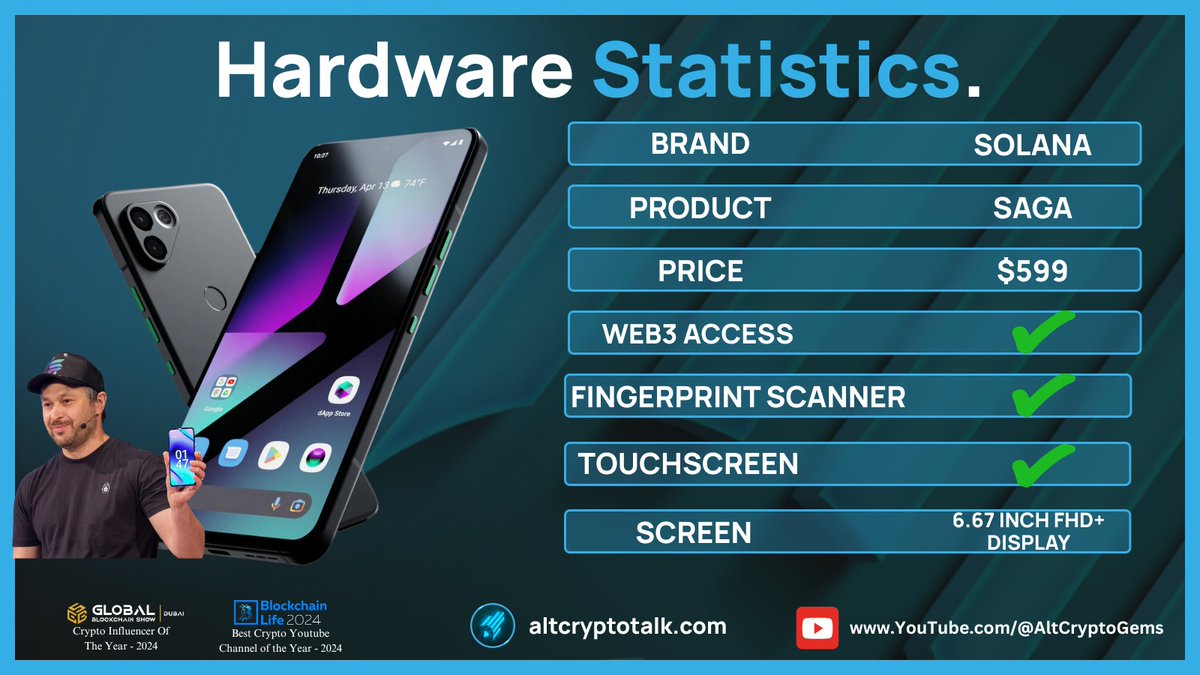
Hardware Statistics | Solana Saga edition
@Solana have had their phone out for a while now, it provides access to Web3Applications and is built on the Android OS.
Would you use this as your main phone? Or just on the side for crypto?
22
4
126
32,104

1 May 2024
Enter United Exchange, your gateway to elevating your #strategy and harnessing the power of most impactful #Web3 and ##blockchain trends in #2024.
Learn More Story: blogs.unitedexchange.in/embr…
#Web3Trends2024 #DeFiEvolution #Web3Applications #Web3Technology #CryptoUpdates
1
1
33

12 Jan 2024
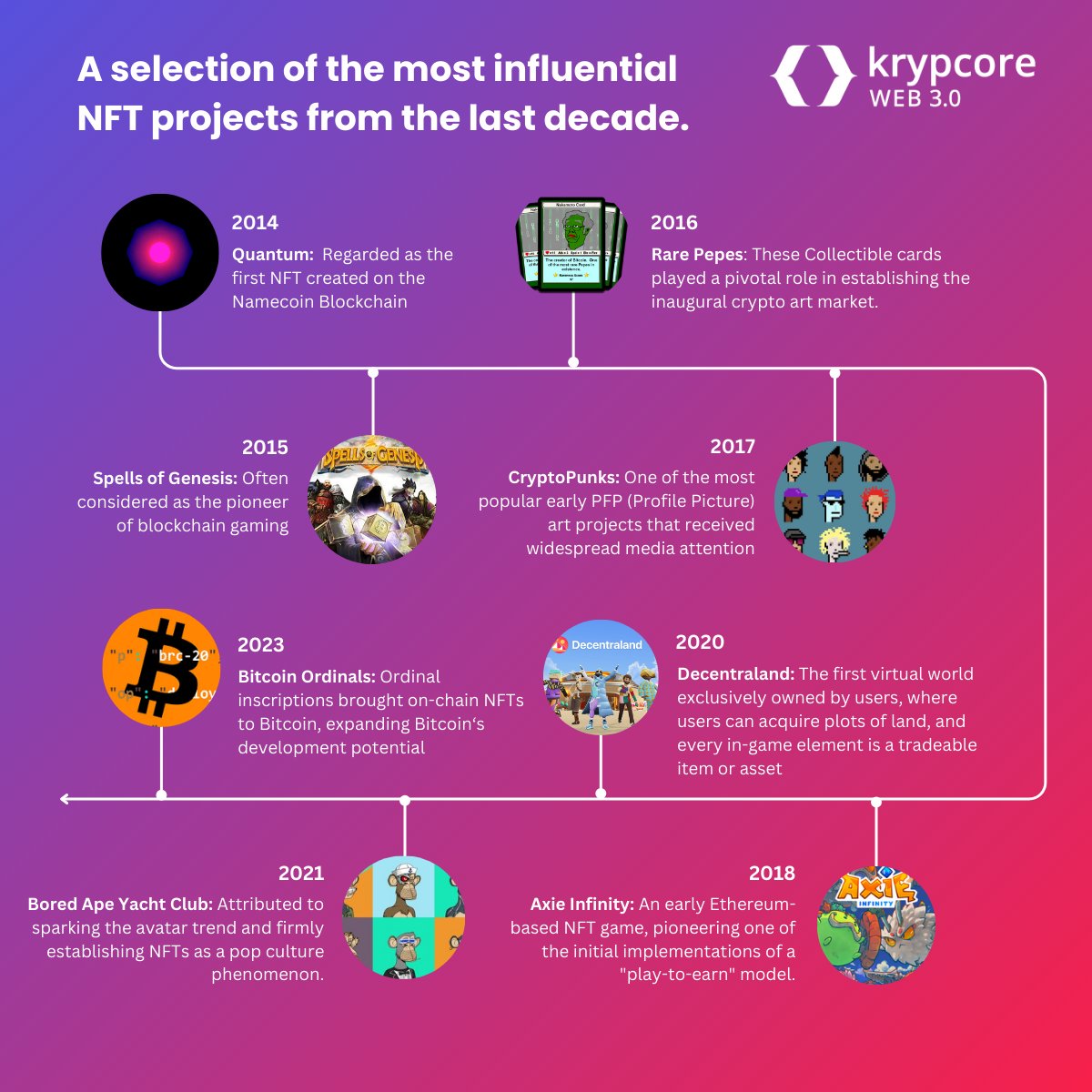
The rapid growth of NFTs into the public spotlight is largely attributable to their capacity to demonstrate ownership in a transparent and immutable manner. ✨
krypcore.com/blog/guide-to-k…
This is done by leveraging the power of blockchain technology. NFTs have risen from being a formerly obscure area of crypto and web3 to now an established sector in the space. Despite the NFT sector growing to prominence within mainstream press outlets in 2021, it has a rich history that expands to a decade. 📈
Krypcore Web3's comprehensive platform lets you seamlessly build and integrate NFT capabilities in your dApp with ease across any of our supported networks. 🌐 With bundled infrastructure, accelerate your development journey with our SDK & APIs to build your dApp. 🛠️
Check out our blog linked above to understand how you can leverage Krypcore in building your NFT use case 👇 Sign up to experience the platform first hand at krypcore.com
#NFT #dAppdevelopment #blockchain #web3applications #krypcoreweb3
2
3
90

6 Dec 2023
It's Day 3 of our 12 Days of Activate, and we're excited to shine a spotlight on @QuickNode, the go-to solution for blockchain development makes it easy to build cutting-edge #dApps & #Web3applications.
Discover all the details here: go.aws/3uG8AMi
🎬: @KrikeyApp
2
10
28
4,873

12 Nov 2023
Που σου χρησιμεύει το Ceramic Network; Είναι σχεδιασμένο για ανοιχτές εφαρμογές web3 για αποθήκευση δεδομένων που μπορούν να προσπελαστούν από όλους. 🌐 #Web3Applications #DataStorage #CeramicNetwork @CeramicNetwork
1
1
4
66

2 Nov 2023
With PARSIQ's Reactive Network, Web3 applications are reaching new heights. From automated portfolio rebalancing to real-time risk management, the possibilities are endless. Learn how REACT token powers this innovation. #Web3Applications #REACT #PARSIQ #Blockchain

4
7
225

20 Sep 2023
MYEG founder and group managing director TS Wong enthusiastically stated, "We continue to build real-world Web3 applications, leveraging on its unique functionality of ensuring the authenticity of digitized documents, including identity credentials and trade documents. 🔗💼💡 #Web3Applications #DigitalAuthenticity #InnovationInProgress"

19 Sep 2023

We are thrilled to announce our collaboration with China’s state-owned Guangxi Beitou IT Innovation Technology Investment Group Co., Ltd. to leverage on the Zetrix blockchain in offering cross-border credentials verification services.
2
1
6
1,455

26 Aug 2023
The intersection of blockchain and healthcare beckons with promises of security, privacy, and empowerment. Read on to unveil the future of Web3 Healthcare in today's article.🩺 👉 linkedin.com/newsletters/res…
✍️ @munarett3
#web3health #web3applications #healthcare #medtech

3
92
24 Aug 2023
La intersección de la blockchain y la medicina promete seguridad, privacidad y autonomía. Acércate al futuro de la salud en el blog de hoy 🩺
linkedin.com/pulse/salud-en-…
✍️ @munarett3
#blockchain #web3health #techsolutions #web3applications #healthcare #medtech
1
5
157

22 Jul 2023
1/5: #Web3 is more than just a concept, it's already being applied in innovative ways. Let's look at some case studies of Web3 applications. #Web3Applications

1
13
23
495