
Jun 15
"The fundamental problem is not simply who sits on the #SecurityCouncil, but that the current system imposes no meaningful institutional cost on a permanent member that uses the veto to obstruct accountability for its own breach of the Charter. In such cases, the veto ceases to function as a safeguard of great-power consensus and becomes a mechanism of impunity."
"Twelve years after Russia’s annexation of Crimea, when Moscow directly contravened Article 2(4)’s prohibition on the “use of force against the territorial integrity or political independence” of any state, the Security Council remains unable to fulfil its founding mandate because Russia itself holds a veto on it."
"A more credible framework requires that any permanent member vetoing enforcement of #Article2(4) while directly implicated in its breach must justify its position before the wider @UN membership. If that justification fails to command sufficient support, the #GeneralAssembly must have a clearer route to authorise emergency collective measures. Reform therefore focuses not only on representation but on procedural accountability, the relationship between the Security Council and the General Assembly, the legal status of collective measures when the Council is paralysed, and the conditions under which Resolution 377(Opens in new window), “Uniting for Peace”, can be triggered." lowyinstitute.org/the-interp…
2
93

1

article2-30645 : interdiction du port du voile
youtu.be/rk-5ZyKrbrE?si=1mOU…
4

andrea abwob retweeted

Feb 3
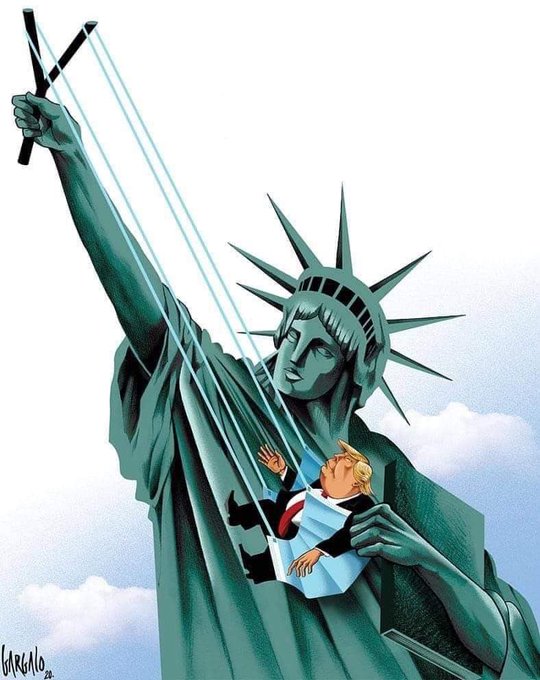
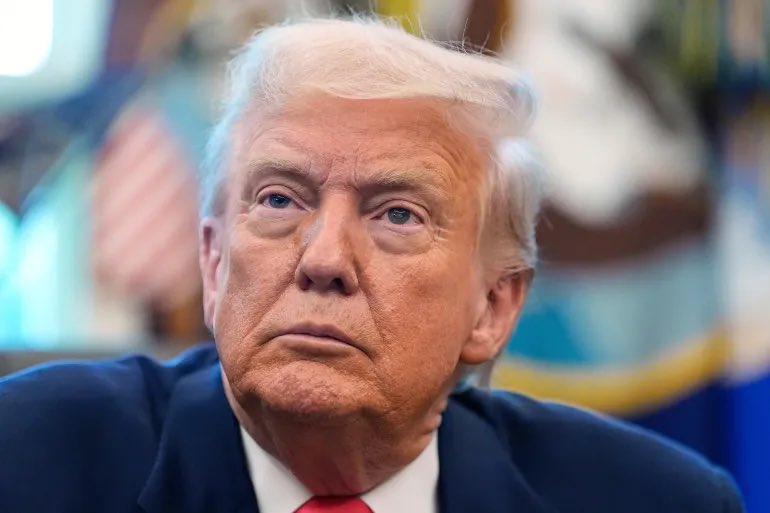
#Impeach_and_Remove DJT now!
Article2
Section4
Removes the poisonous tree, roots & fruits!
👁👁
WTFacts?

2
30

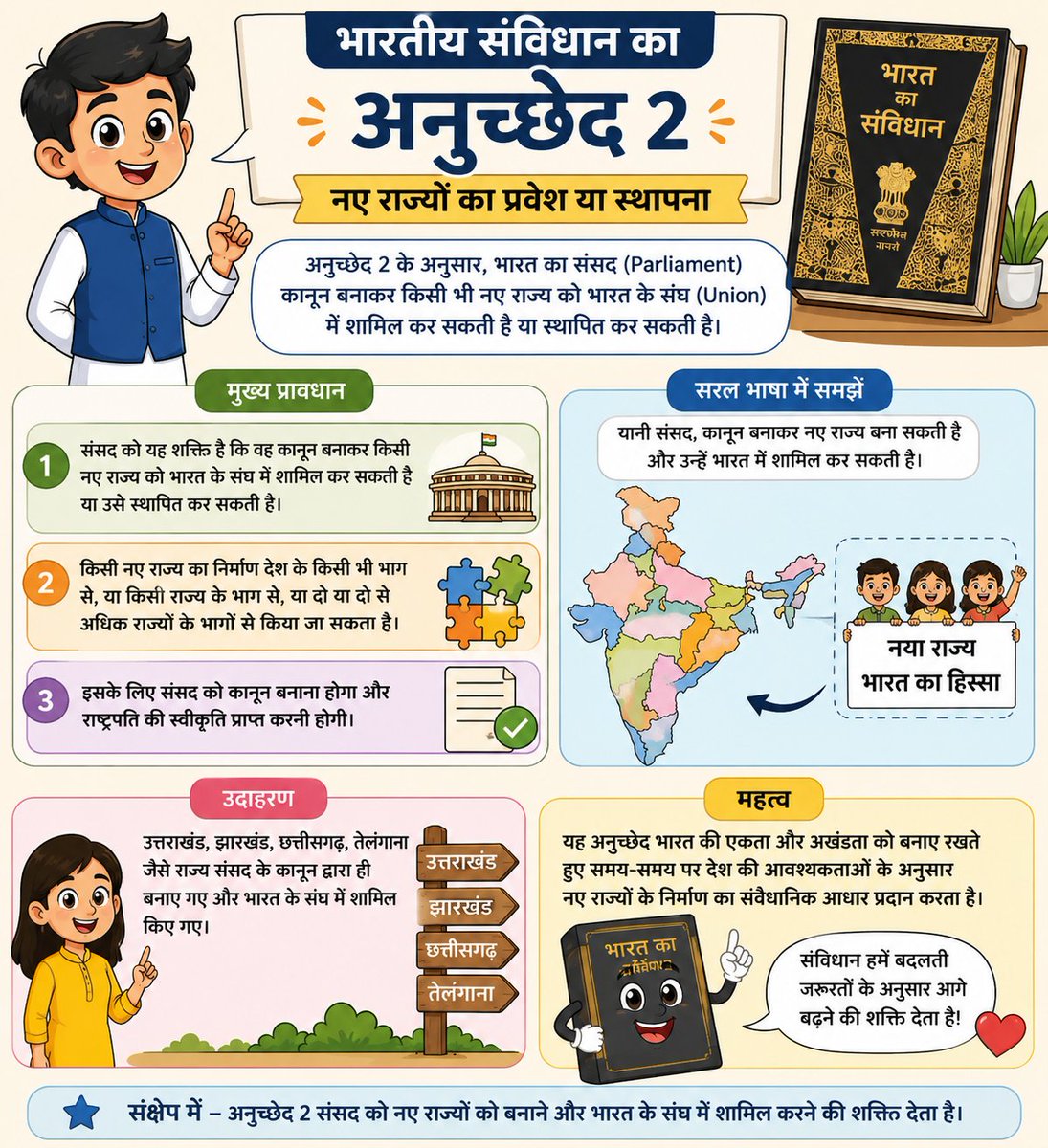
भारतीय संविधान का अनुच्छेद 2 क्या है?
क्या आप जानते हैं कि भारतीय संसद को नए राज्यों को भारत के संघ में शामिल करने या नए राज्य स्थापित करने की शक्ति संविधान के अनुच्छेद 2 से मिलती है।
इस आसान कार्टून इन्फोग्राफिक के माध्यम से अनुच्छेद 2 को सरल भाषा में समझें और अपने संविधान का ज्ञान बढ़ाएँ। 🇮🇳
संविधान को जानें, अधिकारों को समझें और जागरूक नागरिक बनें।
#IndianConstitution #Article2 #Samvidhan #ConstitutionOfIndia #IndianPolity #UPSC #SSC #GK #CurrentAffairs #IndianLaw #ConstitutionKnowledge #StudyGram #Education #भारत_का_संविधान #अनुच्छेद2
1
2
58

No politician is insisting upon the release of the list of the top 220 donors2whom potus47 had hosted a dinner,which wud shed light on tyranny.&if it's true that a military base had bn traded in exchange4flying palace,golf course etc,itz tyranny that shud summon Article2,Section4
3
2
145

@DangerousThinkg
The intel bureaucracy answers to the President. Not the other way around.
@KennethFCrowe1™
#NationalSecurity #Article2 #MAGA #DeepState #SovereignNations
1
2
180


May 20
Mcm mana article2 PMX yg minta no 1 & no 2 pkr diberi jalan mudah bwk maksud berlainan? Igtkan ikhlas 🙂↔️
1
2
45

May 13
Koloba français nde ayebi mais na mutu fufu na fufu
Les matières qui peuvent passer par le référendum:
1. Révision Constitutionnelle Articles 218-219
2. Changement de la Capitale Article 2
3. Cession ou échange de territoire article2
Oyo ya bino ekomi buzoba
2
1
2
128

May 10
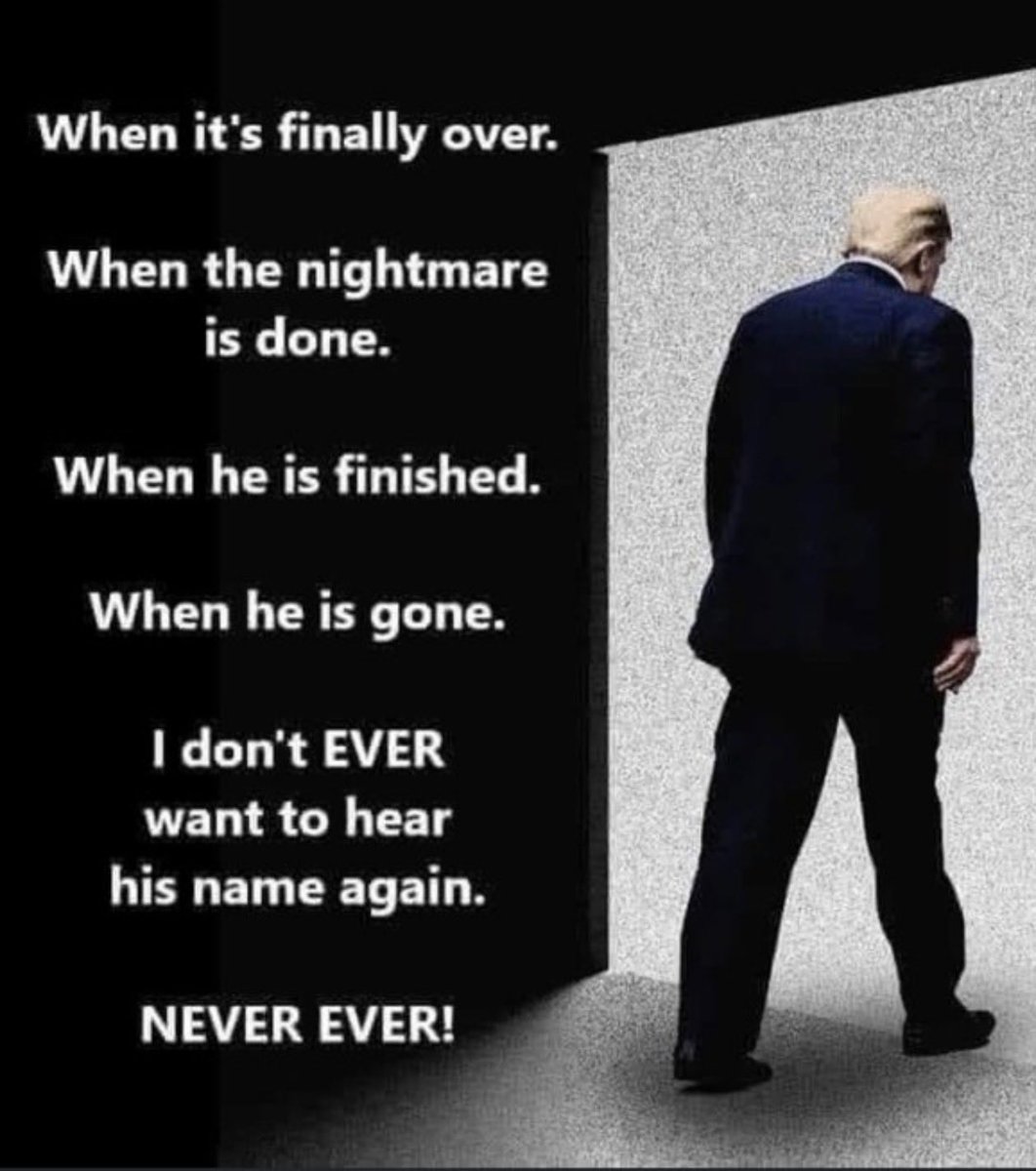
$6.5B net worth post election, 3 criminal trials dismissed without prejudice, & almost $1B in judgements and fines is worth it to him…
Article2 Section 4 can’t come fast enough…seriously we can’t take it anymore…
1
1
2
34


Silence from Strasbourg!
The office of the Council of Europe @coe Commissioner for Human Rights was born, as many European institutions are, out of principle and promise.
Established by Resolution (99) 50 in the closing spring of the twentieth century, it was intended to stand—not as a court, nor as a tribunal—but as a vigilant observer. A voice, if you like, for the quiet insistence that human rights, once written into law, must also be lived in practice.
Its foundation rests upon the European Convention on Human Rights, and at the heart of that Convention lies the most elementary of all guarantees: the right to life, enshrined in Article 2 ECHR. It is a simple phrase, almost austere in its brevity, but its implications are profound. It does not merely prohibit the state from taking life unlawfully; it obliges the state to act—to protect, to prevent, and, when the worst occurs, to account.
There is, in the history of human rights, a phrase that has echoed across generations—“Never Again.” Born from the ashes of the #Holocaust, it was never intended as rhetoric alone, but as a promise. In legal terms, that promise finds its expression in Article 2: a binding obligation on the state not merely to refrain from unlawful killing, but to ensure that such failures are not repeated—through vigilance, accountability, and the rule of law.
Now, the @CommissionerHR is not a judge. He does not issue rulings, nor does he summon witnesses. His authority is no less significant: it lies in the power to notice, to question, and, when necessary, to challenge governments. It is, in essence, a moral office, and like all such offices, it depends upon the willingness to speak.
Which brings us, rather uneasily, to the present moment.
The current holder of that office, Dr. Michael O’Flaherty, has been confronted with allegations that reach into the darker corners of state responsibility.
Among them, the murder of Tom Oliver—within the jurisdiction of the #Irish State—and the shadowy presence of #British state agents. When asked to comment, the response, delivered on his behalf by Gaëlle Bausson @gbausson, Head of Communications at the Commissioner’s Office, was brief to the point of silence: “The Commissioner has no comments on this.”
Now, in fairness, silence is not always neglect. There are moments when discretion is warranted—when facts are disputed, or proceedings are ongoing, or when intervention might complicate rather than clarify. But there is also a point at which silence begins to echo.
The Oliver case does not stand alone. It is accompanied by other allegations—grave ones.
Claims of Irish State complicity in the attempted murder of prison officer Sean O'Brien; assertions of a cover-up in the murder of Irish soldier Gunner Dessie O'Donnell, 1983; threading through these accounts, reports of pressure brought to bear on those who have sought to speak out—#whistleblowers who, in another country, might be regarded as essential to the health of a democratic state.
Individually, such claims demand investigation. Taken together, they suggest something more troubling: the possibility—not the proof, but the possibility—of systemic failure. And it is precisely this kind of pattern, this accumulation of concern, that the #Commissioners office was designed to confront.
If, however, the institution tasked with promoting and protecting human rights can appear to overlook alleged violations in a member state such as Ireland, a more uncomfortable question begins to form. Who, then, holds the state to account for the loss of life within its jurisdiction?
What becomes of the promise embedded in Article 2 when allegations of unlawful killing, of collusion, of cover-up, and of reprisals against whistleblowers are met not with scrutiny, but intimidation, harassment, ridicule, and silence?
These are not easy questions, nor are they lightly put. Some may believe that such matters belong to another time, another place—that they could not take root in a modern #European #democracy. And yet, history counsels caution. The distance between principle and practice can, at times, be narrower than we would wish.
This is not an assertion of guilt, but a reflection on responsibility. For when the mechanisms of accountability weaken—or appear to falter—the consequences are not abstract. They are measured, ultimately, in human life, and in the confidence that such life will be protected by law.
And so a question, once more, returns to Dr. O’Flaherty in #Strasbourg—quietly, but persistently. Not as an accusation, but as an appeal to the very purpose of the office:
Cén luach atá ag an saol duit?
“What value does life have to you?”
#Article2 is not merely a provision of law. It is a test—of institutions, of states, and of those entrusted to speak when silence would be easier.
And so the question lingers, not loudly, but persistently: when confronted with allegations of this gravity, is silence an exercise of judgment—or an abdication of responsibility?

1
3
4
321

Apr 26
Staged!! Diversion from failed dialogue with Iran and of course, the Epstein files!!! Article2 section 4 NOW!!!
1
3
1,332

Apr 24
This is beyond left right or center. This man is absolutely incoherent incompetent unhinged and #UnfitToServe in any capacity. He must be removed. #Article2
3
10
223

Apr 22
Genocide in history:🏛️
'75 Cambodia: 2M Dead
'94 Rwanda: 800k Dead | 2M Displaced
'95 Srebrenica: 8k Dead
'03 Sudan: 300k Dead | 2.5M Displaced
TODAY: 100k Dead/Missing | 200k Maimed | 3M Displaced in Gaza, Westbank & Lebanon. 🇱🇧🇵🇸
@CIJ_ICJ : 'Plausible Genocide.' IStGH warrants are active. How many more must be maimed or exiled before @_FriedrichMerz & @Antonio_Tajani act? Stop the complicity. ⚖️🛑
#Article2 #Minab #ICJ #HumanRightsViolation
3
25
51
2,188
Apr 22
I do agree: NEVER AGAIN, must mean NEVER AGAIN
Genocide in history:🏛️📉
'75 Cambodia: 2M Dead
'94 Rwanda: 800k Dead | 2M Displaced
'95 Srebrenica: 8k Dead
'03 Sudan: 300k Dead | 2.5M Displaced
TODAY: 100k Dead/Missing | 200k Maimed | 3M Displaced in Gaza, Westbank & Lebanon. 🇵🇸🇱🇧
@CIJ_ICJ : 'Plausible Genocide.' IStGH warrants are active. How many more must be maimed or exiled before @_FriedrichMerz & @Antonio_Tajani act? Stop the complicity. 🛑⚖️ #Article2 #Minab #ICJ #HumanRightsViolation
1
2
4
86
Apr 22
Spot on @NathalieTocci. @_FriedrichMerz @Antonio_Tajani: This is LEGAL and MORAL complicity. @CIJ_ICJ investigates plausible genocide—supporting Israel violates Art 2 & legal duties acc. to intern. LAW. UN experts: suspension is a MANDATE, not a choice. Courts will judge. ⚖️🏛️
#Article2 #Minab #Accountability #EUSuspension
1
3
14
1,715