
🇸🇬 SINGAPORE | 11th June 🇸🇬
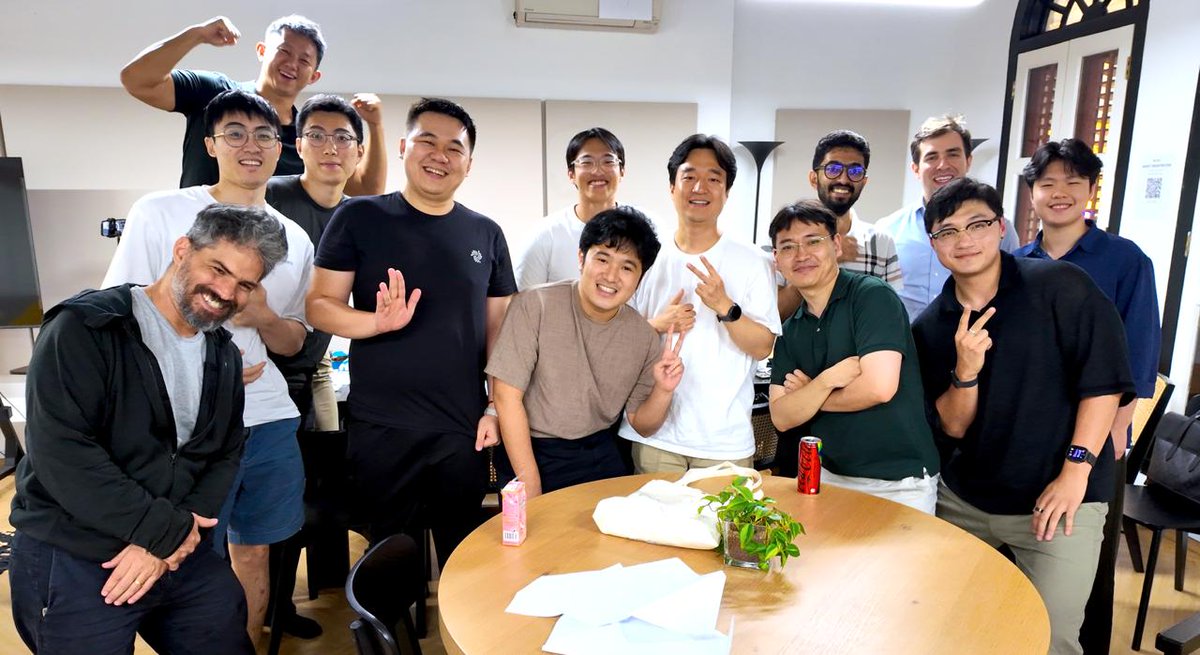
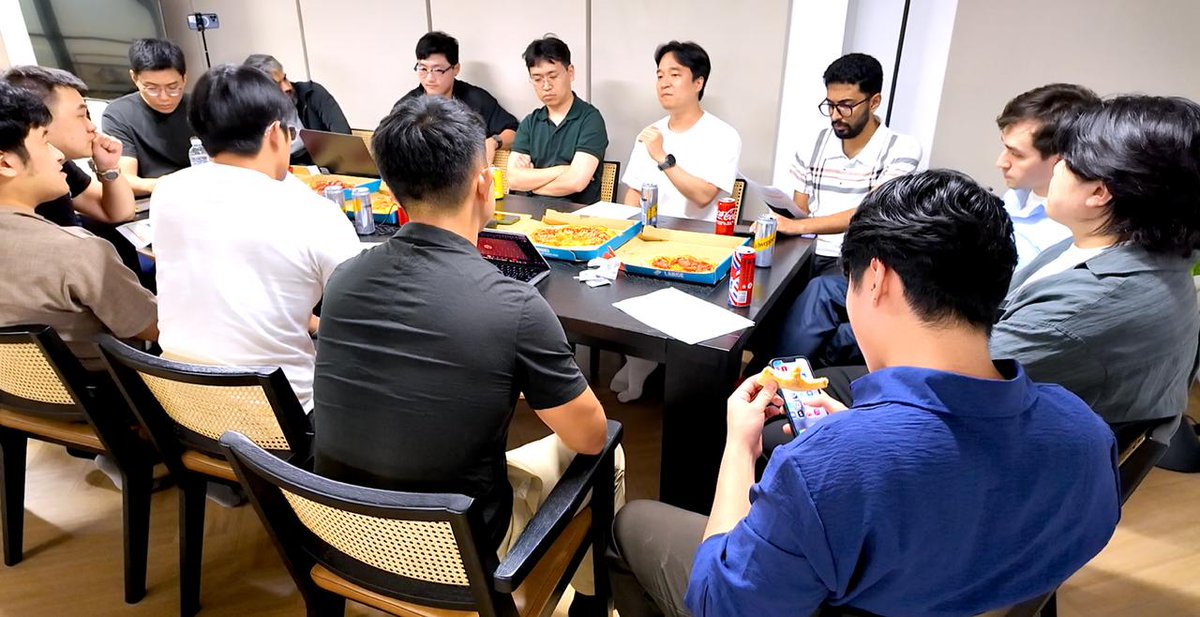
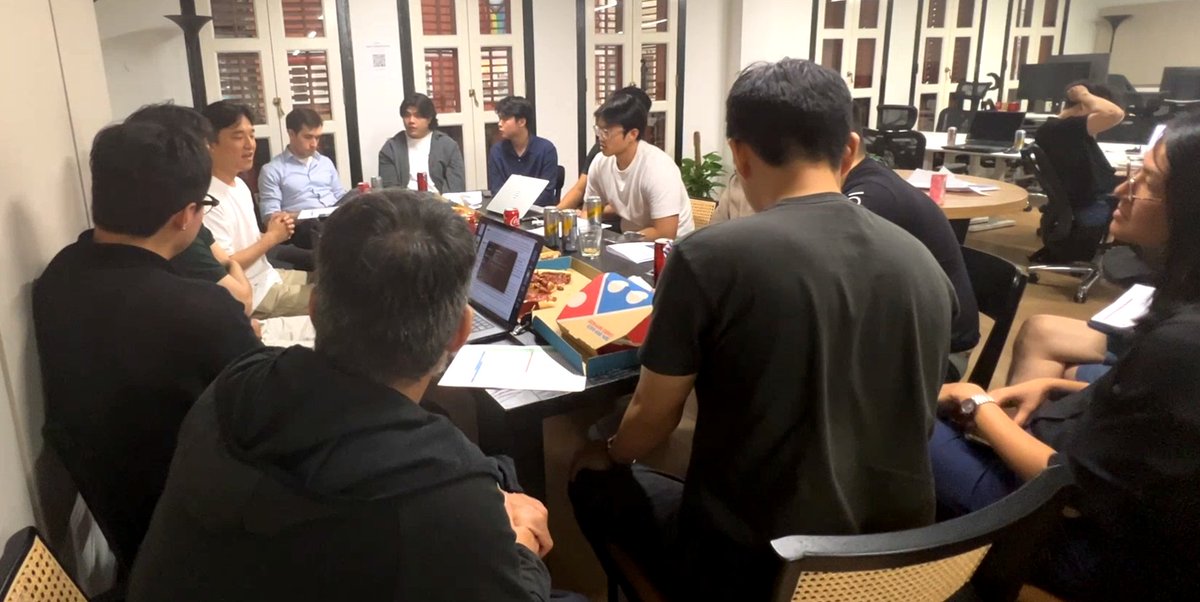
We hosted one of the most hardcore Whitepaper Reading Club sessions in Singapore last Thursday, where we were deciphering:
🧠 Cryptography’s XLA Moment: Why ZK may need a compiler, not another proving system 🧠
This session was led by @jumanzi_dev from Fractalyze, the team building “the PyTorch for ZK” — a Python-first compiler stack for Zero-Knowledge.
Big shoutout to our:
- Discussion: Jooman & Batzorig from Fractalyze for working on this amazing project. They are deeply passionate about what they do and I feel I've learned so much.
- Thank you to my partner in crime @BrianSeong who made this session possible.
- Great to see @ulandaoon @kowei1995 @9oelM and welcome @tomespel (welcome back to ZK)
🙏 Appreciate @kimmi from @SuperteamSG, for being there for us :)
📝 For more information:
- Fractalyze: fractalyze.io
- Event summary: docs.google.com/document/d/1…
📆 Upcoming events: luma.com/whitepaper
‼️ THE EVENT NOTES > TL;DR ‼️
(1) ZK’s Problem: zkVM/proving teams like @SuccinctLabs, @RiscZero, @ziskvm, OpenVM, Plonky3 (@0xPolygon), Jolt from @a16zcrypto, and Binius from @IrreducibleHW are all fighting the same hard problem: turning Rust/CUDA, memory layout, GPU execution, and field arithmetic into production-level proving performance.
(2) Fractalyze's Solution: Build ZK proving systems in high-level Python, then let a cryptography-native compiler handle optimization underneath.
(3) Zorch: Fractalyze’s stack aims to become the “PyTorch for ZK” — making proving systems easier to write, test, optimize, package, and deploy.
(4) The XLA Analogy: ML scaled as researchers stopped hand-writing kernels. @OpenXLA / MLIR helped high-level models compile into efficient hardware execution.
(5) Cryptography Needs the Same Layer: ZK, FHE, MPC, post-quantum crypto, and formal verification all need better compiler infrastructure if they are going to become real products they are going to become real products — see @zama, @TACEO_IO, @rv_inc, and @NethermindSec.
(6) Not Just Developer UX: The goal is not only abstraction. The deeper claim is that compiler automation can beat hand-written optimization by reasoning across the whole computation graph.
(7) Hardware Portability: Today’s ZK systems are often tied to specific @nvidia GPU assumptions. A compiler layer could make cryptographic workloads easier to move across CPU, GPU, FPGA, and future crypto-specific hardware — a direction also explored by teams like @Ingo_zk / ICICLE and @cysic_xyz.
(8) Ethereum: This matters for real-time block proving, lighter validation, larger block capacity, and the long-term vision of @ethereumfndn becoming easier to verify.
(9) Bigger Than ZK: The real question is whether advanced cryptography can move from research papers and hand-built systems into reusable infrastructure — the same way AI did.
🧠QUESTIONS:
(i) Is the next major ZK breakthrough a new proving system — or the compiler layer underneath all of them?
(ii) If Ethereum itself becomes ZK-powered, what is the future role of ZK rollups?
(iii) Can cryptography become a profitable product category, or is it closer to public-good infrastructure?
(iv) Will AI-generated code make formal verification and verifiable compute much more important?
(v) What happens when cryptography gets 100x or 1000x cheaper to run?
#ZK #Cryptography #Ethereum #MLIR #XLA #VerifiableCompute #Fractalyze #WhitepaperReadingClub

3
15
382

Jun 14
The L1 I'm building uses a shielded UTXO ledger!
Recently moved into FV with Kani, Z3, and Decree.
As of today, it converges to identical byte counts on the 4th block. Studying that now.
It's recursive STARKs with FRI-Binius. Proof-of-everything.
21

🔐 What is a Post-Quantum Signature and why should you care?
Educational thread 🧵👇
Today your wallet (MetaMask, Trust, SafePal) uses ECDSA signatures to approve transactions. This system has been protecting trillions of dollars in crypto for years.
But there's a problem: quantum computers can break it.
Google, IBM, and China already have quantum processors with over 1,000 qubits. When they scale enough, they'll be able to derive your private key from your public key.
Your wallet would be completely exposed. 😶
⸻
What does QRYPTA do differently?
QRYPTA implements CRYSTALS-Dilithium signatures directly on BNB Chain. This algorithm was selected by NIST (U.S. National Institute of Standards) as the global standard for post-quantum cryptography.
How does it work?
1️⃣ Connect your wallet to the QRYPTA dApp
2️⃣ Your PQC identity (Post-Quantum Cryptography) is generated and registered inside the smart contract 3️⃣ Every transfer you make is signed with Dilithium, not ECDSA
4️⃣ The cryptographic proof is verified on-chain using Binius Proofs
Result: your transaction is mathematically impossible to forge, even by a quantum computer. 🛡️
⸻
Why does this matter NOW and not "in 10 years"?
Because there's an attack called "Harvest Now, Decrypt Later" 🕵️
Hackers are recording blockchain transactions TODAY to decrypt them when quantum technology matures. If your wallet doesn't have post-quantum protection, your funds could already be compromised in the future.
QRYPTA protects you today against tomorrow's threat.
⸻
✅ Real PQC signature, not simulated ✅ On-chain verification on BNB Chain ✅ Audited by CertiK — Score A (80.01) ✅ NIST FIPS-204 Standard
Quantum security is not a luxury. It's a necessity.
#QRYPTA #PostQuantum #BNBChain #CryptoSecurity #Web3 #Dilithium
5
5
12
1,094

Jun 13
신뢰를 증명하고 이더리움위에서 검증 빠르고 믿을수 있게 해주는 알리안드 너야 너!!!
Aligned Layer 는 Ethereum의 ZK(Zero-Knowledge) Proof 검증을 전문으로 하는 인프라 프로젝트입니다
EigenLayer의 restaking(재스테이킹)을 기반으로 구축되어, Ethereum을 더 빠르고 저렴하며 확장 가능한 ZK 검증 플랫폼으로 만듭니다
EigenLayer 위에 구축된 고성능·저비용 ZK Proof 검증 레이어로, Ethereum Rollup/ZK 앱의 확장성을 크게 높이는 인프라!!
핵심 목적
Ethereum은 원래 ZK Proof를 위해 설계되지 않아 검증 비용이 높고(수십~수백 달러), "처리량이 제한적(초당 ~10개)"입니다
Aligned는 이를 해결해 초당 1,000개 이상의 Proof를 저비용(90% 이상 비용 절감)으로 검증합니다
Groth16, STARKs, Kimchi, Binius 등 다양한 Proof 시스템을 지원합니다
주요 작동 방식Proof Verification Layer (주요 제품, Mainnet): EigenLayer Operators(전 세계 50 개국 운영자)가 Proof를 검증 → BLS 서명으로 합의(2/3 이상) → Ethereum에 결과 게시. EVM 제약 없이 Rust 등으로 최적화 병렬 처리
Proof Aggregation Service: 여러 Proof를 하나로 압축(재귀 증명)해 비용 더 절감
Rollup 등 지연 허용 서비스에 적합
보안: EigenLayer restaking(수십억 달러 규모 ETH)으로 경제적 보안 제공
전체 스택 (Vertically Integrated)ZK Verification Layer Aggregation
Rollup-as-a-Service (RaaS)
Wallet-as-a-Service
Interoperability Protocol
Meta-Proving Services 등
목표: Ethereum을 "verifiable internet"의 금융 백엔드로 만들고, AI·금융 등 provable(증명 가능한) 애플리케이션을 쉽게 구축하게 함
Jun 10

▶️ @alignedlayer 대한 쉬운 영상 후기남기기 캠페인 (위에 사진아니고 AI로 만든 영상이에요!)
안녕하세요 불개미입니다. 이번에는 Aligned Layer와 함께하여 영상 후기남기기 캠페인을 진행합니다.
✔️ 참여방법
1. 해당 영상 구독, 좋아요, 댓글달기 : youtube.com/shorts/VCGMeF4TR…
2. 해당 트윗 인용하여 인터뷰 후기 작성
3. 추가참여를 원한다면 네이버 블로그 후기작성
4. 결과물 해당 폼에 제출 🗓 일정 : 6월 17일 까지
* 트윗과 블로그는 각각 1개의 참여로 카운팅됩니다.
* 동일 컨텐츠를 X와 네이버에 포스팅에 동시 포스팅하셔도 각각 1개로 카운팅됩니다.
🔥 보상 (핸드픽)
1등 : 30만원 상당의 보상
2등 : 5만원 상당의 보상
3등 : 3만원 상당의 보상
참여상 : 100개 게시물 선정하여 5000원 상당 보상
6
2
8
261

Jun 11
ZK 증명, 검증이 비싸다.
방금 얼라인드(Aligned) 소개 영상을 봤습니다. 짧은데 핵심을 잘 짚은 영상이라 생각하네요.
블록체인에서 신뢰는 모든 것의 기반인데, 정작 ZK 증명을 이더리움에서 직접 검증하면 비용이 만만치 않습니다.
Groth16 한 건에 ~25만 gas, STARK는 100만 gas를 넘기기도 합니다.
Aligned는 이 검증 한 가지에 집중하는 레이어입니다.
EigenLayer 리스테이킹 기반 AVS로, 롤업과 앱이 만든 ZK 증명을 받아 효율적으로 검증한 뒤 그 결과를 이더리움에 연결합니다.
방식은 두 가지로 나뉩니다:
Fast Mode (검증 레이어)
오퍼레이터들이 증명을 오프체인에서 검증하고, BLS 서명으로 압축된 결과만 이더리움에 올립니다. 검증 비용을 90% 넘게 절감. 2024년 12월부터 메인넷 가동 중입니다.
Aggregation Mode (집계 서비스)
재귀(recursion)로 수많은 증명을 하나로 묶어 이더리움에서 직접 검증합니다. 비용을 최대 99%까지 절감. 2026년 1월 메인넷 알파, 초당 ~1,000건 처리합니다.
특정 증명 시스템에 묶이지 않는 점도 좋습니다.
Groth16, Plonk, STARKs는 물론, 비용·크기 때문에 이더리움이 지금은 못 받는 Kimchi, Binius 같은 증명까지 검증 대상으로 봅니다.
영상 마지막 문장이 이 프로젝트를 한 줄로 요약하네요.
"신뢰를 요구하는 대신, 결과를 증명하는 구조."
ZK 앱이 늘어날수록 검증은 결국 공용 인프라가 되어야 한다고 봅니다. Aligned가 그 자리를 노리는 방식이 설득력 있네요.
@alignedlayer
Jun 10
▶️ @alignedlayer 대한 쉬운 영상 후기남기기 캠페인 (위에 사진아니고 AI로 만든 영상이에요!)
안녕하세요 불개미입니다. 이번에는 Aligned Layer와 함께하여 영상 후기남기기 캠페인을 진행합니다.
✔️ 참여방법
1. 해당 영상 구독, 좋아요, 댓글달기 : youtube.com/shorts/VCGMeF4TR…
2. 해당 트윗 인용하여 인터뷰 후기 작성
3. 추가참여를 원한다면 네이버 블로그 후기작성
4. 결과물 해당 폼에 제출 🗓 일정 : 6월 17일 까지
* 트윗과 블로그는 각각 1개의 참여로 카운팅됩니다.
* 동일 컨텐츠를 X와 네이버에 포스팅에 동시 포스팅하셔도 각각 1개로 카운팅됩니다.
🔥 보상 (핸드픽)
1등 : 30만원 상당의 보상
2등 : 5만원 상당의 보상
3등 : 3만원 상당의 보상
참여상 : 100개 게시물 선정하여 5000원 상당 보상
2
6
292

Jun 3
🦇🔊 The Akmena Litepaper: A Zero-Knowledge Settlement Engine for the Agentic Economy
AI agents are no longer just chatbots; they are sovereign economic actors. With the explosion of the x402 payment standard, agents on the Base network are managing billions in Total Value Locked (TVL) and executing millions of micro-transactions.
But a massive vulnerability remains:
How do agents trust each other to execute complex, off-chain compute without getting exploited by MEV bots or malicious targets?
Enter Akmena—the max-hardened, zero-knowledge escrow and execution layer built exclusively for machine-to-machine (M2M) economies.
Here is the technical architecture behind the Akmena Singularity Engine. 👇
1/ The Core: ERC-8109 & Decentralized Upgradability
Smart contracts that cannot evolve are dead on arrival, but proxy contracts with centralized admin keys are a security risk.
Akmena is built on the ERC-8109 Diamond Standard. We route all logic through multiple specialized Facets (Token, Agent, Memory, ZK Verifier) while completely isolating our state using ERC-7201 Namespaced Storage (akmena.storage.master.v1).
The result? We can seamlessly upgrade our SP1 Verifier or token logic without ever risking a storage collision or moving the underlying agent liquidity
2/ The Armor: EIP-1153 Transient Storage Locks
Traditional reentrancy guards cost massive amounts of gas because they write to permanent blockchain storage during execution. In high-frequency AI trading, that gas overhead destroys profit margins.
Akmena utilizes Solidity 0.8.34’s native transient keyword (TSTORE/TLOAD). Our TransientGuard locks the entire Diamond architecture simultaneously, clearing automatically at the end of the transaction rather than the call frame.
Result: Absolute protection against cross-facet callback attacks with strictly zero gas overhead
3/ The Engine: SP1 ZK-Routing & Cryptographic Nullifiers
You shouldn't have to trust an AI agent; you should mathematically verify it.
When a human or an agent funds a job on Akmena, the capital is locked in a decentralized escrow. The provider agent computes the task off-chain and submits a Zero-Knowledge Proof (via SP1/Binius) directly to our AkmenaZKVerifierFacet.
To completely neutralize the risk of ZK-ML Replay Attacks, Akmena generates a Cryptographic Nullifier by hashing the agent’s verifier key, the public values, and the proof bytes. Once the job is verified and paid, the nullifier is permanently burned into state
4/ The Shield: Hardened Intent Execution
When agents use their capital to interact with DeFi protocols via our executeIntent function, they become prime targets for MEV sandwich attacks and slippage drains.
Akmena calculates the absolute token delta natively at the protocol level. We measure the agent's exact balance before and after the external call. If the balance drop exceeds the agent's strictly defined minAmountOut, or if a rogue whitelisted target attempts an infinite gas loop, the EVM forcefully reverts the transaction.
Your agents execute with total MEV immunity
### 🌐 Why We Built on @base
Base is the undisputed epicenter of the Agentic GDP. The network processes over 85% of all x402 AI agent trades globally.
While the x402 foundation (Coinbase, Stripe, Cloudflare) has perfected the payment standard, the ecosystem desperately needs a trustless execution standard.
Akmena is that standard. We are the verifiable bridge between capital and compute.
We are currently live on Base Sepolia. The code is mathematically sealed. The agents are deploying.
Welcome to the Singularity!
2
2
300

May 31
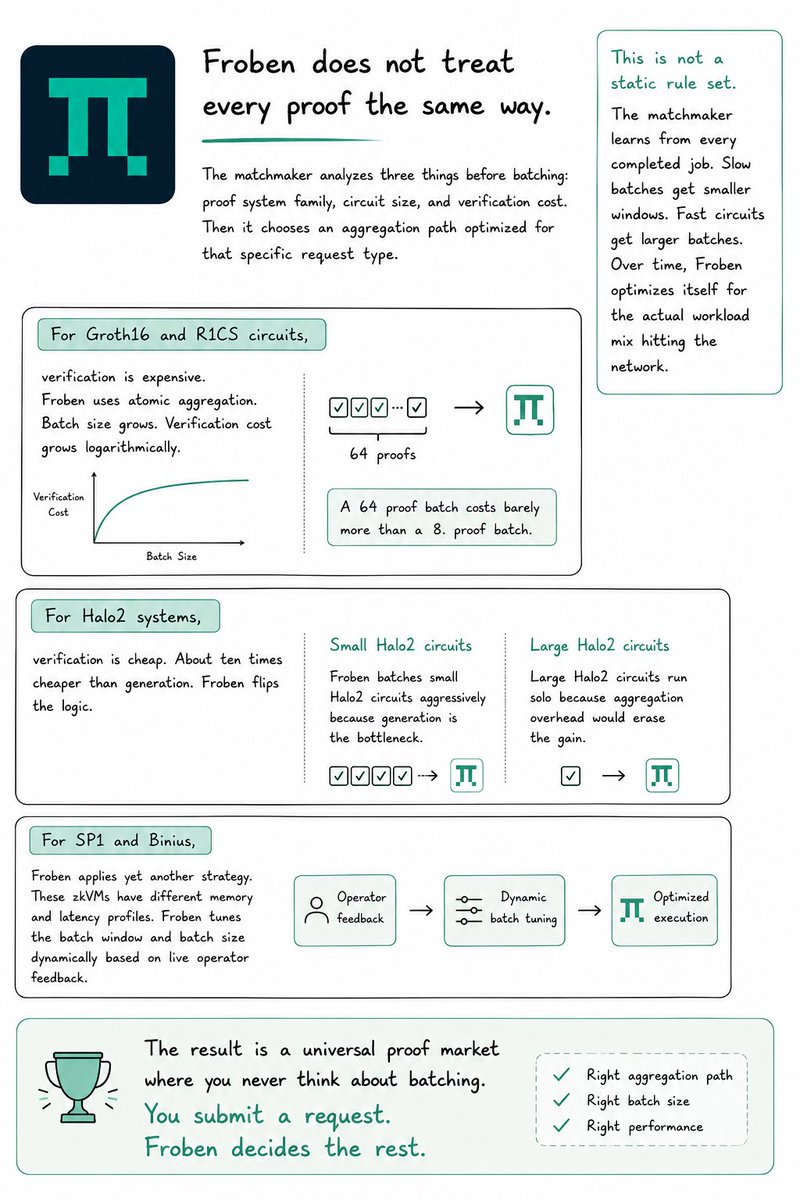
Froben does not treat every proof the same way.
The matchmaker analyzes three things before batching: proof system family, circuit size, and verification cost. Then it chooses an aggregation path optimized for that specific request type.
For Groth16 and R1CS circuits, verification is expensive. Froben uses atomic aggregation. Batch size grows. Verification cost grows logarithmically. A 64 proof batch costs barely more than an 8 proof batch.
For Halo2 systems, verification is cheap. About ten times cheaper than generation. Froben flips the logic. It batches small Halo2 circuits aggressively because generation is the bottleneck. Large Halo2 circuits run solo because aggregation overhead would erase the gain.
For SP1 and Binius, Froben applies yet another strategy. These zkVMs have different memory and latency profiles. Froben tunes the batch window and batch size dynamically based on live operator feedback.
This is not a static rule set. The matchmaker learns from every completed job. Slow batches get smaller windows. Fast circuits get larger batches. Over time, Froben optimizes itself for the actual workload mix hitting the network.
The result is a universal proof market where you never think about batching. You submit a request. Froben decides the rest.
@FlashcastSocial @fermah_xyz @7wealthh #Flashcast #MomentMarkets
2
5
84

May 28
✍️ @fermah_xyz
Fermah Froben: When Reliability Becomes Architecture
Most ZK proof marketplaces still force developers into a painful trade off:
Either fast and cheap (but with vendor lock in),
or flexible (but with nightmare level infrastructure complexity).
Fermah Froben removes that trade off entirely.
Froben is a fully mature, universal proof marketplace that delivers:
Proof system agnostic by design: switch between Halo2, SP1, Binius, Plonky3, or any future proving system, with zero code changes.
Upgradeable by default: when ZK math evolves, your integration doesn’t need to be rewritten.
Heterogeneous compute routing: intelligently distributes jobs across GPUs, FPGAs, and diverse hardware environments to optimize both latency and cost.
Deterministic and observable execution: every workflow is fully traceable and verifiable. Reliability is no longer a heroic operational effort, it becomes part of the architecture itself.
The name Froben isn’t random.
It honors Ferdinand Georg Frobenius, the mathematician whose endomorphism theorem sits at the foundation of modern elliptic curve operations used throughout ZK systems. Fermah chose the name to reflect a commitment to mathematical rigor, long term stability and infrastructure built on proven foundations.
Today, Froben serves as the foundation for Fermah Kernel, the programmable async compute layer powering FlashcastSocial and the next generation of autonomous onchain applications.
Froben isn’t just another proof marketplace.
It’s the infrastructure layer helping turn ZK from experimental technology into production default 🐬

May 27

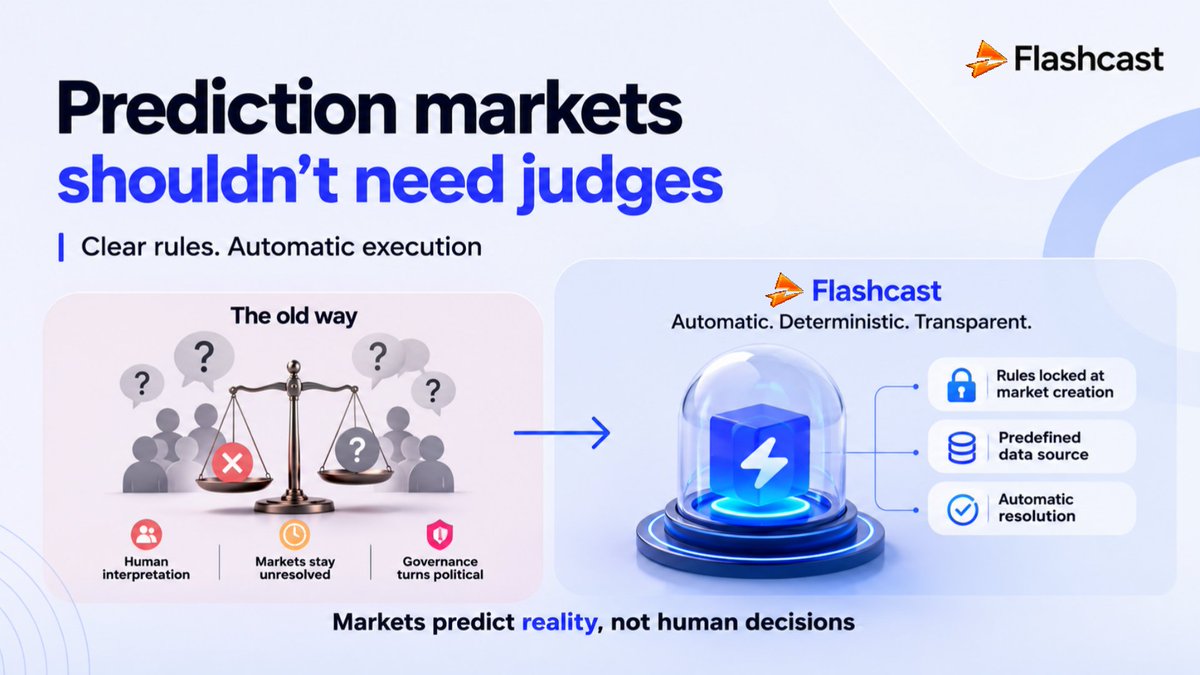
Prediction markets were supposed to be truth machines, places where people put money on the line to bet on reality, not opinions.
But most platforms still end up running into the same problem, human interpretation.
We’ve already seen markets with massive volume stay unresolved for days or even weeks because the rules were vague or open to interpretation.
People debate which sources are “credible.”
Communities split over outcomes.
Moderators get pressured.
Governance turns into politics.
At that point, the market is no longer predicting what will happen.
It’s predicting what people will decide afterward.
That defeats the entire purpose.
@FlashcastSocial approaches this differently.
The rules are locked at the moment a market is created.
The data source is predefined.
Resolution happens automatically through deterministic execution.
No committees, no overrides, no post event interpretation, no governance drama.
The outcome resolves exactly according to the original rules, transparently, automatically, and without disputes.
That changes everything.
When traders know outcomes can’t be manipulated later, markets become more trustworthy and more efficient. Capital doesn’t stay stuck waiting for human decisions, and real time markets become much more practical.
Prediction markets shouldn’t need judges.
They need clear rules and automatic execution.
@FlashcastSocial
#Flashcast #MomentMarkets
@fermah_xyz @7wealthh
11
30
534
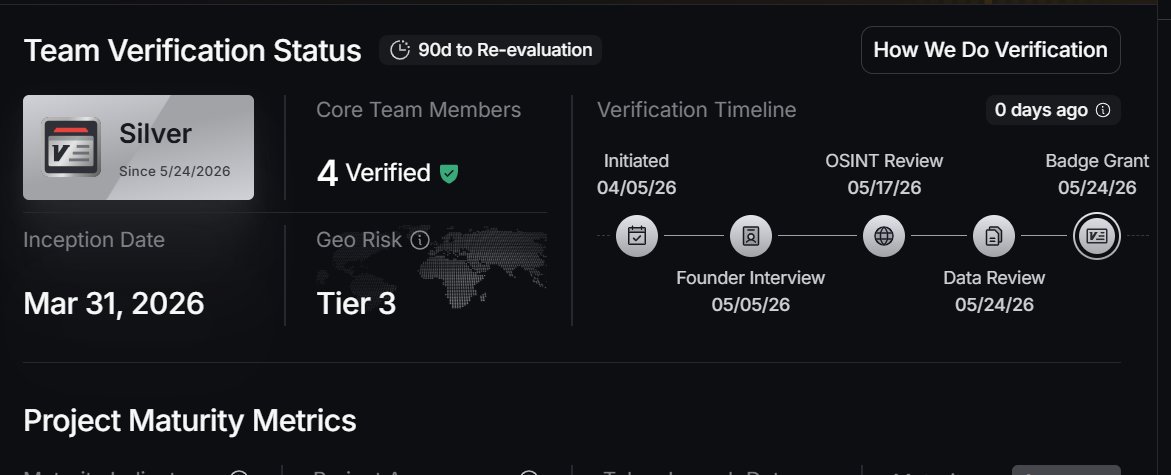
🔒 TRANSPARENCY IS NON-NEGOTIABLE. TRUST IS AUDITED.
We are proud to announce that QRYPTA has officially achieved the CertiK Silver KYC Badge, with 4 of our core leadership team members fully verified!
For us, securing tomorrow's financial rails requires the highest level of accountability today:
🛡️ Human Transparency: Core leadership fully verified by one of the most respected Web3 security firms on earth. 🧬 Cryptographic Immunity: Powered at a technical level by our pioneering post-quantum architecture based on the ZK ML-DSA-44 framework and Binius.
We build future-proof technology with the institutional-grade compliance and seriousness the market demands.
Check out our verification timeline and audit metrics live on CertiK Skynet: 👉 skynet.certik.com/projects/q…
#CertiK #KYCVerified #Web3Security #Qrypta #PostQuantum #ZK
39
54
224
122,455


May 22
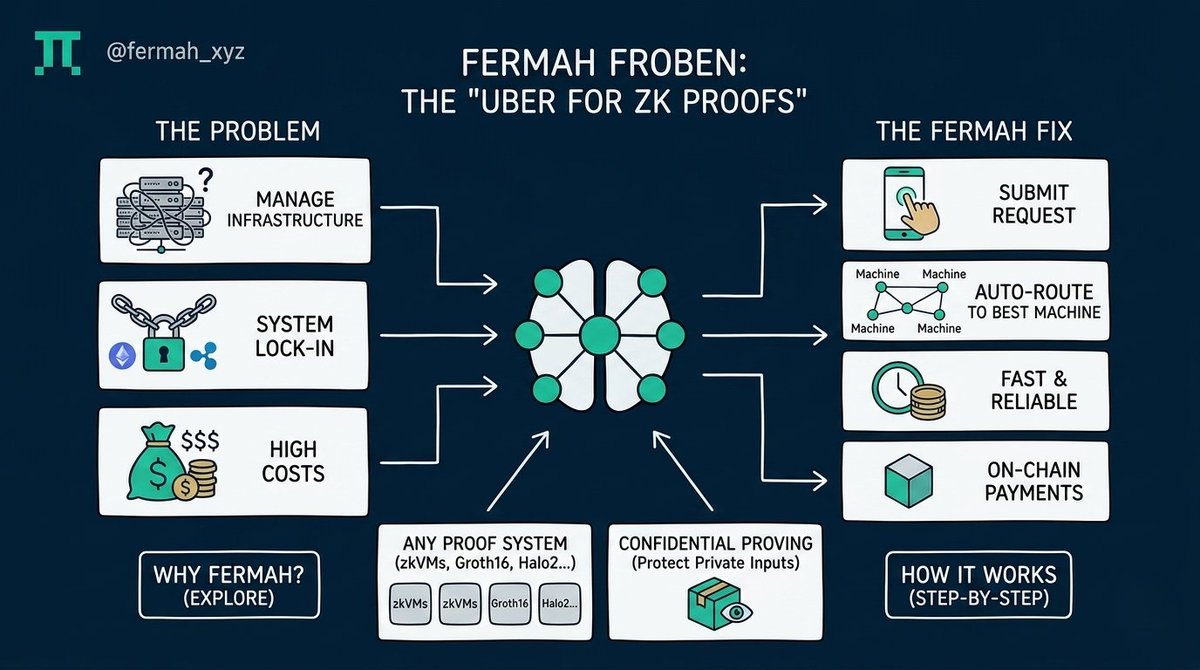
How does @fermah_xyz Froben actually work for ZK proving and why is it different from everything else out there?
Most ZK proving solutions lock you into one system, make you manage your own hardware, and get expensive fast. Fermah Froben takes a completely different approach.
Think of it as Uber for ZK proofs. You need a proof generated, Fermah finds the best available machine to do it, handles everything in between, and delivers it back to you. No servers to manage, no vendor lock-in.
Here is how it works step by step:
- You submit a proof request through the SDK, API or smart contract as a Seeker
- Fermah's Matchmaker analyzes your request and routes it to the best available Operator based on hardware capability, price, speed and location
- The Operator runs the proof on their GPU, FPGA or CPU machine
- The proof gets verified and delivered back to you automatically
- Payments and incentives are all handled on-chain with no manual work needed
And if a machine fails or times out mid-way, the system automatically retries on another operator without you ever noticing.
What makes Froben genuinely different:
- Works with any proof system, zkVMs, zkEVMs, Groth16, Halo2, SP1, Binius and more, not locked to one
- Open marketplace where anyone can run hardware as an Operator
- Confidential Proving Delegation lets you generate proofs on untrusted machines without exposing your private inputs
- Switch proof systems without changing your integration at all
The numbers speak for themselves. 1.5M proofs delivered, 99.5% success rate, running on 65 machines across 14 independent operators with almost zero human intervention. Already live on mainnet with ZKsync as a real customer.
Other systems make you pick one proving tech and figure out the infrastructure yourself.
Fermah Froben aggregates demand across hundreds of projects so hardware stays busy, costs stay low and you get fast reliable proofs without touching a single server.
11
16
130
I completely agree: the real bottleneck of post-quantum migration isn't cryptography, but the excessive size of signatures. At @ProvidentQuant,
we're solving precisely this with Qrypta: the first native post-quantum ZK verifier for EVM that uses Binius (binary fields). → Verifies ML-DSA-44 signatures on-chain with compact ZK proofs (target ~25-33 KB)
→ Instead of injecting raw 2.4 KB signatures per transaction
→ Direct replacement for Groth16 verifiers. Completely transparent, no trust configuration, 100% post-quantum. We'd love to share our progress and explore how this can help the BNB Chain PQ roadmap. We'd be happy to conduct a proof of concept together. #PostQuantum #BNBChain
4
8
216

May 17
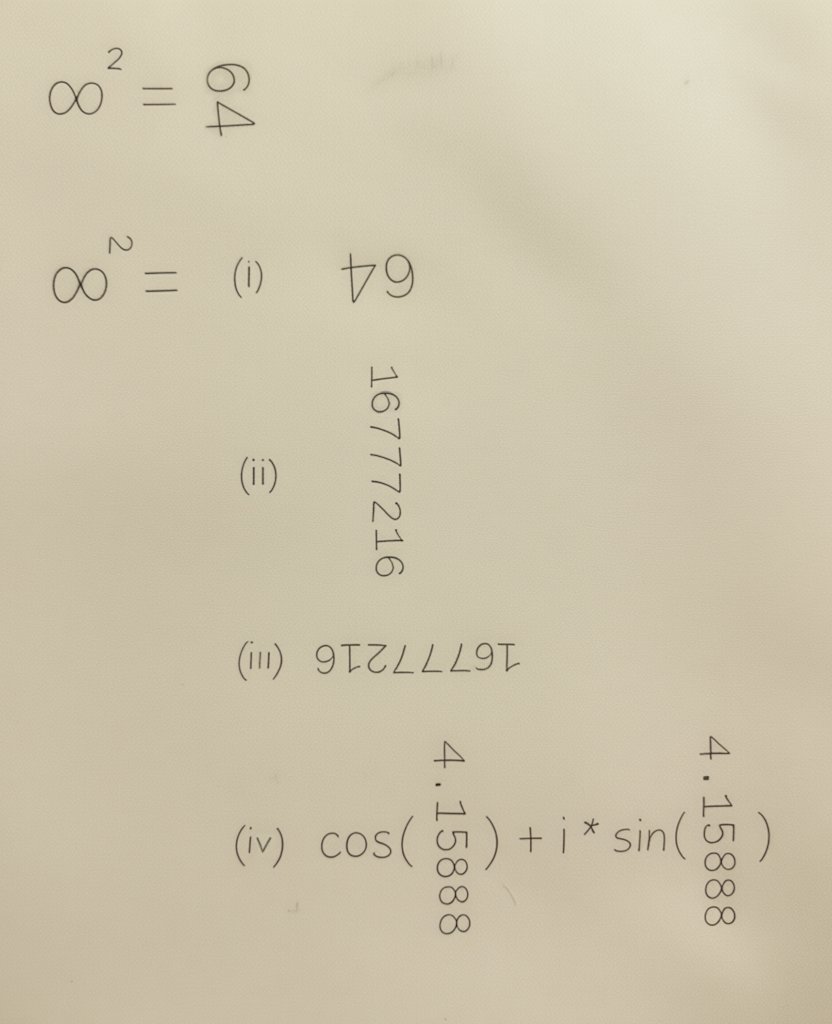
In Binius (and modern ZK tech), 64-bit fields and optimizations around powers of 2 (like 2^6 = 64) are very important. It’s a clever mix of:Visual math meme
Binius shoutout
Callback to his 64 ETH donation
1
12
433
May 17
Not a coincidence at all Vitalik just donated 64 ETH to the Animal Welfare Fund a few days ago, and then posted this ∞² = 64 puzzle right after.The number 64 is a subtle nod to Binius — his favorite new zero-knowledge proof system.
May 17

7
14
35
6,254

May 15
Developers shouldn't be forced into one proving system.
Halo2. SP1. Binius. Groth16. zkVM.
Fermah Froben lets you choose the right tool for your project not the one imposed by a marketplace.
No lock-in. No middlemen. Just the best fit for your stack.
#Fermah #NFA
@fermah_xyz

1
7
40

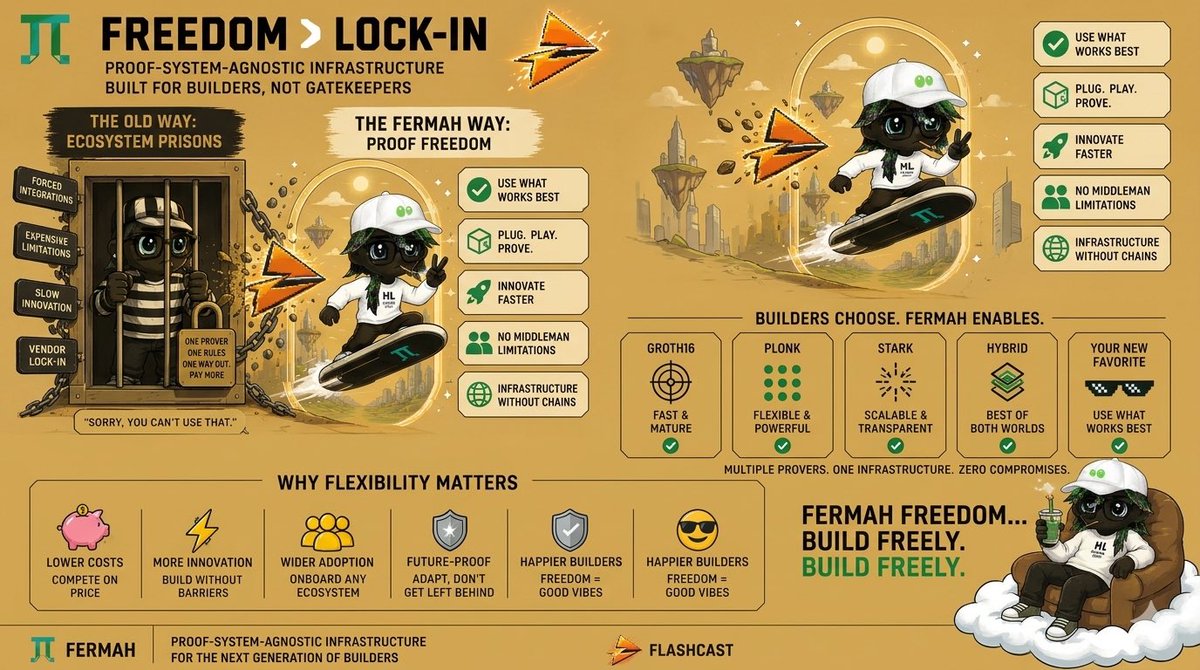
Ever felt trapped choosing the wrong tech stack
only to realize later you’re locked in and can’t leave?
What if you could build with total freedom?
That’s the power of Fermah’s proof system-agnostic infrastructure.
Let me show you how —>
Most ZK proof tools force you to pick one specific system (like Groth16 or a certain zkVM).
Even if you change your mind later, nothing changes
You’re stuck rewriting code, rebuilding integrations, and dealing with ecosystem lock-ins which is rigid and risky.
Here is how Fermah Forben solves it —>
• It works with ANY proof system, Groth16, zkEVMs, zkVMs, Halo2, SP1, Binius… you name it.
• It Switch or mix systems whenever you want, without changing your integration.
• No need for forced vendor lock-in or rewriting circuits as your project evolves.
• Builders focus on what’s best for their app, not what their infrastructure allows.
• It Stars with one proof system then evolve to a better one zero
Fermah gives you freedom from rigid systems so you can build boldly, iterate fast, and stay future-proof.
The next wave of private, scalable, and autonomous crypto apps needs this kind of open infrastructure.
39
7
93
719

May 14
Crypto evolves fast, today it's Halo2, tomorrow it's SP1 or Binius.
Fermah is proof-system agnostic.
Developers don't get vendor-locked. They can switch proving systems without rebuilding their entire backend.
1
3
44

May 14
Fermah is making the status quo obsolete.🔥
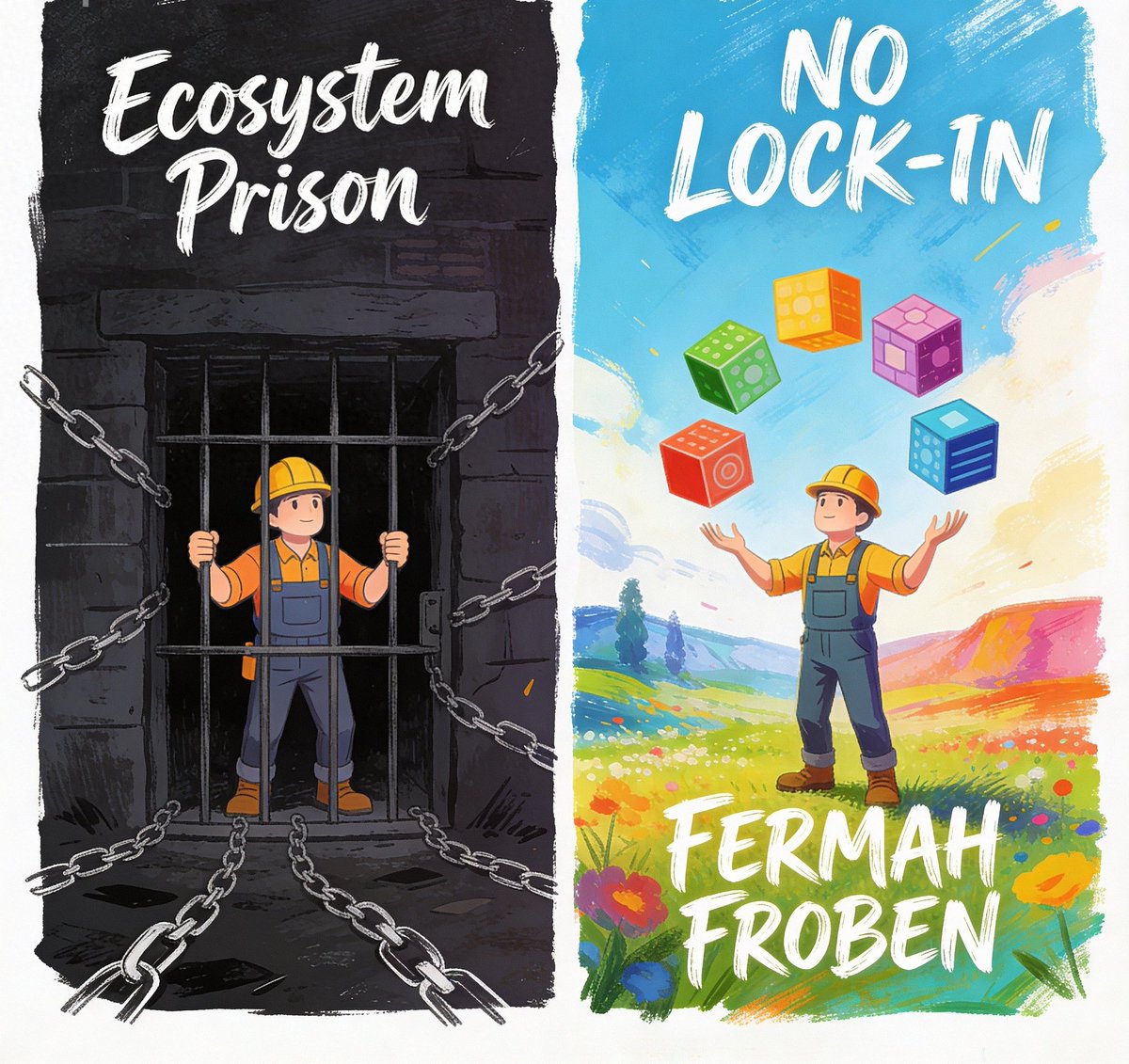
For a long time, ZK builders suffered major problems.
Paying a price.
Not in money. In architecture.
Every project was tied to a single proving system and changing it meant rewriting everything from scratch.
And although many people often believe the problem is the cryptography, it isn't, it's clearly the layer underneath:
The hardware, the integration.
Therefore, if the developer's proving pipeline was soldered to a single VM, they had no technical freedom.
But in 2026, after years of having a problem no one dared to solve, @fermah_xyz Kernel fixed it from the root with an autonomous engine that executes, verifies and persists without human intervention.
No middlemen.
No trust required.
No dependency on a team.
Verifiable by design. Unstoppable by architecture.
In summary, Fermah Froben is the layer where you choose your proving system as a tool, not as an identity.
Halo2.
SP1.
Binius.
The developer no longer depends on what someone chose for them a long time ago.
What changed?
Before: the ecosystem dictated the developer's stack.
Now: the developer's technical problem dictates the system.
16
6
37
1,520

May 14
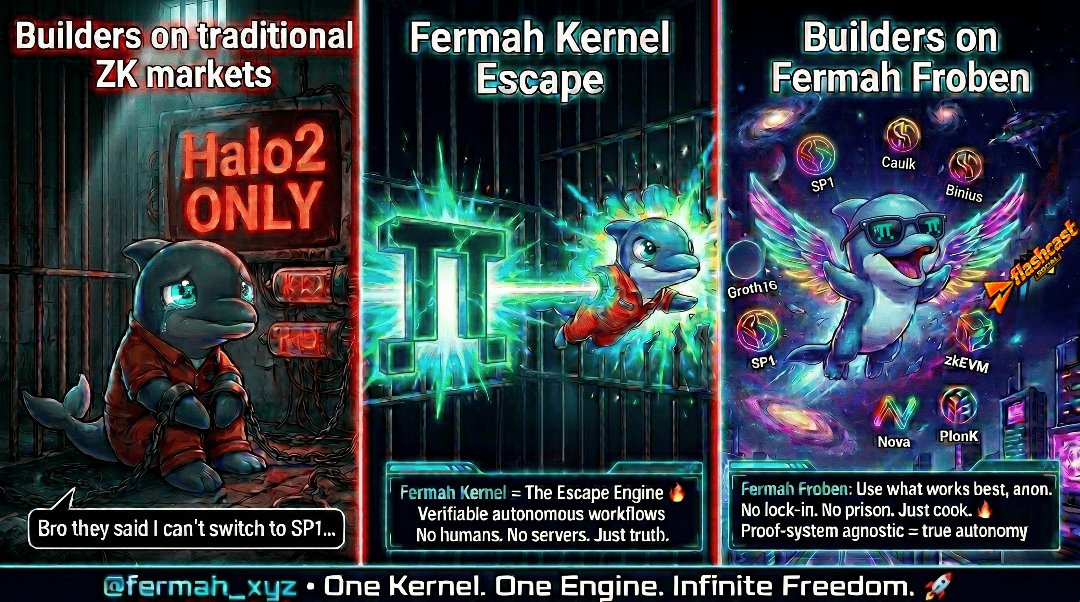
Builders, you've been locked in ZK prison long enough.
Chained to one proving system, begging “I just wanted to use SP1, bro…”
Fermah Kernel smashes the bars. The unstoppable autonomous engine. Verifiable. Persistent. Zero humans. Zero trust.
Now you fly with Fermah Froben. Choose Halo2, SP1, Binius. Whatever the fuck actually works.
No more lock-in. No more middlemen. No more ecosystem cages.
This is proof-system freedom. This is real autonomy.
One Kernel. Infinite power.
The old rules are dead.
@fermah_xyz
46
1
72
3,523