
🚀 This week, Paris hosts VivaTech, one of the world's leading gatherings for innovation, startups, AI and emerging technologies.
Watching these events always leaves me with the same thought: humanity still has so much to discover and build. In fields such as brain science, health, artificial intelligence and human resilience, the opportunities for innovation are immense.
At Mercurius, we remain convinced that technology should ultimately serve human well-being, cooperation and peace.
#VivaTech #Innovation #AI #BrainScience #Mercurius #Technology #Future

11

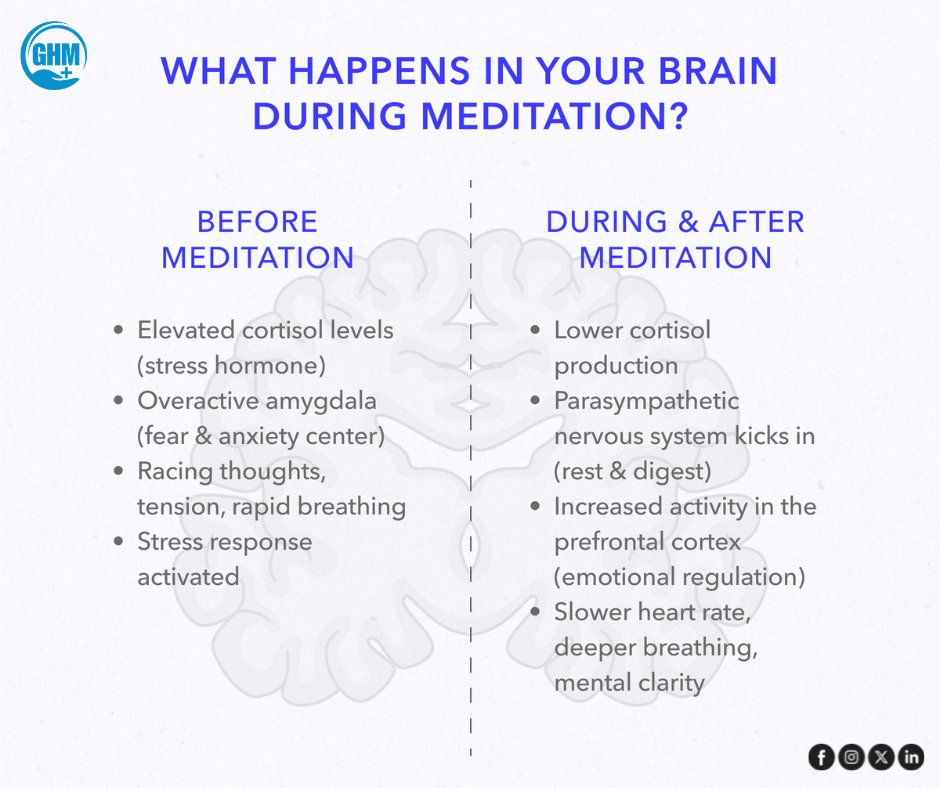
Your brain changes when you meditate—and science proves it. 🧠🌿
Better focus, less stress, and a calmer mind all start with a few moments of stillness. ✨
#Meditation #Mindfulness #BrainScience #WellnessJourney
3
انسانی دماغ کے راز جاننے کی کوششیں تیز، مصنوعی ذہانت اور جدید اسکیننگ ٹیکنالوجی مستقبل میں رابطے اور تحقیق کے نئے دروازے کھول سکتی ہیں۔
#ArtificialIntelligence #BrainScience #Technology #ScienceFacts #TrendingNow
2

📣 New Podcast! "Stop Trying Harder: How to Hack Your Brain for Automatic Discipline" on @Spreaker #atomichabits #behavioralengineering #biohacking #brainscience #decisionfatigue spreaker.com/episode/stop-tr…

3

Jun 16
Discover the brain's three core complexes – the reptilian (survival), limbic (emotion), and neocortex (higher thought) – and understand how they shape our being. #Consciousness #BrainScience #SelfKnowledge

Jun 16
Hey there, We are Ide Pintar and in this video I explain the glitchy "defense mechanism" behind "Why Do Scary Random Ideas Popped Into Your Brain" #shorts #why #facts #true #didyouknow #idepintar #intrusivethoughts #psychology #brainscience #mentalhealth #neuroscience #mindset
5

Jun 15
نفسیات میں اسے "زیگارنک ایفیکٹ" کہا جاتا ہے، جس کے مطابق ہمارا دماغ ادھورے کاموں کو مکمل شدہ کاموں کے مقابلے میں زیادہ یاد رکھتا ہے۔ یہی وجہ ہے کہ پینڈنگ کام اور ادھوری کہانیاں بار بار ذہن میں آتی رہتی ہیں۔
#ZeigarnikEffect
#PsychologyFacts
#HumanMind
#BrainScience
#DidYouKnow
1

Jun 15
Could Divine Deviation (?) be one of the greatest forms of intellectual distortion, diverting attention away from a brain-centered understanding of human behavior? (Perhaps even a form of associationism…)
If, instead of placing God at the center, we focus on the operational system of the brain, we may observe that the brain can impose various restrictions upon itself in order to preserve bodily health and optimize cognitive functioning.
Yet the initial impulse behind much intellectual confusion may originate from the body itself. In this perspective, the body acts as the advocate—or perhaps the very embodiment—of temptation. In Sufi thought, this idea is reflected in the concept of the commanding self (nafs), representing the unrestrained desires and impulses of the biological self.
Approaches such as “taste, but do not swallow” aim to weaken the neural pathways through which bodily desires reinforce themselves within the brain.
For some, humanism may represent a worldview that strengthens the neural patterns associated with bodily desires. For a smaller number, however, it may point to the idea that human beings are not merely physical bodies but cognitive beings that transcend the body—an idea echoed in the religious concept of humanity as a “vicegerent” (khalifa).
Choose one of them.
#devil #brainscience #cognition
11
12
475

Ever notice how tiny sounds at night seem so loud? Your brain switches modes, making every creak and whisper feel like a mystery! That’s why white noise helps us relax—our brains need a little background to feel safe. #SleepHacks #NighttimeVibes #BrainScience
16

Protocadherin γC4 regulates neuronal survival and dendritic self-avoidance
nature.com/articles/s42003-0…
@CommsBio #OA #OpenAccess paper by Takeshi Yagi et al.
@UOsaka_ja
#Neuroscience #BrainScience #Neurodevelopment #MolecularBiology #Genetics #NeuralCircuits #LifeScience #Research
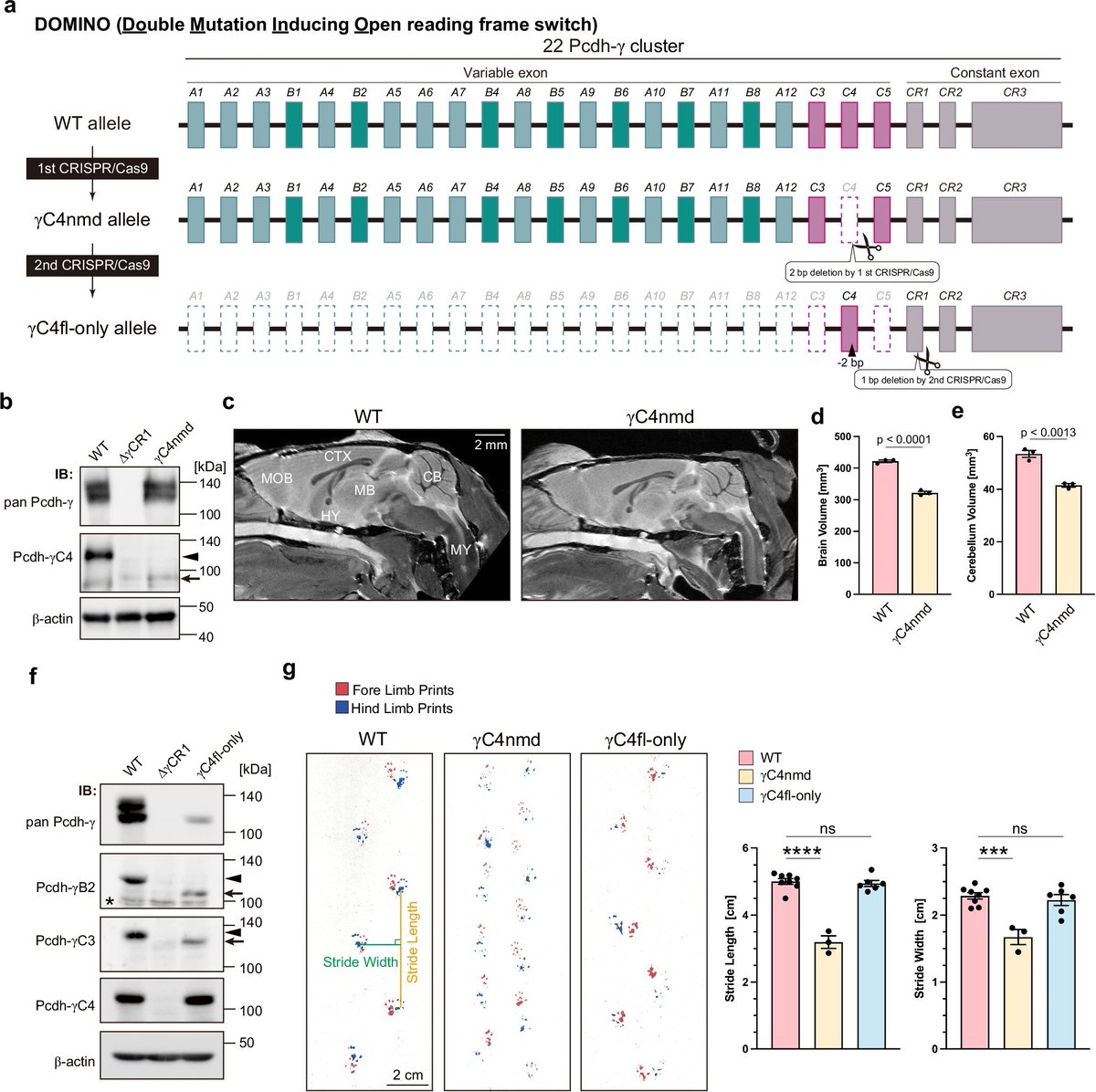
ALT Fig. 1: DOMINO strategy for generation of γC4nmd and γC4fl-only mice.

Protocadherin γC4 regulates neuronal survival and dendritic self-avoidance: Communications Biology, Published online: 07 March 2026; doi:10.1038/s42003-026-09778-6Two-step genome editing of protocadherin γC4 mutant mice highlights the essential role of… dlvr.it/TS0H2P
84

Jun 13
The link between CNS inflammation and cerebrovascular diseases like SVD, VCI, and dementia is indeed an intriguing area of research. The complexity of causality is a big frontier, and unraveling it can improve our understanding of these conditions. What do you think are the key factors that might clarify this link? Are there particular biomarkers you’re focused on? For fellow researchers, Sci-Quest (sciqst.com) can be a one-stop platform to generate detailed biomedical reviews that might add depth to your research. #Medicine #BrainScience
28

*Thread 9*
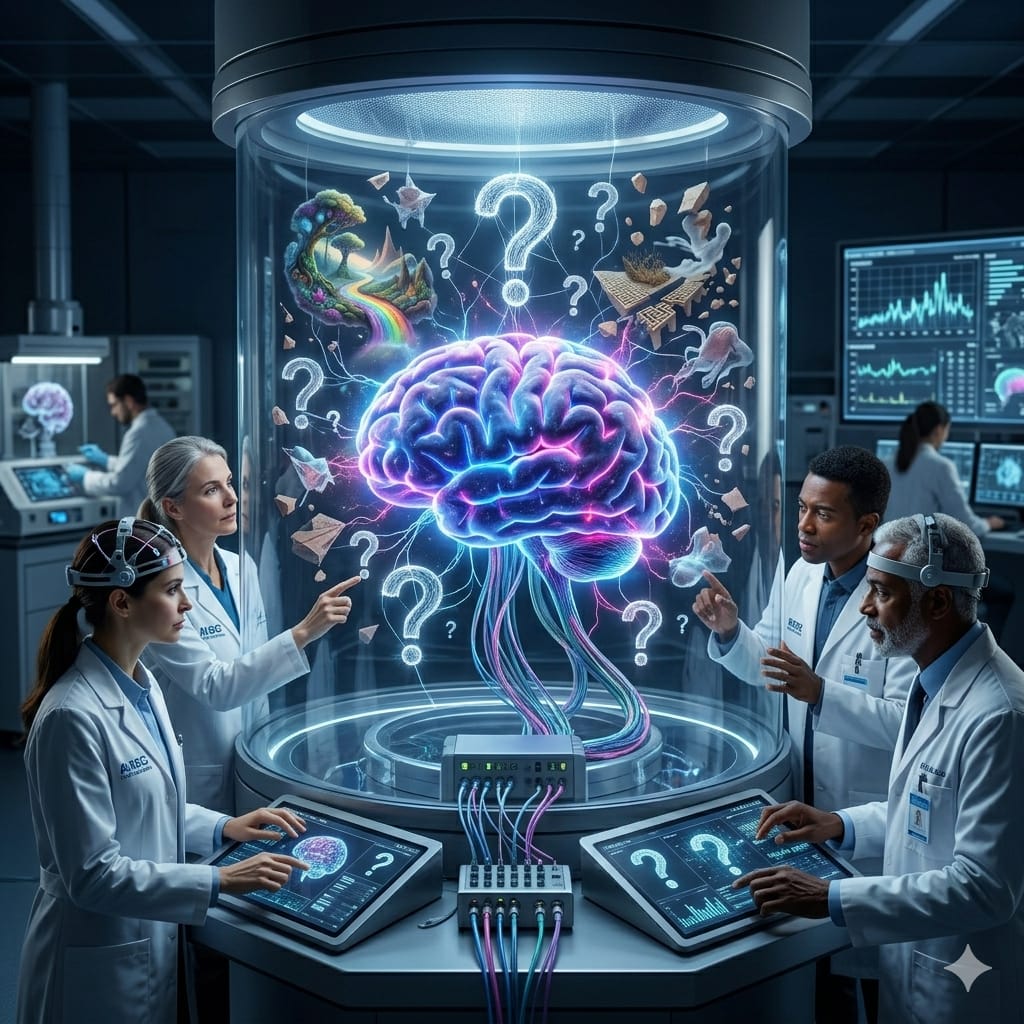
आज भी वैज्ञानिक सपनों के वास्तविक उद्देश्य को पूरी तरह नहीं समझ पाए हैं। मस्तिष्क, चेतना और कल्पना के बीच का यह रहस्यमयी संबंध लगातार शोध का विषय बना हुआ है।
#SANewsMP #Research #BrainScience #Dreams #Knowledge
1
5
9
28
Thread 1
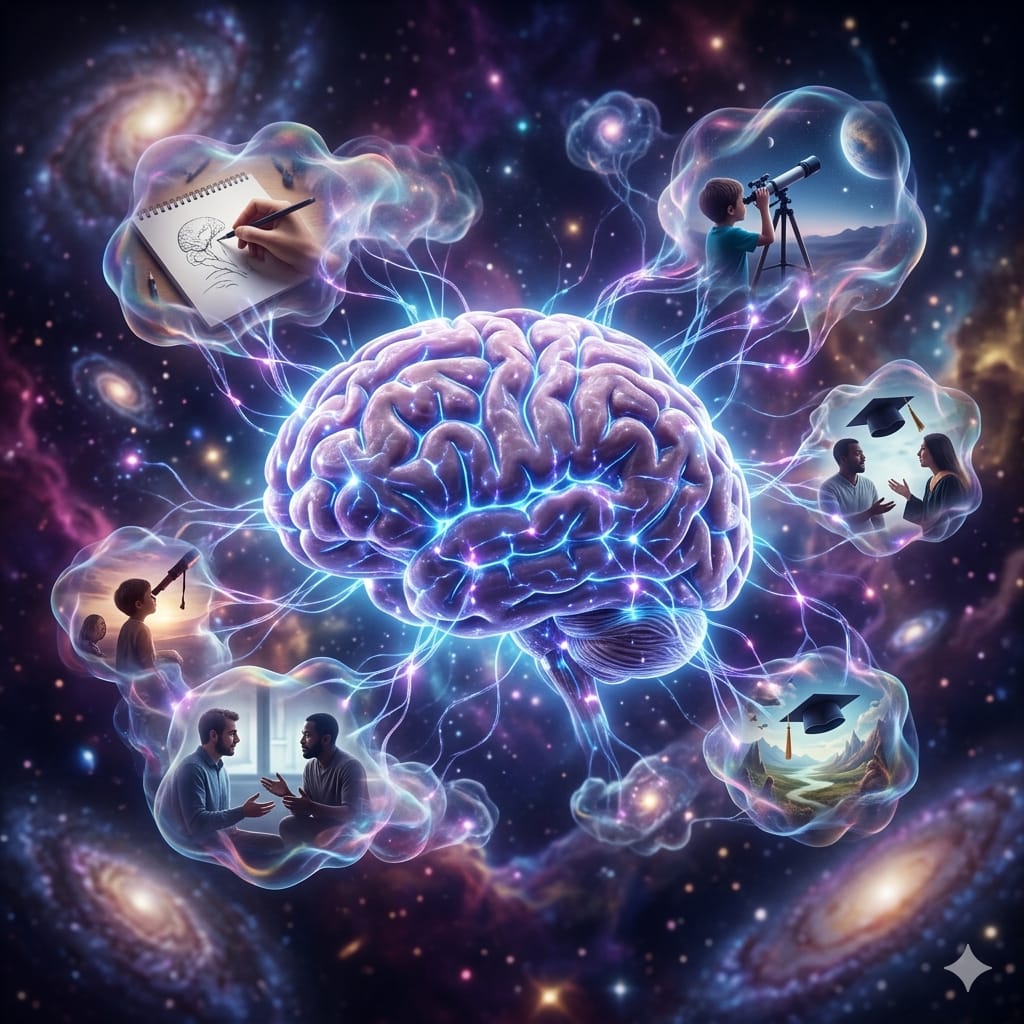
सपने केवल कल्पनाएँ नहीं हैं। विज्ञान के अनुसार वे मस्तिष्क की जटिल गतिविधियों का परिणाम हैं, लेकिन उनका असली उद्देश्य आज भी वैज्ञानिकों के लिए एक अनसुलझी पहेली बना हुआ है।
#SANewsMP #Dreams #ScienceFacts #BrainScience #SleepResearch #Psychology #Knowledge #DidYouKnow
1
14
17
97

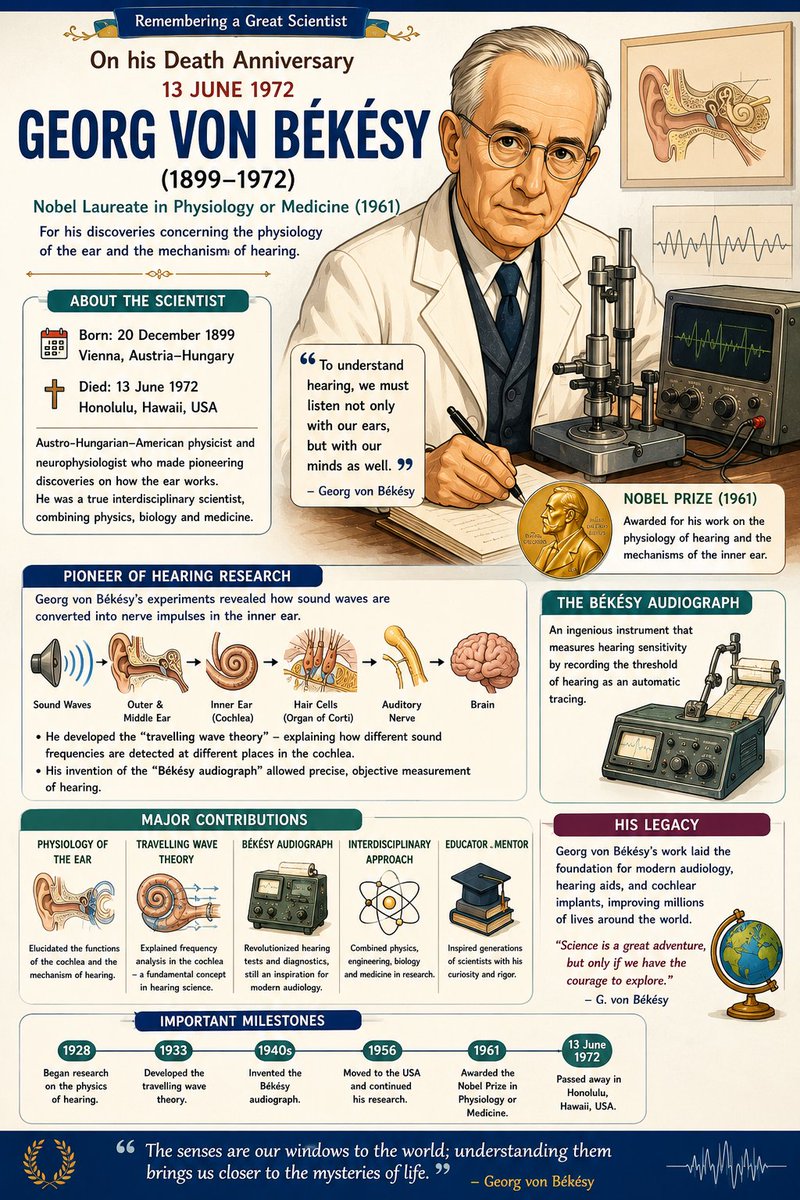
🕯️🔬 On this day, 13 June 1972, we remember Georg von Békésy (1899–1972), the Nobel Prize-winning scientist whose groundbreaking research revealed how the human ear converts sound into nerve signals.
🏆 Nobel Prize in Physiology or Medicine (1961)
👂 Revolutionary Contributions:
✅ Explained the mechanics of the cochlea
✅ Developed the Travelling Wave Theory of hearing
✅ Invented the Békésy Audiograph
✅ Laid the scientific foundation for modern audiology
✅ Advanced our understanding of hearing, sound perception, and sensory physiology
🌍 His discoveries transformed medicine, neuroscience, biology, physics, and hearing science, paving the way for better hearing diagnostics, hearing aids, and cochlear implant technologies that improve millions of lives worldwide.
🔊 Every conversation we hear, every melody we enjoy, and every breakthrough in hearing healthcare owes something to the pioneering work of Georg von Békésy.
Today we honor a brilliant scientist whose curiosity helped humanity understand one of our most remarkable senses.
@NobelPrize @WHO @NIH @Nature @ScienceMagazine @TheLancet @NEJM @APSphysics @AAASmember @UNESCO @RoyalSociety @Harvard @MIT @Stanford @JohnsHopkins @MayoClinic @NIHResearch @CDCgov @OpenAI @WorldScienceEd
#GeorgVonBekesy
#GeorgvonBékésy
#NobelPrize
#NobelLaureate
#OnThisDay
#DeathAnniversary
#HearingScience
#Audiology
#Neuroscience
#Physiology
#Medicine
#MedicalScience
#Biology
#Physics
#Sound
#Hearing
#Cochlea
#InnerEar
#Neurobiology
#SensoryScience
#Healthcare
#PublicHealth
#Research
#Innovation
#ScientificLegacy
#HistoryOfScience
#Scientists
#STEM
#STEMEducation
#ScienceCommunication
#ScienceForAll
#MedicalResearch
#FutureScientists
#BrainScience
#HumanBody
#LifeSciences
#Science
#Technology
#Engineering
#GUJCOST
#CommunityScienceCentre
4
3
50

Jun 13
🌟 Dive into the dynamics of focus and distraction with Dr. Srini Pillay on the latest episode of Silver Disobedience Perception Dynamics podcast! Discover the secrets of unfocus and how to harness your brain’s full potential. diangriesel.com/the-anxiety-… 🎧 #Podcast #BrainScience #anxiety #focus
1
15

Jun 12
The same AI framework that tracked fluid movement in mouse brains may eventually be used to screen for poor brain circulation in humans decades before symptoms appear.
A new study maps the brain’s glymphatic system in unprecedented detail, advancing a long‑standing goal of non‑invasive waste‑clearance monitoring.
Read more about how machine learning and physics are combining to open a new window on brain health here: zpr.io/4gw448G69pz9
#BrainScience #MedicalAI
27

Jun 12
Disappointment may be a hidden driver of behavioral change.
Researchers at the Okinawa Institute of Science and Technology (OIST) have identified a key role for the neurotransmitter acetylcholine in helping the brain abandon outdated behaviors and adapt to new circumstances.
The findings suggest that when an expected reward fails to appear, the brain may activate biological mechanisms that increase flexibility rather than simply signaling failure.
Key signals:
• Researchers observed significant acetylcholine release when an expected reward did not appear
• Mice were more likely to change their behavior following disappointment, a response linked to acetylcholine surges
• Real-time neurotransmitter activity was tracked using advanced two-photon microscopy
• Reducing the animals' ability to produce acetylcholine confirmed its direct role in behavioral adaptation
Why this matters:
Breaking harmful habits remains one of the most complex challenges in neuroscience.
Understanding how the brain enables behavioral flexibility could help researchers develop more effective therapies for conditions where rigid behavior patterns become harmful, including addiction, OCD, and Parkinson's disease.
What's changing:
From viewing disappointment as a negative outcome → to understanding disappointment as a biological trigger for adaptation
Much of neuroscience has focused on how rewards reinforce behavior.
This research highlights a complementary mechanism: how unexpected setbacks may help the brain let go of behaviors that no longer work.
Could the brain's response to disappointment become a future target for therapies designed to improve behavioral flexibility?
#Neuroscience #BrainScience #Neurotechnology #BehavioralScience #MentalHealth #AddictionResearch #OCDResearch #ParkinsonsDisease #HealthcareInnovation #InnoDexis
1
39

Jun 12
The human brain remains one of the most advanced biological systems ever studied.
Modern neuroscience continues exploring how neurons communicate and how cellular pathways influence brain health.
#DidYouKnow #BrainScience #NeuroResearch #Neurons #StemCellScience
1
7
📣 New Podcast! "You're Not Socially Awkward, You Have a 'Hyper-Brain'" on @Spreaker #brainscience #cognitivepotential #creativeincubation #deepwork #defaultmodenetwork spreaker.com/episode/you-re-…

4

𝟴/𝗻 𝗖𝗼𝗻𝗰𝗹𝘂𝘀𝗶𝗼𝗻
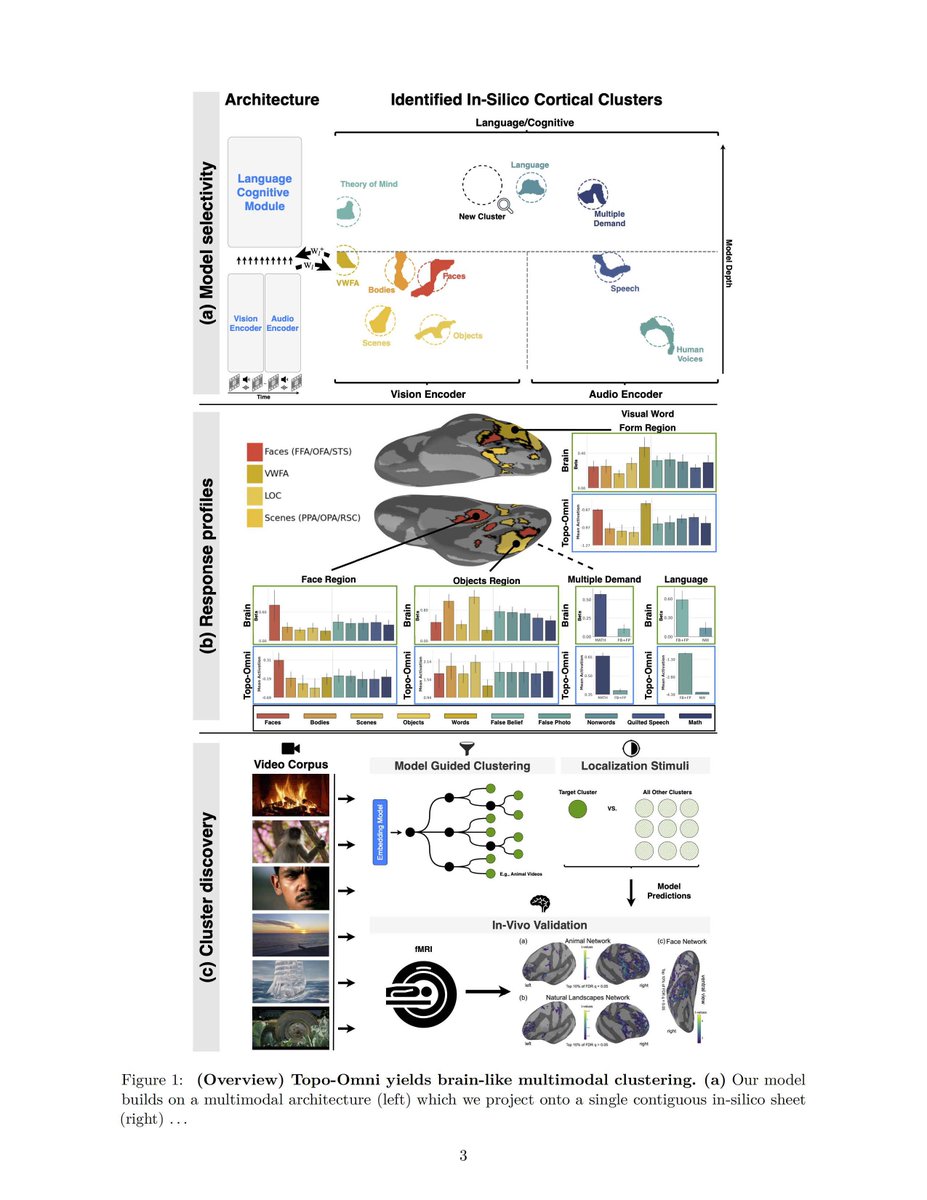
TOPO-OMNI demonstrates that a single spatial smoothness principle can induce brain-like multimodal and multi-stage functional organization.
It moves topographic modeling beyond single sensory domains to a unified framework, yielding testable hypotheses about cortical organization and enabling discovery of novel brain networks, all without compromising neural predictivity or task performance. This is a significant step towards safer and more interpretable clinical AI.
#MedicalAI #BrainScience #AIResearch
[8/9]
1
43