
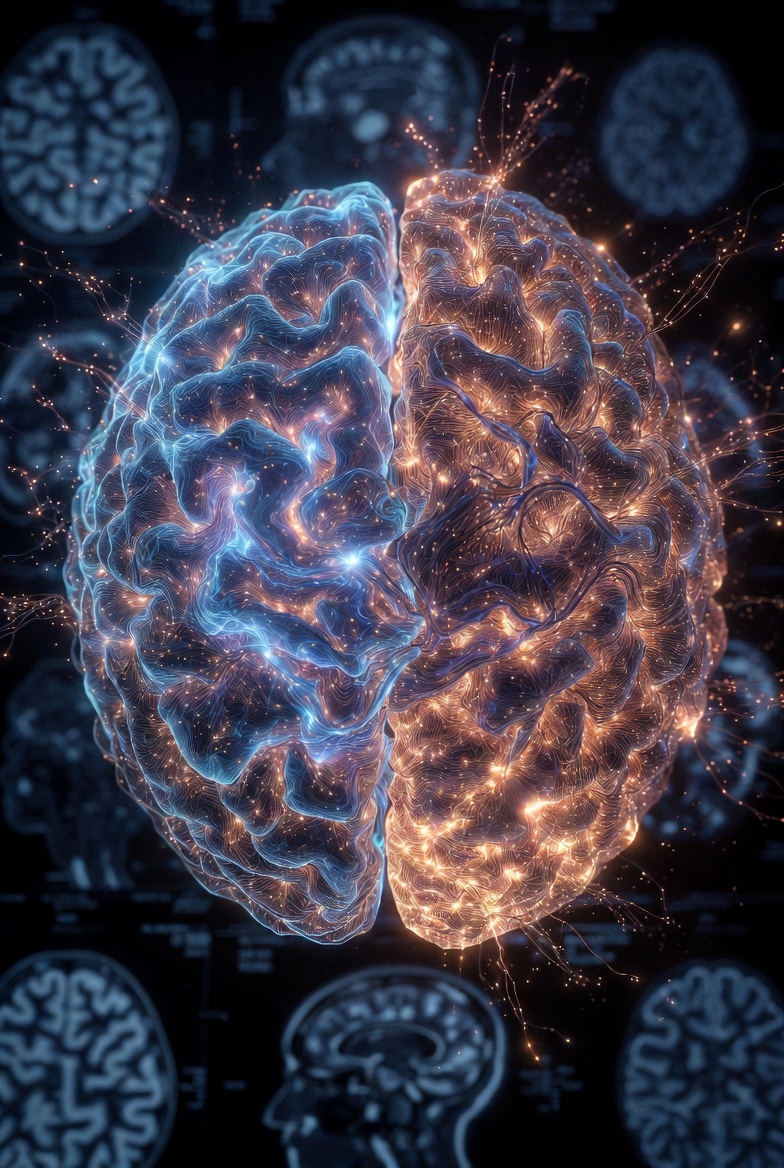
A Mayo Clinic study has documented persistent brain metabolism changes in Long COVID patients with fatigue and post-exertional malaise, visible on PET imaging for up to two years post-infection and absent from the MRI results those same patients are handed as proof they are fine.
Forty Long COVID patients underwent FDG-PET-CT brain imaging; 73% had fatigue with post-exertional malaise (PEM), and this group showed significant cerebral hypometabolism in the left sensorimotor cortex and the primary visual cortex in both hemispheres. Standard MRI scans in these patients typically appear normal, which has long served, implicitly and explicitly, to cast doubt on the severity and reality of Long COVID. The metabolic patterns observed closely parallel those documented in myalgic encephalomyelitis/chronic fatigue syndrome and fibromyalgia, pointing toward shared post-infectious pathology.
Two years and counting:
Earlier research had identified similar hypometabolic patterns within the first six months after infection. This study extended that window considerably: the longest gap between initial infection and imaging was close to three years, with the changes persisting throughout. Long COVID affects an estimated 10% to 48% of people recovering from COVID-19 regardless of initial disease severity, including the majority who were never hospitalized — a population still largely without accessible diagnostic tools.
From image to instrument:
FDG-PET scanning could function as both a diagnostic biomarker and a treatment tracker, giving patients with this routinely dismissed "invisible illness" an objective record of neurological dysfunction. The correlation between brain fog and reduced metabolic activity in the cingulate cortex — a region linked to memory consolidation and executive function — connects imaging findings to the specific cognitive impairments patients have been describing since 2020.
journals.sagepub.com/doi/epu…
21

TDS Should be categorized and designated as a very real malady, a form of cingulate (ridigness) based on possible mind-control/hypnotization by listening to narrow main-stream Media. It even separates family members. I call it SICK.
5


Featured: Drs. Du, Tang et al. found that SCFA-FFAR2 signaling reduces visceral hypersensitivity in both sexes, but only males rely on FFAR2-dependent suppression of IL-17RA signaling in the anterior cingulate cortex
FREE: jpain.org/article/S1526-5900…
54

18h
Great interview by @hubermanlab with Andy Stumpf about «The Mental Frame & Specific Daily Actions to Succeed»
5 key takeaways:
1
The sphere of influence is tiny — usually just yourself and your actions. Mapping concerns versus influence weekly can dramatically reduce wasted mental energy and restore a sense of agency.
2
Consistently choosing the slightly harder option — making the bed, putting dishes away, taking the cold shower — builds the anterior mid-cingulate cortex, the brain's «tenacity structure», which predicts long-term success and healthy aging.
3
High-consequence activities like wingsuit BASE jumping create a mental reset and clarity that can last months, but the same state can be accessed through art, jiu-jitsu, or any practice that forces full presence.
4
Suicide in special operations communities now exceeds combat deaths. Many operators brought unaddressed trauma into service; isolation, alcohol, and the gap between self-image and reality can become lethal when left unspoken.
5
Social media is a uniquely insidious addiction because it operates at low resolution — you remain aware you're wasting time and should stop, yet the platform keeps you scrolling without full absorption or the sobering wake-up of harder drugs.
1
1
67

The mid-cingulate cortex (MCC/aMCC) is a key integrative hub on the medial wall, above the corpus callosum. It monitors conflict/errors, evaluates effort costs vs. rewards for persistence and tenacity, links emotion/motivation/prediction to intentional action and cognitive-motor control, and supports attention, decision-making, and outcome tracking (including social).
It helps bind local preconscious signals into coherent, goal-directed experience—very relevant to the experiential field and ignition you described.
1
1
2
13

Jun 14
2. 🧠 Ventral Striatum
Feeling: Excitement, anticipation
Behavior: Overtrading and chasing trades
3.🧠 Anterior Cingulate Cortex (ACC)
Feeling: Internal conflict and uncertainty
Behavior: Hesitation and second-guessing entries
1
11

Jun 14
“bullet destroyed the part of his brain that caused OCD” That makes it sound like OCD is caused by 1 tiny switch in the brain. It isn’t. OCD is linked to wider brain circuits, inc fronto-striatal circuits, orbitofrontal cortex, anterior cingulate cortex, thalamus & basal ganglia.
10

Jun 14
crossover RCT: Ketamine increased CBF in subgenual, pregenual, and dorsal anterior cingulate cortices, and the effects were not attenuated by naltrexone in patients with MDD psychiatryonline.org/doi/10.…
1
41

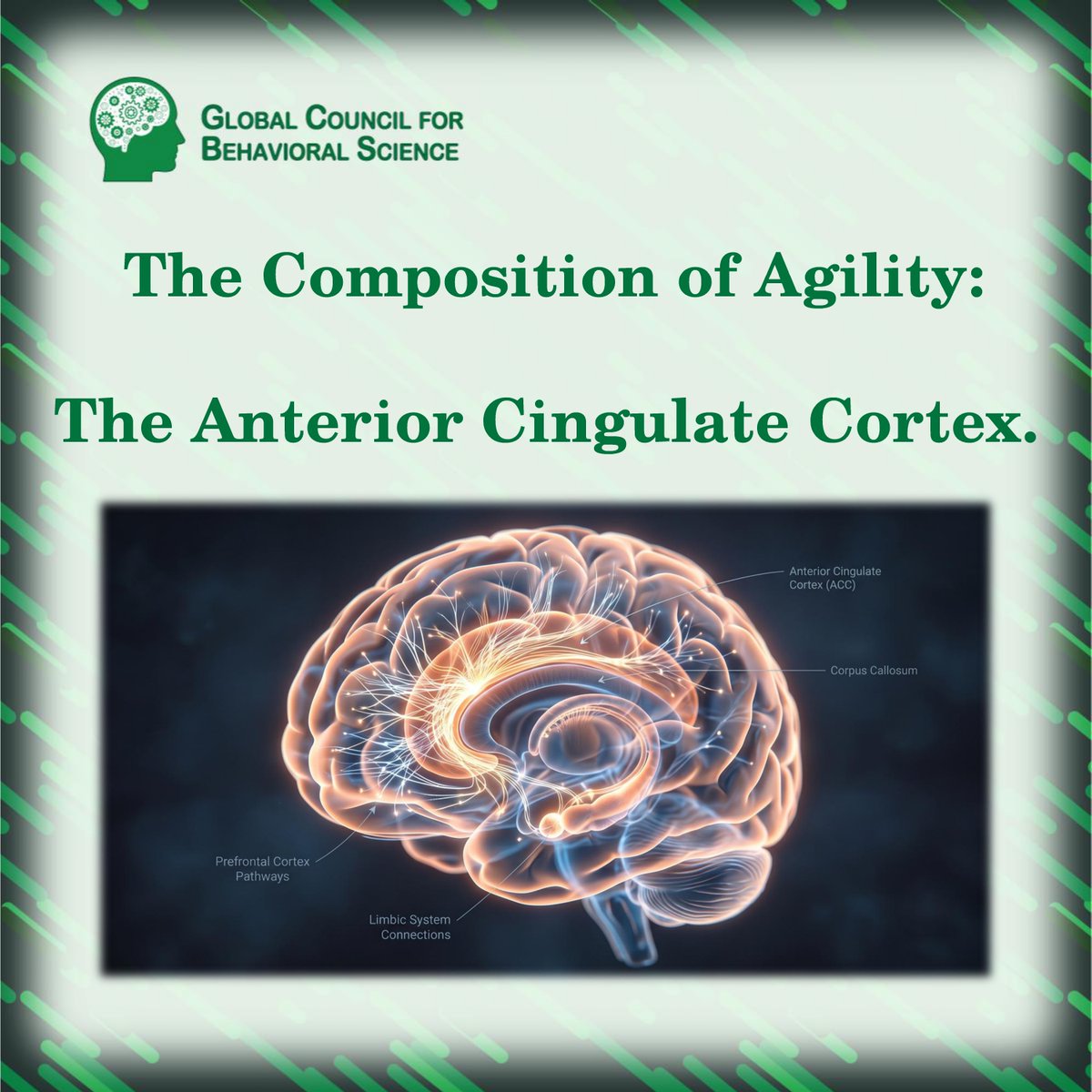
The Composition of Agility: The Anterior Cingulate Cortex.
We anchor Week 2 in the neurology of conflict monitoring and error detection: The Anterior Cingulate Cortex (ACC).
#TheAntifragileArchitect #Neuroscience #AnteriorCingulateCortex #OrganizationalBehavior #DecisionMaking
5

Hirnvolumina sind nichts Festgelegtes und können durch #Psychotherapie verändert werden: "Patients showed a higher activation in the left anterior hippocampus/amygdala, subgenual cingulate, and medial prefrontal cortex before treatment and a reduction in these areas after 15 months." pubmed.ncbi.nlm.nih.gov/2247…
2
2
4
250

ทำๆไปก่อนแล้วแก้ กับ รอให้พร้อมแล้วค่อยทำ
0
Power of intention
สองสัปดาห์ก่อนผมอ่านหนังสือ Intention ของ Chris Bailey จบ ปกติเวลาอ่านหนังสือแบบนี้ผมจะจบด้วยความรู้สึกที่ว่าเห็นด้วยไปเลย หรือไม่ก็คิดต่างไปเลย แต่ตอนที่อ่านเล่มนี้มันเป็นความรู้สึกที่แปลกกว่านั้นครับ
คือถึงแม้ว่าผมจะเห็นด้วยกับแก่นหลักของหนังสือที่ชวนให้เรา “ลงมือทำ” มากกว่าการมัวแต่รอให้ทุกอย่างพร้อม แต่เอาจริงๆ ก็อดตั้งคำถามไม่ได้นะว่า มันเป็นอย่างนั้นทั้งหมดเลยเหรอ? ต้องขนาดนั้นเลยเหรอ? อาจจะเพราะว่าถูกสอนมาว่าไม่มีอะไรซ้ายสุด ไม่มีอะไรซ้ายสุด ดังนั้นเรื่องนี้อาจไม่ได้ง่ายขนาดนั้นก็ได้
ผมมองว่าฮี Bailey คนเขียนน่ะเค้าค่อนข้างจะรักไอเดียของตัวเองที่ว่า “ลงมือทำไปก่อนเลย ทรงพลังมากกว่าการรอความพร้อม” เหลือเกินด้วยนะฮะ (แล้วเอาจริงๆ ก็รู้สึกเหมือนนาไม่ค่อยรับความเห็นต่างเท่าไหร่นะ ในหนังสือเนี่ย)
ทีนี้พอวางหนังสือ แล้วมองโลกนอกหนังสือกันบ้าง ผมว่าเราก็มักได้ยินคำแนะนำว่า “อย่ารอให้พร้อม” บ่อยๆเหมือนกัน แบบถ้าอยากเขียนหนังสือก็เริ่มเขียนเลย อยากออกกำลังกายก็เริ่มวันนี้ อยากเปลี่ยนอาชีพก็ลงมือเสียเดี๋ยวนี้เลย อย่าคิดเยอะ
ไม่ได้ขัดนะ ที่จริงก็แอบเห็นด้วยกับแนวคิด just do it เหมือนกัน แพทว่าคำแนะนำเหล่านี้ฟังดูดี และในหลายกรณีก็ใช้ได้ผลจริง แต่ถ้าการลงมือทำก่อนคือคำตอบทั้งหมดจริงๆ แล้วทำไมสมองมนุษย์จึงวิวัฒนาการระบบอันซับซ้อนขึ้นมาสำหรับการวางแผน การคาดการณ์อนาคต และการเตรียมพร้อมก่อนลงมือทำด้วยอ่ะ?
ถ้า everything can be just do it
เราจะมีจะมี planning mode ในสมองเพื่อ?
หากการคิดล่วงหน้าไม่มีประโยชน์
งั้นเราก็คงไม่ต้องมี prefrontal cortex (PFC) ที่ใหญ่โตขนาดนี้แล้วดิ?
แพทอ่าน Sapiens ดอกเตอร์ยูวัลนางก็บอกว่า เมื่อก่อนอาจจะมีมนุษย์ถึง 6 สายพันธ์ ไม่ได้มีแค่โฮโมเซเปียนส์แบบพวกเราๆเท่านั้น แต่การที่เซเปียนส์แบบพวกเราได้รับการเลือกสรรพันธุกรรมก็เพราะเรามี PFC นี่แหละ และPFC มันก็คือการวางแผน การคิดล่วงหน้านี่นา
อ้าว ...
แพทว่า มันคงไม่ใช่การตั้งคำถามว่าว่า “ควรลงมือทำก่อน” หรือ “ควรรอให้พร้อมก่อน” แต่อาจเป็นการที่เราควรเข้าใจว่า สมองของมนุษย์ออกแบบมาให้ใช้ทั้งสองอย่าง “ร่วมกัน” ต่างหาก
…
1
มนุษย์คือสัตว์ที่ใช้ชีวิตอยู่ในอนาคต
สิ่งหนึ่งที่ทำให้มนุษย์แตกต่างจากสัตว์ชนิดอื่น นั่นอาจไม่ใช่สติปัญญา (เพราะมีคนบอกว่าปลาโลมาก็ฉลาด และอาจจะฉลาดกว่ามนุษย์ด้วย) แต่เป็นความสามารถในการที่สมองเรา “จำลองอนาคต” ได้ครับ
ในช่วงยี่สิบปีที่ผ่านมา งานวิจัยด้าน cognitive neuroscience เริ่มชี้ให้เห็นว่า สมองไม่ได้ใช้ความทรงจำเพียงเพื่อเก็บอดีตเท่านั้น แต่ใช้มันเพื่อสร้างอนาคตด้วย
เครือข่าย Default Mode Network หรือ DMN ซึ่งประกอบด้วย medial prefrontal cortex, posterior cingulate cortex ที่ทำงานร่วมกับสมองส่วนความทรงจำ hippocampus เป็นวงจรที่ จะทำงานขึ้นเมื่อเราปล่อยใจให้ล่องลอย คิดถึงตัวเอง นึกถึงอดีต หรือจินตนาการถึงอนาคต
งานวิจัยของแกงค์คุณ Daniel Schacter (เคยยกงานวิจัยนี้มาเล่าหลายครั้งแล้ว) แสดงให้เห็นว่า เมื่ออาสาสมัครถูกขอให้จินตนาการเหตุการณ์ในอนาคต สมองกลับใช้เครือข่ายเดียวกับที่ใช้ในการรื้อฟื้นความทรงจำในอดีต กล่าวอีกอย่างคือ สมองกำลังนำเศษเสี้ยวของอดีตมาประกอบเป็นภาพจำลองของอนาคตอยู่ตลอดเวลา
นั่นหมายความว่า การรอให้พร้อมไม่ใช่พฤติกรรมที่ไร้เหตุผล แล้วก็เป็นคนละส่วนกับพฤติกรรมผัดวันประกันพรุ่งด้วยฮะ ในหลายๆกรณี การรอให้พร้อม มันคือผลลัพธ์ของระบบประสาทที่กำลังทำหน้าที่ตามที่วิวัฒนาการออกแบบให้มันเป็น
สมองกำลังถามว่า
“ถ้าฉันทำสิ่งนี้ จะเกิดอะไรขึ้น?”
“ความเสี่ยงคืออะไร?”
“ฉันขาดข้อมูลอะไรอยู่บ้าง?”
ดังนั้น ปัญหาจึงไม่ใช่การคิดล่วงหน้า
เพราะการคิดล่วงหน้าเป็นเรื่องอัตโนมัติของสมอง (และดีด้วย)
แต่ที่จริง ปัญหาอยู่ที่ การคิดล่วงหน้า จนไม่มีวันลงมือทำต่างหากครับ
…
1
91
149
8,513

Jun 14
“bullet destroyed the part of his brain that caused OCD” That makes it sound like OCD is caused by 1 tiny switch in the brain. It isn’t. OCD is linked to wider brain circuits, inc fronto-striatal circuits, orbitofrontal cortex, anterior cingulate cortex, thalamus & basal ganglia.
1
1,435

Jun 14
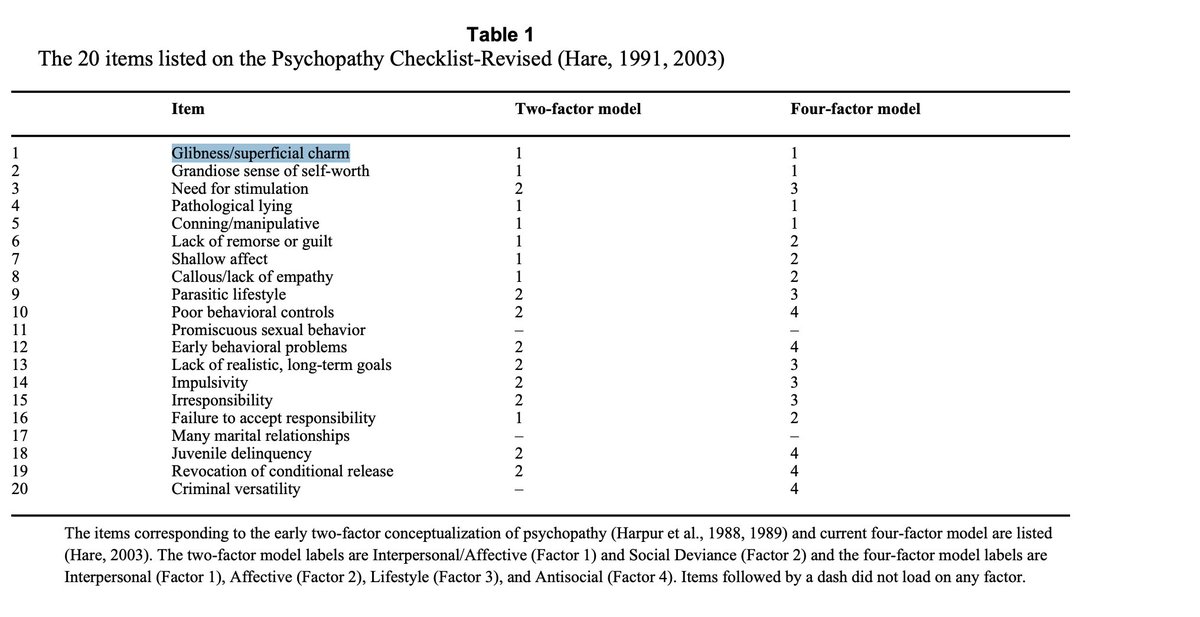
Så intressant att titta på denna video och det klippet från Politikerbyrån och sedan titta på den öppna kommunisten för att se vem hen är neurologiskt.
Jag tror att den första frågan i detta test visar det tydligt, men jag låter alla göra sin egen bedömning så att de förstår vad det är för typ av dysfunktion som kommunismen attraherar.
På frågan om hjärnskada så refererar jag till abstraktet:
"The review illustrates that the brain regions implicated in psychopathy include the orbital frontal cortex, insula, anterior and posterior cingulate, amygdala, parahippocampal gyrus, and anterior superior temporal gyrus. The relevant functional neuroanatomy of psychopathy thus includes limbic and paralimbic structures that may be collectively termed ‘the paralimbic system’. The paralimbic system dysfunction model of psychopathy is discussed as it relates to the extant literature on psychopathy."
Man bör också förstå och känna till Dr. Clive Boddy's forskning på kontorspsykopater och specifikt kvinnliga sådana som går under radarn bland politiker, journalister och chefer. Han visar på ca 19% av kvinnliga chefer som just är kontorspsykopater, dvs. en av fem kvinnliga chefer är en samhällsfarlig psykopat enligt honom.
Han påpekar liksom jag gjort i åratal att det bör bli lag att screena blivande chefer och politiker i en fMRI för att säkerställa att en livsfarlig psykopat inte får den makt hen så suktar efter. Han skrev även boken om finanskrisen och hur det just var primära psykopater, dvs. kontorspsykopater, som skapade finanskrisen då de älskar andras pengar. Lite som en politiker som älskar just dina pengar och tar dem via skatter och kommer undan med det.
Det är tydligt att SVT uppmuntrar dessa neurologiskt skadade individer och ger dem en plattform att verka på och de gör det på din bekostnad.
Min fråga är när svenska folket ska få nog och rösta på ett politiskt parti som inte sitter i riksdagen, oavsett vilket, för att på egen hand utan lag ge politiker en tidsfrist i riksdagen.
pmc.ncbi.nlm.nih.gov/article…
1
1
181

[Style: Sophisticated Educational Prose, Cinematic Dark Atmospheric Narration, Clear Articulate Female Voice, Professional Neuroscientific Tone, Reflective and Precise, 140 BPM spoken delivery]
[Intro]
Analysis of PI3K/AKT signalling pathways.
Raven Midnight V.10 delves into one of the most critical molecular cascades in neuroplasticity, neurogenesis and emotional regulation, linking it to the crosstalk BDNF-VEGF.
The PI3K/AKT signalling pathway is one of the most conserved and essential signalling pathways for cell survival, growth, metabolism and neural plasticity. Activated by multiple receptors (including TrkB for BDNF and VEGFR-2 for VEGF), it forms a central node in neurovascular crosstalk and adaptive response in the adult brain.
[Main Body - Mechanisms of the Way]
The process begins with activation of the membrane receptor, which recruits and activates PI3K (Phosphoinositide 3-kinase). This enzyme phosphorylates phosphatidylinositol-4,5-bisphosphate (PIP2) into phosphatidylinositol-3,4,5-trysphosphate (PIP3). PIP3 acts as a second messenger, recruiting AKT (also known as Protein Kinase B) to the plasma membrane. Here AKT is phosphorylated and fully activated by PDK1 and mTORC2.
Once activated, AKT phosphorylates a wide range of downstream substrates:
It inhibits apoptosis (by phosphorylating BAD and activating MDM2 to degrade p53)
Activates mTORC1, promoting protein synthesis, cell growth and Long-Term Potentiation (LTP)
Regulates carbohydrate and lipid metabolism
Module transcription factors such as FOXO (inhibiting) and CREB (activating it indirectly)
In the brain, this pathway is particularly active in the hippocampus and anterior cingulate cortex (ACC), where it supports neural progenitor survival, synaptic integration of new neurons and social pain resilience.
[Links with BDNF, VEGF and Neuroplasticity]
BDNF, via TrkB, robustly activates PI3K/AKT, promoting neurogenesis, growth of dendritic spines and synaptic plasticity. VEGF, through VEGFR-2, converges on the same pathway, amplifying crosstalk: VEGF stimulates BDNF and vice versa, creating positive feedback that strengthens vascularisation, neuronal survival and emotional regulation. In the ACC, this cascade reduces hypersensitivity to ascending comparison (Festinger), converting potential cycles of envy into adaptive responses of motivation and learning.
[Practical and Pathological Implications]
Dysfunctions in the PI3K/AKT pathway are implicated in depression, anxiety, brain ageing and disorders related to chronic envy (reduced emotional resilience). In contrast, stimuli such as exercise, complex learning and mindfulness powerfully activate this pathway, elevating BDNF and VEGF and promoting neurogenesis and plasticity.
[Final Reflection]
The PI3K/AKT pathway illustrates how extracellular signals (growth factors) translate into profound intracellular changes: survival, growth and adaptation. In the context of emotional regulation, it represents a molecular bridge between external environment, experiences and neural architecture. Through conscious choices that activate it, we can strengthen resilience circuits and transform toxic mechanisms such as envy into opportunities for personal evolution.
[Outro]
This is the analysis of PI3K/AKT signalling pathways and their central role in BDNF-VEGF crosstalk, neuroplasticity and emotional regulation. A powerful mechanism that confirms the brain's ability to respond dynamically to our daily actions.
New lyrics by Raven for @elonmusk Neurolink
1
44

Jun 14
OK, seriously. Well, speculatively on my part, really, as I'm far from educated in these areas and prefer philosophy over neuroscience.
It isn't a single part but rather portions of several brain areas.
Daily social concerns are managed mainly by the brain’s social cognition network: medial prefrontal cortex, temporoparietal junction, superior temporal sulcus, amygdala, insula, and anterior cingulate.
But my reading indicates a "default mode network" in which internal narrative, introspection, memory-based simulation, and self-referential thought occur. that may trigger a crisis.
Day-to-day, we manage our social behavior based on learned norms and mores, laws, and even etiquette.
Most do it on autopilot.
Are existential crises real?
Yes and no.
My observation is that most such "crises" are imagined, exaggerated, and/or self-deceptive for the purpose of an emotional payoff, such as pity.
Then again, I'm not much for empathy.
Do most of the rest of humanity wallow in such disorders and dependent traits, never finding real maturity or answers?
Probably.
6

Jun 13
Envy is a complex emotional response characterized by resentment, discontent, or longing triggered by perceiving that someone else has something you desire—whether it’s a possession, quality, achievement, success, relationship, or advantage.
Core Definition
• Envy focuses on what another person has and the painful feeling that you lack it (or that they don’t deserve it).
• It often includes a mix of admiration, inferiority, and hostility.
• Classic example: Seeing a neighbor with a luxury car and feeling bitter about your own, or resenting a colleague’s promotion while wishing it was yours.
Envy vs. Jealousy
People often confuse the two, but they’re distinct:
• Envy: Two people. “You have something good that I want.” (e.g., “I envy your talent.”)
• Jealousy: Three (or more) people. Fear of losing something you have to a rival. (e.g., “I’m jealous because my partner is flirting with someone else.”)
Psychological and Biological Roots
Envy is deeply human and has evolutionary origins—social comparison helped our ancestors assess status, resources, and mating potential in groups. Modern psychology (drawing from researchers like Richard Smith or studies on social comparison theory) shows:
• It activates brain regions linked to pain and reward (anterior cingulate cortex and ventral striatum).
• It can be benign (motivational: “I want that too, so I’ll work harder”) or malicious (destructive: wishing harm on the other person or undermining them).
• Chronic envy correlates with lower well-being, depression, anxiety, and even physical health issues.
Cultural and Philosophical Views
• In many traditions, envy is seen as one of the seven deadly sins (invidia in Christianity), often depicted as eating away at the envious person.
• Philosophers like Aristotle distinguished it from righteous indignation, while Nietzsche saw it as a driver of “slave morality.”
• Literature and fables (e.g., Aesop’s “The Fox and the Grapes”) frequently portray it as self-defeating—the envious person ends up sour and unfulfilled.
Why It Feels So Bad
Envy signals a perceived gap in self-worth or fairness. At age 73 or any stage of life, it might surface around others’ health, retirement ease, family situations, or achievements. The discomfort often stems less from the other’s good fortune and more from what it highlights about our own unmet desires or regrets.
Managing Envy
• Awareness: Name it without judgment. “I’m feeling envious right now.”
• Reframe: Use it as information—what does this reveal about my values or goals?
• Gratitude practices: Counter it by focusing on your own blessings (strong evidence from positive psychology).
• Self-compassion: Everyone struggles; comparison is the thief of joy.
• Action: Channel it into inspiration rather than resentment—admire and emulate where possible.
Envy is universal, but how we respond to it defines character. A little can push growth; too much poisons happiness. If it’s a recurring issue for you personally, cognitive behavioral techniques or even discussing it with a trusted person can help shift the pattern.
Jun 12

Elon Musk just became the world's first trillionaire.
The typical American household would have to work more than 11 MILLION years to make Elon Musk's level of wealth.
We need a wealth tax.
32

Jun 13
🚨MÜTHİŞ KEŞİF! Gül kokusu gerçekten beyninizi büyütebiliyor mu? Yeni araştırma şok etti!🌹🧠
Bir ay boyunca sürekli gül kokusu solumanın beynin hafıza ve bilgi işleme bölgelerini gerçekten büyüttüğü ortaya çıktı!
Kyoto Üniversitesi ve Tsukuba Üniversitesi’nden Japon araştırmacılar (Keisuke Kokubun ve ekibi), 2024 yılında yayınlanan öncü bir çalışmada bunu kanıtladı.
Yöntem:
✅Toplam 50 sağlıklı kadın katılımcı
✅28 kişi (müdahale grubu): Giysilerine özel gül esansiyel yağı uyguladı (sürekli, düşük seviyeli maruziyet)
✅22 kişi (kontrol grubu): Sadece su uyguladı
✅Süre: Tam 1 ay
✅Ölçüm: MRI taramaları ile beyin gri madde hacmi (gray matter volume - GMV) öncesi ve sonrası karşılaştırıldı
Sonuçlar:
✅Gül kokusu grubunda tüm beyinde gri madde hacminde anlamlı artış görüldü.
✅Özellikle posterior cingulate cortex (PCC) bölgesinde belirgin büyüme tespit edildi. Bu bölge hafıza, bilgi işleme, semantik hafıza ve koku-hafıza ilişkileri ile doğrudan bağlantılı.
✅Amygdala ve orbitofrontal korteks gibi klasik koku bölgelerinde ise anlamlı değişiklik olmadı.
✅Kontrol grubunda böyle bir etki görülmedi.
Bu çalışma, sürekli koku inhalasyonunun (sürekli koklama) insan beyninin yapısını değiştirebildiğini gösteren ilk çalışma olma özelliği taşıyor!
Araştırmacılar, bulguların beyin atrofisini (küçülmesini) önleyebileceğini ve hatta demans (bunama) riskini azaltmada potansiyel taşıdığını vurguluyor. Çünkü PCC bölgesi Alzheimer gibi hastalıklarda erken dönemde etkilenen bölgelerden biri.
Neden Gül Kokusu?
Gül esansiyel yağı, aromaterapide uzun zamandır kullanılan güçlü bir koku. Doğrudan limbik sisteme (duygu ve hafıza merkezi) bağlanan koku yolu sayesinde beyni “eğitiyor” ve nöroplastisiteyi tetikliyor gibi görünüyor. Bu etki, sadece hoş bir koku olmanın ötesinde yapısal bir değişim yaratıyor.
Pratikte Ne Yapabiliriz?
✅Saf gül esansiyel yağını (tercihen %0.5-1 oranında seyreltilmiş) pamuklu giysilere birkaç damla damlatmak
✅Gül yağı içeren parfüm veya roll-on kullanmak
✅Evde diffüzer ile düzenli gül kokusu yaymak
Önemli Uyarı: Esansiyel yağlar konsantre ürünlerdir. Cilt tahrişi, alerji riski olabilir. Hamilelik, emzirme veya kronik hastalık durumunda mutlaka doktora danışın. Kaliteli, saf ürün kullanın.
Bu keşif, aromaterapinin bilimsel temellerini güçlendirirken, basit ve doğal bir yöntemin beyin sağlığı üzerindeki potansiyelini gösteriyor. Gelecekte demans önleme stratejilerinde yer alabilir mi? Bilim insanları bu yönde daha fazla çalışma yapıyor.
Sizce bu tür basit doğal müdahaleler gelecekte beyin sağlığımızı korumada büyük rol oynayacak mı? Gül kokusunu seviyor musunuz, yoksa başka kokular mı favoriniz (lavanta, nane, portakal vs.)? Denemek ister misiniz yoksa şüpheli misiniz?
Yorumlarda düşüncelerinizi paylaşın! Bu haberi duyan herkesin denemesi gereken bir şey gibi duruyor. Beynimize küçük bir hediye verelim mi? 🌹🧠

3
2
15
1,641

Jun 13
🧠 Bilingual brains are built different. 🧠
Speaking more than one language isn't just a "cool party trick". it physically reshapes your brain.
MRI studies show bilingual people often have denser gray matter and stronger connectivity in key areas, especially the inferior parietal lobule, involved in language, attention, and memory, PLUS parts of the prefrontal cortex and anterior cingulate that handle executive control.
Every day, your brain is doing serious work: picking the right language, suppressing the one you don't need, and switching instantly when the situation changes.
Sounds automatic, but that constant mental workout builds cognitive reserve and basically extra brain resilience.
Documented Benefits:
1. Bilinguals tend to show symptoms of dementia about 4 to 5 years later than monolinguals, even when brain pathology looks similar.
It's not that bilingualism prevents Alzheimer's, but the brain can compensate better and keep functioning longer.
2. Improved executive function, better focus, task-switching, and ignoring distractions
3. Stronger problem-solving and metalinguistic awareness.
Daily language juggling gives your brain a unique, built-in workout that pays off for decades.
So what's up? Do you know more than 1 language?
1
20