
Empowering Chemical Structures with Biological Insights for Scalable Phenotypic Virtual Screening
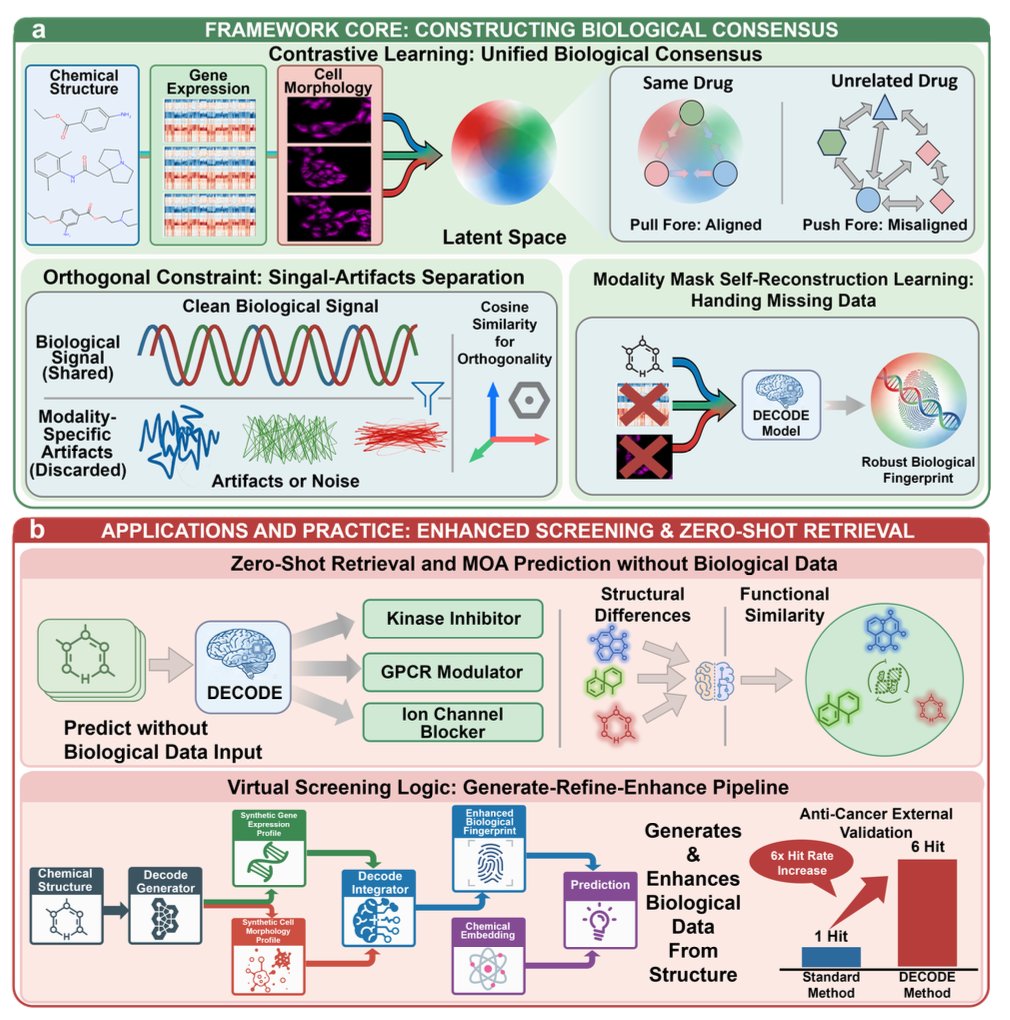
1. DECODE introduces a new paradigm that turns raw SMILES into biologically meaningful fingerprints by learning from paired transcriptomic and morphological profiles during training, yet requiring only chemical structures at inference.
2. The framework treats biological modalities as privileged information: it aligns chemical embeddings with a measurement‑invariant consensus space while ignoring assay‑specific noise, allowing the model to infer functional effects for unseen compounds.
3. A geometric disentanglement module splits each modality into a shared biological signal and an orthogonal, modality‑specific noise component, coupled with a contrastive loss that forces the chemical encoder to match the consensus, producing a robust, noise‑free fingerprint.
4. In zero‑shot drug retrieval, DECODE identifies functionally equivalent compounds with over 20 % higher top‑5 recall than traditional chemical similarity baselines, correctly clustering drugs that share mechanisms despite divergent scaffolds.
5. For sparse‑label mechanism‑of‑action classification, the method yields a 15–20 % F1‑score boost over expert MLPs, demonstrating that the consensus space filters out conflicting experimental artifacts that degrade standard fusion approaches.
6. A Generate‑Refine‑Enhance pipeline augments virtual screening: synthetic transcriptomic and morphological profiles are generated, refined, and combined with the structural encoding, achieving a six‑fold increase in hit rates for novel anti‑cancer agents compared to structure‑only models.
7. Ablation studies confirm that both the modal‑alignment phase and the orthogonality constraint are essential; removing either leads to significant drops in retrieval, MOA prediction, and hit‑rate performance.
8. Future work will embed context‑aware injection to capture tissue‑specific responses and integrate foundation models for richer biological feature extraction, further tightening the bridge between chemistry and phenotypic biology.
💻Code: github.com/lian-xiao/DECODE
📜Paper: arxiv.org/abs/2603.15006
#DrugDiscovery #Chemoinformatics #PhenotypicScreening #MachineLearning #VirtualScreening #Bioinformatics #AIinMedicine #DeepLearning #CompoundProfiling #MOAPrediction #HitRateImprovement #StructureBasedDesign #PharmaTech #ComputationalBiology #OpenSource
3
16
1,274

18 Jun 2025
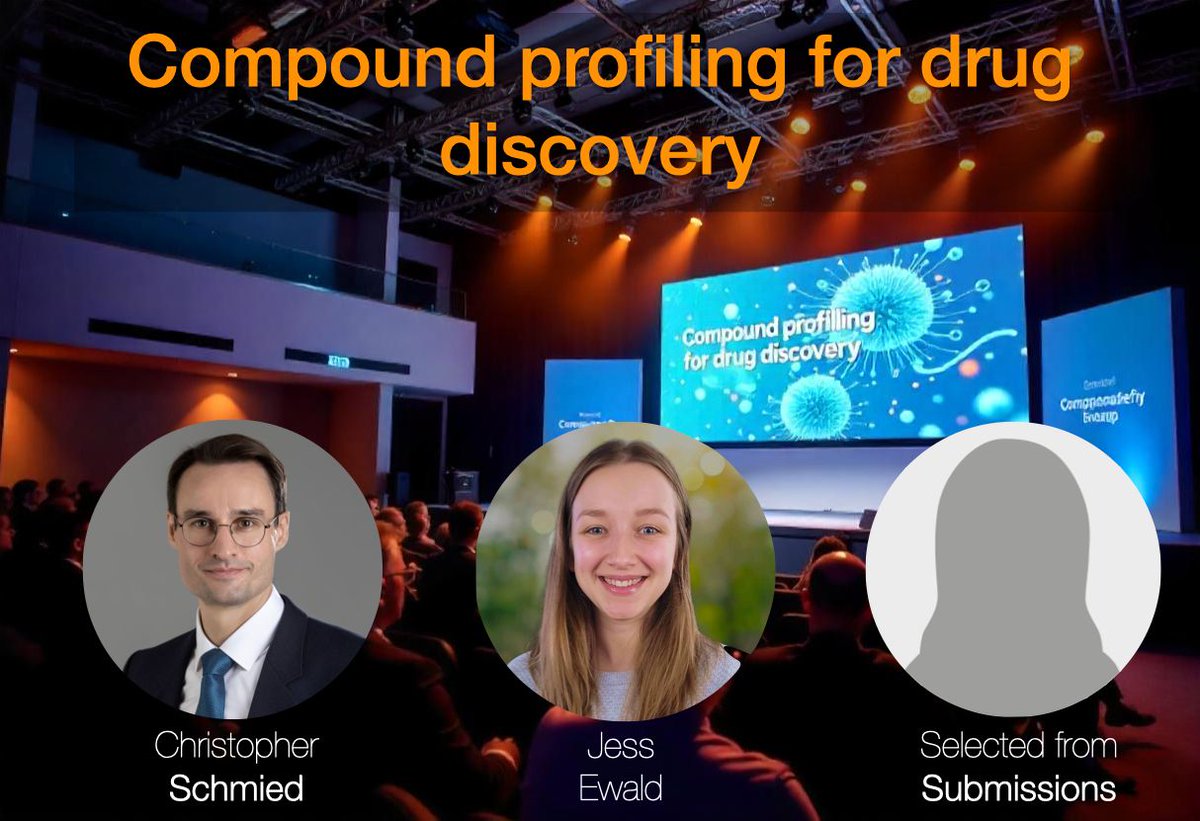
🧪 #CompoundProfiling for #DrugDiscovery at #ChemBioParis2025
From hits to mechanisms — discover how #PhenotypicProfiling & mode-of-action studies accelerate discovery
🎙 With Christopher Schmied & Jess Ewald
📍 Paris | 🗓 Oct 6–9, 2025
🔗 chembioparis2025.com
#ChemicalBiology
1
5
271

7 Dec 2022
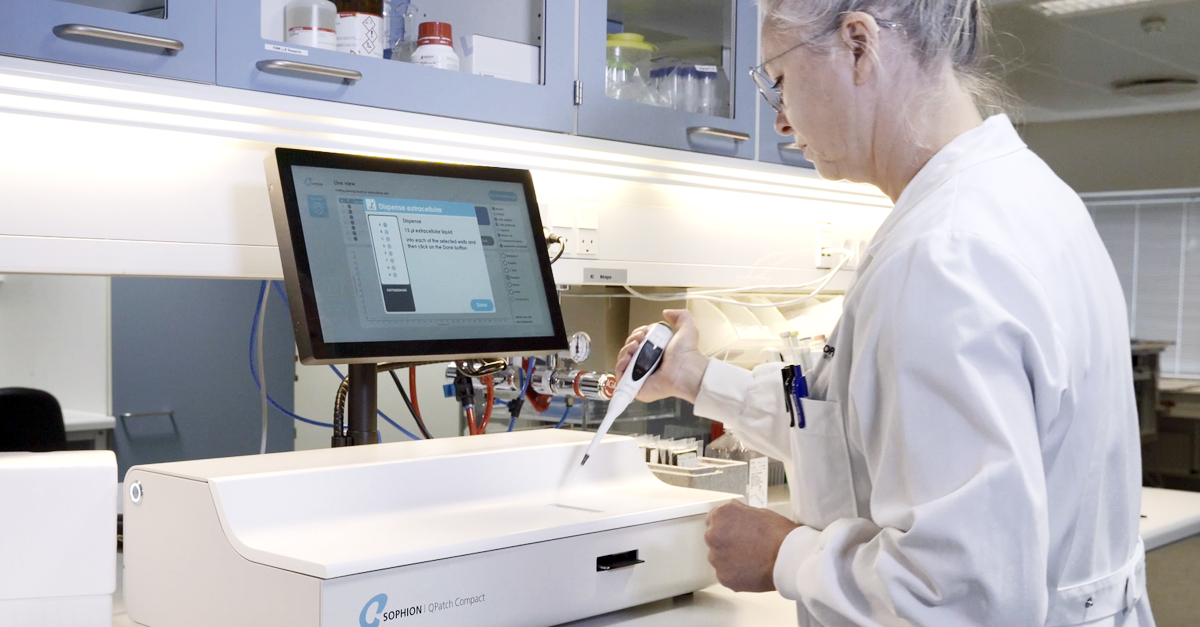
#QPatchCompact is your easy way to conduct planar patch clamp experiments. Check out our new @sophionbio video tutorials here: lnkd.in/eKWNs9_A
#Channelopathies #AssayDevelopment #CompoundProfiling #PatchClamp #IonChannels #DrugDiscovery #Electrophysiology #Sophion
ALT New QPatch Compact Video Tutorials - Sophion
2
2

15 Oct 2021
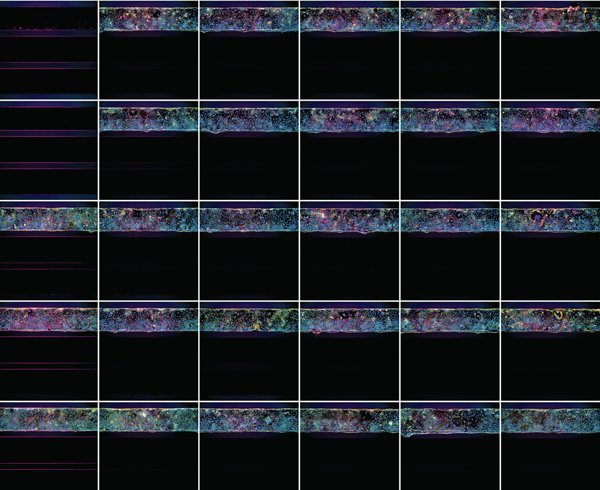
When developing new drugs, it is critical to understand the permeability, absorption, and transport mechanisms in relevant biological systems. Find out how we can help your research with our OrganoService: lnkd.in/dXekuXA
#DrugScreening #CompoundProfiling #Organonachip
1
5

29 Oct 2020
The power of cancer cell panel profiling for proof-of-concept studies is nicely illustrated for the small molecule NMT inhibitor PCLX-001 in @NatureComms by Erwan Beauchamp et al. @pacylex
nature.com/articles/s41467-0…
#Oncolines #compoundprofiling #cancer
2
10 Oct 2018
#Biomarker identification and related clinical relevance - presented by Guido Zaman during the lively poster session at the ‘Cutting Edge of #Cancer Research’ conference #EAI2018, @EACRnews, @AACR and ISCR, Jerusalem. #compoundprofiling #Oncolines
1
17 Sep 2018
Congratulations Joost! Looking forward to your next paper on #biomarkers for #PrecisionMedicine and clinical relevance of these. #compoundprofiling #pharmacogenomics @joost_uitdehaag
1
1
11 Apr 2018
#AACR18 Poster presentation: Cell line panel profiling reveals novel drug response biomarkers for BTK and CDK4/6 inhibitors
Tuesday Apr 17, 1 - 5pm, Permanent Abstract No. 4907
#compoundprofiling #Oncolines #GeneNominator
3
2
19 Dec 2017
#Proliferation assays at low serum may show improved anti-tumor effects for e.g. protein scavenging inhibitors. The #Oncolines cancer cell panel has been validated to a minimum of 0.2% serum. #compoundprofiling
1
27 Sep 2017
#BostonDOT17 High-throughput approach to identify new synergistic anti-cancer combinations - visit our poster, board 308 #compoundprofiling

1
2
19 Sep 2017
#BostonDOT17 NTRC poster “Novel synergistic drug combinations by screening 150 anti-cancer agents” #compoundprofiling #SynergyFinder
3
14 Sep 2017
Hello World! @NTRC_Services is now on Twitter
#PrecisionMedicine #Oncolines #SynergyFinder #GeneNominator #ResidenceTimer #compoundprofiling
1