
Jun 11
Guardrails Fail 100%
A new math-backed proof shows no finite guardrails can block every tricky prompt, forcing continuous monitoring and updates to stay ahead.
Gödel’s logic reminds us that a tiny loophole can always slip through. The study argues there will always be prompts that bypass defenses, no matter how polished the rules look. So the move is not to pretend perfection but to adopt a continuous, red-team–driven cycle: constantly hunt for new prompts, push guardrails to adapt, and plan for fast recovery when breaches happen. It’s a tough, expensive chess match with AI, but it beats pretending safety is a fixed state 🔒. Teams should treat security as ongoing practice 🧠, prepare for zero-days, and build resilience that scales with risk 🚨. The goal is to raise the cost of exploitation until attackers quit 💥.
#AIGovernance #AIsecurity #AdversarialAI #ContinuousSecurity
nist.gov/news-events/news/20…
Created By LastPosty lastposty.com
nist.gov/news-events/news/20…

11

Jun 6
Security testing can’t stay periodic when enterprise environments are moving continuously.
In a new InfoWorld opinion article, Dimitris Bougioukas, SVP, IT Security Training Services at Hack The Box, explores how modern security teams can operationalize continuous purple teaming to keep pace with automated deployment cycles, AI-driven threats, and fast-changing attack techniques.
The article breaks down how organizations can bring red and blue team tactics directly into security operations workflows through:
• Automated attack scenario simulation
• Lab-based validation embedded into operational workflows
• Detection telemetry aligned with resilience and readiness KPIs
• Integration with SIEM, SOAR, infrastructure-as-code, and existing toolchains
• Controlled environments for testing AI red teaming tactics and defensive AI tooling
As release velocity increases, continuous purple teaming helps security teams collaborate in real time, validate controls continuously, and build a feedback-driven culture without slowing the business down.
Read the full article:
okt.to/73nL60
#HackTheBox #PurpleTeaming #CyberSecurity #ContinuousSecurity #DetectionEngineering #RedTeam #BlueTeam #AIinCyberSecurity #CyberResilience
5
24
3,823

📌 Just published: Cloud & Container Penetration Testing
AWS, Azure, GCP, and Kubernetes security validation — offensive techniques and cloud-native attack paths.
kie.ie/docs/read/cloud-and-c…
#cloudsecurity #Kubernetes #CISSP🛡️ New research: Continuous Security Validation
Moving beyond annual penetration tests to automated breach and attack simulation.
kie.ie/docs/read/continuous-…
#continuoussecurity #BAS #attacksimulation #CISSP #CyberSecurity
59

Mar 30
We told the Praetorian Guard's AI, Marcus: compromise the environment. Do not stop until the objective is reached.
It mapped the battlefield. Built a five-vector attack plan. LLM jailbreaks. Credential brute force. Secret scanning. CI/CD exploitation. Cloud reconnaissance. Each vector assigned to a specialized sub-agent.
Then it asked permission before it moved.
Strict mandate. No denial of service. Nothing out of scope. No modifying production. Human-in-the-loop on anything sensitive.
The AI finds the treasure map. When it's time to actually compromise, our operators take over.
#AI #cybersecurity #offensivesecurity #agenticAI #continuoussecurity
4
4
492

Why Periodic Vulnerability Scans Are No Longer Enough
Attackers do not wait for scheduled assessments.
Neither should your defenses.
Key Points
Traditional scans create blind spots between testing windows.
New assets and configuration changes introduce risk immediately.
Continuous vulnerability management reduces exposure time and improves response speed.
See how continuous monitoring strengthens your security posture
versprite.com/cybersecurity-…
#SecurityStrategy #ContinuousSecurity #ThreatPrevention #ITRisk
2
2
30

Feb 16
A Spanish Law Enforcement Agency removed external attack surface blind spots and shifted to continuous security validation. From unknown exposure to real, validated risk 👉🏼 news.aliasrobotics.com/secur…
#CybersecurityAI #CAI #ContinuousSecurity #CriticalInfrastructure
2
4
97

Feb 4
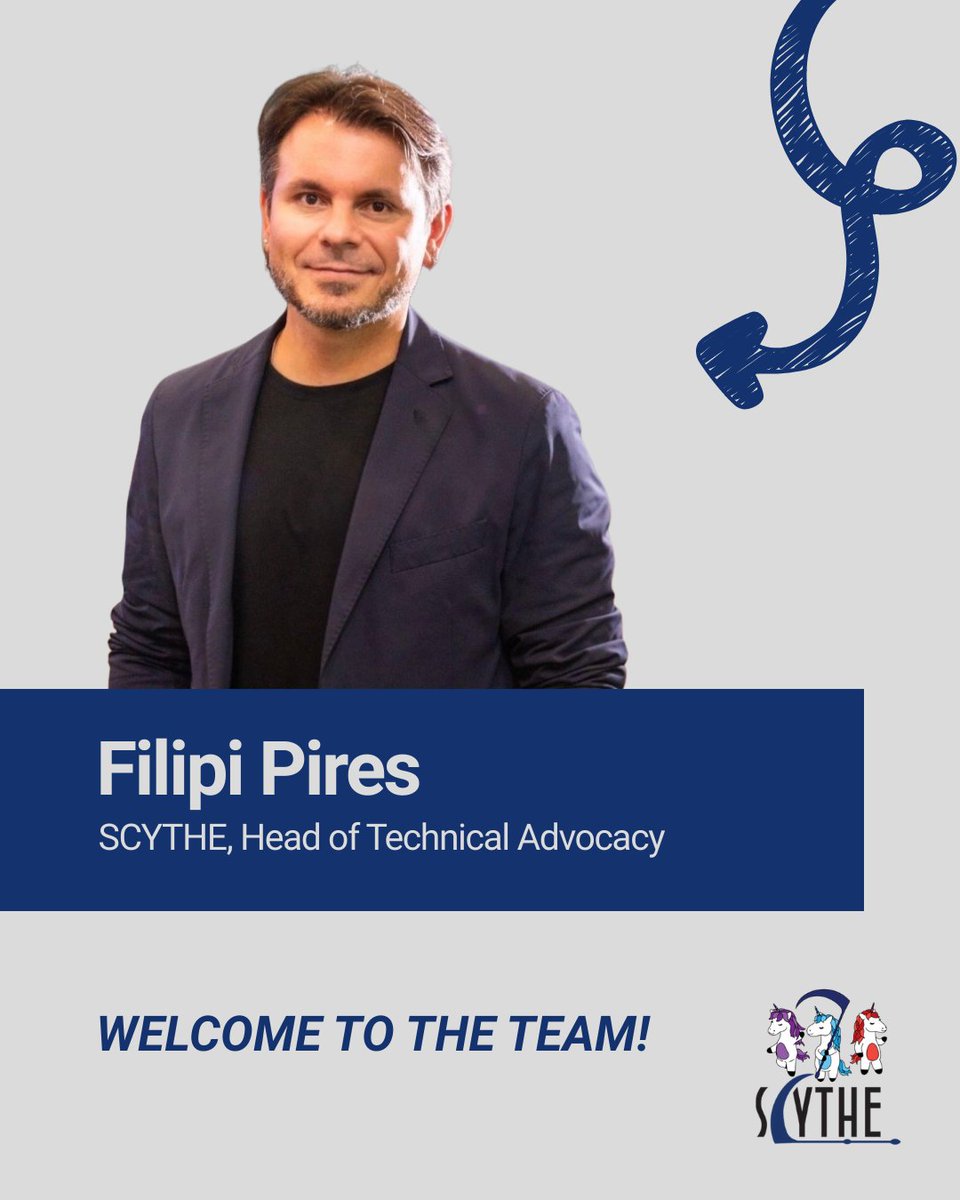
Super excited to share that I’m officially joining @scythe_io 🦄 as Head of Technical Advocacy. 🚀
This one is personal. I’ve always been obsessed with real attack paths, real adversary behavior, and closing the gap between “security in theory” vs “security in practice”.
SCYTHE is building what I truly believe in: real-world attack simulation to help teams continuously test, measure, and improve their defenses with realism, speed, and purpose.
Huge thanks to @brysonbort for the conversations over the years, Marc Brown for bringing me into an unbelievable project, and my new colleague Ana Pires let’s grow EMEA, LATAM & Brazil together. 🫡
I’m in the herd. 🦄
Want to know more about @scythe_io ? Let’s talk.
#SCYTHE #Cybersecurity #BAS #BreachAndAttackSimulation #ThreatEmulation #AdversaryEmulation #PurpleTeam #RedTeam #DetectionEngineering #SecurityValidation #MITREATTACK #InfoSec #ContinuousSecurity
3
1
16
485
Proactive Security Through Contextual Vulnerability Intelligence
Key Points
Discover why traditional periodic vulnerability scanning is no longer enough.
VerSprite applies environmental context to every vulnerability to avoid wasted time and effort.
Prioritize the fixes that matter most to your environment.
Explore advanced approaches at versprite.com/cybersecurity-…
#ThreatIntelligence #ContinuousSecurity #EnterpriseSecurity #ITRisk
2
2
24
Jan 23
Security doesn’t scale with reports.
It scales when you build your own capability with AI designed for security.
CAI: agents, procedures, continuous security.
👉 aliasrobotics.com/cybersecur…
#Cybersecurity #CybersecurityAI #AIinSecurity #ContinuousSecurity #SecurityEngineering
1
2
81
Build security that grows with you, not just a report
Explore CAI PRO and build security you actually own:
aliasrobotics.com/cybersecur…
Stay tuned... next week we are releasing alias2, our new LLM model. 🚀
#Cybersecurity #AISecurity #ContinuousSecurity #DIYSecurity #SecurityAI
2
2
43
Model updates create moving security targets.
The vulnerability profile of an AI model today may differ significantly from its profile after the next update. Training data changes. Algorithms evolve. Security behaviors shift.
This creates a unique challenge for security teams. Traditional threat models assume relatively static attacker capabilities and defender postures.
With AI-generated code, your baseline security assumptions can change without warning when a model updates.
Organizations using AI coding assistants need continuous benchmarking as part of their security program. Not annual penetration tests. Ongoing evaluation as models evolve.
The cadence should match model update frequency. If your developers use Claude and Anthropic ships monthly updates, your security benchmarking needs similar frequency.
This isn't practical with purely manual testing. Automation becomes essential, but the automation must be calibrated for AI-specific patterns.
Security programs built for traditional development won't scale to this new reality.
Read the full research comparison: versprite.com/blog/is-vibe-c…
#ContinuousSecurity #CyberSecurity #AIGovernance #ThreatModeling
2
2
37
¿Qué fugas de coste has tolerado en tu seguridad DIY?
#Cybersecurity #ContinuousSecurity #AISecurity #SecurityAutomation #DIYSecurity
1
2
44
What annoyances or cost leaks have you tolerated in your DIY security setup?
#Cybersecurity #ContinuousSecurity #AISecurity #SecurityAutomation #DIYSecurity
1
2
47

The New Normal: 24/7/365 Security Through Partnership
linkedin.com/feed/update/urn…
Visit genbioca.com or mail us at gbc@genbioca.com
#ContinuousSecurity #ManagedServices #ProactiveDefense #CybersecurityPartnership #TrustedAdvisor #Genbioca #SGCyberConsultancy

1
2
12

23 Dec 2025
AgentLISA treats smart contract security as a continuously running system rather than a one-time audit event.
This aligns much better with the reality of on-chain applications, where risk evolves over time, not at deployment.
That mindset alone separates infrastructure projects from tools.
#AgentLISA #SecurityOS #ContinuousSecurity #Web3Infra #AIWeb3
2
10,029

20 Dec 2025
AgentLISA does not treat security as a one-time audit. It treats security as a continuously running system, which aligns much better with on-chain reality. #AgentLISA #ContinuousSecurity #Web3Dev #AIOS
19
1
6
2,323

19 Dec 2025
AgentLISA treats smart contract security as a continuously running system rather than a one-time audit event.
This aligns much better with the reality of on-chain applications, where risk evolves over time, not at deployment.
That mindset alone separates infrastructure projects from tools.
#AgentLISA #SecurityOS #ContinuousSecurity #Web3Infra #AIWeb3
2
13
10,617

16 Dec 2025
The UK Government’s newly proposed Cyber Security Resilience Bill signals a shift toward continuous, outcomes-based security. Organizations won’t just be expected to comply, they’ll be expected to prove resilience.
Our latest blog breaks down what this means for enterprise security leaders:
✔ New expectations around vulnerability reporting
✔ How continuous testing supports national resilience goals
✔ Why collaboration with security researchers is becoming essential
Read the full analysis: bit.ly/4j1xOdd
#CyberSecurity #Policy #ContinuousSecurity #TogetherWeHitHarder

2
4
19
4,135
Your Cybersecurity Isn't a Project. It's an Ongoing Partnership.
Click below to read more
linkedin.com/feed/update/urn…
#CybersecurityPartnership #ContinuousSecurity #ManagedServices #ProactiveDefense #TrustedAdvisor #Genbioca #SGCyberConsultancy #BusinessResilience #LongTermStrategy

1
2
22

In Abracadabra, a single “safety flag” was accidentally overwritten - skipping a crucial check and losing $1.8 million. In GMX, clever refund timing drained $42 million because traditional audits missed the system-level logic.
Both were caught by Bug Hunter, our AI-powered tool that looks beyond single lines of code to understand how an entire system behaves.
🧠 Most failures hide between components, not inside them.
That’s why continuous, system-wide insight is the future of security
👉bughunter.live
#BusinessResilience #SystemThinking #BugHunter #RiskManagement #ContinuousSecurity #Web3 #DeFi #GMX #AbracadabraMoney
@mdothassan @mnjalil @Rolf_Drechsler
3
3
190