
Urgent shipments shouldn't sit in warehouse storage.
FulFillor identifies cross-dock orders at receiving and routes them directly to outbound staging, helping warehouses reduce handling, speed up dispatches, and improve efficiency.
#CrossDocking #3PL #WarehouseManagement
1
6

Jun 10
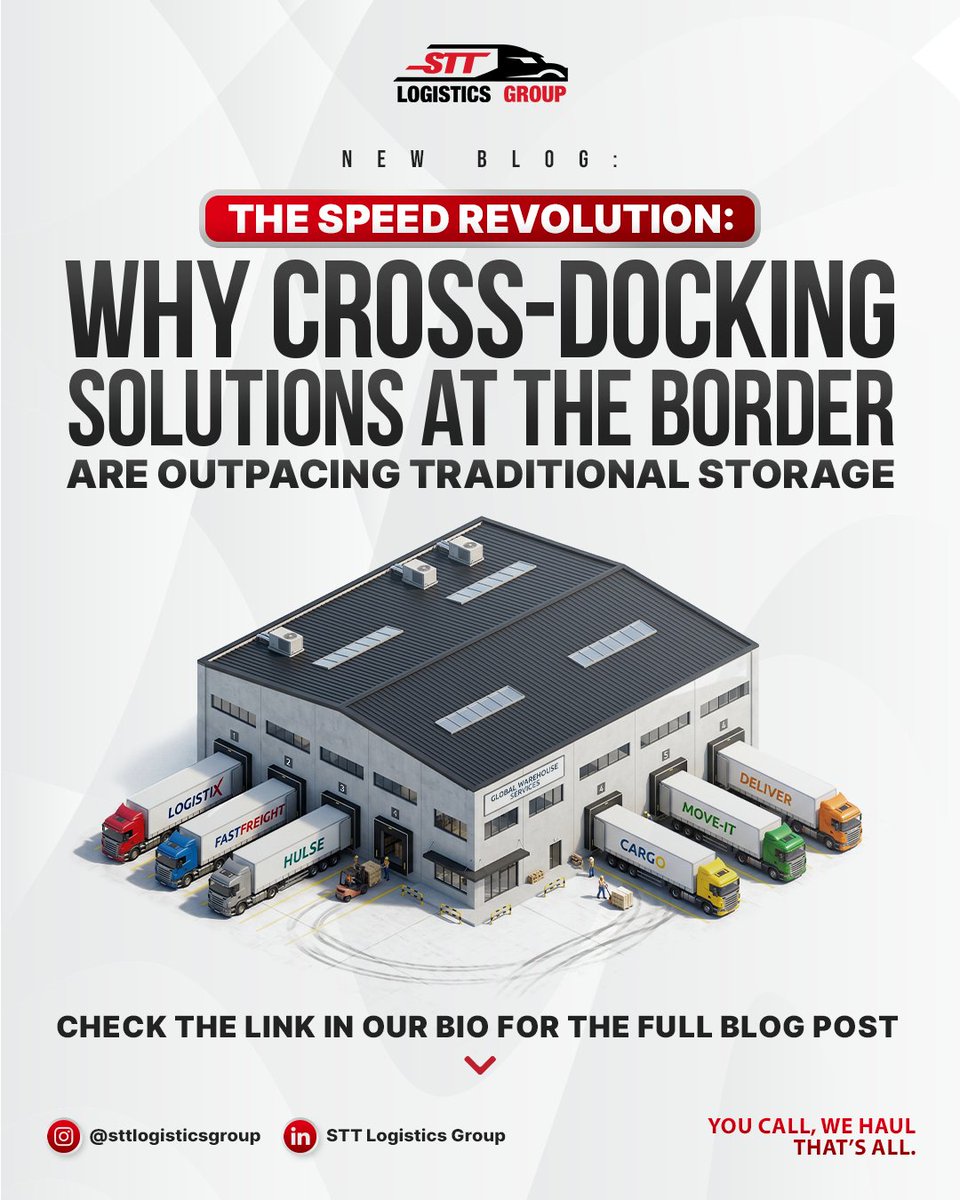
Speed > Storage ⚡
Is your cargo stuck in a warehouse or moving toward its destination? The era of long-term storage is fading. Cross-docking solutions at the border are the secret weapon for modern supply chains looking to cut costs and boost delivery speeds.
At STT Logistics Group, we don't just move freight; we optimize your entire flow.
✅ Reduced handling costs
✅ Faster transit times
✅ Strategic border locations
Click the link in our bio to get your FREE QUOTE today! 📈
Follow us for more industry insights: @sttlogisticsgroup
#Logistics #CrossDocking #SupplyChain #STTLogisticsGroup #BorderLogistics #Nearshoring #FreightForwarding #InternationalTrade
23

Supply chain reshoring is accelerating. U.S. freight demand is rising.
Denver is a key distribution hub — and Denver Express Warehousing & Cross-Docking is ready for it.
Storage. Cross-docking. Reworks. Right here in Denver. DM Us
#Warehousing #CrossDocking #Denver #SupplyChain
1
1
91
世界の物流関係者に聞きたいです。
2026年、日本では改正物流効率化法が本格化してるのに 現場はまだ「待たされるのが一番安い」構造のまま。
世界ではクロスドックが普通になり、 待機を極限まで減らす仕組みが進んでいる。
MaerskやWalmartのように「待たない構造」が当たり前になりつつあるのに、 日本の軽貨物現場は
👉コストは上がるのに単価据え置き
👉人手不足なのに構造が変わらない
👉現場の判断はますます消えていく
あなたの国ではどうですか?
軽貨物・運送やってる人へ 自国で一番ヤバいと感じてる構造問題はどこ?
教えてほしいです。
#軽貨物 #物流 #2026年問題 #CrossDocking #ラストワンマイル #物流構造デザイナー
3
57

Mar 31
2026年に入って改正物流効率化法が本格化してるのに 世界ではクロスドックが普通になり始めている。
荷物を一旦集めてすぐに混載・出発させる仕組みで 待機時間ほぼゼロでトラックが回る。
Maerskはロッテルダムで大規模施設を新設し、 Walmartは長年この構造で在庫を減らし続けている。
なのに日本の軽貨物現場はまだ 「待たされるのが一番安い」構造のまま。
👉コストは上がるのに単価は据え置き
👉人手不足なのに多重下請けは規制され始めてる
👉現場の判断はますます消えていく 同じエリアなのに回れる人と回れない人がいるのも 倉庫で長時間待つのが普通なのも、全部構造の問題。
グローバルでは「待たない構造」が当たり前になりつつある。 地上の現場はまだこの差を埋められるのか。
軽貨物・運送やってる人 「2026年問題」で一番ヤバいと感じてるのはどこ?
教えてほしいです。
#軽貨物 #物流 #2026年問題 #物流効率化法 #CrossDocking #ラストワンマイル #物流構造デザイナー
3
79

Feb 17
Sorry, ale tvůj příspěvek je vycucaný z prstu, půlka věcí se tam rozchází s realitou. Velkoprodejci mají sklady pro crossdocking, ale ne pro dlouhodobé skladování zmrazených potravin.
3
21
720

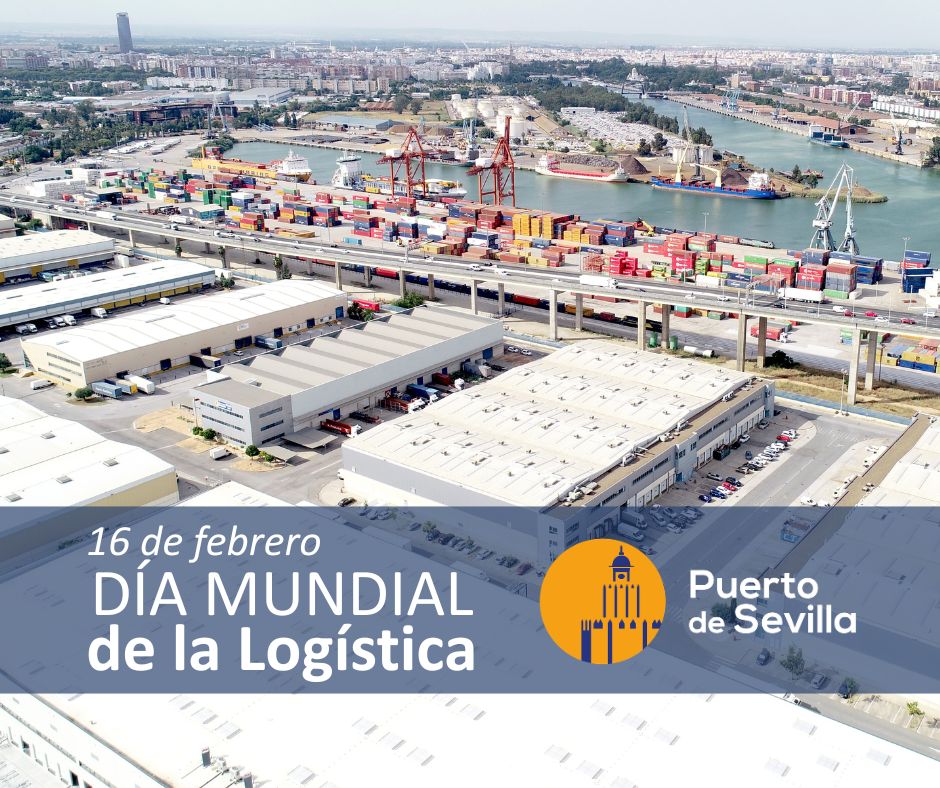
📦 En este #DíaMundialDeLaLogística, celebramos el papel clave del @PuertoDeSevilla como motor económico del sur peninsular.
🏗️ La Zona de Actividades Logísticas continúa creciendo con naves de crossdocking de última milla que optimizan la distribución y agilizan la logística.
1
2
13
179

It's like crossdocking freight, but different.
Jan 14

JOHN SOLOMON: $700 million in suitcases flew out of Minnesota via a sophisticated Somali cash-courier network. TSA confirms $136 million was tracked from Columbus, Ohio, and funneled to Minneapolis couriers who combined loads and shipped it overseas.
Why were suitcases used instead of banks? Why did the Biden admin ignore it? Where was the money going?
The same Somali communities defrauding government programs are at the center. This investigation is just beginning.
@jsolomonReports
6
23
815

5 Nov 2025
🚚 Discover how Cross-docking is transforming logistics!
It’s the ultimate Lever to Reducing Warehouse Costs, boosting speed, efficiency & profit. 📦💡
tycoonstory.com/cross-dockin…
#crossdocking #levertoreducingwarehousecosts @Blowhornlog @delhivery
ALT Business professional in a warehouse environment with the word 'Cross-Docking' overlaid, symbolizing cross-docking as a key lever to reducing warehouse costs and improving logistics efficiency.
1
6
91

20 Aug 2025
Find out how VARGO®implemented a tailored solution for this national tire retailer that allows for crossdocking of 4,500 tires per hour to 100 tire stores:
dcvelocity.com/articles/5476…
#ecommercefulfillment #COFE #retailfulfillment #omnichannel #wavelesspicking #WES

1
2
64
6 Aug 2025
A national tire retailor is trusting us once again to implement a crossdocking system at 2 of their distribution center operations, located in Seattle and Denver, that will allow for faster, more efficient operations.
Find out more:
dcvelocity.com/material-hand…
#COFE #WES

3
54

7 Jul 2025
As a driver of 36 years I can say if you keep Canadian and Mexican truckers in their own countries, we have no parking problems, and YOU personally create 1000’s of jobs crossdocking their loads at border crossings. Big plus is the accident rates will drop dramatically sir.
2
43

25 Jun 2025
Poderiam fazer isso nas empresas também. Chega de "start, feedback, peakseasson, go live, kick start, ASAP, vacations, paper, e etc".
Quando o termo é uma técnica como Kanban, Crossdocking e tal, ate vai. Agora usar palavras em inglês onde já existem em Português, é ridículo.
2
2
10
486

6 May 2025
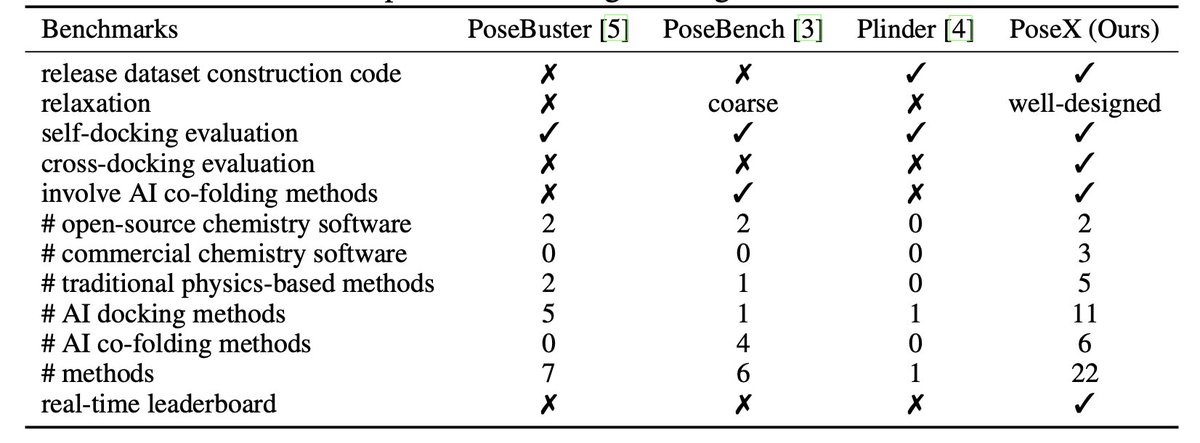
PoseX: AI Defeats Physics Approaches on Protein-Ligand Cross Docking
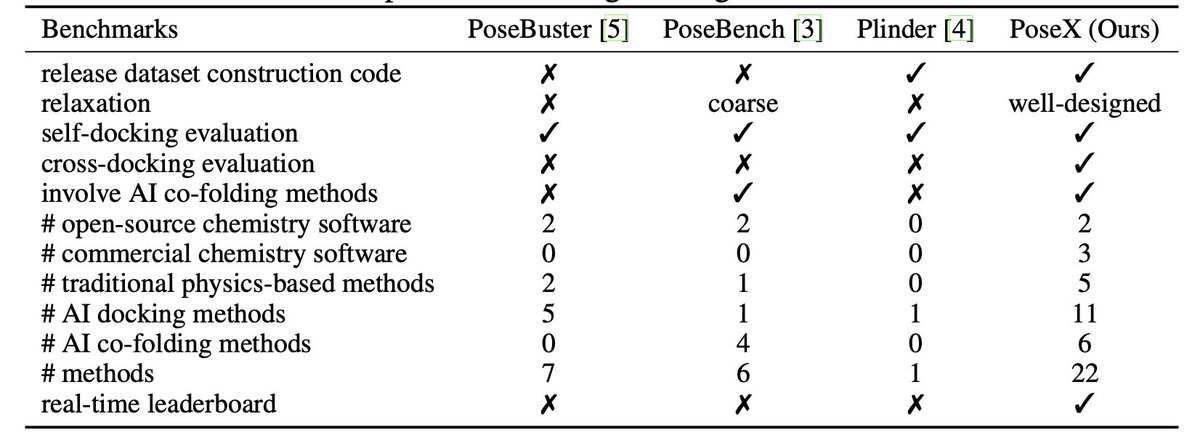
1. PoseX introduces a new large-scale benchmark for evaluating protein-ligand docking, focusing on the more practical and challenging cross-docking scenario—where AI methods now consistently outperform traditional physics-based tools.
2. The PoseX dataset includes 2,030 high-quality docking tasks: 718 for self-docking and 1,312 for cross-docking, curated from recent PDB entries to avoid overlap with model training data, enabling fair and future-facing evaluations.
3. The benchmark evaluates 22 methods across three categories: traditional physics-based docking (e.g., Glide, AutoDock Vina), AI docking (e.g., DiffDock, Uni-Mol, SurfDock), and AI co-folding (e.g., AlphaFold3, Protenix, Boltz-1).
4. AI docking models now lead in accuracy. SurfDock and Uni-Mol achieve up to 94% success on self-docking and 75% on cross-docking, significantly surpassing traditional tools like Glide, which plateaus around 30–60%.
5. The authors introduce a robust energy minimization pipeline ("relaxation") that dramatically improves pose quality by correcting stereochemistry and reducing strain, boosting AI model accuracy by several percentage points.
6. AI models conditioned on binding pocket information (e.g., DiffDock-Pocket) outperform pocket-agnostic models, underscoring the importance of structure-aware context in realistic docking scenarios.
7. Co-folding models like AlphaFold3 and Boltz-1 show strong performance in self-docking but struggle in cross-docking due to limited flexibility modeling, highlighting the need for pose-specific refinement in generalist architectures.
8. PoseX introduces PB-valid metrics from PoseBusters to assess physicochemical validity, not just RMSD, ensuring predicted poses are chemically plausible—a key step toward usable docking outputs.
9. Detailed analysis shows that docking accuracy correlates with binding pocket similarity to training data. AI models like Chai-1 and Protenix are highly sensitive to pocket novelty, while traditional methods remain largely unaffected.
10. The benchmark supports a real-time leaderboard, a modular codebase, and rigorous evaluation protocols, offering a transparent and comprehensive platform for testing new docking algorithms under realistic conditions.
11. PoseX sets a new standard for benchmarking docking methods by shifting focus from simplified self-docking to challenging cross-docking tasks, driving progress toward generalizable, deployable AI models in drug discovery.
💻Code: github.com/CataAI/PoseX
📜Paper: arxiv.org/abs/2505.01700
#DrugDiscovery #MolecularDocking #CrossDocking #AI4Science #StructuralBiology #ProteinLigand #DeepLearning #PoseX #AlphaFold3 #DiffDock #SurfDock
1
2
9
2,095
6 May 2025
PoseX: AI Defeats Physics Approaches on Protein-Ligand Cross Docking
1. PoseX introduces a new large-scale benchmark for evaluating protein-ligand docking, focusing on the more practical and challenging cross-docking scenario—where AI methods now consistently outperform traditional physics-based tools.
2. The PoseX dataset includes 2,030 high-quality docking tasks: 718 for self-docking and 1,312 for cross-docking, curated from recent PDB entries to avoid overlap with model training data, enabling fair and future-facing evaluations.
3. The benchmark evaluates 22 methods across three categories: traditional physics-based docking (e.g., Glide, AutoDock Vina), AI docking (e.g., DiffDock, Uni-Mol, SurfDock), and AI co-folding (e.g., AlphaFold3, Protenix, Boltz-1).
4. AI docking models now lead in accuracy. SurfDock and Uni-Mol achieve up to 94% success on self-docking and 75% on cross-docking, significantly surpassing traditional tools like Glide, which plateaus around 30–60%.
5. The authors introduce a robust energy minimization pipeline ("relaxation") that dramatically improves pose quality by correcting stereochemistry and reducing strain, boosting AI model accuracy by several percentage points.
6. AI models conditioned on binding pocket information (e.g., DiffDock-Pocket) outperform pocket-agnostic models, underscoring the importance of structure-aware context in realistic docking scenarios.
7. Co-folding models like AlphaFold3 and Boltz-1 show strong performance in self-docking but struggle in cross-docking due to limited flexibility modeling, highlighting the need for pose-specific refinement in generalist architectures.
8. PoseX introduces PB-valid metrics from PoseBusters to assess physicochemical validity, not just RMSD, ensuring predicted poses are chemically plausible—a key step toward usable docking outputs.
9. Detailed analysis shows that docking accuracy correlates with binding pocket similarity to training data. AI models like Chai-1 and Protenix are highly sensitive to pocket novelty, while traditional methods remain largely unaffected.
10. The benchmark supports a real-time leaderboard, a modular codebase, and rigorous evaluation protocols, offering a transparent and comprehensive platform for testing new docking algorithms under realistic conditions.
11. PoseX sets a new standard for benchmarking docking methods by shifting focus from simplified self-docking to challenging cross-docking tasks, driving progress toward generalizable, deployable AI models in drug discovery.
💻Code: github.com/CataAI/PoseX
📜Paper: arxiv.org/abs/2505.01700
#DrugDiscovery #MolecularDocking #CrossDocking #AI4Science #StructuralBiology #ProteinLigand #DeepLearning #PoseX #AlphaFold3 #DiffDock #SurfDock
1
3
12
1,645

25 Apr 2025
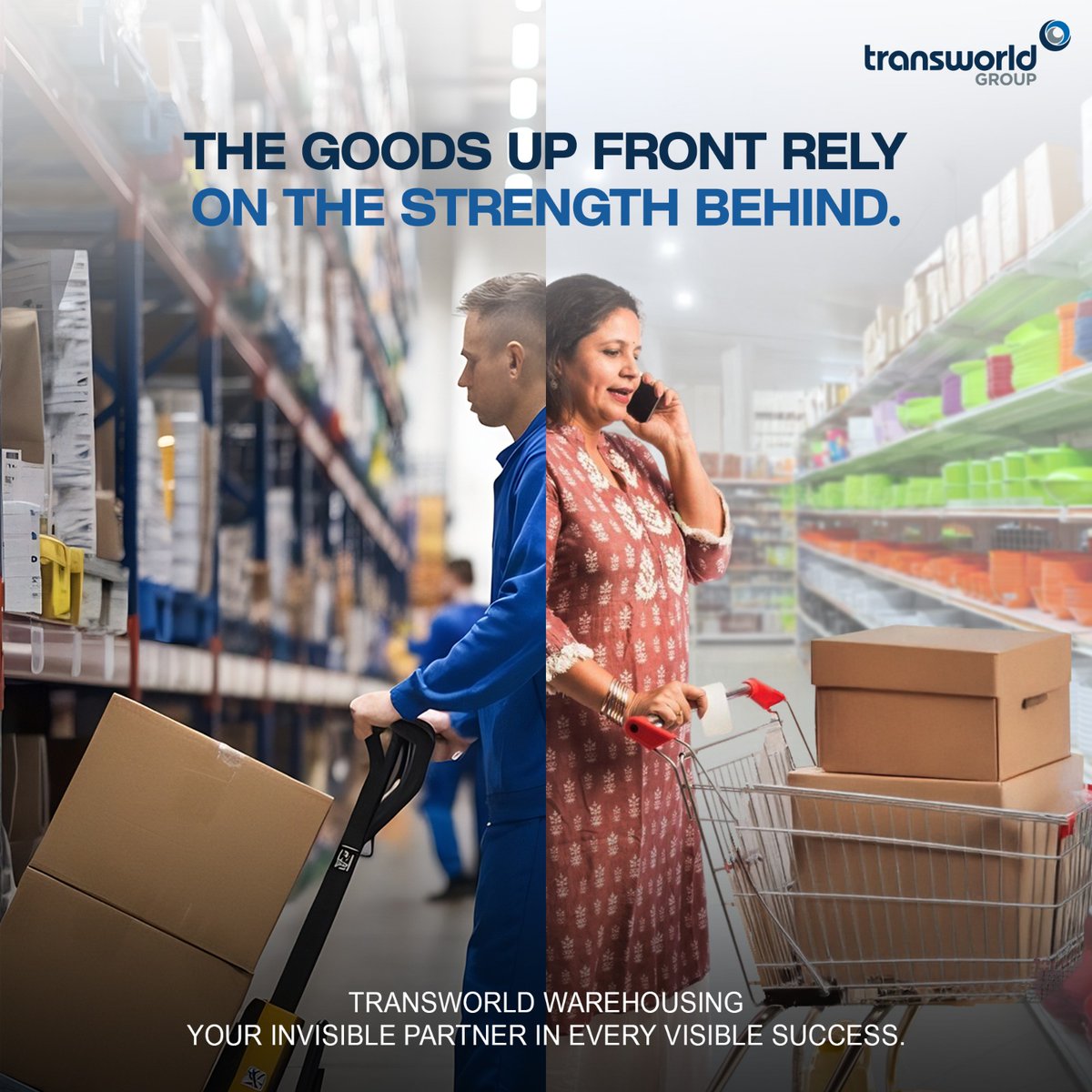
Strong foundations power successful deliveries. Transworld's Warehousing, your invisible partner, ensures smooth goods movement by offering:
- #InventoryManagement
- #OrderFulfillment
- #SecureStorage
- #CrossDocking
Know More: transworld.com/logistics/ser…
#TransworldGroup #Warehousing #Logistics #ThirdPartyLogistics #3PL #SupplyChainManagement #GlobalLogistics
1
4
97

Em meio a gargalos estruturais e à pressão por prazos menores, empresários buscam alternativas para tornar operações mais eficientes e seguras.
#PortaliG #MalhaRodoviária #Logística #CrossDocking #Encomendas
economia.ig.com.br/2025-04-2…
93

19 Feb 2025
OPORTUNIDADES NO GRUPO PROFARMA ⤵️
☑️ Analista de Logística Pleno: candidatos.abler.com.br/vaga…
☑️ Especialista em Engenharia Projetos: candidatos.abler.com.br/vaga…
☑️ Especialista de Malha Logística: candidatos.abler.com.br/vaga…
☑️ Gerente de Planejamento de Transportes (Crossdocking): candidatos.abler.com.br/vaga…
☑️ Gerente de Operações Crossdockinge Janeiro): candidatos.abler.com.br/vaga…
2
6
3,155

18 Jan 2025
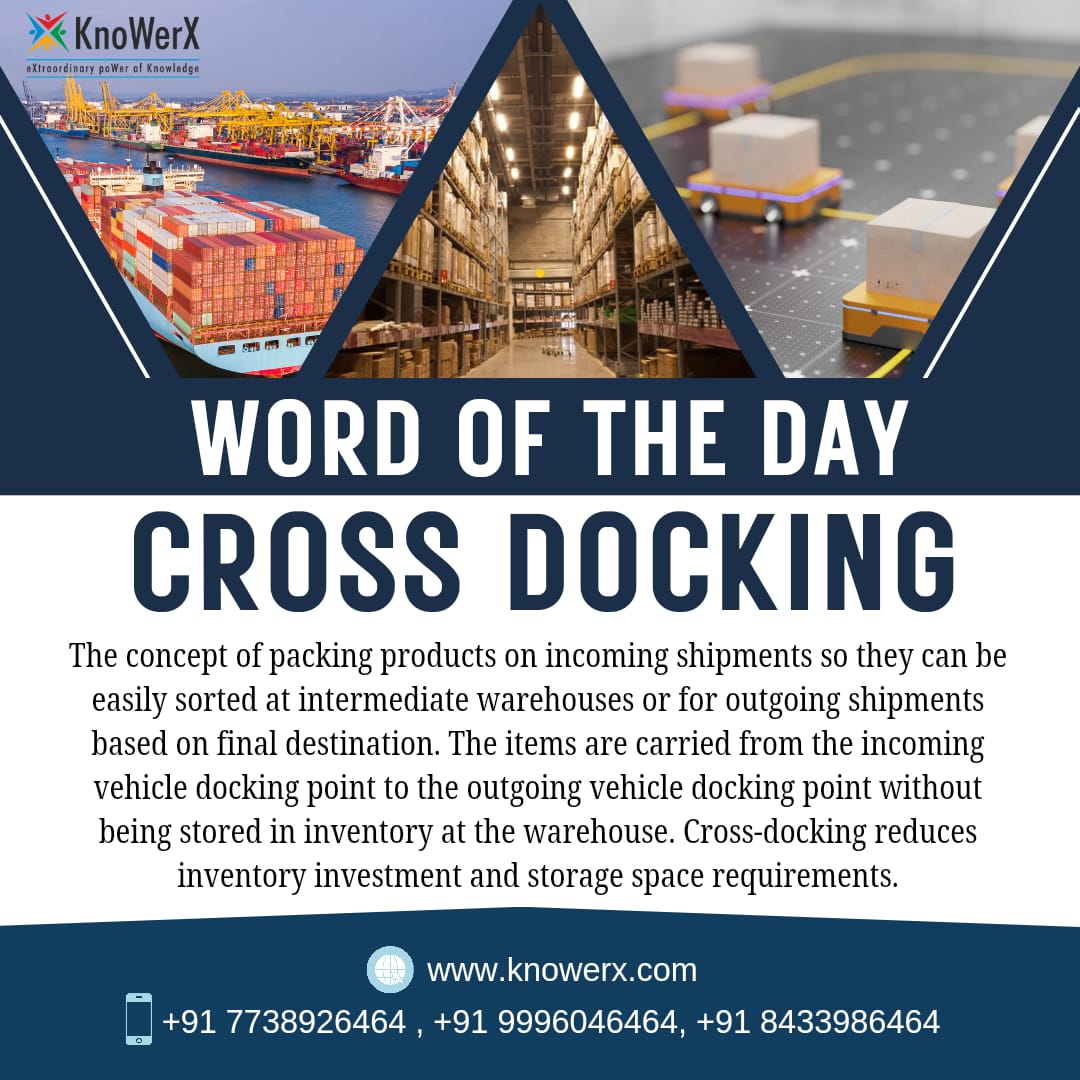
📚 𝗪𝗼𝗿𝗱 𝗼𝗳 𝘁𝗵𝗲 𝗗𝗮𝘆: Crossdocking
Did you know?
Cross Docking reduces inventory investment and storage space requirements.
Check out the post to know more about Crossdocking.
Visit our website: knowerx.com
#KnoWerX #crossdocking
1
14

14 Nov 2024
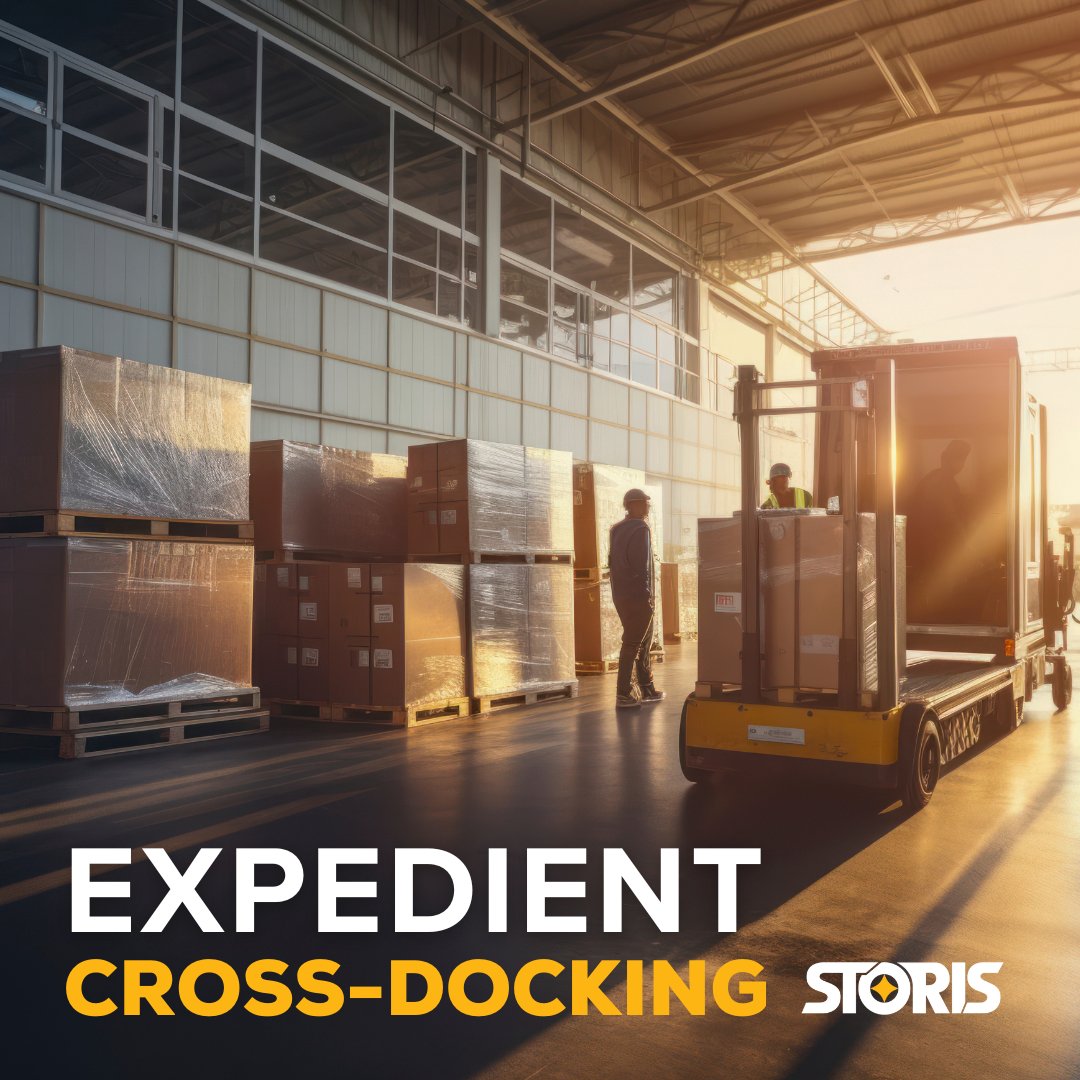
Cross-docking ensures your warehouse gets goods out the door and into customers' hands faster. 🚚 Make every delivery a holiday win with efficient cross-docking strategies. 🎁✨ bit.ly/4e1EDHL
#HolidayShopping #OnTimeDeliveries #CrossDocking
2
18