

Mar 3
Something irreversible happened in 2024.
DeepSeek proved that frontier-level intelligence can be built efficiently.
The cost barrier cracked.
That changed the economics of AI.
That same year, DecideAI proved something equally important:
AI inference can run fully on-chain
on the World Computer. #ICP
Not mirrored.
Not proxied.
Executed on-chain.
That cracked the control barrier.
Now the equation is simple:
If models are becoming lighter,
and on-chain execution is already possible,
then running efficient LLMs natively on Internet Computer
is no longer experimental.
It is the natural next step.
This is not a suggestion.
It is architectural convergence.
DeepSeek opened the efficiency era.
DecideAI opened the sovereignty era.
Efficient models fully on-chain in ICP
are not ambitious.
They are inevitable. ∞
@DecideAI_ #InternetComputer
Mar 2

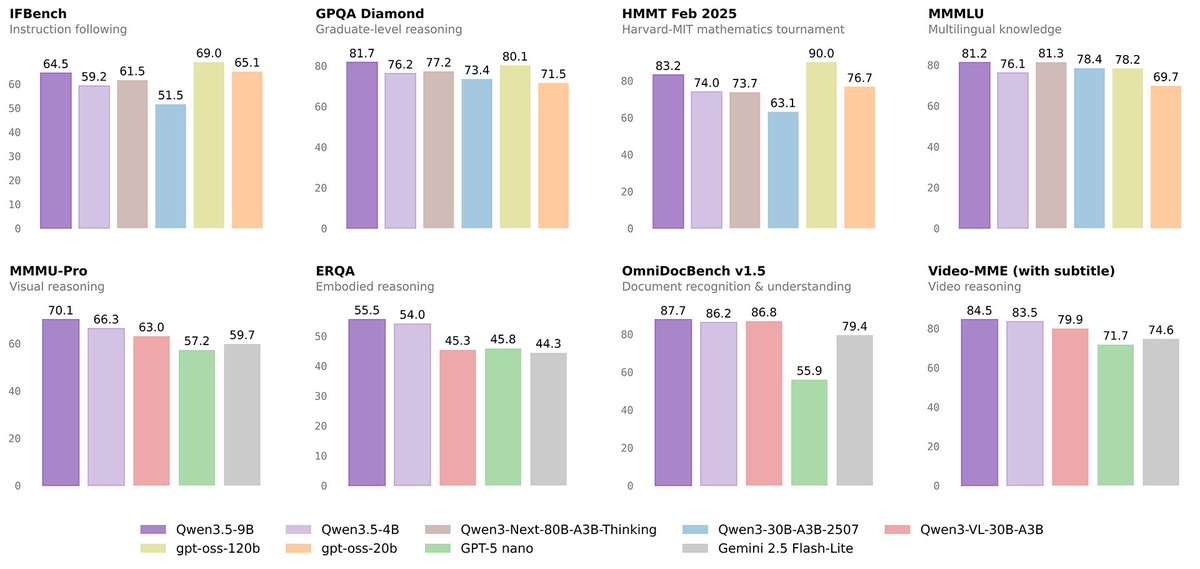
🚀 Introducing the Qwen 3.5 Small Model Series
Qwen3.5-0.8B · Qwen3.5-2B · Qwen3.5-4B · Qwen3.5-9B
✨ More intelligence, less compute.
These small models are built on the same Qwen3.5 foundation — native multimodal, improved architecture, scaled RL:
• 0.8B / 2B → tiny, fast, great for edge device
• 4B → a surprisingly strong multimodal base for lightweight agents
• 9B → compact, but already closing the gap with much larger models
And yes — we’re also releasing the Base models as well.
We hope this better supports research, experimentation, and real-world industrial innovation.
Hugging Face: huggingface.co/collections/Q…
ModelScope: modelscope.cn/collections/Qw…
3
18
833
Feb 17
The #ICP elephant doesn’t ask for permission to exist.
It only waits for the world to name it.
Here are 5 clear signals that moment is getting close:
1) Real sovereign subnets in motion
Switzerland (first), Liechtenstein (following), Pakistan (MoU with Caffeine for sovereign apps).
Not marketing. Infrastructure in motion.
2) Real usage that burns tokens
Caffeine auto-writes cloud, DecideAI enables AI governance, fully on-chain apps generating daily burn.
The economic model is already proving usage → burn → value.
3) Live and battle-tested governance
The NNS manages billions in stake, on-chain voting, upgrades without downtime.
Not a promise. Continuous execution since 2021.
4) The World Computer concept gains momentum in 2026
Vitalik put it back on the table: computational sovereignty, apps that pass the walkaway test, infrastructure no third party can shut down.
ICP is already executing this in production — not theory, but the living exponent.
5) The elephant’s silence is deafening
When something is too big to ignore, yet still lacks an official name in mainstream media…
silence becomes the strongest signal.
The elephant is already in the room.
And the world will end up naming it: World Computer. ∞
#InternetComputer #ICP #WorldComputer

10
89
1,994


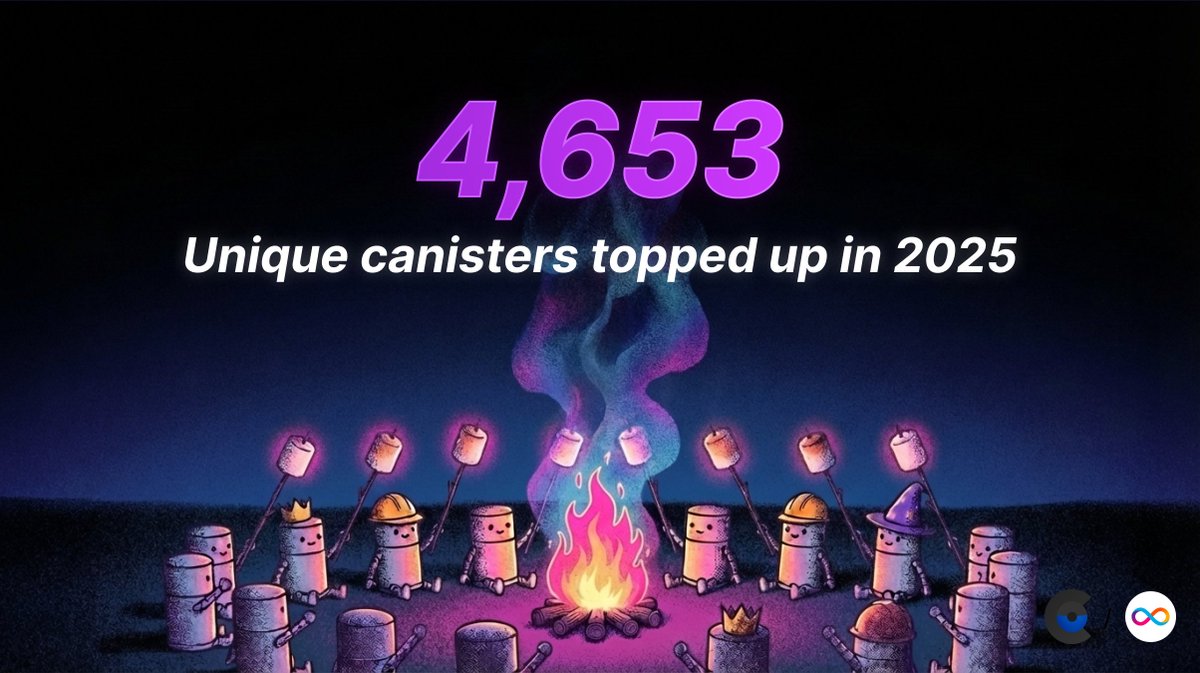
CycleOps sent cycles to 4,653 canisters, including 34 of 38 total SNS DAO's.
Thank you for building with us @dfinity, @ORIGYNTech, @oisy, @KongSwapX, @OmnityNetwork, @Odin_GodOfRunes, @TheGoldDao, @dragginzgame, @ICPCoins, @LiquidiumFi, @NFIDWallet, @ICPandaDAO, @DecideAI, @icsneed, @tacodaoicp, @xfusion_finance, @ICExplorer_io, @Prometheus9486, and too many to mention!
2
1
13
294

10 Dec 2025
DISCOVER WHAT’S ACTUALLY BEING BUILT ON $ICP, This isn’t vapor. This REAL sovereign, on- a REAL blockchain economy, forming in real time at warp speed and with the utmost top level SECURITY.
⭐ FEATURED SNS PROJECTS — THE FRONT LINE
Gold DAO (GLDT / USDG) — Digital Gold, Done Right
GoldDAO fuses physical gold with blockchain finality. Fractional ownership via GLDT, plus USDG, a gold-backed stablecoin—no banks, no fiat dilution, instant settlement. This is sound money rebuilt for the internet.
FDV: $9.22M
OpenChat — Decentralised Communication at Scale
A fully on-chain chat platform governed by its users. No data extraction. No corporate gatekeepers. Just sovereign communication.
FDV: $8.99M | Governance: 5 proposals/week
WaterNeuron — Liquid Staking for ICP
Turns locked ICP into productive capital. Stake, stay liquid, compound. Core DeFi infrastructure with serious governance velocity.
FDV: $6.56M | Governance: 12 proposals/week
Kinic — Portable, Verifiable AI
DAO-driven AI infrastructure: vector DBs, zkML, search, trading bots. Build once. Deploy anywhere. Verify everything.
FDV: $4.25M | Governance: emerging
ICPSwap — Native DeFi Backbone
The original ICP DEX. Trading, staking, yield, claims—nearly every DeFi primitive, fully on-chain.
FDV: $3.83M | Governance: 3 proposals/week
KongSwap — Cross-Chain, Simplified
One-stop token trading across chains without the usual UX pain.
FDV: $3.20M
DecideAI DAO — AI Owned by Users
An AI ecosystem where contributors, developers, and users all win—governed, not captured.
FDV: $2.31M
🌐 ALL SNS PROJECTS — THE REAL DEPTH
This is where ICP separates itself from every other chain.
ORIGYN — Industrial-Grade RWA Infrastructure
Digital certificates for authentication, provenance, and ownership—biometric, immutable, enterprise-ready.
FDV: $13.14M
ICVC — On-Chain Venture Building
A DAO acting as a Web3 venture studio. Capital governance execution.
FDV: $7.14M
FomoWell — Bitcoin Assets on ICP
High-performance BTC issuance and trading, powered by IC architecture.
FDV: $6.41M
ICPanda / ELNA / DecideAI / Yuku AI
Sovereign AI stacks: agents that remember, transact, govern, and evolve—on-chain, not rented from Big Tech.
SONIC / IC Lighthouse / Neutrinite / ICPEx
DeFi primitives, liquidity networks, data infrastructure—quietly compounding.
NFID Wallet
The only wallet governed by a DAO. Simple UX. Serious security.
Personal DAOs
Turnkey, on-chain financial institutions for communities—lending, treasuries, AI agents—without intermediaries.
Games, Media, Culture
Dragginz, BOOM DAO, TRAX, Nuance, PHASMA—fully on-chain entertainment and creator economies.
🔥 THE SIGNAL MOST MISS
•Every project here is governed on-chain
•Treasuries, upgrades, incentives—decided by token holders
•No multisig theatre. No off-chain backdoors
•FDVs are small because the market hasn’t priced sovereignty yet
ICP isn’t chasing narratives.
It’s quietly replacing cloud, finance, identity, AI, and governance—all on-chain, at web speed.
Most chains talk about decentralisation.
ICP ships it.
@ADFinanceWeek
@ADGlobalMarket
@hub71ad
Every blockchain talks about the future.
$ICP has just quietly shipped the future.
The Future Is Watching.
@BMWGroup @AudiOfficial @dominic_w @dfinity @caffeineai @POTUS @iOnlySeeFreedom @elonmusk @Hamad9867021494 @PencilNeckCapo
@EricaNister @cryptalo_icp @ICPWhiteShark
The Enterprises Building Tomorrow
@aramco @Shell @bp_plc @Google @BobbyO_ @Apple @Microsoft @awscloud
@Tesla @NVIDIAGeForceME
@intel @Meta @OpenAI
@ethereum @PierreSamaties
The Institutions Shaping Global Finance
@jpmorgan @GoldmanSachs @MorganStanley
@Citi @HSBC
@DeutscheBank @UBS @ChrisYost_ @Barclays
@StanChart
@BlackRock @3LUEKEK
$ICP isn’t keeping up with the future. It’s defining it
4
23
363

24 Nov 2025
🧠 Internet Computer ( $ICP) redefines the web as a world computer, powering AI-driven dApps on-chain while majors grapple with outages.
Current Price & Performance
$ICP trading at $4.02, down -1.60% in 24h amid broader market pullback (-1.7% total cap).
24h volume $156.65M resilient liquidity in smart contract niche. Price in tight $3.88 – $4.25 range, consolidation signaling accumulation.
Recent Highlights
• Caffeine AI v2 rollout Nov 20: No-code platform deploys AI agents/dApps via natural language, spiking GitHub commits 37% MoM and on-chain txns 261% to 20.11M (Nov 7 peak).
• Neon upgrade activates staking DAO: NNS enhancements boost governance participation, locking 15% more ICP in neurons for 4-5% yields.
• TVL surges 57% in 30 days to $41M, driven by DeFi inflows ($10M spot yesterday) and stablecoins at $5.09M ( 28%).
Technical Indicators
RSI 4h ~42 → neutral territory post-oversold, with bullish divergence on volume; MACD flattening for rebound setup.
Price hugging ascending trendline from Oct lows ($2.05) 100-hourly SMA ($4.00).
On-chain buys up 8% vs sells, no exhaustion despite 20% weekly dip.
Ecosystem Role
$2.17B market cap. Infinite-scale L1 for tamper-proof web: 6,000 TPS, hosting 300 dApps like Juno (TypeScript functions), DecideAI (LLM ecosystem), and Caffeine for self-writing apps.
Chain Fusion integrates BTC/ETH/Solana seamlessly; RWAs and AI data storage unlock $10T decentralized cloud.
Outlook
Caffeine adoption Q4 Chain Fusion (Helium milestone for Solana) ramp burns via cycles; undervalued vs AI hype. Oversold base primed for reversal.
Break above $4.25 → targets $5.00–$5.92 (24-47% rally, trendline confirmation).
Key support $3.88–$4.00 hold to preserve bull channel.
$ICP doesn't mimic clouds it replaces them with unstoppable compute. Sub-$4.20? The dip before AI web3 hits $10 .
@EdgenTech
#ICP #InternetComputer
2
107

20 Nov 2025
I’m biased towards simplifying product nomenclature. So the less the user has to say - the better. The products name is “decide” so for a Twitter handle or domain “trydecide” or “decideai” is what I’d strive for.
Adding any more than that makes it less memorable.
1
2
46

13 Nov 2025
OpenChat
The Web3 Chat Revolution on the Internet Computer Blockchain:
✅ Fully Decentralized – Runs 100% on-chain (#InternetComputer)
✅ Free Forever – No subs, no paywalls
✅ Monetize Your Content – Earn via crypto tips, NFTs, $CHAT rewards
✅ Hack & Track Proof – End-to-end encrypted chain-key security
✅ Bots Nuked – DecideAI privacy-first proof-of-human (zero-knowledge)
🔥 Killer Features
💸 In-Chat Token Transfers – Send ICP, ckBTC, ckETH instantly
🌐 AI Auto-Translation – Chat in any language, real-time
🏰 Communities (Discord Killer) – Nested groups, embeddable anywhere
💳 Built-In Multi-Token Wallet – Stake, swap, earn Diamond perks
🗳️ SNS DAO Governance – Vote with $CHAT, shape the future
📂 Unlimited On-Chain Media – Files stored forever, encrypted
🤖 AI Agents
📞 Voice & Video Calls (Live) – P2P encrypted
👉 Join the future of social: oc.app
#OpenChat #Web3 #ICP #SocialFi #Decentralized @OpenChat
2
98

8 Nov 2025
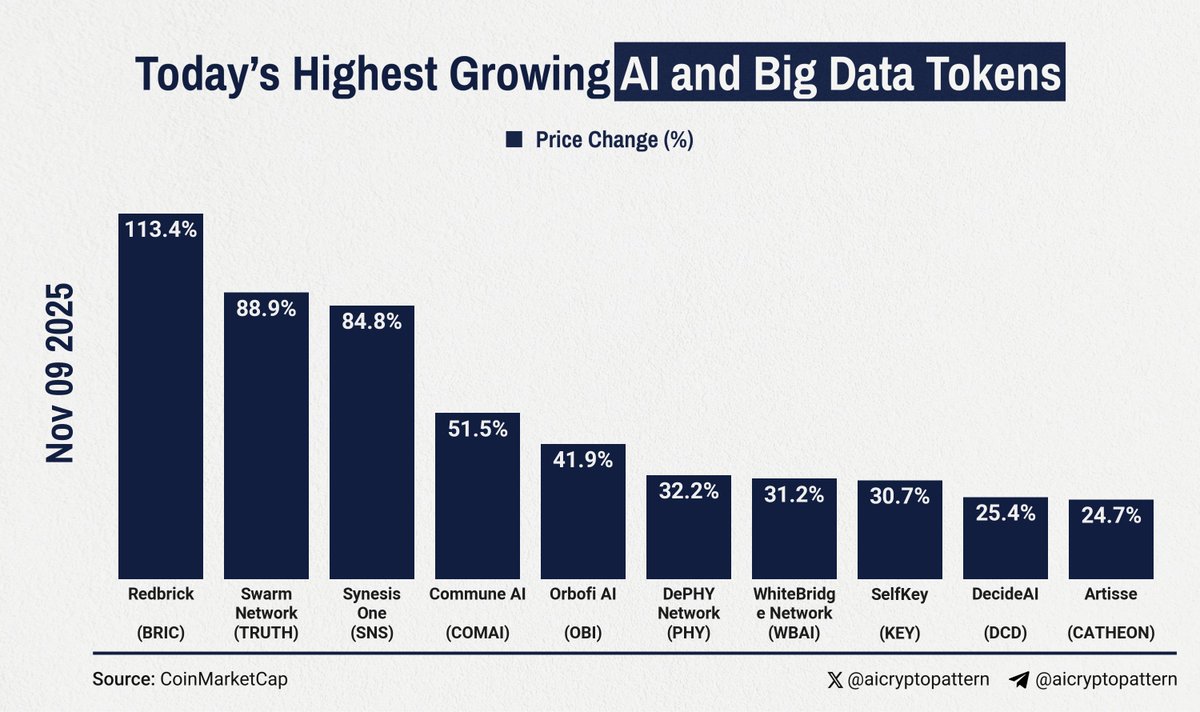
🤖 Today’s Highest Growing AI and Big Data Tokens:
1️⃣ $BRIC | Redbrick: 113.38%
2️⃣ $TRUTH | Swarm Network: 88.86%
3️⃣ $SNS | Synesis One: 84.81%
4️⃣ $COMAI | Commune AI: 51.53%
5️⃣ $OBI | Orbofi AI: 41.93%
6️⃣ $PHY | DePHY Network: 32.24%
7️⃣ $WBAI | WhiteBridge Network: 31.2%
8️⃣ $KEY | SelfKey: 30.67%
9⃣ $DCD | DecideAI: 25.38%
🔟 $CATHEON | Artisse: 24.72%
#AI
5
717
4 Nov 2025
Excuse the language. The @X algorithm is wank. Don’t bother with paid tiers. It won’t increase your reach and it won’t stop bots. I’d have well over 2000 more followers if I didn’t block all the fake accounts. Thought I’d got it down to a few then asked Grok to take a look. Apparently, I’ve still missed 65% of my followers.
Having high spam activity decimates your reach as you’re treated like one as well.
Here’s a solution @elonmusk: Proof-of-Human Zero Knowledge Proofs with @decideai on the Internet Computer blockchain. Users keep their privacy while nuking the bots.
#InternetComputer
@dfinity
1
44

The Next Evolution of the Internet Computer
KDA died last week, and EGLD just got its final nail in the coffin, both once undeservingly multi-billion-dollar layer-1 projects. It made me reflect on what will truly secure the Internet Computer’s future as a flagship crypto project. And there’s one defining work in progress beyond everything else it already has fully functional, something I recently mentioned in my last post. The next defining leap that will accelerate on-chain AI is the GPU integration, planned by @Dfinity codenamed Gyrotron. This isn’t just another feature release; it’s a fundamental infrastructure upgrade that will redefine what’s possible with on-chain AI.
Why is this upgrade so fundamentally transformative? Because, as many of you know, $ICP smart contracts already run at full CPU speed, making it the only blockchain capable of executing AI models as tamperproof smart contracts, already placing it far ahead of the rest of the industry. Yet this is just the beginning. With this upcoming GPU integration, AI inference and large-scale model training will occur directly on-chain through a deterministic API that grants smart contracts access to GPU power, eliminating any possibility of a point of failure. While the popular blockchains of today can barely handle basic transactions without external compute, $ICP already runs AI models like GPT-2 fully on-chain via projects such as DecideAI and Caffeine AI. And when AI-specialized subnets use GPU-powered smart contracts, it will create the world’s first decentralized GPU compute network secured at the highest Nakamoto coefficient in crypto itself, a foundation for fully autonomous, unstoppable AI. So let me break down how I see it accelerating the ecosystem as a whole, and give you another informative piece to show why the Internet Computer is the future.
Disrupting the GPU Oligopoly
In today’s model, anyone who wants to build something AI-related rents GPUs from the well-known centralized providers: AWS, Azure, or Google Cloud. Here you will pay unpredictable rates, rely on their uptime (we know how well that goes), and risk censorship or access restrictions. Your AI is only as "decentralized" as the corporation hosting it. Simply put, you have no choice in the matter, even if you try to spin the narrative like every other so-called crypto AI project. But when the Internet Computer’s GPU-enabled subnets go live, this will throw that crooked model completely out the window. AI models will run as canister smart contracts across 105 node providers operating 1,653 machines in 94 independent data centers worldwide. (Yeah buddy, it’s not centralized, you’re just a delusional hater with foam at your mouth.)
The economic implications are also very significant. Cloud GPU costs are inflated by oligopolies, but the Internet Computer counters this with its reverse gas model, which eliminates transaction fees for users. Developers can also convert $ICP into cycles to power compute, achieving predictable costs at around $5 per GB of storage (you know the drill). Once GPU compute becomes available, this same model will apply to the AI workloads, potentially making access to computational power as easy as it should be, something that currently requires enterprise-scale budgets.
Cross-Chain Intelligence
So with this fundamental change in architecture, Chain Fusion technology will accelerate it even further, because the smart contracts on the Internet Computer already interact with Bitcoin, Ethereum, and Solana without bridges or wrapped token nonsense. Combined with GPU-enabled AI, this becomes a powerful foundation for autonomous, cross-chain intelligence. AI agents will run on GPU-powered canisters that can easily analyze DeFi markets, manage liquidity, optimize yield strategies, and execute cross-chain transactions autonomously. These systems would be verifiable, unbribable, and continuously operational. Projects like @LiquidiumWTF, @Odin_GodOfRunes, and @OmnityNetwork already use Chain Fusion for Bitcoin DeFi. With GPU-powered AI, they could implement predictive modeling, adaptive AMMs, and self-learning risk management.
AI Compute Becomes Public
The Gyrotron milestone will also introduce more than just advanced AI on-chain; it will serve as the catalyst for a decentralized compute economy. AI training and inference will occur on-chain through GPU subnets, where compute providers compete transparently, developers gain direct access to AI resources, and users can verify how their data is used. In contrast, centralized cloud providers extract profit by controlling compute supply, while in this model, the Internet Computer’s decentralized governance through the NNS will determine resource allocation and pricing transparently for everyone to see. An AI model running on the Internet Computer cannot be taken down by corporate policies or government intervention, ensuring true autonomy and resilience.
To conclude, the Internet Computer is proving that truly decentralized AI is no longer a theory but an emerging reality. With its plans for GPU integration, AI-specialized subnets, and the already existing verifiable governance through the NNS, it establishes a transparent compute fabric powered by $ICP. Here, AI can train, infer, and operate autonomously across networks like Bitcoin, Ethereum, and Solana, all secured by advanced cryptography and coordinated through decentralized governance. This model eliminates dependence on centralized intermediaries and corporate control, enabling open access, verifiable logic, and permanent uptime. As the Internet Computer advances toward Gyrotron, it is not just scaling AI on-chain or being another AI or Web3 project in name, but redefining what digital sovereignty means in the age of intelligent computation.
7
25
133
3,355

There have been many attempts to bring AI fully on-chain, but none have reached a practical scale.
Writing an entire AI model into a smart contract sounds powerful in theory, yet blockchains can’t handle that kind of computation efficiently.
Projects like DecideAI on Internet Computer and TensorflowSui showed that models such as GPT-2 can run through smart contracts.
The problem is cost.
Every validator repeats the same heavy process, which slows everything down and limits how far those systems can go.
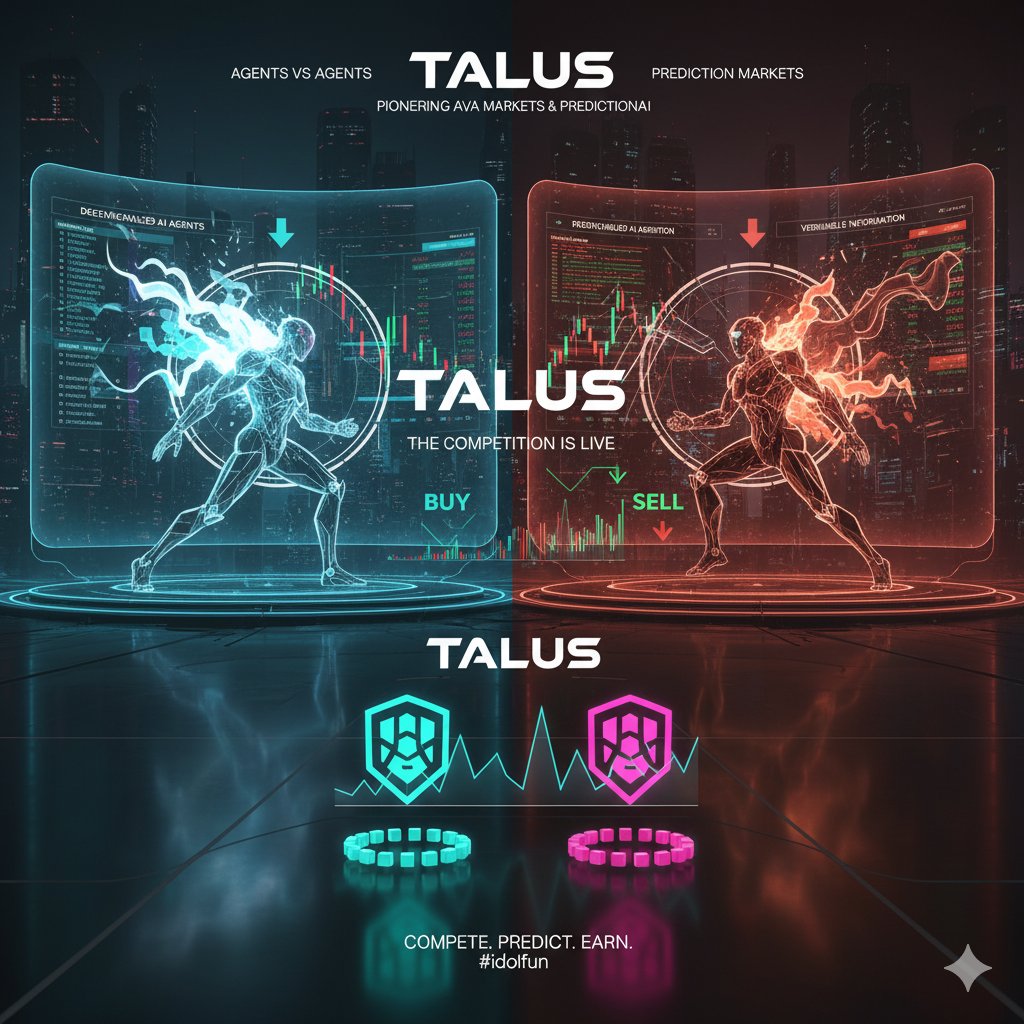
Talus approaches this from a different angle.
It focuses on verifiable results rather than raw on-chain computation.
With zero-knowledge proofs, AI models can process data off-chain while the blockchain confirms their accuracy.
zkML made early progress in this space, and @TalusNetwork builds on that idea to support stronger and more modular AI systems.
@Tbrreadd @Aishie_Talks
2
112

15 Oct 2025
#InternetComputer
Everyone's talking about A.I safety
But #DecideAI have the vision.
Pioneering interview ⬇️
1 Jul 2025

AI on the Blockchain: Building a Safer Digital Future with DecideAI
youtube.com/watch?v=83ExNUCt…
13
478
22 Sep 2025
$ICP Discover the Top SNS Projects Driving the Internet Computer
The Internet Computer’s Service Nervous System (SNS) ecosystem is rapidly expanding, with projects spanning DeFi, AI, RWA tokenization, and social platforms. Here’s a snapshot of the most prominent DAOs ranked by Fully Diluted Valuation (FDV) and community activity:
🔑 Leading Projects (by FDV)
FomoWell – $24.39M | High-performance Bitcoin asset issuance & trading
Gold DAO – $20.88M | Gold-backed token (GLDT) USDG stablecoin
ORIGYN – $19.12M | Blockchain-based certification & RWA authentication
ICVC – $14.68M | Web3 venture builder DAO
Kinic – $11.96M | zkML tools, vector DB, verifiable AI deployment
📈 Most Active Communities (Proposal Volume)
WaterNeuron – 12 proposals/week (liquid staking for ICP)
OpenChat – 8 proposals/week (decentralized messaging app)
TACO DAO – 8 proposals/week (actively managed digital asset portfolio)
Gold DAO – 3 proposals/week (gold-backed stablecoin governance)
ICPSwap – 3 proposals/week (flagship ICP DEX)
🌐 Key Trends:
DeFi Growth: ICPSwap, KongSwap, and WaterNeuron are maturing ICP’s financial layer.
RWA Tokenization: Gold DAO & ORIGYN unlock real-world asset markets.
AI & Tooling: Kinic, DecideAI, ICPanda building decentralized AI infrastructure.
Community-First Platforms: OpenChat and Dragginz keep governance highly engaged.
SNS projects are shaping a self-governing, fully decentralized Web3 economy—combining DeFi, tokenized assets, and AI-powered DAOs into a single, interoperable network.
@IC_FloridaMan @ICPSCOTT @Hamad9867021494 @ICP_insider @monkey898898 @novahodler @cryptalo_icp @dogwifbrow_ICP @ICPWhiteShark @Mkol29199160 @PencilNeckCapo @dominic_w @dfinity @caffeineai
3
12
250
18 Sep 2025
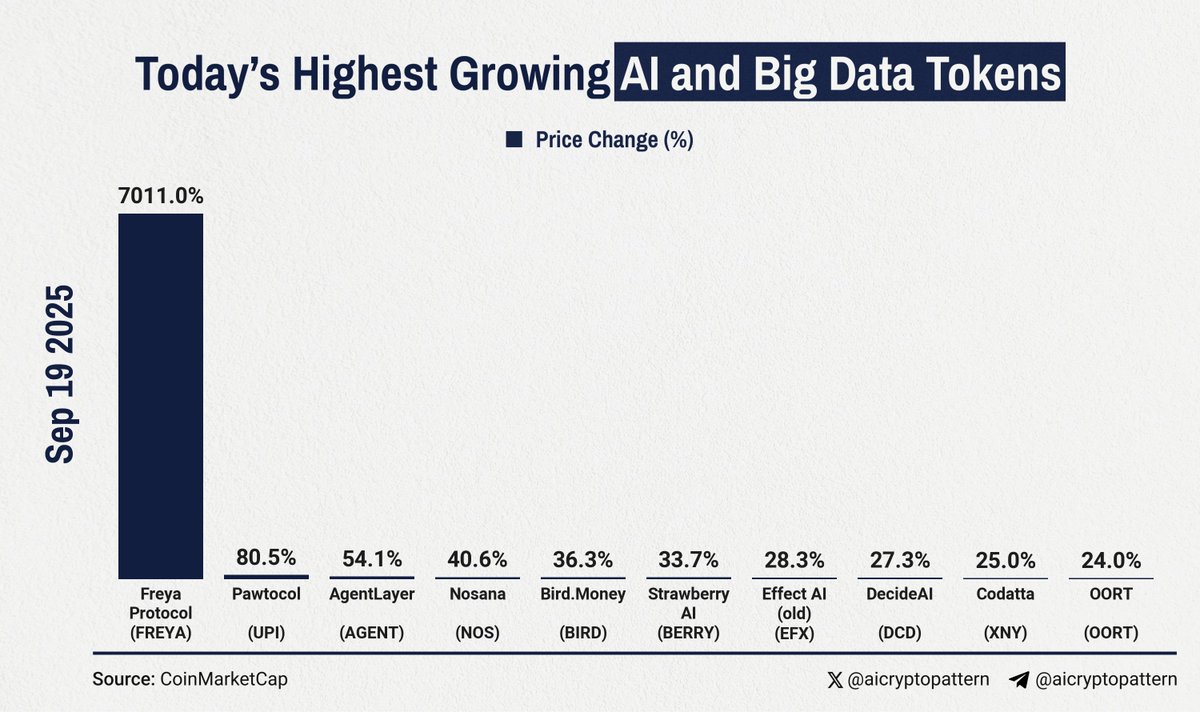
🤖 Today’s Highest Growing AI and Big Data Tokens:
1️⃣ $FREYA | Freya Protocol: 7011.0%
2️⃣ $UPI | Pawtocol: 80.54%
3️⃣ $AGENT | AgentLayer: 54.07%
4️⃣ $NOS | Nosana: 40.59%
5️⃣ $BIRD | Bird Money: 36.33%
6️⃣ $BERRY | Strawberry AI: 33.69%
7️⃣ $EFX | Effect AI (old): 28.35%
8️⃣ $DCD | DecideAI: 27.33%
9⃣ $XNY | Codatta: 25.0%
🔟 $OORT | OORT: 24.01%
#AI
1
4
264

17/
@Skye__Terrier: “Collabs with other AI-on-chain projects?”
Arjaan: “Any project with token AI workload need = partner. Could be summarization, automation, etc.”
Patrick: “Future → @ICPandaDAO (secure off-chain AI), DecideAI, others via chain fusion. Lots of possibilities.”
1
12
107

13 Sep 2025
🚀 ICP Network Market Update - 24 HOURS
📊 Generated: 9/12/2025, 5:10:55 PM
🌐 Total ICP Network tokens tracked: 37
🔒 ONLY ICP Network tokens included
✅ Real-time data from DexScreener
📈 TOP 10 GAINERS:
1. 🟢 YUKU (Yuku DAO) - 8.03% 📈
💰 $0.003258 | Vol: $0.0M
2. 🟢 WTN (WaterNeuron) - 7.26% 📈
💰 $0.116800 | Vol: $0.0M
3. 🟢 GOLDAO (GOLDAO) - 4.16% 📈
💰 $0.022630 | Vol: $0.0M
4. 🟢 NAK (NAK) - 3.51% 📈
💰 $0.000064 | Vol: $0.0M
5. 🟢 DCD (DecideAI) - 3.46% 📈
💰 $0.004990 | Vol: $0.0M
6. 🟢 DOMINATOR (DOMINATOR) - 3.01% 📈
💰 $0.000043 | Vol: $0.0M
7. 🟢 ckETH (ckETH) - 2.70% 📈
💰 $4645.05 | Vol: $0.0M
8. 🟢 WUMBO (Wumbo) - 2.47% 📈
💰 $0.041630 | Vol: $0.0M
9. 🟢 DKP (Draggin Karma Points) - 2.35% 📈
💰 $0.001005 | Vol: $0.0M
10. 🟢 ckLINK (ckLINK) - 1.91% 📈
💰 $24.86 | Vol: $0.0M
📉 TOP 10 LOSERS:
1. 🔴 EXE (Windoge98) - -6.58% 📈
💰 $0.081100 | Vol: $0.0M
2. 🔴 BOB (BOB) - -5.16% 📈
💰 $0.212000 | Vol: $0.0M
3. 🔴 CLOUD (Crypto Cloud) - -2.47% 📈
💰 $0.003204 | Vol: $0.0M
4. 🔴 SNEED (Sneed DAO) - -2.16% 📈
💰 $44.90 | Vol: $0.0M
5. 🔴 KINIC (KINIC) - -2.08% 📈
💰 $0.840600 | Vol: $0.0M
6. 🔴 nICP (neuron ICP) - -2.05% 📈
💰 $5.33 | Vol: $0.0M
7. 🔴 POKED (Poked) - -1.76% 📈
💰 $0.000007 | Vol: $0.0M
8. 🔴 ckOCT (ckOCT) - -1.74% 📈
💰 $0.092970 | Vol: $0.0M
9. 🔴 CHAT (CHAT) - -1.50% 📈
💰 $0.121900 | Vol: $0.0M
10. 🔴 GLDT (Gold Token) - -1.16% 📈
💰 $1.21 | Vol: $0.0M
💡 Key Insights:
• Average gain: 3.89%
• Average loss: -2.67%
• Market sentiment: Bullish 📈
• Total volume: $0.0M
• Data sources: Real-time APIs
#ICP #InternetComputer #Crypto #DeFi #Blockchain #Trading #RealTimeData #ICPNetwork
All Rights Reserved T3kNo-Logic 2025
1
2
67
6 Sep 2025
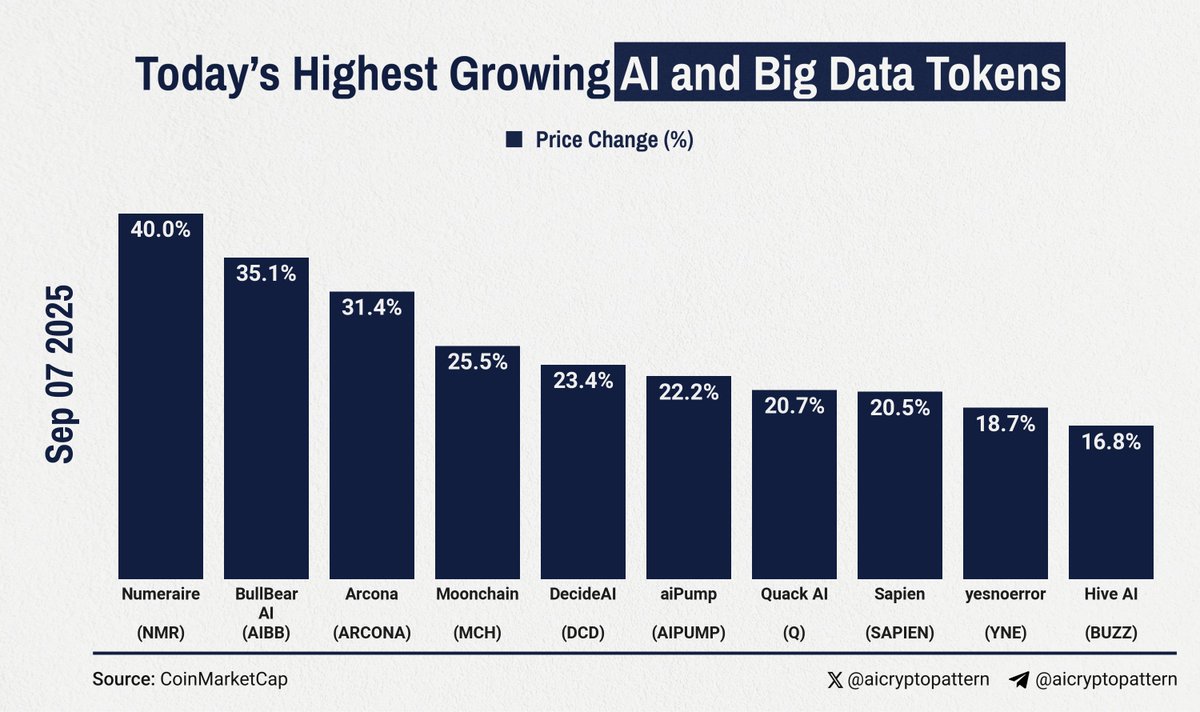
🤖 Today’s Highest Growing AI and Big Data Tokens:
1️⃣ $NMR | Numeraire: 39.95%
2️⃣ $AIBB | BullBear AI: 35.12%
3️⃣ $ARCONA | Arcona: 31.41%
4️⃣ $MCH | Moonchain: 25.48%
5️⃣ $DCD | DecideAI: 23.42%
6️⃣ $AIPUMP | aiPump: 22.17%
7️⃣ $Q | Quack AI: 20.66%
8️⃣ $SAPIEN | Sapien: 20.47%
9⃣ $YNE | yesnoerror: 18.72%
🔟 $BUZZ | Hive AI: 16.75%
#AI
1
4
362

🚀 Top 10 Trending AI Coins 🎉
📊 Catch the hottest movers in the ai coin space!
💎 Top Gainer: $GALEON ( 11.7%) 👉 @GaleonCare
1⃣ $GALEON ( 11.7%) 👉 @GaleonCare
2⃣ $WIRE ( 6.3%) 👉 @717CapitalAI
3⃣ $DCD ( 6.29%) 👉 DecideAI
4⃣ $FYI ( 6.18%) 👉 @FlagshipFYI
5⃣ $BOOM ( 5.39%) 👉 @BOOM_FND
6⃣ $FLOCK ( 4.63%) 👉 @flock_io
7⃣ $A0X ( 3.86%) 👉 @A0xbot
8⃣ $BREW ( 3.75%) 👉 @homebrewrobots
9⃣ $SN60 ( 3.4%) 👉 @bitsecai
🔟 $GEKKO ( 3.21%) 👉 @Gekko_Agent
🌟 Which one are you betting on? 💬
#AICoins #CryptoTrends #Altcoins #SpikingAI
Follow @spiking for real-time updates on rankings and market trends.
6
17
1,131