
12h
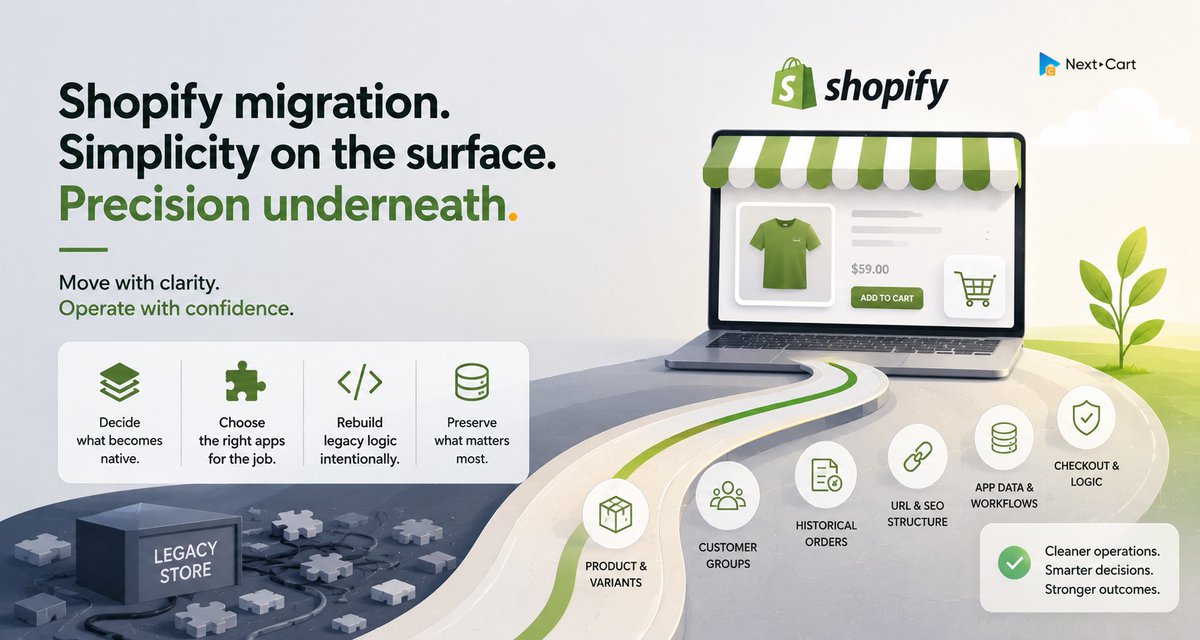
🚀 Master Your Shopify Migration: Avoid Common Pitfalls!
Remember, a seamless Shopify migration isn't just about a tidy storefront. While Shopify makes e-commerce easier, careful planning behind the scenes is essential to ensure a smooth transition.
Don’t assume that a cleaner platform automatically leads to better operation. Strategic risks remain involved.
Before you migrate, ask these 4 key questions:
📦 Native vs. App Logic: Which parts will be native Shopify features, and which need apps?
⚙️ Data & Structures: How will you convert complex variants, segments, and URL schemes?
🔄 Legacy Rebuilds: Which workflows should be rebuilt, not copied?
📊 Historical Access: What data must stay accessible for support, retention, and reporting?
Aim to use migration to cut operational friction, not just copy your old store into a new interface.
🔑 Precise architecture is key!
#Shopify #ShopifyMigration #Replatforming #eCommerceOps #NextCart
5
Jun 13
🚀 Unlock Hidden Costs After Your Migration! 🚧
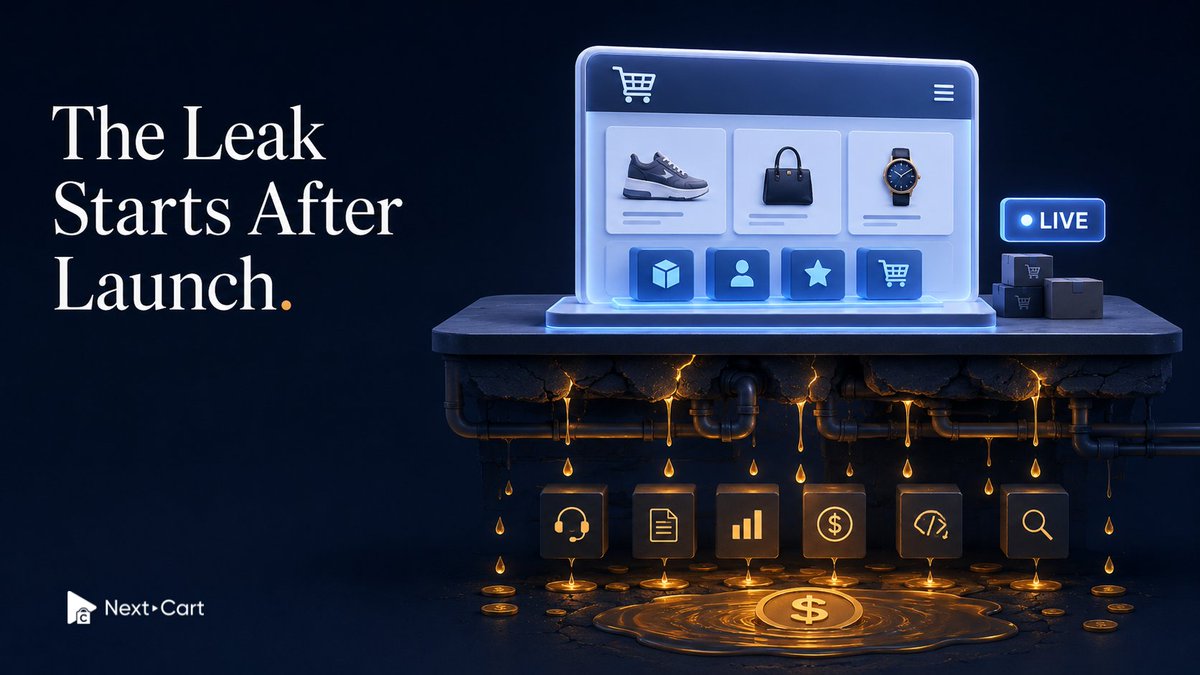
Operational cost leaks rarely cause launch failure; the site goes live, orders come in, and teams adapt. Over time, unseen expenses quietly accumulate, threatening margins even if they don't crash the site initially.
🔍 Beware of 4 hidden operational leaks:
🧑💻 Customer Service: Wasting time on missing order history.
📦 Merchandising & Operations: Duplicating updates and rebuilding reports outside the platform.
💸 Finance & Development: Manually reconciling data and maintaining avoidable custom logic.
🎯 Marketing & SEO: Losing segmentation precision and fixing search issues after launch.
The Key Insight: Stop judging migration success solely by launch. Instead, evaluate the ongoing operating costs!
#eCommerceOps #TechDebt #Replatforming #EnterpriseArchitecture #NextCart
24

Jun 11
Technical glitch? 🛠️ Don’t panic. Maestro automatically triggers branded maintenance mode or emergency pricing resets if things go sideways. Peace of mind, automated. 🧘
Stay prepared: xco.agency/blog/maestro-road… #EcommerceOps #ShopifyPlus

2

Ever Lost Money Without Realizing It?
Wrong pricing, vendor, stock level.
Small mistakes. Big leaks.
SellerScape closes gaps:
💰 Margin-aware pricing
📦 Accurate inventory
⚙️ Smart routing decisions
🔗 sellerscape.io?utm_source=li…
#ProfitControl #SmartPricing #EcommerceOps

1
1
8

The issue is the exception rulebook that didn't get updated.
▪️ Which lanes are affected and by how many days
▪️ What buffer each lane needs before the cluster
▪️ Who owns the exception in the system
If the answer is "CX handles it," the failure is structural. 📉 #EcommerceOps
1
2
13
Returns spikes are engineered. The cause is upstream intake logic, not luck.
Scan latency thin Tuesday staffing no exception routing = CS queue flooded before ops sees the signal.
Where do your exceptions land: system or CS? 📦 #FLEXtruths #EcommerceOps
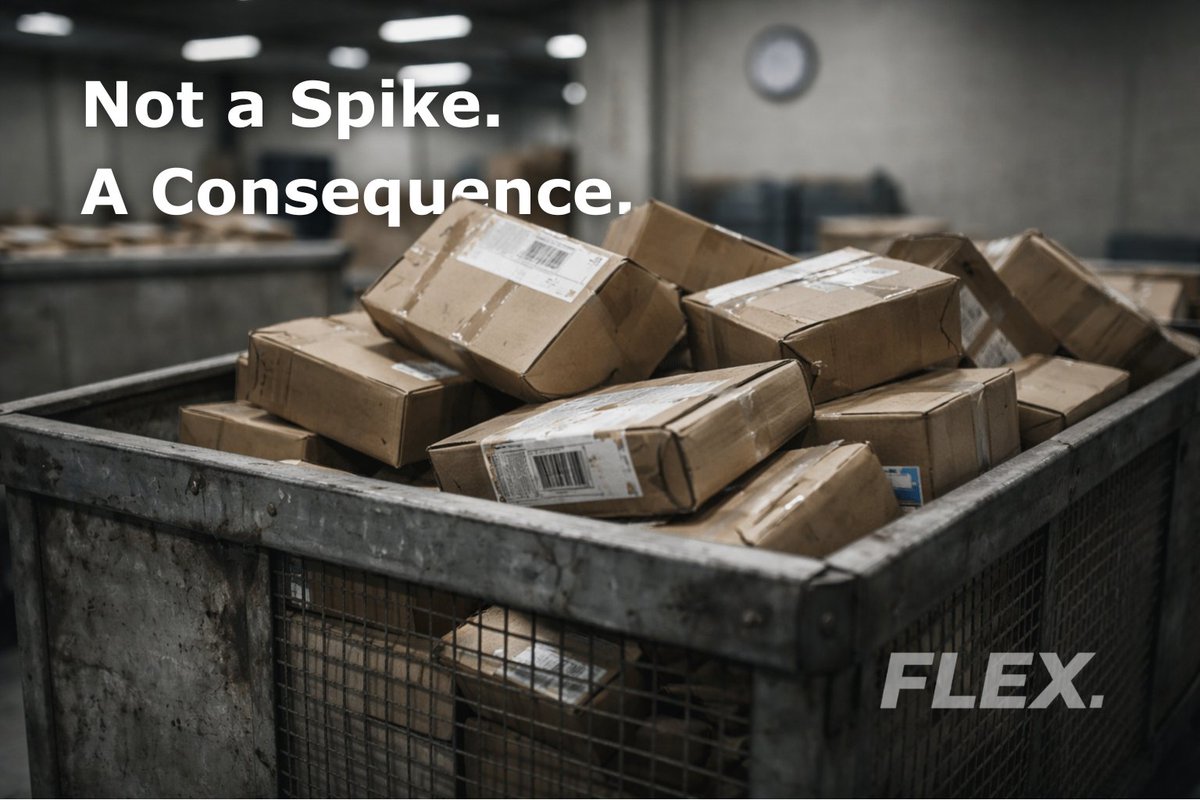
ALT A wire cage filled with numerous brown cardboard packages in a dimly lit warehouse. Text reads, "Not a Spike. A Consequence." Branding says "FLEX."
2
3
23
The wrong math:
▪️ Thursday dispatch to DE/ES misses Good Friday ops
▪️ Friday dispatch hits the weekend
▪️ Monday dispatch hits NL ES regional Easter Monday
▪️ First clean multi-lane window: Tuesday Apr 7
DHL flags cut-offs falling days before Easter Monday. #EcommerceOps
1
3
28

Run it fast. Look for where timestamps stopped lining up 🔍📉
Focus on latency spikes and SLA drift vs last Monday.
The problem usually isn’t “delay.” It’s where time slipped between handoffs. #SupplyChain #EcommerceOps
1
4
23

Inputs = Land Pickup-Kalender Cut-off. Daraus 3 Regeltypen: 1 Werktag, Blackout oder Service-Downgrade. Nicht im Kopf des Dispatchers, sondern systemisch in Checkout, WMS und CS-Makros. Sonst verkauft ihr Standard und liefert Ausnahme. 🛠️⏱️ #EcommerceOps #WMS
4
4
15
📦 SKU complexity doesn’t feel expensive… until it is.
Every extra size, color, bundle or pack rule adds another decision at the shelf.
More decisions = more misses, more checks, more labor.
Variant count is an ops tax. #FLEXtruths #EcommerceOps
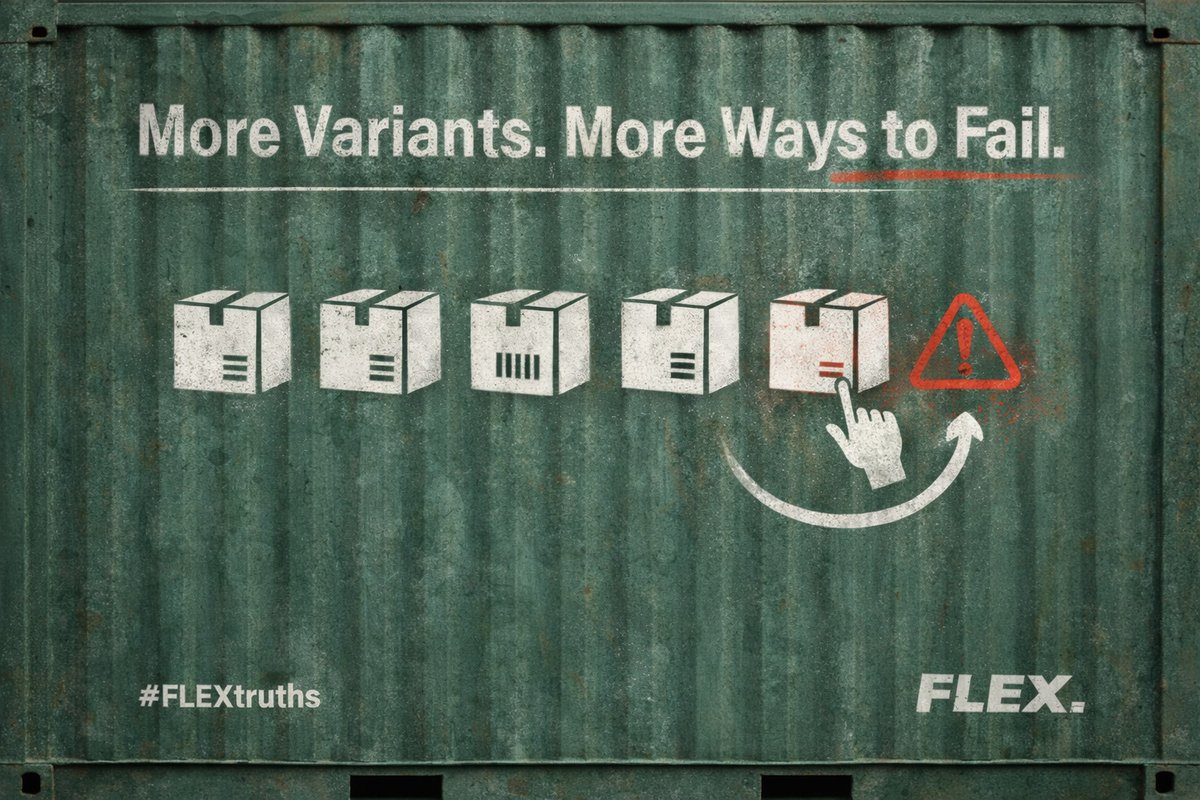
ALT Green textured background with white text: "More Variants. More Ways to Fail." Five box icons, a warning symbol, and a hand pointing to a highlighted box. Tone: Cautionary. #FLEXtruths.
1
2
12
Measure before/after 📊
▪️ Travel meters/line
▪️ Picks/hour time-to-1st-pick
▪️ Touches/line (pick replen)
▪️ Mispick/short rate
Guardrail: travel ↓ can mean replen ↑ if min/max is off—fix it.
Re-slot when the mix moves, not when finance screams.
#EcommerceOps #SupplyChain
3
10

Mar 4
A March Adobe Commerce health check helps prevent Q2 surprises. Security, performance, and checkout reviews should be ongoing, not annual. #AdobeCommerce #eCommerceOps #ManagedServices hubs.ly/Q04529TW0
2
4
Reducing fulfillment time isn’t a carrier problem. It’s a QUEUE problem.
McKinsey: 90% will wait 2–3 days 95% pick free/standard.
If “2-day” needs premium labels, you’re buying speed—not building it. #FLEXtruths #Fulfillment #EcommerceOps
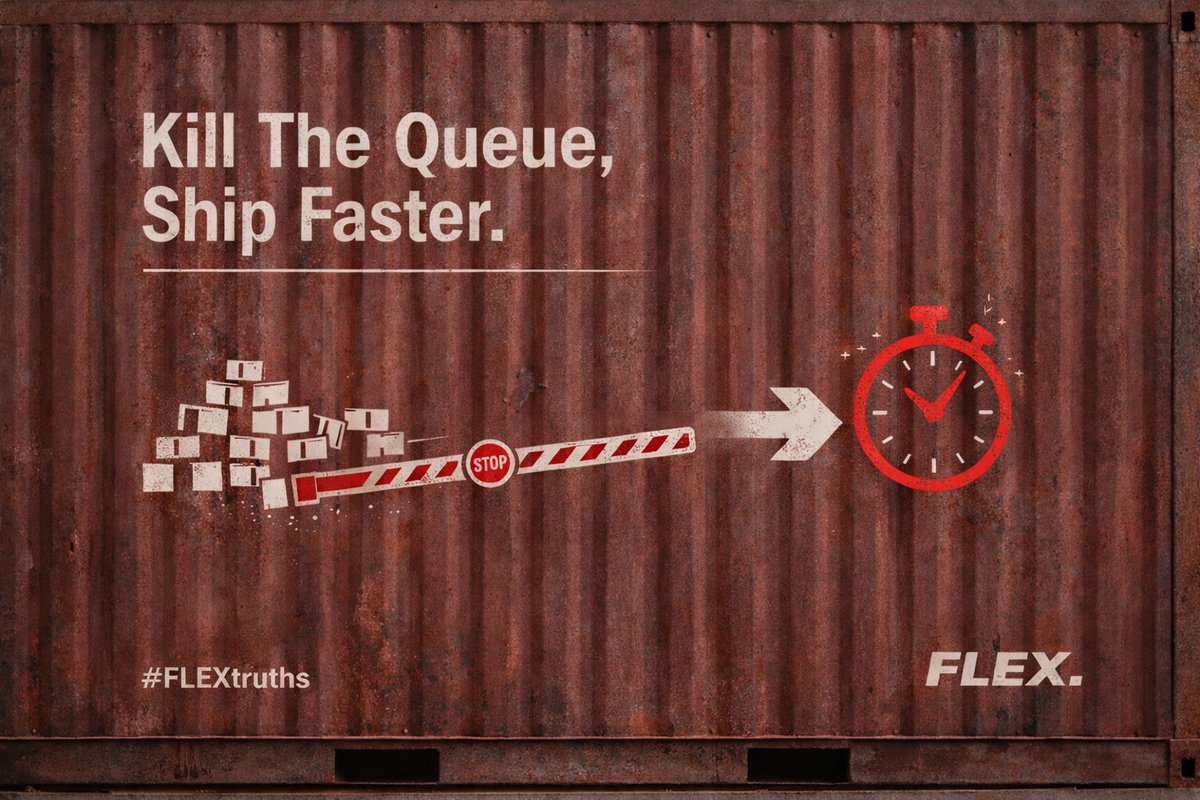
ALT A rusty metal container displays the words "Kill The Queue, Ship Faster" with a diagram of boxes blocked by a barrier, leading to a stopwatch. Hashtags and brand name included.
1
2
2
26
Turn every return into a signal:
1️⃣ Standardize reason codes (size, defect, expectation, delivery).
2️⃣ Fast triage: restock vs refurb vs liquidate.
3️⃣ Close the loop weekly with Product CX Ops.
Who owns returns insights in your org? #ReverseLogistics #EcommerceOps
1
3
24

Feb 18
If you run a Shopify store, quick question:
What is still manual in your backend?
→ Inventory sync between locations
→ Low stock alerts and supplier triggers
→ Order tagging and routing
→ Customer follow-ups after purchase
→ Weekly sales reporting
Most stores scale revenue before they scale systems. That creates hidden operational drag.
Which workflow breaks first as your order volume grows?
Curious to hear what is slowing you down.
#Shopify #EcommerceOps #Automation #DTC #OnlineStore
2
3
97

Feb 4
post-holiday returns decide ecom margins, not ads. most stacks bury rma timers and rewrite inventory states. i pushed our february surge through @allscaleio and the mechanics were different: rma create→ack 23s, label issue→scan 41s, restock vs refurb posted with ttl, exchange vs refund tied to partial capture not full reversal, per-line vat/wht re-priced for br nf-e / mx cfdi / in gst, serials and photos live in-thread, split settle to $USDC $USDT $EURC with holdbacks. receipts carried reason enums and resale proofs. infra that codifies returns is where p&l leakage stops #AllScale #PaymentsOps #EcommerceOps $AS

5
5
40

Last Q4: inventory froze, AWD blocked stock, brands lost millions.
This Q4: plan for the worst. Have a backup plan. Then a backup for your backup.
Hope isn’t a strategy. Prep is.
#AmazonFBA #Q4Prep #EcommerceOps
1
2
31

10 Oct 2025
New on the blog: Salestio and BigCommerce features that keep catalogs, prices, and orders in sync across Amazon/eBay/Etsy.
Read: salest.io/blog/page/key-sale…
#BigCommerce #ShopifyAlternative #EcommerceOps #Amazon #eBay #Etsy #SaaS

4
20

7 Jul 2025
> Tariffs are the weather of global trade.
Right now, there’s a 10% minimum hitting importers. That could spike — or vanish — in a single election cycle.
So what do smart operators do?
They buy time — with bonded warehouses.
A bonded warehouse lets you store imported goods without paying duties upfront.
You only pay when the goods leave the warehouse for domestic sale.
That means:
✅ If tariffs go down later — you pay the lower rate.
✅ If you re-export — you pay no tariff at all.
✅ You manage cash flow and avoid overpaying on uncertain policy.
The bigger your inventory — the bigger the advantage.
Example:
You import $10M in goods in July.
But you don’t sell until Q1 next year.
If tariffs drop to 0% in November — you just saved $1M.
❌ Without a bonded warehouse, you’d have paid that upfront, and wouldn’t get it back.
💡 What this means right now (with 10% tariffs live):
• Bonded warehouses = optionality
• Perfect for scaling brands, 3PLs, or manufacturers with long timelines
• Especially powerful when election-year policy swings are in play
You don’t need to own one.
You just need to know who does — and how to structure it.
📩 DM me if you want to future-proof your tariff strategy.
#TradeStrategy #SupplyChain #BondedWarehousing #LogisticsOps #Tariffs #EcommerceOps #GlobalTrade #CashFlowOps #3PL #IndustrialRealEstate
2
390

3 Jun 2025
What’s the biggest challenge you’ve faced with logistics API integration?
#LogisticsTech #APIIntegration #EcommerceOps #DigitalLogistics #SupplyChainTech #Patternica
33%
Lack of documentation
33%
Poor support of providers
33%
Data sync and delays
0%
Many platforms to connect
3 votes • Final results
1
4
10