
Jun 10
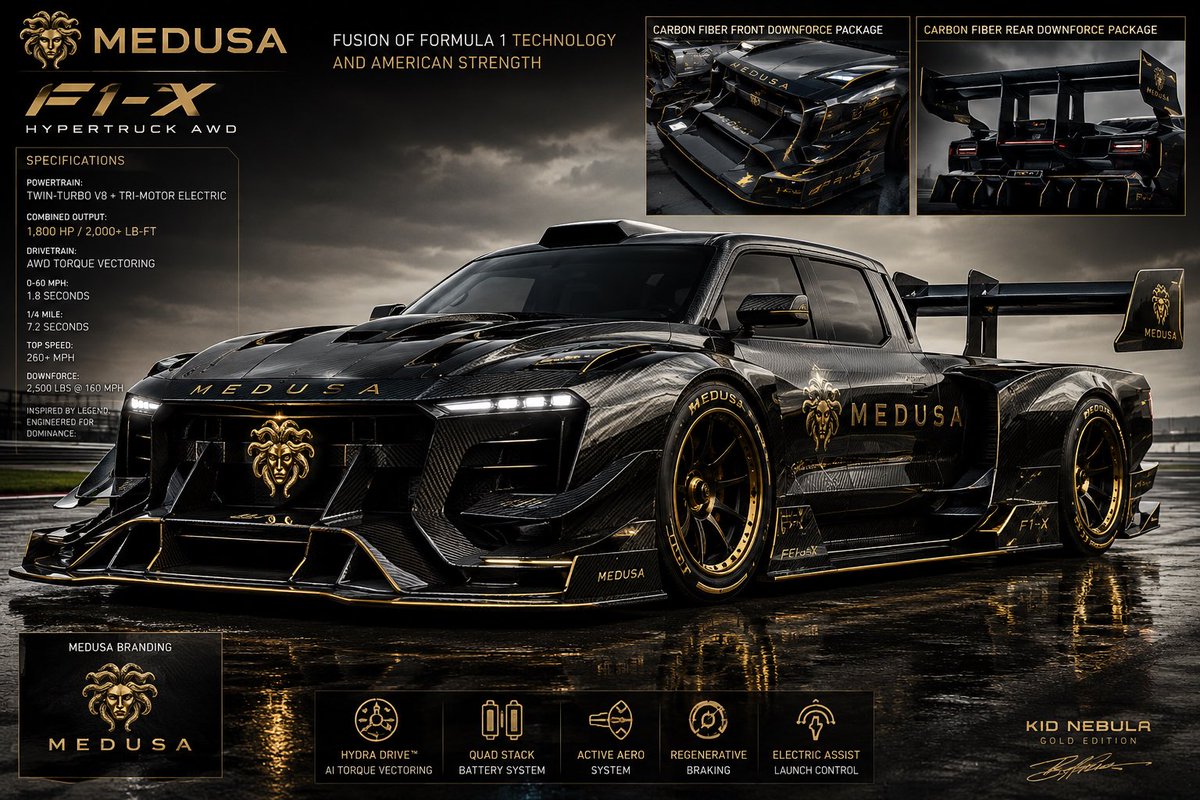
🐍⚡ Medusa Technologies Presents: The F1-X HyperTruck Manufacturing Complex of Aurora-7 🌌🏁
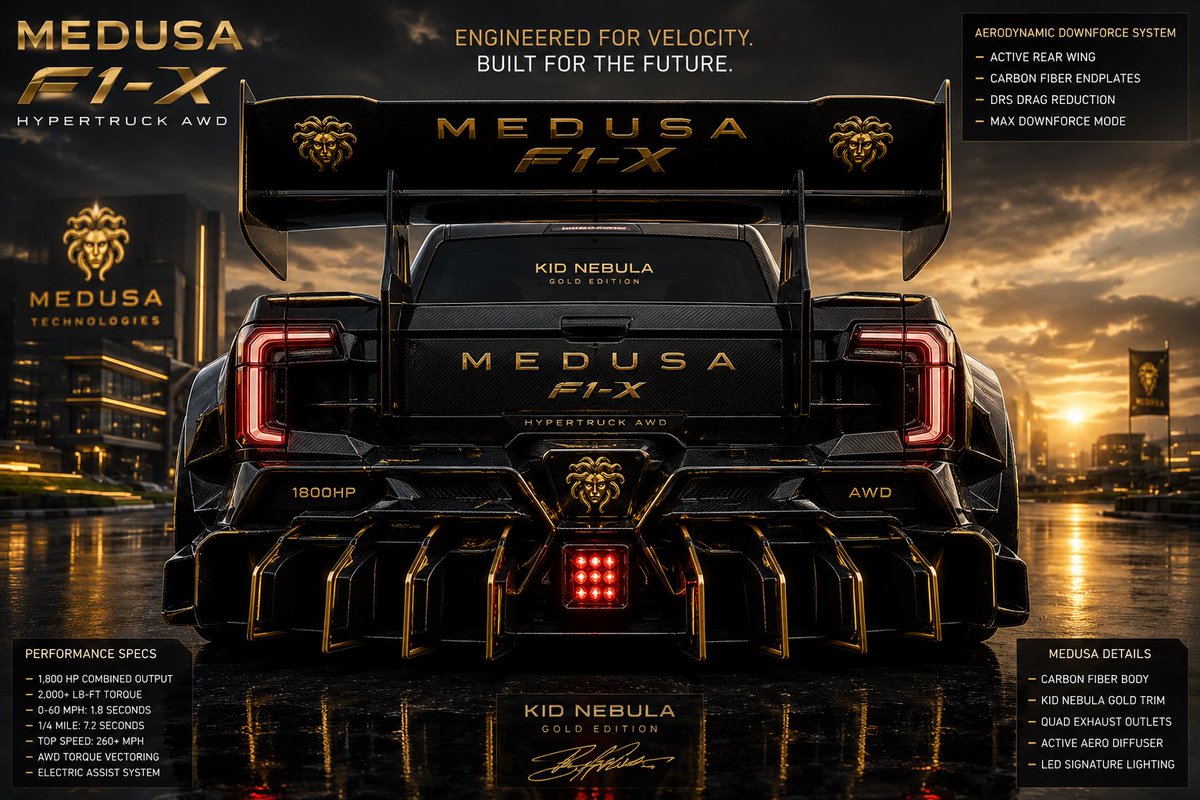
🐍⚡ Medusa F1-X HyperTruck Factory | Aurora-7 Advanced Manufacturing Complex | Kid Nebula Gold & Aurora Gold Engineering 🚀🏁
Explore the Medusa Technologies F1-X HyperTruck Manufacturing Complex on Aurora-7, where Formula 1 aerodynamics, carbon fiber engineering, hybrid-electric propulsion, AI-driven manufacturing, and Aurora Gold innovation converge. Discover the future of high-performance transportation powered by advanced physics, automation, and next-generation engineering. 🐍⚡🌌 #MedusaTechnologies #Aurora7 #KidNebulaGold #HyperTruck #EngineeringFuture
Beyond the crimson horizon of Aurora-7, where twin suns cast ribbons of gold across oceans of black glass, a new titan rose from the desert floor.
The Medusa F1-X HyperTruck Manufacturing Complex stood like a monument to velocity itself.
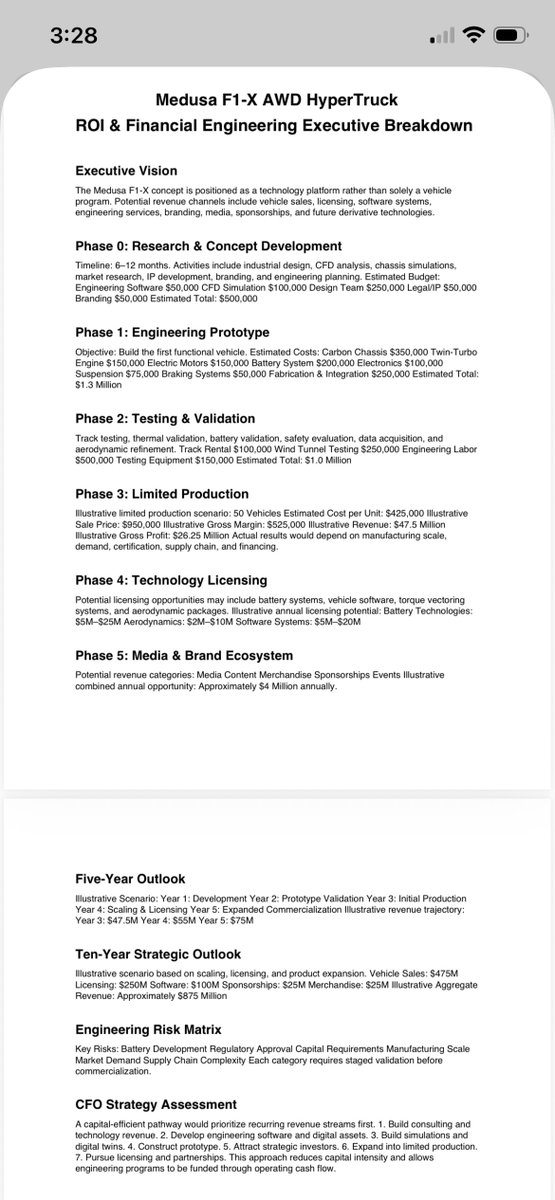
Carbon fiber towers shimmered with Aurora Gold reflections. Autonomous cranes moved silently overhead while fleets of robotic builders assembled hypertruck chassis with microscopic precision. Streams of molten titanium flowed through automated foundries, destined to become suspension components capable of surviving forces few vehicles would ever experience.
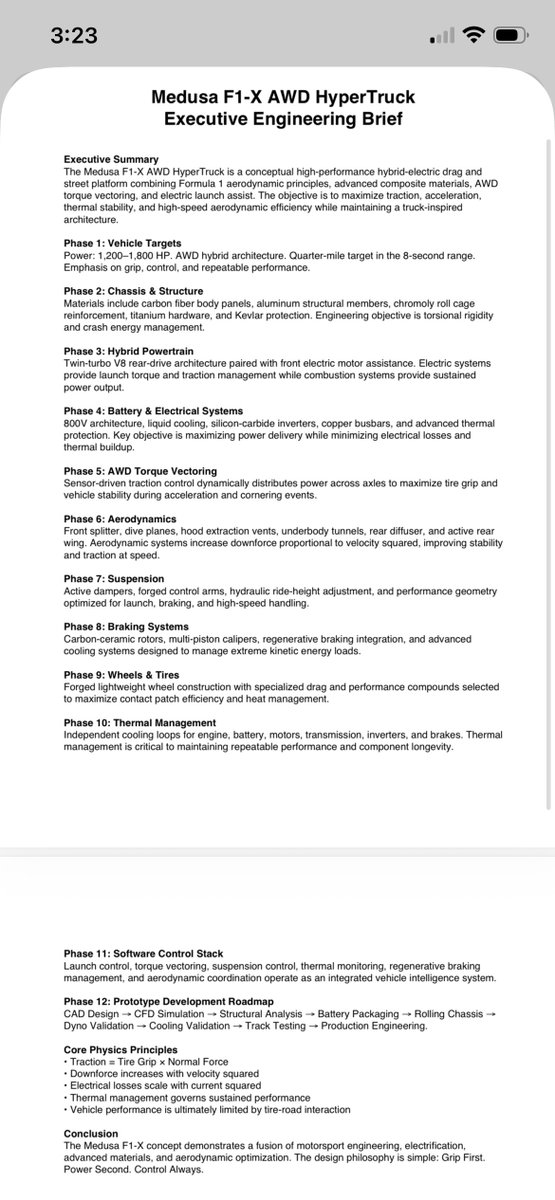
Inside the propulsion halls, engineers monitored hybrid-electric powertrains capable of unleashing over 1,800 horsepower. Massive battery laboratories refined the latest Quad Stack energy architecture while AI systems continuously optimized cooling, aerodynamics, and drivetrain performance.
At the heart of the facility stood the Wind Tunnel Cathedral.
Here, the F1-X HyperTruck faced artificial storms generated at speeds exceeding 250 mph. Lasers illuminated invisible currents of air as engineers sculpted carbon-fiber splitters, active rear wings, and Venturi tunnels into instruments of pure downforce.
Beyond the testing grounds, the proving circuit stretched across the Aurora-7 desert. Every launch shook the ground as AWD torque-vectoring systems and electric assist motors delivered instantaneous acceleration. Each data point flowed into the Medusa Neural Engineering Grid, allowing every future vehicle to become smarter than the last.
This was more than a factory.
It was a fusion of physics, software, materials science, and imagination.
A place where Kid Nebula Gold ambition met Aurora Gold precision.
A place where engineers chased the edge of possibility.
A place where the future arrived at full throttle.
🐍⚡ Welcome to the Medusa F1-X HyperTruck Manufacturing Complex.
Built on Aurora-7.
Engineered for tomorrow.
🏁🌌⚙️
#MedusaTechnologies #F1XHyperTruck #Aurora7 #KidNebulaGold #AuroraGold #HypercarEngineering #CarbonFiber #ElectricPerformance #AWD #FutureMobility #AdvancedManufacturing #Engineering #Innovation #Motorsport #AI #BatteryTechnology #FutureFactory #HyperTruck #Velocity #Physics
108

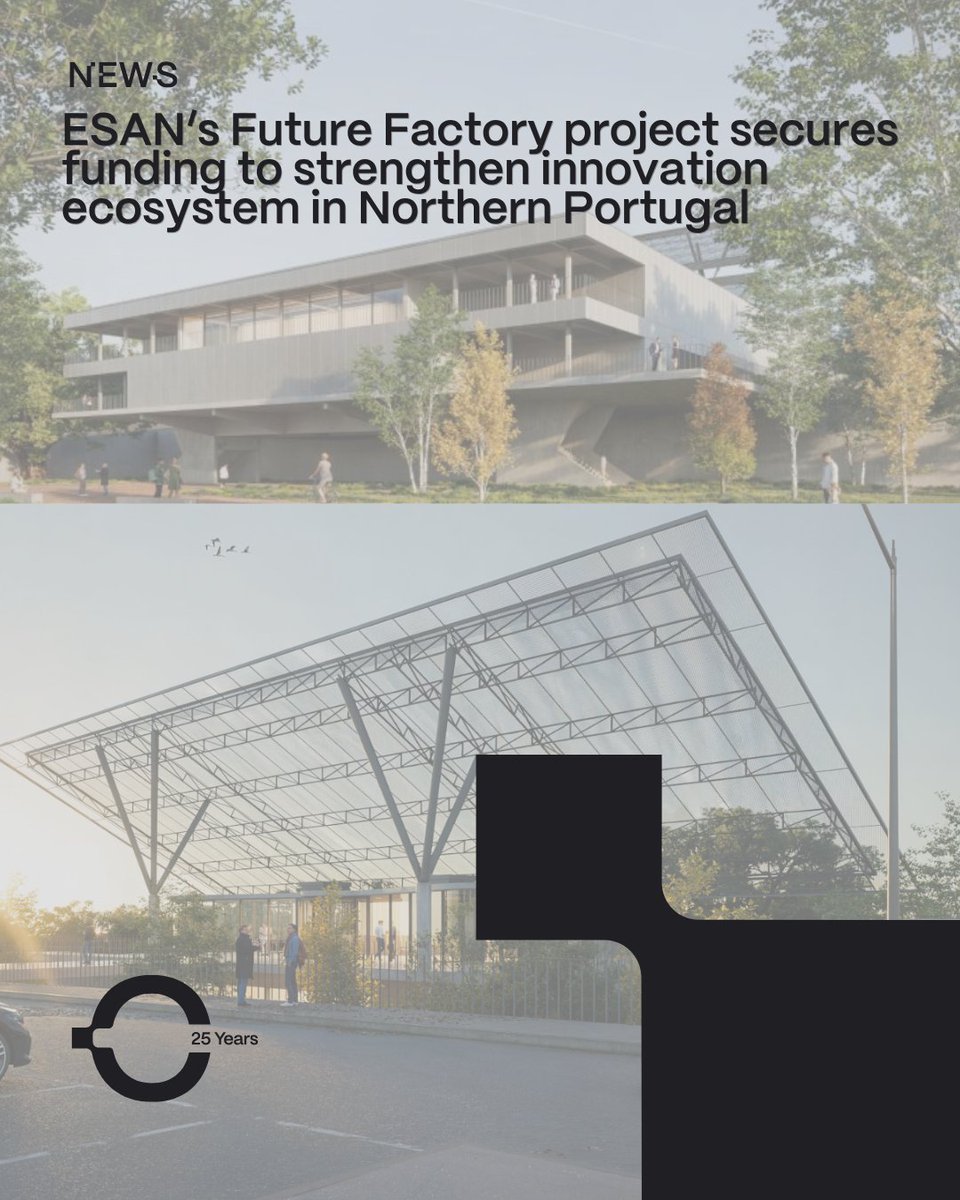
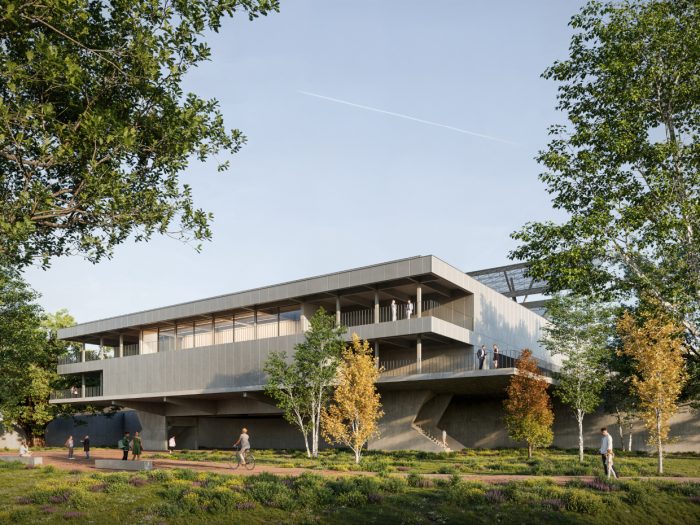
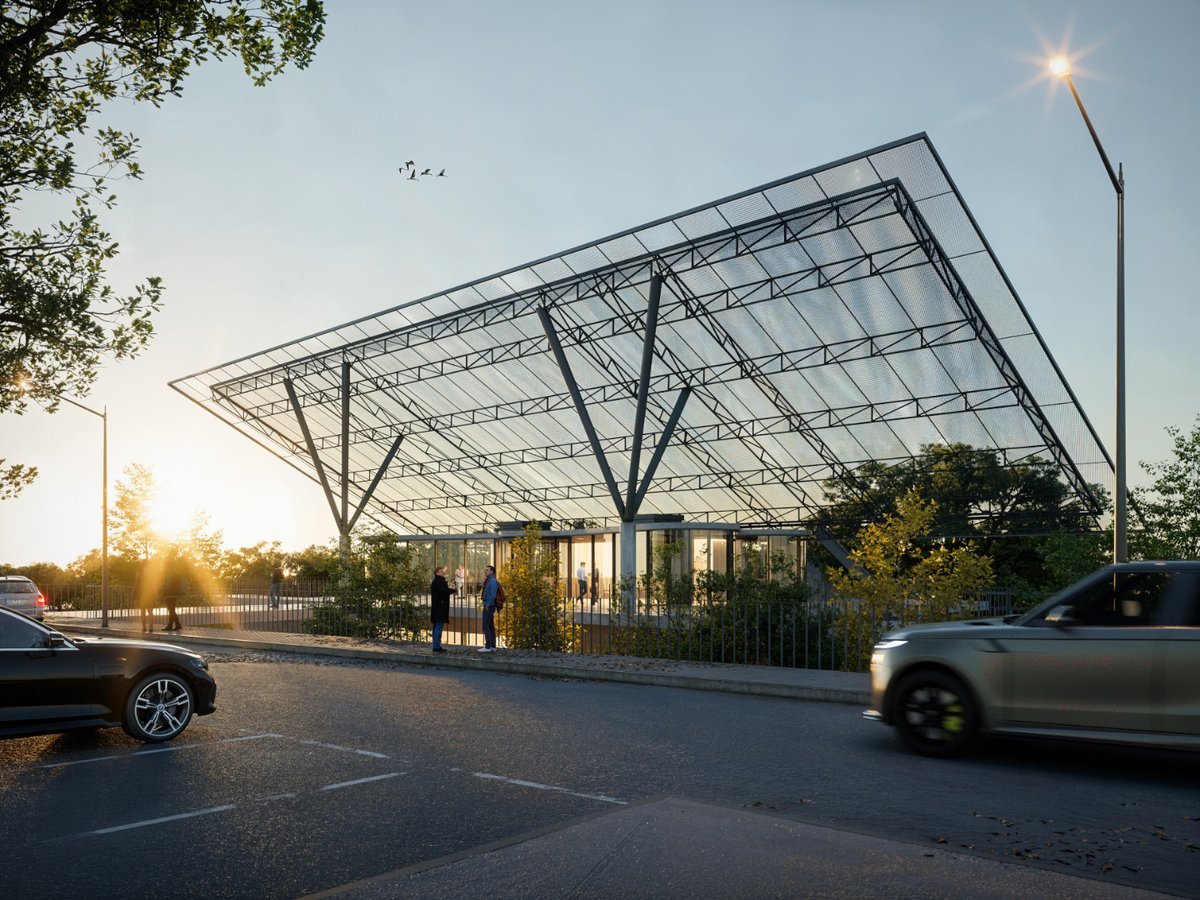
The Future Factory (Fábrica do Futuro), led by ESAN, has secured funding for a €7.3 million investment that will create a new technological hub dedicated to applied research, innovation, and collaboration with industry.
swki.me/o1g9VTJj
#FutureFactory #ESAN #CICECO
1
17

Jun 5
So, when I applied this framework to Ola, here’s what stood out to me.
𝗩𝗶𝗲𝘄𝗽𝗼𝗶𝗻𝘁 1: 𝗦𝗵𝗮𝗿𝗲𝗵𝗼𝗹𝗱𝗲𝗿
When I look at Ola as a shareholder, the first thing I ask is whether management actually delivered on what it spent the last few years building. Because if you go back, revenue grew from ₹373 Cr in FY22 to ₹5,010 Cr in FY24, but then fell to ₹4,514 Cr in FY25 and further to ₹2,253 Cr in FY26. So even after all the excitement around EVs, the business is now dealing with a two-year revenue decline.
Now at the same time revenue was falling, fixed assets increased from ₹104 Cr in FY21 to ₹3,352 Cr in FY26. Depreciation went from ₹20 Cr to ₹684 Cr. So the factories, Futurefactory, Gigafactory, and manufacturing ecosystem are already built. The question is no longer whether Ola can build capacity. The question is whether all that capital can generate acceptable returns.
And if I look at returns today, ROCE is still around -20%, ROE is around -43%, and ROIC is around -39%. So despite all the investment, shareholders are not yet seeing economic returns. That is why the next phase matters much more than the asset-building phase.
Now think about this. If I am trusting management today, what am I actually trusting them to do? I am not trusting them to build factories anymore because that part is done. I am trusting them to turn service improvements into volume recovery, volume recovery into utilization, and utilization into profits and cash flow.
𝗩𝗶𝗲𝘄𝗽𝗼𝗶𝗻𝘁 2: 𝗕𝗮𝗻𝗸𝗲𝗿
If I think like a banker, I stop looking at presentations and start looking at survival. Because revenue can go up and down, but debt, cash flow, and liquidity decide whether a company can keep moving.
Now the good news is that debt has come down from ₹5,684 Cr in FY24 to ₹2,763 Cr in FY26. So leverage is not moving in the wrong direction anymore. But here is the thing. Operating cash flow was still negative ₹775 Cr in FY26, even after improving from negative ₹2,391 Cr in FY25.
So if revenue falls another 20–30%, the first thing that probably gets hit is utilization. And if utilization gets hit, operating leverage starts working in reverse. The company has already built a large manufacturing base, so lower volumes can quickly pressure profitability.
Then look at the recent QIP. Management highlighted the first operating-cash-flow-positive quarter, but only days later the company raised ₹780 Cr. That does not automatically mean there is a problem. But it tells me the business is still strengthening the balance sheet while the recovery is playing out.
𝗩𝗶𝗲𝘄𝗽𝗼𝗶𝗻𝘁 3: 𝗔𝘂𝗱𝗶𝘁𝗼𝗿
Now if I put on an auditor's hat, the first thing I notice is that the numbers tell two different stories at the same time.
On one side, revenue fell sharply. Q4 revenue dropped from ₹611 Cr to ₹265 Cr year-on-year. Annual revenue also fell by roughly half. So the top line still looks weak.
But on the other side, gross margins improved from around 18% in FY25 to more than 30% in FY26, and Q4 gross margins touched 38.5%. Warranty costs also fell from ₹555 Cr to ₹59 Cr. So operationally, the business looks much healthier than it did a year ago.
Now the question becomes whether these improvements are structural. Because if margins improved due to better products, lower warranty claims, and better execution, that is one story. But if they depend heavily on temporary factors, then the picture looks very different.
𝗩𝗶𝗲𝘄𝗽𝗼𝗶𝗻𝘁 4: 𝗙𝗼𝗿𝗲𝗻𝘀𝗶𝗰 𝗔𝗰𝗰𝗼𝘂𝗻𝘁𝗮𝗻𝘁
If I follow the money, the biggest thing that jumps out is cash flow. Because no matter how good the narrative sounds, eventually cash has to show up.
And when you look at the history, operating cash flow has been negative almost every year. FY22 was negative ₹885 Cr. FY23 was negative ₹1,507 Cr. FY25 was negative ₹2,391 Cr. FY26 improved to negative ₹775 Cr.
Now management is highlighting the first operating-cash-flow-positive quarter. That is a good sign. But one positive quarter and a positive annual trend are two very different things.
Another interesting detail is inventory. In FY25 inventory consumed cash. In FY26 inventory released more than ₹500 Cr of cash. So part of the improvement came from working-capital changes, which means investors need to watch whether future cash-flow improvement comes from operations or from balance-sheet movements.
𝗩𝗶𝗲𝘄𝗽𝗼𝗶𝗻𝘁 5: 𝗦𝗵𝗼𝗿𝘁 𝗦𝗲𝗹𝗹𝗲𝗿
Now if I try to break the story, I keep coming back to one thing.
Volume recovery.
Because almost every positive outcome management is talking about eventually leads back to volume growth.
Management says service improved. Fine.
Management says margins improved. Fine.
Management says cash flow improved. Fine.
But if registrations stop improving, then operating leverage becomes weaker, cash generation becomes harder, and the entire recovery story slows down.
And this is why the registration data matters. Registrations improved from 3,973 units in February to 10,117 in March, then 12,323 in April, and 15,139 in May. That is clearly moving in the right direction.
But here is what a short seller would ask. Is this the beginning of a long recovery, or just a rebound from an unusually weak base? That is probably the most important question in the entire story.
𝗩𝗶𝗲𝘄𝗽𝗼𝗶𝗻𝘁 6: 𝗖𝗼𝗺𝗽𝗲𝘁𝗶𝘁𝗼𝗿
Now imagine I am TVS, Bajaj, or Ather.
Where would I attack?
Honestly, I would attack customer trust.
Because Ola's biggest problems over the last year were not factory capacity or technology. They were service issues, customer complaints, and ownership experience.
Management says service turnaround time improved from around 9 days to nearly 1 day. Warranty costs also collapsed from ₹555 Cr to ₹59 Cr. So there is evidence that things improved.
But customers can still switch relatively easily in this industry. There are no huge switching costs. So if competitors can offer better reliability, better service, or stronger brand trust, market share can move quickly.
𝗩𝗶𝗲𝘄𝗽𝗼𝗶𝗻𝘁 7: 𝗥𝗲𝗴𝘂𝗹𝗮𝘁𝗼𝗿
If I think like a regulator, I am less interested in margins and more interested in customer outcomes.
And that is important because many of Ola's challenges over the last year were connected to service quality and customer complaints.
Now management is showing major improvement. Service turnaround improved. Backlogs reduced. Warranty costs declined sharply.
But regulators do not care about one good quarter. They care about consistency. So the real test is whether these improvements remain visible when volumes rise again.
𝗩𝗶𝗲𝘄𝗽𝗼𝗶𝗻𝘁 8: 𝗣𝗿𝗼𝗺𝗼𝘁𝗲𝗿
Now if I think like the promoter, the strategy becomes easier to understand. Because management is no longer talking only about scooters.
Go through the PPT and concall once. You will see discussions around Bharat Cells, Gigafactory, Shakti, Mahashakti, storage, external cell sales, and battery manufacturing.
It almost feels like management wants investors to see Ola as a battery and energy platform that also sells EVs, rather than just an EV company.
And that matters because the amount of discussion around batteries is much larger than the current revenue contribution from that segment. So management is clearly allocating attention and capital toward what it believes the next growth engine could be.
Now look at what ownership is doing at the same time. Promoter holding declined from 36.78% in September 2024 to 34.59% in March 2026, while Bhavish Aggarwal's holding reduced from 30.02% to 27.83%.
But at the same time, DII ownership increased from 5.16% to 7.01%. FIIs remained largely stable around 4%, while the shareholder count increased from roughly 14.3 lakh to 19.5 lakh.
So the interesting thing is that ownership is gradually becoming broader. Promoter ownership reduced, domestic institutions increased participation, and retail ownership expanded significantly.
Now that does not automatically mean the turnaround will work. But it does suggest that some institutional investors are willing to back the recovery, battery, and Gigafactory thesis even though profitability, ROCE, and free cash flow are still weak today.
𝗘𝘅𝗽𝗲𝗰𝘁𝗮𝘁𝗶𝗼𝗻 𝗥𝗲𝘃𝗶𝗲𝘄
I think the first thing worth asking is what exactly the market is paying for today. Because if you look at the current numbers, revenue fell from ₹5,010 Cr in FY24 to ₹2,253 Cr in FY26, while ROCE, ROE, and free cash flow are still deeply negative.
So the market is clearly not valuing Ola based on today's earnings power. If it were, the valuation would likely look very different from where it is today.
Now look at what has actually improved over the last few quarters. Service turnaround reportedly improved from around 9 days to nearly 1 day, warranty costs fell from ₹555 Cr to ₹59 Cr, and gross margins moved above 30%.
The visible interpretation is that the turnaround is working. But here is the thing, most of those operational improvements are already visible in the numbers and management commentary.
So maybe the market is not paying for service recovery anymore. Maybe the market is paying for what service recovery is supposed to create next.
Because if service improves, customer experience improves. If customer experience improves, volumes should recover. And if volumes recover, utilization should improve across the manufacturing base that has already been built.
Now think about the scale of that manufacturing base for a moment. Fixed assets increased from ₹104 Cr in FY21 to ₹3,352 Cr in FY26, while depreciation rose from ₹20 Cr to ₹684 Cr during the same period.
That means the factories, Gigafactory, and production infrastructure already exist. The debate is no longer whether Ola can build capacity, but whether it can generate enough demand to utilize that capacity.
And this is where registrations become extremely important. Registrations moved from 3,973 units in February to 10,117 in March, 12,323 in April, and 15,139 in May.
The obvious interpretation is that demand is recovering. But a more important question is whether this is the beginning of a multi-quarter trend or simply a recovery from an unusually weak base.
Because a lot of things further down the chain depend on that answer. If registrations continue improving, operating leverage becomes easier to achieve and profitability moves closer.
But if registrations stabilize at current levels, the economics may look very different. The company could end up with improved operations but still struggle to fully utilize the asset base it spent years building.
Then there is the battery story, which management spent considerable time discussing through Bharat Cells, Gigafactory expansion, Shakti, Mahashakti, and energy storage initiatives. The strategic ambition is clearly visible even if the current financial contribution remains relatively small.
So another assumption embedded in the story may be that batteries eventually become more than just a future opportunity. The challenge is that the battery narrative is currently much larger than the battery contribution visible in earnings today.
And when I connect all of this together, it feels like the market is pricing a sequence rather than a single event. Service recovery leads to volume recovery, volume recovery leads to utilization, utilization leads to profitability, and profitability eventually supports the battery and energy platform vision.
The interesting thing is that a small problem at the beginning of that chain affects everything after it. If volume recovery slows, profitability gets delayed, cash generation gets delayed, and the timeline for self-funded growth becomes longer.
So I do not think the key question is whether the last quarter was good or bad. The more important question is whether the improvements we are seeing today are strong enough to support everything the market seems to be expecting over the next few years.
Because when I look at the valuation, it does not feel like the market is debating whether Ola survives. It feels like the market is debating how successful the recovery eventually becomes.
And those are two very different expectations. One is about fixing the business, while the other is about proving that the recovery can create durable earnings, cash flow, and returns from the infrastructure that has already been built.
Jun 5

after that - 𝗚𝗼𝘃𝗲𝗿𝗻𝗮𝗻𝗰𝗲 𝗥𝗲𝘃𝗶𝗲𝘄
𝗩𝗶𝗲𝘄𝗽𝗼𝗶𝗻𝘁 1: 𝗦𝗵𝗮𝗿𝗲𝗵𝗼𝗹𝗱𝗲𝗿
Think like a shareholder whose first job is to protect capital, not grow it.
Ask:
- If I compare management promises from 2–3 years ago with actual outcomes, do I see delivery or excuses?
- Has management created value from previous capex, acquisitions, and fund raises?
- If I owned this business privately, would I trust this management team to run it?
- If reported profits disappeared tomorrow, would the cash flow still support the story?
- If the stock falls 80% over the next five years, what is the most likely reason?
- What could permanently destroy shareholder value?
- Is management building long-term value or simply managing quarterly expectations?
- What am I trusting management to do for this investment to work?
𝗩𝗶𝗲𝘄𝗽𝗼𝗶𝗻𝘁 2: 𝗕𝗮𝗻𝗸𝗲𝗿
Assume you are lending your own money.
Ask:
- If revenue falls 20–30%, what breaks first?
- Can interest and debt obligations still be paid during a downturn?
- How many quarters can the company survive without raising fresh capital?
- Is working capital supporting growth or consuming cash?
- Are short-term liabilities being used to fund long-term assets?
- How dependent is the company on refinancing debt?
- If banks suddenly stopped lending tomorrow, would the business survive?
- What is the real downside if conditions become difficult?
𝗩𝗶𝗲𝘄𝗽𝗼𝗶𝗻𝘁 3: 𝗔𝘂𝗱𝗶𝘁𝗼𝗿
Assume management is presenting the best possible version of reality.
Ask:
- Which accounting assumptions have the biggest impact on profits?
- Are reported revenues supported by actual cash collections?
- Why are receivables moving the way they are?
- Why is inventory growing faster or slower than sales?
- How much profit comes from the core business versus other income?
- Are margins improving because the business improved or because accounting assumptions changed?
- Are there audit qualifications, emphasis-of-matter comments, or unusual disclosures?
- What would I investigate first if I wanted to challenge the reported numbers?
𝗩𝗶𝗲𝘄𝗽𝗼𝗶𝗻𝘁 4: 𝗙𝗼𝗿𝗲𝗻𝘀𝗶𝗰 𝗔𝗰𝗰𝗼𝘂𝗻𝘁𝗮𝗻𝘁
Follow the money.
Ask:
- Does profit consistently turn into operating cash flow?
- Is cash coming from customers or from working capital movements?
- Are receivables being stretched to support growth?
- Are advances, loans, or guarantees increasing?
- Are related-party transactions becoming more important?
- Are assets being capitalised aggressively to avoid expenses hitting the P&L?
- Do reported cash balances match the company's financing behaviour?
- Is there any sign that value is quietly leaving the business?
𝗩𝗶𝗲𝘄𝗽𝗼𝗶𝗻𝘁 5: 𝗦𝗵𝗼𝗿𝘁 𝗦𝗲𝗹𝗹𝗲𝗿
Try to break the thesis.
Ask:
- What is the weakest part of the story?
- Which assumption must be true for everything else to work?
- Which assumption is most likely to fail?
- What questions is management avoiding?
- What would a skeptical investor focus on?
- What would make institutions reduce exposure?
- What event could completely change market perception?
- If this stock loses 80% of its value, what will be the reason?
𝗩𝗶𝗲𝘄𝗽𝗼𝗶𝗻𝘁 6: 𝗖𝗼𝗺𝗽𝗲𝘁𝗶𝘁𝗼𝗿
Assume you want to take market share away from this company.
Ask:
- Where is the company's biggest weakness?
- Can customers switch easily?
- Is pricing power real or just a temporary advantage?
- Is the moat getting stronger or weaker every year?
- Can competitors copy the product, service, or business model?
- Is technology creating risk that management is underestimating?
- Which customer segment would be easiest to attack?
- What would force the company to cut prices?
𝗩𝗶𝗲𝘄𝗽𝗼𝗶𝗻𝘁 7: 𝗥𝗲𝗴𝘂𝗹𝗮𝘁𝗼𝗿
Think like a regulator whose job is to protect the system.
Ask:
- Does the business depend on favourable regulations?
- Could one policy change materially impact earnings?
- Are disclosures transparent and complete?
- Are there legal disputes that could become larger problems?
- Are environmental or compliance risks increasing?
- Are customer complaints pointing to a deeper issue?
- Is the company benefiting from a loophole that may not exist forever?
- What happens if regulators become more strict?
𝗩𝗶𝗲𝘄𝗽𝗼𝗶𝗻𝘁 8: 𝗣𝗿𝗼𝗺𝗼𝘁𝗲𝗿
Think about incentives.
Ask:
- How does management actually become wealthier?
- Are management incentives aligned with shareholder returns?
- Does management benefit more from stock performance or business performance?
- Is dilution becoming a habit?
- Who benefits most from related-party transactions?
- How has management allocated capital in the past?
- If public markets disappeared tomorrow, would management make the same decisions?
- Are management actions consistent with what they say?
𝗘𝗮𝗿𝗻𝗶𝗻𝗴𝘀 𝗤𝘂𝗮𝗹𝗶𝘁𝘆 𝗥𝗲𝘃𝗶𝗲𝘄
Do not just look at profits. Understand where the profits are coming from.
Ask:
- Is CFO keeping up with PAT?
- Is CFO keeping up with EBITDA?
- Why are margins improving or declining?
- How much profit comes from other income?
- Are exceptional gains appearing too frequently?
- Are receivables growing faster than revenue?
- Is inventory growth supported by demand growth?
- Is working capital helping profits or hiding problems?
Determine whether reported profits are supported by real business activity and cash generation.
𝗖𝗮𝘀𝗵 𝗙𝗹𝗼𝘄 𝗤𝘂𝗮𝗹𝗶𝘁𝘆 𝗥𝗲𝘃𝗶𝗲𝘄
Cash flow often tells a different story from profit.
Ask:
- Is free cash flow growing consistently?
- Is cash generation improving because of operations or because of working capital movements?
- Is any cash restricted, pledged, or trapped?
- How dependent is the company on debt or equity raises?
- Is operating cash flow becoming stronger or weaker?
- Can dividends be sustained without borrowing?
- How long can the business survive using internally generated cash?
Determine whether cash generation is genuine, repeatable, and sustainable.
𝗕𝗮𝗹𝗮𝗻𝗰𝗲 𝗦𝗵𝗲𝗲𝘁 𝗥𝗲𝘃𝗶𝗲𝘄
Look beyond headline debt numbers.
Ask:
- What obligations exist beyond reported debt?
- When does debt mature?
- Are contingent liabilities meaningful?
- Are corporate guarantees creating hidden risk?
- Are lease obligations significant?
- Are there off-balance-sheet exposures?
- Are subsidiary obligations fully understood?
- Is leverage lower than it appears or higher than it appears?
Determine whether the real financial risk is fully visible.
𝗚𝗼𝘃𝗲𝗿𝗻𝗮𝗻𝗰𝗲 𝗥𝗲𝘃𝗶𝗲𝘄
Actions matter more than words.
Ask:
- Why have auditors changed?
- Why have CFOs or independent directors resigned?
- Is promoter pledging increasing or decreasing?
- Are related-party transactions becoming larger?
- How often is equity diluted?
- Has management treated minority shareholders fairly in the past?
- What happened to previous capital allocation decisions?
- Do management actions support management claims?
Determine whether management behaviour deserves trust.
𝗕𝘂𝘀𝗶𝗻𝗲𝘀𝘀 𝗠𝗼𝗱𝗲𝗹 𝗥𝗲𝘃𝗶𝗲𝘄
A good management team cannot permanently fix a weak business model.
Ask:
- Can the company raise prices without losing customers?
- How dependent is revenue on a small number of customers?
- How dependent is the company on a small number of suppliers?
- Can technology make the business less relevant?
- Is competition becoming stronger or weaker?
- Is market share sustainable?
- What makes customers stay?
- What would make customers leave?
Determine whether the business has durable economics.
𝗟𝗶𝗳𝗲𝗰𝘆𝗰𝗹𝗲 𝗥𝗲𝘃𝗶𝗲𝘄
Understand where the company is in its journey.
Ask:
- Is this an early-stage story, a scaling story, a mature business, a cyclical peak, a turnaround, or a decline?
- Are current risks normal for this stage?
- Are current valuations normal for this stage?
- What usually goes wrong for companies at this stage?
- Is management behaving appropriately for this stage of growth?
- Interpret every risk within the correct business context.
𝗦𝗲𝗰𝘁𝗼𝗿 & 𝗖𝘆𝗰𝗹𝗲 𝗥𝗲𝘃𝗶𝗲𝘄
Do not study the company in isolation.
Ask:
- Is the industry growing or slowing?
- Are margins improving across the industry or only in this company?
- Is capacity entering the sector or leaving it?
- Is industry structure improving or deteriorating?
- Are regulations helping or hurting the sector?
- Is capital flowing into the industry or out of it?
- Is pricing power strengthening or weakening?
- Is the cycle moving in my favour or against me?
Then ask:
- What is the market already pricing in?
- What is the market potentially missing?
- Is company strength actually company strength, or simply sector strength?
𝗘𝘅𝗽𝗲𝗰𝘁𝗮𝘁𝗶𝗼𝗻 𝗥𝗲𝘃𝗶𝗲𝘄
And finally, understand what must happen for the investment to work.
Ask:
- What assumptions are already embedded in the valuation?
- Which assumption matters most?
- Which assumption is most fragile?
- What must management deliver for the stock to justify today's price?
- What evidence would invalidate the thesis?
- What would make me change my mind?
- If everything goes right, how much upside exists?
- If a few things go wrong, how much downside exists?
Because the goal is not to find reasons to buy.
The goal is to understand risk so deeply that, if you decide to buy, you know exactly what can go wrong and why.
1
1
3
756

May 31
Middle Eastern content creator AboFlah, who has nearly 70 million followers across social media platforms, was amazed by #Guangzhou's advanced manufacturing during his China tour.
Can you imagine a new car rolling off the production line every 53 seconds? Guangzhou's smart manufacturing is turning that into reality.🚘⚙️
Dive in: newsgd.com/node_d36b0ef83f/b…
#AboFlah #MadeInChina #SmartManufacturing #Innovation #FutureFactory #ChinaTech #Guangdong
2
3
12
599

May 27
So Impressive! Aleksandar Vučić Was Fascinated by Chinese Robots During His Visit to Jiaxing, Exclaiming: “I’m amazed by all of this—I hope to see it in Serbia as soon as possible!” 🥳
From dancing robots to future factories, China’s technological strength is captivating the world. 🤝China–Serbia cooperation gains new momentum as both sides move toward a smarter future together.
#ChinaSerbia #Vucic #SmartManufacturing #FutureFactory #Robotics
#TechInnovation #MadeInChina #GlobalTech #AmazingChina #WowMoment
1
2
96

May 14
If Ola Electric reports a 400 crore total consolidated quarterly loss, the amount directly and indirectly caused by the Gigafactory totals roughly ₹120 to ₹136 crore (or about 30% to 34% of the total
Direct Cell Segment Loss: ~
This represents the direct daily operational cash burn of the factory floor, including raw materials, specialized chemical engineering labor, and trial-phase manufacturing waste
Factory Fixed Overheads & Depreciation:~
Ola has allocated a significant portion of its total ₹5,300 crore capital expenditure into building the physical Gigafactory assets and machinery.
Even if the factory is sitting mostly idle, accounting rules mandate a fixed Depreciation and Amortization expense of over ₹100 crore per quarter against these massive assets. This is an unavoidable paper loss that directly inflates the net quarterly deficit.
Fixed Cost Baseline~
•The FutureFactory has an estimated fixed operating baseline of ₹200 crore to ₹250 crore per quarter.
•This baseline pays for massive factory electricity grids, facility maintenance, land leases, robotic upkeep, and fixed factory wages.
•Ola must pay this money to keep the lights on, regardless of whether they manufacture 10 scooters or 250,000 scooters.
2. The Operational Utilization Gap
•The Design: The plant was built to build 250,000 scooters per quarter (1 million per year).
•The Reality: In Q3 FY26, Ola only produced and delivered 32,680 scooters.
•The Idle Gap: This means 87% of the factory was sitting completely empty and idle
Ola gradually increase sales number…
After 70000 number cross per quarter
Ola turn massive profit…
Secondly Pli money getting time some 9 month…
Next pli money get i think Dec 2026..
@bhash @OlaElectric

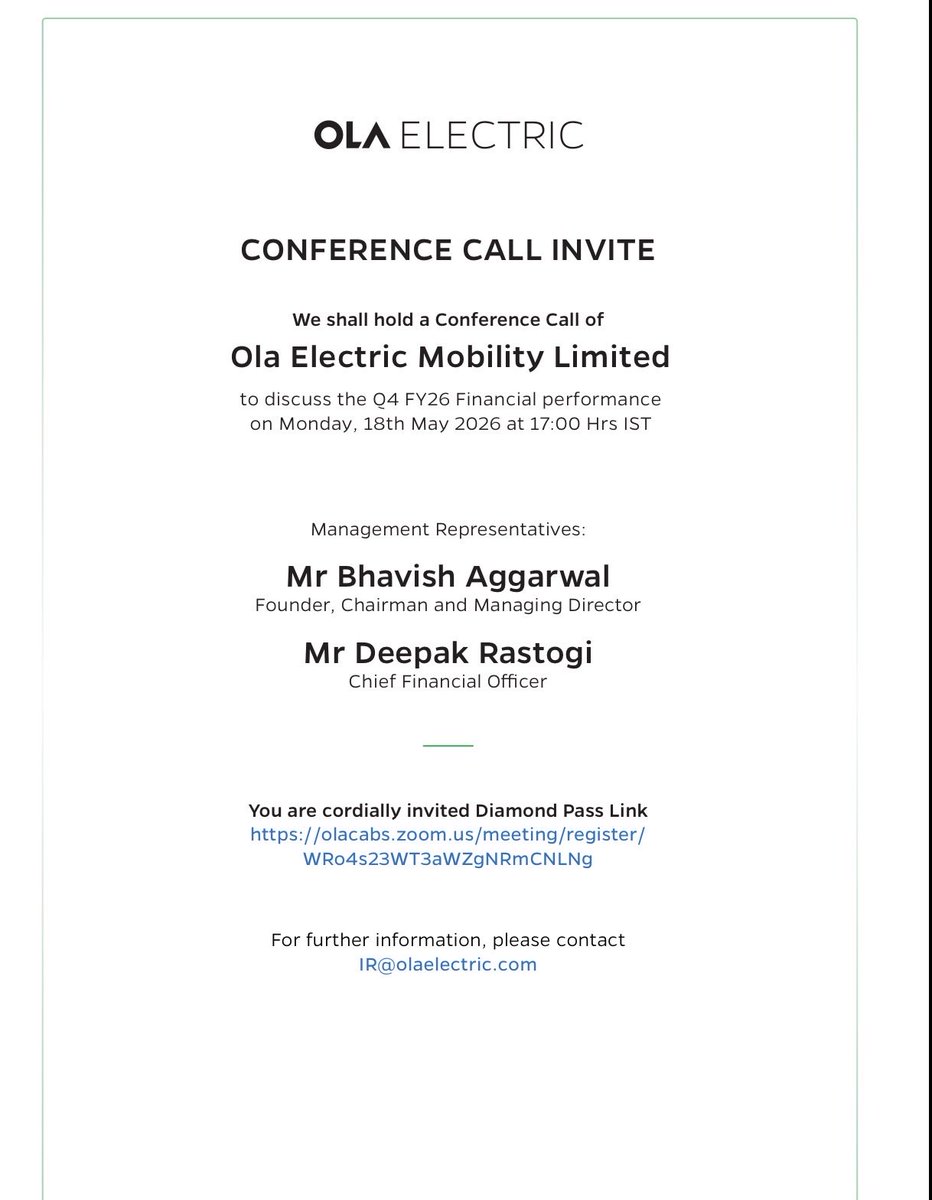
Ola electric set to report Q4 earnings on May 18th , it would be the lowest earnings ( below 400 crore) and probably the management would point to the bottom in sales is in and it’s only upwards from here 🫡
3
3
9
3,414

Hello Dear Team It’s been over 3 months now—my scooter is still at the Ola Electric service centre (RMZ Koramangala), and the battery is at the Futurefactory. There has been no update and no response from Ola support. This is extremely frustrating @bhash
1
2
362
It’s been over 3 months now—my scooter is still at the Ola Electric service centre (RMZ Koramangala), and the battery is at the Futurefactory. There has been no update and no response from Ola support.@OlaElectric @bhash
1
3
315
It’s been over 3 months now—my scooter is still at the Ola Electric service centre (RMZ Koramangala), and the battery is at the Futurefactory. There has been no update and no response from Ola support.@OlaElectric @bhash
6
493

La fabbrica del futuro è già realtà.
Cybersecurity industriale e Industria 5.0 al Richmond Future Factory Forum 2026.
Scopri di più: shorturl.at/Q4AMg
Iscriviti: shorturl.at/2oLTp
#Industria50 #CybersecurityOT #FutureFactory

22

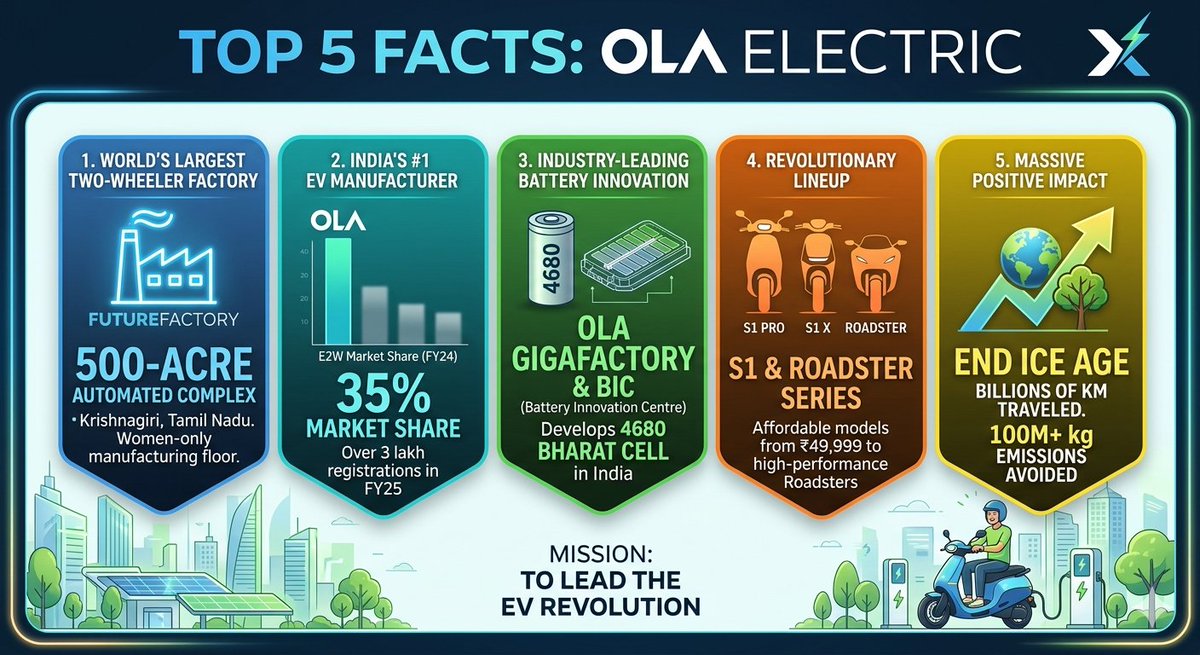
The Future is Here
The EV revolution in India isn't just coming it’s already her
From the world’s largest FutureFactory to 35% market share, Ola Electric is rewriting the rules of the road.
The end of the ICE age is closer than you think. #OlaElectric #EVRevolution #MadeInIndia
1
422

Mar 21
Futuristic Tesla Optimus army assembles next-gen EVs in high-tech factory: synchronized humanoid bots weld, spark & flow on conveyor lines—Grok Imagine native sound visual effects amp the metallic clangs, welding bursts & rhythmic hum of xAI-powered future! ⚡🤖🔥 xAI • Grok • Tesla • Optimus
#GrokImagine #Tesla #Optimus #xAI #Robotics #FutureFactory #AIArt #ElonMusk #HumanoidRobots
4
11
99

Mar 12
#NextGenBharat | नए भारत की नई कहानियाँ
लाइव देखें : youtube.com/live/1FeektHvXsw
#Ayurveda #SkillIndia #SpaceTechIndia #StartupIndia #GlobalAyurveda #FutureFactory #TraditionalMedicine #YouthInnovation #DDNews

2
330

Mar 8
Hit the nail on the head. they actually have capacity for 1 million units/year at the futurefactory. sold 3,968 scooters last month: that’s <5% utilization.
5
1,831

Feb 17
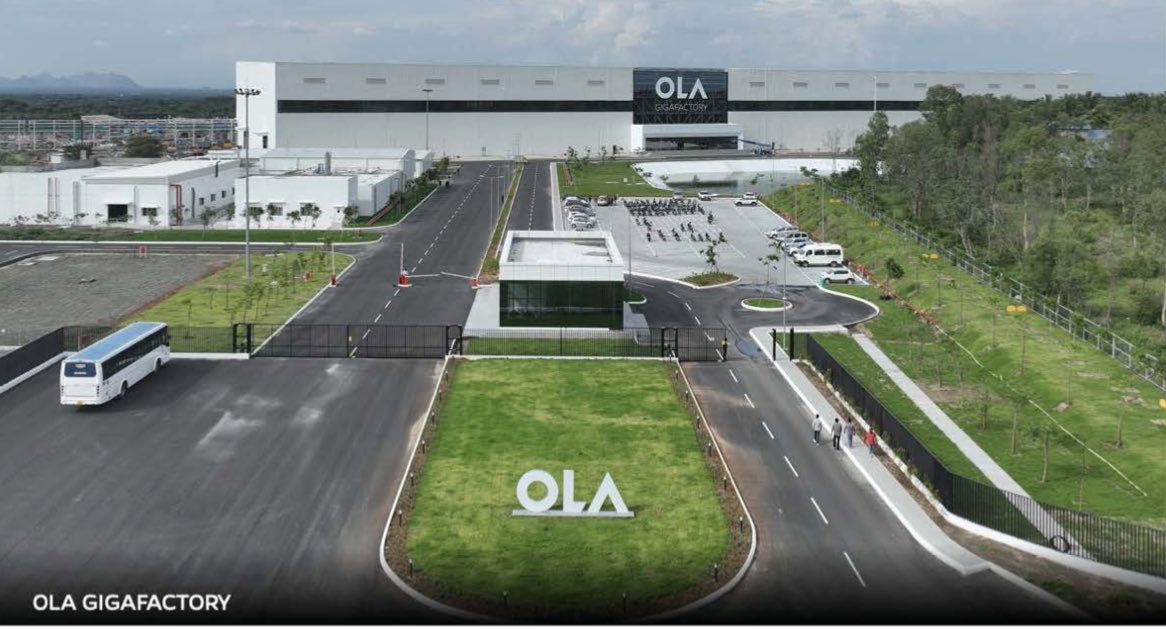
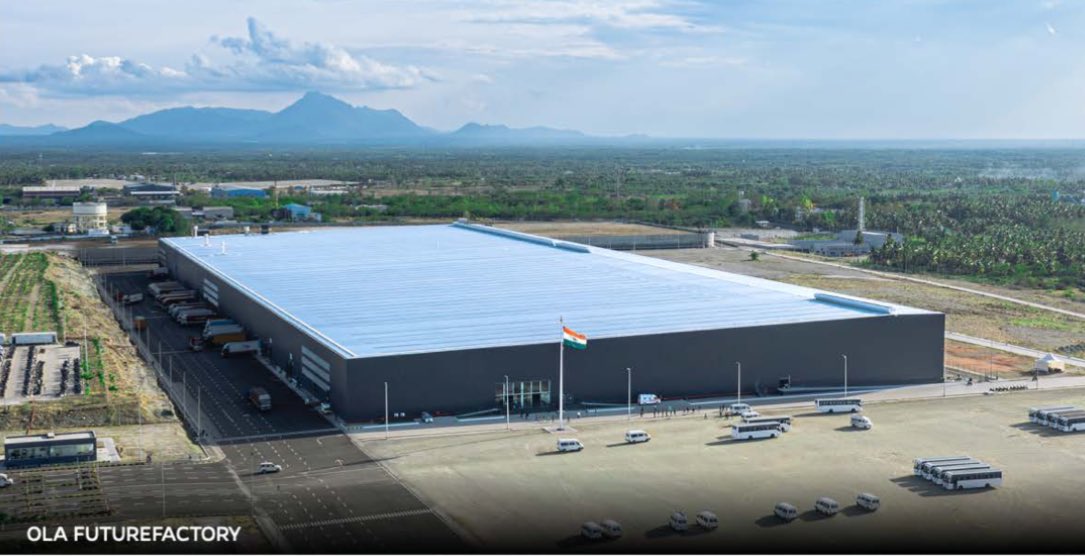
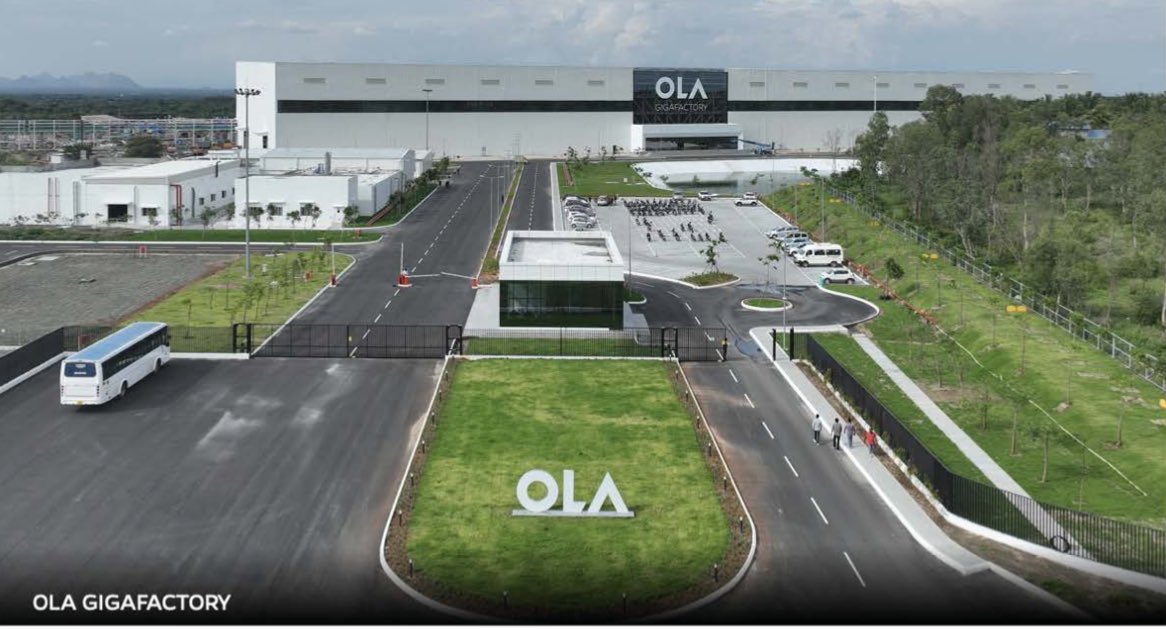
OLA Electric is expanding its Futurefactory and Gigafactory at Pochampalli SIPCOT, adding major battery manufacturing capacity and ramping up Electric Auto (3W) production — strengthening Tamil Nadu’s position as India’s EV powerhouse! ⚡🔋🏭
2
33
736

Feb 17
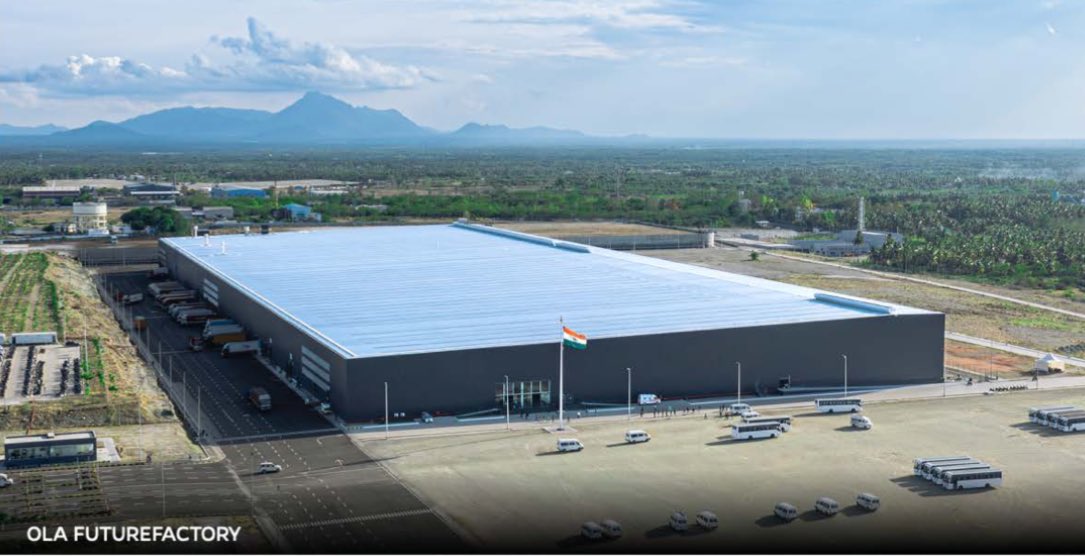
OLA Electric is expanding its Futurefactory and Gigafcatory at Pochampalli Sipcot. Additional battery manufacturing and Electric Auto (3W) capacity planned... #InvestInTN
5
34
425
10,737

Feb 10
🚀 🔋 India’s semiconductor revolution is alive & automated!
Here’s why 🇮🇳 Polymatech is trending:
✨ 🔦 India’s FIRST “dark factory”
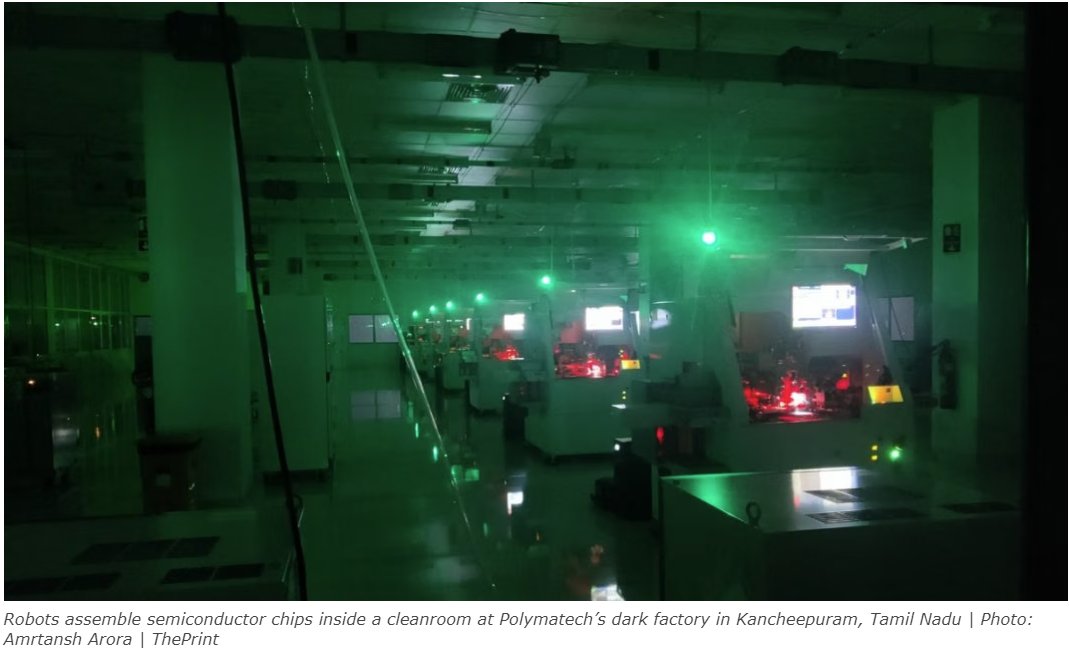
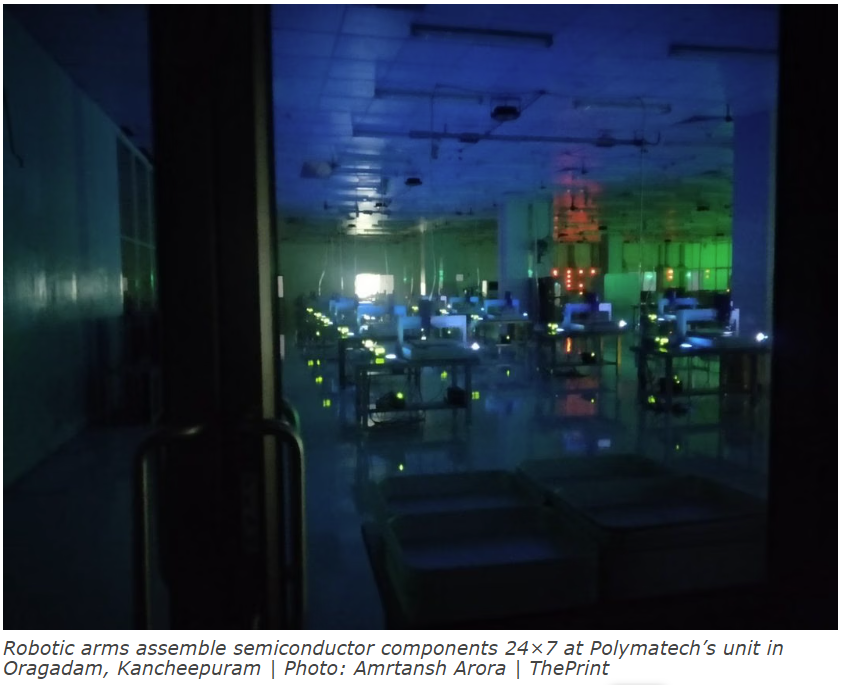
• Located in Kancheepuram, Tamil Nadu — a lights-out, fully automated semiconductor factory where robots run 24×7 with no human on the floor. 🤖🌙
• Robotic arms assemble chips in cleanrooms — precision to the nanometre 🎯.
• Engineers work remotely, maintaining robots, not machines — true Industry 4.0 in action! 🛠️💡
🌐 🧠 Making India future-ready
• This is a huge leap in automation — boosting efficiency, quality & global competitiveness 🤝.
• A real glimpse of what tomorrow’s factories will look like — more robotics, AI & fewer manual interventions 🤖📈
🏭 📍 And now… a NEW plant in Chhattisgarh!
• Polymatech is setting up a ₹1,143 crore GaN semiconductor plant in Nava Raipur — powering chips for 5G & 6G tech! 📡⚡
• Backed by state incentives & aiming to make Chhattisgarh a semiconductor hub 🎯🌍
• Expected to create thousands of jobs and strengthen India’s tech supply chain 👨🔧👩💻 🌱
📊 🌟 What this means for India:
• 🇮🇳 Cutting-edge fabrication automation
• 🤖 Boost for Make-In-India semiconductor vision
• 📈 Growth for AI, robotics, 5G/6G & future tech
• 🎓 Opportunity for skilled engineers & tech talent
💡 From robots in TN to chip dreams in CG — India’s semiconductor story just got brighter! 🇮🇳✨
📰 Read the full ground report here 👉
theprint.in/ground-reports/i…
#Polymatech #DarkFactory #LightsOutManufacturing #Semiconductor #Semiconductors #ChipManufacturing #MakeInIndia
#AtmanirbharBharat #IndiaManufacturing #Industry40 #Automation #Robotics #AI #FutureFactory
#IndianSemiconductors #GaN #5G #6G #EV #PowerElectronics #DefenceTech
#TamilNadu #Chennai #Kancheepuram #Chhattisgarh #NavaRaipur
#IndiaTech #IndiaRising #TechRevolution #StartupIndia #InvestInIndia #ManufacturingSuperpower
8
63
339
34,554

Feb 8
Wonder Festival Winter 2026: Le Novità di Future Factory Co., Ltd. metalrobot.it/wonder-festiva… #WF2026W #ワンフェス #ワンフェス2026冬 #勇者ライディーン #FutureFactory #actionfigures

3
11
1,663

Feb 8
WF2026W @FutureF2511 Future Factory products exhibition
#futurefactory #raideen #braveraideen #raideenthebrave #勇者ライディーン #ライディーン #gabm #grandactionbigsizemodel #Futureファクトリー #WF2026W #ワンフェス #ワンダーフェスティバル2026冬
passion4fun.com/wonder-festi…

6
429
Jan 6
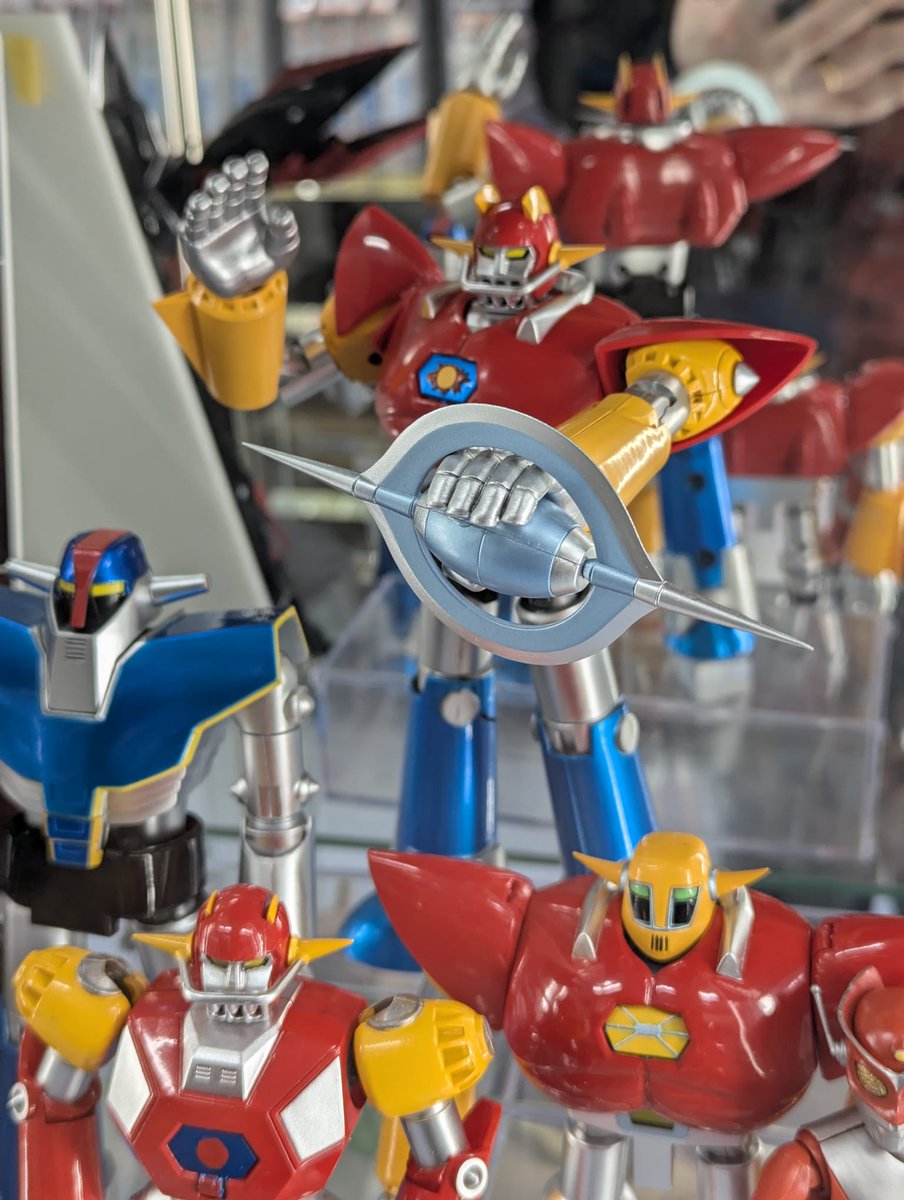
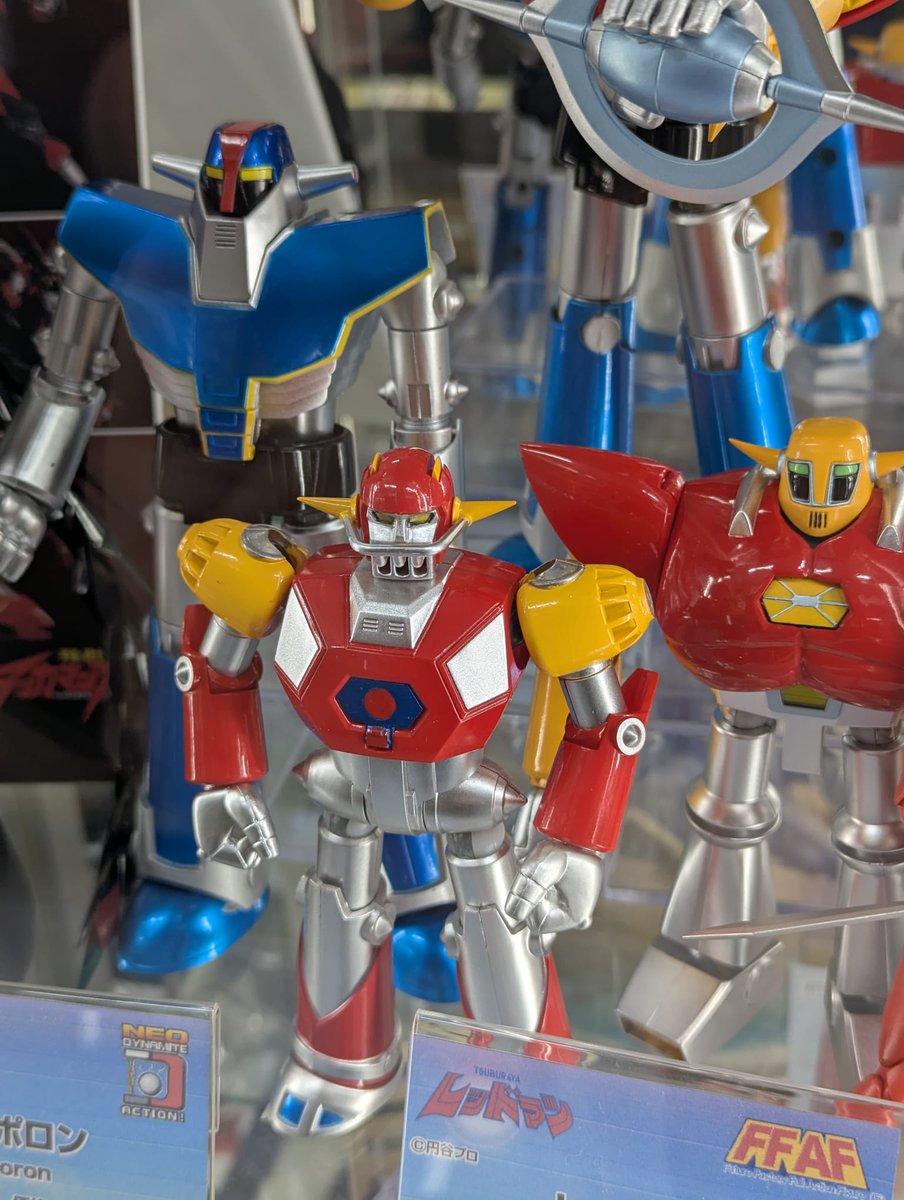
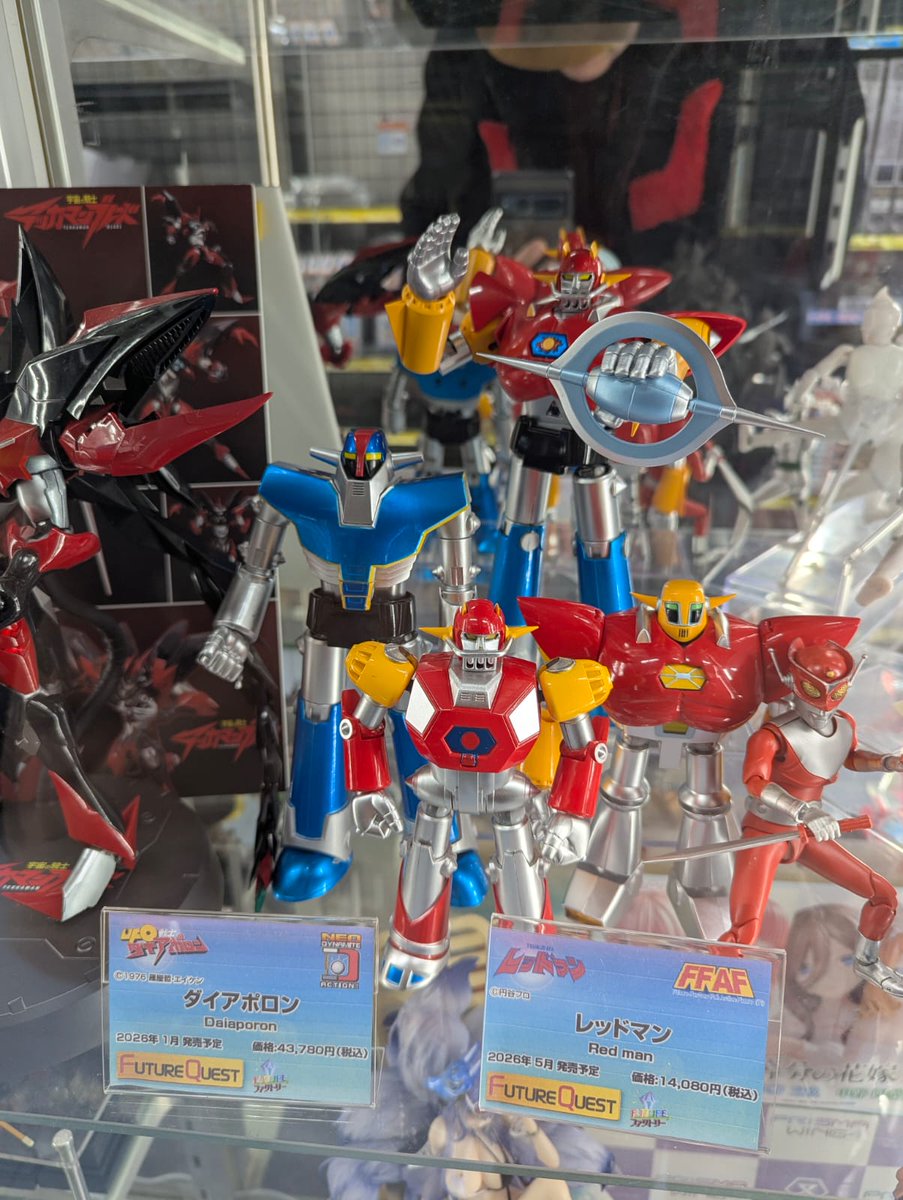
Yellow Submarine Akihabara : Le Novità di Future Factory Co., Ltd. metalrobot.it/yellow-submari… @FutureF2511 #yellowsubmarine #ufodiapolon #FutureFactory #株式会社エイケン #タケシ #UFO戦士ダイアポロン #ダイアポロン #anime #mecha #robot #合金 #メタルアクション #Futureファクトリー
1
1
10
1,195