
Every breakthrough starts with a better way to move information.
UnitFlow is transforming fragmented workflows into seamless, intelligent execution. ⚡
#UnitFlow #Web3 #FutureOfAutomation
9

Power In The Numbers (PITN.ai) is the NUCLEUS of Robotics Digital Assets bridging Web2 & Web3. NUCLEI.robot
From startups and crypto communities to VCs, robotics manufacturers, and robotics marketing, PITN.ai powers the ecosystem with strategic digital infrastructure.
🌐 Strategically Curated Global Portfolio
• Multilingual "humanoid" & "robot" digital assets
• Coverage reaching 4B internet users
• Access to 75% of the world’s online population
🤖 NUCLEI.robot — the nucleus behind Web3 .robot acquisitions, building the next layer of identity, infrastructure, and discovery for the robotics economy.
Robotics AI Digital Assets = Network Effects.
Power In The Numbers.
#PITN #PowerInTheNumbers #Robotics #HumanoidRobots #AI #Web3 #DigitalAssets #RobotEconomy #RoboticsStartups #CryptoCommunities #VentureCapital #RoboticsManufacturing #RoboticsMarketing #DotRobot #NUCLEIrobot #AIInfrastructure #FutureOfAutomation
1
13
89

From Automation to Autonomous Economies: Why Konnex Could Redefine the Future of Robotics
For decades, robotics has focused on one primary goal: automation. Machines were designed to execute tasks faster, more precisely, and more efficiently than humans. But even as robotics technology advanced, one thing remained unchanged — robots were still tools owned and controlled within centralized systems.
After studying Konnex, I began to see a very different vision emerging. Instead of simply improving automation, Konnex is exploring something much larger: a decentralized economic framework where robots can operate as independent economic participants.
This idea shifts the conversation from automation to autonomous economies.
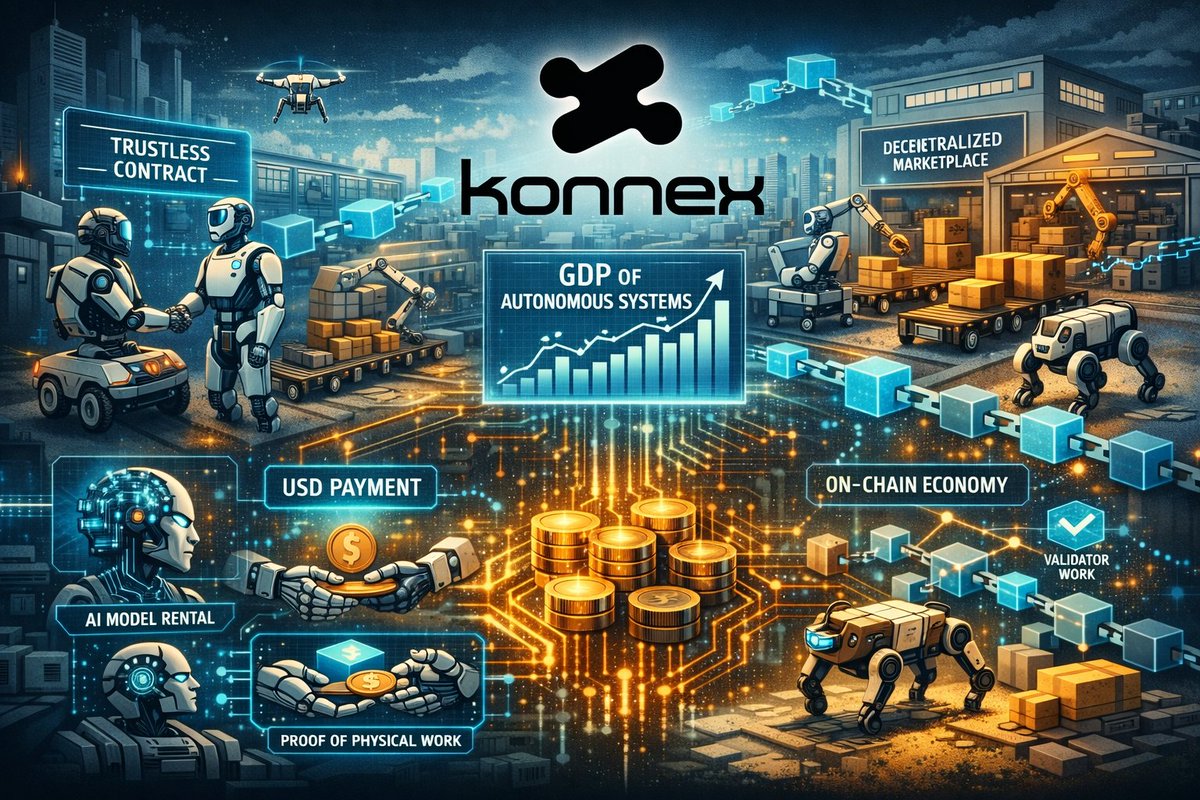
At its core, Konnex is building a permissionless Layer-1 marketplace for autonomous systems. Within this environment, robots can negotiate tasks, access specialized AI models, perform real-world work, verify completion on-chain through Proof-of-Physical-Work (PoPW), and settle payments instantly using USD stablecoins.
While that description might sound abstract at first, its implications become clearer when we consider the direction of industrial technology.
Factories, warehouses, and logistics networks are rapidly integrating robotics. Autonomous mobile robots already move goods through warehouses. Robotic arms assemble complex machinery with precision. AI systems coordinate supply chains across continents.
Yet despite this progress, the economic coordination layer behind these machines remains largely traditional and centralized. Robots execute instructions, but they do not participate in the economic systems that govern their work.
Konnex attempts to change that.
Through its architecture, robots can theoretically interact within a decentralized marketplace where tasks, intelligence, and execution capacity become tradable resources. A robot needing a specific movement capability could lease a specialized AI motion model. Another robot could accept a physical task and execute it. Verification of the completed work is then recorded on-chain through PoPW, transforming the physical outcome into verifiable digital value.
This process effectively turns physical productivity into blockchain-verifiable data.
What makes this concept particularly interesting is the idea that robotic labor could become liquid and composable. Instead of existing inside isolated industrial systems, robotic capabilities could circulate across networks, similar to how liquidity flows through decentralized finance protocols.
That is where Konnex’s narrative of building the “GDP of autonomous systems” becomes meaningful.
GDP traditionally measures the economic output of human societies. But if machines begin performing significant portions of industrial work — and if that work can be verified and recorded digitally — then robotic productivity itself could become measurable as a new economic layer.
In this sense, Konnex is not merely connecting robots to blockchain. It is attempting to create a global accounting system for machine productivity.
This vision also explains why the project has attracted serious investment. Konnex has raised $15 million from venture firms including LD Capital, M77 Ventures, and Cogitent Ventures. Deep-tech infrastructure requires long development cycles and significant experimentation, especially when robotics and blockchain are combined.
Community traction is another signal worth noting. On X, the project has already attracted hundreds of thousands of followers. For a protocol still in its early stages, that level of engagement indicates strong curiosity around the robotics-economy thesis.
Looking forward, the broader implications could extend well beyond the crypto ecosystem.
Imagine industrial zones where thousands of robots interact across decentralized marketplaces. Some specialize in transport, others in assembly, inspection, or maintenance. Each machine optimizes its tasks, rents AI capabilities when needed, and settles transactions instantly through blockchain infrastructure.
Such a system could dramatically reduce friction in industrial coordination, while also creating transparent data about machine productivity.
In many ways, this mirrors what decentralized finance achieved for capital markets — removing intermediaries and enabling programmable financial interactions.
Konnex is attempting to apply a similar principle to physical work itself.
If the protocol succeeds, it could introduce a new category of digital economy: one where economic output is generated not only by human activity online, but also by autonomous machines operating in the physical world.
The convergence of robotics, AI, and blockchain is still in its early stages. But projects like Konnex suggest that the next evolution of Web3 may not be confined to digital assets or online services.
Instead, it may expand into the infrastructure of real-world productivity.
And if that transition occurs, the idea of autonomous systems generating their own measurable GDP may shift from theoretical speculation to a defining feature of the global economy.
@konnex_world
#Konnex #AutonomousSystems #RoboticsEconomy #ProofOfPhysicalWork #Web3Infrastructure #MachineEconomy #AI #FutureOfAutomation #OnChainLabor #DeepTech
3
26

Feb 19
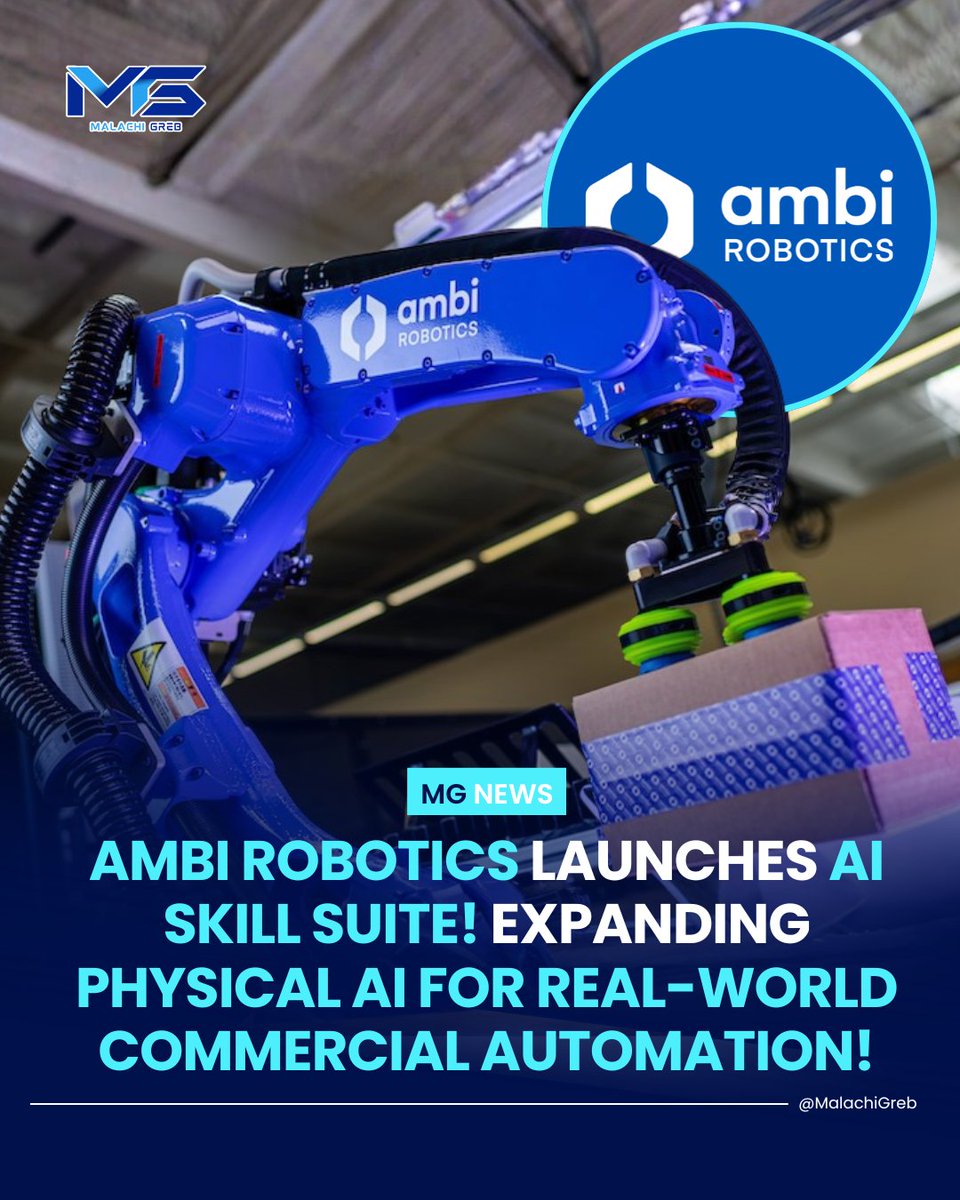
Ambi Robotics Launches AI Skill Suite: Expanding Physical AI for Real-World Commercial Automation!
Ambi Robotics has officially expanded its Physical AI platform with the new AI Skill Suite, powered by its proprietary AmbiOS software stack. This breakthrough allows AI-powered robots to deliver industrial-grade reliability across diverse hardware and use cases by isolating complexities and creating a rich data ecosystem that continuously improves foundation models. The suite includes advanced autonomous capabilities such as Item Intelligence, Inspection, Dexterous Picking, and Precision Placement — all driven by Prime-1, Ambi Robotics’ vertically integrated AI model with advanced 3D reasoning and over 99.9% uptime.
Trained on more than 250,000 production hours and 150 million consumer packages, the platform already handles 90% of US parcel volume and 95% of active commercial SKUs. By licensing these skills to global automation partners and Fortune 500 shippers, Ambi is accelerating deployment of reliable, scalable physical AI. With the fleet on track to surpass 500,000 commercial hours by the end of 2026, this marks a major leap toward general robot intelligence in logistics and beyond.
#AmbiRobotics #PhysicalAI #AISkillSuite #WarehouseAutomation #Robotics #AmbiOS #LogisticsTech #AIinRobotics #SupplyChainInnovation #FutureOfAutomation
2
25

3 Dec 2025
Epic Mech Reveal: China's Answer to Real Steel, the T800 #HumanoidRobot, Is Here.Witness raw engineering in motion. This is not a render. The T800 demonstrates fluid, balanced coordination and precise, powerful strikes. #RealSteel #ChinaTech #Robotics #T800 #FutureOfAutomation
6
3
180

18 Nov 2025
studio.youtube.com/video/bgI…
#ECareTechScam #TravelITFraud #SanghivivekExposed #EntrepreneurWarning #ScamAlert2025 #hashtagstudio #ecaretechlabs #rezofy @ecaretechnologylabspvt.ltd7882 @ecaretechlabs @EcareIndia-fx1fl #AutomationExpo2025 #FutureOfAutomation #HashStudioz #Innovation #TechnologyShowcase #AutomationSolutions #HashStudioz #WTM2025 #TravelTech #Innovation #AI #IoT #SmartSolutions #WTMLondon #TechForTravel #Expo2025 #MeetUs #aiintravel #iotsolutions #smartautomation #wtm #traveltransformation #salesforce #techexhibition #ota
3
3
19

10 Nov 2025
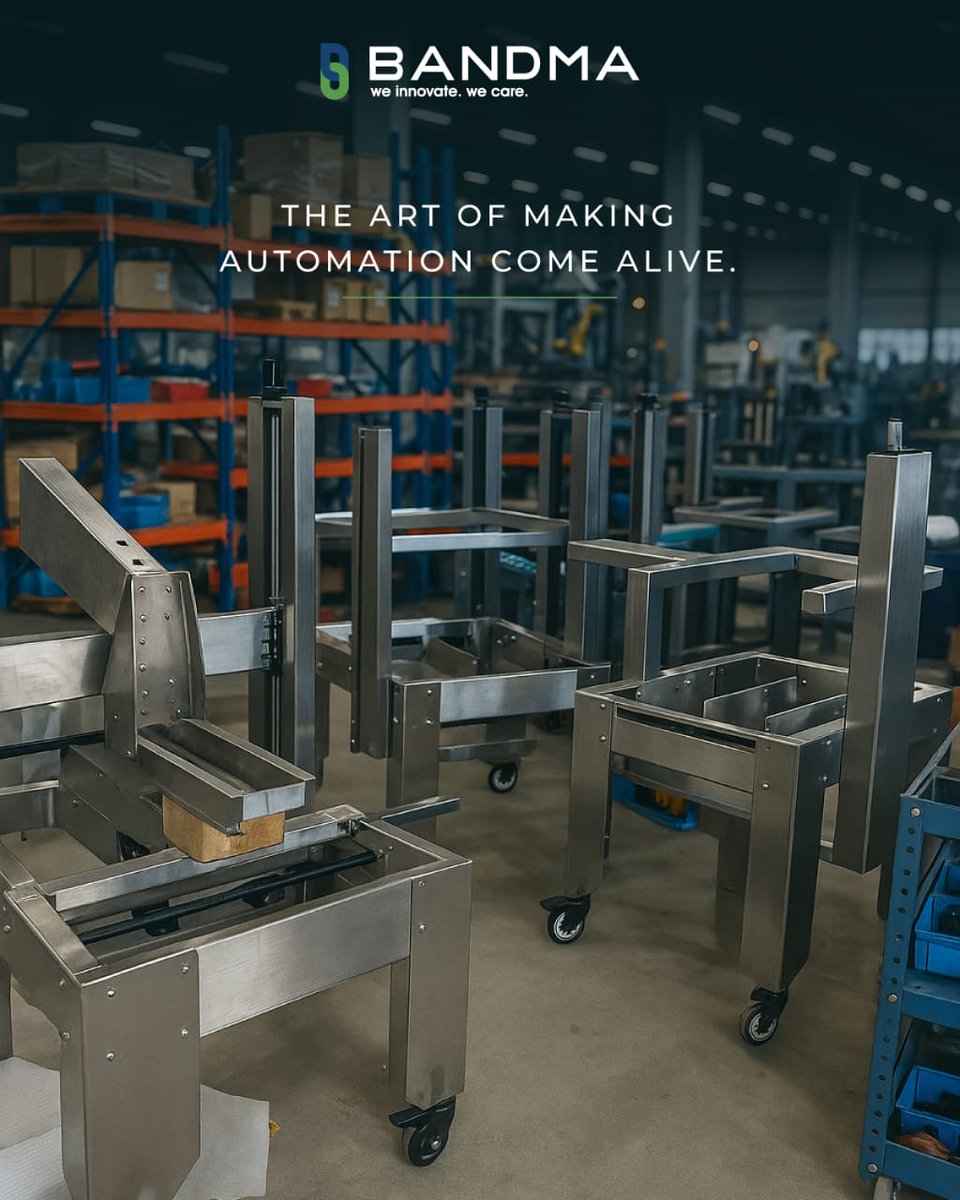
Where innovation meets craftsmanship
Every frame you see is more than steel it’s the foundation of automation taking shape.
📞 1800 309 2980 | 🌐 bandmainfo.com
.
.
.
#Bandma #AutomationExperts #BandmaSalaam #Manufacturing #FutureOfAutomation #SmartManufacturing
4
34

18 Oct 2025
🛡️ Today’s Safe AI & Robotics Spotlight, aligned with the mission of Safe AI Coalition, emphasizing safety, transparency, human-first design, and embodied intelligence.
Robots & drones train for lifesaving missions
In the latest round of the DARPA Triage Challenge, autonomous drones and robot dogs were deployed in simulated disaster zones to locate, assess, and triage injured victims — significantly reducing response time in scenarios “where there are more patients than medics”.
🔗 govtech.com/em/safety/simula…
#SafeAI #Robotics #AIAlignment #SafeAutonomy #RobotSafety #AIandRobotics #PhysicalAI #AIGovernance #TechEthics #AIStandards #AIForGood #SafeAICoalition #FutureOfAutomation
1
1
74

1 Oct 2025
We have all seen what is possible when robots get personal.
Take MARS for example: a robot you can teach, customize, and interact with directly. It shows how far AI robotics has come.
But here is the thing, most people only watch these breakthroughs without partaking in it. A few buy them, but the majority just see the headlines and move on.
OWNAI changes that.
Instead of just admiring innovation, you can actually co-own advanced AI robots and infrastructure. You don't need to be a tech wizard or run complex systems. @ownaiNetwork handles the heavy lifting.
All that is left for you?
- Share in the rewards these AI assets create.
- Be part of the growth as robots become more capable and widespread.
- Join a community shaping how automation works for people, not just corporations.
Robotics is no longer about standing by and watching someone else benefit.
With @ownaiNetwork, it is about owning the future together.
#OWNAI #AIAssets #FutureOfAutomation #SharedGrowth
30 Sep 2025

MARS may have shown what personalized AI robots can do.
But with OWNAI, anyone can go beyond watching innovation and actually co-own advanced AI assets, share the rewards, and grow together.
No technical barriers, no heavy operations.
Just real benefits for everyone who joins.
Shape the future side by side with OWNAI.
#AIAssets #SharedOwnership #FutureEconomy
7
9
70

30 Sep 2025
Heavy steel automated production with accuracy, speed,and precision 🚀
#AutomatedProduction #ControlsAutomation #EngineeringSolutions #IndustrialInnovation #FutureOfAutomation
1
3
52

29 Sep 2025
The founders who win aren’t the ones who fear AI.
They’re the ones who use it to automate, adapt, and move faster.
#FutureOfAutomation #OroraAI
2
44

25 Sep 2025
Every machine has a ghost 👻— its digital twin. From predicting failures to boosting uptime, this duo is transforming automation. Watch to see how the ghost and the machine work together!
#EclipseAutomation #CambridgeOntario #DigitalTwin #FutureOfAutomation
3
46

16 Sep 2025
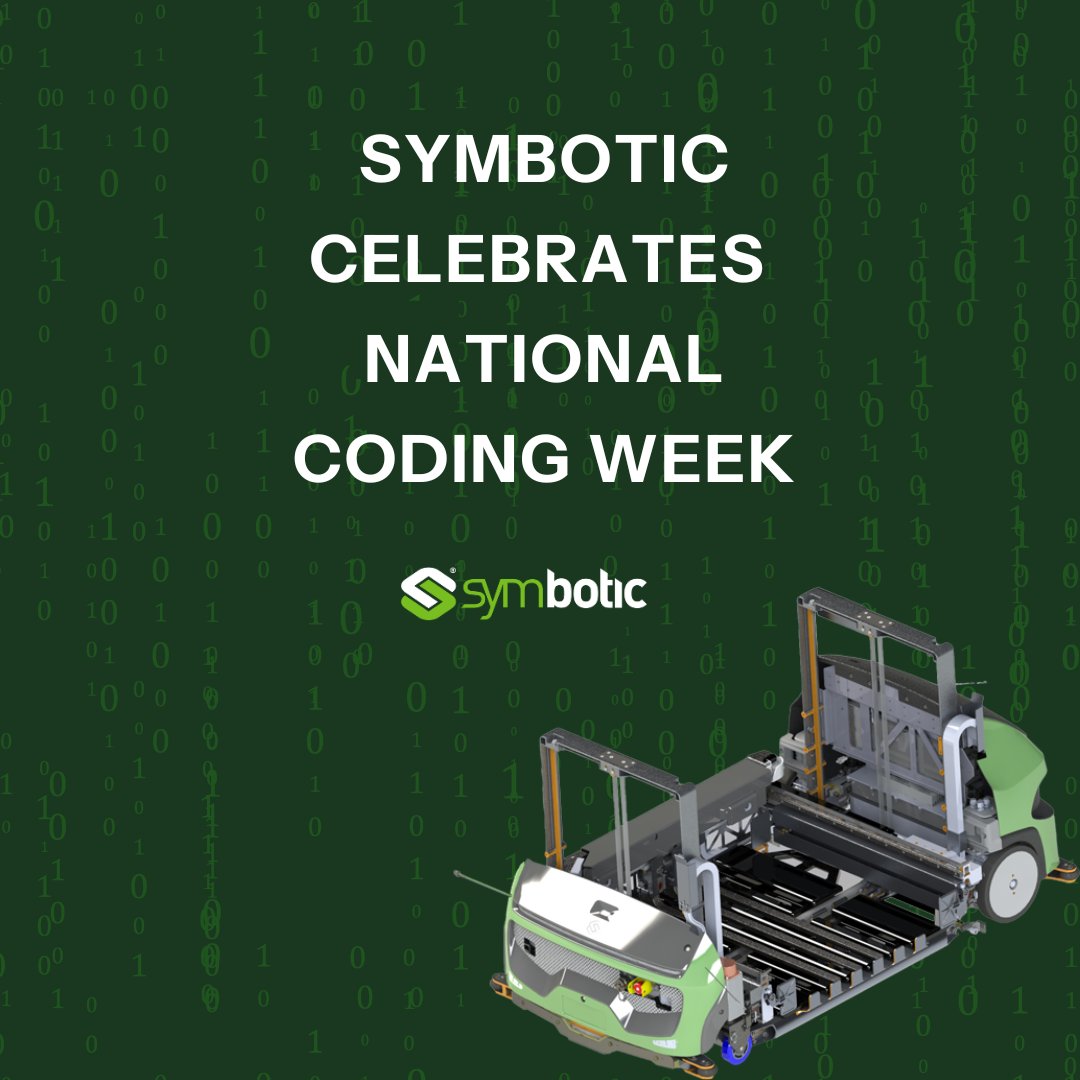
Coding is at the heart of everything we do at Symbotic. At Symbotic, coding and innovation go hand in hand. We’re harnessing both to drive the future of supply chain automation.
#LifeAtSymbotic #SymboticCulture #TechLeaders #FutureOfAutomation #STEMCareers #NextGenTalent
5
266

3 Sep 2025
Decentralized AI agents are the future of automation. Imagine AI that can autonomously compete, learn, and evolve without central control. @FractionAI_xyz is making this a reality, empowering a new era of intelligent systems. #AIAgents #FutureofAutomation #DecentralizedSystems

1
4
9

3 Sep 2025
🤖 International Conference on Robotics and Automation (ICRA) 🌐
📅 Date: 15th Oct 2025
📍 Venue: Istanbul, Turkey
🎓 Organized by: @RoboticsForum
🔗 roboticsforum.org/Conference…
#conferencealertsindia #ICRA2025 #RoboticsConference #FutureOfAutomation #GlobalInnovation

2
53

25 Aug 2025
Step confidently into the future with BlockNext 🔮
🤖 Powerful AI automations
🪙 Your own token powered marketplaces
🌎 Accessible to everyone
#Veo3 #pepethefrog #FutureOfAutomation #Web3Era #AccessibleAI #AIAgents
1
1
4
148

23 Aug 2025
🚗 Is it Saturday and you just want to get away?
🤖 ROBIN helped charge our employees' Tesla today. 🦾 Do you need a ROBIN for your parking lot too? #roboligent #teslamodely #teslacybertruck #charging #ROBIN #FutureOfAutomation #smartrobotics #robots #austintexas #startup
8
2,908

🚁✨ Drones: The Future is Here! ✨🚁
SEEE just experienced an electrifying industrial drone demo by Deepanshu Bhardwaj (Drone Application Engineer, Aviocian Technologies)! @lpuuniversity
#LPU #DroneTech #FutureOfAutomation #AviocianTech #EngineeringMarvels #Innovation #Industry4_0 #DronesInAction #ElectronicsEngineering #SkyHighTech #LovelyProfessionalUniversity #LPU #BestUniversity #TopUniversity #lpuuniversity #ECE #EE #SEEE #ThinkBig
S
9
89

13 Jul 2025
n8n's Viral Surge: The Future of Automation!
#n8n #Automation #NoCode #WorkflowAutomation #TechTutorial #FutureofAutomation #DigitalTransformation #Software #Innovation #TechCommunity
2
90

25 Jun 2025
With MWX, small businesses can now access plug-and-play AI tools that automate operations, connect with your favorite platforms, and keep your data safe. No coding, no extra cost, no stress.
From inventory to marketing, MWX is built to make everyday tasks smarter, so you can focus on what really matters: growing your business.
Join the whitelist and be the first to explore the future of SME automation
#MWX #SmartBusinessTools #PlugAndPlayAI #NoCodeNoStress #AIForSMEs #WorkSmarterNotHarder #AutomationMadeEasy #SafeAndSimple #JoinMWXWhitelist #FutureOfAutomation




5
204