Filter
Exclude
Time range
-
Near
📢 Call for Papers | Special Issue in Computation 📝Computational Methods for Multi-View Representation Learning 🔗 Learn more and submit your manuscript: mdpi.com/journal/computation… #MultiViewRepresentationLearning #MultiModal #ContrastiveLearning #GraphRepresentationLearning
1
23
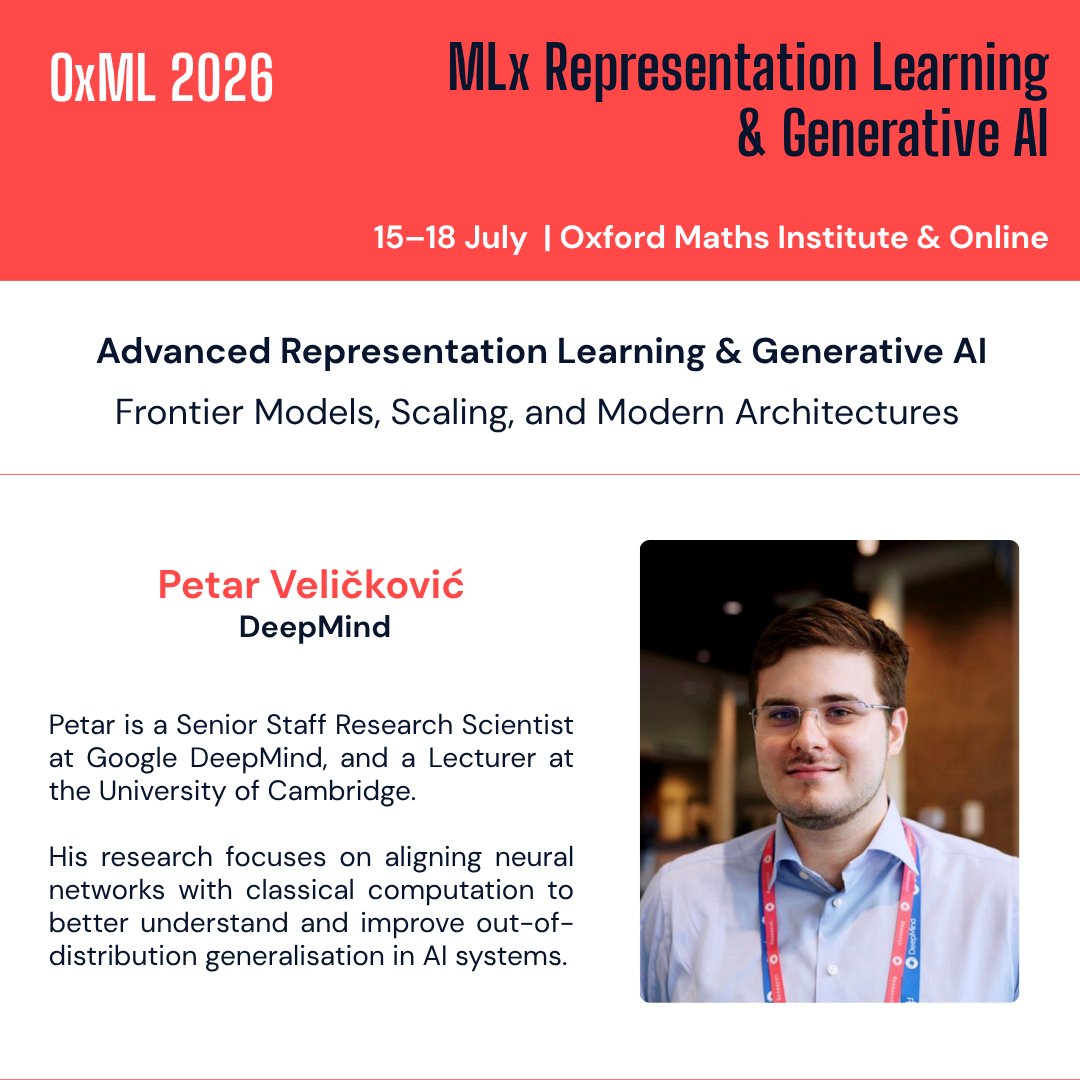
We’re excited to welcome Petar Veličković to the OxML speaker lineup. Petar is a Senior Staff Research Scientist at Google DeepMind, and a Lecturer at University of Cambridge. His research focuses on neural algorithmic reasoning, graph representation learning, and geometric deep learning, with the goal of improving out-of-distribution generalisation in AI systems. He is widely known as the first author of Graph Attention Networks (GAT) and Deep Graph Infomax, with research that has impacted areas ranging from Google Maps travel-time prediction to mathematical discovery, football tactics, and competitive programming. Join us to hear insights from one of the leading researchers shaping the future of graph and geometric deep learning. Register Now: oxfordml.school #OxML #GraphAttentionNetworks #GraphRepresentationLearning #RepLearning #GeometricDeepLearning @PetarV_93 @GoogleDeepMind @Cambridge_Uni
3
106
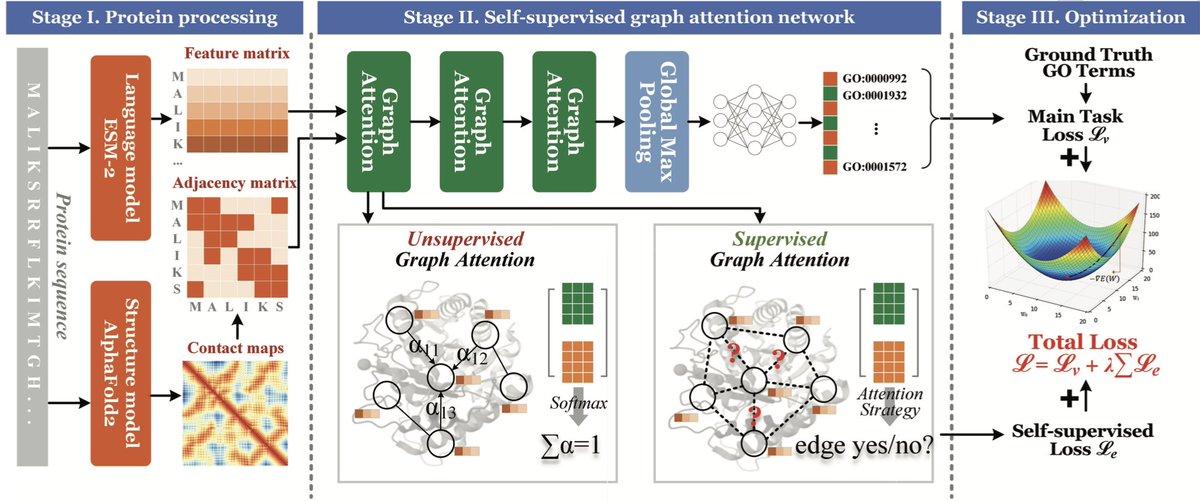
SuperEdgeGO: Edge-supervised graph representation learning for enhanced protein function prediction @PLOSCompBiol 1. A new computational method called SuperEdgeGO has been proposed to predict protein functions more accurately. This method leverages edge-supervised graph representation learning to enhance the prediction of protein functions, addressing the limitation of previous methods that underutilized edge information in protein graphs. 2. SuperEdgeGO introduces a supervised attention mechanism to explicitly encode residue contacts into protein representations. Unlike traditional graph convolution methods that use edge information in an unsupervised manner, this approach directly supervises the edges, leading to more effective capture of structural features. 3. The study demonstrates that SuperEdgeGO achieves state-of-the-art performance across all three categories of protein functions (molecular function, biological process, and cellular component). The ablation analysis further validates the effectiveness of the edge supervision strategy. 4. SuperEdgeGO uses AlphaFold2-predicted protein structures to construct protein graphs, which are then processed through a novel attention mechanism. This method not only improves the accuracy of function prediction but also highlights the importance of edge information in protein structure modeling. 5. The model's performance is evaluated on a benchmark dataset containing over 20,000 human proteins. SuperEdgeGO outperforms existing state-of-the-art methods, particularly in the molecular function category, where it achieves a significant improvement in Fmax. 6. The authors also conducted cross-species experiments on datasets from different organisms, including S. cerevisiae, E. coli, fruit fly, and rat. The results show that SuperEdgeGO can generalize well across species, further proving its effectiveness. 7. The edge supervision strategy in SuperEdgeGO has the potential to be applied to other biological tasks that rely on structural insights, such as drug-target affinity prediction and protein-protein interaction analysis. 💻Code: github.com/Lyt0715/SuperEdge… 📜Paper: journals.plos.org/ploscompbi… #ProteinFunctionPrediction #GraphRepresentationLearning #ComputationalBiology #SuperEdgeGO #EdgeSupervision #AlphaFold2
3
26
1,803
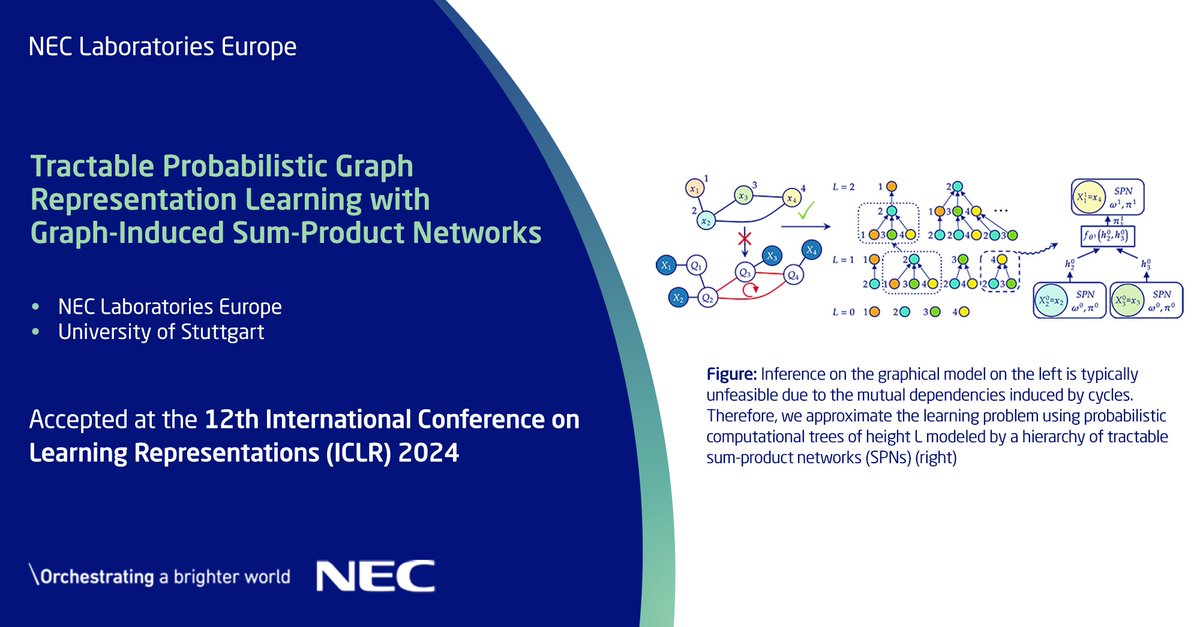
Our new #graphrepresentationlearning framework can tractably answer probabilistic queries, tackling issues like overconfidence, uncertainty estimates, missing data & “what if” questions on graphs. Learn how in our #ICLR2024 accepted paper. neclab.eu/research-areas/sys…. #NECLabs
3
8
889
Cool applications of #GraphRepresentationLearning on #knowledgegraphs (1/3): Unifying knowledge graph embeddings and pre-trained language models by @tangjianpku’s group direct.mit.edu/tacl/article/… #knowledgegraphembeddings #languagemodels

2
Interested to learn more about #GraphRepresentationLearning? Check-out this comprehensive and free textbook by (preprint) William L. Hamilton! 🆓 📚 #networkscience #graphembedding #graphs
1
2
A young, but growing field, #GraphRepresentationLearning algorithms aim to learn meaningful representations of graph elements like nodes and edges This lecture by @Stanford professor @jure provides an outstanding introduction to this topic 👨‍🏫 ✅ youtu.be/YrhBZUtgG4E
2
One of the methods that I use in my research is #spage2vec developed by @gapartel. It is an unsupervised segmentation-free approach for decrypting the spatial transcriptomic heterogeneity of complex tissues. #spatialtranscriptomics #graphrepresentationlearning #scicommUU21
1
2
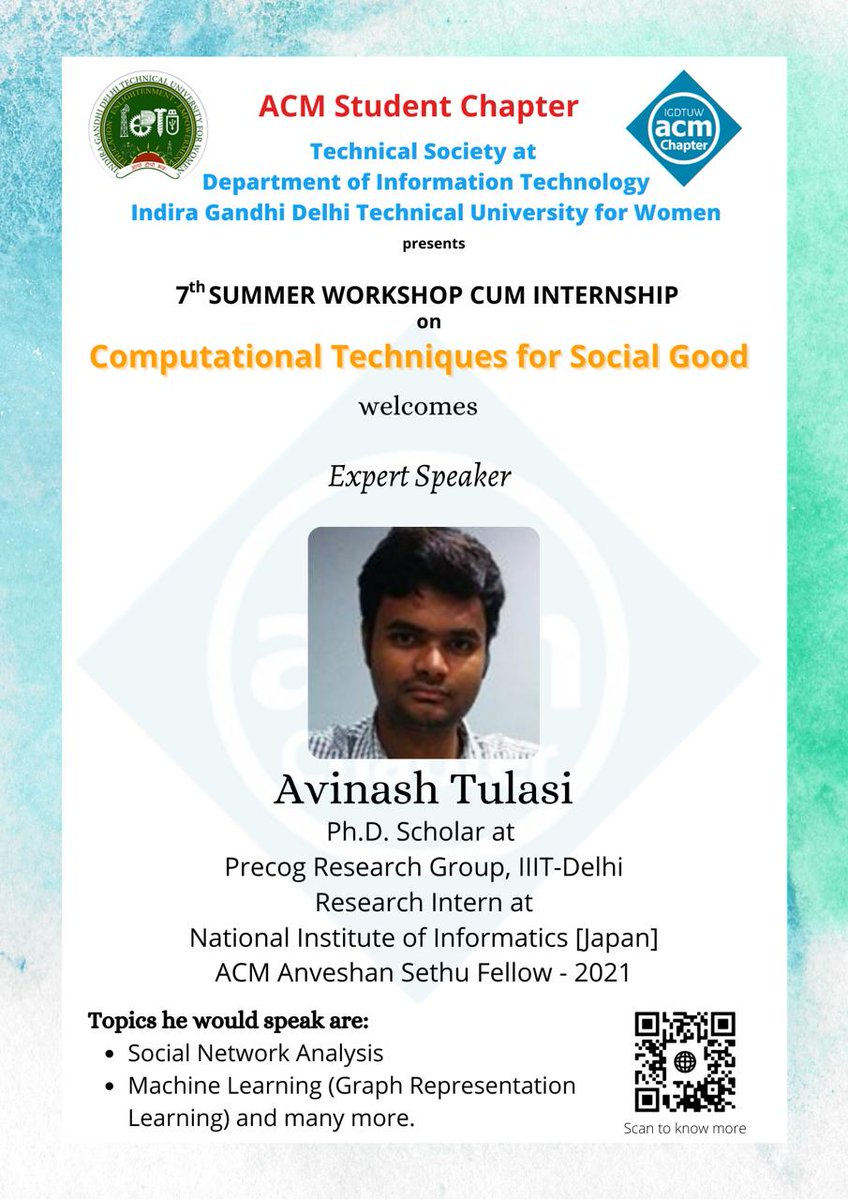
ACM IGDTUW proudly welcomes @AT_at_iiitd as an #Expert Speaker at the 7th ACM Summer Workshop and Internship. In the workshop, he would be speaking on #NetworkScience, #GraphRepresentationLearning.
2
9
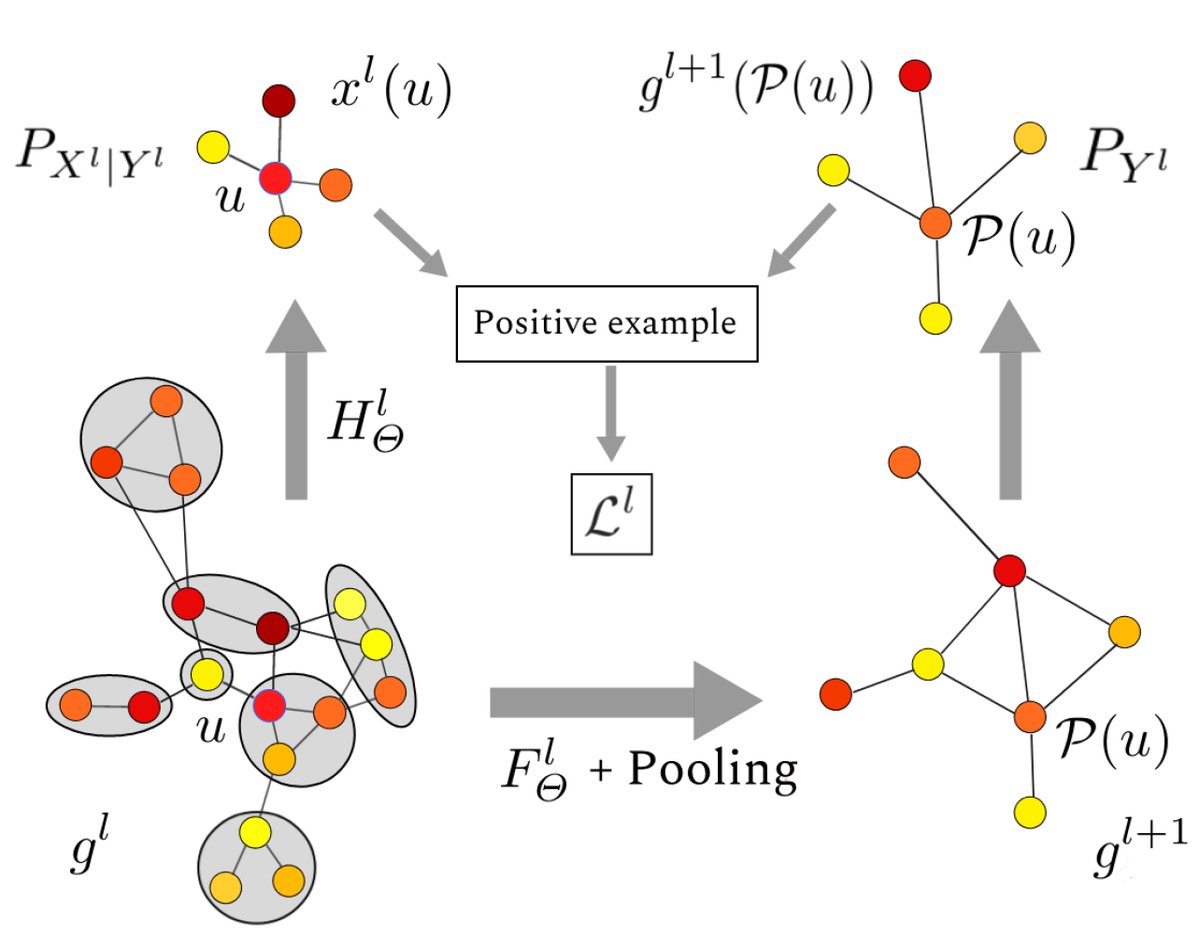
[Article] Hierarchical and Unsupervised Graph Representation Learning with Loukas’s Coarsening Full #openaccess mdpi.com/1999-4893/13/9/206 #graphrepresentationlearning #Graph2Vec #graphconvolutionalnetworks #graphcoarsening #unsupervisedlearning #algorithms
1
3
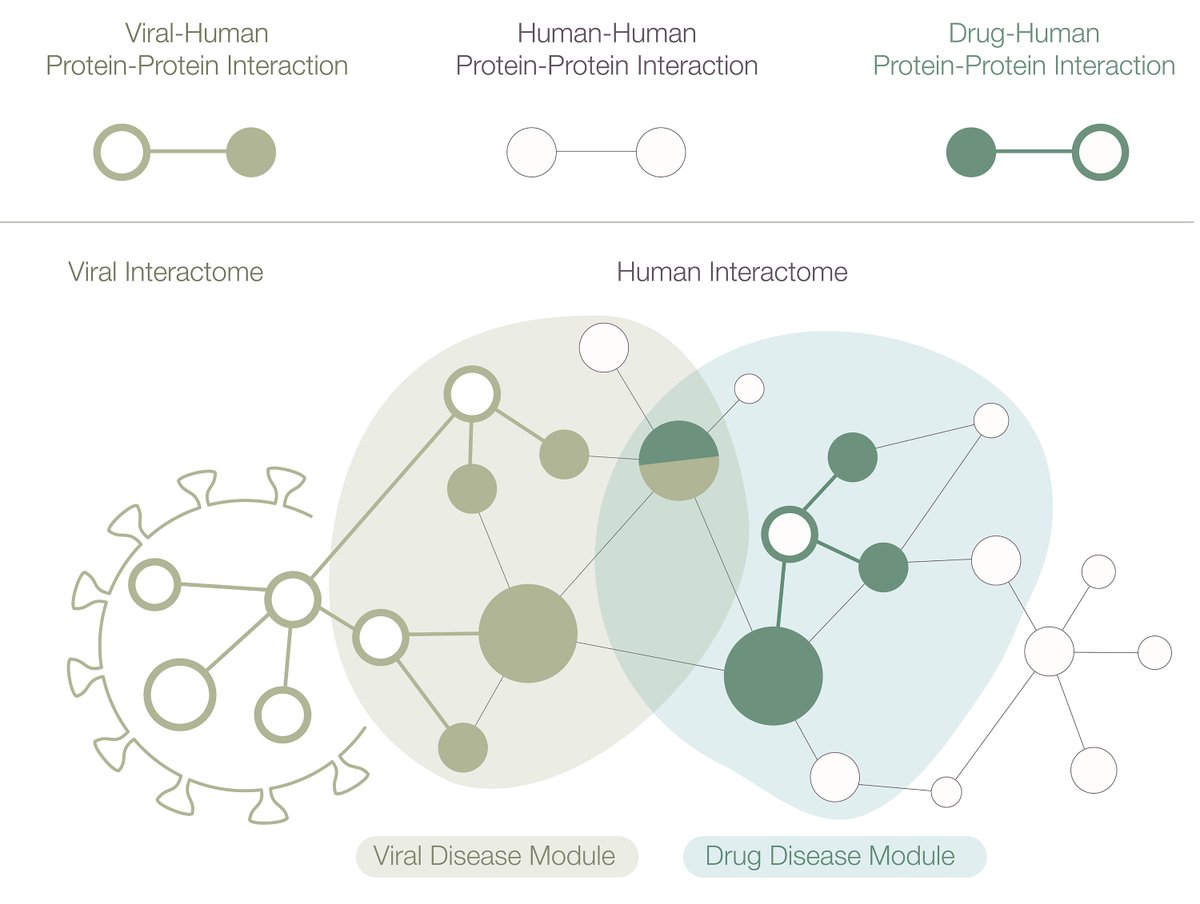
Super cool to see #GraphRepresentationLearning getting applied to drug repurposing for #COVID19
Our list of network-medicine based drug repurposing candidates for COVID-19 is finally out: arxiv.org/abs/2004.07229 We will host a journal club to discuss the findings on Monday, April 20th at 11:00 AM EST, Register here: northeastern.zoom.us/meeting… Some highlights next. 1/10
2